This is a bleak midwinter for Keir Starmer’s Labour government. Elected by a landslide just six months ago, Labour is sinking fast in the polls, and the modest enthusiasm that greeted its election has long since disappeared. Strategic messaging and policy mistakes have led to despair amongst many supporters, and jubilation from the populist insurgent party, Reform UK, now neck and neck with Labour in the polls.
True, at least some of the backlash is the traditional reaction to a Labour government from Britain’s dominant right wing press. All too often the BBC falls for the mistaken view that it has to amplify every right wing criticism of Labour. And people tend to be more fickle these days – a trend that benefitted Labour as it went from its worst election defeat for 84 years in 2019 to a landslide victory last year. But most observers accept that Labour has made an exceptionally poor start, even allowing for its dreadful inheritance.
Lessons from Thatcher’s experience
Labour’s collapse in support and morale so soon after being elected is very unusual, especially for a party winning power from opposition. The only comparable example, ironically, is an encouraging precedent for Labour. Margaret Thatcher has now passed into legend as the iron lady: indomitable, unyielding and triumphant, at least until hubris took over after her third election win in 1987. The reality is more interesting.
In the autumn of 1981, Margaret Thatcher was under siege. Just over two years into her premiership, her monetarist economic policy (trying to reduce inflation by controlling the amount of money in the economy) had proved disastrous. Having condemned Labour for presiding over rising unemployment (‘Labour isn’t working’ in the words of an infamous poster) and inflation, the Thatcher government’s policies contributed to far more job losses. In her first three years, Britain lost a quarter of its manufacturing capacity. The nightly news bulletins were dominated by reports of yet more famous brands laying off staff, or going bankrupt.
The cause in many cases was the soaring value of the pound, caused by high interest rates, which made our exports hugely expensive. (In late 1979, chancellor of the exchequer Geoffrey Howe raised interest rates to a crippling 17 percent largely because investors were not willing to lend money to the government – the so-called gilt strike, which shows that the gilts (government bonds) crisis that did for Liz Truss had an unexpected precedent in her heroine’s traumatic early years.)
A mighty transatlantic battle is in prospect over how to regulate artificial intelligence (AI). Donald Trump’s second administration seems sure to opt for the lightest of light touches, influenced by tech tycoon Elon Musk. (If Musk can tear himself away from his bizarre obsession with Britain.) The European Union has already legislated for a far more restrictive approach, with Britain likely to follow a middle way. The sensible aim must be to unleash the creative, social and economic benefits of AI while minimising the harm it may cause if abused or badly handled.
As debate raged about AI regulation, it struck me that many of the arguments deployed for and against AI and tech regulation also played a huge role in shaping the response to the railway revolution in the 19th century.
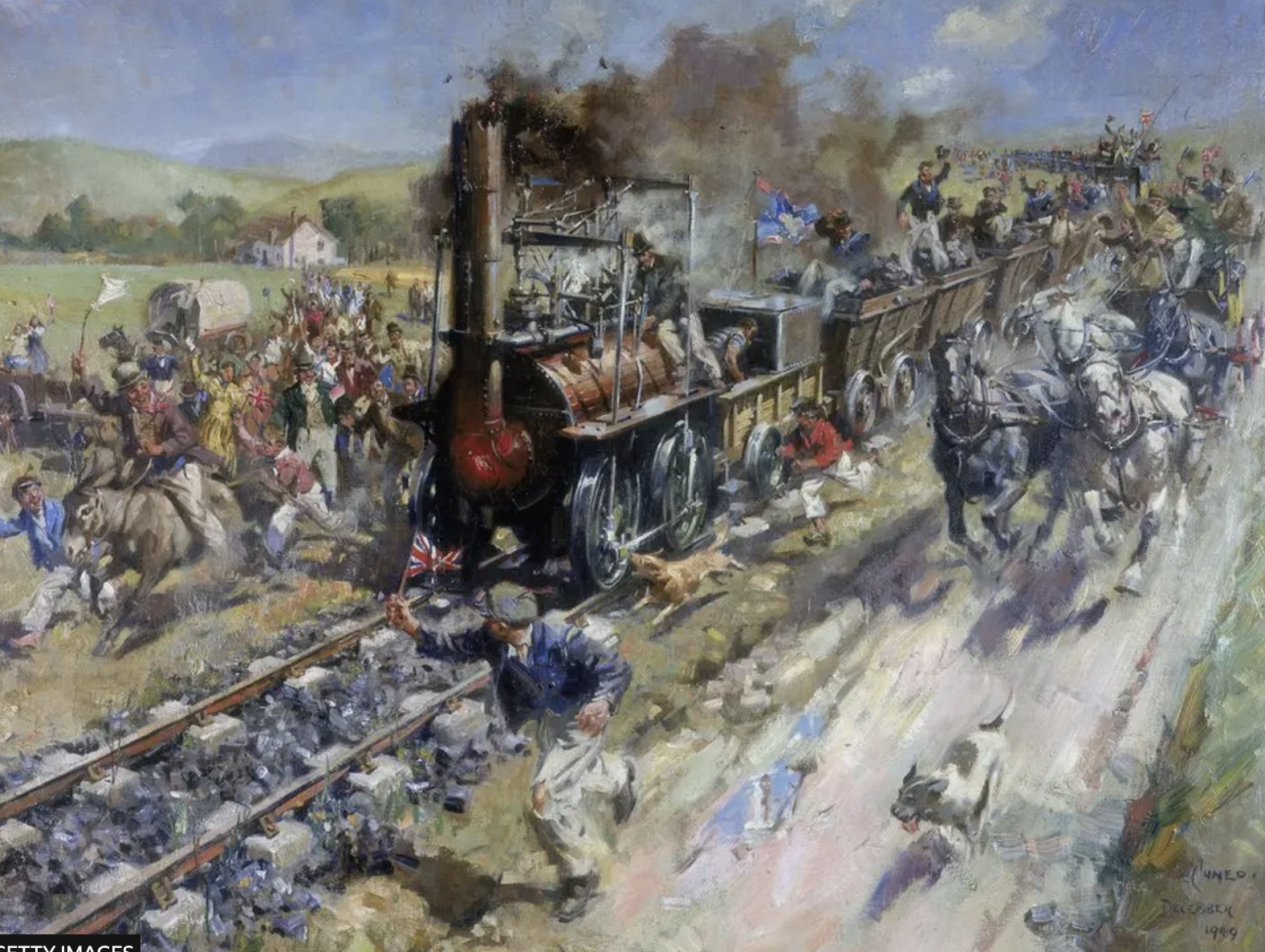
The opening of the Stockton & Darlington in 1825. Painting by Terence Cuneo; NRM/Science & Society Picture Library
The railway age properly began in September 1825 with the opening of the world’s first public railway to use steam locomotives, the Stockton & Darlington Railway in County Durham in the north of England. After the success of the first intercity railway between Liverpool and Manchester, opened in 1830, Britain enjoyed a railway boom, as pioneers planned lines linking major cities – and serving industry, the original purpose of the iron road. By the early 1840s, railway mania had taken over, in a prelude to the dot.com boom at the turn of the 21st century. In 1844, 240 private bills were presented to the British parliament to authorise 2,820 miles of railway. Had all these been built, the £100 million of capital needed represented over one and a half times Britain’s gross domestic product (GDP) for that year. Parliament still approved half these railways.
Anything goes? The heyday of the laissez-fair state
Britain in the 1840s was a firmly non-interventionist state. The dominant philosophy was laissez-faire: small government, low taxes and the free market. Most acts of parliament were private acts to authorise new railways rather than government initiatives. Anyone able to raise money could form a railway company and apply to parliament for permission to build their pet route. The sheer volume of railway business threatened to overwhelm the Westminster legislature. But an attempt to create order by setting up a railway advisory board to vet proposed plans before they reached parliament was short lived, killed by the powerful railway lobby. (And conflicts of interest: 157 out of 658 MPs had financial interests in the railways.) This was Britain’s last chance to create a strategic rail network, deploying investors’ money more efficiently. The failure led to many investors losing most if not all their money on rail schemes that had no hope of success, again pre-empting the dot.com bubble of 1999-2000.
If you’ve arrived at London’s Kings Cross station in the rush hour only to endure a packed tube train to reach the heart of London, you may wonder why the station wasn’t built nearer your destination. Kings Cross isn’t alone; Marylebone, Euston and St Pancras are similarly stranded north of the Marylebone and Euston roads, which were created as the New Road in the 18th century.
Jonn Elledge entertainingly explains on his Substack (The Newsletter of (Not Quite) Everything) how the New Road was built as a by-pass for cows. Jonn adds his explanation for the inconvenient siting of these great termini:
[Railway] Companies serving destinations to the east and south of London drove their new lines right into the urban area, with scant regard for the poor residents they dispossessed; those coming from the west and north, by contrast, tended to respect the capital’s existing geography. That is why, to this day, Kings Cross (1852), St Pancras (1868) and Euston (1837) stations line up along the road, with Marylebone (1907) [actually 1899] a mile or two distant: they were effectively plugging into the existing transport network, made up of a massive road with canal access.
This is only part of the story. Today’s travellers are inconvenienced as a result of a Royal Commission set up by prime minister Sir Robert Peel in 1846:
Amazingly, the Royal Commission on metropolitan railway termini reported just three months later. It recommended that railway lines entering London should not be allowed to enter the West End. The commissioners accepted that more central stations would lead to the destruction of countless homes and other buildings. In 1846, the New Road was on the very edge of London, which is why the Royal Commission took it as the furthest a railway line from the west or north should pass into London.
The wonderful finale of the BBC’s hit comedy Gavin & Stacey on Christmas Day brought further fame to Barry in South Wales. It’s a place that has a place in my heart thanks to family seaside memories and visits to its long-gone scrapyard for old steam locomotives.
Barry Island, Sunday 5 January 2025
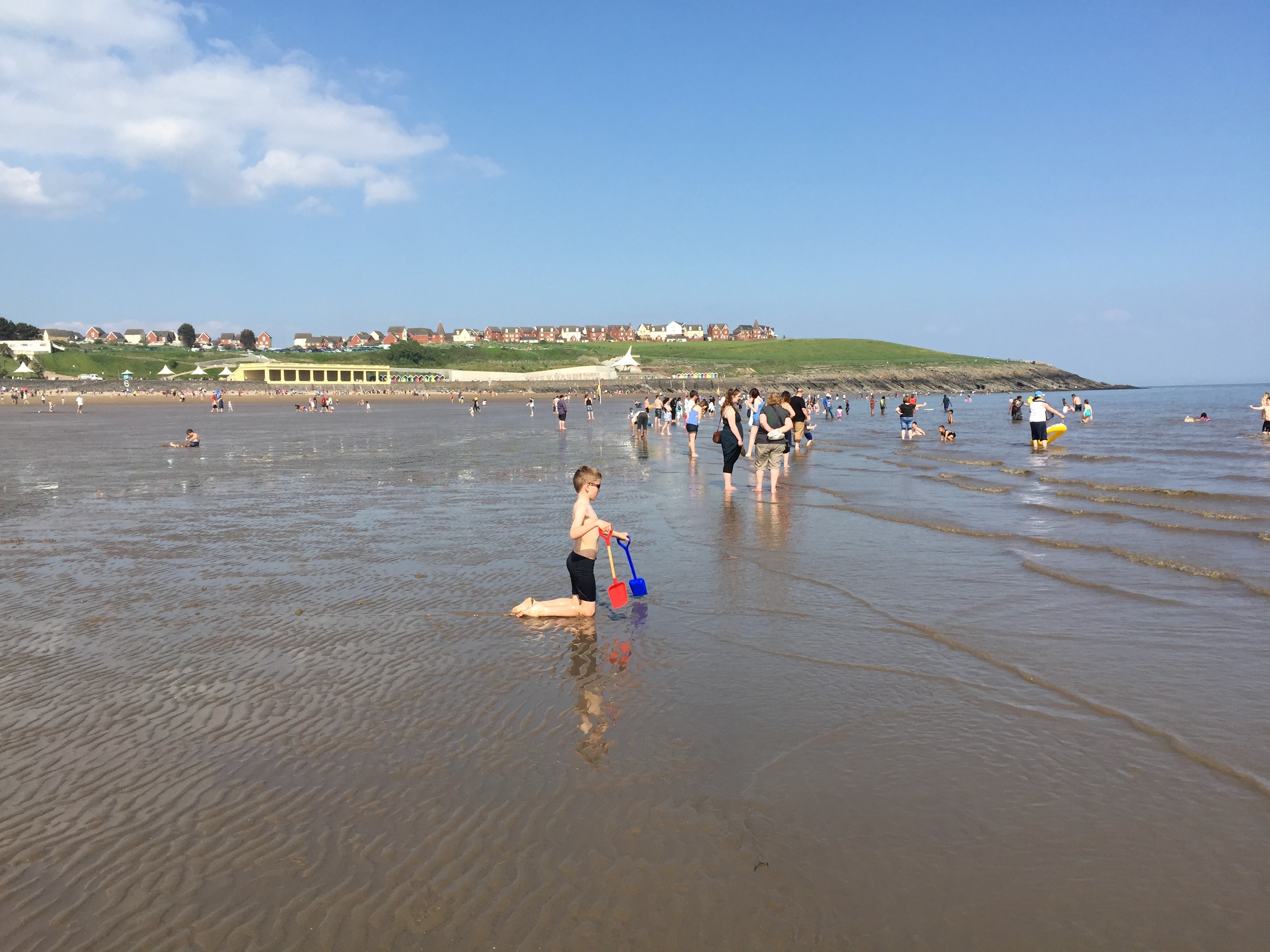
Last weekend, I took my son Owen for a short break in my hometown, Cardiff. As the rest of the country shivered under blizzards or sheltered from the icy rain, we made the short trip to Barry Island, and were rewarding with a few minutes of glorious winter sunshine. When I was at school, I regularly took the train from Heath High Level in Cardiff to Barry Island, and our Sunday visit brought so many memories flooding back.
Barry is a town that saw explosive growth during the later stages of the industrial revolution. Barely a hundred people lived there in the middle of the 19th century, but the entrepreneur David Davies of Llandinam saw its potential as a port. Davies was known as Davies the Ocean after the coal mining company that made his fortune. Like many Welsh coal tycoons, he was frustrated by the delays and cost involved in exporting their black gold from Cardiff, and vowed to create a rival port less than nine miles away at Barry. As he exclaimed, “We have five million tons of coal and can fill a thundering good dock the first day we open it!”
It’s official. I’m taking part in Britain’s greatest cycling challenge, the 1530km London Edinburgh London ride in August 2025.
I’ve been thinking about it for a while, and my successful completion of London Wales London in 2024 makes me think I’m not completely crazy contemplating cycling from London to Edinburgh and back in 128 hours. That wonderful 26 hour experience showed that I was capable of the mental attitude needed for endurance cycling. As I wrote in my LWL blogpost, the mental challenge is arguably greater than the physical one, at least while the body is still capable of turning the pedals. LEL will require far greater mental strength than the far shorter distance of LWL, which spans just one night – although the fastest LWL riders make it home before midnight.
I’ve really enjoyed the London Edinburgh London podcast series – I was impressed how it shows how you don’t have to be a super athlete to do LEL, while not hiding the fact this is a feat of endurance. I listened to this episode while driving to Wales with my son just hours after entering. I felt exciting and scared in equal measure!
Over the coming months, I’ll be getting match fit while learning from accounts by LEL veterans what I need to do to maximise my chances of success. This will vary from the physical – how to improve core strength for days on the bike, while avoiding saddle sores and Shermer’s neck – and choosing the right equipment for the ride. As my friends know, I love recording my cycling adventures in word and video, but LEL is so all-embracing that I’ll have virtually no time or energy to give a detailed account along the way as I’ll be living in the moment. (My clear lesson from LWL was to avoid faffing and minimise the elapsed time off the bike – it’s easier to reduce time at stops than make up time on the road.)
Last year, I was pleased with my training for LWL. I blended time on the road with hill climbing, which helped me on the big one. I need to take this to a new level for LEL, and also get into the habit of stretching – for days after LWL, I was incredibly stiff, which will be debilitating on LEL when setting off after my first sleep after a few hundred kilometres. In 2002, on my first Land’s End to John O’Groats ride, I was impressed by a couple of riders who stretched whenever they stopped. I must follow their example in 2025.
I’ll post updates on my preparations in the coming months. Do please share any advice! UPDATE: you can read the series on training and preparing for London Edinburgh London starting here. (There’s a link to the next episode at the end of each post.)
PS: I am lucky enough to have a guaranteed entry to London Edinburgh London as a member of Audax UK, Britain’s long distance cycling association. But I hit a glitch using the guaranteed entry to apply. It emerged that as I applied for the early entry ballot in 2023 the guaranteed entry link didn’t work. Happily, the LEL team sorted this for me, hence the entry confirmation at the start of this post. If you are in a similar position, just contact them for help.
New year is the time I look back on the cycling year just passed, and anticipate adventures to come. This time last year, I shared my plans for 2024 with a hint of hesitation. Telling the world that I planned to cycle from London to Wales and back in a day seemed tempting fate. But that London Wales London challenge proved a happy one as I blogged in May. It remains to be seen how I cope with the far bigger ambition to complete London Edinburgh London this August.
2024: the year I became an endurance cyclist
Crossing the Severn Bridge, London Wales London 2024
At the start of 2024, I’d never cycled more than 103 miles in a day. Could I make the jump to riding over 250 miles in one go? I knew that this would be as much a mental challenge as a physical one. So I tested myself on a 157 mile shortened version of the London Wales London route, which I tackled three weeks before the real thing. My heart sank as I suffered a puncture after 49 miles, but the tubeless sealant plugged the hole, and I made it to the end. I was also tested by a pitiless headwind for much of the first 60 miles, which meant I had to pedal downhill as well as up. These hurdles tested my resilience but I came through with the confidence to tackle London Wales London.
The opening page of my Arrivée article on LWL
I’ve already written a comprehensive account of my debut London Wales London in Audax UK’s Arrivée magazine and on this blog, so I won’t repeat myself here. I’ll just say that I found it an almost spiritual experience, especially seeing a new day dawning as I pedalled across the unspoilt Berkshire countryside. I was also delighted to reach the final feedstop at Lambourn after 196 miles in buoyant shape and spirits. My LWL success isn’t proof that I will be able to complete London Edinburgh London (or indeed the 600km Bryan Chapman Memorial ride in June) but it suggests that I am not crazy to attempt them.
Cycling across Ireland
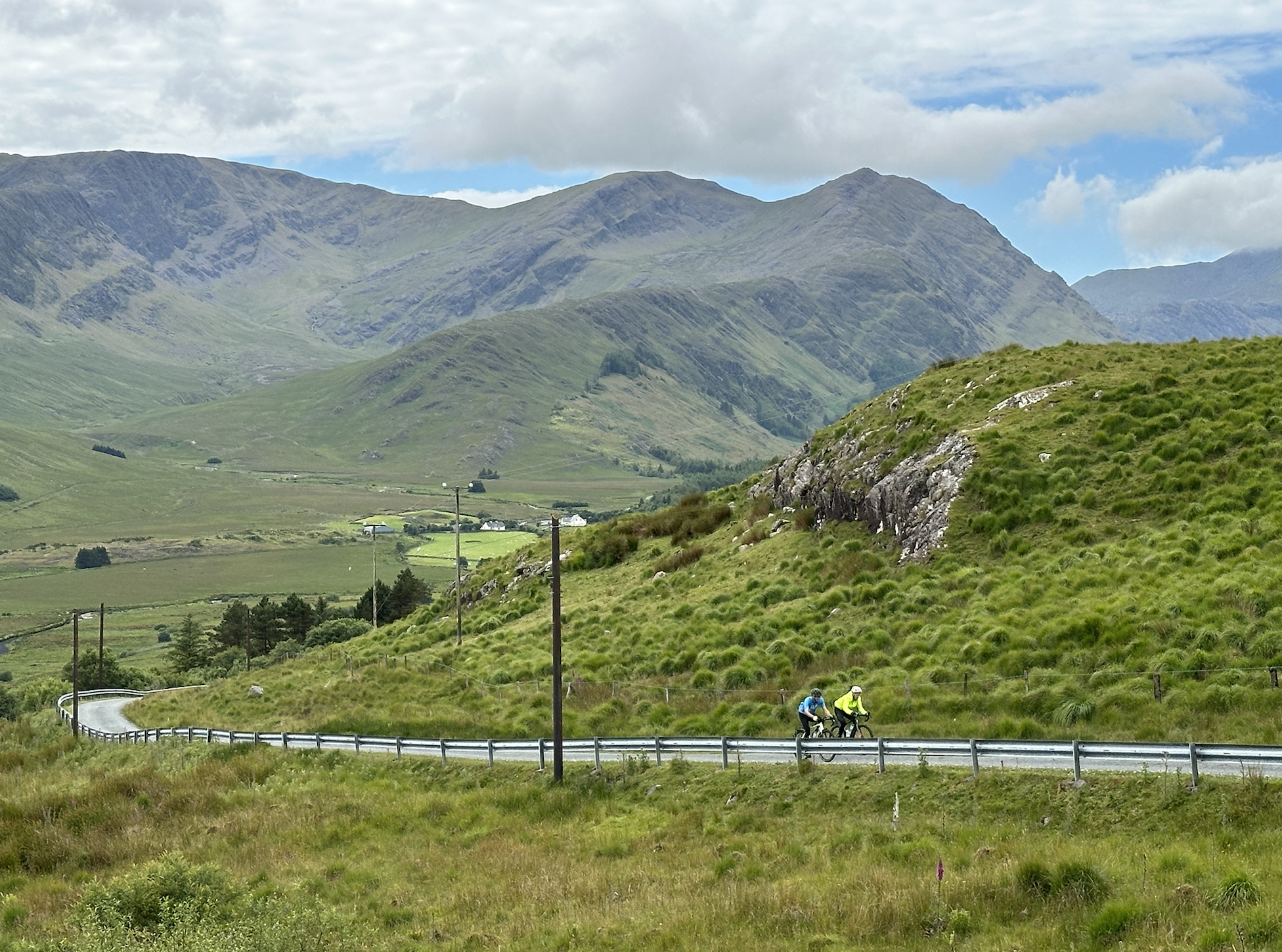
Climbing the Sheeffry pass, Co Mayo, Ireland
It was a joy to return to Ireland in June, for my third ‘end to end’ ride, from Mizen Head in Co Cork to Malin Head in Co Donegal with the excellent Peak Tours. It was no surprise that the weather wasn’t as benign as in Portugal in 2023, but we did have a surprising number of bright days. I’ve written a detailed day-by-day account starting here.
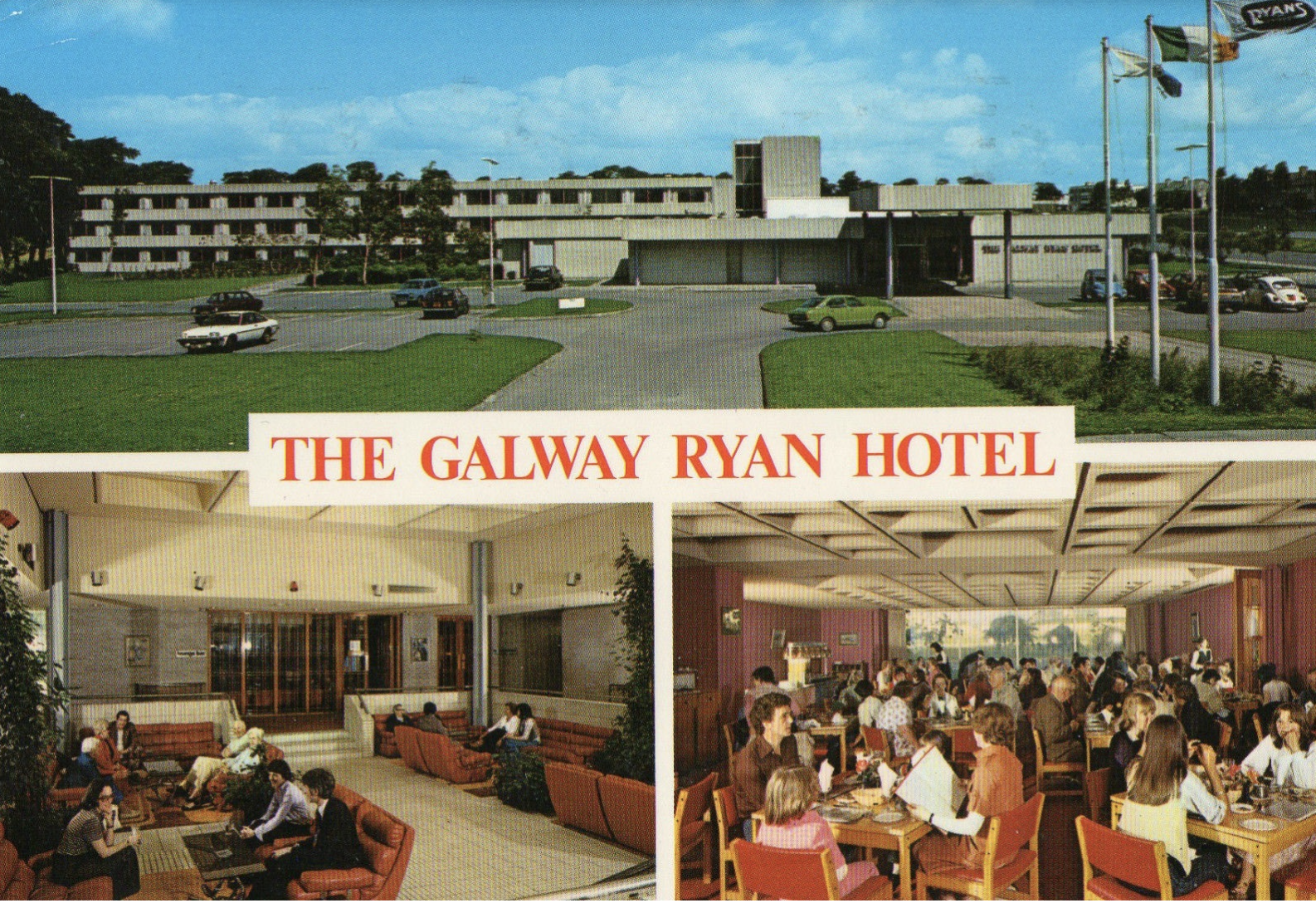
In my 2024 new year post previewing the trip, I looked forward to returning to the seaside town of Lahinch 50 years after my visit aged 10 with Mum and Dad. We didn’t stay there in 2024 as it turned out, but I stopped briefly and found it rather a sad place and not at all how I remembered it. But in an amazing coincidence we did stay in the same Galway hotel that Mum, Dad and I visited in 1974. The old Ryan Hotel was renamed the Connacht in 2013.
Conquering the Rapha Festive 500
My 2024 cycling year ended on a high as I completed the Rapha Festive 500 for the first – and most likely only – time. As one of my readers, Tempocyclist said, it’s a lot nicer cycling 500 festive kilometres in the southern hemisphere than in a British winter.
You can read my tips on tackling the Festive 500 here. I was delighted and relieved to finish the last ride. I have to be honest that it wasn’t my favourite cycling experience of the year, but it did mean I finished 2024 more healthily than if I’d stayed on the sofa, which gives me a head start in my training for 2025’s cycling challenges.
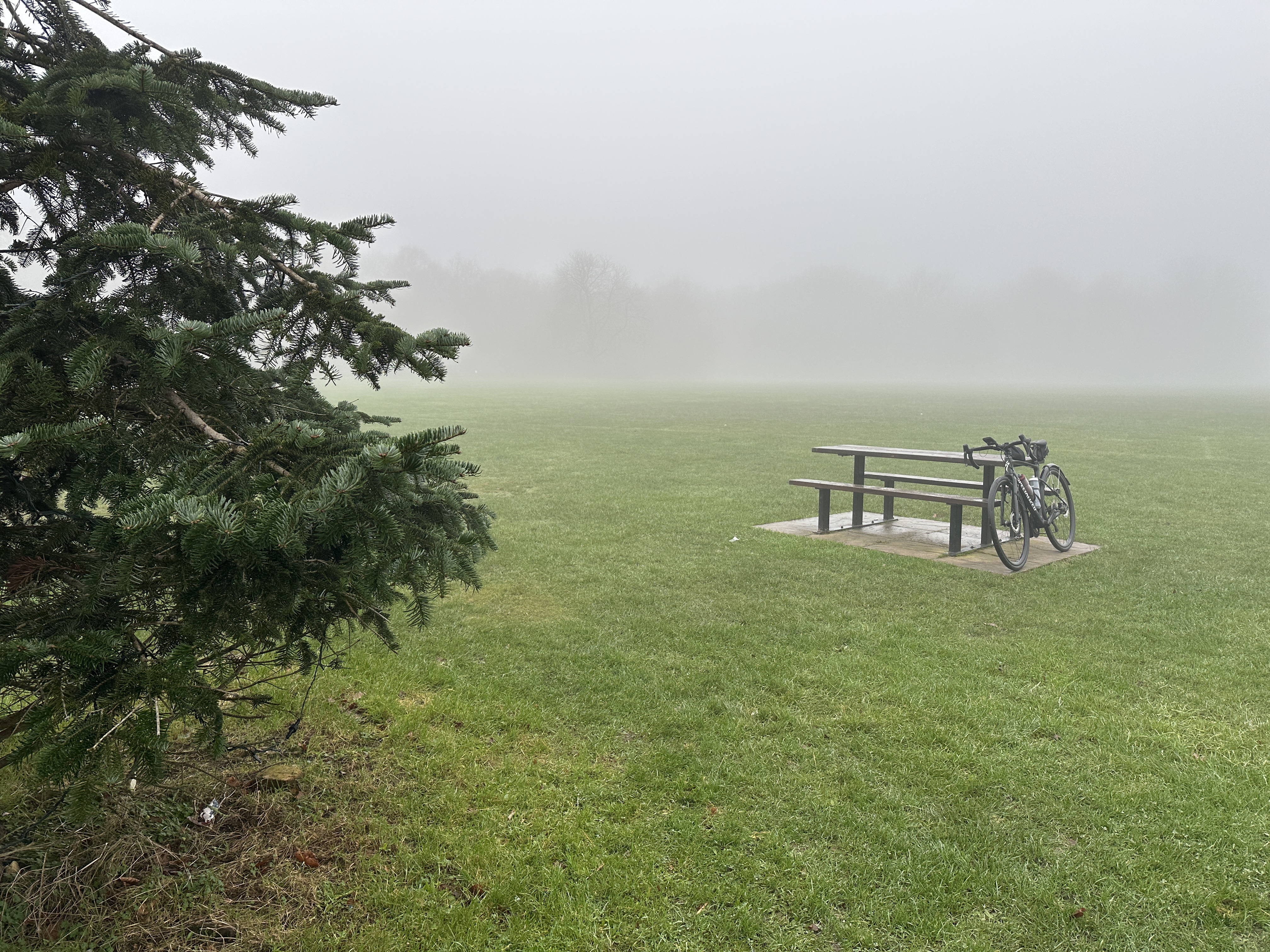
This was the moment when I cursed my decision to enter the Rapha Festive 500 challenge. I’d been cycling for over an hour, and the mist was seeping through every pore. I saw a sign for my village and mourned the fact I had another thirty miles to cycle, rather than a sofa in a warm house, to look forward to. The week’s rain-free weather forecast had led me astray – I was getting wetter and colder than I had ever imagined. I finished the Boxing Day ride – the third day of the Festive 500 – wondering if I’d finish the challenge. Yet four days later I passed the 500 kilometre finish line with a day to spare.
In this blogpost, I’ll share the lessons I learned – what went right, and more importantly how to avoid the mistakes I made. For anyone who isn’t aware, British cycle clothing company Rapha launched the Festive 500 in 2010. Participants have to cycle 500 kilometres (310 miles) in the eight days from Christmas Eve to New Year’s Eve. You can ride on roads, trails, on indoor turbo trainers and even an e-bike.
Here are my tips based on my experience in 2024.
Ask yourself: is it for me?
Cycling 500 kilometres in eight days is an achievement for most people. Yet it’s even harder over the festive period. Most people taking on the challenge will have other commitments – hosting family or friends, travelling for some of the holidays, social events and work. Can you fit in cycling 500km with these commitments? If you’re likely to have several days when you can’t cycle, will you be able to make up the miles in the remaining time? Will your family understand and support you, or will they resent not having you around ? No sensible person will judge you if you don’t make it, but it’s best to set off aware of the complications that might be the difference between success and not making it.
Weather or not…
Day 6: first sight of the sun…
It’s ironic that the Festive 500 was created by a company in Britain – a country not renowned for its fine weather, especially over the Christmas and New Year period, (The Scottish capital Edinburgh has just cancelled its Hogmanay new year celebrations because of forecast winter storms.) I decided to take part in the Festive 500 this year after seeing the benign weather forecast, but as the opening of this post suggests, it wasn’t as benign as I expected… After days of mist, it was a joy to see the sun breaking through on day 6, half way through my longest (50 mile/80km) ride of the challenge.
If your forecast suggests days of gales and rain, you can always ride indoors, or decide to wait until next year… I’d find riding 500km indoors soul-destroying, but I did ride indoors to top up shorter than expected outdoor rides.
Get organised
Set up your routes before the big day
I was full of good intentions on the first day. I’d planned to set off during the morning of Christmas Eve, but wasted over an hour trying to get my route onto my Garmin. As a result, I had less daylight time to complete the ride I planned, and as a result was behind schedule on the very first day. Lesson learned: get everything ready the day before, so you’re on the road on time.
Keep warm: layering matters
Warm and visible: Christmas Day Festive 500 ride
I’ve already mentioned that a weather forecast lured me into a false sense of security. This was an unseasonably warm Christmas in southern England, so a base layer and jacket, and summer cycling shoes would be fine, surely? For the first two days that was true, but on Boxing Day my mood took a tumble as I explained at the start of this post. Who knew that mist was so wet and cold? Yet it took another day’s ride before I learned my lesson, adding a Rapha wind-proof jersey, Sealskinz socks and Shimano winter cycling boots to my outfit. It transformed my mood, and I had my favourite ride of them all, to the lovely Velolife cafe at Warren Row for a delicious toastie. Layer up – you can always remove a layer if you get too warm.
I found my Le Col and Rapha bib tights essential wear for keeping me cosy, along with my neck warmer and full (but lightweight) gloves.
Lights – and action
If you’re doing the Festive 500 in Britain or another northern hemisphere country, you’ll not have endless daylight to complete your outdoor rides. On day one, my rear light failed as it was getting dark, which meant I finished about 10km earlier than expected. (Safety is more important.) After that, I charged my taillight every night, and also took a spare. I also wore a neon jacket to make sure I was seen by any distracted Christmas drivers.
Podcasts: my motivation for winter miles
I found podcasts a wonderful way to keep engaged and motivated on my Festive 500 rides. (A contrast with my London Wales London 400km audax ride, when I preferred silence, as I explained here.) Just before the Festive 500 began, I downloaded a stack of The Rest is History podcast episodes, and listened enraptured as the miles passed. I never expected the causes of the Great War to be laugh-out-loud amusing. It made me rethink all my assumptions about the road to catastrophe in 1914. (On a trivial note, I was intrigued to learn that the Kaiser signed the order mobilising Germany’s armed forces at a desk made from wood from Nelson’s flagship HMS Victory, and that British foreign secretary Sir Edward Grey visited London Zoo the day Britain declared war on Germany.)
Adapt your plans as needed
Plotting my rides
As mentioned earlier, in the early days of the Festive 500 I was falling short, because of disorganisation and the mist that hit my morale. By day four, I realised that adding indoor miles was the perfect solution. I confess that I don’t enjoy indoor cycling – gamification can only go so far in relieving the tedium – but I wouldn’t have completed the 500km with a day to spare without my Wattbike Atom smart trainer, Rouvy and Zwift.
In much the same way, keep a close eye on your local weather forecast. One of the reasons I delayed my initial daily starts was the hope that it would be warmer at 1pm than 11am, but in truth it made little difference. By contrast, if you’re expecting strong winds later in the challenge, get your big rides in early – or go indoors.
Don’t let setbacks get you down
The moment I saw my bike crashing to the ground, I knew it wasn’t good news. I set off anyway, on what should have been my longest cycling day yet, but as soon as I started climbing I knew that I’d be returning home. The derailleur hanger was bent, preventing me using most of my gears. This is where N+1 comes in: the idea that the ideal number of bikes to own is one more than you currently have. As I’ve been following that philosophy for years, I put my damaged bike in the garage and set off on a shortened route on my Specialized Roubaix.
If you’ve only got one bike, this might not be an option, but you might be able to see if your local bike shop – or mechanically-minded friend – can repair your mount.
Above all, accept that setbacks will happen. And if you prop your bike against the garage door, or farm gate, make sure the drive side is facing in, so the derailleur doesn’t take the impact if the bike falls over…
It’s all in the mind…
The secret to success in most cycling – and life? – challenges is in the mind. If you’re setting off on a cycling journey, those first pedal-strokes are the hardest. I explained in my London Wales London post that I soon realised that noting that 2.4km represented one percent of the total was a one way path to madness. On a more modest scale, I do recommend ditching the idea of clocking how many kilometres you still have to cycle. Just keep those pedals turning.
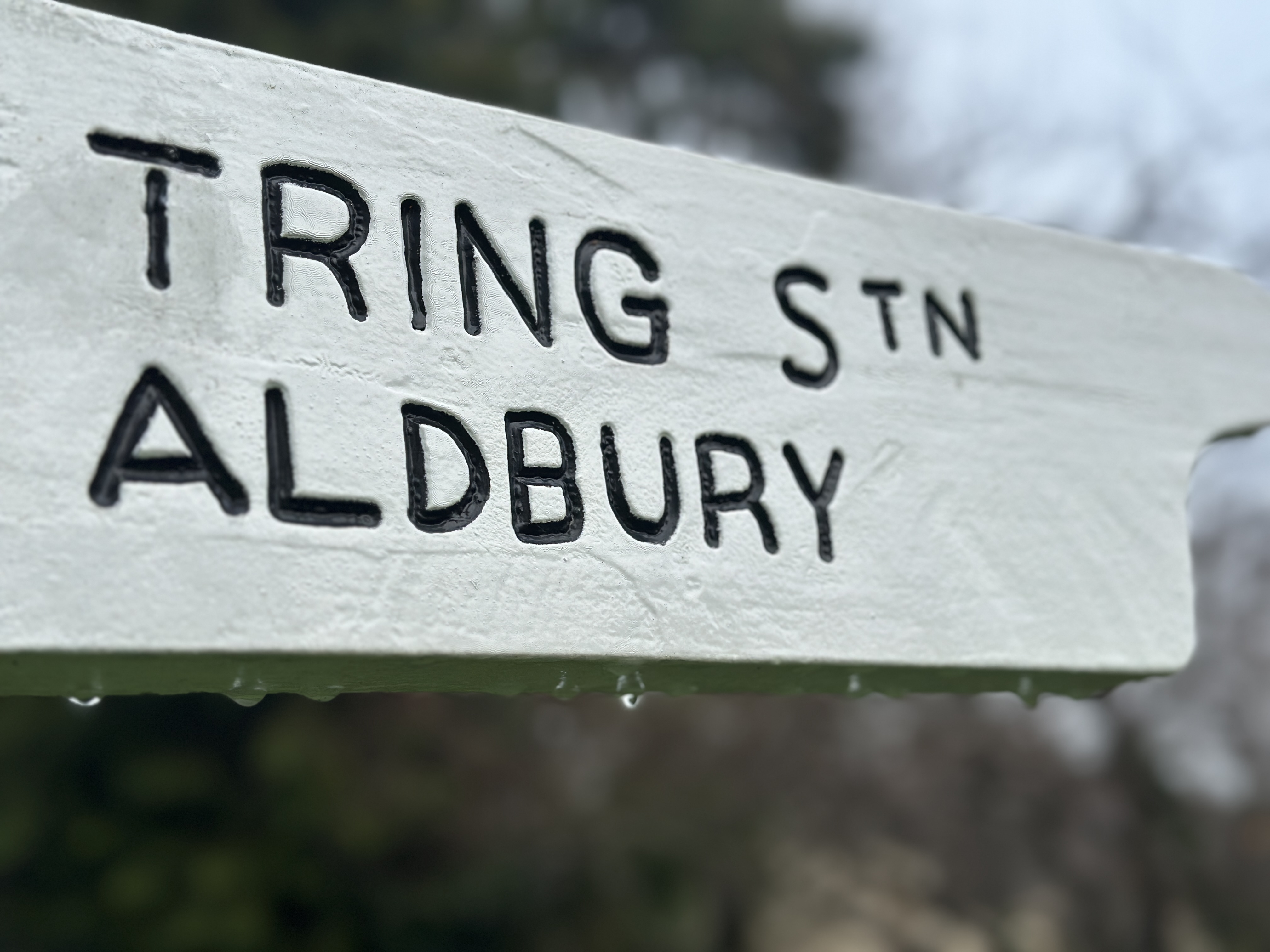
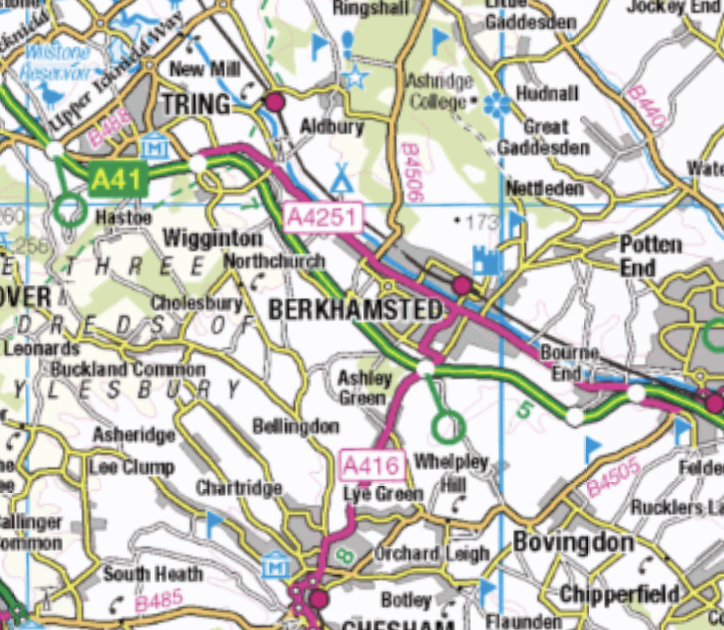
t’s a wonderful moment: completing a serious cycling challenge. Cycling 500km (310 miles) over the Christmas holidays is no mean feat, especially with family commitments. And let’s be honest, setting off into the cold and mist when the alternative is eating and drinking in a warm house takes commitment. On my longest (80km) Festive 500 ride, I kept alive the option of cutting my route short. Yet as I cycled north, the mist was replaced with a weak sunshine, and the easy riding north of Tring, Hertfordshire. (And all the while, Dominic Sandbrook and Tom Holland were telling their enthralling story about the outbreak of the Great War on The Rest is History…)
Enjoy your food and drink
Chiltern Velo cafe, Hawridge, near Chesham
It’s easy to forget that winter cycling needs fuel. For a few of my rides, I forgot to take an energy bar but happily always found a cafe or shop when I needed to refuel. My favourite Festive 500 memories are of my lunches at Chiltern Velo and Velolife cafes – and the cafe at Burnham Beeches. (Kudos to Velolife for posting its Christmas opening hours online – very helpful for route planning.)
Head for the hills – or the flat?
The joy of easy climbing: Christmas Day
Put bluntly, the challenge is 500km: you get no extra kudos for climbing. I was amused to see that Rapha shared a participant’s 154 mile ride in Asia, but noticed that this rise involved 1,000 feet less climbing than my 50 mile ride on day 6…
In short, add ascents if you wish, but don’t feel it’s compulsory. One of the reasons that my Boxing Day ride was a struggle was that it was a switchback. I always prefer routes that ascend, stay at the summit level, and then descend, rather than follow a rollercoaster profile.
Don’t neglect family and friends
You may love the idea of bagging the Festive 500 trophy. But remember: there are more important things in life than cycling. Really…
I was very mindful that while I was completing the challenge I wasn’t taking the dog for daytime walks, let alone ironing or cooking. So make sure you talk to your family about what is negotiable and what isn’t. So if you have loved ones staying, don’t assume your partner will happily entertain them for five hours while you’re cycling unless they’ve told you this is true…
Ride somewhere different
I don’t know about you, but I ride the same routes all the time. Yet on the Festive 500 I looked for new places to go. We live just a handful miles of the border between Buckinghamshire and Greater London, but I’d never cycled from home to London until day 3 of the Festive 500. Similarly, I’d only ever ridden north to Mentmore (the location of the famous country house sale of the century in the 1970s) in the spring and summer on century rides. There’s a joy in seeking new routes to send the heart singing.
Look after your bike
I’ve already said you need to adapt should you hit a mechanical. It’s better, naturally, to try to avoid any mechanical problems. Keep on top of maintenance, checking tyre pressure, washing your mount and ensuring you have spare inner tubes, pump and all the other essential kit to keep you on the road.
You’ve done it!
Screenshot
I was thrilled to complete the Rapha Festive 500 a day early. But what next? Are you inspired to go further – perhaps Land’s End to John O’Groats? Just do it!
You can read my day by day account of my successful Festive 500 challenge here.
I’ve read about the Rapha Festive 500 cycling challenge for years. But I’ve never been tempted to take part – until tonight, when I decided to go for it.
The concept is both brilliant and barmy: cycle 500 kilometres between Christmas Eve and New Year’s Eve. That’s just 62.5 kilometres a day, or a tad under 39 miles. Easy … except for anyone who’s got family or other social commitments over the holidays, which will shrink the time available for cycling.
For me, the stars seem to align this year to make the Festive 500 a seriously doable proposition.. The sad loss of parents and in-laws over the past decade means that our traditional family Christmas has become a smaller celebration without a journey to my homeland, Wales. And the weather forecast for southern England is very benign. So I have no excuse…
Better still, the challenge will be the perfect curtain raiser to my ambition to take part in the famous London Edinburgh London audax ride in 2025. Completing London Wales London this year was one of my proudest cycling achievements but I have to admit that I’ve eased off during the second half of the year. Hitting the new year at pace is a smart idea.
So… how am I planning to approach the Festive 500?
All the advice is to get the miles in early. On Christmas Eve that makes sense, and suits my family commitments. But I’m not giving up a huge chunk of Christmas Day to cycling. My traditional 15 mile Christmas Day lunchtime route over the hills to Penn and Beaconsfield suits our arrangements and that’s what I’ll be doing. That leaves me with 42 miles a day for the remaining festive 500 period. I don’t feel too intimidated by that.
I’ll also mix outdoor and indoor cycling for variety. Most days I’ll stick to road cycling especially if the weather is as benign as current forecasts suggest. But on some of the days I may supplement a daylight outdoor ride with an indoor Zwift or Rouvy workout to mix it up a bit.
This was the forbidding opening title scene in the BBC’s iconic 1970s television drama, Colditz, with the outline of Colditz Castle – the notorious second world war prisoner of war (PoW) camp, Offlag IV-C.
Back in the seventies, Colditz was amazingly prominent in British minds, 30 years after the war. The television series ran for two years, based in part on the bestselling books by Pat Reid, one of the first British prisoners to make a ‘home run’ to Britain. (As Nazi Germany controlled most of Europe, getting out of Colditz was just the start of a successful escape.) It was the most successful television drama the BBC had ever made, watched by a third of the viewing public. Most of the prisoners behind the walls of Colditz Castle had already escaped from other German prisoner of war camps, and so were an elite band of escapologists.
I’d barely given Colditz a thought for decades, but that all changed when I read Ben Macintyre’s 2022 book, Colditz, Prisoners of the Castle. Macintyre is a wonderful storyteller, with a knack of uncovering a multitude of spellbinding anecdotes and tales about even familiar topics. My childhood Colditz memories were replaying in my mind as I read his account of the wartime fortress prison.
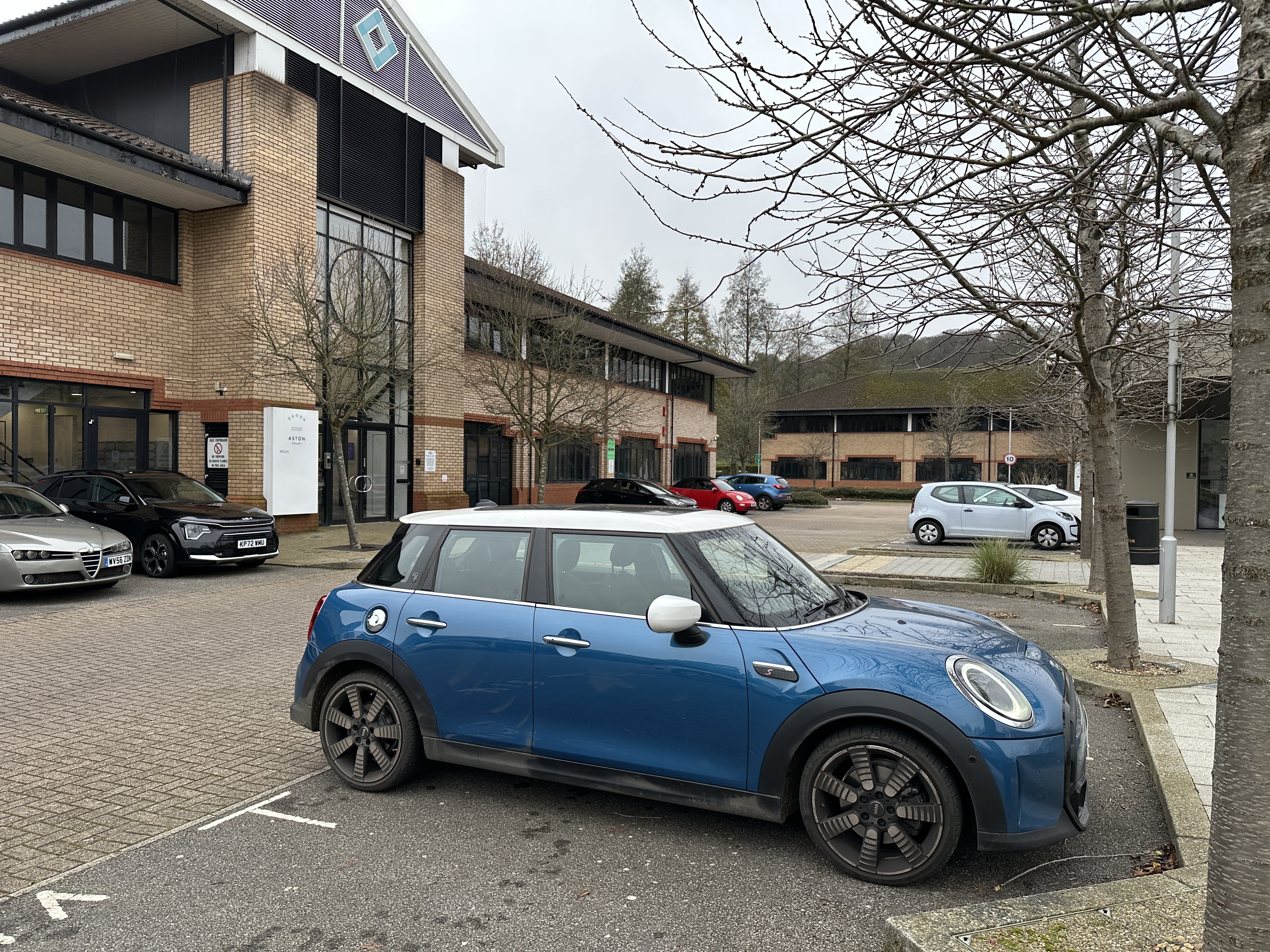
Who’d have thought that it would cost almost as much to park at a nondescript business park in High Wycombe as it does in Cambridge’s most prestigious shopping centre, Grand Arcade? That’s the dubious distinction that the office company Regus has won for its Kingsmead business park in Loudwater, High Wycombe.
I’ve been visiting regularly as I’m receiving physio from a company based there called Ascenti. The first time I was shocked to be charged £2 for parking during my 30 minute physio session. But it got worse – I was then charged an extra 25% as a service fee. So it cost £2.50 to leave my car for the 30 minutes I was receiving treatment – just 20p less than an hour’s weekday parking in Cambridge.
Regus uses a company called Your Parking Space to collect parking charges. I downloaded the Your Parking Space app in the hope that might prove cheaper – but no.
I can understand why parking is expensive in a city like London or Cambridge, where property is expensive and good public transport is available. (I recommend the Cambridge park and ride service from Madingley Road – parking is free and you just pay for the short bus ride into town.) But the Regus rip off is utterly unjustified. No wonder the car park is largely empty.
And don’t get me started on that 25% service charge. The service is parking – and I’d already paid £2 for that. What possible justification is there for Regus and Your Parking Space to add a 25% penalty on top of that?
I should add that the daily rate of £6 is more competitive.

















 Ertblog