Off the Rails: a gripping but flawed book about HS2

A review of Off the Rails, The Inside Story of HS2 by Sally Gimson. (Oneworld, 2025)
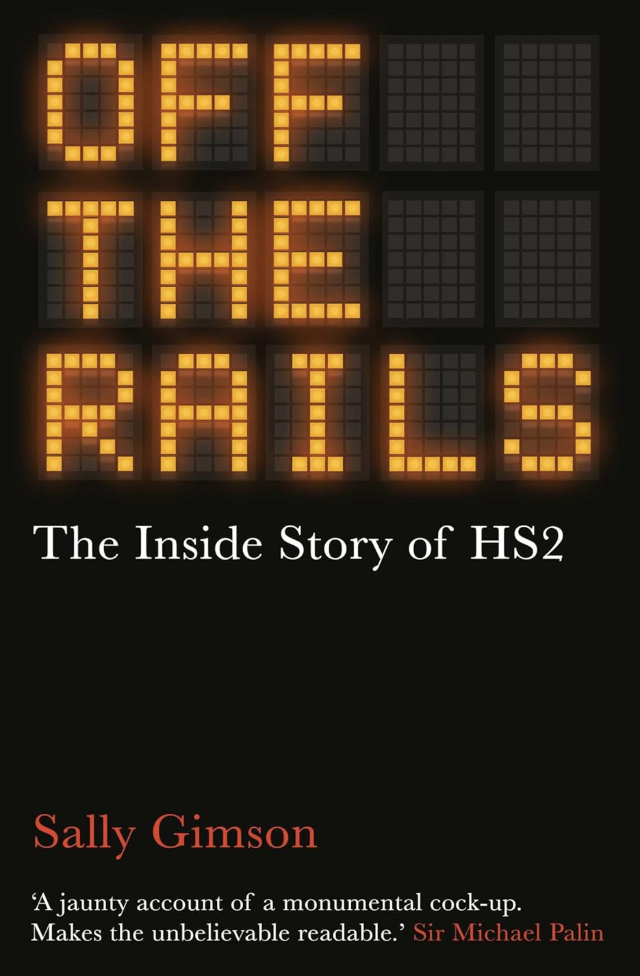
If any project deserves a detailed exposé, it’s HS2. Britain’s plan to build a second high speed rail line has become an epic, expensive failure. Once heralded as giving the country – well, England – a network of high speed routes between London, Manchester, Nottingham and Leeds, it has been reduced to a single route between London and Birmingham. Thanks to the stupidity of former prime minister Rishi Sunak, who cancelled the Birmingham to Manchester section, HS2 trains heading for Manchester could actually be slower than today’s trains once they divert from HS2 onto the West Coast Main Line at Handsacre Junction north of Birmingham.

HS2 Colne Valley Viaduct, near Denham, Bucks

Our village, Chalfont St Giles in Buckinghamshire, is on the route of HS2. You’ll find few supporters of the project in these parts, even though the line passes us in the 10 mile long Chiltern tunnel. But I always supported the idea, as I blogged when the Tory-Lib Dem coalition gave the green light to HS2 in 2012. As I argued:

‘Britain’s intercity rail network was born just before Queen Victoria came to the throne in 1837. It was the wonder of the world. Nearly two centuries later, the world wonders why Britain is so reluctant to build a new railway. HS2 opponents say we should just modernise the west coast mainline. That line was created from a series of 19th century railways. It has been ‘modernised’ twice in the last fifty years. It’s still in essence a Victorian railway.’

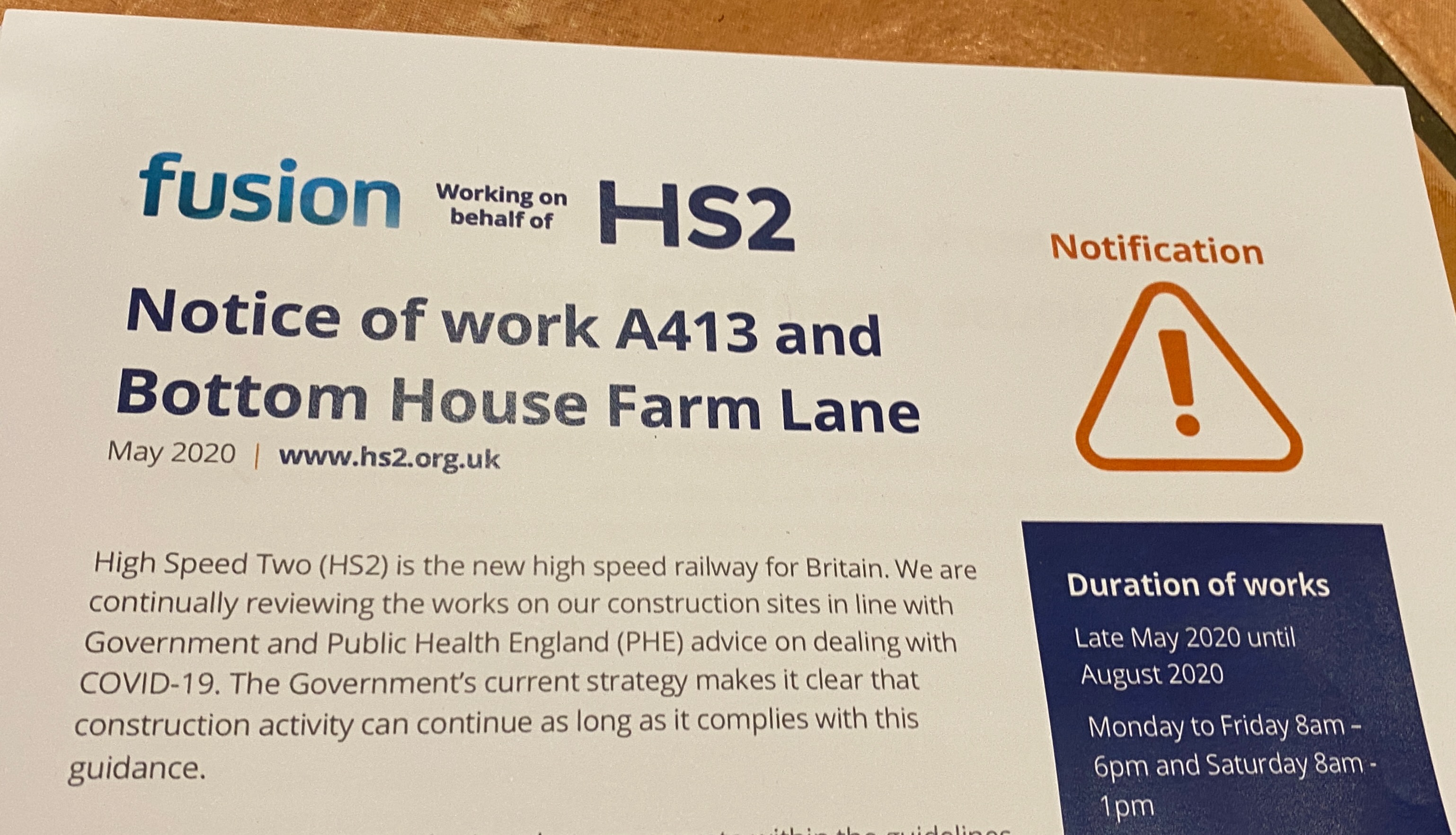
Above: HS2 built a new road parallel to Bottom House Farm Lane, Chalfont St Giles, for construction traffic to the site of an HS2 tunnel shaft

Our former MP, the late Cheryl Gillan, features heavily in Sally Gimson’s story. If you’re wondering why HS2 is proving vastly expensive compared with similar lines in France and Spain, Gillan is one one of the many reasons. Protesters in the Chilterns were bought off with miles of extra tunnels. These same protesters will happily use Heathrow airport, the M40 and other environment-shredding services. (As I do, I hasten to add.) Ironically, the route from Birmingham to Manchester, killed by Sunak in 2023, would have been far cheaper to build with fewer tunnels and viaducts.

HS2’s advocates and planners didn’t help by changing the reasons for the line. It started out as a need for speed – though arguably faster than we needed, increasing costs – but morphed into a boost of the capacity of the railway, followed by an idea of ‘levelling up’ the country.

Sally Gimson tells the story well, from early mistakes through soaring costs resulting from buying off Chiltern protesters right up to Rishi Sunak’s calculated act in announcing the axe of the route to Manchester … in Manchester. She’s a fan of the concept of HS2, and is appalled by the way the project’s epic mismanagement has given high speed rail in Britain a terrible reputation, despite the success of HS1.

She doesn’t explain that the British government designated HS2 an ‘England and Wales’ project, even though even the original route didn’t include a metre of track in Wales. This meant that Wales was denied extra funding for rail projects under the Barnett formula unlike Scotland and Northern Ireland, which gained billions of pounds of extra funding. This has been hugely controversial in Wales, especially to the Labour government in Cardiff after Keir Starmer refused to reconsider the decision on coming to power.

Sadly, Gimson’s book is riddled with silly factual mistakes that suggest a shaky grasp of railway history – and more. Here are some that I spotted:

The Times newspaper was not a product of the railway era (p23) – it was founded in 1785, decades before the start of the railway era.

HS1 did not open in 2001 (p43). The first section opened in 2003, with the second section to St Pancras following in 2007.

Crewe was not still building steam locomotives in 1964, the year Japan’s first high speed line opened (p47). Crewe ended steam engine construction in 1958, and the final BR steam locomotive, Evening Star, was completed at Swindon in 1960.

British Rail was not born a year after the railways were nationalised (p34). Nationalisation on 1 January 1948 created British Rail under the original longer name, British Railways.

Northern Rock bank collapsed in 2007 not 2008 (p66).

There was no ‘InterCity125 line connecting London to Edinburgh developed in the 1980s’ (p131). The InterCity 125 service from London to Edinburgh began in May 1978, using the existing East Coast Main Line. The line was electrified in late 1980 with InterCity225 electric trains reaching Edinburgh in 1991.

Andrew Gilligan resigned from the BBC in 2004 not 2003 (p169).

Graham Brady oversaw the vote of no confidence in Theresa May by Tory MPs in 2018 not 2019 (p189).

Andy Street was not elevated to the House of Lords in December 2024 – or at any other time. He is not Lord Street, but Sir Andy Street. (p213.) Also, he was not chair of John Lewis, but its managing director.

Neville Chamberlain was lord mayor of Birmingham in the 20th not 19th century (p222).

It was the Grand Junction not Grand Central railway that built Crewe (p243).

I’m sure Christian Wolmar, a real transport expert, would have spotted the transport howlers had Gimson asked him to proof read her manuscript.

Swindon’s Mechanics’ Institute: my letter in The Times

The Mechanics’ Institute in Swindon, Wiltshire, is symbolic of the Victorian belief in self improvement. It was founded in 1854 by Great Western Railway workers to provide themselves with a library, lectures, classes and, in time, a library and health services. Yet sadly this historic building has fallen into a ruinous state since closing in 1986.

My letter in The Times, Friday 28 March 2025

I paid tribute to the Mechanics’ Institute in a letter to The Times on Friday, prompted by a piece by columnist James Marriott praising Newcastle Upon Tyne’s Literary and Philosophical Society, where the father of the railways George Stephenson demonstrated his miners’ safety lamp in 1815.

Swindon was just a small village when the great engineer Isambard Kingdom Brunel chose it as the location for the Great Western Railway’s locomotive works, which opened in 1843. Within a decade, over 2,000 people worked there, many living in a railway village close by the main line. The workers paid for the Mechanics’ Institute, an initiative that was replicated in countless towns and cities across Britain.

Continue reading

Why London’s rail termini are so far from the centre

If you’ve arrived at London’s Kings Cross station in the rush hour only to endure a packed tube train to reach the heart of London, you may wonder why the station wasn’t built nearer your destination. Kings Cross isn’t alone; Marylebone, Euston and St Pancras are similarly stranded north of the Marylebone and Euston roads, which were created as the New Road in the 18th century.

Jonn Elledge entertainingly explains on his Substack (The Newsletter of (Not Quite) Everything) how the New Road was built as a by-pass for cows. Jonn adds his explanation for the inconvenient siting of these great termini:

[Railway] Companies serving destinations to the east and south of London drove their new lines right into the urban area, with scant regard for the poor residents they dispossessed; those coming from the west and north, by contrast, tended to respect the capital’s existing geography. That is why, to this day, Kings Cross (1852), St Pancras (1868) and Euston (1837) stations line up along the road, with Marylebone (1907) [actually 1899] a mile or two distant: they were effectively plugging into the existing transport network, made up of a massive road with canal access. 

This is only part of the story. Today’s travellers are inconvenienced as a result of a Royal Commission set up by prime minister Sir Robert Peel in 1846:

Amazingly, the Royal Commission on metropolitan railway termini reported just three months later. It recommended that railway lines entering London should not be allowed to enter the West End. The commissioners accepted that more central stations would lead to the destruction of countless homes and other buildings. In 1846, the New Road was on the very edge of London, which is why the Royal Commission took it as the furthest a railway line from the west or north should pass into London.

Continue reading

To Dublin by rail and sea

For the first time in 28 years, I’ve travelled to Ireland by train and ferry.

It was inspired by a post by rail travel expert The Man in Seat 61. As a result, I took the route of the Irish Mail, which operated for over 150 years between London and Dublin.

But first, a rant…

Over 25 years ago, I endured another passenger’s mobile phone conversation on a late night train journey from London to Wiltshire. I remember that he was discussing the merits of various films. I hoped it would be a short conversation but it lasted for the hour it took for the train to reach Swindon.

Things are so much worse today. People think it’s fine to have conversations with the whole chat broadcast on their phone’s speaker – and to watch a film in the same intrusive way. When did people become so utterly selfish?

Soon after I took my train seat at London’s Euston station, I was on edge when someone opposite held a mobile chat on speaker. I was relieved when he moved away without any intervention by me. But a couple of hours later a guy behind me started watching a film with his smartphone blasting out the soundtrack on full volume. Three women tried to reason with him, but he seemed to think they were taking away his human right to inflict noise on everyone around him. I supported them, and I was relieved when he moved out of our carriage. I was glad he gave way. But why should we have our peaceful journeys ruined because of another passenger’s selfishness?

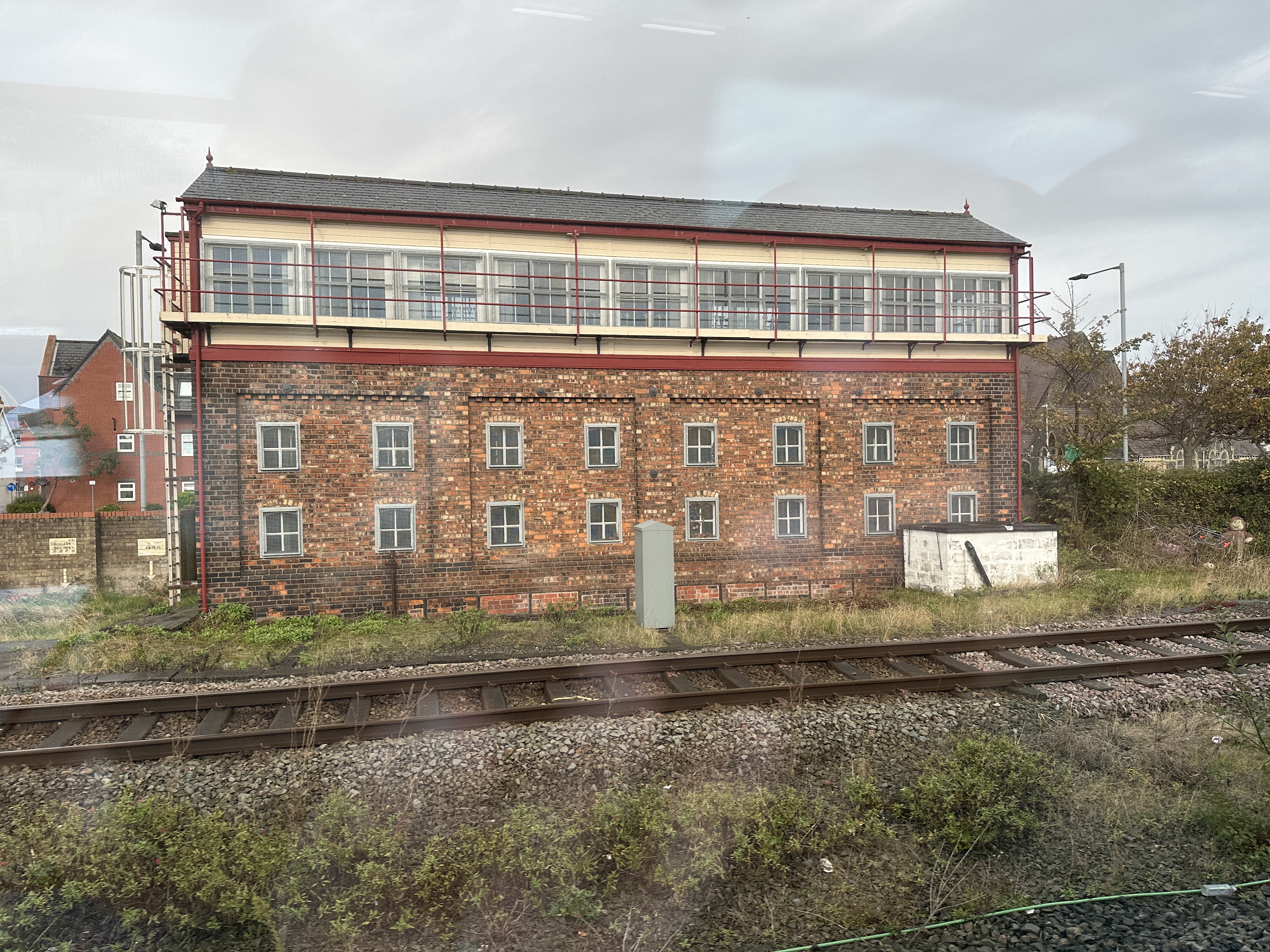
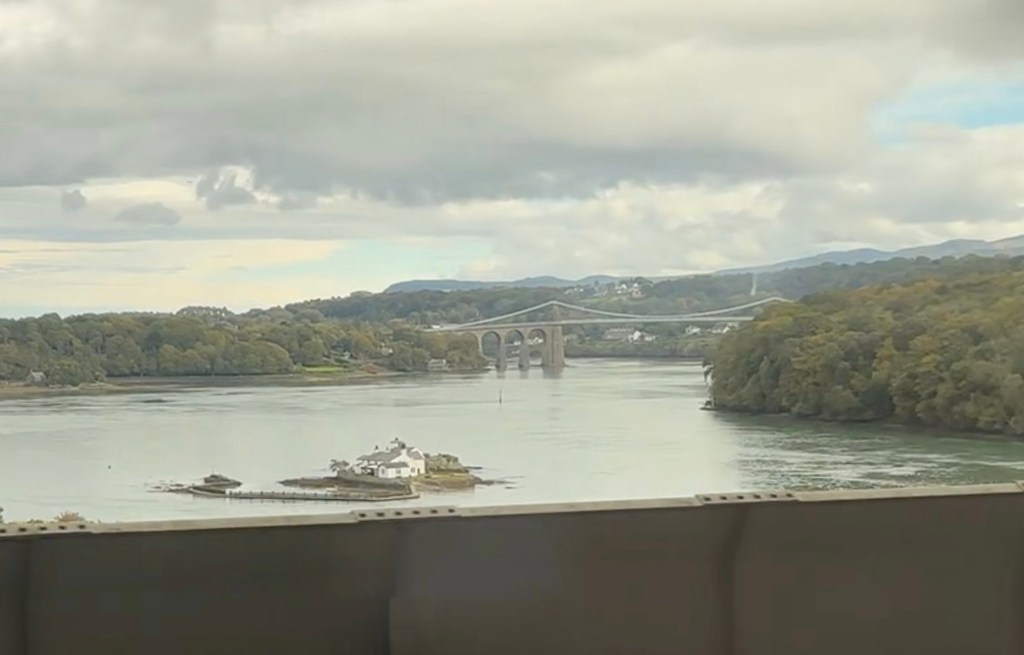
On a happier note, the North Wales coast line is a delight. Many of the original 19th century station buildings and signal boxes survive along with a few semaphore signals in Anglesey. The route hugs the Irish Sea shore and crosses the historic Britannia Bridge to Ynys Môn, Anglesey. This was one of Robert Stephenson’s monumental accomplishments but sadly the old tubes that carried the rails above the Menai Straits were fatally damaged by a fire started accidentally by two children in 1970. The bridge was rebuilt in more modern form two years later and in 1980 an additional deck was added to provide a second road bridge to Anglesey. The old bridge was flanked by two statues of lions, and I glimpsed one of these as my train headed across the bridge. The BFI has a wonderful film of an LNWR train crossing the original bridge in Victorian times here.

Happily Stephenson’s 1848 tubular bridge at Conwy survives – perhaps the only one left anywhere in the world.

Telford’s 1826 Menai Bridge from the Britannia rail crossing

I was amused that the on-train safety announcement was in Welsh – before we’d even left the London suburbs! But I discovered that the irritating ‘See it, Say it, Sorted’ slogan is just as annoying in Welsh, as ‘Wedi sylwi, Wedi sôn, Wedi setlo”…

I sailed to Ireland on Ulysses, an Irish Ferries super ferry. It’s the size of a small cruise liner, and although it tales longer than a fast ferry, it is almost never cancelled because of the weather. It was an easy and enjoyable way to travel, although for the first time on a ferry I had to put my bags through a security scanner. There were no restrictions on liquids, though.

I assumed that the ferry would be birthed next to the railway station but the ferry terminal has moved a mile or so, presumably to accommodate modern, bigger ships.

Kilmainham Gaol

I love my visits to Dublin, and this was no exception. My friend Louise kindly collected me from Dublin ferry port and took me to my hotel, the Maldron in Smithfield. The following evening, Louise, Aidan and I had dinner after convivial drinks with Allan Chapman and Barry Chapman from PR agency Comit. These get togethers always prompt serendipitous conversation: this time, we talked about family connections to the Australian goldfields and Ned Kelly.

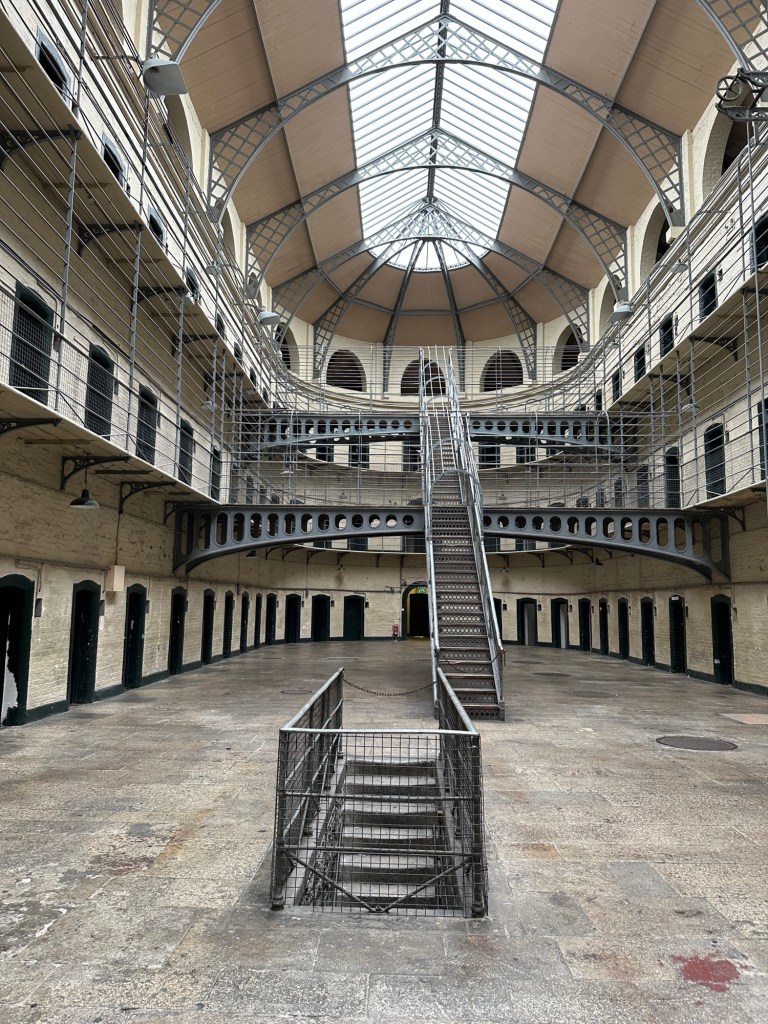
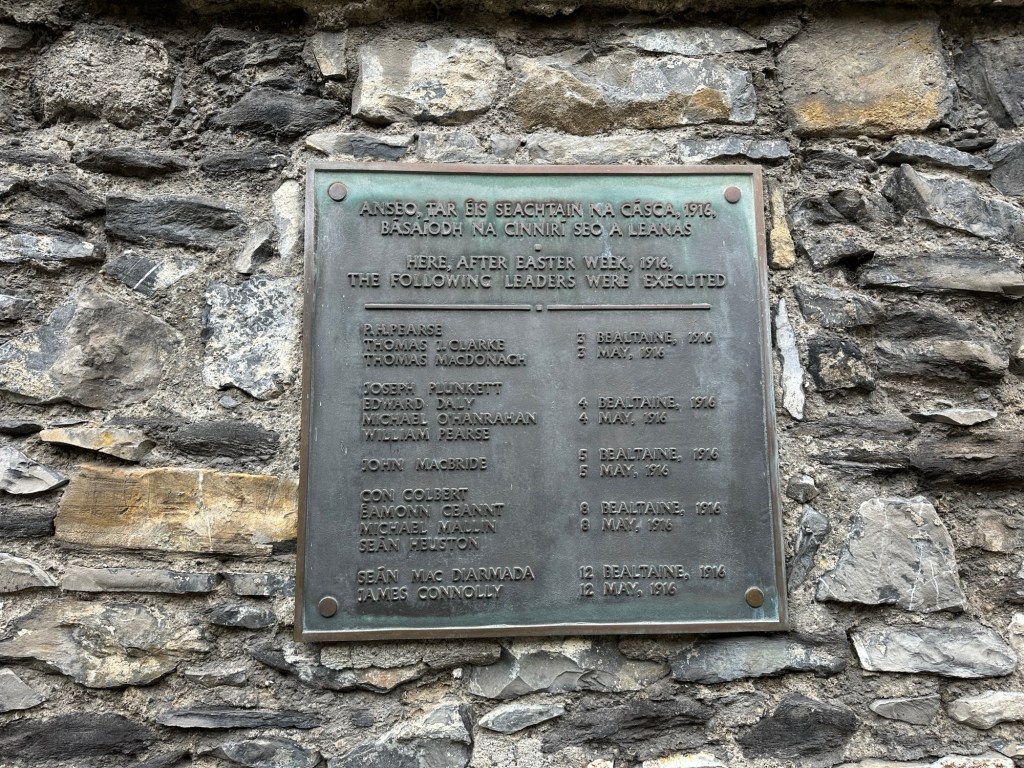
Earlier, I toured Kilmainham Gaol. This prison is over 225 years old, and replaced dungeons as a home for Dublin’s prisoners. It is best known as the place where the men and women who fought for Irish independence were held and in all too many cases executed. It was sobering to see the spot where those who took part in 1916’s Easter Rising were shot, marked by a simple wooden cross. A few metres away another cross symbolised where James Connolly was executed by firing squad sitting in a chair as he was unable to stand because of injuries he sustained during the rising. I blogged about the Easter rising and the British reaction to it on the centenary in 2016.

There’s also a plaque commemorating those executed at Kilmainham by the Irish Free State army during the Irish civil war in 1922.

On a more lighthearted note, I learned on the tour that the prison scenes in the Paddington 2 film were filmed at Kilmainham.

Finally, the old spelling gaol reminded me that I was completely stumped when asked to read it aloud at school in Wales 50 years ago. I think I said ‘gale’. The Guardian was still using the old spelling well into the 1980s before conceding and adopting the modern spelling.

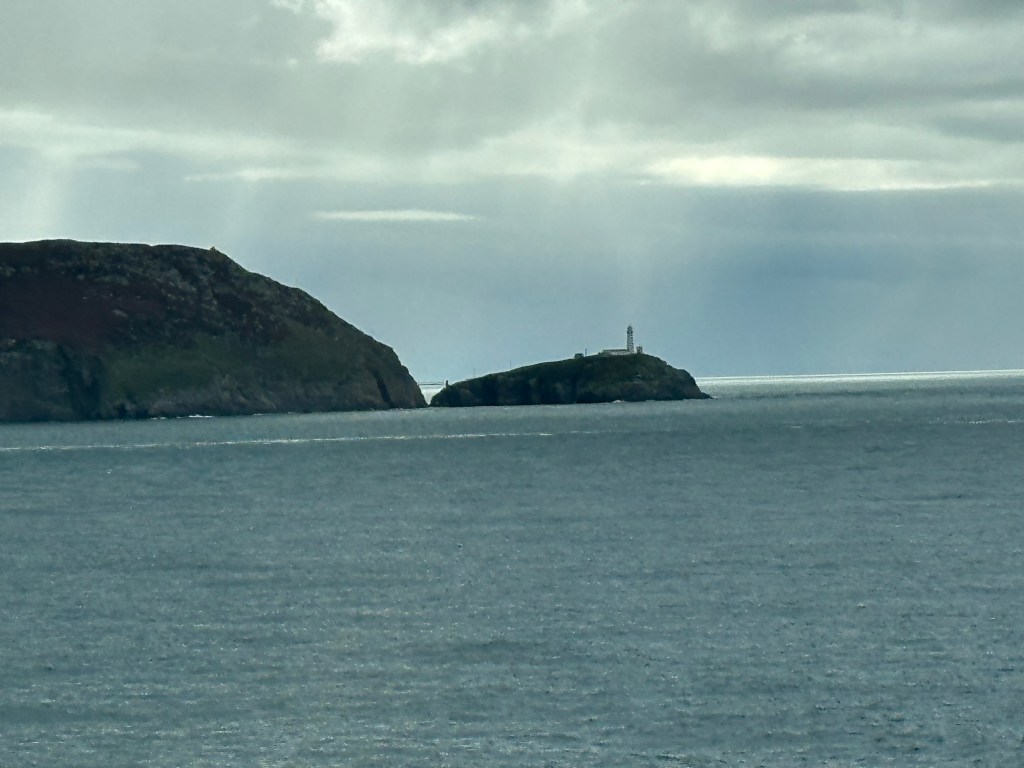
South Stack lighthouse, Wales

I enjoyed my land and sea journey to Ireland. I’d happily do it again, perhaps taking the car from Fishguard to Rosslare, as I did on my first visit to Ireland with Mum and Dad in 1974. Or by bike, as I did in 1996? Time will tell.

Kenneth Grange: the designer who made the InterCity 125 HST an icon

Photo: National Railway Museum, York

British Rail’s High Speed Train caused a sensation when it burst onto the scene in October 1976. Just eight years after the end of steam, Britain’s travellers loved the new train, which as the branding InterCity 125 hinted raced between cities at up to 125 miles an hour. And you didn’t have to pay a penny extra for the privilege.

Speed was the big attraction: in the early years, the fastest service from Cardiff to London took just 1 hour 41 minutes, a speed unmatched by today’s timetable. But the bold design, with its striking blue and yellow wedge-shaped power cars, played a big part in making the High Speed Train an icon, thanks to designer Sir Kenneth Grange, who died this week aged 95. According to his obituary in The Times (paywall), British Rail asked him to enliven the train’s livery, but he persuaded BR he could also make power cars more streamlined, with shades of the 1930s steam loco record breaker Mallard.

Continue reading

Centenary of Britain’s Big Four railways

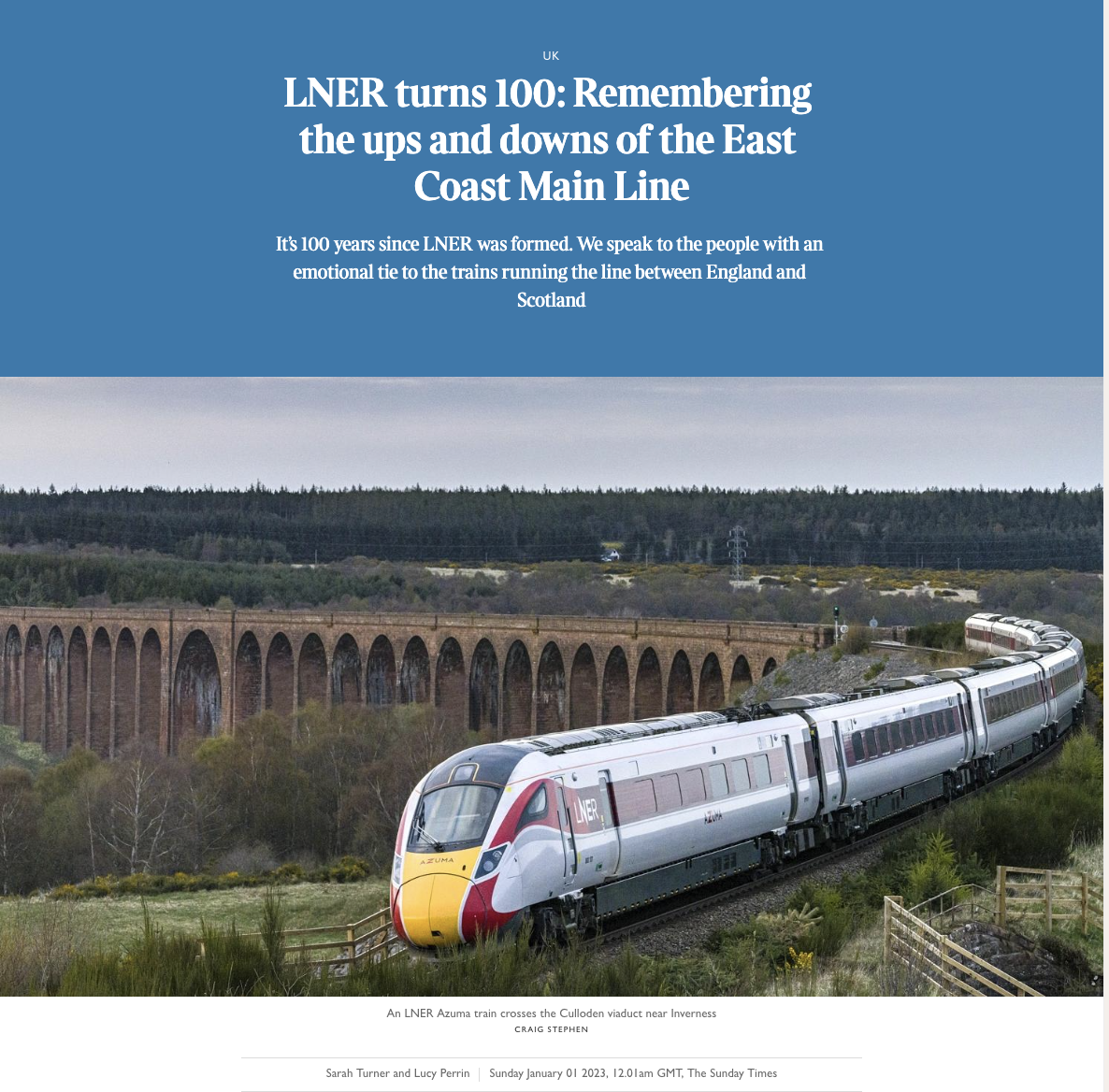
The Times marks LNER’s 100th birthday

The LNER rail company has been celebrating its centenary this week, with this splendid video:

I admire the company’s enterprising PR spirit. But there’s more to this 100th birthday than you’d think reading an @LNER tweet. The current LNER is just five years old, taking over rail services on the east coast main line in 2018. The new operator revived the name of the historic LNER, which was created on 1 January 1923 when some 120 British railway companies were grouped into the ‘Big Four’: GWR, LNER, LMS and Southern Railway. Those iconic brands disappeared exactly 25 years later when the railways were nationalised. Yet their enduring appeal led to three of the famous names being revived by privatised-era rail operators: GWR, Southern and LNER. (The reborn LNER scrapped the conjunction in the old name, London and North Eastern Railway.)

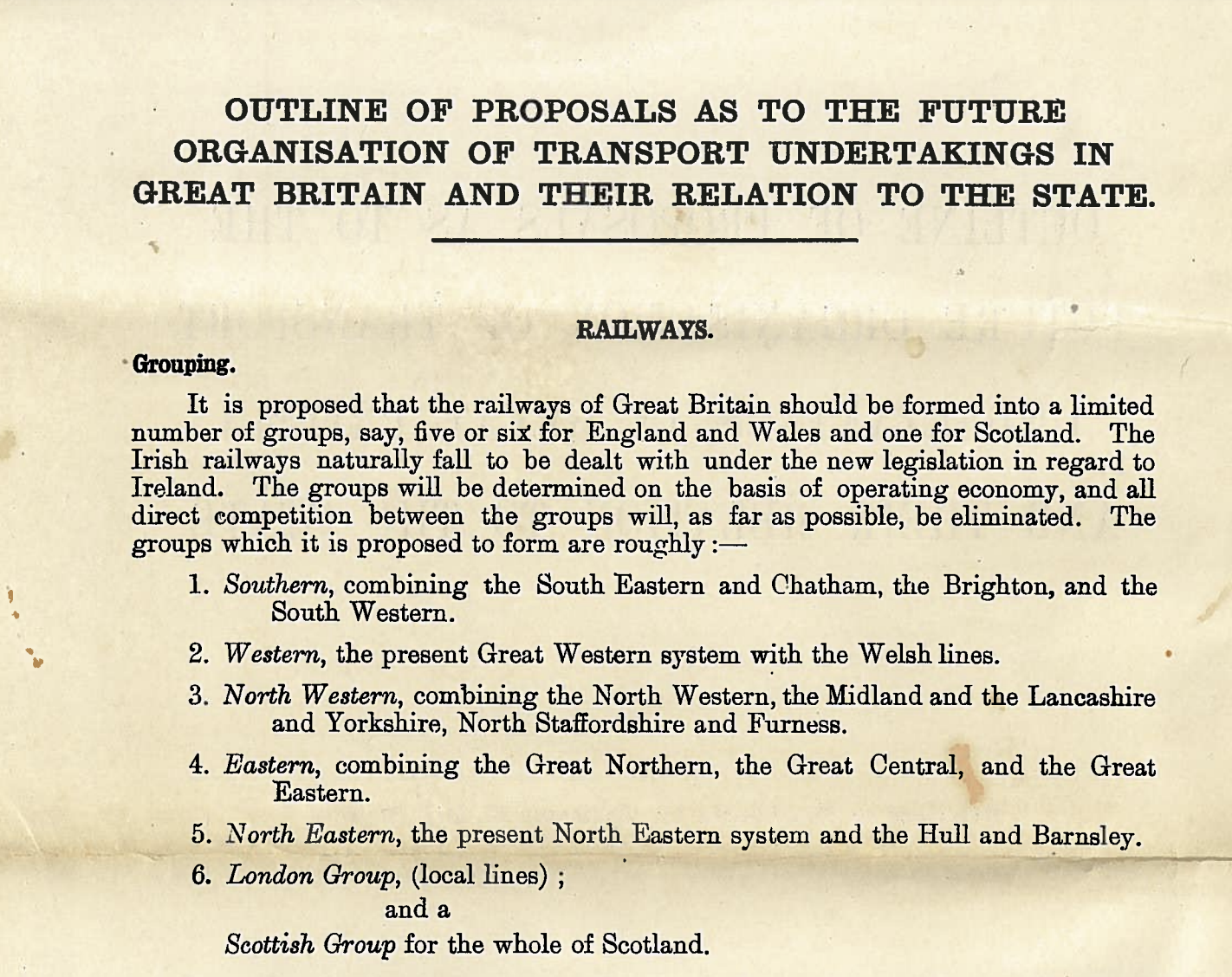
The British government’s 1920 white paper that led to the 1923 grouping

It is striking that the aim of the grouping was to make the railways more efficient, and to eliminate direct competition ‘as far as possible’. Indeed, Winston Churchill spoke in favour of nationalising the railways in 1918, but changed his mind by the time the 1945 Labour government nationalised the Big Four as British Railways. The eventual amalgamation created just four groups rather than the seven suggested in 1920.

Continue reading

Memories of Penrhos Junction, Caerphilly

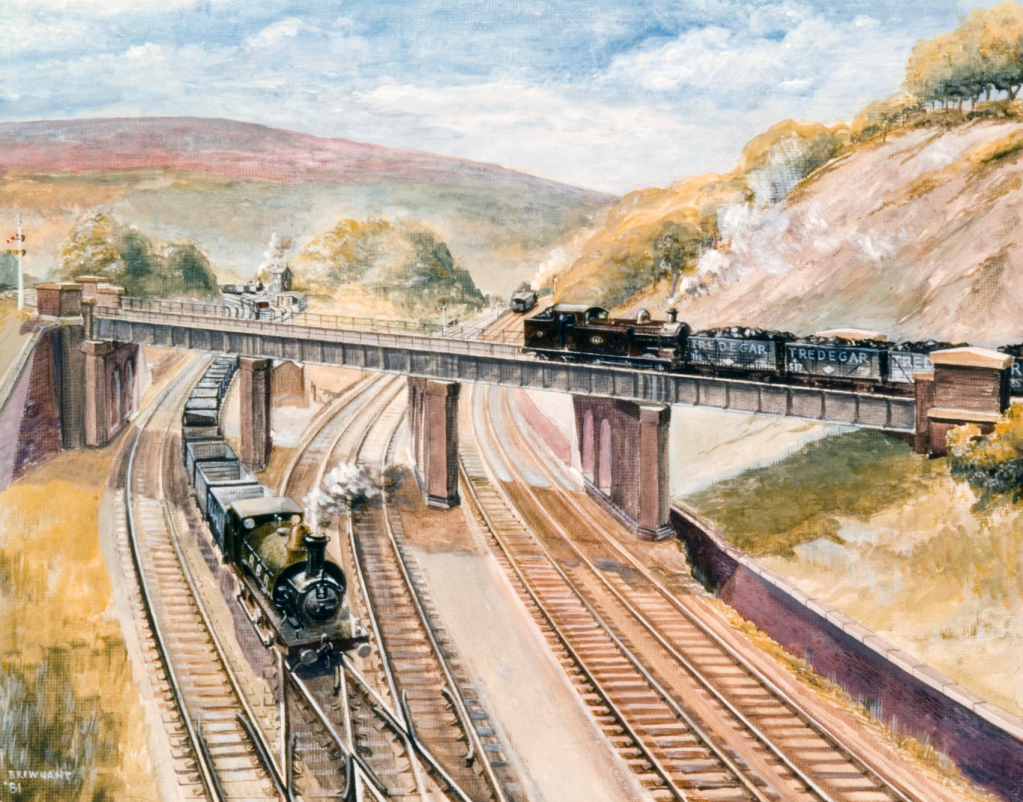
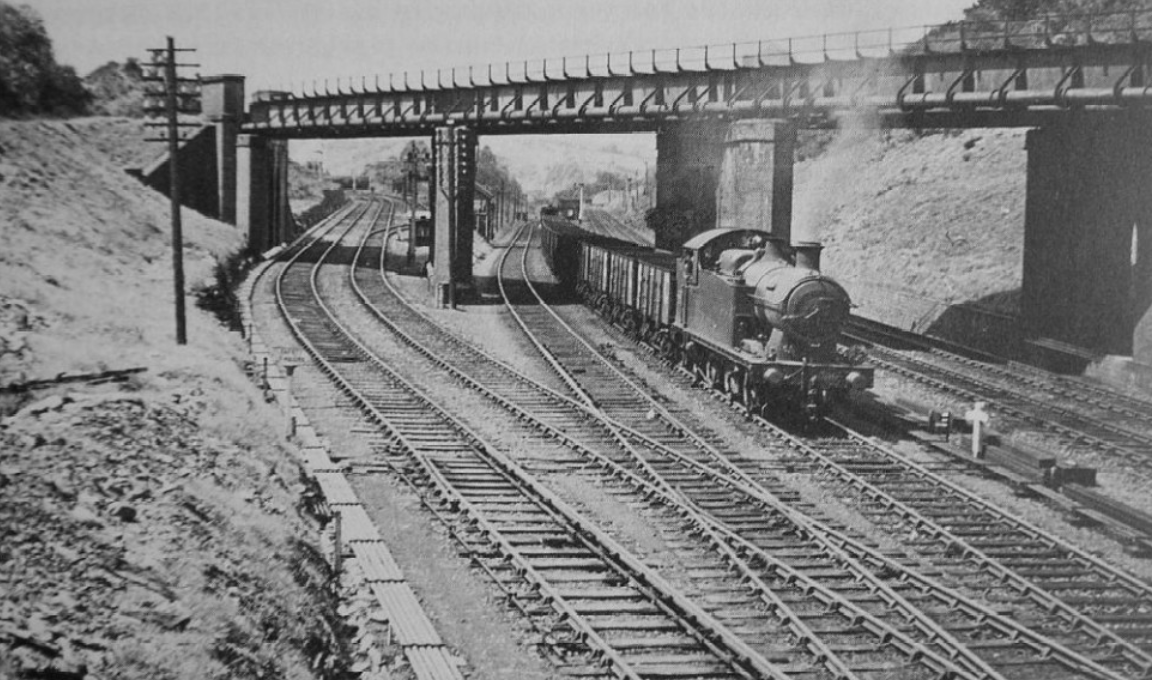
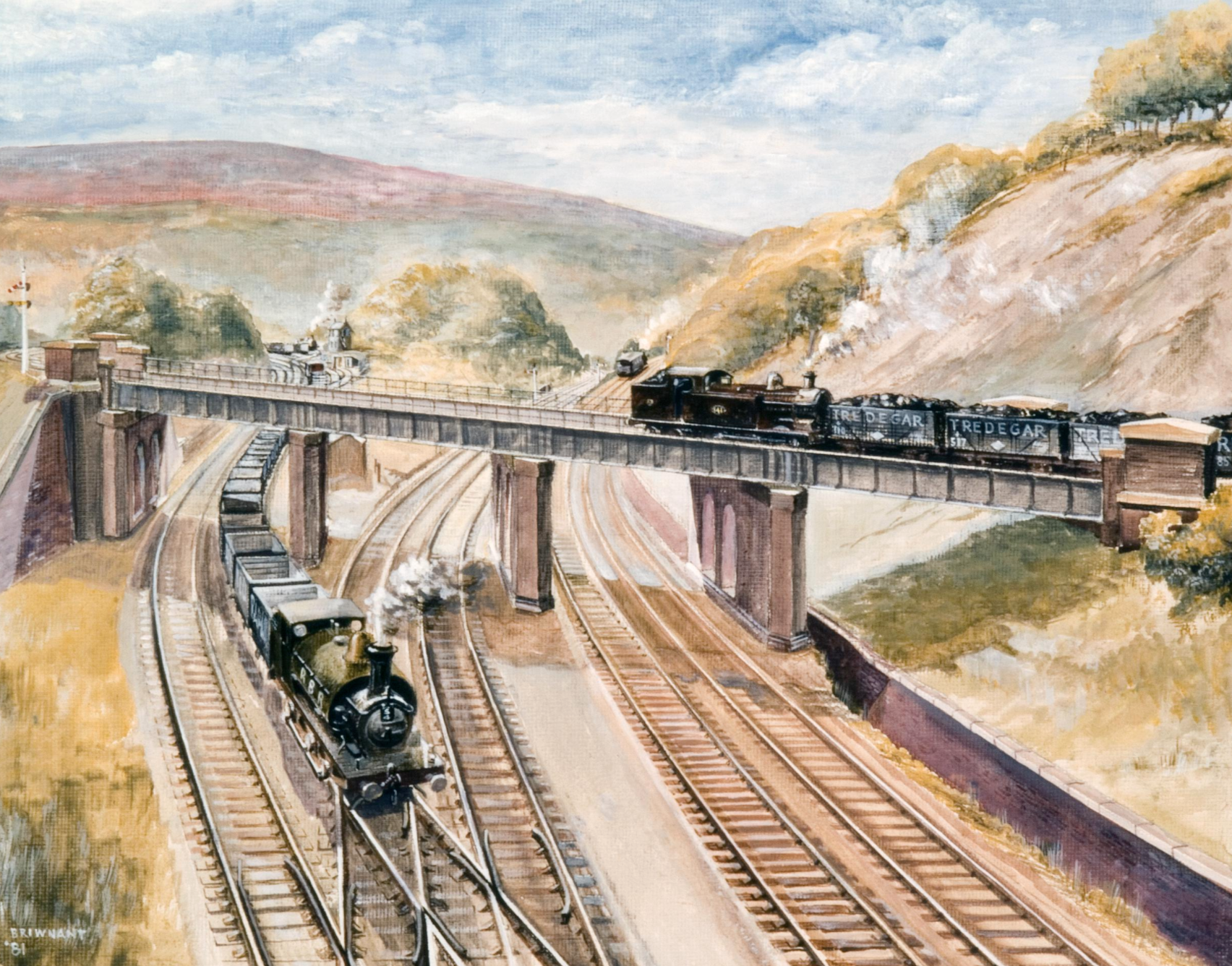
Penrhos in its heyday. Photo: Briwnant, National Museum of Wales

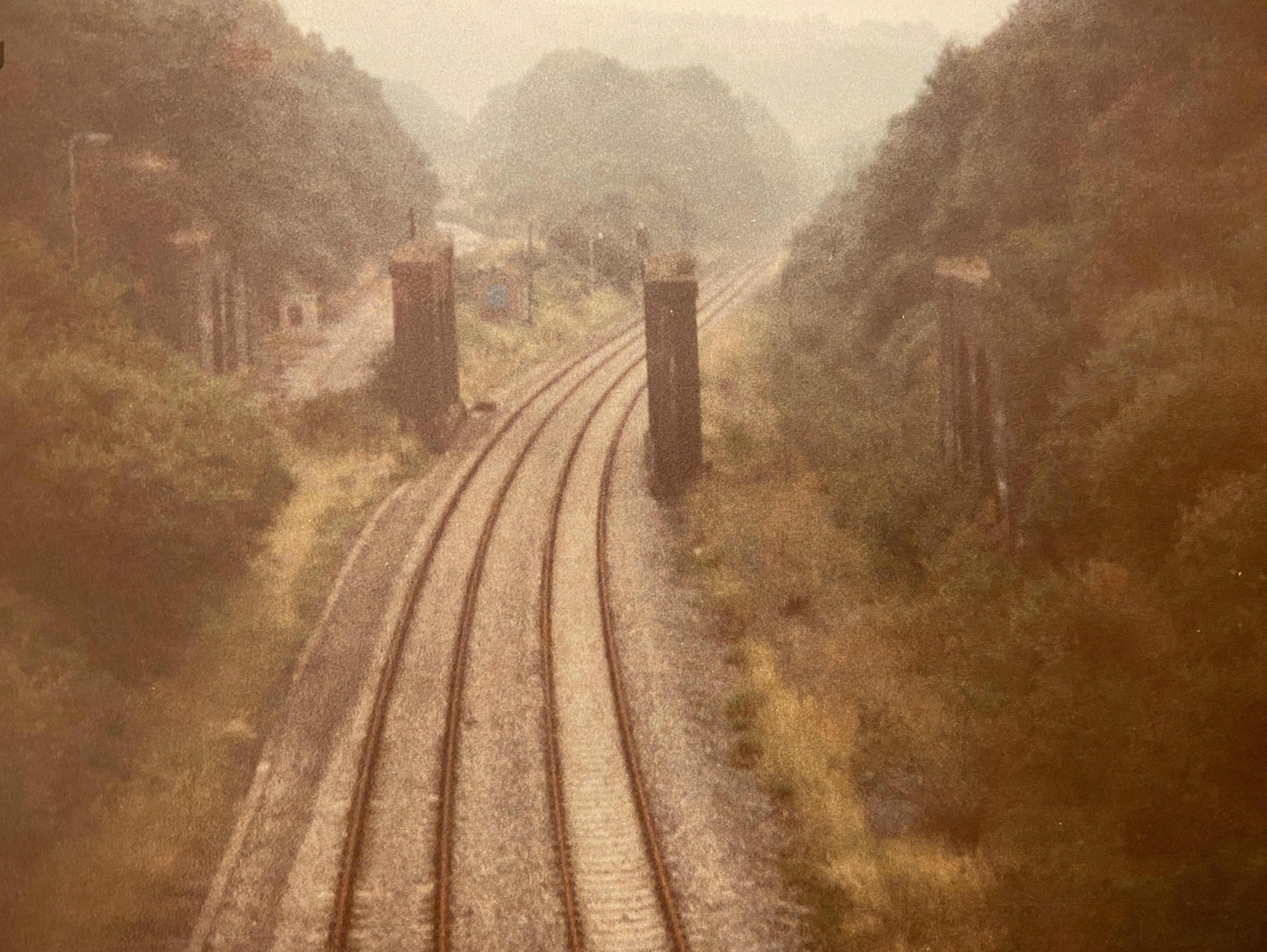
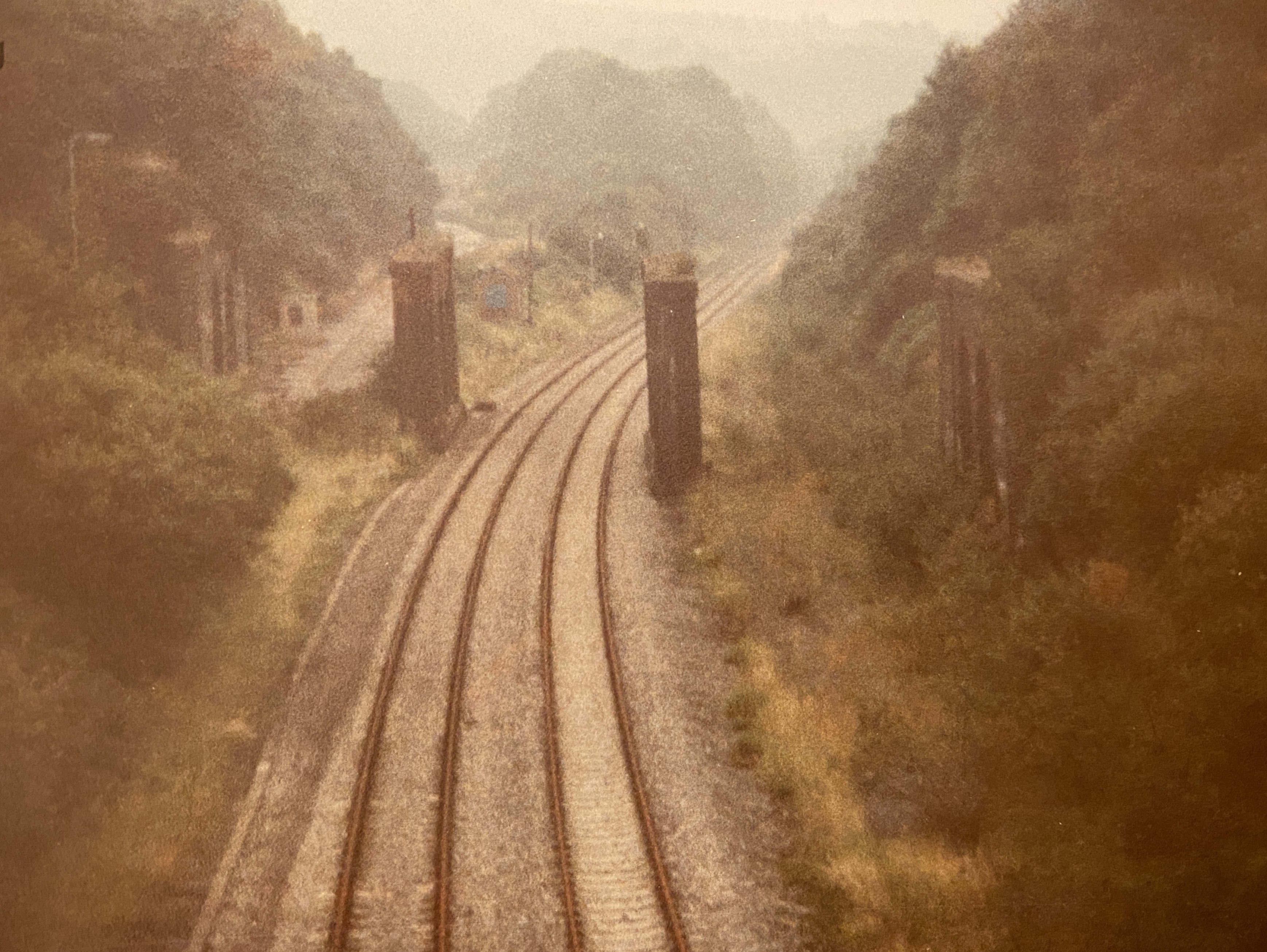
It’s curious how certain places exert a disproportionate influence on our thoughts. More than 40 years ago I stood on a bridge and took a photo of a railway at Penrhos, near Caerphilly. I have no idea why – not a single train graced the lonely route up the big hill from Nantgarw towards Caerphilly.

My first view of Penrhos, circa 1981

Perhaps I sensed the pull of the ghosts of trains past. Penrhos was the site of a mighty battle. Three Welsh railways locked horns on that hillside. The Rhymney was the oldest, opened in 1858 to transport coal from its namesake valley to Cardiff. The later Pontypridd, Caerphilly and Newport hauled the black gold from the Taff and Rhondda valleys to Newport. But the star of the show was the Barry Railway, the parasite that drew trade from the incumbents to its own, new port of Barry. By 1914, Barry had overtaken Cardiff as the world’s greatest coal-exporting port.

At the start of the 20th century, the Barry Railway set off on an outrageous, audacious venture to steal traffic from its earlier rivals. It blew vast sums on a line that soared against the grain of the South Wales landscape. Its new line spanned spectacular viaducts across the Taff and Rhymney valleys to join the Brecon & Merthyr Railway opposite Llanbradach. The expensive line was closed by the Great Western Railway, which absorbed the Welsh railways exactly a century ago, and the great viaducts demolished in 1937, as my father recorded during his reporting career after the second world war. (The steel was recycled for Britain’s frantic rearmament on the eve of Hitler’s war.)

One of the Barry’s more modest bridges crossed the Rhymney and PC&N lines at Penrhos, just west of Caerphilly, seen in Briwnant’s image above. By the time I took my first photos here in the early 1980s just one double track line remained. Within a year even that route had closed.

Yet the pull of that lonely hillside still captured me. In the snows that followed Christmas 1993, Dad and I drove over Caerphilly Mountain to witness Penrhos, now bleak and rail-less. The pillars of the Barry’s overbridge provided the only evidence of a lost railway. I don’t remember mourning this monument to the loss of South Wales’s industrial might. But I feel it keenly now. Forty years ago, no one thought the loss of king coal was a victory for planet Earth. But let us cling to that consolation.

When the rails left Penrhos, the coal trains from the Rhymney valley were restricted to the later 1871 Rhymney Railway mainline through the tunnel to Llanishen and Cardiff. Lying in my bed in Lakeside, Cardiff, as night became Bible black, I took comfort in the throb of the class 37 diesels as they piloted their black gold cargoes down the embankment towards Cardiff. The diesel song occasionally joined in harmony with City Hall’s bells sounding the hour, and the foghorns of the capital’s still active docks.

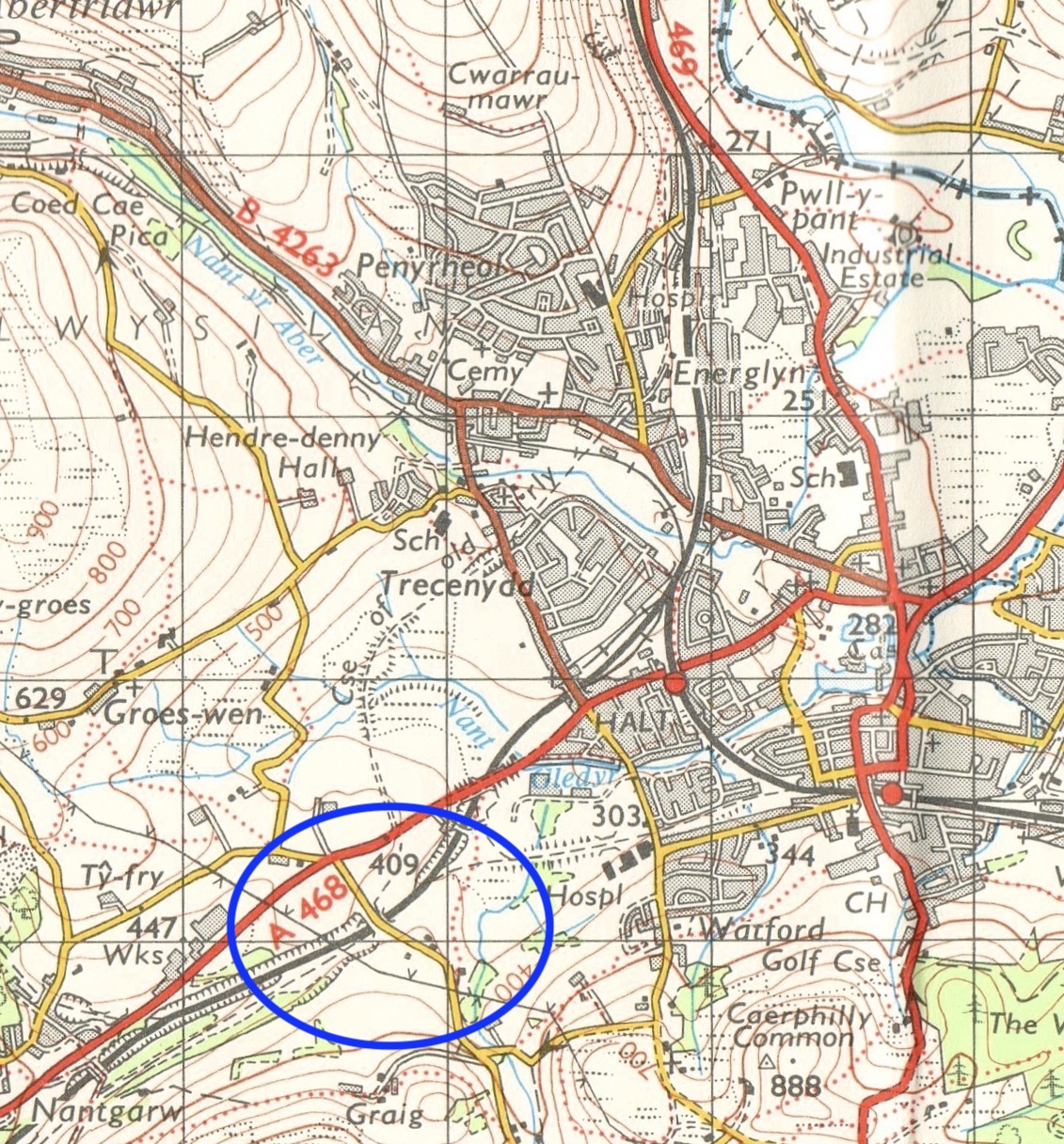
Penrhos Jct site, 1972 OS one inch map

The map above shows the site of Penrhos Junction around 1972, circled, on the last one inch OS map. You can see the link line to Caerphilly and Newport has gone. You can also trace the route of the old Barry line skirting Energlyn and Penyrheol north towards Llanbradach. (Modern maps show not a trace of the old trackbed, which has been buried under new roads and housing.)

The reign of king coal is over. The surviving South Wales rail lines are largely devoted to human not industrial traffic. Some of the lines closed by the malevolent Dr Beeching have reopened in the past 35 years, with more to follow. But Penrhos is unlikely to echo once more to the sound of trains. Any dreams of a resurgence will be confined to small scale models. North of the road bridge where Dad and I parked our cars the railway cutting has been filled in as a foundation for Caerphilly’s expansion.

I’ll end with an image of Penrhos in its twilight days. The photo above shows the Barry viaduct intact, but disused, as a GWR coal train steams up the hill from Taffs Well. Today, the hillsides echo to footsteps and barking dogs rather than panting trains. We can but dream of the days when Welsh steam coal fuelled the world.

Postscript: Return to Penrhos Junction

It took 30 years, but I finally returned to Penrhos Junction yesterday.

I parked the car on the old road which we’d driven along from Rhiwbina back in the 1980s and 1990s, and Owen and I went exploring.

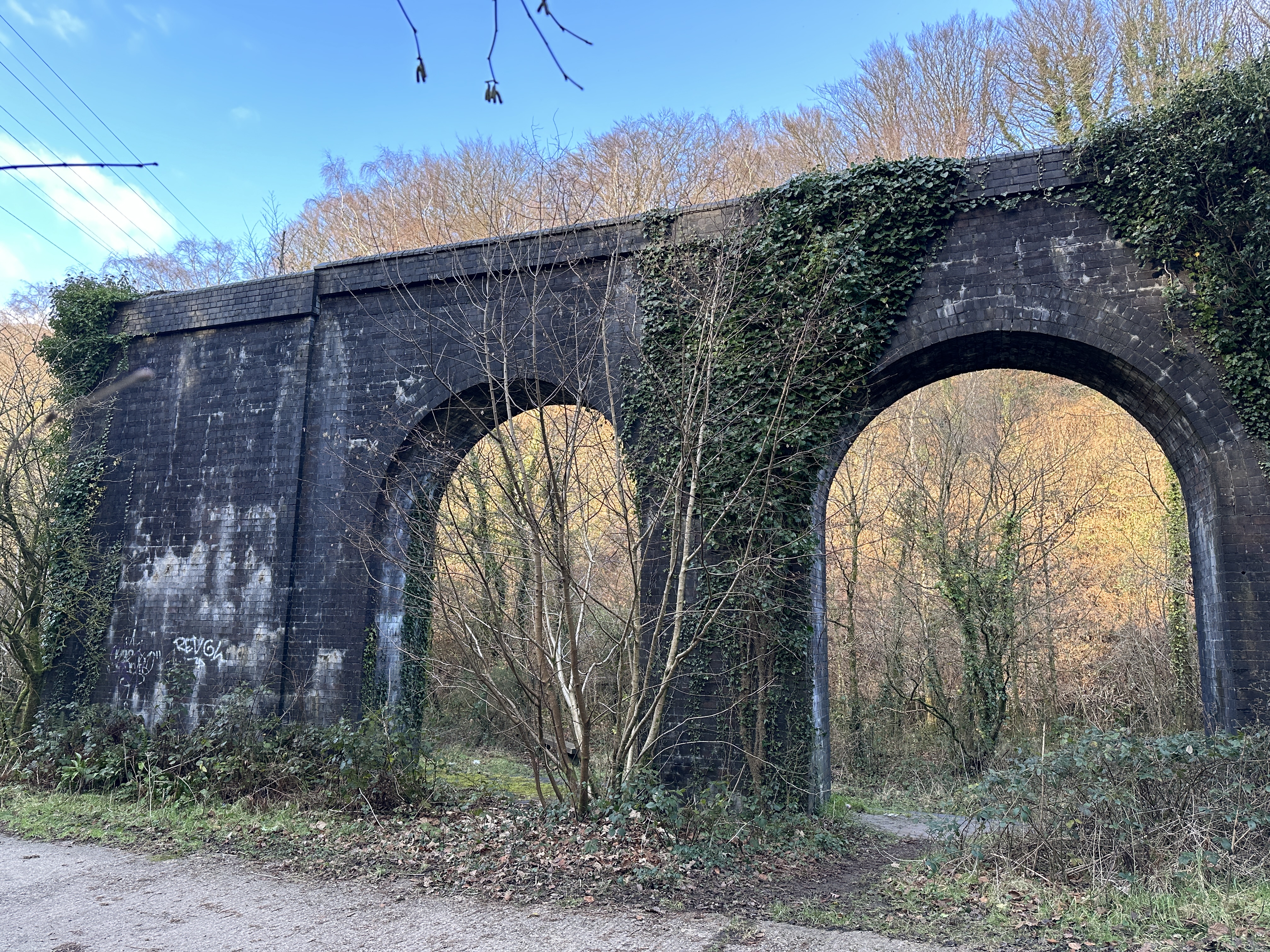
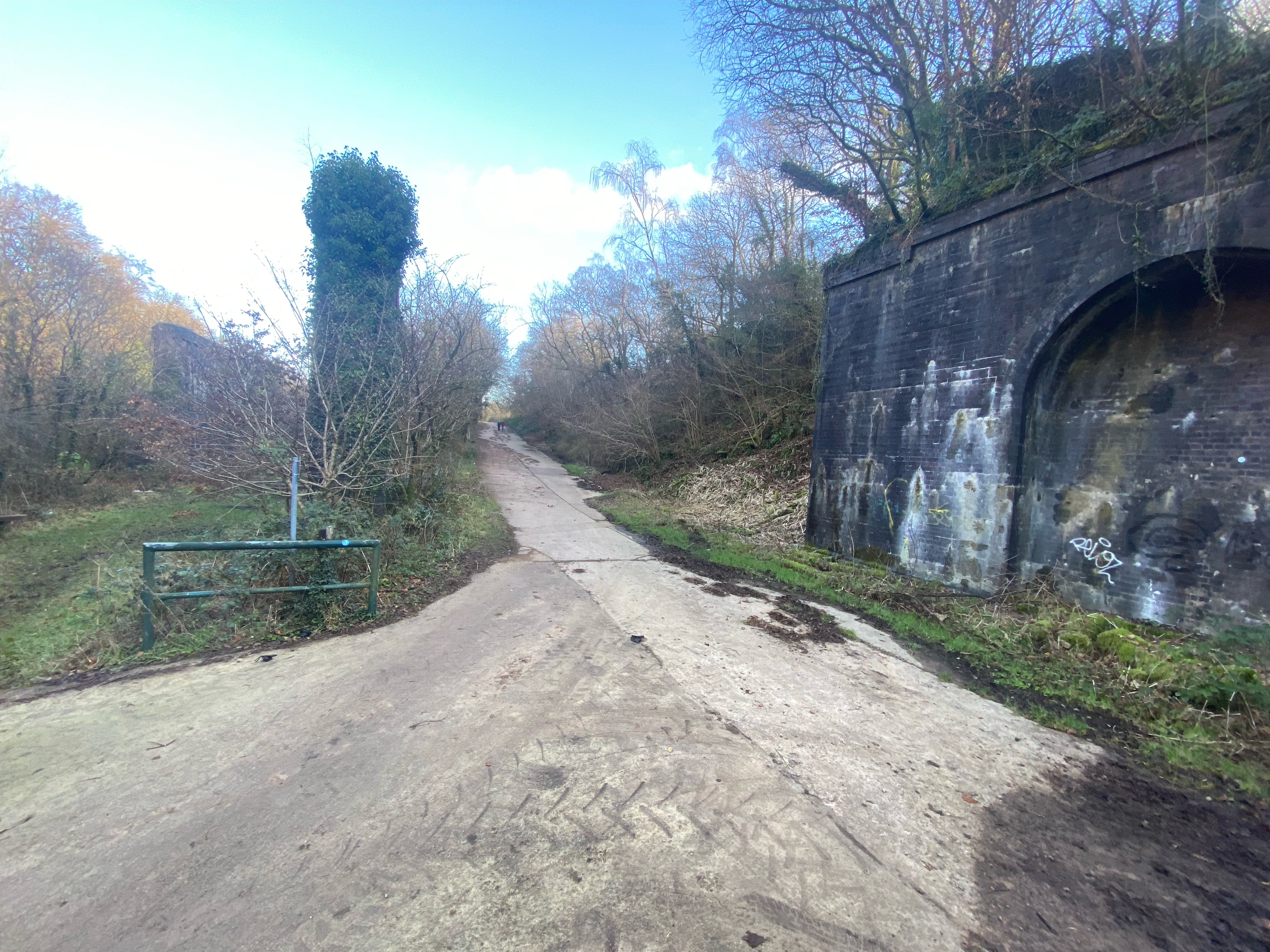
The piers that used to carry the Barry line over the rival railways are the most prominent features of the site today. I took the photo on the left in the spot just beyond where railway lines above pass the piers in my 1981 photo above, but facing in the other direction, towards Caerphilly rather than down the hill towards Nantgarw.

This is the last pier, where the Barry trains left the viaduct and descended to meet the other Barry Railway tracks that left the Rhymney Railway line just behind where I was standing. It looks as if the abutment that used to adjoin this pier was demolished decades ago – I couldn’t see it in my earlier photos.

The Barry Railway’s route from Penrhos to the Brecon & Merthyr Railway on the east side of the Rhymney valley cost the company a fortune, yet was closed within 21 years of the first train running. The rival Welsh railway companies became part of the Great Western Railway in 1923, and the GWR had no need for the Barry’s route to the Rhymney valley, especially after the collapse of the coal trade after the Great War. The most spectacular feature of the doomed route was Llanbradach Viaduct. Pathé News filmed that spectacular bridge’s demolition in 1937, and my father Bob Skinner recalled that event in a story for the South Wales Argus after the war.

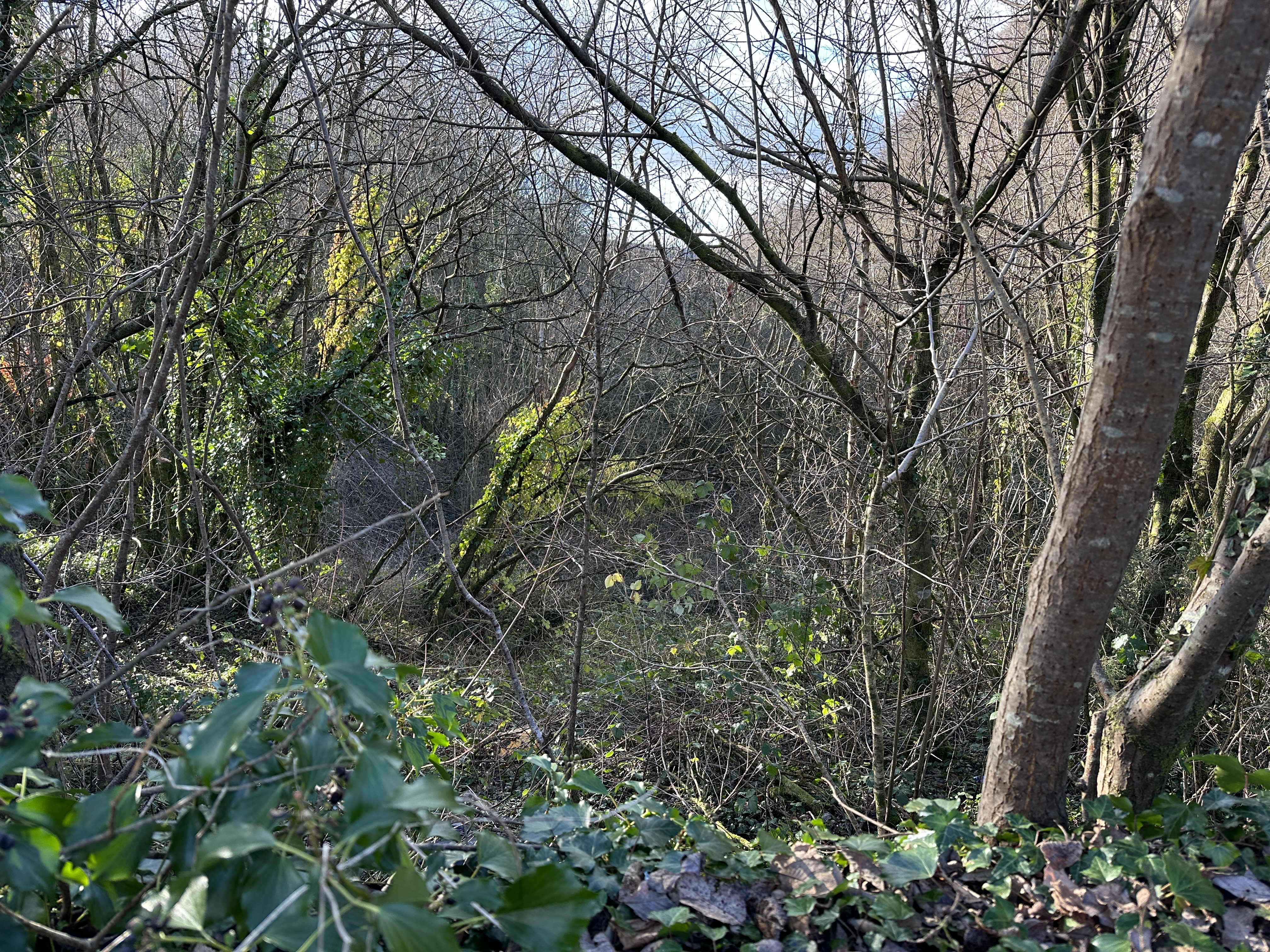
I took my original photos of Penrhos Junctions from a handsome road bridge that originally carried the road up over the mountain to Rhiwbina and Tongwynlais. I thought the structure had been swept away when a new route for the A469 was created – it was impossible to see the bridge from Google Maps or Google Earth. Yet as I walked back to the car I turned left over a track – and Owen pointed out the parapets either side. We were standing on the old crossing! It was far narrower than I remembered, and the setting had been totally reclaimed by nature.

It’s hard to believe I took these two photos in the same place. Forty years of natural growth have completely obscured the view from the old road bridge, although you can just make out the slope of the hill looking towards Nantgarw.

The bridge parapet – barely visible in 2024
American locomotives stored at Penrhos, 1944. SLS Library, courtesy Gerry Nichilas, via WRRC

Penrhos played a role in preparations for the D Day landings in 1944. Over 150 American S160 heavy freight engines were stored under guard in the Barry sidings at Penrhos, ready to be shipped to France to support the Allied breakout from the Normandy beachhead. This photo was taken by an official US Army photographer, most likely early in 1944.

In praise of journalist Ian Jack

Ian Jack’s Guardian by-line photo

We’ve lost a fine writer and observer of British life and politics with the death of Ian Jack.

My spirits always rose on a Saturday when I spotted one of Jack’s beautifully observed Guardian columns. It helped that I’m fascinated by the topics he made his own, such as Britain’s industrial heritage, and the long-lost glories of our railways and maritime traditions. Who else would have linked the disastrous new rail timetables of 2018 with the misreading 153 years earlier of a timetable that caused the Victorian railway crash that ruined the health of Charles Dickens? (In that piece, Jack also highlighted that Dickens was travelling with his lover when their train crashed into the river Beult.)

He turned wistful memories into compelling copy. Take this example, a childhood memory of a 1950s dining car experience, woven into a column mourning Chiltern Railways’ axing of on-train catering services:

Continue reading

Steam’s graveyard: Barry island memories

A Southern engine reveals its origins, March 1982

I was too young to remember seeing steam engines on the mainline, but I had a childhood consolation. Just 10 miles from my Cardiff home, I could clamber over hundreds of steam locomotives without anyone telling me to stop. That playground was Barry scrapyard, steam’s graveyard.

At the end of steam in the 1960s, Dai Woodham bought hundreds of withdrawn steam engines from British railways for his scrap business at Barry Island. He intended to scrap them but delayed doing so while he focused on scrapping redundant railway wagons. As a result, railway preservation societies flocked to Barry to select locomotives to restore to operate their lines. Out of almost 300 engines sent to Barry, almost three quarters were rescued from the graveyard, and over half lived to steam again.

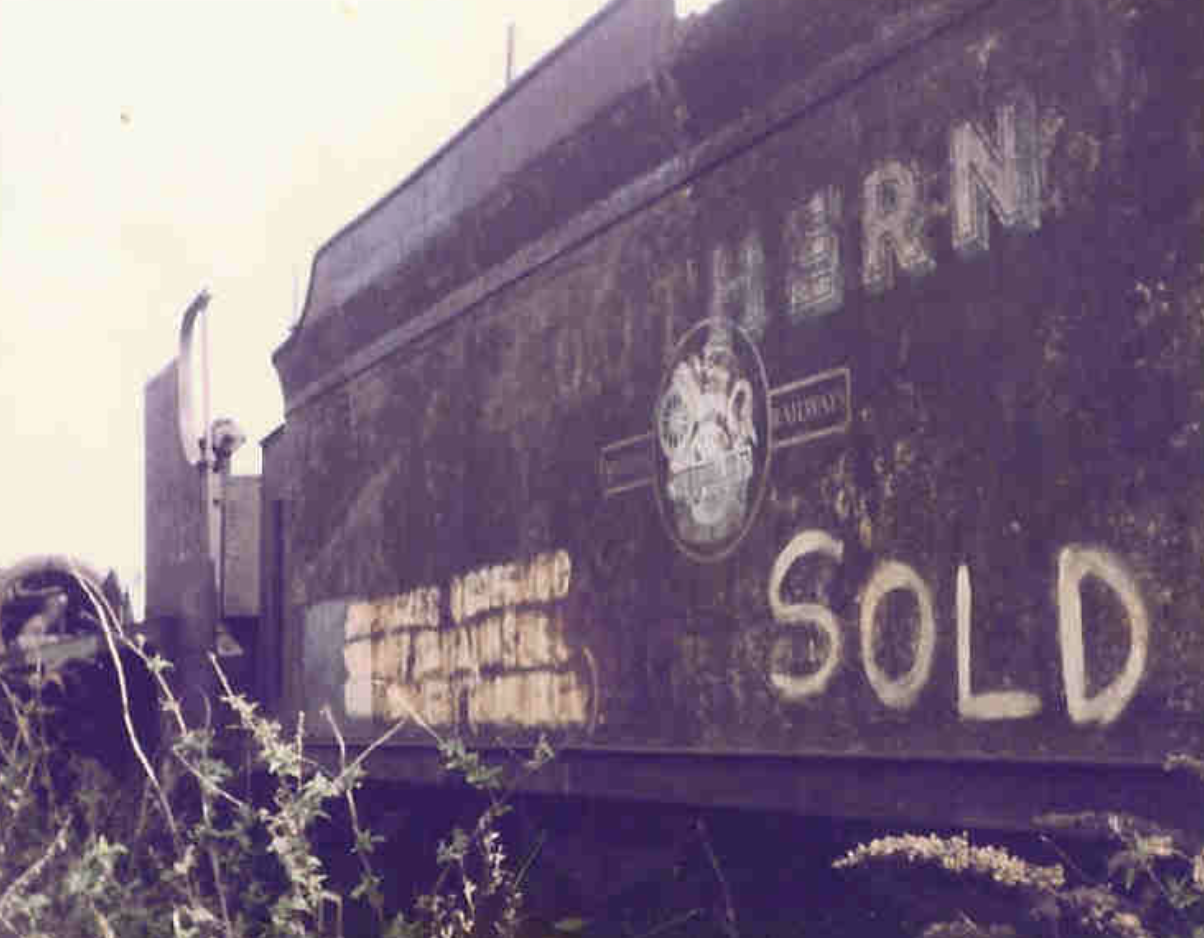
On my visits to Barry scrapyard, I was drawn to the ex GWR engines, especially the last monarch, King Edward II, which I saw miraculously reborn in 2011, and the engines that sustained the Welsh coal trade. But 40 years ago today I was enjoyed a spectacular sight. Twenty years of Welsh sea air had revealed the pre-nationalisation (1948) livery of a Southern Railway S15, with the SOUTHERN legend clearly visible. As you can see on the photo I took that day (above) there are actually three logos: the two British Railways lion symbols as well as the Southern lettering.

According to my 1982 diary, I had finished my A level mock exams the week before, so must have taken advantage of a lesson-free afternoon to get the train to Barry Island, before spending time in the sadly-missed Lears bookshop in Cardiff’s Royal Arcade. I bought a book about the Cambrian Railways, the Welsh line graced by some of the GWR Manor class engines I’d just seen at Dai Woodham’s scrapyard.

GWR royalty: King Edward II, Barry, 1979
Me, on GWR heavy freight engine 7229, Barry, 1983
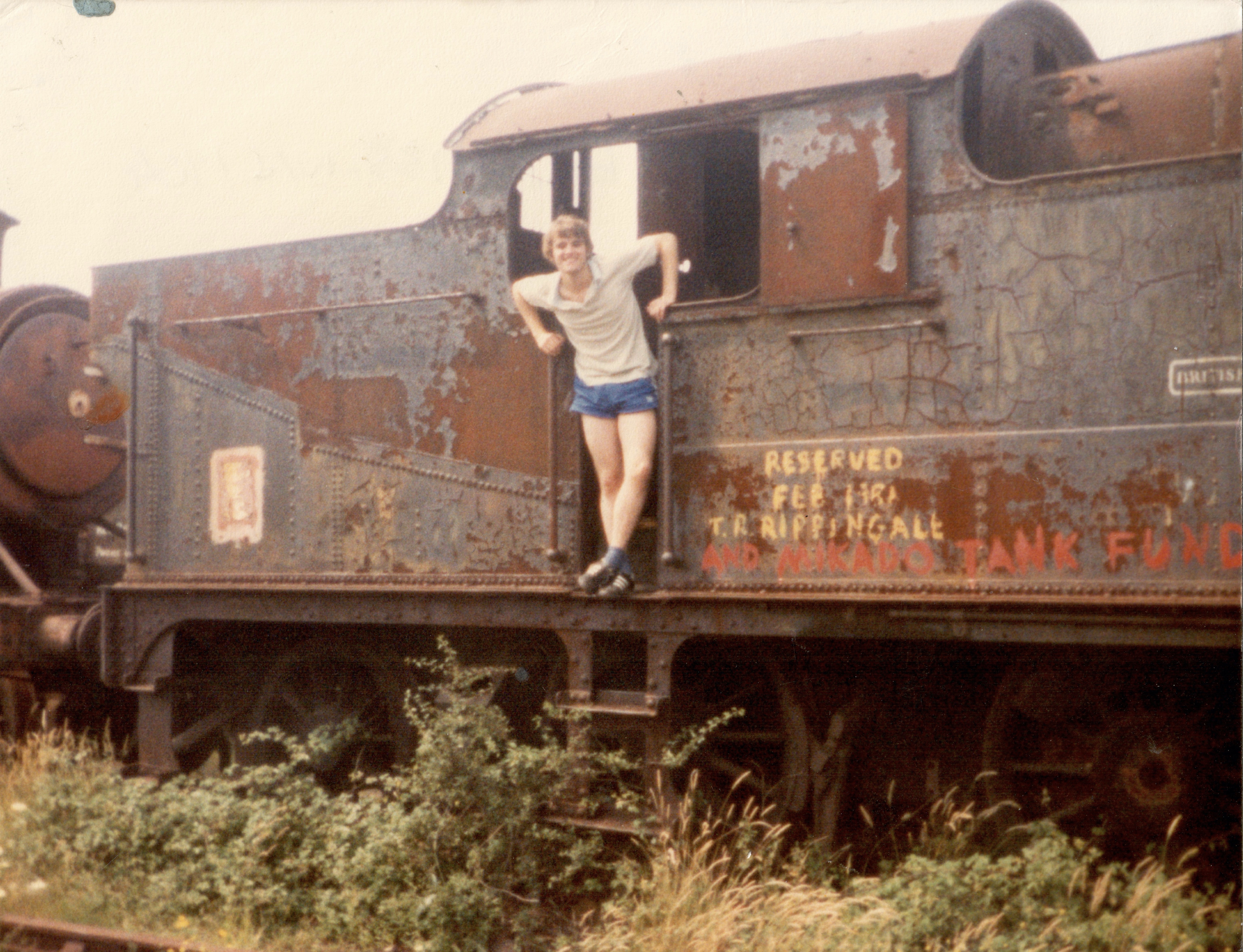
Me, aged 20, on BR’s penultimate steam loco, 23 year old 92219, Barry 1983

COP26: the end of King Coal?

Penrhos Junction, 1920. Gwyn Briwnant Jones, Photo credit: Amgueddfa Cymru – National Museum Wales

It was a symbol of Welsh industrial might: a locomotive hauling a coal train that seemed to go on for ever. A century ago Welsh steam coal powered the world. Yet Wales has become one of the first countries to join a global coalition of nations aiming to phase out fossil fuels: the Beyond Oil and Gas Alliance. It’s comes as criticism grows of the weak response of the COP26 climate conference to the climate crisis.

I grew up in Cardiff on tales of King Coal. As I lay in bed I could hear the growl of locomotives hauling coal trains along the old Rhymney Railway line from Caerphilly. And I loved visiting the mock coal mine at the National Museum of Wales – appropriately located in the basement. The museum is in Cardiff’s magnificent civic centre, part of the impressive architectural legacy of the immense wealth created by the coal boom, along with elegant ship and coal owners’ mansions such as Insole Court, Llandaff.

Continue reading