Learning Welsh, 30 years on

Thirty years ago this week, I sat down in a classroom in an abandoned quarrying village to learn the Welsh language. I couldn’t have chosen a more idyllic spot: the National Language Centre, Canolfan yr Iaith Genedlaethol at Nant Gwrtheyrn on the Llŷn peninsula in North Wales.

Nant Gwrtheyrn, 1994
My final school report in Welsh, 1975

My journey to the Nant was a long one, literally and metaphorically. When I went to Cardiff High School in 1975, I gave up Welsh in favour of Latin. I didn’t enjoy Welsh at Lakeside primary school, and was not a fan of the teacher, who rightly gave me B- in my final report, yet described my work as very good. I regretted the decision immediately. Welsh teaching at Cardiff High was in a different league, and I’d have learned my national language far more quickly. But life is about making up for regrets rather than mourning them for ever.

I was living in Gloucestershire (Swydd Gaerloyw in Welsh) in May 1994, and found the long drive to Llŷn magical. I smiled at the name Woofferton as I drove through that village near Ludlow. Much later, long after crossing the border, I fell in love with the spectacular scenery as the A470 road carved its way from Mallwyd through Dinas Mawddwy before sweeping down to the handsome town of Dolgellau. I would come to know this route very well in the years to come.

Arafwch nawr – slow down! Descending to Nant Gwrtheyrn, October 1995

The final stage of the route to the Nant was sublime, crossing Llŷn with constant views of the mountains of Eryri (Snowdonia) and the whole of Llŷn before me, with the Irish sea cwtching the peninsula. After passing through the village of Llithfaen, I was soon navigating the twisting lane down the hillside to the Nant, with the hills called Yr Eifl dominating the view. As you can see, the descent is not for the faint hearted. Since my visits the road has been improved and coaches can now visit the site.

Continue reading

My Dad and Wynford Vaughan-Thomas

My father Bob Skinner with Wynford Vaughan-Thomas, 1977

I was delighted to discover this photo of my late father with Wynford Vaughan-Thomas, one of the most illustrious Welshmen of the twentieth century.

Wynford was a wonderful broadcaster and writer. His first prominent role was as the BBC’s Welsh language commentator at the coronation of King George VI and Queen Elizabeth (later the Queen Mother) in 1937.

His most famous broadcast was from a Lancaster bomber on a raid on Berlin in 1943, an experience he told Michael Parkinson in 1981 was “the most terrifying eight hours I’ve spent in my life”. Like his BBC contemporary John Arlott, Vaughan-Thomas had an almost poetic way with words, which isn’t surprising given he was taught by Dylan Thomas’s father. He recalled that burning Berlin was “the most beautifully horrible sight I’ve ever seen, like watching someone throwing jewellery on black velvet, winking rubies, sparkling diamonds, all coming up at you.” He went on to compare the Berlin searchlights with the tentacles of an octopus.

The BBC radio programme Archive on 4 devoted an intriguing episode in 2013 to the raid with audio from the original 1943 broadcast, Vaughan-Thomas’s recollections and most movingly the memories of a survivor of the raid who was a Berlin schoolgirl in 1943. She tells how her mother risked death by going back into their collapsing home to rescue her teddy bear. Her interview brought to mind the terrible human cost of the Allied – and German – bombing raids of the second world war.

When I rediscovered the photo that opens this blogpost amongst Dad’s photo collection. I assumed that it was taken at an Institute of Public Relations dinner during the time Bob was chairman pf the IPR (now CIPR) Wales group in the 1970s. Sure enough, I found confirmation in a box file of Dad’s speeches and articles: the notes of the speech he gave that night:

“The champagne voice of Wales” – how apt!

Bob wrote a short history of the IPR in Wales in 1995, which was launched at an event in (I think) Newport. It includes this photo, which shows that my mother Rosemary also attended, and that the dinner with Wynford Vaughan-Thomas took place in November 1977, a day before Dad’s 51st birthday. Arwyn Owen, seen in the photo above, who ran PR for Welsh Brewers, kindly supported my application to join the IPR in 1990.

Wynford Vaughan-Thomas was a leading figure in Welsh broadcasting, and was one of the founders of Harlech Television (HTV, now ITV Wales). Not long before he died in 1987 he co-presented a wonderful television history of Wales, The Dragon Has Two Tongues. His sparring partner was the equally loquacious Gwyn A Williams, and over 13 episodes the two Welshmen argued passionately about the interpretation of the past. By common consent Williams won the debate, and Vaughan-Thomas was reduced at one point to dismiss his fellow presenter as “a Marxist magpie”.

Sadly this entertaining series has never been repeated in Wales for copyright reasons, although it has been broadcast in Ireland. It was accompanied by two contrasting histories, Wales: a History by Wynford, and When Was Wales? by Alf.

Battling the English language

The English language is constantly changing. New words and phrases reflect evolving lifestyles and new technology. Back in 2000 no one had heard of the words podcast, vape or selfie – or the phrases post-truth or carbon footprint.

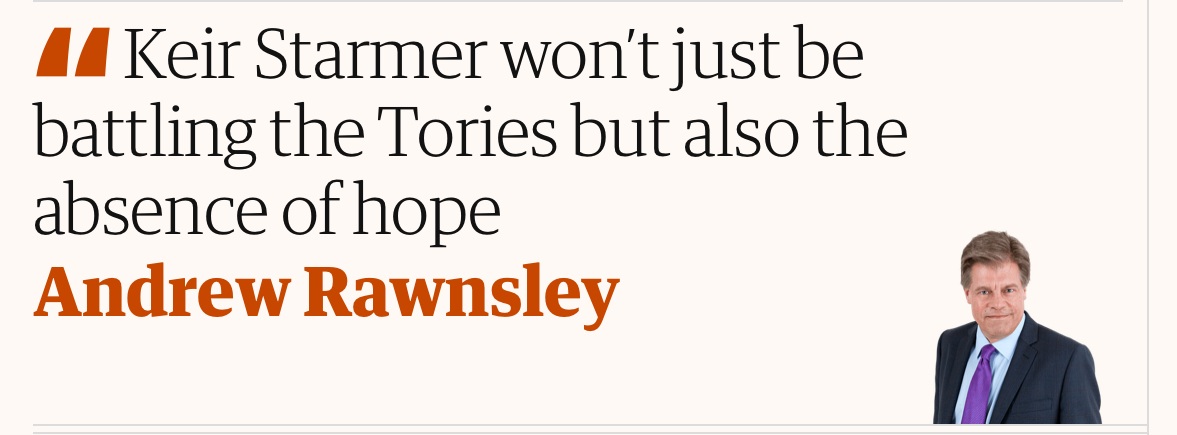
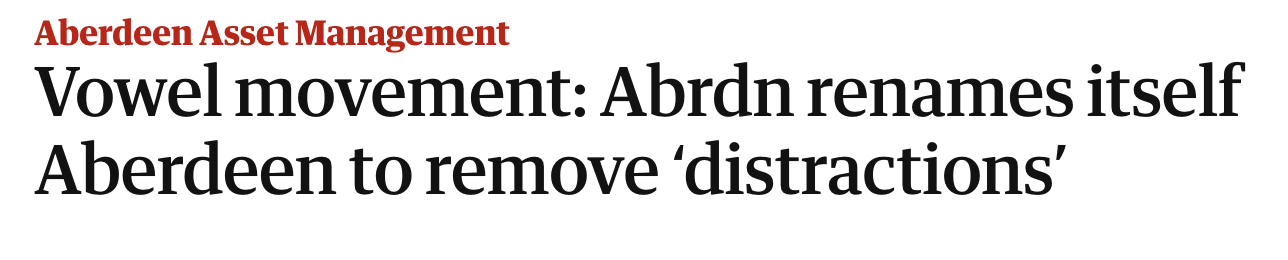
Some changes are more subtle. Take this headline in a column on 7 January 2024 from the Observer’s chief political commentator, Andrew Rawnsley. Until recently the headline would have talked about fighting, not battling, the Tories. But now the verb ‘to fight’ seems in terminal decline, at least outside the literal context of a street brawl. It’s a classic example of a noun becoming a verb.

I confess to feeling irritated by the verbal triumph of battle over fight. Yet I don’t bat an eyelid at hoovering or Googling, or reading that a strike is impacting commuters – and countless other examples of nouns becoming verbs. The difference, I think, is that ‘to battle’ has become almost ubiquitous in place of ‘to fight’. It is a linguistic example of groupthink, which is surprisingly common amongst professional writers and communicators. People who dislike a phrase often find themselves using it once it has grown commonplace.

Here’s another example, from The Times (Robert Lee, 22 December 2023). In the past, reporters would have written that ‘Britain and Brussels agreed to delay’… But for some reason the simple word ‘agree’ was usurped by the phrase ‘signed off’. In time even that was seen as too simple and became ‘signed off on‘. It’s hard to see any reason for this. In the past, sub editors would have ruthlessly cut any superfluous words. No longer. Executing [a plan or strategy] is now executing on. That extra word is completely unnecessary: pure padding.

Continue reading

Captain Boycott, Coventry and the origins of cancel culture

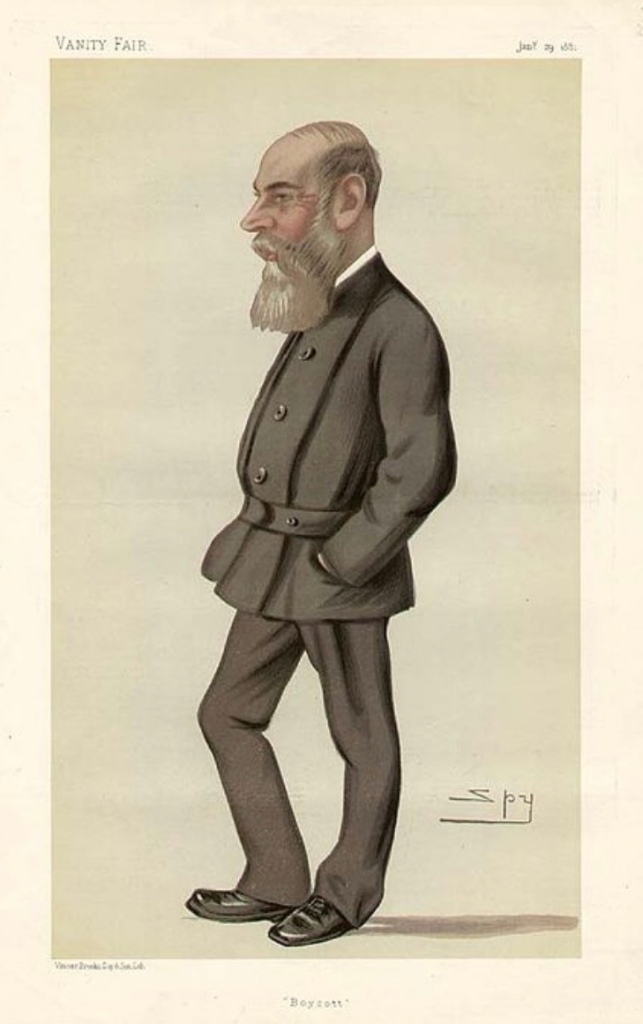
Captain Boycott by Spy, Vanity Fair 1881

Cancel culture is a hot topic in today’s world. It’s seen as a product of our aggressive, confrontational online society, with its culture wars.

But cancel culture is likely to have been a feature of life since early humans started living in communities. This thought only struck me when my son Owen was researching for a school talk on cancel culture. My mind went back to a class room at Cardiff High School, Wales, in 1979, and a lesson on British and Irish history with our wonderful O level teacher, Dr Davies. Back then, the name ‘Boycott’ was associated with cricket: the Yorkshire cricketer Geoffrey Boycott was in his pomp, having completed his 100th first-class century two years before. Dr Davies told us of another Boycott, who gave his name to the English language after he was ‘boycotted’ by a community in the west of Ireland in the 1880s. In other words, he was cancelled.

Charles Boycott was the agent of Lord Erne, a hated landowner in County Mayo in the west of Ireland. After Erne refused to accept the tenants’ plea for more affordable rents, Boycott tried to evict them. The community was outraged, and pressured people working for Boycott and local shops to refuse to deal with him. Boycott wrote a letter to The Times in London, which created sensational news stories around the world. Boycott left Ireland in disgrace soon after.

“The shopkeepers have been warned to stop all supplies to my house, and I have just received a message from the postmistress to say that the telegraph messenger was stopped and threatened on the road when bringing out a message to me and that she does not think it safe to send any telegrams which may come for me in the future for fear they should be abstracted and the messenger injured. My farm is public property; the people wander over it with impunity. My crops are trampled upon, carried away in quantities, and destroyed wholesale.

extract From charles boycott’s letter to the times, 14 october 1880

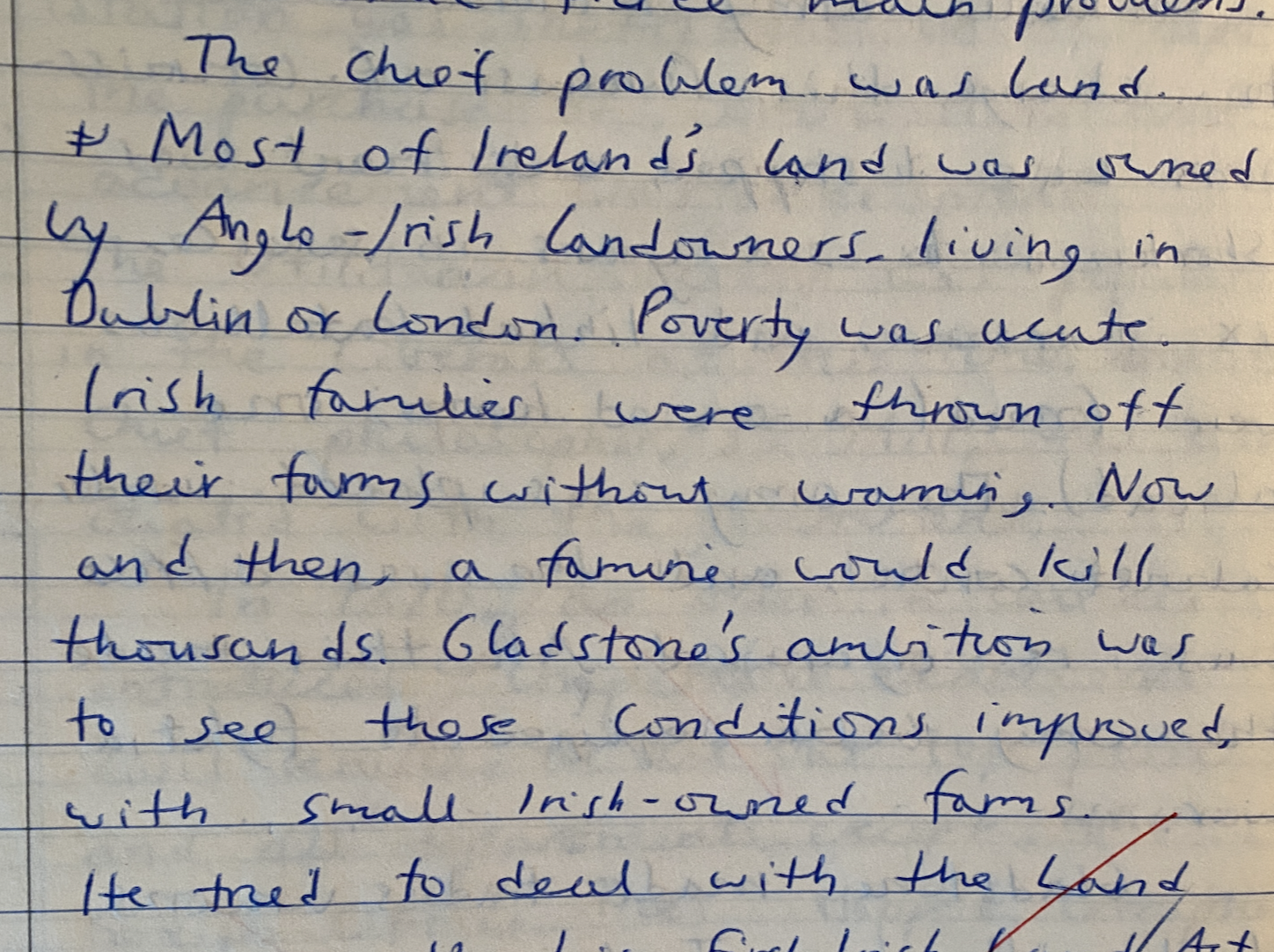
Essay in Irish history: my O level mock history paper, Cardiff High School, 1979

The treatment of Boycott gave a huge boost to the campaign for justice for Ireland’s rural tenants. Ireland was then part of the United Kingdom, and prime minister William Gladstone recognised that solving the land question was critical if he was to achieve his mission of ‘pacifying Ireland’. Parliament passed an Irish land act within months, in 1881, meeting the demand for the ‘three Fs’: fixed tenure, fair rents, and free sale of leases. A long-ago example of how cancel culture can force dramatic, historic reform.

Sent to … Coventry. Photo: BBC

As I reflected on that Irish boycott, I remembered another phrase that proves cancel culture’s long history. When I was growing up, it wasn’t unusual to hear of people being ‘sent to Coventry’ when they were being ostracised or given the cold shoulder. Some say that the expression dates back over 470 years to the English civil war, when Royalist prisoners would be taken to Coventry, where they would be shunned by the locals.

I will know better next time someone claims cancel culture is a uniquely 21st century issue!

Note: Charles Boycott was not an army captain. It seems he was given the title of captain by the local community, who did not intend it as a compliment.

Gate: it’s a scandal

First there was Watergate. The scandal that eventually brought down American president Richard Nixon was named after the Watergate office building in Washington DC, the site of a burglary in 1972 linked to Nixon’s reelection campaign.

Since then, every scandal – or, in truth, concocted controversy – has had ‘gate’ as a suffix. Partygate – the scandal of illegal parties held at 10 Downing Street during lockdowns – is just the latest.

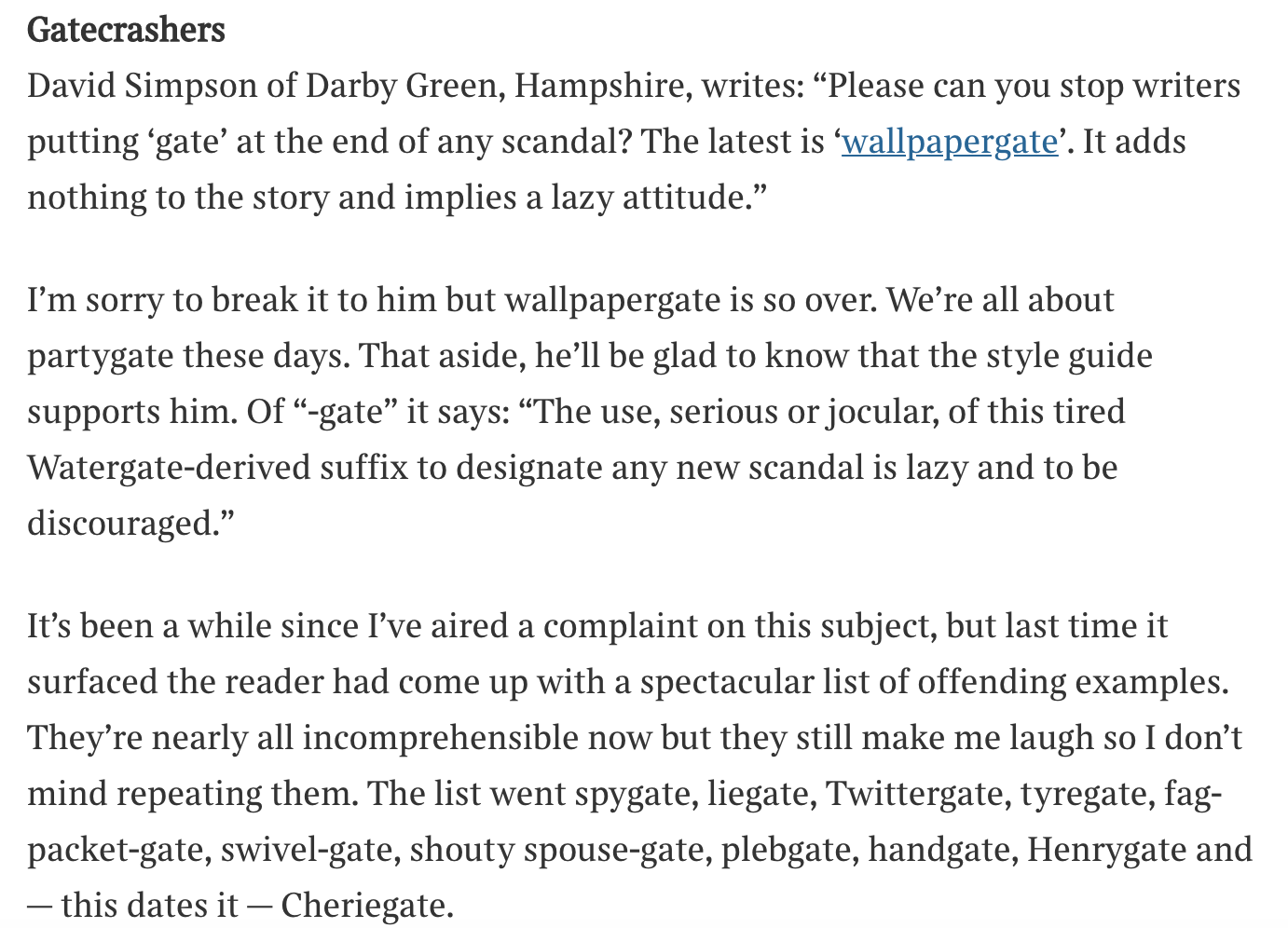
I’ve always found this a tiresome, lazy journalistic practice. So I was pleased today to see The Times agreeing with me. Rose Wild in her feedback column agreed with a reader, David Simpson, who pleaded with the paper to “stop writers putting ‘gate’ at the end of any scandal”.

Rose responded that The Times style guide discourages the practice as tired and lazy.

The only time I applauded the usage was when the Tory cabinet minister Andrew Mitchell was forced to resign after allegedly abusing police officers at the Downing Street gates in 2012. Gategate was a witty description – but the more common description was plebgate, after Mitchell was accused of calling the police plebs.

I hope Rose’s verdict holds, But I fear lazy journalists will still be calling scandals gates a century after Nixon resigned.

The Landsker line: Pembrokeshire’s language border

We’re on holiday in Tenby, Pembrokeshire this week. This intriguing town is called Dinbych-y-pysgod (little fort of the fishes) in Welsh. Yet Tenby has been an English speaking town for the best part of 900 years.

South Pembrokeshire: an English (language) landscape

Look at the map of South Pembrokeshire above. You might think you can’t learn anything about the state of the Welsh language in a region from a map. But think again. Look at the place names. They are all in English. There’s nowhere else in Wales that the landscape and place names are all in English.

North Pembrokeshire: a Welsh language landscape

Now look at the map above, showing Pembrokeshire place names just a few miles north of Tenby. All the names are in Welsh. The border between Welsh speaking and English speaking Pembrokeshire is often called the Landsker line. That name in itself echoes the history, as it comes from a Norse word meaning divide. South Pembrokeshire has often been called little England beyond Wales.

We’re looking at the impact of events 900 years ago. The Normans and Flemish conquered this part of Wales and unusually changed the language of the landscape as well as that spoken in the market place. By contrast, the Vale of Glamorgan west of Cardiff was similarly Anglicised but was later re-Cymricised.

Vale of Glamorgan: Cymraeg a Saesneg

Take this modern Ordnance Survey map of the Vale. Welsh was banished here many centuries ago as in South Pembrokeshire yet yr hen iaith was resurgent in the 18th century. As a result, the place names returned to the old Welsh versions. In time, however, especially in the 20th century, the tide turned once again, and the Vale became overwhelmingly an English speaking part of Wales. But intriguingly the names on the map largely remain the Welsh ones.

Welshness is not just defined by the language spoken. Tenby is a very Welsh town, regardless of the language spoken on the streets by locals and visitors. At my mother’s funeral in 2018 I talked about the old saying that the dragon has two tongues. in other words, Wales isn’t solely defined by language. Our country has made enormous strides over the past 60 years to restore the status of our ancient language. Whether you recognise Tenby or Dinbych-y-pysgod, you have equal status as a Welsh person. Cymru am byth.

Stephen Waddington on business jargon

The British are famous for being hopeless at languages. Yet when they get to work they start speaking another language. Unfortunately that language is business-speak. Former president of the Chartered Institute of Public Relations Stephen Waddington has blogged a list of the worst examples of business gobbledegook.

Stephen gathered the list after asking his Facebook friends for contributions. I happily contributed ‘visibility’ – a fine word in a weather forecast but nonsense when used as a synonym for information. (“I don’t have visibility on this” means “I don’t know” in the English language.) He could have filled a book rather than a blogpost: companies and other organisations create bullshit phrases on an industrial scale.

Business speak gets in the way of communication. It deadens the senses. And it prompts clever and sensible people to suspend their ability to think what they are trying to say and use the right words to communicate a thought. You’d be ridiculed if you talked to your friends like this. So why inflict it on the people you work with?

Let’s reach out to each other to create visibility about a roadmap to axe gobbledegook going forwards…

PS: it may be unfair to point this out, as Stephen is one of Britain’s finest communicators, but his job title is itself an example of business bullshit. ‘Chief Engagement Officer’ sounds like someone very important at a dating agency. 

This post comprises a pedant and me

Bryan Henderson is famous – as a pedant. The world’s media put him under the spotlight last week for correcting the same error 47,000 times in Wikipedia. He hates the phrase ‘comprised of’ – arguing the ‘of’ is unnecessary. The story took me back to my days reading Ernest Gowers’ The Complete Plain Words in university in 1984: it was one of the phrases Gowers singled out as a howler.

I’ve never edited a single Wikipedia entry. But I felt a tremble of recognition when I read of Henderson’s obsession. As I get older, I get more irritated by language (and number) howlers. Here are some of my pet hates.

Language inflation. Build out; test out; off of. Just a few phrases that have suffered parasitic appendages.

Doppelgängers: words that have been replaced by identical sounding cousins: it’s/its; your/you’re; there/their/they’re. Years ago, it’s/its was the most common error, but your/you’re seems just as common now:  ‘Your welcome’…

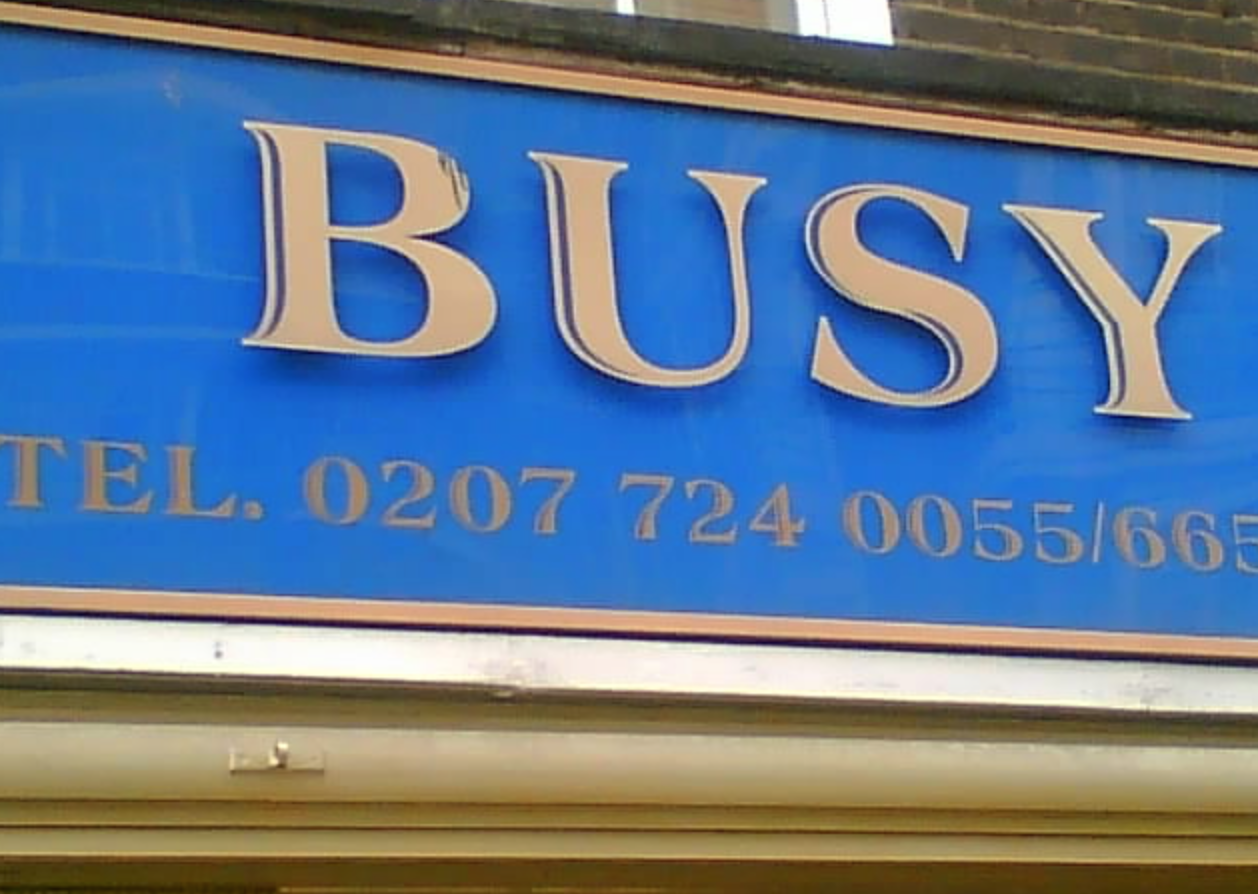
Talking telephone numbers: companies that spend money on beautiful shop fronts and signs, but don’t know that the area phone code for London is 020 and Cardiff is 029. I’ve lost count of signs giving numbers starting 0207, 0208 and 02920.

No such code as 0207

Don’t try dialling 724 0055 

This Marylebone shop can’t get its own number right. Anyone dialling 724 0055 will get an unobtainable tone. The 7 in 0207 is actually part of the number, not the area code.

Does it matter? No, not compared with life’s real horrors. But accuracy does matter. Hats off to Bryan Henderson. Or hat’s off as some would say….

The return of the artisan

Around the time that Margaret Thatcher came to power, I learned a new word: artisan. My Cardiff High School history teacher, the excellent Dr Davies, explained that an artisan was a skilled manual worker. The question was prompted by Dr Davies’s lesson on the  reforms of Benjamin Disraeli’s first ministry, including the Artisans’ Dwellings Act 1875.

Little did I imagine back in 1979 that the word would become a marketing buzzword in the 21st century. Yet it has, as Kathryn Hughes examines in her column in today’s Guardian. As she puts it:

“The implication is that everything in these charming, gentle spaces has been done by hand, from scratch and on the premises. The coffee beans are ground to order, the soup was simmered in a battered old saucepan, and the cakes were made overnight in the basement kitchen. The interior design too hints towards “artisanal” without quite spelling it out. There are old refectory tables, chairs from an abandoned cricket pavilion and some mismatched crockery that came from someone’s granny.”

She draws parallels with William Morris’s arts and crafts movement of the 1870s (by coincidence the decade of that famous act of parliament). Morris was keen to improve the lives of workers. Yet few of those workers could afford the hand made furniture inspired by the movement. In much the same way, the new generation of artisanal products and shops carry a steep price tag.

I wonder if the coffee tastes better?