Clan Line reaches Swanage – 46 years late

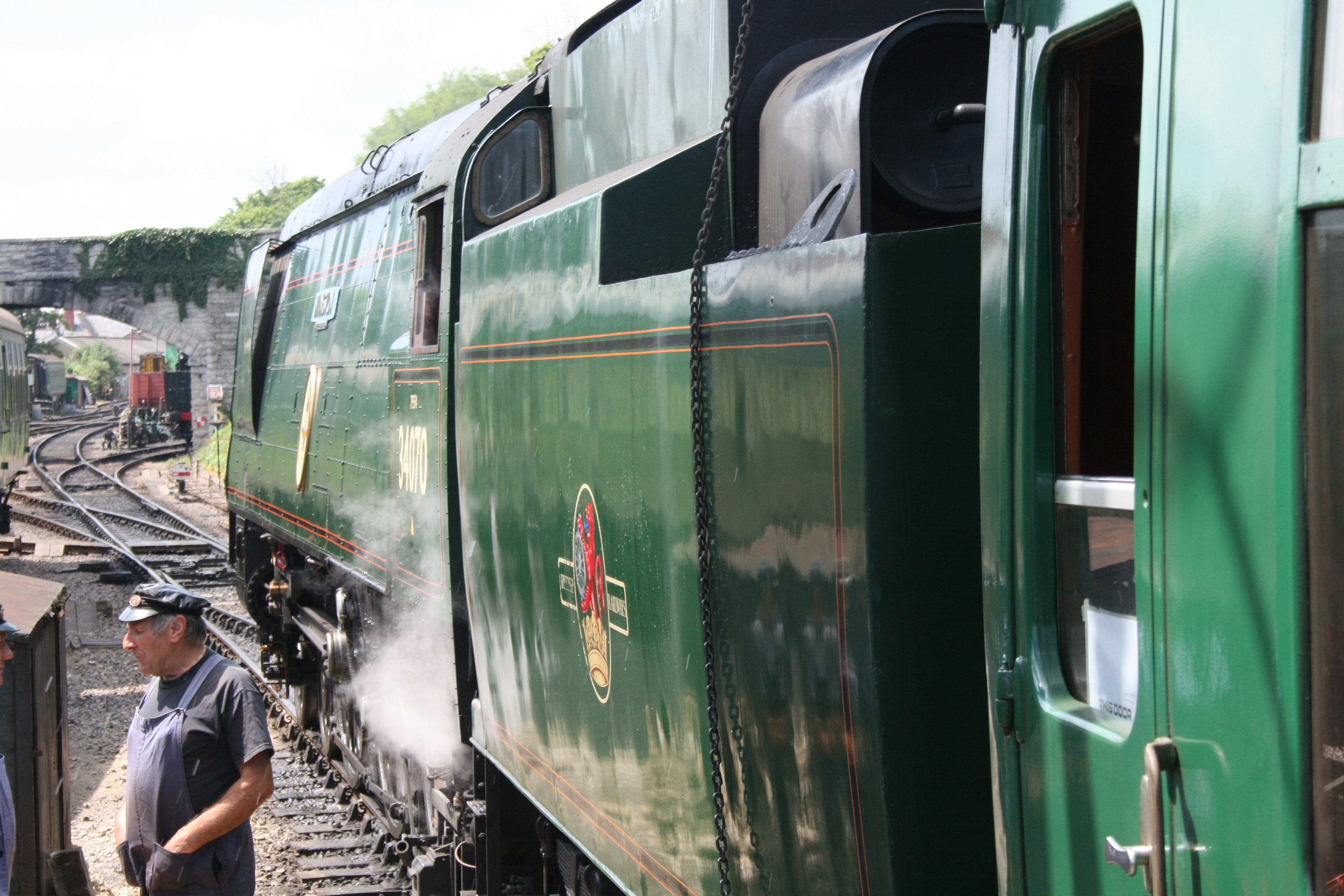
Above: another Southern pacific, Manston, at Swanage, 2010

One of Britain’s most impressive steam engines has reached the seaside – 46 years after setting off for Swanage.

British Railways decided in 1966 that Clan Line was too large and heavy to complete its journey along the Swanage branch. But last week, the engine proved the old state rail network wrong and completed its long-awaited journey without incident.

Clan Line is a ‘pacific’ – the largest express passenger steam engines used in Britain. A pacific was the last locomotive you’d expect to see on a branch line. Clan Line’s 1966 trip was a special, and Britain’s preserved lines use far larger engines than they’d have seen in normal life. (A modest tank engine would have been more than enough to cope with a typical train in normal times.)

The Swanage Railway line is a delight. We visited in 2009 when Owen was approaching his first birthday, and took a return trip from Norden to Swanage the following year behind Manston, a Battle of Britain class pacific. The line revels in its LSWR and Southern Railway heritage. And it’s wonderful to reach the seaside by steam.

One last thought. The Southern was our most modern railway, with its extensive electrified network, yet provided London’s last steam express train service until 1967. The steam engines now visiting Swanage were those that took Londoners to the coast in the era of the Beatles and the Rolling Stones.

Here’s the video I shot in 2010 of Southern pacifies on the Swanage line:


Going Dutch: Raleigh Cycle sold

The news that Dutch company Accell has bought Raleigh Cycle prompted a wave of nostalgia this week.

Many of us learned to cycle on a childhood Raleigh. My childhood coincided with the hugely popular Raleigh Chopper. I didn’t have one – I made do with the bizarre choice of a Raleigh Twenty. It was a classic example of the poor bikes produced in the 1970s, a  car-dominated decade that marked the low point of the cycling industry before the mountain bike sparked a revival.

Far better was the Raleigh Randonneur, a superb touring bike that starred in my Land’s End to John O’Groats ride in 2002. I didn’t suffer a single puncture in the 1,060 miles odyssey. I now use the bike for rides with our three year old son Owen – there’s a child seat where I used to attach panniers.

PS: I reminisced about some of my bikes – including the Twenty and Randonneur – in a post on the original Ertblog in 2009: Wheels of joy. And I’ve also posted about Land’s End to John O’Groats.

Hunt, Cameron and Murdoch: guilt and government by association

This week’s storm about culture, media and sports secretary Jeremy Hunt’s handling of News Corporation’s bid for complete control of BSkyB shows how Britain’s culture of government is horribly flawed.

A decade ago, Tony Blair’s sofa government style was condemned by the way Blair took Britain to war against Iraq without proper process or control. Now it seems that Hunt’s department side-stepped the rules on judicial impartiality in judging the News Corp takeover by allowing special adviser Adam Smith (oh the irony of that name…) to conduct back-channel discussions with News Corp.

The curiosity is that as ministers become professional politicians (in that they’ve never held a job in the real world), their performance as politicians becomes less ‘professional’ by the day. And that’s to put it kindly…

Charles Arthur’s Digital Wars: Microsoft’s lost decade

The Guardian‘s technology editor Charles Arthur is an incisive observer of the tech business world. So it’s no surprise to discover that his book Digital Wars is a revealing account of Apple, Google and Microsoft’s battles for dominance in search, digital music and smartphones.

The clearest message from the book is that the 2000s were a lost decade for Microsoft. At the time of the millennium, it seemed invulnerable. Its dominance of the PC software market for consumers and businesses made it a hugely powerful and profitable corporation. Windows and Office were huge money spinners. The biggest cloud was the anti-trust actions taken by the United States Department of Justice and the European Commission. By contrast, rivals seemed powerless to confront the Redmond juggernaut.

Yet Arthur makes it clear that the anti-trust cases had a profound impact on Microsoft. In his words, the US case ‘reached down into the company’s soul’. Although Microsoft escaped the threat of being forced to split in two, Arthur quotes analyst Joe Wilcox’s verdict that the actions ‘hugely affected’ the way the company operated. ‘Microsoft was unequivocally less aggressive [and ] there was a lack of certainty and aggression in Microsoft’s response to Apple or other companies’.

There were other factors at work. For Microsoft’s leaders at the turn of the millennium, the internet was something they got used to in mid career, rather than in their formative years at college. They were set in their offline ways, and had to adapt. By contrast, the pioneers at Google were starting out with instinctive understanding of the net, email and networking. Their business was built online.

The other critical factor was the classic symptoms of bloated corporations: poor decisions and internal politics. Arthur explains how Microsoft blew the chance to compete with Google’s fast developing search and advertising business. It failed to buy Overture and even worse overlooked the fact it already owned a company called LinkExchange that enabled small advertisers to bid for their names to appear next to search results. (Exactly what Google was developing with AdWords.) Arthur recounts that Microsoft’s new chief executive Steve Ballmer closed the LinkExchange-based ‘Keywords’ project at just the time Google launched AdWords, because other Microsoft tribes feared it would cannibalise banner sales.

Later, Microsoft ploughed countless millions into search, but the anti-trust actions cast a long shadow: building search into the browser would invite a repeat of those courtroom years. The smart alternative, embedding search into Office was the obvious way to go. But the boss of Office wasn’t interested.

This story was repeated across the other battlefields: digital music (where Apple won the day) and smartphone systems (where Apple and Google, with its Android mobile operating system, shared the prizes).

Commentators have pointed out that Microsoft is largely a business-to-business (B2B) culture. With a few exceptions (Xbox and 1990s triumphs like Encarta spring to mind), the company does not have a consumer outlook. By contrast, Apple has set a new standard in how technology should be designed for everyday people who aren’t geeks. My painful experience with Microsoft’s Pocket PC software persuaded me not to buy a Windows-based smartphone. (My Dell PDA was lovely, but the Windows OS was appalling. How could they make hooking up to wifi such a ghastly experience?) Many will have the same view, yet by all accounts the latest Windows Phone system is a delight. Microsoft’s problem is that so many people have now fallen in love with Apple’s iPhone or Google Android-based phones. Switching will be hard.

It would be foolish to write off Microsoft. Or to assume that Google or Apple are invulnerable. (That’s where we came in – when Microsoft was all-conquering.) The one rule of the tech world is that no-one rules forever. The next chapter of this story will be just as compelling.
Cardiff to host Great Britain’s first event at London 2012

Karen, Owen and I will see history made when we watch Great Britain’s women’s football team take on New Zealand in my hometown, Cardiff, on 25 July. The Millennium Stadium match is Great Britain’s very first event in its home Olympics, and the first event of the Games. We’ll be back at the Millennium the following day to see Brazil play Egypt in the men’s football.

I’ll post about our once-in-a-lifetime experience in July.

Perhaps the 2012 Olympics should be titled Llundain 2012?

See the following link for more information about the Olympics football at the Millennium Stadium, Cardiff.

In praise of Britain’s Heritage Motor Centre, Gaydon

Image

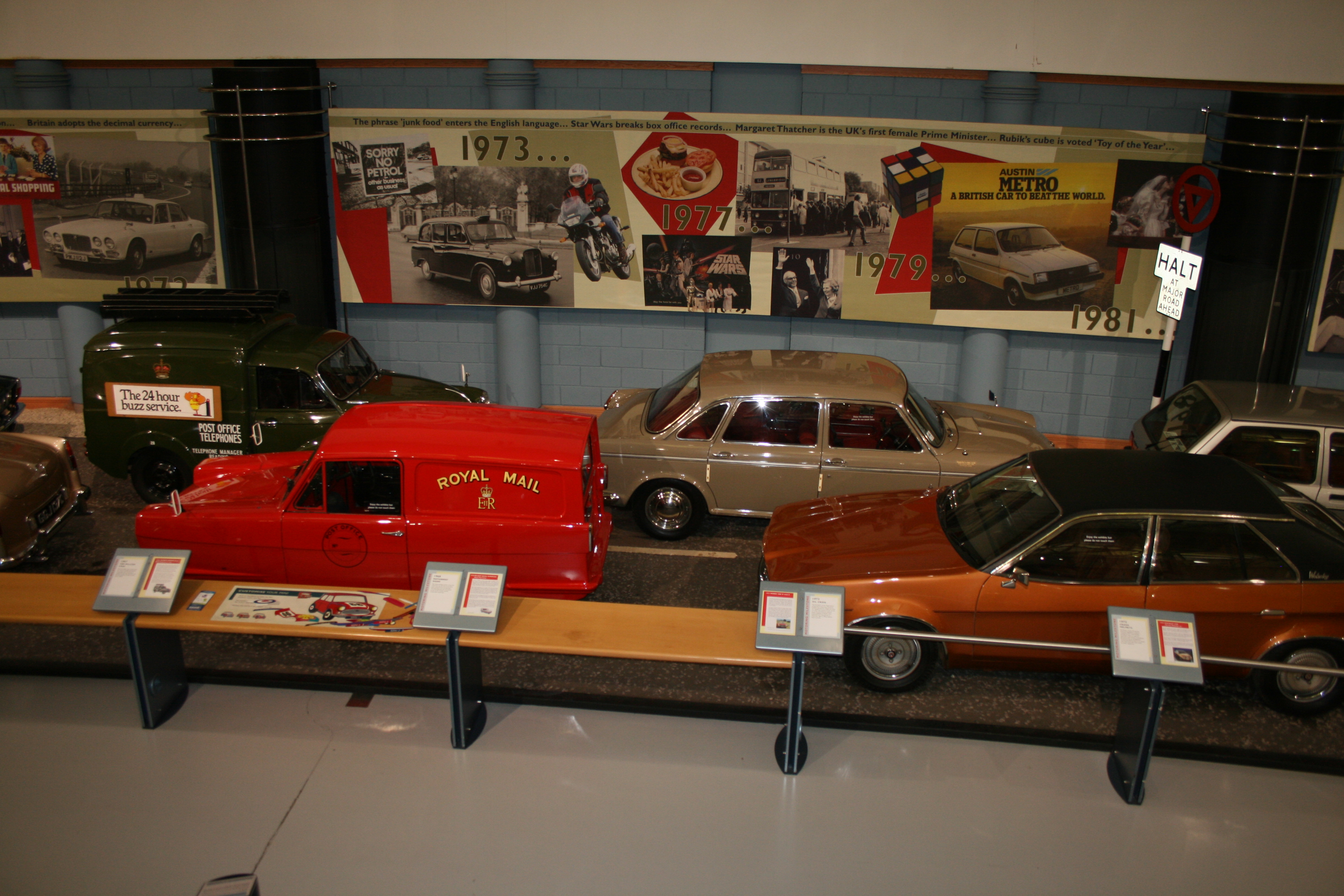
Above: childhood memories come alive at Heritage Motor Centre

How many times have we ignored the brown signs on the M40 to the Heritage Motor Centre at Gaydon, Warwickshire? More than I can remember. Yet today we called in for the first time and were hugely impressed by the museum that pays homage to Britain’s car heritage.

Take my photo above. Apart from vans from Royal Mail and Post Office Telephones (the business that later became BT) vans, it includes three cars my parents owned: an Austin 1800 (lovely car), Austin Princess (an awful creation – more later) and an Austin Metro, the car that showed British Leyland under Michael Edwardes might just have a future after the industrial carnage of the Red Robbo years. (Derek Robinson was a trade union shop steward who became notorious for causing an alleged £200m in lost production in an era when unions didn’t have to call strike ballots before calling workers out on strike.)

Dad routinely bought British until he bought the Princess. It was a shocker. The problems started when it was brand new. The hub caps sprang off when he was driving around Cardiff, and the Howells BL dealers  had no idea why. A couple of years later, the car burst into flames as Dad was driving my 89 year old Nan home from Wiltshire after celebrating her birthday with my sister. Nan thought it was a great adventure, but Dad never bought another car from BL or Rover.

But the Gaydon museum is much more than a tribute to the dark days of British car making. It covers the whole history of our motor industry, including a recent gorgeous Range Rover concept car.

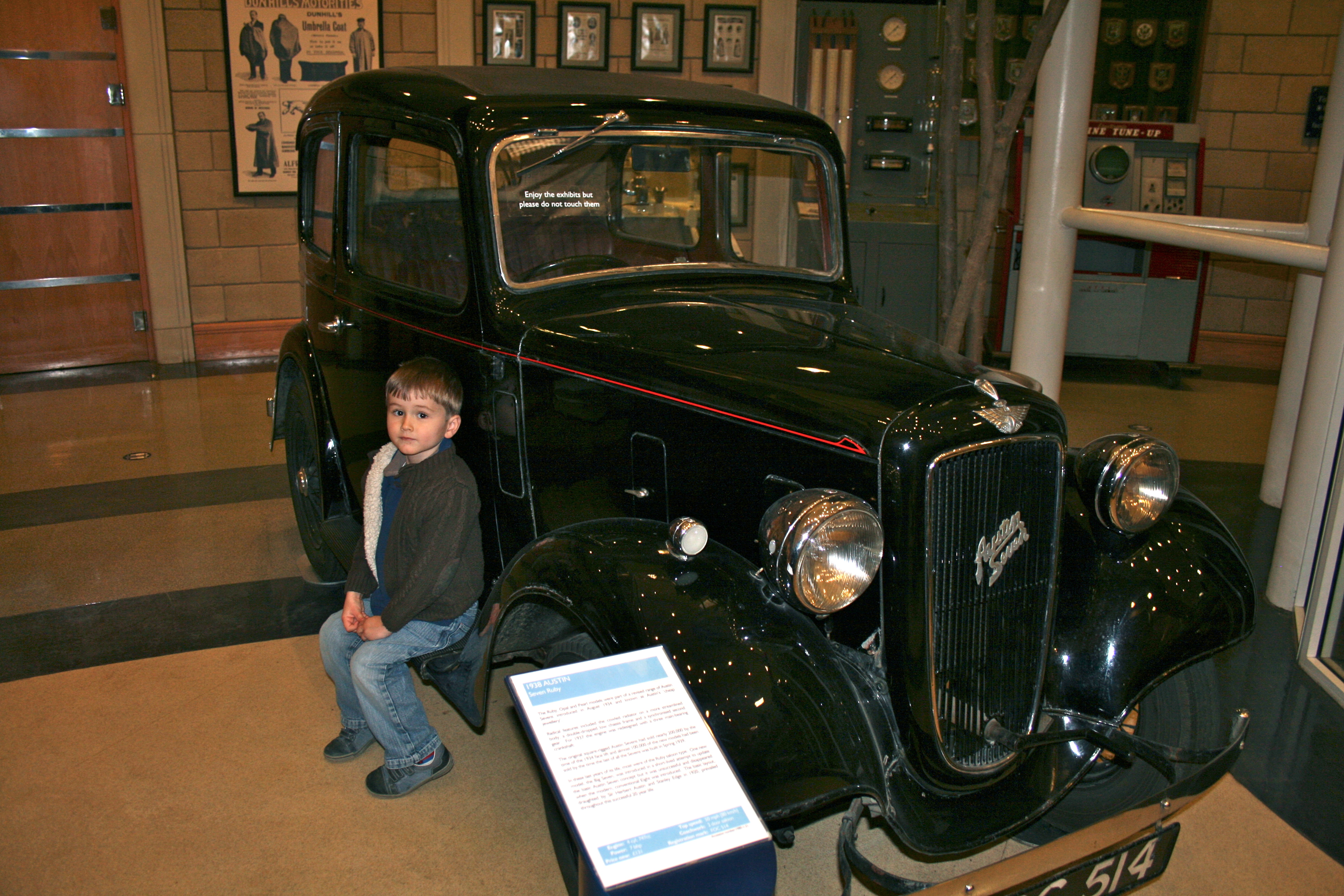
Image

Owen (above) loved wandering around the museum. Here he’s inspecting one of his grandfather’s first cars, the Austin Seven. I didn’t know until today that BMW’s first car, the BMW Dixi, was a licensed version of the Austin Seven.

The Heritage Motor Centre is well worth a visit. It has an excellent cafe, Junction 12, and a cinema and well stocked shop. We’ll follow those brown signs more often in future!

We love Drayton Manor and Thomas Land

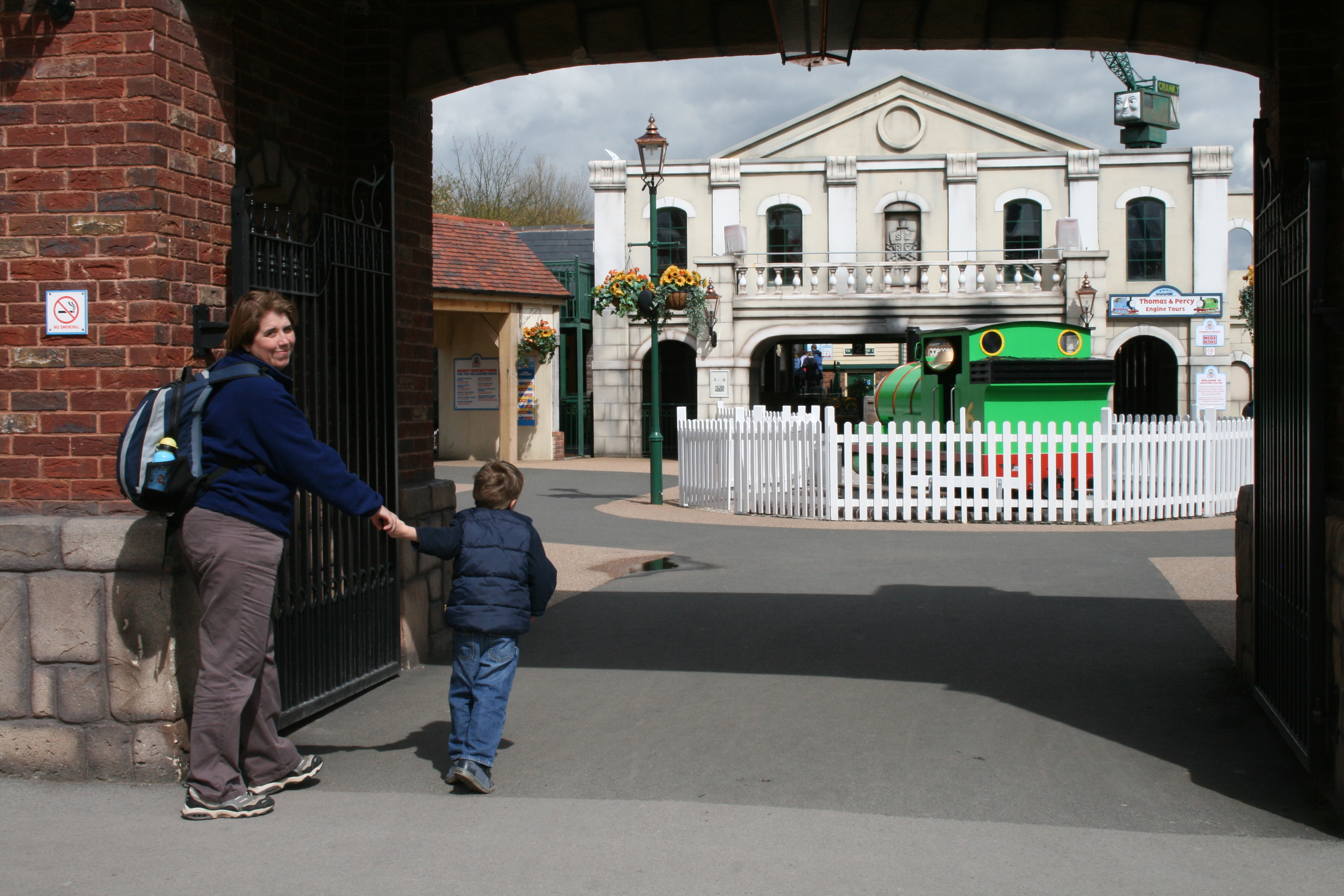
Image

Above: arriving at Thomas Land. Percy has just arrived with a train.

We’ve just got back from a wonderful couple of days at the Drayton Manor theme park in Staffordshire. We were there so Owen could enjoy Thomas Land – the home of Thomas the Tank Engine and friends. We first visited last year, but this year we were staying at the new on-site Drayton Manor Hotel. We’re glad we did. We got a terrific advance booking offer in January: £128 for two nights for the three of us and a day’s entry to Drayton Manor, including Thomas Land. The hotel is superb, and we loved early evening Thomas entertainment for children. Not to mention the characters appearing at breakfast time, as you see below!

Breakfast is more fun at Drayton Manor

We also enjoyed two evening meals at The Grill Inn at Drayton Manor – or the Grin, as Owen thought it was called…

Drayton Manor has a fascinating history – before and during its theme park days. The old Drayton Manor house – long gone – was the home of Sir Robert Peel, the founder of the modern police force and 19th century prime minister. The current attraction was created by George and Vera Bryan just after the second world war. In those difficult times, George recalls straightening used nails to re-use when he and Vera built the original Drayton Manor Inland Pleasure Resort as it was called in the days before the term theme park was invented.

The Drayton Manor Hotel displays many old photos of the park’s history. I was intrigued by a photo of Bryan’s garage in Kegworth, Leicestershire. Its relevance was unclear until I picked up a bargain copy of Fred Bromwich’s history of Drayton Manor in the hotel shop. The garage was owned by the resort founder George Bryan’s father, the leading slot machine maker WE Bryan – which explains why there’s a slot machine museum opposite Tidworth Hault station in Thomas Land…

The Fred Bromwich history also shows how innovative Drayton Manor has been over the years. George and Vera put to good use their experience at the pioneering 1930s California-in-England leisure park in Berkshire, as well as early visits to Walt Disney‘s Disneyland in the original California. More recently, the Bryans have added dramatic new rides that look as good as anything that Alton Towers, Thorpe Park and others can offer. I can’t wait to try them when Owen lets me!

Meanwhile, I’ll end with a shot of the engine that started the Thomas story. I wonder what the Rev Awdry would think of Thomas Land?

Owen and Thomas at Thomas Land, Drayton Manor

PS: I was less impressed by the wifi service at Drayton Manor Hotel. It offered 30 minutes free. But the receptionist said any extra was £10 a day, which is a total rip off at a leisure hotel. (We paid the same amount for a whole week at The Park holiday village at Mawgan Porth, Cornwall.) Even worse, the hotel wifi service didn’t show any costs before you clicked on the ‘connect’ button. But I saved my money – because the service claimed my user name (my very own emails address) was already taken. Very strange. When will hotels get wifi right?

PS, April 2015. Owen and I spent another lovely stay at Drayton Manor Hotel and Thomas Land. (Karen couldn’t join us this time.) I was delighted to see that the wifi is now free – and very reliable. We dined at the hotel two nights in a row because it was so good.

James Burke: Connections revisited

I caught a glimpse of James Burke on Mark Lawson’s BBC 2 show about Seventies TV tonight. It was pure nostalgia.

Burke was a fixture on the BBC during that dramatic decade and the late 1960s. He came to fame as a Tomorrow’s World presenter and commentator on the moon landings.

But for me his greatest hour was as the creator and presenter of Connections, a 10 part BBC series showing how technological developments are interlinked. I found it enthralling. It was a highlight of my Sundays along with the less intellectually stimulating The Big Match. (Although the contemporary success of Nottingham Forest was a surprise.)

I remember my mother’s cousin being as enthralled by the Connections book as I was when he stayed with us for my grandmother’s funeral in 1981. Another era. It’s hard to imagine a major TV channel devoting a 10-episode series to technology and science in 2012.

Not so smart TV: no BBC iPlayer on Samsung 5400 LED TV

Visit the new Ertblog on WordPress at robskinner.net!

I bought a new TV today for our kitchen. The old one stopped working after digital switchover this week, so I replaced it with an internet-connected one that enables us to watch BBC iPlayer on TV. John Lewis in High Wycombe said the Samsung UE22ES5400 LED 22 inch TV would do just this.

IMG_2672

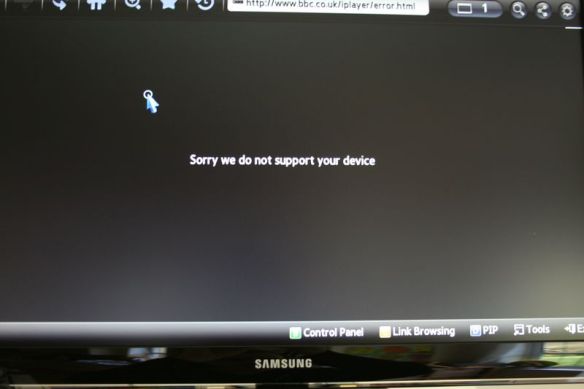
I was impressed by how easy it was to set up. But I couldn't find the iPlayer. The web based iPlayer said the BBC didn't support my device (above).

I didn't think that mattered. After all, Samsung's BBC iPlayer app features prominently on the company's website – but that was also missing:

IMG_2672

At this point, I called John Lewis. Its friendly technical help person couldn't help. He said I could return the TV – or call Samsung. I didn't think there was much chance Samsung would answer the phone late on a Saturday afternoon. But to its credit, I did get through to someone who explained after some research that the iPlayer app wasn't yet available for the 5400 TV as it was a new model but would be in early May.

So I won't be taking the TV back to John Lewis just yet.

PS: why are TV names so obscure and impossible to remember? Samsung could learn a lot from Apple. iPhone is so much more compelling and easier to remember than UE22ES5400.

Ertblog has a new home at robskinner.net. Do visit!

Goodbye, Ceefax

The BBC's Ceefax service teletext service has disappeared from out TVs after our area completed digital switchover. I can't say I'll miss it.

I've not looked at Ceefax since I went online over 15 years ago. I recognise that it was once a worthwhile innovation, giving information about news, sport and travel developments on screen at a time when we had just a handful of TV channels. But it was a frustrating system to use. The difference categories had a series of scrolling pages, and I always seem to miss the page with Cardiff City's result – meaning I had to wait for half a dozen pages to appear before 'my' result reappeared.

The BBC also split Ceefax pages between BBC1 and BBC2 – I could never remember which appeared where. And in an era before hyperlinks, you had to note the page number of the story you wanted. ITV and Channel 4 had their own teletext services.

It all makes the world wide web seem even more miraculous!