This is the second in a series of posts about my training and preparation for the 1530km London Edinburgh London audax event in August 2025. The series was inspired by LEL supremo Danial Webb asking if anyone was planning to post about their training and preparation for the event. Read part one here.
(London Edinburgh London is a cycle ride across Great Britain between the English and Scottish capitals. Held every four years, it is the premier British audax – a long-distance, non-competitive cycle ride. You have a maximum of 128 hours to ride to Edinburgh and back to London.)
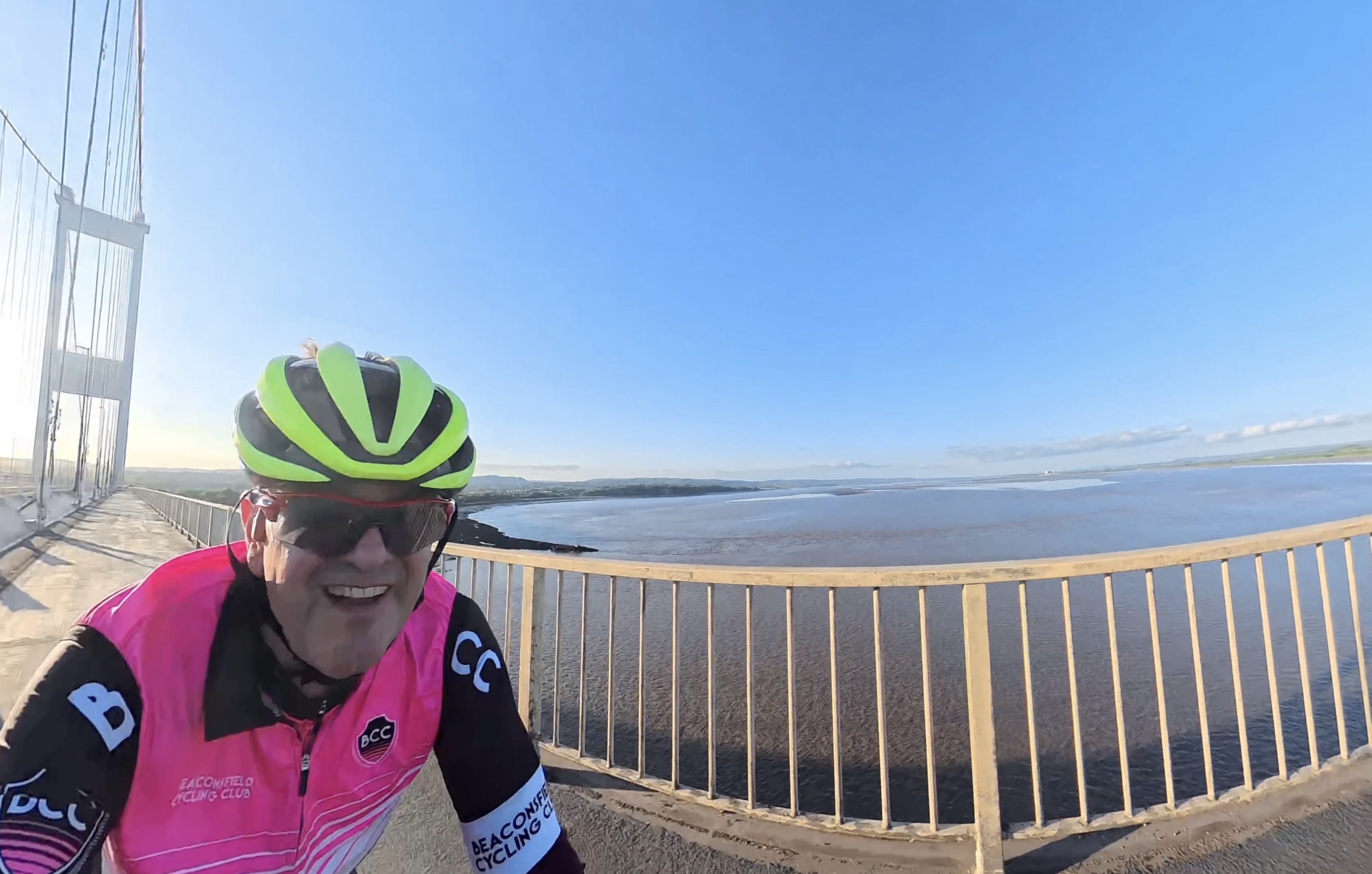
Heading back into England over the Severn Bridge, LWL 2025
London Wales London 2025
I wrote a lengthy post a year ago about completing the annual London Wales London audax from Chalfont St Peter near London to Chepstow in Wales and back via the original Severn Bridge. If you’re interested in a detailed account of riding LWL, head there as this will be a much shorter account. Instead I’ll focus on how I plan to learn from this year’s LWL experience to help my preparations for London Edinburgh London in August. (Both what worked well and what didn’t.) I’ll look at organisational lessons – yes, including charging devices – and personal ones, such as keeping healthy and maintaining morale through the inevitable lows.
LWL riders close to Islip, the first control at 38km
I never thought we’d have a second year of fine weather for LWL, but conditions were similar to last year, with the exception of a light but noticeable headwind on the outward leg across the Cotswolds. We were lucky to miss the 28C temperatures two days before – as well as the far colder weather that arrived within 12 hours of the finish. Organiser Liam FitzPatrick is obviously on very good terms with the weather gods…
This is the first in a series of posts about my training and preparation for the 1530km London Edinburgh London audax event in August 2025. The series was inspired by LEL supremo Danial Webb asking if anyone was planning to post about their training and preparation for the event. For part 2, lessons from London Wales London, click here.
London Edinburgh London is a cycle ride across Great Britain between the English and Scottish capitals. Held every four years, it is the premier British audax – a long-distance, non-competitive cycle ride. You have a maximum of 128 hours to ride to Edinburgh and back to London.
I’ve been dreaming about taking part in LEL since the pandemic, and will be on the start line in August. I’ve followed LEL Facebook and Yet Another Cycling Forum (YACF) posts, and read several books by previous participants such as Andy Allsopp and Malcolm Dancy for inspiration and information. I also bought the film about the 2013 edition of LEL. (All of which, truth be told, sent shivers of fear down my spine about what I’ve signed up for!) I’ve also enjoyed the LEL podcasts, which you can find on all the usual podcast platforms, including Spotify.
In this post, I’ll explain my road to LEL 2025, talk about my training, and also share a few tips for fellow LEL riders – which may be useful for anyone taking part in other multi-day audax rides. These tips are based on my own cycling experiences and advice shared by previous LEL riders. In future editions, I’ll share any new lessons from my training and preparations.
So – what makes me think I can complete LEL?
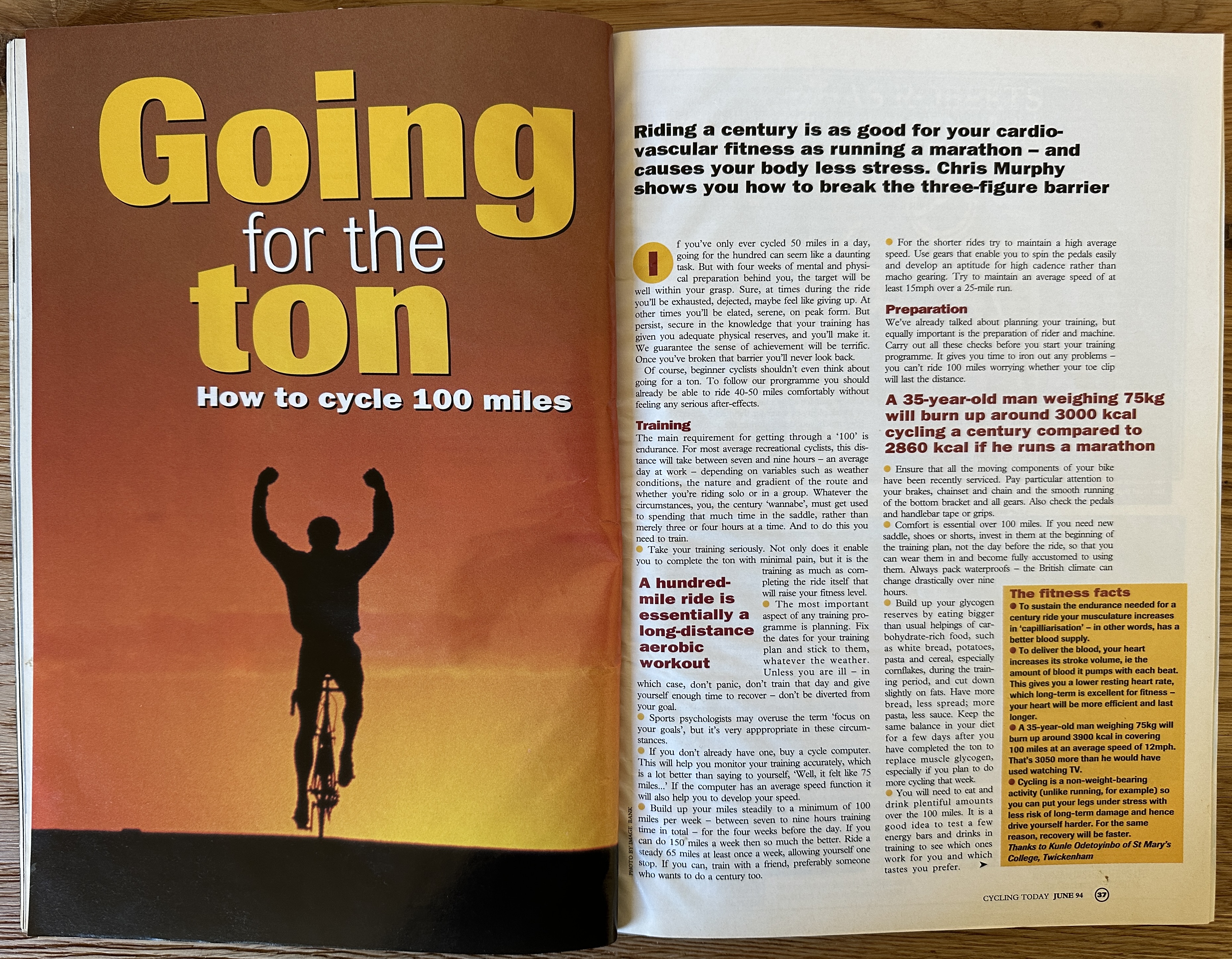
My original inspiration for long distance cycling, 1994
I’ve been cycling for over 35 years, since buying my first proper bike in 1989, as I blogged last year. Back in 1994, I was inspired by this feature in the old Cycling Today magazine about cycling 100 miles, and successfully completed my first century the following year.
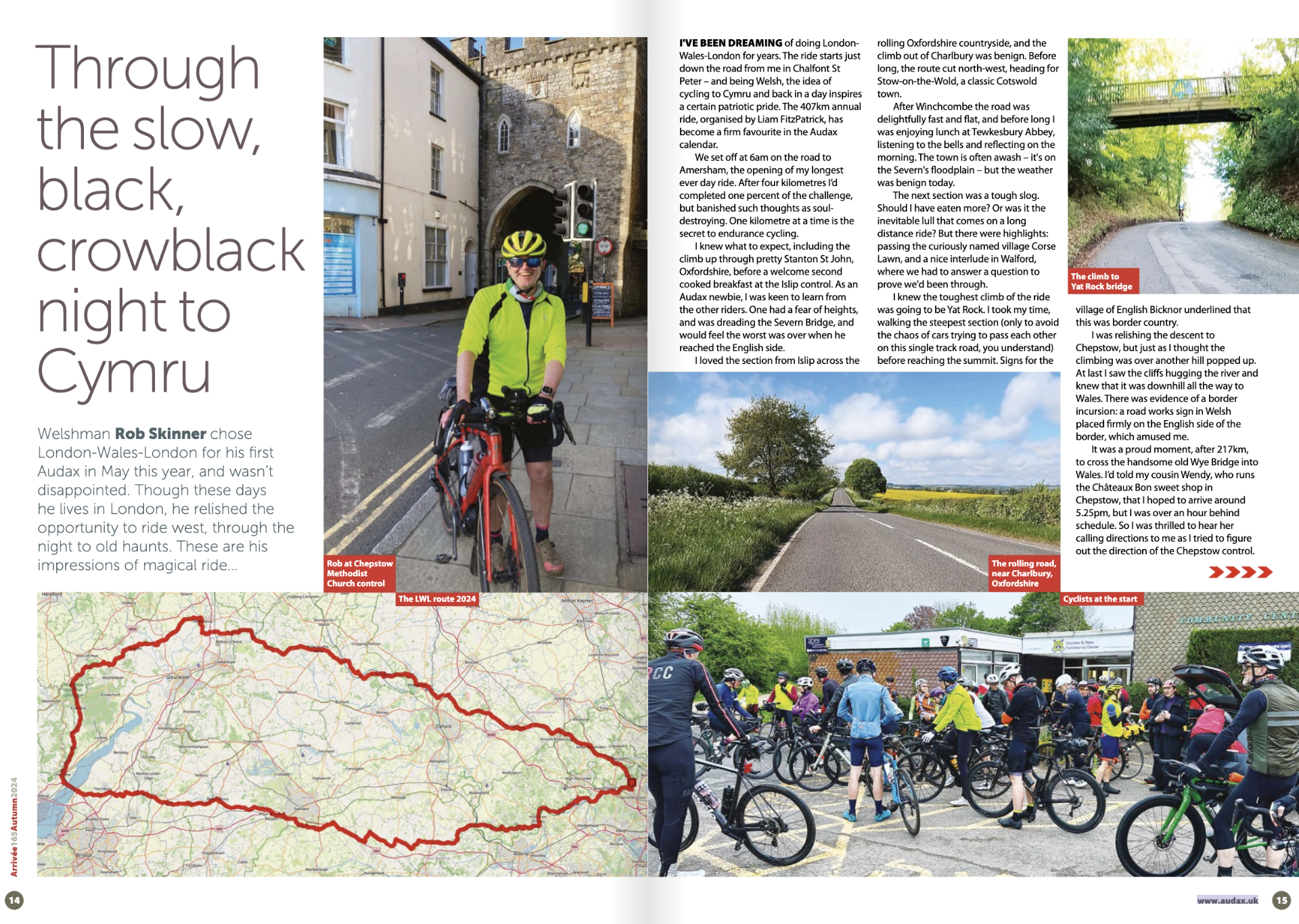
Last year, I completed my first audax ride, the 400km London Wales London, and my beginner’s story appeared in Audax UK’s Arrivée magazine. (The article was a shorter version of my LWL blogpost.) I knew that LWL was a good test of my ability to complete the far bigger LEL challenge, and early on my ride to Wales I had a brief crisis of confidence:
‘I was still in the Cotswolds when I decided such a challenge [LEL] was beyond me. The toll on body and spirit would be huge. Yet now, after the satisfaction of completing LWL successfully with something to spare, I’m not so sure. I have a guaranteed place for 2025, and that would have to be the year – it really would be too much by 2029, when I’d be approaching 66.’
I am feeling more confident now about LEL, and am fitter than I was on the eve of LWL 2024.
No, you’re not cheating if you ride an electric bike. The e-bike revolution is one of the best things to happen to cycling in the past decade. I have two e-bikes and love them.
It’s your choice what you ride
No one has the right to tell you what type of bike to ride. If you like the idea of a little help going up a hill, just go for it. And you won’t be alone: Mintel forecast that e-bikes would be the best selling type of cycle in 2024, and a quarter of British adults have considered buying one according to a Paul’s Bikes survey last year. It’s likely that many people buying an e-bike wouldn’t have bought an unpowered one.
You still get a workout on an e-bike
When I got my first road e-bike, a Trek Domane +, in 2022 I was surprised by how many calories i burned on my rides. The reason? Because in Britain an electric bike (technically called an ‘electrically assisted pedal cycle’) motor has to cut out above 15.5mph, after which your pedal power alone will move you forward. You’re likely to burn more calories doing this than on a non-e-bike as your mount will be a lot heavier with the motor and battery. (As an example, the latest electric Trek Domane + SLR 7 AXS weighs 12.64kg in size 56, compared with 8.29kg for the non-electric version. Data from Trek website.) You can always slow down below 15.5mph to get the motor to kick back in…
No one is losing out because you ride an e-bike
A lot of people were angry when Bob Dylan went electric in 1965. No one should care if you do the same, on a bike, unless you’re in a race. Or grabbing a king (KOM) or queen (QOM) of the mountains on a Strava segment.
E-bikes are brilliant for car-free commuting
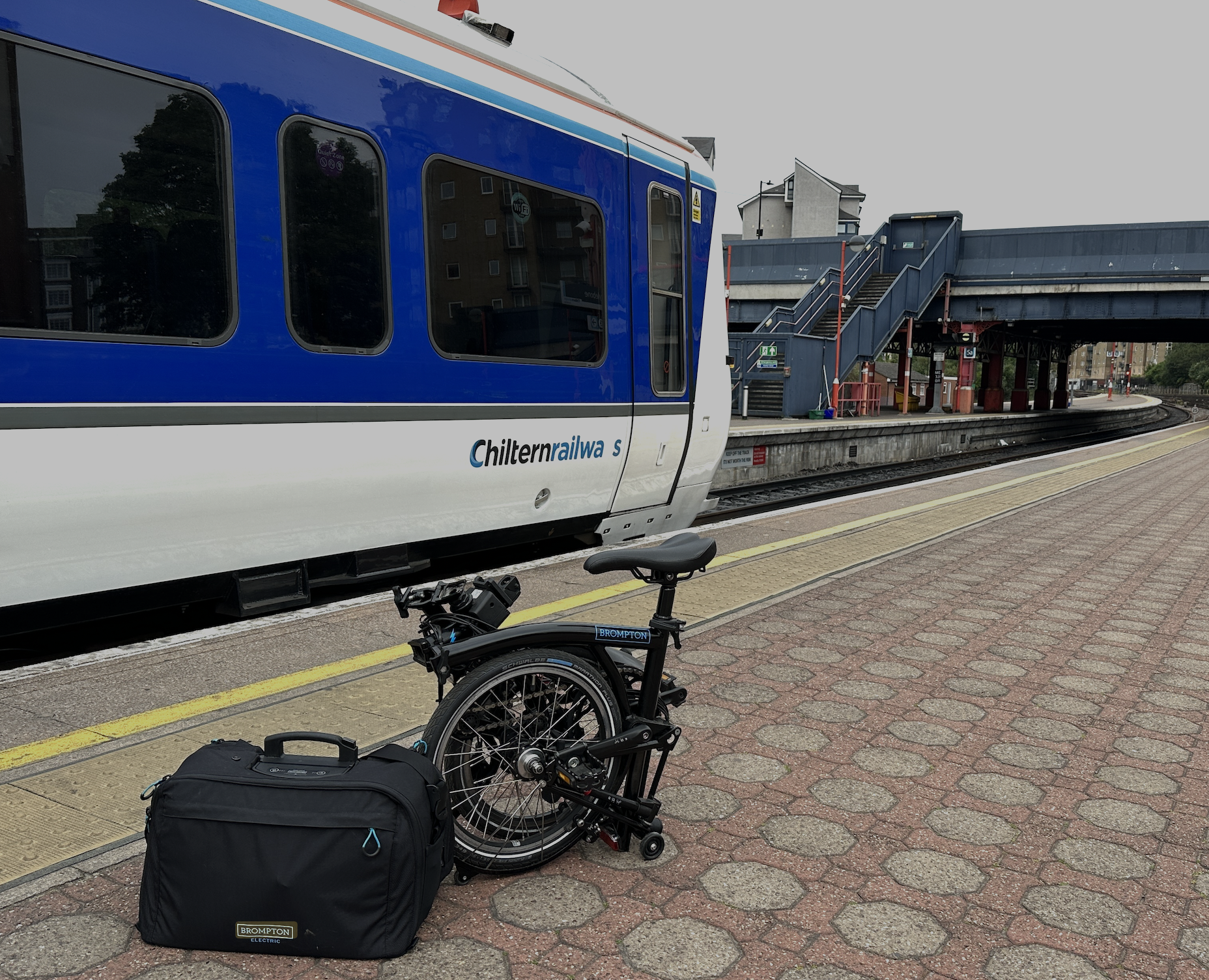
My first e-bike was a Brompton Electric. I found it brilliant for commuting to London: I’d cycle to the local railway station, pop the folded bike on the train, and spin across town from Marylebone to various places in the West End and City. I saved over £16 a day in car parking and the cost of the onward London tube journey from Marylebone. And it meant one fewer car on my local roads. I wrote more about my Brompton Electric experience here.
Electric bikes might make you cycle more
Hills? No fear
There are days when just don’t feel like cycling. But then I remember my electric Trek Domane. I took the photo above on my first ride on it, three years ago this month, when I relished the feeling of traversing the hilly Chilterns without quite as much effort. I still burned a lot of calories, because of the 15.5mph cut off for assistance, and even below that you still need to pedal. The Domane has differing levels of assistance so you can decide how much you want to exert yourself. I confess I usually choose the maximum help – I’ll choose my unpowered bike if I want a proper workout.
An e-bike makes family rides easier
An e-bike would be helpful… Masca, Tenerife
The beauty of an e-bike is that it helps less powerful riders keep up with their more athletic cycling friends and family. I first noticed this in 2019 riding up a very long, steep hill near Masca in Tenerife. I was very surprised to be overtaken by two small children. When their parents followed them past me I realised the whole family were on e-bikes. I was envious…
Cycling in Britain is a safe way of getting around and exercising. According to road safety charity Brake, one cyclist dies for every 33 million miles cycled. They sound like good odds, and they’re getting better. The casualty rate has been falling over the past decade, reports Cycling UK (even after discounting the impact of the pandemic, when there were blissfully few cars on the road).
Despite all this, many people say they’re too frightened to cycle on Britain’s roads. If you’re inexperienced, a busy urban road understandably feels like a scary place. And most accidents happen at junctions, rather than on the open road. Ironically, I have found central London one of the most enjoyable places to ride a bike, even in the rush hour, as the city now has many miles of segregated cycle routes, where bikes and cars are kept apart. There’s little chance of that luxury where I live in the Chilterns.
There are things cyclists can do to improve the odds, regardless of where we cycle. Cycling UK has plenty of tips. Meanwhile, I have had two positive results over the past month in the small steps I have taken to make my local roads safer for cyclists.
Report those potholes
Potholes are a serious danger for cyclists, while causing expensive damage to bikes and cars. They are a particular danger in bad weather – when you can mistake them for mere surface water – and at night. I recently rediscovered Cycling UK’s brilliant tool for reporting potholes: Fill that Hole. (Anyone can use it – car drivers as well as those on bikes.) I got an informative response confirming that the huge hole on the A355 where it crosses M40 junction 2 would be repaired in the coming month or so after others reported the hazard. In my experience, potholes do get repaired when you report them. It takes just a couple of minutes to file a report, which can include photos.
Report dangerous drivers
My biggest concern when cycling is drivers who pass far too closely. The Highway Code requires drivers to allow a passing distance of at least 1.5 metres (5 feet) when overtaking cyclists, but few drivers follow the rules. Out on the roads of Buckinghamshire and neighbouring counties, I’ll usually experience at least one car or van passing closer than I’d like on most rides. It’s rarer for me to experience a sense of danger – but two years ago I decided to report the serious cases to the Thames Valley Police. It’s very easy to do this online: the form requests the necessary information, and you can upload video.
I’m very selective about those I report. I only act against those close passes where I felt in danger. To capture the evidence, I use a Cycliq Fly12 Sport front camera, which contains a front light as well. In my first 18 months, I have reported two drivers, and on both occasions Thames Valley Police has taken action against the driver. You can see the latest overtaking case above.
I decided at the beginning not to report every incident. As an experienced cyclist, I am not fazed by traffic, and my view is that if I’m not unduly bothered at the time there’s no reason to file a report, even if the driver hasn’t left the required passing distance. Others, notably CyclingMikey, who has reported over 1,000 errant drivers, including Chris Eubank and Guy Ritchie, are more interventionist. I am more likely to report commercial drivers as they are likely to drive further than private motorists, putting more cyclists in danger, although the first person I reported was in a private car who ran me off the road on a single track road.
I have found the Cycliq a brilliant bit of kit, especially as it is largely ‘fit and forget’. It records over earlier footage when the memory card is full, so you don’t have to worry about replacing the card, and it records for up to seven hours between charges. You can flag incidents you want to save by pressing the Q button to keep the relevant video segments.
Cycliq is the subject of negative comments online about its customer service, but I have found the camera very reliable.
The cycling revival
As I mentioned at the start of this post, cycling is far safer than many think. Modern bike brakes and lights are vastly better than when I started cycling as an adult over 35 years ago. Better still, there are far more people on bikes today, compared with when I was growing up in the 1970s – possibly the low point for cycling in Britain, when car ownership was booming and cycling was seen as a poor person’s way of getting around. Long may the cycling revival continue.
It’s official. I’m taking part in Britain’s greatest cycling challenge, the 1530km London Edinburgh London ride in August 2025.
I’ve been thinking about it for a while, and my successful completion of London Wales London in 2024 makes me think I’m not completely crazy contemplating cycling from London to Edinburgh and back in 128 hours. That wonderful 26 hour experience showed that I was capable of the mental attitude needed for endurance cycling. As I wrote in my LWL blogpost, the mental challenge is arguably greater than the physical one, at least while the body is still capable of turning the pedals. LEL will require far greater mental strength than the far shorter distance of LWL, which spans just one night – although the fastest LWL riders make it home before midnight.
I’ve really enjoyed the London Edinburgh London podcast series – I was impressed how it shows how you don’t have to be a super athlete to do LEL, while not hiding the fact this is a feat of endurance. I listened to this episode while driving to Wales with my son just hours after entering. I felt exciting and scared in equal measure!
Over the coming months, I’ll be getting match fit while learning from accounts by LEL veterans what I need to do to maximise my chances of success. This will vary from the physical – how to improve core strength for days on the bike, while avoiding saddle sores and Shermer’s neck – and choosing the right equipment for the ride. As my friends know, I love recording my cycling adventures in word and video, but LEL is so all-embracing that I’ll have virtually no time or energy to give a detailed account along the way as I’ll be living in the moment. (My clear lesson from LWL was to avoid faffing and minimise the elapsed time off the bike – it’s easier to reduce time at stops than make up time on the road.)
Last year, I was pleased with my training for LWL. I blended time on the road with hill climbing, which helped me on the big one. I need to take this to a new level for LEL, and also get into the habit of stretching – for days after LWL, I was incredibly stiff, which will be debilitating on LEL when setting off after my first sleep after a few hundred kilometres. In 2002, on my first Land’s End to John O’Groats ride, I was impressed by a couple of riders who stretched whenever they stopped. I must follow their example in 2025.
I’ll post updates on my preparations in the coming months. Do please share any advice! UPDATE: you can read the series on training and preparing for London Edinburgh London starting here. (There’s a link to the next episode at the end of each post.)
PS: I am lucky enough to have a guaranteed entry to London Edinburgh London as a member of Audax UK, Britain’s long distance cycling association. But I hit a glitch using the guaranteed entry to apply. It emerged that as I applied for the early entry ballot in 2023 the guaranteed entry link didn’t work. Happily, the LEL team sorted this for me, hence the entry confirmation at the start of this post. If you are in a similar position, just contact them for help.
New year is the time I look back on the cycling year just passed, and anticipate adventures to come. This time last year, I shared my plans for 2024 with a hint of hesitation. Telling the world that I planned to cycle from London to Wales and back in a day seemed tempting fate. But that London Wales London challenge proved a happy one as I blogged in May. It remains to be seen how I cope with the far bigger ambition to complete London Edinburgh London this August.
2024: the year I became an endurance cyclist
Crossing the Severn Bridge, London Wales London 2024
At the start of 2024, I’d never cycled more than 103 miles in a day. Could I make the jump to riding over 250 miles in one go? I knew that this would be as much a mental challenge as a physical one. So I tested myself on a 157 mile shortened version of the London Wales London route, which I tackled three weeks before the real thing. My heart sank as I suffered a puncture after 49 miles, but the tubeless sealant plugged the hole, and I made it to the end. I was also tested by a pitiless headwind for much of the first 60 miles, which meant I had to pedal downhill as well as up. These hurdles tested my resilience but I came through with the confidence to tackle London Wales London.
The opening page of my Arrivée article on LWL
I’ve already written a comprehensive account of my debut London Wales London in Audax UK’s Arrivée magazine and on this blog, so I won’t repeat myself here. I’ll just say that I found it an almost spiritual experience, especially seeing a new day dawning as I pedalled across the unspoilt Berkshire countryside. I was also delighted to reach the final feedstop at Lambourn after 196 miles in buoyant shape and spirits. My LWL success isn’t proof that I will be able to complete London Edinburgh London (or indeed the 600km Bryan Chapman Memorial ride in June) but it suggests that I am not crazy to attempt them.
Cycling across Ireland
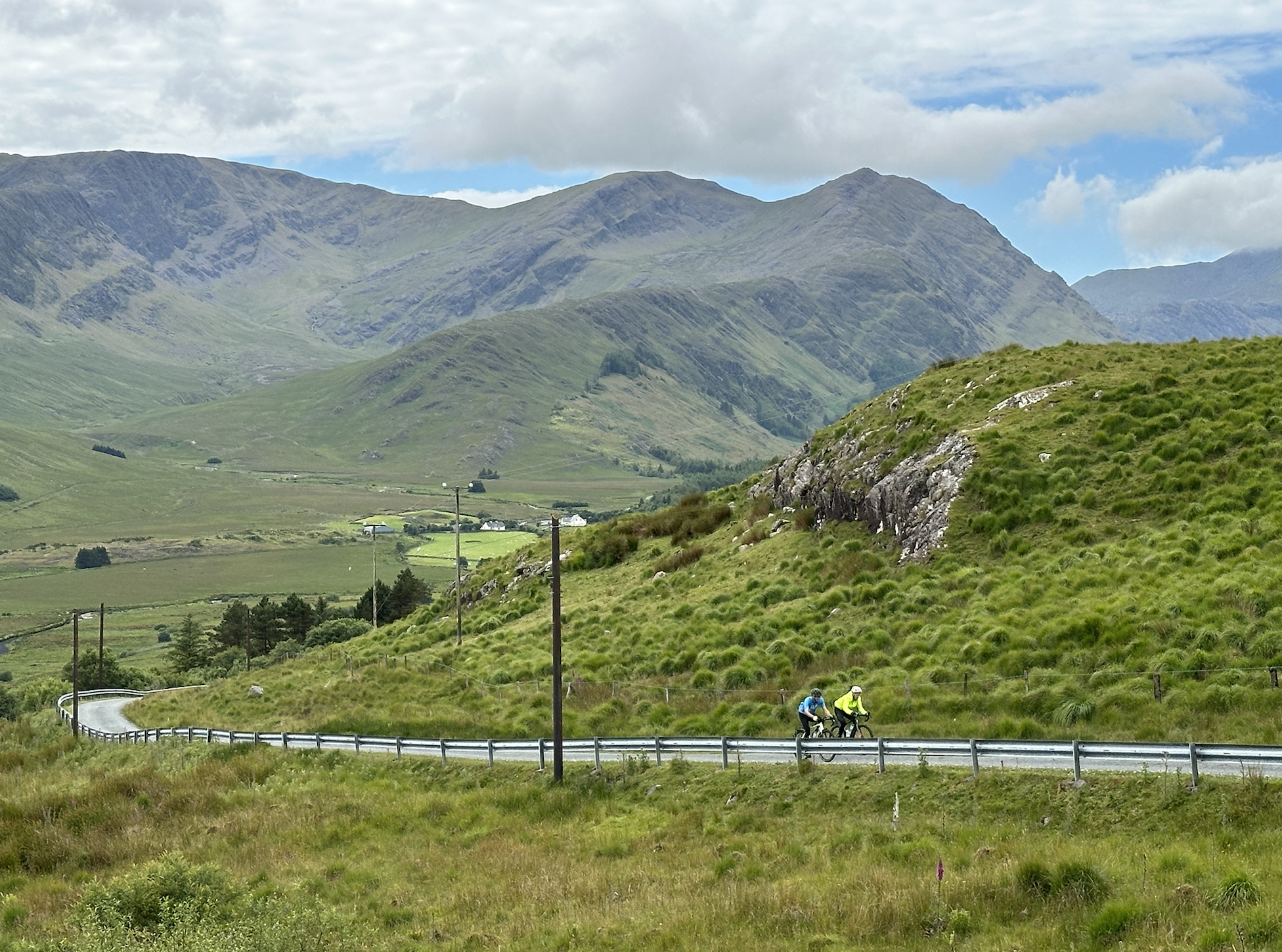
Climbing the Sheeffry pass, Co Mayo, Ireland
It was a joy to return to Ireland in June, for my third ‘end to end’ ride, from Mizen Head in Co Cork to Malin Head in Co Donegal with the excellent Peak Tours. It was no surprise that the weather wasn’t as benign as in Portugal in 2023, but we did have a surprising number of bright days. I’ve written a detailed day-by-day account starting here.
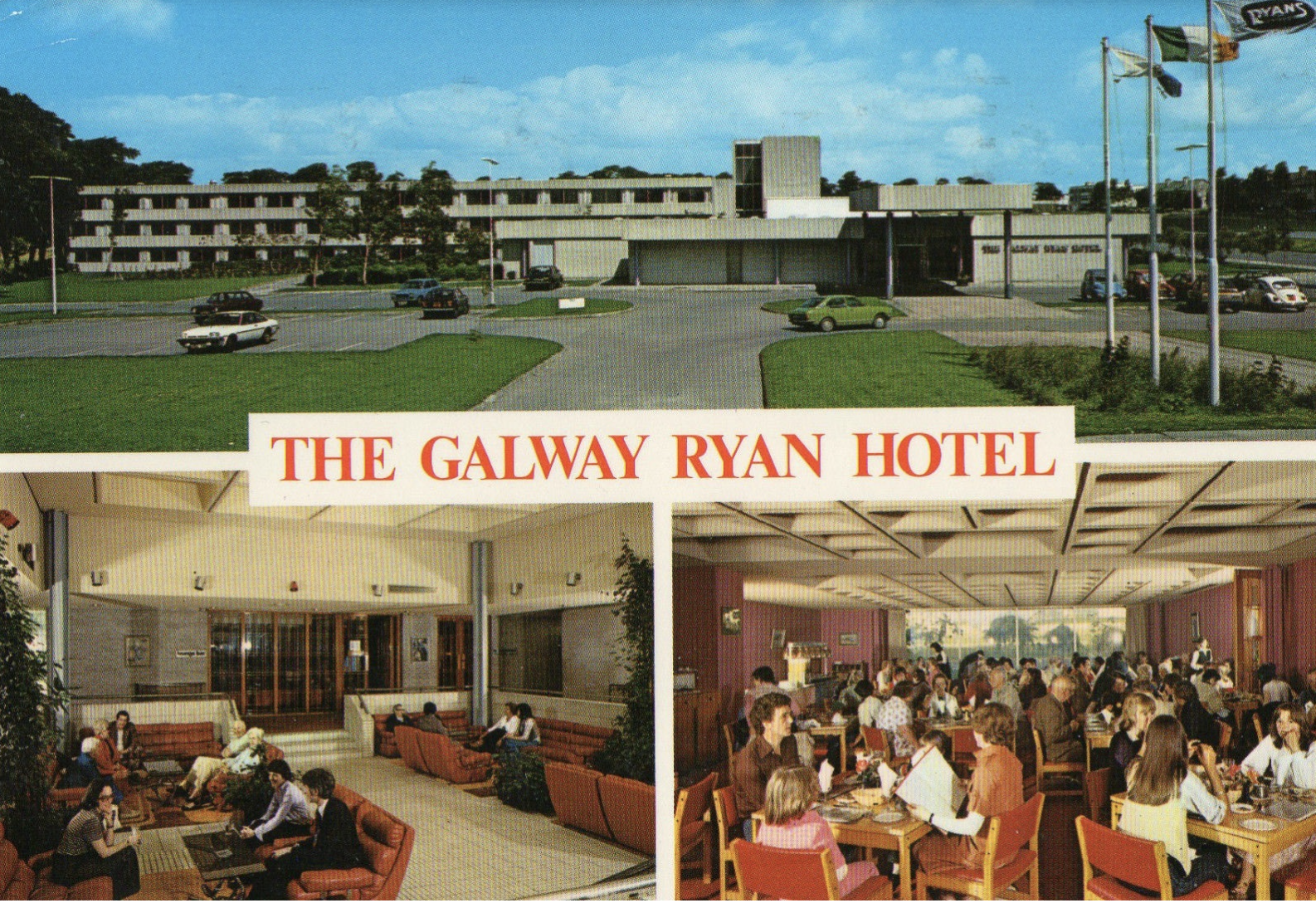
In my 2024 new year post previewing the trip, I looked forward to returning to the seaside town of Lahinch 50 years after my visit aged 10 with Mum and Dad. We didn’t stay there in 2024 as it turned out, but I stopped briefly and found it rather a sad place and not at all how I remembered it. But in an amazing coincidence we did stay in the same Galway hotel that Mum, Dad and I visited in 1974. The old Ryan Hotel was renamed the Connacht in 2013.
Conquering the Rapha Festive 500
My 2024 cycling year ended on a high as I completed the Rapha Festive 500 for the first – and most likely only – time. As one of my readers, Tempocyclist said, it’s a lot nicer cycling 500 festive kilometres in the southern hemisphere than in a British winter.
You can read my tips on tackling the Festive 500 here. I was delighted and relieved to finish the last ride. I have to be honest that it wasn’t my favourite cycling experience of the year, but it did mean I finished 2024 more healthily than if I’d stayed on the sofa, which gives me a head start in my training for 2025’s cycling challenges.
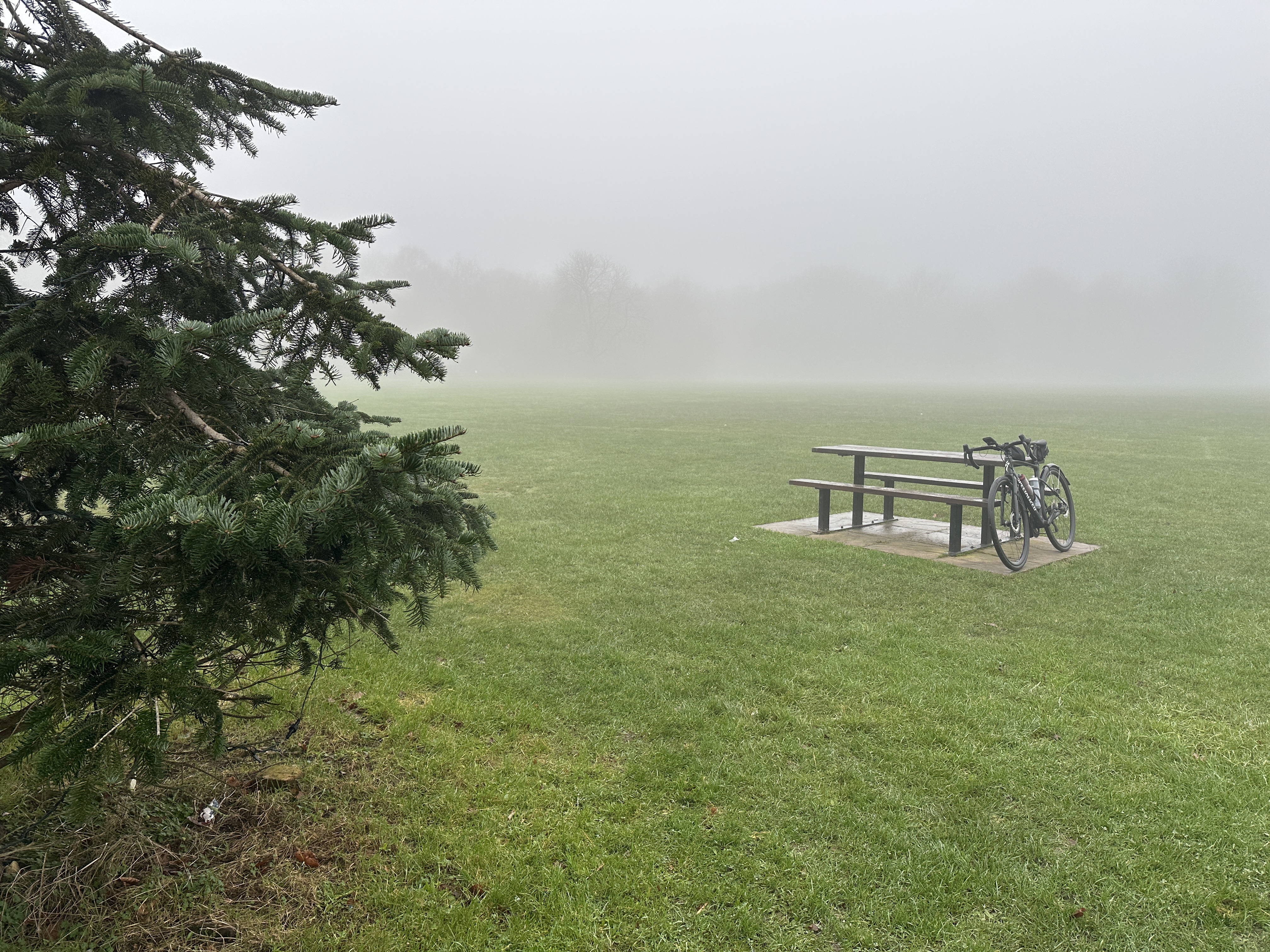
This was the moment when I cursed my decision to enter the Rapha Festive 500 challenge. I’d been cycling for over an hour, and the mist was seeping through every pore. I saw a sign for my village and mourned the fact I had another thirty miles to cycle, rather than a sofa in a warm house, to look forward to. The week’s rain-free weather forecast had led me astray – I was getting wetter and colder than I had ever imagined. I finished the Boxing Day ride – the third day of the Festive 500 – wondering if I’d finish the challenge. Yet four days later I passed the 500 kilometre finish line with a day to spare.
In this blogpost, I’ll share the lessons I learned – what went right, and more importantly how to avoid the mistakes I made. For anyone who isn’t aware, British cycle clothing company Rapha launched the Festive 500 in 2010. Participants have to cycle 500 kilometres (310 miles) in the eight days from Christmas Eve to New Year’s Eve. You can ride on roads, trails, on indoor turbo trainers and even an e-bike.
Here are my tips based on my experience in 2024.
Ask yourself: is it for me?
Cycling 500 kilometres in eight days is an achievement for most people. Yet it’s even harder over the festive period. Most people taking on the challenge will have other commitments – hosting family or friends, travelling for some of the holidays, social events and work. Can you fit in cycling 500km with these commitments? If you’re likely to have several days when you can’t cycle, will you be able to make up the miles in the remaining time? Will your family understand and support you, or will they resent not having you around ? No sensible person will judge you if you don’t make it, but it’s best to set off aware of the complications that might be the difference between success and not making it.
Weather or not…
Day 6: first sight of the sun…
It’s ironic that the Festive 500 was created by a company in Britain – a country not renowned for its fine weather, especially over the Christmas and New Year period, (The Scottish capital Edinburgh has just cancelled its Hogmanay new year celebrations because of forecast winter storms.) I decided to take part in the Festive 500 this year after seeing the benign weather forecast, but as the opening of this post suggests, it wasn’t as benign as I expected… After days of mist, it was a joy to see the sun breaking through on day 6, half way through my longest (50 mile/80km) ride of the challenge.
If your forecast suggests days of gales and rain, you can always ride indoors, or decide to wait until next year… I’d find riding 500km indoors soul-destroying, but I did ride indoors to top up shorter than expected outdoor rides.
Get organised
Set up your routes before the big day
I was full of good intentions on the first day. I’d planned to set off during the morning of Christmas Eve, but wasted over an hour trying to get my route onto my Garmin. As a result, I had less daylight time to complete the ride I planned, and as a result was behind schedule on the very first day. Lesson learned: get everything ready the day before, so you’re on the road on time.
Keep warm: layering matters
Warm and visible: Christmas Day Festive 500 ride
I’ve already mentioned that a weather forecast lured me into a false sense of security. This was an unseasonably warm Christmas in southern England, so a base layer and jacket, and summer cycling shoes would be fine, surely? For the first two days that was true, but on Boxing Day my mood took a tumble as I explained at the start of this post. Who knew that mist was so wet and cold? Yet it took another day’s ride before I learned my lesson, adding a Rapha wind-proof jersey, Sealskinz socks and Shimano winter cycling boots to my outfit. It transformed my mood, and I had my favourite ride of them all, to the lovely Velolife cafe at Warren Row for a delicious toastie. Layer up – you can always remove a layer if you get too warm.
I found my Le Col and Rapha bib tights essential wear for keeping me cosy, along with my neck warmer and full (but lightweight) gloves.
Lights – and action
If you’re doing the Festive 500 in Britain or another northern hemisphere country, you’ll not have endless daylight to complete your outdoor rides. On day one, my rear light failed as it was getting dark, which meant I finished about 10km earlier than expected. (Safety is more important.) After that, I charged my taillight every night, and also took a spare. I also wore a neon jacket to make sure I was seen by any distracted Christmas drivers.
Podcasts: my motivation for winter miles
I found podcasts a wonderful way to keep engaged and motivated on my Festive 500 rides. (A contrast with my London Wales London 400km audax ride, when I preferred silence, as I explained here.) Just before the Festive 500 began, I downloaded a stack of The Rest is History podcast episodes, and listened enraptured as the miles passed. I never expected the causes of the Great War to be laugh-out-loud amusing. It made me rethink all my assumptions about the road to catastrophe in 1914. (On a trivial note, I was intrigued to learn that the Kaiser signed the order mobilising Germany’s armed forces at a desk made from wood from Nelson’s flagship HMS Victory, and that British foreign secretary Sir Edward Grey visited London Zoo the day Britain declared war on Germany.)
Adapt your plans as needed
Plotting my rides
As mentioned earlier, in the early days of the Festive 500 I was falling short, because of disorganisation and the mist that hit my morale. By day four, I realised that adding indoor miles was the perfect solution. I confess that I don’t enjoy indoor cycling – gamification can only go so far in relieving the tedium – but I wouldn’t have completed the 500km with a day to spare without my Wattbike Atom smart trainer, Rouvy and Zwift.
In much the same way, keep a close eye on your local weather forecast. One of the reasons I delayed my initial daily starts was the hope that it would be warmer at 1pm than 11am, but in truth it made little difference. By contrast, if you’re expecting strong winds later in the challenge, get your big rides in early – or go indoors.
Don’t let setbacks get you down
The moment I saw my bike crashing to the ground, I knew it wasn’t good news. I set off anyway, on what should have been my longest cycling day yet, but as soon as I started climbing I knew that I’d be returning home. The derailleur hanger was bent, preventing me using most of my gears. This is where N+1 comes in: the idea that the ideal number of bikes to own is one more than you currently have. As I’ve been following that philosophy for years, I put my damaged bike in the garage and set off on a shortened route on my Specialized Roubaix.
If you’ve only got one bike, this might not be an option, but you might be able to see if your local bike shop – or mechanically-minded friend – can repair your mount.
Above all, accept that setbacks will happen. And if you prop your bike against the garage door, or farm gate, make sure the drive side is facing in, so the derailleur doesn’t take the impact if the bike falls over…
It’s all in the mind…
The secret to success in most cycling – and life? – challenges is in the mind. If you’re setting off on a cycling journey, those first pedal-strokes are the hardest. I explained in my London Wales London post that I soon realised that noting that 2.4km represented one percent of the total was a one way path to madness. On a more modest scale, I do recommend ditching the idea of clocking how many kilometres you still have to cycle. Just keep those pedals turning.
t’s a wonderful moment: completing a serious cycling challenge. Cycling 500km (310 miles) over the Christmas holidays is no mean feat, especially with family commitments. And let’s be honest, setting off into the cold and mist when the alternative is eating and drinking in a warm house takes commitment. On my longest (80km) Festive 500 ride, I kept alive the option of cutting my route short. Yet as I cycled north, the mist was replaced with a weak sunshine, and the easy riding north of Tring, Hertfordshire. (And all the while, Dominic Sandbrook and Tom Holland were telling their enthralling story about the outbreak of the Great War on The Rest is History…)
Enjoy your food and drink
Chiltern Velo cafe, Hawridge, near Chesham
It’s easy to forget that winter cycling needs fuel. For a few of my rides, I forgot to take an energy bar but happily always found a cafe or shop when I needed to refuel. My favourite Festive 500 memories are of my lunches at Chiltern Velo and Velolife cafes – and the cafe at Burnham Beeches. (Kudos to Velolife for posting its Christmas opening hours online – very helpful for route planning.)
Head for the hills – or the flat?
The joy of easy climbing: Christmas Day
Put bluntly, the challenge is 500km: you get no extra kudos for climbing. I was amused to see that Rapha shared a participant’s 154 mile ride in Asia, but noticed that this rise involved 1,000 feet less climbing than my 50 mile ride on day 6…
In short, add ascents if you wish, but don’t feel it’s compulsory. One of the reasons that my Boxing Day ride was a struggle was that it was a switchback. I always prefer routes that ascend, stay at the summit level, and then descend, rather than follow a rollercoaster profile.
Don’t neglect family and friends
You may love the idea of bagging the Festive 500 trophy. But remember: there are more important things in life than cycling. Really…
I was very mindful that while I was completing the challenge I wasn’t taking the dog for daytime walks, let alone ironing or cooking. So make sure you talk to your family about what is negotiable and what isn’t. So if you have loved ones staying, don’t assume your partner will happily entertain them for five hours while you’re cycling unless they’ve told you this is true…
Ride somewhere different
I don’t know about you, but I ride the same routes all the time. Yet on the Festive 500 I looked for new places to go. We live just a handful miles of the border between Buckinghamshire and Greater London, but I’d never cycled from home to London until day 3 of the Festive 500. Similarly, I’d only ever ridden north to Mentmore (the location of the famous country house sale of the century in the 1970s) in the spring and summer on century rides. There’s a joy in seeking new routes to send the heart singing.
Look after your bike
I’ve already said you need to adapt should you hit a mechanical. It’s better, naturally, to try to avoid any mechanical problems. Keep on top of maintenance, checking tyre pressure, washing your mount and ensuring you have spare inner tubes, pump and all the other essential kit to keep you on the road.
You’ve done it!
Screenshot
I was thrilled to complete the Rapha Festive 500 a day early. But what next? Are you inspired to go further – perhaps Land’s End to John O’Groats? Just do it!
You can read my day by day account of my successful Festive 500 challenge here.
Strava has emailed me to say that I joined the exercise tracking service 10 years ago.
My modest early Strava months in 2014
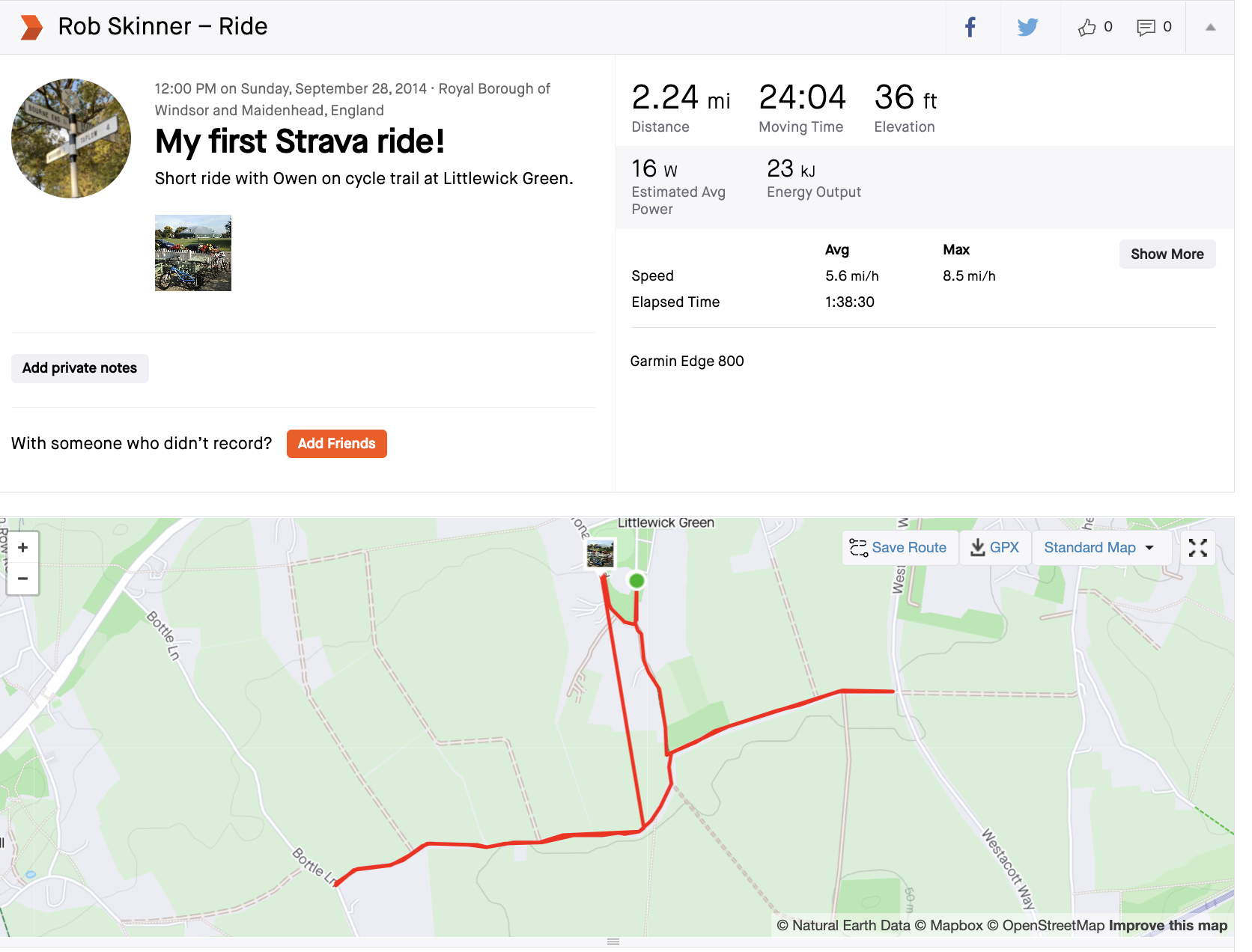
In those early days in 2014 and 2015, I rarely recorded a bike ride longer than 10 miles. My first Strava ride was less than three miles: a ride with Owen, then aged 6, on his own bike, along a Sustrans trail in Berkshire. The following year I cycled 800 miles, and only passed that milestone because I saw on Strava that I was 37 miles away from it.
That first Strava ride
By contrast, I notched up more than 6,250 miles in 2021, including over 500 miles every single month. Strava has definitely motivated me, and I was thrilled earlier this year to record my best ever time up a local hill, Bottom Lane in Seer Green – beating my 400 or so previous ascents on this segment.
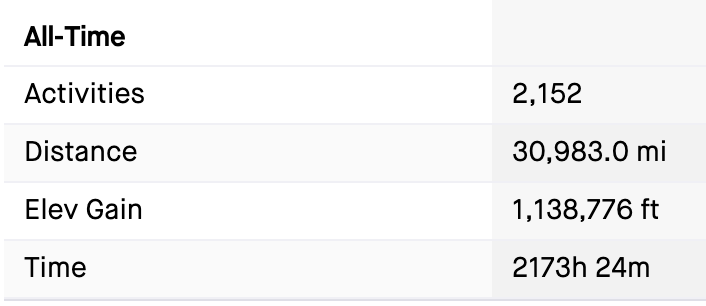
This is my Strava career to date: almost 31,000 miles of cycling, including over a million feet of climbing. My longest ride was the 407km (254 miles) of London Wales London this May, while the biggest climb was the 4,829 feet ascent of Mount Teide in Tenerife from the west in 2019. (Unbelievably tough, especially as my hire bike didn’t have a low enough gears.) London Wales London was also the ride with the biggest climbing tally, at over 13,000 feet.
I love having such stats at my fingertips. I will never be a racing cyclist, but I do enjoy looking back at how far, high and fast I’ve gone. It’s also nice to have mileage stats for my bikes. I’ve done over 7,000 miles on two bikes, with the prize currently held by my Cannondale Synapse, which I sold to a friend a couple of years ago. I should overtake that 7,250 mile record on my Diverge gravel bike in the next couple of months.
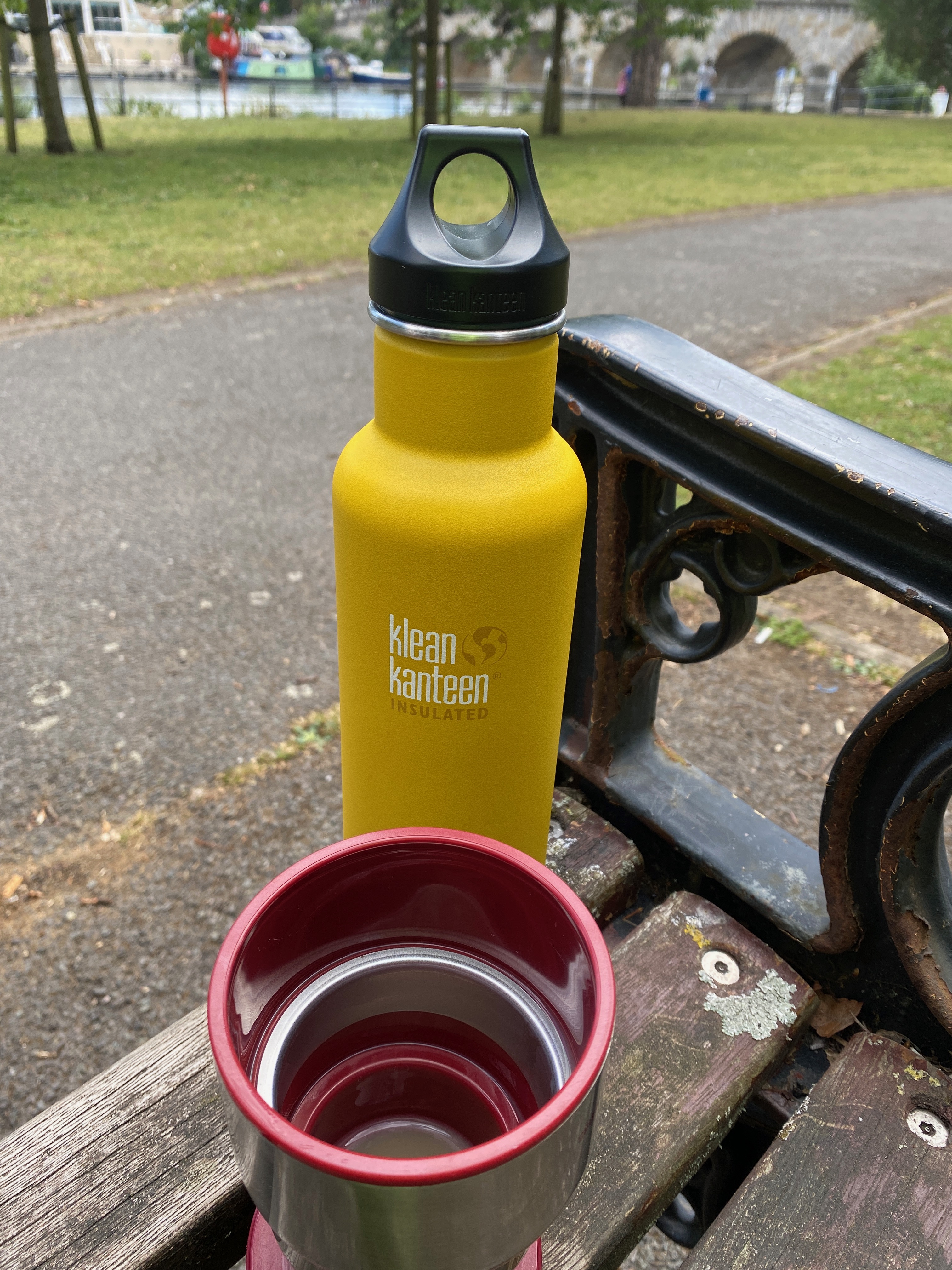
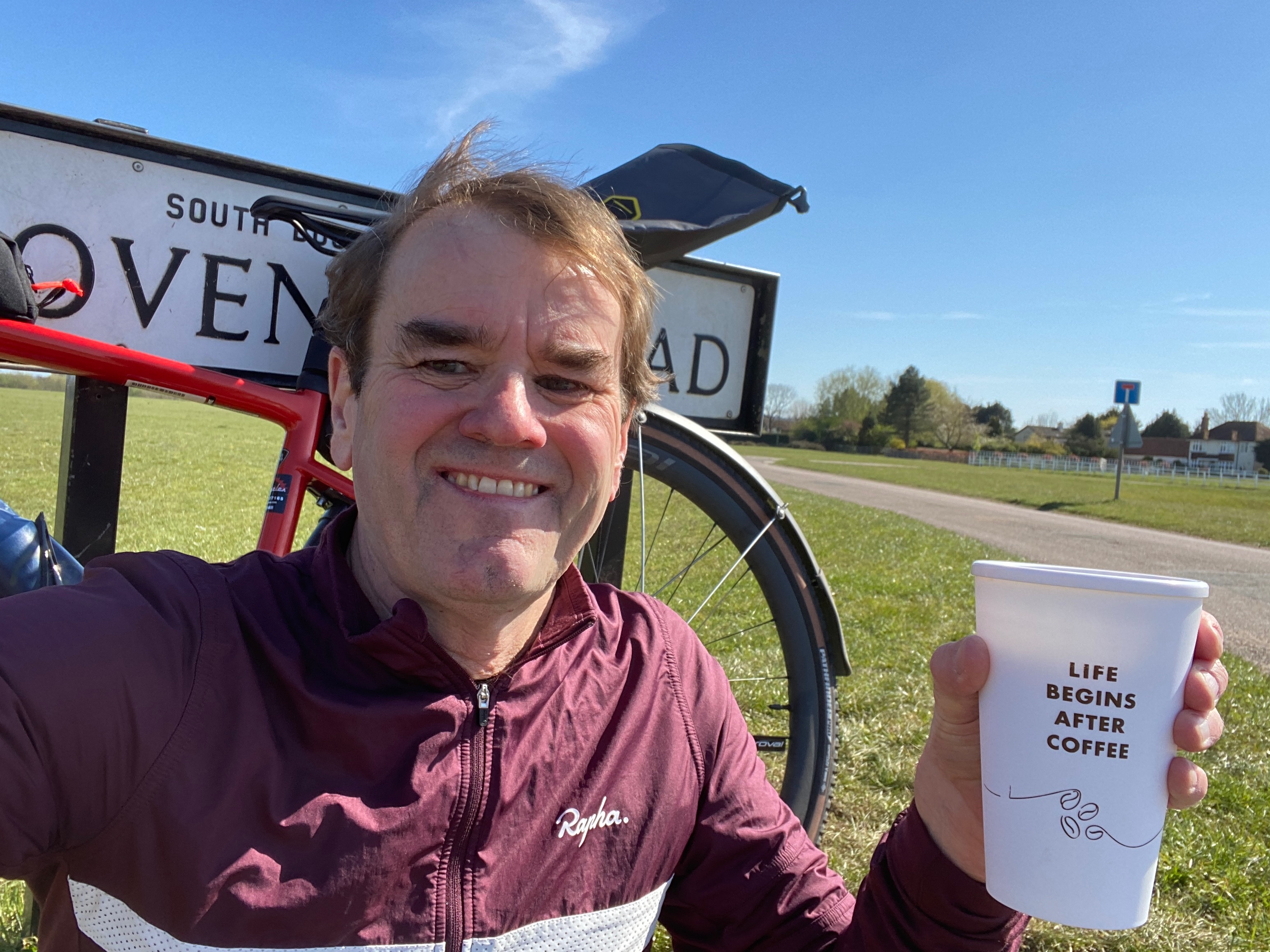
Remember the dark days of the Covid-19 pandemic, when we couldn’t enjoy once everyday pleasures like going to a cafe? During the glorious spring of 2020, I cherished my regular bike rides – an opportunity to keep sane during crazy times. But I really missed my cafe stops, so I bought a Klean Kanteen flask so I could take a hot drink with me.
The photo above shows my tea stop by the Thames in Maidenhead, with its convenient bench, in June 2020. Another regular spot was Dorney Common on the road to Eton Wick near Windsor.
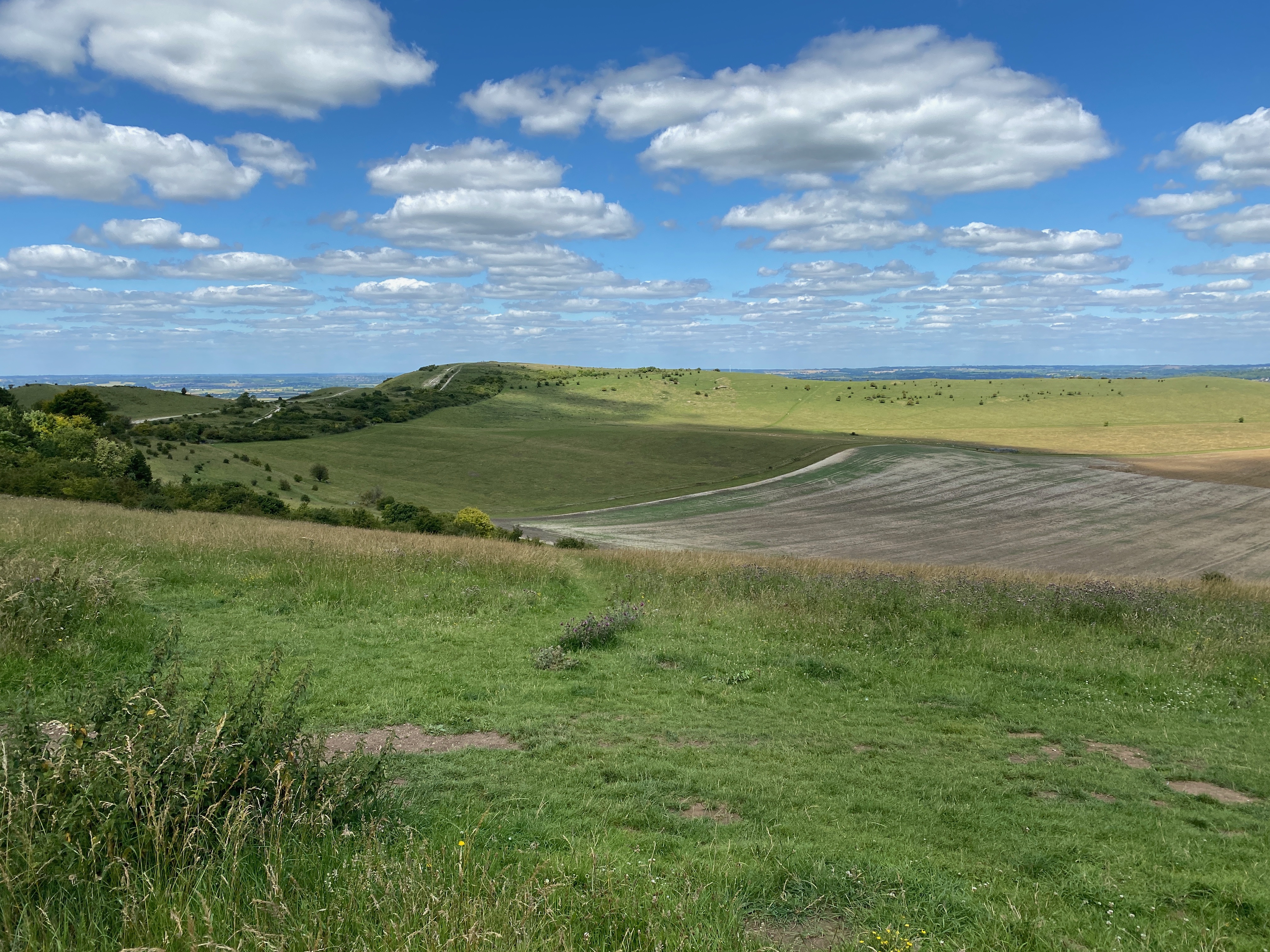
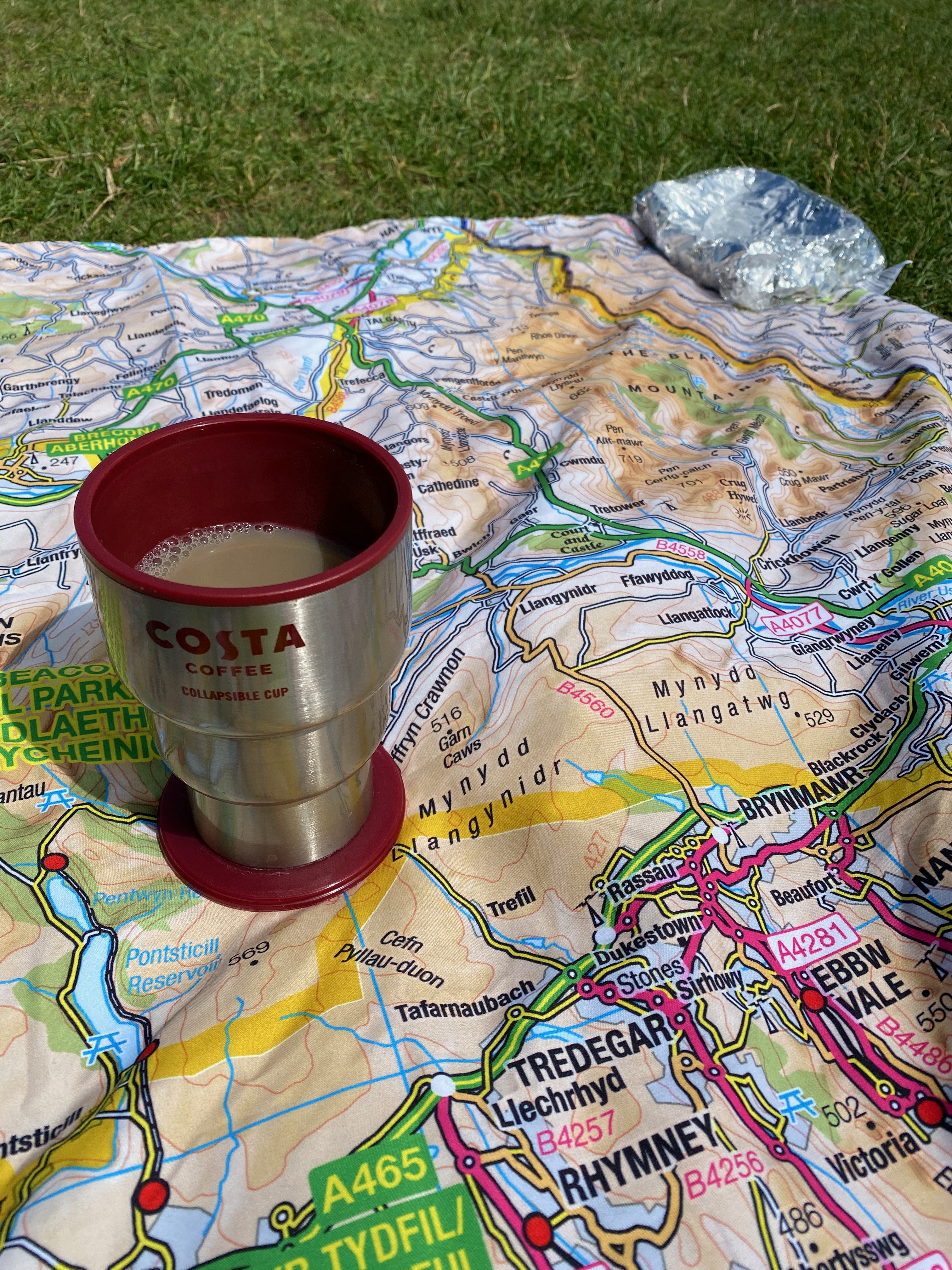
My most ambitious ride that summer was to Ivinghoe Beacon. After the steep climb from the B489 Tring-Dunstable road I savoured the view over the downs and across to the white lion that has guarded the hillside on which Whipsnade Zoo stands since 1933. Thanks to my Klean Kanteen flask I was able to enjoy a couple of mugs of hot tea with my picnic. The Ordnance Survey picnic ruck, featuring Bannau Brycheiniog (the Brecon Beacons) may have been geographically out of place!
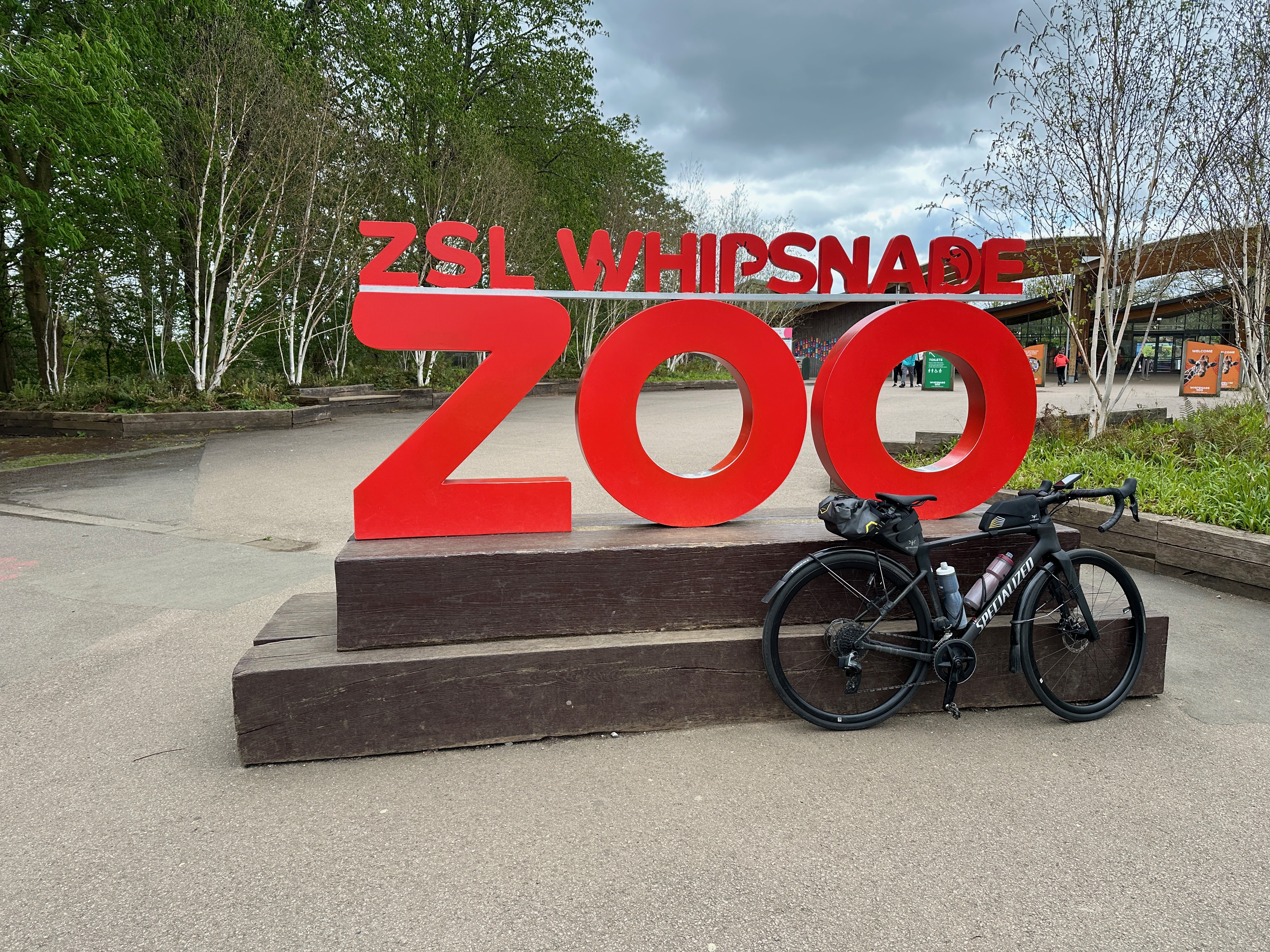
Four years on, we no longer have to take our beverages with us: the cafes we missed during the pandemic lockdowns have long since reopened. But sometimes my cycling routes pass through cafe-free territory, and so on Saturday, for the first time in several years, I retrieved the Klean Kanteen flask from the cupboard and took it with me on a 62 mile ride through Buckinghamshire, Hertfordshire and Bedfordshire, revisiting Ivinghoe on the way home. (Part of the ride followed Jack Thurston’s Chiltern Rendezvous route from Lost Lanes South.)
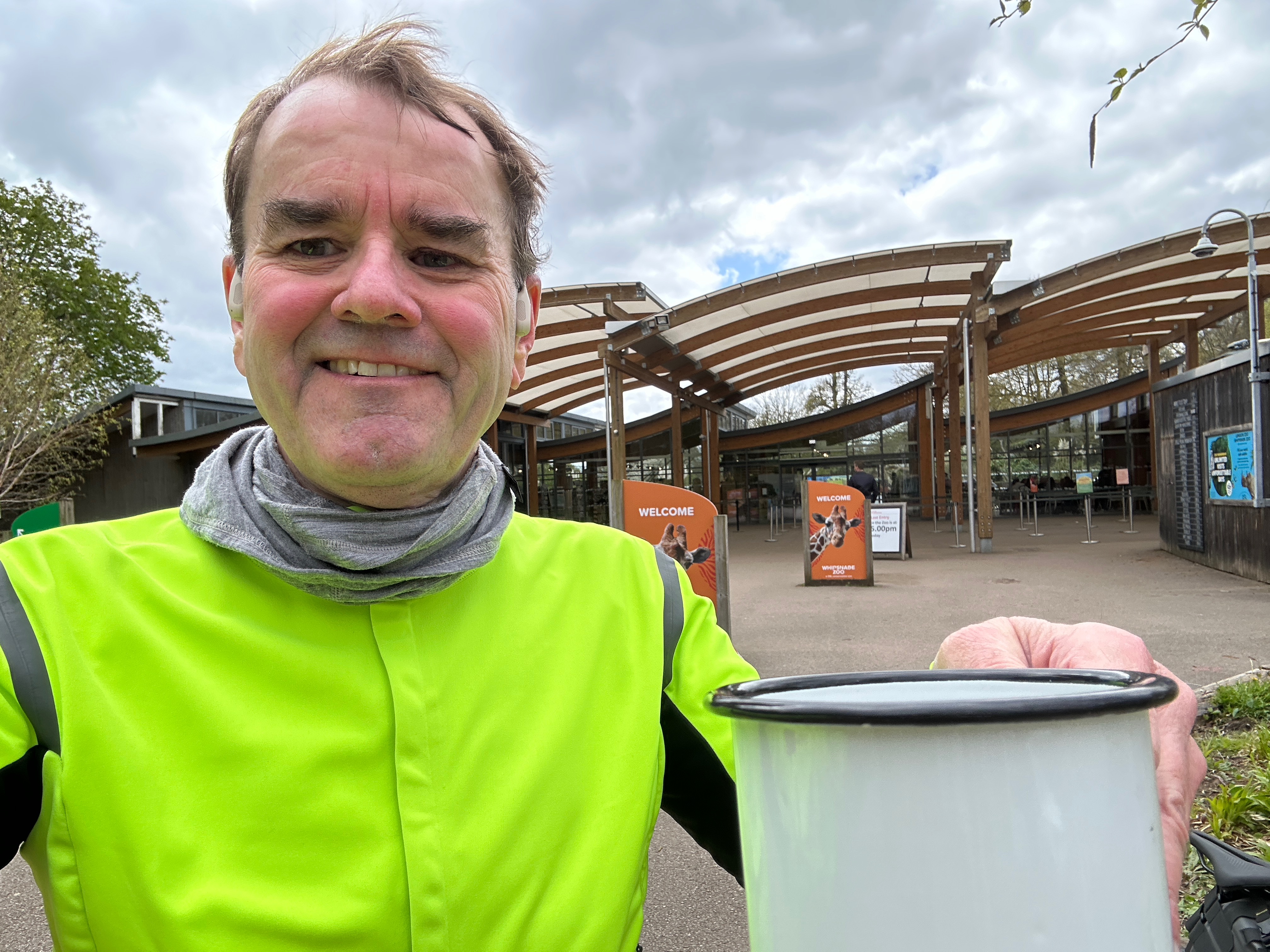
It was an unseasonably cold and windy day, and by the time I stopped at the entrance to Whipsnade Zoo I was gasping for a cuppa. I felt nostalgic seeing the families with small children, remembering visits with Owen when he was little. (“My favourite animals? The train and the bus.”) I filled my Restrap enamel mug with tea, but to my disappointment the drink was only luke-warm.
When I got home, I tested the flask to see if I’d unwittingly not fully boiled the kettle before the ride, but no – the flask no longer kept its contents hot. My pandemic ride-saver was destined for the recycling bin. But it served my well during those extraordinary times in 2020 and 2021. I’ll end this post with images from April 2021. I had a tea stop on Dorney Common before cycling on to Windsor to witness the media reporting on Prince Philip’s funeral that afternoon.
You wear a bike helmet to keep safe. So it is a shock to find a faulty helmet design that could actually make things worse in a crash.
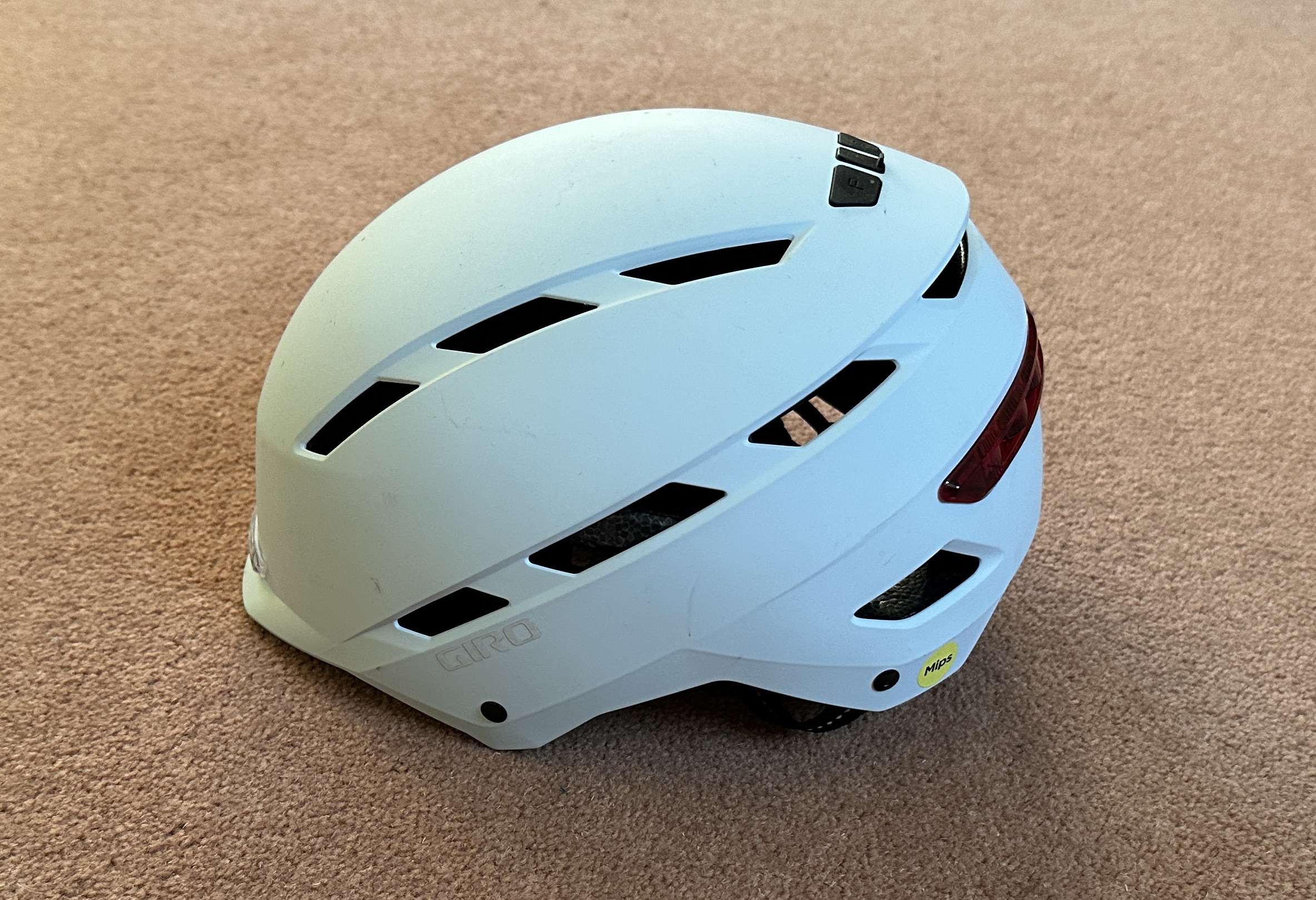
I bought a Giro Escape urban helmet in 2022. I wanted a lid with integrated lights for my weekly commute across London. After a few months, the strap came loose, and the helmet fell to the ground as I got to the office in the City of London.
Giro were very good, refunding me without quibble, and I bought a second Giro Escape, assuming the first helmet had a manufacturing fault. I loved the fit and the bright LED lights – just what I needed cycling home along dark country lanes after getting off the London train.
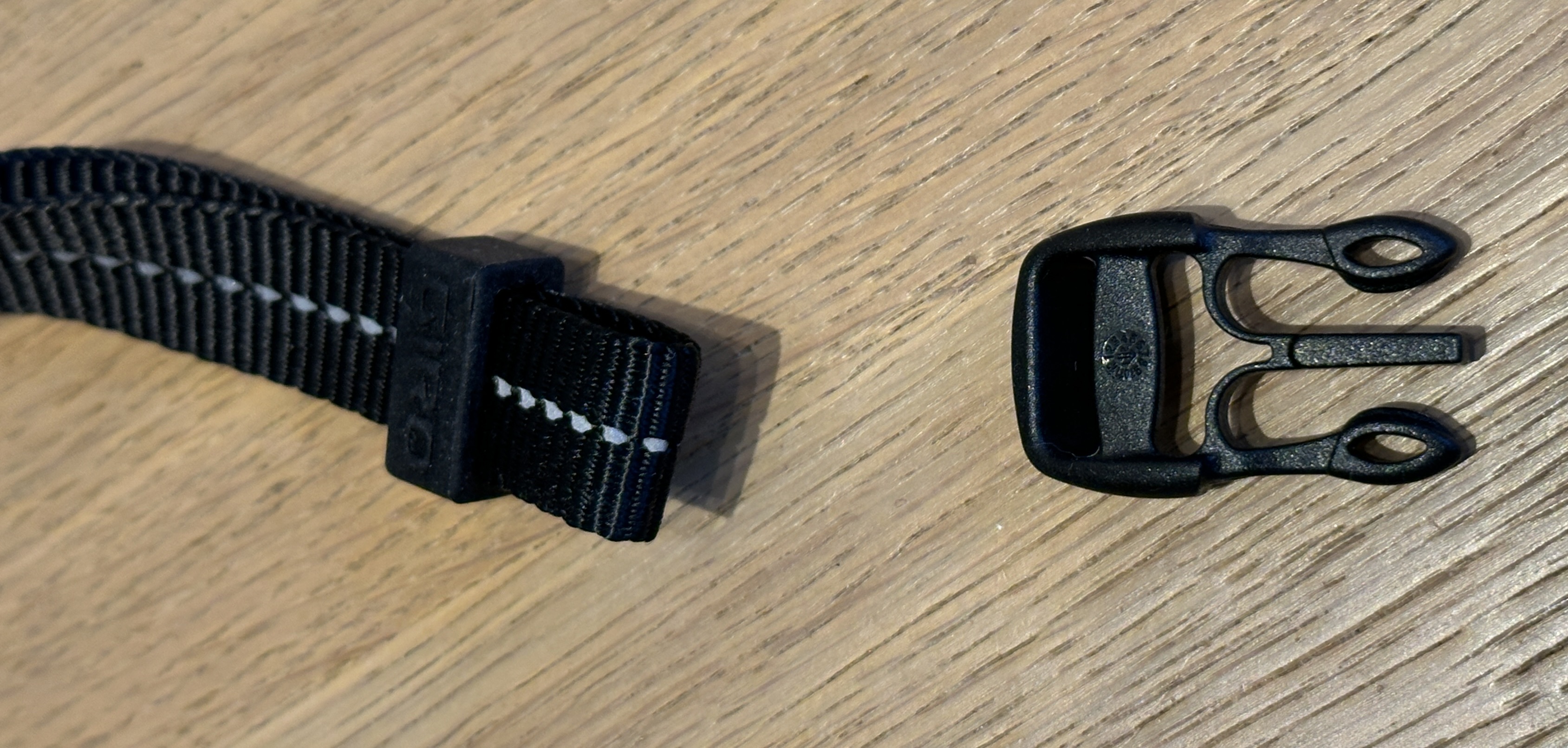
Yet after six months the same thing happened to the replacement. As I set off on my commute the helmet felt very loose, and I wondered how I could have forgotten to do it up. Then I found the two sides of the buckle were firmly attached: it was the strap that had come loose.
I contacted Giro, and was surprised by its response:
This is not something we have had reported to us often, especially 2 in a row for the same customer.
We would recommend that you reattach the clip and set the strap to the correct length. A small stitch through the loose part of the strap may stop this from happening.
Giro customer support by email, 16 january 2024
In other words, we expect you to redesign our helmet to make it safe to use.
To be fair, when I pointed out how unreasonable this response was Giro quickly agreed to refund me. But my second incident showed the dangerous design fault in the Giro Escape helmet. If I bought a third helmet, the same thing would happen again.
The fatal flaw
Let me explain the fault. The right side Escape strap is attached to the buckle by a very loose rectangle of soft plastic. It simply isn’t secure or tight enough to stop the strap working its way out of this loop and detaching from the buckle. I have made a video showing how easily this happens:
Within a day, another Escape user commented that they had exactly the same problem.
I then discovered that the design flaw isn’t restricted to Giro’s Escape helmets. It had recalled Merit helmets in North America, Australia and New Zealand because, in Giro’s words, quoted by BikeRadar, “the helmet strap may detach from the helmet when “pulled with relatively little force, posing a risk of injury to the user in a crash”. That’s exactly what happened to my two Escape helmets, happily without a crash.
So, Giro, how long are you going to continue selling the unsafe Escape helmet?













 Ertblog