It’s always a thrill to get a letter published by The Times. I’ve had a few appear over the past 12 months, and my son Owen made his own epistolary debut in February.
My latest letter, above, was inspired by earlier letters about dreams. I particularly liked Dr Peter Cooper’s contribution. He recounted how he decided one night to note the key points of his latest dream so he could relive it in the morning. He said he didn’t bother trying again after reading back, “The banana is tougher than the skin”. It reminded me of a similar disappointment reading back a note I’d made during the television coverage of the 1997 general election. I hoped to find a thrilling, witty account of a dramatic, historic election. Instead I found a barely legible, barely interesting scribble.
The dream I mentioned in The Times was recounted to me in 1984 by my university friend, Richard Attewell. I couldn’t compete with that one – but I remember at the time dreaming of searching for a plastic tray on which to bury a dead fish I had found (in the dream) on a beach. I didn’t think Times readers would find that as amusing.
For years, the media have bemoaned Britain’s productivity crisis. The country hasn’t become significantly more efficient at producing goods and services in the 16 years since the financial crisis. It seems a complex riddle. Why is the UK falling behind our international rivals? is it our newfound love of working from home? Or is a chronic lack of investment to blame?
Three poor customer experiences in the past week make me think we’re overthinking the problem. Too often companies screw up the simplest things – such as an online booking service. As a result, customer and company spend unnecessary time fixing the problem.
Case study 1: Everyman
I’m a big fan of Everyman. I love stretching out on a comfy cinema sofa while watching a great film, nursing a coffee. As a member, I can book a second, free ticket on Mondays. Today’s the first Monday I’ve had the chance to enjoy this 2 for 1 offer. But the website made it impossible to book.
I selected my member’s ticket – one of the six tickets a year under the cheapest membership package. I then chose the 2 for 1 ticket for my wife, and selected our chosen sofa. So far, so good. But the system wouldn’t allow me to check out without choosing a third seat. I tried every variation, but nothing worked. In the end, I phoned Everyman and a helpful person booked the tickets for me.
Solution: Everyman, fix the website bug, so your customer service people don’t have to spend time booking tickets that should be available online. You will also avoid people giving up, and not buying food and drink from your cinemas.
Case study 2: GoPro
I bought a new GoPro 13 action camera earlier this month. (Highly recommended, by the way.) It came with a year’s free GoPro Premium subscription, which includes cloud storage of GoPro footage. But when I tried to set up automatic upload of my videos, it told me to buy a subscription. I called GoPro, and was assured that everything was set up correctly. But 10 days later, I’m still being prompted to buy a subscription. I’m going to have to call again – a complete waste of my time and that of the GoPro customer service team.
Solution: GoPro, fix the glitch that stops my subscription showing up on your system. And make sure your agents look into things more carefully, rather than simply saying everything is set up when it clearly isn’t.
Case study 3: Wales & West Housing
We’ve been trying to sell my late father’s flat in Wales for over a year. It’s part of a block for older people managed by Wales & West Housing. I’ve told the company repeatedly that no one is living in the house, and to send all letters directly to me for a quicker response, given I live 150 miles away in England. Needless to say, this never happens. In July, I received a redirected letter telling me that an engineer would be visiting to carry out the annual gas safety check. I called to tell Wales & West that the engineer should gain access via the estate agent handling the sale. A couple of weeks later, I got another redirected letter – above – saying the engineer called at the flat but couldn’t gain access – having ignored my instruction.
I called Wales & West again, repeating what I’d told them already. Yet again, I got a letter saying an engineer had called and found no one at home, and threatening legal action. This time, I emailed Wales & West chief executive Anne Hinchey, who took the necessary action. (Thanks, Anne.)
As a result of this saga, an engineer wasted time on two fruitless visits – and the chief executive and I also wasted time that could have been used more productively.
Solution: Wales & West, make sure your people act on instructions, sending correspondence to the right address and not sending an engineer to an unoccupied flat.
Get it right, first time
We can all think of similar examples of time wasted because of a faulty website, customer service teams not taking responsibility for an issue – and a host of other reasons why life’s tasks don’t run smoothly. That’s why it’s so important for companies to fix issues when they arise. In my PR career, I often got emails from unhappy customers, and always passed these on promptly to someone who could help. Getting things right first time is essential to being efficient – and makes for happy customers. It’s also a quick win in solving Britain’s productivity crisis.
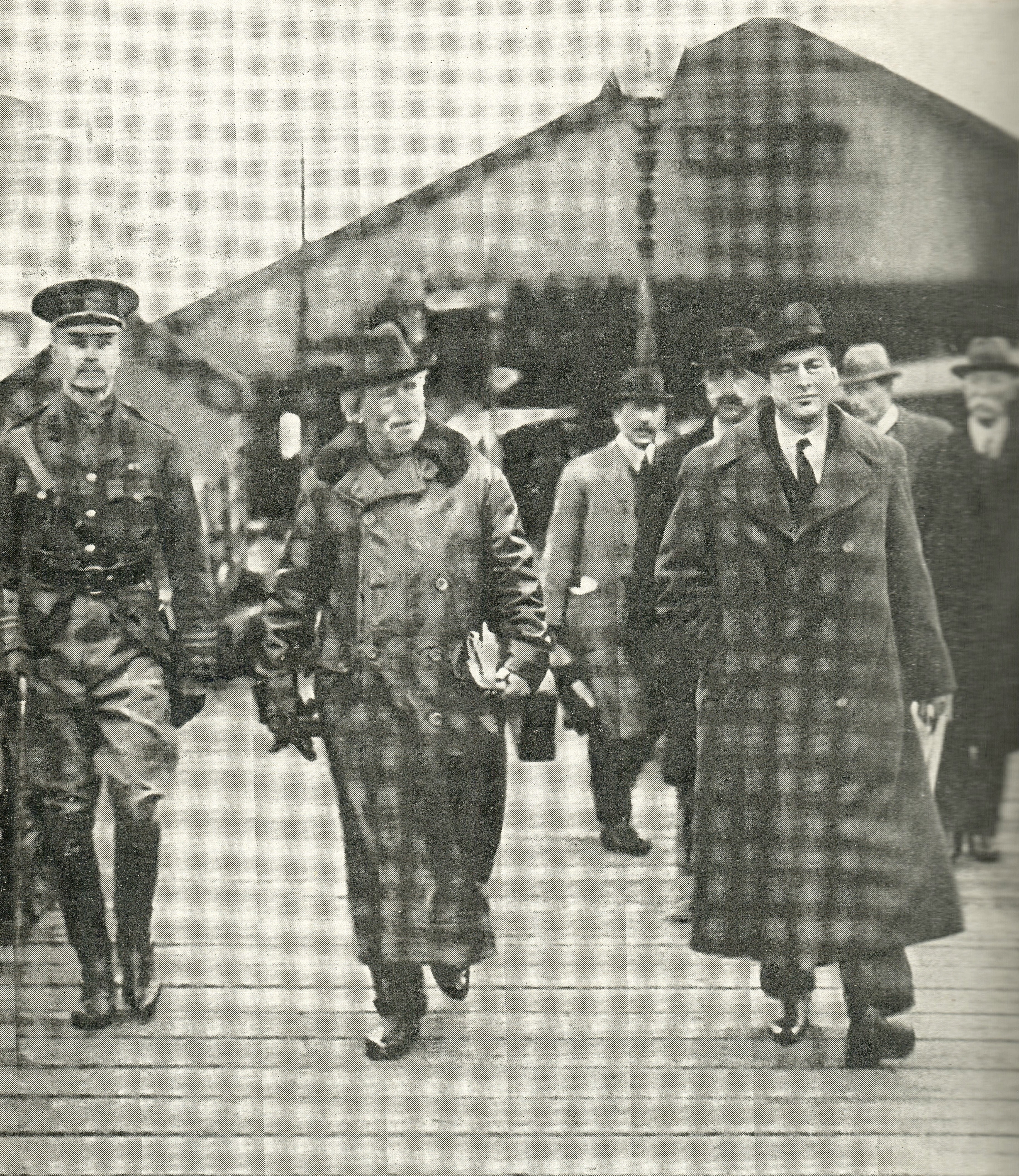
It’s unbelievable. Britain’s wartime cabinet was meeting in 1915 to plan the Dardanelles campaign that was destined to cost the lives of 41,000 Allied troops. Yet the prime minister, Herbert Asquith, wasn’t interested. Instead, he was reading a letter from his lover, Venetia Stanley, delivered to the Cabinet Room in 10 Downing Street during the meeting. As Winston Churchill, David Lloyd George and Lord Kitchener debated the details, Asquith was penning a reply to Venetia, after checking his diary to see when he could slip away to meet her.
Here is a classic example later that year:
My own darling – I am writing in the stress & tumult of a windy & wordy controversy about munitions … between Ll. G [Lloyd George], Winston [Churchill] and A.J.B [Tory leader Arthur Balfour] – and I daren’t abstract myself more. Asquith to Venetia, during a War Council meeting 1915
Robert Harris has turned the Asquith-Stanley scandal into a brilliant novel. The prime minister’s letters to Venetia have survived but he destroyed all her letters after she ended the relationship, and he had been ousted as PM by Lloyd George in 1916. Some have doubted whether the relationship was sexual, but Harris is sure that it was, and the surviving letters tend to support this – though we will never know for sure.
Asquith was obsessed with Venetia, who was 35 years younger than the 61 year old premier. He ran appalling risks by sending her top secret government documents through the post, including messages about a planned troop evacuation from Antwerp and much more. When the two were enjoying secret rides in his prime ministerial Napier limousine, Asquith would reveal the latest intelligence decrypts to her, before throwing them out of the car window. One of the few fictional characters in Robert Harris’s novel is police detective Paul Deemer, who surreptitiously intercepts the lovers’ letters, to copy them before returning them to the postal sorting office. He also wangles a job as a gardener at the Stanleys’ north Wales mansion, Penrhos, and creeps into her bedroom to open the case in which she kept Asquith’s letters. She saved them for posterity and Robert Harris.
Harris brilliantly chronicles how Venetia turns from an equal partner in the affair to being uncomfortable and indeed oppressed by her lover’s spiral into near madness. She finally agrees to marry Asquith’s close friend and cabinet minister Edwin Montagu, despite not finding him attractive. It was a marriage of convenience that ended when he died just nine years later, during which she had a string of affairs.
You’ve got mail
Precipice sheds light on the remarkable postal service London enjoyed even at the height of the Great War. The General Post Office (GPO) collected and delivered mail 12 times a day in the city, and three times in the country. Venetia noticed with some suspicion that her post seems to be delayed – probably by just a few hours – after detective Deemer starts intercepting it. Today, no one would even notice.
There are a few false notes. When Harris recounts Asquith’s response to her suggestion that the disastrous Dardanelles campaign should be abandoned before any more lives are lost, he has him responding, ‘No, I fear there’s no alternative except to double down’, using an expression first noted in 1949 – and by very few in Britain until the 21st century. At least Harris didn’t have Asquith pleading with her to ‘reach out’…
It was a pleasure to listen to Robert Harris talking about the novel at a Chiltern Bookshops event in the highly appropriate setting of Chorleywood’s Memorial Hall, opened in 1922 to honour those who gave their lives in the Great War. He amusingly explained how Asquith’s great-grandson told guests at the novel’s launch party that it was totally ridiculous, especially the idea that his great-grandfather had anything other than a platonic friendship with Venetia. ‘How on earth would he know, 110 years later?’ Harris asked. He added, ‘Asquith was notorious for his wandering hands and it is well known that Venetia had married lovers after her marriage. That’s the nature of the two people.’
Robert Harris’s achievement is to make us care about the two main characters, even though their behaviour is hardly commendable, especially during a war in which thousands are dying every week. Asquith and Venetia were very much characters of their time, although Harris got a laugh at Chorleywood by making a reference to Boris Johnson’s scandalous actions as PM a century later. Stanley herself was part of a fabulously rich family with mansions in Wales and Cheshire, along with a grand house in London. Yet Harris gives a fair impression how unfulfilling her life was, despite the decadence and splendour. Harris noted at Chorleywood how the family’s Welsh and Cheshire palaces lay in ruins just a few short decades later, while Venetia herself died aged just 60.
Asquith’s legacy
We shouldn’t judge Asquith just on his sordid pursuit of Venetia Stanley. He was the leader of Britain’s last Liberal government, before being forced to turn his wartime ministry into a coalition. Above all, he presided over an extraordinary peacetime revolution, which included the first state pension and the titanic battle to curb the powers of the unelected House of Lords, which included two elections in a single year, 1910, and the threat to demand that the king created enough new peers (lords) to force the upper house to back down. Until war came and he became obsessed with Venetia Stanley, he cleverly harnessed the supremely talented Lloyd George and Churchill. It helped shape modern Britain.
When the Great War was news, not history
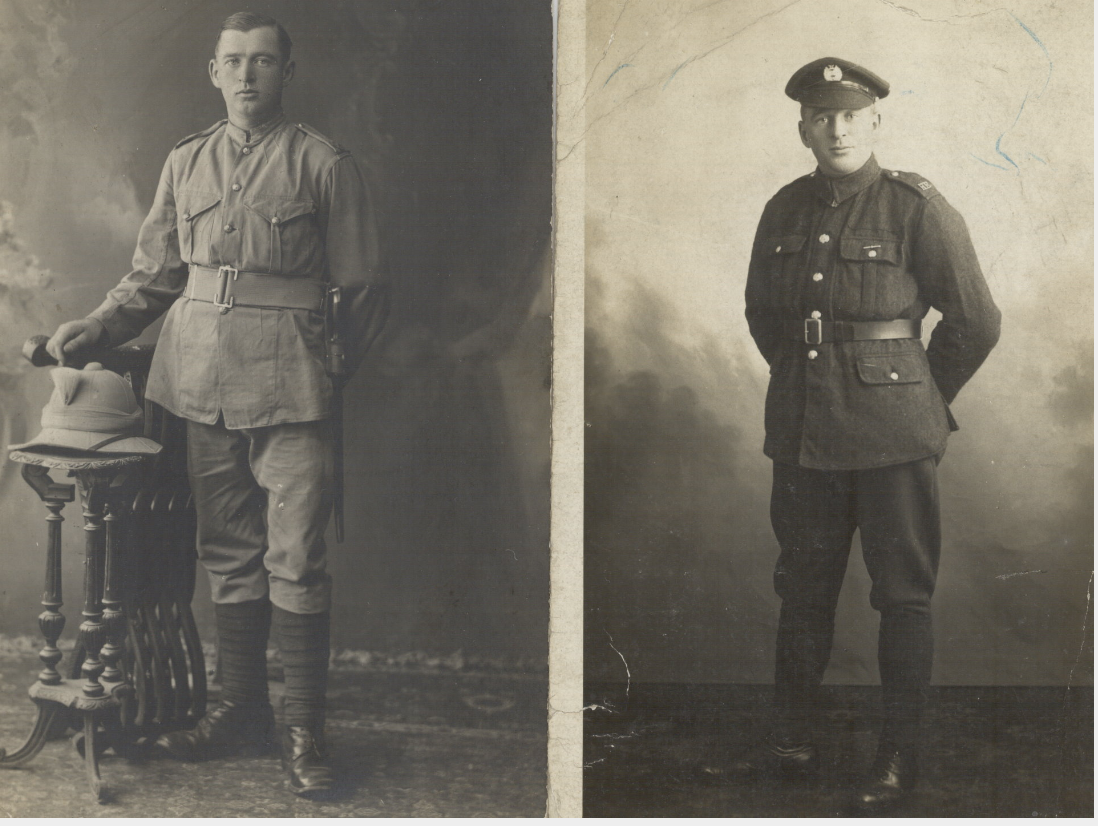
Photos like these feature in countless family photo albums across these islands. They feature my grandfather Frank and his twin brother. Frank was one of the men sent to fight in the Dardanelles campaign that Asquith should have been discussing when he was distracted by his passion for Venetia Stanley. His terrible ordeal led him to forbid my late father from joining his school’s cadet force on the eve of the second world war in 1939. Tragically, his brother – my great-uncle – died in the Spanish flu pandemic after surviving the trenches. Frank died too young at 52 of a heart attack in 1942, as my own 94 year old father remembered so poignantly on his own blog on the 78th anniversary of that sad day in 2020.
The commendable Venetia
Venetia should not be defined by her relationship with Asquith or Montagu. She was determined to play her part in the war effort, and enlisted as a nurse, in conditions so different from her affluent and cosseted family lifestyle. She sailed to France the day Asquith was forced to form a wartime coalition.
One last thought. Almost 80 years after she died, Venetia is the silent witness in this extraordinary story. She’s not here to give her side of the story, a silence that applies to countless women down the centuries who have been unfairly defined and characterised by their relationships with powerful men. We should remember this before casting any judgement about what she did over a century ago as Europe went to war.
Labour won a landslide victory in July’s general election, as the Conservative Party was swept from power after five years of law-breaking, financial incontinence and plain incompetence.
Keir Starmer’s narrative since taking office two months ago has been clear and consistent. Things are even worse than Labour feared, and the Tories are to blame.
This is a straight copy of David Cameron and George Osborne’s 2010 playbook, which pinned the blame for the 2008 financial crisis on Gordon Brown’s Labour Party. Labour was never able to shift the narrative to highlight the bold action Brown took to counter the crisis.
There are also echoes of Margaret Thatcher’s success in reminding voters of the chaos of the 1978/79 winter of discontent under Labour at every opportunity throughout the 1980s. For years, Tory party political broadcasts would show film of mountains of rubbish in the streets and picket line violence accompanied by a funereal voiceover intoning, “In 1979…” in case anyone had forgotten life under Labour.
But pinning the blame on the Tories won’t be enough for Starmer. The electorate gave a firm verdict on the Tories at the election: guilty. Labour must do more than simply emphasise what the voters have already decided. Starmer needs to become a political teacher, in commentator Steve Richards’ perceptive phrase.
Richards noted that the most successful modern British prime ministers – Thatcher, Blair and to some extent Wilson – did more than assert a political viewpoint. They realised they had to explain their vision and actions. Thatcher, for example, famously used the analogy of the household budget to explain that Britain could not spend beyond its means. (Critics disputed the parallel, but to little effect.) Blair was an even more effective communicator, combining clarity with the verve of a religious preacher. Under the New Labour, New Britain banner, he explained why the party and the country had to change. Although New Labour was accused of spin, Blair gave long media interviews and press conferences, engaging with the big issues of the day with seriousness and skill.
Starmer and team were understandably paranoid about losing the election. But they must now move beyond the doom-laden narrative of the government’s first two months to set a positive, optimistic vision for the next five years. This has to be done quickly. Starmer must avoid becoming another Theresa May: her utter inability to communicate let alone explain to the nation and her party what she was trying to achieve doomed her premiership especially after the catastrophic result (for her) of the 2017 general election. As Steve Richards put it, ‘She not only failed to tell her story, but did not even make an attempt. This was her fatal flaw – not only a failure to communicate, but an indifference to the art’. (The Prime Ministers: reflections on leadership from Wilson to Johnson, 2019)
Another judgement from Steve Richards about Theresa May strikes me as a stark warning to Keir Starmer: ‘She did at times have space on the political stage, but failed to see when she had the room to be bold and when she did not…. she acted weakly when she was politically strong…’ I fear Starmer may fall into the same fatal trap.
Even Blair’s own record in government provides a warning. On 2 May 1997, he was in complete control of the political landscape (even if he shared that control with Gordon Brown). Yet his first term was a story of paralysing caution aside from devolution to Wales and Scotland, the national minimum wage, and the historic Good Friday peace agreement in Northern Ireland. (His Tory predecessor, John Major, deserves credit for building the foundations for peace, but Blair’s masterful political artistry proved critical.) Soon after New Labour’s second landslide in 2001, the 11 September terrorist atrocities followed by the Iraq war stole what momentum Blair’s government might have achieved. I sense that if Starmer doesn’t seize the opportunity to become a political teacher now, voters will lose faith far more quickly than they did with Blair, especially as Tony enjoyed a golden economic inheritance from John Major.
Much will depend on chancellor Rachel Reeves’ budget on 30 October. Labour has already spun this as a budget of hard choices – forced on us thanks to the Tory financial black hole. And Reeves has already cancelled a host of rail and road projects, and the Edinburgh super computer intended to give Britain an advantage in the artificial intelligence race. It remains to be seen whether Labour will win the political intelligence race.
Cameron and Osborne won the argument in 2010 about Labour’s responsibility for the financial crash. But their remedy, years of austerity, has caused enormous damage to the fabric of the nation, especially public services. Funding for local government in England has been slashed by 55 percent in real terms since they took office in 2010. (Source: IFS.) All this was a factor in voter contempt for the Conservatives in July. After the Liz Truss catastrophe, Labour has to be prudent with public finances, but I fear that Labour is falling for the coalition’s slash and burn approach, much as it has stolen Cameron and Osborne’s blame playbook.
Lessons from history
Labour’s landslide win in July was bigger than the party’s famous win in 1945. (Although on a far smaller share of the vote.) Labour’s 1945 leader, Attlee, was even less charismatic than Starmer, but his government changed the country with the birth of the NHS and the welfare state, and independence for India. Yet it was out of power within six years. By 1951, voters were no longer prepared to put up with austerity and ‘jam tomorrow’ – food was still rationed years after the end of the war.
Starmer is a fan of Harold Wilson, who lost the 1970 election just four years after a landslide victory. Voters today are even less patient than 50 years ago, and Labour needs to heed these lessons from history. Lead the nation with a compelling story and show serious improvements to Britain’s shameful public services by 2028 and Labour has the chance to be the natural party of government for the 2030s.
Postscript: Jenni Russell makes almost exactly the same argument in her column in The Times three days after I published this blogpost. (Paywall.)
“This will go down as the year of the roof box,” declared Tom Peck in The Times today (paywall). He added that travelling to the in-laws with small children makes a top box essential.
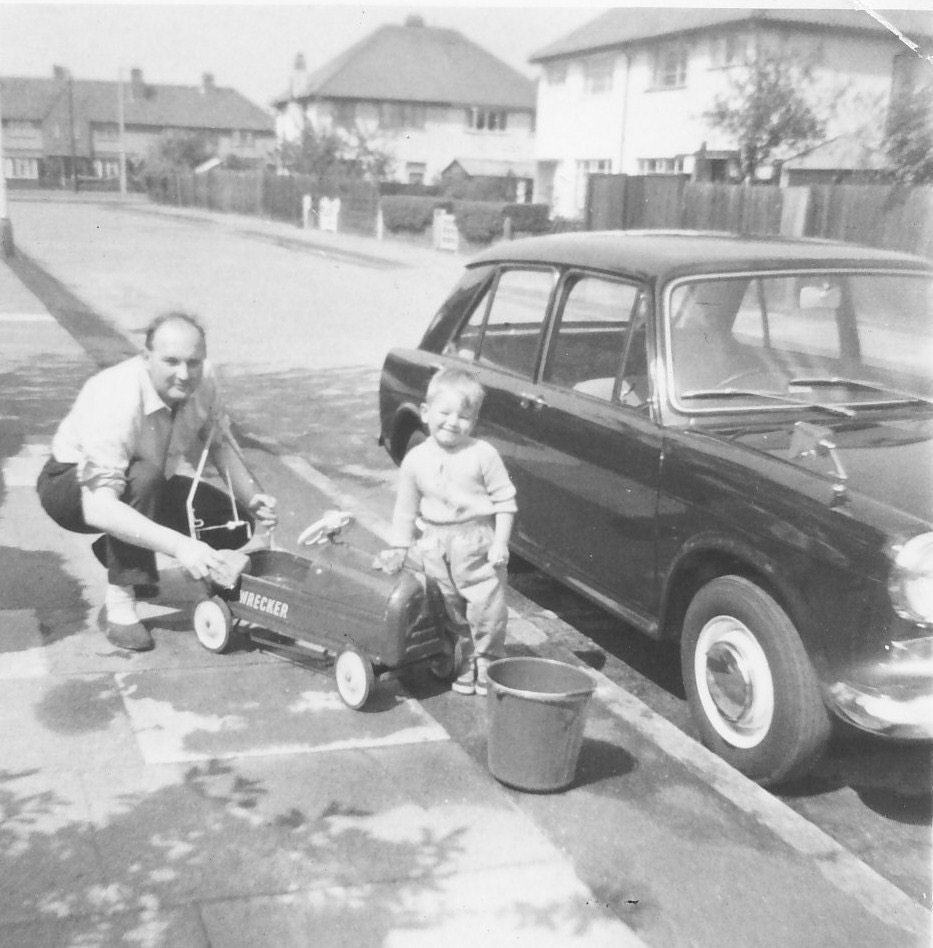
I recognised the sentiment. When Owen was born, one of our first purchases was a roof box for journeys to my parents in Wales and holidays in Dorset and Cornwall. At the time I thought it odd that my Mum and Dad could go on holiday with two children in far smaller cars, such as Dad’s 1960s Austin 1100 seen above, without the need for a roof rack. But life was simpler in those days. Cars didn’t have seat belts, never mind Isofix child seats. And people had far less stuff.
Off to Devon, 2010
As the photo above shows, even an estate car wasn’t big enough for a holiday with a two year old. What on earth did we take with us?
The top box has languished in the garden for most of the last five years; you can travel lighter with a teenager than a toddler. But on our first pandemic holiday, in Tenby in August 2020, we planned to use it so we could take all our beach stuff, windbreaks and so on. But disaster struck: we’d forgotten where we’d stored the Thule kit that attached the box to the car. As a result, we went away without it. It was only on our return that we remembered it was inside the box!
No wonder I have a reputation for taking everything except the kitchen sink when I go on holiday…
I’m feeling nostalgic, and a little sad. I’m about to say a fond farewell to one of my favourite places, Richmond in Surrey.
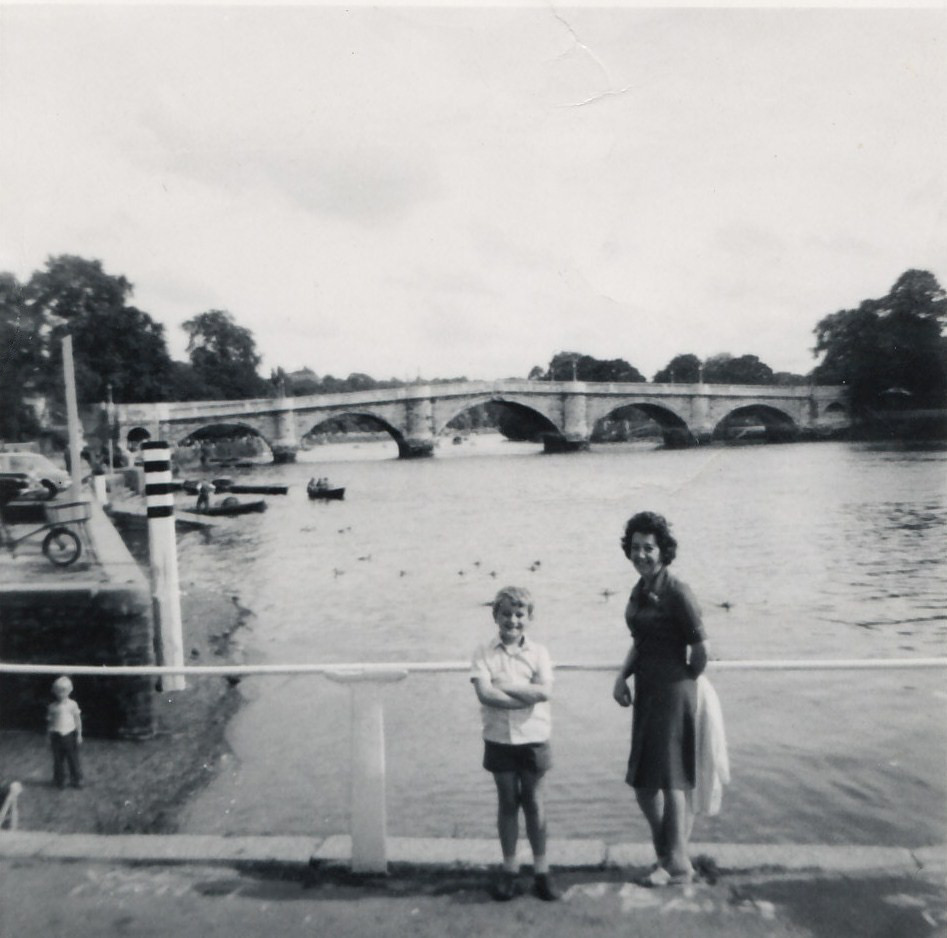
Rob and his mum, Richmond, 1969
I’ve worked in Richmond since 2008, but have known this elegant and historic riverside town for over half a century. In the late 1960s I was a small child living in nearby Whitton, during our family’s six year exile from Wales, which ended in 1971 and a return to my hometown, Cardiff.
Rob, Richmond Park, 1994
Those childhood memories influenced my decision to buy a flat in Teddington in 1988, after I got my first job in PR, in London. I loved having Richmond on my doorstep, and enjoyed cycling for a leisurely coffee at Alianti cafe – happily still going strong. And when I began cycling commuting to Holborn in 1989, it was a joy to pass through Richmond Park, which gave me a very different journey to work compared with colleagues enduring the Northern Line.
By coincidence, that second Richmond era also ended after six years when my job relocated to Cheltenham. Yet my relationship with this lovely place was not over. In 2008 I was approached about an intriguing job managing PR for PayPal UK – based just yards from the riverside location of the shot of me and Mum taken almost 40 years earlier. It was a joy to start work in Richmond after three years in a very different riverside office, HSBC’s 42 storey HQ in Canary Wharf.
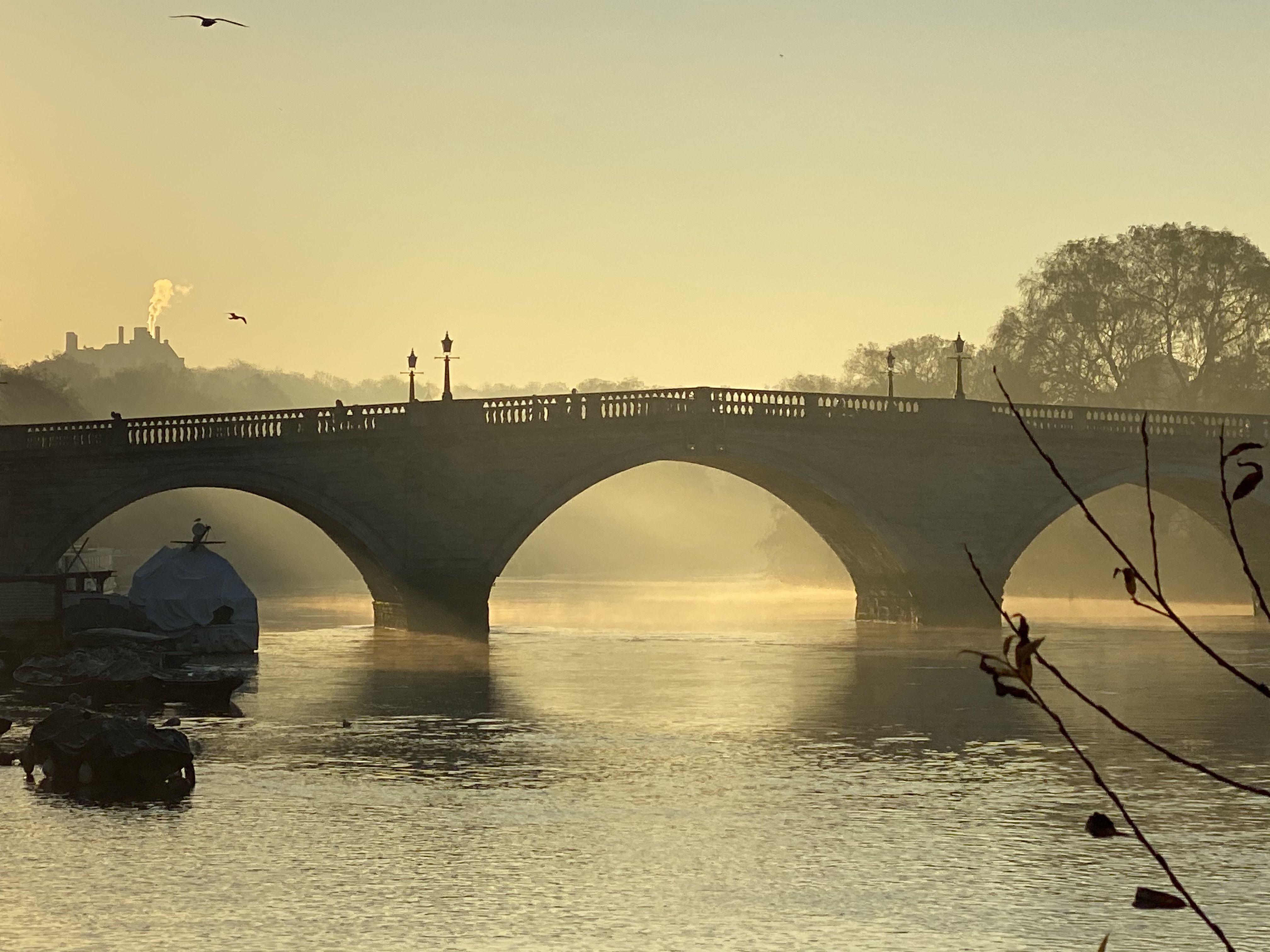
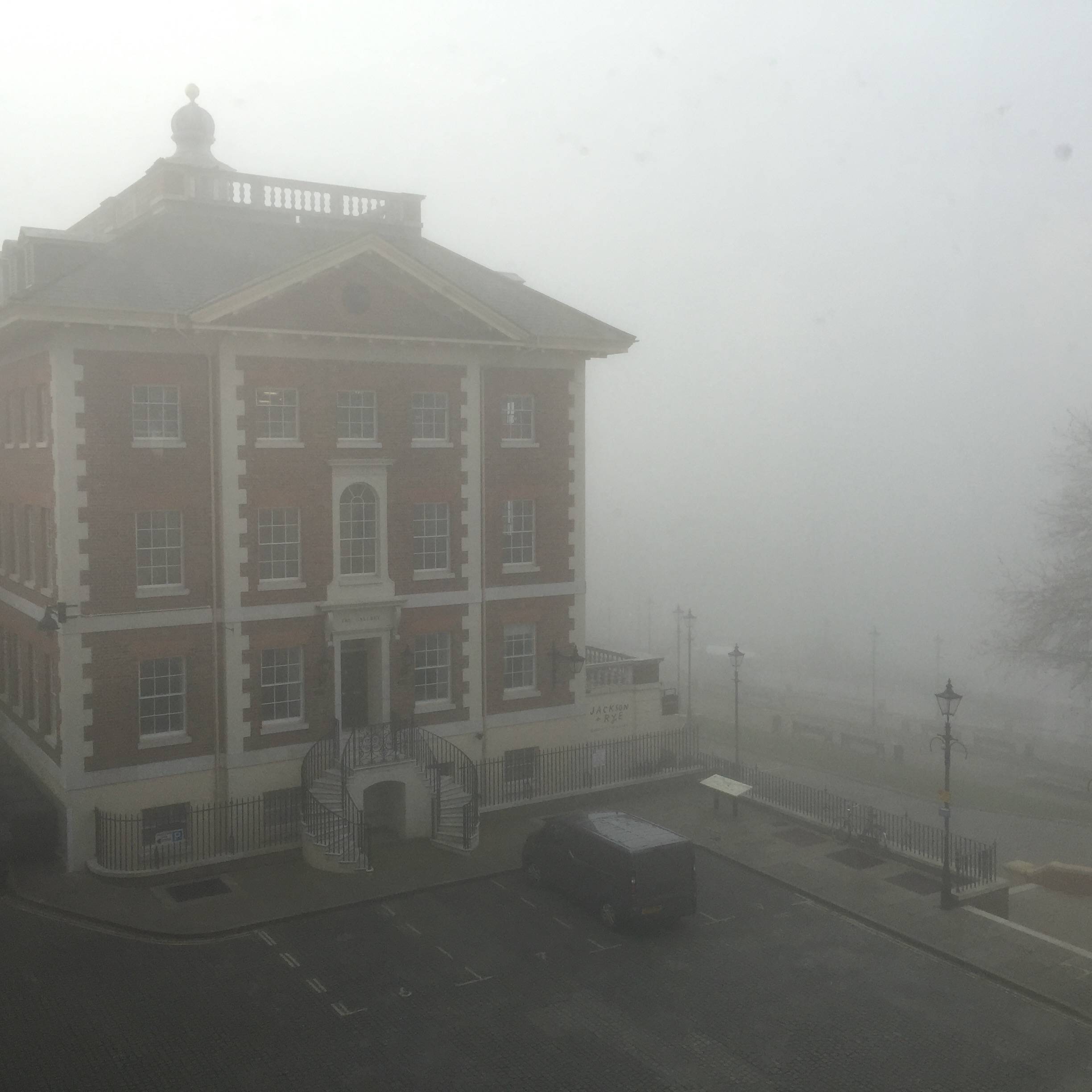
I had a ringside seat to observe the changing seasons by the river, from my desk. And the contrasts often unfolded over a single morning. During the winter, a riverside mist often cloaked the familiar Richmond landmarks. In March 2016, I took the photo on the left above from my desk at 8.32am, with the historic bridge completely invisible. By lunchtime, the mist had gone and the bridge reappeared, as seen in the afternoon photo on the right.
When the pandemic struck in 2020, I had little idea that it would be another two years before I returned to that lovely office by the river. And with working from home now part of our working lives, I never again spent a complete week working there.
Richmond riverside – a family story
In 2012, Karen and Owen visited me at work, and we decided to recreate the 1969 photo, one generation on. It was impossible to replicate the viewing angle, which I found odd. My mother looked even smaller in the photo than in real life, whereas Karen towered over the bridge in the background. I wonder whether Dad (who I presume took the original) was standing on the wall in front of the White Cross pub? Regardless of this niggle, it was precious to have Owen captured at a similar age for posterity on film – well, pixels – in this special place. PS: I blogged about that 2012 photo here.
Back to Twickenham, Whitton and Teddington
On a gorgeous day earlier this month, I set off on my bike from the office in Richmond to rediscover other local towns that played a key part in my life. I enjoyed, as always, cycling along the Thames path to Twickenham. There was one poignant moment. Back in 1971, we had a family walk over the elegant footbridge seen in the photo above, which leads towards the river from York House Gardens. My sister, aged 17, was off on a school trip to Paris the next day, and Mum and Dad thought it would be nice to go for a walk before her trip. (I remember she brought me back a blue plastic model of the Eiffel Tower!) We often went for a drink at the Balmy Arms on Twickenham’s riverside, which I passed on my 2024 ride. Today, I am the only one of the four of us who is still alive.
Whitton memories
The first home I truly remember – and my first in England – was 12 Ashley Drive, Whitton, near Twickenham. It was a classic between-the-wars semi, with a garage at the back on a lane, which Dad extended when he bought a larger car. I vividly remember my third birthday party here in 1966 with a cake in the shape of a steam locomotive, the year before the last steam hauled express train from London. Dad and I lined our cars up outside the house: his an Austin 1100 (cars were small back then) and my precious ‘wrecker’ pedal car, which Dad found in a jumble sale in Chiswick town hall. I was disconsolate when the drive mechanism broke and Dad decided it couldn’t be repaired. I suspect a more mechanically minded parent could have fixed it, but in fairness my mechanical skills are no better than Dad’s were!
I took the second photo when I took Mum, Dad and Owen to see our old house in 2011, just after Owen turned three.
I started school in September 1968 at Bishop Perrin, a Church of England state primary school a short walk from our front door. My headmaster, Mr Davies, was also Welsh, and was resisting pressure to adopt modern teaching methods. (This was the year after the famous Plowden report into English primary education, which has been mythologised ever since.) At Bishop Perrin, I was taught to read in much the same way as my parents had been in the 1930s, with old fashioned books. It worked – I quickly became an accomplished reader. Mr Davies insisted that he would only abandon his 1930s ways of teaching reading, writing and arithmetic when the authorities could prove the new methods would be more effective. He had a point: when we moved home to Wales in 1971 I was amazed to find that many of my new school friends still couldn’t read properly.
Teddington calling…
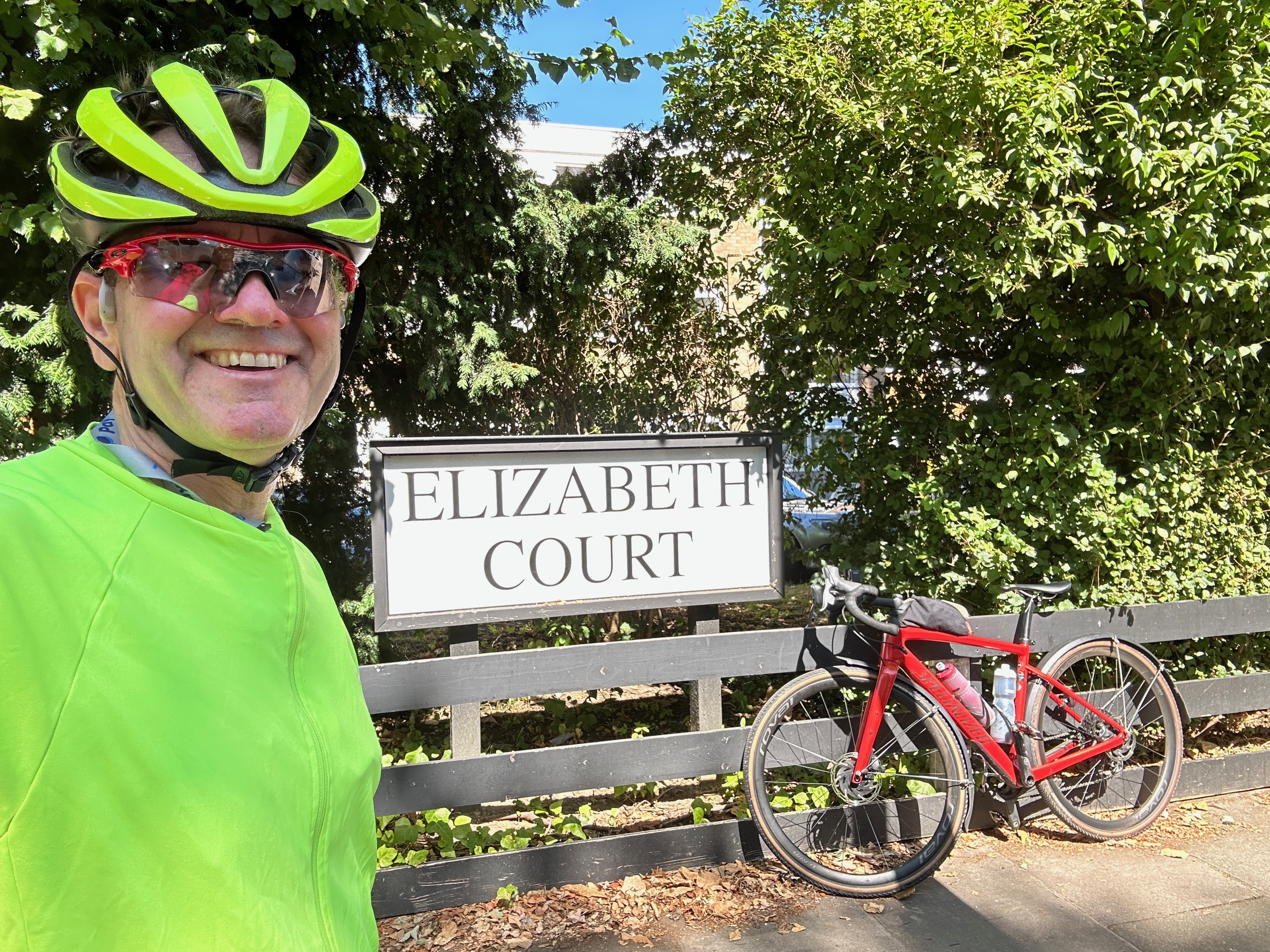
The last call on my trip down memory lane was to Teddington, where I bought my first home in England in 1988. Elizabeth Court was a postwar block of flats set back from Hampton Road opposite the National Physical Laboratory, where radar was invented and the famous wartime Dambusters bomb tested. Mine was a sunny flat with a full length picture window looking out towards Bushy Park. Teddington was a nice place to live, with the Thames nearby at Teddington Lock – home of Thames Television – and Hampton Court a pleasant walk through Bushy Park. The only downside was the slow train service into London Waterloo. Today, my much longer journey from Gerrards Cross, Bucks, into London takes as little as 19 minutes compared with the 40 minute commute from Teddington.
Blockbuster memories
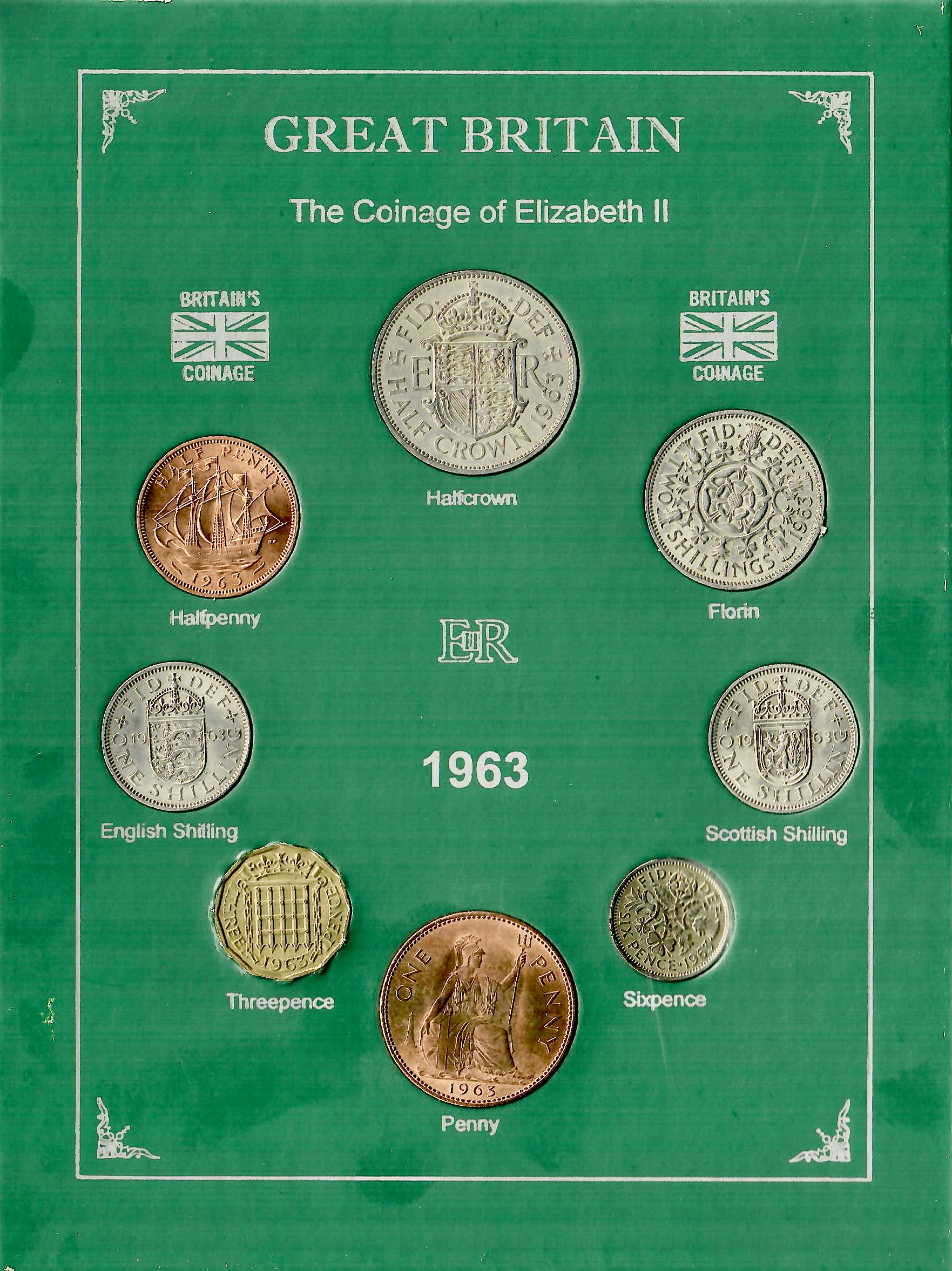
The building in the background of the photo above near Teddington station contains more memories. Now an Indian restaurant, it was a shop in 1971. One day that February I came across a wonderful money box, with tubes to hold each pre-decimal British coin. I was desperate to buy it, and imagined dropping my sixpences, threepenny bits and pennies down the tubes, but my mother refused. “It would be a complete waste of your pocket money as we’re going decimal next week!” I can’t quarrel with her logic, reflecting the thrift that came naturally from her 1930s and wartime childhood. But I still regret it. Years later, I bought a set of pre-decimal coins from the year of my birth on eBay as a belated consolation, seen above.
(I blogged about going decimal on the 50th anniversary in 2021.)
By the time I moved to Teddington in 1988, that shop was a symbol of the age: a Blockbuster video store. On many a Saturday evening I’d wander along to rent a film. If I had my eye on the latest releases, I was often disappointed – every copy had already been nabbed., leading me to make a rapid second or third choice. (Not a problem we have in the streaming era!) Like Kodak, Blockbuster failed to adapt to the digital era and today apparently just one ‘Last Blockbuster’ franchise store remains, in Bend, Oregon, USA.
Return to Richmond
After Teddington, I took my bike over the Thames on the footbridge near the Lock. This was my cycle commute to London in 1989-90, past Ham Common and climbing into Richmond Park. On the final stage of this nostalgic ride I made my way back to Richmond town centre via Sawyer’s Hill and down the hill towards the office. So many memories in a 14 mile bike ride.
Here’s the video I made celebrating my Richmond bike ride and the memories it revived. PS: do subscribe to this blog, and to my YouTube channel!
Eluned Morgan today became Wales’s first female first minister (prif weinidog) after a vote in the Senedd. It is a landmark moment for Wales, and for the Labour Party – she is the first Labour female premier of a government in Great Britain. The party has yet to choose a woman as UK leader, unlike the Conservatives with Margaret Thatcher in 1975, followed by Theresa May and Liz Truss.
She becomes Wales’s head of government after the unhappy and controversial premiership of Vaughan Gething, who will now be remembered as a pub quiz question: ‘who was the first black head of government of a European country?’ I suspect Eluned Morgan will be in power in Cardiff Bay for a lot longer than his five months. In taking office, she told the Senedd, ‘Wales is a warm and welcoming nation and our political discourse needs to reflect that’.
Our family connection with Welsh first ministers
When I head the news that Eluned Morgan was to become first minister, I reflected that my family has had connections with four of the six people who have led the nation since devolution – home rule – in 1999. It is almost certain that will never happen again.
Rob and home telephone, London, 1989Rob takes a work call, London, 1990
‘We’ll never forget the magic of a landline’, Viv Groskop wrote in The Guardian on Friday in a nostalgic article mourning the passing of the traditional telephone. It got me thinking about my relationship with the old fashioned landline. (Not that we ever called it that in the days before the mobile phone took over.)
During my 1970s childhood, our household phone sat on a table in the hall of our Cardiff house. That, and the cost, tended to keep calls short. As a 10 year old I’d developed a curious habit of answering calls with an awkward announcement: “Cardiff 755183, who’s speaking please?” On reflection, this was curious – why repeat a number that the person on the other end had just dialled? And they were about to tell me their identity.
As Groskop points out, we memorised numbers in those days. I still remember my aunt’s number: Cardiff 756796, even though I haven’t dialled that number for over 35 years. You can see my own first home phone in the 1989 photo of my Teddington flat at the top of this post. My number? 01 977 9115. (London’s old 01 code was so iconic that ITV named its London events show 01 for London.)
My London number (by then including the new 081 outer London code) even appeared on Nationwide Building Society news releases as an evening contact number in that pre-mobile era. Yet I cannot tell you my son’s mobile number, no doubt because there’s no need to memorise numbers now we just click on a contact name.
Yet I did have one curious teenage experience when my memory for a phone number went awry. During my O levels in 1980, I called my sister in Wiltshire. I couldn’t understand why I’d got that painful number unobtainable ring tone for a number I called every week. I tried again – only to realise I’d used my four digit WJEC candidate number instead of the Swindon code. One memory had temporarily overwritten another.
Back in the 1990s I’d have long conversations with friends on the phone, before one of us would call a halt by warning of the cost of the call. In time, we’d all sign up to BT’s Family and Friends scheme which offered discounted calls to a handful of numbers. It paid to work out whose number to honour in this way – your most frequently dialled number may not have been the most expensive to call.
When I went to university in 1982, I suddenly became dependent on the street phone box. The traditional Giles Gilbert Scott kiosk was a design classic, but standing searching for one with a working phone was a dispiriting experience on a bitterly cold East Midlands winter night. When I found one, I’d usually discover someone already inside, in mid call. After 10 minutes, it was tempting to sigh loudly, or even tap on the door to ask how much longer they’d be. Yet when I finally got in and put in my 2p coins I had no idea if my the person I was calling was actually at home. If I was calling home, I’d give my Mum the phone number of the box, and wait for her to call me back. I remember a curious tone like birdsong for a few seconds when we were reconnected.
Student accommodation rarely had a phone, so we had to communicate in other ways. One exam season I sent a letter to my friends Kate and Helen to try to arrange to meet up (their student hovel was a few miles away from mine) and thinking even then there must be better ways to communicate! These days, we arrange our reunions by Facebook Messenger and WhatsApp.
When I graduated, I took photos of the phone boxes I’d spent so much time in over the past few years. Another world…
999!
My letter in The Times about a broadcasting landline panic
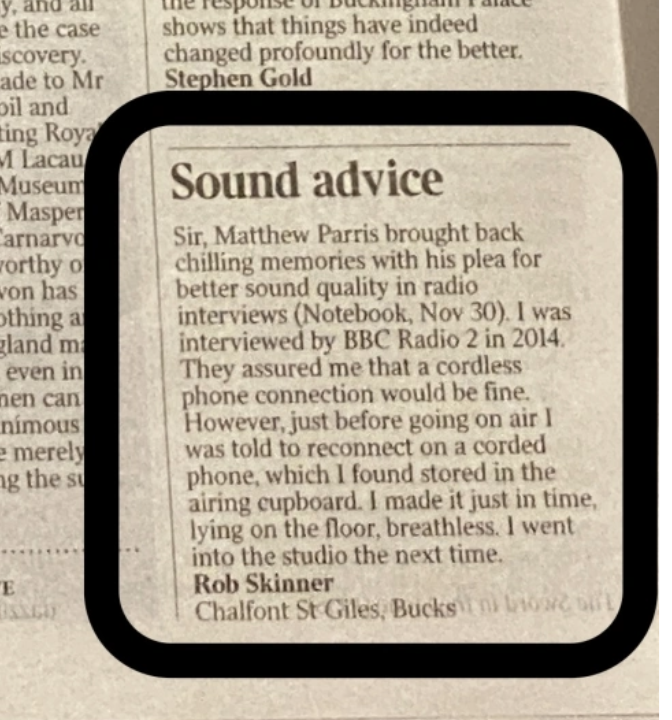
When our son Owen was very little, we got a call one Sunday morning asking if all was well. It was the 999 operator, who explained that someone had dialled the emergency number from our phone. It was obviously Owen, playing with the keypad. We hid the landline in the airing cupboard to prevent it happening again. A few years later this caused a panic when I was about to appear live on Simon Mayo’s Radio 2 show. I’d been reassured that a cordless phone was fine, but just before going on air I was told it had to be a fixed line. I just had time to retrieve the old handset from its hiding place before the interview began. I recalled this panic in a letter to The Times in 2022.
Rob and father Bob, pictured, edit Bob’s Kindle book via Zoom, February 2021
By 2020 the only person I’d speak to on the home phone was my father, for a Sunday evening catch up. Dad would also sometimes call for advice on tech matters, announcing himself when I answered, ‘It’s Dad’. Yet after the pandemic struck we switched to Zoom calls, as he found it easier to hear me there than on the phone. We Zoomed as he lay in a Cardiff hospital bed with Covid in October 2020, and four months later we worked together via Zoom turning his Bob the Blogger web diary into a Kindle book, Pandemic! My care home diary. I was thrilled by the way my then 94 year old father was adapting to new technology – not for the first time!
Back in 1978, Blondie’s song Hanging on the Telephone reached number 5 in the British charts. The lyrics evoke that long-gone era in which making phone calls was an often frustrating experience, as I found in my student years. The irony is that today, when we carry a phone with us everywhere, the last thing we’re likely to do is to call someone on it!
I had a few butterflies at the start of the final stage of our tour. Yesterday’s weather cast a shadow but happily the rain had moved on by the time we got going. Perhaps our obsessive attention to our weather apps paid off!
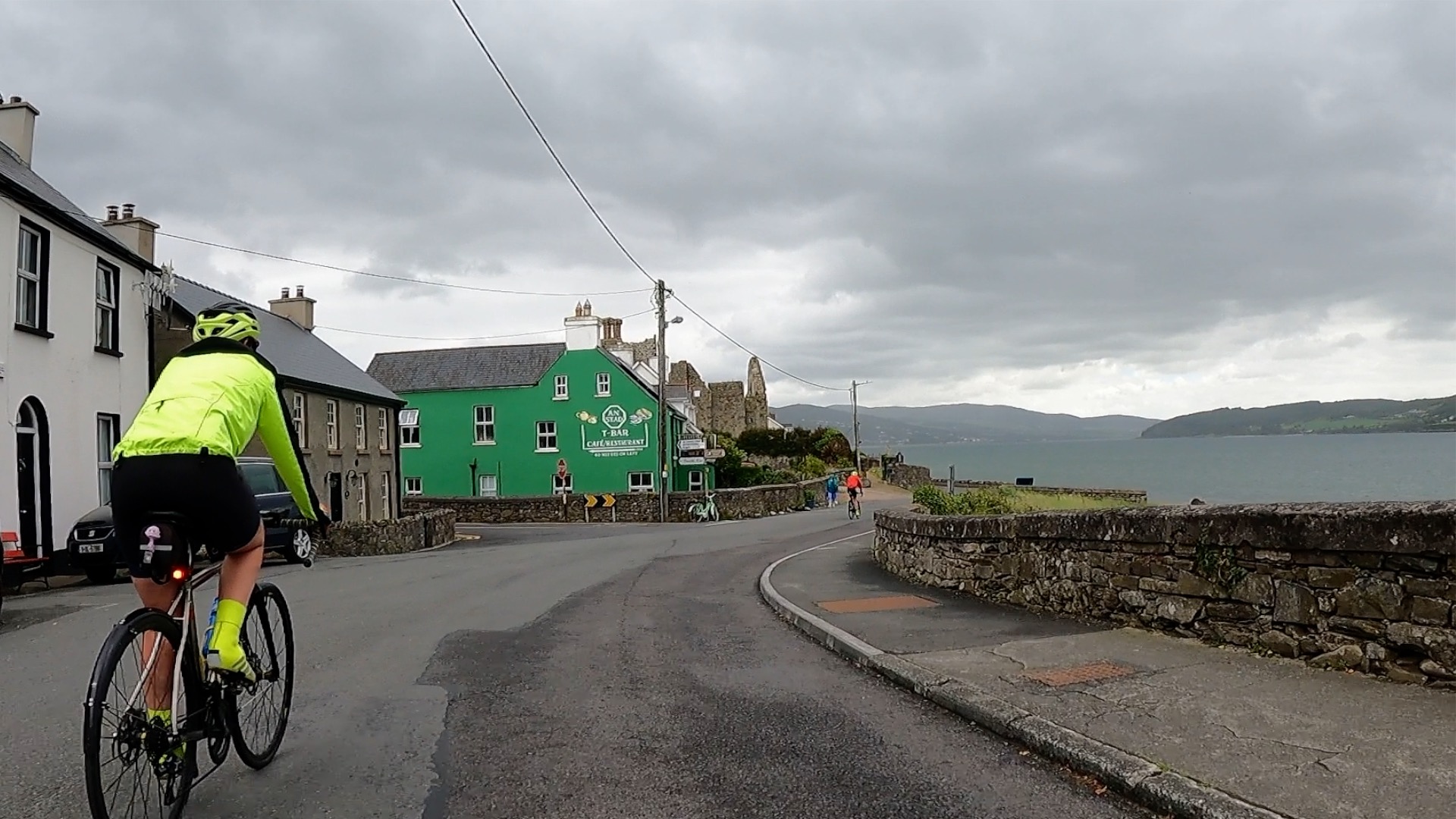
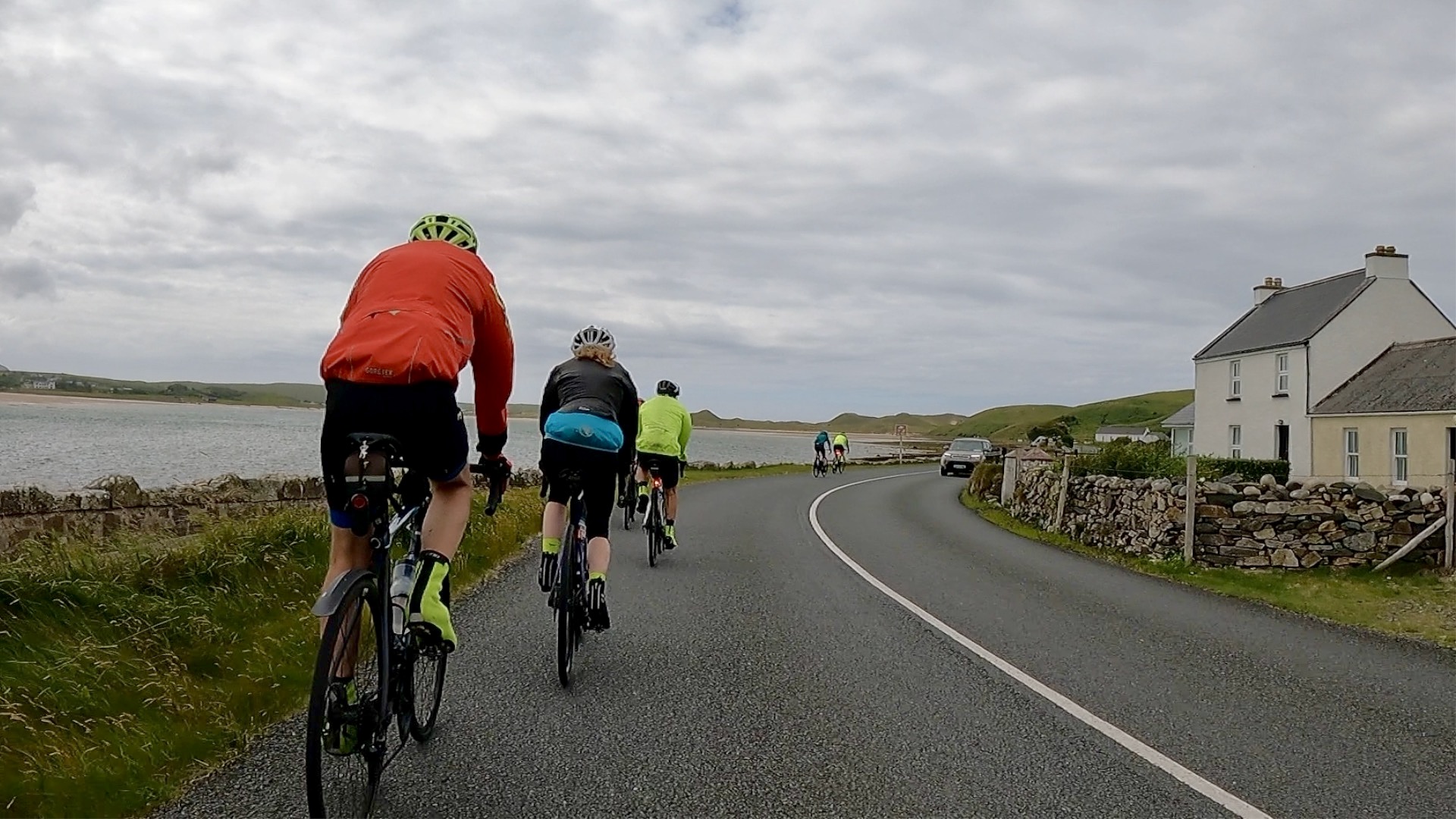
I was one of the last to set off, but was cycling at pace as we headed along the coast and the stunning Gweebarra estuary. I couldn’t resist taking photos – I doubt I’ll come this way again – so I was the lanterne rouge again. I didn’t want to hold that lonely place for long, and by setting a cracking pace caught up with a few others – though it took a mile or two.
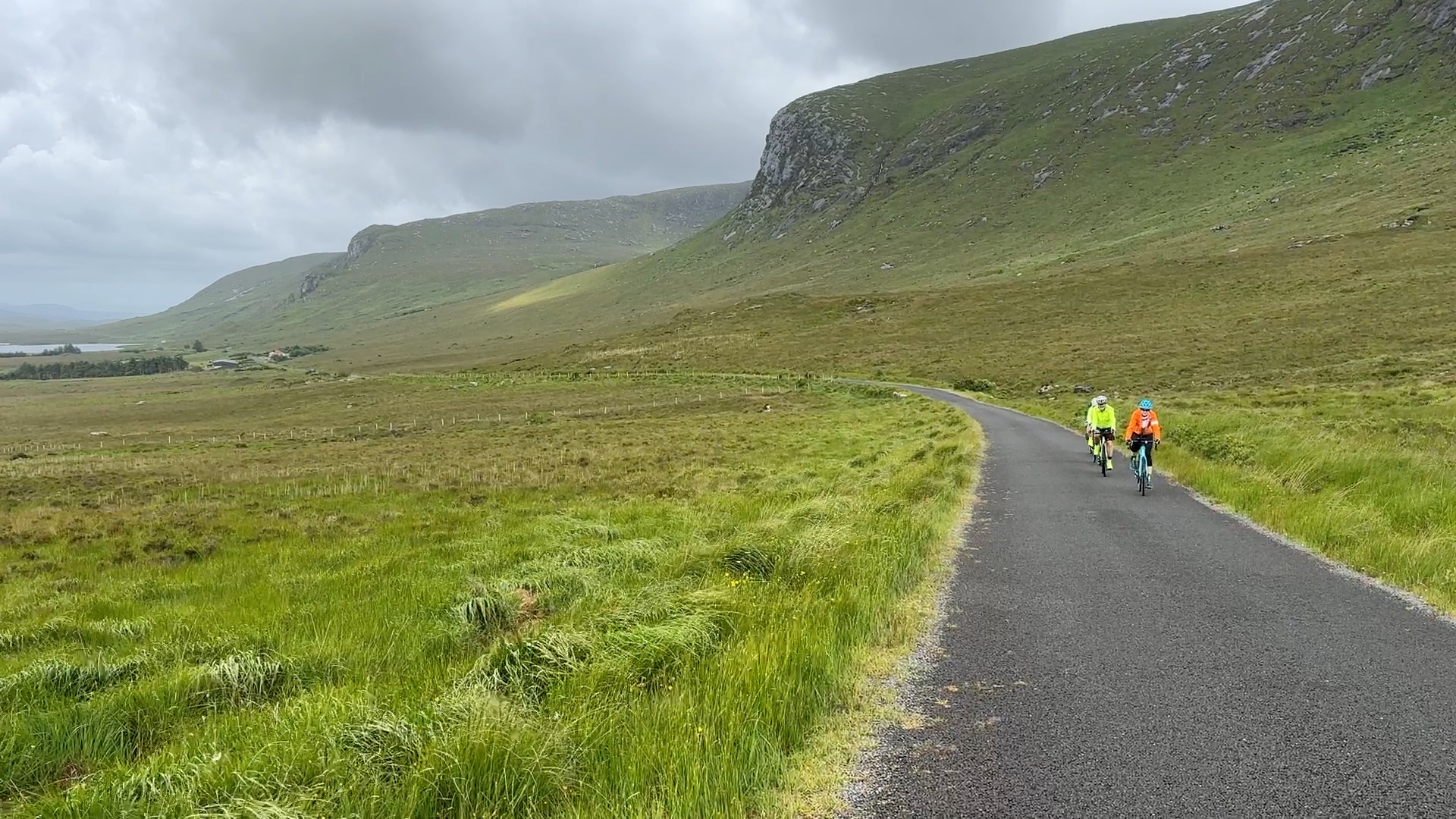
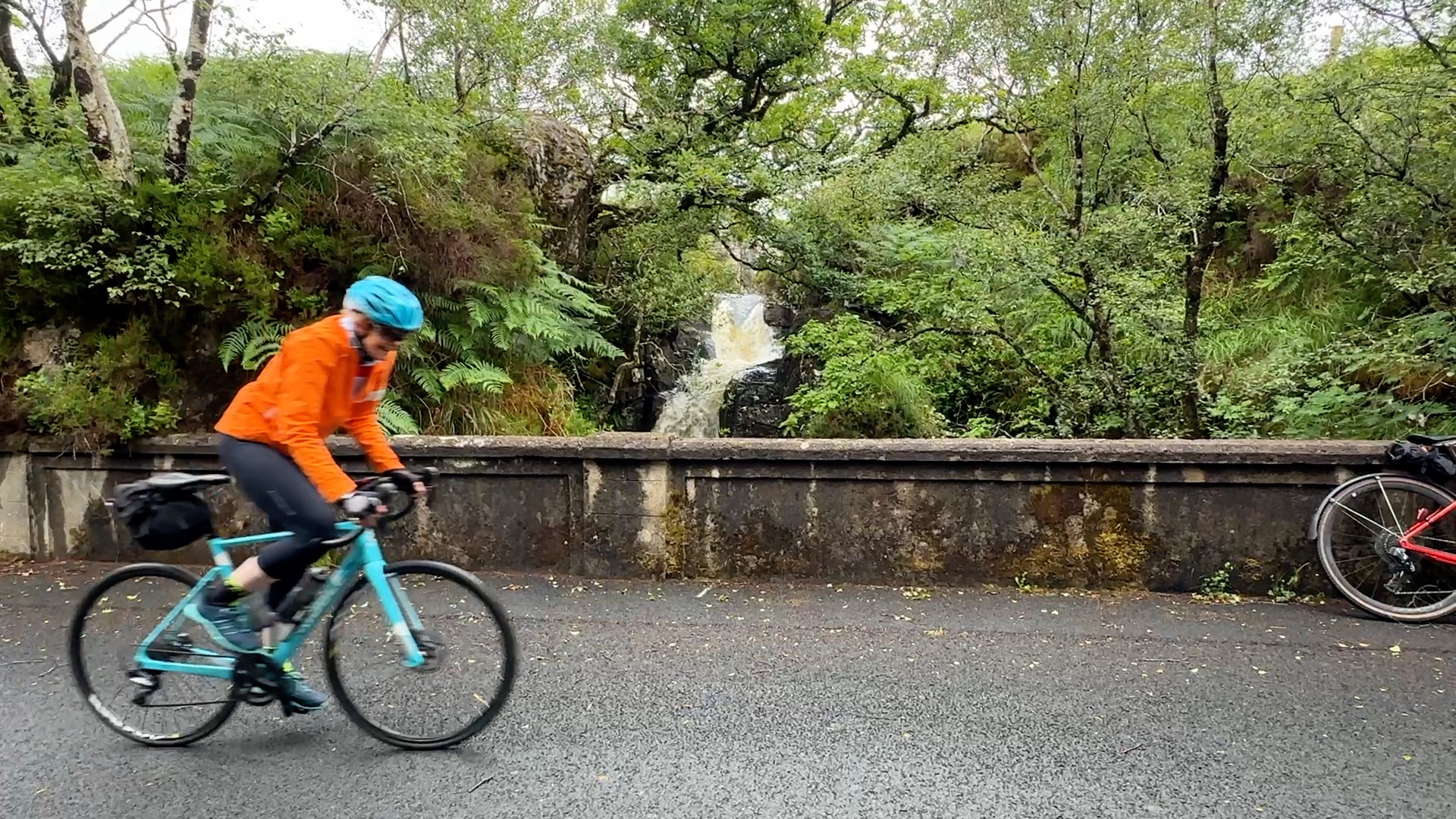
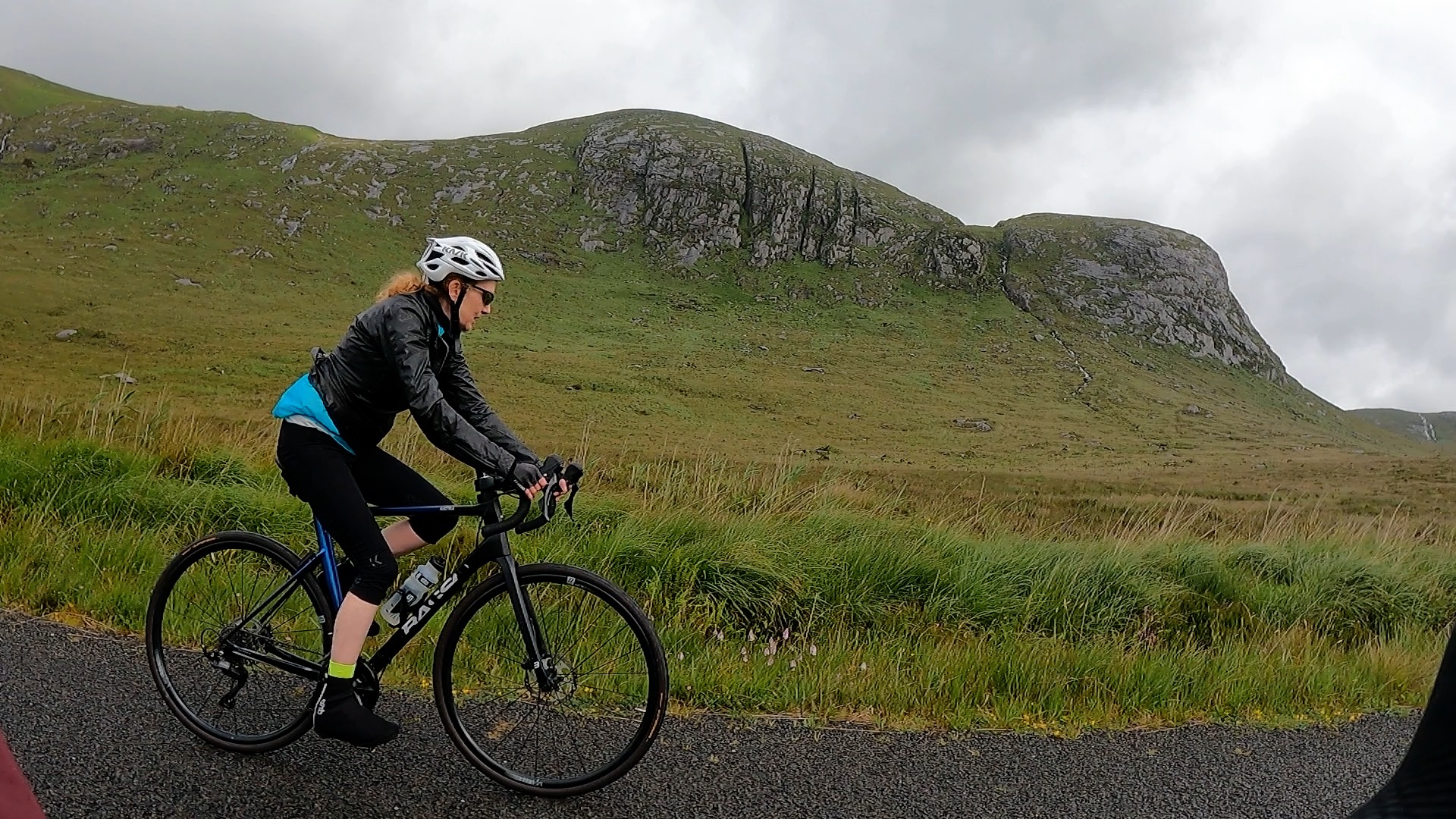
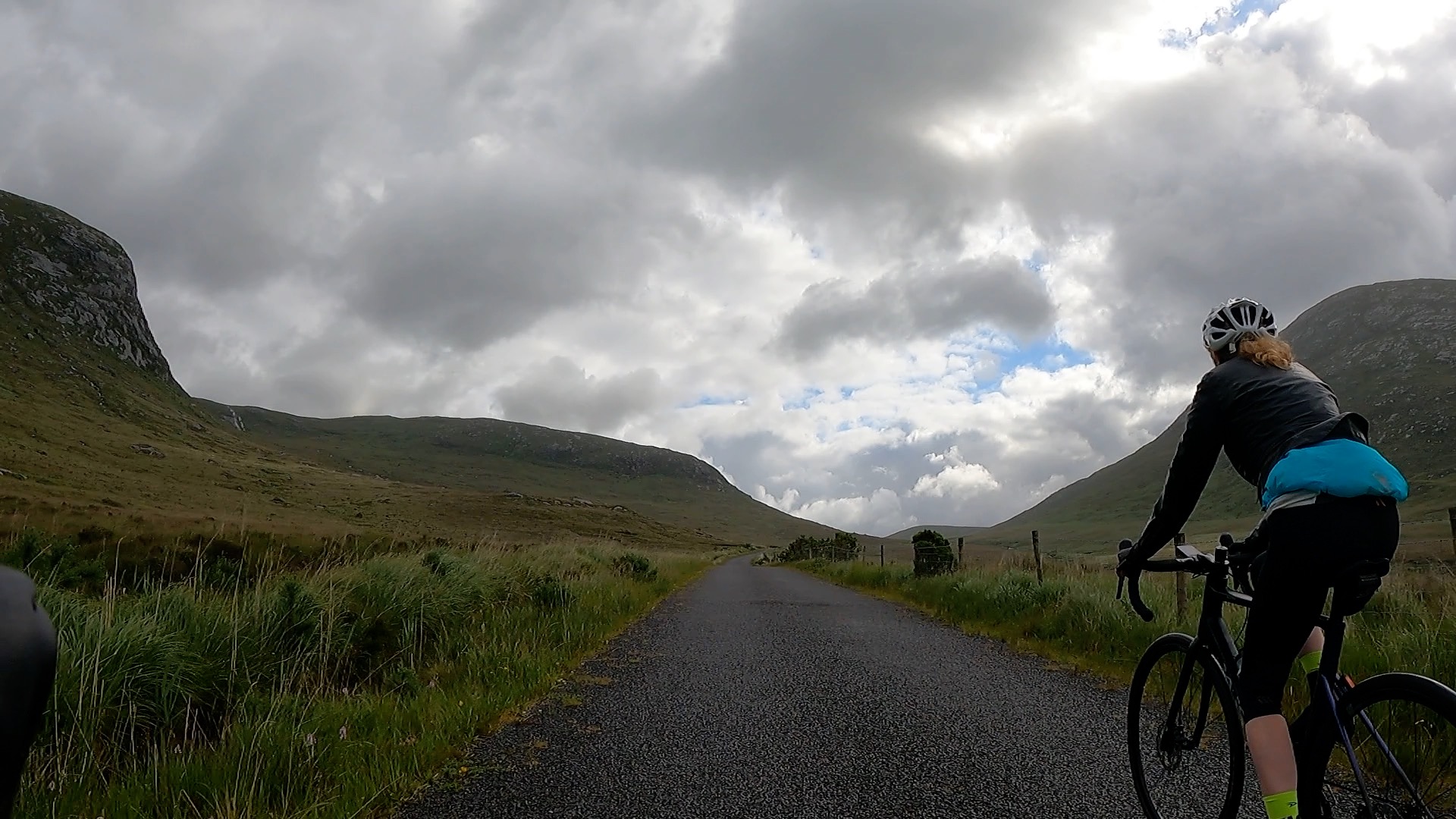
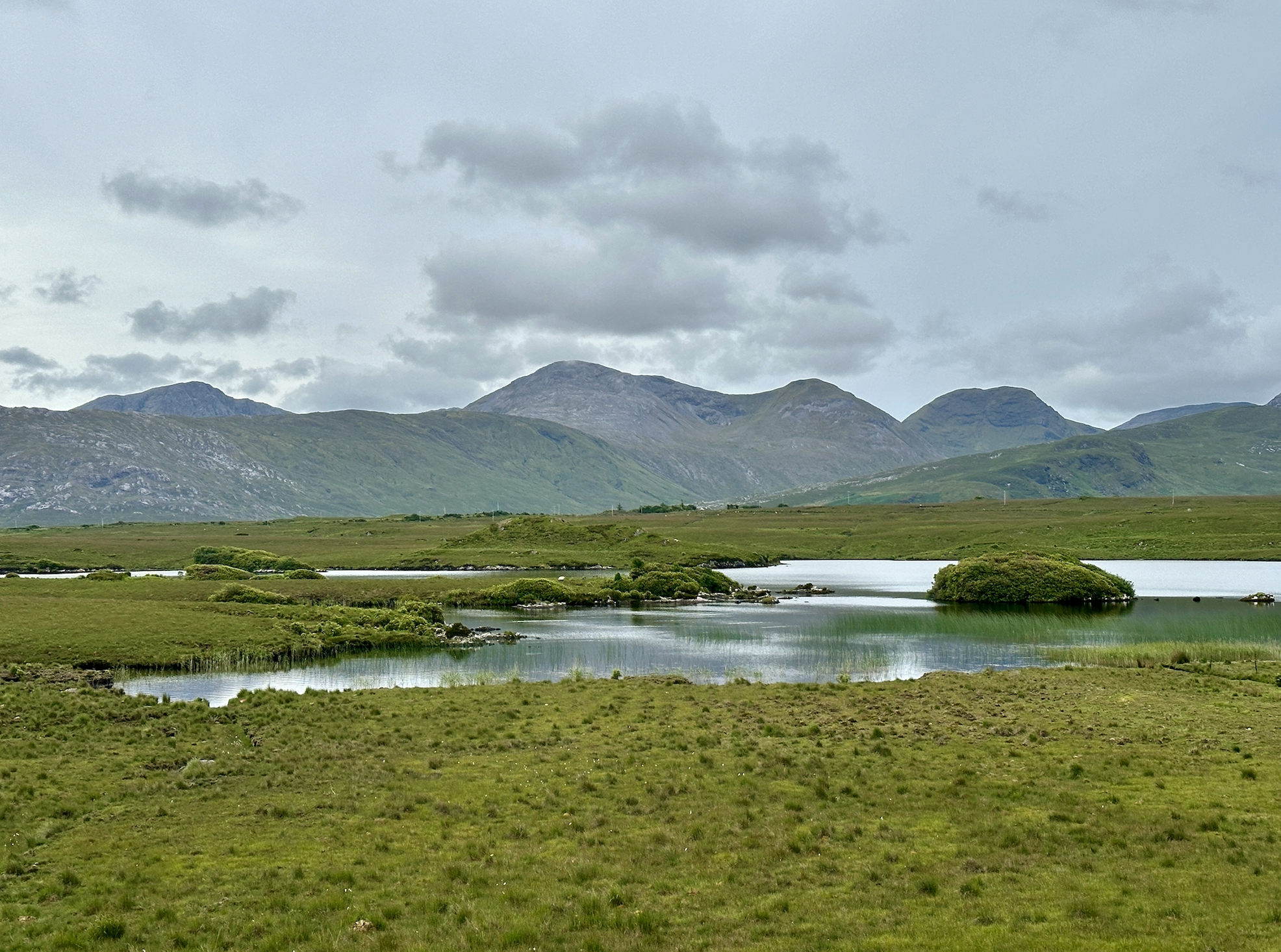
There’s nothing quite like realising you are experiencing one of your best ever cycling routes. This was the joy that awaited me as we traversed the stunning Glenveagh National Park. The route was lined by the Derryveagh mountains and several waterfalls. The day’s highlights video at the end of this post gives a great impression of the joy of this section, which again reminded me of the Scottish Highlands and Eryri.
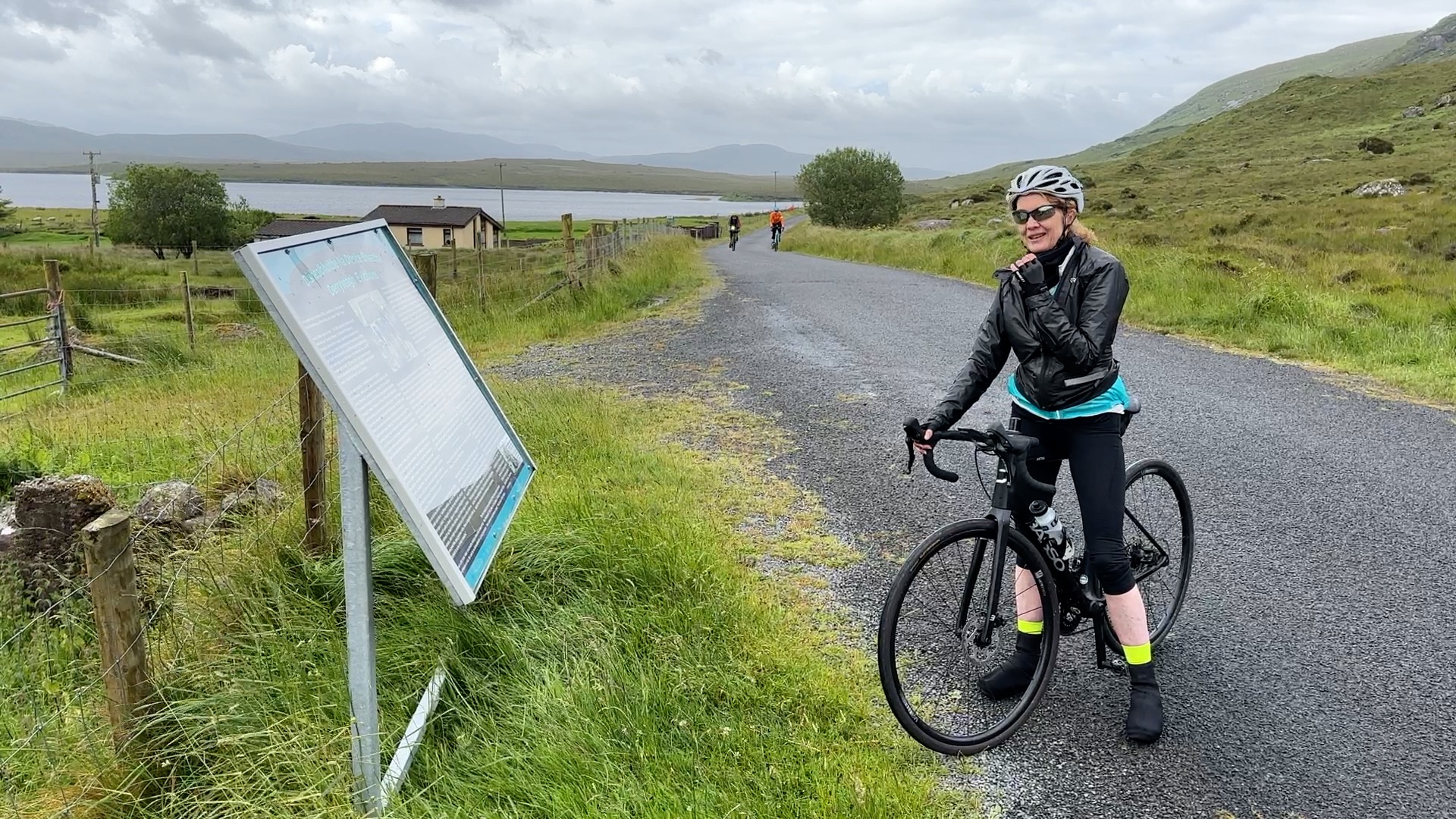
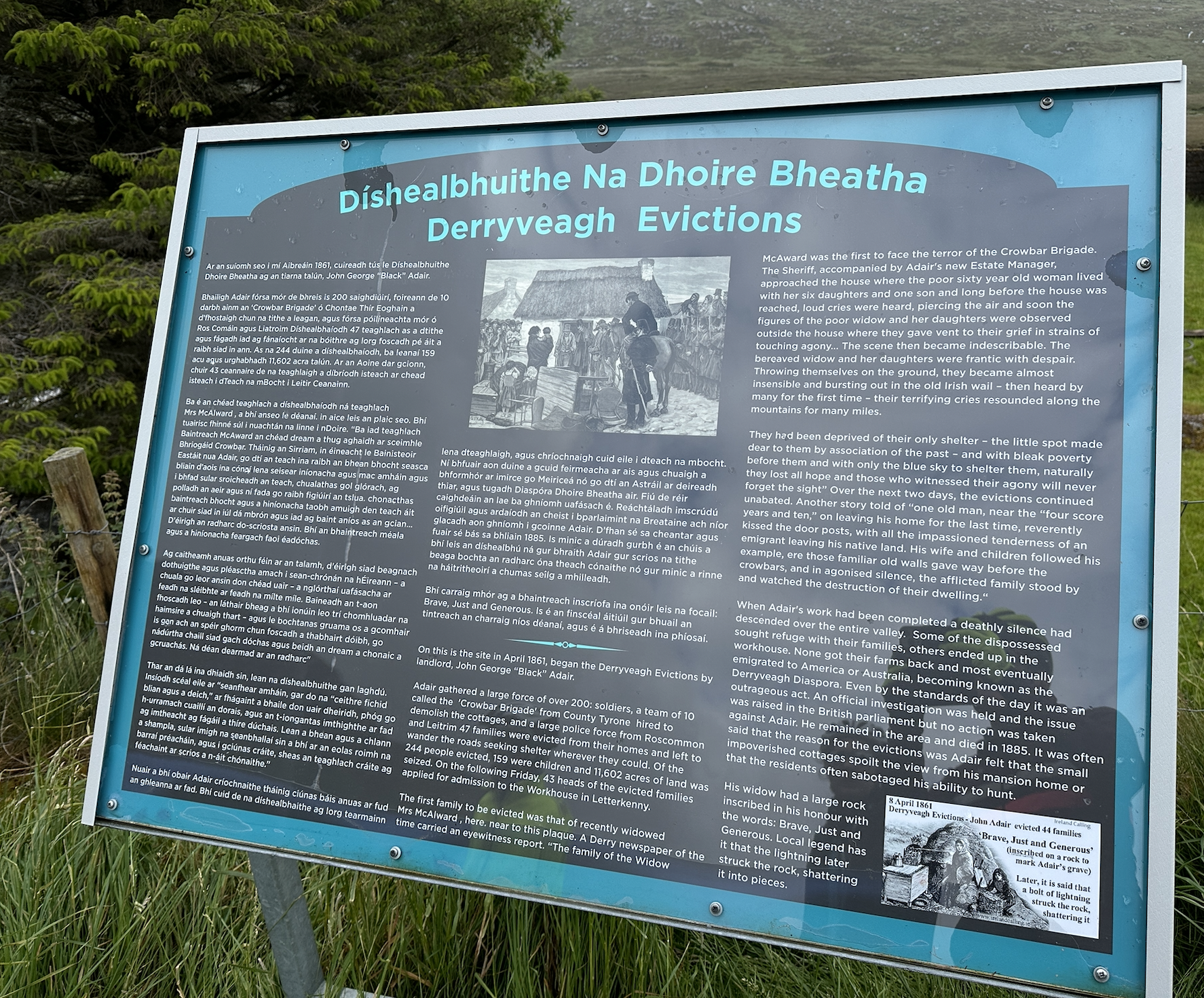
As so often in Ireland, the beautiful landscape contained a dark history, revealed by a plague by the side of Lough Barra.
It was sobering to read how landlord George Adair evicted almost 250 tenants from their homes here in 1861, leaving them helplessly roaming the hills in search of shelter. The plaque tells the story of one victim, recently widowed Mrs McAlward. I confess we smiled at the melodramatic account of how she let out an ‘Irish wail … that resounded along the mountains for many miles’.
The scandal was debated in the Westminster parliament (Ireland was then still part of the United Kingdom) but to no avail. The story reminds us of the terrible power of the landlord in Ireland in the 19th century, which has echoes of the Scottish Highland clearances.
Lucy climbs the pass
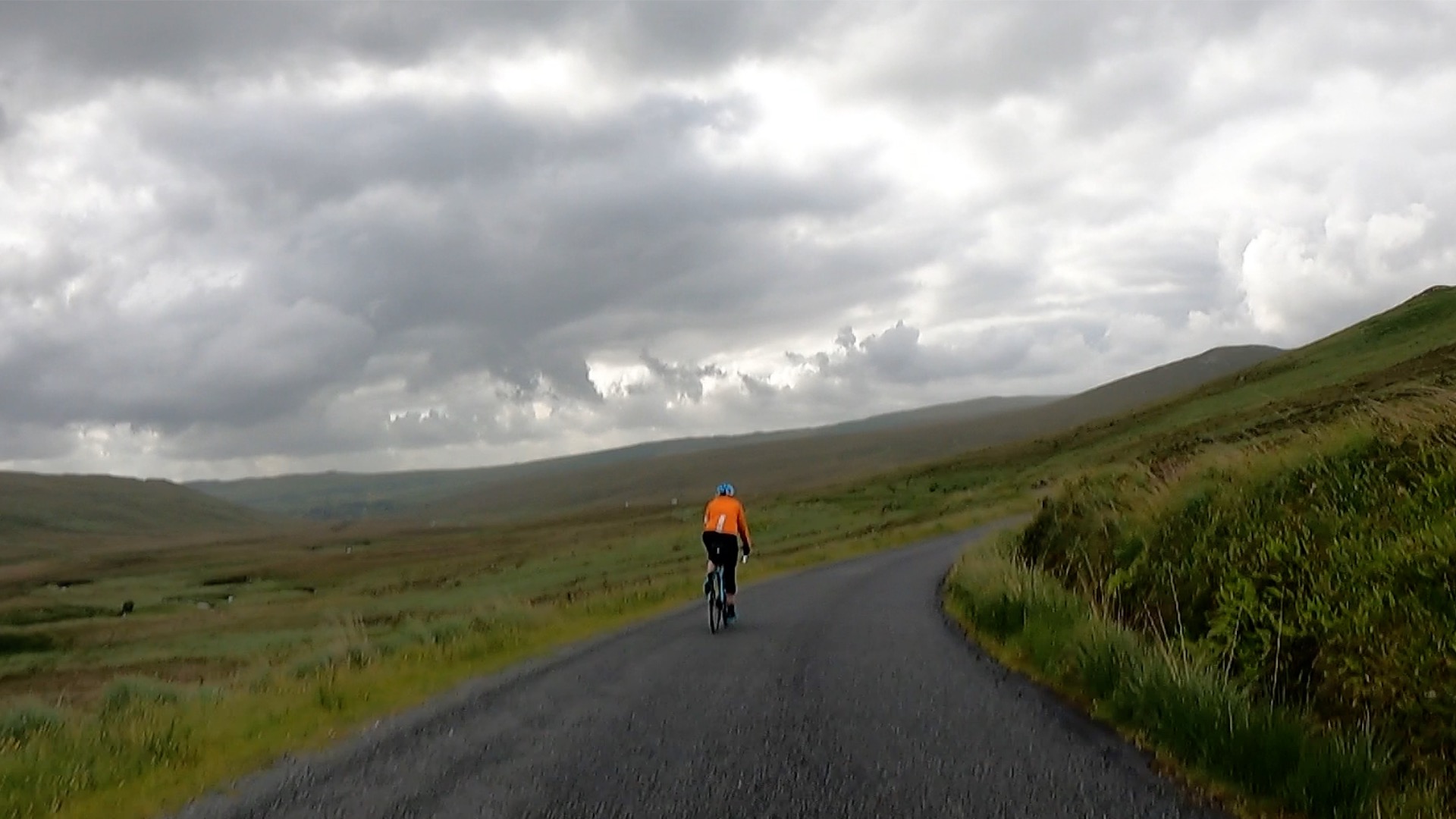
On a happier note, I loved the climb to the pass. It was at a gradient that suited my 2024 fitness, and I accelerated onwards and upwards as we left Lough Barra behind.
We had been told that the morning brew stop would be at the top of the pass unless the weather made this too exposed. That would have been the case yesterday, but the weather gods were on our side today, and I enjoyed a coffee relishing the decent to follow.
Julia descends from the pass
That descent was as good as I expected, lasting a few miles before we were climbing again towards Gartan Lough – below is a rare shot of me climbing beside the lough.
Lunch was a leisurely affair at the Travellers Rest at Milford. It was a pleasure to find a coffee stand and barista in the courtyard, and I savoured a latte while sitting under a patio heater. (Not great for the environment but welcome while eating outside when it was just 13C.)
Approaching Lough SwillyTo the ferry
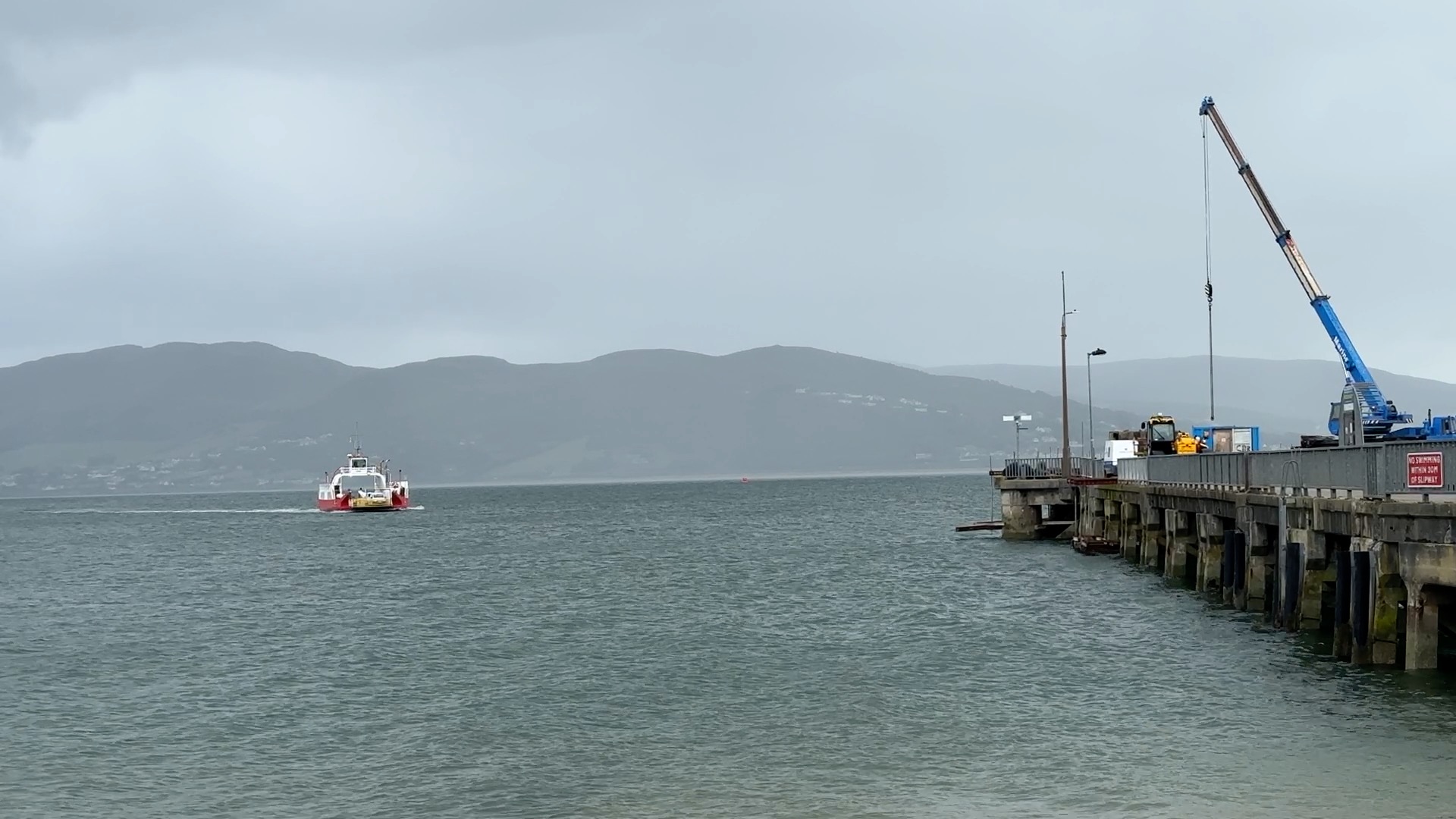
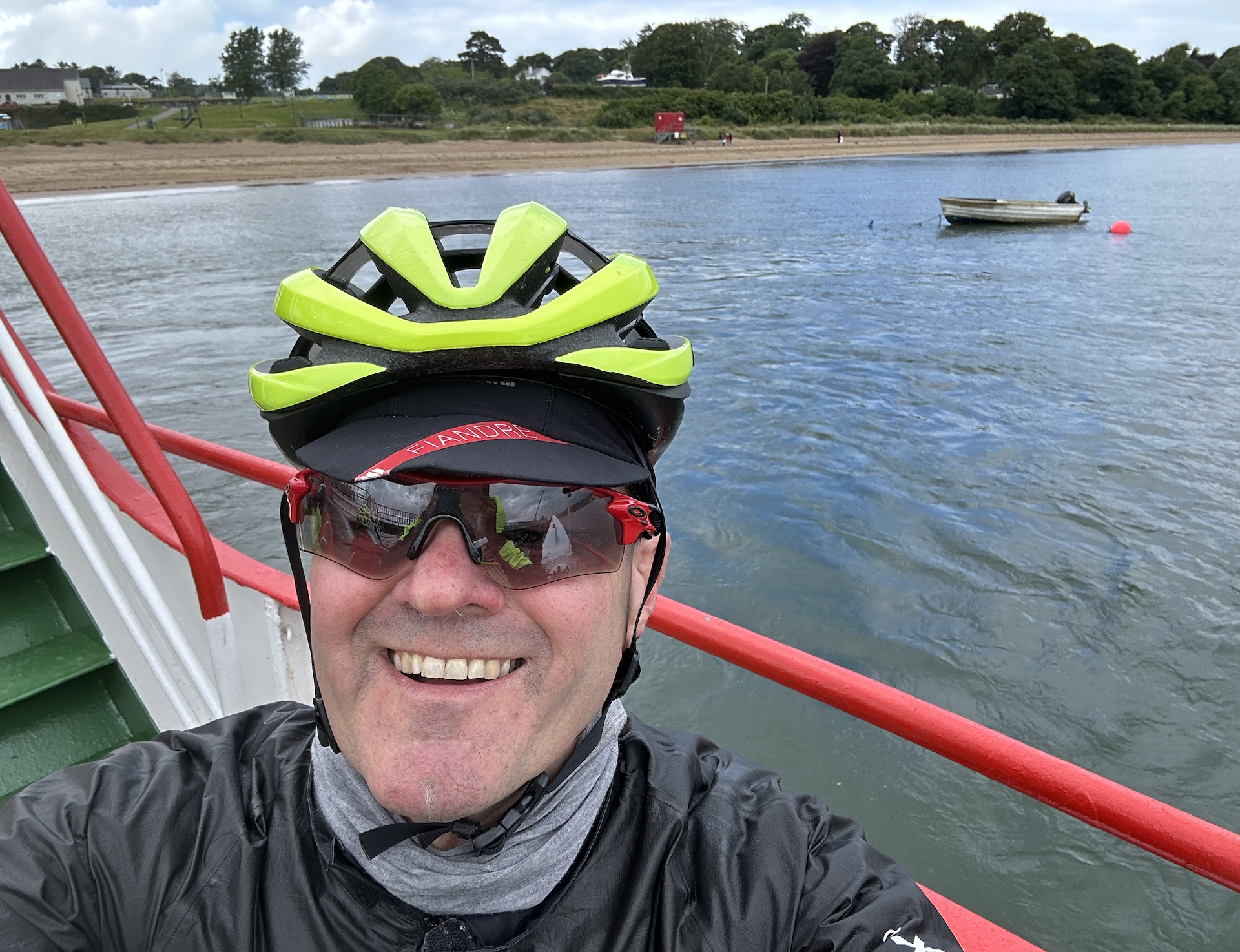
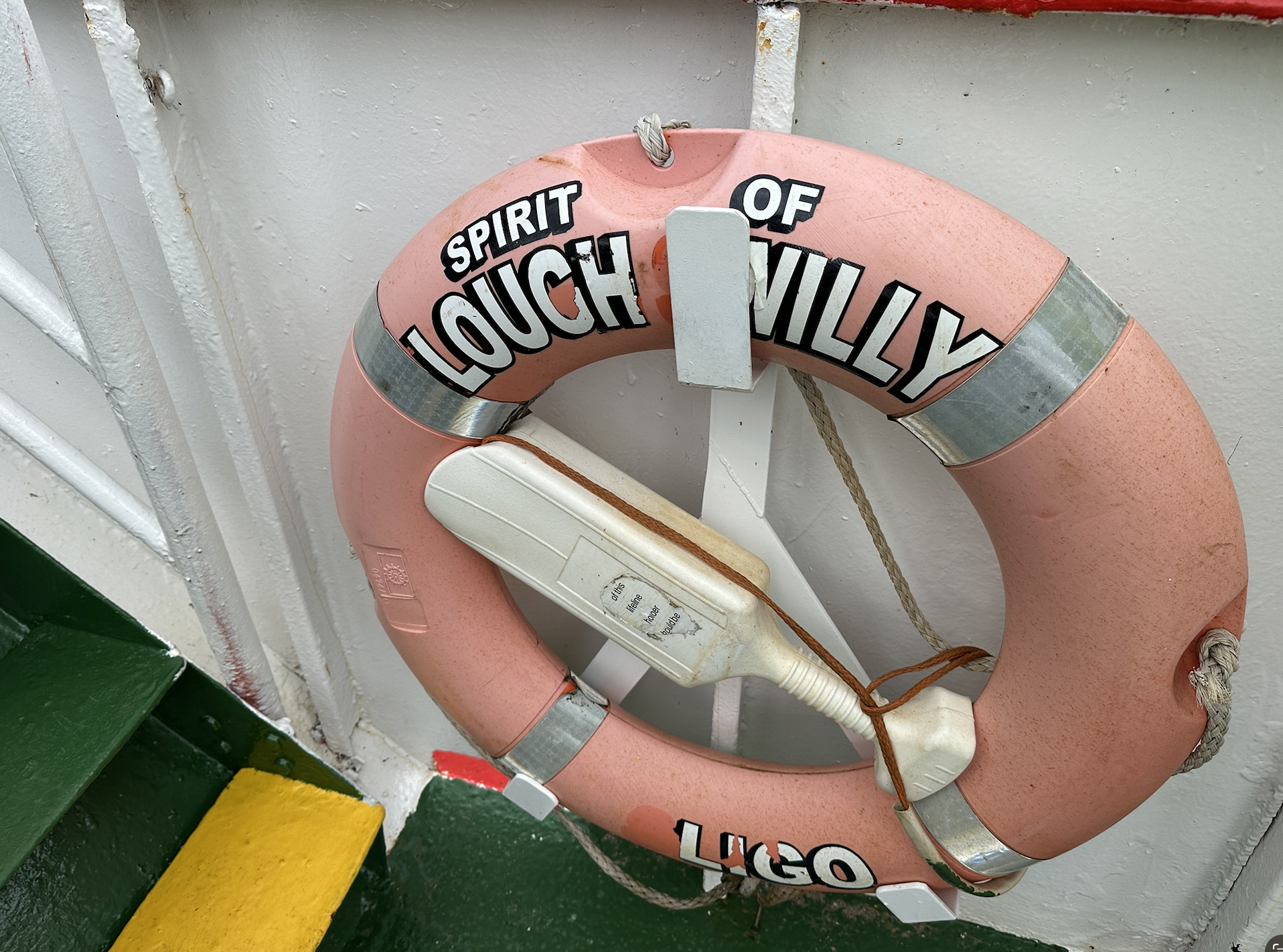
We had one short, steep climb after lunch as we made our way to the Rathmullan to Buncrana ferry across Lough Swilly. I was surprised to see someone on an old bike pulling a trolley at speed – no mean feat. It was a pleasure to cycle along the lough to the ferry terminal, where we waited for a short time as it crossed towards us.
After the idyllically quiet roads this morning it was a shock to be cycling in traffic as we threaded through Buncrana’s one way system, wondering why such a small place needed one!
The road from Buncrana climbed steadily for around seven miles, the last long ascent of the tour. After this we had a blissfully long section of fast road towards Carndonagh. I savoured the wide open landscape (seen above) as I raced along at up to 36 mph.
Carndonagh was a busy little place, and I passed a stretch wedding limo as I turned out of town towards Malin.
Malin bridge
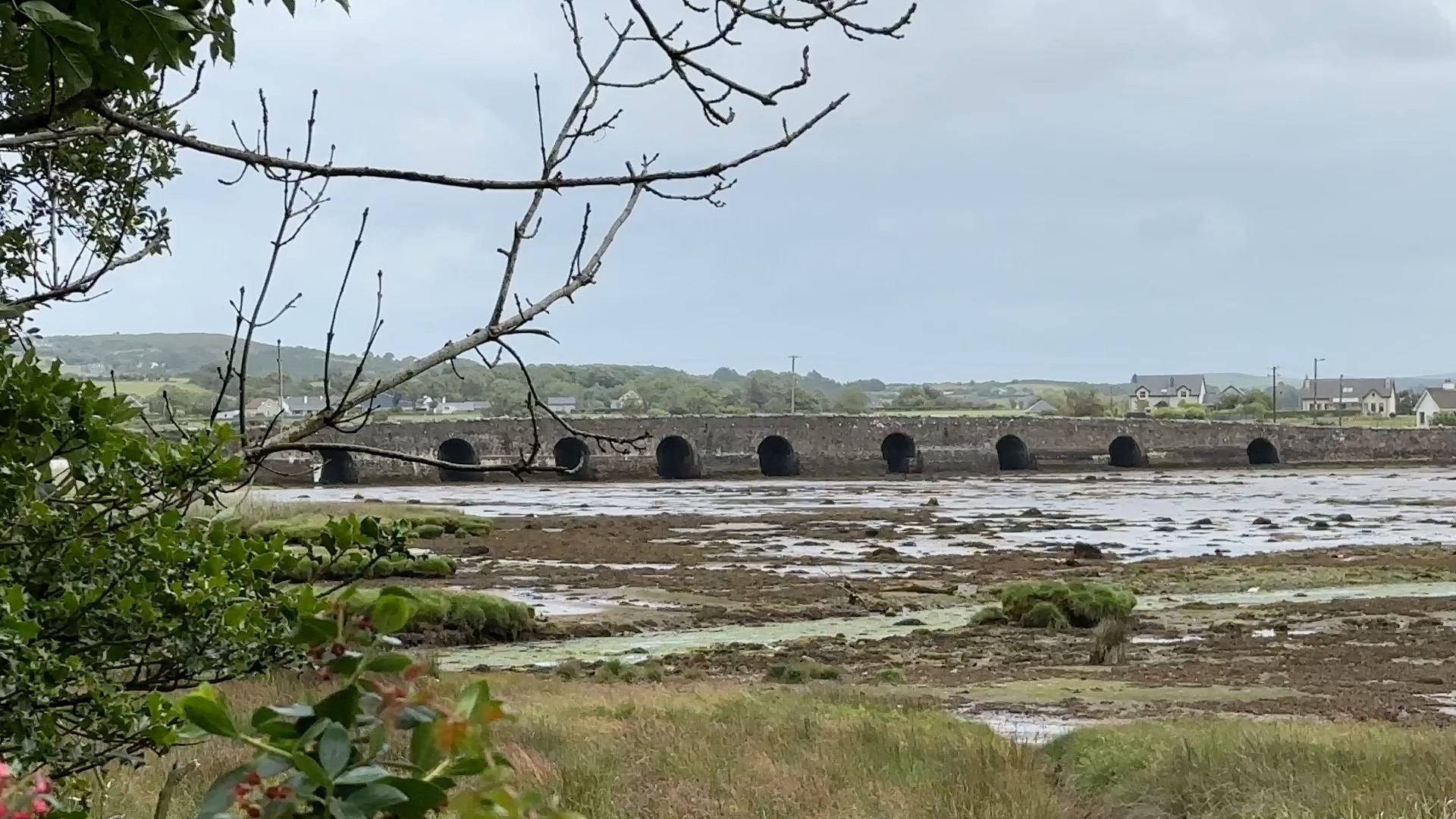
We had a very pesky crosswind as we approached Malin, and I was seriously concerned about being blown into overtaking cars on this busier stretch of road. It didn’t stop me admiring Malin’s historic bridge, built in 1758. We had our final brew stop just beyond Malin. Wendy started putting everything away as a heavy hint that we should be on our way!
Trawbreaga Bay
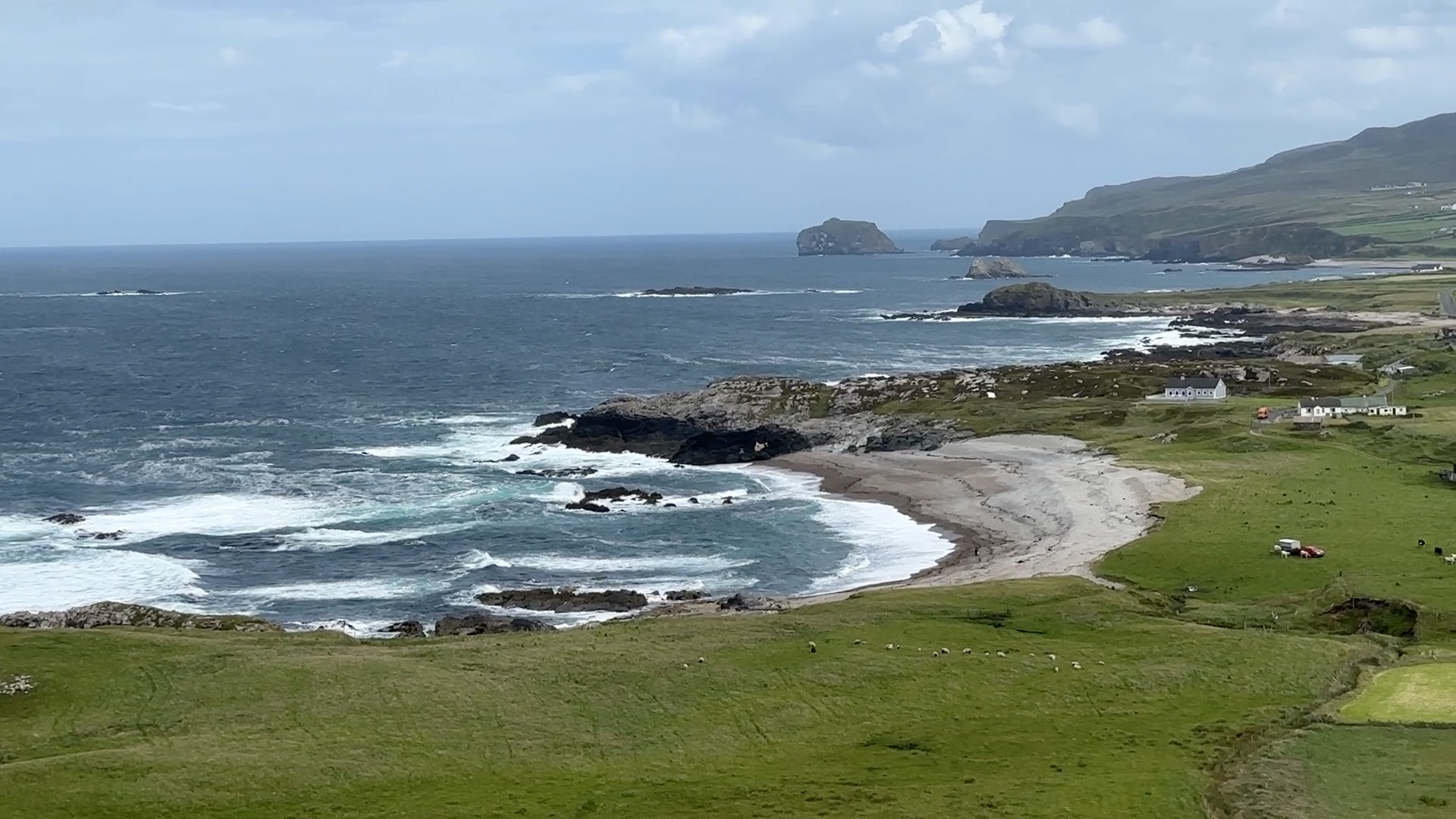
As we headed off on the very last leg of our journey across Ireland, the crosswind had become a headwind. It was nowhere near as tough as yesterday, but it slowed our progress. The compensation was the gorgeous sight of Trawbreaga Bay, seen above and below.
The end in sight…
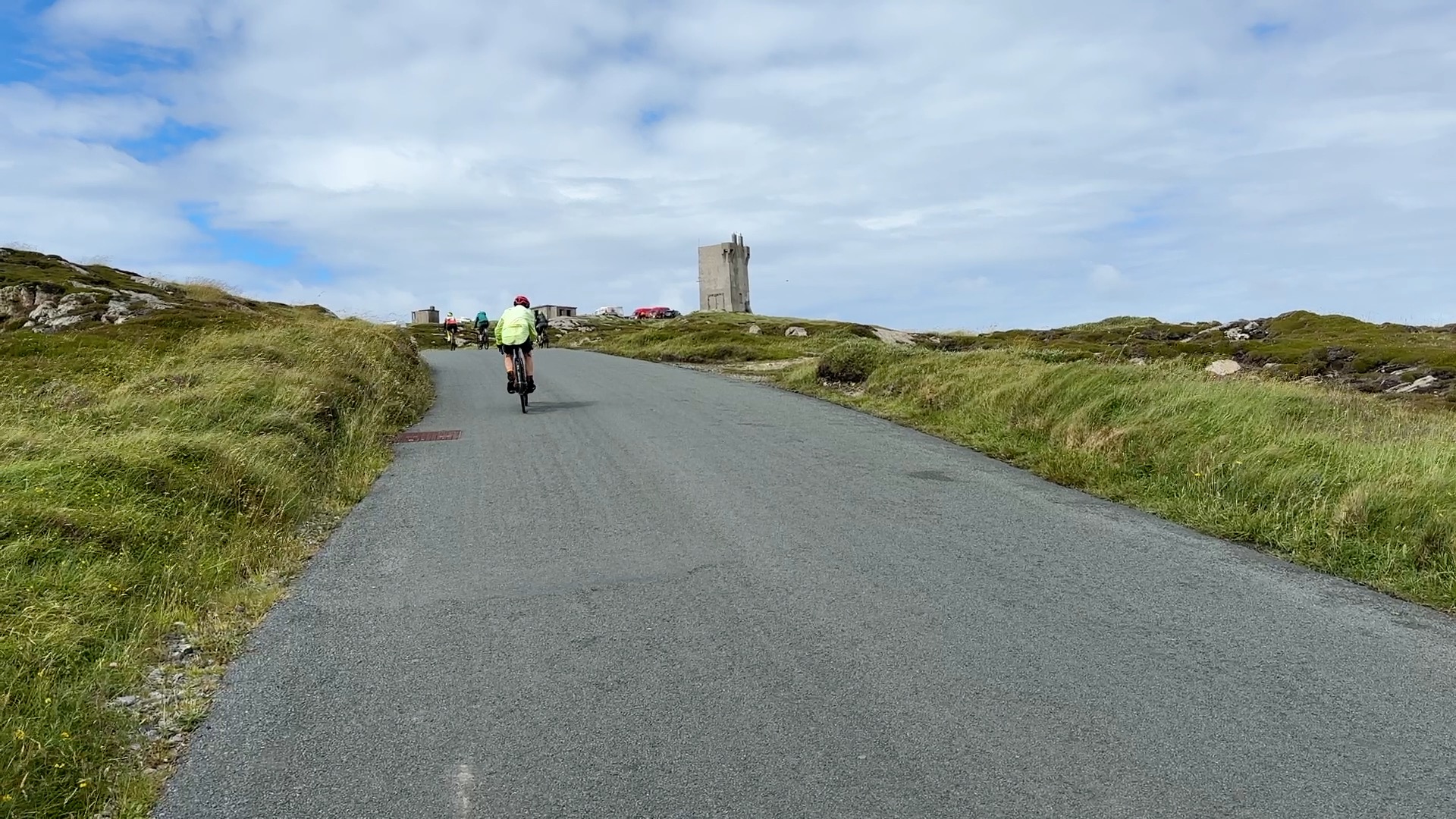
It was quite a moment when we sighted the tower at Malin Head, showing how close we were to our destination. But we still had some climbing to do, especially the incredibly steep final rise to the head itself. It would have been no shame to walk that bit, but I made it thanks to low gears and having climbed over 150,000 feet already this year!
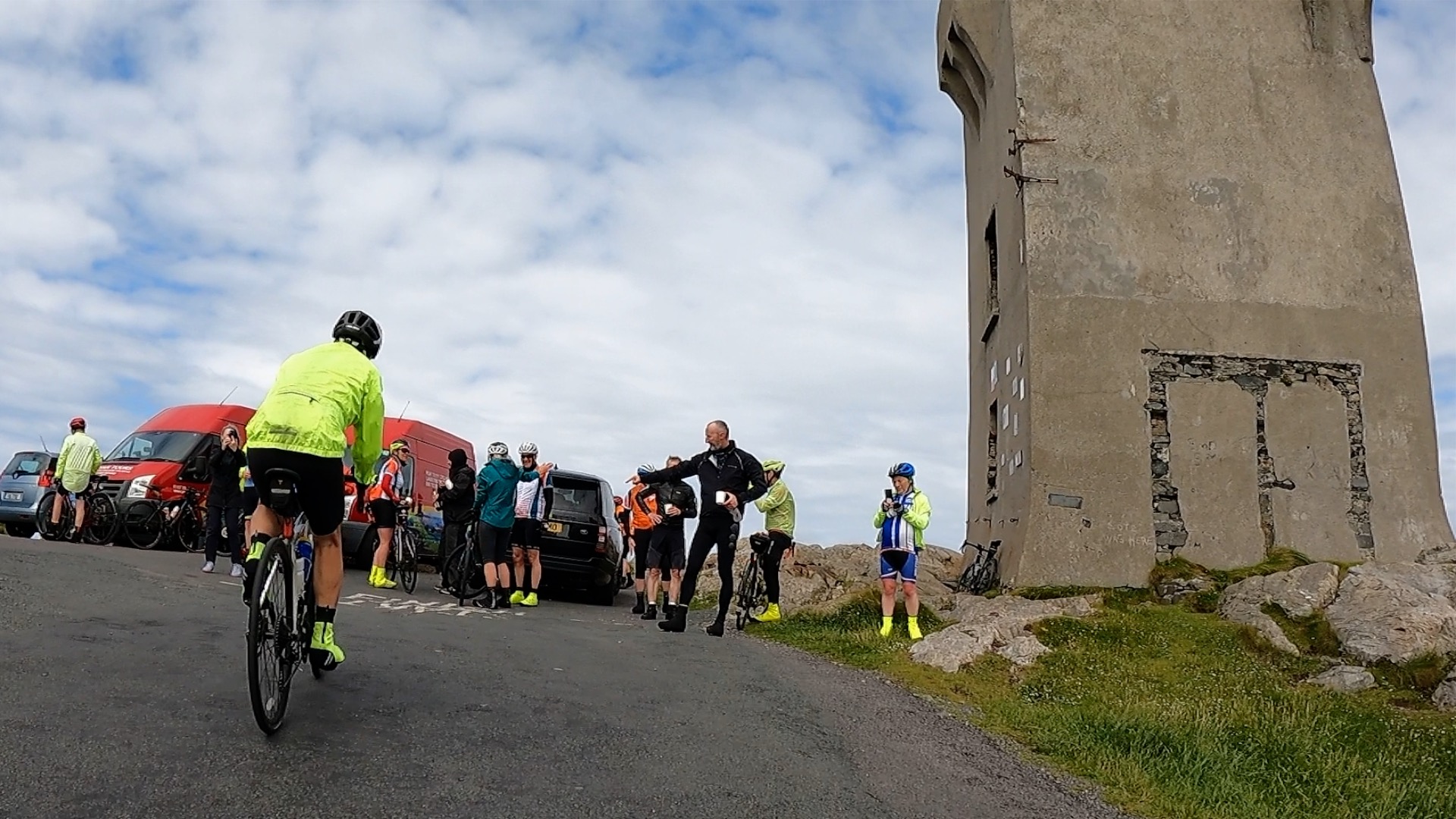
I realised after I got off the bike that I hadn’t actually crossed the finish line… Others were more diligent, including Lucy and Julia seen below.
Malin Head is a beginning and an end of a journey, which gives it a special significance, like John O’Groats in Scotland. The tower that we saw from afar was built in 1805 as a lookout point during the Napoleonic wars. It was taken over by Lloyd’s of London in 1870 as a signal station, while the Marconi company sent the first commercial wireless message from Malin Head to the SS Lake Ontario in 1902. Despite this fascinating history no one would describe the structure as attractive, which is a shame for such a scenic landmark.
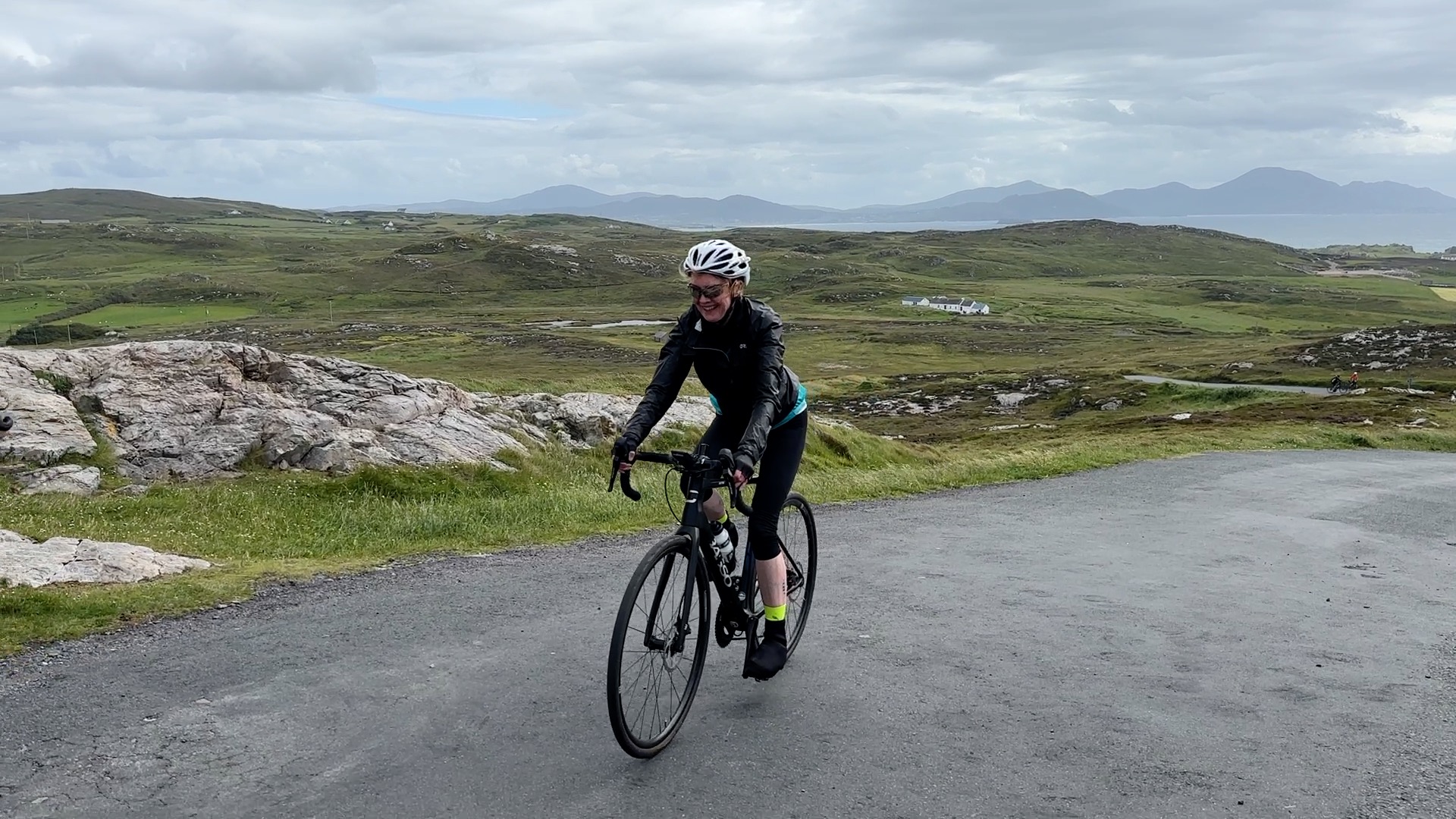
The view from Malin Head
We didn’t have long to savour the views. The Peak Tours guides had to put our bikes into the vans for the journey back across the Irish Sea, so we had a race against the clock to remove bags, computers and any other touring accessories. That done, we had an enjoyable hour’s drive to Derry, where we were staying the night. Just before the Irish border we passed through the village of Muff, and the more juvenile of us on the coach sniggered at the sight of Muff Barbers. Our phones pinged as they reconnected with UK mobile network – a very 20th century sign that you have crossed a border, although a singular one in the case of Ireland.
Unfortunately we didn’t have time to go into Derry City, but as we passed through on the coach I spotted several Sinn Féin election posters just six days before the UK general election. (As a republican party, Sinn Fén contests UK general elections but does not take its seats at Westminster if elected. This tradition is over a century old: the first woman elected to Westminster was Sinn Féin’s Constance Markievicz in 1918 but she never attended.)
Reflections on cycling across Ireland
Cycle touring is a wonderful way to get to know a country. I fell in love with Ireland on my first Irish cycling tour in 1996 as I made my way from Dublin over the Wicklow Mountains to Rosslare. I was so taken with the carnival atmosphere in Wexford as its hurling team won its first all-Ireland hurling championship since 1968 that I carried a Wexford club flag on my bike all the way back to my hometown in Wales, Cardiff!
Ireland: enjoining the craic in GalwayIreland: a scenic delight
This trip has been equally unforgettable. I love mountains – well, I do come from Wales – and I delighted in discovering Ireland’s magnificent high peaks, and the thrill of those mountain passes. Yet it was not difficult climbing as the gradients rarely went into double figures. And on our route we avoided the rollercoaster succession of climbs and descents that sap the energy.
You expect a warm welcome – míle fáilte, or a thousand welcomes – in Ireland, and that’s exactly what we found. Everyone we met was friendly except for a surly hotel receptionist in Glengariff – who came from southern England… Mary from the Beal na Barna B&B in Narin stands out for kindness, inviting us in for tea and scones after we’d survived the biblical storm yesterday. We’d heard her life story by the time we’d finished the last, succulent bite!
A thousand stories
Above: learning about Irish history in Wales, 1980
Ireland is a country of a thousand stories, as well as welcomes. Its turbulent history gives the curious traveller plenty of opportunities to learn what shaped modern Ireland. When I was studying history in school in Wales 45 years ago I learned of the appalling conditions in rural Ireland in the 19th century, and was horrified to find (as I wrote in that fragment of an exam essay above) that ‘Irish families were thrown off their farms without warning’. In the starkly beautiful Derryveagh mountains I came face to face with just one example of such cruelty, the Derryveagh evictions. Similarly, on a peaceful night in Clifden, I was moved by learning of the death and destruction that came to that lovely town during Ireland’s war of independence. If these grim stories tell us anything, it must surely be that we can never rest in the quest for peace and reconciliation.
Weather or not…
Wet wet wet – leaving Glengariff, day 2
Ireland is where North Atlantic storms reach Europe, so you can’t be surprised to get wet when cycling there. On the whole we were fortunate, and I thanked our lucky stars that we had dry days to appreciate the Galway coast, the Sky Road and Killary Fjord, and the Derryveagh mountains. It’s a shame that we didn’t complete the penultimate day in County Donegal, but keeping safe is always the right decision. I was grateful we avoided the washout that my 2019 LEJOG friends Fiona nd Simon suffered a couple of years ago on this tour.
Thank you, Peak Tours
Guides Wendy and Hamish on the Shannon ferry
I’ll end with a thank you. I discovered Peak Tours in 2019 when I cycled Land’s End to John O’Groats. That happy experience made it my favourite cycle tour company. This tour of Ireland proved the point, especially when the guides went out of their way to rescue the situation when the appalling weather forced us to abandon the day’s ride at lunch yesterday. We really appreciated it.
Here’s to the next adventure!
The final day’s stats
74.41 miles, 4.790 feet climbing, 5 hours 15 mins cycling, average speed 14.2 mph.
This post recounts the eighth day of my Mizen Head to Malin Head cycle tour in Ireland with Peak Tours in June 2024. Read Day 7: Westport to Sligo
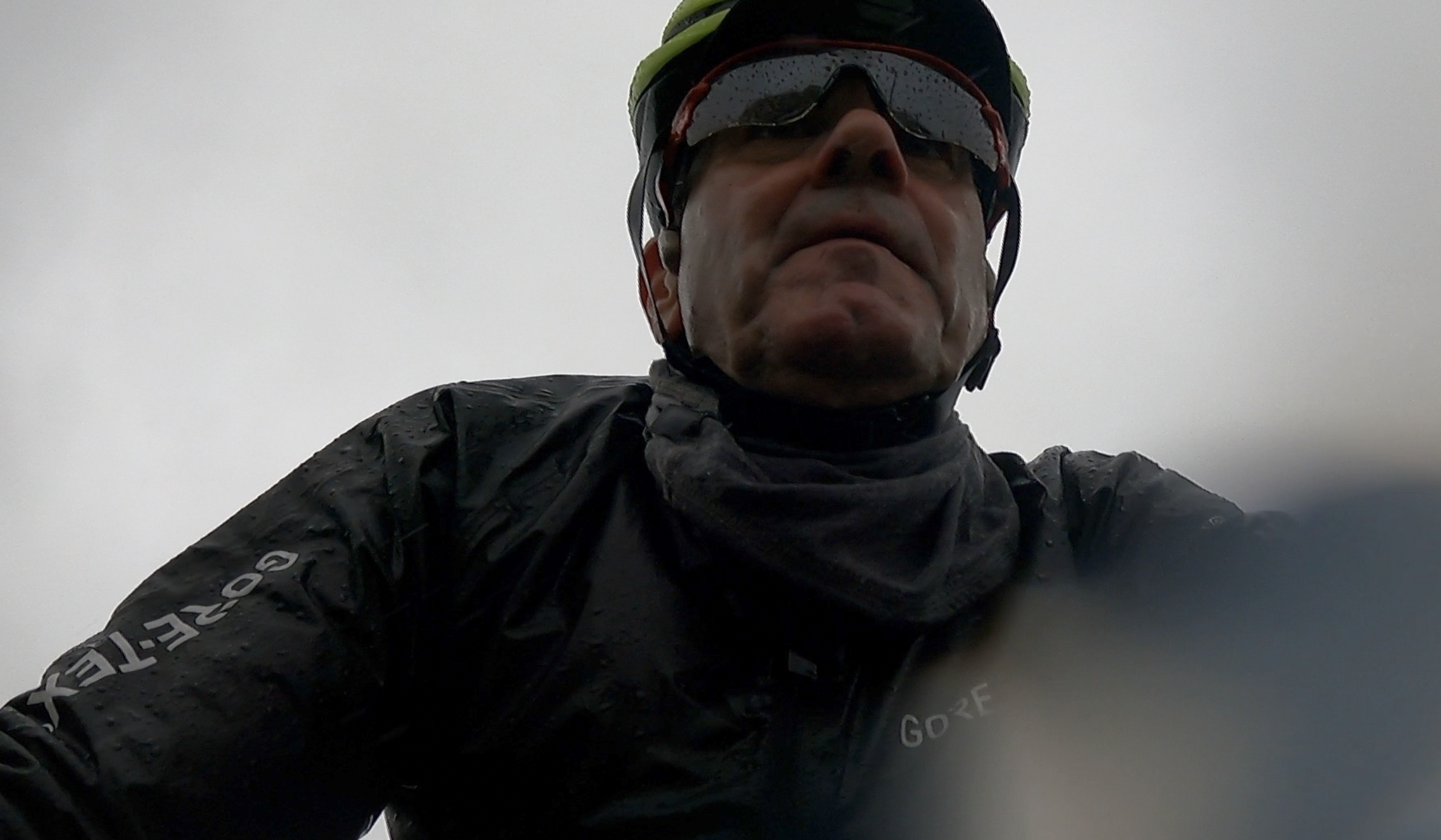
Rob, battling against the elements
What a day. The forecast for today was always grim, but I clung to the hope that it may not turn out so bad. For a time this morning, that hope seemed justified. But then the expected storm hit…
Misty morning. It got worse…
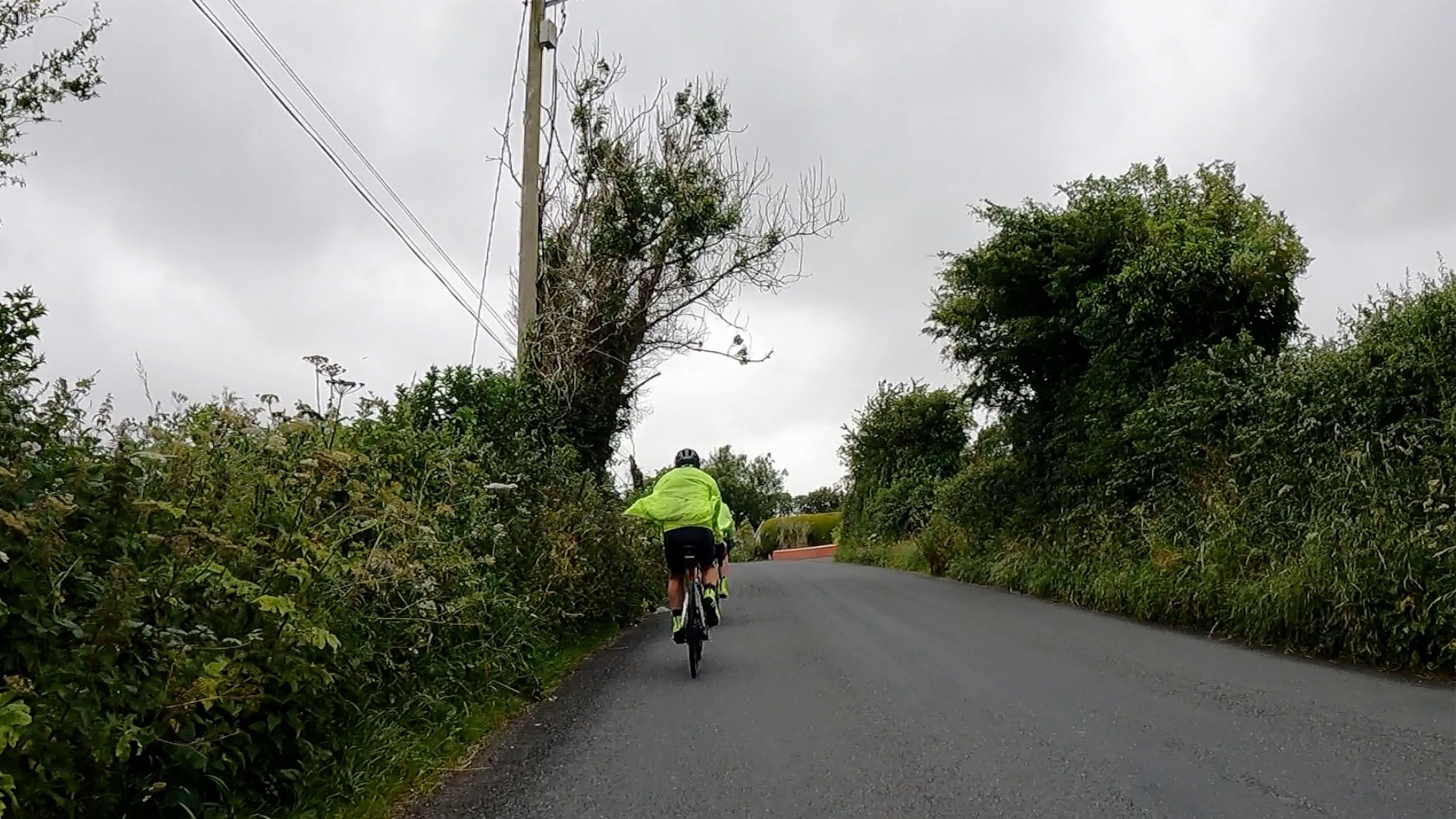
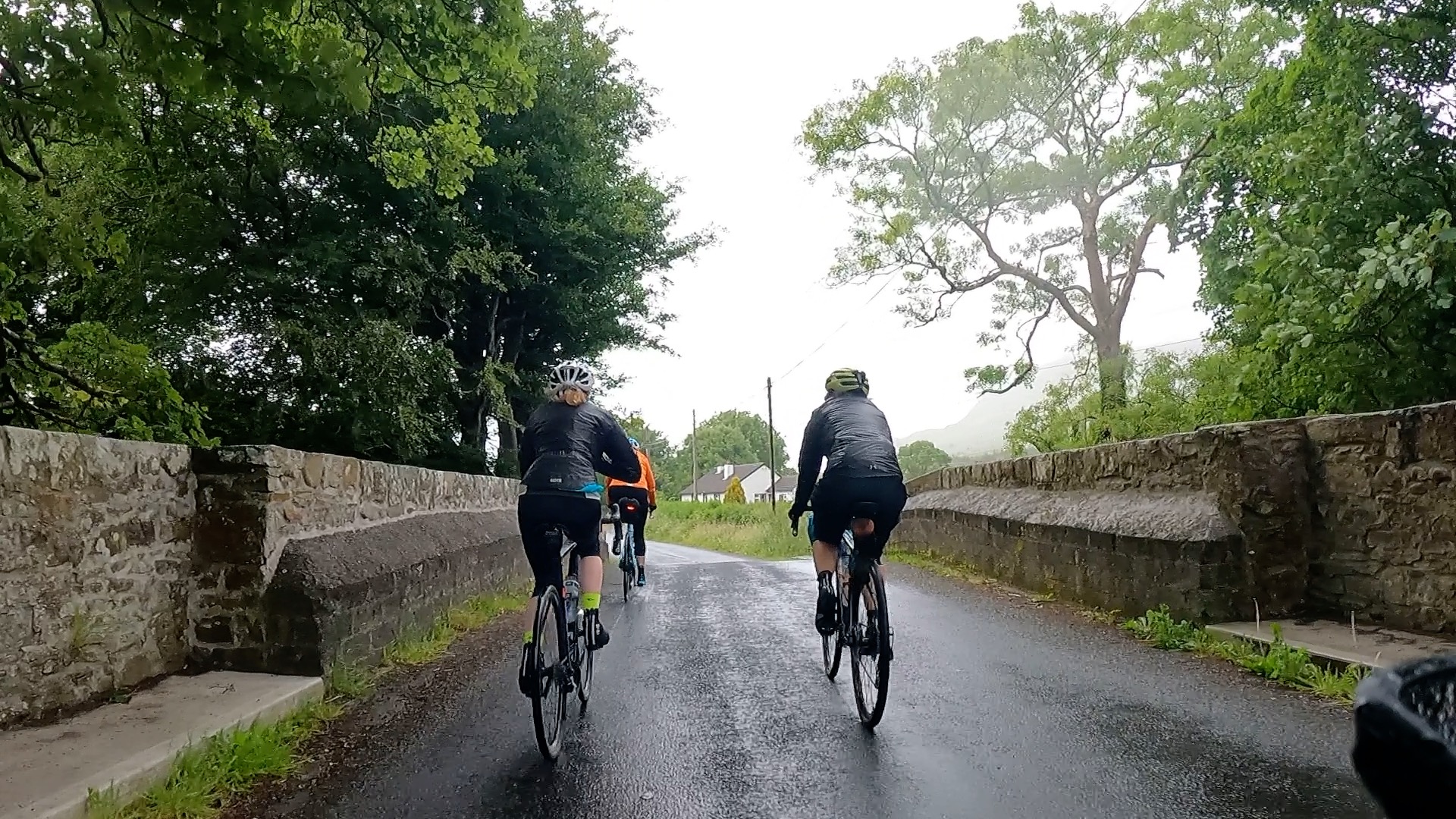
It was dry, if windy, for the first hour or so out of Sligo – and hilly, with one of the steepest climbs of the whole tour, at 17% early on. The mist was hanging over the hills and people’s rain jackets were flapping in the wind.
We didn’t linger long at the morning brew stop give the conditions. For many miles I was cycling with Julia, Lucy, Tizzie and Ken, and I confess I found this stage strangely satisfying, defying the elements. I’d have preferred sunshine but there are times when you just cope with what nature throws at you. We passed close to Mullaghmore, where Lord Louis Mounbatten was assassinated by the IRA along with three others in August 1979.
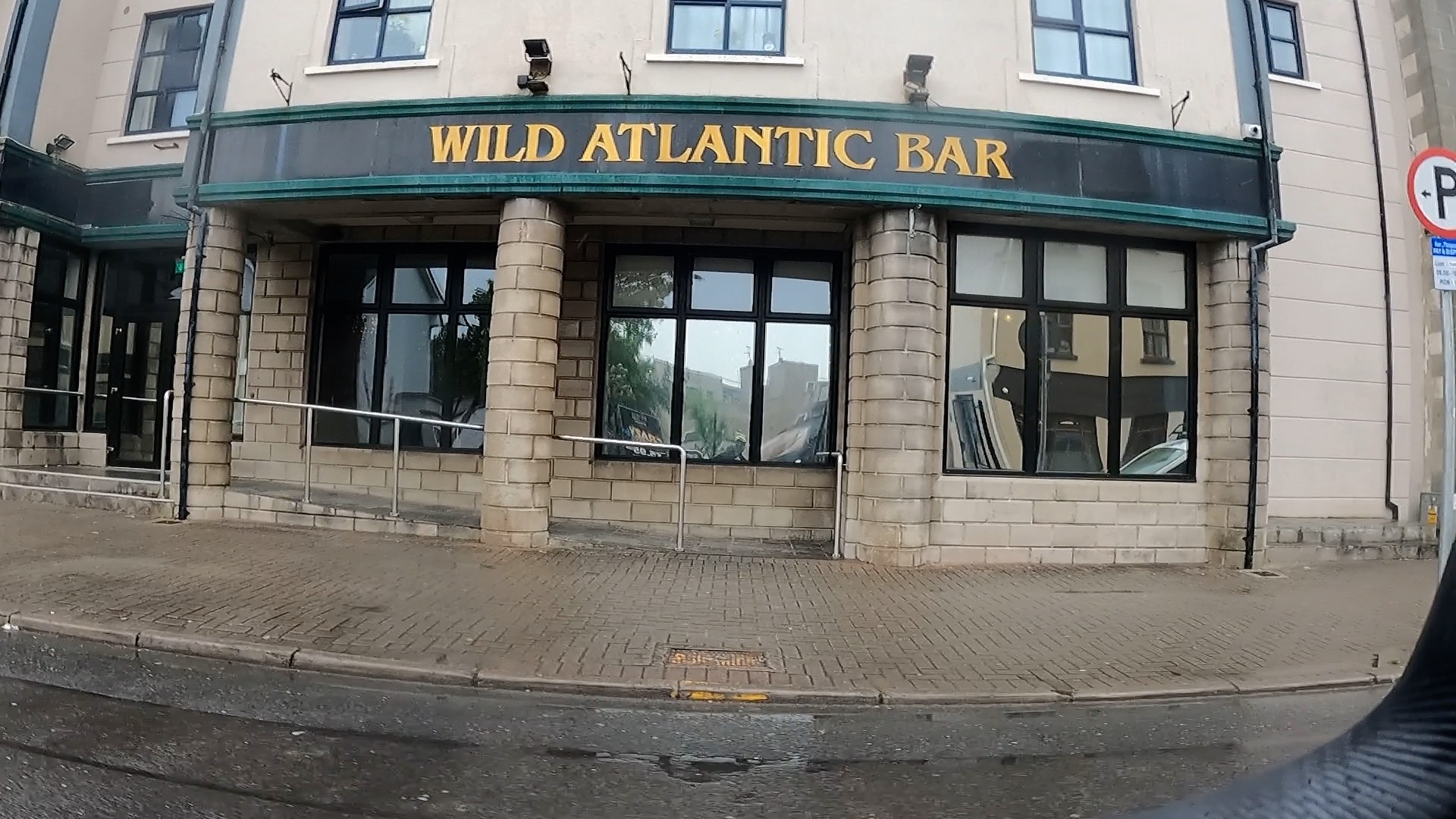
We cycled through Bundoran, a sad-looking seaside town, seen above. I shouldn’t be too harsh – I first visited Bondi Beach in Australia on a similar wet day in 2000 and thought it looked like Barry Island in Wales in winter. I stopped briefly to take some video so today’s highlights video would give a fair representation of our experience.
Leaving Ballyshannon
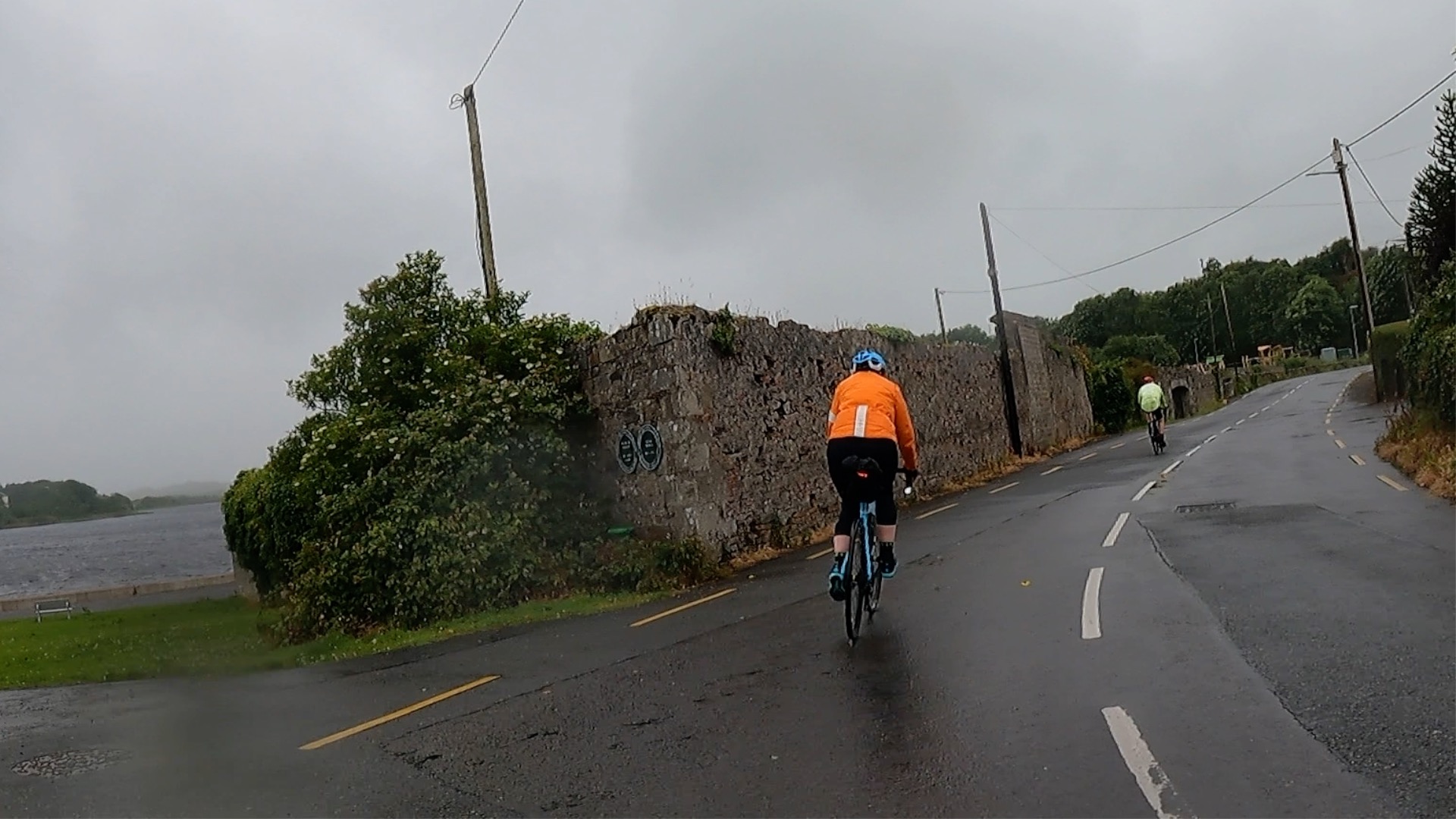
Nearby Ballyshannon was a much nicer place, and as we swept away from the coast, seen above, I was feeling reasonably positive still.
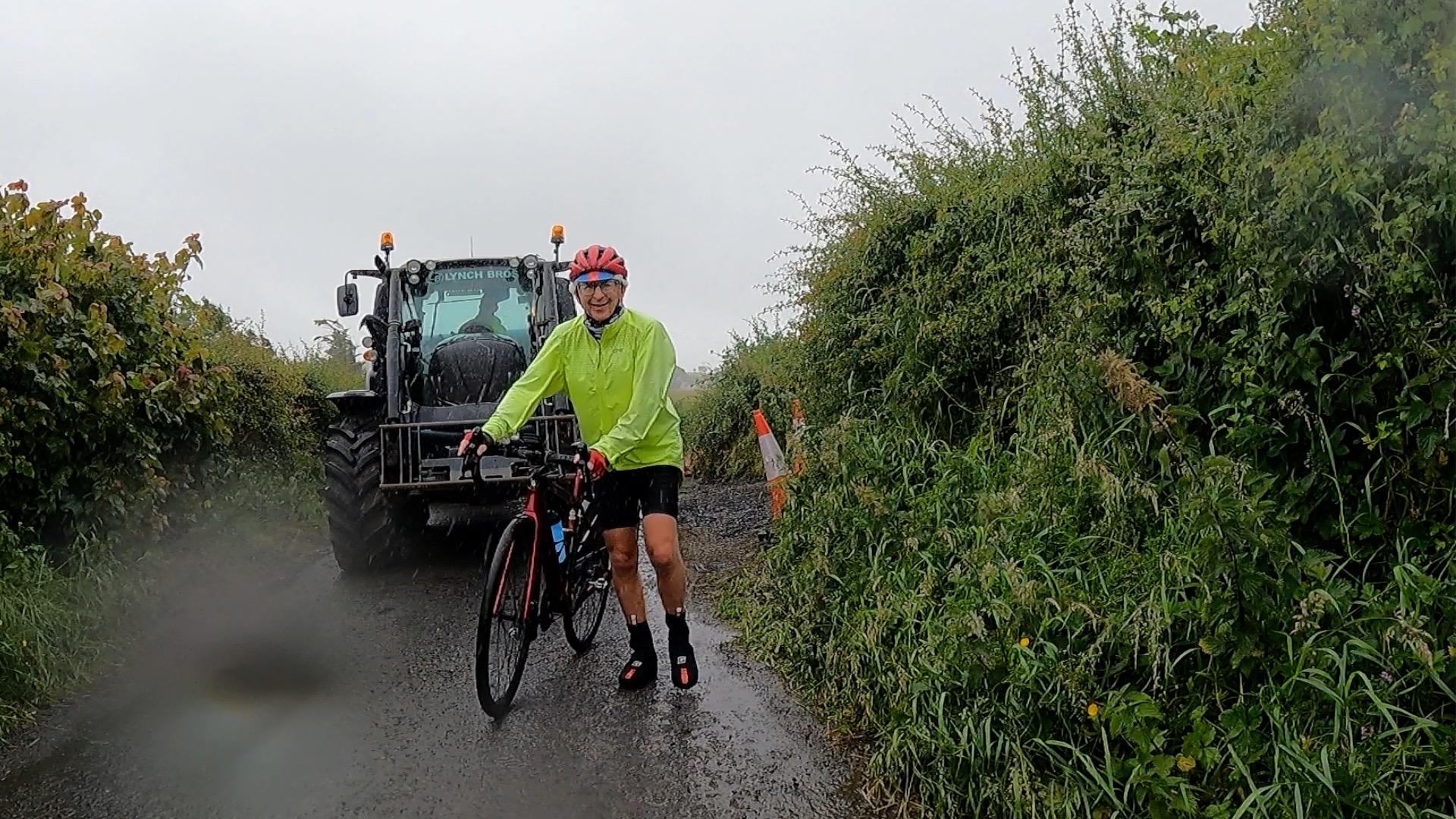
We had a stiff climb after Ballyshannon, and I waited for the others to catch me up. At this point the wind was getting stronger, which was very obvious on that exposed hill climb. Soon after, we had to wheel our bikes past road works on a narrow lane. (We had optimistically ignored the ‘road blocked’ signs just before.) This reminded me of the very wet morning of day three – it seems like Ireland’s county councils save their road repairs for terrible weather!
As Ken and I came to a t-junction, we found Mark in the Peak Tours van. At this point the tour usually has a lovely section along Rossnowlagh beach, but given the conditions we were diverted to an inland route to the Sandhouse Hotel next to the beach. ‘Is it too dangerous to continue?’ Mark asked us. I replied that it was OK for now – but I dramatically changed my mind in the next 15 minutes!
Abandoned… fighting to keep upright at Rossnowlagh beach
As we finally turned towards our lunch stop, the full force of the gale hit us. It was impossible to move forward on the bike as 51mph gusts met us head on. It was clear that we’d be cycling no further today.
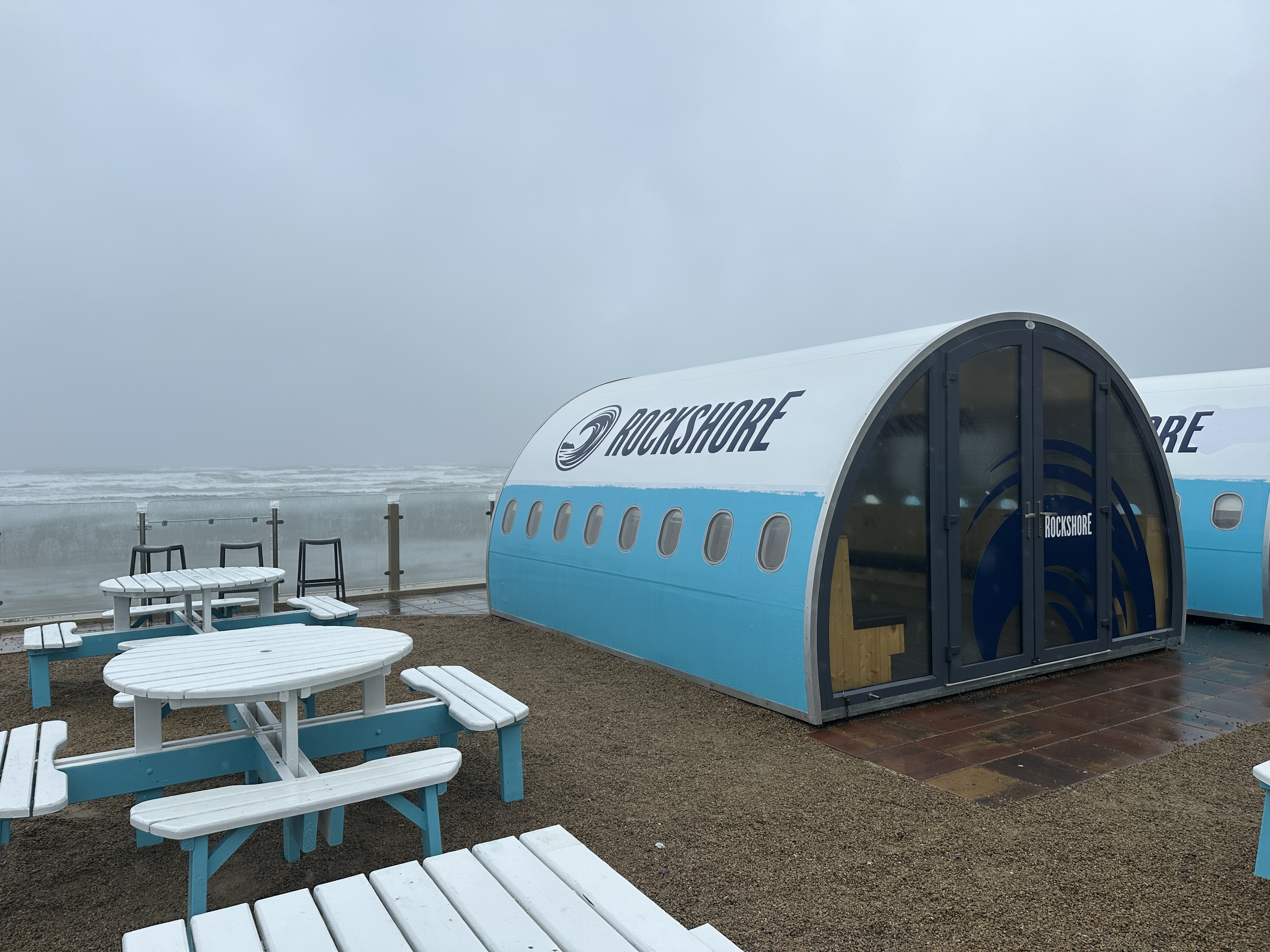
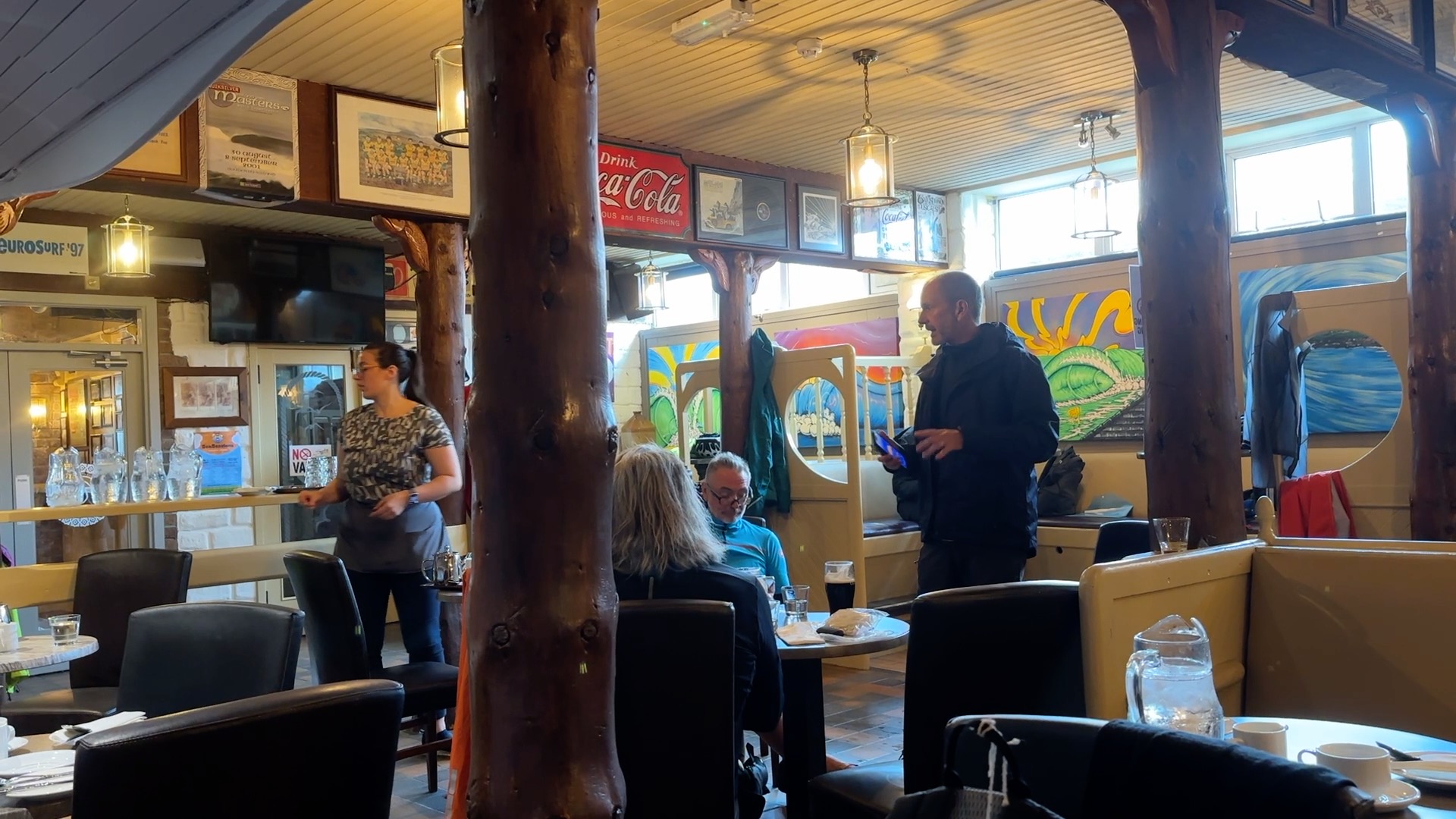
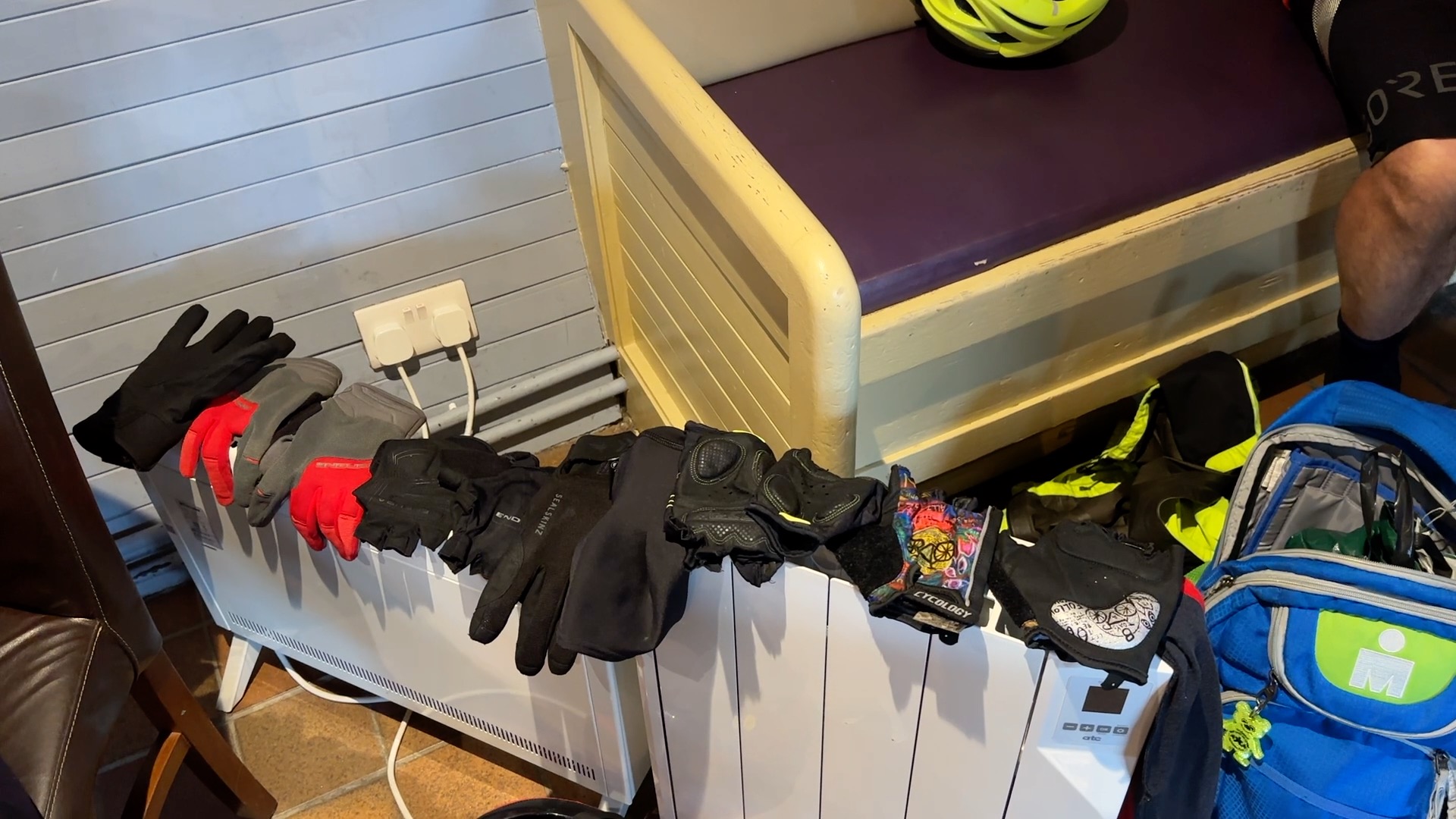
It was impossible to imagine cycling along the beach and even the surfers were nowhere to be seen – not even in the Surfers’ Bar at the hotel, where I enjoyed coffee and sandwiches as we sheltered. I had learned my lesson from being so cold at lunch on day three, carrying my down cycling jacket in my saddle bag. I popped it on after removing me soaking wet cycling jersey. Ironically I bought the jacket to keep me warm at 2am on London Wales London, but never needed it then, unlike at 12pm in Ireland in late June!
Mark, the lead guide on the tour, worked a miracle getting a coach within an hour to take us to today’s destination, Portnoo and Narin. It is typical of the dedication and care that Peak Tours has shown during my five tours with the company so far. As we enjoyed the lift to Narin, Mark and Hamish were squeezing all our bikes into the two vans – another triumph!
The coach dropped us off with our luggage in Narin, and I struggled down a very wet lane to our B&B, Beal na Barna. (This is when I cursed my customary decision to bring so much stuff…) When we got to the bungalow, we found that this wasn’t our place, which was actually very near where we were dropped off. I was ready to cry, but the husband of the owner, Mary, kindly gave us a lift. (It turned out that Mary’s family owned both properties.)
Beal na Barna turned out to be a lovely place to stay – it was actually a self catering property, with kitchen and sitting room. Mary invited us to her home, where several of our tour party were staying, for afternoon tea and home made scones. Suddenly life seemed better.
Wendy gave Julia, Lucy and me a lift in the van to dinner at Narin’s smart golf clubhouse, and we had a wonderful meal – with a Guinness as a starter! We walked back to our B&B, and chatted in the kitchen before the end of an extraordinary day.




































 Ertblog