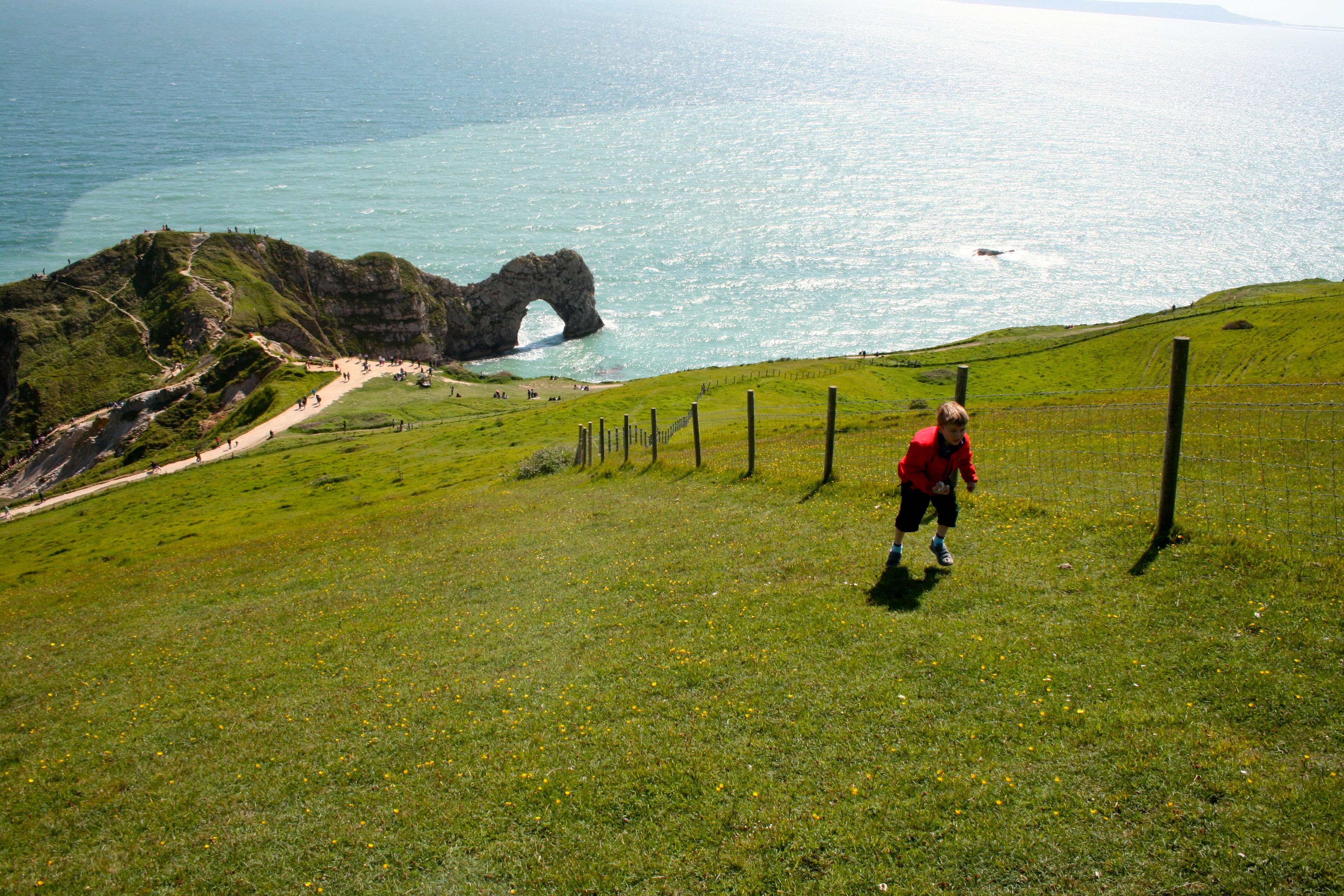
We’re enjoying a holiday in Dorset, one of England’s most attractive counties. It’s our third family holiday here, and the first since Owen was a toddler.
We’ve barely scratched the surface of what Thomas Hardy’s Wessex has to offer. Here are some of our favourites – with the health warning that this is a personal choice rather than an exhaustive list.
Chiltern Railways Mainline: Birmingham here we come!
Once upon a time, Britain had real trains. Powerful engines pulled rakes of elegant coaches. On most of our main lines this is just a memory, but happily Chiltern Railways has brought back the best of the past on its Mainline service between London and Birmingham – with the welcome addition of modern touches like free wifi and the most stylish toilets I’ve seen on a British train!
We had a family day trip to Birmingham on Mainline yesterday, courtesy of complimentary tickets from Chiltern.
Setting off
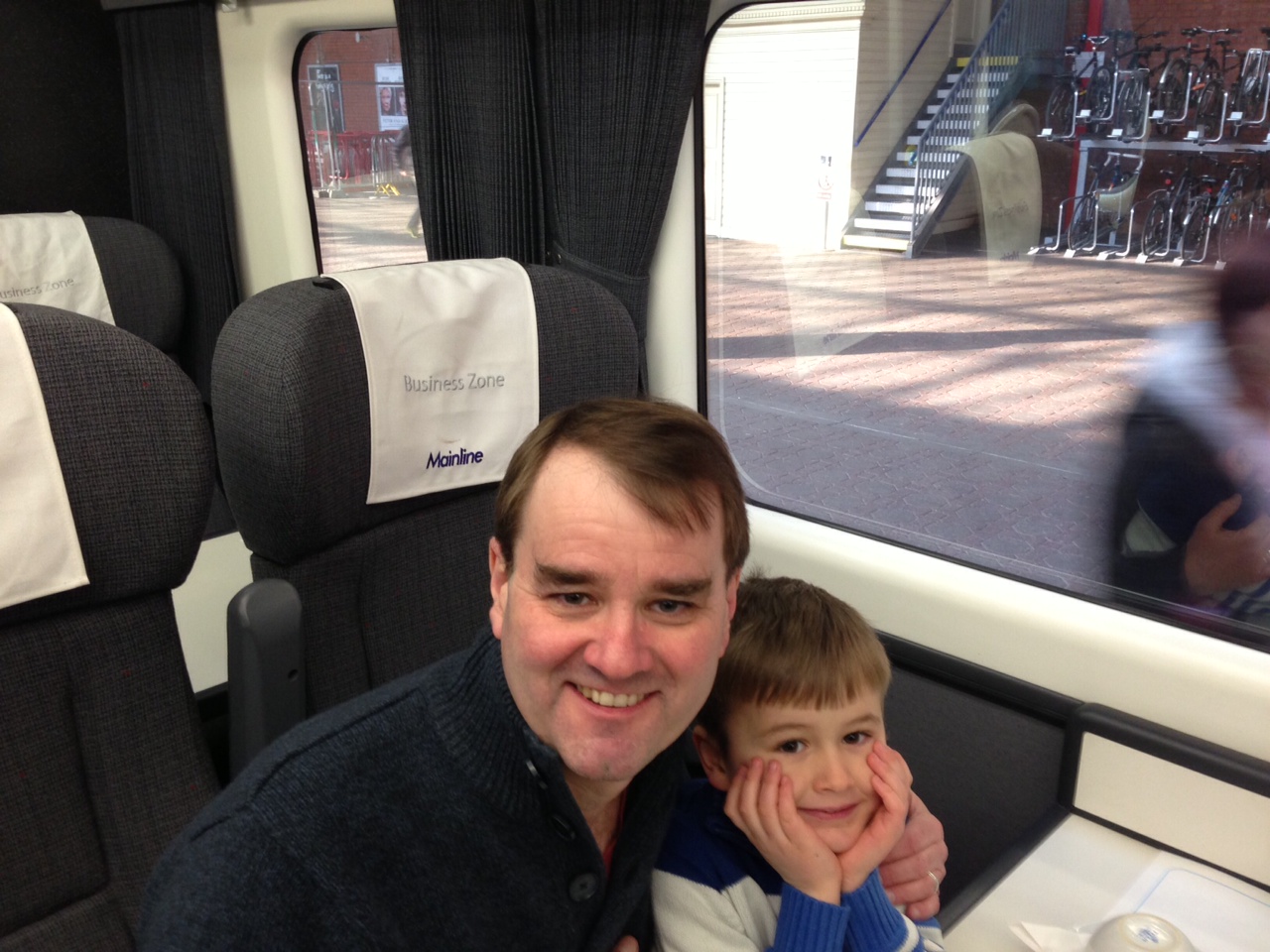
As a former regular traveller to Chester on Virgin, I was very impressed by the legroom in Chiltern’s Business Zone. (Virgin’s Pendolinos and Voyagers aren’t the roomiest of trains, especially when they’re crowded.) And the big windows show off the advantages of the British Rail Mark III coach.
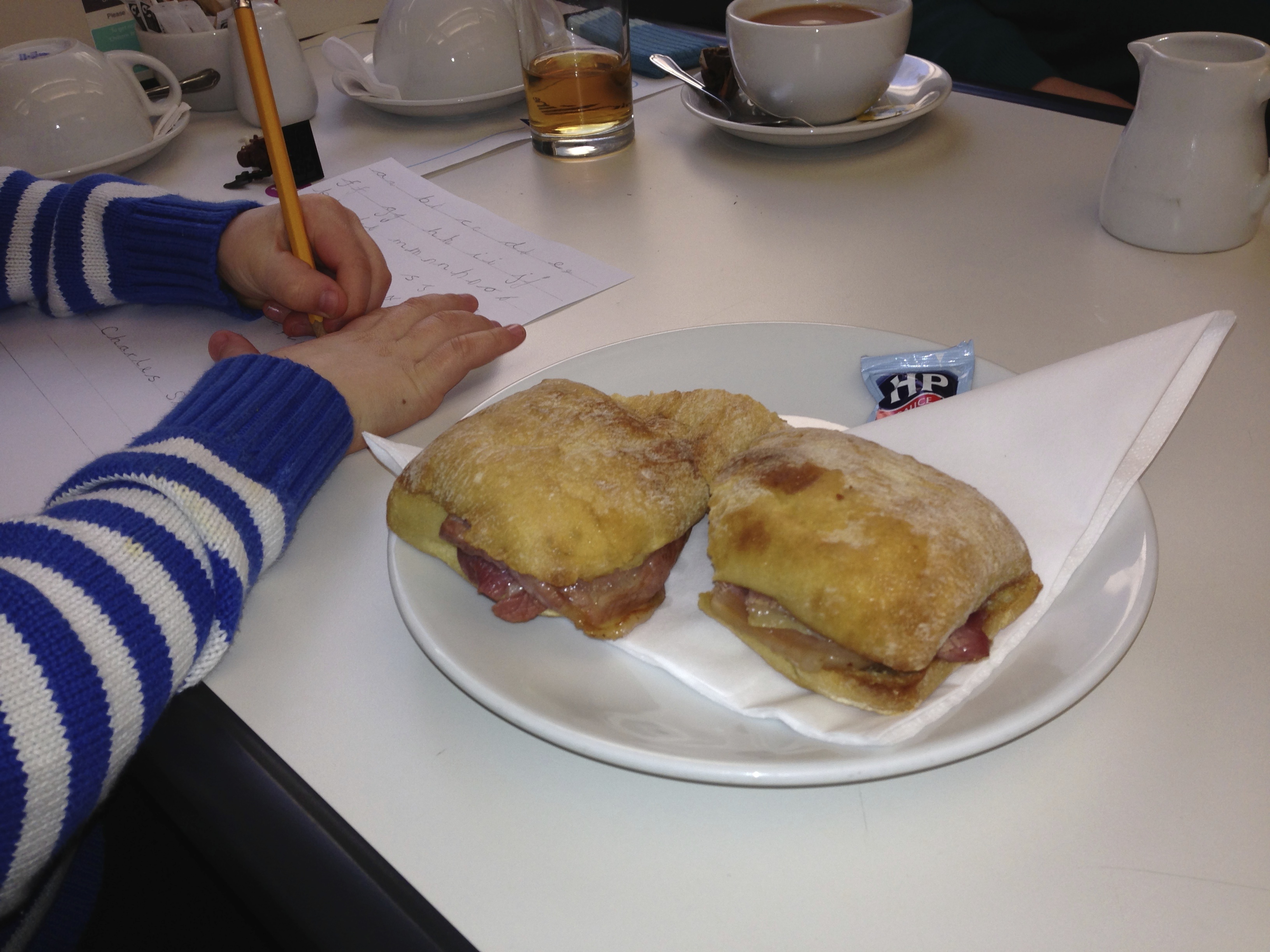
Chiltern’s Mainline Business Zone – plenty of room for breakfast and practising your writing
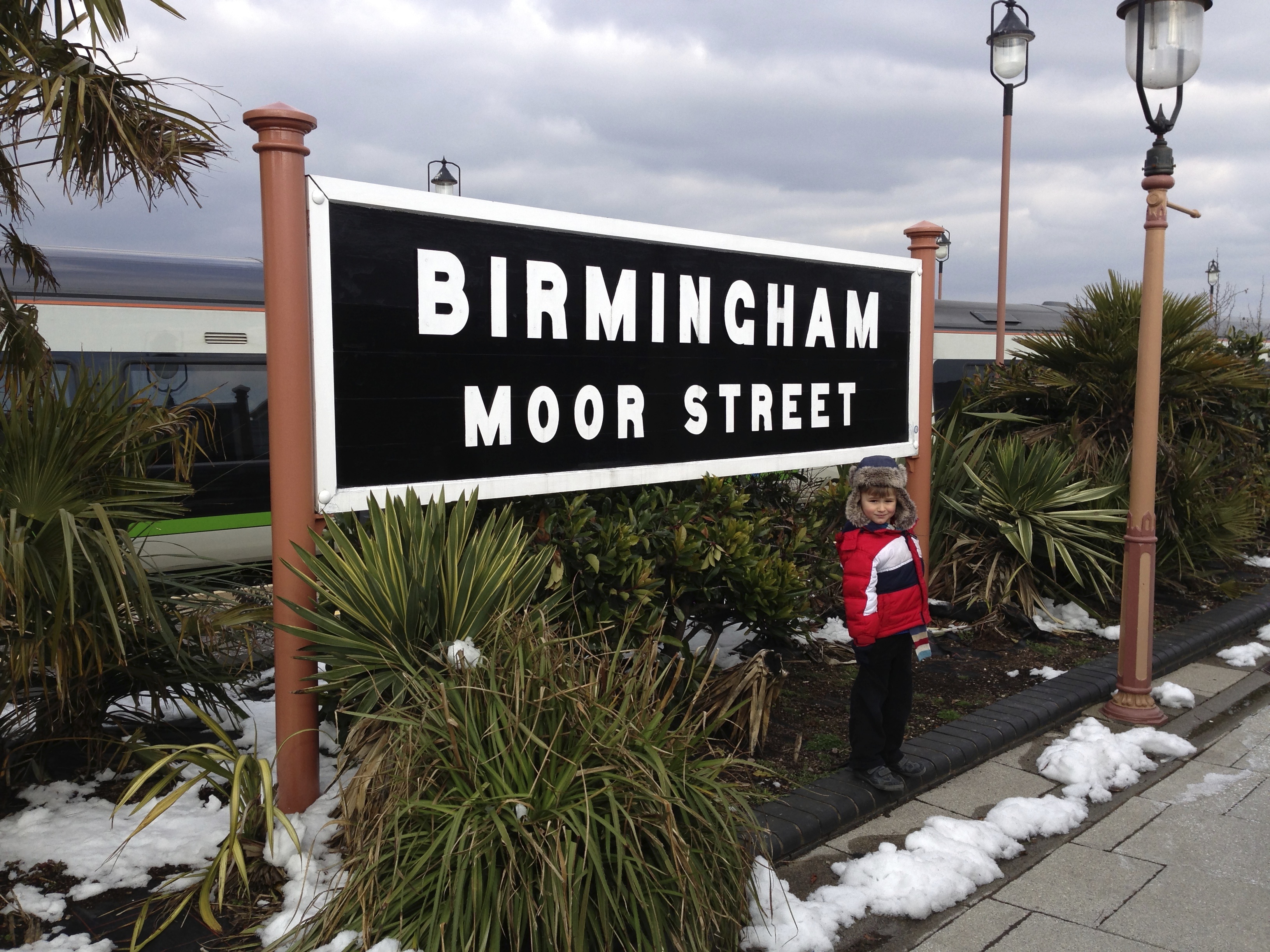
Chiltern’s Mainline service is a lot cheaper than Virgin’s trains from Euston, as the sign at Moor Street cheekily points out…
It’s good to see Chiltern transforming the former Marylebone to Birmingham line, as it was nearly killed by British Railways. Chiltern has invested millions restoring it to mainline standards – gone are the days of holding on tight when your train took the Marylebone line at South Ruislip!
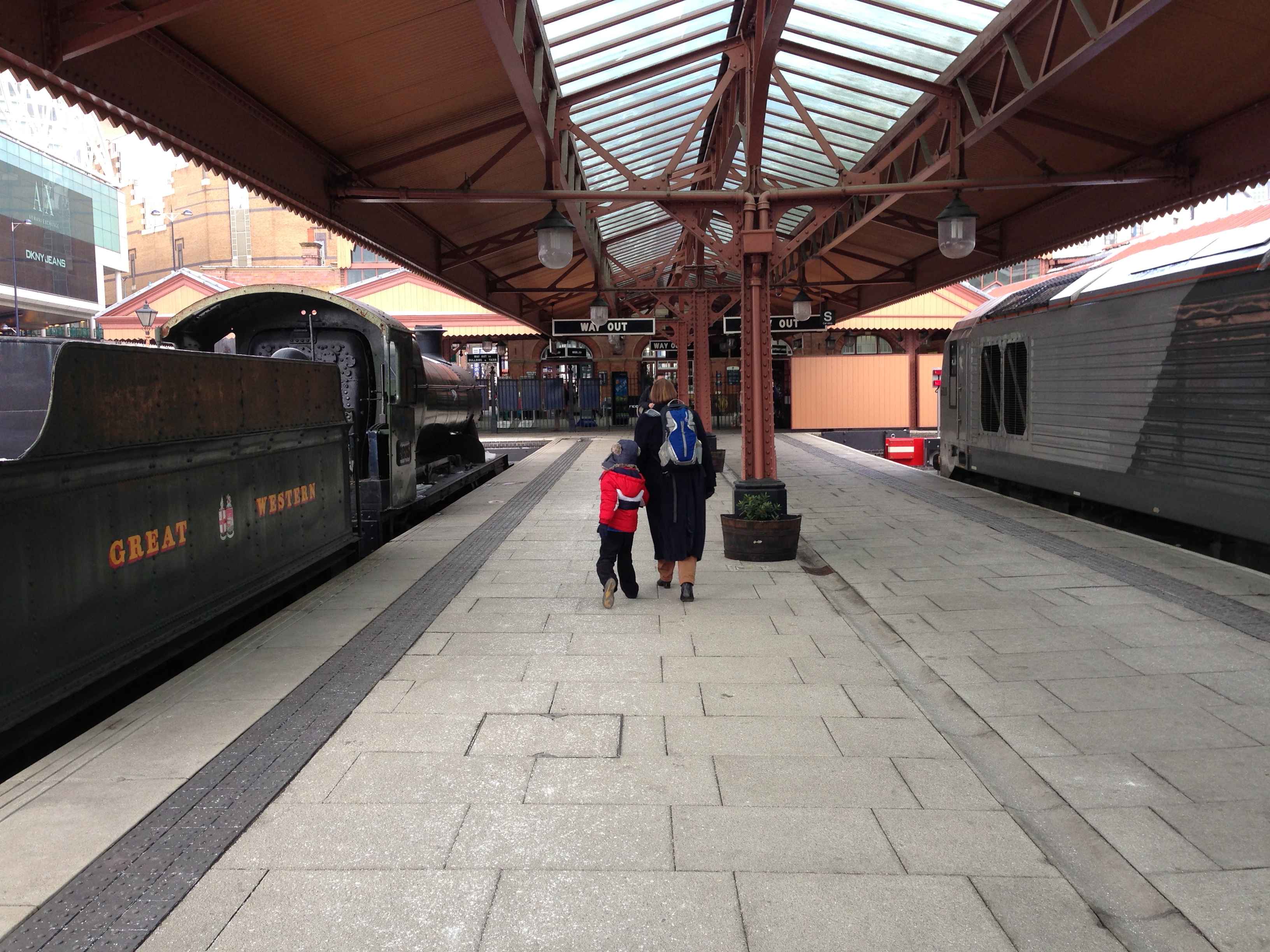
Sadly, today’s Snow Hill is a shadow of the magnificent old station – more of a bus stop than a station for a country’s second city. So I was pleased that our train terminated at Moor Street station, which has been restored as a Great Western terminus, complete with a GWR 28xx heavy freight steam locomotive. It’s a fitting counterpart to Marylebone, London’s most civilised terminus.
Welcome to Birmingham – our Chiltern Railways train on right
We liked Birmingham. We enjoyed the walk to the National Sealife centre (Owen loved running around Victoria Square) and the sealife displays were very impressive – and we did well to visit when Octonauts Peso and Kwazii were visiting… And Brindley Place is really attractive, even when there’s still snow on the ground. (It was rather warmer last time I visited in March 2010.) On the way back, Owen insisted we pop in to Waterstone’s, which is less than 10 minutes’ walk from Moor Street station. Who were we to argue…
Owen and Peso, National Sealife Centre, Birmingham
The Great Western lives – Birmingham Moor Street 2013
We got the 15.55 home, smiling at the group of fellow passengers enjoying a couple of bottles of champagne.
We thoroughly enjoyed our day in Birmingham – and getting there was a big part of the pleasure. Thank you, Chiltern Railways.
PS: the trip was memorable for another reason. It relived a famous film that we love: the 1962 British Transport Films production, Let’s Go to Birmingham, which was a speeded up Blue Pullman trip from London Paddington to the original Snow Hill. It was a real period piece with many steam trains along the route, from the Paddington pilot engine to the steam express that passed the Pullman as it approached Moor Street. There’s a sad sequel as the driver, Ernest Morris, was tragically killed when his diesel train collided with a steam freight train at Dorridge in 1963.
Disclosure: we travelled on complimentary tickets from Chiltern Railways.
I’m writing this on a London bound Eurostar train. I love being able to take a train between Britain and France. It’s a civilised way to travel.
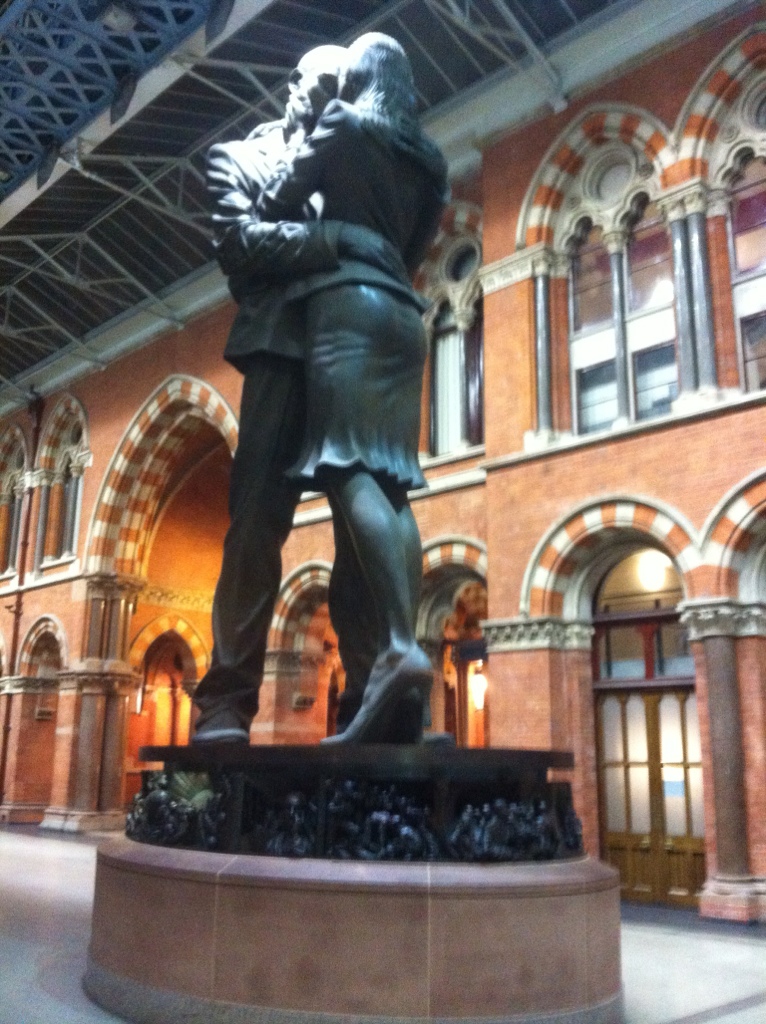
When the channel tunnel was opened in 1994, Britain was shamed by its failure to complete a high speed rail link to the coast. Eurostar trains left a cramped terminal at Waterloo and crawled along commuter lines to the tunnel. How things have changed. Travellers start their journey at the gorgeously opulent St Pancras, one of London’s greatest Victorian buildings. Their train races to the coast along our first (and so far only) new high speed railway.
Paris can’t match this. The Gare du Nord is a nice building, but the Eurostar section is as bad as the old Waterloo International. Today, dozens of travellers took their turn to take one small lift to Eurostar departures. There was a long queue for border control and security, followed by a similar wait for the steps down to the platform. It’s time for the French to spend some money on a proper Eurostar terminal in Paris. Meanwhile, let’s be proud of St Pancras, a worthy gateway to Britain.
I love watching the world from the air. I took this picture of the Welsh coast from a flight to Dublin yesterday afternoon. I assumed we were somewhere north of Fishguard, but didn’t see enough landmarks – such as Fishguard harbour – to be sure.
My former colleague Noel Privett asked on Facebook whether it was Dinas island. A few minutes’ study of Google Maps confirmed that it was actually the stretch of coast from Aberporth to Llangrannog. (The finger of land pointing into the Irish Sea next to Llangrannog nailed it.)
Windsor & Maidenhead council, let me introduce you to the 21st century. We now have credit and debit cards, mobile phones and PayPal. You could make life a lot easier by letting people pay by card and mobile. It would mean that we didn’t have to go back to the car park to top up the payment. You’d make even more money. You’d have to empty the machines less often. Everyone will win. Welcome to the 21st century.
The maps we loved: the Vale of Glamorgan 1970s, mapped by Ordnance Survey
Last month, Apple came under fire for the poor quality of its new Apple Maps app for iPhone and iPad. The reaction showed how our idea of what a map is has utterly changed. A visitor from the 1970s would be baffled by the idea of a computer company producing a map – let alone the concept of having a map on a phone. They’d have thought it as crazy as a television making a cup of tea.
The map that opens this blog post is a section of the oldest map I possess. It’s the very first Ordnance Survey metric map of the Vale of Glamorgan and the Rhondda. (This 1:50,000 series replaced the much-loved 1 inch OS series.) It’s striking (for Wales) for its English-only place and geographical names: Cowbridge, for example, is unaccompanied by its Welsh name, Y Bont Faen, unlike on more recent OS maps. The map is titled The Rhondda, which is a curiously misleading description of a sheet that covers almost the whole of the Vale as well as many of the valleys of the Glamorgan uplands.
I was given this map as a birthday present in 1977. I used to have the earlier 1 inch OS map of Cardiff (a very different place 35 years ago), along with an even older map of Cirencester, showing the railway lines that closed in the 1960s. (I had fun comparing it with the 1990s equivalent.)
Paper maps have a special quality. In the dark, cold nights of January 1995, I plotted a cycle holiday from Ashton Keynes, near Cirencester, to the English Channel at Beer. It was a warming experience lying by the fire choosing villages and quiet coastal roads to explore the following summer – with a beer. Five months later, I took pride in the fact my friend Richard and I got lost just once in 325 miles when we followed that fireside-plotted trail.
But I mustn’t sound too wedded to the joy of the old over the new. I carried a dozen OS maps on that holiday. Twice we arrived at a promised (by the map) pub to find it didn’t exist. How we’d have loved the idea of carrying maps for the whole journey in our pockets. Along with B&B lists and reviews, weather reports, newspapers, music players and books… It would have seemed a miracle.
The BBC news website’s magazine (a great read, by the way) has a fascinating feature on the subject today. It’s a tad sceptical about the move to electronic maps:
“Digital maps may be shrinking our brains. Richard Dawkins has suggested that it may have been the drawing of maps, rather than the development of language, that boosted our brains over that critical hurdle that other apes failed to jump.”
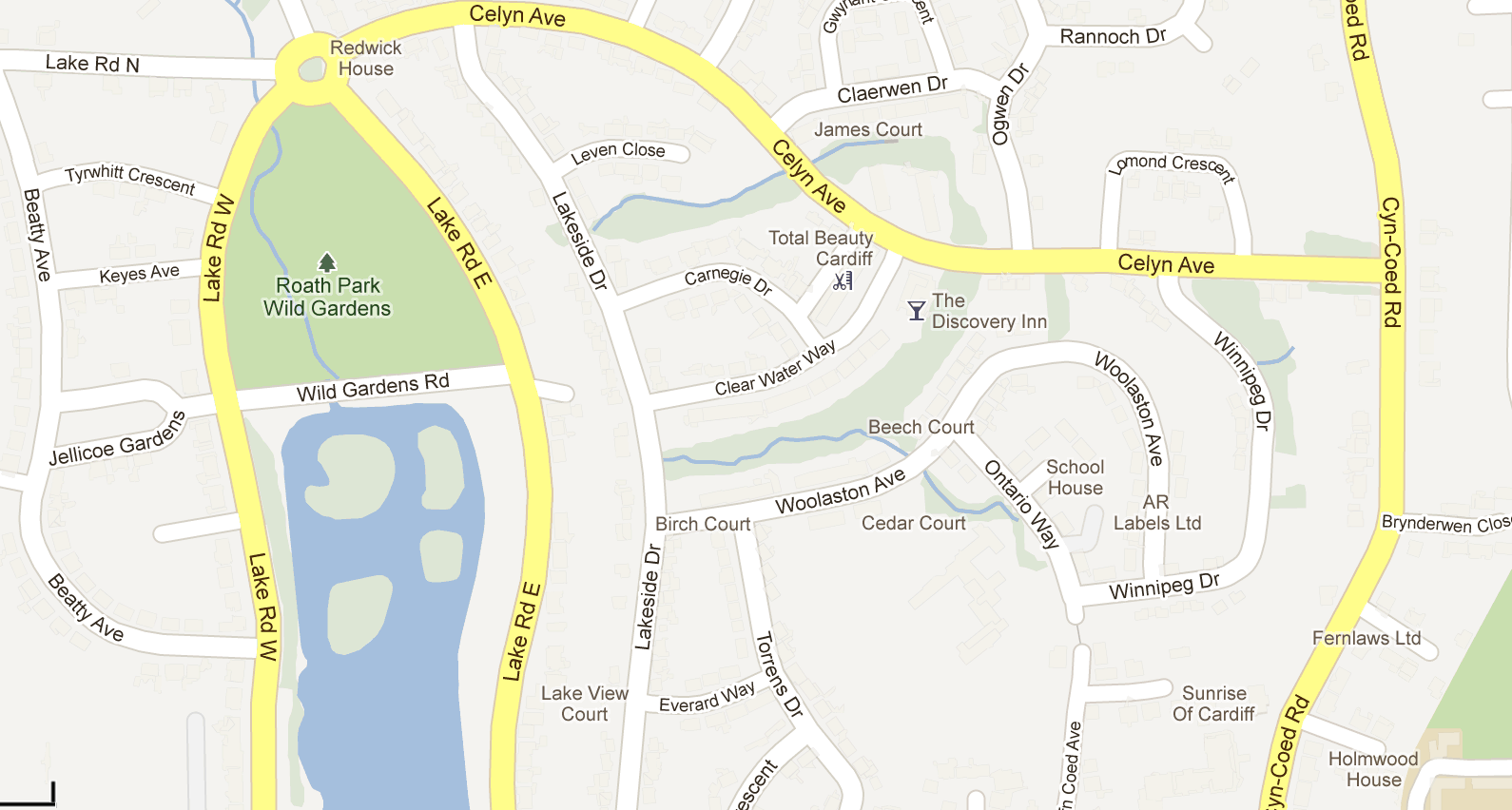
That seems to overstate the case. But I do vividly remember drawing my own spidery maps of Lakeside and Cyncoed, Cardiff, soon after we moved home to Wales when I was seven in 1971. It was my way of making sense of my new hinterland. Most of the houses were less than 10 years old. Street names such as Farm Drive hinted at a more rural past (and there was a surviving farm house close to where Eastern Avenue now crosses Lake Road East).
Lakeside, Cardiff – by Google Maps. My version was more spidery
I’ll end on a cycling note. As I blogged in February, I love having digital maps on my handlebars, in the form of my Garmin Edge 800 GPS. But I’ll still treasure my printed maps. They’re part of my past – and my future.
We’re packing up to go home after a wonderful week’s holiday at Mawgan Porth, on Cornwall’s Atlantic coast. This is a very special place in a very special Celtic part of Britain.
Karen and I both have special childhood memories of Cornwall. Prompted by those memories, we brought Owen to Looe for his very first holiday, when he was nine weeks old.
We first stayed at Mawgan Porth in 2011, and loved the place and the experience. We were very lucky with the weather last year, spending most days in the pool and on the beach. We saw more rain this year, but we still enjoyed time on the beach as the rain cleared and the sun came out.
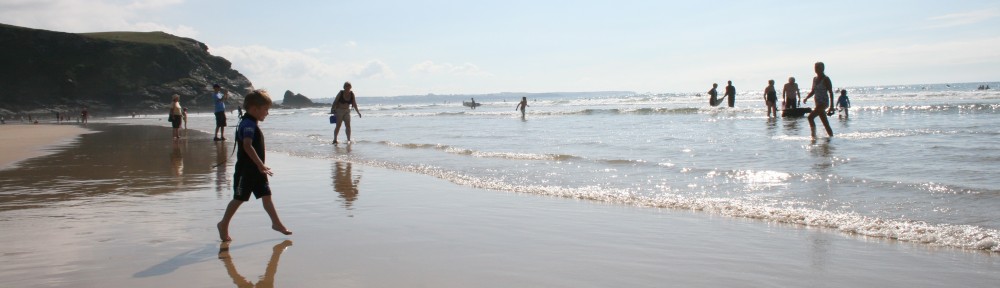
This is the classic family holiday spot. Small children enjoy the same kind of seaside summer fun as as their parents and grandparents. Timeless pleasures – splashing in the sea and rock pools; building sandcastles; relishing an ice cream as the day draws to a close.
You can’t catch me Dad!
We stayed at The Park, a lovely holiday village just 10 minutes’ walk from the beach. We discovered The Park when staying at its sister site in Dorset, Greenwood Grange. The owners took over a few years ago and have made huge improvements. We love the cafe-restaurant, with its great value homemade food (do try the halloumi cheese, haddock and lamb burgers if you get the chance).
There’s also a wonderful indoor pool next to the cafe – we had it to ourselves on Friday morning – as well as a heated outdoor pool. Our only serious criticisms? The sofa in our cottage has seen better days, and the cafe-restaurant was closed for a whole day for a wedding, which hardly seemed fair to everyone who had spent good money booking a week’s holiday.
Judging from our experience over the last 12 years, Cornwall has become a place to enjoy wonderful food and drink as well as seaside fun. Back in 2001, we discovered magnificent food at Barclay House in Looe under Nick and Kelli Barclay, who now run the Blue Plate Restaurant in Downderry near Looe. This week, we had a great lunch at Fire at Mawgan Porth and a delicious lunch at the Falcon Inn at St Mawgan, as well as our meals at The Park.
Back in 1969, Neil Armstrong became the ultimate explorer, as the first human to step on the moon. News of Neil Armstrong’s death today will have reminded millions of those unforgettable Sixties days when we slipped free of our planet for the very first time.
I was nearly six in July 1969, and enthralled by the drama of the first moon landing. I explained why in my blog post on the 40th anniversary:
I’m lucky enough to remember the excitement of July 1969. I was just five at the time, and about to finish my first year in school, at Bishop Perrin in Whitton, Middlesex. Our teacher, Mrs Carol, explained to us that the Apollo 11 space mission was trying to make history. We listened to radio reports as the mission unfolded, but not the actual landing, which happened in the early hours of a British Saturday morning. She made clear the risks Armstrong, Aldrin and Collins faced as they headed for the moon: the chance that the ‘satellite’ (presumably the orbiter) might crash to the surface of the moon, leaving all three men in mortal danger. Happily, as we all know, the mission was a triumphant success.
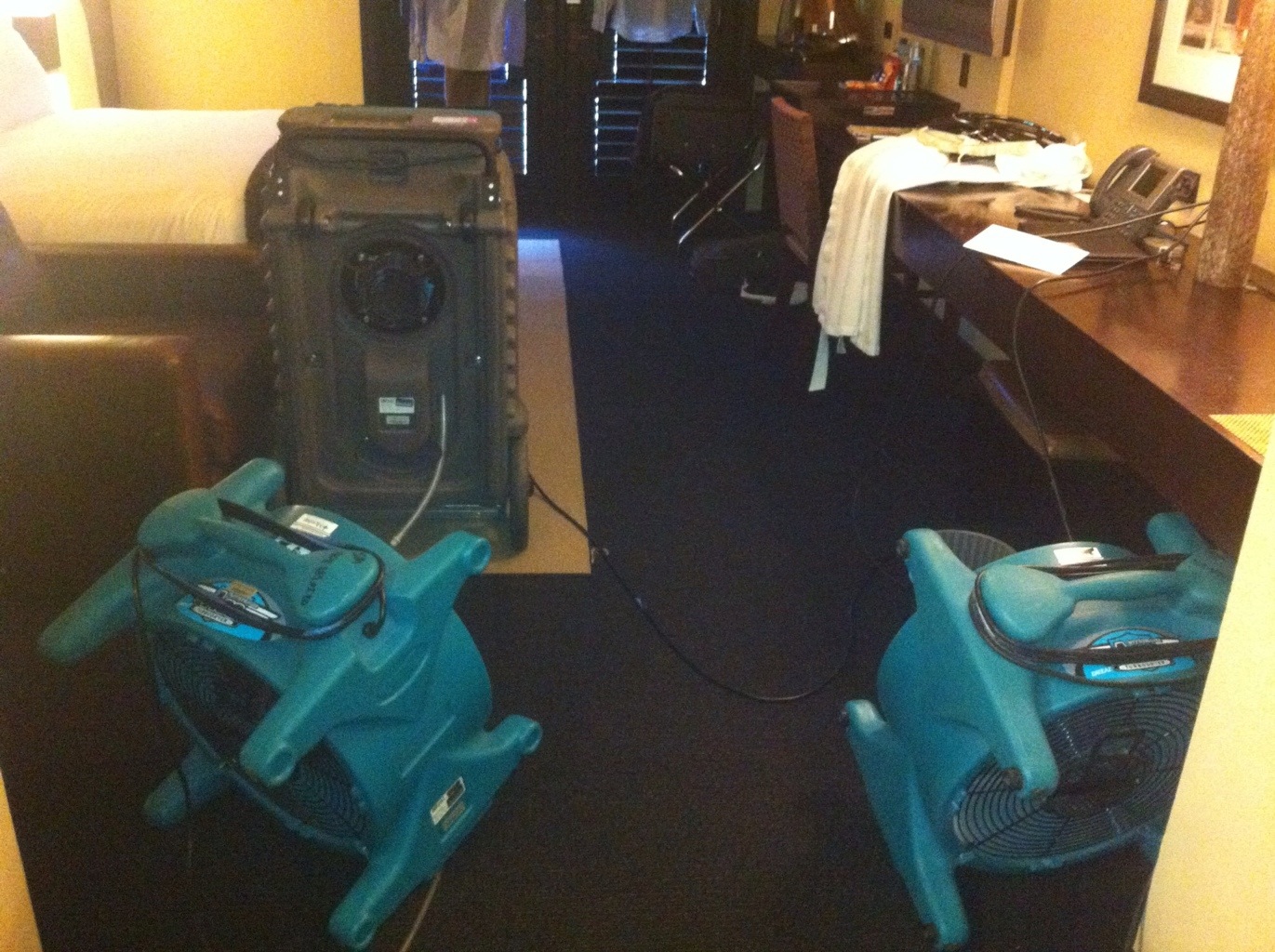
This is the extraordinary sight that greeted me when I returned to my room at Hotel Valencia, San Jose, California yesterday evening. The noise was just as shocking.
I was told by the manager, Scott, that a guest in the floor above had fallen asleep in the bath, flooding my room on the sixth floor. I couldn’t understand why the hotel hadn’t contacted me or at least pinned a notice to the door warning me. Scott said that it was the second time it had happened this week. (A colleague was sceptical about the explanation, saying that corridor was regularly flooded.)
I’m in a different room now.
The saga continues. At breakfast, I pointed out that there was no butter. I was told they had run out. Completely. A hotel with no butter? How can that happen? Why hadn’t someone gone across to Safeway to buy some?
I usually enjoy staying at the Valencia, but standards have collapsed since my last visit in March.
PS: I do like the Valencia’s free wifi though. European hotels take note. Wifi needn’t be a rip off.
Above: far better than a service station: Crown & Victoria, Tintinhull, Somerset
We had a magical drive home from our Devon holiday on Saturday afternoon. The traffic had vanished by the time we set off from the beach at Blackpool Sands near Dartmouth. The sun was out, highlighting the under-stated beauty of Southern England.
We took the A303, which is normally a slow road, with its mixture of dual carriageway and twisting, hilly single carriageway sections. The lack of traffic made it a wonderful choice, as its quirky character made a great change from the M5 and M4. Best of all, we were able to admire the sublime majesty of Stonehenge without the usual long queues.
We stopped for a drink at one of our favourite pubs, the Crown & Victoria in Tintinhull, a Somerset village just off the highway. It was a glorious evening and Owen enjoyed his picnic in the garden. (We were too early for the pub's food service.) It set us up for an equally enjoyable final leg of the drive – and even the M25 behaved itself.







 Ertblog