New pennies, old memories

IMG_5920

We’ve started giving Owen (aged 4) coins as pocket money every day. Our aim is to get him used to handing money and counting.

The other day, I noticed that one of the pennies we gave him was marked ‘New Penny’. That got me thinking. Since 1982, pennies have been marked ‘One Penny’. Owen’s coin was dated 1974.

So far, so unremarkable. Same coin (in essence), same monarch.

Yet it got me thinking of my own childhood. Growing up with ‘old money’, I was used to the old shillings, florins and sixpences – and my favourite, the thruppeny bit. (I was too young to see a farthing, worth a quarter of an old penny, which disappeared in 1960.) You’d find coins bearing the image of long-dead kings: George VI, George V. (And presumably Queen Victoria if you were lucky?)

Even after we went decimal in 1971, the old shillings and florins survived until the 1990s, as they were the same size and weight as the replacement 5p and 10p coins. (Even the sixpence endured until 1980, and was a favourite Christmas pudding surprise.)

Back to Owen’s coin. That 39 year old coin. When I was his age, the equivalent would have been a 1928 King George V coin, from the year my mother was born.

A few pieces of trivia. In 2013, it is:

  • 30 years since the pound coin was introduced.
  • 25 years since the end of the pound note.
  • 20 years since our last pre-decimal coin, the 2/- piece or florin, was withdrawn.

The most recently produced pre-decimal coins were dated 1967. But if you find a 1967 coin, don’t assume it dates from that year. Apparently the Wilson government decided not to date ‘old money’ coins after 1967 in case people hoarded the coins as a souvenir. So any produced between 1967 and decimalisation in 1971 were dated 1967.
Poppy day pride and prejudice

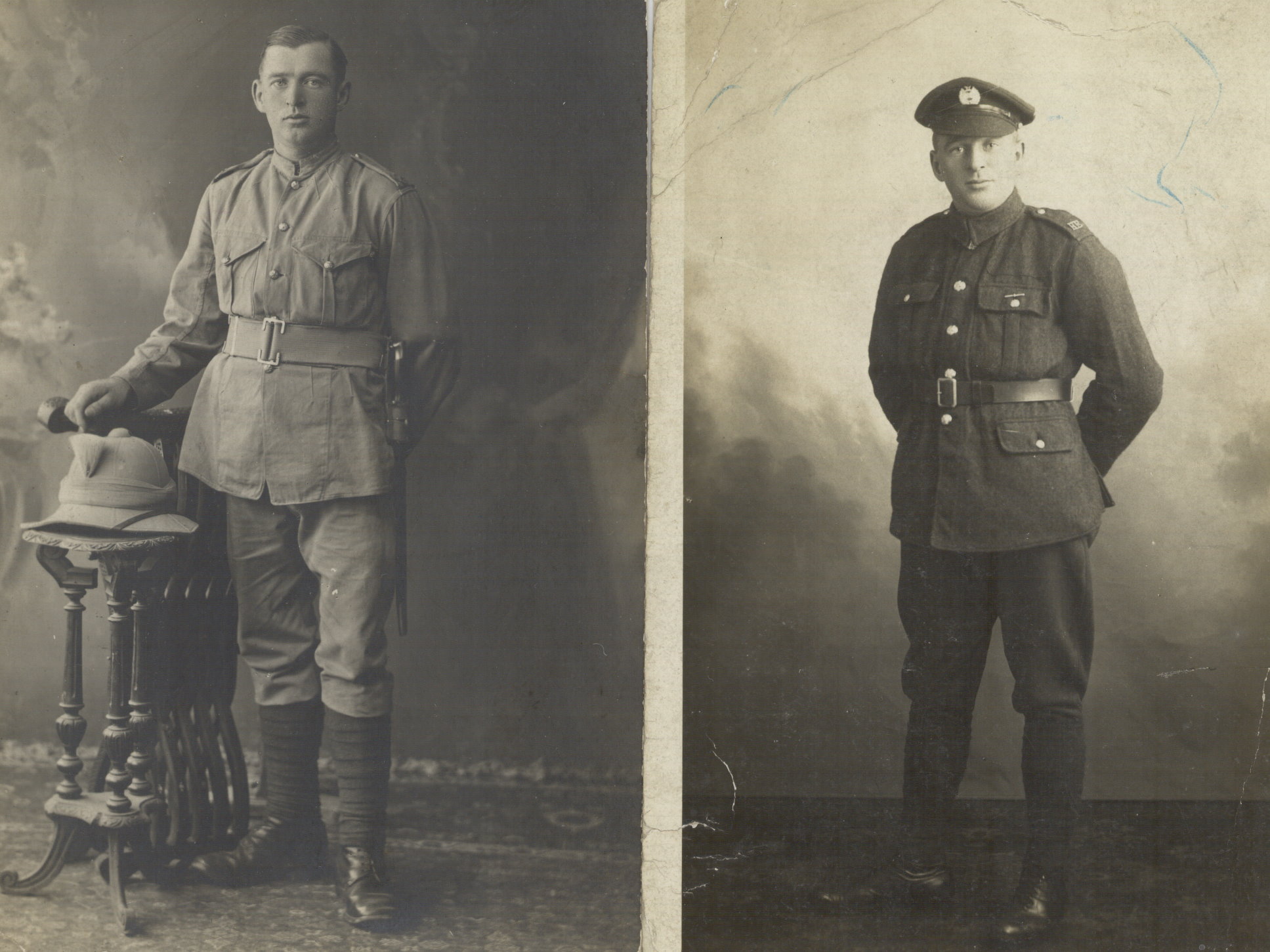
Brothers in arms: My Great War grandfather and great uncle

I wear my poppy with pride. It’s my way of honouring the millions of men and women who lost their lives for freedom.

Yet I share the concern of some that the annual poppy appeal has become a badge not of honour but intolerance. (I should add that the Royal British Legion could never be accused of intolerance.) As I blogged a year ago:

“The poppy appeal is a simple call to commemorate the dead of the great and small wars alike, while helping today’s veterans. Yet my father, Bob Skinner, who served in the army during the second world war, is uneasy at the way this quiet tradition is becoming a compulsory exercise in sentimentality. He asks whether BBC newsreaders would be allowed to go on screen without a poppy. Political correctness has taken over. Bob hasn’t worn a poppy for several years.

“I’m also uneasy. I was appalled by the undignified argument between England’s Football Association and FIFA over whether players could wear a poppy on their shirts during a game. FIFA’s view that it was a political symbol was as crass as the FA’s totally inappropriate aggressive stance. It’s significant that these arguments are raging now, over 70 years after the end of the second world war, and not in the immediate aftermath of those great wars. This is the era of Daily Mail intolerance of alternative opinions – especially ones that are critical of the military. Back in 1921, when the first poppy appeal took place, no one would think to glorify war. The object was to mourn, to commemorate and to help survivors. Almost a century later, Britain is much less likely to criticise its warriors, their leaders or the decision to send them to war. As a result, we’ve been involved in wars that have nothing to do with us for well over a decade.”

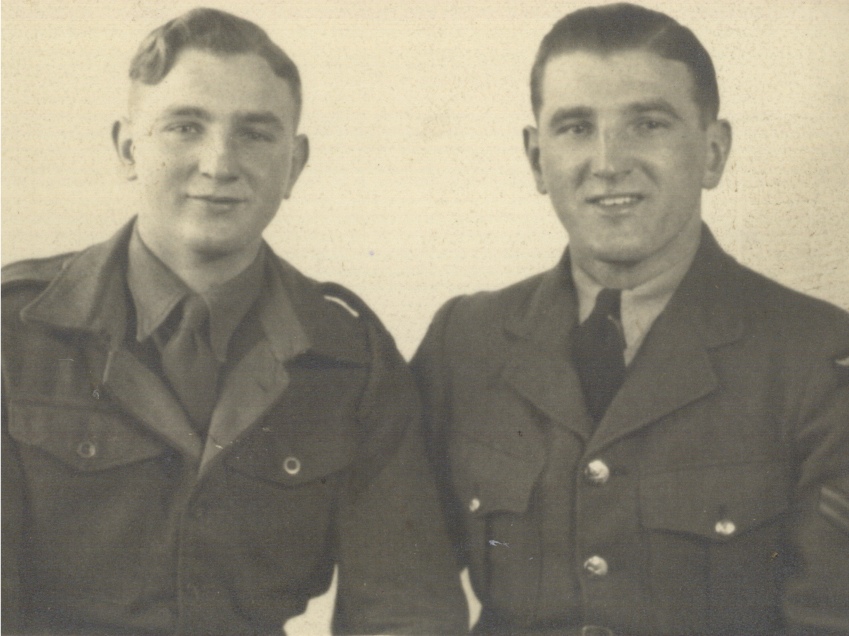
Brothers in arms, Second World War: Dad and Uncle Bert

When cappuccino was called frothy coffee

Today’s Guardian carried a lighthearted editorial ‘In praise of … a simple coffee’. It praises Debenhams’ plain English coffee menu. Goodbye to latte, hello milky coffee.

The story made me think back to coffee time with Mum in 1970s Cardiff. South Wales has long been associated with Italian cafes: a legacy of the arrival of scores of people from Italy during the 19th century boom years. Mum and I used to go to Ferrari’s on Wellfield Road near Roath Park. I’d enjoy a frothy coffee after visiting the toy and book shops on Albany Road, or the library.

Years later, I discovered cappuccino. It took a while before I realised that it was exactly the same drink. But usually a lot more expensive – with the honourable exception of the 50p takeaway latte I bought in Giraffe in Richmond this morning!

When the Queen sheltered in a pub from a blizzard

Where the Queen sheltered from the blizzard

We had a slow start to our journey home to Wales today. So I decided to make a short diversion from the M4 to the Cross Hands Inn at Old Sodbury in Gloucestershire for lunch.

It was a nostalgic visit. I stopped here with Mum and Dad for dinner aged 17 the day my niece Siân was born in 1980. (We’d had an evening journey to Swindon to meet Siân for the first time.) Earlier that year, Dad’s car caught fire in the car park as he was setting off home to Cardiff with my grandmother after celebrating her 89th birthday. Nan thought it was a great adventure, returning to Wales in the breakdown truck.

But none of these visits was quite as significant as the day in 1981 when the Queen sheltered at the Cross Hands in a blizzard. The pub has a plaque commemorating the occasion (above).

The winter of 1981/82 was a real winter. It snowed a lot – culminating in a 48 hour blizzard in early January. (Presumably the Queen was safely at home during that winter wonderland.) I blogged about it after a brief winter white-out early in 2009. Meanwhile, here’s a photo I took at home in Cardiff just two days before the Queen sheltered in the Cross Hands.

Winter 1981: two days before the Queen’s pub visit

In praise of Timehop and Day One

We record our everyday lives in a way that would have seemed unimaginable even 20 years ago. We take photos and videos on our phone. We share those images, and our thoughts, on Facebook and Twitter.

What a contrast with my childhood. I have just a handful of photos of my first 10 years, plus some prized cine film.

Yet in many ways it’s the trivia that proves of enduring interest years later. That’s where Day One is brilliant. It’s an incredibly simple app for iPhone, iPad and the Mac that creates a journal of your life. At first, it was just text, but it now lets you add photos, locations and even temperatures.

I discovered Day One a year ago , some 12 months after starting weekly entries about our weekends with Owen, then two, in my normal calendar. Day One was far better as it meant reminiscences weren’t mixed up with mundane things such as dentist appointments. Day One is now integrated with Apple’s iCloud service so you can add entries on iPhone, iPad and Mac and they’ll be automatically synced.You can add a snapshot of your day – in words or photos – in seconds.

I love looking back on old entries, such as this gem from Owen when he woke one morning last March:

“There’s a wolf at the door and he’s got a glass of wine for you. And I’ve got blueberry juice.”

In similar vein, I love Timehop. (Credit to former colleague Jon Bishop for telling me about it.)  It sends you a daily email replaying your Twitter, Facebook, Foursquare and Instagram entries from a year before. I smiled at one quoting Owen the week he started his nursery school in September 2011:

“I cried a lot. And there are too many children.”

I should add that he soon settled in to love it!

Starting school – the generation game

Starting School: a timeless tale

Owen started school this week, aged four years and two months. It’s a landmark in everyone’s life. We knew it was going to go well when he announced early that morning, “I don’t want Cbeebies, I want to go to school”!

I’m sure this reflects the fact he’s been going to the nursery attached to his new school for the last year.

First day at school: the Ahlbergs’ story begins

Before he started at his nursery last year, we read him Janet and Allan Ahlberg’s wonderful story, Starting School, published by Puffin. It’s a beautifully observed account of a group of children’s first term at school, from the first day to breaking up for Christmas. It helped Owen understand what school is like, including the initial unfamiliarity.

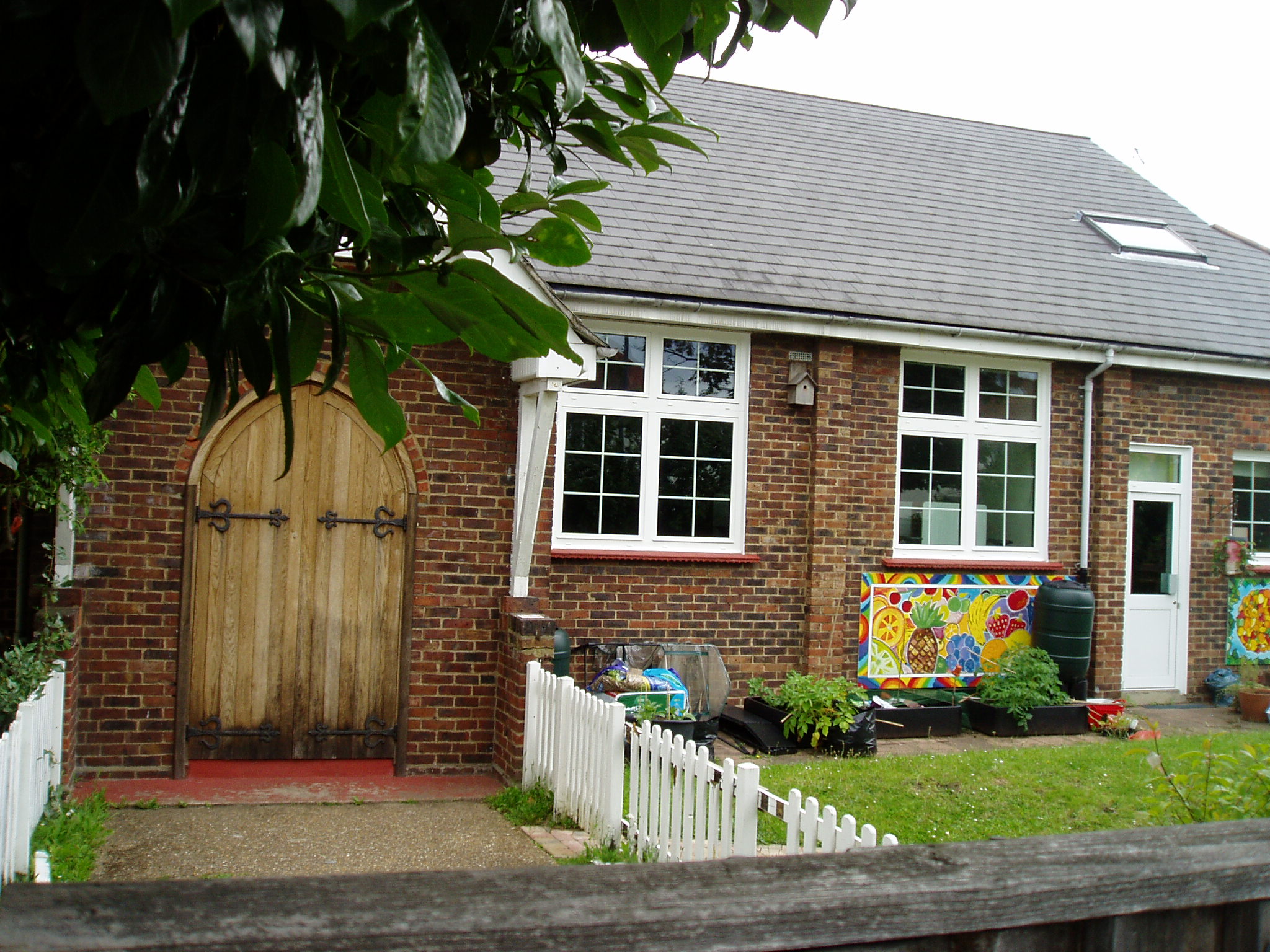
Seeing Owen starting school brought back all my memories of my own big day in September 1968. (It was a long time ago – some three weeks after the end of steam locomotives on British Railways.) A year ago, I took Owen to see my old school, Bishop Perrin in Whitton, Middlesex, with my mum and dad. Bishop Perrin hasn’t changed much in the past 44 years (at least from the outside), so it was easy to imagine myself, aged four, playing with the sand and water on the front lawn in that lovely September sunshine in 1968.

Bishop Perrin was a wonderful school for me. The classes were small. In my first year, you could choose a friend to join you in a classroom wendy house to eat Smarties on your birthday. Headmaster Mr Davies insisted on keeping the traditional ways of teaching reading until the education authorities could show the new ways were more effective.

Last Wednesday, after we dropped off Owen for his first day in school, I drove past Bishop Perrin on the way to work. Happy memories.

My first school: at Bishop Perrin with Owen, 2011

Bishop Perrin, 2011. That lawn seemed bigger in 1968…

We love Cornwall, Mawgan Porth – and The Park

Cornish delight: Mawgan Porth

We’re packing up to go home after a wonderful week’s holiday at Mawgan Porth, on Cornwall’s Atlantic coast. This is a very special place in a very special Celtic part of Britain.

Karen and I both have special childhood memories of Cornwall. Prompted by those memories, we brought Owen to Looe for his very first holiday, when he was nine weeks old.

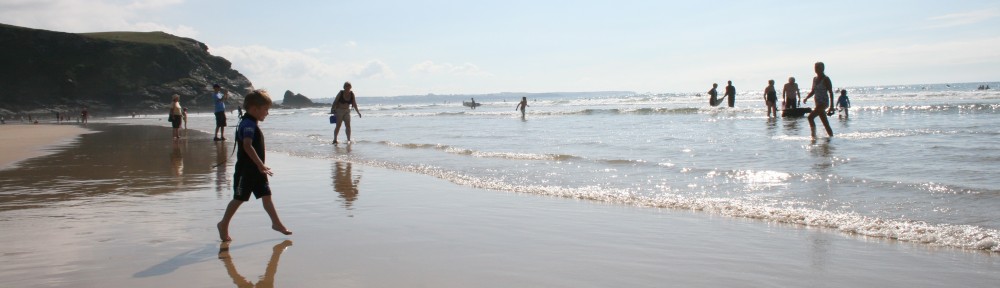
We first stayed at Mawgan Porth in 2011, and loved the place and the experience. We were very lucky with the weather last year, spending most days in the pool and on the beach. We saw more rain this year, but we still enjoyed time on the beach as the rain cleared and the sun came out.

This is the classic family holiday spot. Small children enjoy the same kind of seaside summer fun as as their parents and grandparents. Timeless pleasures – splashing in the sea and rock pools; building sandcastles; relishing an ice cream as the day draws to a close.

You can’t catch me Dad!

We stayed at The Park, a lovely holiday village just 10 minutes’ walk from the beach. We discovered The Park when staying at its sister site in Dorset, Greenwood Grange. The owners took over a few years ago and have made huge improvements. We love the cafe-restaurant, with its great value homemade food (do try the halloumi cheese, haddock and lamb burgers if you get the chance).

There’s also a wonderful indoor pool next to the cafe – we had it to ourselves on Friday morning – as well as a heated outdoor pool. Our only serious criticisms? The sofa in our cottage has seen better days, and the cafe-restaurant was closed for a whole day for a wedding, which hardly seemed fair to everyone who had spent good money booking a week’s holiday.

Judging from our experience over the last 12 years, Cornwall has become a place to enjoy wonderful food and drink as well as seaside fun. Back in 2001, we discovered magnificent food at Barclay House in Looe under Nick and Kelli Barclay, who now run the Blue Plate Restaurant in Downderry near Looe. This week, we had a great lunch at Fire at Mawgan Porth and a delicious lunch at the Falcon Inn at St Mawgan, as well as our meals at The Park.

We hope to return to Cornwall in 2013.

In praise of August bank holiday

After the rain: sun, sea and sand at Mawgan Porth

The weather forecast was awful. August bank holiday Monday was set to be a washout. Wind and rain would keep everyone indoors. Not the best weather to mark the first full day of our Cornish holiday.

The reality was much better, showing you should never allow a weather forecast to rule your life. Monday dawned as wet as expected, but the middle of the day was much better. True, the afternoon was very rainy, but the evening made up for it. A gloriously sunny vista over Mawgan Porth beach, with magnificent reflections at low tide. A lovely end to the day.

We were lucky to be staying at The Park, Mawgan Porth, with its wonderful indoor pool and cafe-restaurant. While the rain was falling, Owen swam a pool width for the very first time. What a wonderful way to spend a bank holiday!

Diamond day: Mum and Dad’s 60th anniversary

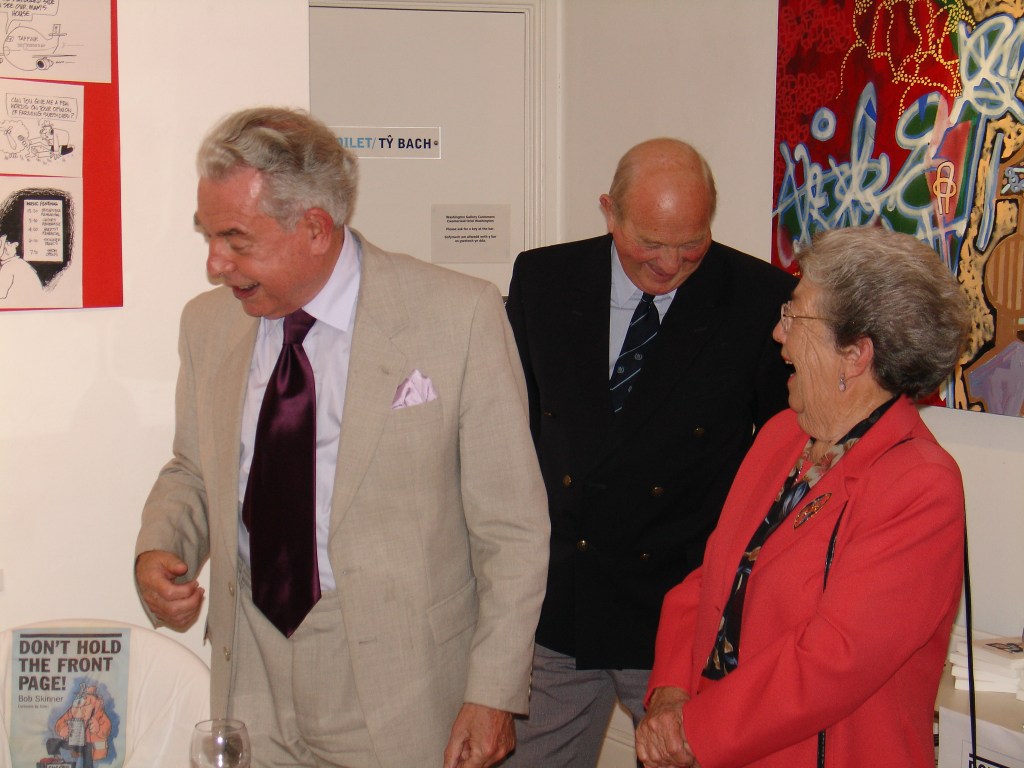
Bob and Rosemary Skinner at Dad’s book launch in 2005 with Lord Lieutenant of Glamorgan Sir Norman Lloyd-Edwards

Today is a family landmark. My parents Bob and Rosemary Skinner celebrated their 60th wedding anniversary.

The world was a very different place in 1952, when they got married in Penarth, Glamorgan. Our present Queen came to the throne on the death of her father, King George VI. The first jet airliner, the Comet, entered service. Over 100 people are killed in the Harrow rail disaster in a collision between two steam and one electric train. Churchill’s government scraps Britain’s wartime identity cards. The country endures yet another year of food rationing, seven years after the end of the second world war. Eisenhower becomes US president – a result predicted for the first time by a computer. And the last serious London pea-souper fog kills 12,000 people, leading to the clean air act.

Mum and Dad have, naturally, been the constant in my life. I’m very lucky that they are still there for me as I approach my 50th year.

In praise of Techniquest, Cardiff Bay

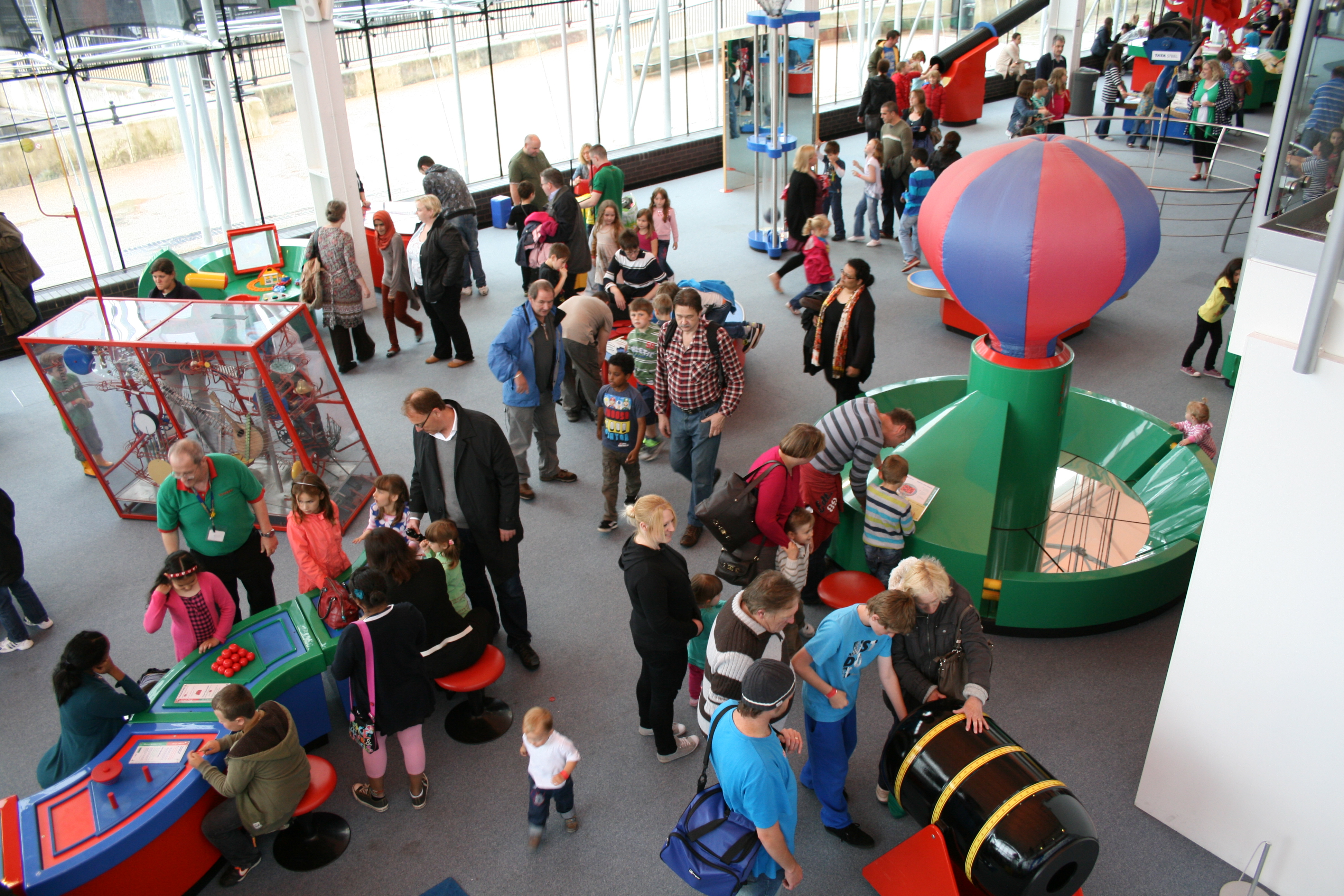
Techniquest, Cardiff Bay

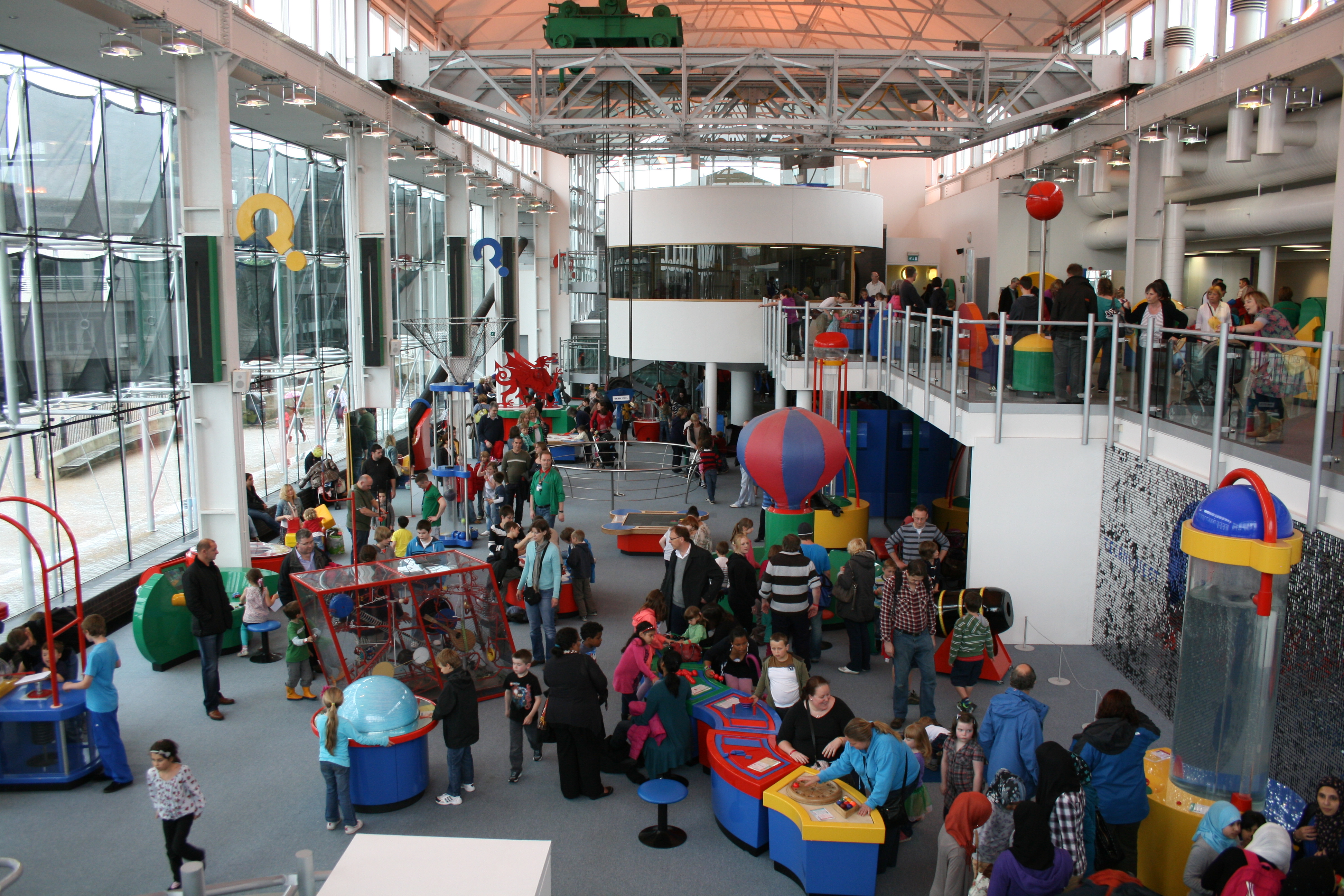
We loved our visit to Techniquest, the hands-on science centre in Cardiff Bay, this weekend. It’s over 15 years since my last visit – and this time I had a child me with!

Owen loved the experience. And it opened my eyes to science – thirty years after leaving school. We were very impressed that visitors were invited to go straight in while one member of each party queued to pay. The cafe was also excellent.

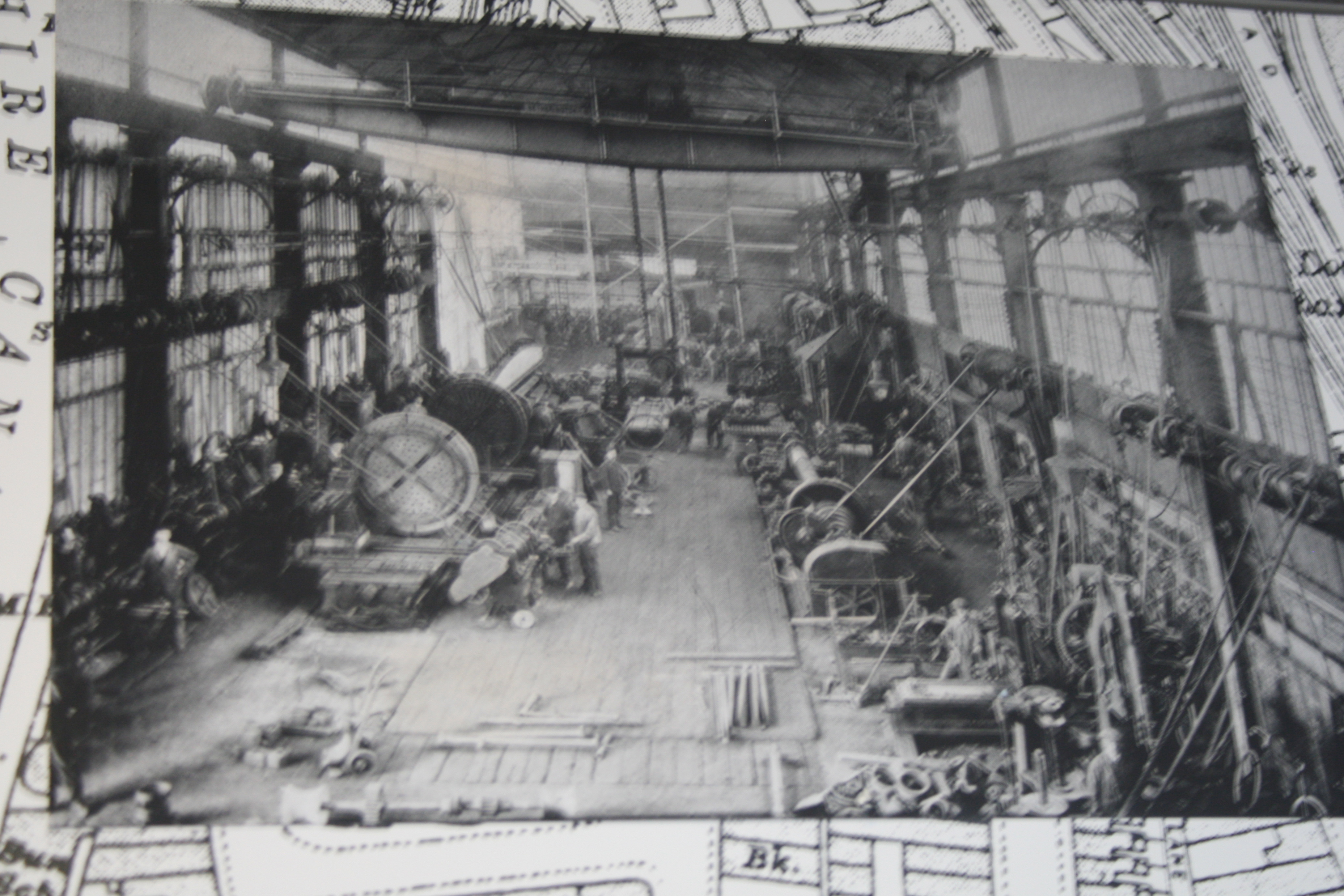
Techniquest is now over 25 years old. It used to be based opposite Cardiff Castle, and moved to its current site in 1995, just before my last visit. I was intrigued to discover that the building was built around the frame of an 1890s engineering workshop, as a photo on display (below) shows. This was a historic part of the old Tiger Bay, where ships were repaired in the three graving (dry) docks. This was the unlikely setting of a fierce political battle in the 1970s, when Christopher Bailey’s company Bristol Channel Ship Repairs fought against the Callaghan government’s nationalisation of the ship repair industry. (By a quirk of fate, Callaghan was the local MP.) Bailey triumphed.

The building that became Techniquest, Cardiff Bay

Techniquest now

I shot and edited some video of our visit on my iPhone. It gives an idea of this wonderful place.