Unknown's avatar

About Rob Skinner

I'm Rob Skinner. My family know me as Robert. My wife calls me Ert. (The part of 'Robert' that I don't always use...) I've been working in PR since 1987, mostly in financial services. In my spare time, I enjoy cycling reading, editing videos on my computer and practising my Welsh (dwi'n dod yn wreiddiol o Gaerdydd). And blogging. Do please post a comment! NOTE: this is my personal blog. It does not represent the views of the organisations I work for.

Off the Rails: a gripping but flawed book about HS2

A review of Off the Rails, The Inside Story of HS2 by Sally Gimson. (Oneworld, 2025)
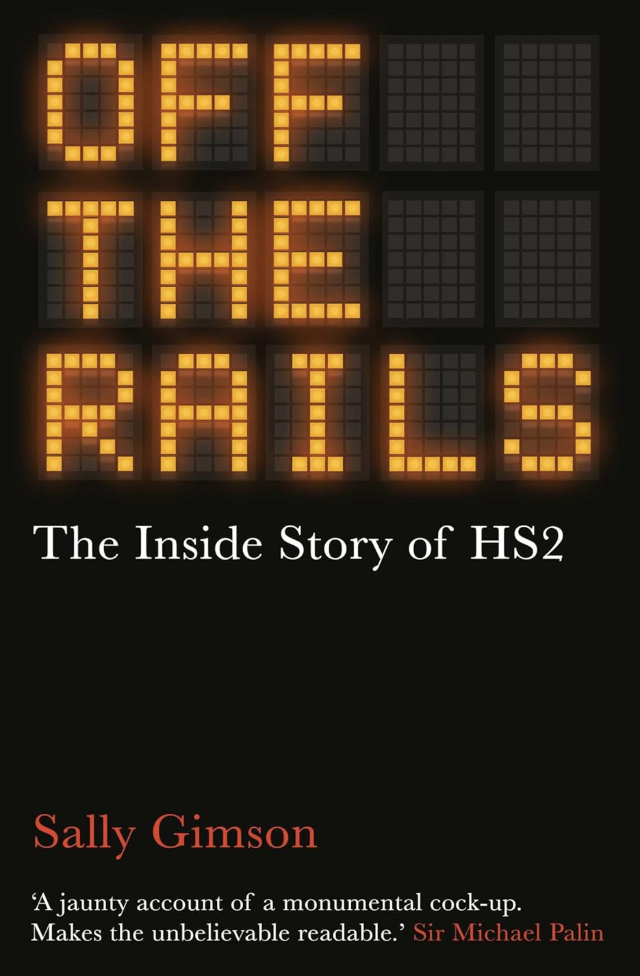
If any project deserves a detailed exposé, it’s HS2. Britain’s plan to build a second high speed rail line has become an epic, expensive failure. Once heralded as giving the country – well, England – a network of high speed routes between London, Manchester, Nottingham and Leeds, it has been reduced to a single route between London and Birmingham. Thanks to the stupidity of former prime minister Rishi Sunak, who cancelled the Birmingham to Manchester section, HS2 trains heading for Manchester could actually be slower than today’s trains once they divert from HS2 onto the West Coast Main Line at Handsacre Junction north of Birmingham.

HS2 Colne Valley Viaduct, near Denham, Bucks

Our village, Chalfont St Giles in Buckinghamshire, is on the route of HS2. You’ll find few supporters of the project in these parts, even though the line passes us in the 10 mile long Chiltern tunnel. But I always supported the idea, as I blogged when the Tory-Lib Dem coalition gave the green light to HS2 in 2012. As I argued:

‘Britain’s intercity rail network was born just before Queen Victoria came to the throne in 1837. It was the wonder of the world. Nearly two centuries later, the world wonders why Britain is so reluctant to build a new railway. HS2 opponents say we should just modernise the west coast mainline. That line was created from a series of 19th century railways. It has been ‘modernised’ twice in the last fifty years. It’s still in essence a Victorian railway.’

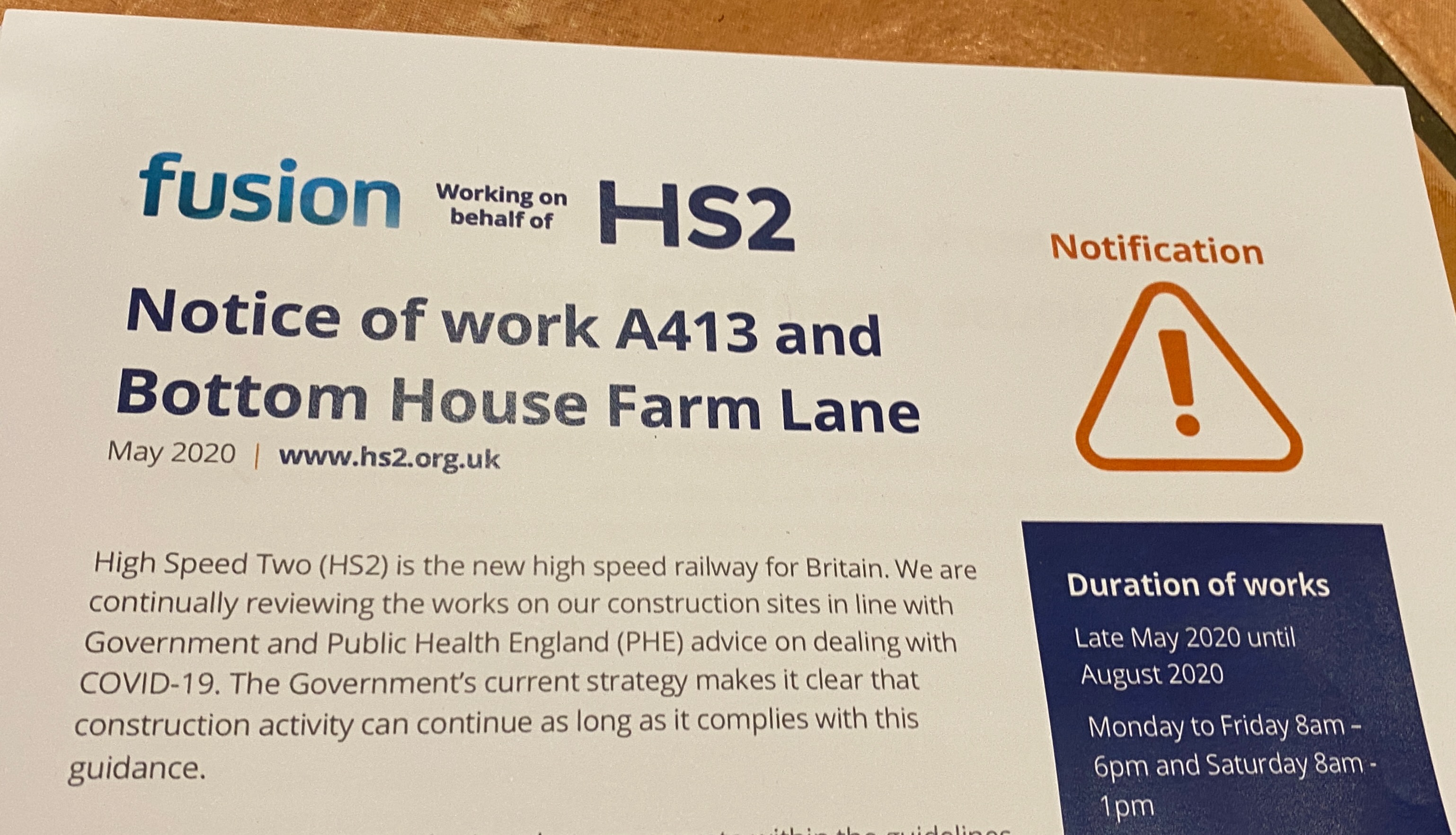
Above: HS2 built a new road parallel to Bottom House Farm Lane, Chalfont St Giles, for construction traffic to the site of an HS2 tunnel shaft

Our former MP, the late Cheryl Gillan, features heavily in Sally Gimson’s story. If you’re wondering why HS2 is proving vastly expensive compared with similar lines in France and Spain, Gillan is one one of the many reasons. Protesters in the Chilterns were bought off with miles of extra tunnels. These same protesters will happily use Heathrow airport, the M40 and other environment-shredding services. (As I do, I hasten to add.) Ironically, the route from Birmingham to Manchester, killed by Sunak in 2023, would have been far cheaper to build with fewer tunnels and viaducts.

HS2’s advocates and planners didn’t help by changing the reasons for the line. It started out as a need for speed – though arguably faster than we needed, increasing costs – but morphed into a boost of the capacity of the railway, followed by an idea of ‘levelling up’ the country.

Sally Gimson tells the story well, from early mistakes through soaring costs resulting from buying off Chiltern protesters right up to Rishi Sunak’s calculated act in announcing the axe of the route to Manchester … in Manchester. She’s a fan of the concept of HS2, and is appalled by the way the project’s epic mismanagement has given high speed rail in Britain a terrible reputation, despite the success of HS1.

She doesn’t explain that the British government designated HS2 an ‘England and Wales’ project, even though even the original route didn’t include a metre of track in Wales. This meant that Wales was denied extra funding for rail projects under the Barnett formula unlike Scotland and Northern Ireland, which gained billions of pounds of extra funding. This has been hugely controversial in Wales, especially to the Labour government in Cardiff after Keir Starmer refused to reconsider the decision on coming to power.

Sadly, Gimson’s book is riddled with silly factual mistakes that suggest a shaky grasp of railway history – and more. Here are some that I spotted:

The Times newspaper was not a product of the railway era (p23) – it was founded in 1785, decades before the start of the railway era.

HS1 did not open in 2001 (p43). The first section opened in 2003, with the second section to St Pancras following in 2007.

Crewe was not still building steam locomotives in 1964, the year Japan’s first high speed line opened (p47). Crewe ended steam engine construction in 1958, and the final BR steam locomotive, Evening Star, was completed at Swindon in 1960.

British Rail was not born a year after the railways were nationalised (p34). Nationalisation on 1 January 1948 created British Rail under the original longer name, British Railways.

Northern Rock bank collapsed in 2007 not 2008 (p66).

There was no ‘InterCity125 line connecting London to Edinburgh developed in the 1980s’ (p131). The InterCity 125 service from London to Edinburgh began in May 1978, using the existing East Coast Main Line. The line was electrified in late 1980 with InterCity225 electric trains reaching Edinburgh in 1991.

Andrew Gilligan resigned from the BBC in 2004 not 2003 (p169).

Graham Brady oversaw the vote of no confidence in Theresa May by Tory MPs in 2018 not 2019 (p189).

Andy Street was not elevated to the House of Lords in December 2024 – or at any other time. He is not Lord Street, but Sir Andy Street. (p213.) Also, he was not chair of John Lewis, but its managing director.

Neville Chamberlain was lord mayor of Birmingham in the 20th not 19th century (p222).

It was the Grand Junction not Grand Central railway that built Crewe (p243).

I’m sure Christian Wolmar, a real transport expert, would have spotted the transport howlers had Gimson asked him to proof read her manuscript.

Wattbike: a lesson in how not to use AI

Artificial Intelligence – AI – is all the rage. Companies the world over see it as a way to provide fast customer service, as well as to crunch data and solve problems. But my experience this week with Wattbike, a company that sells smart indoor bike trainers, shows that used badly AI can damage a company’s reputation.

I had a simple query. I wanted to order a new power supply lead for my first generation Wattbike Atom. I’ve no idea what happened to the original, but it’s disappeared since I last did an indoor turbo session in the spring.

Wattbike customer service was excellent the last time I got in touch. This time, I left a message via the website, and was really impressed to get a reply within a minute:

Hello Rob,

Thank you for your message and for checking the compatibility before placing an order. I’m sorry for any confusion this may cause. The UK Power Supply (AtomX) you’ve linked is designed for the next generation AtomX model and delivers a higher power output (12v 7A), which is not suitable for your 2018 first generation Wattbike Atom (which requires 12v 2A). 

For your 2018 Wattbike Atom, you’ll need the UK Power Supply specifically made for the Atom G1 model (Nucleus & Atom G1) with the correct 12v 2A rating. 

If you have any other questions about compatible parts or need further support, I’m here to help!

Customer Support | Wattbike
Powered by AI

The reply was obviously generated by AI, as indicated, but that would have been fine if it had solved my query. But I was surprised that it didn’t include a link to the product I needed in the online shop. When I replied asking for the link I was sent this within seconds:

Hello Rob,

Thank you for your patience. You can purchase the correct UK Power Supply for your Nucleus and Atom G1 (including the 2018 First Generation Atom) directly from our website at the following link:

UK Power Supply (Nucleus & Atom G1)

This power supply is suitable for the 12v 2A requirement of your Wattbike Atom. Please note that this is the appropriate choice for your model, and the UK Power Supply (AtomX) is only compatible with the Next Generation AtomX, not the first generation Atom.

If you need any further assistance or have any more questions, just let me know. I’m here to help!

Customer Support | Wattbike
Powered by AI

But clicking on the supplied link gave me this resounding error message:

If AI can identify a link to a product listing, surely it should be capable of making sure the link works?

When I pointed out the link was not working, I got the following admission of defeat by Wattbike’s bot:

Hello Rob,

Thank you for letting us know about the trouble accessing the UK Power Supply (Nucleus & Atom G1) link, and I’m very sorry for the inconvenience this is causing. The correct power supply for your 2018 Wattbike Atom is indeed available as a product in our range, but the direct purchase link on the website currently appears to be broken, which is why you’re seeing the “Page Not Found” message.

I will be transferring your case to a specialist team who manages our website, so they can look into fixing this issue or provide clear guidance on how you can order the appropriate power supply for your Wattbike Atom G1 or Nucleus. We will aim to respond within four working days—please avoid sending multiple emails or reaching out on different platforms about this enquiry, as it can slow down our response time. Our business hours are Monday to Friday, 9am–5pm (GMT).

Thank you again for your patience, and we’ll be in touch as soon as possible with a solution.

Customer Support | Wattbike
Powered by AI

Four passed without any contact from Wattbike. I then received the following pathetic email message:

Hi Rob, 

We wanted to let you know that we’re currently experiencing unforeseen staffing issues alongside an unprecedented level of demand on our customer service team. We’re working hard to get through the backlog and will respond to your ticket as soon as possible

To help us resolve your query more quickly, please avoid sending additional messages or opening new tickets on any channel, as this can create further delays.

Thank you for your patience and understanding – we really appreciate it.

Why did it take Wattbike four days to send this ‘don’t contact us, we’re busy’ message? Presumably the company was just as busy four days ago. Or is it a coincidence that the four working days mentioned in the bot’s surrender message have now elapsed?
It looks as if I’ll have to find the correct Atom G1 power supply from a company that cares more about customer service than Wattbike. It’s such a shame after my wonderful experience with Wattbike last year. I’m always suspicious when companies remove a customer service phone number from their website – a quick call might have established that Wattbike was out of stock of the item I needed. But four days on, I’m none the wiser. And unable to use my Wattbike Atom.

If you’re thinking of using AI to provide customer service, don’t follow Wattbike’s example. Test it thoroughly, and only set it loose on customers if you are sure it works. And whatever you do, don’t use it just to save money. The damage to your reputation could cost you far more than you save.

Videoing London Edinburgh London 2025

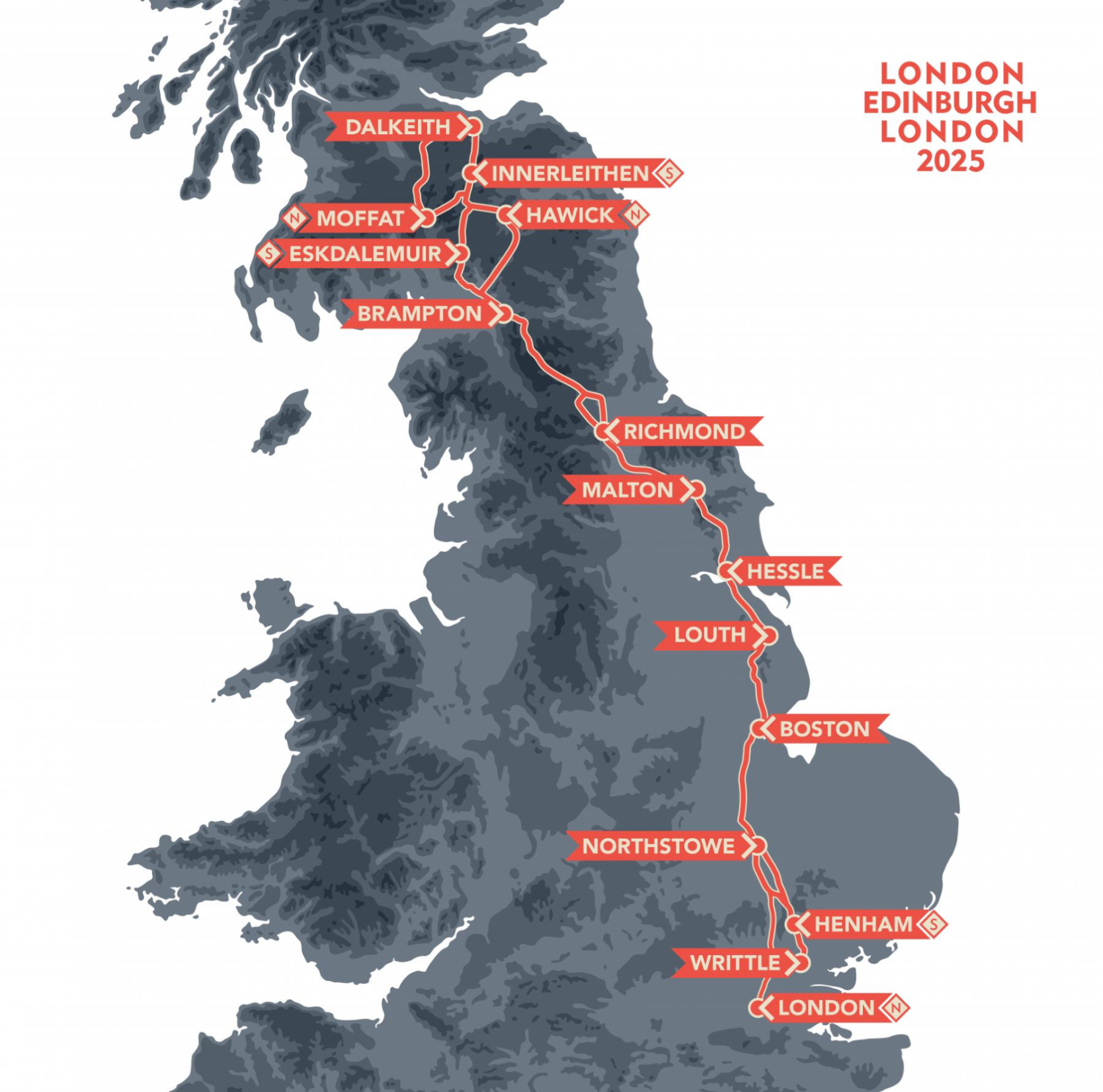
This is the latest in my series of posts about the London Edinburgh London audax event in August 2025Read part 1 here (my road to LEL), part 2 here (lessons from the 400k London Wales London audax), part 3 here (even harder lessons from the Bryan Chapman Memorial 600k audax), part 4 here (volunteers put together the LEL rider starter packs), part 5 here (packing tips for LEL riders) and part 6 (Surviving Storm Floris on LEL 2025) here.

I enjoyed making my video about riding Britain’s greatest long-distance cycling event, London Edinburgh London 2025. As I have blogged, the organisers rightly cut the ride short because of Storm Floris, and volunteers and riders alike showed tremendous spirit in the face of adversity. Here’s the video:

GoPro or Insta360 camera?

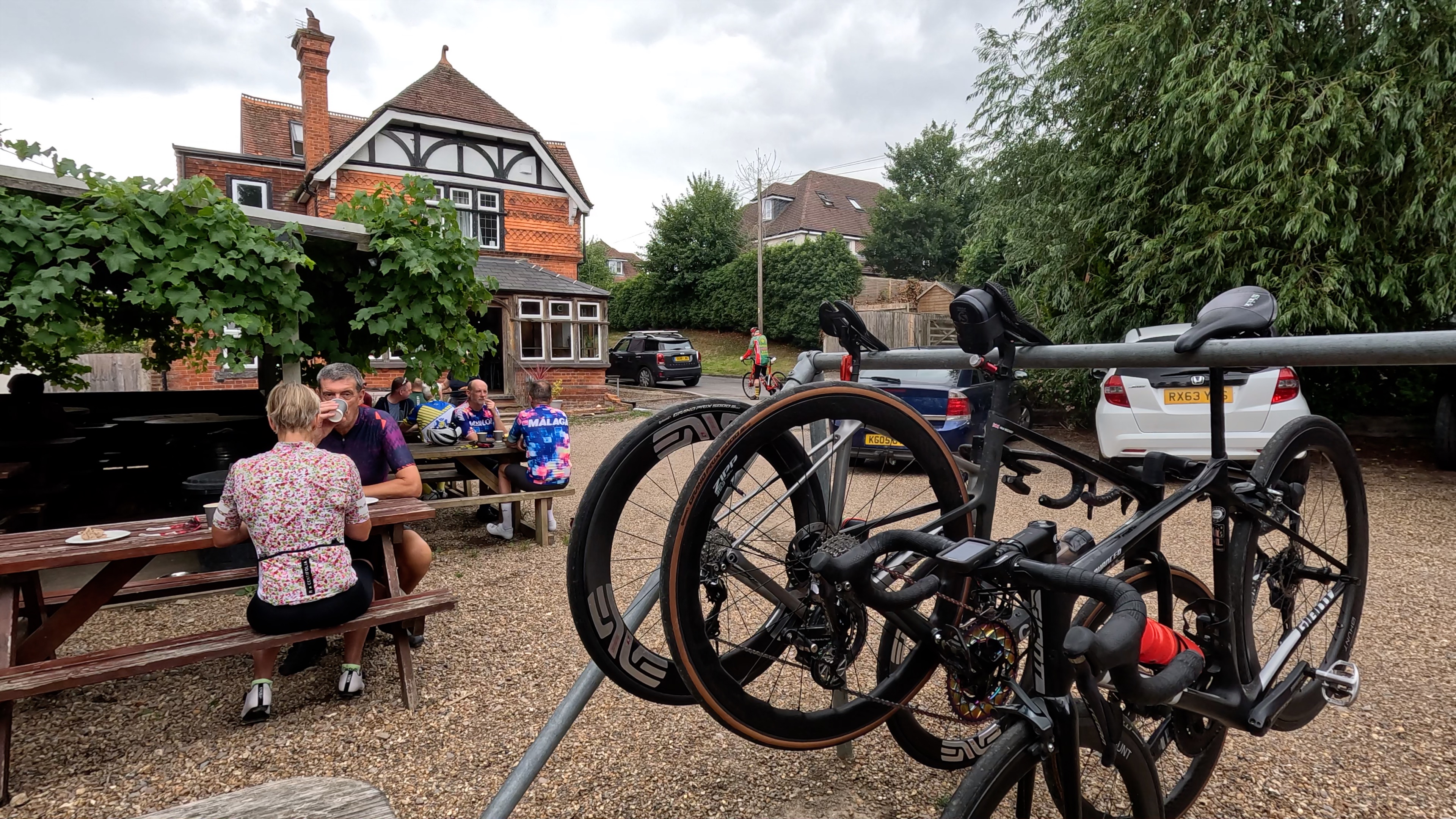
I love making videos of my cycling adventures, and knew I had to do the same for LEL. But how? My go-to camera is a GoPro Hero 13 Black. The latest GoPro devices are very reliable, and I can click to record in an instant with the camera mounted on my handlebars. The resulting footage is incredibly smooth – a contrast to my first action camera in 2013. Another advantage is that I can remove the device in an instant thanks to the magnetic mount, and take it with me, either to keep it safe, or to take video off the bike.

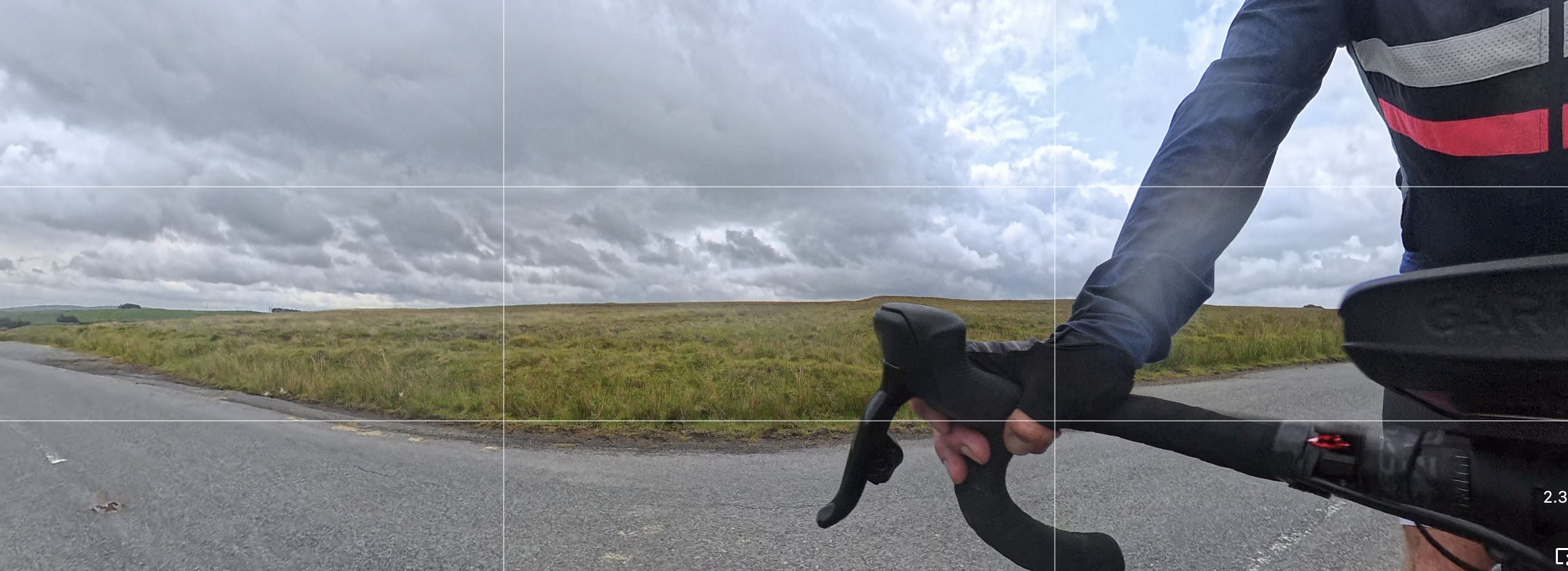
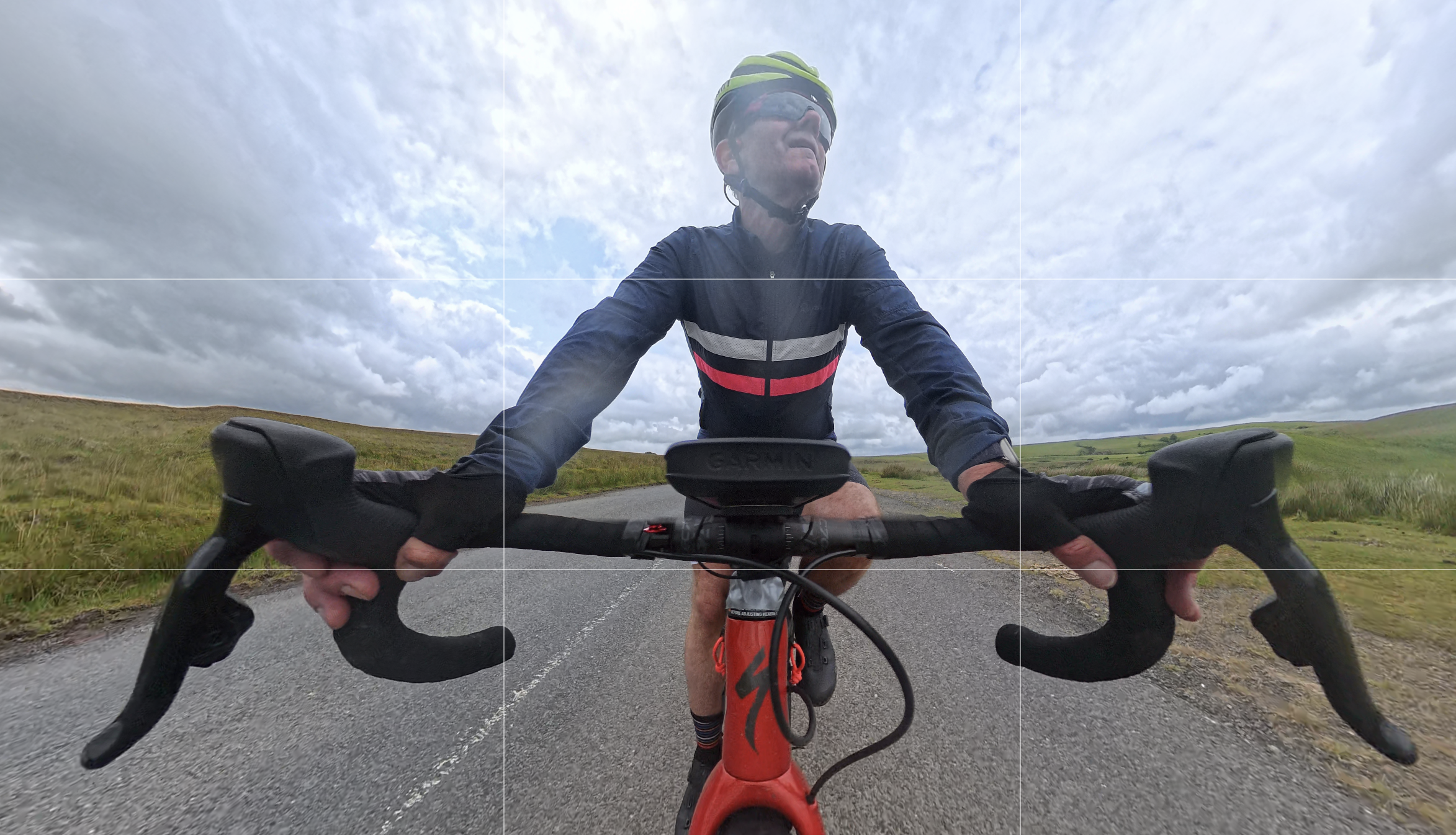
I toyed with the idea of taking my Insta360 X5 on the ride, as it gives so much more flexibility. One clip gives you so many different angles, as I found on the Bryan Chapman Memorial audax in June, and as you can see here:

I thought this could capture some great video of London Edinburgh London, such as a stunning landscape vista and an image of a rider racing past me in one shot. That flexibility is so attractive compared with swivelling the GoPro to get a side view. Audio quality is excellent too, and the low light options better than even the latest GoPro. (GoPro really needs to up its game here.)

But this flexibility is also a disadvantage. It takes me far longer to process each Insta360 clip – deciding which segment of the 360 degree shot to use, edit it as needed, and export it to my video editing app along with all the other clips. I’m sure I’d be quicker with practice, but I feared it would take an enormous amount of time to create a YouTube highlights video from hundreds of Insta360 clips. So … I took the GoPro to LEL. I did see one person using an Insta360 camera on LEL, and would be interested to see the resulting video.

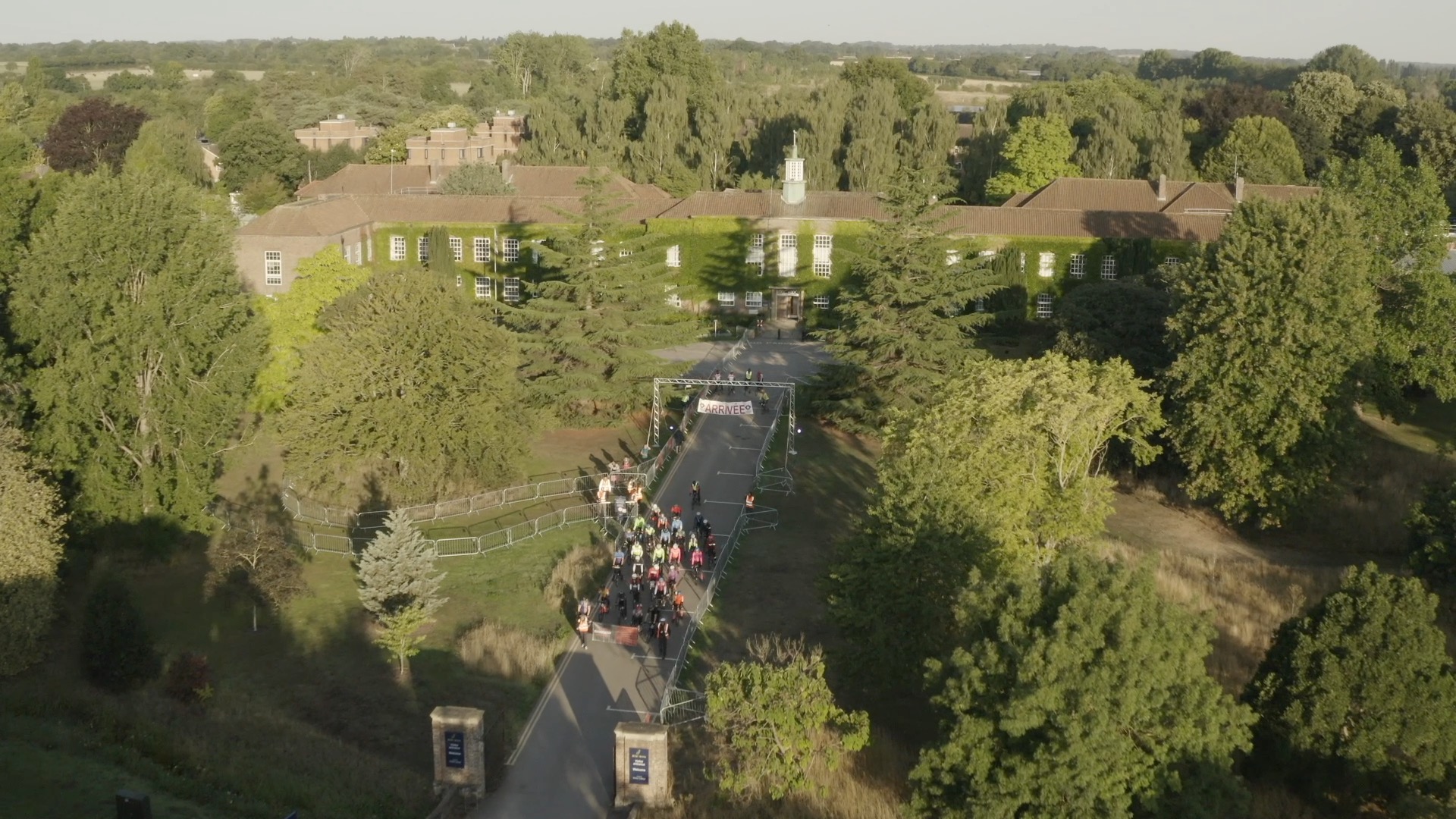
Image from drone video by Fergus Coyle

You can get great views from an action or 360 camera, but aerial shots really make a video stand out, and I wanted to take a drone with me on LEL for this reason. I thought a light drone would be perfect, but saw sense after a moment’s reflection. I was carrying too much stuff already, and wouldn’t have time to set up and fly a drone if I were to have any chance of getting to Edinburgh and back within 128 hours.

As it turned out, Storm Floris would have grounded any drone, so I made the right decision. Happily, Fergus Coyle kindly let me use some of his lovely drone shots of the start in my video. But I still yearn to fly a drone on the stunning Scottish sections of LEL, as seen in the official video created by Darrell Whittle. Perhaps I’ll get the chance if there is an unofficial group ride next year over the LEL northern and Scottish loop that most riders missed because of Floris. (There’s been a lot of chatter about this in the LEL Facebook group.)

In the meantime, I’ll enjoy Darrell’s video below.

London Edinburgh London 2025: surviving Storm Floris

This is the latest in my series of posts about the London Edinburgh London audax event in August 2025Read part one here (my road to LEL), part 2 here (lessons from the 400k London Wales London audax), part 3 here (even harder lessons from the Bryan Chapman Memorial 600k audax), part 4 here (volunteers put together the LEL rider starter packs) and part 5 here (packing tips for LEL riders).

LEL is rebranded after the storm struck

Danial Webb cut a lonely figure standing at the summit of Yad Moss. Barely 24 hours into the event, the London Edinburgh London director’s lanyard was dancing crazily in the face of Storm Floris as he shared the bitter news that the storm had forced the curtailment of the event.

The next day, when I met him at Louth, Danial told me that he slept easily that night, confident that the decision guaranteed the safety of over 2,400 LEL riders from around the world. I was one of those cyclists, and I confess that I felt a sense of relief at the decision as I heard the news at the LEL control at Malton, North Yorkshire. Not because I was looking to get out of a challenge I cherished, but because I was genuinely worried about the storm, which forced the closure of Scottish bridges and ferries and left a trail of destruction across Scotland. (Not to mention the first cancellation of a performance at Edinburgh’s military tattoo in 75 years.) The organisers made the only possible decision. I can only guess at the size of the logistical challenge this caused them.

Earlier on that second day of LEL 2025, the organisers had paused the event, holding riders when they reached a control point. (These are places where riders get food and a rest, typically located in a school.) I was held when I got to Malton at 2pm. We heard about the decision to cancel the loop to Edinburgh late that afternoon. Incidentally, the storm was named Floris by the Dutch weather service KNMI, and means ‘flowering’ in English. Ironic given the thousands of flowers and branches uprooted in northern England and Scotland…

Continue reading

Packing tips for riding London Edinburgh London 2025

This is the fifth in my series of posts about my preparation for the 1530km London Edinburgh London audax event in August 2025Read part one here (my road to LEL), part 2 here (lessons from the 400k London Wales London audax), part 3 here (even harder lessons from the Bryan Chapman Memorial 600k audax), and part 4 here (volunteers put together the LEL rider starter packs).

It’s starting to feel very real. On Sunday morning, 3 August 2025, I will join over 2,000 cyclists in the quest to ride London Edinburgh London, one of the world’s greatest amateur cycling events. My training is complete, and my bike serviced. Now, I’m going through my final preparations and kit choices. There’s been some chatter on the LEL Facebook page about kit lists, so I thought I’d share some of my kit choices and packing tips. The chances are that you are taking much less than I am, but as a first time LEL rider I’m playing it safe.

I’ll start by confessing that I’m torn between carrying things like a down jacket that will help me cope if we get wild weather in Scotland (as in 2009 and 2017) and keeping my on-bike weight down. I may compromise by having it in a drop bag, ready to carry if it looks necessary.

My other aim is to try to organise my kit in a way that saves time at controls while minimising the chance of losing things. On my recent tour of France (which involved a different destination every night) I used packing cubes, which made it very easy to find things in a suitcase. I’ll obviously not be carrying suitcases on LEL, but will use small bags within my saddle bag. This is how it will work:

Sleepover kit

This is taking into a control where I plan to sleep for a couple of hours. It will sit at the bottom of my saddle bag. It includes a sleeping bag liner, inflatable pillow, eye mask, ear plugs (mine plus the ones included in each rider’s registration pack), plus loose shorts to sleep in to give my body a rest from cycling shorts.

Continue reading

Farewell to Velolife cycling cafe, Warren Row

Cyclists love a cafe stop. Coffee and cake are the perfect treat on a ride – and we all have our favourite cafes. So I was shocked to learn that one of my chosen destinations, the Velolife cafe at Warren Row in Berkshire, was closing.

It’s not that I’m a regular visitor. It’s a 35 mile round trip from home, and I only completed the nine visits needed for a free coffee on my last visit before it closed. But there was something special about my rides to Warren Row. Typically, I’d arrive after cycling through the woods past the Dew Drop Inn and down Pudding Hill. On my first visit in July 2021, I was unsure of the route through the woods. Two years later, during the England v Australia Ashes cricket series in 2023, I listened enthralled to the drama of the Test Match Special commentary, as I blogged that summer:

‘On the Sunday of the Edgbaston test, I tuned in for the first time on a ride, and enjoyed the TMS team’s insights into the modern game as I pedalled along the lovely wooded lanes around Burchett’s Green, Berkshire.’ 

Sometimes, I’d enjoy the longer scenic route from Marlow up into the hills to Fingest before swooping down to the Thames and on to Henley, before the climb to Warren Row. Earlier this year, I made it to Velolife on a winter Sunday at 4.02pm, just after it closed, on one of these scenic runs. I cursed way the cafe turned me away in a ‘computer says no’ manner as it closed two minutes earlier, but deep down I recognised the staff were right. As a result, I relished the very fast ride home…

Velolife had a turbulent early life at Warren Row. Windsor & Maidenhead council pursued a ridiculous legal campaign against owner Lee Goodwin but backed down after what Olympic gold medallist Chris Boardman called ‘long overdue victory for common sense’ that ended two years of “anguish” for Lee. More recently, Lee has led an enjoyable cycling podcast.

I will add the remaining Velolife cafe at Wargrave to my cycling routes. Even better, I learned today that the Warren Row cafe is being taken over by a new establishment called Sip and Spoke. So I can still enjoy the swoop down Pudding Lane to a cake stop in that small Berkshire village.

Here’s the video I made when I thought I’d made my last cafe ride to Warren Row.

Preparing for London Edinburgh London: LEL volunteers create over 2,400 rider starter packs

This is the fourth in my series of posts about my preparation for the 1530km London Edinburgh London audax event in August 2025. In this edition, I experience life as a volunteer – and love it! The series was inspired by LEL supremo Danial Webb asking if anyone was planning to post about their training and preparation for the event. Read part one here (my road to LEL), part 2 here (lessons from London Wales London) and part 3 here (even harder lessons from the Bryan Chapman Memorial 600k audax).

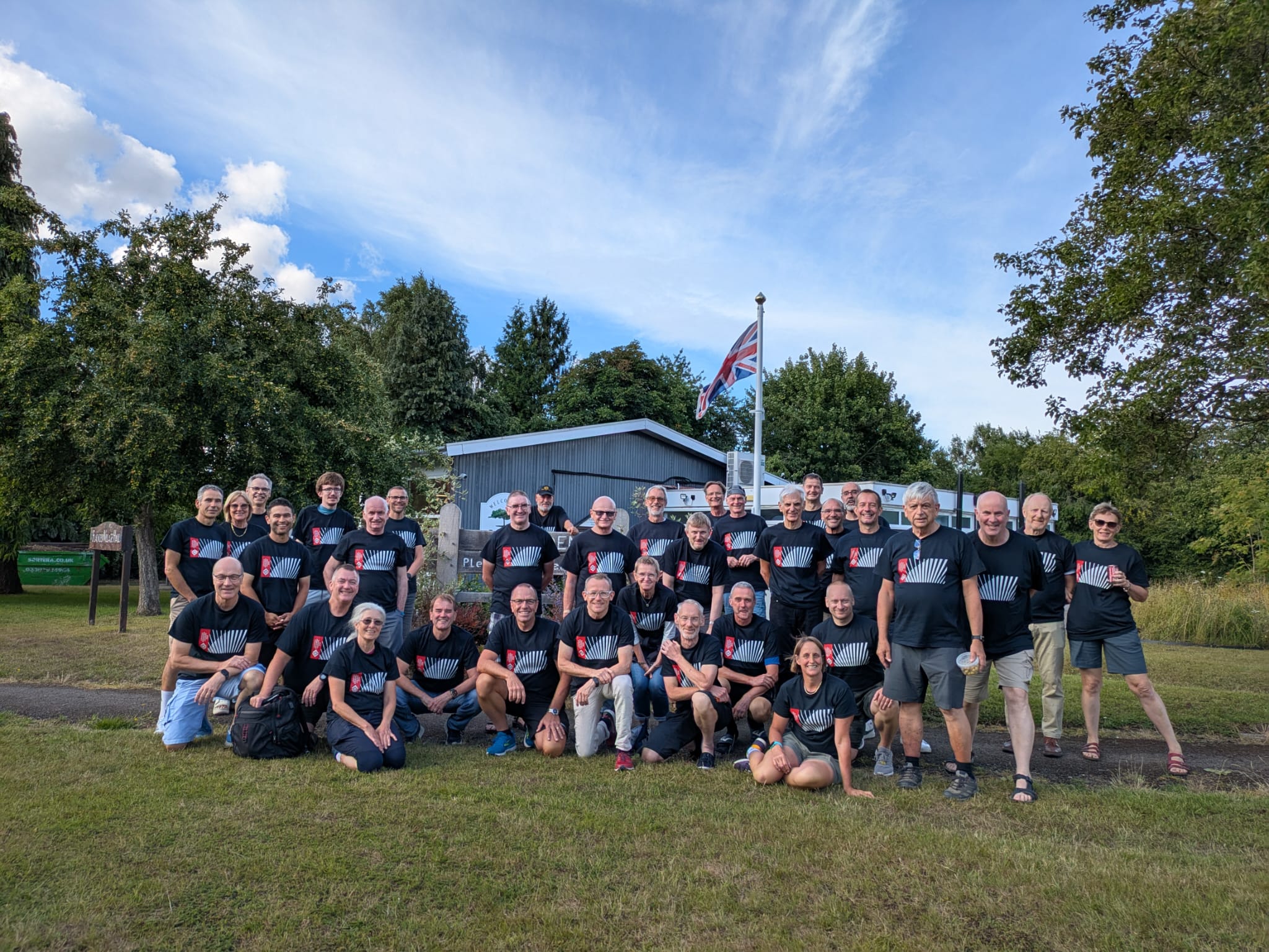
The LEL volunteers at Flaunden. Photo: Tim Decker

An event like London Edinburgh London doesn’t happen by magic. It takes countless hours of hard work and problem solving over four years by organiser Danial Webb, route director Andy Berne, start and finish control boss Tim Decker and many others, supported by an army of volunteers during the event.

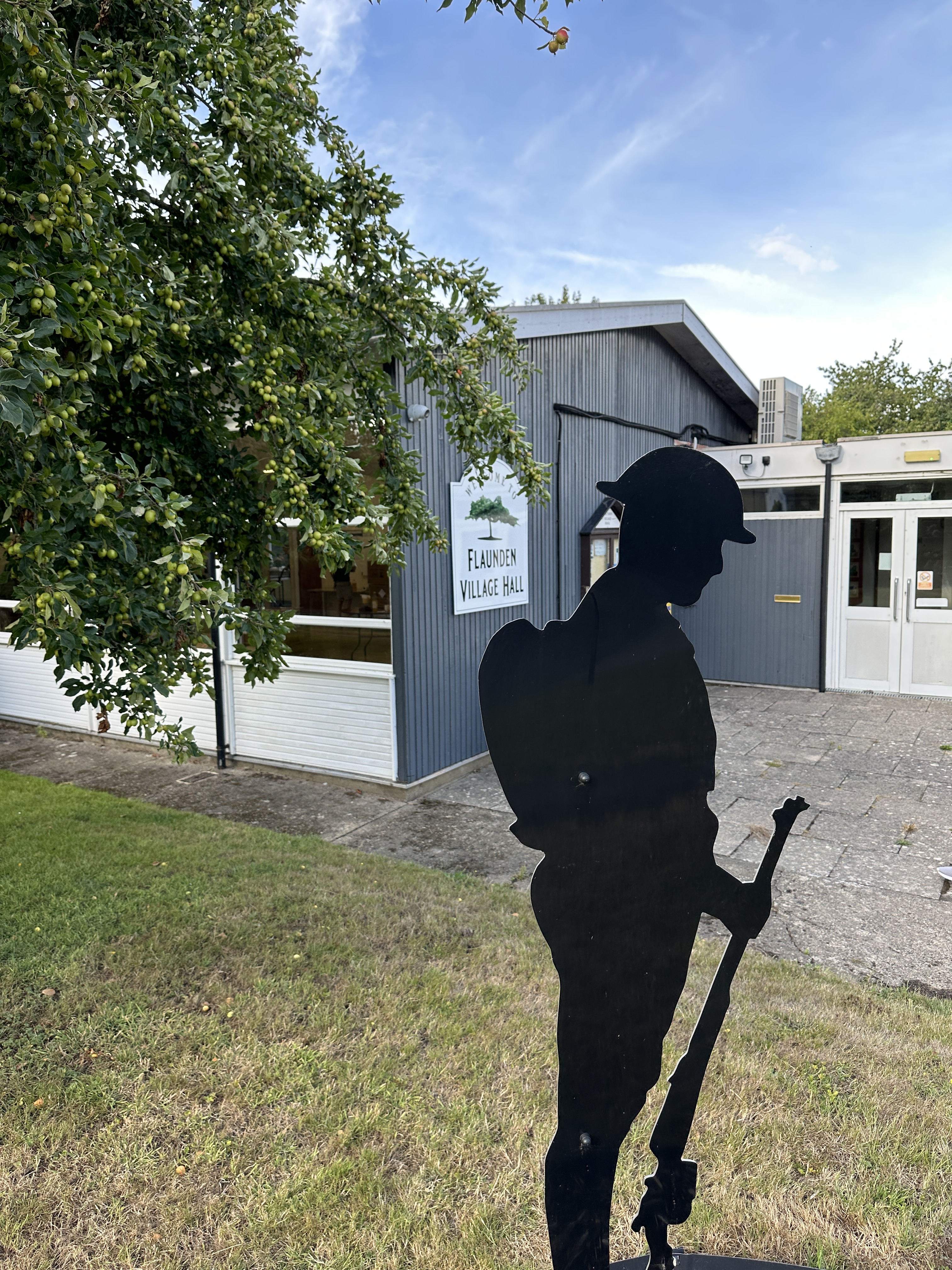
I’m riding LEL this year, but this weekend got an unforgettable glimpse of the dedication of the organisers and volunteers. Liam Fitzpatrick, who runs the 400k London Wales London audax, put out a call for volunteers to help put together the rider registration packs. As this was happening at Flaunden, Herts, just seven miles from where I live, I couldn’t say no. It was a chance to give something back, as well as learn more about an event I’ve come to love, despite not (yet) having experienced it!

Flaunden awaits an army of volunteers

Flaunden village hall was a hive of activity when I arrived just after 9am on a grey Sunday morning. Danial, Liam and Tim had done a lot of preparatory work the day before. Around 35 people had volunteered to help, including making teas, coffees and lunch for those putting the packs together.

Danial explains the process of creating the registration packs

When you pick up your rider registration pack on Saturday 2 August, you won’t give a moment’s thought to how it was put together. And why would you? You’re probably feeling equally excited and nervous about taking part in one of the world’s greatest amateur cycling events. Yet in Flaunden’s village hall around 30 people assembled over 48,000* individual items, many of which varied by rider, into 2,409 rider registration bags. (* Based on the conservative assumption that most riders had bought at least one item of merchandise, typically a jersey. Some bought so many extras that they needed two bags!)

Continue reading

Cycling Channel to the Med, Day 14: Castellane to the Med at Cagnes-sur-Mer

This post recounts the fourteenth and final day of my English Channel to the Mediterranean cycle tour in France with Peak Tours in June 2025. Read Day 13: Les Salles-sur-Verdon to Castellane.

We made it to the Med!

At breakfast, I had a few butterflies as I so often do before a ride. This was magnified by chatting to Tim about London Edinburgh London, the 1,530km audax ride we’re both tackling in August. That’s 950 miles in five days, compared with 873 miles in 14 days on this tour. Channel to the Med has been brilliant training, and if LEL coincides with a heatwave I’ll know what to expect.

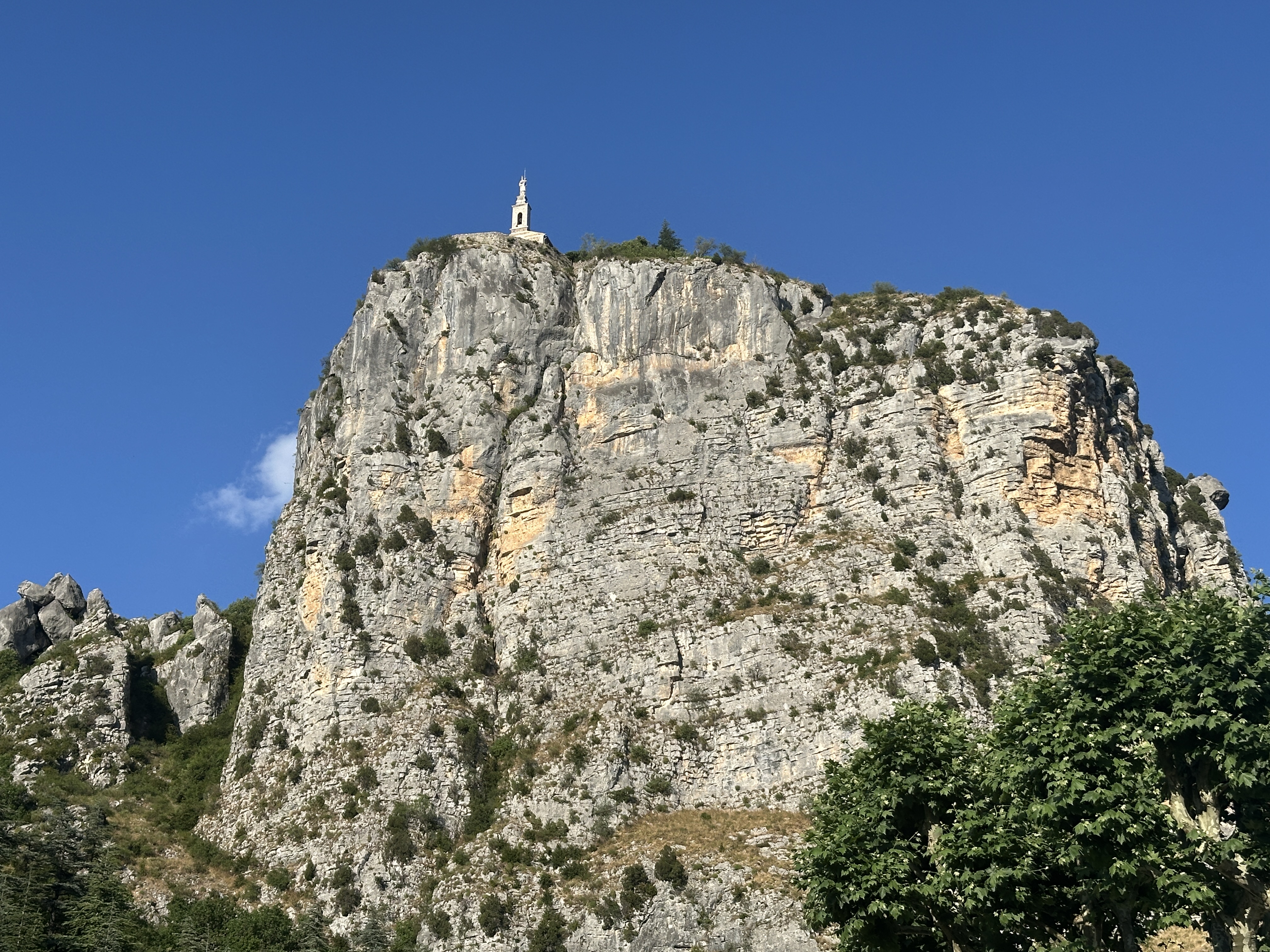
Once again today we had a long climb from the outset, although nothing like as steep as the ascent to the Gorges du Verdon yesterday. We climbed 1,000 feet in just over five miles, and I stopped to look back to Castellane and the Roc as you can see above. (I always find it satisfying on a climb to get a scenic confirmation of my progress.) We had a lovely descent before one final steep ramp, followed by a gentle rise for about 15 miles.

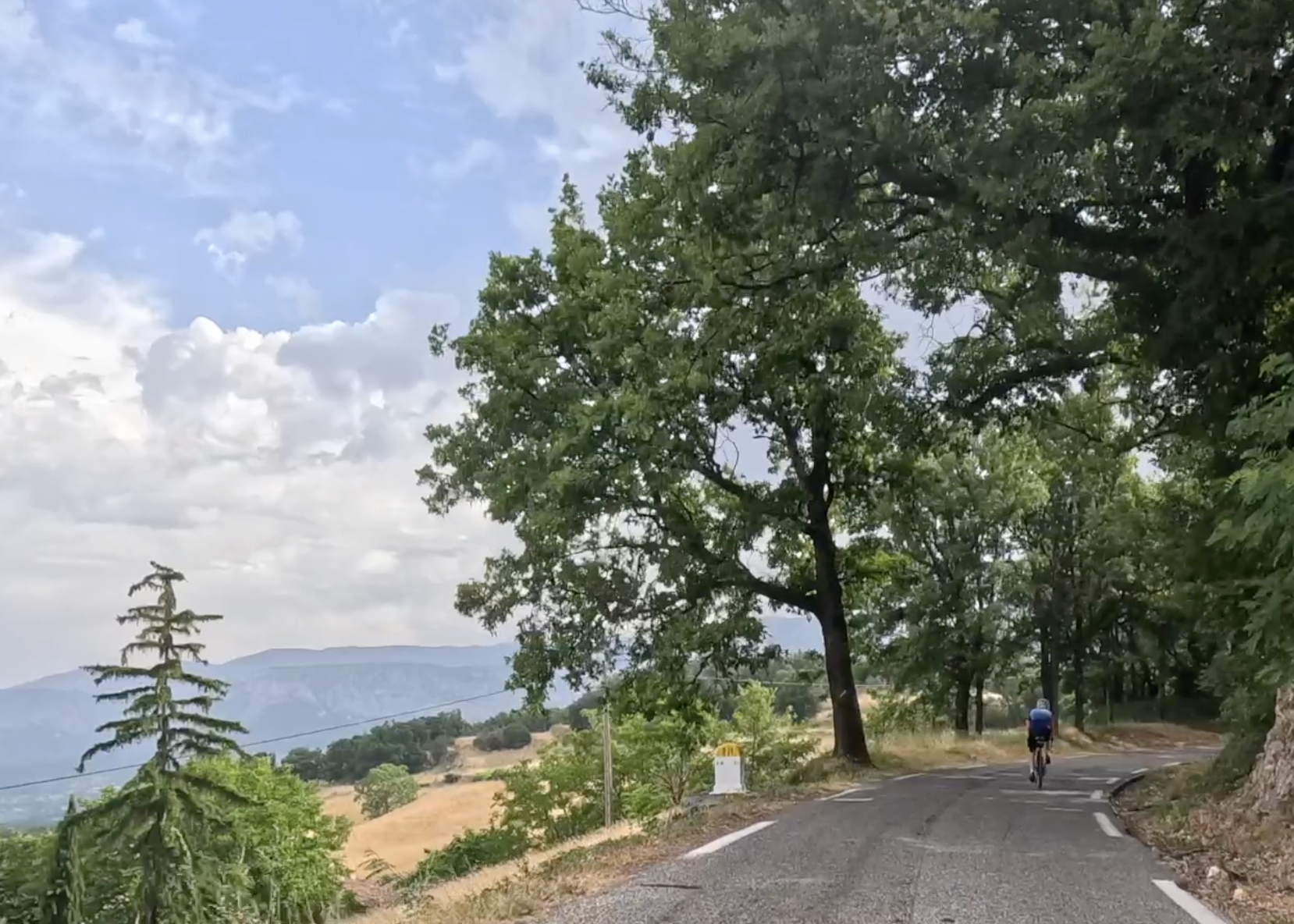
Above: scenes from the morning climbs

As I was taking photos, two panniered touring cyclists stopped to admire the view I’d spotted. Unlike so many of the laden cycle tourists we saw on this tour they were British. When they joined us at our morning break (seen above) they explained that they were on a charity bike ride from Leicester to Nice. We’d seen them a few times in previous days but this was the last time our paths crossed as they stopped for lunch soon afterwards.

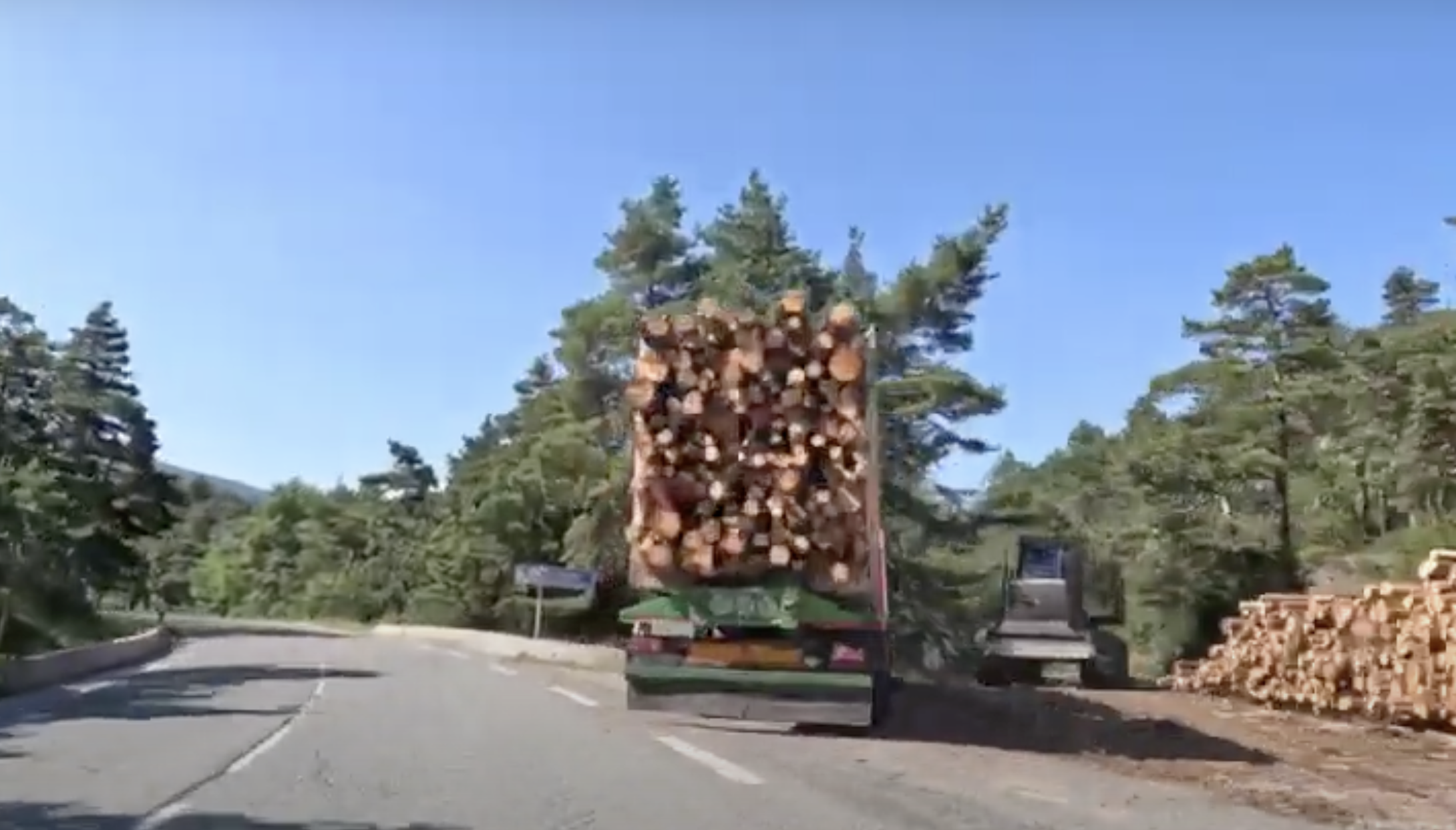
Over our long tour we’d seen many logs stacked by the side of the road, but today was the first time I remember seeing a lorry and trailer transporting the timber.

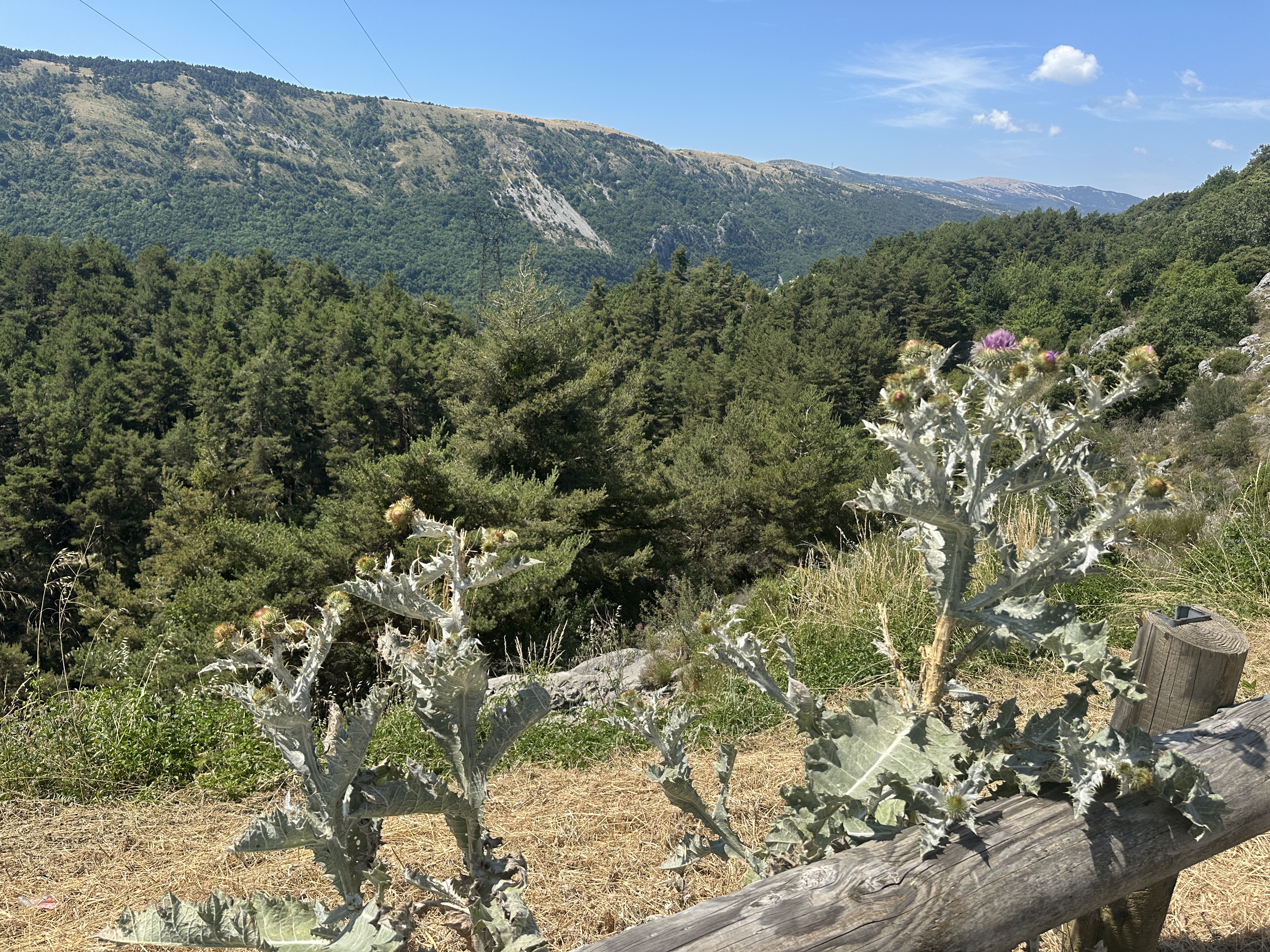
Wendy, Jim, Mark and I stopped to admire the view near the top of the long climb, with an unexpected thistle suggesting this was Scotland not the south of France.

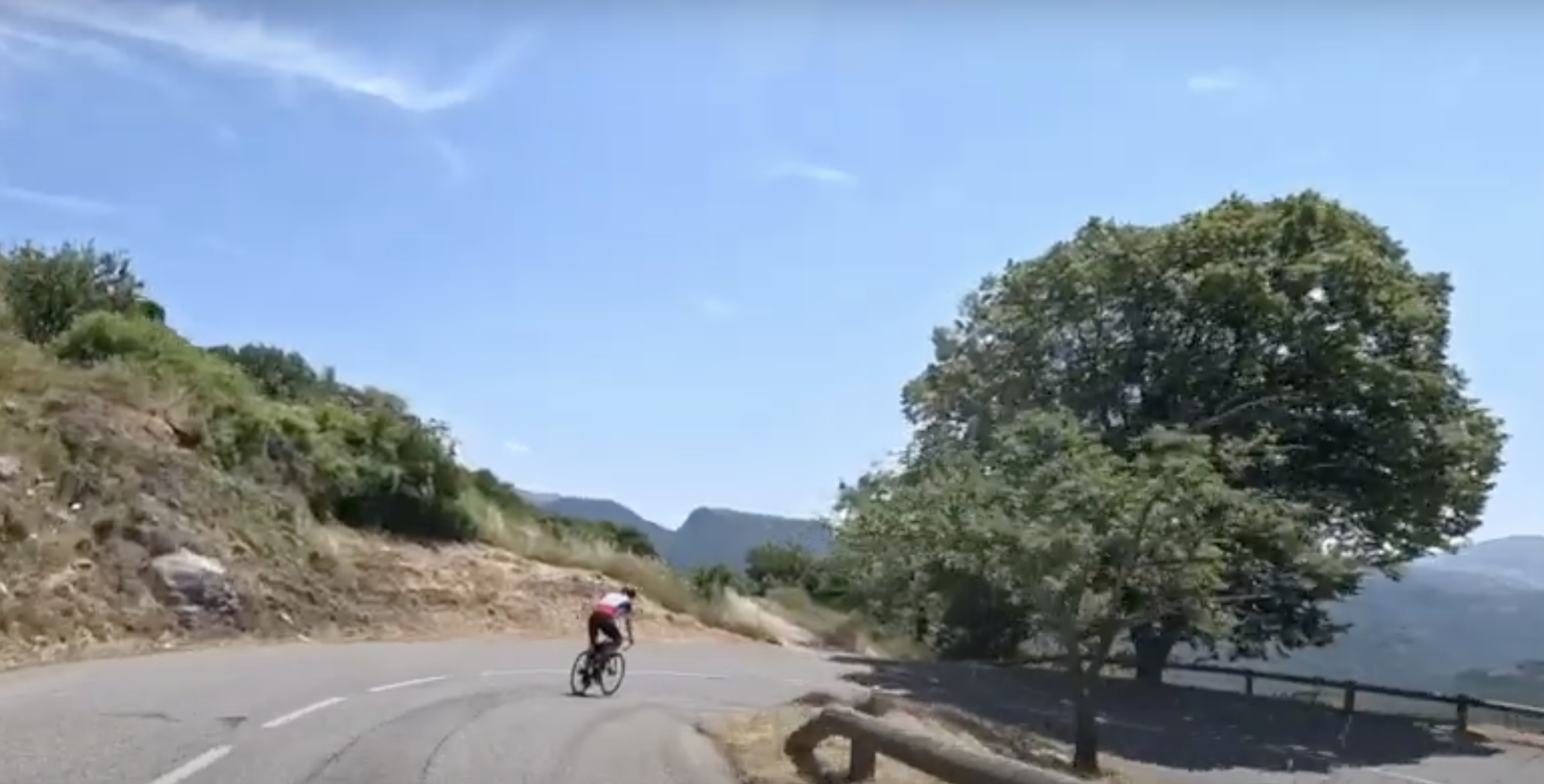
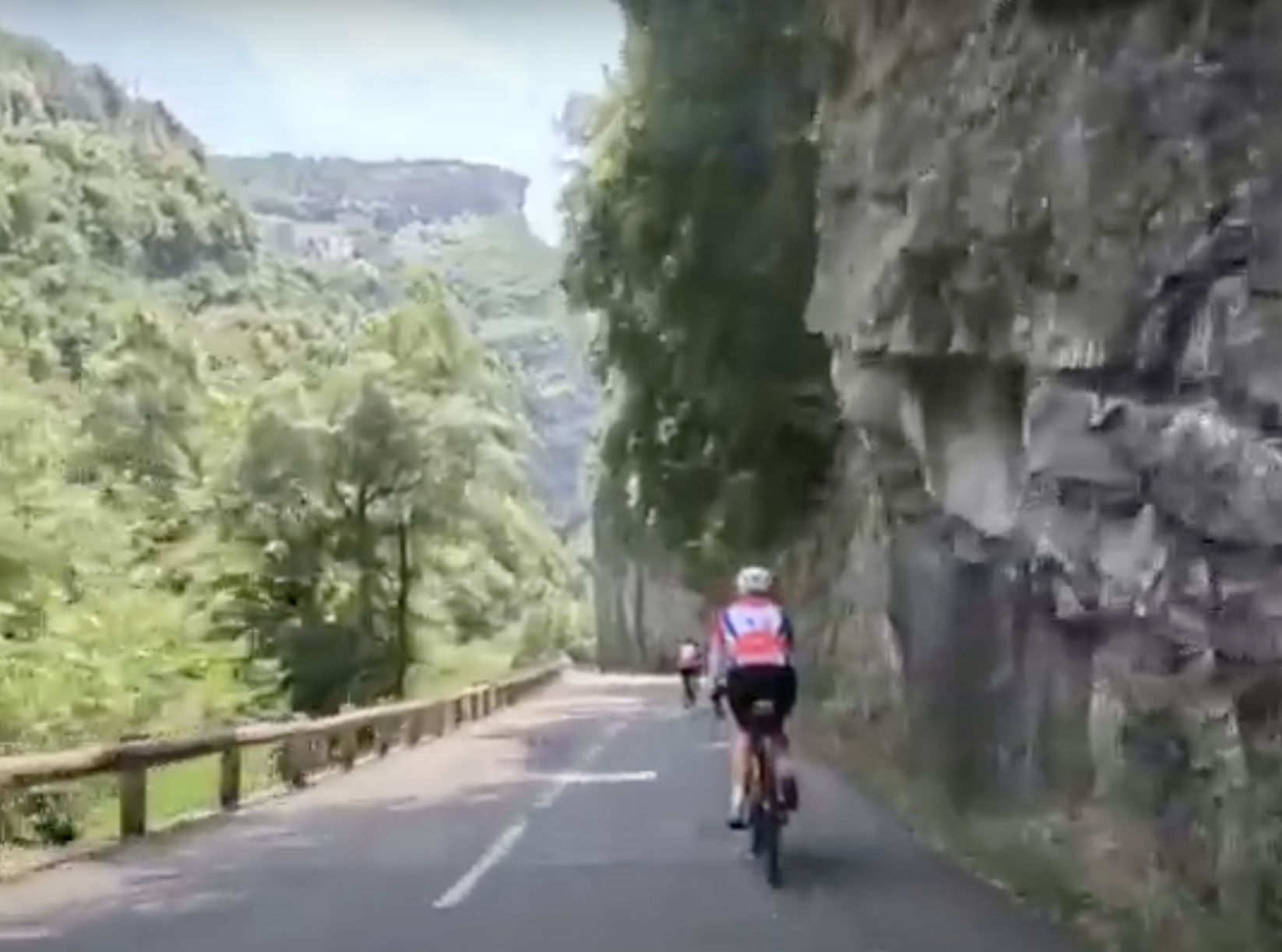
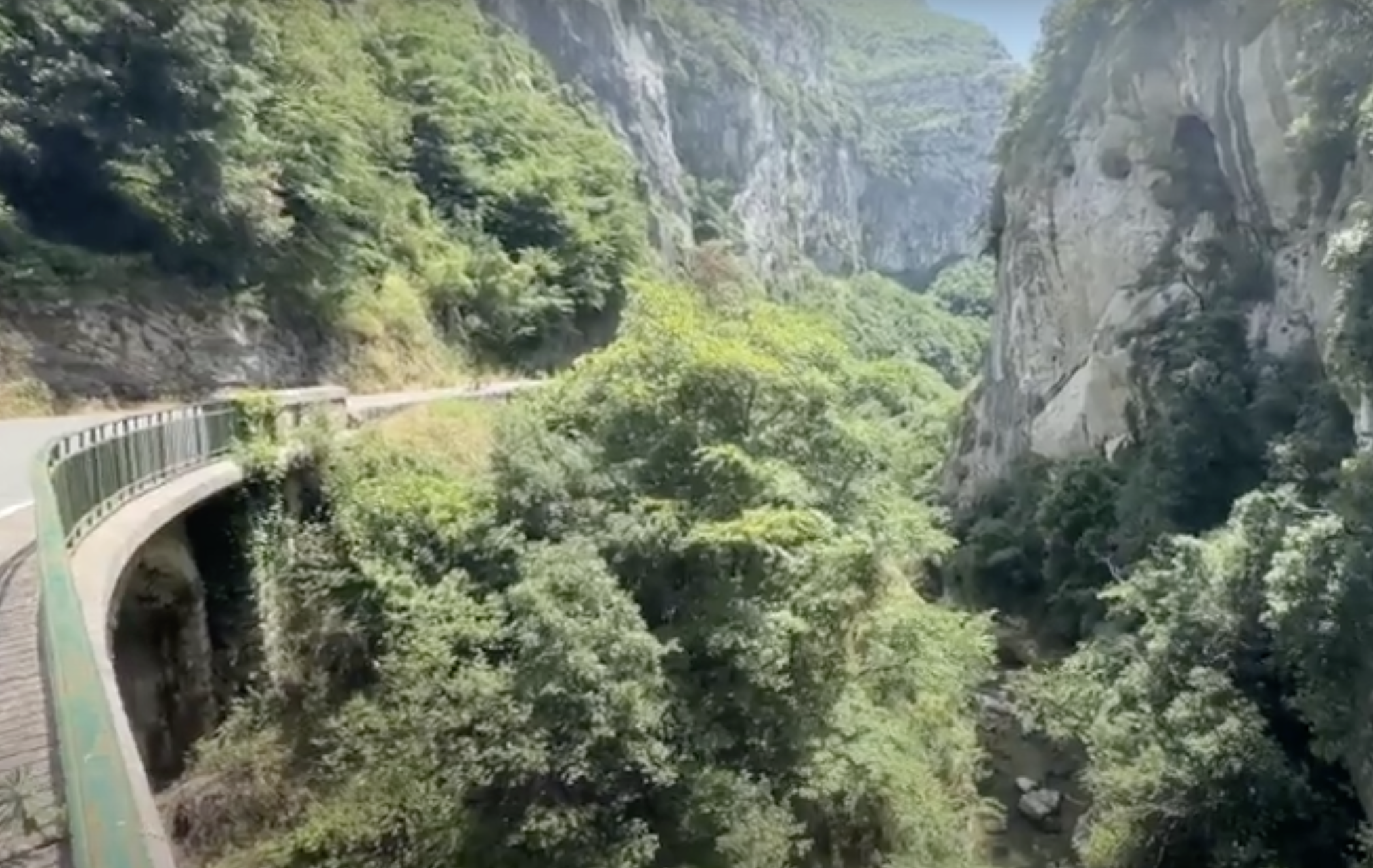
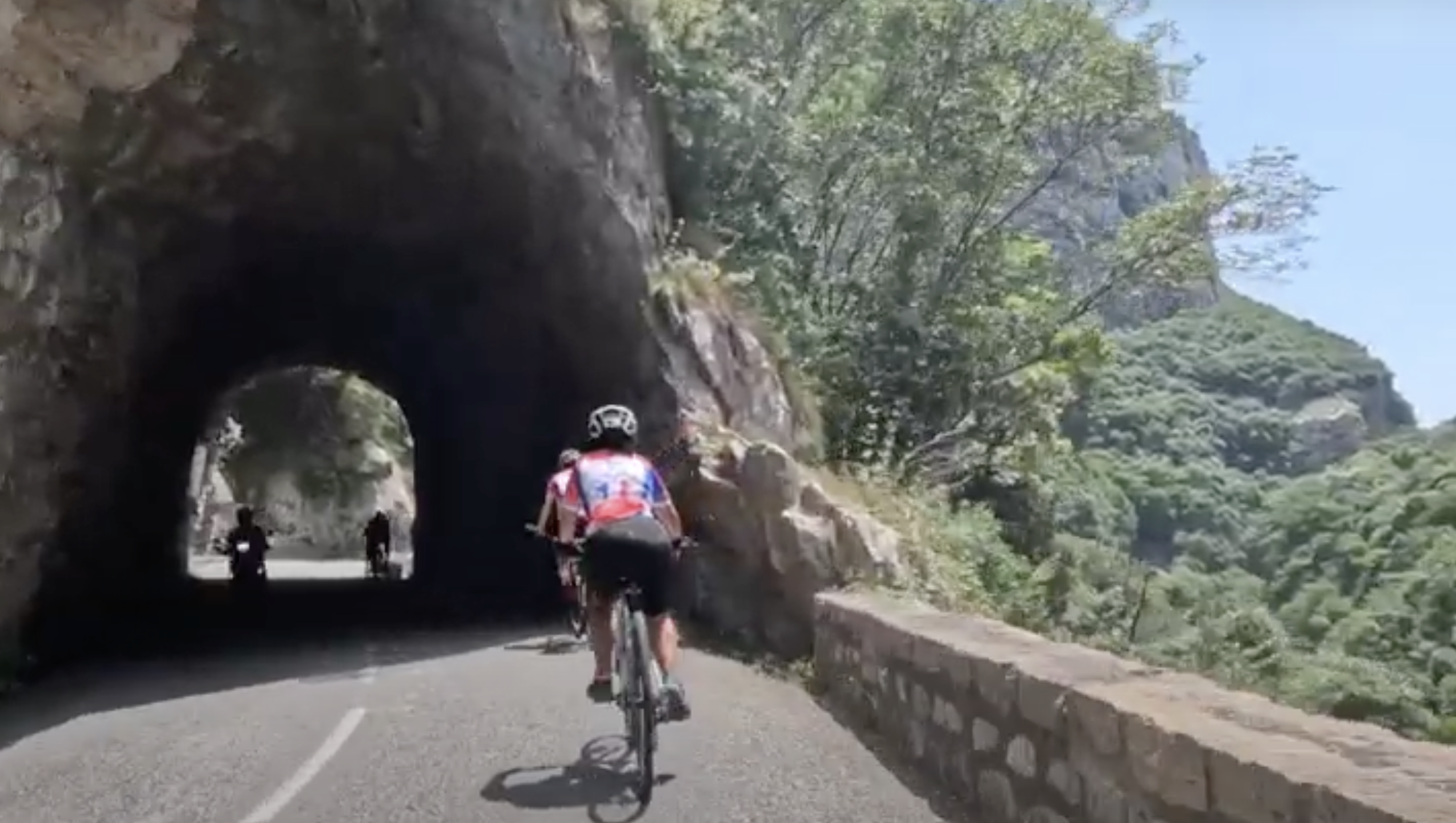
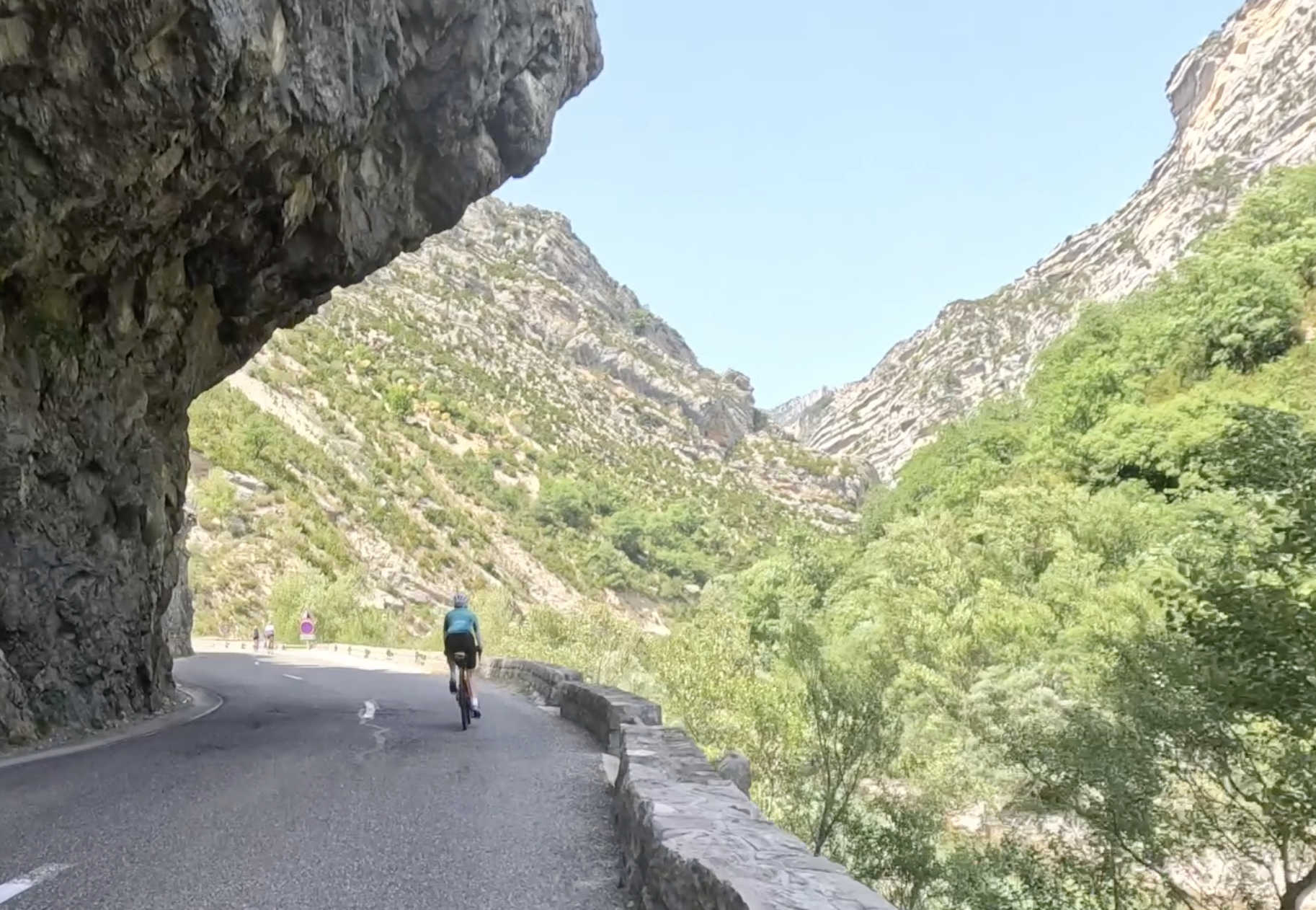
We now had the pleasure of a 20 mile downhill run almost to the Mediterranean. We raced through tunnels and under rocky outcrops as the road weaved along a dramatic valley, including the curious double arch seen above. At last we slowed for two sharp hairpins on the approach to Gréolières, our lunch stop. Enjoyable as a very long descent can be, you do need to concentrate, and lunch gave us the chance of a decent rest.

Above: the hairpinned road to Gréolières

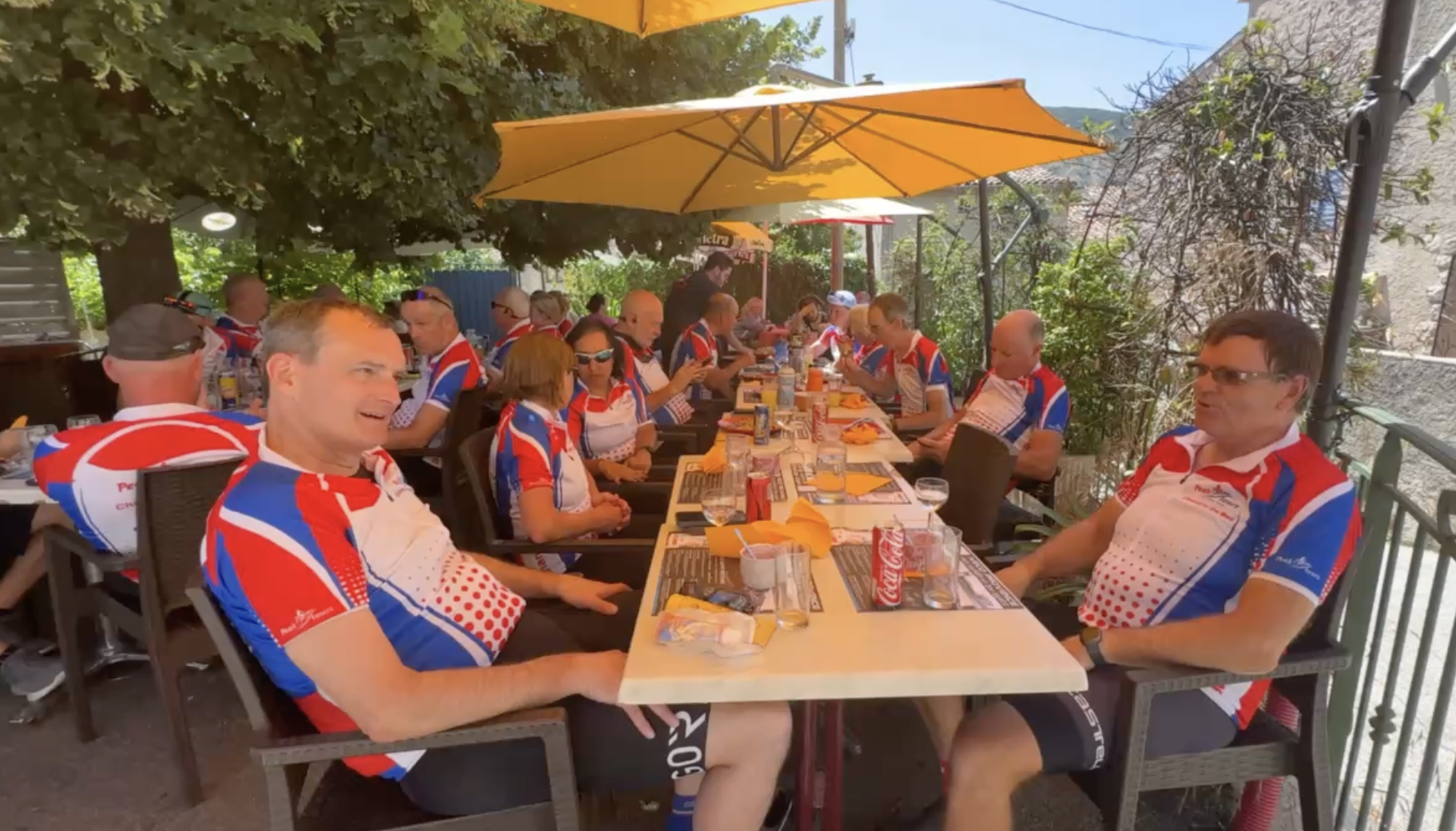
We had a splendid lunch at Le Relais at Gréolières. We were served by a man with such good English I suspected he was British. It was an enjoyable final meal on the road.

We now set off on the last leg of our tour. The first stretch was in woodland, which was so characteristic of our French journey. But after a mile or so we entered the Gorges du Loup, which was very similar to the Gorges du Verdon yesterday.

We’d been told to look out for a waterfall at a bridge over the river, so we stopped but couldn’t see the falls. After taking the pictures above I spotted the feature on the left after gaining speed again. I decided not to stop again.

We passed through a succession of tunnels as we descended the gorge.

It was satisfying to see signs for Nice as we got closer to the coast. We had one final steep but short climb as we entered the coastal conurbation. Like so many ascents over the 14 days, it felt harder than expected. Wendy, Jim and I got confused by the route on the final mile, and checked the route notes one last time as we passed through Cagnes-sur-Mer. This is where the Peak Tours Channel to the Med route ends, rather than in neighbouring Nice.

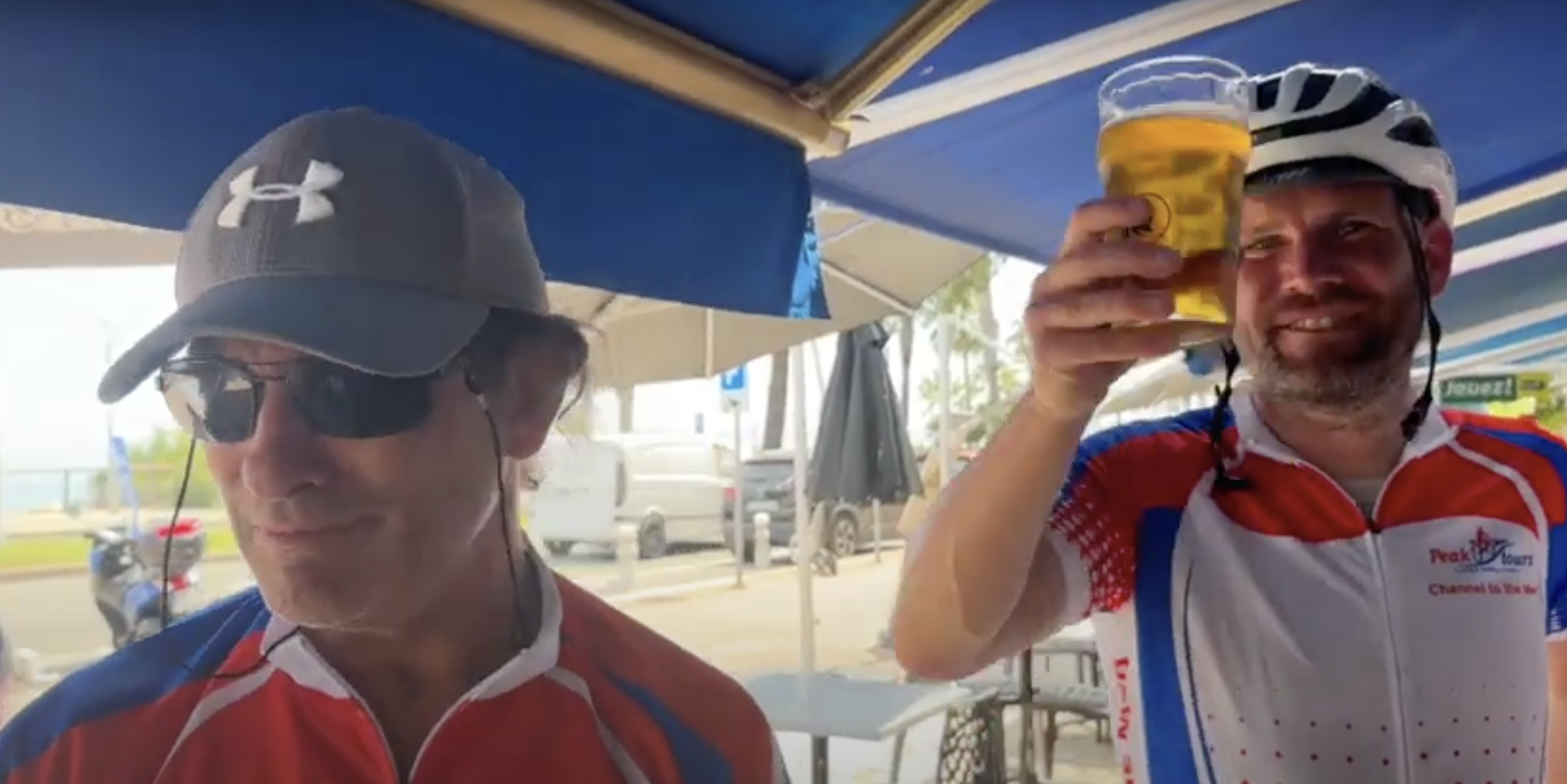
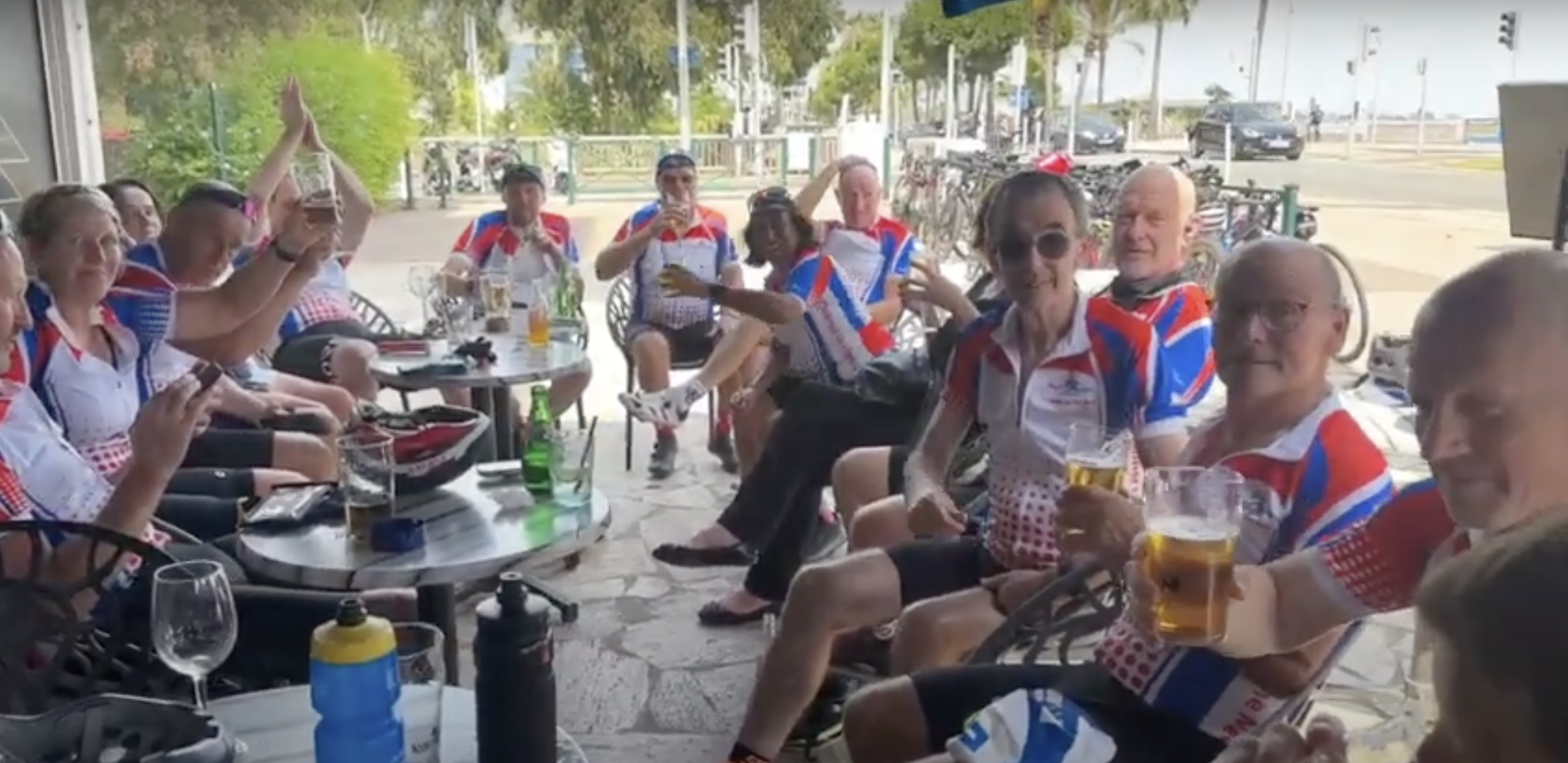
At last, we reached a road that led to the Mediterranean shore, where we found the rendezvous bar Lebanon where we were meeting. We were surprised to find we were the last to arrive – and the fact the others were sipping their celebratory drinks suggested they’d been there a while!

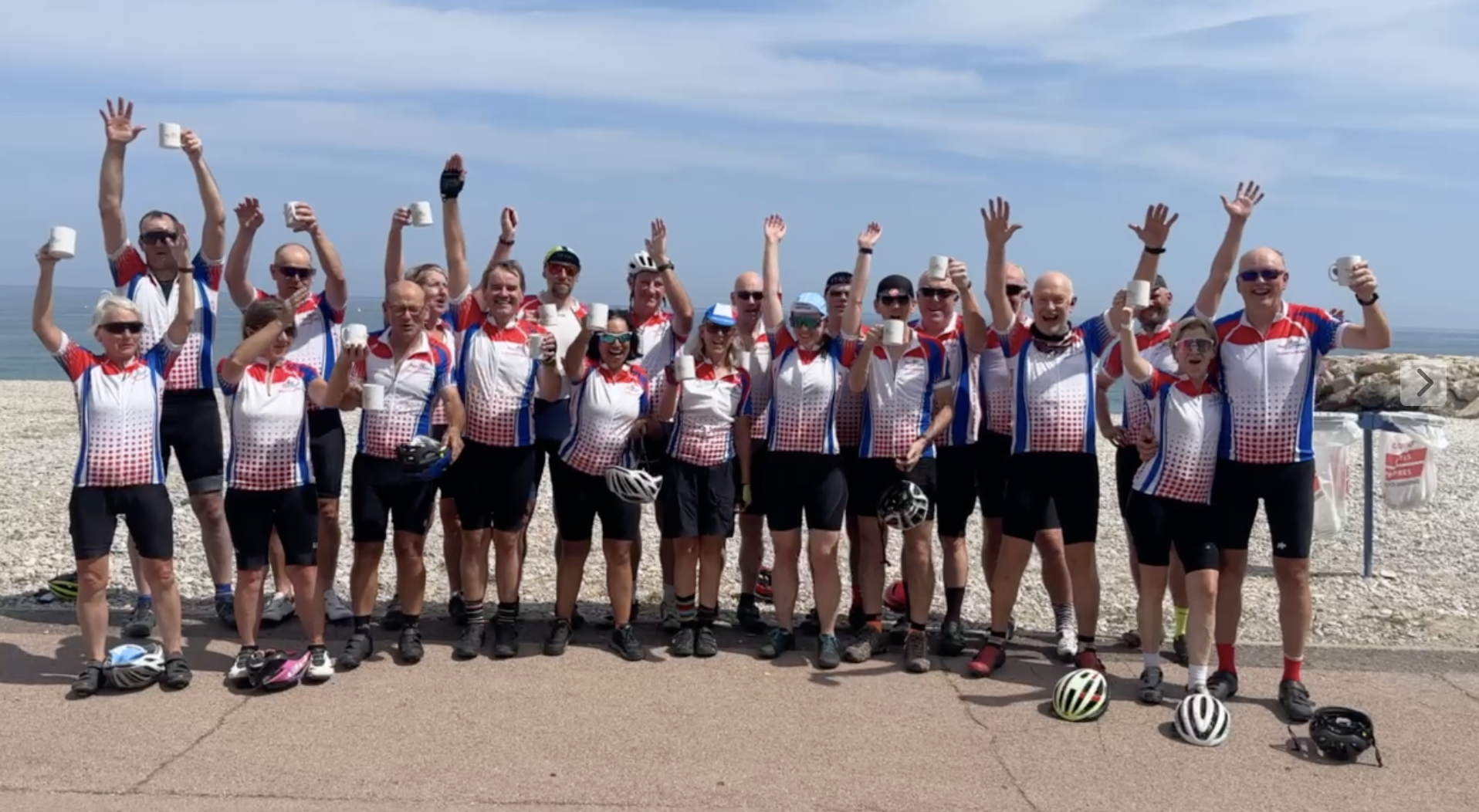
Guide Mick greeted us, and once we had our drinks congratulated everyone on our successful ride from the English Channel to the Mediterranean.

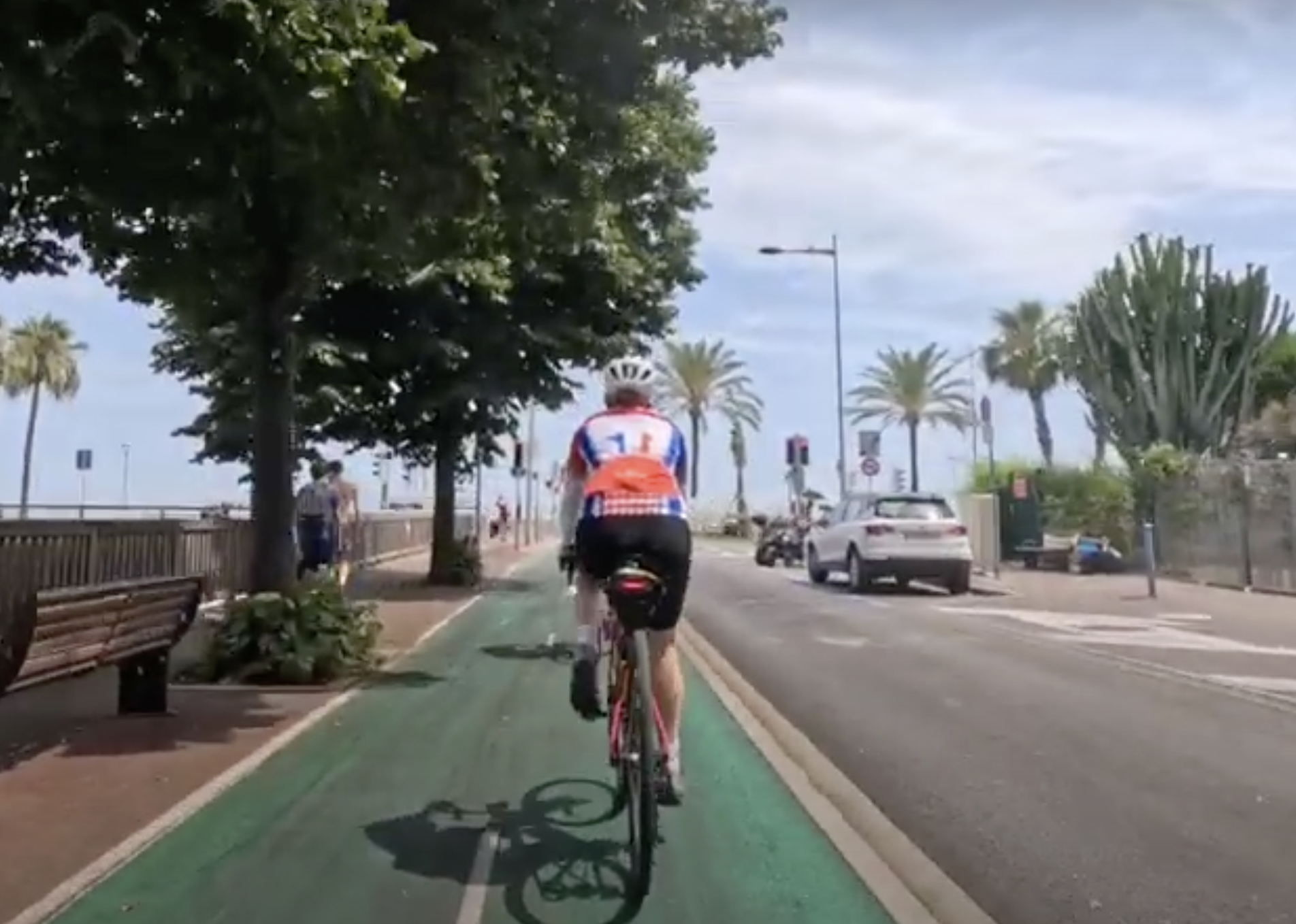
We were soon cycling along the promenade to take the obligatory group photo and video.

We had a very short final ride to the van to drop off the bikes for their long drive back to the Peak Tours HQ in the Peak District. We then got cabs to our hotel, relishing their air conditioned luxury on another very hot day. I enjoyed a short snooze before heading out for drinks and our final dinner. I’ve thoroughly enjoyed spending time with this fine group of people, both on the road and socialising in the evenings. I shall miss them.

The day’s stats

50.45 miles, 2,697 feet climbing, 3 hours 46 mins cycling, average speed 13.4mph

The day’s highlights video

The tour highlights video – 14 days in under 5 minutes!

Final reflections on Channel to the Med

Conquering Ventoux

This has been my toughest cycling holiday, despite having cycled over 3,000 miles in 2025, including almost 300 miles and 18,000 feet of climbing the weekend before we set off. It has been a wonderful experience, showing France’s enormously rich variety of landscapes, including the mountains of the Auvergne and gorges that rival America’s Grand Canyon. And I’ll never forget conquering Ventoux, despite my slow progress up the Giant of Provence.

We were both lucky and unlucky with the weather. Rain isn’t unheard of in the south of France, so we were fortunate that it rained for just five minutes during 870 miles of cycling. It gave us countless spectacular views. And as Mick says, this tour gets more spectacular with every passing day. But cycle touring is tough when it’s over 30C, especially on long, steep climbs, with many days including over 5,000 feet of climbing. (Setting off up Ventoux before 8am when it was cooler was a smart idea.) It isn’t much fun cycling in heavy rain, but provided it isn’t cold it doesn’t place the same amount of strain on the body.

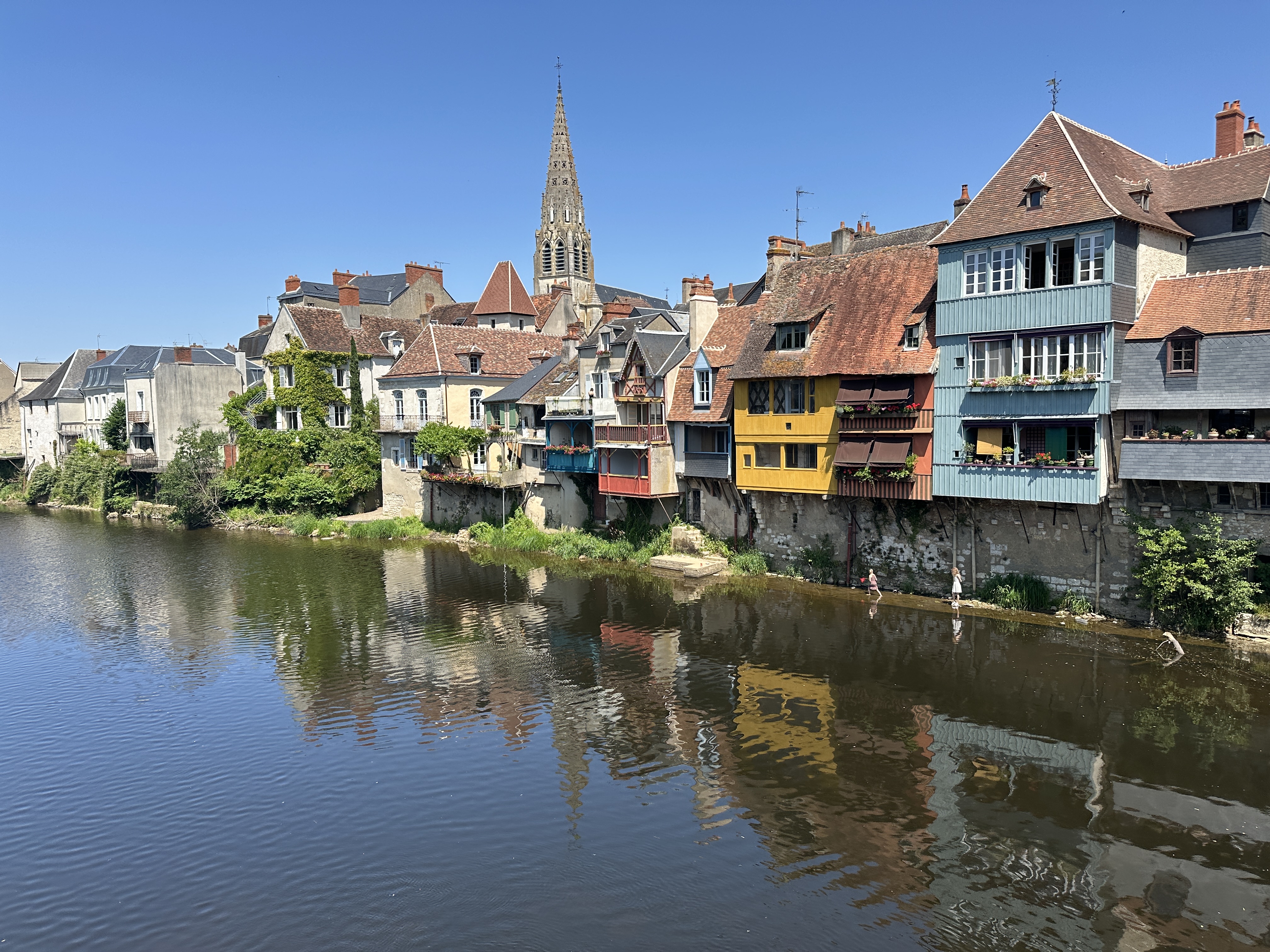
Argenton-sur-Creuse

The disadvantage of this kind of tour is that you have so little time to savour the beautiful places you visit. But it does give a taster for more leisurely return visits whether by bike, plane or car. This certainly won’t be my last French cycle tour.

Cycling Channel to the Med, Day 13: Les Salles-sur-Verdon to Castellane

This post recounts the thirteenth day of my English Channel to the Mediterranean cycle tour in France with Peak Tours in June 2025. Read Day 12: Sault to Les Salles-sur-Verdon.

As I got ready for the day, I could hear rain falling for only the second time on this tour. It had stopped by the time we retrieved our bikes from their overnight resting place, but the atmosphere was heavy with humidity.

We were quite slow to set off this morning, and I grabbed a seat, seeing no reason to stand. When we did set off, it was to tackle a seven mile climb, described in the Peak Tours route notes as the hardest of the trip after Mont Ventoux. It’s only now that I realise that we ascended almost 4,000 feet over that climb. It was tough going at times, but the cooler weather helped until the sun burned through later in the morning, bringing our usual 30C plus temperatures..

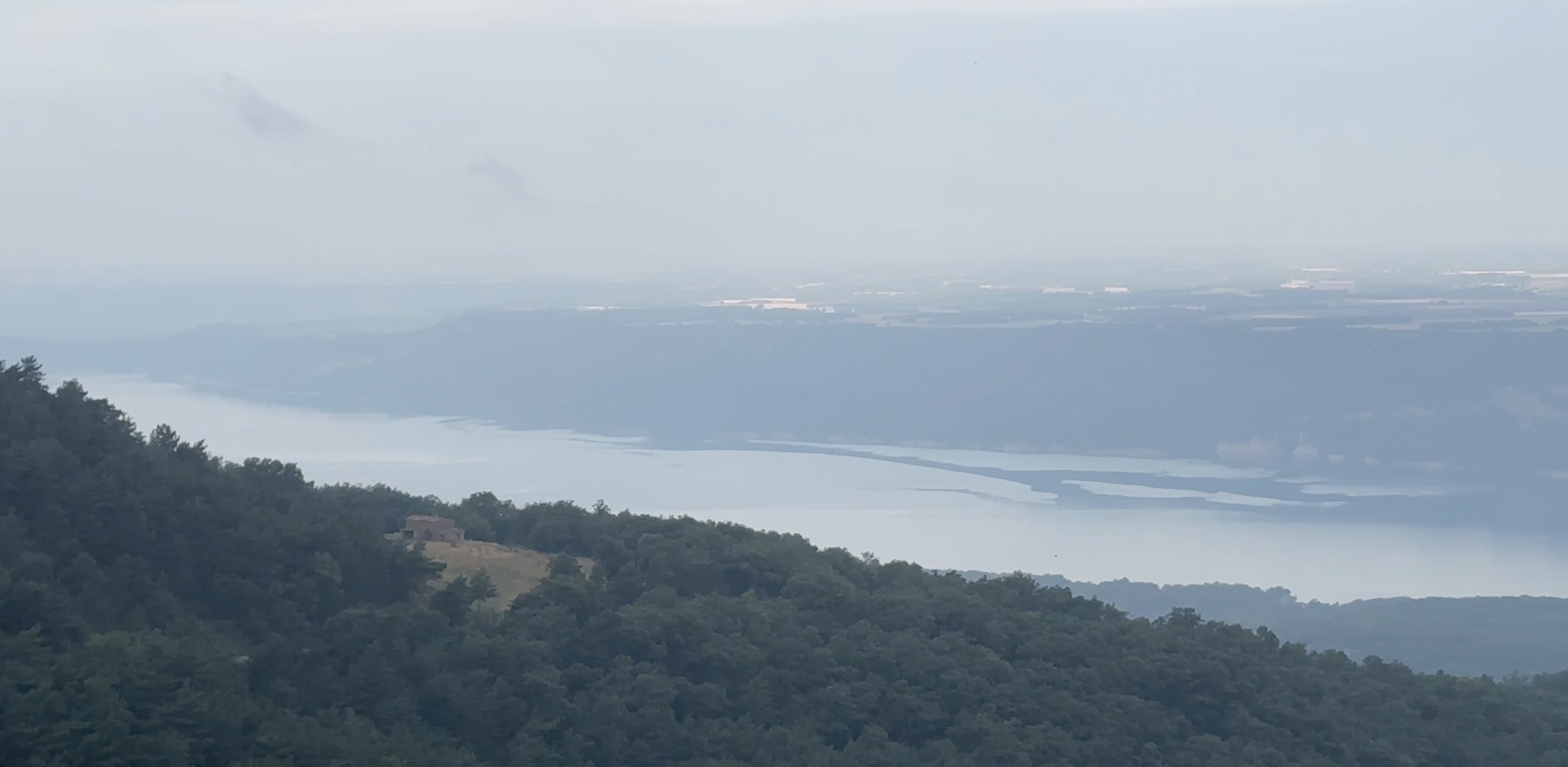
I stopped in the village of Auguines to take photos looking down to the Lac de Sainte-Croix reservoir. The road climbed up round a hairpin to the centre of Auguines, at which point we had the only rainfall when cycling of the whole tour. A few others donned rain jackets, but I had left mine in the van. (I knew that if I’d worn it I’d have resembled a boil in the bag chicken within seconds – a lesson I learned on Land’s End to John O’Groats in 2019.) The rain stopped within five minutes.

Huw and Chris climbing Col d’Illoire

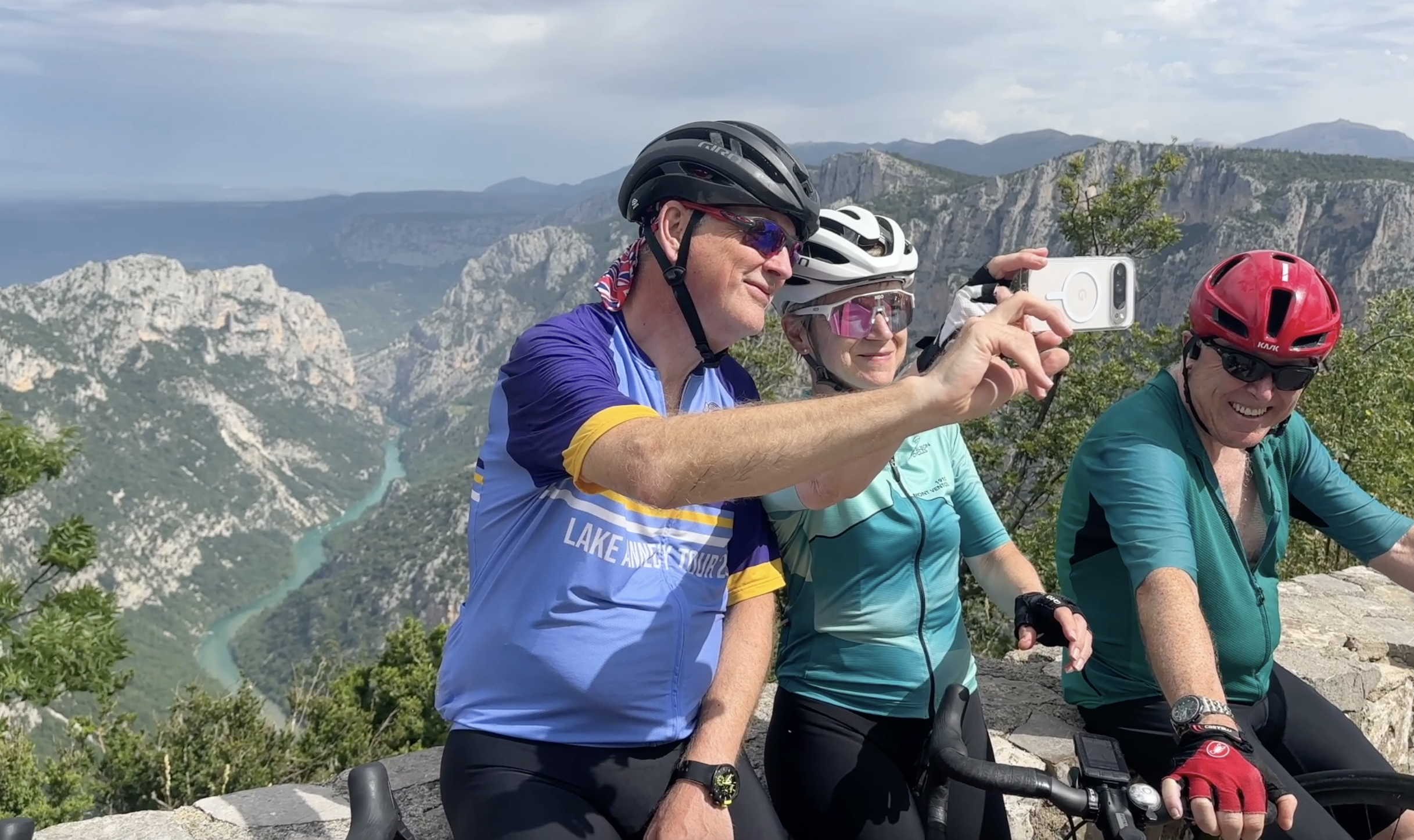
After just over five miles we came to a viewing platform at the top of the Col d’Illoire. At first I thought the viewpoint was on a distant rock, and decided not to visit it, but quickly realised it was actually a wooden platform just a few steps away from the road. The views of the gorge and the Verdon river far below us were stunning, as you can see below.

We had several more stops along the way to admire the views, although the crowds made it hard to shoot video clips without chatter and the roar of motorbikes in the background. One German always seemed to appear whenever we stopped, and would never turn off his motorbike engine, although he did take a photo of us at one point.

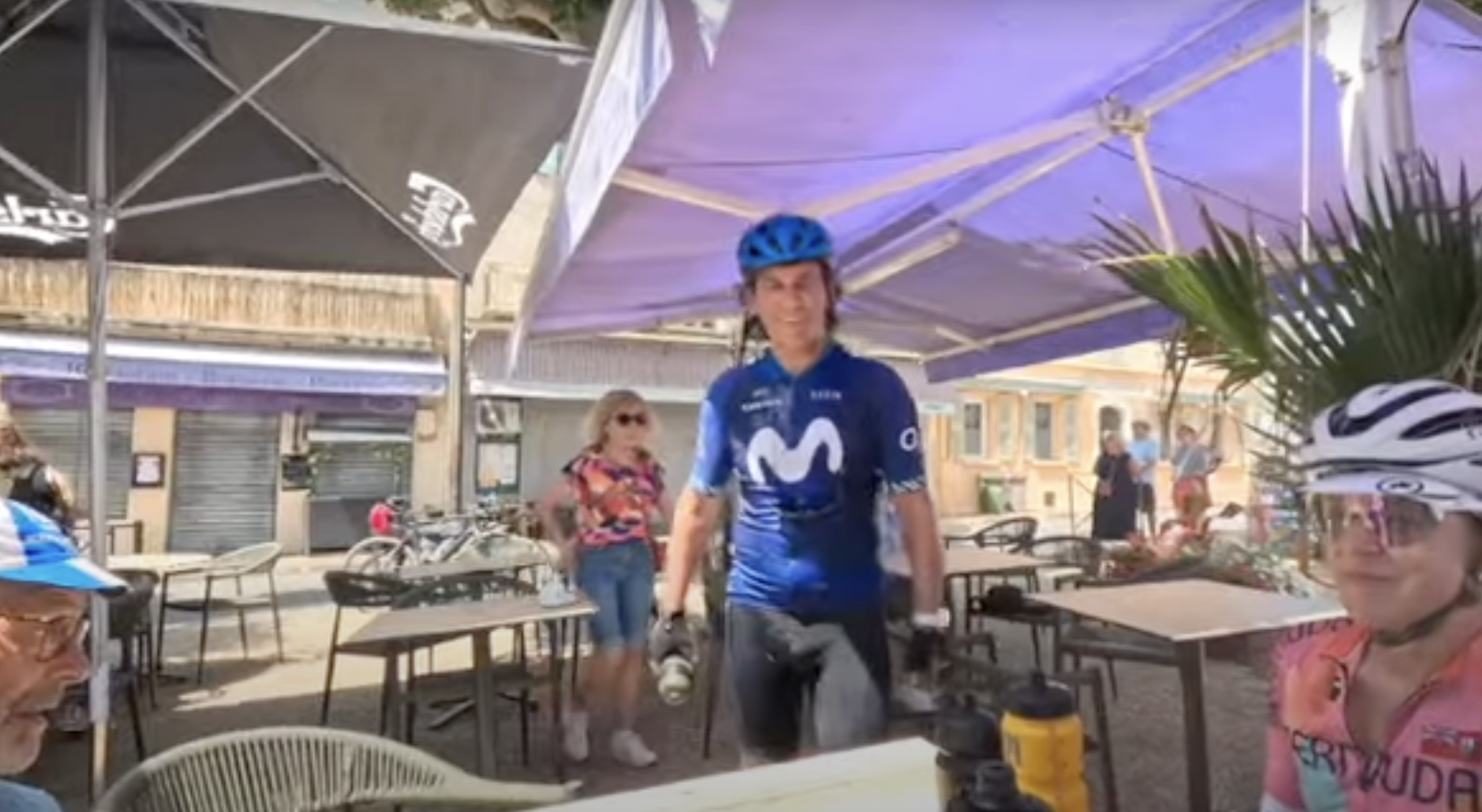
We stopped for our morning break after just under 10 miles – just cold drinks now the ‘brew’ van was out of the tour. I videoed John making his grand arrivée at the break, seen above.

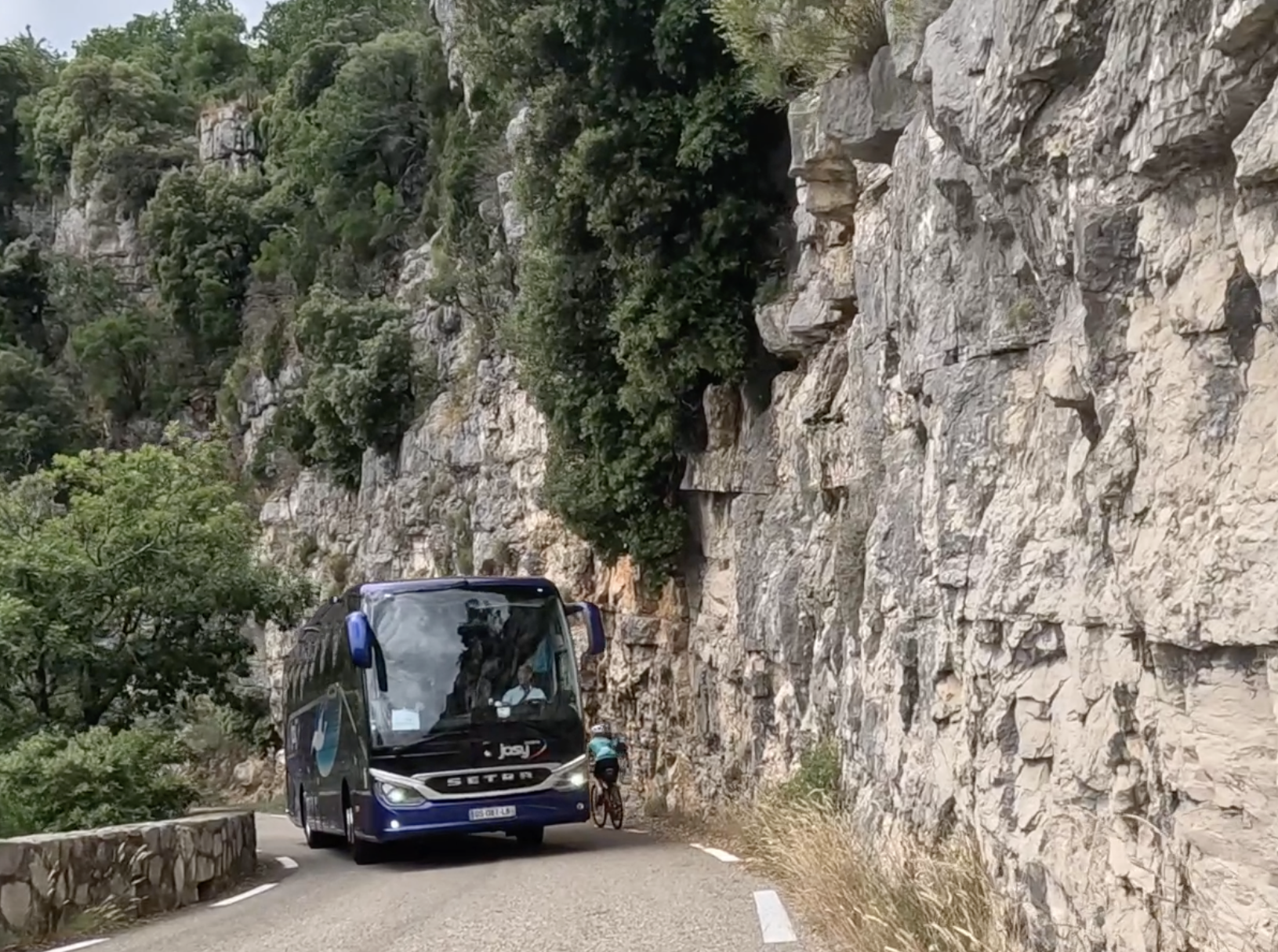
We had to cycle carefully round the many hairpins, as these could be hazardous if we coincided with the many tourist coaches negotiating them.

I enjoyed seeing this unusual vehicle overtaking us. The rider made two attempts, aborting the first when he saw several motorbikes about to overtake him and us.

Above: images on the road along Gorges du Verdon

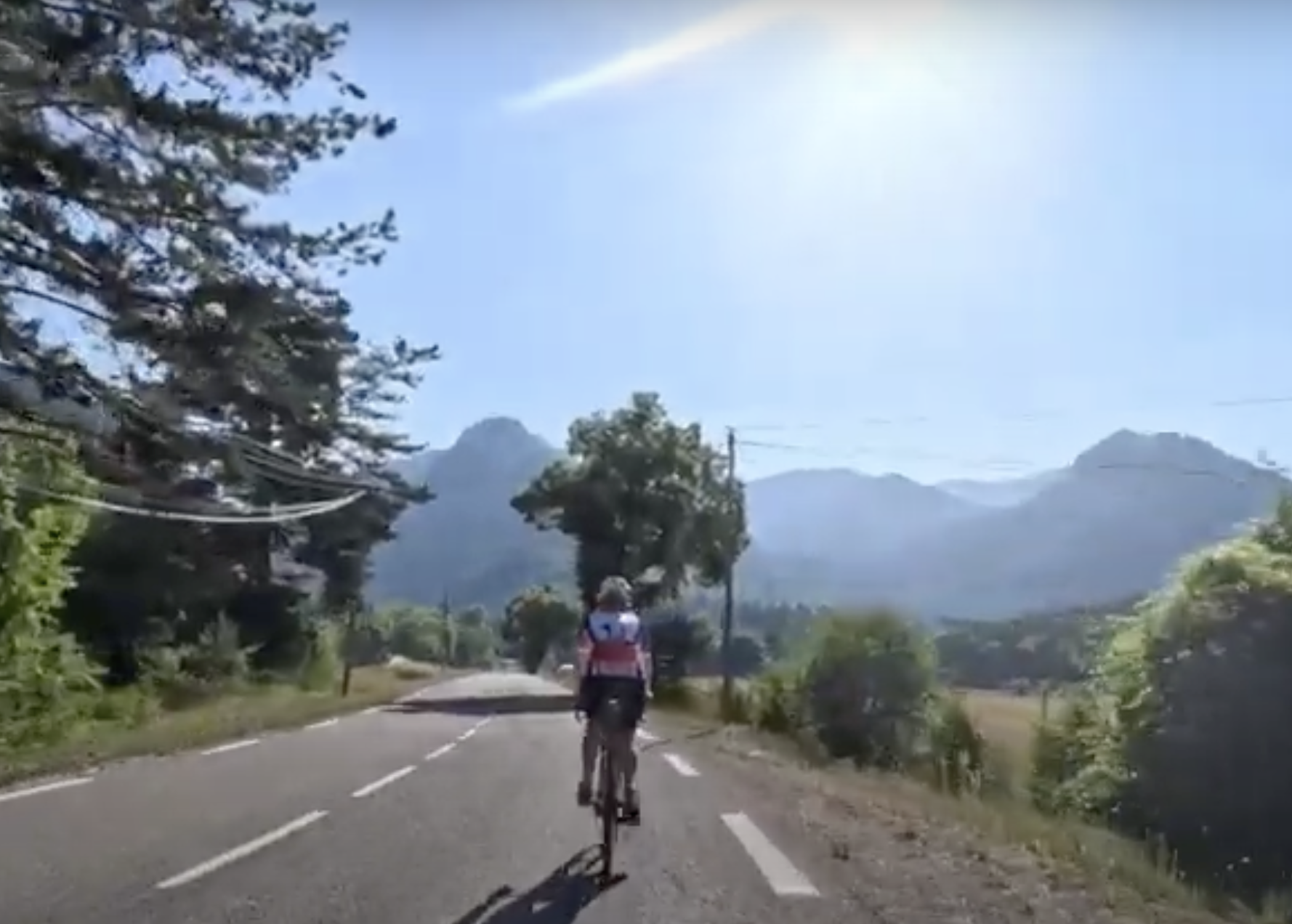
After crossing this spectacular bridge, we had a tough four mile ascent that was made far harder because of a strong headwind, which would plague us for much of the rest of the day. Jim and I were cycling together again, and at one point he videoed me as I cycled, as you can see in the screenshot below.

The last couple of miles to lunch at Comps-sur-Artuby was downhill, and we savoured the chance to relax and refuel. Unfortunately, the service at Restaurant l’Artuby was very slow, and we waited over an hour for our communal plates of meat and chips to appear. It was very hot by now, and we were grateful we had just 17 miles still to cycle to our destination.

Comps-sur-Artuby

After a tough morning, we were looking forward to the easier afternoon session, which the Pesak Tours route notes promised was ‘mostly downhill’. This was true, but that pesky headwind meant we still had to pedal, at least until we changed direction away from the wind.

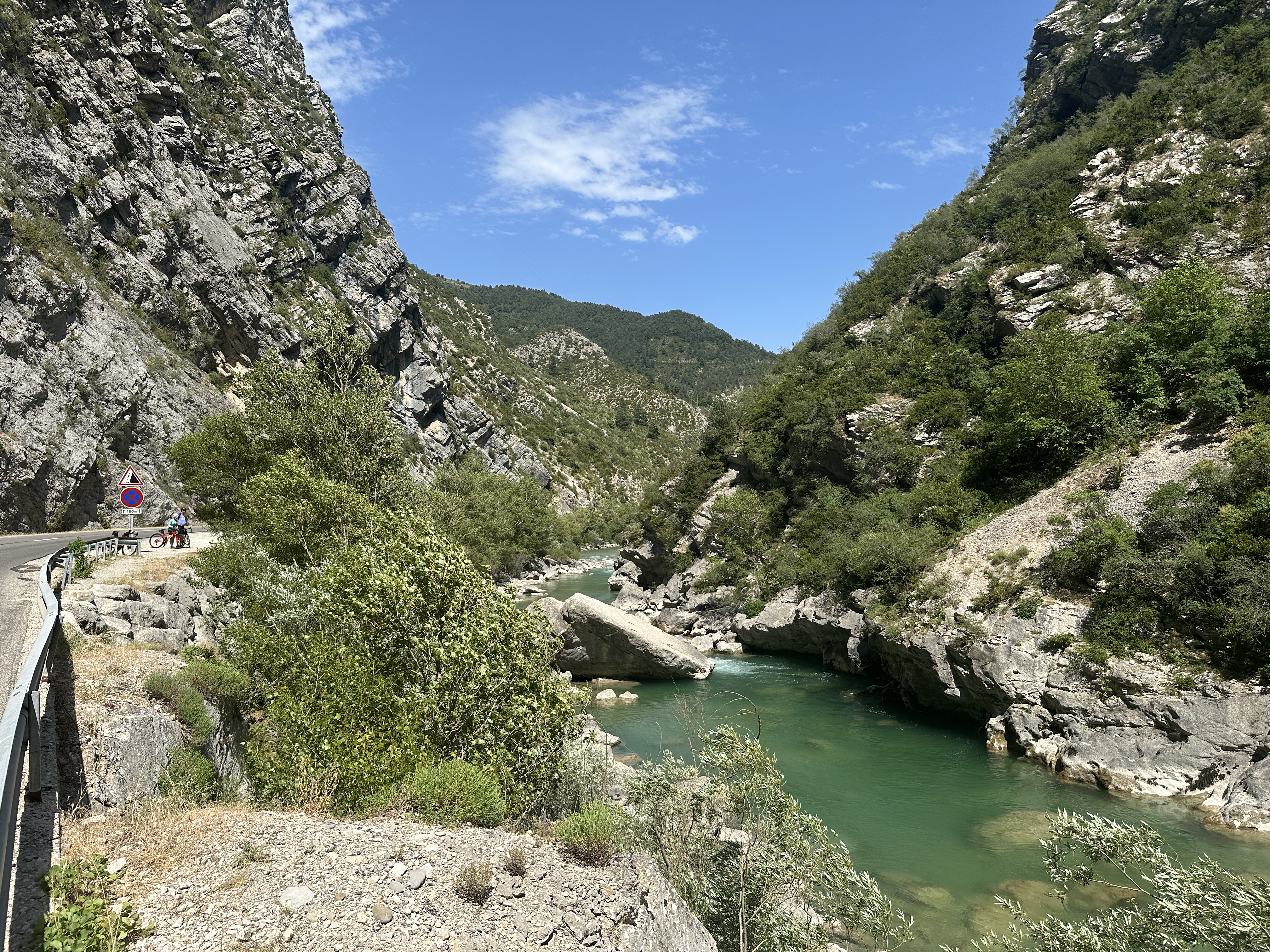
We unexpectedly rejoined the Gorges du Verdon – Rive Droite, or the right bank – after a few miles, with the familiar rocky overhangs and green waters of the Verdon, seen below. There was less traffic compared with on this morning’s route along the gorge, and the road was much lower, so we were much closer to the river. It was lovely to see Donal and Monica cycling again after their unexpected break from the tour.

As we entered Castellane, we passed a group of cyclists heading out of town. Suddenly I spotted a spectacular rock – like a mini Gibraltar – with a church on top. This was the Roc of Notre-Dame, which dominates the town. The church was founded in the 12th century.

Mark, Wendy and I enjoyed a drink on the terrace of the Hotel du Commerce before we met Jim for dinner. Castellane is a lovely, historic town, with a good selection of restaurants. We chose well: excellent service, and wonderful food – including my pizza. It was a fine way to end the last ‘normal’ day of the tour – it’s hard to believe that by this time tomorrow we’ll have completed our epic ride from the English Channel to the Mediterranean.

Read Day 14: Castellane to Cagnes-sur-Mer.

The day’s stats

44.25 miles, 4,449 feet climbing, 4 hours 2 mins cycling, average speed 10.9mph (the lowest of the tour!)

The day’s highlights video

Cycling Channel to the Med, Day 12: Sault to Les Salles-sur-Verdon

This post recounts the twelfth day of my English Channel to the Mediterranean cycle tour in France with Peak Tours in June 2025. Read Day 11: Vaison la Romaine to Sault via Mont Ventoux.

I wondered how I’d perform today, after yesterday’s massive effort climbing Mont Ventoux. The answer was mixed: surprisingly well in the morning but very badly on the final 25 miles to our destination.

The day began with breakfast at tables on the pavement outside our hotel, the Albion. We had to cycle into the centre of Sault to the hotel the others were staying at for the day’s briefing, and then cycle back past the Albion on our way out of town.

We heard the news is that the smaller of the two Peak Tours vans was out of action with a failed clutch. Guides Mick and Karen would spend much of the day trying to get it mended, without success. They then had the massive task of squeezing the contents of the two vans into the larger vehicle, which is usually intended to carry our overnight bags to the day’s destination. (The smaller van is used to carry snacks and drinks for the morning and afternoon ‘brew’ stops, as well as our day bags.) As a result of the breakdown, there would be no supported stops today apart from lunch, and we were given details of cafes that we could use and claim back the costs. Everyone was rightly very understanding, given the outstanding support the Peak Tours guides Mick, Karen and Fernando have given us on this tour.

Our last glimpse of Ventoux

We had a steady climb for the first 15 miles, which I enjoyed. To be fair, the total ascent over this section was probably less than 1,000 feet, but I was pleased to find that Mont Ventoux hadn’t left any ill effects 24 hours on. We had a great view of the summit as we headed away from Sault. The Giant of Provence truly dominates the region.

We gathered at the cafe in the centre of Banon for a pleasant interlude. It was already very hot, and I was glad to have a seat in the shade. We had one nervous moment when a large lorry attempted a three-point turn right in front of us, coming dangerously close to our bikes. But all was well.

If the 15 miles climb was enjoyable, the even longer descent was pure heaven. Once it ended, we had a climb up to a large reservoir, Retenue de la Laye. I noticed that I could see the road we’d ascended between the trees beside the lake, and videoed others cycling along it.

We passed through a fairly large town, Forcalquier, before missing our turning off a large roundabout, requiring us to go round again. (We didn’t want to join the nearby motorway!) We had a moment of navigational doubt caused by the route notes claiming the lunch stop was earlier than it was, presumably because it was there on a previous tour. As we passed through Oraison, Jim noticed some bikes and correctly assumed these belonged to our faster riders. As very sweaty cyclists we felt a little out of place at the smart L’Epicurien restaurant. Those who’d already eaten commended the food, and the pasta was indeed delicious, but I feared the portion wouldn’t prove enough to fuel the 35 miles remaining. I was right.

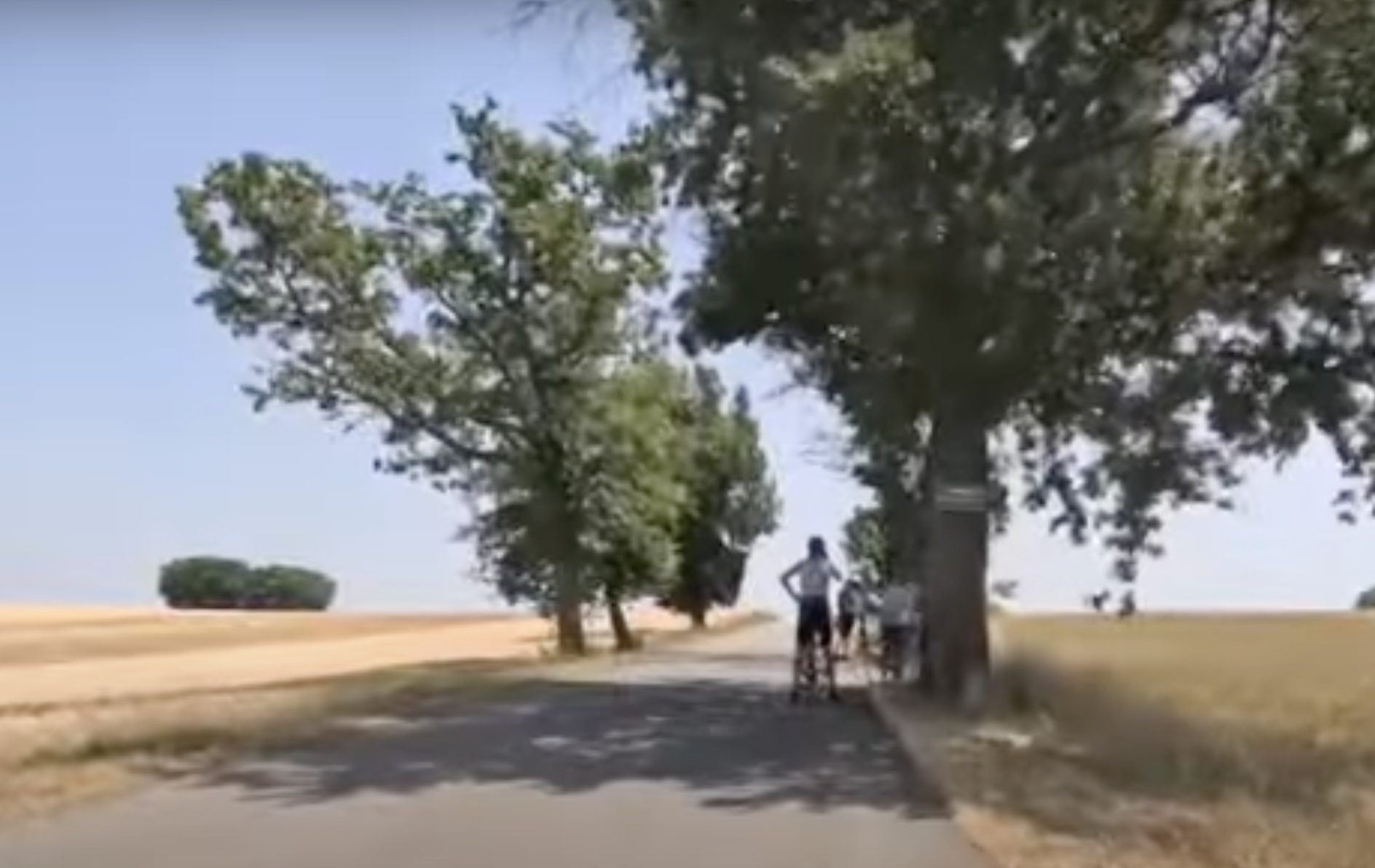
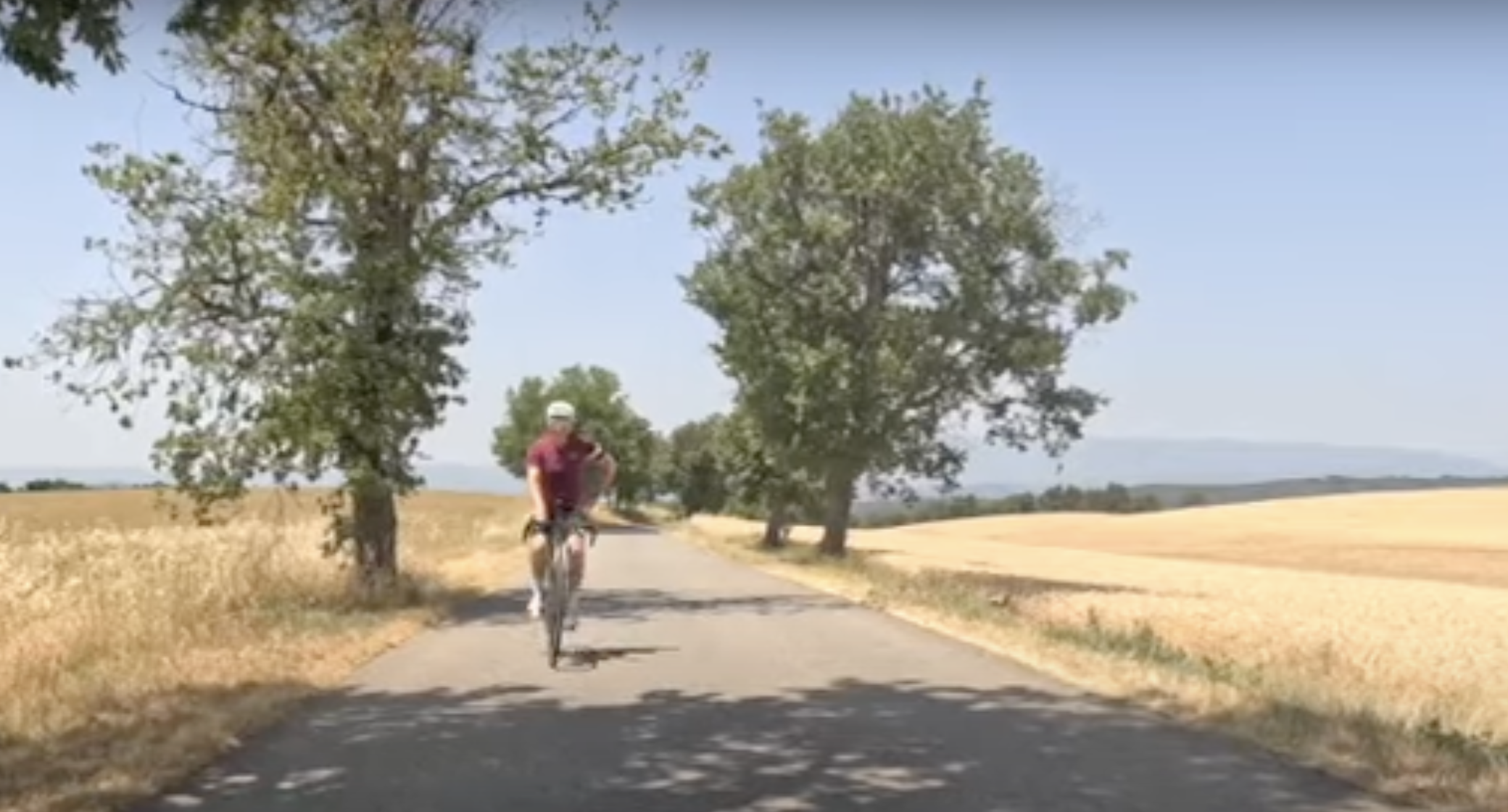
We had a few more miles of easy riding before a big climb, through woodland. We were all very hot by the time we reached the summit, and took an enjoyable breather under the shade of some fine trees, seen above.

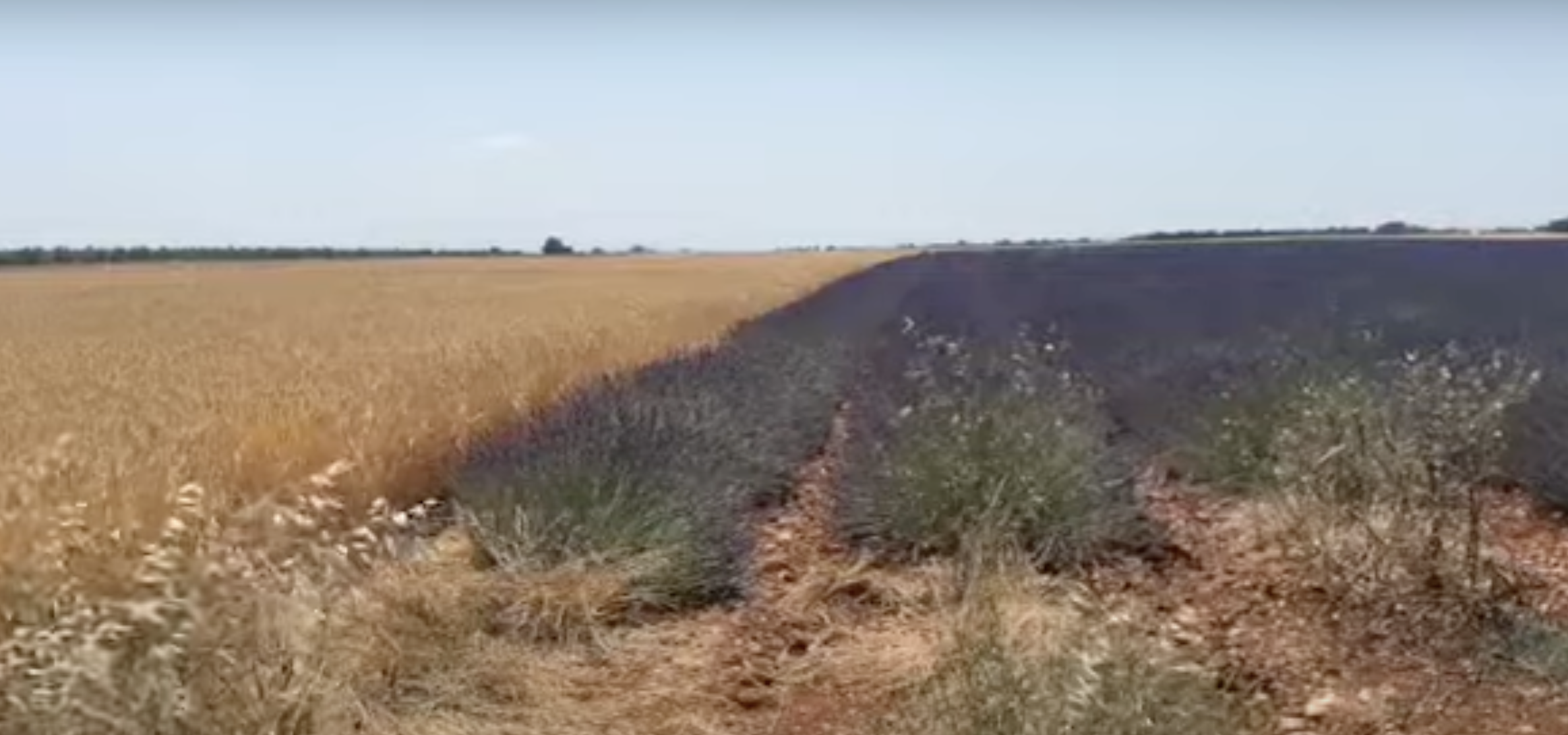
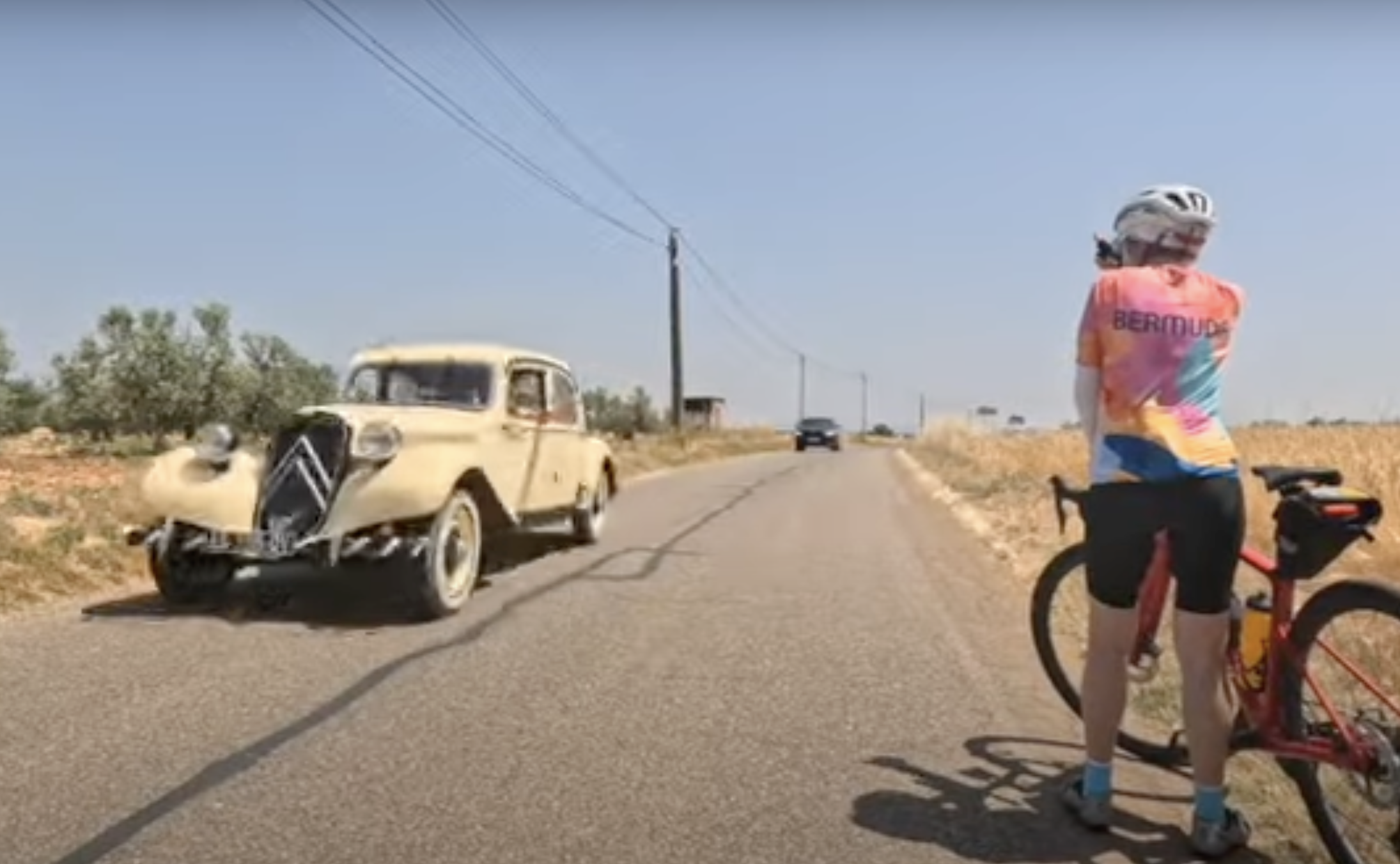
We stopped again soon after to admire a field of lavender, which came to an abrupt halt, giving way to other crops. We also admired this old Ciitroën car that tooted as it passed us.

We agreed to take a break in Valensole, but service at the cafe was chaotic. We enjoyed the respite, even though we were conscious we still had another 25 miles to our destination. Little did I realise that this would be one of my hardest sessions of the entire tour, almost certainly because I hadn’t eaten enough.

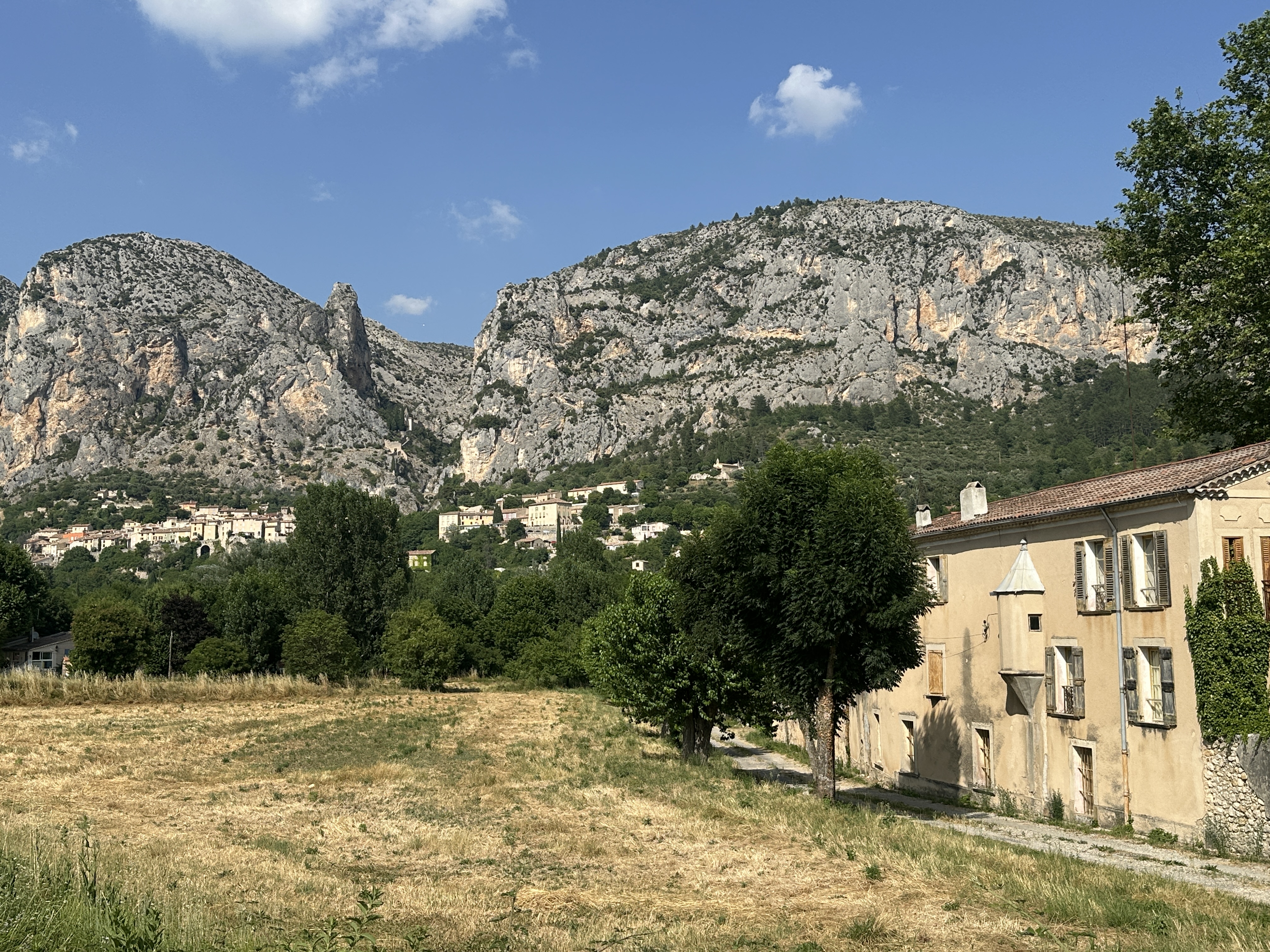
There was one section of road that looked as if it was descending, but my legs and my Garmin confirmed it was actually an incline. The day’s route profile above explains why I struggled: an eight mile climb starting at around the 57 mile point that got progressively steeper. My low point came in Riez, where I stopped by the side of the road and ate an energy bar. I knew it would take time to feel the benefit, which came after I reached the summit of the climb. Now came the reward: a view of Moustiers Sainte-Marie, a village at the western entrance to the Verdon gorge which sits on terraces 300 feet up a limestone cliff. The photo below gives a glimpse of this extraordinary place.

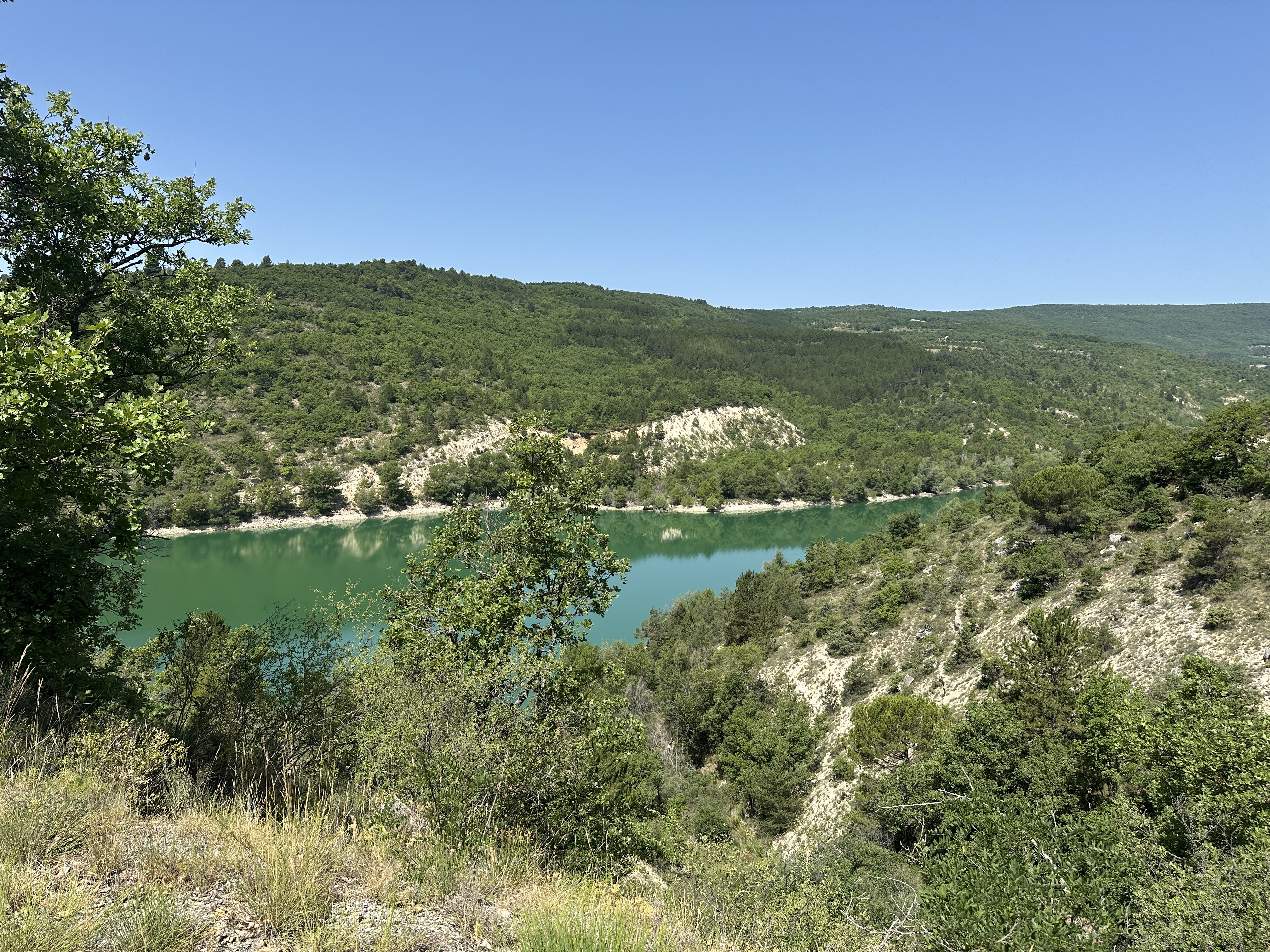
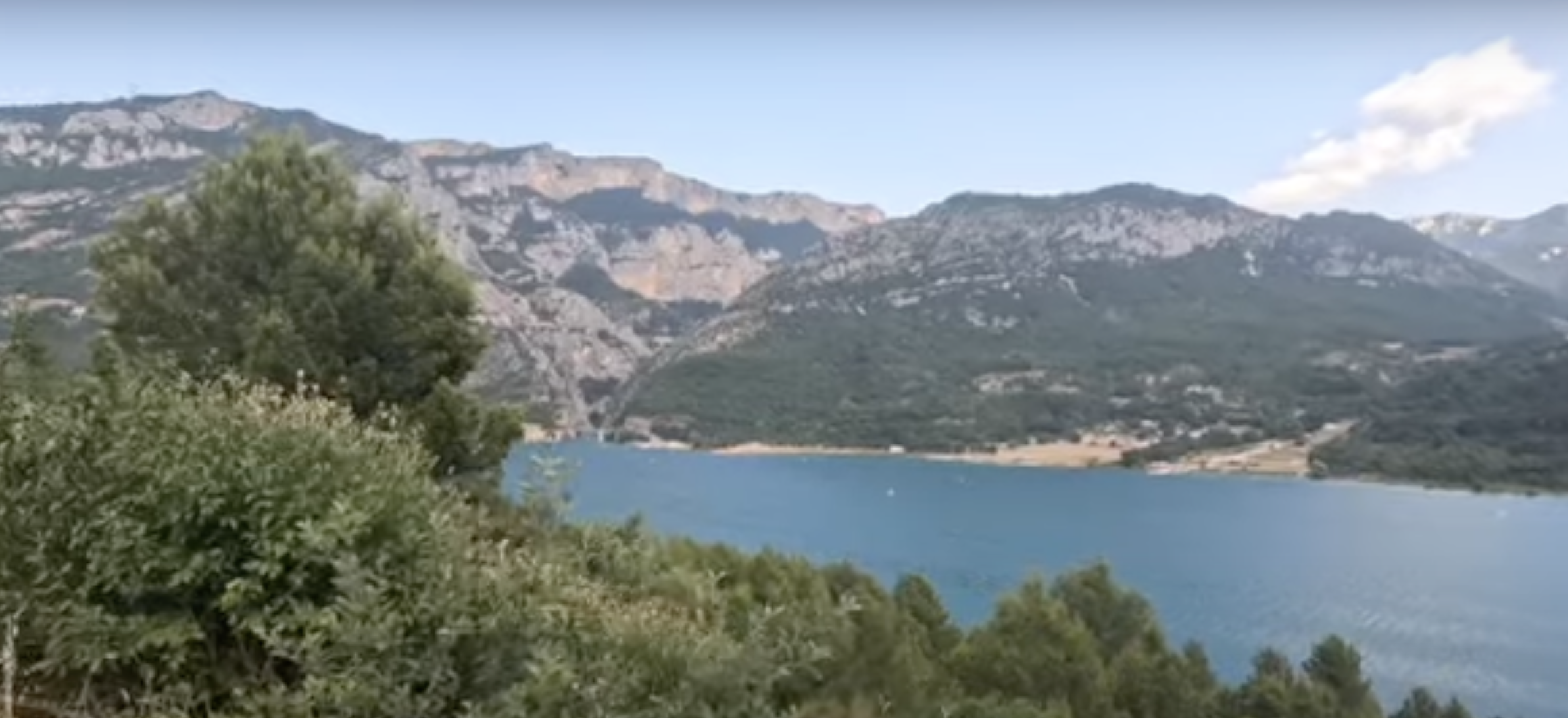
A little later, Wendy, Jim and I clambered down to take photos of the Lac de Sainte-Croix, which we’d be cycling close to on our way to our destination at Les Salles-sur-Verdon.

The lake is a reservoir created in the 1970s by damming the Verdon river, which we crossed on long bridge over the Verdon river close to the entrance to the gorge.

Aerial view of the bridge we cycled over. Photo: Olivier Cleynen

We were nearly home, but for a rather unpleasant busy road. One driver spent so long on the left side of the road overtaking a number of us that suggested the French do drive on the left.

We were staying at the Hôtel L’Ermitage, a nice modern hotel. It was a pleasure to have a drink and then dinner here after a tough afternoon. The evening was made even better by Monica and Donal rejoining the tour, after Donal had spent a few days getting treatment. It was lovely to see them again. They will be cycling with us for the final two days of the tour.

Read Day 13: Les Salles-sur-Verdon to Castellane.

The day’s stats

77.38 miles, 4,679 feet climbing, 5 hours 35 mins cycling, average speed unknown but likely around 13.6mph.

The day’s highlights video