Memories of McGuirk’s tea rooms, Wicklow Mountains

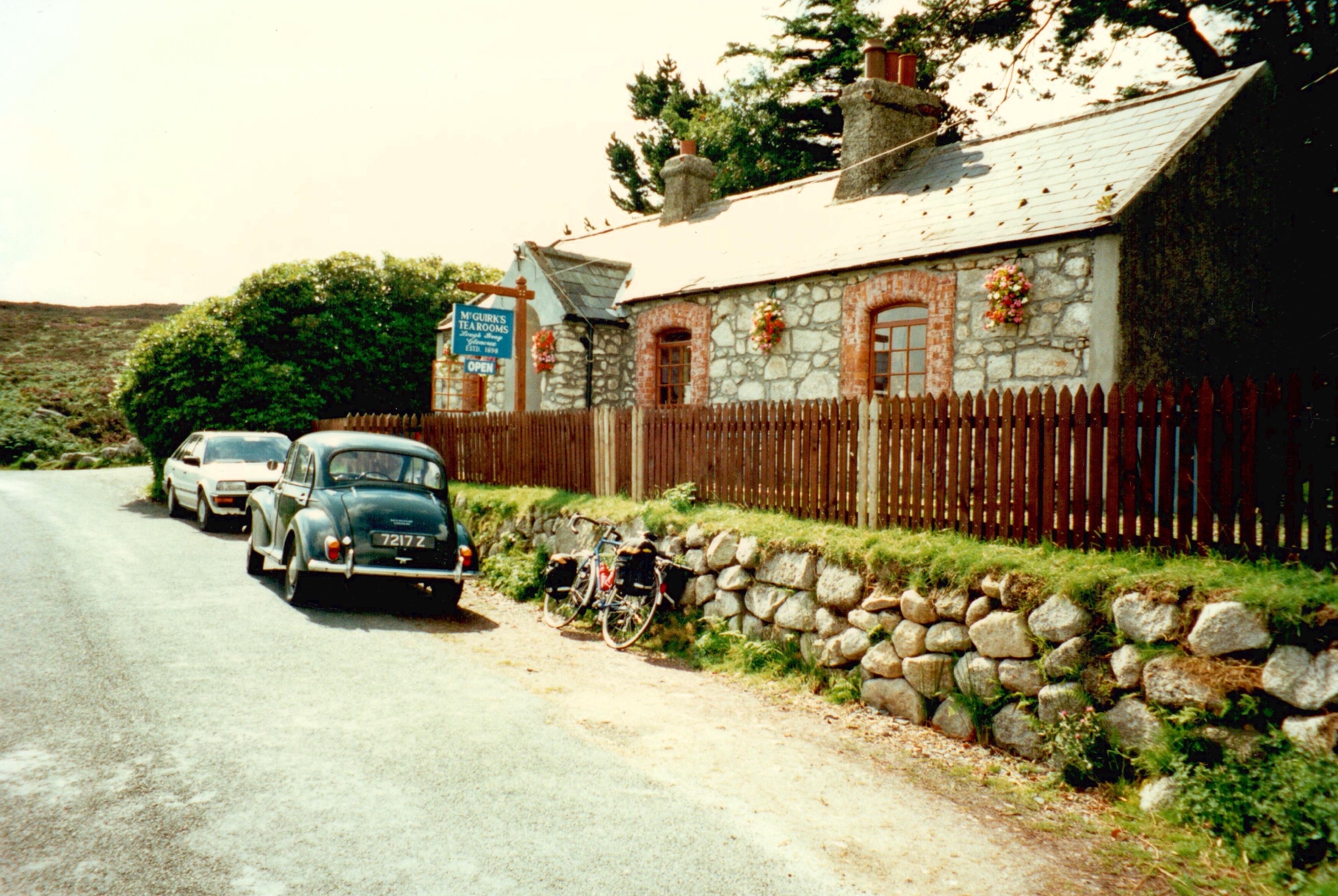
McGuirk’s tea rooms, 1996

Little did I know when I popped into McGuirk’s tea rooms on a 1996 cycling tour from Dublin to Rosslare that I was entering an Irish institution.

I was intrigued by the old-fashioned sign, and the Morris Minor parked outside. (I’ve always had a soft spot for the classic 1948 car.) I enjoyed a pot of tea and snack before continuing over the old military road (the R115) towards Laragh and Glendalough via the intriguingly named Sally Gap.
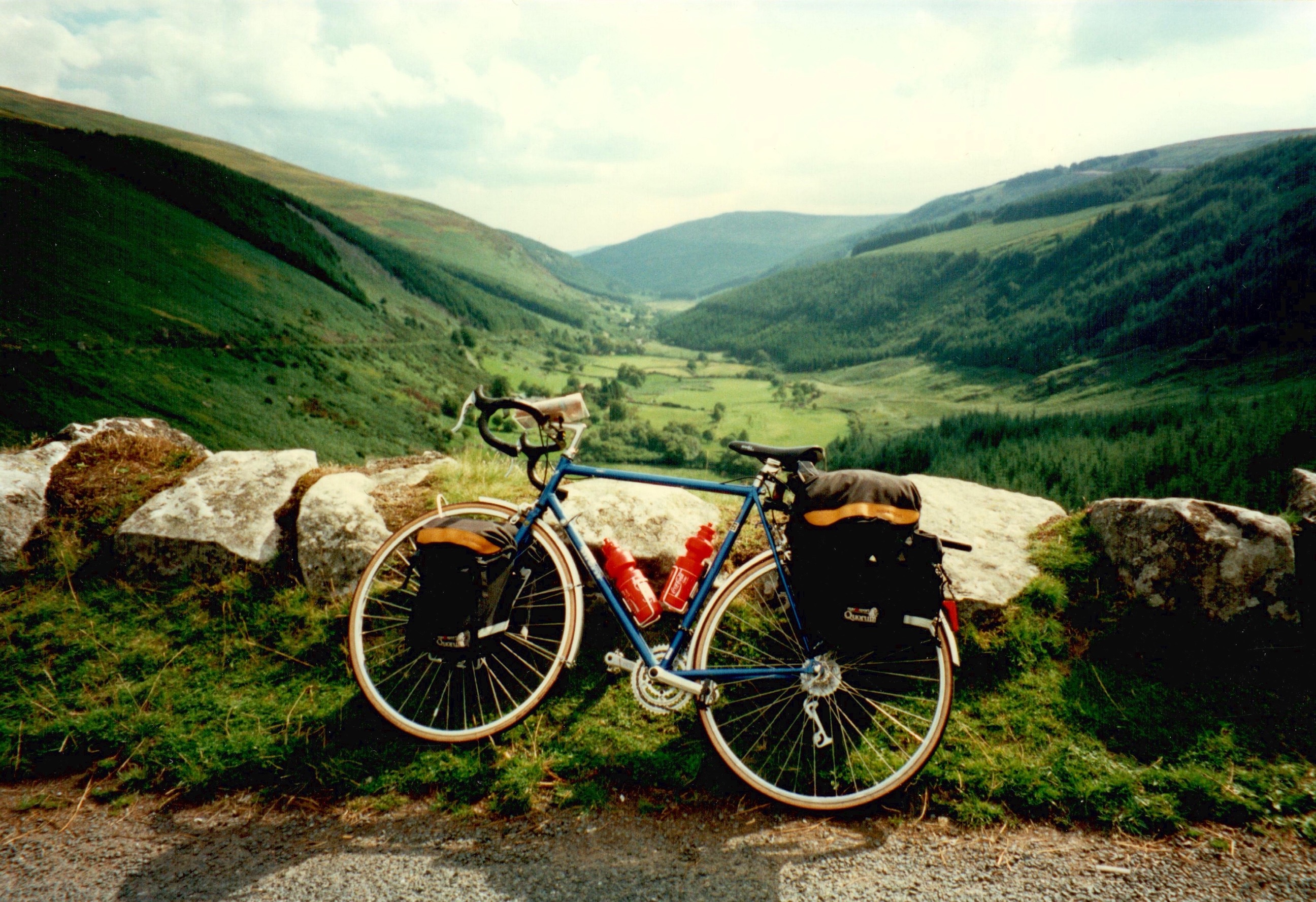
The route was opened in the early 19th century to enable the British army to subdue any future insurrections after the Irish rebellion of 1798. I cycled from Dublin, climbing out of the city on my audax bike. I was very lucky with the August weather – warm and sunny – but sensed that it would be a wild ride in a storm, especially as the summit is the highest paved public road in Ireland at 523 metres (1,715 feet).

I was following a scenic route to Rosslare in Brendan Walsh’s Irish Cycling Guide, and found it a delight. I hoped to stay in historic Glendalough, just off the military road, but couldn’t get a room there, and stayed at Laragh instead. By coincidence I bumped into people I worked with at the pub that evening.

Over the following days, I enjoyed making my way down the coast to Rosslare, staying at Courtown and then getting the ferry back to Wales. I carried on my bike the colours of Wexford’s hurling team, who were about to win the all-Ireland hurling championship. Wexford was en-fête when I stayed there on my way up to Dublin to start my cycle tour, and I got into the party spirit. I even bought a t-shirt with the legend What’s the Glory, Martin Storey?, twisting the title of that year’s Oasis hit with the name of Wexford’s captain.

But back to McGuirk’s tea rooms. It obviously made an impression on me as I still remember the name 28 years on. Sadly, it has long since closed down, but an internet search shows what a legendary place it was. A new book, Tales from a Wicklow Tea Room 1898 – 1960 by Michael Fewer explains how the author found eight volumes of the cafe’s visitor book, which featured signatures and comments by many influential Irish people, including the founder of Sinn Féin Arthur Griffith, playwright JM Synge, and the journalist and politician Conor Cruise O’Brien. This lonely building had become a famed meeting place for writers, poets, artists, politicians and lawyers.
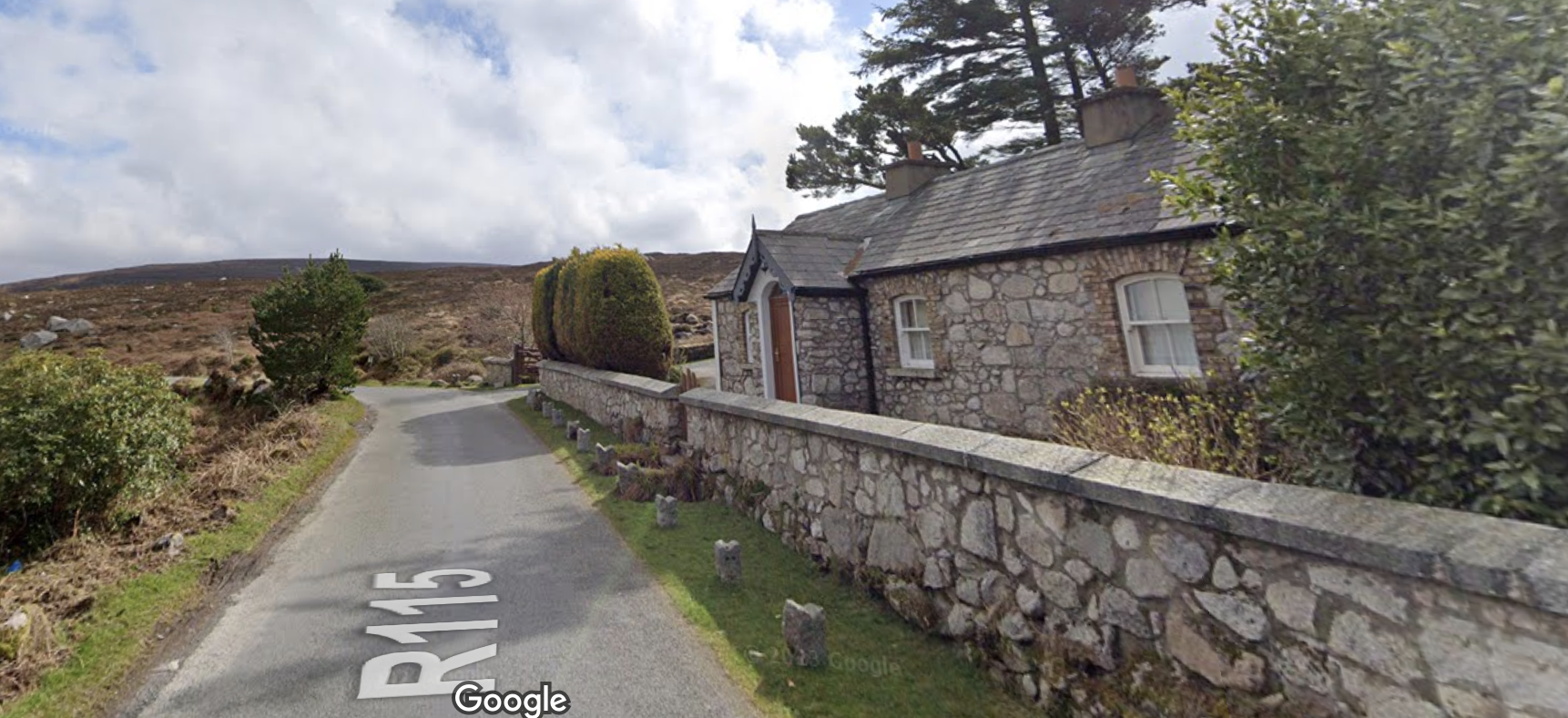
Judging from this Google Maps image, the old team rooms are now a private house. For such a legendary place it’s curious that there’s so little about it online, apart from Michael Fewer’s recent book. I wonder if the residents are aware that their home once hosted some of the most famous names in 20th century Irish society?
Cycling into 2024

Memories of 2023: the Portugal End to End

As another year begins, I’m looking forward to new cycling adventures, including my first bike tour in Ireland since 1996, and my longest ever ride.

But first, a few reflections of my cycling year in 2023. Life events (notably the death of my father aged 96 in February) meant I didn’t get out on the bike as much as I’d have liked. But I beat 2022’s modest total of 2,278 miles: my very wet ride on New Year’s Eve brought the total to 2,648.

As I recounted at the time, those early months were a struggle, as the weather in the weeks after Dad died was awful, and I was also struggling with a persistent throat infection. It wasn’t the best training for a very hilly cycle tour of Portugal, but I coped, helped by Goldilocks weather: almost perfect temperatures after the end of an Iberian heatwave a couple of weeks before we arrived.

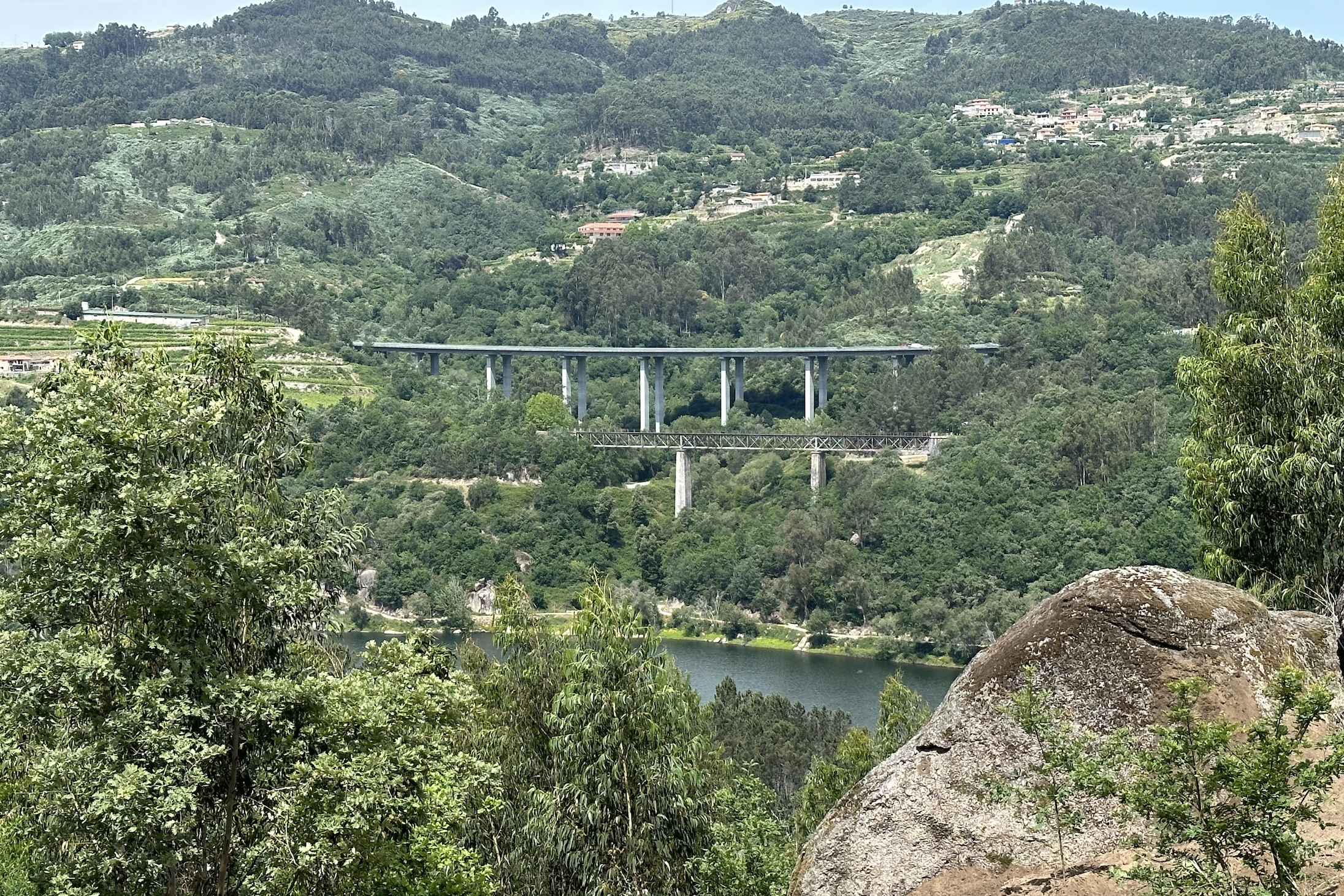
The Tâmega valley

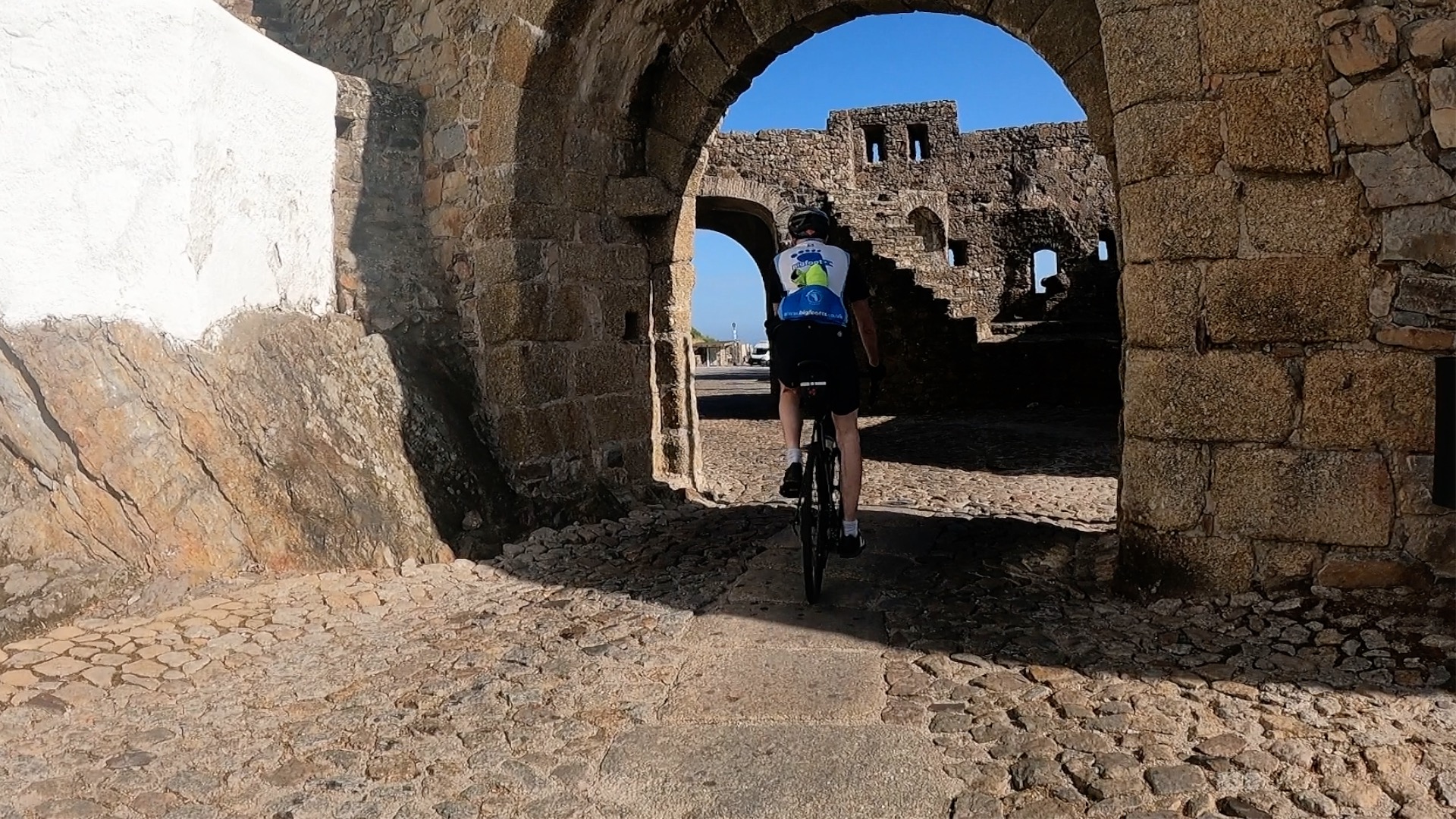
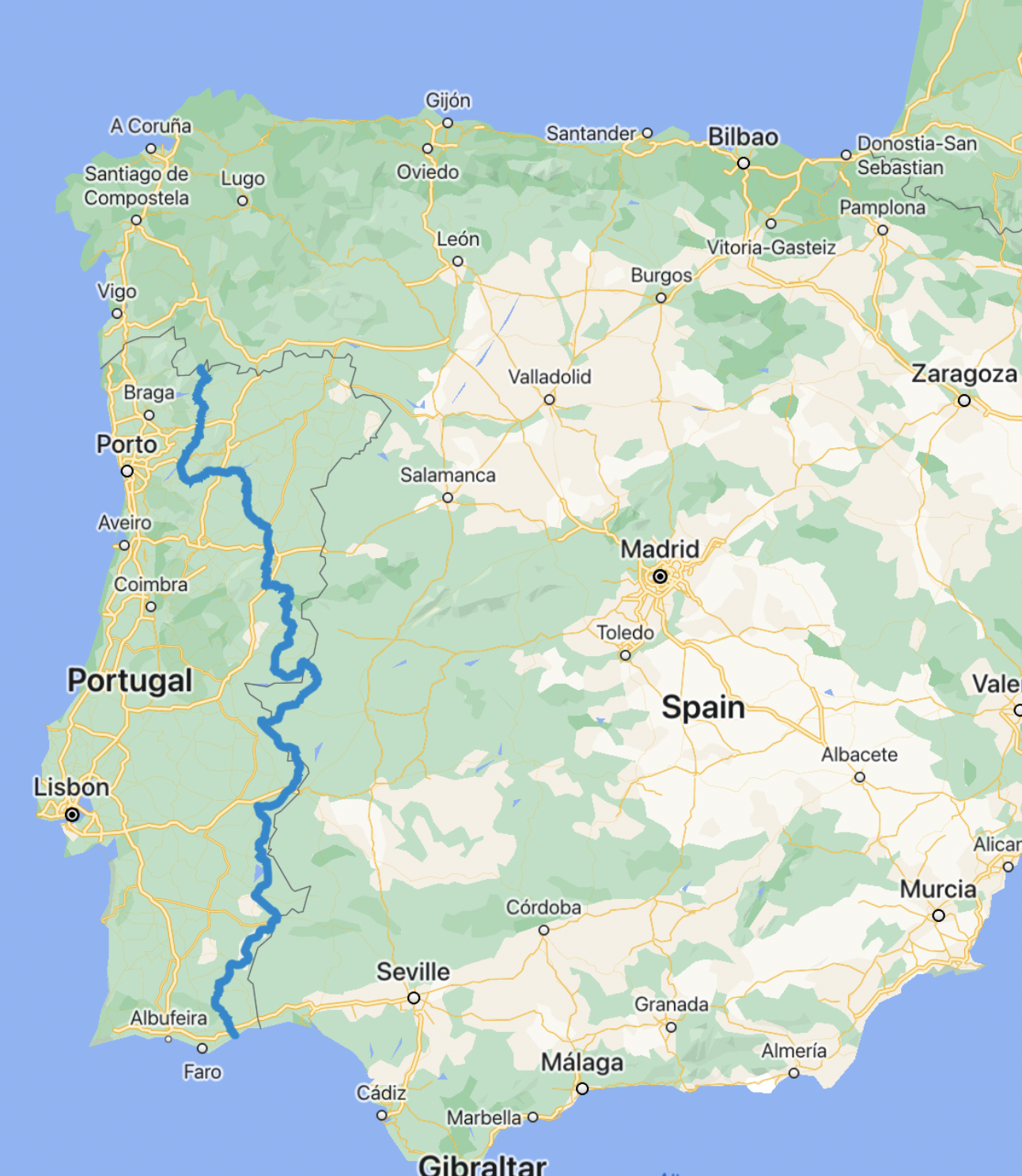
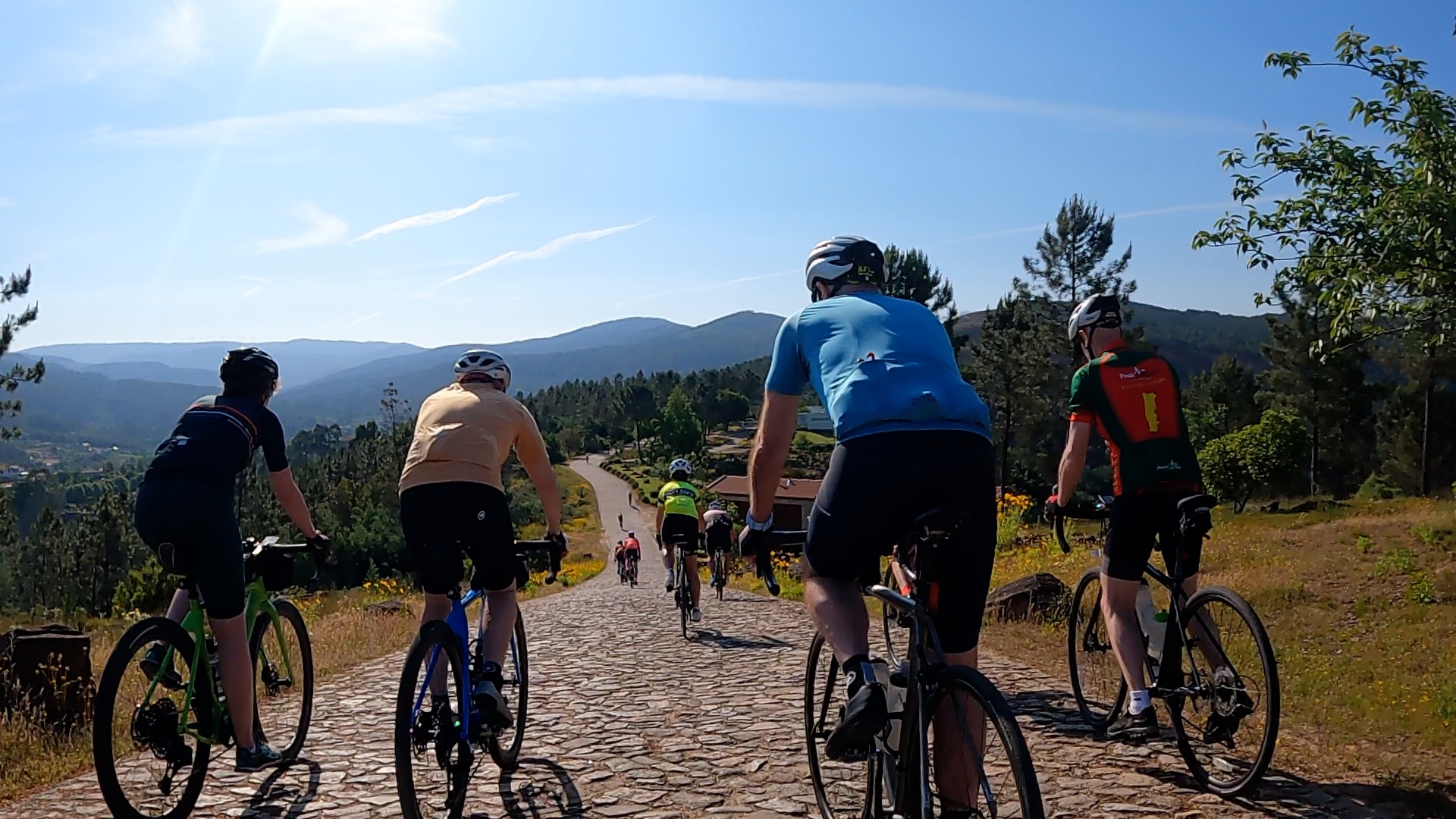
I fell in love with Portugal during our 11 day adventure. (You can read my day by day account of the tour starting here.) As always, Peak Tours arranged a wonderful route, which was a perfect introduction to this special country. The first five days were very hilly, and my lack of training showed on the steeper, longer climbs. But I loved the stunning Douro valley, followed by the quirky hill towns of Monsanto and Marvão. And the Portuguese people were delightful hosts.

Marvellous Marvão

It was a special moment when we reached the Atlantic coast at Tavira in the far south of Portugal, after a freewheeling descent from the mountains. It was my second ‘end to end’, after Land’s End to John O’Groats – but a lot hotter and drier! If you are interested in the tour, you can find out more on the Peak Tours website here.

Back to Ireland in 2024

I’m really looking forward to cycling in Ireland again in 2024, 50 years since my first visit, with Mum and Dad in a lilac Hillman Imp. Back in 1996 I cycled solo from Dublin to Rosslare (for the ferry home to Wales), and loved the quiet roads and magnificent scenery, especially over the old military road over the Wicklow mountains south of the capital. (I smiled to find a Morris Minor parked outside Mrs McGuirk’s tea rooms near Sally Gap.)

My 2024 trip is another Peak Tours holiday, from Mizen Head in the south west to Malin Head in County Donegal. We’ll be staying one night in Lahinch, a small coastal town that I remember from 1974, where we bought a bar of Irish chocolate. (Human memory is a remarkable thing…) I imagine Dad had chosen the scenic, coastal route between stays at Ryan motels in Galway and Limerick. I am sure Lahinch has changed in the past half century, as Ireland has cleverly carved a prosperous living since joining the (now) European Union the year before that first visit. I just hope that the weather is kind – but will be prepared for the worst the wild Atlantic can throw at us!

Cycling to Wales – and back

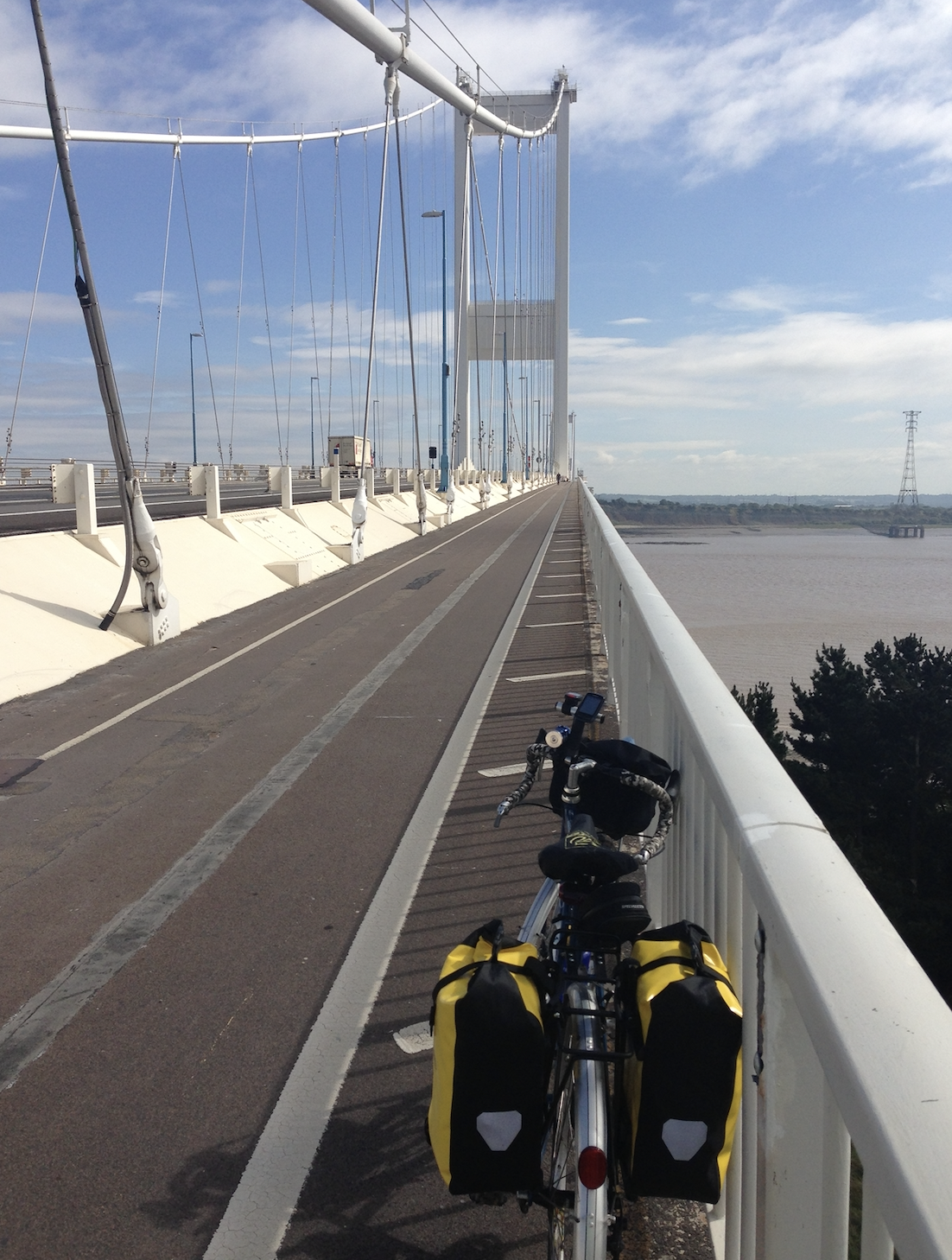
I should be better trained for Ireland than last year’s Portuguese tour, as the previous month I will be taking part in London Wales London, a 400 kilometre ‘audax’ endurance ride. The name is slightly misleading as the start is almost on my Buckinghamshire doorstep in the village of Chalfont St Peter. (But you can hear the traffic on the M25 London orbital motorway from St Peter, so it’s not too misleading.) The ride does enter Wales, briefly, at Chepstow, before heading back into England over the old Severn Bridge.

Crossing the Severn Bridge into England, 2013

It will be my longest ever bike ride, more than twice as far as my previous 103 mile record, so I will need to train my body for the challenge. And my mind – cycling over 250 miles in 27 hours will require resilience, and the ability to keep going no matter what setbacks come my way. I’ve already started keeping a list of the things to take and things to do in preparation.

I’ll report on these and other 2024 adventures in the coming months.

Eurostar: Britain 1-0 France

20121026-115253.jpg

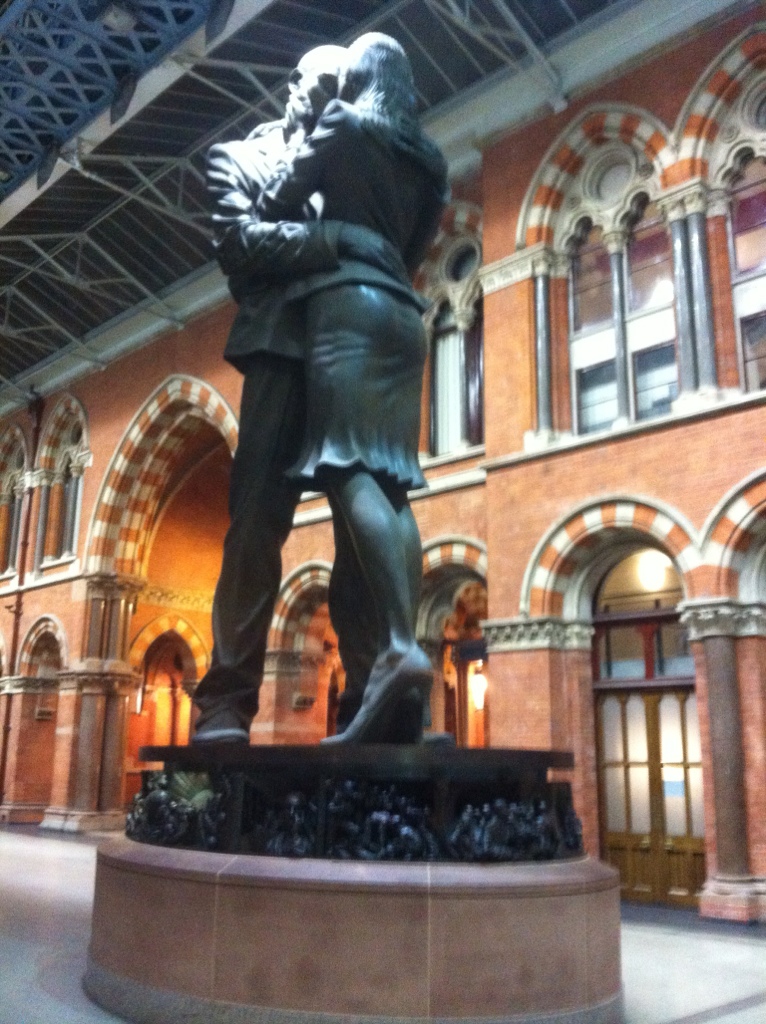
Gateway to Britain: St Pancras

I’m writing this on a London bound Eurostar train. I love being able to take a train between Britain and France. It’s a civilised way to travel.

When the channel tunnel was opened in 1994, Britain was shamed by its failure to complete a high speed rail link to the coast. Eurostar trains left a cramped terminal at Waterloo and crawled along commuter lines to the tunnel. How things have changed. Travellers start their journey at the gorgeously opulent St Pancras, one of London’s greatest Victorian buildings. Their train races to the coast along our first (and so far only) new high speed railway.

Paris can’t match this. The Gare du Nord is a nice building, but the Eurostar section is as bad as the old Waterloo International. Today, dozens of travellers took their turn to take one small lift to Eurostar departures. There was a long queue for border control and security, followed by a similar wait for the steps down to the platform. It’s time for the French to spend some money on a proper Eurostar terminal in Paris. Meanwhile, let’s be proud of St Pancras, a worthy gateway to Britain.