Are electric bikes cheating? No!

No, you’re not cheating if you ride an electric bike. The e-bike revolution is one of the best things to happen to cycling in the past decade. I have two e-bikes and love them.

It’s your choice what you ride

No one has the right to tell you what type of bike to ride. If you like the idea of a little help going up a hill, just go for it. And you won’t be alone: Mintel forecast that e-bikes would be the best selling type of cycle in 2024, and a quarter of British adults have considered buying one according to a Paul’s Bikes survey last year. It’s likely that many people buying an e-bike wouldn’t have bought an unpowered one.

You still get a workout on an e-bike

When I got my first road e-bike, a Trek Domane +, in 2022 I was surprised by how many calories i burned on my rides. The reason? Because in Britain an electric bike (technically called an ‘electrically assisted pedal cycle’) motor has to cut out above 15.5mph, after which your pedal power alone will move you forward. You’re likely to burn more calories doing this than on a non-e-bike as your mount will be a lot heavier with the motor and battery. (As an example, the latest electric Trek Domane + SLR 7 AXS weighs 12.64kg in size 56, compared with 8.29kg for the non-electric version. Data from Trek website.) You can always slow down below 15.5mph to get the motor to kick back in…

No one is losing out because you ride an e-bike

A lot of people were angry when Bob Dylan went electric in 1965. No one should care if you do the same, on a bike, unless you’re in a race. Or grabbing a king (KOM) or queen (QOM) of the mountains on a Strava segment.

E-bikes are brilliant for car-free commuting
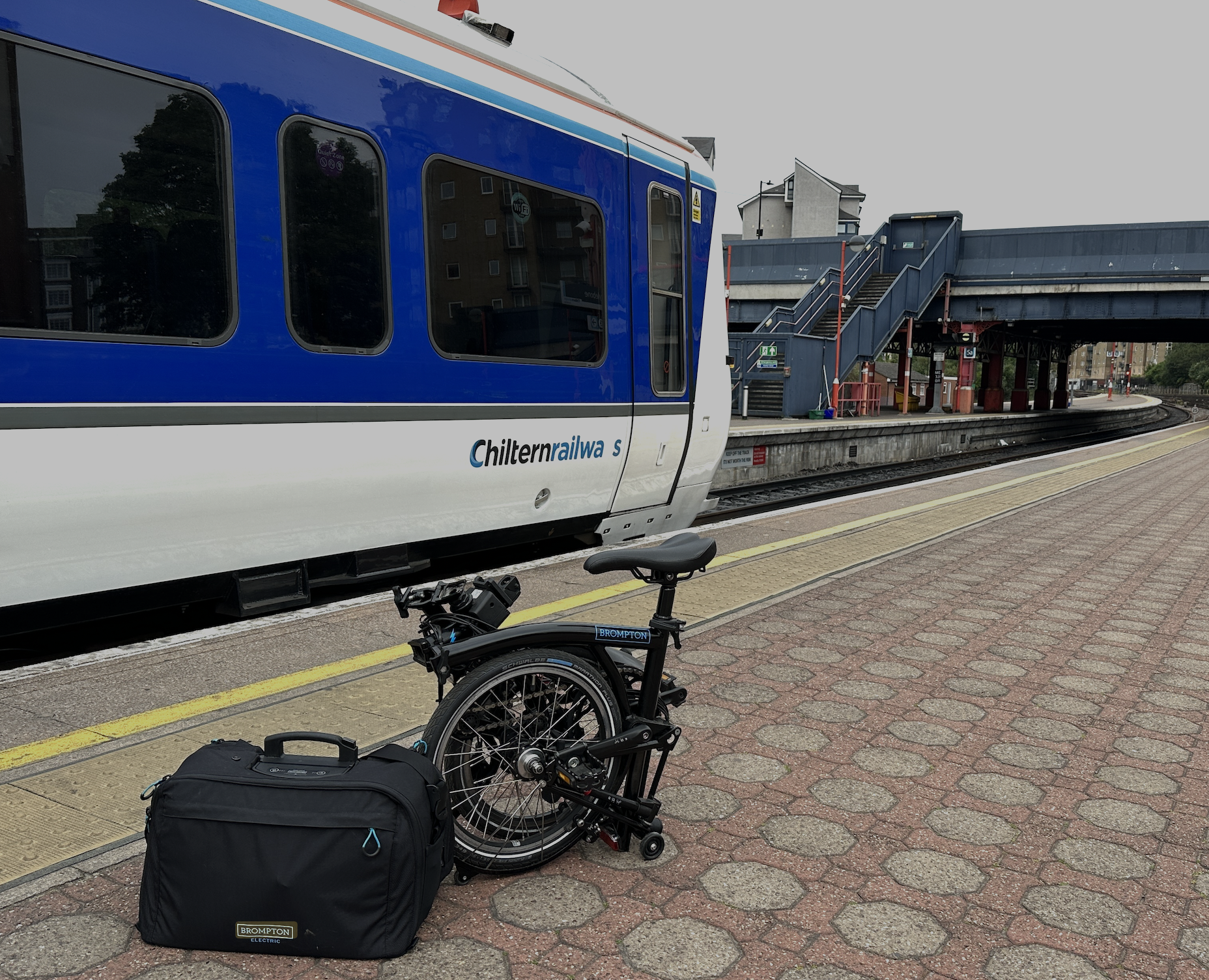
My first e-bike was a Brompton Electric. I found it brilliant for commuting to London: I’d cycle to the local railway station, pop the folded bike on the train, and spin across town from Marylebone to various places in the West End and City. I saved over £16 a day in car parking and the cost of the onward London tube journey from Marylebone. And it meant one fewer car on my local roads. I wrote more about my Brompton Electric experience here.

Electric bikes might make you cycle more

Hills? No fear

There are days when just don’t feel like cycling. But then I remember my electric Trek Domane. I took the photo above on my first ride on it, three years ago this month, when I relished the feeling of traversing the hilly Chilterns without quite as much effort. I still burned a lot of calories, because of the 15.5mph cut off for assistance, and even below that you still need to pedal. The Domane has differing levels of assistance so you can decide how much you want to exert yourself. I confess I usually choose the maximum help – I’ll choose my unpowered bike if I want a proper workout.

An e-bike makes family rides easier

An e-bike would be helpful… Masca, Tenerife

The beauty of an e-bike is that it helps less powerful riders keep up with their more athletic cycling friends and family. I first noticed this in 2019 riding up a very long, steep hill near Masca in Tenerife. I was very surprised to be overtaken by two small children. When their parents followed them past me I realised the whole family were on e-bikes. I was envious…

The TL;DR summary: e-bikes are brilliant!

A rare pandemic outing: Cardiff Castle by Brompton

Two simple ways you can make cycling safer

Cycling in Britain is a safe way of getting around and exercising. According to road safety charity Brake, one cyclist dies for every 33 million miles cycled. They sound like good odds, and they’re getting better. The casualty rate has been falling over the past decade, reports Cycling UK (even after discounting the impact of the pandemic, when there were blissfully few cars on the road).

Despite all this, many people say they’re too frightened to cycle on Britain’s roads. If you’re inexperienced, a busy urban road understandably feels like a scary place. And most accidents happen at junctions, rather than on the open road. Ironically, I have found central London one of the most enjoyable places to ride a bike, even in the rush hour, as the city now has many miles of segregated cycle routes, where bikes and cars are kept apart. There’s little chance of that luxury where I live in the Chilterns.

There are things cyclists can do to improve the odds, regardless of where we cycle. Cycling UK has plenty of tips. Meanwhile, I have had two positive results over the past month in the small steps I have taken to make my local roads safer for cyclists.

Report those potholes

Potholes are a serious danger for cyclists, while causing expensive damage to bikes and cars. They are a particular danger in bad weather – when you can mistake them for mere surface water – and at night. I recently rediscovered Cycling UK’s brilliant tool for reporting potholes: Fill that Hole. (Anyone can use it – car drivers as well as those on bikes.) I got an informative response confirming that the huge hole on the A355 where it crosses M40 junction 2 would be repaired in the coming month or so after others reported the hazard. In my experience, potholes do get repaired when you report them. It takes just a couple of minutes to file a report, which can include photos.

Report dangerous drivers

My biggest concern when cycling is drivers who pass far too closely. The Highway Code requires drivers to allow a passing distance of at least 1.5 metres (5 feet) when overtaking cyclists, but few drivers follow the rules. Out on the roads of Buckinghamshire and neighbouring counties, I’ll usually experience at least one car or van passing closer than I’d like on most rides. It’s rarer for me to experience a sense of danger – but two years ago I decided to report the serious cases to the Thames Valley Police. It’s very easy to do this online: the form requests the necessary information, and you can upload video.

I’m very selective about those I report. I only act against those close passes where I felt in danger. To capture the evidence, I use a Cycliq Fly12 Sport front camera, which contains a front light as well. In my first 18 months, I have reported two drivers, and on both occasions Thames Valley Police has taken action against the driver. You can see the latest overtaking case above.

I decided at the beginning not to report every incident. As an experienced cyclist, I am not fazed by traffic, and my view is that if I’m not unduly bothered at the time there’s no reason to file a report, even if the driver hasn’t left the required passing distance. Others, notably CyclingMikey, who has reported over 1,000 errant drivers, including Chris Eubank and Guy Ritchie, are more interventionist. I am more likely to report commercial drivers as they are likely to drive further than private motorists, putting more cyclists in danger, although the first person I reported was in a private car who ran me off the road on a single track road.

I have found the Cycliq a brilliant bit of kit, especially as it is largely ‘fit and forget’. It records over earlier footage when the memory card is full, so you don’t have to worry about replacing the card, and it records for up to seven hours between charges. You can flag incidents you want to save by pressing the Q button to keep the relevant video segments.

Cycliq is the subject of negative comments online about its customer service, but I have found the camera very reliable.

The cycling revival

As I mentioned at the start of this post, cycling is far safer than many think. Modern bike brakes and lights are vastly better than when I started cycling as an adult over 35 years ago. Better still, there are far more people on bikes today, compared with when I was growing up in the 1970s – possibly the low point for cycling in Britain, when car ownership was booming and cycling was seen as a poor person’s way of getting around. Long may the cycling revival continue.

AI regulation: a lesson from 200 years of railway history

A mighty transatlantic battle is in prospect over how to regulate artificial intelligence (AI). Donald Trump’s second administration seems sure to opt for the lightest of light touches, influenced by tech tycoon Elon Musk. (If Musk can tear himself away from his bizarre obsession with Britain.) The European Union has already legislated for a far more restrictive approach, with Britain likely to follow a middle way. The sensible aim must be to unleash the creative, social and economic benefits of AI while minimising the harm it may cause if abused or badly handled.

As debate raged about AI regulation, it struck me that many of the arguments deployed for and against AI and tech regulation also played a huge role in shaping the response to the railway revolution in the 19th century.

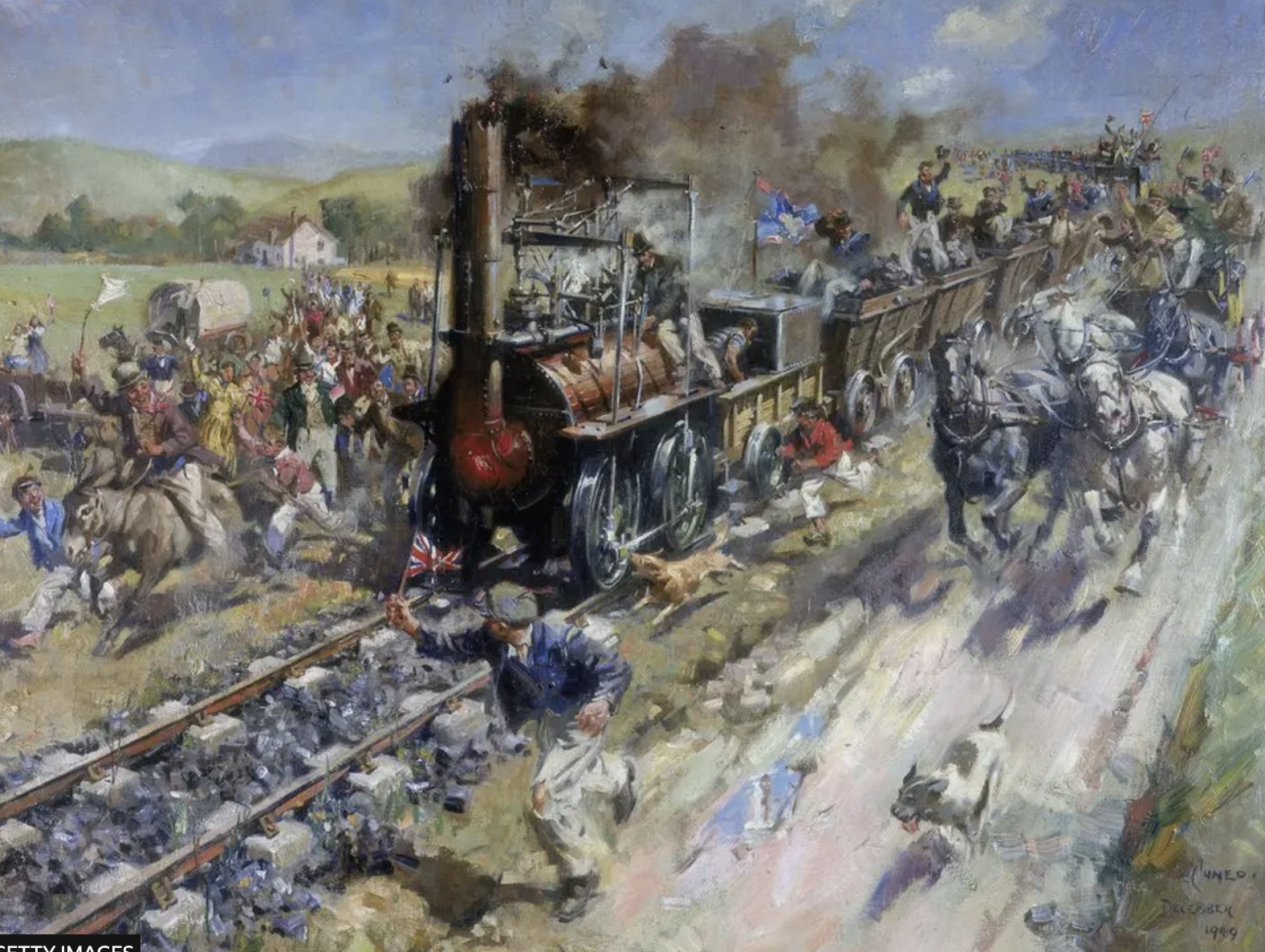
The opening of the Stockton & Darlington in 1825. Painting by Terence Cuneo; NRM/Science & Society Picture Library

The railway age properly began in September 1825 with the opening of the world’s first public railway to use steam locomotives, the Stockton & Darlington Railway in County Durham in the north of England. After the success of the first intercity railway between Liverpool and Manchester, opened in 1830, Britain enjoyed a railway boom, as pioneers planned lines linking major cities – and serving industry, the original purpose of the iron road. By the early 1840s, railway mania had taken over, in a prelude to the dot.com boom at the turn of the 21st century. In 1844, 240 private bills were presented to the British parliament to authorise 2,820 miles of railway. Had all these been built, the £100 million of capital needed represented over one and a half times Britain’s gross domestic product (GDP) for that year. Parliament still approved half these railways.

Anything goes? The heyday of the laissez-fair state

Britain in the 1840s was a firmly non-interventionist state. The dominant philosophy was laissez-faire: small government, low taxes and the free market. Most acts of parliament were private acts to authorise new railways rather than government initiatives. Anyone able to raise money could form a railway company and apply to parliament for permission to build their pet route. The sheer volume of railway business threatened to overwhelm the Westminster legislature. But an attempt to create order by setting up a railway advisory board to vet proposed plans before they reached parliament was short lived, killed by the powerful railway lobby. (And conflicts of interest: 157 out of 658 MPs had financial interests in the railways.) This was Britain’s last chance to create a strategic rail network, deploying investors’ money more efficiently. The failure led to many investors losing most if not all their money on rail schemes that had no hope of success, again pre-empting the dot.com bubble of 1999-2000.

Continue reading

In praise of Barry Island – and Gavin and Stacey

The wonderful finale of the BBC’s hit comedy Gavin & Stacey on Christmas Day brought further fame to Barry in South Wales. It’s a place that has a place in my heart thanks to family seaside memories and visits to its long-gone scrapyard for old steam locomotives.

Barry Island, Sunday 5 January 2025

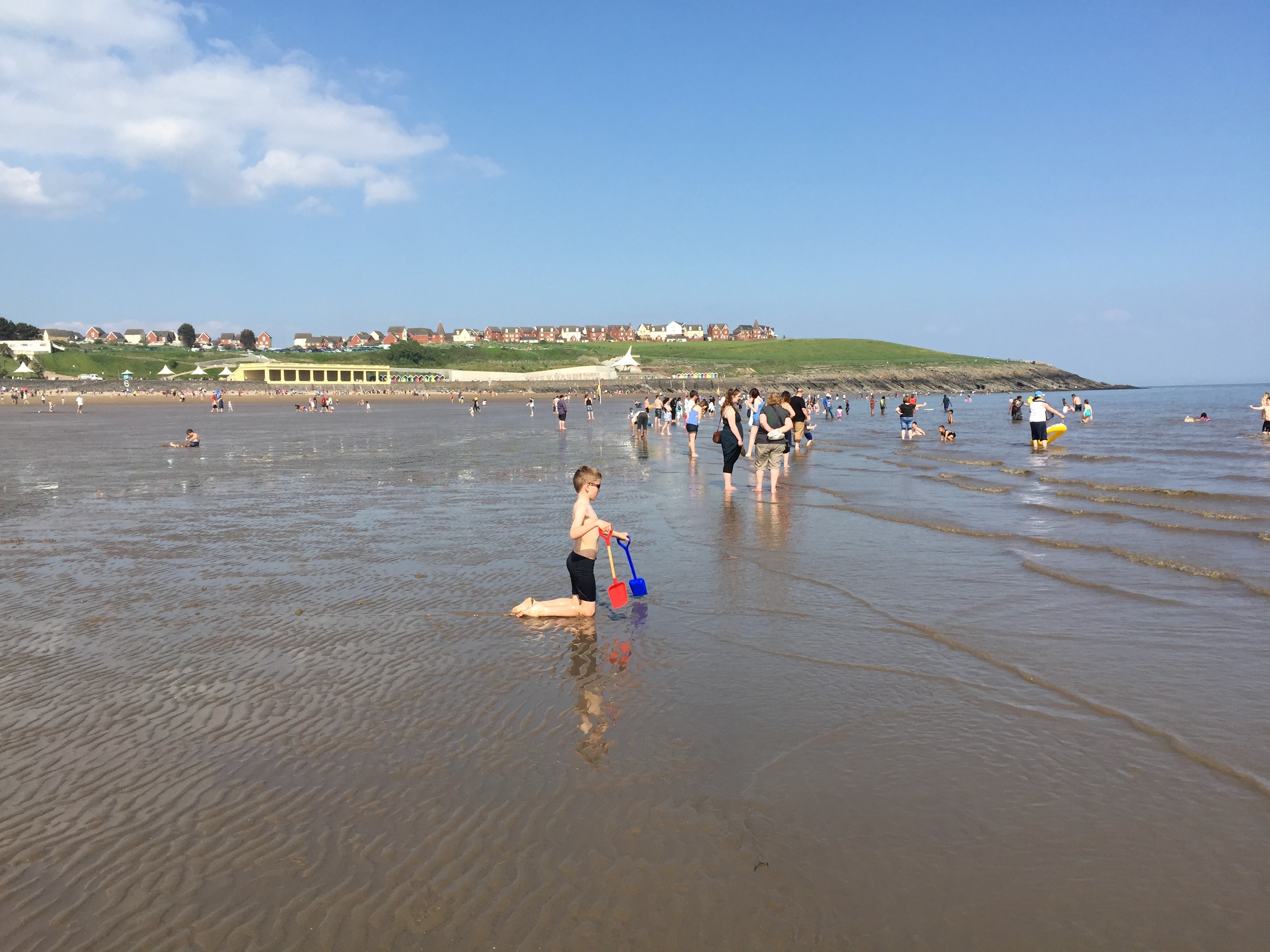
Last weekend, I took my son Owen for a short break in my hometown, Cardiff. As the rest of the country shivered under blizzards or sheltered from the icy rain, we made the short trip to Barry Island, and were rewarding with a few minutes of glorious winter sunshine. When I was at school, I regularly took the train from Heath High Level in Cardiff to Barry Island, and our Sunday visit brought so many memories flooding back.

Barry remembers Davies the Ocean. Photo: People’s Collection Wales

Barry is a town that saw explosive growth during the later stages of the industrial revolution. Barely a hundred people lived there in the middle of the 19th century, but the entrepreneur David Davies of Llandinam saw its potential as a port. Davies was known as Davies the Ocean after the coal mining company that made his fortune. Like many Welsh coal tycoons, he was frustrated by the delays and cost involved in exporting their black gold from Cardiff, and vowed to create a rival port less than nine miles away at Barry. As he exclaimed, “We have five million tons of coal and can fill a thundering good dock the first day we open it!”

Continue reading