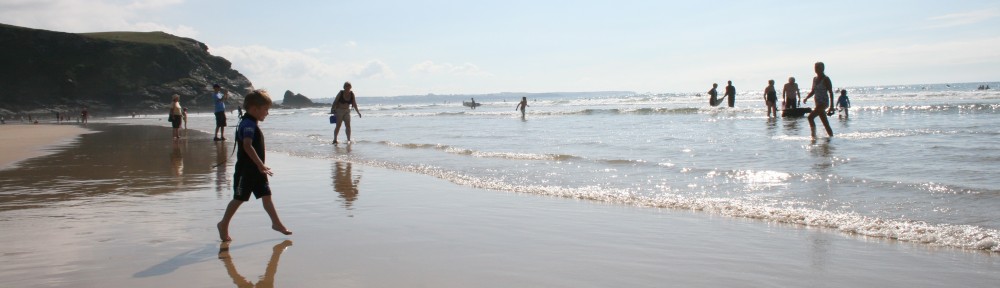
For the first time in 28 years, I’ve travelled to Ireland by train and ferry.
It was inspired by a post by rail travel expert The Man in Seat 61. As a result, I took the route of the Irish Mail, which operated for over 150 years between London and Dublin.
But first, a rant…
Over 25 years ago, I endured another passenger’s mobile phone conversation on a late night train journey from London to Wiltshire. I remember that he was discussing the merits of various films. I hoped it would be a short conversation but it lasted for the hour it took for the train to reach Swindon.
Things are so much worse today. People think it’s fine to have conversations with the whole chat broadcast on their phone’s speaker – and to watch a film in the same intrusive way. When did people become so utterly selfish?
Soon after I took my train seat at London’s Euston station, I was on edge when someone opposite held a mobile chat on speaker. I was relieved when he moved away without any intervention by me. But a couple of hours later a guy behind me started watching a film with his smartphone blasting out the soundtrack on full volume. Three women tried to reason with him, but he seemed to think they were taking away his human right to inflict noise on everyone around him. I supported them, and I was relieved when he moved out of our carriage. I was glad he gave way. But why should we have our peaceful journeys ruined because of another passenger’s selfishness?
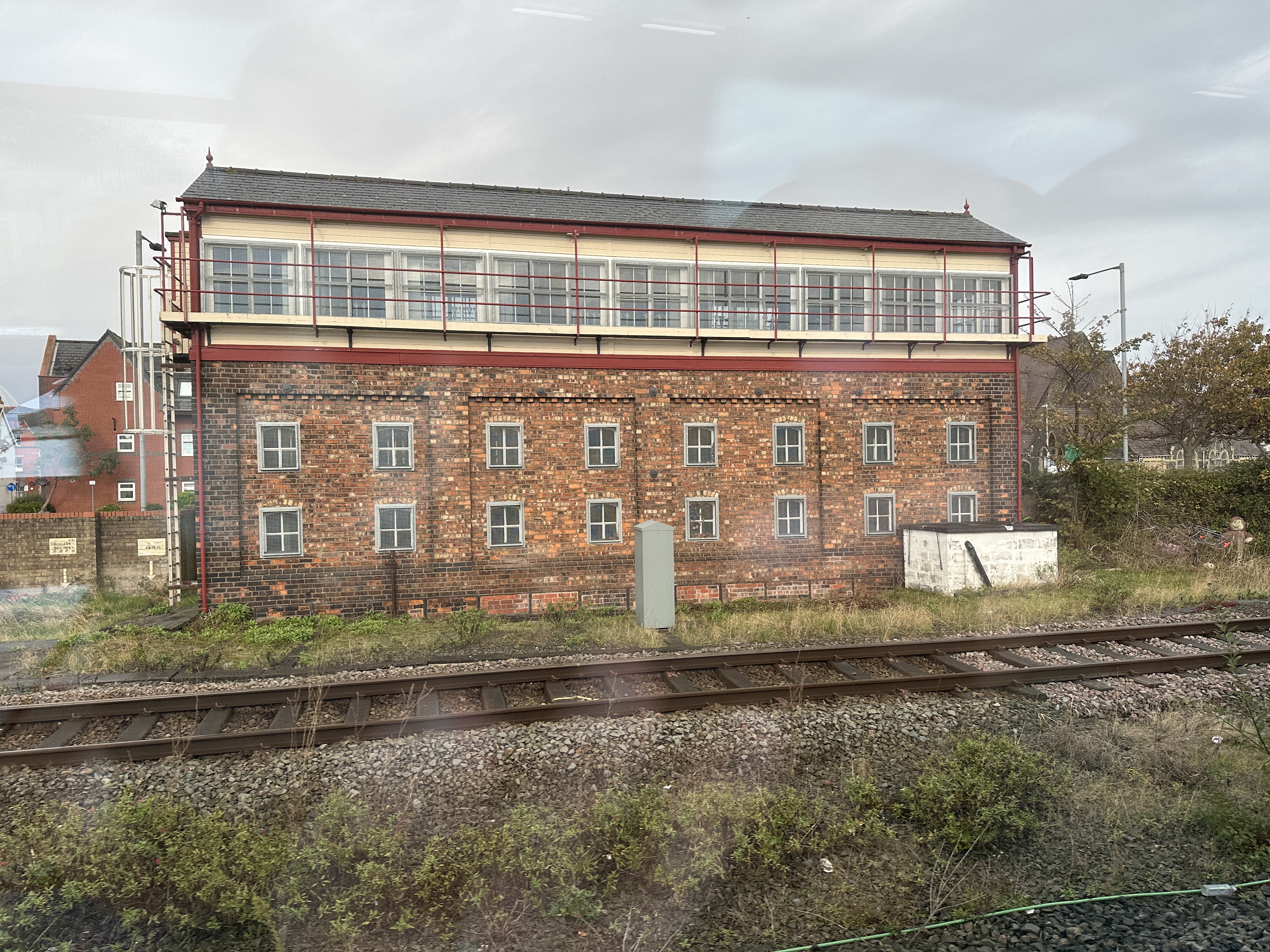
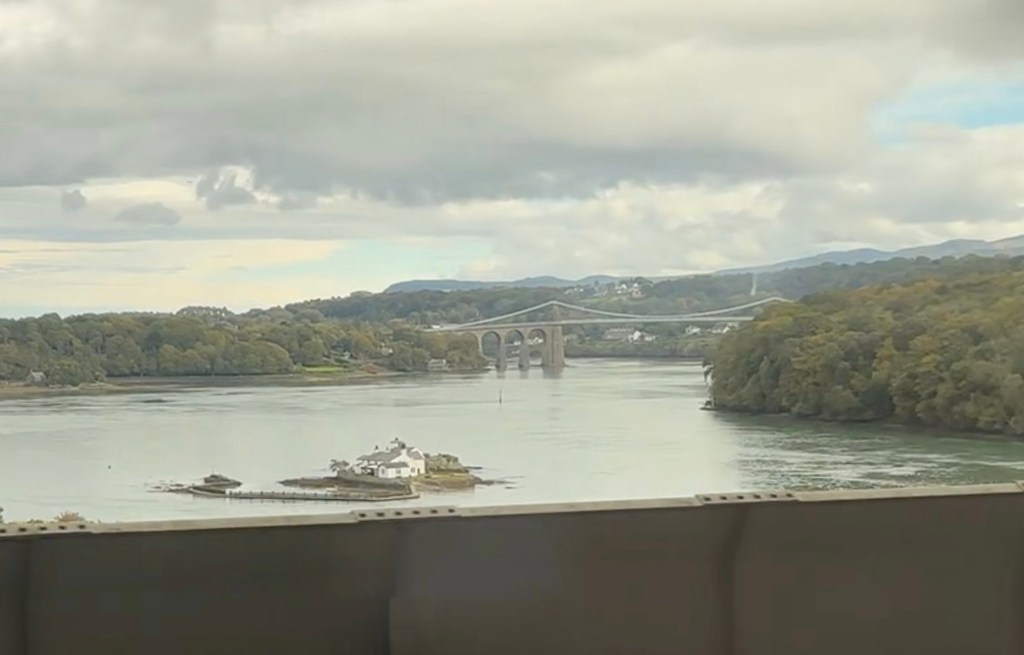
On a happier note, the North Wales coast line is a delight. Many of the original 19th century station buildings and signal boxes survive along with a few semaphore signals in Anglesey. The route hugs the Irish Sea shore and crosses the historic Britannia Bridge to Ynys Môn, Anglesey. This was one of Robert Stephenson’s monumental accomplishments but sadly the old tubes that carried the rails above the Menai Straits were fatally damaged by a fire started accidentally by two children in 1970. The bridge was rebuilt in more modern form two years later and in 1980 an additional deck was added to provide a second road bridge to Anglesey. The old bridge was flanked by two statues of lions, and I glimpsed one of these as my train headed across the bridge. The BFI has a wonderful film of an LNWR train crossing the original bridge in Victorian times here.
Happily Stephenson’s 1848 tubular bridge at Conwy survives – perhaps the only one left anywhere in the world.
I was amused that the on-train safety announcement was in Welsh – before we’d even left the London suburbs! But I discovered that the irritating ‘See it, Say it, Sorted’ slogan is just as annoying in Welsh, as ‘Wedi sylwi, Wedi sôn, Wedi setlo”…
I sailed to Ireland on Ulysses, an Irish Ferries super ferry. It’s the size of a small cruise liner, and although it tales longer than a fast ferry, it is almost never cancelled because of the weather. It was an easy and enjoyable way to travel, although for the first time on a ferry I had to put my bags through a security scanner. There were no restrictions on liquids, though.
I assumed that the ferry would be birthed next to the railway station but the ferry terminal has moved a mile or so, presumably to accommodate modern, bigger ships.
I love my visits to Dublin, and this was no exception. My friend Louise kindly collected me from Dublin ferry port and took me to my hotel, the Maldron in Smithfield. The following evening, Louise, Aidan and I had dinner after convivial drinks with Allan Chapman and Barry Chapman from PR agency Comit. These get togethers always prompt serendipitous conversation: this time, we talked about family connections to the Australian goldfields and Ned Kelly.
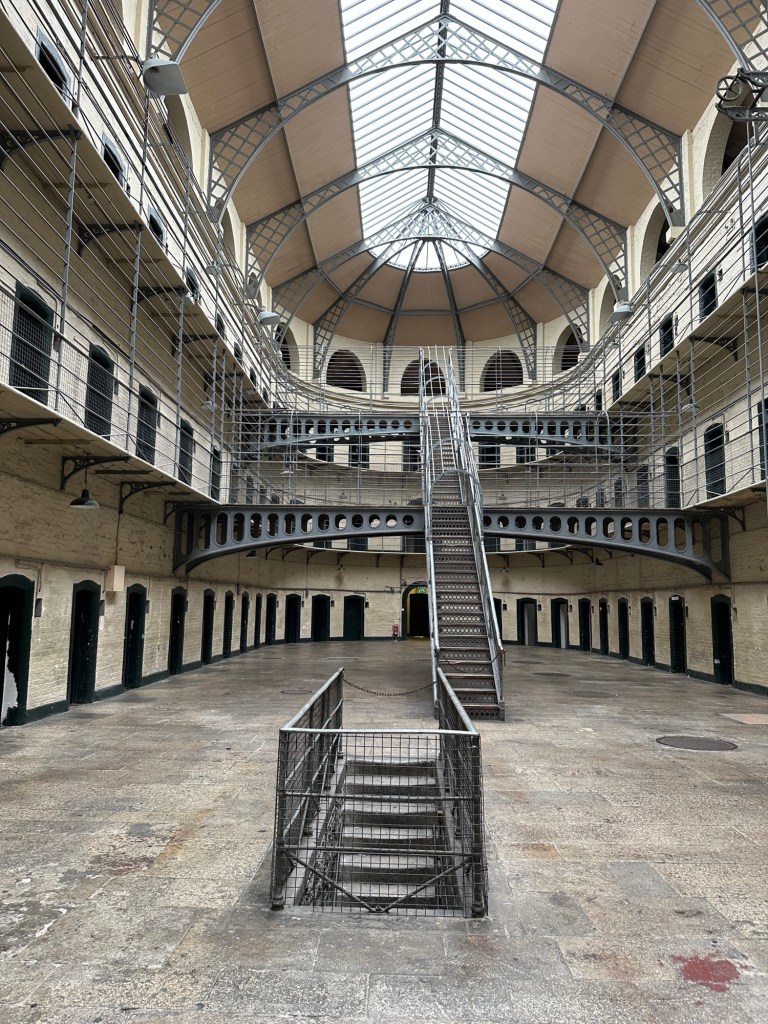
Earlier, I toured Kilmainham Gaol. This prison is over 225 years old, and replaced dungeons as a home for Dublin’s prisoners. It is best known as the place where the men and women who fought for Irish independence were held and in all too many cases executed. It was sobering to see the spot where those who took part in 1916’s Easter Rising were shot, marked by a simple wooden cross. A few metres away another cross symbolised where James Connolly was executed by firing squad sitting in a chair as he was unable to stand because of injuries he sustained during the rising. I blogged about the Easter rising and the British reaction to it on the centenary in 2016.
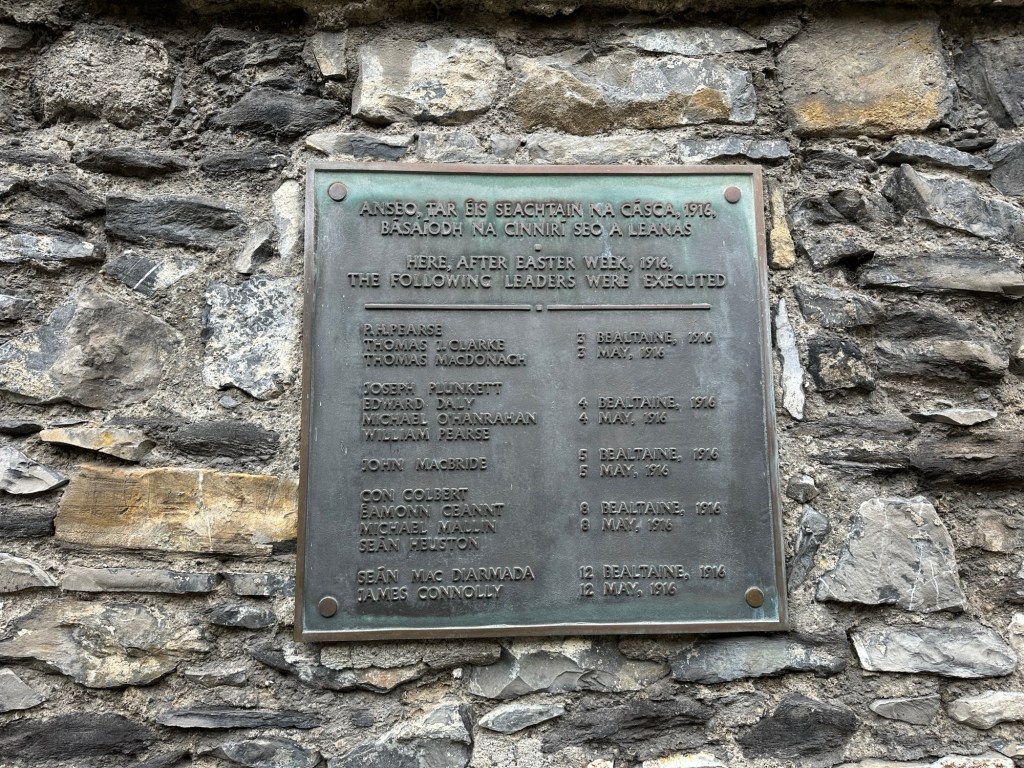
There’s also a plaque commemorating those executed at Kilmainham by the Irish Free State army during the Irish civil war in 1922.
On a more lighthearted note, I learned on the tour that the prison scenes in the Paddington 2 film were filmed at Kilmainham.
Finally, the old spelling gaol reminded me that I was completely stumped when asked to read it aloud at school in Wales 50 years ago. I think I said ‘gale’. The Guardian was still using the old spelling well into the 1980s before conceding and adopting the modern spelling.
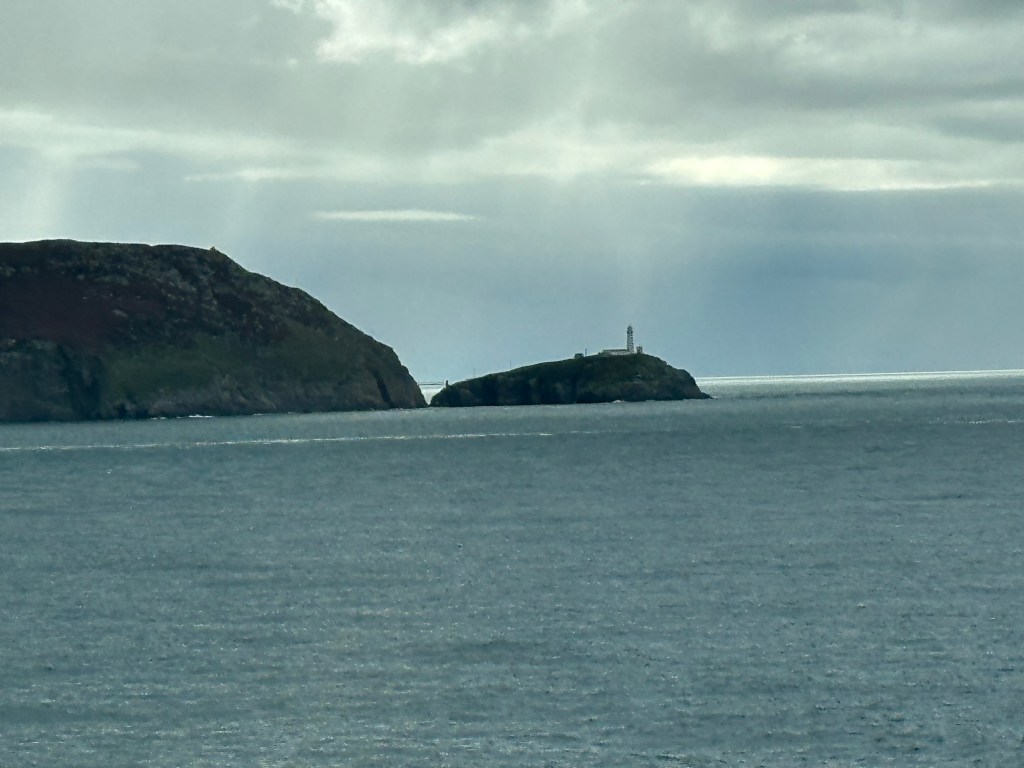
I enjoyed my land and sea journey to Ireland. I’d happily do it again, perhaps taking the car from Fishguard to Rosslare, as I did on my first visit to Ireland with Mum and Dad in 1974. Or by bike, as I did in 1996? Time will tell.


 Ertblog