This was another day I’d been looking forward to. I remembered the haunting, sometimes stark, beauty of Connemara from my 2007 and 1974 visits. And I knew that our destination, Clifden, was famous as the landing point of the first transatlantic flight in 1919.
We set off into Galway, following our taxi route last night on a cycle path, past the Spanish Arch and harbour.
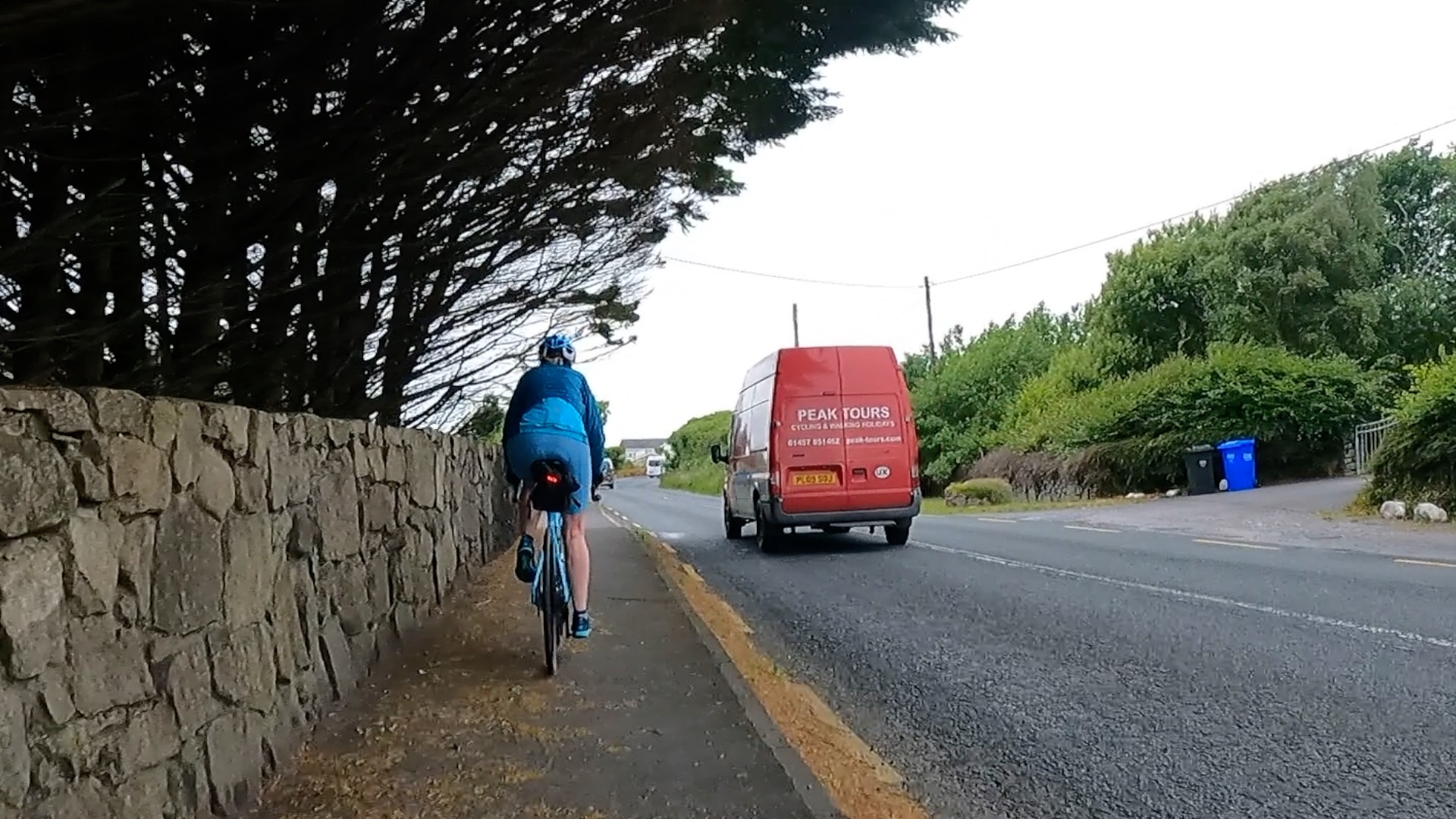
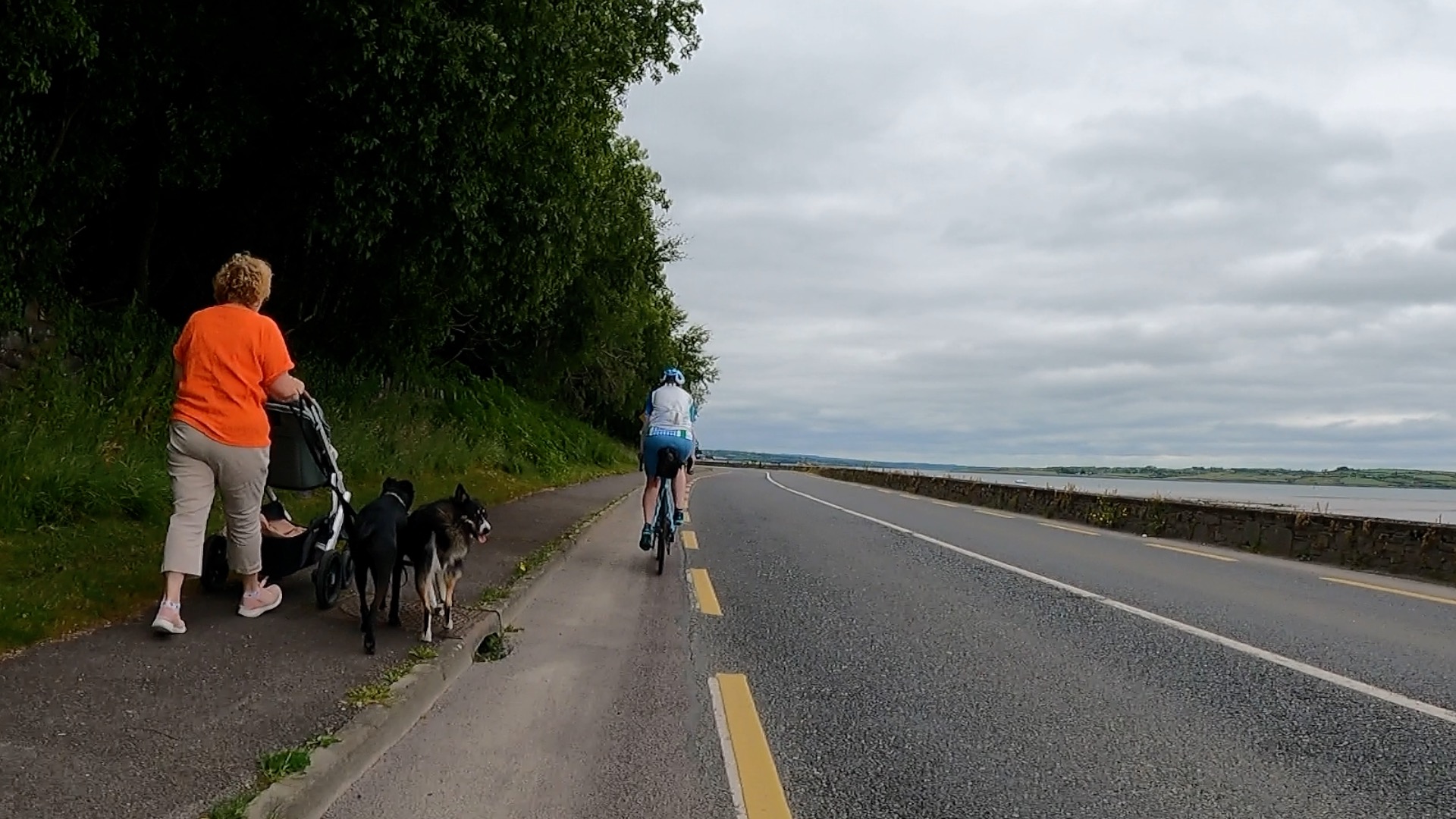
There now followed the most unpleasant road of the whole tour. We were on the R336, which was very busy for 20 miles on this Monday morning. (Endurance cyclist Emily Chappell complained about this road in her wonderful book Where There’s A Will.) Although it followed Galway Bay we didn’t get the scenic views of yesterday that might have compensated for the traffic. At times we cycled on the pavement to let the lorries pass us safely. The morning brew was in a clearing by the roadside, and we were relieved that after Connemara airport the traffic disappeared.
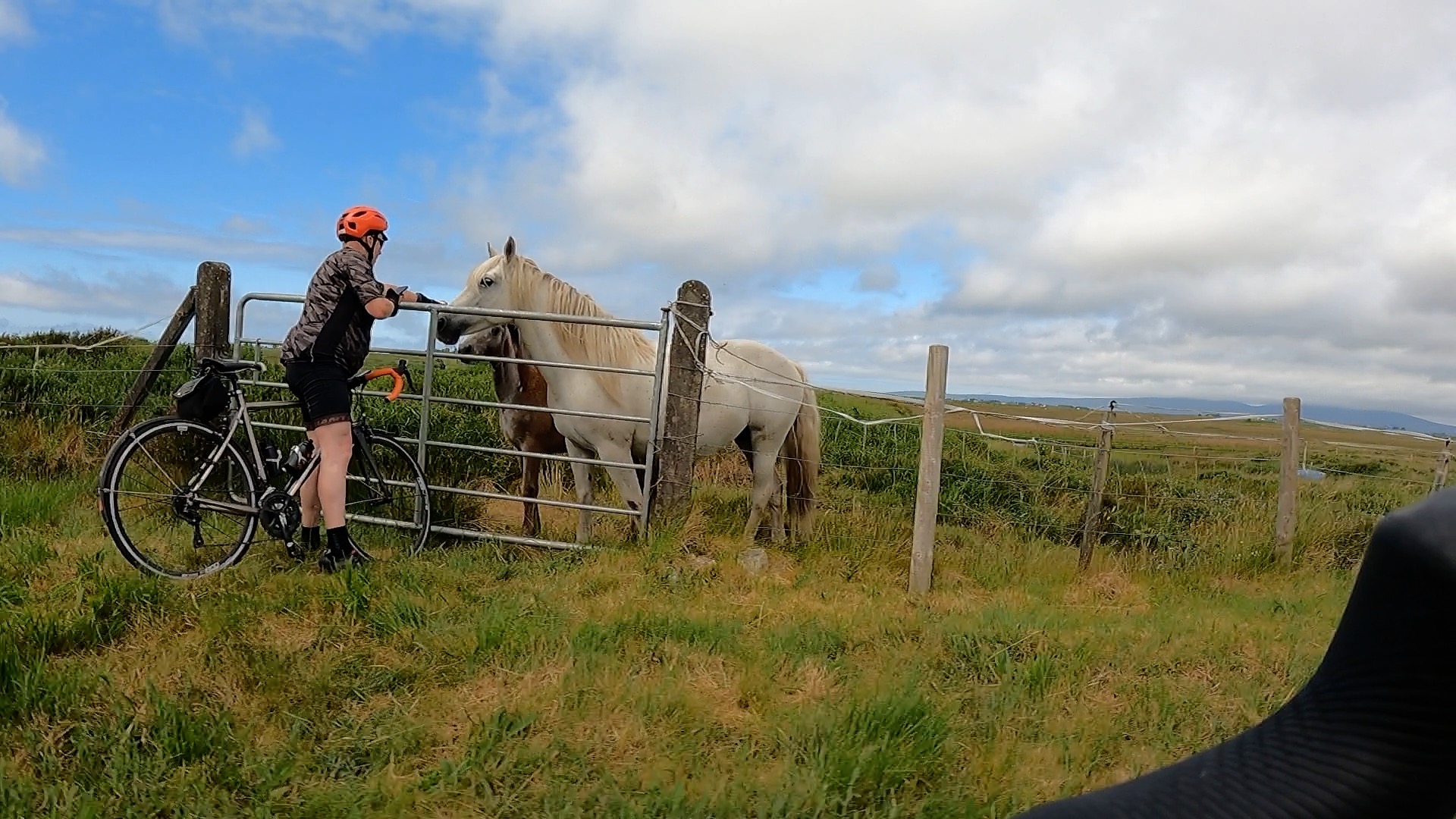
As the road turned north, the grey sky turned blue, as it did yesterday, and I felt my spirits rising. The road threaded past countless loughs, and I couldn’t resist the temptation to take photos and videos for the day’s highlights movie. We also saw Connemara ponies and shelters for newly-cut peat. The use of peat is controversial today because of its impact on the environment – Lucy was horrified to see peat being cut – but in the early 1950s the chief engineer of CIE (Irish Rail) Oliver Bulleid built a turf-burning steam locomotive as Ireland’s native fuel was far cheaper than Welsh steam coal. The experiment was abandoned in favour of diesel traction.
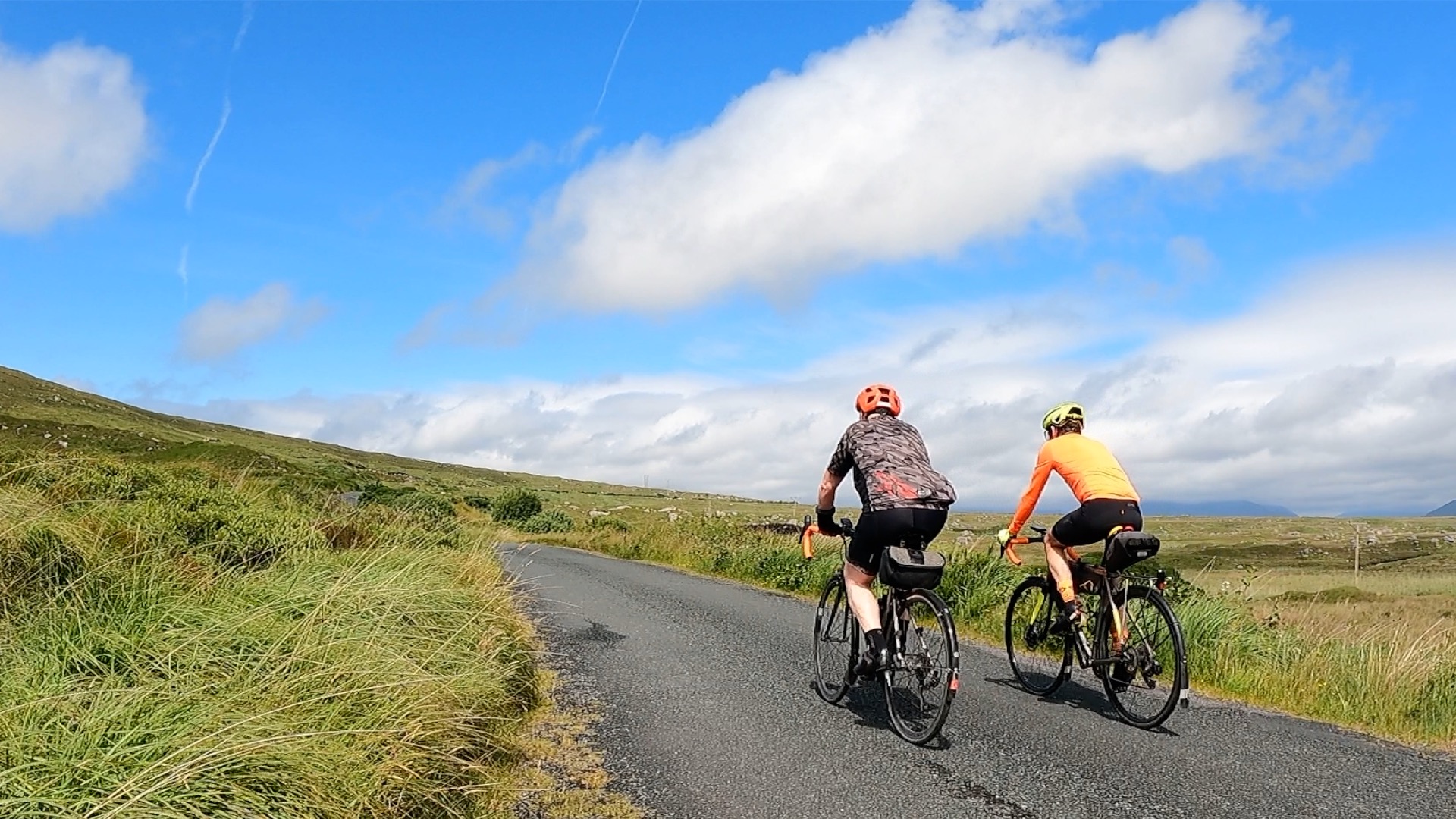
In time, we swung west, and the landscape opened up, with mountains providing an impressive backdrop. Today was a modest one for climbing, but we had a few short, gentle ascents to keep things interesting. So far the climbing on this tour has been unchallenging.
Lunch was a delightful interlude at the Zetland Country House Hotel, with its host so keen that everyone was well fed and contented. The hotel was built as a sporting lodge in the early 19th century, and sits just inland from Cashel Bay.
The route after lunch was a visual delight, especially after we crossed the handsome stone bridge seen above on the way to Roundstone, a gorgeous coastal village that could have been the smaller cousin of Tenby (Dinbych y Pysgod) in Wales, with its harbour and colourful houses. Boats were resting on the shore as we approached.
Roundstone
As I cycled into Roundstone, I spotted Julia, Lucy, tour guide Mark and a few others by the roadside. Julia was looking for a postcard for her granddaughter and others were in search of ice cream. It was a nice place to while away time chatting.
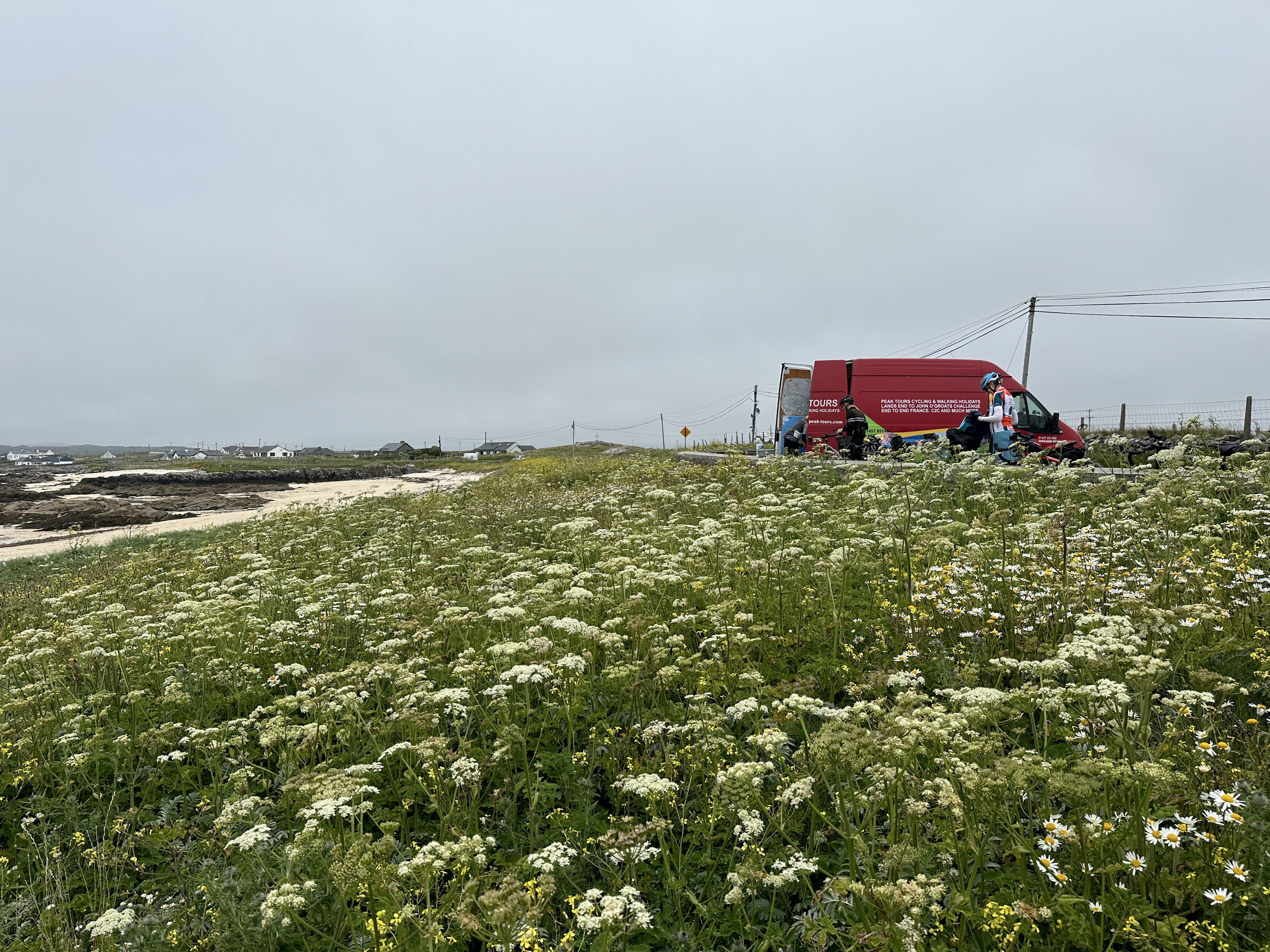
We’d been told that a beach on Mannin Bay between Roundstone and Clifden was perfect for swimming. Julia was keen to repeat her dip at the end of last year’s Portugal tour, but by the time we got to Ballyconneely the sun had disappeared and the wind was distinctly chilly. Wendy had set up the afternoon brew stop overlooking the beach for a welcome, warming cuppa. Julia settled for a paddle rather than a swim – but at least one of our party did go for a swim here today.
The last six miles to Clifden were straightforward, and I was amused to be overtaken by a Welsh camper van. The climb up to the destination was easy enough, and I was soon standing by my bike in the town centre studying the route notes to work out where the Station House Hotel was.
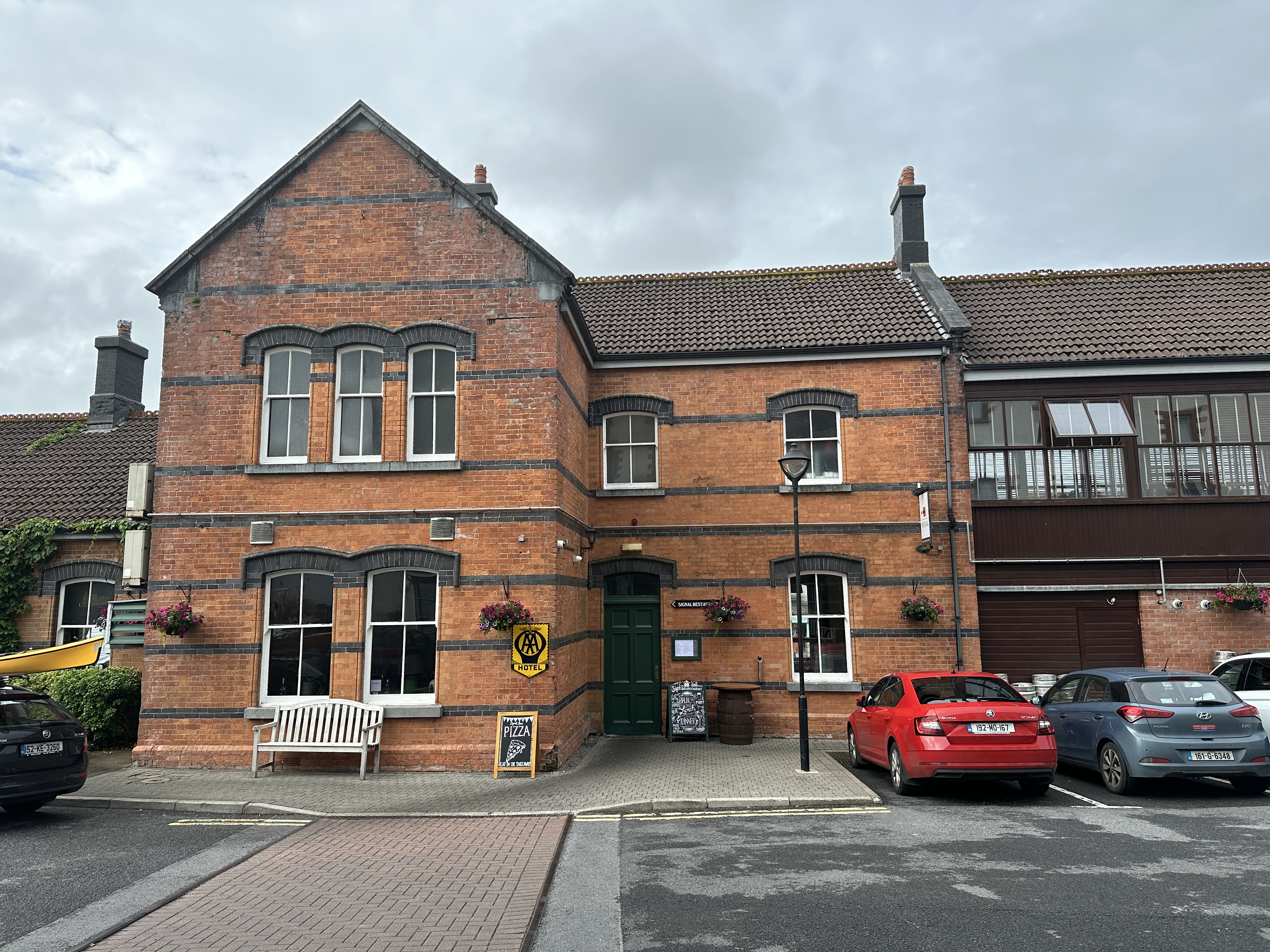
Clifden’s old railway station
I soon found the old station, and the Station House Hotel was, unsurprisingly, next to it. This was my favourite hotel of the trip: comfortable and modern, yet reflecting the railway heritage of the site.
I particularly liked the old railway posters along the lift lobbies and corridors, especially the illustration of the Fishguard to Rosslare ferry. That’s how I first arrived in Ireland 50 years ago with Mum and Dad, and on my first (solo) Irish cycle tour in 1996. Railway posters were examples of the railways’ role as pioneers of marketing and tourism, especially the Great Western, which ran the Fishguard route until Britain’s railways were nationalised in 1948.
The station closed in 1935, 14 years after it featured in a significant moment in Ireland’s war of independence. The IRA ambushed a Royal Irish Constabulary (RIC) patrol in the centre of town, killing two police officers. The attack was a reprisal for the execution of Clifden man Thomas Whelan for the killing of British Army officer Captain Geoffrey Baggallay. In response, the British authorities sent a trainload of the notorious RIC Black and Tans officers to Clifden railway station. They proceeded to set fire to 16 houses and killed two people in Clifden. And so the cycle of death and destruction continued.
Clifden was famous for its Marconi transatlantic wireless station, which never reopened after being attacked by the IRA in 1921. Marconi transferred the transatlantic wireless service to its station near Waunfawr in north Wales.
Clifden is a peaceful and attractive place today. It makes the most of its place in the legend of Alcock and Brown, the two men who were the first to fly the Atlantic in 1919, the month my grandmother got married. They crash landed their Vimy bomber in a bog just outside the town after a 16 hour flight from Newfoundland. (We passed very close to the landing site after our beach stop.)
My meal at Guy’s Bar
We had an excellent meal at Guy’s Bar and Snug – just metres away from the site of that 1921 IRA ambush, although we didn’t know that! We sat nursing the now traditional Guinness at a pavement table while we waited for our table inside to be free. It was worth the wait – the beef bourguignon was delicious.
To our surprise it was raining heavily when we came out and we got wet on the way back to the hotel, not helped by losing our way, as in Tralee. Why did we find small Irish towns hard to navigate?
Today was a magical day’s cycling. The weather improved, we were following the stunning coastline towards Galway – and I was reliving half-century old family memories.
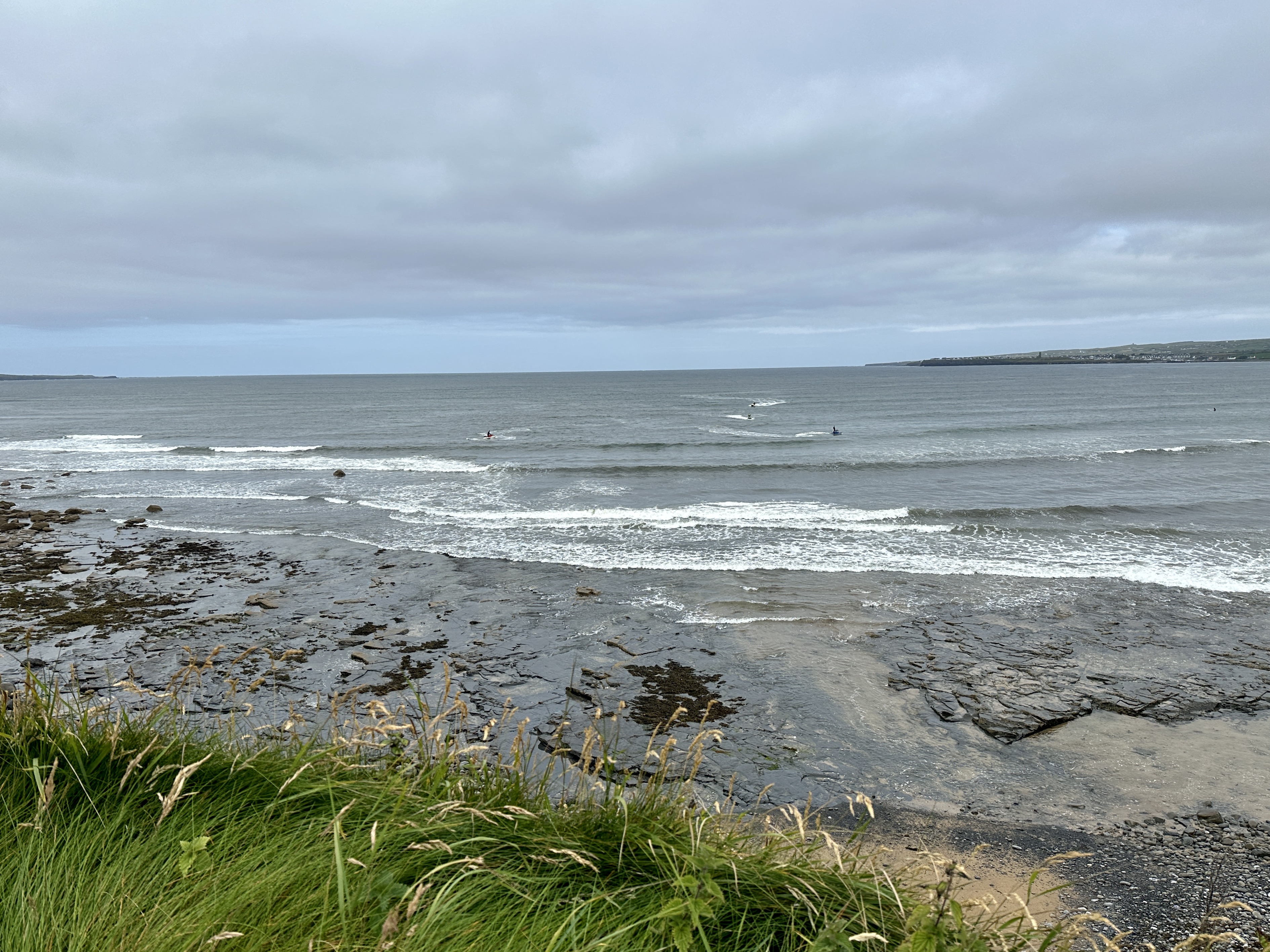
I was at the back of the pack as we left Spanish Point towards Lahinch. My bike was making troublesome noises, and it took a couple of roadside tweaks to get everything running sweetly. I’d been looking forward to seeing Lahinch since booking the tour, having such a vivid memory of stopping there in 1974 with Mum and Dad as we travelled on to our next stop, Galway. My image of Lahinch was of a seaside promenade, where I bought an Irish bar of chocolate, whose brand I’ve forgotten but had never heard of in 1974. (Hardly surprising as it wasn’t Cadbury, Fry’s or Rowntree.) As I cycled through, I found that that childhood memory was erratic. Lahinch had no promenade: all the shops and other buildings were away from the shore, and under leaden skies the place seemed rather bleak. Disappointed, I took a few photos and moved quickly on. Happily, the rest of the day was a delight.
We had an enjoyable interlude at the stunning Cliffs of Moher, which we reached after a climb from sea level at Lahinch. There was a very smart visitor centre, which certainly wouldn’t have been there in 1974!
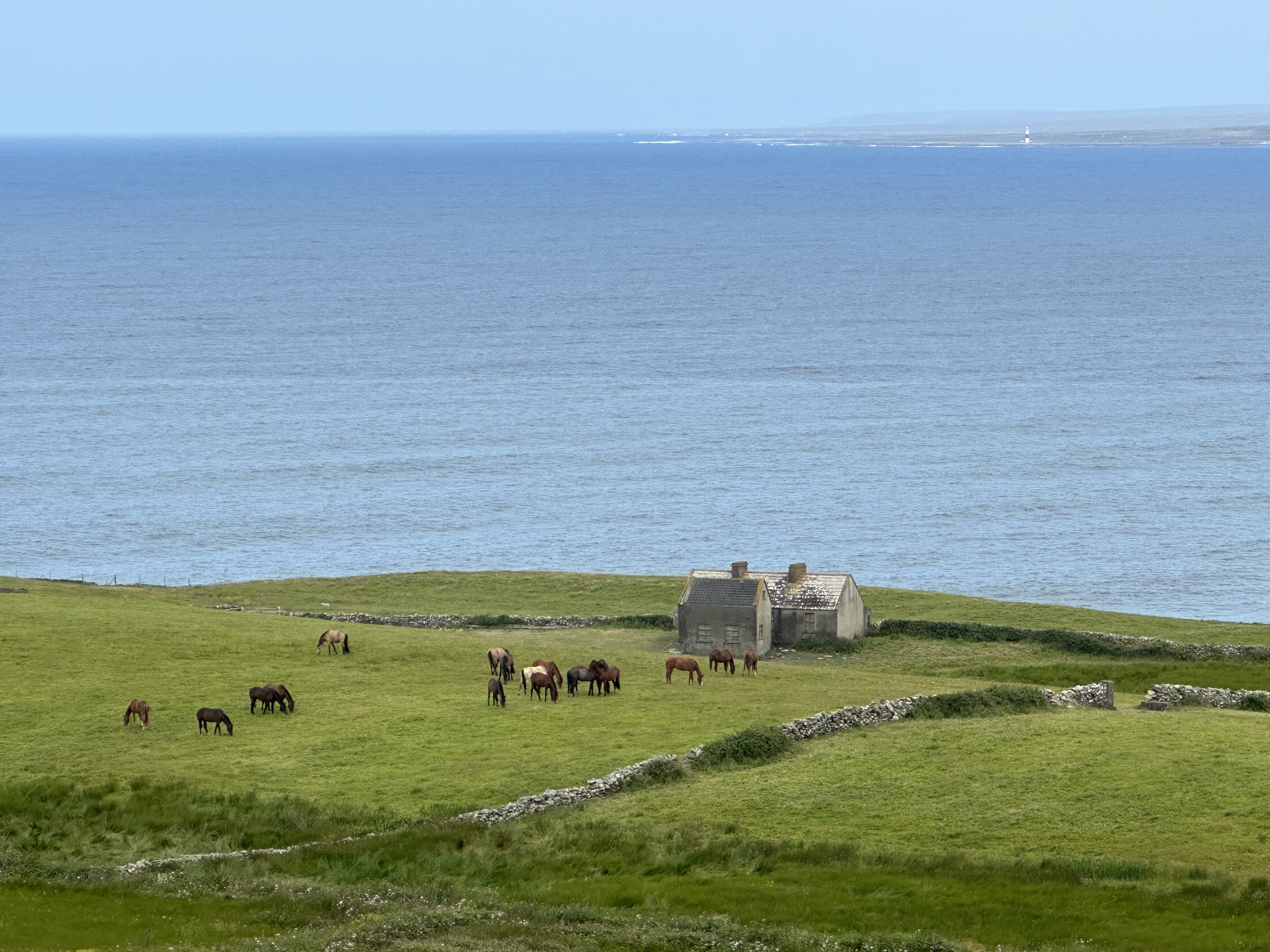
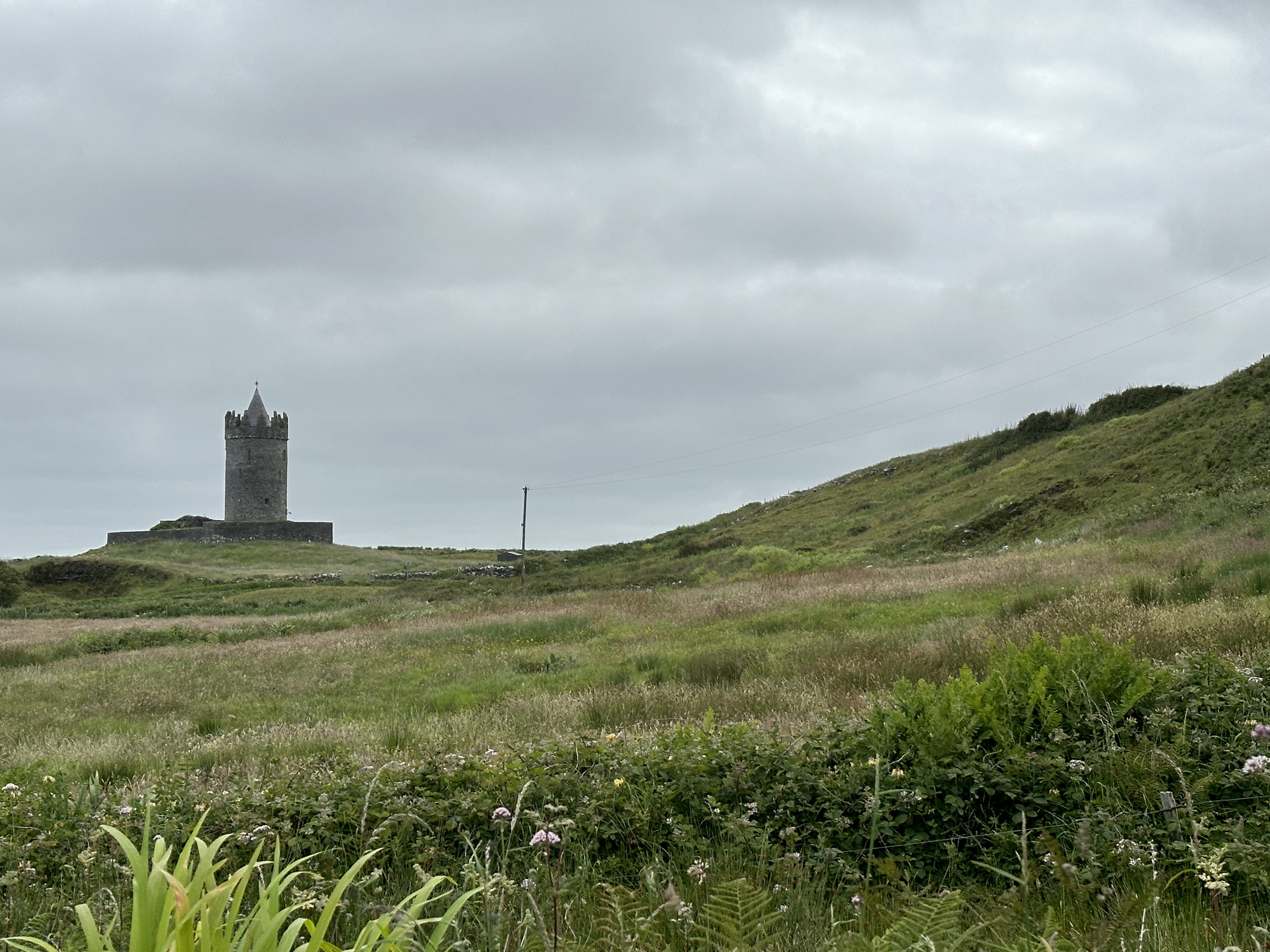
There followed one of my favourite sections of the entire tour. We turned off the main road onto a lane that gave breathtaking views along the coast and out to the Aran islands. (You can see Inisheer in the background of the photo above.) It was fast cycling too, except when I felt obliged to stop to take a photo of the latest sights – including 16th century Doonagore castle, below. A Spanish Armada ship was wrecked below the castle in 1588 and the 170 survivors executed here. The building is now a holiday home.
The morning brew stop was in the Burren, an extraordinary limestone landscape dotted with wild flowers against the backdrop of coast and cliffs. The rock was formed as sediments in a tropical sea some 350 million years ago. It was a pleasure to enjoy a mug of tea here especially as the grey skies had finally lifted, giving way to a lovely sunny day.
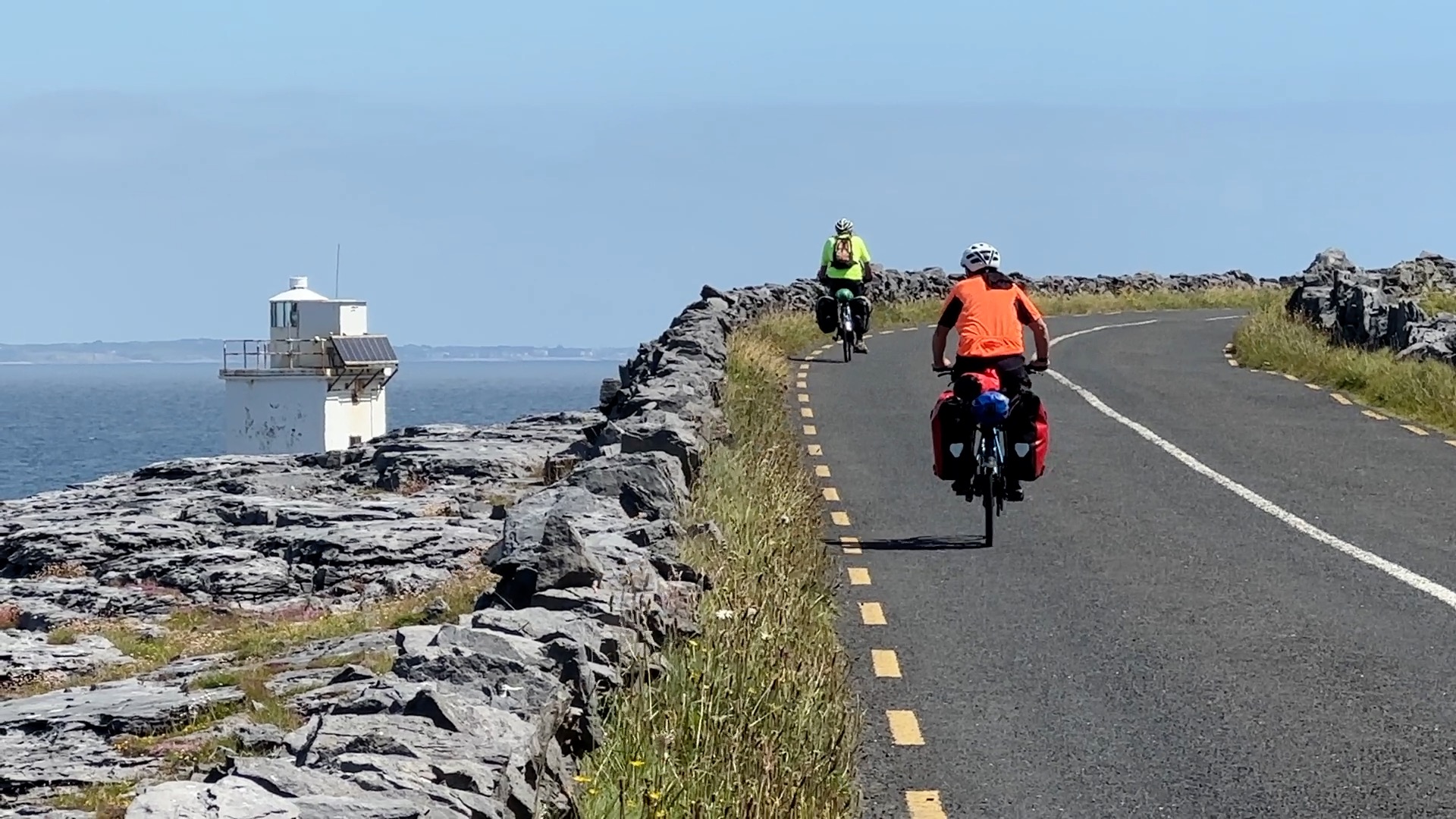
I loved the ride from here to lunch at Kinvara. I overtook these pannier-laden Dutch cyclists on the fast coast road towards lovely Ballyvaughan, where Julia passed me, commenting ”here comes the slow coach!’ as she went by.
Ballyvaughan
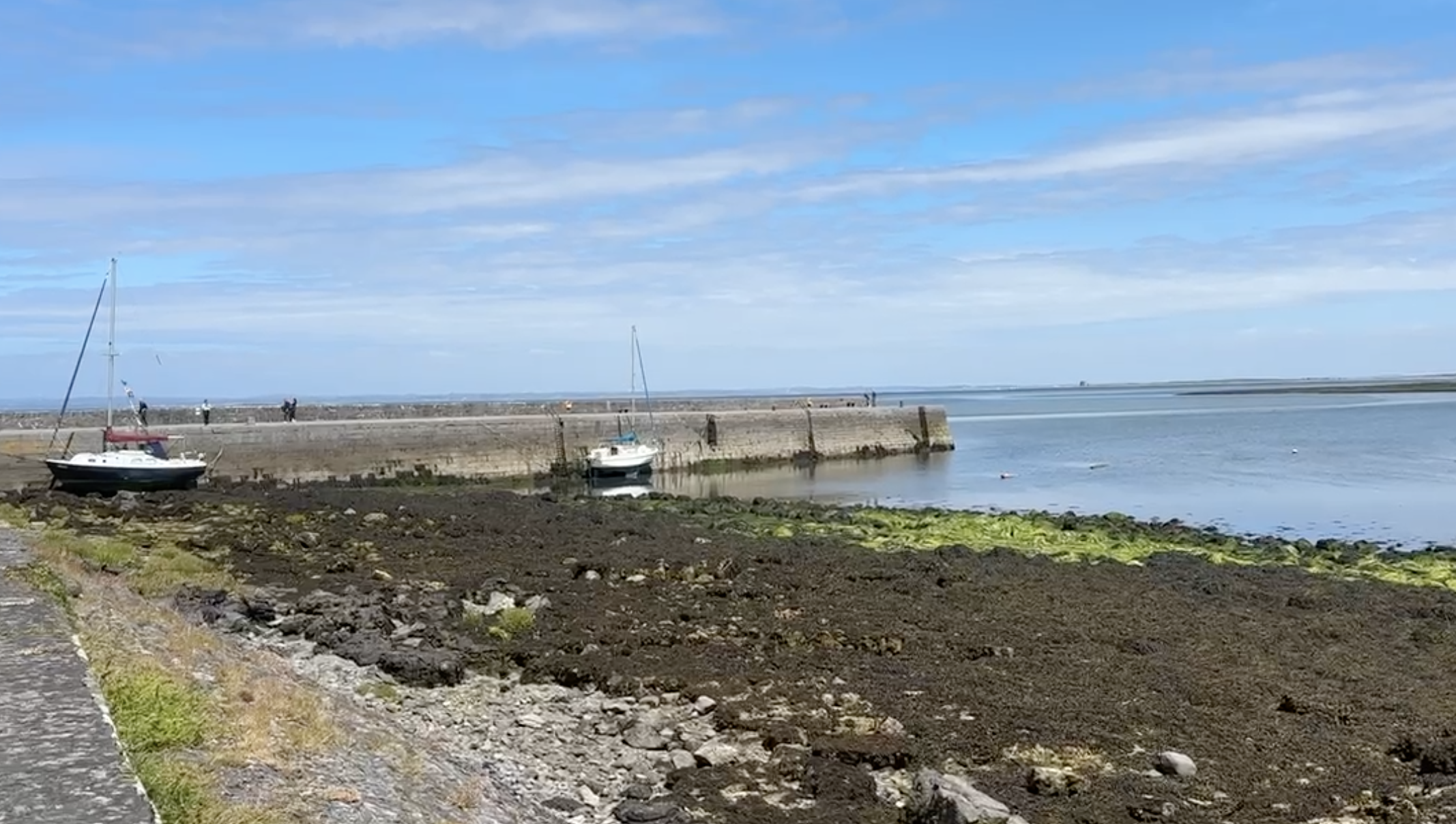
Soon after Ballyvaughan, we turned off the main coast road, which was a mixed blessing. It was quieter, for sure, but not as fast, and hillier. Lunch at Kinvara was good, but the service was very slow. But I didn’t mind – it was a lovely day and we had just 19 miles to go to Galway.
After lunch, we were back on quiet, rural lanes, with wooded sections that contrasted with this morning’s coastal scenery.
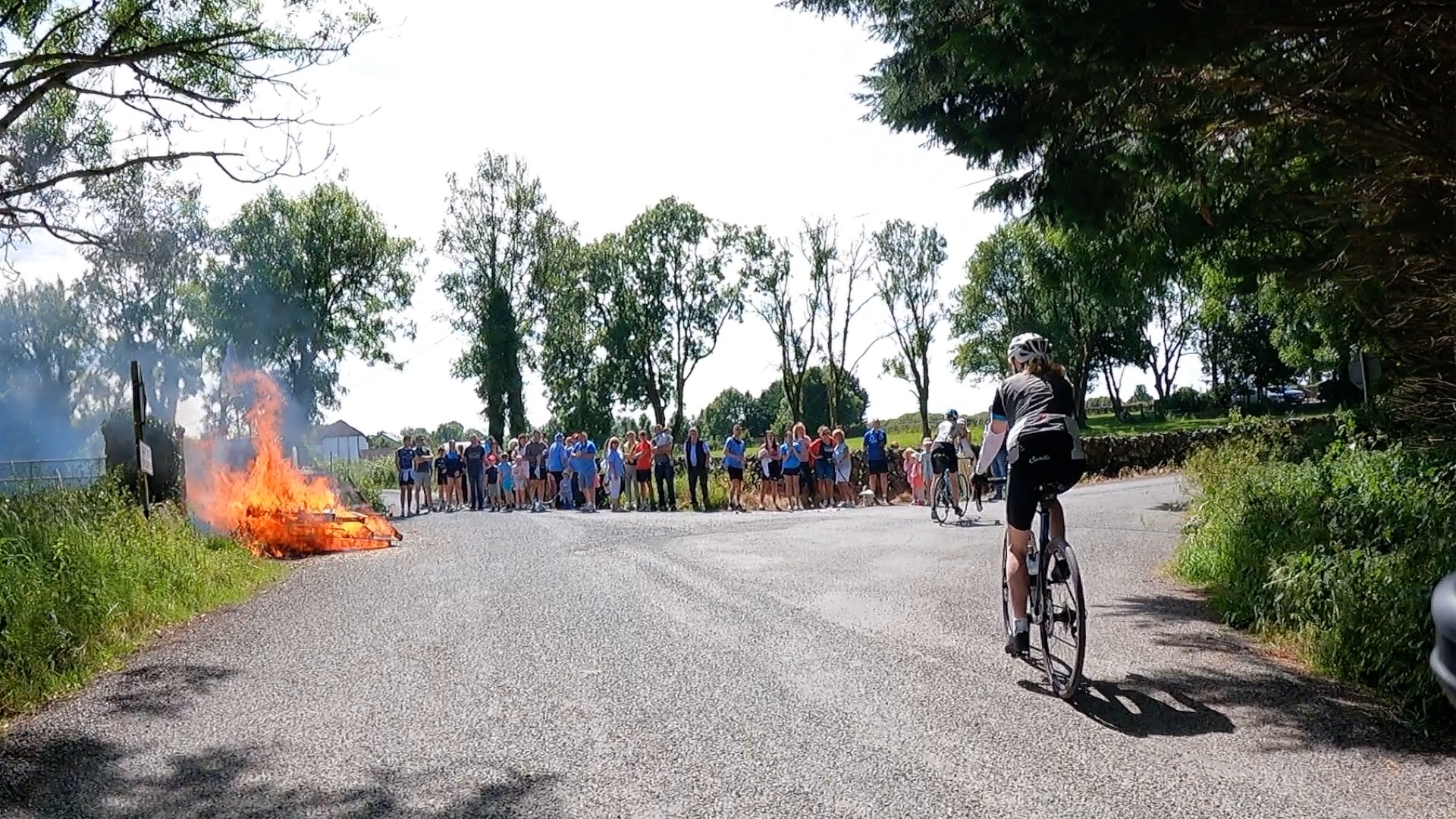
As we got closer to Galway, we spotted a group of people at the side of the road with a bonfire. At first we thought it was a demonstration, but after we saw another group with a fire we discovered they were celebrating a local under 15 hurling team’s victory. By the time we passed a third group we’d convinced ourselves they were cheering us on!
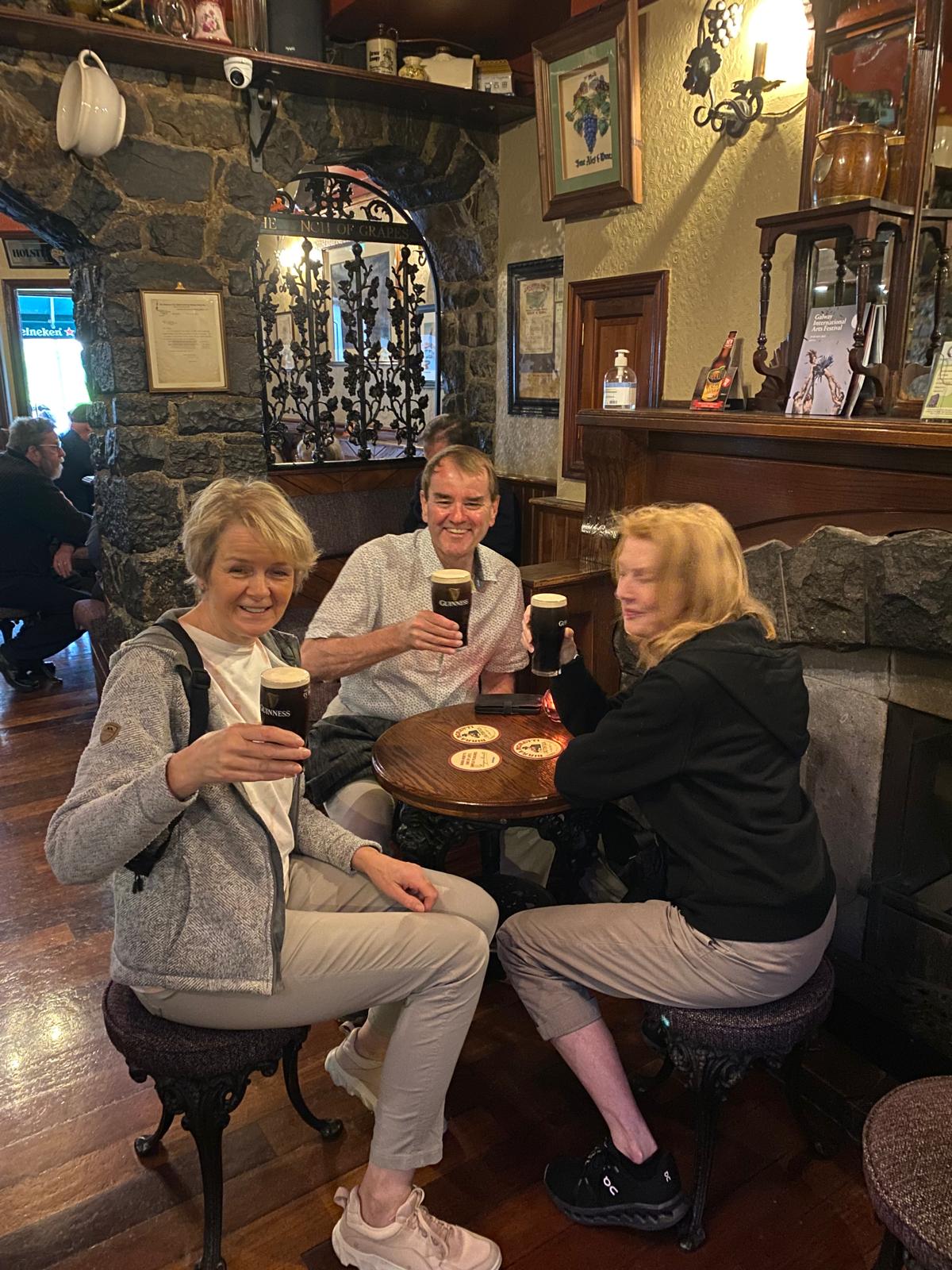
After such a scenic day, the final approach to Galway was very nondescript. We were staying in a corporate hotel, the Connacht, tonight, in an industrial area a mile or so out of town. So Julia, Lucy and I got a cab into the city for drinks and dinner. Galway was buzzing for a Sunday night, and we were pleased to get a table at a tapas restaurant after having the statutory Guinness at a bar round the corner first.
Postscript: return to my 1974 hotel!
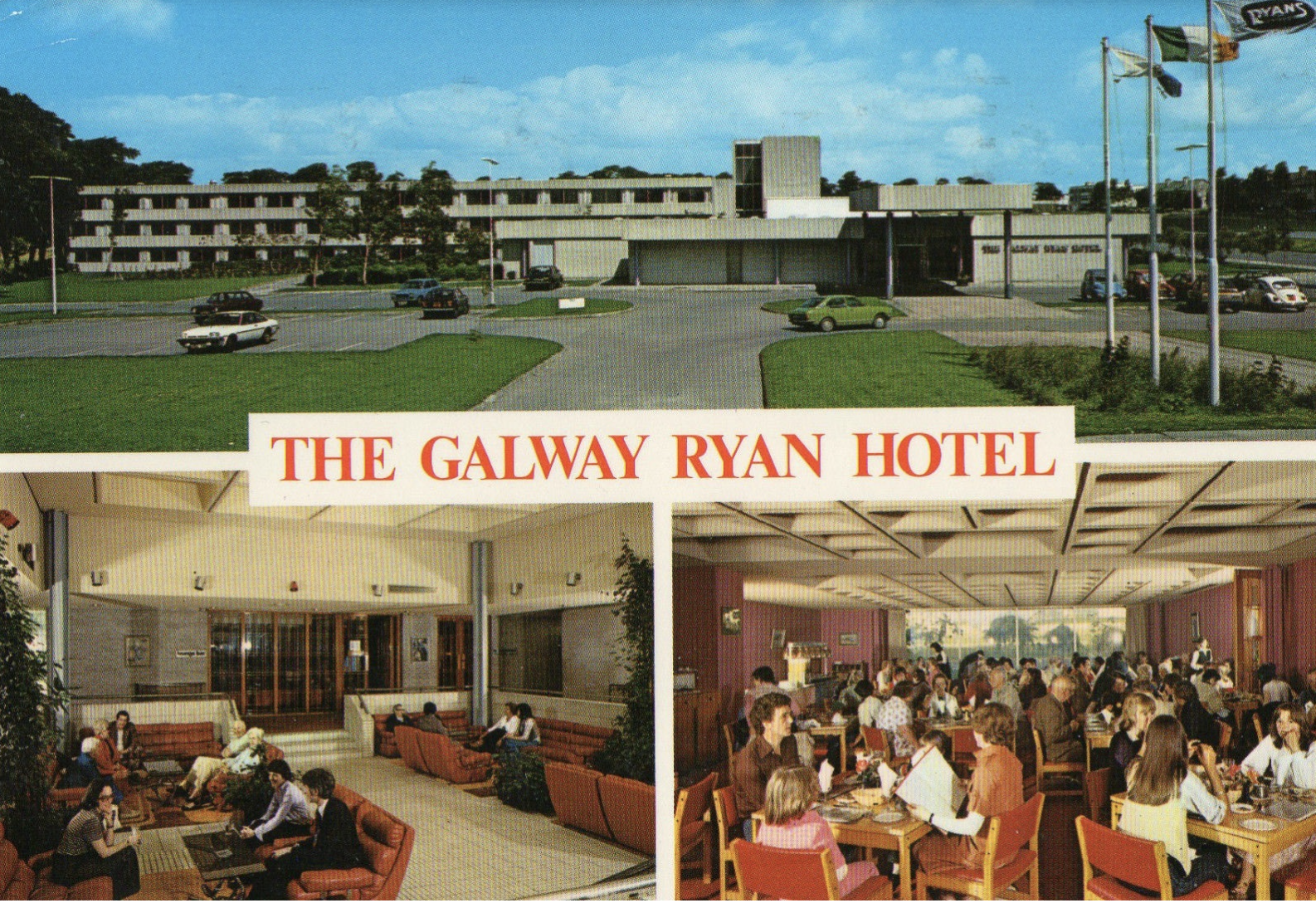
Back in 1974, Mum, Dad and I stayed at the Ryan Hotel in Galway. (It was the Ryan group that later created Ryanair.) I’d wondered where in Galway the hotel was, and Googled the answer a month after the tour. To my amazement it was the very hotel we stayed in – it was renamed the Connacht in 2013. It looks nothing like a 1960s motel today, so it’s no surprise that I didn’t recognise it, especially as I thought it was on the coast!
Today was a much easier day, though hillier than the route notes suggested. We left Tralee under heavy, dark clouds – yesterday afternoon’s sunshine had gone, but it was at least dry. We missed a turn in town – I ignored my Garmin’s insistent beeps, assuming the others charging on knew better. The Garmin was right…We were soon back on track, with views of the river Lee and the sea to the left.
We had a few climbs today, and the view above was the reward for the first: the stunning vista over Ballyheigue Bay. Once again I was left thinking how glorious this place would be on a sunny day – such a common experience in these islands…
A little later, we saw the road ahead climbing skywards, and braced ourselves for a workout. But we were spared: the Garmin beeped at us to turn right, and a more modest ascent awaited us. In truth the climbing today was easy, but I did feel sorry for Lucy, who was having trouble with the gears on her new bike. My mind went back to our tour of Umbria in 2004 when I was unable to use any of the bottom set of gears on my newish Cannondale hybrid.
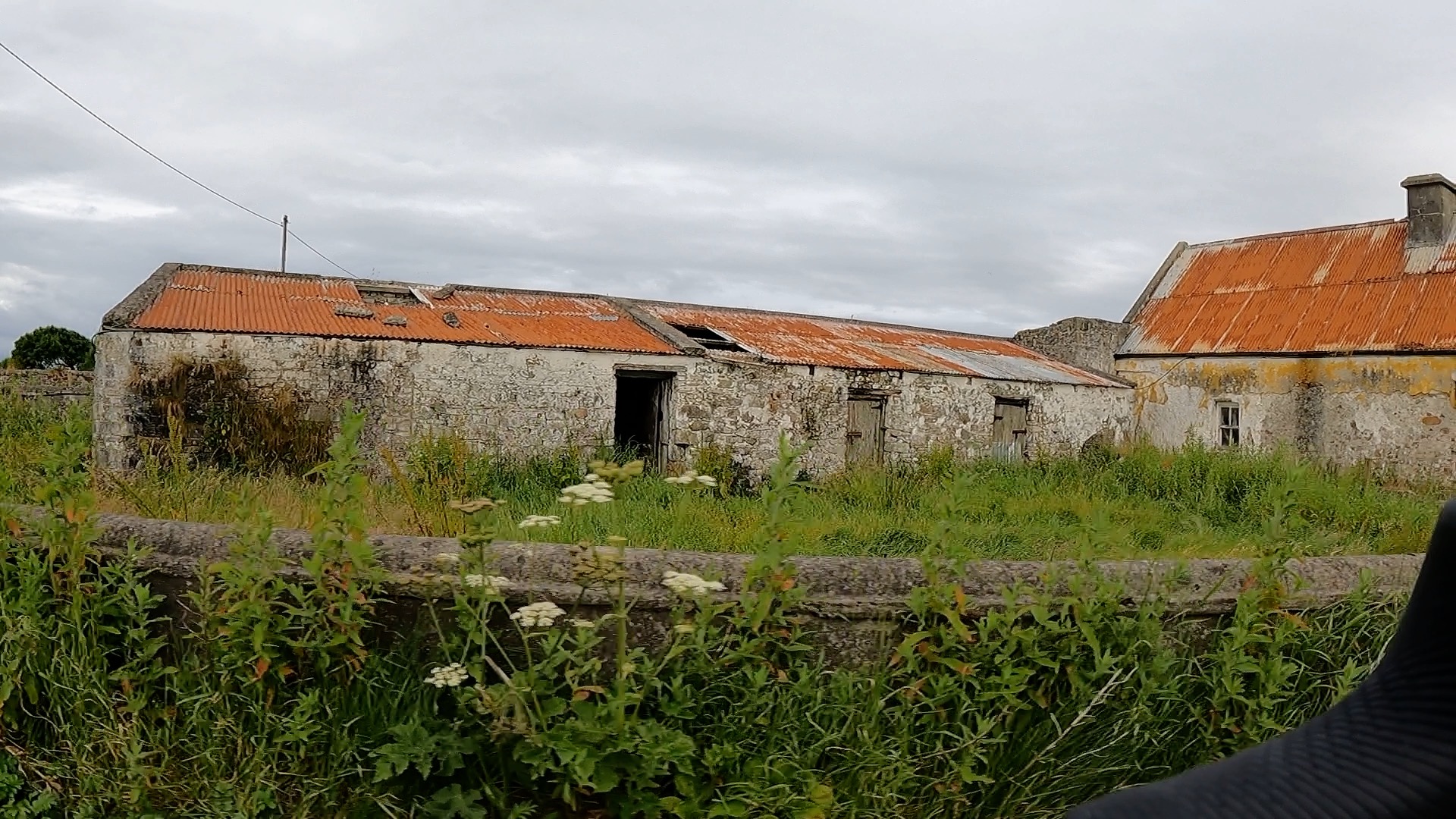
On the first two days I’d noticed how prosperous the towns and villages had appeared. Today that changed, and we cycled past a lots of run down houses and ruined farms.
As we cycled towards the Shannon, I passed runner after runner coming the other way, and remembered that it was Saturday. It must have been a major event given the numbers taking part. Some of the runners seemed almost broken, barely walking. I was sure that my friend and colleague Louise from Dublin, a very strong runner, would have been right at the front! I was cycling on my own for much of the stretch to lunch, but enjoyed talking to Ian from Vancouver – one of the joys of these tours is meeting people from all over the world. Later, over lunch, I chatted about cycling Land’s End to John O’Groats (LEJOG) with one of our group. He said that Glastonbury was a low point for him, because of the poor accommodation. By contrast, I loved Street and Glastonbury on my LEJOG, but had a very jaundiced view of Kinross because there was no hot water in my hotel room. These individual experiences make a big difference.
We enjoyed an excellent lunch at the Swanky Bar in Tarbert, before a short ride to the ferry over the mighty Shannon, Ireland’s longest river.
I love taking my bike on a ferry, whether it’s a cross channel one as in my tour of Brittany in 1996 or much smaller cross river ferries such as the King Harry crossing in Cornwall on LEJOG in 2019. The Tarbert to Killimer ferry route across the Shannon was just three miles, but saved a very long ride via Limerick.
The Armagh City cyclists overtake us
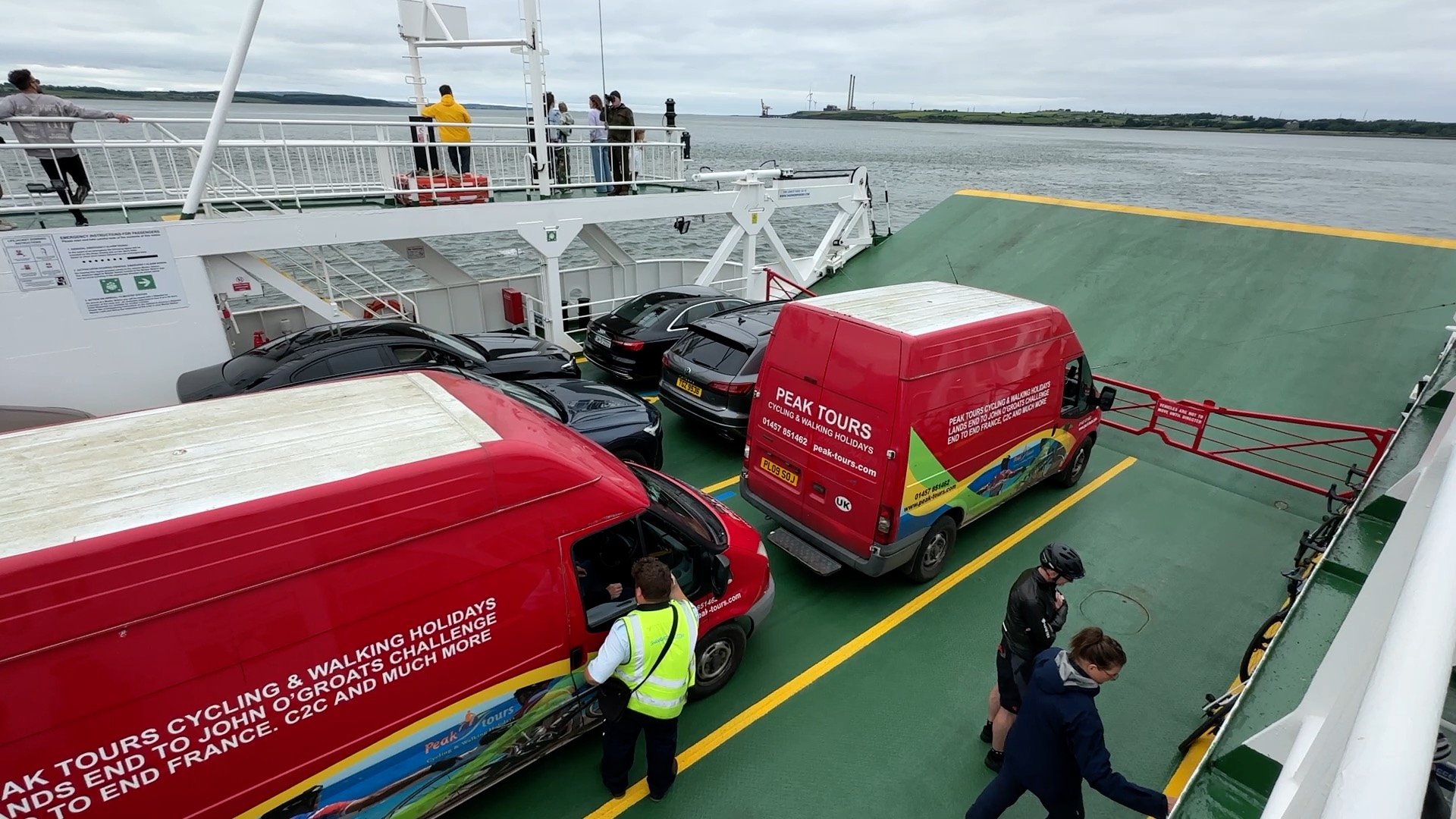
We spotted a group of cyclists from Armagh in Northern Ireland on the ferry, along with an Ulster Cycling support van. They overtook us at speed as we passed through Kilrush. Later, I found out that they were riding our Mizen to Malin route in four days, for charity. They were chatting to each other very loudly as they approached and passed us – so much so that until they came past I thought it must be an altercation…
Country roads
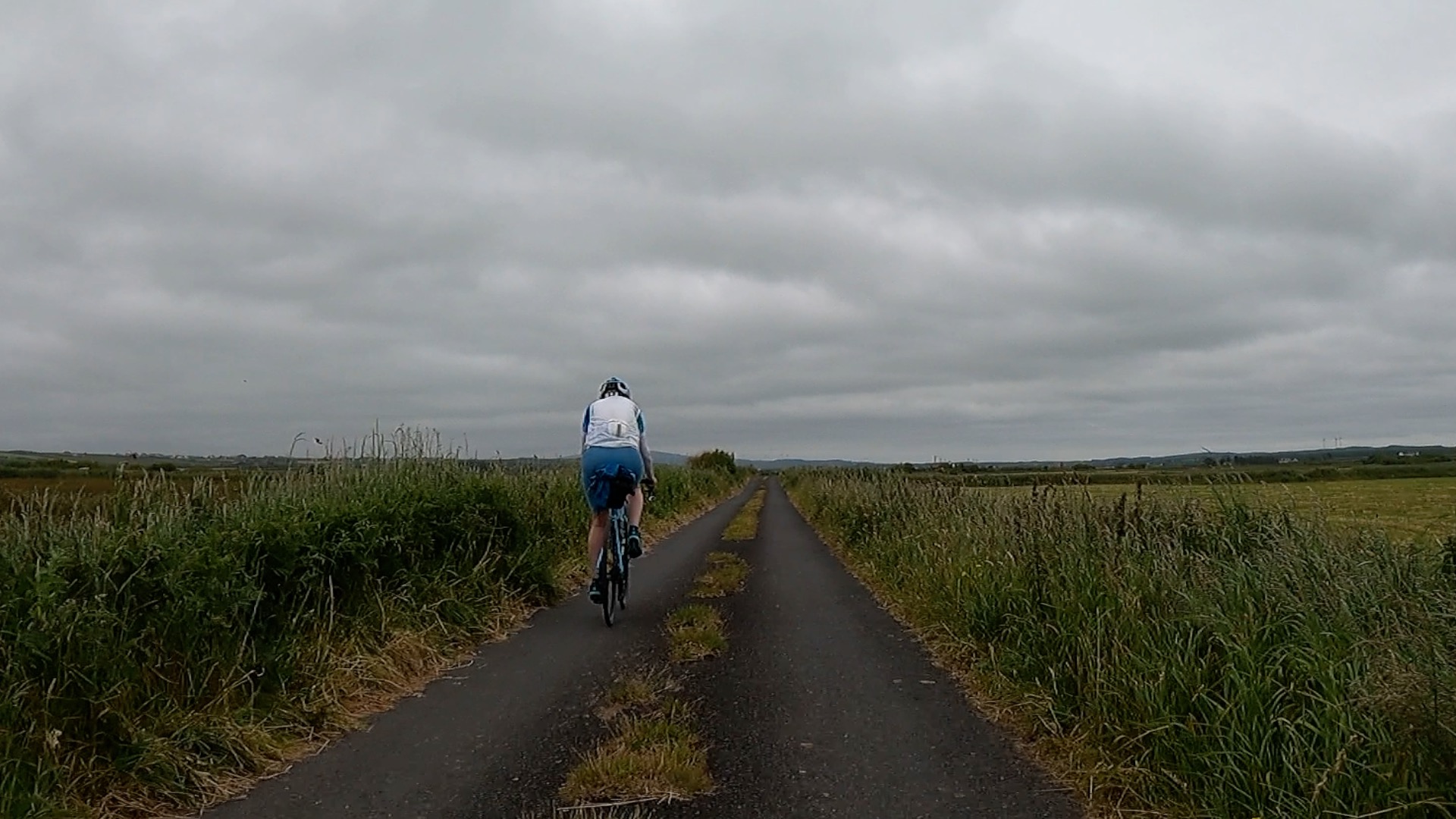
In truth, today’s route was rather dull after the drama of the Dunloe Gap yesterday, but we had an enjoyable spell along a lane that had grass growing in the middle, which reminded me of a British bridleway. We also spotted a golf course owned by Donald Trump, just before the afternoon brew stop. But we were soon back on the main road that would take us to our destination, Spanish Point.
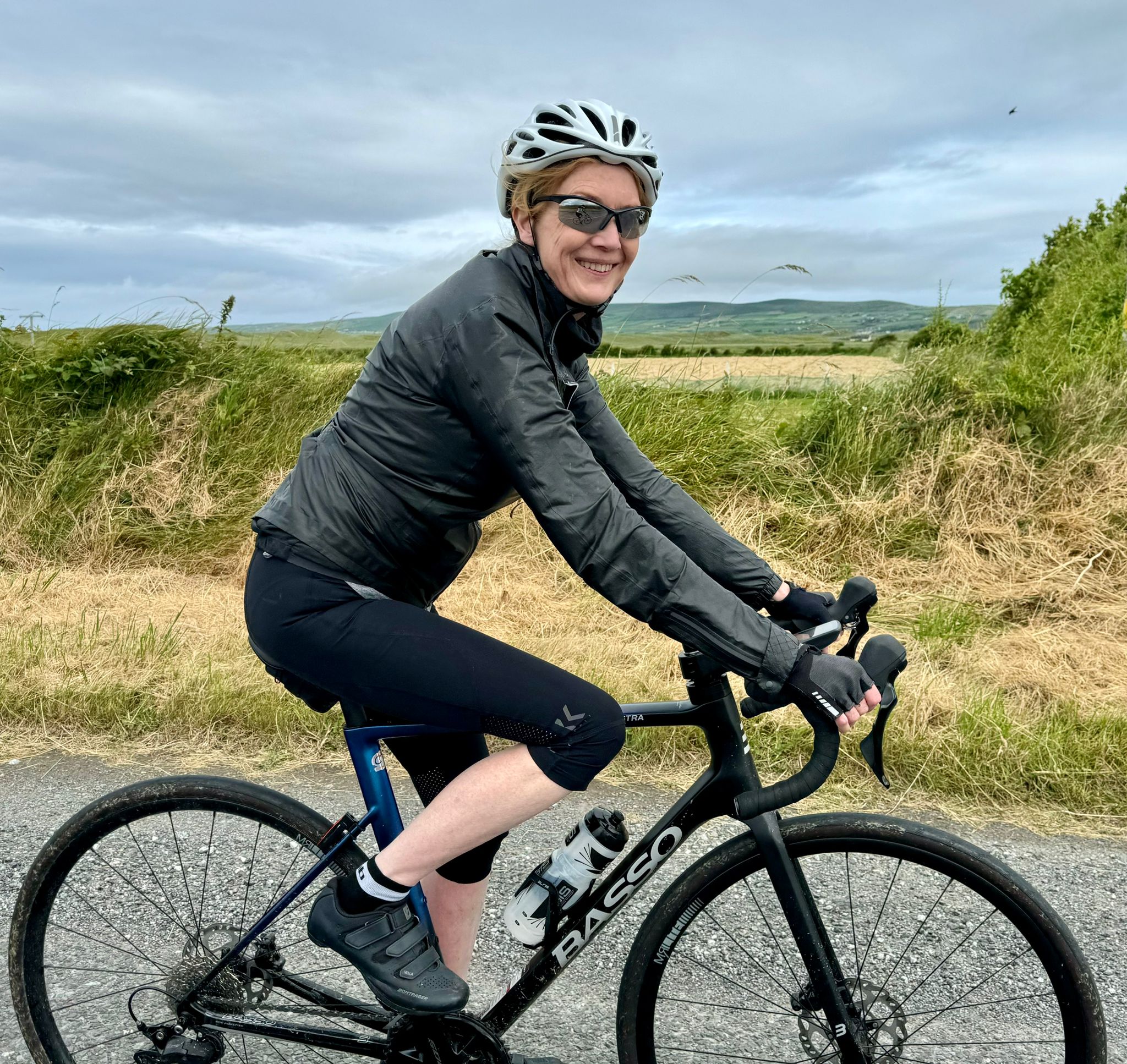
Above: making progress across County Clare: Rob, Julia and Lucy, photographed by Anna
Quilty, County Clare
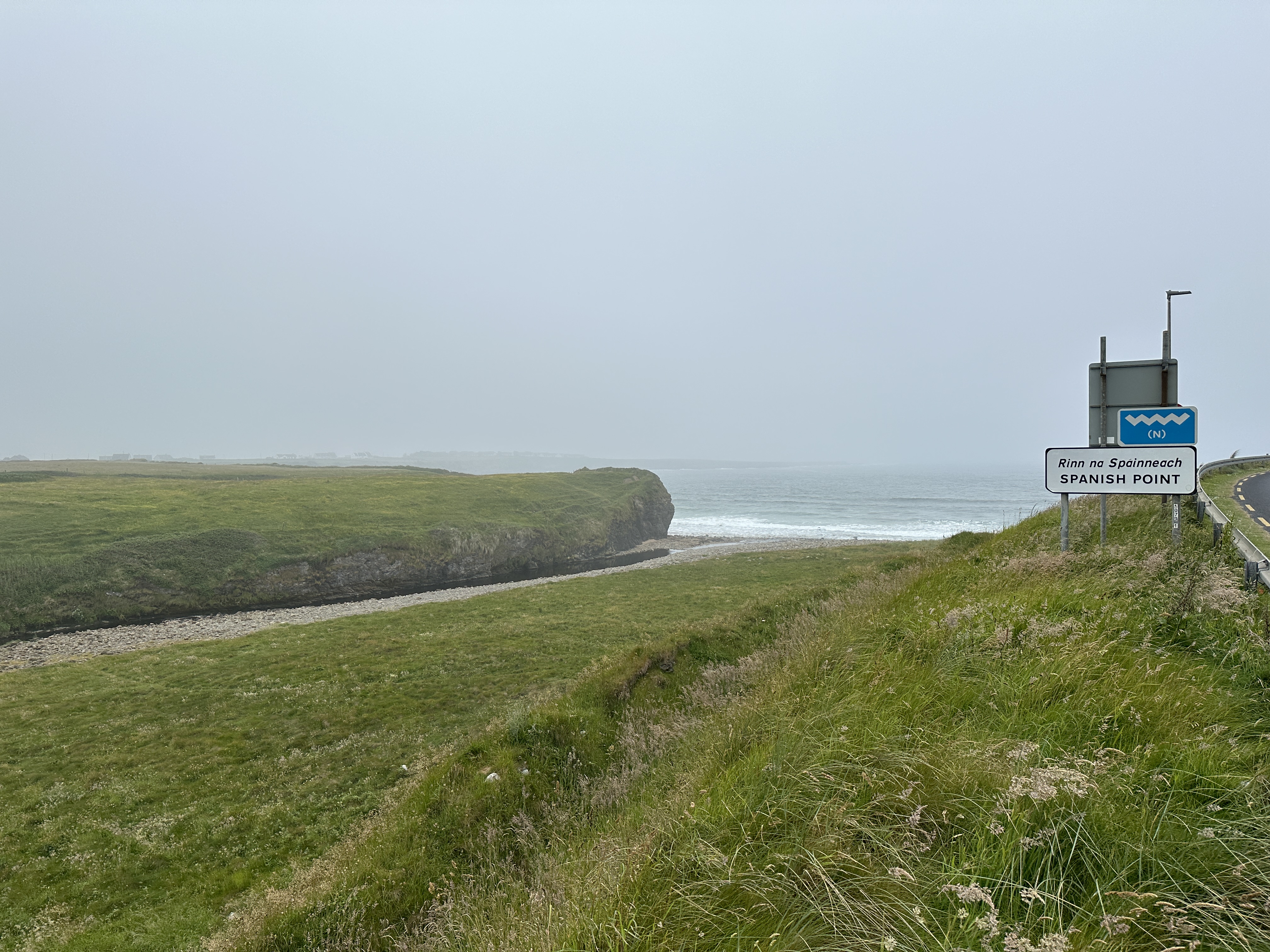
All day, I’d been taking on trust the route notes that said we’d have 2,100 feet of climbing today. We passed that total before Kilrush, so the final climb towards the coast came as a shock. (The day’s final climbing totalled 2,756 feet.) At last we reached the Atlantic, at Quilty. It was rather a bleak scene, with drizzle greeting the final mile or so to Spanish Point. The name of our destination recalls the wreck of Spanish Armada warships on the Clare coast in 1588. The English authorities who occupied Ireland executed the survivors, not knowing that the Armada had already long been defeated.
We were staying in a modern motel tonight, the Bellbridge House Hotel. I popped over the road to take photos, seen above. Dinner was filling, if nothing else, and the place was doing a roaring trade on a Saturday evening. I was intrigued to hear Lucy talking about her unconventional 1970s London secondary school, whose head was Molly Hattersley, wife of the Labour cabinet minister Roy. I was intrigued as Dominic Sandbrook’s wonderful history of Britain in the seventies, Seasons in the Sun, recounted the story of the school, quoting one teacher saying, ‘I don’t think kids should be made to come to school. It turns schools into prisons.’ It was a fascinating end to an uneventful day.
The forecast for today had been grim for over a week. Any hope that it might be wrong was dashed when I opened the hotel curtains and saw the rain bouncing off the flat room below. I’d be getting wet.
We had a five mile climb to start the day, at a comfortable gradient. Even better, it was through woodland and the canopy of trees shielded us from the worst of the weather. Through the mist and rain I could see how beautiful the countryside would be on a fine day like yesterday.
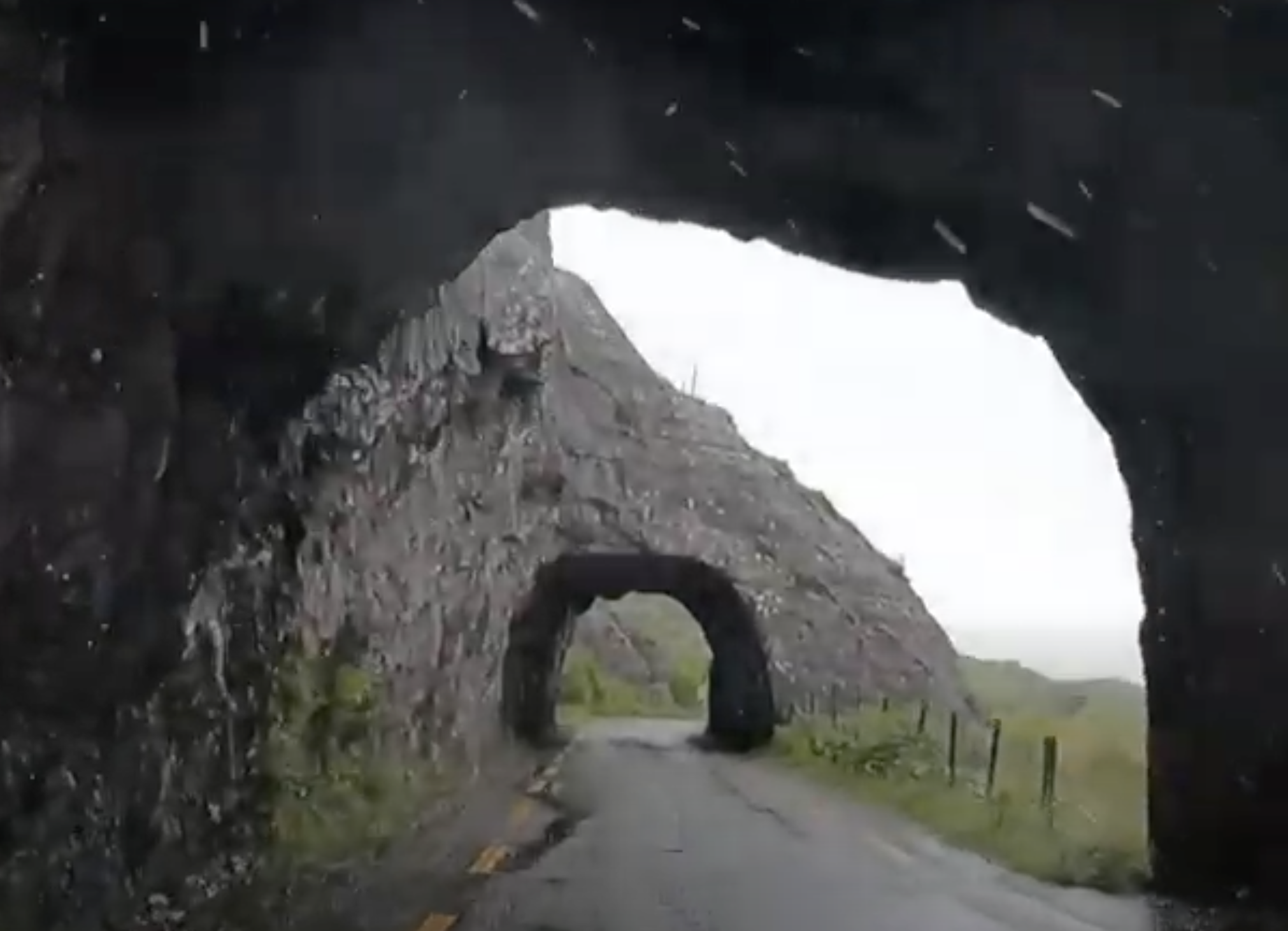
We’d been told to bring lights as today’s ride included a few tunnels. These were in much more exposed country and we got much wetter as a result. The road was also busier by now, which was a tad annoying as I had to choose my moment to video the approach to the tunnels! The rain was unrelenting as we crossed from County Cork to County Kerry.
A feature of Peak Tours cycling holidays is the brew stop. Twice a day, the guides set up a table of treats: tea, coffee and snacks to keep cyclists fuelled and contented. These are invariably in the open – and today’s morning stop outside Kenmare was no exception. I shivered in the cold and wet, envying one of the party who was sheltering in the van. We cycled on, as much for warmth as progress.
Waiting for the council workers to finish their work
After Kenmare, we had a section of narrow, gravel road, and I was glad of my gravel bike. A Kerry County Council worker explained that they were repairing the road ahead, and we’d need to stop for five minutes. He was so friendly and helpful, even offering us plastic bags from the council van to keep us dry under our helmets. I reflected how unlikely it would be that a council in Britain would repair such a minor lane.
This morning hadn’t been overflowing with joy, because of the weather, but the next few miles were blissful. We turned sharply off the N70 main road to enter Black Valley and an exhilarating, switchback descent that twisted round boulders, swept over stone river bridges, and generally added to the sum of human happiness.
Rob in another type of saddle: Killarney, 1974
We could see the mountains around Killarney in the distance, and I reflected on memories of my first visit to Ireland 50 years ago last month. We travelled from Wales in Dad’s latest, and most surprising, car: a tiny, lilac-coloured Hillman Imp. I can only assume that the rocketing petrol prices caused by the energy crisis of 1973 prompted his decision to go for such a small car – and take it to Ireland and Scotland in the same year. Back in 1974, after a first night in Wexford we stayed in Ryan motels in Killarney, Limerick and Galway. The Ryan group later created Ryanair.
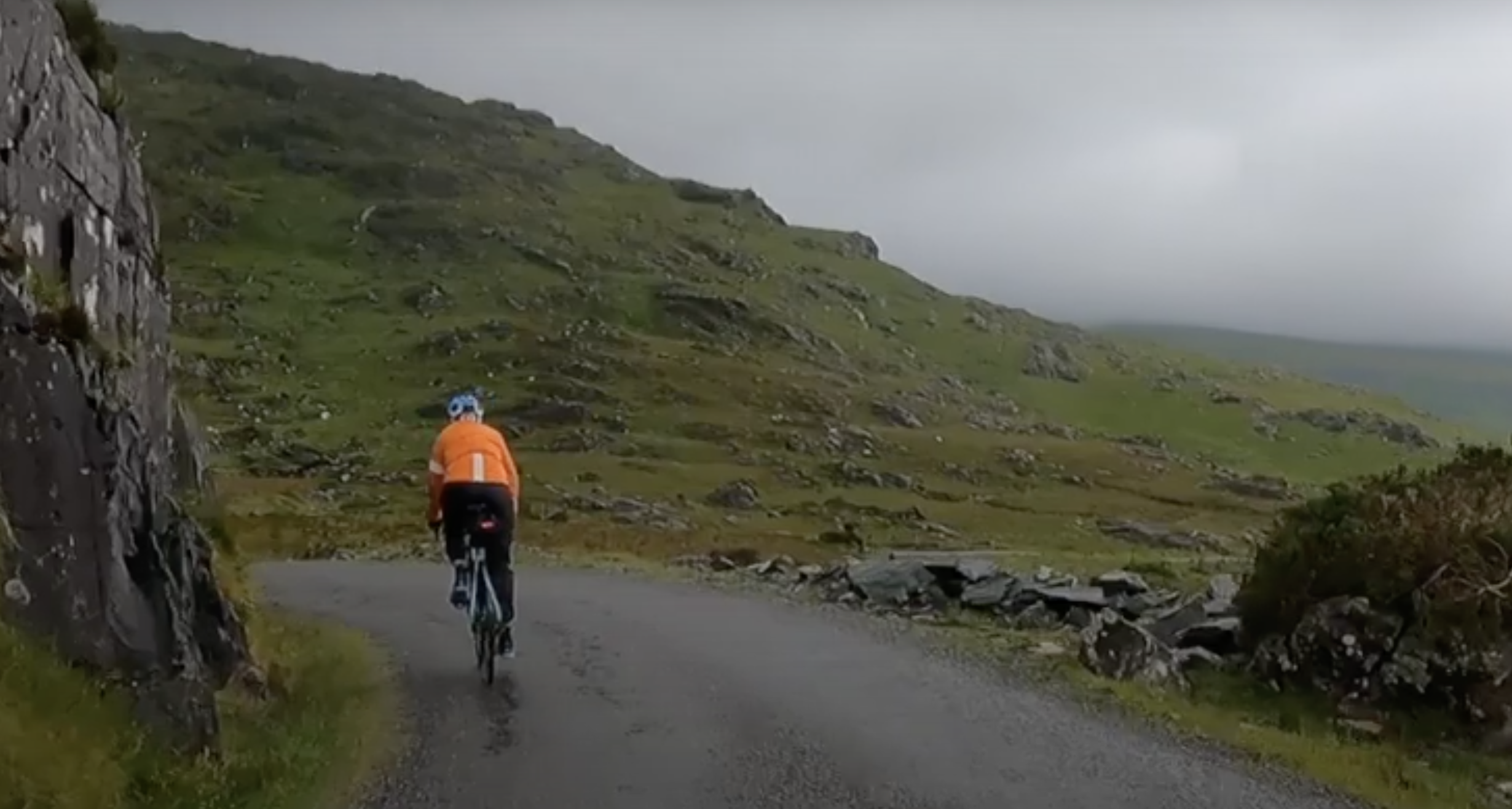
The next big climb was to the iconic Gap of Dunloe. It was such a shame the weather was so poor, although the rain had eased by now. At the morning briefing about the ride, the guide had told us that the steepest section of the ascent came after a church, Our Lady of the Valley. I was wondering when we’d see the church – and spotted it way below us in the valley, as seen in the photo above. It was a nice moment.
Waiting to overtake and descend from the Gap of Dunloe
After we reached the summit, we were slowed by several ponies pulling traps taking tourists for a ride through the mountains. If we were feeling wet and cold, I can’t imagine how miserable the sedentary passengers were! I imagine there would have been far more on a fine day.
I enjoyed the descent from the Gap to lunch at Kate Kearney’s Cottage. I was shivering as I got off the bike and gathered my things. It would be fun to have an evening here, but lunch was suitably filling. I got a pot of tea from the bar to warm me (shades of lunch after a similar soaking on day 7 of Land’s End to John O’Groats in 2019) but was envious of those in parts of the building that had the heating on! I wished that I’d put my down jacket in my saddle bag – I learned my lesson for later in the tour.
Sunshine on a rainy day…
I was a bedraggled figure as I got back on the bike, hoping the exertion of cycling would warm me up. It did, but something magical happened: the sun came out. It even dried my cycling clothes by the time we got to Tralee 19 miles later. I enjoyed my afternoon, apart from one climb. Lucy told me it was just 4.5 per cent so my mind and body weren’t expecting the 9 per cent recorded on my Garmin! I was glad I’d taken my jacket off.
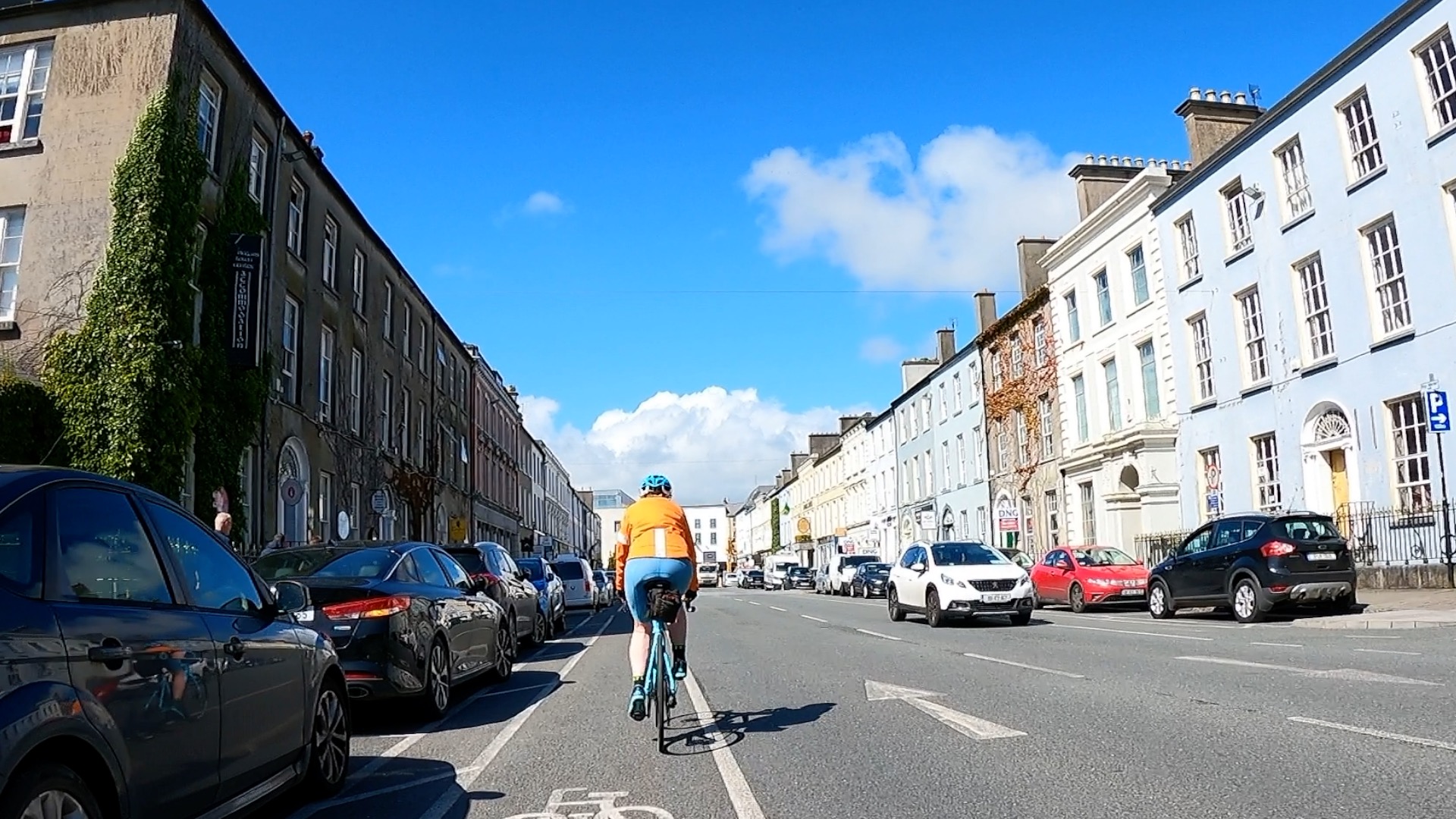
The final miles to Tralee were on pleasant wooded lanes, and I liked Tralee as soon as we entered handsome Denny Street and drew up by the Grand Hotel. I felt I’d earned this elegant stay after the morning’s weather. I grabbed a huge cup of tea from Costa opposite and went back to edit the day’s highlights video, which you will find at the end of this post.
We were lucky get a table for dinner at an Italian restaurant – we’d forgotten it was Friday night! Later, we got lost finding our way back to the hotel, so had a decent tour of Tralee before a Guinness in the hotel bar listing to live jazz. A nice end to an eventful day.
This post recounts the first day of my Mizen Head to Malin Head cycle tour in Ireland with Peak Tours in June 2024.
There’s nothing quite like cycling the length of a country. I’ve cycled across Great Britain twice (Land’s End to John O’Groats), and Portugal, and loved the sense of achievement. This year it was Ireland’s turn, cycling from the far south to the far north: Mizen Head to Malin Head, with Peak Tours.
It was an easy first day. We had a two hour coach ride from Cork to Mizen Head, where we set up our bikes for the tour. I’d arranged for Peak Tours to take my bike to Ireland, but because of the curse of Brexit they couldn’t take accessories such as saddle and tube bags. I was concerned about having enough time to set everything up, but needn’t have worried.
Mizen Head looked lovely on this sunny day, but it was time to start our adventure.
Setting off
The road to Mizen Head is a narrow country lane, and I was glad I was cycling along it rather than driving a coach or large car. The first few kilometres hugged the beautiful County Cork coast, before we turned north. The road surface was far better than the equivalent highways in Britain.
The ride to lunch was a delight: largely flat, with wonderful views of inlets of Bantry Bay. There were also castles (as above) and ruins that looked like castles but may have been industrial remains. Many copper mines were operated in this part of Ireland in the 18th and 19th centuries, with miners coming over from Cornwall and Wales.
It was a pleasure to roll into the attractive village of Durrus, above, for lunch in the sunshine: soup and sandwiches on the patio at O’Súilleabháin Bar – O’Sullivans’ bar. It was a relaxed meal as we had just 17 miles further to go today.
Whiddy Island, seen from Bantry
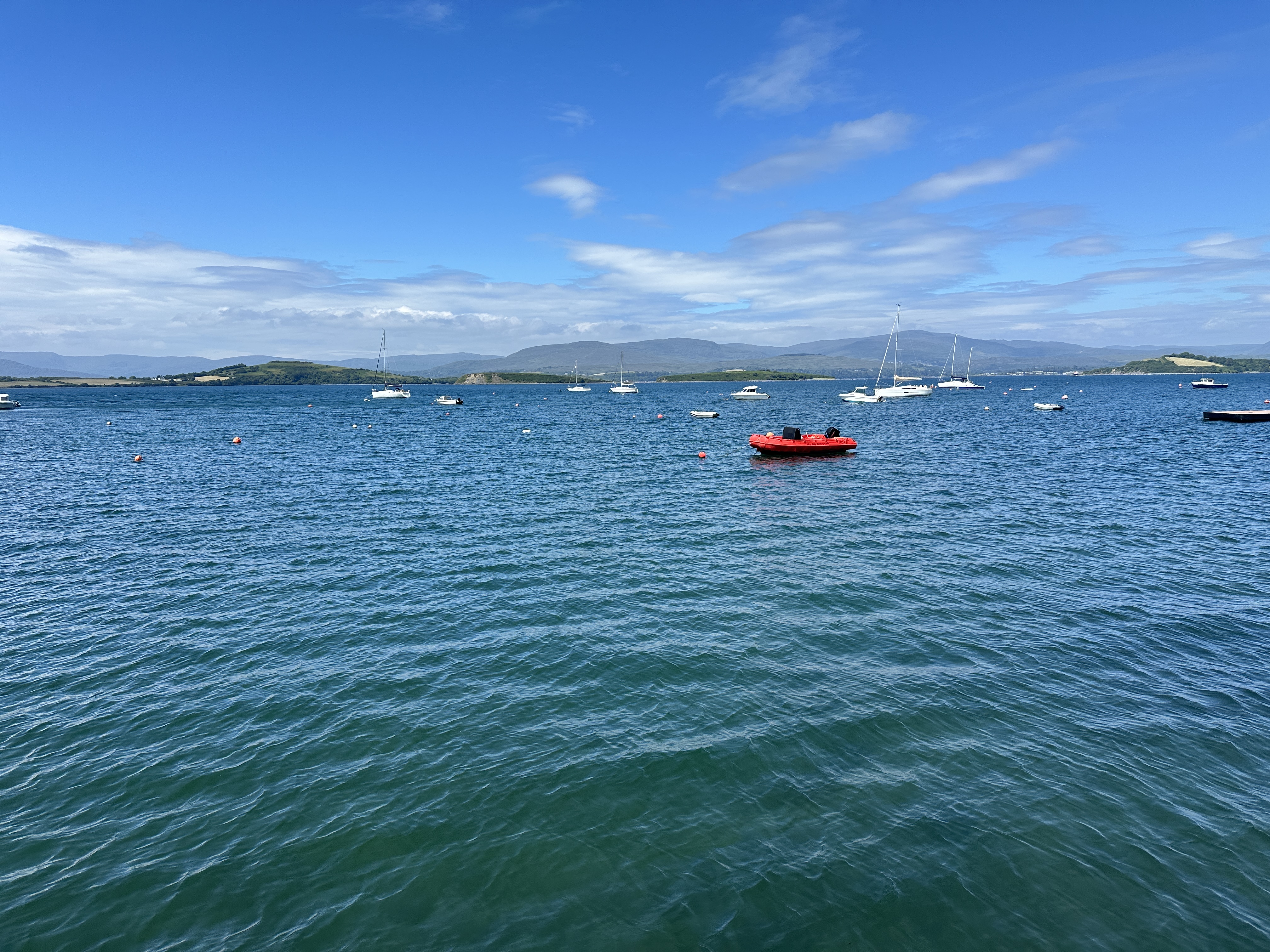
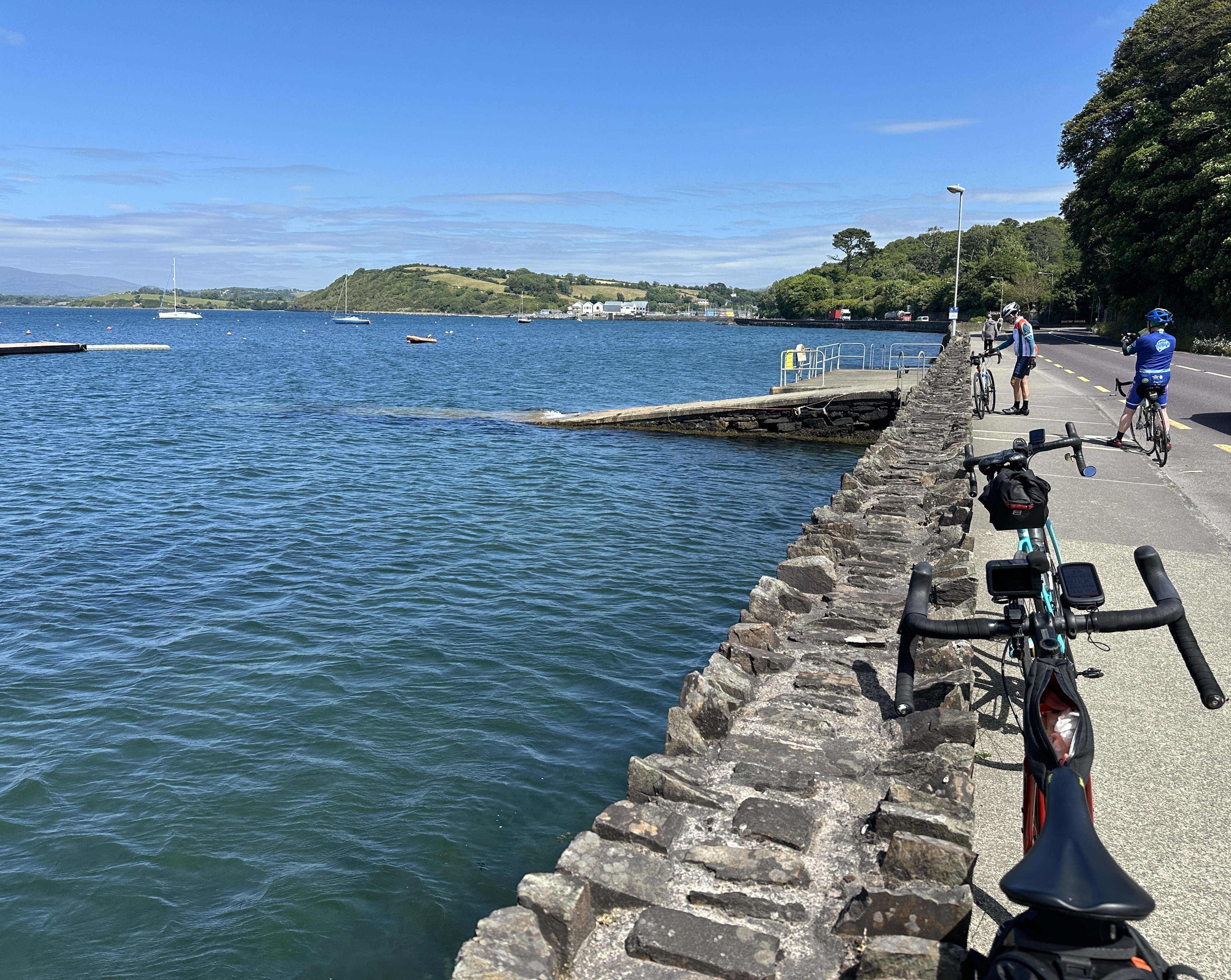
Not long after resuming the ride we couldn’t resist stopping to enjoy the seaside view at Bantry, with its famous bay. But it was tinged with poignancy: Whiddy Island, just offshore in the photo above, was the scene of a tragic disaster in 1979. The oil tanker Betelgeuse exploded when it was discharging oil at the terminal on the island, killing 50 people. I vividly remember hearing about the accident as a 15 year old in 1979 – it was a time when the news bulletins seemed dominated by disasters on land, sea and in the air.
Despite the sombre memories, the Bantry Bay shore was a pleasant place to pause before the final push to our destination. This included a section of road with lorries thundering past is which wasn’t very pleasant but we were soon approaching lovely Glengariff.
Entering Glengariff
I went for a walk from the hotel hoping to find the waterfront, but made the mistake of going along the main road, rather than through the nearby park. So I headed back. Casey’s was a popular spot for dinner – a few of our group opted to eat early, but Julia, Lucy and I grabbed a table later on and had a convivial meal marking the end of a successful first day.
British Rail’s High Speed Train caused a sensation when it burst onto the scene in October 1976. Just eight years after the end of steam, Britain’s travellers loved the new train, which as the branding InterCity 125 hinted raced between cities at up to 125 miles an hour. And you didn’t have to pay a penny extra for the privilege.
Speed was the big attraction: in the early years, the fastest service from Cardiff to London took just 1 hour 41 minutes, a speed unmatched by today’s timetable. But the bold design, with its striking blue and yellow wedge-shaped power cars, played a big part in making the High Speed Train an icon, thanks to designer Sir Kenneth Grange, who died this week aged 95. According to his obituary in The Times (paywall), British Rail asked him to enliven the train’s livery, but he persuaded BR he could also make power cars more streamlined, with shades of the 1930s steam loco record breaker Mallard.
It’s a long way, cycling from London to Wales. Especially if you go via Tewkesbury, where Shakespeare’s Avon meets the Severn, and cycle all the way back, through the night.
That’s London Wales London, the 407km annual ride organised by Liam FitzPatrick, and a firm favourite in the audax (long distance cycling) calendar. Its current popularity was helped by a rebranding from the old Severn Across name to echo the likes of London Edinburgh London, and Paris Brest Paris.
On the road, London Wales London 2024
I’ve been dreaming of doing London Wales London for several years. It starts just down the road in Chalfont St Peter – not exactly London, but the M25 London orbital motorway goes through the parish. And being Welsh, the idea of cycling to Cymru and back in a day inspires a certain patriotic pride.
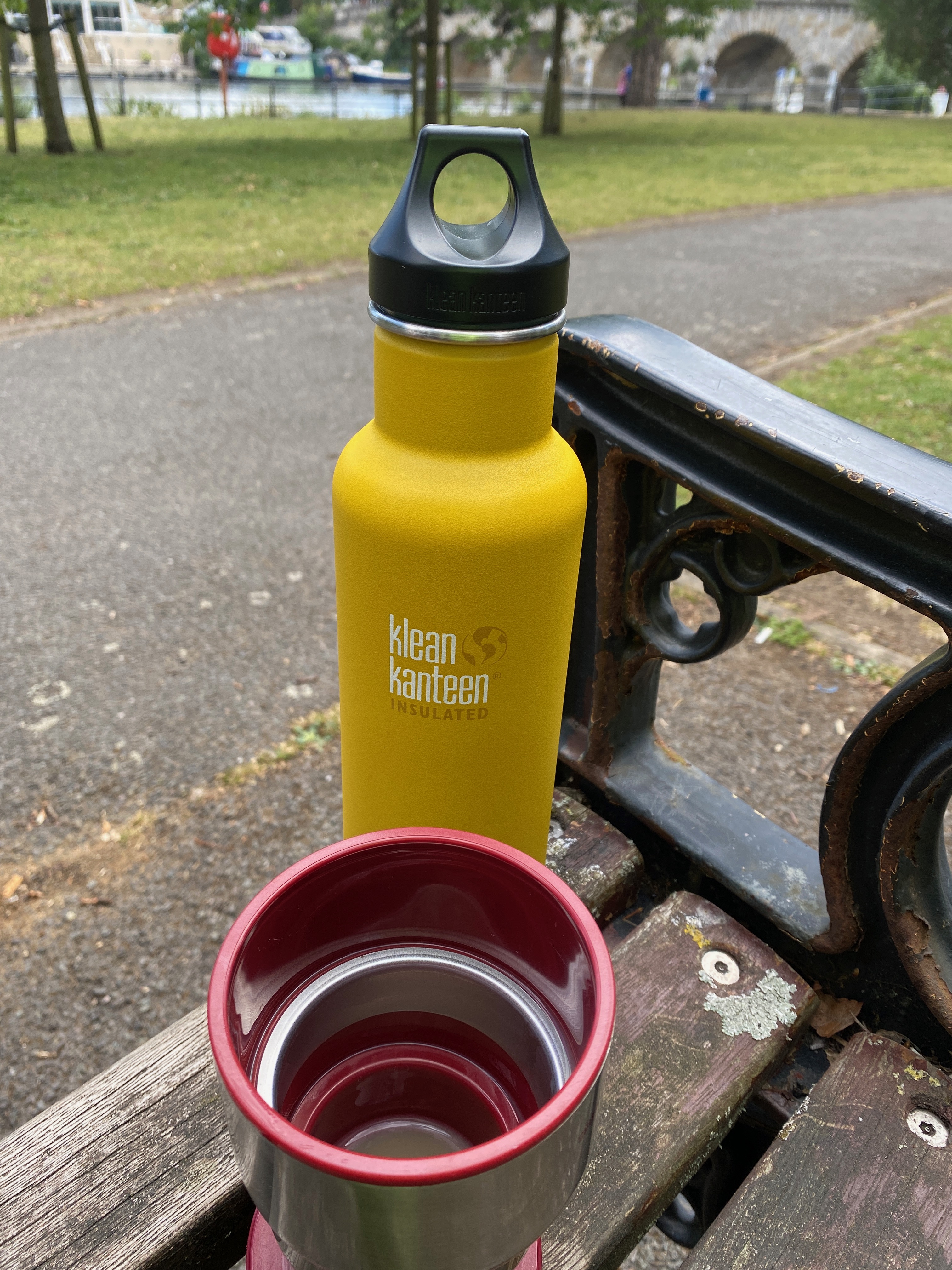
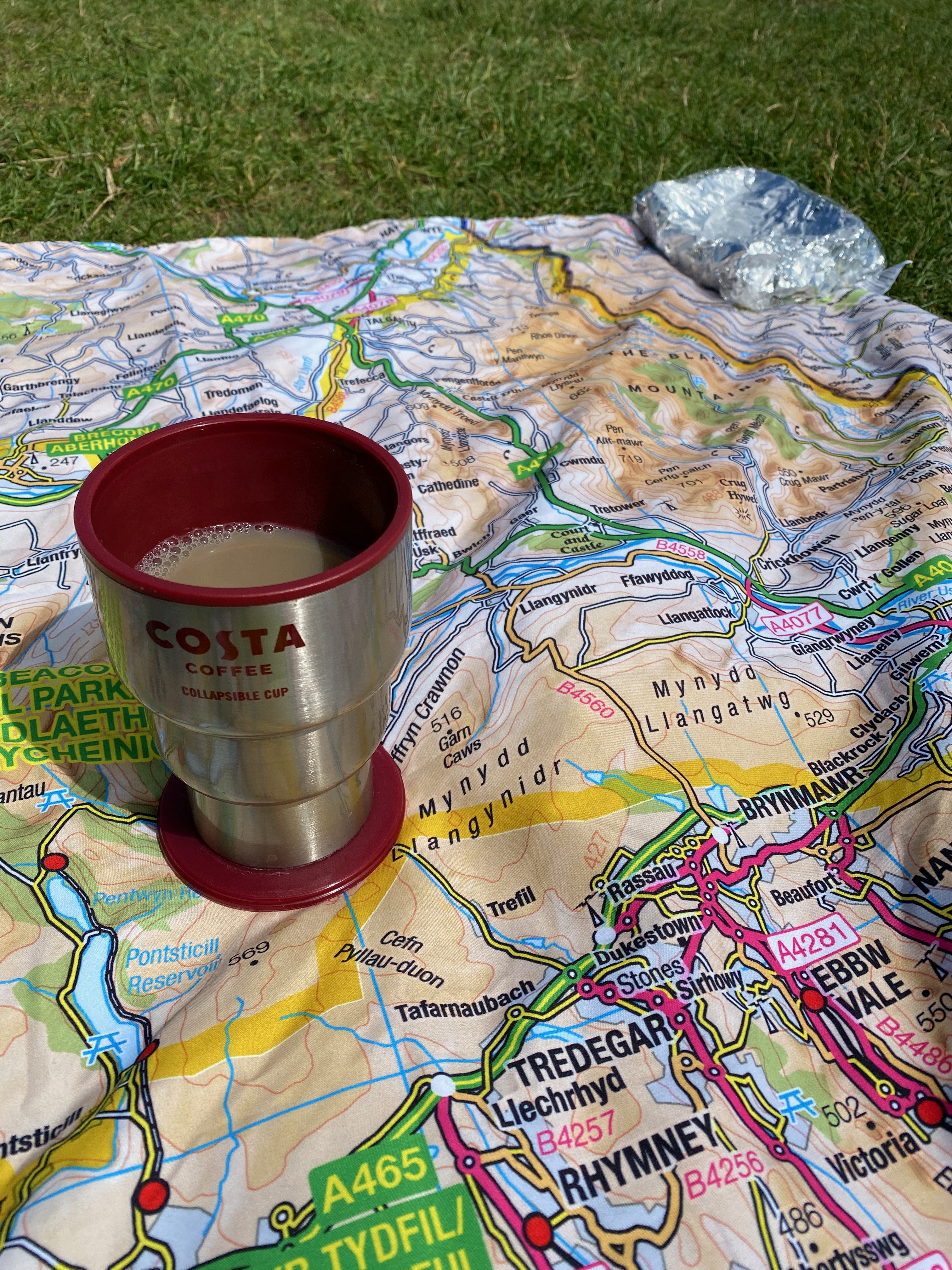
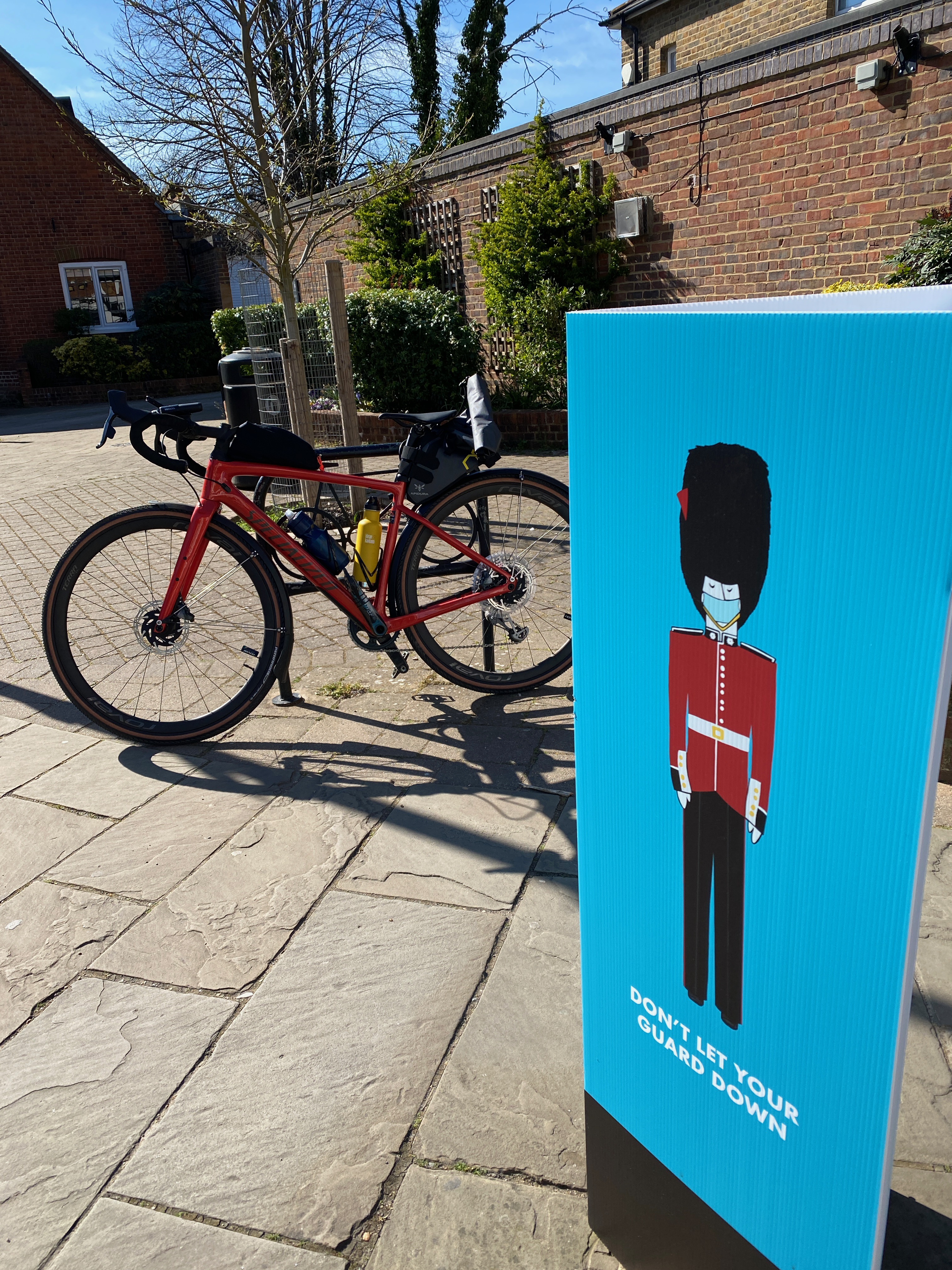
Remember the dark days of the Covid-19 pandemic, when we couldn’t enjoy once everyday pleasures like going to a cafe? During the glorious spring of 2020, I cherished my regular bike rides – an opportunity to keep sane during crazy times. But I really missed my cafe stops, so I bought a Klean Kanteen flask so I could take a hot drink with me.
The photo above shows my tea stop by the Thames in Maidenhead, with its convenient bench, in June 2020. Another regular spot was Dorney Common on the road to Eton Wick near Windsor.
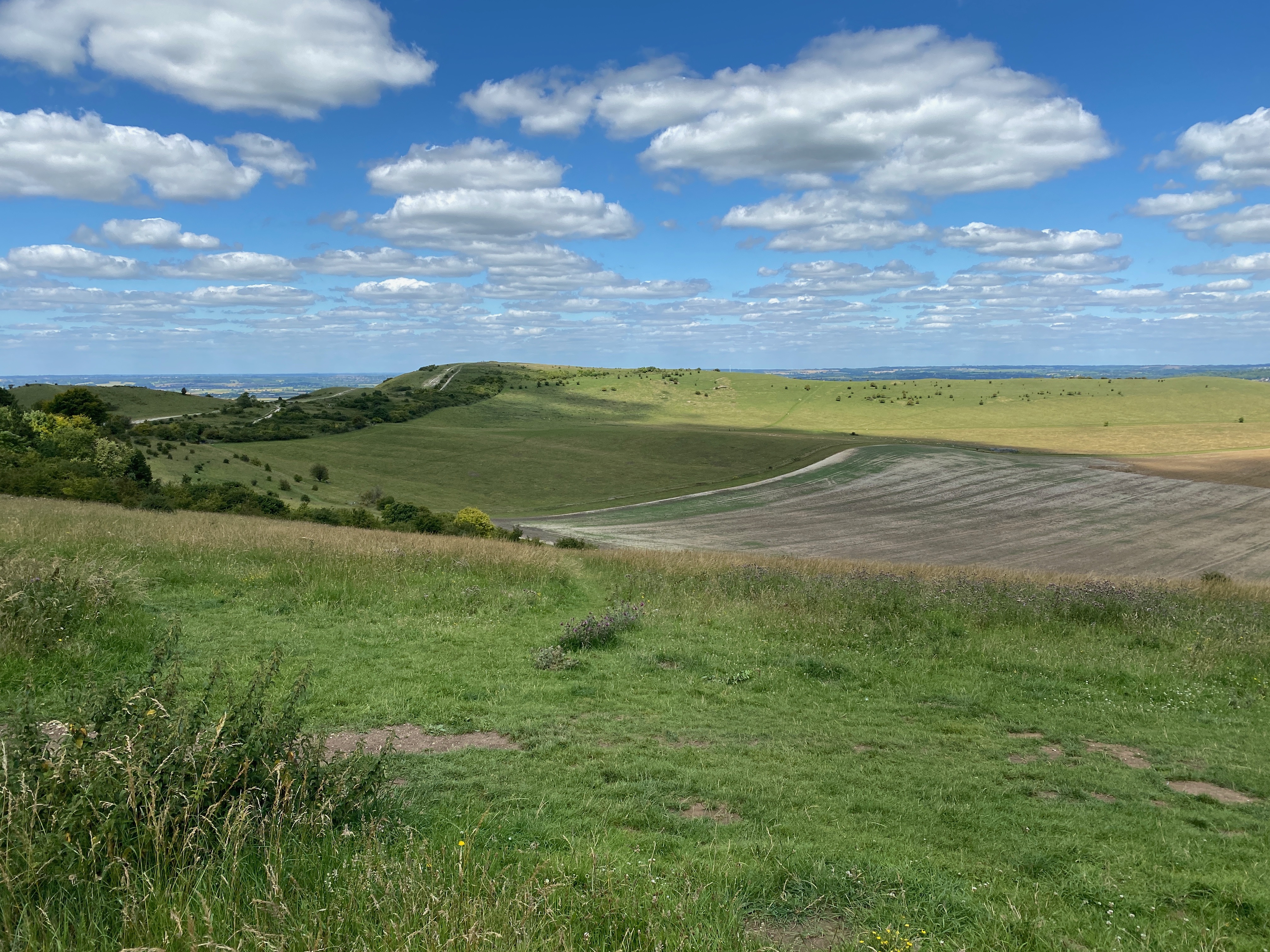
My most ambitious ride that summer was to Ivinghoe Beacon. After the steep climb from the B489 Tring-Dunstable road I savoured the view over the downs and across to the white lion that has guarded the hillside on which Whipsnade Zoo stands since 1933. Thanks to my Klean Kanteen flask I was able to enjoy a couple of mugs of hot tea with my picnic. The Ordnance Survey picnic ruck, featuring Bannau Brycheiniog (the Brecon Beacons) may have been geographically out of place!
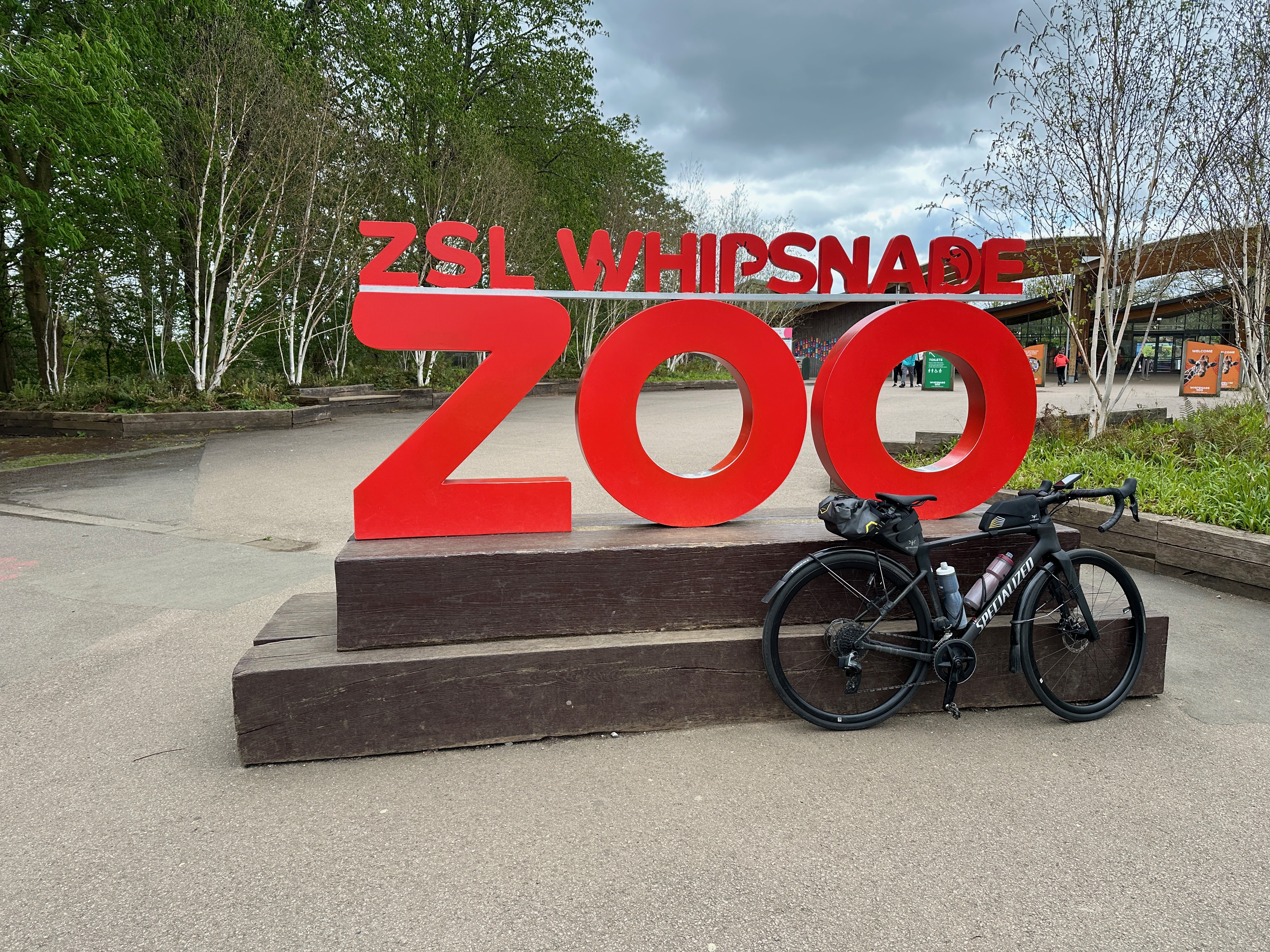
Four years on, we no longer have to take our beverages with us: the cafes we missed during the pandemic lockdowns have long since reopened. But sometimes my cycling routes pass through cafe-free territory, and so on Saturday, for the first time in several years, I retrieved the Klean Kanteen flask from the cupboard and took it with me on a 62 mile ride through Buckinghamshire, Hertfordshire and Bedfordshire, revisiting Ivinghoe on the way home. (Part of the ride followed Jack Thurston’s Chiltern Rendezvous route from Lost Lanes South.)
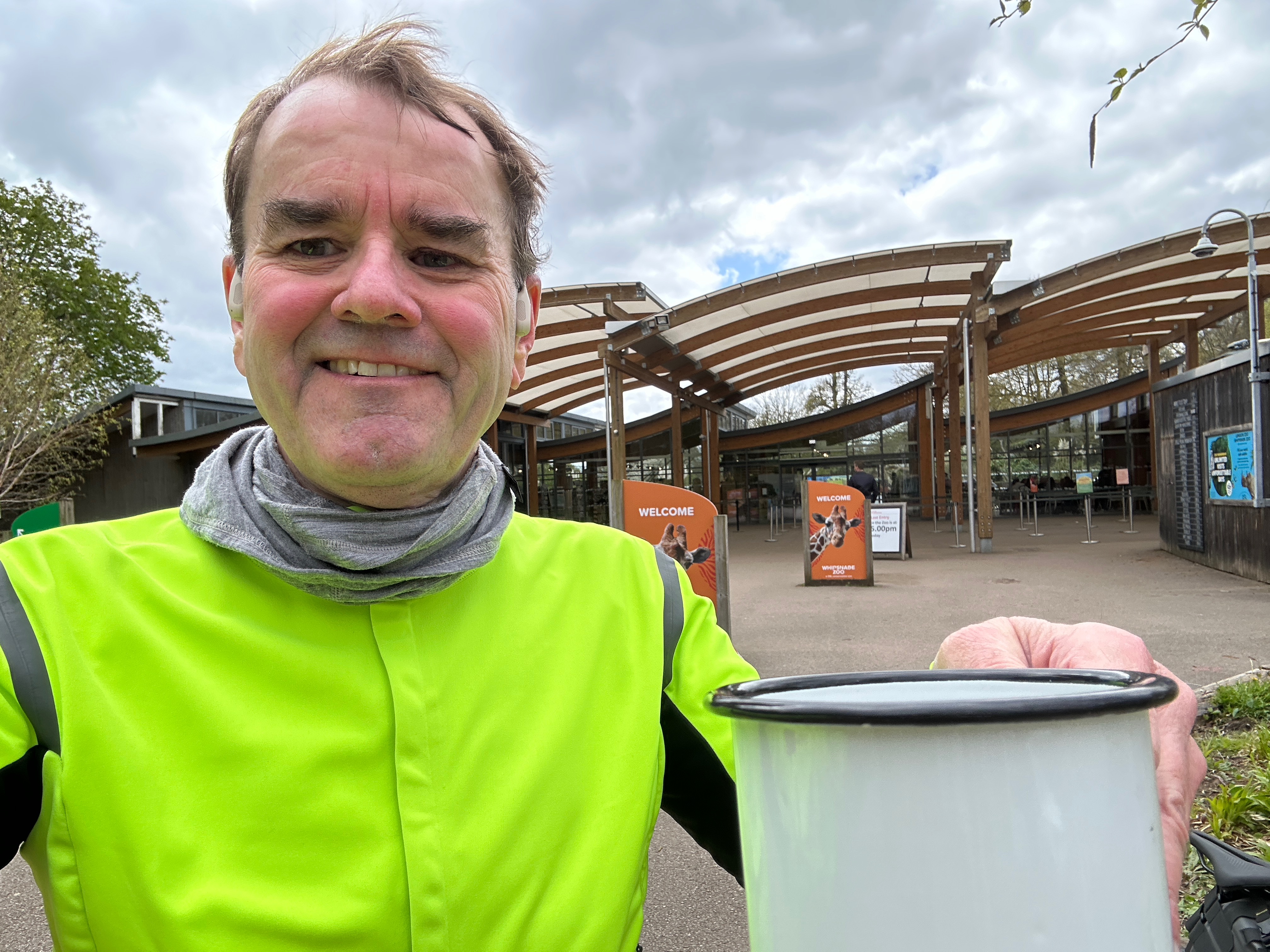
It was an unseasonably cold and windy day, and by the time I stopped at the entrance to Whipsnade Zoo I was gasping for a cuppa. I felt nostalgic seeing the families with small children, remembering visits with Owen when he was little. (“My favourite animals? The train and the bus.”) I filled my Restrap enamel mug with tea, but to my disappointment the drink was only luke-warm.
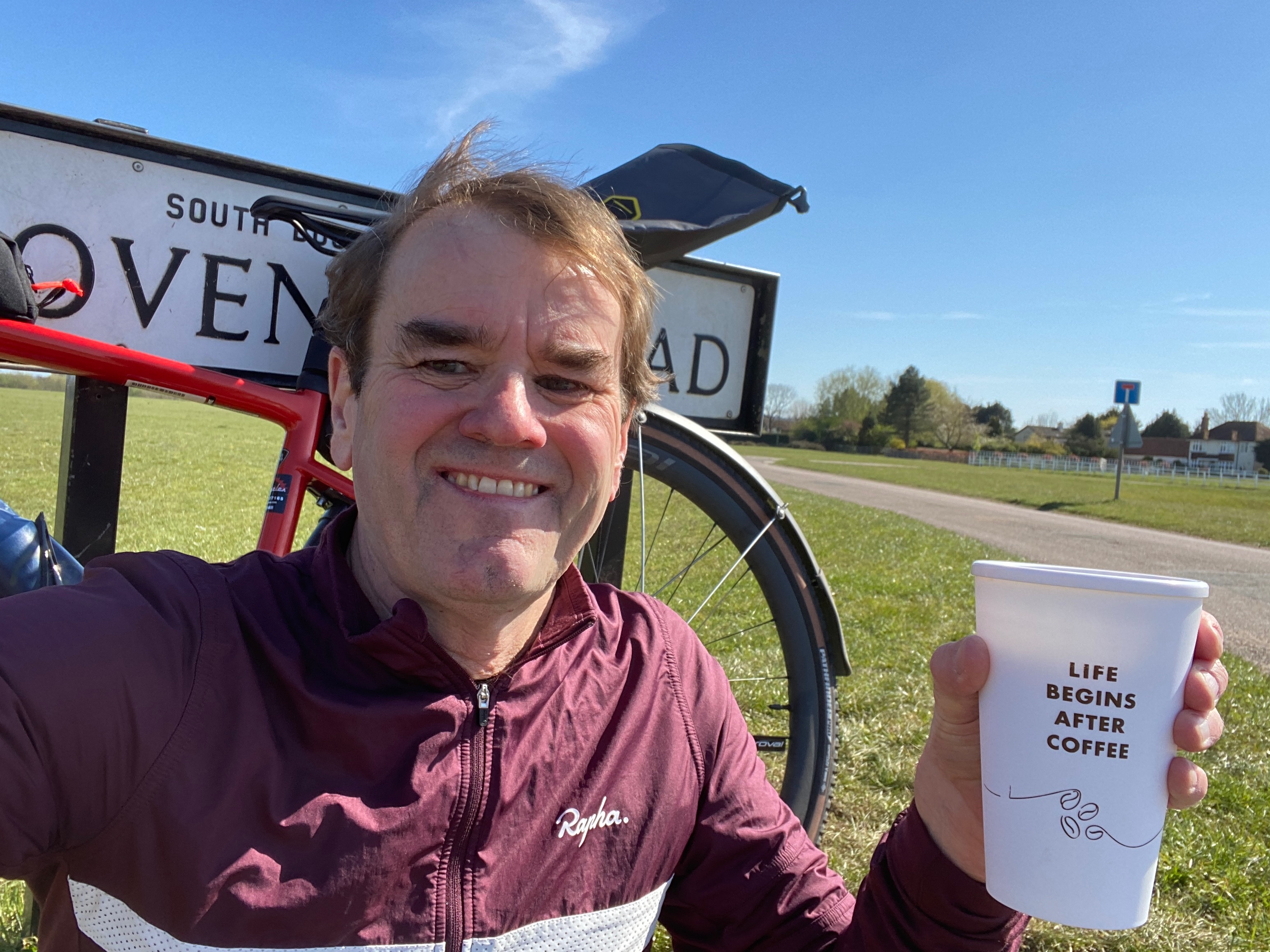
When I got home, I tested the flask to see if I’d unwittingly not fully boiled the kettle before the ride, but no – the flask no longer kept its contents hot. My pandemic ride-saver was destined for the recycling bin. But it served my well during those extraordinary times in 2020 and 2021. I’ll end this post with images from April 2021. I had a tea stop on Dorney Common before cycling on to Windsor to witness the media reporting on Prince Philip’s funeral that afternoon.
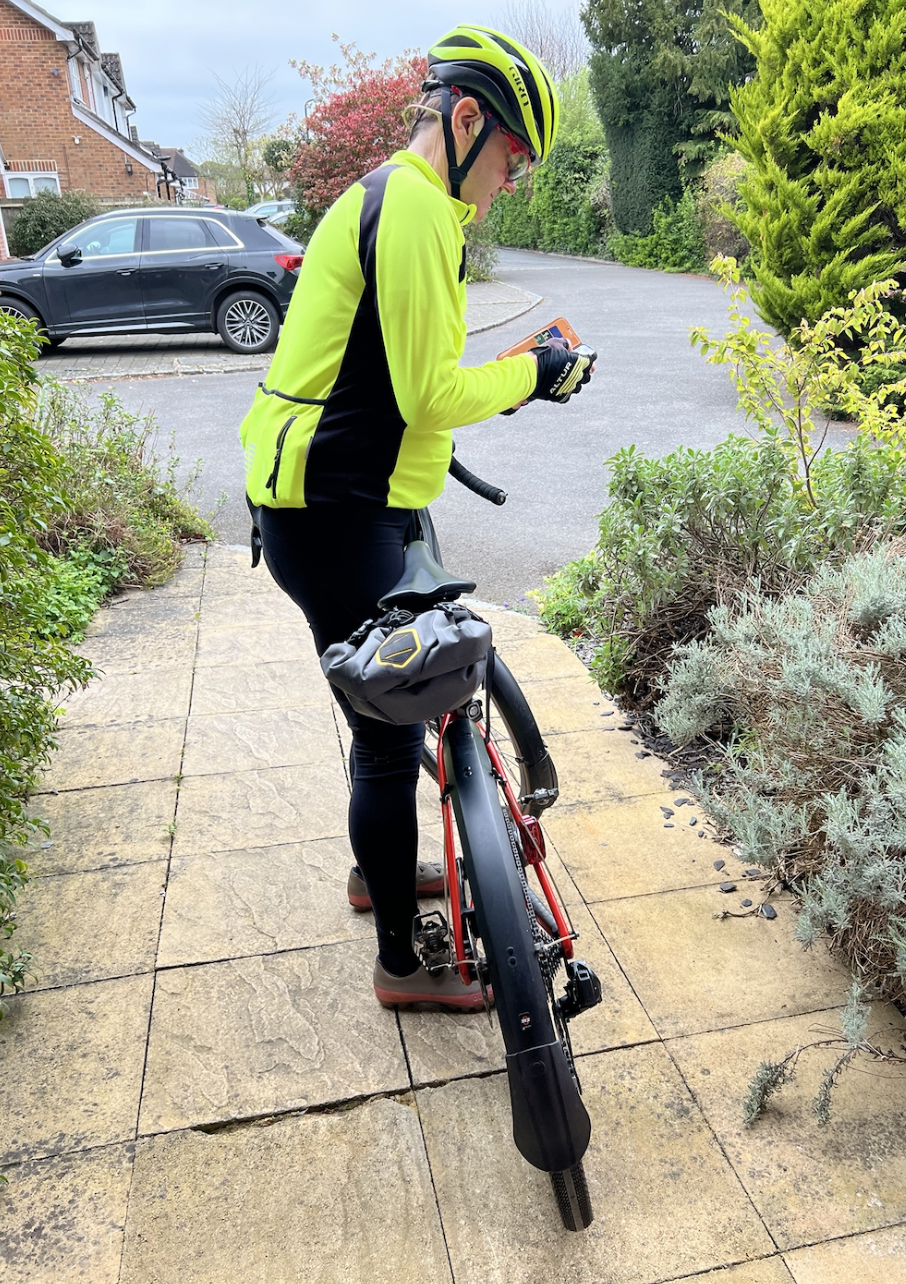
I was nervous. I was about to set off on my longest ever bike ride: almost 160 miles across Southern England. My butterflies reflected the scale of the challenge and the fact my previous attempt at this route ended after 86 miles because of mechanical failure.
The ride was training for the 400km (250 mile) London-Wales-London audax in May. I wanted to find out how well – or badly – I coped with an ultra-long day on the bike. I’ve completed seven century rides of 100 miles, but LWL is a far bigger challenge. On that aborted ride in 2022 I remember the feeling of foreboding as I grabbed a snack in Highworth, Wiltshire, knowing I still had 70 miles to go, including climbing onto the Downs. The mechanical problem struck just a few miles on.
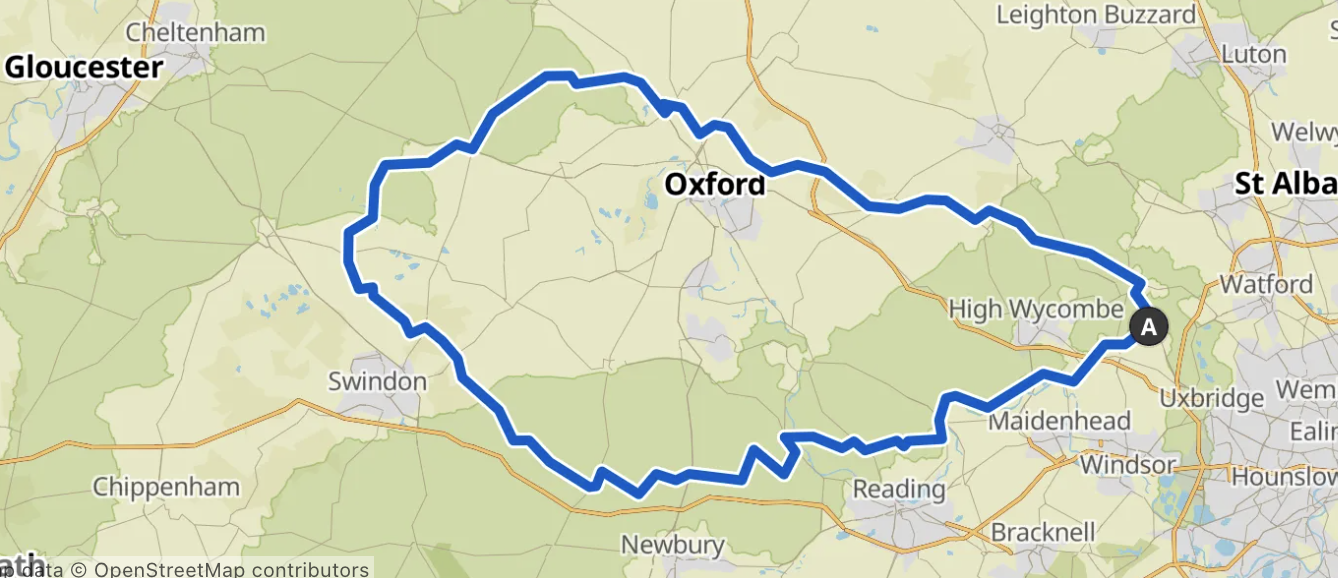
My route
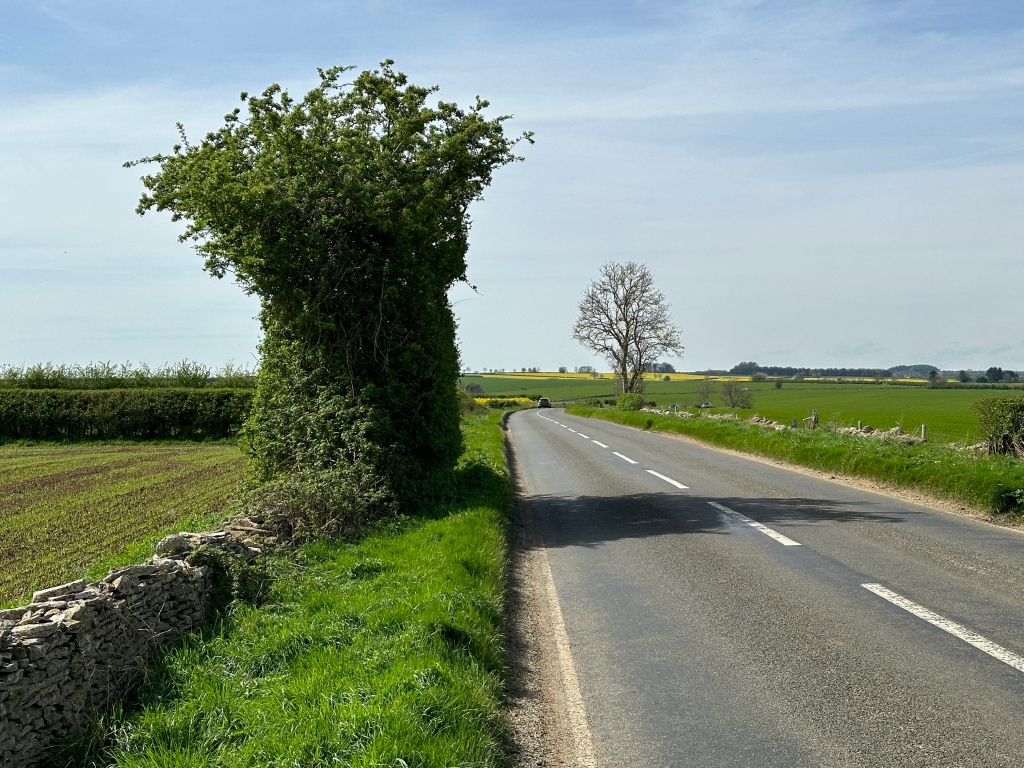
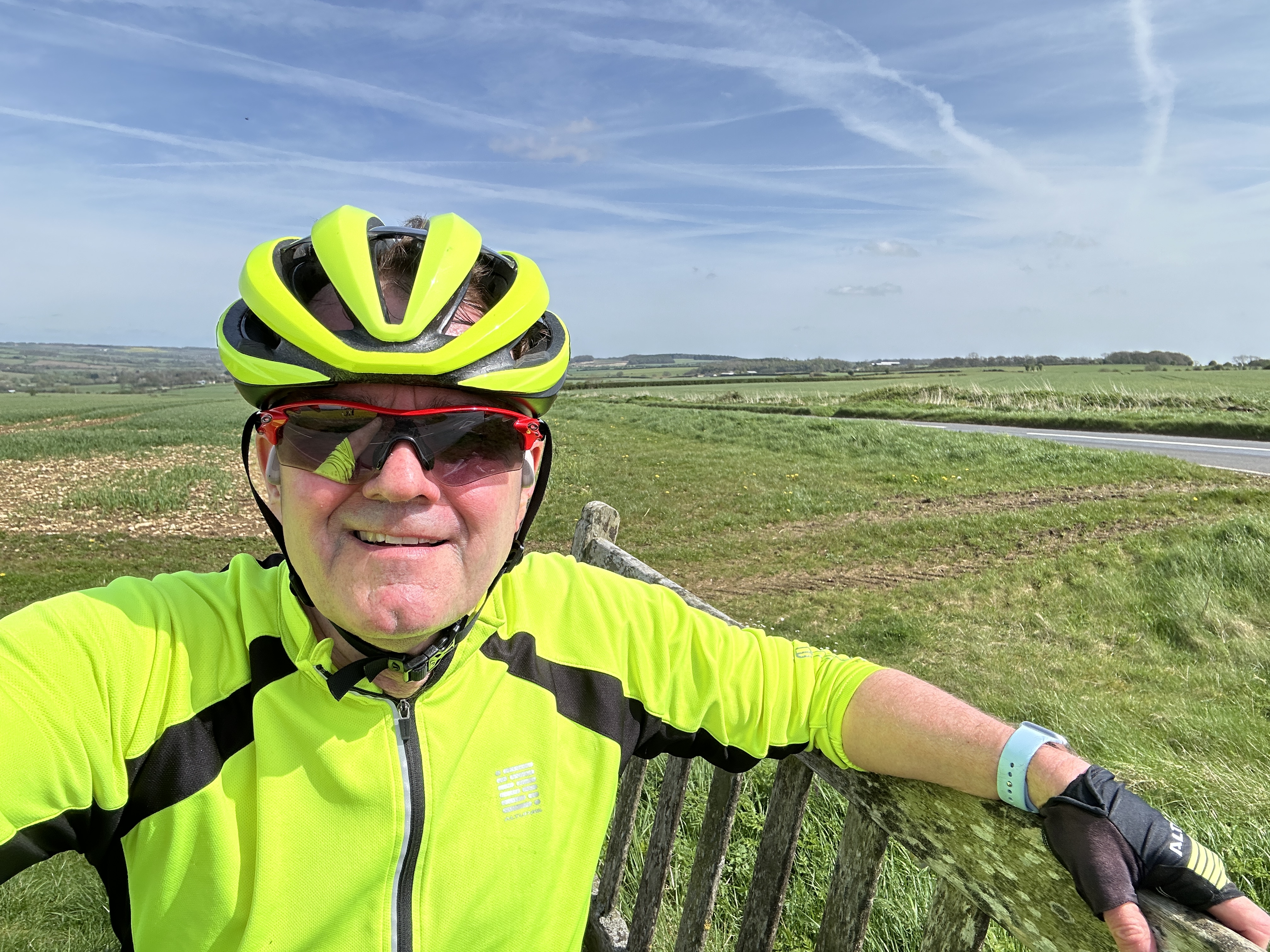
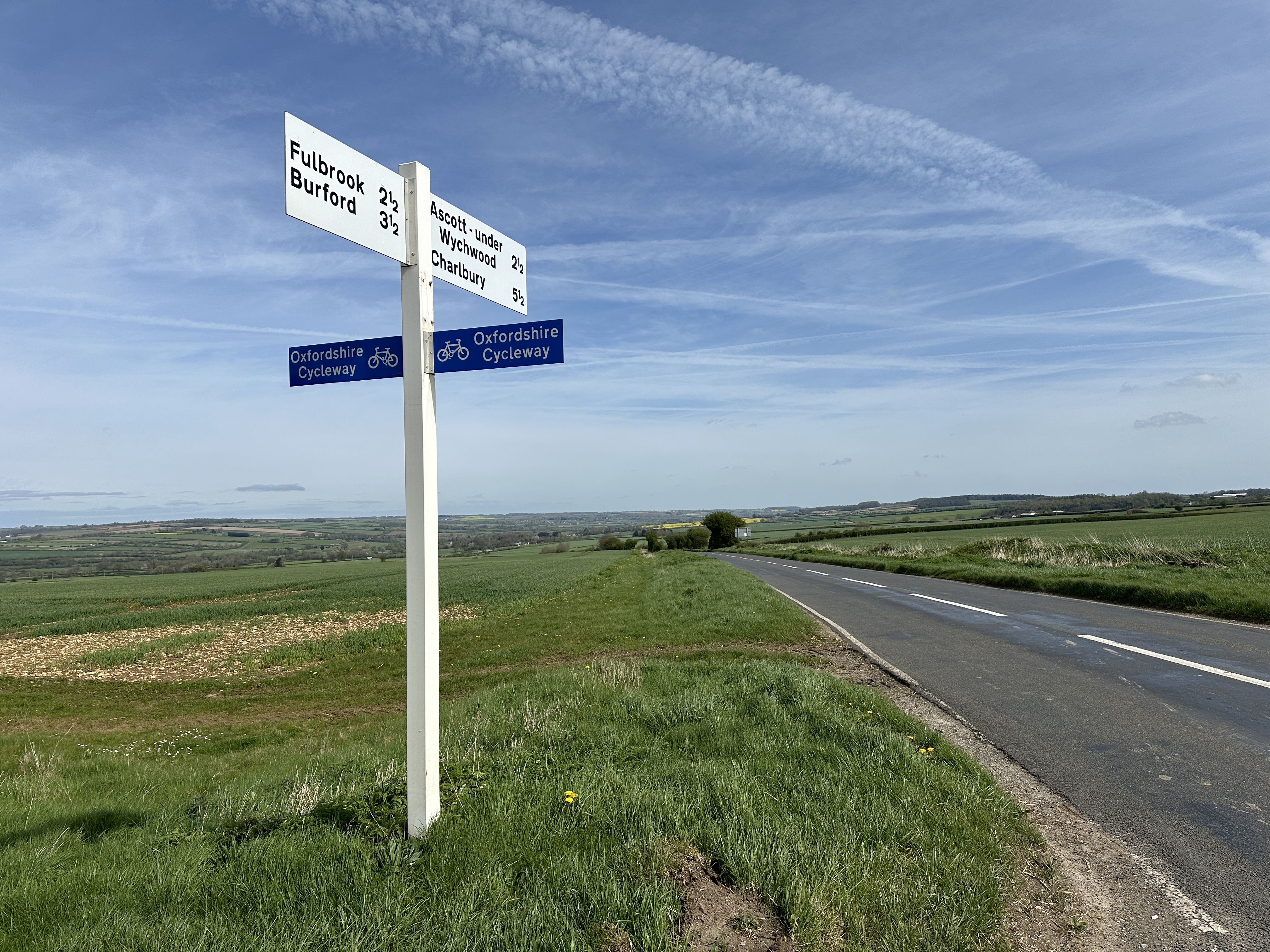
Yesterday was a fine day for a ride: the warmest this year so far. But there was an increasing headwind as I headed west, which became a real slog on the lovely stretch from Charlbury to Burford. I cursed as I cycled downhill at a mere 12mph! (Later, after heading back east, I’d routinely record 18mph on a similar gradient.) My grimace gives it away in the photo below, taken just after the long climb after Charlbury station.
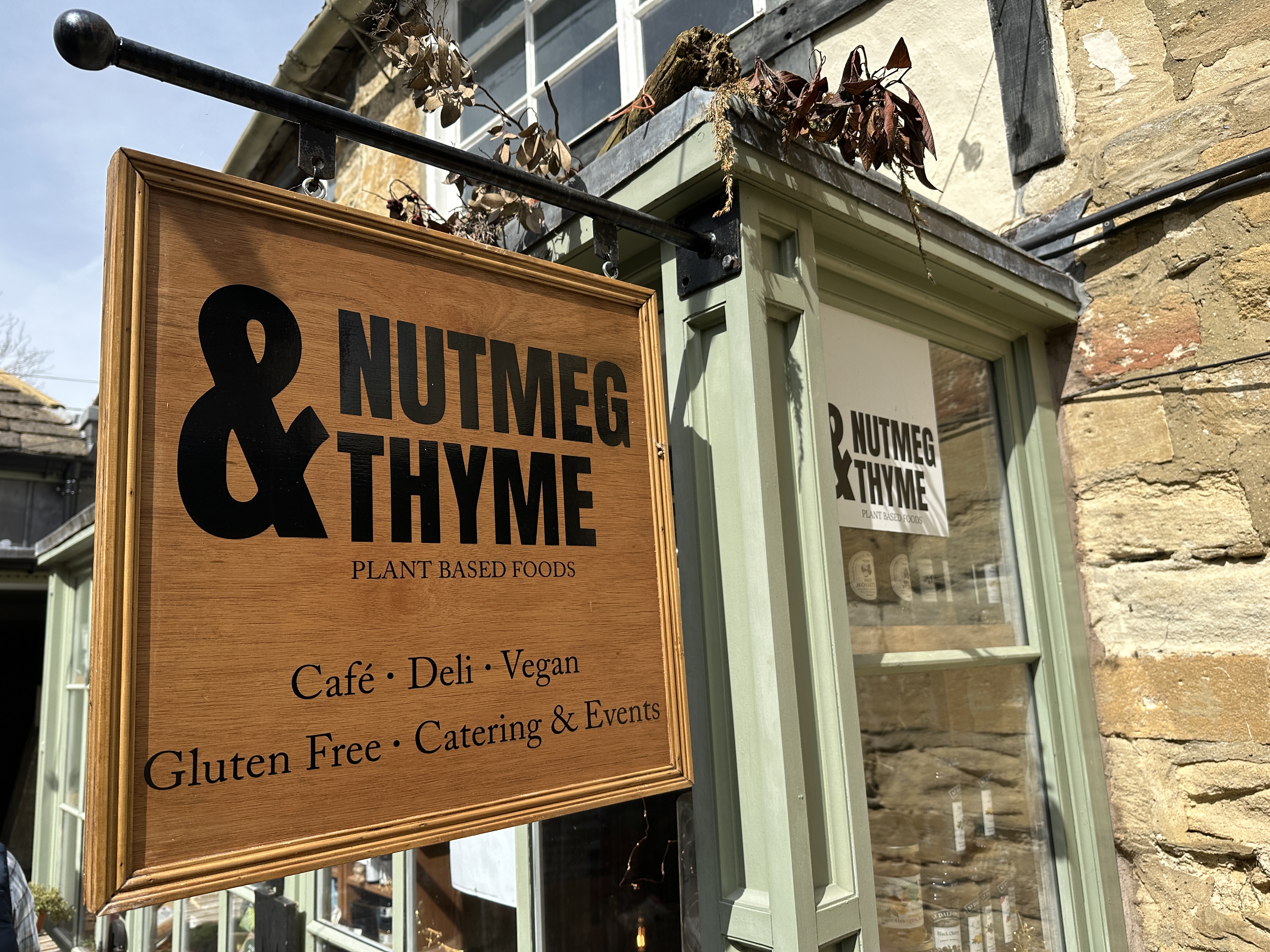
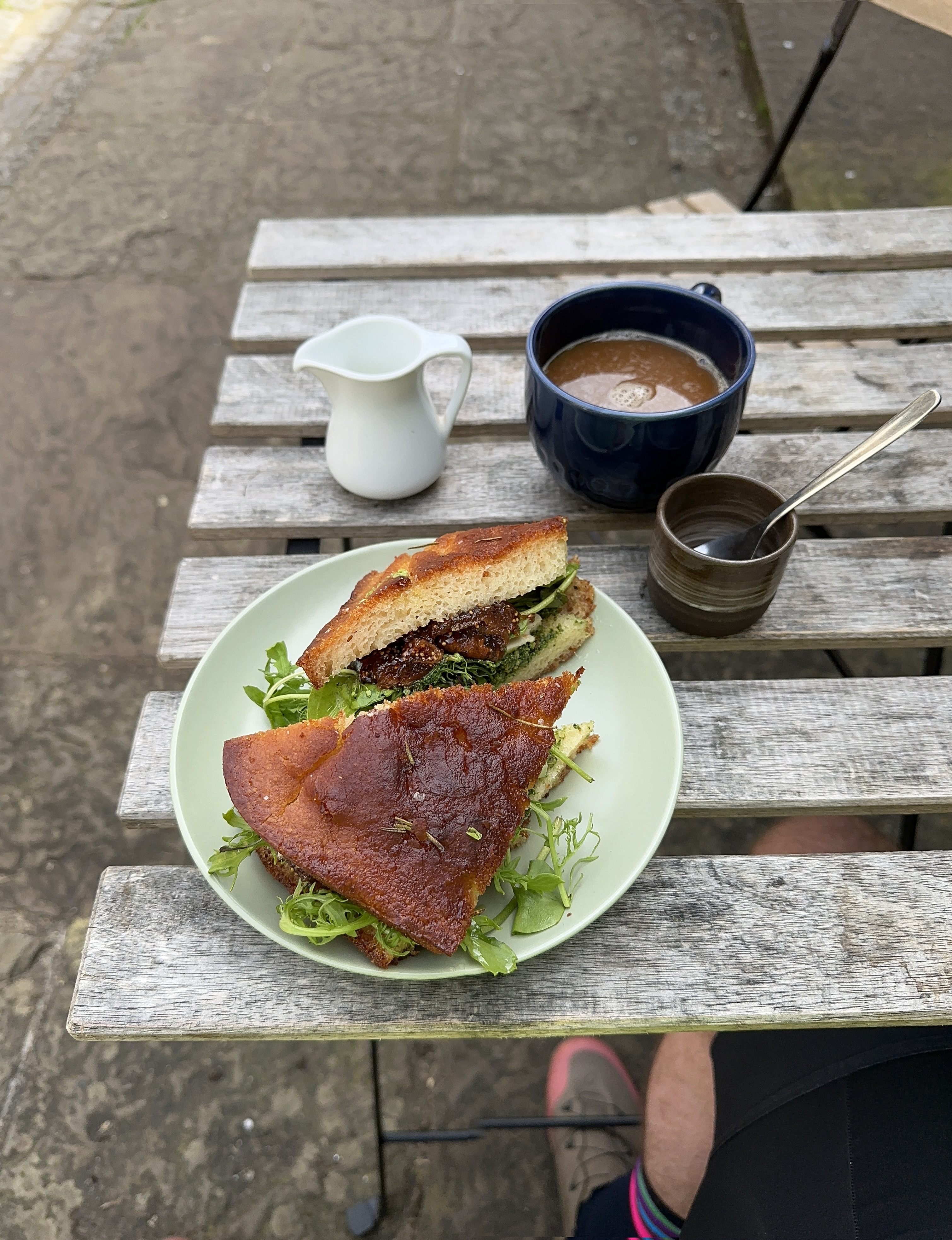
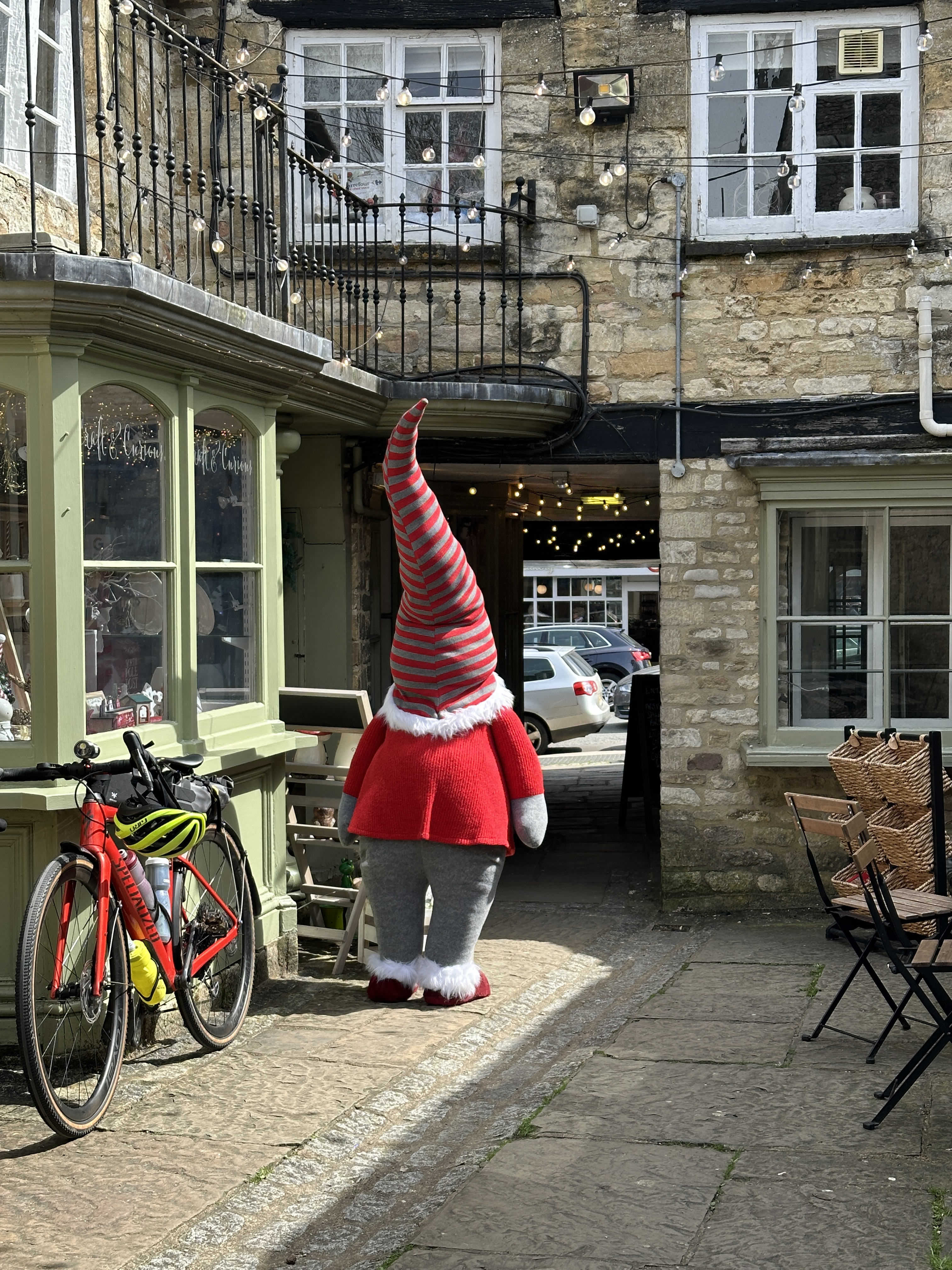
It was a relief to reach my lunch stop, Burford, after 63 miles. I had intended to try Huffkins, recommended by Oxford Cycling Club in a blogpost, but as I looked for a way through to its garden with my bike I came across a lovely looking cafe, Nutmeg & Thyme, with tables in a sunny courtyard. I wouldn’t normally choose a vegan-only cafe, but I was so glad I did. My focaccia sandwich with fig chutney and vegan cheddar was mouthwateringly nice. Just what I needed to set me up for the next stage of my epic ride. The staff were lovely too.
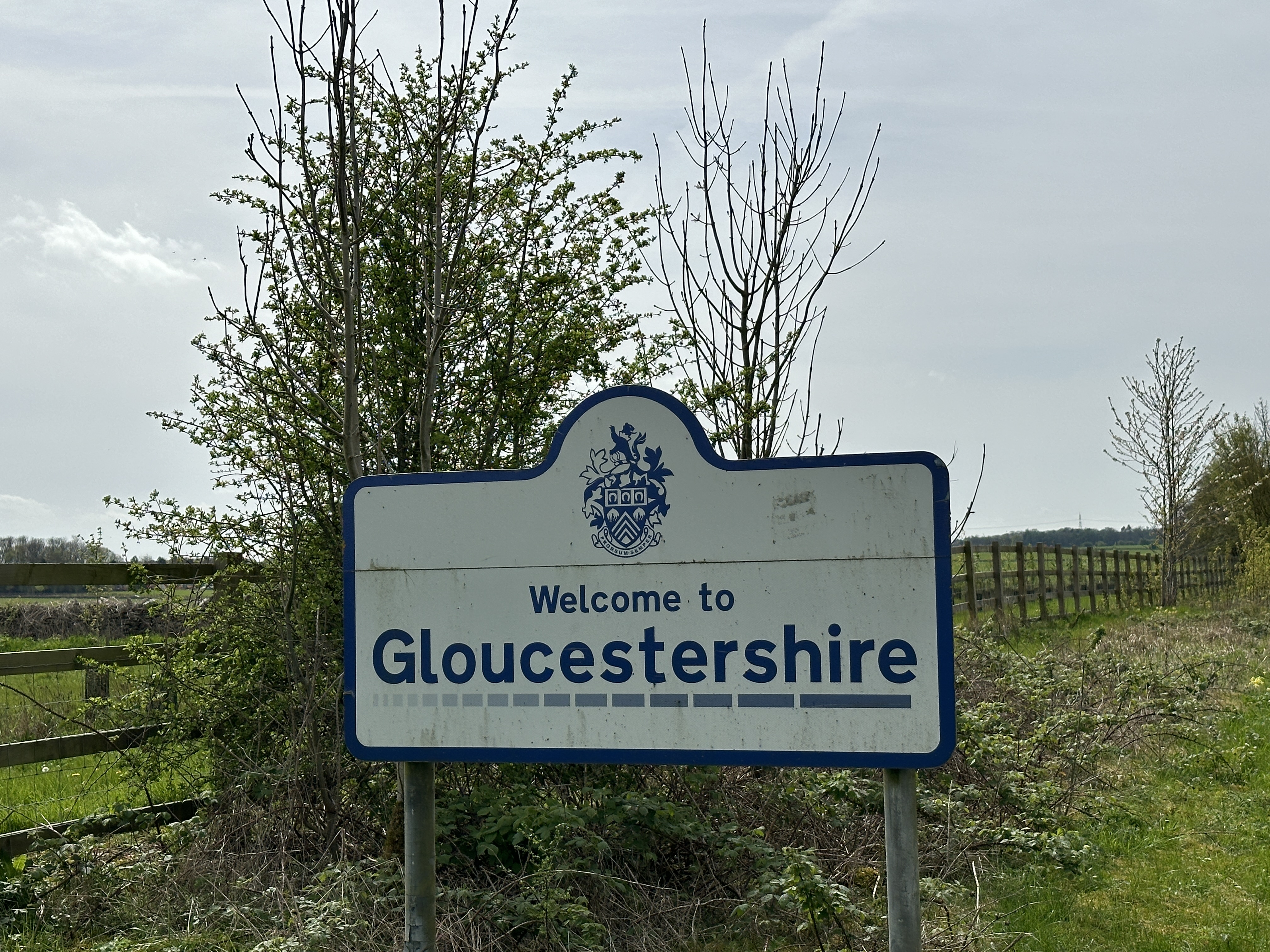
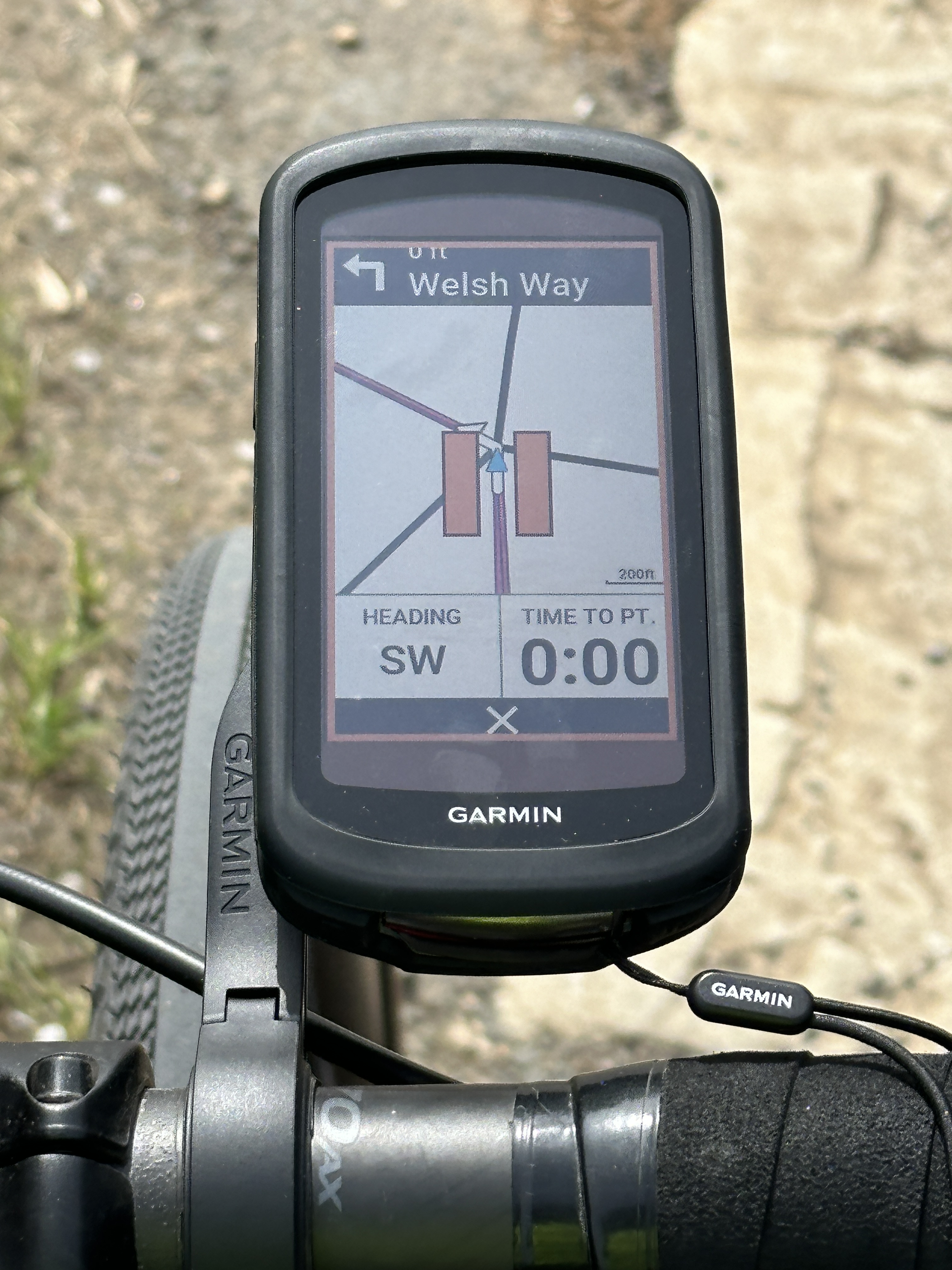
I endured a mile or so on the A40 – endured because of the traffic and headwind – before turning onto the quiet B4425 road towards Bibury. I remembered this as a fast stretch from 2022, and so it proved again, despite that pesky headwind. (I loved driving along this road when I was living near Cirencester in the 1990s.) As in 2022 I stopped to take a photo of the Gloucestershire sign. I may not have got to Wales on this ride but I had reached a border county! Welsh Way recalls the days when Welsh drovers led their livestock from Wales to London. It is one of the oldest roads in Britain, dating back to the Iron Age. I used a length of Welsh Way to avoid traffic when I commuted to Cheltenham 30 years ago.
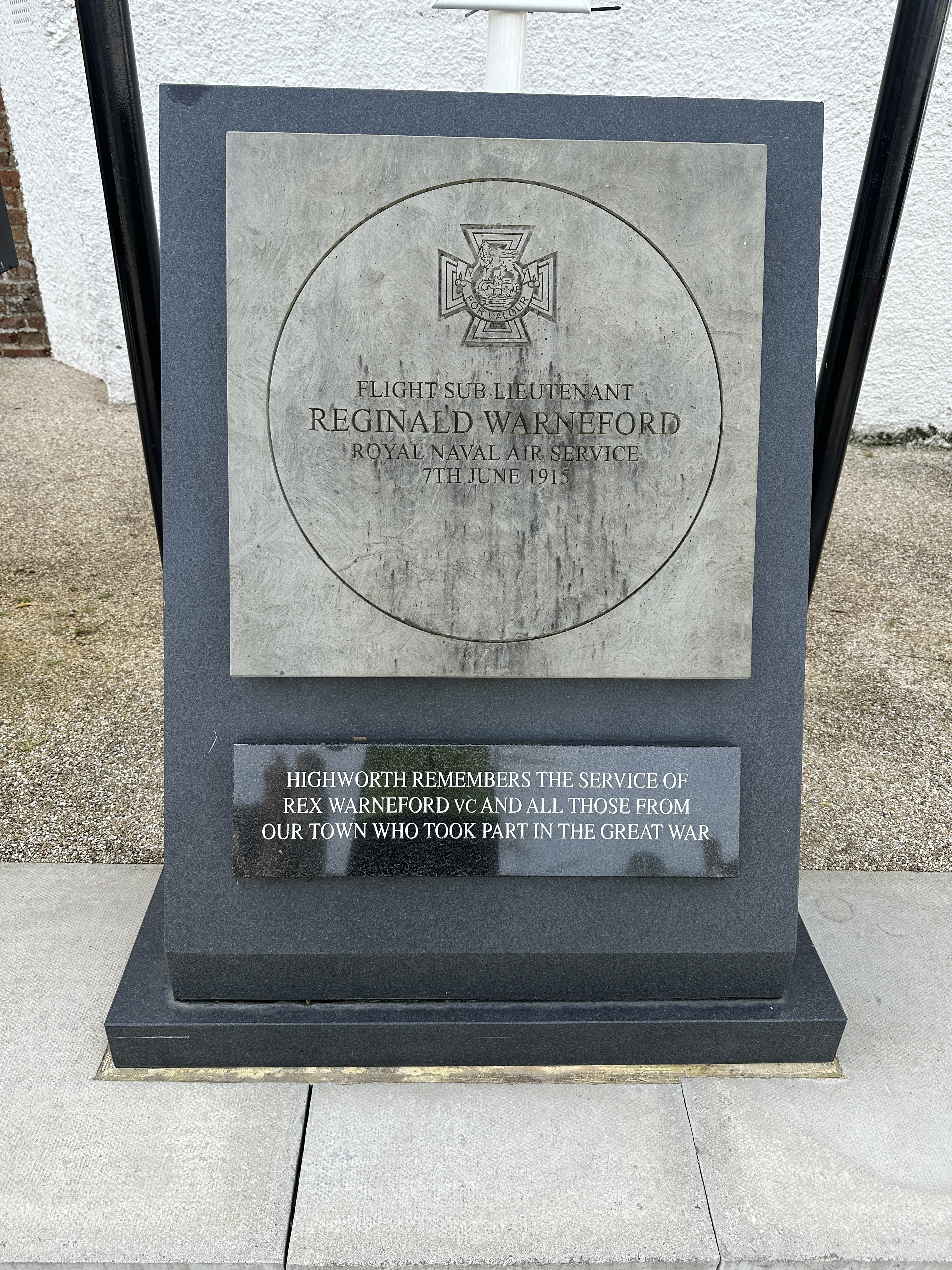
As in 2022, I stopped in Highworth near Swindon to buy some more water for my bottles, and chocolate, which I ate in the sunshine on a bench in the square as I charged my Apple Watch. I was intrigued to spot this plaque commemorating a Great War hero, Reginald Warneford. I remembered his story from a childhood book called Airships & Balloons by Carey Miller. Warneford became a national hero as the first airman to shoot down a zeppelin in 1915. The book recounted that he tragically died soon after while taking an American journalist for a joyride. Both men were killed when his plane crashed – possibly in an ill-judged acrobatic manoeuvre to impress the reporter according to my 1970s book.
It was time to do battle with the demon that I never confronted in 2022: the hills between Highworth and the Thames at Streatley. To my surprise, I loved this part of the ride. I tackled the big climb at Ashbury onto the downs in my own good (slow) time. Once over it, I found pure delight in the quiet road through the downland, framed by soft hills. My mood soared as I raced along at 19mph thanks to the tailwind and lightly descending gradients. I knew that Lambourn was famous for training racehorses, so it was no surprise to see an equine hospital. I also passed RAF Welford, which incidentally is the ‘works unit’ referenced on the sign you see when travelling east on the M4 between Hungerford and Newbury. (The sign used to be in red, marking a military place, but is now in standard motorway blue.) It is one of the biggest American munitions depots in Europe.
Another hill… Buckham Hill, near Great Shefford
I was less impressed with the state of the roads. A sign gave a stark warning: ‘Raw sewage. Drive slowly’. What a damning indictment of Britain, although perhaps we should feel a twinge of gratitude that the authorities had put a sign up, rather than accept that it was normal or acceptable. It then dawned on me that drinking from my water bottles might carry a risk of falling ill, if the shit was literally hitting my bidons. For the next 30 miles, I squirted water into my mouth rather than suck from the bottles. I drank less as a result.
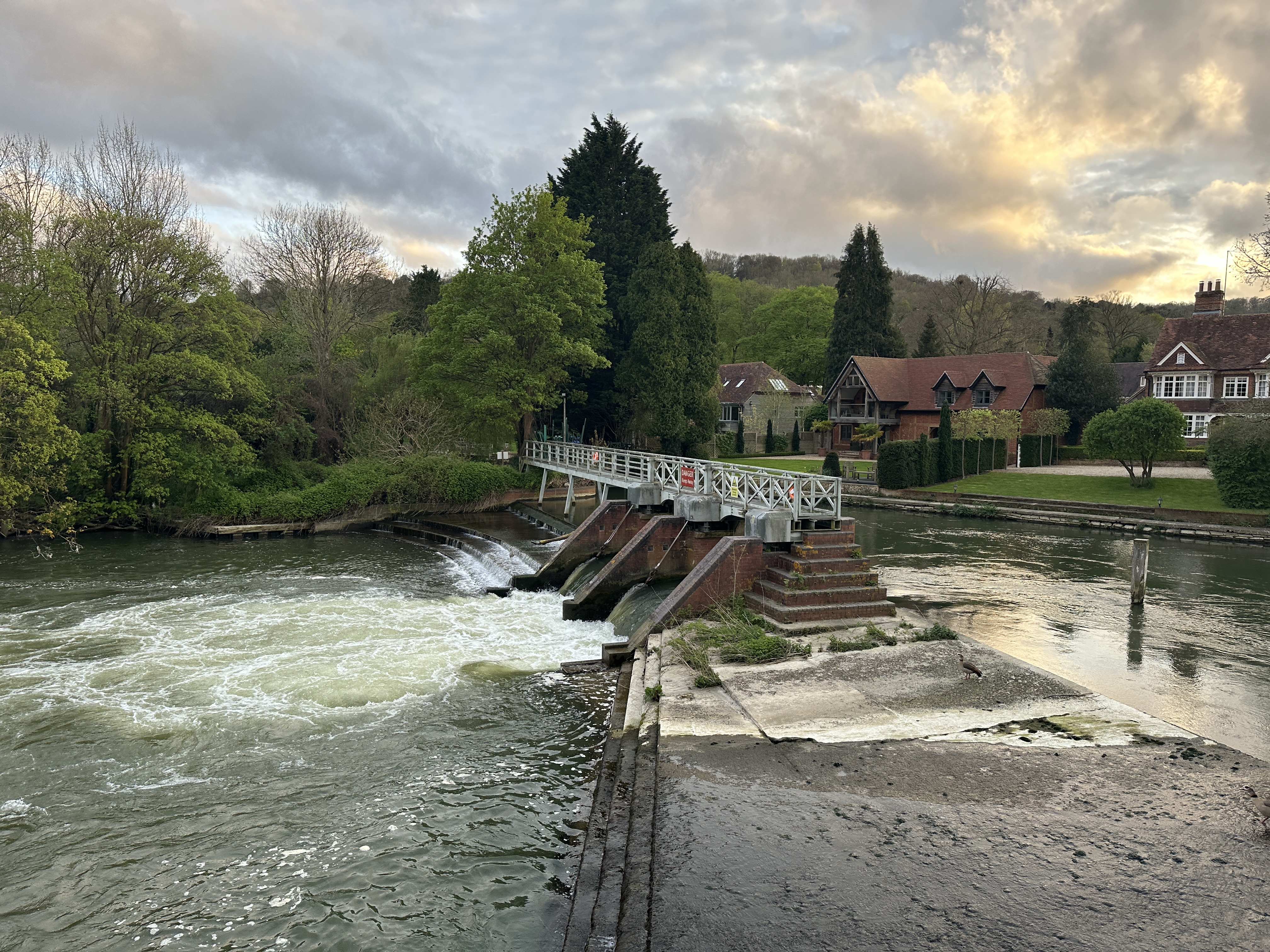
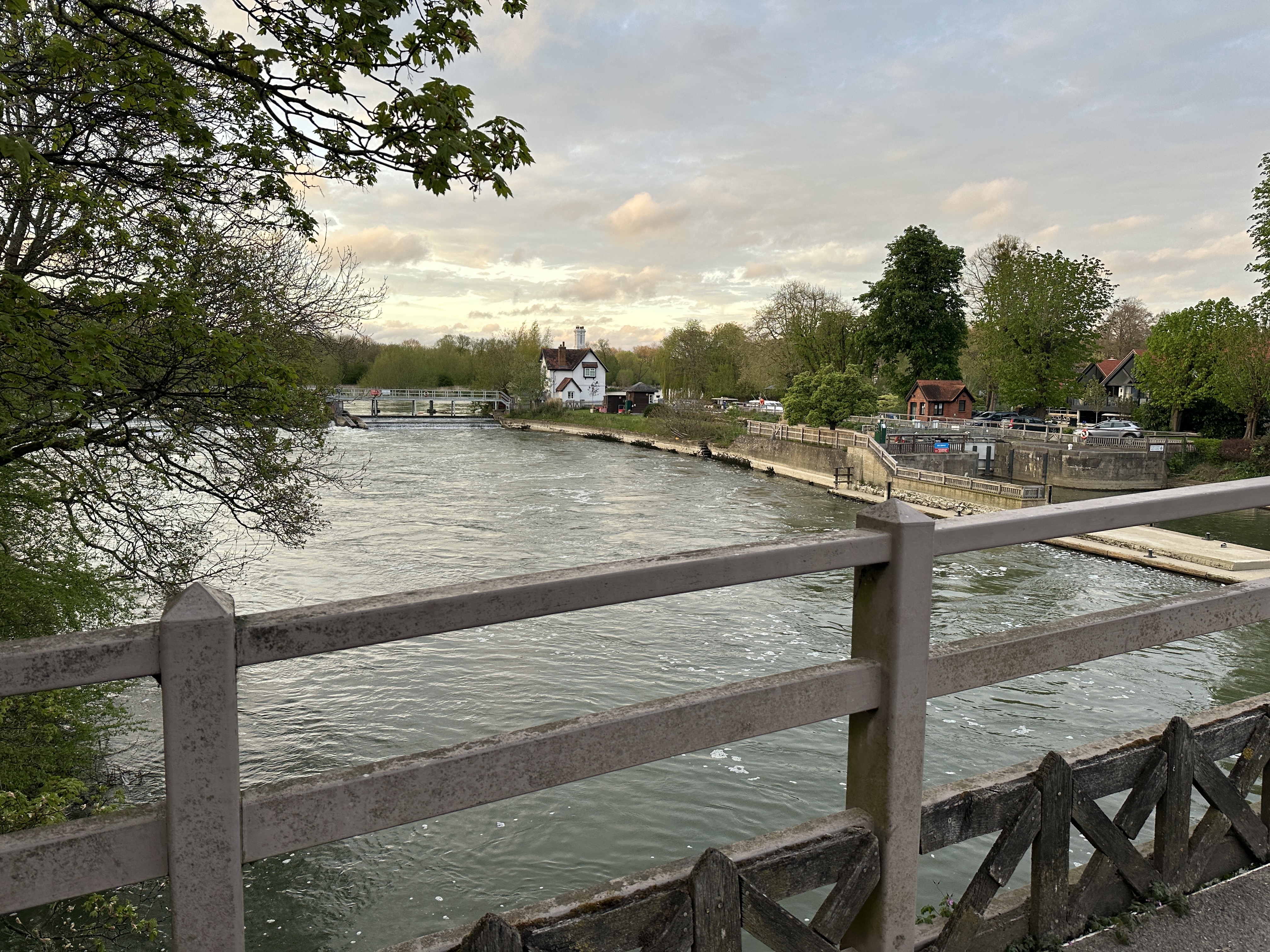
Another problem was road closures. One, at Coln St Aldwyns in Wiltshire, I was able to cycle through, but I lost time and added miles because the direct route between Aldworth and Streatley in Berkshire was shut. Streatley itself was isolated by a complete closure in the heart of the village, but I was able to wheel the bike to pick up the road leading to the bridges over the Thames to Goring. As I enjoyed a quiet moment taking photos on the river (seen above) I noticed tables of diners and drinkers at the riverside restaurant – I had a pang of envy, although I was content with my mission.
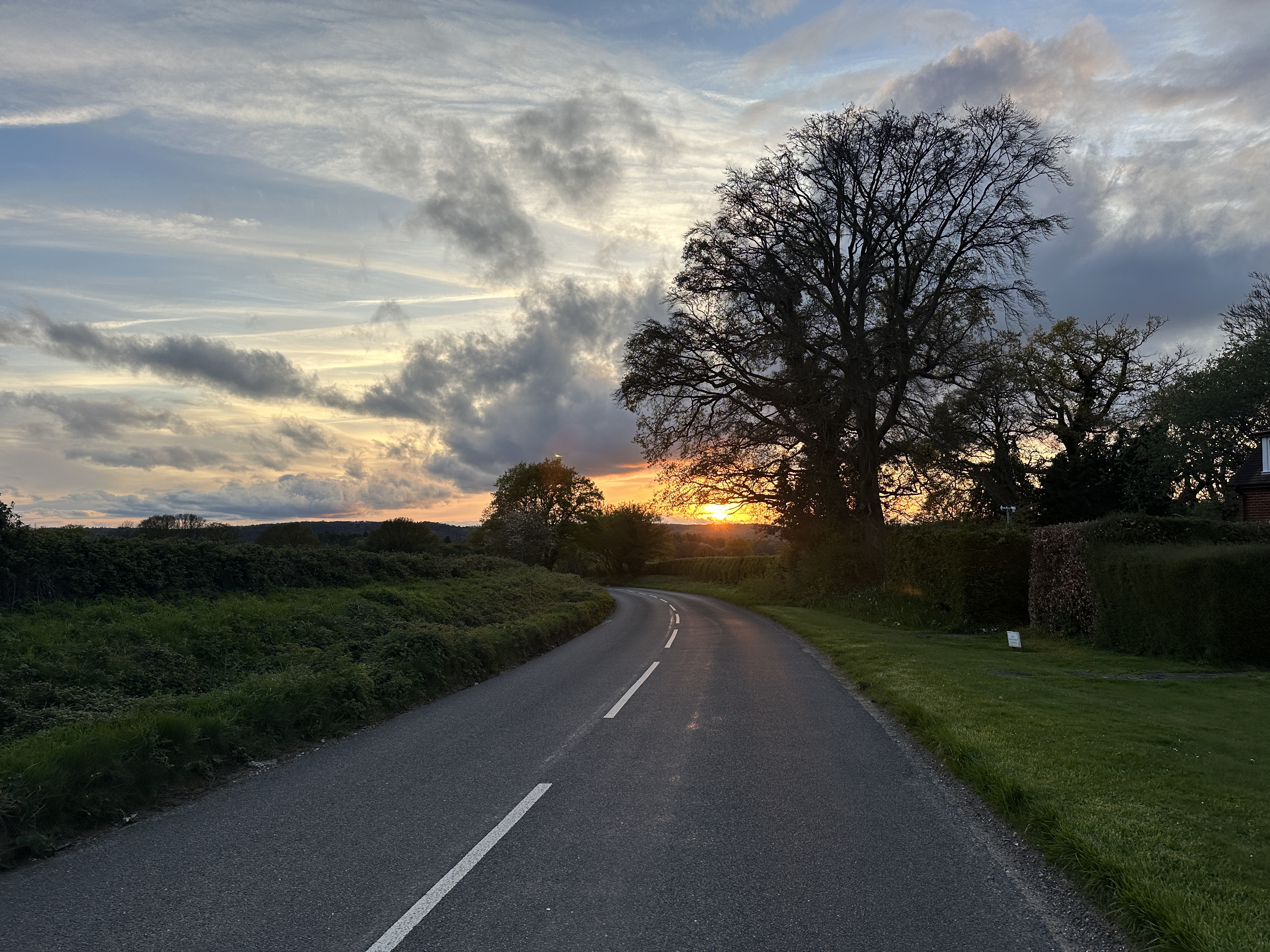
I conquered the inevitable climb out of the Thames valley and was bathed in the happy glow of sunset at the end of a fine day. It was a pleasure bowling along at speed through woodland towards Henley as the light faded, confident in the beam of my new Exposure Strada front light. (Chosen for its ability to last for hours on long night rides.) I was even happier with my two rear lights, insurance against distracted Saturday night drivers, who proved well behaved.
Henley itself came as a shock, with drunken revellers swearing at each other. But I was soon heading to that other familiar Thames town, Marlow, again at a decent speed. (Anyone would think I wanted to get home!) These miles passed quickly, and in no time I was on the familiar road though Bourne End. I always know a big ride is coming to an end when the mileage left is no more than an easy Sunday afternoon jaunt.
The last challenge was the brutal climb from Wooburn Green to Holtspur, Beaconsfield. London-Wales-London organiser Liam FitzPatrick says he gets the most hate mail for including this climb on the route when riders are suffering after 390 kilometres of cycling. In truth, though, there are no easy alternatives that don’t make it even further to the finish. (I reckon Wash Hill out of Wooburn Town is slightly easier, and certainly quieter than the main road drag. EDIT: ‘easier’ may a misnomer. Wash Hill is definitely steeper in places than the main Wooburn Green climb, but is a delighfully quiet and picturesque lane, so you won’t have cars racing past you as you suffer…)
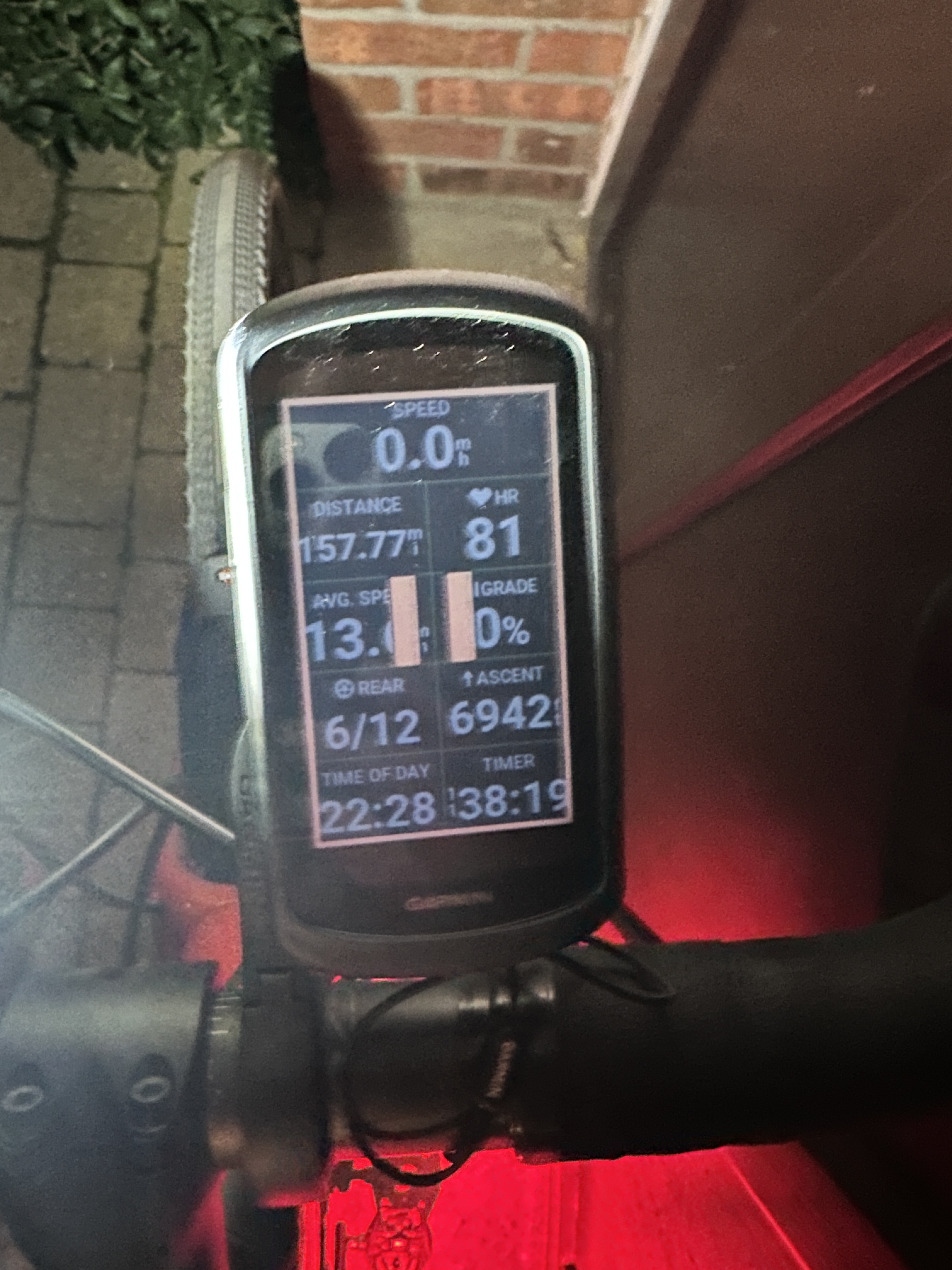
The final tally
As I prepared to turn into our road, I saw someone standing at the junction. It was my son Owen. My mind flashed back to August 2019, and the delight of seeing him as I reached John O’Groats on the end of my ride across Great Britain. I was pleased with my average speed of 13.6mph, which marked a modest increase over the last 57 miles.
Reflections on my longest bike ride
1: Things can go wrong, but needn’t be the end of the road
I mentioned how my first attempt at this ride ended after 86 miles. The through axle had come loose, and I only later realised I could have solved this by the roadside with the right tool. Second time round, I suffered a puncture after 49 miles. I cursed my ill luck – was this ride jinxed? But as I prepared to mend the puncture, the tubeless solvent worked its magic and sealed the puncture. I rode on nervously, but it held for the remaining 108 miles. My last minute service with Jason at Dees Cycles in Amersham may have saved the day.
It was the same story with the headwind. My first big ride was from Wiltshire to Cardiff in 1994. I didn’t realise at the time that the prevailing wind in Britain is from the west, so cycling in that direction is likely to be harder. (Unless you have an easterly wind.) I knew that the headwind would turn in my favour as I headed east and so it proved.
2: Mind over matter
Thinking of the road ahead: setting off
Long distance cycling is a physical challenge. We provide the engine for our progress across town and country. But the mind is just as important. I confess to feeling on edge on the eve of the ride, no doubt because of my failure in 2022. I was sure I would get through it, but lacking mechanical skills I feared being left at the roadside by a bike failure. It was irrational: I’ve ridden tens of thousands of miles with just that one incident requiring rescue.
Aside from mechanicals, I knew that I’d have to pace myself mentally as well as physically. The best advice is to relish the experience while not dwelling too much on how many miles remain. Look at a big ride as a series of mini rides, and treat each as an adventure. I was looking forward to lunch in Burford, and I wasn’t disappointed. Similarly, I took my time to recharge my batteries (literally and metaphorically) at Highworth, as I remembered the story of Reginald Warneford.
3: Talking of batteries…
When I started cycling seriously in my twenties, the only things that needed recharging were my lights. How times change: I now need to keep an eye on the charge levels of my phone, watch, bike computer, bike lights and GoPro (when carried).
The most troublesome gadget on this weekend’s ride was my Apple Watch. It needed charging after 85 miles, and again after another 30 because I didn’t have time to fully recharge it. The iPhone was simple: I charged it in my bag as I cycled. My Exposure light needs mains power, but has a setting that will last all night, making charging unnecessary for single day rides.
I didn’t have any of these challenges when I rode to Cardiff in 1994!
4: A wonderful route
Liam FitzPatrick has chosen a fabulous route for London-Wales-London. I was amazed how quiet most of the roads were – I frequently went a mile or more without a car overtaking me. And unlike many of the sportives I took part in during the 2010s it doesn’t add hills for the sake of it. Most of the route involves climbing an escarpment and staying on the plateau, rather than going against the grain. Liam may get hate mail for the Wooburn Green climb, but sometimes hills are unavoidable!
4: Am I ready for London-Wales-London?
Sitting by Reginald Warneford’s plaque in Highworth, I had a sinking feeling. I was weary after 85 miles, yet knew that I’d still have 165 further miles to pedal on London-Wales-London. Even as I completed Saturday’s ride successfully I didn’t dare think ahead to Saturday 4 May, and tackling the real thing. Yet now I feel more confident. Before this weekend, the furthest I’d cycled was 103 miles, on the old London Revolution sportive ride. Moving to 150+ miles was not an impossible step up for me. That’s a suitable balm for a nervous mind. I’m also dreaming of London-Edinburgh-London in 2025 but I mustn’t get ahead of myself!
As I cycled along the lovely Oxfordshire countryside, I listened to Emily Chappell talking of her endurance cycling adventures on the Cycling Magazine podcast. Emily won the Transcontinental Race across Europe in 2016, the first woman to do so. She’s a fantastic inspiration to anyone who wants to cycle long distances, with her mix of wisdom and humility. I am keeping her audio version of her book, Where There’s a Will for LWL.
5: Carmarthen isn’t that far away…
When I was at school in Cardiff in the 1970s, a friend mentioned one Monday morning that he’d cycled to Carmarthen over the weekend. Almost 50 years on I remember my reaction: “Carmarthen? That’s over 60 miles away!” He might as well said he’d pedalled to the moon.
When I discovered cycling in my mid twenties, I found that it wasn’t that hard to cover long distances on a good bike. In my early sixties I’m excited to keep pushing myself, while still enjoying my cycling. I’ve never been a racing rider, but seeing that mile number on my Garmin break new ground was a joy. Next stop: 250 miles…
6: Electrolyte tablets really helped
As it was the warmest day of the year so far, I took electrolyte tablets with me. For the first stage of the ride to Burford I drank plain water from one bottle and the electrolyte blend in the other. After lunch, I popped a tablet in both bottles. I can’t prove it, but feel sure this made a big difference to my condition over the last 70 miles, combined with the tailwind. I will definitely take a tube of electrolyte tablets on London-Wales-London.
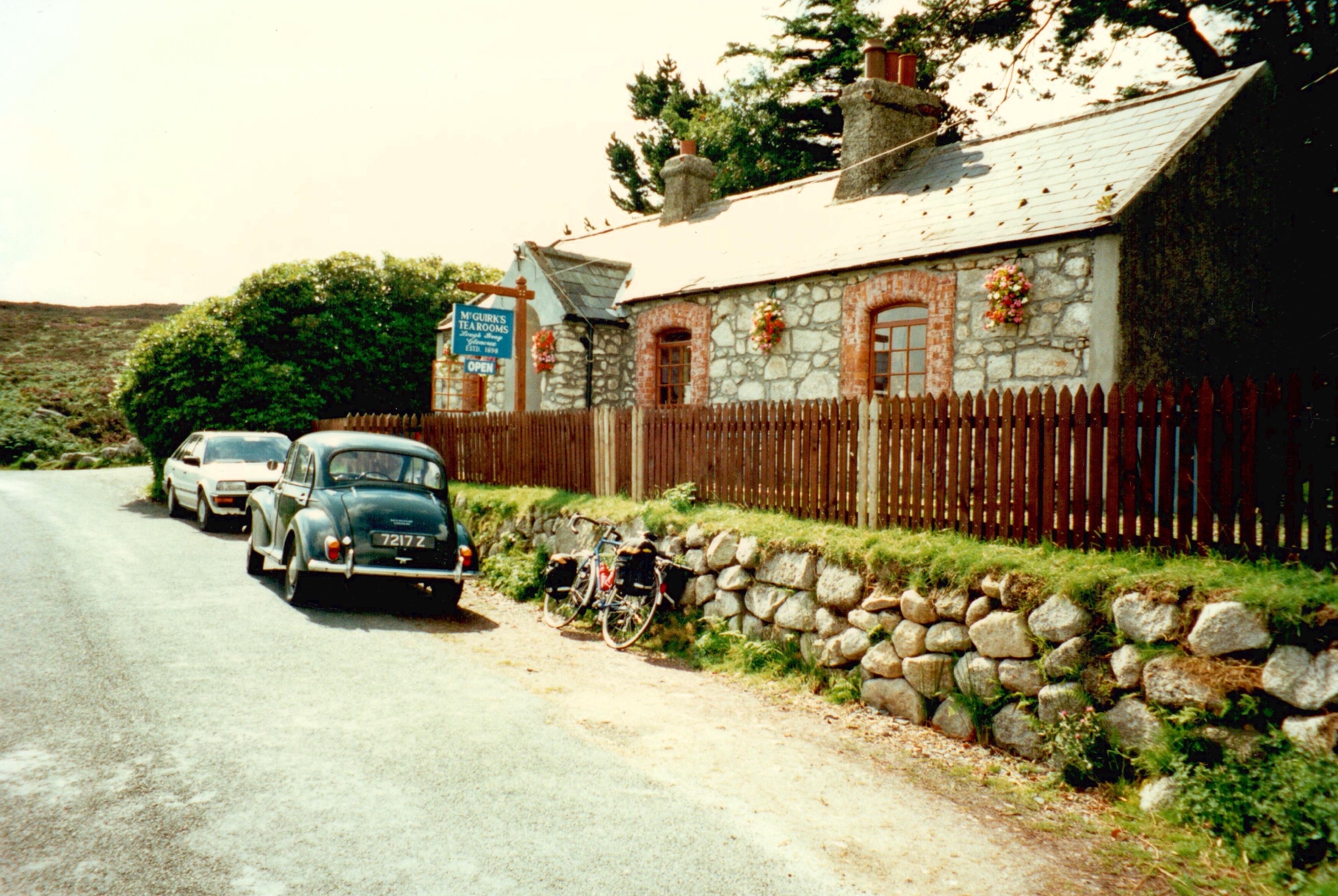
Little did I know when I popped into McGuirk’s tea rooms on a 1996 cycling tour from Dublin to Rosslare that I was entering an Irish institution.
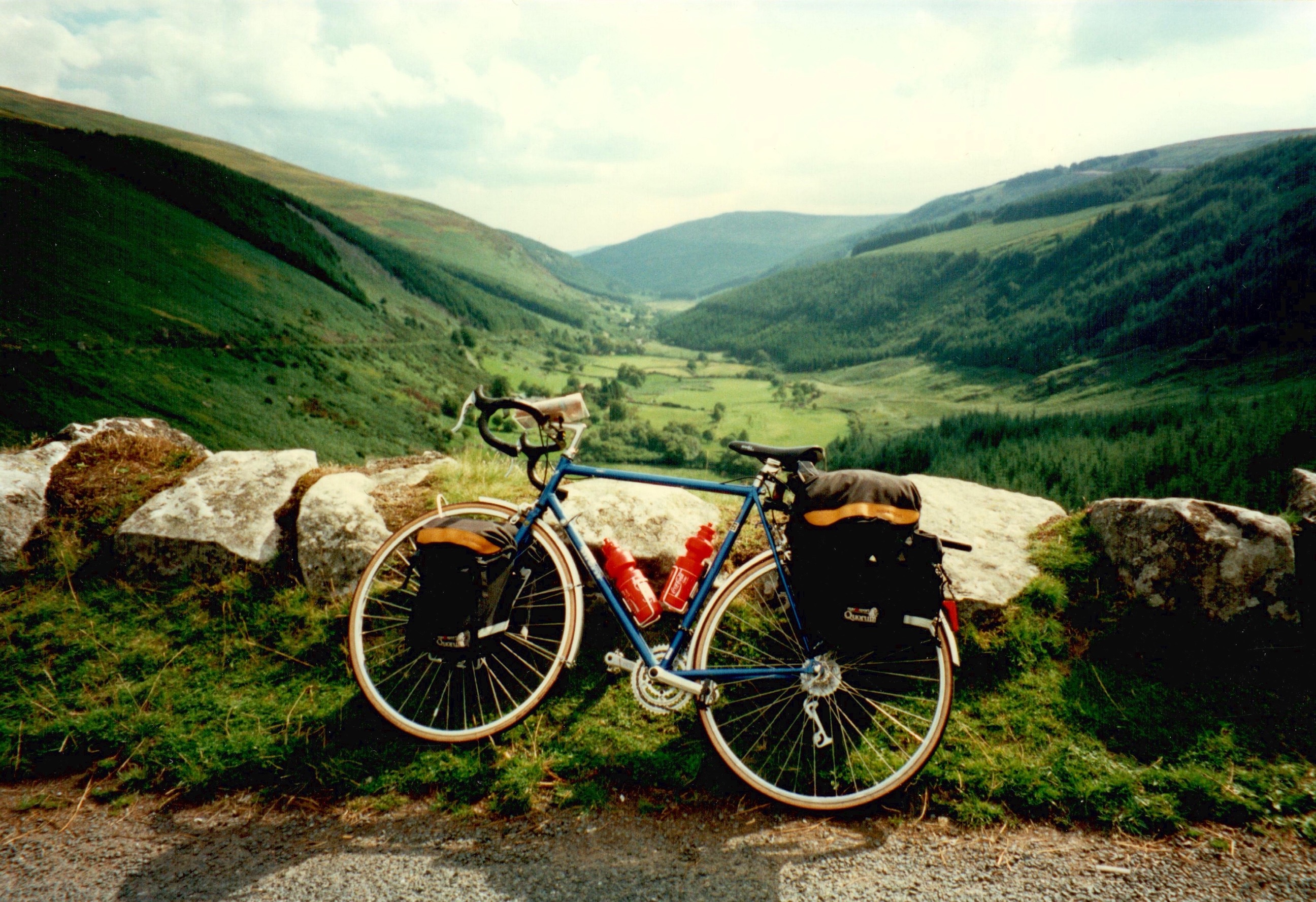
I was intrigued by the old-fashioned sign, and the Morris Minor parked outside. (I’ve always had a soft spot for the classic 1948 car.) I enjoyed a pot of tea and snack before continuing over the old military road (the R115) towards Laragh and Glendalough via the intriguingly named Sally Gap.
The route was opened in the early 19th century to enable the British army to subdue any future insurrections after the Irish rebellion of 1798. I cycled from Dublin, climbing out of the city on my audax bike. I was very lucky with the August weather – warm and sunny – but sensed that it would be a wild ride in a storm, especially as the summit is the highest paved public road in Ireland at 523 metres (1,715 feet).
I was following a scenic route to Rosslare in Brendan Walsh’s Irish Cycling Guide, and found it a delight. I hoped to stay in historic Glendalough, just off the military road, but couldn’t get a room there, and stayed at Laragh instead. By coincidence I bumped into people I worked with at the pub that evening.
Over the following days, I enjoyed making my way down the coast to Rosslare, staying at Courtown and then getting the ferry back to Wales. I carried on my bike the colours of Wexford’s hurling team, who were about to win the all-Ireland hurling championship. Wexford was en-fête when I stayed there on my way up to Dublin to start my cycle tour, and I got into the party spirit. I even bought a t-shirt with the legend What’s the Glory, Martin Storey?, twisting the title of that year’s Oasis hit with the name of Wexford’s captain.
But back to McGuirk’s tea rooms. It obviously made an impression on me as I still remember the name 28 years on. Sadly, it has long since closed down, but an internet search shows what a legendary place it was. A new book, Tales from a Wicklow Tea Room 1898 – 1960 by Michael Fewer explains how the author found eight volumes of the cafe’s visitor book, which featured signatures and comments by many influential Irish people, including the founder of Sinn Féin Arthur Griffith, playwright JM Synge, and the journalist and politician Conor Cruise O’Brien. This lonely building had become a famed meeting place for writers, poets, artists, politicians and lawyers.
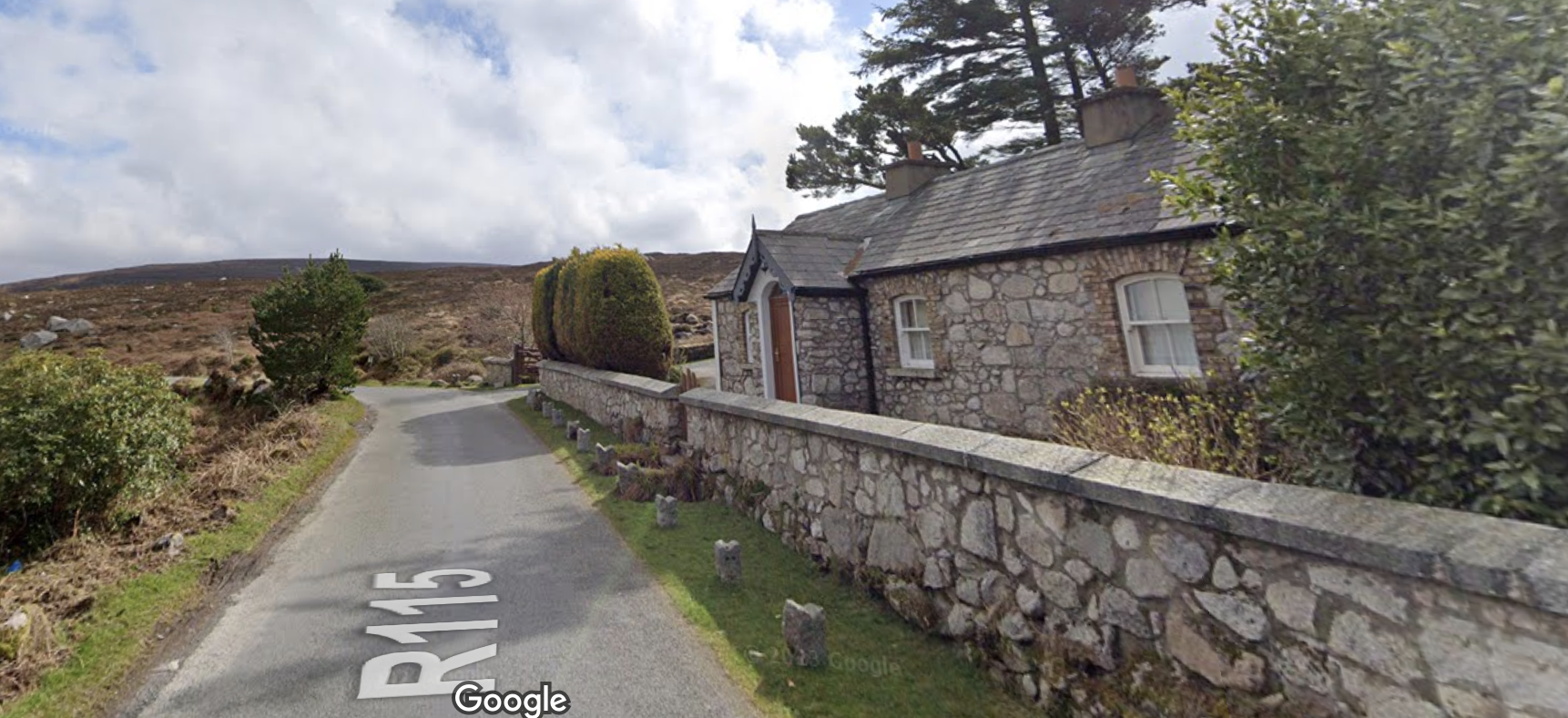
Judging from this Google Maps image, the old team rooms are now a private house. For such a legendary place it’s curious that there’s so little about it online, apart from Michael Fewer’s recent book. I wonder if the residents are aware that their home once hosted some of the most famous names in 20th century Irish society?









































 Ertblog