The nightingale and the cello 1924: broadcasting’s first viral moment

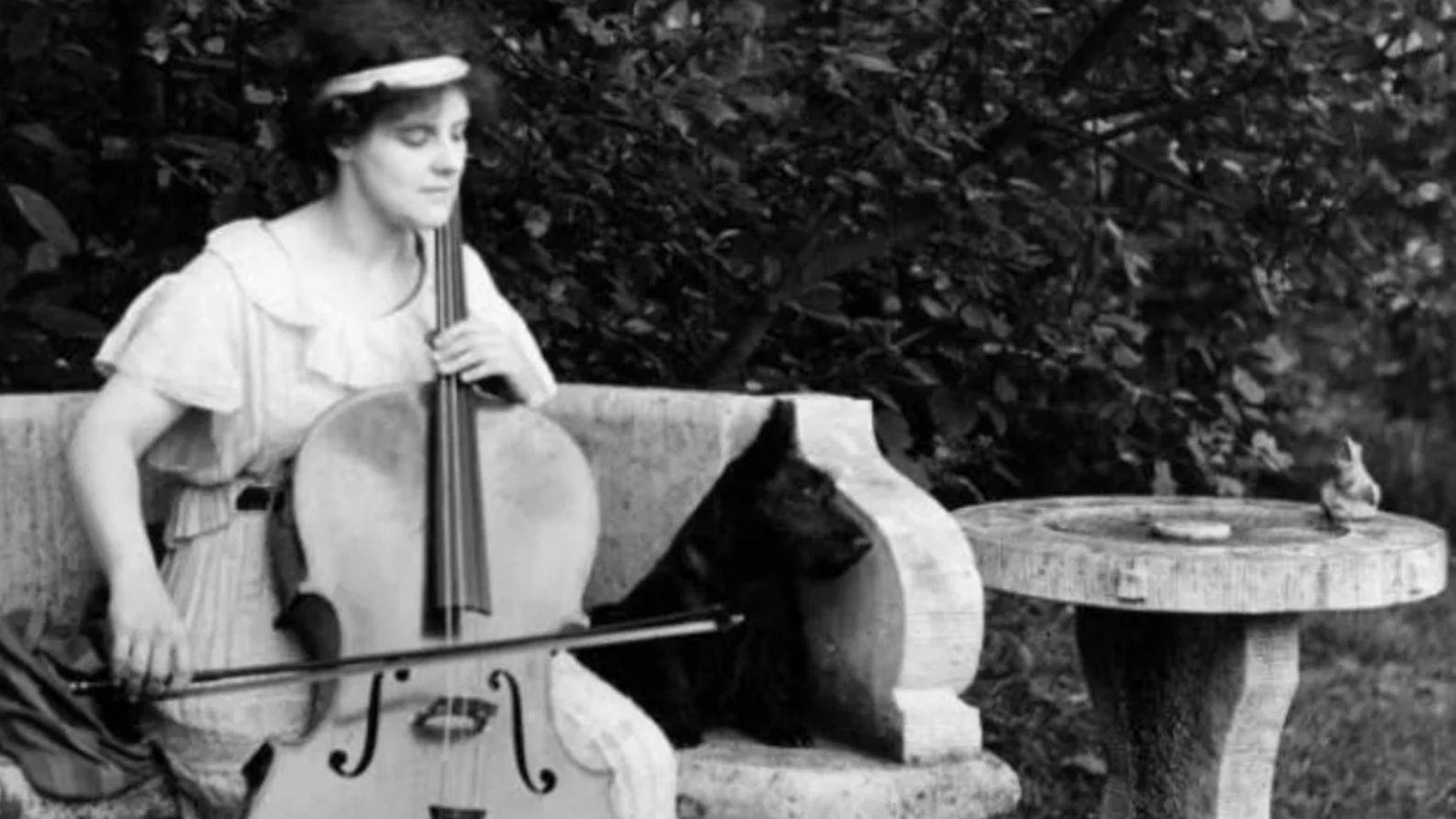
Beatrice Harrison, 1924

‘Going viral’ is such a feature of the 21st century’s online world that it’s hard to believe that a century ago a broadcast from a Surrey garden had the same impact on a country still recovering from the Great War.

On 19 May 1924, a talented cellist, Beatrice Harrison, sat on a bench in her garden to play her cello, accompanied by the magical sounds of nightingales singing. She had persuaded a sceptical John Reith, the general manager of the BBC, to broadcast the performance live.
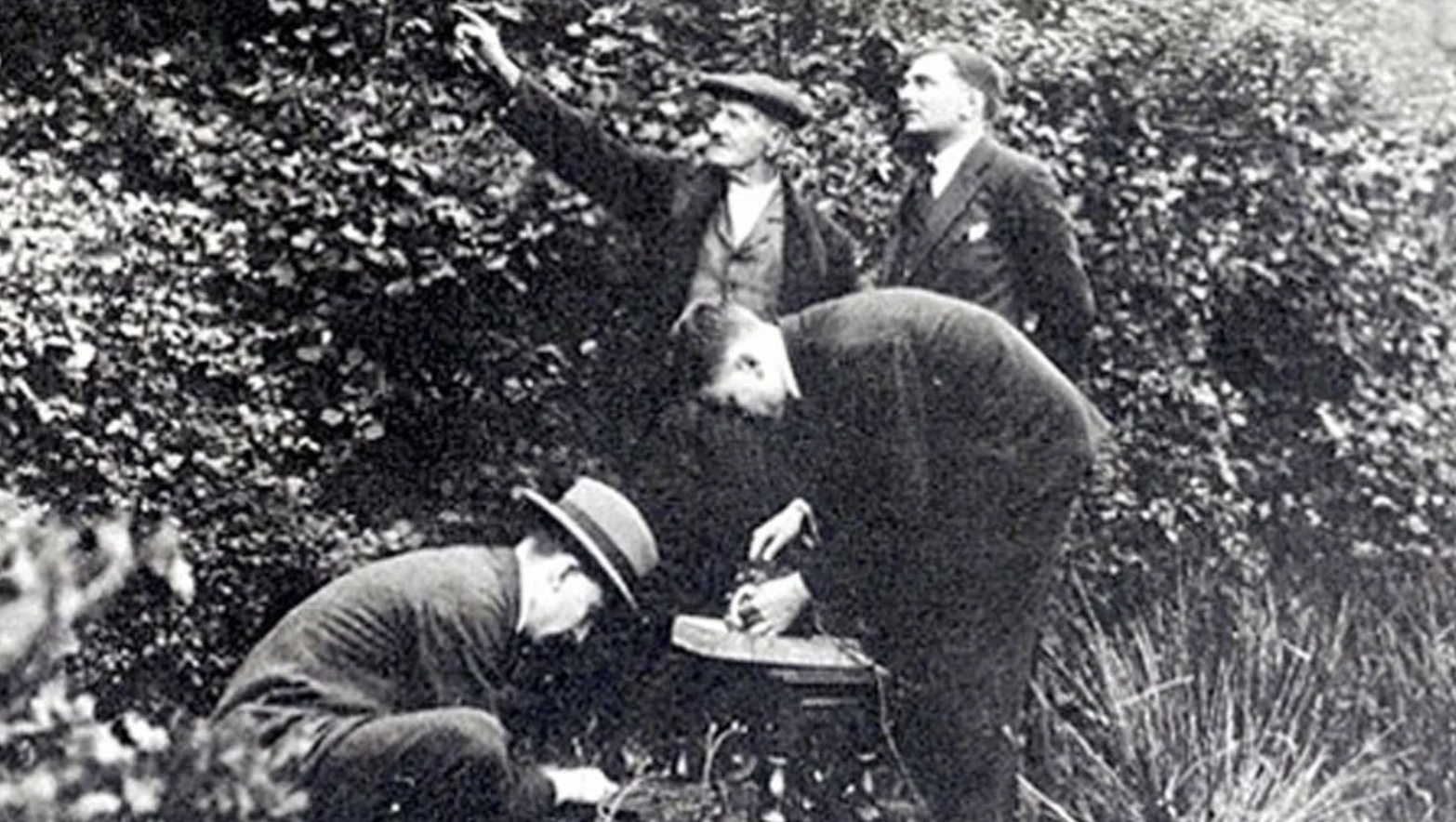
BBC engineers prepare for the 1924 broadcast

Engineers set up microphones in her Oxted garden, with leads trailing into the house to the phone socket. This very first outside broadcast was made possible by a new microphone, the Marconi-Sykes magnetophone, which was far more sensitive than earlier devices. The family donkey and wild rabbits threatened to disrupt the pioneering outside broadcast, but it went so well that the BBC repeated the performance the following month and for the next 12 years. Harrison became internationally famous, receiving 50,000 fan letters, some just addressed to ‘the lady of the nightingales, England’. Visitors from around the world flocked to her home.

Over the past few years, doubt has been cast on whether the birdsong on that first broadcast in 1924 was actually faked, with a bird impressionist stepping in when the real birds failed to appear. But a BBC Radio 3 documentary marking the centenary, The Cello and the Nightingale, sets the record straight. No recording exists of that 1924 performance and the doubters seem to rest their case on a later, commercial recording of another occasion.

I first heard the story of the cello and the nightingale a few years ago, and found it truly poignant. So many of those listening 100 years ago – in Britain and around the world – would have been traumatised by their experiences in the Great War, or by grief at the loss of loved ones during the conflict. Radio was in its infancy, and the BBC, then just two years old, used the power of the new medium to bring the beauty of music and wildlife into thousands of homes. Who can say how many troubled souls were soothed by Beatrice Harrison and her avian visitors?

There is a poignant postscript. Exactly 18 years after the first nightingale broadcast, the BBC was preparing another transmission from Oxted when Britain was once again at war. A quick witted BBC sound engineer noticed the rumble of distant aircraft. Realising that this was likely to be a bomber force heading for Germany, he stopped the broadcast for fear of alerting German spies to the incoming 197 bomber raid on Mannheim. It’s hard to imagine a greater contrast than between the natural beauty of the nightingale’s song and the destruction about to unfold in a distant German city – and the loss of 11 RAF aircraft and their crews.

There is an unexpected twist. When researching for this post, I found that Beatrice Harrison had performed in a wartime British film called The Demi-Paradise. The plot involved a Soviet inventor played by Laurence Olivier who brought his design for a revolutionary propeller to Britain. The butler laconically asks whether Miss Harrison and the BBC staff should sleep under the staircase or under the billiard table if an air raid were to take place. She is later seen playing the cello in the garden accompanied by the sound of distant explosions and with a backdrop of anti-aircraft searchlights sweeping the night sky.
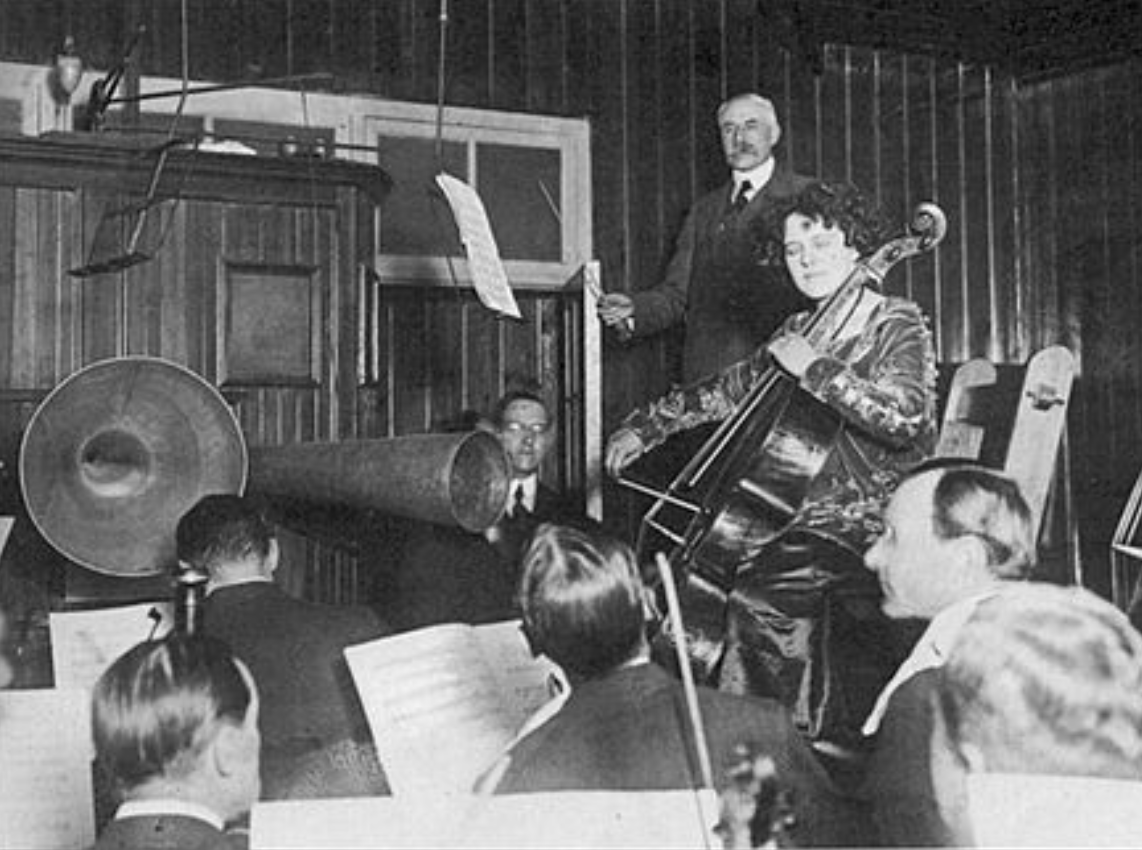
Edward Elgar and Beatrice Harrison record Elgar’s cello concerto, HMV, 1920

The BBC’s centenary documentary about the cello and nightingale broadcasts suggests that Beatrice Harrison’s reputation was distorted by the fame they bestowed on her. She was already a renowned cellist before 1924; she was Edward Elgar’s chosen performer to revive the reputation of his cello concerto after a disastrous premiere by the London Symphony Orchestra in 1919. Elgar conducted the work in a 1928 recording with Harrison, using two turntables. The dual recordings were subsequently combined to create a stereo version.

One last royal word on Beatrice Harrison’s viral fame. King George V once told her, ‘Nightingale, nightingale, you have done what I have not yet been able to do. You have encircled the empire with the song of the nightingale with your cello.’

How I organised my iTunes music library for Sonos

As I blogged last week, I love my new Sonos Play:1 music speaker. It’s such an elegant and simple way to play my music. But it has forced me to tame the iTunes monster.

The reason? The Sonos system won’t play music from iCloud. Any music in your iTunes music library has to be on your device rather than the cloud. (By contrast, Spotify and other streaming services work fine, although Spotify has proved temperamental with Sonos.) This revelation showed how much of my 10 year iTunes collection is in the cloud.

Continue reading

Fairytale of New York, 25 years on

The most moving Christmas pop anthem is 25 years old. Fairytale of New York. As the Guardian’s Dorian Lynskey put it this week:

“Once upon a time a band set out to make a Christmas song. Not about snow or sleigh rides or mistletoe or miracles, but lost youth and ruined dreams. A song in which Christmas is as much the problem as it is the solution. A kind of anti-Christmas song that ended up being, for a generation, the Christmas song.”

I fell in love with this wonderful song in the mid 1990s. I was determined to play it at a Christmas party I was hosting, and spent hours searching shops around Swindon for a CD or tape featuring it, without success. Yet when I got home, I found I already had a tape with it on. Life is easier now, with instant music downloads and streaming.
All these years later, I still relish in hearing Fairytale for the first time each Christmas season. I sing loudly in the car when the Pogues and Kirsty MacColl sing “And the bells were ringing out for Christmas Day” – and especially for the classic lines:

“I could have been someone/Well so could anyone..”

Tragically, Kirsty MacColl died in an accident just before Christmas 2000. But her memory lives on in one of the greatest Christmas anthems ever created.

Jimmy Savile: George Entwistle and the BBC’s challenge

The Jimmy Savile scandal is breathtaking. That a celebrity should have undertaken abuse on a staggering scale without challenge is appalling.

The BBC and the NHS is at the heart of the backlash. How much did BBC bosses know about Savile’s crimes? Did they turn a blind eye? Did they cover up his actions? How did the NHS allow him open access to its wards?

The BBC’s new director general George Entwistle has endured a baptism of fire over the Savile scandal. That’s unfair in many ways – most of the alleged acts happened in the 1960s, 1970s and 1980s – but history shows that managing hot issues is high on the DG’s job description. Entwistle’s account of his response to Newsnight’s Savile investigation was very naive. A savvy BBC executive would have asked a few questions on being told Newsnight was investigating Savile. Newsnight wouldn’t have been looking into whether he unduly promoted the Beatles over the Rolling Stones. Entwistle should have realised it could impact on the BBC’s Christmas tributes to Savile.

It’s easy to think there are no lessons in this for today’s society. This isn’t a 1970s story. We’re even more celebrity obsessed today. While celebrities are more likely to be exposed today for wrongdoing, they also have more power and profile than in the 1970s.

Snap! Leicester, The Jam and the sound of the 80s

Eighties beat

Music takes you right back. Back to a time, a place, a feeling.

Last night, on the way home, I heard The Jam’s Down in the tube station at midnight on the radio. It prompted me to grab my CD of the group’s Snap greatest hits album to play on the drive to work today. I was transported to a freezing cold night in Leicester in the winter of 1984. I was on the last leg of my journey back to my student house after a weekend home in Cardiff. I was listened to the cassette version of Snap as I made my way along The Newarke past the medieval Magazine Gateway.

It’s amazing to think that it’s 30 years next week that I arrived in Leicester as a very green fresher. The difference between studying at school, with its very structured, almost spoon-fed approach, to university lectures and seminars was a shock to the system. No one took any notice if you didn’t turn up to a lecture. To a much greater extent, you were on your own. Land law in particular was a challenge, although I coped. I much preferred civil liberties and law and medicine, although criminal law and tort were fascinating in their way. It seemed extraordinary that the law of negligence was then only 50 years old. (Until the famous ‘snail in the ginger beer bottle’ case of Donoghue v Stevenson in 1932, you couldn’t claim damages from a manufacturer of faulty goods that had done you harm unless you had a contract with them.)

We were also intrigued by the extraordinary final chapter in Canada’s independence from Britain. That month, the British parliament passed the act patriating Canada’s constitution to Ottawa. Until then, Canada was governed by the British North America Act 1867. It was a formality – Canada was independent decades before – but it meant that Canada would no longer have to ask Britain to amend its constitution. Native Canadians lobbied Westminster against the change as they trusted London above Ottawa. (It is, apparently, the only British act of parliament passed in French since the middle ages.)

The soundtrack of my first term at university was a varied one. Culture Club and the exotic Boy George burst into the charts with Do you really want to hurt me? I loved Tears for Fears’ first hit, Mad World (in the charts when I made my first weekend trip home to Wales at the end of October 1982), and Fat Larry’s Band’s Zoom, not to mention Dexy’s Midnight Runners’ Jackie Wilson said. But I also played a lot of the Beatles on my cassette player, plus tapes I bought at Woolco in Oadby. (Anyone remember Woolco? They were Woolworths’ superstores. Now consigned to history along with the music cassette.)

Leicester was a good place to be a student 30 years ago. Terry Wogan may have mocked it as ‘middle of the country, middle of the road,’, but it was an inexpensive place to live and the university of Leicester had a good reputation, especially as a law school. ‘Town and gown’ got on well, and the Asian community meant we had any number of great curry houses to savour. Washed down by cheap beer!

Sorry to be Blunt

Years ago, a friend told me I was the man who disproved the rule that the Welsh can sing.

I remembered that insult this week, when James Blunt won best male solo artist and best pop act at the Brit awards.

I’m terrible. But Blunt is worse.

I’d settle for his small change, mind.