Remembering Jim Callaghan: an underrated PM

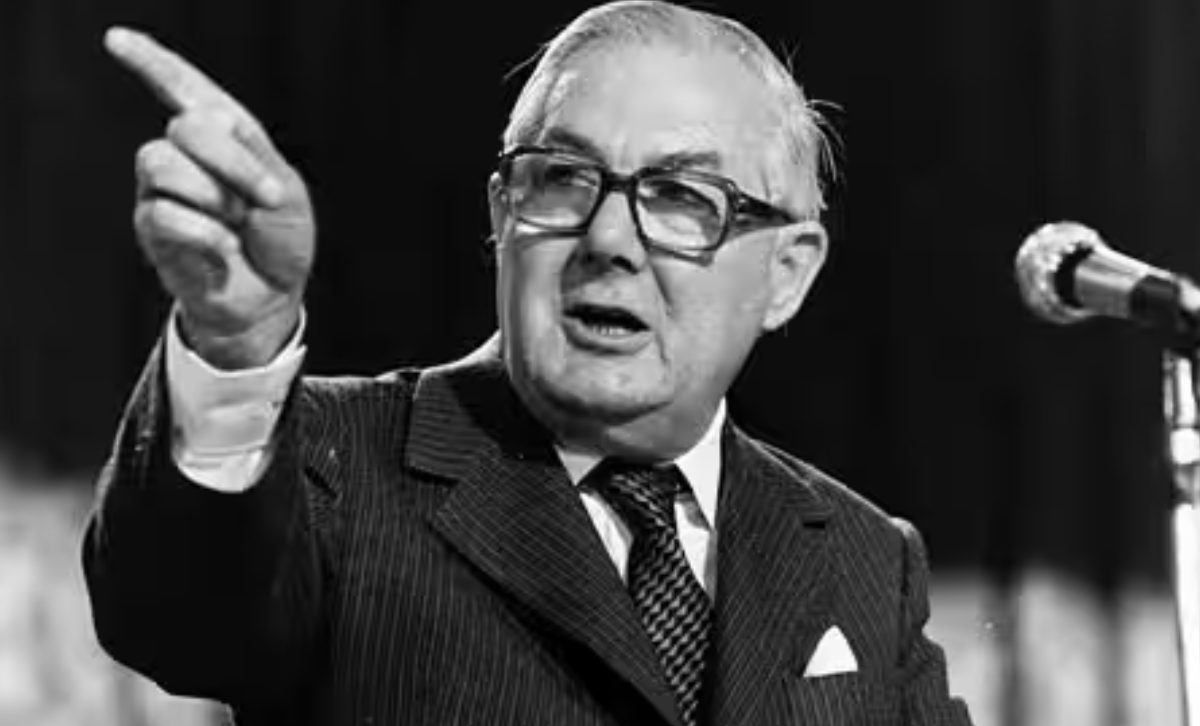
Callaghan addresses the TUC, 1980

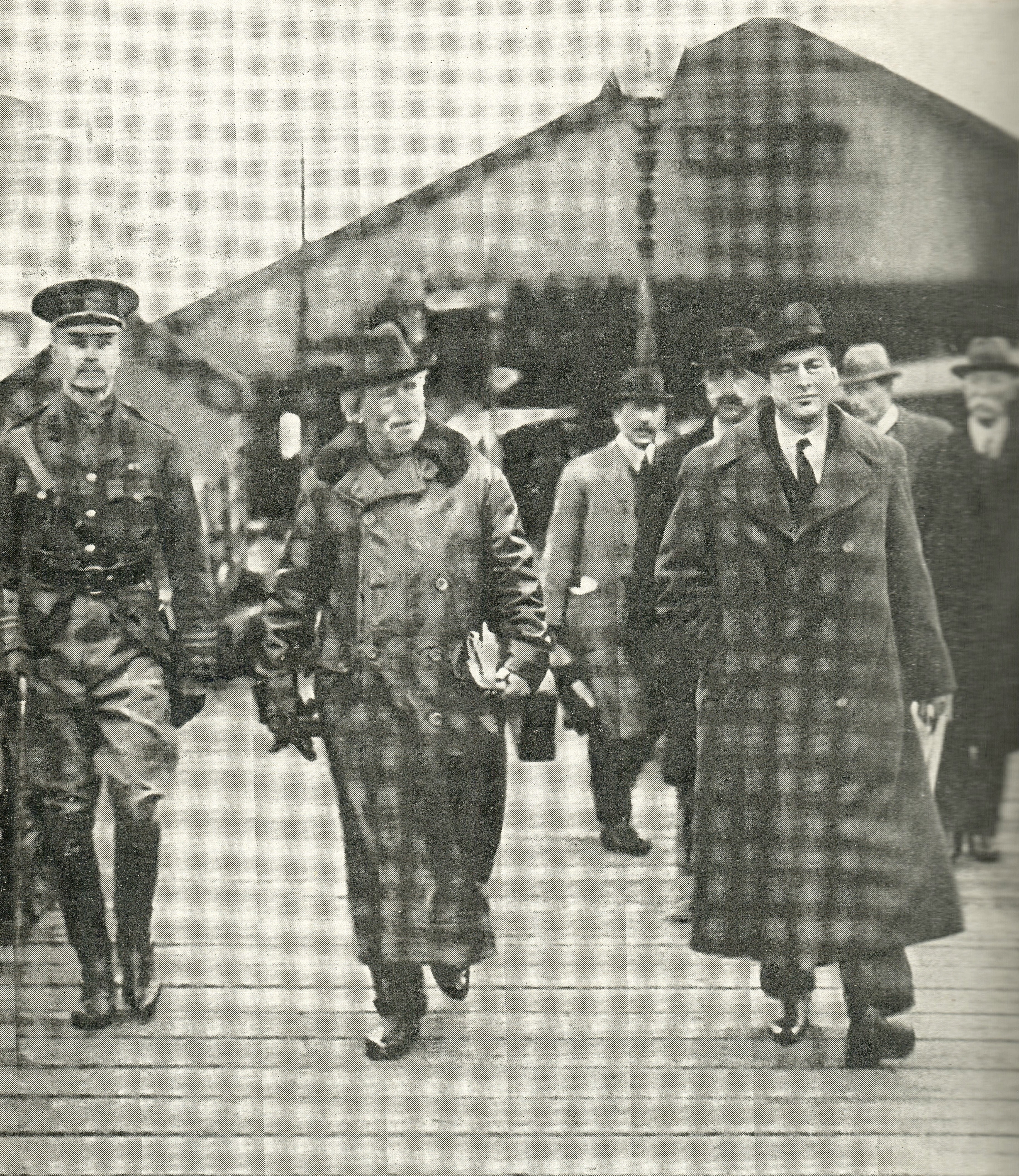
James Callaghan, who died 20 years ago this week, might have been Britain’s most forgotten postwar prime minister had it not been for the winter of discontent. The strike-dominated final months of his premiership, when bodies went unburied and rubbish piled up in the streets, ensured a convincing victory for Margaret Thatcher in the 1979 general election.

Yet Callaghan was a more successful prime ministers than critics allow, especially given his terrible inheritance. When he took over after Harold Wilson’s surprise resignation in 1976, inflation was running at almost 19 percent a year. He inherited a wafer-thin majority, which had disappeared within a year. The trade unions were pushing for ever-bigger pay increases to offset inflation, but which inevitably pushed prices higher still.

Callaghan was unfazed by it all – at least until the final, bleak winter. A man who had fought in the second world war, and been through a different kind of fire as chancellor, home secretary and foreign secretary, calmly faced whatever crisis came his way. This was one reason why he was more popular as PM than his party or his Conservative rival Margaret Thatcher. In troubled times, Sunny Jim was a reassuring captain even as the ship was at risk of sinking.

He led his cabinet with a rare skill. Those were the days of political ‘big beasts’ – Denis Healey, Tony Benn, Michael Foot, Roy Jenkins and Anthony Crossland were just some of the big names in his cabinet. (He sent the formidable Barbara Castle, once tipped to be Britain’s first woman PM, to the back benches.) Callaghan’s achievement in getting the Cabinet to agree to dramatic public spending cuts in the face of the sterling crisis months after he took over was striking. He used his diplomatic skills to get American president Ford to put pressure on the IMF to grant Britain a loan. And he called nine lengthy cabinet meetings to discuss and agree the cuts required by the International Monetary Fund for it to grant that loan. The born-again left winger Tony Benn pushed hard for an alternative economic policy based on import controls, rather than public spending cuts. Callaghan showed saintly patience in handling Benn, who in turn praised his leader as a much better PM than Wilson.

The historian Dominic Sandbrook has described Callaghan’s handling of the 1976 crisis as ‘a remarkable achievement’. Writing in Seasons in the Sun, his history of Britain 1974-76, Sandbrook noted that the new PM had worked miracles to mollify the markets, strike a deal with the IMF and keep the government united, despite the inescapable fact that having to ask for a loan was humiliating for Britain. Yet the great irony is that the crisis was based on typically flawed Treasury figures. Instead of borrowing £11 billion a year, Britain was actually borrowing £8.5 billion. Chancellor Denis Healey only needed half the IMF loan, and repaid it far sooner than anyone expected. But history had been made regardless: he and his PM had ended Britain’s postwar Keynesian economic policy, adopting monetarism three years before the arch monetarist Margaret Thatcher came to power.

By 1978, the dark economic clouds seem to be lifting. Inflation was down to 8 percent from the 1975 high of 24 percent; Britain was starting to enjoy the North Sea oil bonanza; and Chase Manhattan’s European economist proclaimed that ‘the outlook for Britain is better than at any time in the postwar years’. Consumers were buying new cars, fridges and washing machines. As a later generation would say, the feel good factor was returning. This seemed like the perfect time to call an election, and secure a Labour government into the 1980s.

Most people – including his advisers – thought Sunny Jim would go to the country. The Times reported on 3 September 1978 that an election was likely to be announced within a week. Union leaders urged an election, and so avoid a winter wage explosion. (How right they were…) Just two days after that Times story, Callaghan teased the TUC conference about calling an election, even singing an old song, Waiting at the Church, about a bridesmaid being jilted at the altar by her fiancé because his wife wouldn’t let him marry her. (He attributed the song to the music hall singer Marie Lloyd, but it was actually sung by her less well known rival Vesta Victoria.)

He ended by saying that he had ‘promised nobody that I shall be at the altar in October, Nobody at all.’ If he intended to end speculation about an election, his mock-serious approach failed completely. Callaghan broadcast to the nation saying there would be no early election.

Many cabinet ministers and advisers were shocked and disappointed. With hindsight – notably the searing memories of the winter of discontent – his decision to soldier on looks like a disastrous blunder. Yet that ignores a fundamental truth. Prime ministers rarely call elections before they need to unless they are sure they will win. With the exception of Rishi Sunak in 2024, they don’t want to lose their unique status as leader of the nation prematurely. Callaghan was a cautious politician and the polls in the late summer of 1978 suggested a hung parliament, with neither Labour or the Conservatives with a majority. The only certainty about his decision is that he condemned Labour to a heavier defeat that would have happened in October 1978, rather than turning victory into defeat. His great mistake was to allow the speculation to run out of control. It was a mistake repeated by Gordon Brown in 2007.

The real Jim Callaghan

The ignominious end to his premiership should not obscure Callaghan’s remarkable story in rising to the top. Like so many British prime ministers, James lost his father at a young age, nine. His mother got by on a naval widow’s pension granted by the first Labour government in 1924, but it was not enough to pay for him to go to university. He felt his lack of a degree keenly, although he made fun of it when interviewed by the BBC’s Desert Island Discs in 1987:

‘If people say I’m not clever at all, I’m quite prepared to accept that, except that I became prime minister and they didn’t, all these clever people!’

Callaghan was elected MP for Cardiff South in the Labour landslide of 1945. My late mother was covering one of his election rallies for the Penarth Times, and for years afterwards resented Callaghan’s disparaging public remarks about the paper when she questioned him.

He is the only prime minister to have held all the great offices of state: PM, chancellor of the exchequer, foreign secretary and home secretary. He observed that he didn’t find being PM harder than the other great offices. But he had the confidence in 1976 that came of his 30 years in politics, and 12 years of front bench experience. He was a good delegator, ‘preferring to sit back and let the others do the work’, and happily admitted he was never a workaholic. Today’s inexperienced premiers could learn from Callaghan’s example.

The Cardiff connection

My father Bob Skinner, left, with PM Jim Callaghan, right. Jim’s legendary agent Jack Brooks to the PM’s right

Amazingly, Callaghan was a Cardiff MP for 42 years, and continued as MP for eight years after his 1979 election defeat. That is unheard of today. He was a good constituency MP, as I discovered when, as a 22 year old graduate, I sought his help.

My father Bob Skinner was involved with the Cardiff Festival of Music. In 1985, Cardiff was due to host the world premiere of a work by a leading composer. On the eve of the concert, Dad discovered that two soloists from Hong Kong didn’t have the work permits needed to allow them to travel to Wales to perform. He thought that as the local MP and former PM Jim Callaghan could help. The two of us met Sunny Jim in his splendid House of Commons office (he was then ‘father’ of the House of Commons – the longest serving member), and he couriered a note to Conservative employment minister Alan Clark: “Come on Alan, as a Plymouth man make Drake’s drum beat again – for Cardiff!” The permits were issued within hours – the concert was saved, and proved a triumph. 

What I didn’t know at the time was that Callaghan and Clark got on well, a not unusual example of cross-party friendships. In his famous diaries, Clark revealed that Callaghan asked to see Clark privately in his room in the Commons during the Falklands crisis in 1982. Callaghan was due to speak in the second emergency Commons debate about the Argentinian invasion of the islands, and wanted Clark’s advice on what to say. Clark said, ‘I have a rapport with Jim’.

Just before we said goodbye, Callaghan asked me as a new graduate what I wanted to do for a living. ‘I’d like to work in PR or journalism,’ I replied. ‘They all want to do that now, don’t they?’ Jim replied, more to Dad than to me. Within two years, I had started my 37 year career in PR.
Five years ago: Britain goes into Covid lockdown

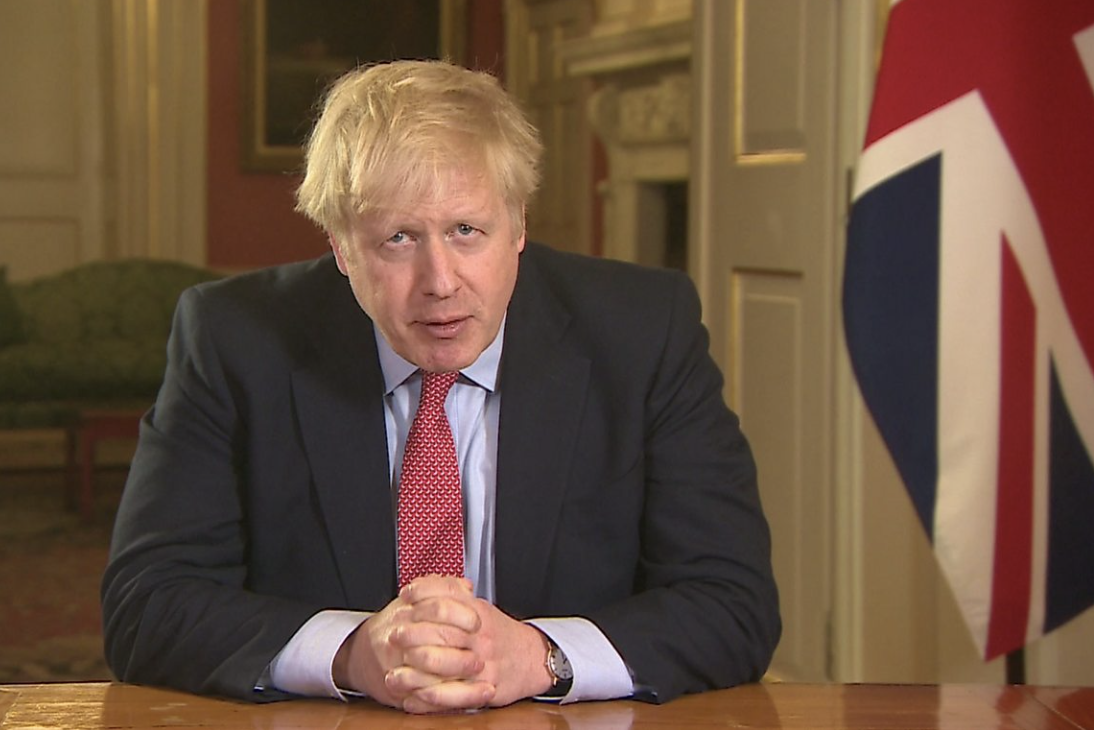
Boris Johnson announced Britain’s first Covid lockdown, 23 March 2020

Five years ago today, our lives changed dramatically. Prime minister Boris Johnson announced on national TV that Britain was going into lockdown to try to stop the spread of the Covid-19 coronavirus pandemic. “You must stay at home,” he told the nation.

M&S High Wycombe, 10am, Thursday 19 March 2020

In reality, the people were ahead of the state. Shopping centres and other public spaces were already empty as we stayed away from other people. A couple of weeks earlier, I moved seats on a London Underground train to get away from a passenger who was sneezing.

I was very familiar with Covid by March 2020. As part of PayPal’s PR team, I helped with communications to the company’s teams in China and the rest of Asia from January, sharing advice on staying safe from the virus and information about office closures. We had at least daily calls with PR people in the United States, Europe and Asia. As March arrived, I was busier than ever, especially as employees in Europe were asking to be allowed to work from home. I myself decided to do just that, exactly a week before the UK lockdown announcement.

On the morning of Thursday 19 March, I took a much-needed break from work, and popped into High Wycombe for what turned out to be my last proper shopping trip for four months. I was struck by the complete absence of people, as seen in the photo inside Marks & Spencer above. I could choose any table at Bill’s restaurant for a late breakfast. The next day, I did what turned out to be the last school drop off the 2019/20 school year.

Continue reading

Last of the Few: Battle of Britain pilot John Hemingway dies, aged 105

Group Captain John ‘Paddy’ Hemingway. Photo: RAF

The BBC today reported that the last surviving Battle of Britain pilot has died. Group Captain John ‘Paddy’ Hemingway was aged 105. He travelled from Ireland to join the RAF on the eve of war and also fought in the Battle of France, in which the RAF desperately tried to hold off the German Blitzkrieg invasion of Britain’s ally.

Winston Churchill famously called the brave RAF pilots the Few:

‘Never in the field of human conflict was so much owed by so many to so few…’

Paddy Hemingway and his fellow fliers saved Britain during the glorious, sunny summer of 1940. The Germans hoped to wipe out the RAF, and so open the way for a seaborne invasion of Great Britain. The RAF’s young pilots won the battle, making the defeat of Nazi Germany possible five long years later.

James Holland brilliantly recreated the immense stress of those Battle of Britain pilots in his 2004 novel, The Burning Blue. He also reminds us how the life of the Battle of Britain crews was so different from that of men serving in the Royal Navy or the armies in North Africa or Italy. The Few lived and died in everyday British communities, fighting in blue skies over the patchwork fields of Kent and Sussex by day, and drinking in traditional English country pubs by night.

The stress must have been overwhelming as the battle progressed, as the RAF noted for Paddy Hemingway:

‘Towards the end of the October 1940, the strain of fighting and loss of comrades was beginning to take its toll on Paddy. He was particularly troubled by the loss of his dear friend ‘Dickie’ Lee DSO, DFC in August 1940, saying in later years that his biggest regret was the loss of friends.

Continue reading

‘Works hard not always with success’ – The Guardian features my old school report comments

The Guardian newspaper has been running an amusing correspondence about school reports in its letters column. My contribution appeared in today’s paper – quoting two of my Cardiff High School reports from the 1970s, the first from my third form (the modern year 9) maths teacher.

I have an almost complete set of my school reports from 1972 to 1982, just before I sat my A levels. Looking back, it is striking how brief primary school reports were in the early 1970s. Take this example from Lakeside Primary School, Cardiff:

(There was a brief summary by the class teacher as well.)

In those primary years, there was a section about handwriting, and few reports went by without a comment about my poor handwriting. ‘If only he could be neater!… Untidy! … Still lacking in shape… poor…’ My mother even bought me a copy of Teach Yourself Handwriting but my attempts to practise neater writing didn’t last long. To be fair, my handwriting had improved by the time I sat my A levels – I can still easily read my mock exam essays.

Rereading the old reports, I was surprised to see a glowing report from the primary teacher I liked least, when I was nine. Miss Lloyd was terrifying, and almost the first thing she said to me was, ‘What language is this – Chinese?’ on seeing my handwriting. One day she told me off for losing so many pens, and threatening dire consequences if I lost another. Needless to say I did, and I vividly remember lying in the bath that evening, stressed about going into school the next day. Nothing happened, but 52 years later I was amused to see her comments in the report: ‘At times he is possibly over-anxious and perhaps takes life rather too seriously’…

Curiously, my Welsh teacher Mrs Davies always praised me for working well or very good work even when giving me a C rating.

My worst ever school report, just before my O levels

I was well into my fifties when Dad gave me a stack of my school reports that he and Mum had kept. It was unusual for him to keep old school materials and books – as I blogged recently he tended to throw these away without telling me. I read the report above, issued just after my O level mocks, with some pain. I had done very badly in some of my subjects, especially chemistry and French, and my teachers stated bluntly that I needed to work much harder to do well in my O levels. (My mother had made a similar point when she found me day dreaming rather than revising over the Christmas holidays.) The warnings worked: I did reasonably well, especially in my favourite subjects, history, commerce and English language and literature, and didn’t disgrace myself in the others.

One postscript to that report. My O level chemistry teacher says that I would be better suited to CSE rather than O level. The Certificate of Secondary Education ran in parallel to O levels, and was designed for less academically able pupils. I was mortified at first to be told I couldn’t sit chemistry O level (although with 22 percent in the mock, it was clear I would fail) but loved my five months in the CSE chemistry class. It was clearly at my ability level, and I got the top CSE grade, 1, in the exam. Years later a school friend, Alison, recalled being surprised when I joined the CSE class: ‘We thought you were brainy!’ My experience showed the importance of adapting education to the needs of the child rather than a one size fits all approach. CSEs and O levels were replaced by GCSE eight years later.

Looking back, I can see that I didn’t work nearly as hard as I should have done especially at high school. My 16 year old son Owen is working far harder and achieving much more consistently high grades. In short, he’s much more conscientious than his father was…

Headlines from my 50 year old childhood scrapbook

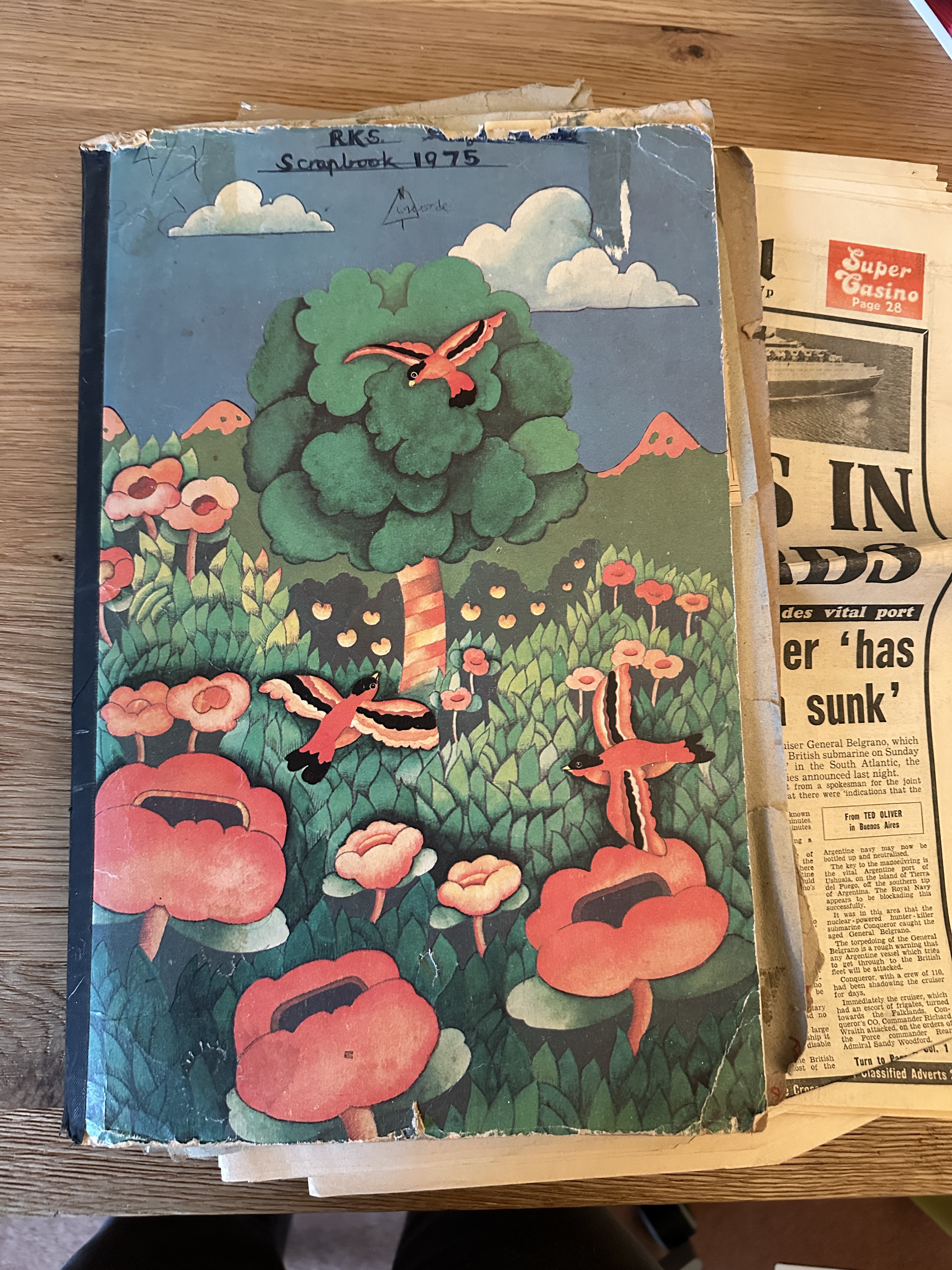
Do any children today keep a scrapbook? It seems very unlikely given almost every aspect of our lives has gone digital. So I was thrilled to rediscover my 50 year old childhood scrapbook, overflowing with yellowing newspaper cuttings. I wrote Scrapbook 1975 on the cover – I wonder whether it was a 1974 Christmas present? I seem to have written my Lakeside, Cardiff class, 4/1, there too.

I must have noticed that my scrapbook had 84 pages – one for every year of my beloved grandmother’s life at that point. (Nanny lived to within months of her 103rd birthday in 1994, as I blogged last year on the 130th anniversary of her birth.)

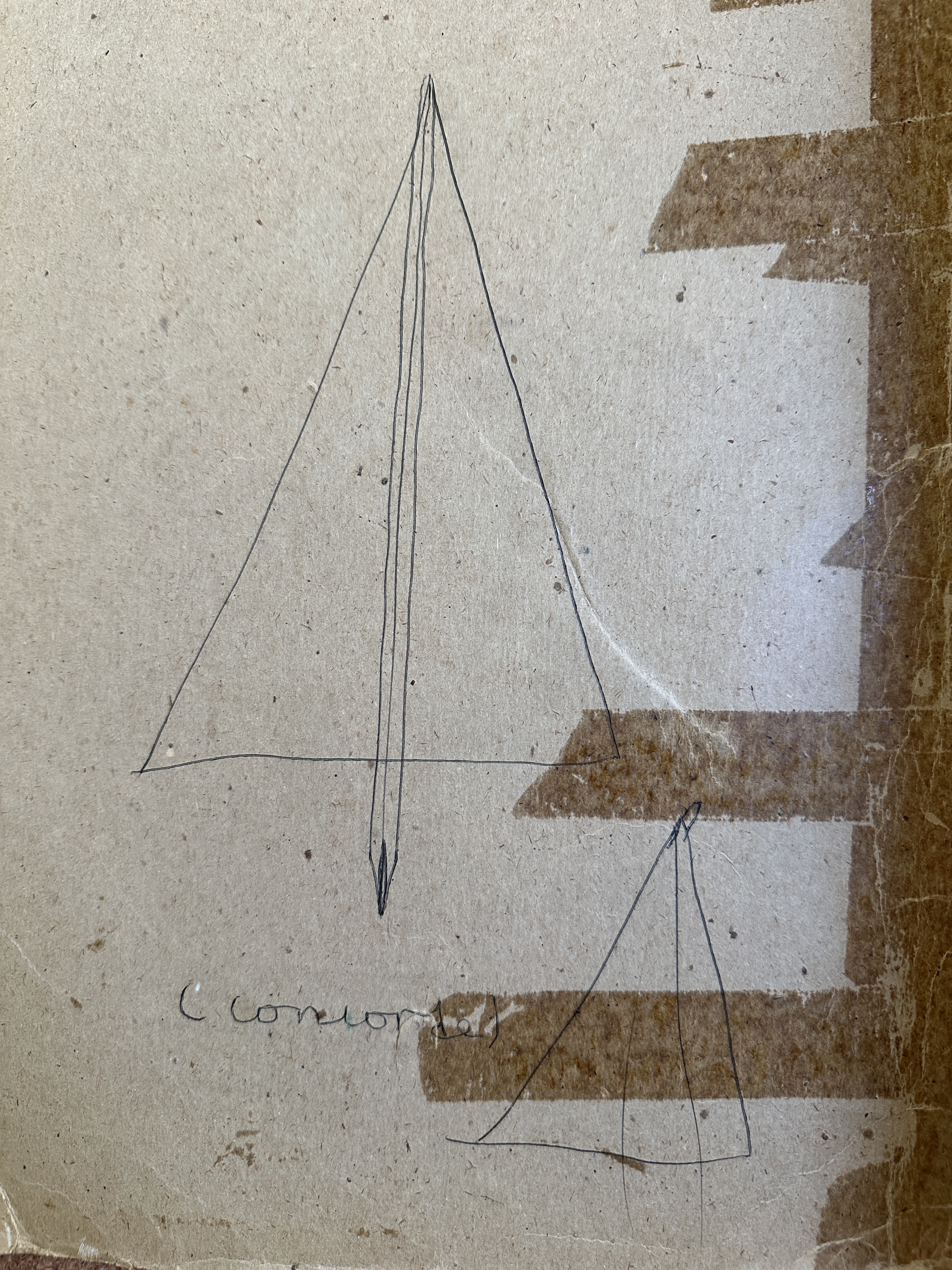
On the inside cover, I drew (badly) an impression of Concorde, the supersonic passenger plane that was to enter service the following year. These were the supersonic seventies, in the words of a 1970 Cadbury’s television advert… I never flew in Concorde, although I did walk through one in a Somerset museum in 1978. It wasn’t the same…

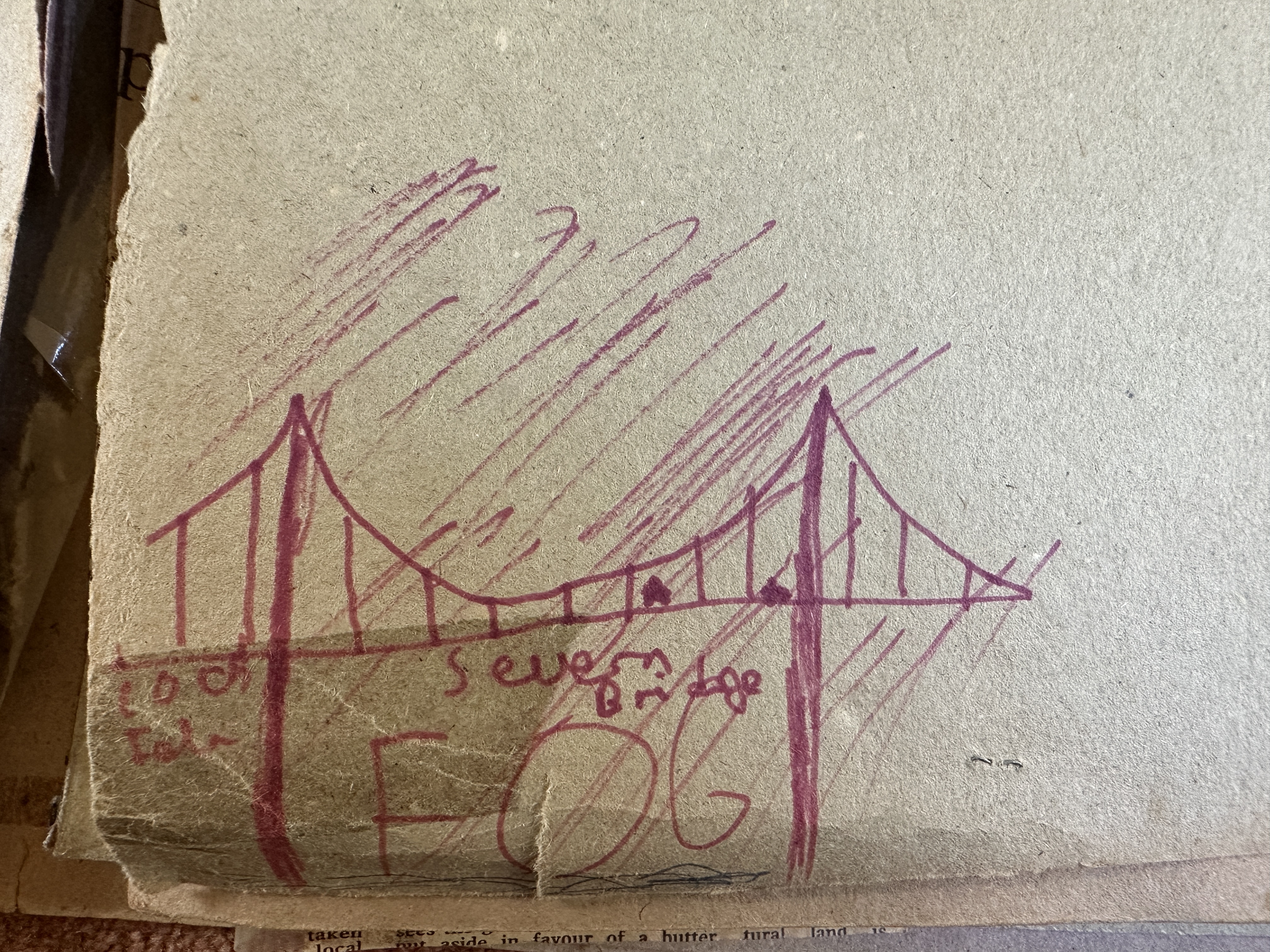
During the three day school half term, on Monday 10 February, Mum and Dad took me to Bristol for the day. If my scrapbook sketch is anything to go by, it was a foggy day. As a book lover, it was no surprise that my favourite part of the day was going to George’s bookshop, on Park Street. According to blogger Sue Purkiss, George’s dated back to 1847, so I was entering hallowed territory that foggy February day. At the time I was a big fan of Jackdaw children’s folders, a fascinating series of folders that illustrated historical topics with facsimiles of related documents. I received the Battle of Britain one Christmas, which included a wartime identity card and a 1940 Daily Mirror. I added my late grandfather’s real second world war identity card. I wouldn’t be surprised if I bought another Jackdaw at George’s. All I know for sure is that I took one of the bookshop’s bookmarks, as it’s in my scrapbook with the date on it. Sadly George’s is no more, like my old Cardiff spiritual home, Lear’s bookshop in Royal Arcade.

Continue reading

Fifty years ago: second election in a year

Harold Wilson wins his fourth general election

Fifty years ago today, I broke the light in the loft of our Cardiff home. I only know the date this happened because a far more historic event happened the same day. Britain held a second general election in eight months – only the second time two general elections had taken place in a calendar year. (The other time was 1910, when the Liberal government was locked in a titanic battle with the unelected House of Lords to pass the People’s Budget, which introduced Britain’s first state pension.)

Harold Wilson had very narrowly won the first 1974 election in February, picking up fewer votes but a handful more seats than the Conservative government, led by Ted Heath. The Tory PM had gone to the country in the midst of a bitter battle with the striking coal miners. He framed the vote as ‘Who governs Britain?’ The electorate (at least by the rules of the UK’s first past the post voting system) answered: ‘Not you!’

It was clear that, hampered by the first hung parliament since the war, Wilson would soon call another election to try to win a working majority. In the event, he gained a margin of a pitifully thin three seats. There followed a chaotic, exhausting yet enthralling period in British politics. Wilson himself surprised almost everyone by stepping down aged 60 in 1976, leaving Jim Callaghan to cope with the loss of that wafer-thin majority in 1977. He negotiated the Lib-Lab pact with the Liberal party and the government survived until losing a confidence vote in March 1979. The election that followed brought Margaret Thatcher to power as Britain’s first woman prime minister.

I met Callaghan six years later, when Dad and I visited him in his House of Commons office on a mission to secure a work permit for a musician from Hong Kong who was appearing in a concert in Cardiff. I’d just graduated from university, and Sunny Jim asked me what I wanted to do for a living. When I replied that I’d like to work in PR or journalism, Callaghan turned to my father and commented, ‘They all want to do that know, don’t they!” I tell the story of that meeting in more detail here.

The 19th century US president with grandchild alive in 2024

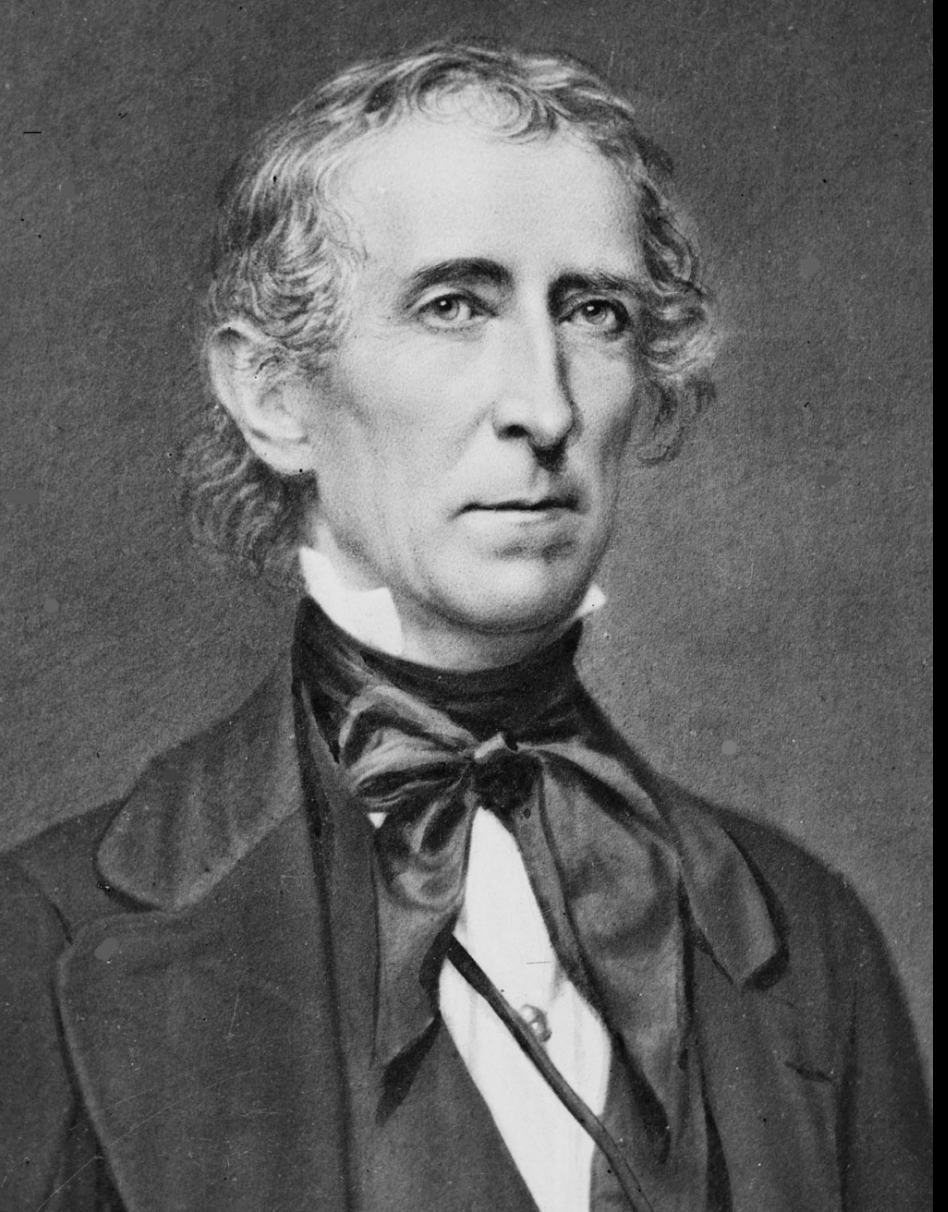
One of my weekly pleasures is reading Jonn Elledge’s latest Newsletter of (Not Quite) Everything. It’s a mix of political commentary, transport and geographical trivia. In short, it could have been made for me.

A recent edition contained just the kind of revelation that I love, and on the off chance that any of my readers don’t follow Jonn’s Substack I thought I’d reshare it. John Tyler, president of the United States from 1841 to 1845, has a grandchild still alive in 2024. (As of this January.)

This is Jonn’s version of the story:

In 1844, following the death of first wife, Tyler secretly married a woman 30 years his junior, the 24 year old Julia Gardiner. They had seven children, one of whom, Lyon Gardiner Tyler, would follow in his dad’s footsteps by marrying a second wife, Sue Ruffin, nearly 35 years his junior. One of their sons, Lyon Gardiner Tyler Jr, survived until 2020, when he died aged 95. Another, Harrison Ruffin Tyler, born in 1928, was reported to be still going as recently as January. So yes, it is entirely possible to be alive in the 21st century, and have a grandfather born in the 18th. Cool.

I found this amazing.

I’ve always cherished memories of my Victorian grandmother, born on Lenin’s 21st birthday in 1891, but this is in a different league. Not long ago, I tried to establish whether there had been anyone born before Nan was born in April 1891 who was still alive when my son Owen was born in 2008. Such a person would have been over 117 in 2008 for this to have happened. People have lived longer than that, but my Googling academic research suggests that their lifespan didn’t match the 1891-2008 period. The closest match was Emiliano Mercado del Toro, who lived from August 1891 to January 2007. (No man has lived beyond 116 years; the oldest woman, Jeane Calment, reached 122.)

I’m looking forward to Jonn’s latest gems in this week’s newsletter! It’s well worth subscribing.

The end of coal power in Britain

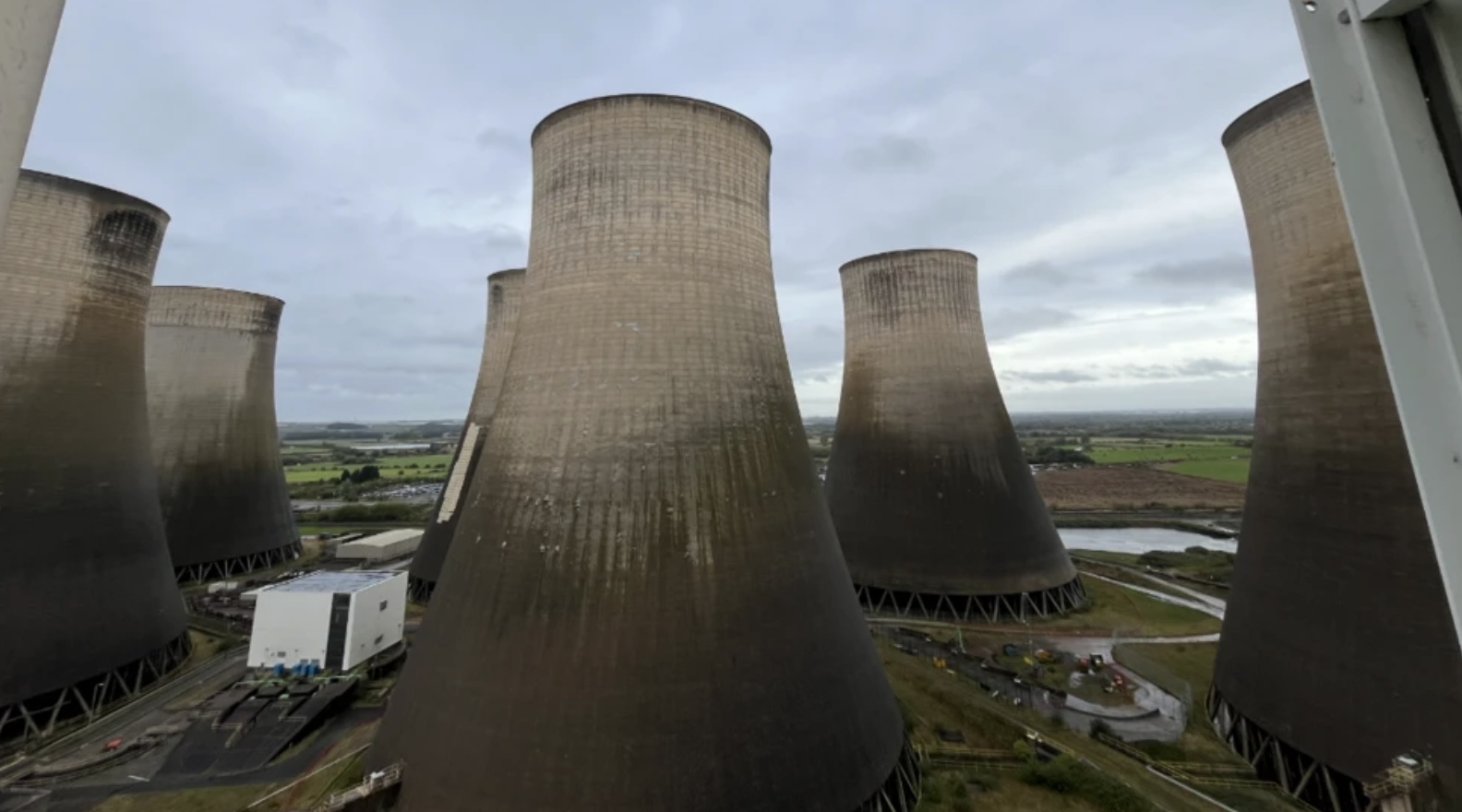
The cooling towers at Ratcliffe on Soar power station. Photo: BBC

The coal age in Britain is over. The country’s last coal-powered power station closed yesterday, marking the end of 140 years of generating power from coal.

I have fond memories of that power station, Ratcliffe on Soar. On a canal holiday in 1988, we moored in the shadow of its eight cooling towers, toasting its mighty presence with a bottle of gin. It dominated the East Midlands landscape.

‘Salt and pepper’: Roath Power station, Cardiff

Over 50 years ago, my late father Bob Skinner played his part in the destruction of the cooling towers at the old Roath Power station in Cardiff. Dad told me that he pressed the button that blew up one of the two towers, nicknamed ‘salt and pepper’. Full of pride, I told my school friends about Dad’s starring role in the event that featured on the Welsh news the night before. “No he didn’t – the [lord] mayor did!’ my friend replied. Over half a century on, I will never know the truth.

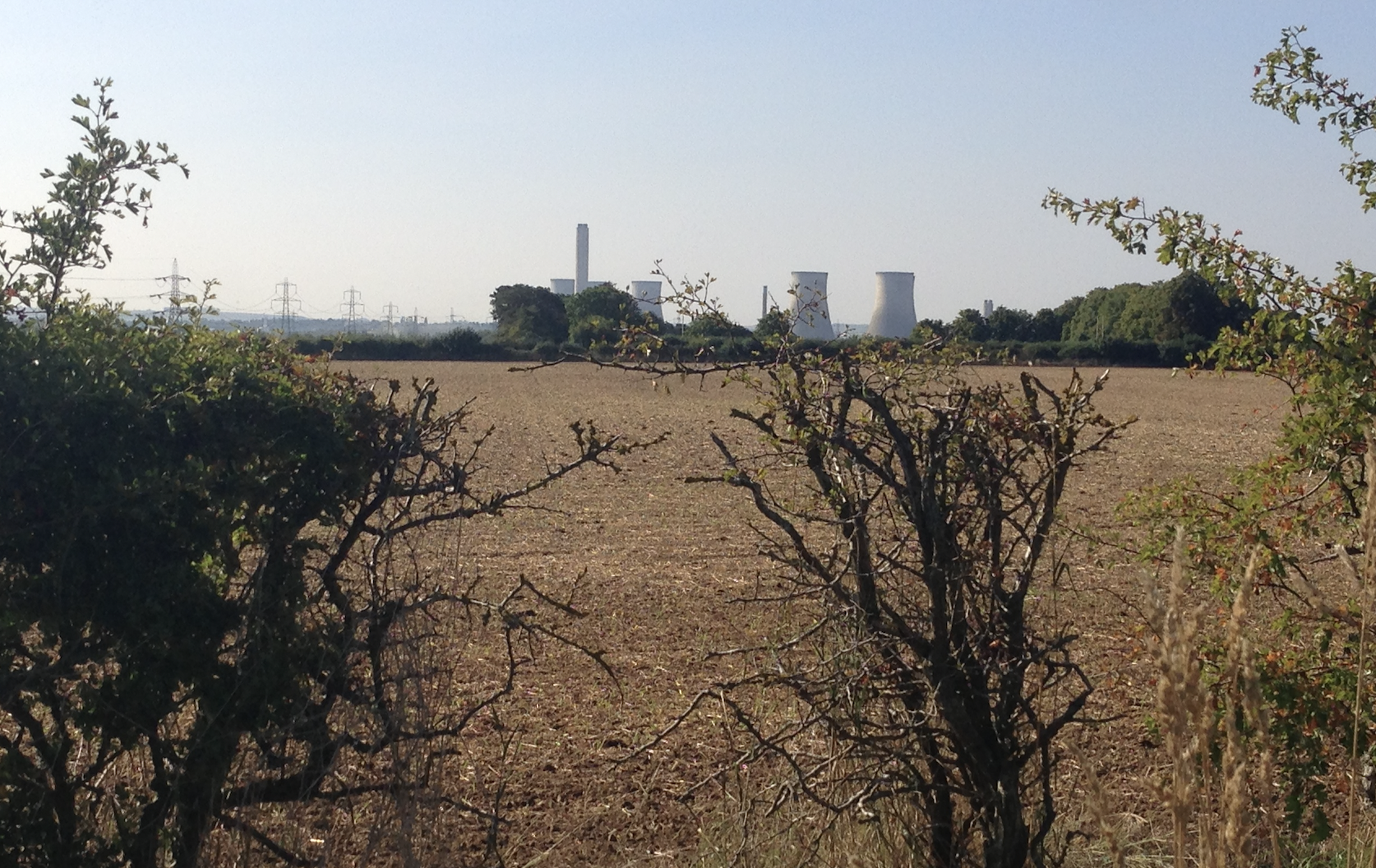
Didcot Power station – the cathedral of the Vale

I was most familiar with Didcot power station in Oxfordshire. It was known as the cathedral of the Vale of the White Horse (though we called it DPS), as it could be seen for miles around, and was a milestone on rail journeys between London and Wales. The most striking views were from 18 miles away on the M40 motorway as it climbed the escarpment at Stokenchurch.

We mourned the loss of that iconic view after Didcot’s last three cooling towers were demolished in 2019. I hope calls to save at least one of the Ratcliffe on Soar towers are successful, so we can save part of this monument to the part coal played in powering Britain.

Precipice: Robert Harris novel sheds new light on PM Asquith’s affair with Venetia Stanley

Asquith in Ireland on the eve of war, 1914

It’s unbelievable. Britain’s wartime cabinet was meeting in 1915 to plan the Dardanelles campaign that was destined to cost the lives of 41,000 Allied troops. Yet the prime minister, Herbert Asquith, wasn’t interested. Instead, he was reading a letter from his lover, Venetia Stanley, delivered to the Cabinet Room in 10 Downing Street during the meeting. As Winston Churchill, David Lloyd George and Lord Kitchener debated the details, Asquith was penning a reply to Venetia, after checking his diary to see when he could slip away to meet her.

Here is a classic example later that year:

My own darling – I am writing in the stress & tumult of a windy & wordy controversy about munitions … between Ll. G [Lloyd George], Winston [Churchill] and A.J.B [Tory leader Arthur Balfour] – and I daren’t abstract myself more. Asquith to Venetia, during a War Council meeting 1915

Robert Harris has turned the Asquith-Stanley scandal into a brilliant novel. The prime minister’s letters to Venetia have survived but he destroyed all her letters after she ended the relationship, and he had been ousted as PM by Lloyd George in 1916. Some have doubted whether the relationship was sexual, but Harris is sure that it was, and the surviving letters tend to support this – though we will never know for sure.

Asquith was obsessed with Venetia, who was 35 years younger than the 61 year old premier. He ran appalling risks by sending her top secret government documents through the post, including messages about a planned troop evacuation from Antwerp and much more. When the two were enjoying secret rides in his prime ministerial Napier limousine, Asquith would reveal the latest intelligence decrypts to her, before throwing them out of the car window. One of the few fictional characters in Robert Harris’s novel is police detective Paul Deemer, who surreptitiously intercepts the lovers’ letters, to copy them before returning them to the postal sorting office. He also wangles a job as a gardener at the Stanleys’ north Wales mansion, Penrhos, and creeps into her bedroom to open the case in which she kept Asquith’s letters. She saved them for posterity and Robert Harris.

Venetia Stanley. Photo: Daily Mail, Harris’s Picture Agency

Harris brilliantly chronicles how Venetia turns from an equal partner in the affair to being uncomfortable and indeed oppressed by her lover’s spiral into near madness. She finally agrees to marry Asquith’s close friend and cabinet minister Edwin Montagu, despite not finding him attractive. It was a marriage of convenience that ended when he died just nine years later, during which she had a string of affairs.

You’ve got mail

Precipice sheds light on the remarkable postal service London enjoyed even at the height of the Great War. The General Post Office (GPO) collected and delivered mail 12 times a day in the city, and three times in the country. Venetia noticed with some suspicion that her post seems to be delayed – probably by just a few hours – after detective Deemer starts intercepting it. Today, no one would even notice.

There are a few false notes. When Harris recounts Asquith’s response to her suggestion that the disastrous Dardanelles campaign should be abandoned before any more lives are lost, he has him responding, ‘No, I fear there’s no alternative except to double down’, using an expression first noted in 1949 – and by very few in Britain until the 21st century. At least Harris didn’t have Asquith pleading with her to ‘reach out’…

It was a pleasure to listen to Robert Harris talking about the novel at a Chiltern Bookshops event in the highly appropriate setting of Chorleywood’s Memorial Hall, opened in 1922 to honour those who gave their lives in the Great War. He amusingly explained how Asquith’s great-grandson told guests at the novel’s launch party that it was totally ridiculous, especially the idea that his great-grandfather had anything other than a platonic friendship with Venetia. ‘How on earth would he know, 110 years later?’ Harris asked. He added, ‘Asquith was notorious for his wandering hands and it is well known that Venetia had married lovers after her marriage. That’s the nature of the two people.’

Robert Harris’s achievement is to make us care about the two main characters, even though their behaviour is hardly commendable, especially during a war in which thousands are dying every week. Asquith and Venetia were very much characters of their time, although Harris got a laugh at Chorleywood by making a reference to Boris Johnson’s scandalous actions as PM a century later. Stanley herself was part of a fabulously rich family with mansions in Wales and Cheshire, along with a grand house in London. Yet Harris gives a fair impression how unfulfilling her life was, despite the decadence and splendour. Harris noted at Chorleywood how the family’s Welsh and Cheshire palaces lay in ruins just a few short decades later, while Venetia herself died aged just 60.

Asquith’s legacy

We shouldn’t judge Asquith just on his sordid pursuit of Venetia Stanley. He was the leader of Britain’s last Liberal government, before being forced to turn his wartime ministry into a coalition. Above all, he presided over an extraordinary peacetime revolution, which included the first state pension and the titanic battle to curb the powers of the unelected House of Lords, which included two elections in a single year, 1910, and the threat to demand that the king created enough new peers (lords) to force the upper house to back down. Until war came and he became obsessed with Venetia Stanley, he cleverly harnessed the supremely talented Lloyd George and Churchill. It helped shape modern Britain.

When the Great War was news, not history

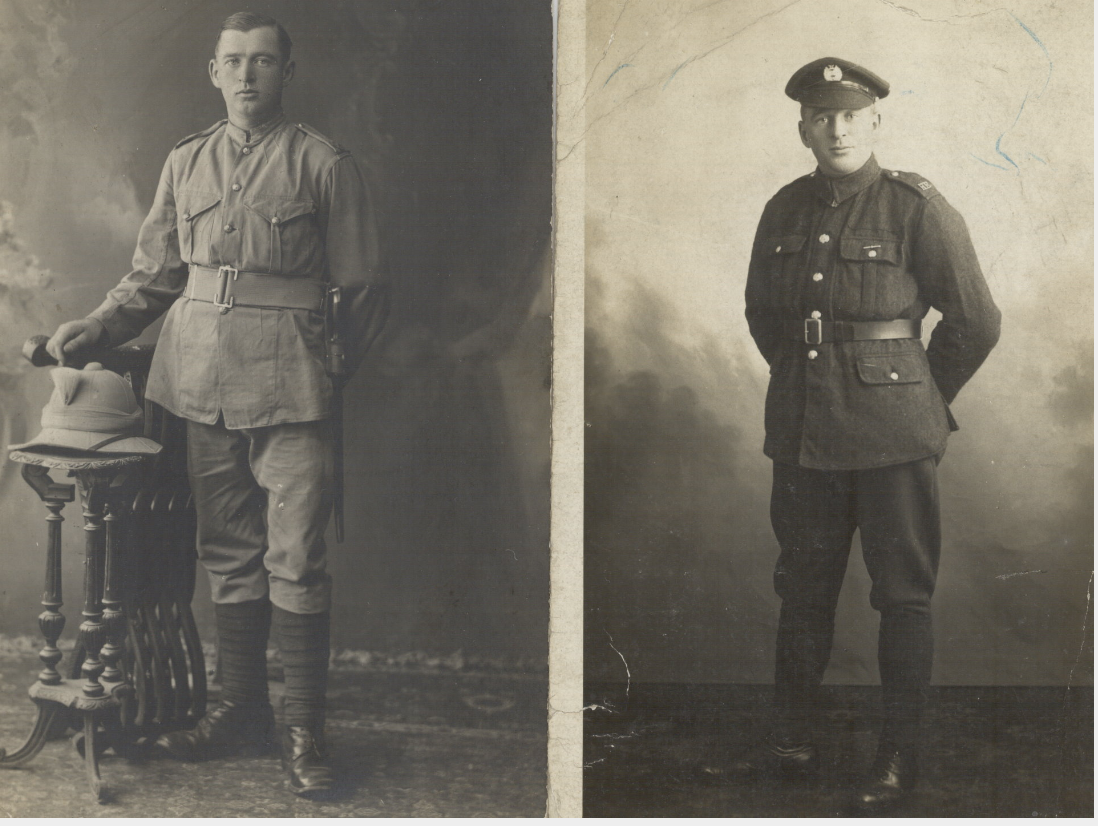
Photos like these feature in countless family photo albums across these islands. They feature my grandfather Frank and his twin brother. Frank was one of the men sent to fight in the Dardanelles campaign that Asquith should have been discussing when he was distracted by his passion for Venetia Stanley. His terrible ordeal led him to forbid my late father from joining his school’s cadet force on the eve of the second world war in 1939. Tragically, his brother – my great-uncle – died in the Spanish flu pandemic after surviving the trenches. Frank died too young at 52 of a heart attack in 1942, as my own 94 year old father remembered so poignantly on his own blog on the 78th anniversary of that sad day in 2020.

The commendable Venetia

Venetia should not be defined by her relationship with Asquith or Montagu. She was determined to play her part in the war effort, and enlisted as a nurse, in conditions so different from her affluent and cosseted family lifestyle. She sailed to France the day Asquith was forced to form a wartime coalition.

One last thought. Almost 80 years after she died, Venetia is the silent witness in this extraordinary story. She’s not here to give her side of the story, a silence that applies to countless women down the centuries who have been unfairly defined and characterised by their relationships with powerful men. We should remember this before casting any judgement about what she did over a century ago as Europe went to war.

When did a roof box become a family holiday essential?

“This will go down as the year of the roof box,” declared Tom Peck in The Times today (paywall). He added that travelling to the in-laws with small children makes a top box essential.

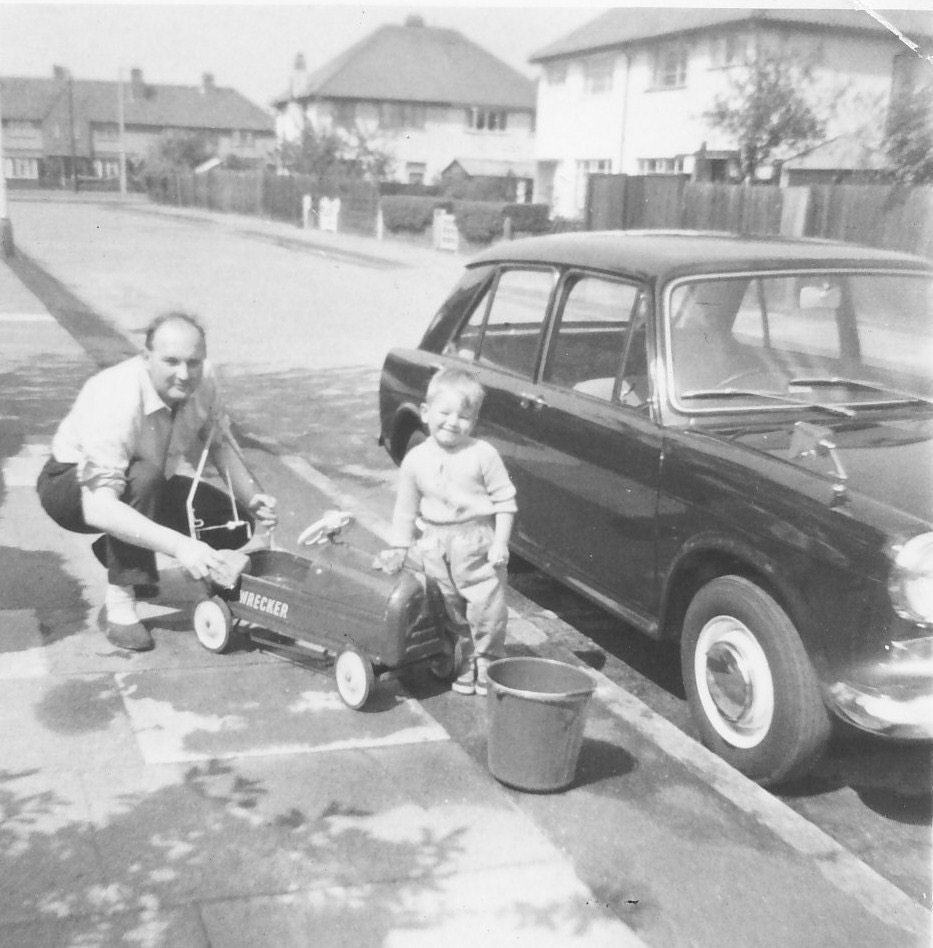
I recognised the sentiment. When Owen was born, one of our first purchases was a roof box for journeys to my parents in Wales and holidays in Dorset and Cornwall. At the time I thought it odd that my Mum and Dad could go on holiday with two children in far smaller cars, such as Dad’s 1960s Austin 1100 seen above, without the need for a roof rack. But life was simpler in those days. Cars didn’t have seat belts, never mind Isofix child seats. And people had far less stuff.

Off to Devon, 2010

As the photo above shows, even an estate car wasn’t big enough for a holiday with a two year old. What on earth did we take with us?

The top box has languished in the garden for most of the last five years; you can travel lighter with a teenager than a toddler. But on our first pandemic holiday, in Tenby in August 2020, we planned to use it so we could take all our beach stuff, windbreaks and so on. But disaster struck: we’d forgotten where we’d stored the Thule kit that attached the box to the car. As a result, we went away without it. It was only on our return that we remembered it was inside the box!

No wonder I have a reputation for taking everything except the kitchen sink when I go on holiday…