Don’t insult Wales: Iceland sacks PR chief Keith Hann

Welsh supermarket chain Iceland has sacked its PR director Keith Hann after he repeatedly insulted the country and its language.

Iceland said, “We would like to reiterate that these comments in no way reflect the values or philosophy of our business. We are a proud Welsh company, with a long history of investment in communities.” Iceland’s move came as many in Wales said they would boycott the store as a result of Hann’s views.

Some defended Hann. Consumer journalist Harry Wallop tweeted:

Keith Hann is entitled to his views, however tedious and juvenile. He may think it clever and funny to mock the Welsh language as gibberish. Too many English people are proud of their inability to say more than a few words in another tongue. They are unwilling to see the glory of different cultures – even those in their own island.

But that’s not why Iceland sacked Hann. The simple reason is that he was not wise enough to see that mocking the country in which his company is based is not compatible with his role as the director responsible for Iceland’s reputation.

As the Western Mail said in an editorial, Iceland recognised that it didn’t make business sense for one of its most senior executives to insult an entire nation. It went on to point out how jokes that portrayed the Irish as stupid have thankfully and rightly died out. The Times also published a leader explaining why Iceland was right to sack Hann:

“Mr Hann’s comments have cost him his job. It may surprise him that there are hundreds of thousands of Welsh speakers in Britain, along with a small but thriving Welsh-speaking community in Argentina, and they are justifiably unhappy. So far from being gibberish, Welsh, like any other natural language, has a complex system of grammar and can express a full range of meanings. And it is integral to the culture of Britain. It is, in fact, in the form of its predecessor Brittonic Celtic, the oldest language of these isles and long predates English.”

Companies are under constant scrutiny. Those of us in PR have to judge our comments, far more than was the case even a decade ago. None of us is perfect, and everyone should be allowed the occasional mistake. But we also need to take the advice that we’d give to executives. If you make a mistake, say sorry. Treat others how you’d want to be treated yourself. Applaud diversity. Be open minded about other opinions. While it is sad to see someone losing their job, if Keith Hann had been a good head of PR, he’d surely have told himself that insulting Wales was bad news.

Dyson: endless wait to replace faulty Pure Hot+Cool heater

Warning: a £550 Dyson Pure Hot+Cool heater that never works

I’ve admired Dyson’s electrical devices since I bought one of its early vacuum cleaners in 1998. I love the elegant, clever designs. I also admired James Dyson’s long battle to bring his invention of the cyclonic, bagless cleaner to market.

So when our central heating failed just before Christmas, I was quick to order a Dyson Pure Hot+Cool heater for our large kitchen. It worked like a dream, so after almost a week without heating I bought another. This time, as I turned on the second Pure Hot+Cool for the first time, I saw a stark warning triangle in place of the display:

I called customer service, and eventually got the device working.

At least once a day the dreaded warning triangle would come on again, and while it was displayed the device would not do anything. After a week, the Pure Hot+Cool stopped working for good.

I called Dyson on Thursday 14 January, and was put through to an engineer. I was very impressed that she conducted a video diagnosis of the machine, which led her to conclude this was a faulty machine that needed to be replaced. She arranged for it to be collected, and a replacement delivered, the following Monday, 18 January. She explained that the courier would bring a box for the faulty machine.

Monday 18 January came and went without anything happening. I called a day or so later and was told that the Pure Hot+Cool was out of stock until early February, so there was no replacement available. It looked like I’d have to wait, despite what I was told by the helpful engineer.

At the end of January, I received a ray of hope. Dyson emailed to say ‘Your Dyson guarantee is now active’, showing a Dyson Pure Hot+Cool purchased on 28 January. From our experience with three purchases in December, Dyson sends these registration emails a day or two before you receive your machine. I waited for an email with delivery details, but got nothing.

The faulty machine, four weeks after it should have been collected and replaced

I called Dyson yet again on Monday 8 February and was told that Dyson would ask the courier company what had happened. The agent said this could take up to five working days. Seven working days later, no one from Dyson has contacted me. The useless machine is sitting in the house, as it has for 30 days.

Needless to say, my view of Dyson has taken a big hit. Having spent £1,400 in 10 days in December on two heaters and a vacuum cleaner, I expected so much better.

PS: fortunately, our central heating was mended in late December.

Update, Thursday 4 March

The replacement finally arrived today.

Goodbye to the shilling: decimalisation, 50 years on

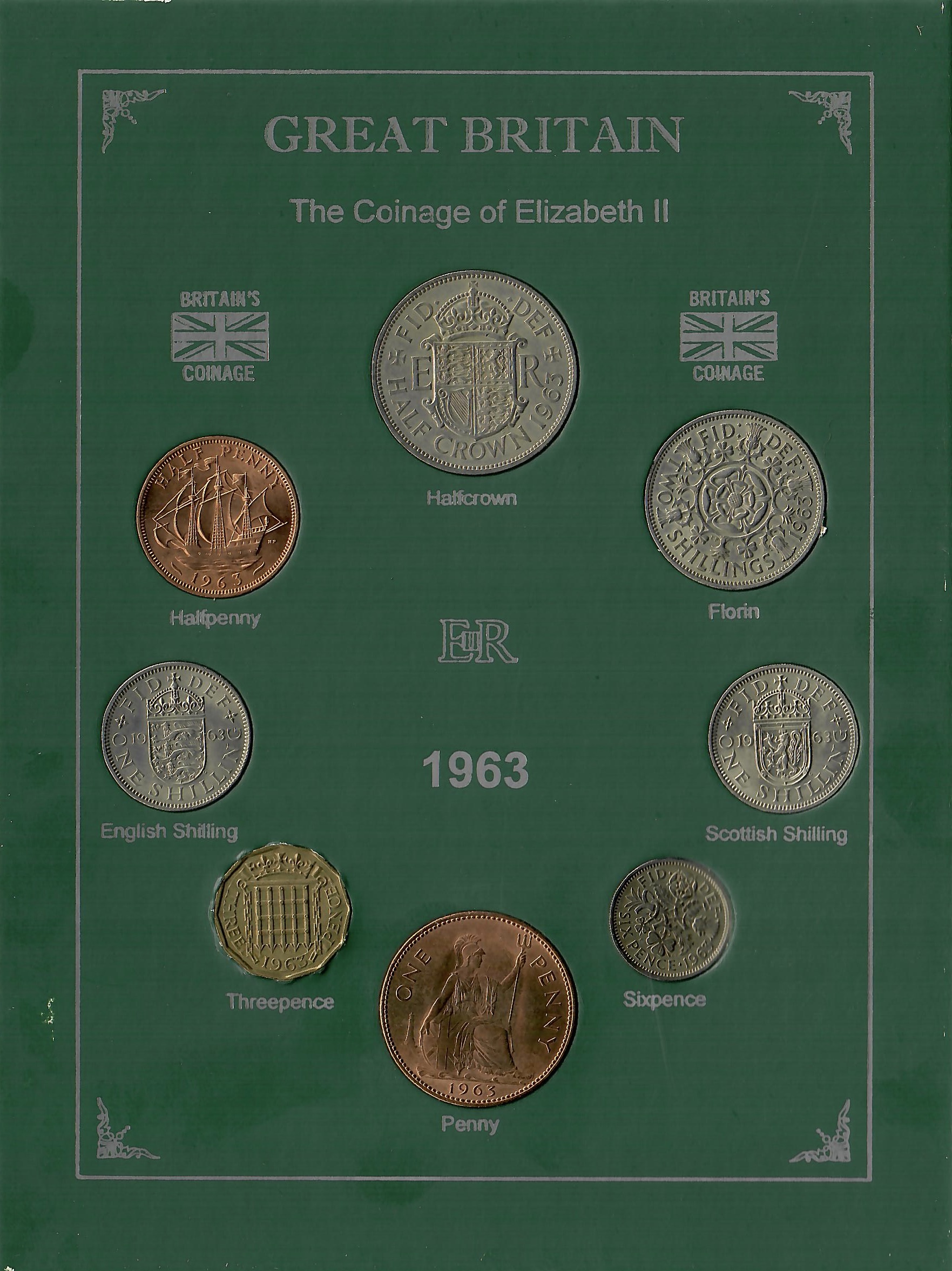
Fifty years ago today, Britain and Ireland said goodbye to pounds, shillings and pence and welcomed decimal money. From 15 February 1971, there would be 100 pence in a pound, rather than 12 shillings. That changeover decimal day in Britain was billed as D Day, no doubt a deliberate echo of the the D Day landings during the war, less than 27 years before.

I’m sure the decimal revolution was a wrench for my grandmothers, who grew up with Queen Victoria’s head on the nation’s coins. For me, it was a relief: as a seven year old, it meant an end to painful school maths lessons adding up in old money. But I still feel nostalgic for that lost world.

My childhood money

I grew up on old money, but was aware that change was on the way. Not long before decimalisation, my great aunt Megan offered my a choice: I could have my pocket money as a 10 shilling note or a 50p piece. I had never seen a 50p piece so went for that. Looking back, it was very generous regardless of the option I went for.

Continue reading

Review: The Valley of Lost Secrets

On the eve of the Second World War, around 800,000 children were evacuated from big cities like London to the countryside to keep them safe from devastating bombing attacks. Many of the children had never been to the countryside.

The great exodus: children arriving in Devon, 1940. Photo: IWM

This mass movement of the young has long been fertile ground for writers and dramatists. As a child growing up in Wales in the 1970s, I loved the BBC television adaptation of Carrie’s War, Nina Bawden’s novel about children evacuated to Wales. Years later, I watched it again with my then eight year old son, Owen. He was equally enthralled.

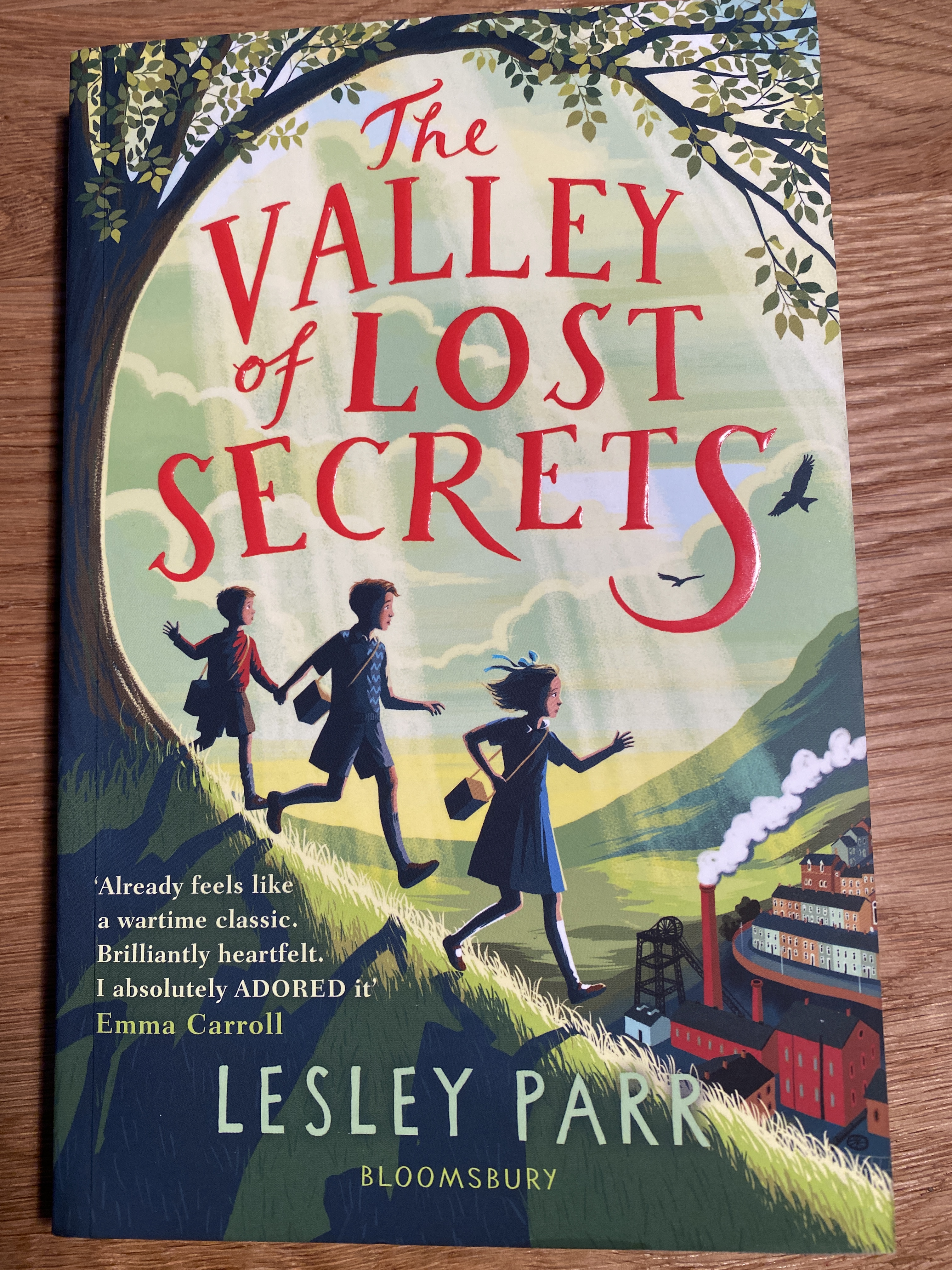
Lesley Parr has followed in Nina Bawden’s footsteps with a superb debut novel featuring two brothers sent to Wales in September 1939. Jimmy and Ronnie arrive at the village of Llanbryn after an endless train journey from London.

The author evokes the tension as the children wait in the miners’ institute hall to be allocated to local families. At first, Jimmy is worried about his brother, fearing that his sulky looks and tears will deter the locals from choosing them as their guests. (This reminded me of the petty humiliation of being the last to be chosen for a team in school games in Cardiff.) But we soon find that Ronnie is quicker to settle and develop a bond with their hosts, Mr and Mrs Thomas. Jimmy resents the way his brother calls Mrs Thomas ‘Aunty Gwen’ and wishes their host wouldn’t pretend that the house in Heol Mabon was the boys’ home. Only in time does Jimmy establish his own sense of belonging in Llanbryn.

Lesley was born in Wales, and has a nice way of showing how the boys from London struggle with Welsh names and words. (In many ways, the Wales of 1939 would have been much more of a culture shock to newcomers than today, as Netflix, social media as well as television have created a common culture across countries and continents.) On arriving, Jimmy is puzzled by the name Llanbryn on the station platform : “Funny word. Too many Ls.” Later, Ronnie thinks they are having cow soup for lunch, mishearing the word cawl, a type of Welsh stew.

The author also skilfully develops the character and back story of Mr and Mrs Thomas. At the meeting to pair the children with local hosts, the couple intended to take just one child, but change their minds and provided a home for the brothers. Had they done it for money? As time goes by, we see that they really care for the London boys. Lesley also shows that Mr and Mrs Thomas are set apart from others in the village, with the Anglican vicar in particular badmouthing the nonconformist Mr Thomas. (“Chapel is low, see. Up at St Michael’s we’re closer to God”, sneers the vicar.) Mr Thomas is a far more agreeable character than the cold Mr Evans in Carrie’s War.

The Valley of Lost Secrets also shows the ebb and flow of friendships amongst the young people. Jimmy was wary of Florence, another evacuee from back home whose reputation had been darkened because she was seen as coming from a bad family. But in time he appreciates her qualities and friendship. By contrast, he becomes alienated from his best friend from home, Duff, who joins a gang that intimidates Jimmy.

The heart of the book is Jimmy’s frightening discovery of a human skull in a tree – the lost secrets in the title. I won’t spoil the surprise here, but I didn’t expect the story to develop as it did! This is a comforting tale of warmth and friendship overcoming fear and prejudice.

Before the war changed everything: my father and grandfather, Margate, 1938

My family is familiar with the disruption the outbreak of war caused. My father, Bob Skinner, was 12 when the war began. His school, Emanuel in Wandsworth, was evacuated to Hampshire, but Dad was sent to live with an aunt in Cardiff, and listened to Chamberlain’s famous, sombre ‘This country is at war with Germany’ broadcast in Cardiff on the morning of Sunday 3 September 1939. His sister moved with her school out of London, and his older brother joined the RAF. A few years later, their father died of a heart attack aged just 52. Life was never the same again.

PS: a historical curiosity. Lesley refers to Cardiff Central station in the opening chapter. I presume she wanted to avoid confusing modern day readers by using the 1930s name, Cardiff General. British Rail renamed it in 1973.

The joy of winter cycling

The winter crossroads

In the deep midwinter, it’s too easy to hibernate. The sofa and screen exert a pull that even the most active cyclists can find hard to resist.

Yet it needn’t be like this. As a wise person once said, weather always looks worse through a window. When you’re out on the road, the rain may not feel so cold, so intense. (At least if you have the right clothes and mudguards.)

Zwift: no raingear needed. You don’t see redwoods on my local rides

When the cold, rain and darkness makes ‘real’ cycling intimidating, Indoor cycling is the answer. It is a far more attractive option than when I did my first indoor ride in 1995. On a cold January day that year, I struggled to carry an indoor roller back to the office from a bike shop in Cheltenham. I used it occasionally. Seven years later, I did training for my first Land’s End to John O’Groats bike ride on an indoor trainer, but they were empty hours: I wasn’t tested enough for the training to count.

Winter riding, 1994: Easter Saturday in Wales

The photo above shows me smiling as I descended the famous seven mile bank on the path of the old Brecon & Merthyr Railway towards Talybont on Usk after an Easter Saturday ride from Cardiff with my friend Richard. It may have been spring, but we arrived in a blizzard! My Dawes Super Galaxy was the perfect ride, as I blogged recently.

By contrast, today’s inside cycling can be as testing as any real life hill. When I got my Wattbike Atom in 2018, I found I preferred TrainerRoad to Zwift. I quickly got bored with Zwift, yet I found TrainerRoad’s workouts oddly compelling. There was no hiding place from the effort it demanded. (Apart from dialling down the effort needed.) But this week, I discovered Zwift’s many attractions. Watopia, which I dismissed as a gimmick three years ago, now strikes me as a stunning backdrop for indoor cycling.

A true winter ride: Mumfords Lane, near Chalfont St Peter, Bucks, 24 January 2021

Yet the great outdoors still inspires and rewards like no indoor ride. Two weeks ago, I set off on my mountain bike in the snow. It was a pleasure to see families revelling in a winter wonderland – a brief escape from the tedium of England’s third pandemic lockdown. This ride was all about the satisfaction of being in the elements with no thought of Strava achievements. It was all the better for it.

As a result, I am miles ahead of my usual cycling goals. I cycled 508 miles indoors and out in January – over 150 miles more than my previous winter month’s total. I hope to pass 1,000 miles in 2021 before February is over. That will be over six weeks earlier than my previous fastest 1,000 miles, in 2019, when I was training for my second Land’s End to John O’Groats ride. It’s all about habit, and putting in the miles indoors when venturing out is unappealing.

I’ll close this post with an image of an earlier magical winter bike ride. One crisp winter’s day in 2012, I took my original 1994 mountain bike through Hodgemoor Wood above our village. I found joy in exploring the wintry trails, capturing the moment with my digital SLR, which I carried in my CamelBak. I blogged about those pleasures here.

We’re expecting snow again tomorrow. My bike is ready. Here’s to winter riding.