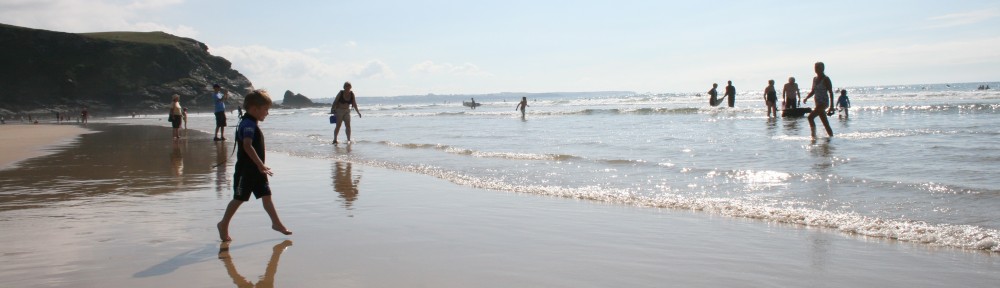
Goodbye 2020: a cycling resolution

Cycling to Cardiff Castle, July 2020

So that was 2020. A year like no other in the past century. We now know the havoc a pandemic can cause – much as my grandparents did a century ago with the so-called Spanish flu. (Sadly, my grandfather’s twin brother died in that pandemic, having survived the Great War trenches.)

Our lives have been utterly changed. We can’t meet our friends. We have to wear a mask when buying a loaf of bread. Christmas may not have been cancelled, but it wasn’t the sociable highlight of the year we’ve known all our lives.

My lifeline, apart from family and the ability to work from home, has been my bike. Or trike. Getting into the saddle has been a joy in this joyless year. In those early lockdown weeks, in the most wondrous spring in living memory, I celebrated the empty roads and vibrant nature – whether the April blossom or the magnificent red kites overhead. I blogged about those magical spring days here.

Today, New Year’s Eve, I passed 3,000 cycling miles in 2020. It was a modest ride of under eight miles, with the temperature barely about freezing. I experienced cycling feast and famine this year, with a very slow start followed by four successive months of over 500 miles in the saddle. But as summer became autumn, I lost my enthusiasm for pedalling the same old local routes. I recorded just 65 miles in October. Yet that milestone of 3,000 miles was a powerful motivator as Christmas approached, and I recorded my highest ever December mileage of 313 miles – with many of these indoors on my Wattbike Atom with TrainerRoad.

In years gone by, I often blogged on New Year’s Eve about my cycling memories of the old year, and my cycling adventures planned for the year ahead. (This example from 2013 is typical.) Tonight’s post may not be as noteworthy. But I do have dreams for 2021. Only time will tell whether those dreams will come true.

Another coast to coast?
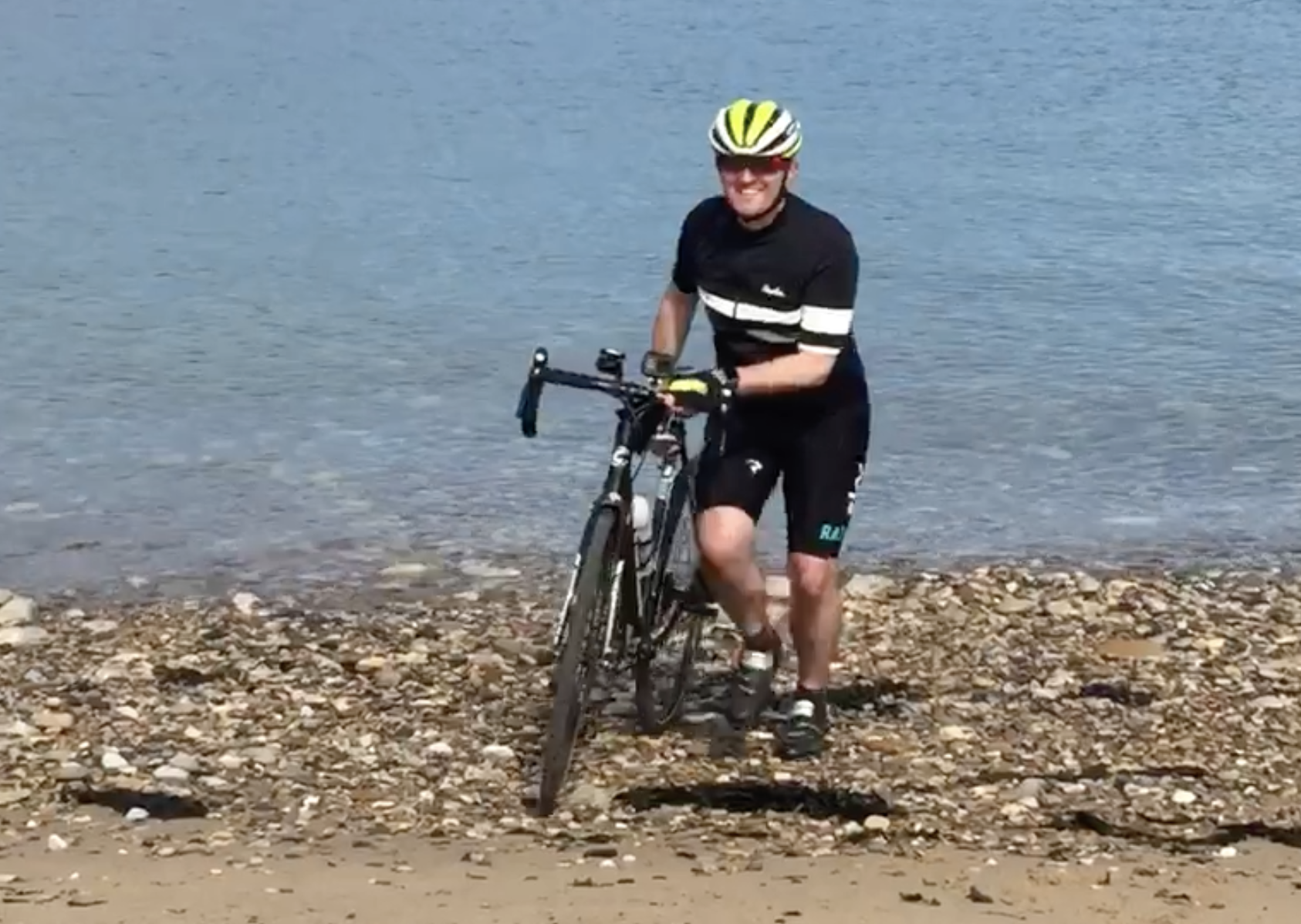
Completing my coast to coast ride, Tynemouth, May 2017

Back in 2017, I cycled across England from the Irish Sea at Whitehaven to the North Sea at Tynemouth on the famous Coast to Coast (C2C) route. It was a wonderful experience, despite unseasonal cold weather on the first day, and the struggle of the climb to Hartside on a bike without a low enough gear. As I contemplated possible challenges for 2021, a similar coast to coast adventure seemed perfect. Better still, Peak Tours, which proved magnificent as my Land’s End to John O’Groats tour company in 2019, offered just such a trip in May 2021 along the Way of the Roses, slightly further south, from Morecambe to Bridlington via York.

Will it happen? Will Britain – and especially England – have found, belatedly, a way of controlling the pandemic and rolling out vaccinations, allowing tourism to resume? We will find out. In the meantime, I will get training. I’ve found a combination of TrainerRoad sweet spot workouts on my indoor Wattbike and rides outside on wintry roads is a good way of gaining fitness out of season.
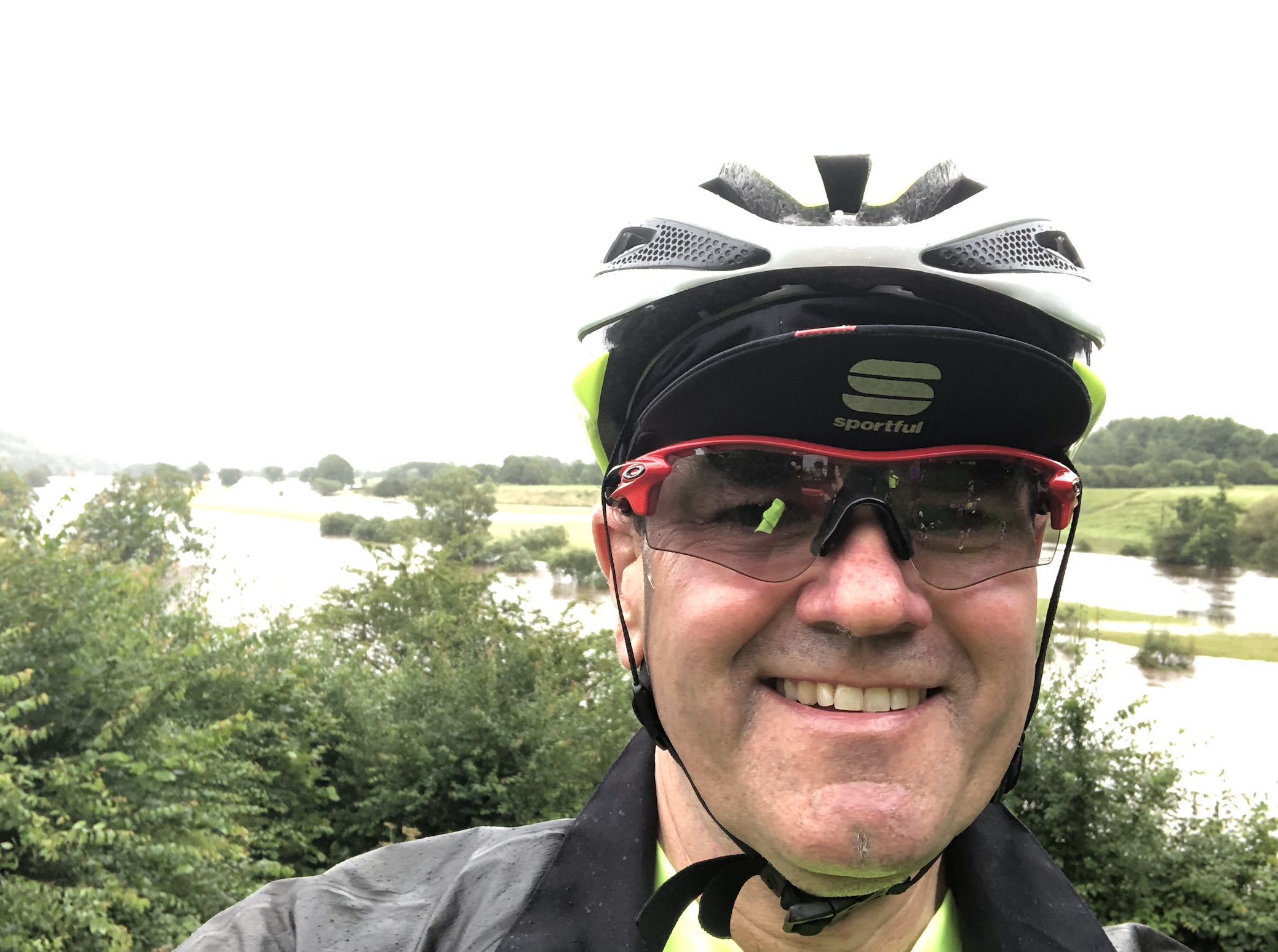
Near Lancaster: the River Lune floodwaters, August 2019

Meanwhile, I will reflect on previous adventures, especially in the region that I will be crossing (with luck) in May. Back in 2019, we cycled through Lancaster on LEJOG, seeing the effects of days of heavy rain, as seen above. I also remember with affection cycling through the northern fell country on my earlier LEJOG in 2002. Perhaps I will get the chance to stay in my favourite hotel of the 2019 LEJOG, The Mill at Conder Green.
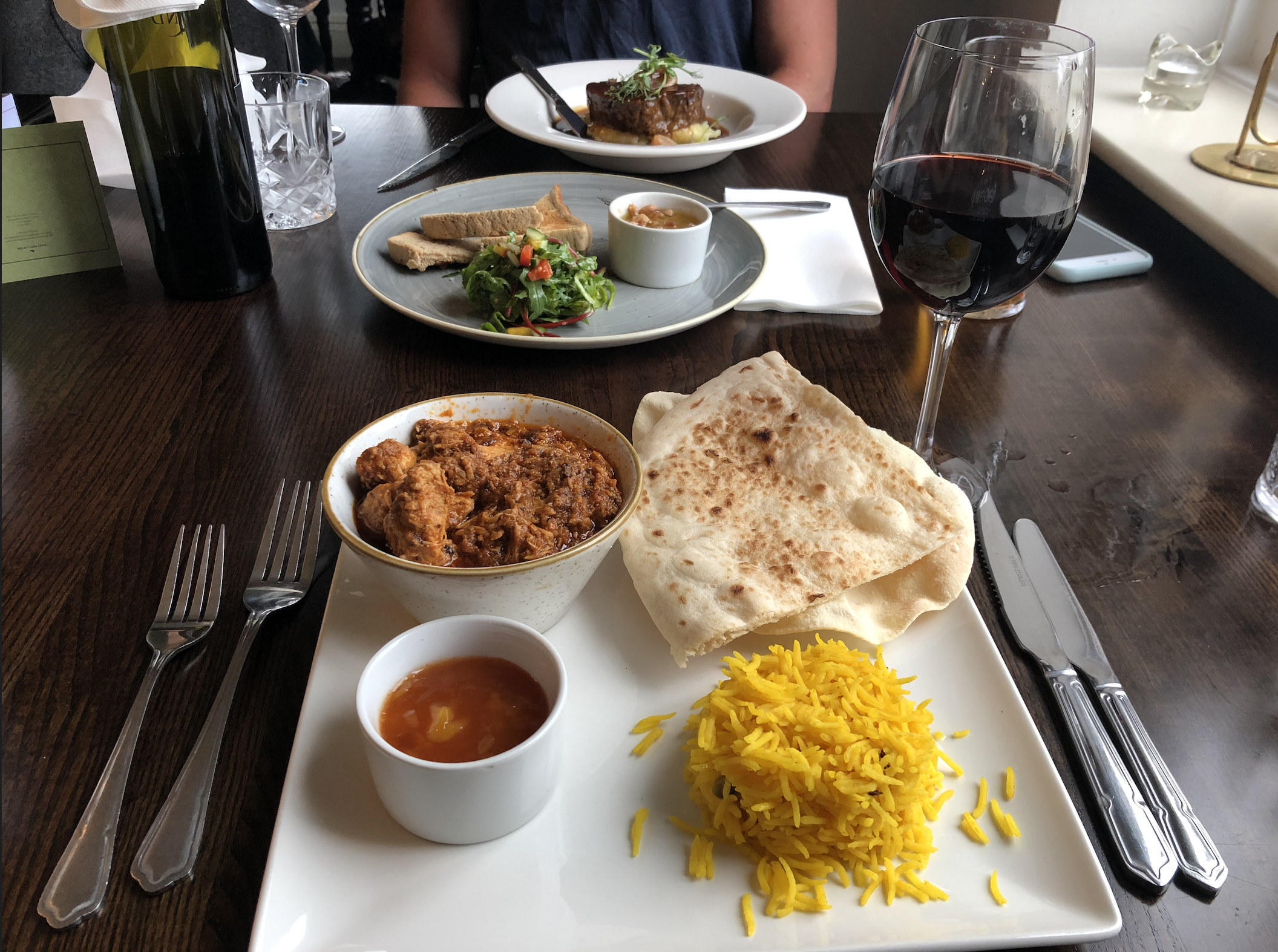
Dining at The Mill, Conder Green

Here’s to 2021’s adventures.

The coronavirus Christmas

Christmas Day Zoom call with Dad, 94

Christmas night 2020. This has been the hardest Christmas since the war, overtaking 1973, when Britain was facing a three day week during the miners’ strike. This time the cause is COVID-19, the virus that swept the world in 2020, killing 70,000 in Britain alone so far.

Last Saturday, the UK’s governments made dramatic u-turns, ending arrangements in many areas for families to meet over Christmas. We were due to visit Dad, 94, in his Cardiff residential home just before Christmas. We postponed the trip for a week as South East England went into near-lockdown, and then cancelled it as the UK and Welsh governments introduced even tougher restrictions six days before Christmas.

Yet Christmas wasn’t cancelled. We enjoyed the planned quiet family Christmas Day (the three of us plus dog and hamster) and had a Zoom call with Dad, Bob Skinner, during the morning.

Dad has written movingly this week about his saddest Christmas memory, in 1942. His father died on 21 December that year, leaving 16 year old Bob Skinner mourning a lovely, loving father he barely knew. Dad recalls those muted wartime Christmases, with families apart, food rationed and deadly dangers facing those at home as well as those on the front lines.

Happily, today’s dangers, while real, are modest compared with Britain’s fight for survival 80 years ago. Dad hopes to receive his first COVID-19 vaccination dose in the coming week or so. Let us hope that 2021 will bring the start of better times, not least for the countless people and businesses whose livelihoods are threatened by this deadly virus. Christmas 2021 should be a time when we can hug again.

I will end with the image of my indomitable father, dressed to celebrate Christmas at Sunrise of Cardiff. Thank you to all the carers, NHS staff and and everyone else who has made us smile this unique Christmas and through the year.

Britain, Wales and Europe, 25 years on

I wrote this article early in 1995. As the UK prepares for the possible disaster of a no-deal break up with the European Union, I reflect that I got it right 25 years ago.

The Senedd in Cardiff on Brexit day.

Europe – a dangerous obsession

Rob Skinner, March 1995

British democracy is at crisis point. Not just because fifteen years without a change of government has left the nation restless for change. Not even as a result of former ministers making sleazy, easy money in a privatised quangocracy.

No, this crisis is a case of obsession. The subject of this obsessions is Europe, the perpetrators politicians and the media alike. This single topic dominates news bulletins, current affairs programmes and the leader columns of the national press. Yet it utterly fails to stimulate the nation.

The Euro-debate is almost entirely the preserve of the political professionals. Europe and its future currency is for most of the British people the non-issue of the decade. It rarely if ever puts in an appearance in public bars and at dinner party tables.

If the loudly debated referendum on the single currency took place tomorrow, Britain’s polling stations would almost certainly be lonely places as the electorate used their time to fulfil other, more pressing needs.

The media star a heavy responsibility for this sorry saga. Radio 4’s Today programme, in particular, has been dominated by Euro-obsessed talking heads for what seems an eternity, while the surfeit of Sunday political punditry on British television finds Europe a lazily easy choice for discussion.

Yet the obsession simply confirms what everyone outside Westminster’s cloistered circles has long suspected: that politicians are hopelessly out of touch with the real world, and incapable of tackling the issues that their constituents care and worry about.

Most people see Europe as a distraction. They long for a government and opposition that tackle the real issues of the day, such as unemployment, crime, rising taxes and the sense that Britain has become a less caring, more ugly society. For many, the great fear is not the loss of the UK’s economic sovereignty but the loss of something much nearer to home – their jobs.

None of these issues is being tackled. Instead, a sterile, futile debate dominates, which looks for all the world like an endless battle between two foolish lovers. The weakest, most enfeebled government in living memory seeks to impose the very thing it lacks – authority – on the country. A cynicism fired by years of misrule is now raging out of control, threatening Britain’s self confidence as a nation.

As a Welshman, I see Europe as an opportunity, not a threat. I believe in a Europe of many countries and cultures – not just a Europe of nation states. The doomed debate that has riven the Conservatives is very English rather than British. It speaks eloquently of a nation uncertain of itself, suspicious of outsiders and nervous of its smaller neighbours within the United Kingdom.

This is high irony. How could the dominant tribe in the British Isles, the English, have become so fearful, so lacking in vision of confidence that they have largely destroyed Britain’s standing on its own continent?

The crying shame is that Europe is important. There must be a proper debate about Britain’s future. We should be looking for ways to put right the failings of the democratic process in the European Union and within these islands. And we must be open and humble enough, for once, to recognise that the United Kingdom might profitably learn from democratic experiences beyond these shores.

John Major has sought sanctuary behind an ugly word – subsidiarity. Yet this strange and unfriendly term signals the way to make Europe and Britain more democratic. The principle is that decisions should be made as locally as possible. Yet in the UK, under John Major’s desperate leadership, the concept has been hijacked, and given a new, sinister meaning. That mother – the Mother of Parliaments – knows best. Yet who truly places trust in the traditional Westminster system in 1995?

Subsidiarity needs a new, more attractive name. The Welsh word agosrwydd means nearness, and has been suggested by David Morris MEP and Martin Caton as a far better epithet.*

If the English aren’t ready to accept a Welsh word for what might be the most important democratic principle of the dying years of the millennium, then nearness will serve just as well. It is a compelling sentiment, an idea whose time has come. The European Union is here to stay, and Britain’s future is inextricably linked to it. For non-state regions and countries like Wales, Scotland, Baden Würtemberg and Catalunya, being part of a wider family is a historic development that arguably makes the break up of nation states like the UK less likely. But it is only less likely if the nearness principle puts greater power in the hands of regional governments such as a Welsh Senedd.

John Major talks of a triple lock within the burgeoning Northern Ireland peace process. In a wider concept, three links also hold the key to unlocking the eternal dilemma that has dogged Britain for a quarter of a century: regional identity, our British identity and the European dimension. Only by creating harmony between all three, and recognising their legitimacy, will we ever escape this constitutional conundrum.

In this anniversary year [1995], of all years, we must look back to 1945. Not only to commemorate the huge sacrifices made to secure our generation’s freedom and future. But just as nobly to recall how the European ideal was born, in the ruins of a continent that had allowed evil and hatred to carry all before it.

After Warsaw, Aschwitz and Dresden, reconciliation might have been expected to have taken decades to bear fruit. Yet amidst the tragedies of an  unimaginable numbers of lives, the determination to forge a different Europe was born. Since those dawning days, the idea of Britain and Germany taking up arms against each other, or Belgium and France being overrun by a continental army, has become inconceivable.

Now the challenge for Britain’s politicians is to shake off their obsession and start treating Europe as something that is part of everyone’s lives. Votes can only be lost over this issue, not won, and it is time for Eurosceptic and Europhile alike to recognise the basic truth. The year of the last great second world war anniversaries would be an appropriate time for Britain belatedly to throw away the empty rhetoric and start to build a future for itself.

* A Europe of the Peoples – the European Union and a Welsh Parliament’ – ed John Osmond, Gomer Press 1994