Not so smart TV: no BBC iPlayer on Samsung 5400 LED TV

I bought a new TV today for our kitchen. The old one stopped working after digital switchover this week, so I replaced it with an internet-connected one that enables us to watch BBC iPlayer on TV. John Lewis in High Wycombe said the Samsung UE22ES5400 LED 22 inch TV would do just this.

Image

I was impressed by how easy it was to set up. But I couldn't find the iPlayer. The web based iPlayer said the BBC didn't support my device (above).

I didn't think that mattered. After all, Samsung's BBC iPlayer app features prominently on the company's website – but that was also missing:

Image

At this point, I called John Lewis. Its friendly technical help person couldn't help. He said I could return the TV – or call Samsung. I didn't think there was much chance Samsung would answer the phone late on a Saturday afternoon. But to its credit, I did get through to someone who explained after some research that the iPlayer app wasn't yet available for the 5400 TV as it was a new model but would be in early May.

So I won't be taking the TV back to John Lewis just yet.

PS: why are TV names so obscure and impossible to remember? Samsung could learn a lot from Apple. iPhone is so much more compelling and easier to remember than UE22ES5400.


Owen loves books – and Waterstone’s

Owen browses in Waterstone's Amersham

I love books. So I’m thrilled that Owen seems to be following in my footsteps.

He had a wonderful time today in Waterstone’s in Amersham. He made straight for the Mr Men and Little Miss books – his current favourites, along with Roald Dahl. He’d have happily stayed for hours.

Books are so important to children and adults. They bring to life the pleasure of the story, often with added impact of illustration. (Anyone who has enjoyed a Julia Donaldson story will acknowledge how much Axel Scheffler‘s illustrations bring the tales to life.) And part of the joy of books is returning to a personal favourite, time and time again.

As I watched Owen browsing the shelves at Waterstone’s today, I pondered again the future of the printed book. You might think that electronic, or e-books, are bound to replace their printed predecessors. Yet I’m not so sure. The printed book remains a thing of beauty – to be read, treasured, lent and re-read. You can flick quickly to an earlier page or illustration. The book itself is relative cheap and doesn’t rely on expensive hardware. It never runs out of battery, and can be read when you’re on a plane that’s taking off. (And in the bath – I’ve not yet been brave enough to read on my iPad in the bath.)

There’s certainly a place for e-books. I’m always pleased to have one with me on the iPad if I’ve nothing else to read on a train. But never assume that new technology will always sweep aside what went before it. The internet hasn’t replaced television, which didn’t replace radio, which didn’t vanquish newspapers. Cinema is still going strong despite TV, DVD and the internet. All have their unique strengths.

But parents still have a crucial role to play in helping printed books to flourish. We’ve read to Owen since he was a baby. (In fact, I made up stories to tell ‘him’ when Karen was pregnant: storytelling to a ‘bump’!) We’ve read to him every night for three years. We each choose a book at bedtime. It’s no wonder he likes books!

It has encouraged him to start to read far earlier than he would otherwise have done. It means that reading won’t be a blank page when he starts school proper in September. It’s one of the greatest gifts we could have given him.

PS: for a brand based on literacy, Waterstone’s seems very confused about its name. It uses Waterstone’s (which must be right, as it was named after its founder, Tim Waterstone) and Waterstones…

Not such a smart TV: no BBC iPlayer on Samsung

I bought a new TV today for our kitchen. The old one stopped working after digital switchover this week, so I replaced it with an internet-connected one that enables us to watch BBC iPlayer on TV. John Lewis in High Wycombe said the Samsung UE22ES5400 LED 22 inch TV would do just this.

Image

I was impressed by how easy it was to set up. But I couldn’t find the iPlayer. The web based iPlayer said the BBC didn’t support my device (above).

I didn’t think that mattered. After all, Samsung’s BBC iPlayer app features prominently on the company’s website – but that was also missing:

Image

At this point, I called John Lewis. Its friendly technical help person couldn’t help. He said I could return the TV – or call Samsung. I didn’t think there was much chance Samsung would answer the phone late on a Saturday afternoon. But to its credit, I did get through to someone who explained after some research that the iPlayer app wasn’t yet available for the 5400 TV as it was a new model but would be in early May.

So I won’t be taking the TV back to John Lewis just yet.

PS: why are TV names so obscure and impossible to remember? Samsung could learn a lot from Apple. iPhone is so much more compelling and easier to remember than UE22ES5400.

Why I won’t miss BBC’s Ceefax

The BBC’s Ceefax service teletext service has disappeared from our TVs after our area completed digital switchover. I can’t say I’ll miss it.

I’ve not looked at Ceefax since I went online over 15 years ago. I recognise that it was once a worthwhile innovation, giving information about news, sport and travel developments on screen at a time when we had just a handful of TV channels. But it was a frustrating system to use. The difference categories had a series of scrolling pages, and I always seem to miss the page with Cardiff City’s result – meaning I had to wait for half a dozen pages to appear before ‘my’ result reappeared.

The BBC also split Ceefax pages between BBC1 and BBC2 – I could never remember which appeared where. And in an era before hyperlinks, you had to note the page number of the story you wanted. ITV and Channel 4 had their own teletext services.

It all makes the world wide web seem even more miraculous!

Thanks, WordPress.com

I’ve had a wonderful time over the last six years blogging at Typepad.

As I explained on Sunday (Ertblog joins WordPress), I have started a new edition of Ertblog at WordPress.com. I love it! The interface (sorry, John Rentoul) is fresh and easy to follow.

Deckchairs on the Titanic

‘Deckchairs on the Titanic’ is one of those clichés banned by John Rentoul in his Banned List book. So I should be wary about using it in a post, after praising John’s campaign for plain and fresh English.

But I’m prompted by a letter in today’s Guardian from Colin Shone reporting a promotion for Wrexham Lager ‘as served on the Titanic’. Is there an opportunity here for deckchair makers?

Ninth life: saying goodbye to Fluff

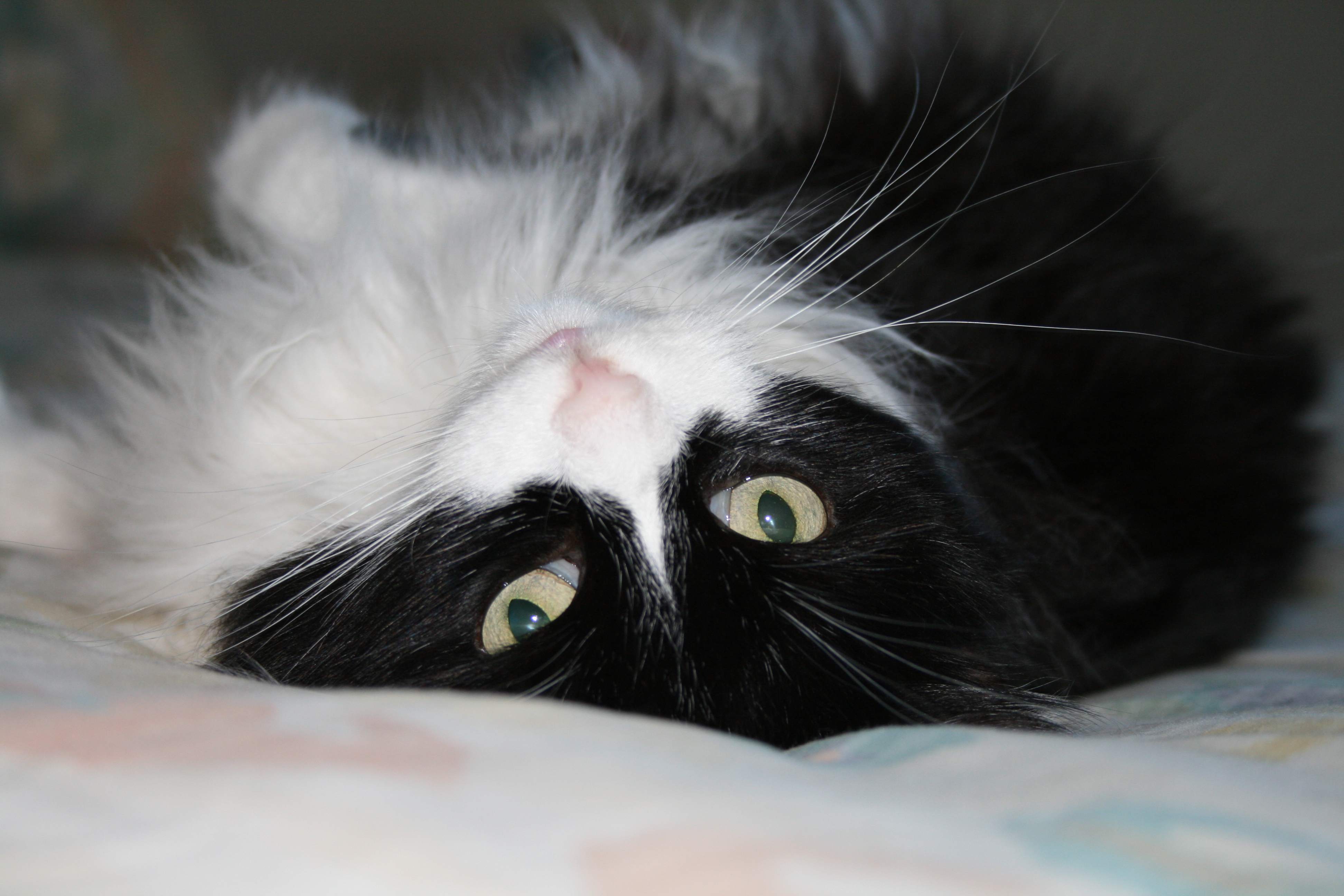
Fluff, 1995-2012

It’s easy to slip into sentimentality about pets. So I’m sorry if this post is unusually maudlin.

I’ve just looked at our kitchen chairs to see if Fluff was in her favourite spot. It was an act of instinct. Then I remembered. Tonight is my first evening since Fluff lost her battle against the cancer that has ravaged her since August 2010. She died in our arms at the wonderful Straid veterinary clinic in Beaconsfield this morning.

Fluff was the first pet who was truly mine, unlike my childhood cat, Spot. She came into my life on Saturday 8 July 1995, and I still remember the drive back from Yate, near Bristol to my then home in Ashton Keynes, Wiltshire. I have two memories of that day: thinking the couple who ‘owned’ Fluff’s mother were both very good looking. And joining the M4 at the Bath junction happily knowing my new cat was in the car with me.

I would have collected Fluff a week earlier, but I was cycling my first ‘century’ – a 100 mile bike ride around Wiltshire.

Those first weeks were fun, if nerve racking. Several times I had to prise Fluff down from the porch roof. As time went by, I discovered wildlife in my home: birds and mice, dead and alive. I decided live birds were the worst. They took a lot of catching!

One Sunday morning in January 1998, Fluff came up to my bedroom. She was acting suspiciously. I immediately knew she had dragged some poor creature into the house through the cat flap. That evening, I saw something move as I watched TV from the sofa: a mouse! I tried and failed to catch it with a colander. (Well, what would you have done?) I didn’t see the mouse again and assumed it had escaped. Ten months later, it fell out of my sofa bed in the living room when I put it out. Curiously, it was perfectly preserved.

Fluff became a well travelled cat. She lived with me in Llandaff, Cardiff for two years before moving to Buckinghamshire. She loved holidays (often a month long) with Mum and Dad in Cardiff and Penarth. And she adapted to the extended family, as I moved in with Karen and when Owen arrived just after she turned 13. (She was very good at escaping from O!)

She wasn’t a typical cat. She was very affectionate and loved human company. She’d sleep on my bed when she or I wasn’t feeling well. She loved my dad, and always made a beeline for him – except on Mum and Dad’s last visit, just a week before she died. That proved that she was truly ready to go.

Fluff lived longer than we expected. She almost died the weekend of Owen’s christening.

That Friday night, 7 November 2008, she lay down in the garden and gave every impression of wanting to slip into an eternal sleep. (Her kidneys were failing.) Yet the wonderful team at Straid brought her back from the brink. In August 2010, we thought we had lost her. Yet Mark Carpenter and his colleagues at Straid helped her through it. We knew it was borrowed time, as our friend Deborah put it, but it meant Owen has true memories of his first pet. I can’t thank Straid enough for their magnificent care.

I’d also like to thank Marks & Spencer Money for its pet insurance. Unlike many policies, M&S covers continuing conditions year after year. (Disclosure: I was head of PR for M&S Money 2005-08.) This helped meet the cost of Fluff’s monthly injections, as well as the expensive treatment in November 2008.

Fluff, you enriched all our lives. Rest in peace. We love you and will cherish your memory.
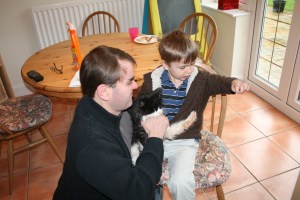
Fluff, Owen and I say goodbye today.
And so it begins*: the fight against jargon and cliché

I love plain English. Not boring English, but English that is a pleasure to read.

The journalist John Rentoul feels the same way, as he has written a wonderful short book called The banned list: a manifesto against jargon and cliché. You can download it as an e-book or pick up a printed version.

In today’s online world, phrases move from vivid newcomer to cliché far more quickly. Rentoul mentions ‘It’s the economy, stupid’ as the phrase that first provoked him. This famous slogan is now 20 years old, and was a highlight of Bill Clinton’s first presidential campaign.

By contrast, few of today’s new expressions will still be around in 2032. Take ‘roadmap’. This has spread like wildfire in the last year or so, almost replacing a perfectly adequate, and shorter, word: plan. Another phrase, or device, banned by Rentoul is the intensely annoying trick of using full stops for emphasis. (The.Best.Book.Ever.) This may have been clever once (though I doubt it) but it’s now just very irritating. It’s the linguistic equivalent of 1970s chocolate coloured bathroom suites.

Politicians are the worst offenders. They should pay 75% tax for a year if they use phrases like ‘hard-working families’ or ‘delivering on a promise (or agenda)’.

John Rentoul is following the example of Sir Ernest Gowers, who wrote Plain Words in 1948 to help civil servants write clearly. As Gowers said, the idea of writing is to get an idea from one person’s mind to another. Jargon baffles people while clichés can distract and also reduce a writer’s credibility. I bought Gowers’ updated book, the Complete Plain Words, when I was at university in the 1980s and applauded his intentions.

Rentoul and Gowers both argue that short words and phrases are usually better than long ones. Rentoul describes ‘opportunity’ as a way of saying ‘chance’ in seven syllables instead of one. There are many examples of this: ‘on a monthly basis’ is an ugly way of saying ‘every month’. ‘In terms of’ is almost always a wasted phrase: you can usually delete it. (‘Better value in terms of price’ just means ‘cheaper’.)

All this matters. Tired phrases don’t inspire people. And complicated phrases challenge the reader, who may give up or misunderstand what the writer is saying.

Part of the problem is that some writers think plain words are unimpressive. They think they need to use complicated words to show how clever they are. Yet the opposite is usually true. Clever, eloquent people use the right words and avoid clichés. Winston famously told Anthony Eden ‘As far as I can see you have used every cliché except “God is love” and “Please adjust your dress before leaving.”‘”

My own banned list

So… Why are people starting to start answers to questions with so? As in: “What’s different about the new product?” “So we decided to add…”

“Deliver on a promise”. This is a horrible expression. We used to keep promises. That’s a lovely phrase. So why the horribly ugly alternative? I blame politicians. (I complained about this in a letter published in the Guardian last year.)

“Granularity”. This just means detail. Only a management consultant could have thought this better.

‘Use case’. What’s wrong with ‘use’?

‘Form factor’. This is all too common in the technology industry. Like ‘use case’, the second word is superfluous.

‘The gift that keeps giving’. Shame on the Guardian for using this in an editorial about David Cameron and charities today.

* PS: I was being provocative using ‘And so it begins’ in the headline to this post. Sorry.

Remembering the Seventies

The 1970s have had a bad press. Those 10 years have been written off as a grim decade of terrorist carnage, strikes and inflation. That's before the critics move on to popular culture: the years that taste forgot, with flares, garish colours, Gary Glitter and the Austin Allegro.

Tonight's BBC series The 70s is sure to prompt a debate about whether the decade has been wrongly maligned. As presenter and historian Dominic Sandbrook explains on BBC News' online magazine, the decade has been overshadowed by the Sixties, a period whose vibrant reputation doesn't match the reality of that iconic era for most people in Britain.

Back in 1970, the mood was optimistic. Cadbury's ran a television advert about the 'supersonic seventies' – sadly missing from YouTube - which reflected an era of technological advancement. Concorde was a symbol of that excitement, along with the moon landings that continued until 1972. (People of a certain age will remember space dust sweets, which made your tongue tingle.) Family holidays featured Benidorm rather than Bognor or Barry Island.

Yet the mood changed quickly. The evening news chronicled a descent into chaos and violence, from picket line battles at Grunwick and Saltley to bomb and bullet-scarred Northern Ireland. (Forty years on, I can still picture the BBC's Northern Ireland reporter WD Flackes, who was on our screen every night to record the latest horrors.) British political leaders of all parties seemed to have no idea how to tackle the country's troubles. I vividly remember my father Bob Skinner proclaiming the country was going to the dogs on eating of the latest destructive strike. (Aptly, we were on holiday in Benidorm at the time, on our first ever package holiday.)

Overseas, the Seventies saw Watergate, the Munich Olympics massacre, the end of the Vietnam war and carnage in the Middle East. Not to mention the continuing cold war.

Yet it's too easy to write off the Seventies as a time of hopelessness. Growing up in Cardiff, I enjoyed a happy, secure childhood. My parents, like so many, had more spare cash than in the Sixties, and we got our first colour television and automatic washing machine. (A contrast to the primitive machines we had before – I even remember one with a mangle on top!) And the glorious summer of 1976 and the Queen's silver jubilee in 1977 lightened the mood during the growing economic crisis.

The decade saw positive developments in society. The Labour government outlawed race and sex discrimination, and passed an equal pay act. The moves were symbolic – it would take years for attitudes to change – but important. Britain was changing for the better in many ways.

The BBC has already examined the Seventies. Its millennium year series We Love the Seventies was a nostalgic look back at life in that maligned decade. Author Andy Beckett brilliantly told the story of those years in When the lights went out.

Finally, a decade in which Wales dominated European rugby in scintillating style has to be honoured!


Remembering the Seventies

The 1970s have had a bad press. Those 10 years have been written off as a grim decade of terrorist carnage, strikes and inflation. That’s before the critics move on to popular culture: the years that taste forgot, with flares, garish colours, Gary Glitter and the Austin Allegro.

Tonight’s BBC series The 70s is sure to prompt a debate about whether the decade has been wrongly maligned. As presenter and historian Dominic Sandbrook explains on BBC News‘ online magazine, the decade has been overshadowed by the Sixties, a period whose vibrant reputation doesn’t match the reality of that iconic era for most people in Britain.

Back in 1970, the mood was optimistic. Cadbury’s ran a television advert about the ‘supersonic seventies’ – sadly missing from YouTube – which reflected an era of technological advancement. Concorde was a symbol of that excitement, along with the moon landings that continued until 1972. (People of a certain age will remember space dust sweets, which made your tongue tingle.) Family holidays featured Benidorm rather than Bognor or Barry Island.

Yet the mood changed quickly. The evening news chronicled a descent into chaos and violence, from picket line battles at Grunwick and Saltley to bomb and bullet-scarred Northern Ireland. (Forty years on, I can still picture the BBC’s Northern Ireland reporter WD Flackes, who was on our screen every night to record the latest horrors.) British political leaders of all parties seemed to have no idea how to tackle the country’s troubles. I vividly remember my father Bob Skinner proclaiming the country was going to the dogs on reading of the latest destructive strike. (Aptly, we were on holiday in Benidorm at the time, on our first ever package holiday.)

Overseas, the Seventies saw Watergate, the Munich Olympics massacre, the end of the Vietnam war and carnage in the Middle East. Not to mention the continuing cold war.

Yet it’s too easy to write off the Seventies as a time of hopelessness. Growing up in Cardiff, I enjoyed a happy, secure childhood. My parents, like so many, had more spare cash than in the Sixties, and we got our first colour television and automatic washing machine. (A contrast to the primitive machines we had before – I even remember one with a mangle on top!) And the glorious summer of 1976 and the Queen’s silver jubilee in 1977 lightened the mood during the growing economic crisis.

The decade saw positive developments in society. The Labour government outlawed race and sex discrimination, and passed an equal pay act. The moves were symbolic – it would take years for attitudes to change – but important. Britain was changing for the better in many ways.

The BBC has already examined the Seventies. Its millennium year series We Love the Seventies was a nostalgic look back at life in that maligned decade. Author Andy Beckett brilliantly told the story of those years in When the lights went out.

Finally, a decade in which Wales dominated European rugby in scintillating style has to be honoured!