Remembering my first bike tour, 30 years on

Note: most of the images illustrating this post are photos of projections of the 35mm slides that I took during the tour. Their quality is variable, to put it kindly...

We reach the English Channel at Sidmouth, Devon

Time flies. It hardly seems like 30 years since I set off on my first proper cycle tour. In recent years, I’ve cycled the length of Great Britain, Ireland and Portugal, and am embarking on another end to end, across France, later this month. But it started with a 325 mile tour of the West Country in June 1990, with my university friend Richard Attewell.

Looking back, I’m struck by how different cycle touring was 30 years ago, just as the internet was poised to change our lives. (There was much talk of the ‘information superhighway’ in 1995, but I didn’t get online until the following year.) We didn’t own or carry mobile phones, and used phone boxes to arrange somewhere to stay once we decided how far we’d get. We navigated using paper Ordnance Survey maps attached to my handlebars using a brilliant map holder designed and sold by Chris Juden from the CTC (now known as Cycling UK). We weren’t complete touring novices: we’d enjoyed a weekend ride around the Isle of Wight two years earlier, and I’d cycled from Wiltshire to my parents’ house in Cardiff the year before.
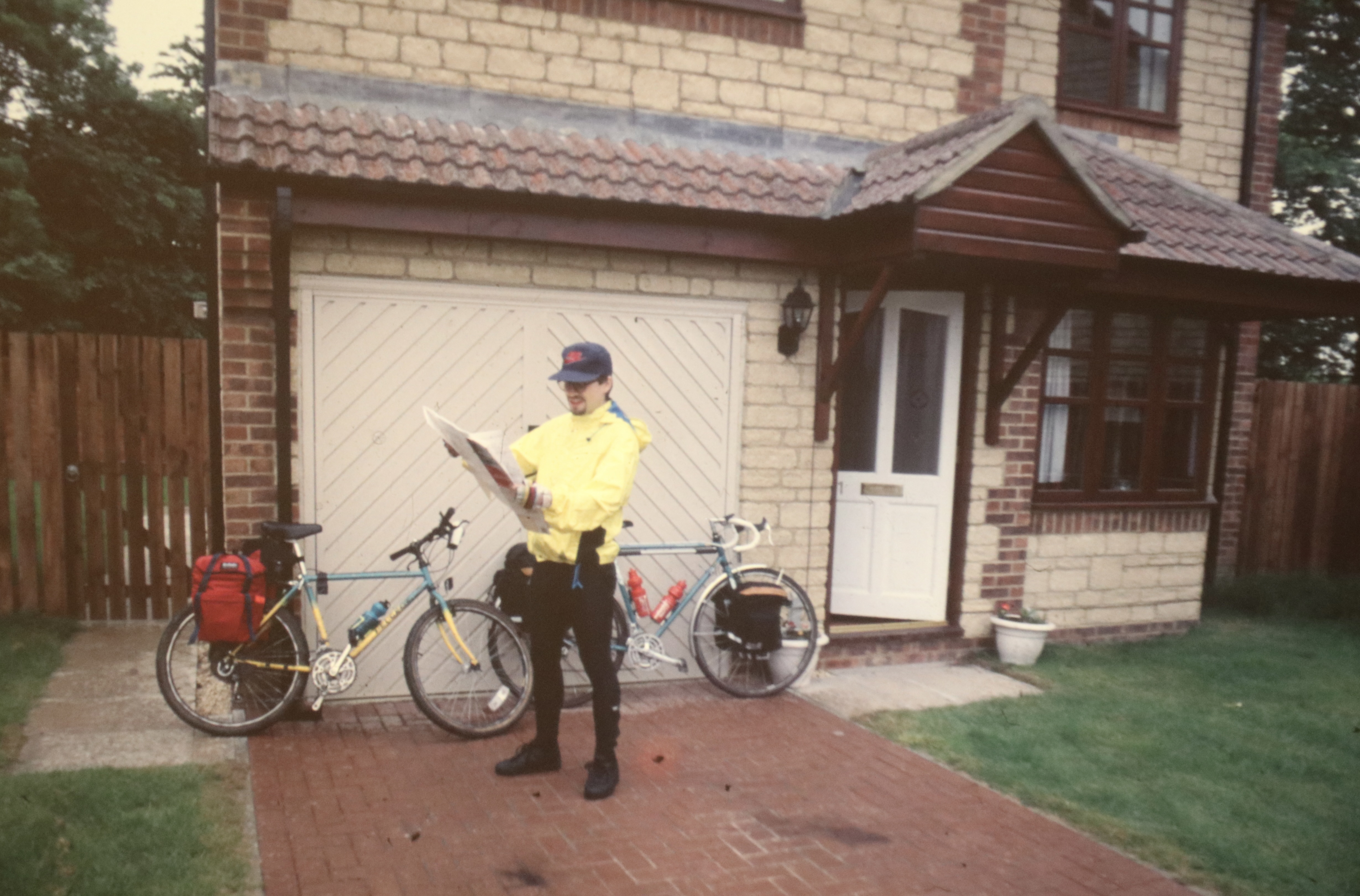
I plotted that adventure during the bleak winter evenings of January 1995, with those Ordnance Survey maps spread across the floor of my home in Ashton Keynes, Wiltshire, which was our departure point in June, as seen above.

Continue reading

Swindon’s Mechanics’ Institute: my letter in The Times

The Mechanics’ Institute in Swindon, Wiltshire, is symbolic of the Victorian belief in self improvement. It was founded in 1854 by Great Western Railway workers to provide themselves with a library, lectures, classes and, in time, a library and health services. Yet sadly this historic building has fallen into a ruinous state since closing in 1986.

My letter in The Times, Friday 28 March 2025

I paid tribute to the Mechanics’ Institute in a letter to The Times on Friday, prompted by a piece by columnist James Marriott praising Newcastle Upon Tyne’s Literary and Philosophical Society, where the father of the railways George Stephenson demonstrated his miners’ safety lamp in 1815.

Swindon was just a small village when the great engineer Isambard Kingdom Brunel chose it as the location for the Great Western Railway’s locomotive works, which opened in 1843. Within a decade, over 2,000 people worked there, many living in a railway village close by the main line. The workers paid for the Mechanics’ Institute, an initiative that was replicated in countless towns and cities across Britain.

Continue reading

The Wiltshire phone box that became a village hotspot

Purton phone boxAbove: Purton’s community phone box. Photo: Siân Wildeboer, Lde

The red phone box designed by Sir Giles Gilbert Scott is a British icon. But they’re fast disappearing as the mobile phone lets us make a call almost anywhere. Happily, one Wiltshire village, Purton, has saved its vandalised box and brought it into the 21st century as a community communications hub and wifi hotspot, thanks to the support of local company Lde Digital Services.

Local MP James Gray officially opened the box today.

As a student in the days before the mobile phone, I spent many cold and rainy evenings looking for working phone boxes in Leicester, as I blogged in 2007. It’s good to know that they still have a role in today’s world.