Off the Rails: a gripping but flawed book about HS2

A review of Off the Rails, The Inside Story of HS2 by Sally Gimson. (Oneworld, 2025)
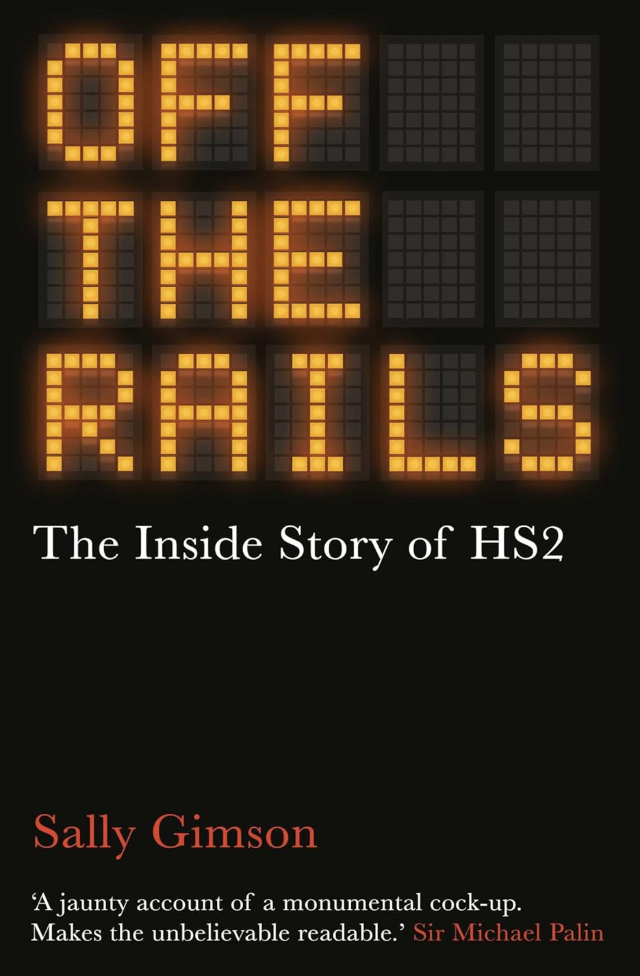
If any project deserves a detailed exposé, it’s HS2. Britain’s plan to build a second high speed rail line has become an epic, expensive failure. Once heralded as giving the country – well, England – a network of high speed routes between London, Manchester, Nottingham and Leeds, it has been reduced to a single route between London and Birmingham. Thanks to the stupidity of former prime minister Rishi Sunak, who cancelled the Birmingham to Manchester section, HS2 trains heading for Manchester could actually be slower than today’s trains once they divert from HS2 onto the West Coast Main Line at Handsacre Junction north of Birmingham.

HS2 Colne Valley Viaduct, near Denham, Bucks

Our village, Chalfont St Giles in Buckinghamshire, is on the route of HS2. You’ll find few supporters of the project in these parts, even though the line passes us in the 10 mile long Chiltern tunnel. But I always supported the idea, as I blogged when the Tory-Lib Dem coalition gave the green light to HS2 in 2012. As I argued:

‘Britain’s intercity rail network was born just before Queen Victoria came to the throne in 1837. It was the wonder of the world. Nearly two centuries later, the world wonders why Britain is so reluctant to build a new railway. HS2 opponents say we should just modernise the west coast mainline. That line was created from a series of 19th century railways. It has been ‘modernised’ twice in the last fifty years. It’s still in essence a Victorian railway.’

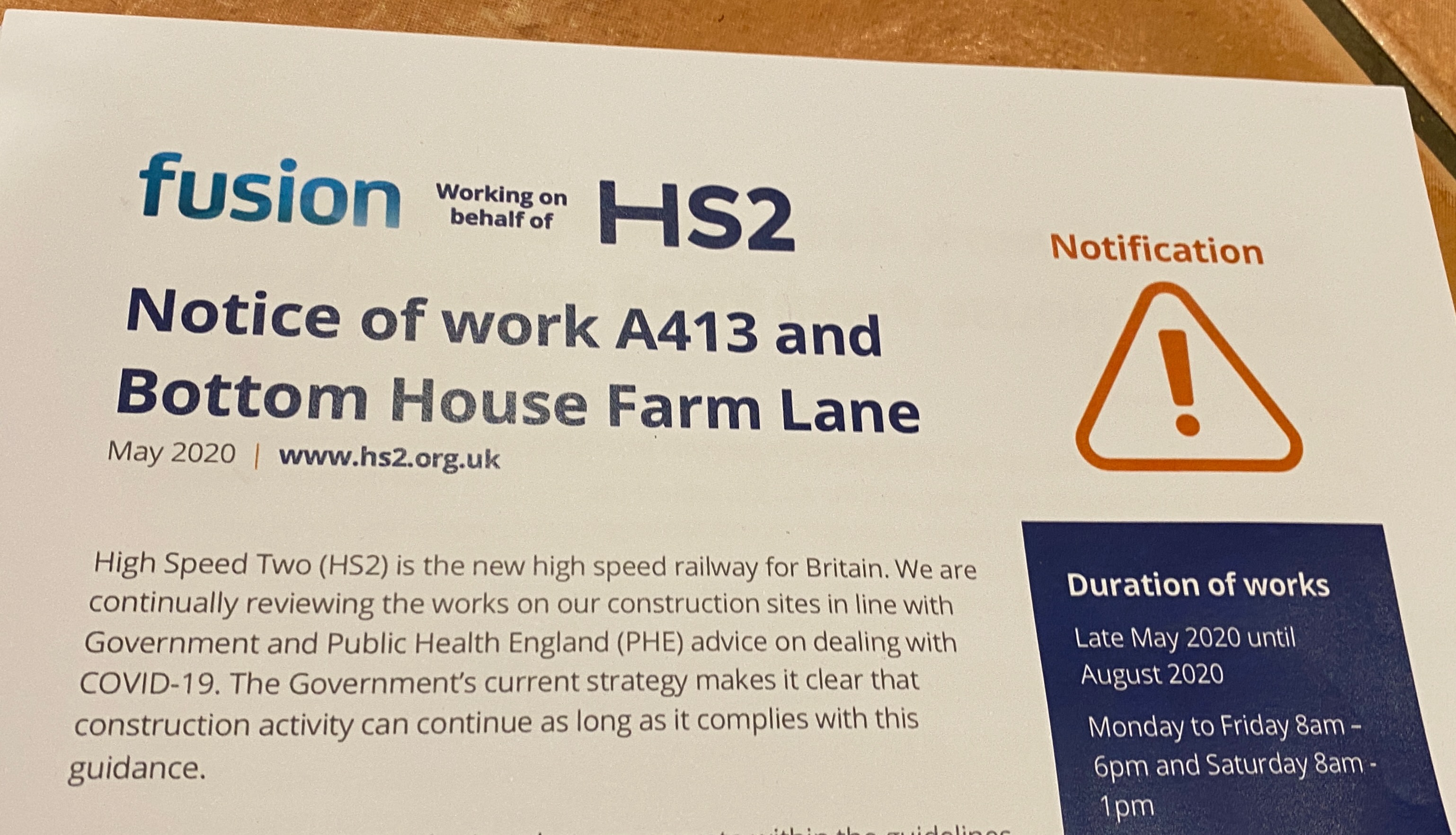
Above: HS2 built a new road parallel to Bottom House Farm Lane, Chalfont St Giles, for construction traffic to the site of an HS2 tunnel shaft

Our former MP, the late Cheryl Gillan, features heavily in Sally Gimson’s story. If you’re wondering why HS2 is proving vastly expensive compared with similar lines in France and Spain, Gillan is one one of the many reasons. Protesters in the Chilterns were bought off with miles of extra tunnels. These same protesters will happily use Heathrow airport, the M40 and other environment-shredding services. (As I do, I hasten to add.) Ironically, the route from Birmingham to Manchester, killed by Sunak in 2023, would have been far cheaper to build with fewer tunnels and viaducts.

HS2’s advocates and planners didn’t help by changing the reasons for the line. It started out as a need for speed – though arguably faster than we needed, increasing costs – but morphed into a boost of the capacity of the railway, followed by an idea of ‘levelling up’ the country.

Sally Gimson tells the story well, from early mistakes through soaring costs resulting from buying off Chiltern protesters right up to Rishi Sunak’s calculated act in announcing the axe of the route to Manchester … in Manchester. She’s a fan of the concept of HS2, and is appalled by the way the project’s epic mismanagement has given high speed rail in Britain a terrible reputation, despite the success of HS1.

She doesn’t explain that the British government designated HS2 an ‘England and Wales’ project, even though even the original route didn’t include a metre of track in Wales. This meant that Wales was denied extra funding for rail projects under the Barnett formula unlike Scotland and Northern Ireland, which gained billions of pounds of extra funding. This has been hugely controversial in Wales, especially to the Labour government in Cardiff after Keir Starmer refused to reconsider the decision on coming to power.

Sadly, Gimson’s book is riddled with silly factual mistakes that suggest a shaky grasp of railway history – and more. Here are some that I spotted:

The Times newspaper was not a product of the railway era (p23) – it was founded in 1785, decades before the start of the railway era.

HS1 did not open in 2001 (p43). The first section opened in 2003, with the second section to St Pancras following in 2007.

Crewe was not still building steam locomotives in 1964, the year Japan’s first high speed line opened (p47). Crewe ended steam engine construction in 1958, and the final BR steam locomotive, Evening Star, was completed at Swindon in 1960.

British Rail was not born a year after the railways were nationalised (p34). Nationalisation on 1 January 1948 created British Rail under the original longer name, British Railways.

Northern Rock bank collapsed in 2007 not 2008 (p66).

There was no ‘InterCity125 line connecting London to Edinburgh developed in the 1980s’ (p131). The InterCity 125 service from London to Edinburgh began in May 1978, using the existing East Coast Main Line. The line was electrified in late 1980 with InterCity225 electric trains reaching Edinburgh in 1991.

Andrew Gilligan resigned from the BBC in 2004 not 2003 (p169).

Graham Brady oversaw the vote of no confidence in Theresa May by Tory MPs in 2018 not 2019 (p189).

Andy Street was not elevated to the House of Lords in December 2024 – or at any other time. He is not Lord Street, but Sir Andy Street. (p213.) Also, he was not chair of John Lewis, but its managing director.

Neville Chamberlain was lord mayor of Birmingham in the 20th not 19th century (p222).

It was the Grand Junction not Grand Central railway that built Crewe (p243).

I’m sure Christian Wolmar, a real transport expert, would have spotted the transport howlers had Gimson asked him to proof read her manuscript.
AI regulation: a lesson from 200 years of railway history

A mighty transatlantic battle is in prospect over how to regulate artificial intelligence (AI). Donald Trump’s second administration seems sure to opt for the lightest of light touches, influenced by tech tycoon Elon Musk. (If Musk can tear himself away from his bizarre obsession with Britain.) The European Union has already legislated for a far more restrictive approach, with Britain likely to follow a middle way. The sensible aim must be to unleash the creative, social and economic benefits of AI while minimising the harm it may cause if abused or badly handled.

As debate raged about AI regulation, it struck me that many of the arguments deployed for and against AI and tech regulation also played a huge role in shaping the response to the railway revolution in the 19th century.

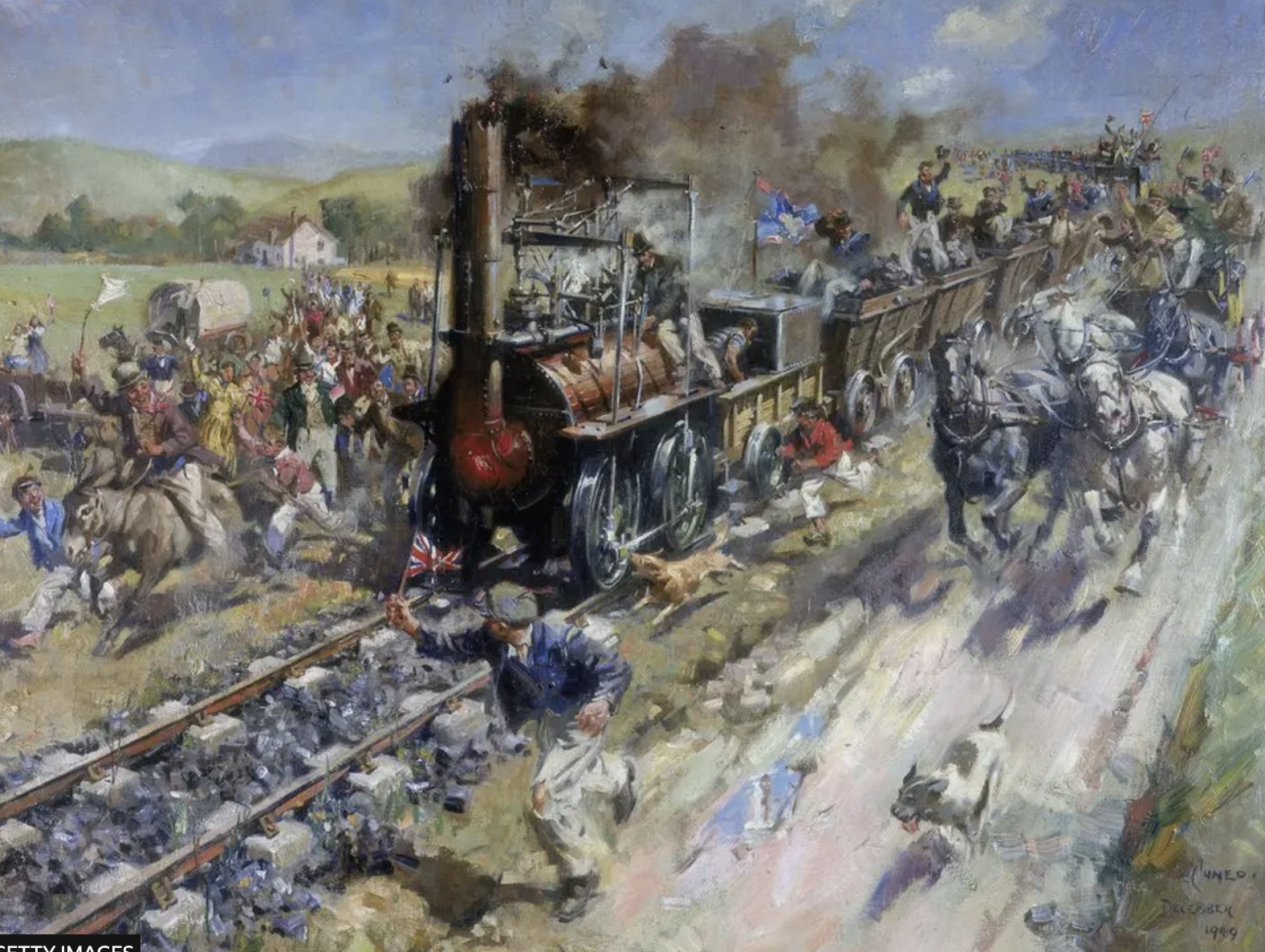
The opening of the Stockton & Darlington in 1825. Painting by Terence Cuneo; NRM/Science & Society Picture Library

The railway age properly began in September 1825 with the opening of the world’s first public railway to use steam locomotives, the Stockton & Darlington Railway in County Durham in the north of England. After the success of the first intercity railway between Liverpool and Manchester, opened in 1830, Britain enjoyed a railway boom, as pioneers planned lines linking major cities – and serving industry, the original purpose of the iron road. By the early 1840s, railway mania had taken over, in a prelude to the dot.com boom at the turn of the 21st century. In 1844, 240 private bills were presented to the British parliament to authorise 2,820 miles of railway. Had all these been built, the £100 million of capital needed represented over one and a half times Britain’s gross domestic product (GDP) for that year. Parliament still approved half these railways.

Anything goes? The heyday of the laissez-fair state

Britain in the 1840s was a firmly non-interventionist state. The dominant philosophy was laissez-faire: small government, low taxes and the free market. Most acts of parliament were private acts to authorise new railways rather than government initiatives. Anyone able to raise money could form a railway company and apply to parliament for permission to build their pet route. The sheer volume of railway business threatened to overwhelm the Westminster legislature. But an attempt to create order by setting up a railway advisory board to vet proposed plans before they reached parliament was short lived, killed by the powerful railway lobby. (And conflicts of interest: 157 out of 658 MPs had financial interests in the railways.) This was Britain’s last chance to create a strategic rail network, deploying investors’ money more efficiently. The failure led to many investors losing most if not all their money on rail schemes that had no hope of success, again pre-empting the dot.com bubble of 1999-2000.

Continue reading

Why London’s rail termini are so far from the centre

If you’ve arrived at London’s Kings Cross station in the rush hour only to endure a packed tube train to reach the heart of London, you may wonder why the station wasn’t built nearer your destination. Kings Cross isn’t alone; Marylebone, Euston and St Pancras are similarly stranded north of the Marylebone and Euston roads, which were created as the New Road in the 18th century.

Jonn Elledge entertainingly explains on his Substack (The Newsletter of (Not Quite) Everything) how the New Road was built as a by-pass for cows. Jonn adds his explanation for the inconvenient siting of these great termini:

[Railway] Companies serving destinations to the east and south of London drove their new lines right into the urban area, with scant regard for the poor residents they dispossessed; those coming from the west and north, by contrast, tended to respect the capital’s existing geography. That is why, to this day, Kings Cross (1852), St Pancras (1868) and Euston (1837) stations line up along the road, with Marylebone (1907) [actually 1899] a mile or two distant: they were effectively plugging into the existing transport network, made up of a massive road with canal access. 

This is only part of the story. Today’s travellers are inconvenienced as a result of a Royal Commission set up by prime minister Sir Robert Peel in 1846:

Amazingly, the Royal Commission on metropolitan railway termini reported just three months later. It recommended that railway lines entering London should not be allowed to enter the West End. The commissioners accepted that more central stations would lead to the destruction of countless homes and other buildings. In 1846, the New Road was on the very edge of London, which is why the Royal Commission took it as the furthest a railway line from the west or north should pass into London.

Continue reading

In praise of Barry Island – and Gavin and Stacey

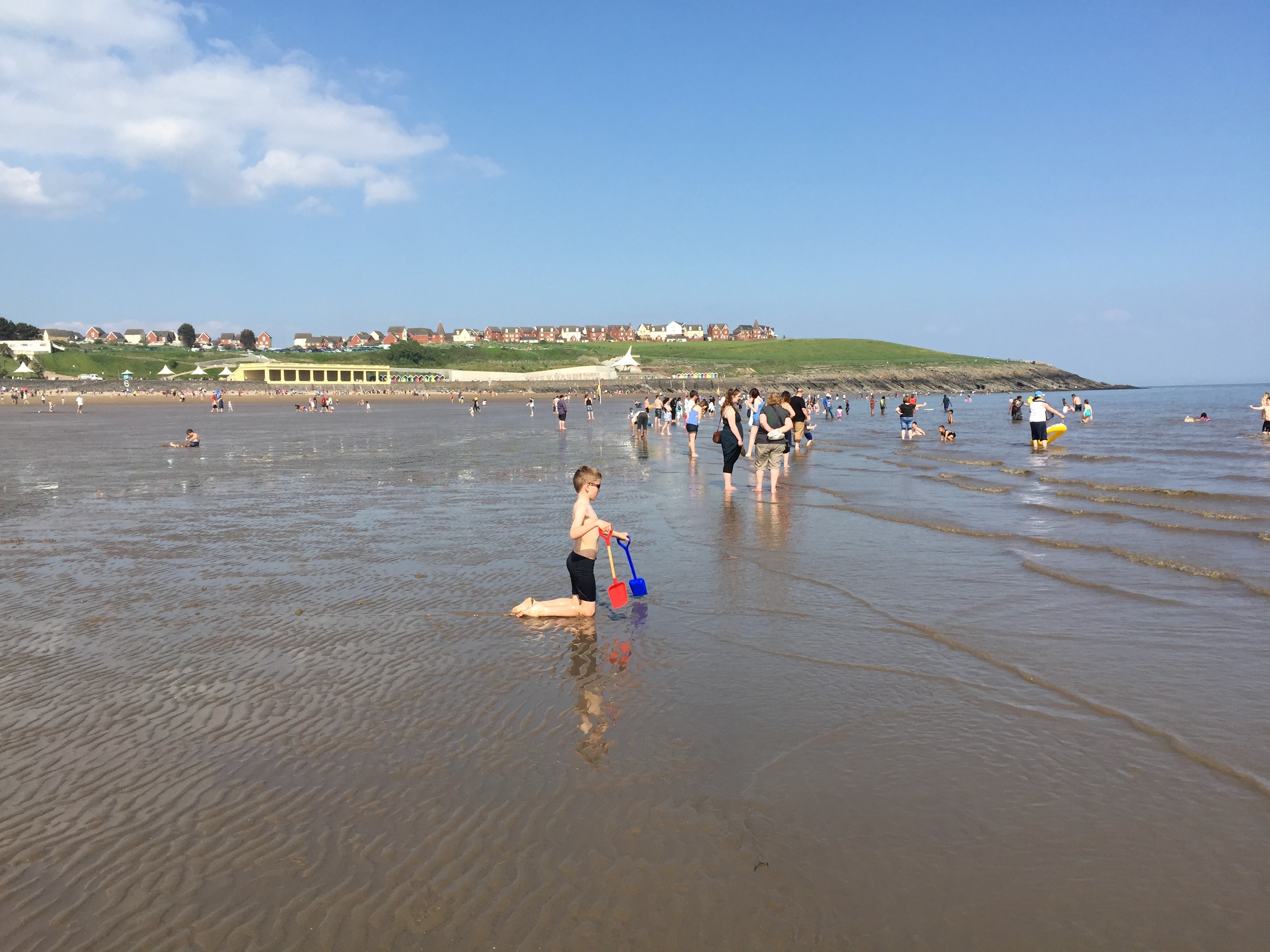
The wonderful finale of the BBC’s hit comedy Gavin & Stacey on Christmas Day brought further fame to Barry in South Wales. It’s a place that has a place in my heart thanks to family seaside memories and visits to its long-gone scrapyard for old steam locomotives.

Barry Island, Sunday 5 January 2025

Last weekend, I took my son Owen for a short break in my hometown, Cardiff. As the rest of the country shivered under blizzards or sheltered from the icy rain, we made the short trip to Barry Island, and were rewarding with a few minutes of glorious winter sunshine. When I was at school, I regularly took the train from Heath High Level in Cardiff to Barry Island, and our Sunday visit brought so many memories flooding back.

Barry remembers Davies the Ocean. Photo: People’s Collection Wales

Barry is a town that saw explosive growth during the later stages of the industrial revolution. Barely a hundred people lived there in the middle of the 19th century, but the entrepreneur David Davies of Llandinam saw its potential as a port. Davies was known as Davies the Ocean after the coal mining company that made his fortune. Like many Welsh coal tycoons, he was frustrated by the delays and cost involved in exporting their black gold from Cardiff, and vowed to create a rival port less than nine miles away at Barry. As he exclaimed, “We have five million tons of coal and can fill a thundering good dock the first day we open it!”

Continue reading

In praise of British Rail

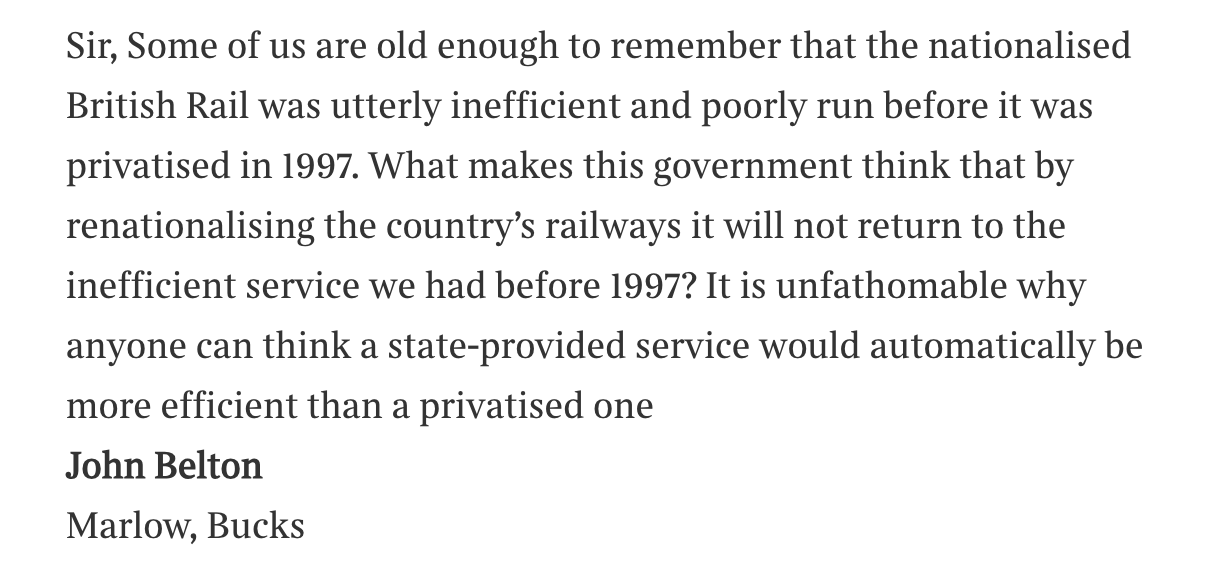
I sighed when I read this letter in The Times. Mr Belton is clearly good at a pithy rant. But his verdict against British Rail is wearily familiar and unbalanced. At least he didn’t mention the sandwiches, unlike a follow up correspondent who wrote a fair defence of the old nationalised rail network, yet fell for the sandwich myth:

Rail historian and commentator Christian Wolmar disposed of the sandwich cliche in his excellent 2022 history, British Rail. As he points out, the company pioneered shrink-wrapped sandwiches, and restauranteur Prue Leith served as a British Railways Board director. Yet long before social media flooded the world with misinformation, the myth of the curling, stale British Rail sandwich went viral, and has outlived the state owned network by three decades. The former Tory transport secretary Grant Shapps predictably promised that his (unrealised) restructuring of the rail industry wouldn’t mean ‘going back to the days of British Rail and its terrible sandwiches’.

British Rail’s track record (pun intended) was better than that of the Johnson, Truss and Sunak governments Grant Shapps served in. Especially in its last decade, when BR was rated as showing the highest level of productivity of almost all of Europe’s railways. (Oxford Companion to British Railway History, 1997.) On average, it shed 10,000 staff a year over its 50 year life, yet created a generation of outstanding leaders, such as Chris Green, John Prideaux and Robert Reid, several of whom served BR’s privatised successors.

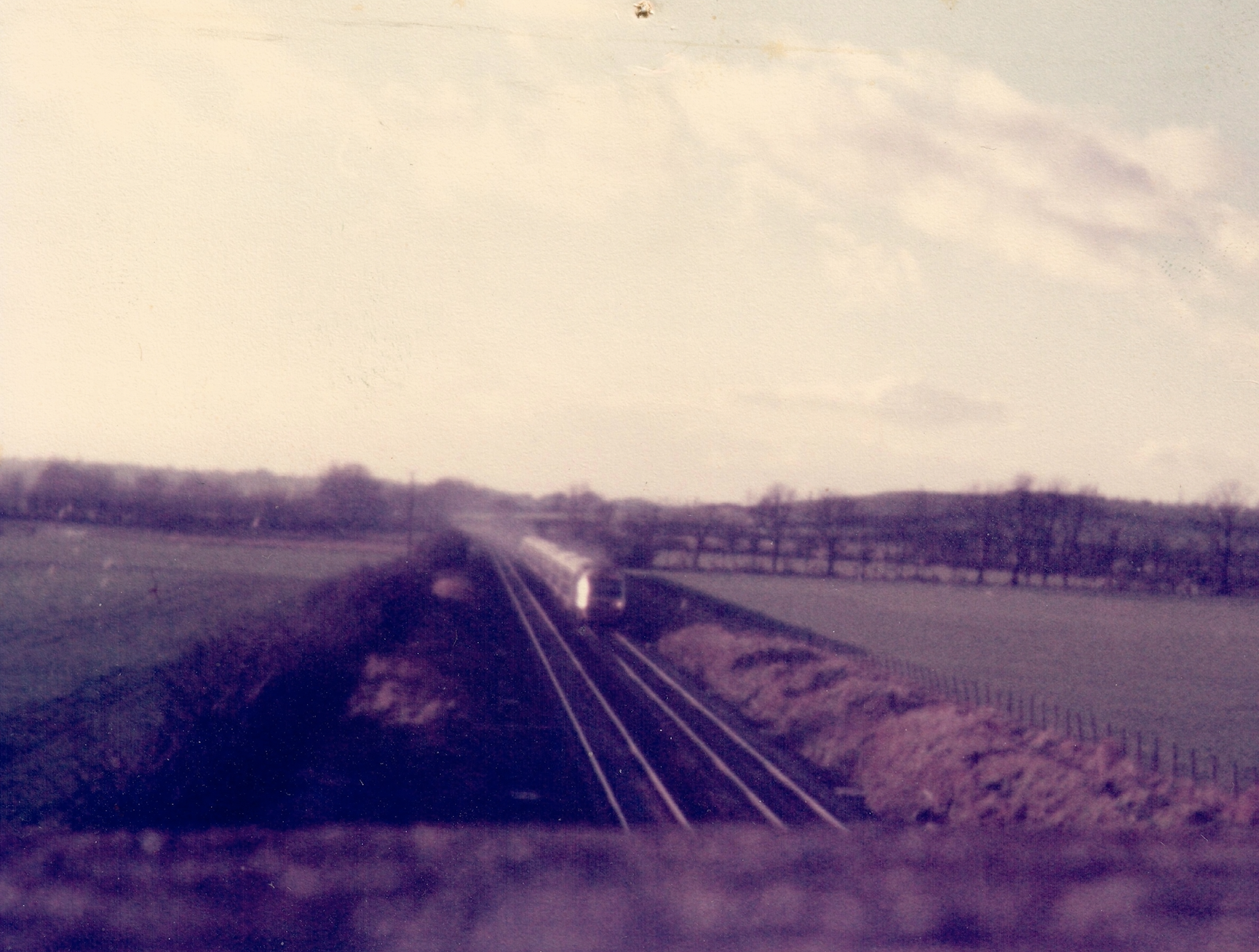
I had first hand experience of BR as a teenager and adult, especially after moving to London in 1987. For several years, I took advantage of BR’s ‘weekend first’ offer to upgrade to first class for just £5, which made the Sunday return from Cardiff to Paddington a tranquil experience. Those journeys were in the classic InterCity 125 high speed train, one of BR’s greatest achievements, as I blogged here. (I was less impressed by the products of BR’s in-station burger chain, Casey Jones, which surpassed McDonald’s for greasy food that was an unwise choice after a few pints.) From the 1960s onwards, BR marketing was outstanding, selling the benefits of train travel and new services with wit. (Although its use of Jimmy Savile was a mistake in hindsight.) And like many families, we took advantage of BR’s Persil two for one ticket promotion in the late 1970s – the only way I was ever going to travel first as a teenager, as Dad could match his work ticket with one for me.

Yet I’m no apologist for what BR got wrong. In the early 1990s, commuting into Waterloo from Teddington was an often painful experience. I’d often wait for ages after my train was due wondering whether it would ever turn up. One morning, we got a mainline train in place of our commuter one, and I piled happily into the first class compartment, knowing that the guard couldn’t charge extra as there were no first class fares on the Teddington routes. Others showed typical British hesitation, and stood for 40 minutes in standard class.

A decade later, I was commuting on the privatised Chiltern Railways into Marylebone. It was usually very reliable, but that dependability reflected British Rail’s transformation of every aspect of the line just before privatisation: new track, signalling and trains.

Privatisation may have brought back famous railway names such as the GWR and Southern Railway, but the complexity of the privatised railway has proved an expensive and inefficient mess, as Christian Wolmar predicted at the time. Unlike in the days before 1948, the post-BR world is policed by a far bigger forest of regulation and legal agreements than the 1923-47 big four railways contended with. (Although I should note that between the wars those companies lobbied for fairer regulation to help them compete against growing road competition.)

For all my rail enthusiast nostalgia for the GWR, I am pleased that Labour is returning the railways to public ownership. Let’s hope that it will also rebalance investment away from London and the South East – and stop cheating Wales of investment as a result of the Tory decision to define HS2 as an England and Wales (not just England) project. I’m not holding my breath.

Nationalisation rules! Britain takes control of a railway again

Let's party like it's 1948…

But it isn't. The nationalisation of one of Britain's most important rail lines, the east coast main line, isn't as significant as many of us would like. It is a temporary measure, forced upon the government because the operator, National Express, couldn't afford to keep the franchise. I imagine the government would have chosen a more inspiring title for the new nationalised operation than Directly Operated Railways had it seriously intended to revive British Rail. 

But we can but dream: of a truly national railway, that avoided the honeypot of millions of pounds of taxpayers' subsidy being used to fund private company profits. (National Express did very well out of us until it overbid for the east coast franchise on the eve of recession.) Sadly, the party that forced through the catastrophic privatisation of British Rail is likely to regain power next year. Once again, we're left wondering what might have been had Labour done more with its 13 years in government. 

See my earlier post about the folly of rail privatisation.