The Mechanics’ Institute in Swindon, Wiltshire, is symbolic of the Victorian belief in self improvement. It was founded in 1854 by Great Western Railway workers to provide themselves with a library, lectures, classes and, in time, a library and health services. Yet sadly this historic building has fallen into a ruinous state since closing in 1986.
Swindon was just a small village when the great engineer Isambard Kingdom Brunel chose it as the location for the Great Western Railway’s locomotive works, which opened in 1843. Within a decade, over 2,000 people worked there, many living in a railway village close by the main line. The workers paid for the Mechanics’ Institute, an initiative that was replicated in countless towns and cities across Britain.
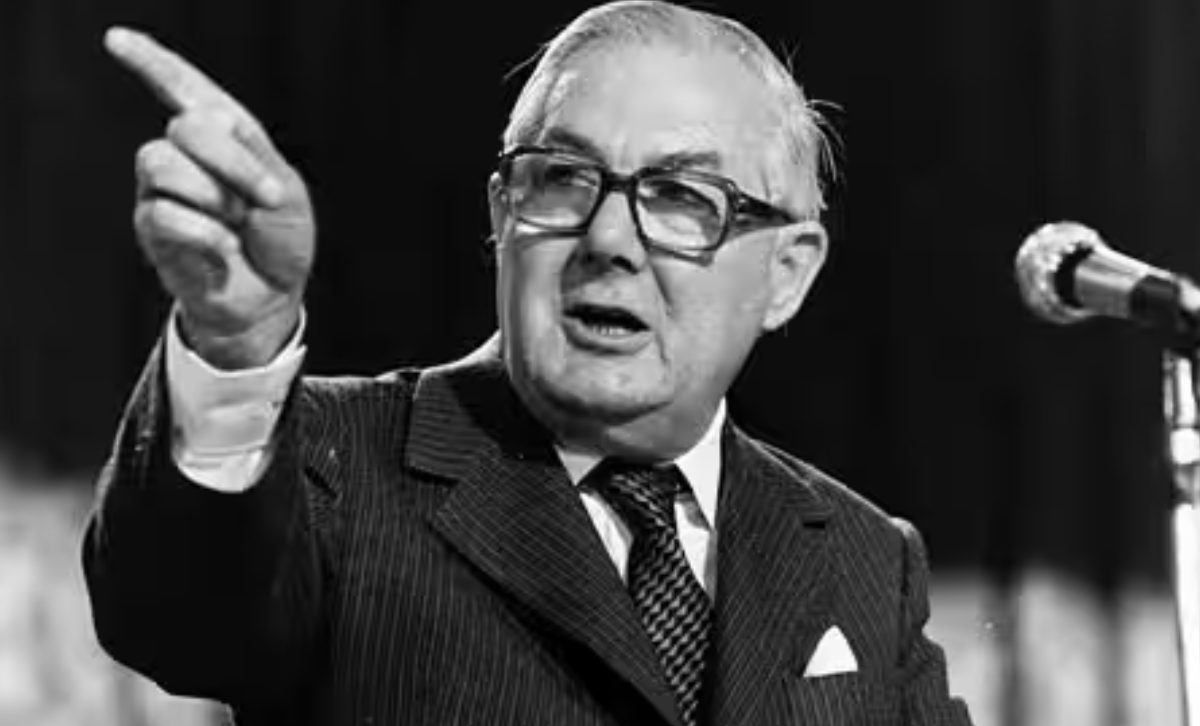
James Callaghan, who died 20 years ago this week, might have been Britain’s most forgotten postwar prime minister had it not been for the winter of discontent. The strike-dominated final months of his premiership, when bodies went unburied and rubbish piled up in the streets, ensured a convincing victory for Margaret Thatcher in the 1979 general election.
Yet Callaghan was a more successful prime ministers than critics allow, especially given his terrible inheritance. When he took over after Harold Wilson’s surprise resignation in 1976, inflation was running at almost 19 percent a year. He inherited a wafer-thin majority, which had disappeared within a year. The trade unions were pushing for ever-bigger pay increases to offset inflation, but which inevitably pushed prices higher still.
Callaghan was unfazed by it all – at least until the final, bleak winter. A man who had fought in the second world war, and been through a different kind of fire as chancellor, home secretary and foreign secretary, calmly faced whatever crisis came his way. This was one reason why he was more popular as PM than his party or his Conservative rival Margaret Thatcher. In troubled times, Sunny Jim was a reassuring captain even as the ship was at risk of sinking.
He led his cabinet with a rare skill. Those were the days of political ‘big beasts’ – Denis Healey, Tony Benn, Michael Foot, Roy Jenkins and Anthony Crossland were just some of the big names in his cabinet. (He sent the formidable Barbara Castle, once tipped to be Britain’s first woman PM, to the back benches.) Callaghan’s achievement in getting the Cabinet to agree to dramatic public spending cuts in the face of the sterling crisis months after he took over was striking. He used his diplomatic skills to get American president Ford to put pressure on the IMF to grant Britain a loan. And he called nine lengthy cabinet meetings to discuss and agree the cuts required by the International Monetary Fund for it to grant that loan. The born-again left winger Tony Benn pushed hard for an alternative economic policy based on import controls, rather than public spending cuts. Callaghan showed saintly patience in handling Benn, who in turn praised his leader as a much better PM than Wilson.
The historian Dominic Sandbrook has described Callaghan’s handling of the 1976 crisis as ‘a remarkable achievement’. Writing in Seasons in the Sun, his history of Britain 1974-76, Sandbrook noted that the new PM had worked miracles to mollify the markets, strike a deal with the IMF and keep the government united, despite the inescapable fact that having to ask for a loan was humiliating for Britain. Yet the great irony is that the crisis was based on typically flawed Treasury figures. Instead of borrowing £11 billion a year, Britain was actually borrowing £8.5 billion. Chancellor Denis Healey only needed half the IMF loan, and repaid it far sooner than anyone expected. But history had been made regardless: he and his PM had ended Britain’s postwar Keynesian economic policy, adopting monetarism three years before the arch monetarist Margaret Thatcher came to power.
By 1978, the dark economic clouds seem to be lifting. Inflation was down to 8 percent from the 1975 high of 24 percent; Britain was starting to enjoy the North Sea oil bonanza; and Chase Manhattan’s European economist proclaimed that ‘the outlook for Britain is better than at any time in the postwar years’. Consumers were buying new cars, fridges and washing machines. As a later generation would say, the feel good factor was returning. This seemed like the perfect time to call an election, and secure a Labour government into the 1980s.
Most people – including his advisers – thought Sunny Jim would go to the country. The Times reported on 3 September 1978 that an election was likely to be announced within a week. Union leaders urged an election, and so avoid a winter wage explosion. (How right they were…) Just two days after that Times story, Callaghan teased the TUC conference about calling an election, even singing an old song, Waiting at the Church, about a bridesmaid being jilted at the altar by her fiancé because his wife wouldn’t let him marry her. (He attributed the song to the music hall singer Marie Lloyd, but it was actually sung by her less well known rival Vesta Victoria.)
He ended by saying that he had ‘promised nobody that I shall be at the altar in October, Nobody at all.’ If he intended to end speculation about an election, his mock-serious approach failed completely. Callaghan broadcast to the nation saying there would be no early election.
Many cabinet ministers and advisers were shocked and disappointed. With hindsight – notably the searing memories of the winter of discontent – his decision to soldier on looks like a disastrous blunder. Yet that ignores a fundamental truth. Prime ministers rarely call elections before they need to unless they are sure they will win. With the exception of Rishi Sunak in 2024, they don’t want to lose their unique status as leader of the nation prematurely. Callaghan was a cautious politician and the polls in the late summer of 1978 suggested a hung parliament, with neither Labour or the Conservatives with a majority. The only certainty about his decision is that he condemned Labour to a heavier defeat that would have happened in October 1978, rather than turning victory into defeat. His great mistake was to allow the speculation to run out of control. It was a mistake repeated by Gordon Brown in 2007.
The real Jim Callaghan
The ignominious end to his premiership should not obscure Callaghan’s remarkable story in rising to the top. Like so many British prime ministers, James lost his father at a young age, nine. His mother got by on a naval widow’s pension granted by the first Labour government in 1924, but it was not enough to pay for him to go to university. He felt his lack of a degree keenly, although he made fun of it when interviewed by the BBC’s Desert Island Discs in 1987:
‘If people say I’m not clever at all, I’m quite prepared to accept that, except that I became prime minister and they didn’t, all these clever people!’
Callaghan was elected MP for Cardiff South in the Labour landslide of 1945. My late mother was covering one of his election rallies for the Penarth Times, and for years afterwards resented Callaghan’s disparaging public remarks about the paper when she questioned him.
He is the only prime minister to have held all the great offices of state: PM, chancellor of the exchequer, foreign secretary and home secretary. He observed that he didn’t find being PM harder than the other great offices. But he had the confidence in 1976 that came of his 30 years in politics, and 12 years of front bench experience. He was a good delegator, ‘preferring to sit back and let the others do the work’, and happily admitted he was never a workaholic. Today’s inexperienced premiers could learn from Callaghan’s example.
The Cardiff connection
My father Bob Skinner, left, with PM Jim Callaghan, right. Jim’s legendary agent Jack Brooks to the PM’s right
Amazingly, Callaghan was a Cardiff MP for 42 years, and continued as MP for eight years after his 1979 election defeat. That is unheard of today. He was a good constituency MP, as I discovered when, as a 22 year old graduate, I sought his help.
My father Bob Skinner was involved with the Cardiff Festival of Music. In 1985, Cardiff was due to host the world premiere of a work by a leading composer. On the eve of the concert, Dad discovered that two soloists from Hong Kong didn’t have the work permits needed to allow them to travel to Wales to perform. He thought that as the local MP and former PM Jim Callaghan could help. The two of us met Sunny Jim in his splendid House of Commons office (he was then ‘father’ of the House of Commons – the longest serving member), and he couriered a note to Conservative employment minister Alan Clark: “Come on Alan, as a Plymouth man make Drake’s drum beat again – for Cardiff!” The permits were issued within hours – the concert was saved, and proved a triumph.
What I didn’t know at the time was that Callaghan and Clark got on well, a not unusual example of cross-party friendships. In his famous diaries, Clark revealed that Callaghan asked to see Clark privately in his room in the Commons during the Falklands crisis in 1982. Callaghan was due to speak in the second emergency Commons debate about the Argentinian invasion of the islands, and wanted Clark’s advice on what to say. Clark said, ‘I have a rapport with Jim’.
Just before we said goodbye, Callaghan asked me as a new graduate what I wanted to do for a living. ‘I’d like to work in PR or journalism,’ I replied. ‘They all want to do that now, don’t they?’ Jim replied, more to Dad than to me. Within two years, I had started my 37 year career in PR.
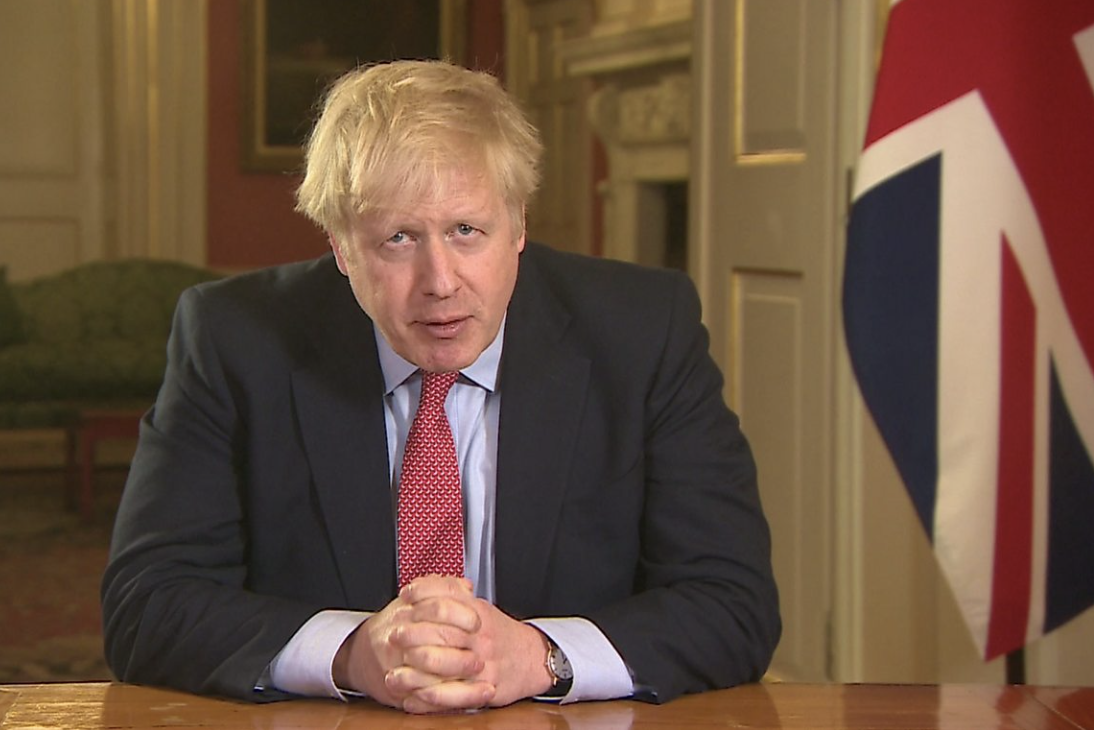
Boris Johnson announced Britain’s first Covid lockdown, 23 March 2020
Five years ago today, our lives changed dramatically. Prime minister Boris Johnson announced on national TV that Britain was going into lockdown to try to stop the spread of the Covid-19 coronavirus pandemic. “You must stay at home,” he told the nation.
M&S High Wycombe, 10am, Thursday 19 March 2020
In reality, the people were ahead of the state. Shopping centres and other public spaces were already empty as we stayed away from other people. A couple of weeks earlier, I moved seats on a London Underground train to get away from a passenger who was sneezing.
I was very familiar with Covid by March 2020. As part of PayPal’s PR team, I helped with communications to the company’s teams in China and the rest of Asia from January, sharing advice on staying safe from the virus and information about office closures. We had at least daily calls with PR people in the United States, Europe and Asia. As March arrived, I was busier than ever, especially as employees in Europe were asking to be allowed to work from home. I myself decided to do just that, exactly a week before the UK lockdown announcement.
On the morning of Thursday 19 March, I took a much-needed break from work, and popped into High Wycombe for what turned out to be my last proper shopping trip for four months. I was struck by the complete absence of people, as seen in the photo inside Marks & Spencer above. I could choose any table at Bill’s restaurant for a late breakfast. The next day, I did what turned out to be the last school drop off the 2019/20 school year.
The BBC today reported that the last surviving Battle of Britain pilot has died. Group Captain John ‘Paddy’ Hemingway was aged 105. He travelled from Ireland to join the RAF on the eve of war and also fought in the Battle of France, in which the RAF desperately tried to hold off the German Blitzkrieg invasion of Britain’s ally.
Winston Churchill famously called the brave RAF pilots the Few:
‘Never in the field of human conflict was so much owed by so many to so few…’
Paddy Hemingway and his fellow fliers saved Britain during the glorious, sunny summer of 1940. The Germans hoped to wipe out the RAF, and so open the way for a seaborne invasion of Great Britain. The RAF’s young pilots won the battle, making the defeat of Nazi Germany possible five long years later.
James Holland brilliantly recreated the immense stress of those Battle of Britain pilots in his 2004 novel, The Burning Blue. He also reminds us how the life of the Battle of Britain crews was so different from that of men serving in the Royal Navy or the armies in North Africa or Italy. The Few lived and died in everyday British communities, fighting in blue skies over the patchwork fields of Kent and Sussex by day, and drinking in traditional English country pubs by night.
The stress must have been overwhelming as the battle progressed, as the RAF noted for Paddy Hemingway:
‘Towards the end of the October 1940, the strain of fighting and loss of comrades was beginning to take its toll on Paddy. He was particularly troubled by the loss of his dear friend ‘Dickie’ Lee DSO, DFC in August 1940, saying in later years that his biggest regret was the loss of friends.
I love America. I was lucky enough to work for a wonderful American company for 16 years, and cherished the friendships of many fine American colleagues. But the transformation of the leader of the free world into a cheerleader for brutal dictatorship and the far right cannot be ignored.
In 1776, 13 American colonies declared independence from Great Britain. Just short of the 250th anniversary of that historic event, the perfidious actions of the 47th president of the resulting United States of America make it essential for Britain itself to break free.
Trump bullies the man who defied his friend Putin’s invasion
Like millions of Europeans, I was appalled to see President Trump bully and humiliate Ukraine’s President Zelenskyy in what looked like a hostage video staged in the White House. Trump and Vance constantly interrupted the beleaguered Ukrainian leader, who valiantly tried to cope with the flood of invective. At the very same time Trump was abusing his counterpart, the American president’s friend Vladimir Putin’s forces were killing Zelenskyy’s fellow citizens, as they have been since 24 February 2022.
“You are gambling with the lives of millions of people. You’re gambling with world war three,” Trump told a man whose country had been invaded by a brutal dictator intent on wiping Ukraine off the map. Fortunately, America’s greatest president, Franklin Roosevelt, took a different line in 1941 with Winston Churchill. Rather than bullying Britain’s wartime prime minister into accepting an armistice with Hitler, Roosevelt gave extraordinary support for his fight for national survival. Alongside the heroic efforts of the Soviet Union, that ensured that Europe was liberated from the tyranny of Nazi rule less than four years after America entered the war.
I am usually very reluctant to mention the Nazis (people do this all too often), but the shocking encounter at the White House reminded me of the humiliation in 1938 of Austria’s chancellor Kurt Schuschnigg, subjected to a terrifying two hour tirade by Adolf Hitler in the dictator’s mountain retreat at Berchtesgaden, Bavaria. ‘You have done everything to avoid a friendly policy!’ Hitler screamed. ‘And I can tell you right now, Herr Schuschnigg, that I am absolutely determined to make an end of this.’ The Anschluss – the Nazis’ forced union of Germany and Austria – came the following month, with appalling consequences for Austria’s Jews and countless others. Austria only became an independent country again in 1955, 10 years after the second world war.
The Guardian newspaper has been running an amusing correspondence about school reports in its letters column. My contribution appeared in today’s paper – quoting two of my Cardiff High School reports from the 1970s, the first from my third form (the modern year 9) maths teacher.
I have an almost complete set of my school reports from 1972 to 1982, just before I sat my A levels. Looking back, it is striking how brief primary school reports were in the early 1970s. Take this example from Lakeside Primary School, Cardiff:
(There was a brief summary by the class teacher as well.)
In those primary years, there was a section about handwriting, and few reports went by without a comment about my poor handwriting. ‘If only he could be neater!… Untidy! … Still lacking in shape… poor…’ My mother even bought me a copy of Teach Yourself Handwriting but my attempts to practise neater writing didn’t last long. To be fair, my handwriting had improved by the time I sat my A levels – I can still easily read my mock exam essays.
Rereading the old reports, I was surprised to see a glowing report from the primary teacher I liked least, when I was nine. Miss Lloyd was terrifying, and almost the first thing she said to me was, ‘What language is this – Chinese?’ on seeing my handwriting. One day she told me off for losing so many pens, and threatening dire consequences if I lost another. Needless to say I did, and I vividly remember lying in the bath that evening, stressed about going into school the next day. Nothing happened, but 52 years later I was amused to see her comments in the report: ‘At times he is possibly over-anxious and perhaps takes life rather too seriously’…
Curiously, my Welsh teacher Mrs Davies always praised me for working well or very good work even when giving me a C rating.
My worst ever school report, just before my O levels
I was well into my fifties when Dad gave me a stack of my school reports that he and Mum had kept. It was unusual for him to keep old school materials and books – as I blogged recently he tended to throw these away without telling me. I read the report above, issued just after my O level mocks, with some pain. I had done very badly in some of my subjects, especially chemistry and French, and my teachers stated bluntly that I needed to work much harder to do well in my O levels. (My mother had made a similar point when she found me day dreaming rather than revising over the Christmas holidays.) The warnings worked: I did reasonably well, especially in my favourite subjects, history, commerce and English language and literature, and didn’t disgrace myself in the others.
One postscript to that report. My O level chemistry teacher says that I would be better suited to CSE rather than O level. The Certificate of Secondary Education ran in parallel to O levels, and was designed for less academically able pupils. I was mortified at first to be told I couldn’t sit chemistry O level (although with 22 percent in the mock, it was clear I would fail) but loved my five months in the CSE chemistry class. It was clearly at my ability level, and I got the top CSE grade, 1, in the exam. Years later a school friend, Alison, recalled being surprised when I joined the CSE class: ‘We thought you were brainy!’ My experience showed the importance of adapting education to the needs of the child rather than a one size fits all approach. CSEs and O levels were replaced by GCSE eight years later.
Looking back, I can see that I didn’t work nearly as hard as I should have done especially at high school. My 16 year old son Owen is working far harder and achieving much more consistently high grades. In short, he’s much more conscientious than his father was…
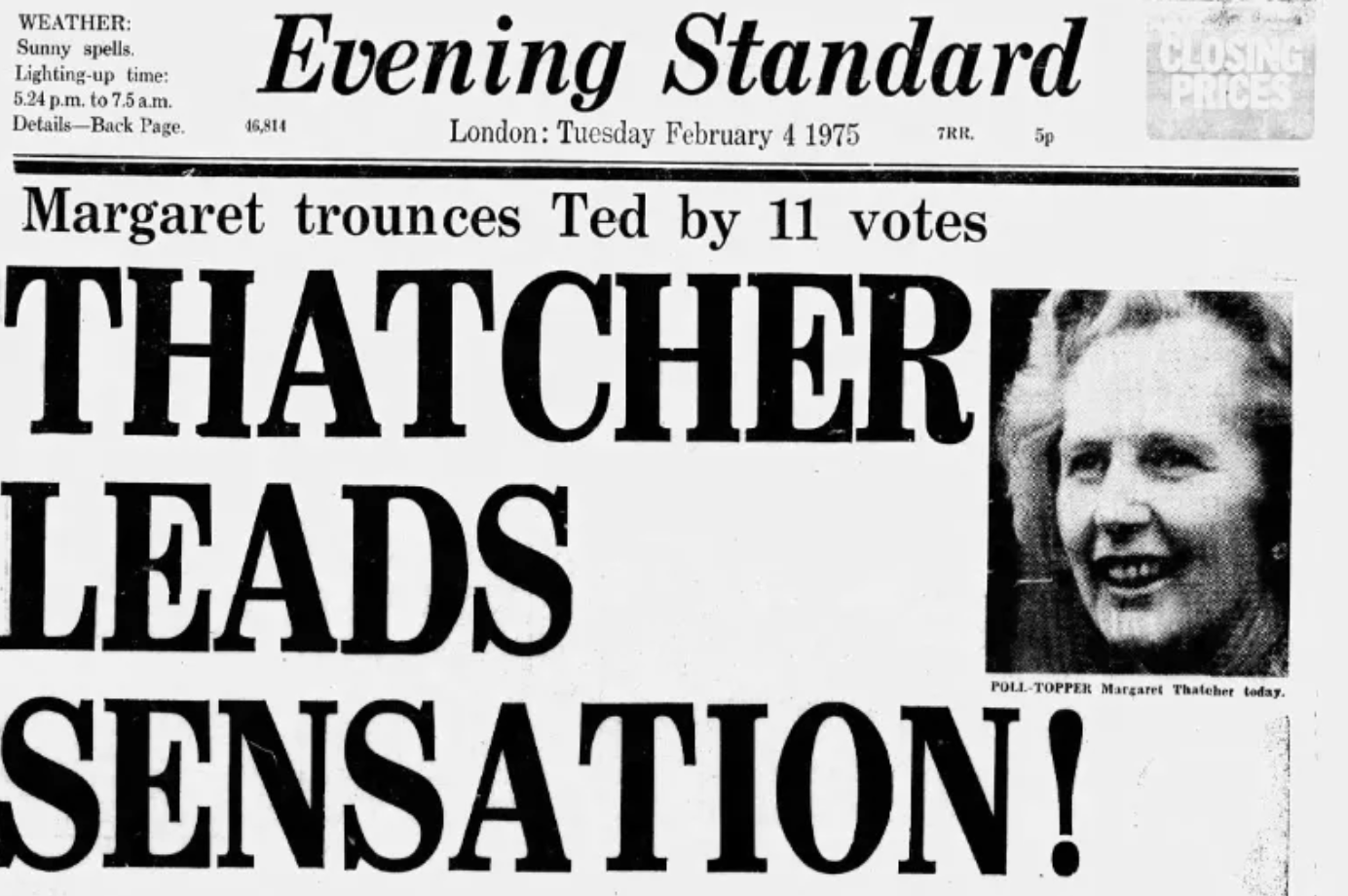
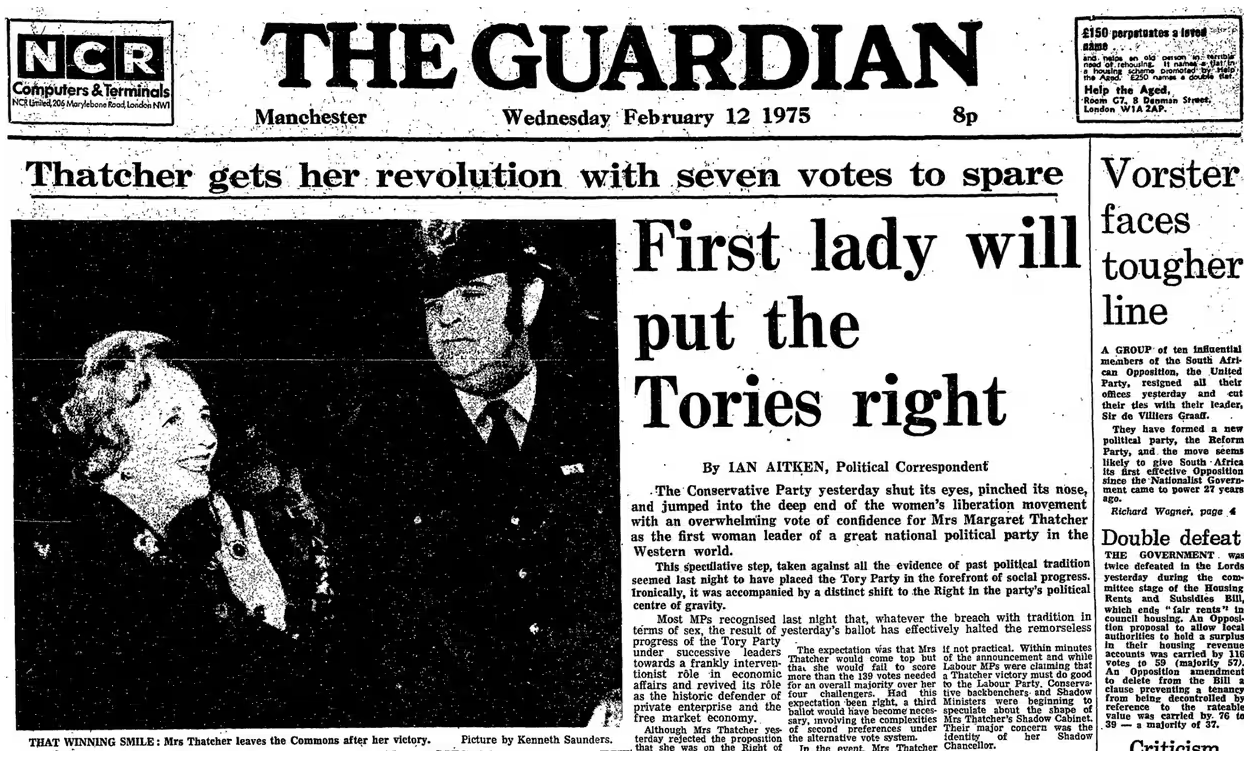
Reflections on Margaret Thatcher’s shock victory 50 years ago this week in the leadership election that eventually led her to become Britain’s first woman prime minister
I was just 11 when Margaret Thatcher amazed the political world by ousting former prime minister Edward Heath to become Conservative party leader 50 years ago this week. But as a precocious schoolboy I was fascinated.
Even in 1975, it was hard to see how Heath could cling on to the leadership. He had lost two general elections in eight months the previous year. His four years as premier had been a series of crises, and when he called the first 1974 election with the question ‘Who governs Britain?’ the voters refused to give Ted Heath’s Tories as the answer. (A hung parliament was the messy outcome.) And he was extraordinarily rude to his colleagues – people he needed to vote for him.
Thatcher had been a largely invisible middle ranking cabinet minister – apart from earning infamy as the ‘milk snatcher‘ after abolishing free milk for primary school children. But after the successive 1974 Tory election defeats she became far more prominent. Thatcher made the headlines in the second 1974 election with a plan to abolish the rates, the tax that funded local councils, and to cut the cost of home loans. As the 1975 leadership campaign unfolded, she brilliantly led the Conservative response to Labour’s finance bill, showing a mastery of detail. Thatcher also dissed the performance of the Heath government, telling the Daily Telegraph, ‘People believe too many Conservatives have become socialists already’. (An uncanny preview of right wing criticisms of the Johnson and Sunak governments almost 50 years later.) Yet few saw her as a likely party leader.
Her campaign manager, Colditz escaper Airey Neave, leaked news that Thatcher was ahead of Heath in polling for the first leadership ballot. (They were the only two candidates at that stage.) He cleverly encouraged those who wanted to oust Heath to back her in the initial vote, as that was the only way they could get their preferred candidate into the race. Heath was humiliated by coming second to Thatcher and pulled out, beginning a 30 year ‘incredible sulk’ against Thatcher that lasted until he died in 2005.
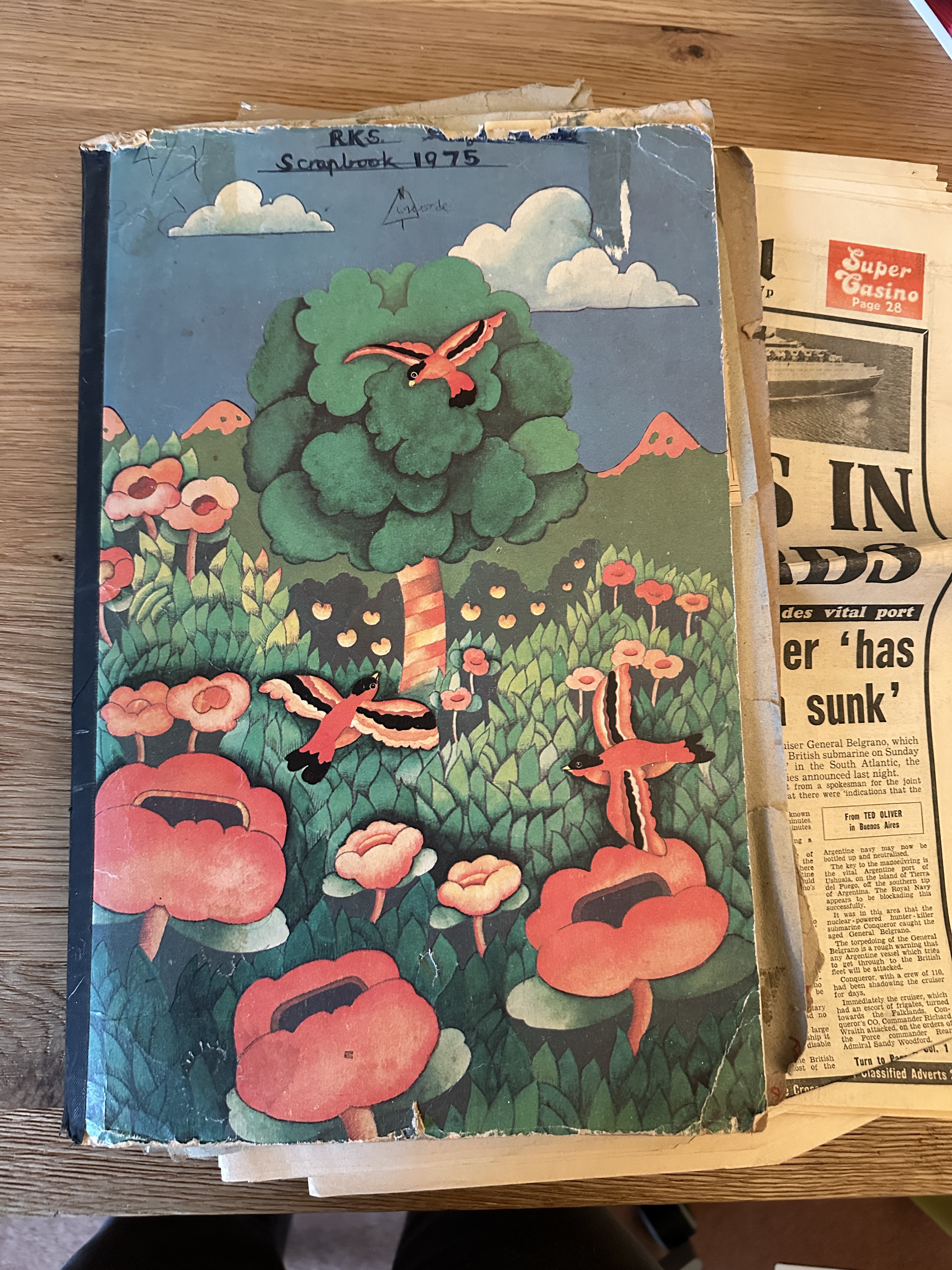
Do any children today keep a scrapbook? It seems very unlikely given almost every aspect of our lives has gone digital. So I was thrilled to rediscover my 50 year old childhood scrapbook, overflowing with yellowing newspaper cuttings. I wrote Scrapbook 1975 on the cover – I wonder whether it was a 1974 Christmas present? I seem to have written my Lakeside, Cardiff class, 4/1, there too.
I must have noticed that my scrapbook had 84 pages – one for every year of my beloved grandmother’s life at that point. (Nanny lived to within months of her 103rd birthday in 1994, as I blogged last year on the 130th anniversary of her birth.)
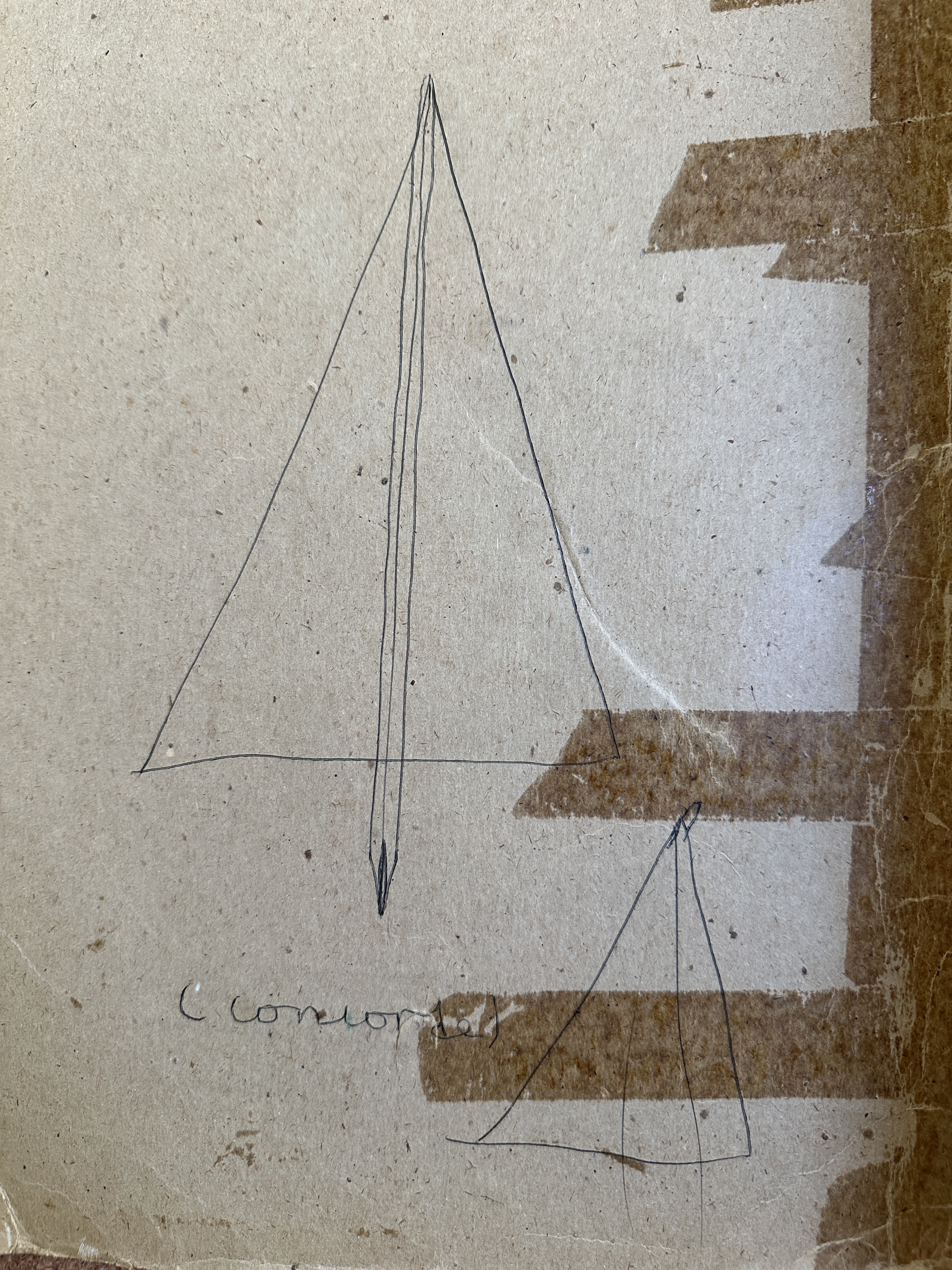
On the inside cover, I drew (badly) an impression of Concorde, the supersonic passenger plane that was to enter service the following year. These were the supersonic seventies, in the words of a 1970 Cadbury’s television advert… I never flew in Concorde, although I did walk through one in a Somerset museum in 1978. It wasn’t the same…
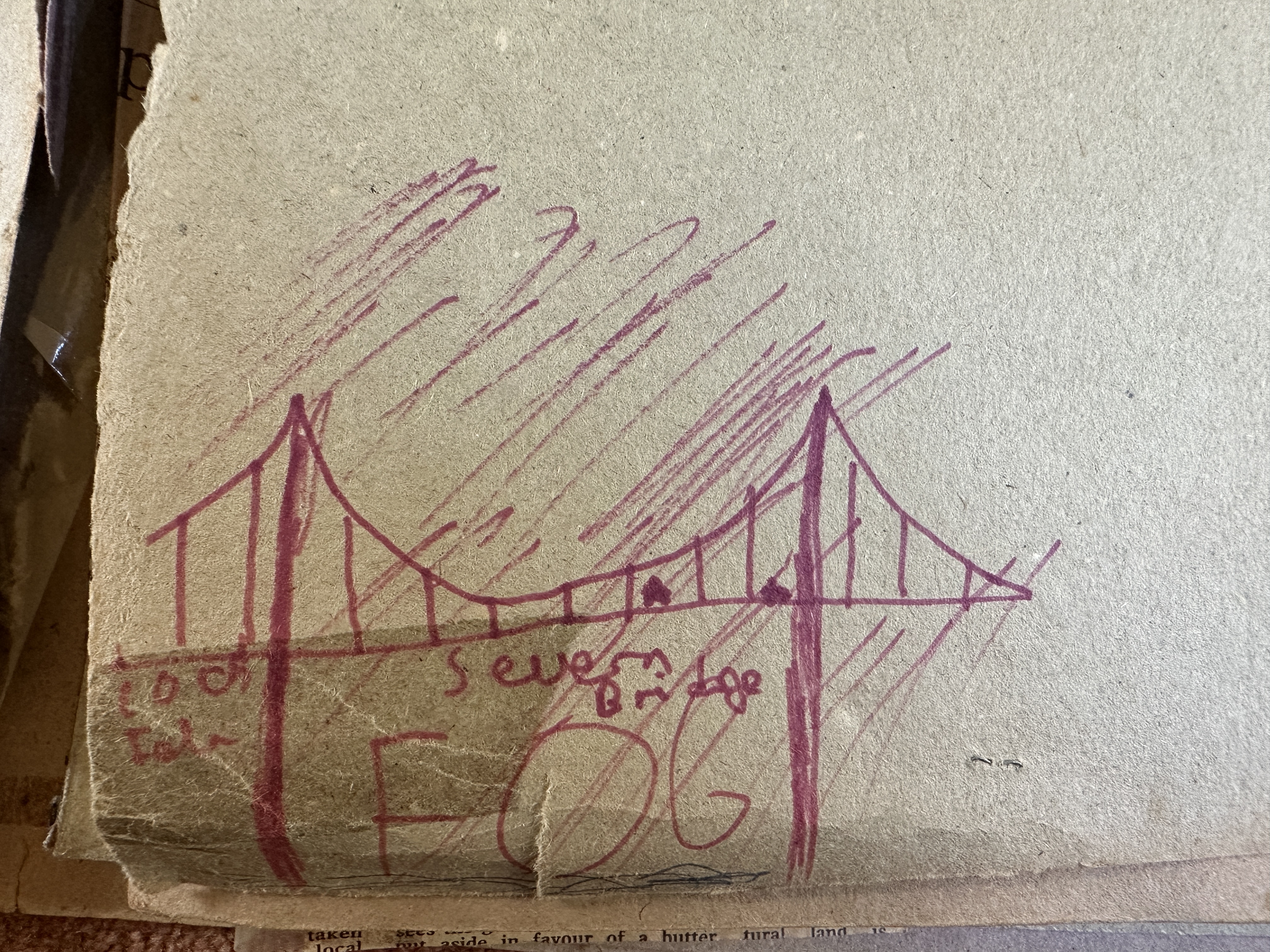
During the three day school half term, on Monday 10 February, Mum and Dad took me to Bristol for the day. If my scrapbook sketch is anything to go by, it was a foggy day. As a book lover, it was no surprise that my favourite part of the day was going to George’s bookshop, on Park Street. According to blogger Sue Purkiss, George’s dated back to 1847, so I was entering hallowed territory that foggy February day. At the time I was a big fan of Jackdaw children’s folders, a fascinating series of folders that illustrated historical topics with facsimiles of related documents. I received the Battle of Britain one Christmas, which included a wartime identity card and a 1940 Daily Mirror. I added my late grandfather’s real second world war identity card. I wouldn’t be surprised if I bought another Jackdaw at George’s. All I know for sure is that I took one of the bookshop’s bookmarks, as it’s in my scrapbook with the date on it. Sadly George’s is no more, like my old Cardiff spiritual home, Lear’s bookshop in Royal Arcade.
Everyone’s heard of the loss of Titanic in April 1912, the world’s most famous peacetime shipping disaster. It lives on thanks to the scale of the human tragedy and a sense of hubris: the supposedly unsinkable ship that ended up at the bottom of the Atlantic.
One man’s reputation was ruined on that deadly night. J Bruce Ismay was on board as the chief executive of Titanic’s owner, the White Star Line. As the great ship set out on its maiden voyage he seemed to have it all: wealth, power and prestige. He had succeeded his late father in 1899 as head of White Star but within three years sold the company to JP Morgan’s new shipping conglomerate, International Merchant Marine (IMM). Ismay became president of IMM and masterminded the building of Titanic and its sister leviathans Olympic and Britannic, believing that these giant luxury ships would give White Star a competitive advantage over rival lines such as Cunard. (Their size also made them ideal for the thousands of people emigrating from Europe to the United States; those travelling steerage did so in greater comfort than on most rival liners.)
There are countless books and online stories about the Titanic’s fatal encounter with the iceberg, so here I’ll focus on Bruce Ismay’s dramatic fall from grace.
Titanic’s collapsible D lifeboat, similar to Ismay’s collapsible C
In the early hours of Monday 15 April 1912, Ismay stepped into starboard collapsible lifeboat C, and into infamy. He made it clear to the American Senate inquiry into the disaster that no one ordered him into the lifeboat, giving the following reason for his entering the boat:
‘Because there was room in the boat. She was being lowered away. I felt the ship was going down, and I got into the boat.’
According to most of the accounts of that tragic night, Ismay helped load the lifeboats, calling out for any remaining women to get in. He himself recalled complete calmness: no panic and no crowds of desperate passengers fearing for their lives as the last lifeboats were lowered. In reality, Titanic’s final hour was chaotic. The crew were nervous about filling the boats to capacity. So, although Titanic’s boats could carry 1,100 or the 2,340 people on board, only 705 were actually saved. Ismay’s own lifeboat had room for a few more to board, so he wasn’t condemning anyone to a freezing cold death by getting in. The White Star line boss couldn’t look as his great ship sank below the waves, accompanied by the shocking screams of those condemned to freeze to death in the ice-cold waters of the April ocean.
This is a bleak midwinter for Keir Starmer’s Labour government. Elected by a landslide just six months ago, Labour is sinking fast in the polls, and the modest enthusiasm that greeted its election has long since disappeared. Strategic messaging and policy mistakes have led to despair amongst many supporters, and jubilation from the populist insurgent party, Reform UK, now neck and neck with Labour in the polls.
True, at least some of the backlash is the traditional reaction to a Labour government from Britain’s dominant right wing press. All too often the BBC falls for the mistaken view that it has to amplify every right wing criticism of Labour. And people tend to be more fickle these days – a trend that benefitted Labour as it went from its worst election defeat for 84 years in 2019 to a landslide victory last year. But most observers accept that Labour has made an exceptionally poor start, even allowing for its dreadful inheritance.
Lessons from Thatcher’s experience
Labour’s collapse in support and morale so soon after being elected is very unusual, especially for a party winning power from opposition. The only comparable example, ironically, is an encouraging precedent for Labour. Margaret Thatcher has now passed into legend as the iron lady: indomitable, unyielding and triumphant, at least until hubris took over after her third election win in 1987. The reality is more interesting.
In the autumn of 1981, Margaret Thatcher was under siege. Just over two years into her premiership, her monetarist economic policy (trying to reduce inflation by controlling the amount of money in the economy) had proved disastrous. Having condemned Labour for presiding over rising unemployment (‘Labour isn’t working’ in the words of an infamous poster) and inflation, the Thatcher government’s policies contributed to far more job losses. In her first three years, Britain lost a quarter of its manufacturing capacity. The nightly news bulletins were dominated by reports of yet more famous brands laying off staff, or going bankrupt.
The cause in many cases was the soaring value of the pound, caused by high interest rates, which made our exports hugely expensive. (In late 1979, chancellor of the exchequer Geoffrey Howe raised interest rates to a crippling 17 percent largely because investors were not willing to lend money to the government – the so-called gilt strike, which shows that the gilts (government bonds) crisis that did for Liz Truss had an unexpected precedent in her heroine’s traumatic early years.)








 Ertblog