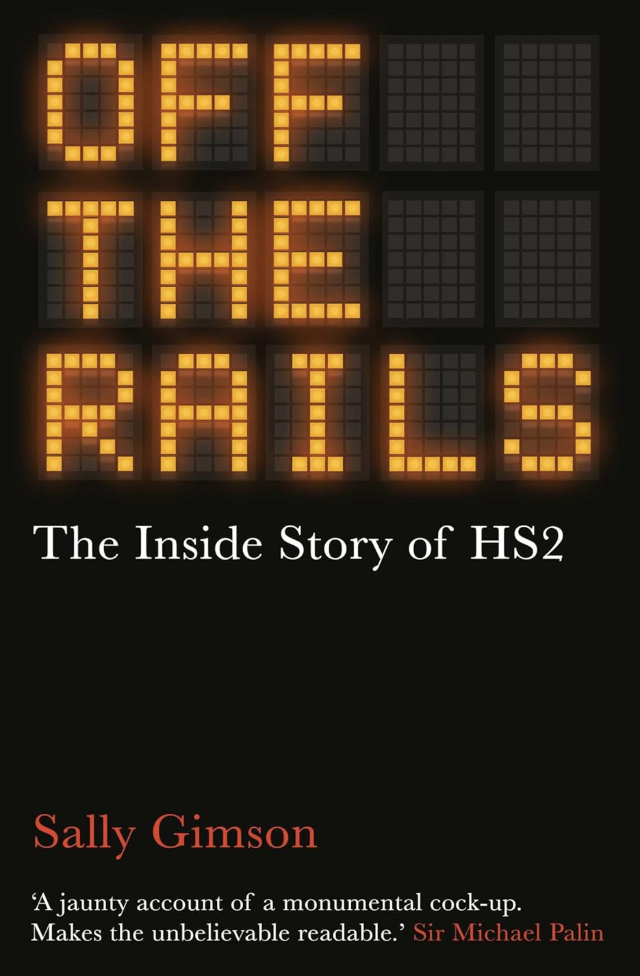
A review of Off the Rails, The Inside Story of HS2 by Sally Gimson. (Oneworld, 2025)
If any project deserves a detailed exposé, it’s HS2. Britain’s plan to build a second high speed rail line has become an epic, expensive failure. Once heralded as giving the country – well, England – a network of high speed routes between London, Manchester, Nottingham and Leeds, it has been reduced to a single route between London and Birmingham. Thanks to the stupidity of former prime minister Rishi Sunak, who cancelled the Birmingham to Manchester section, HS2 trains heading for Manchester could actually be slower than today’s trains once they divert from HS2 onto the West Coast Main Line at Handsacre Junction north of Birmingham.
HS2 Colne Valley Viaduct, near Denham, Bucks
Our village, Chalfont St Giles in Buckinghamshire, is on the route of HS2. You’ll find few supporters of the project in these parts, even though the line passes us in the 10 mile long Chiltern tunnel. But I always supported the idea, as I blogged when the Tory-Lib Dem coalition gave the green light to HS2 in 2012. As I argued:
‘Britain’s intercity rail network was born just before Queen Victoria came to the throne in 1837. It was the wonder of the world. Nearly two centuries later, the world wonders why Britain is so reluctant to build a new railway. HS2 opponents say we should just modernise the west coast mainline. That line was created from a series of 19th century railways. It has been ‘modernised’ twice in the last fifty years. It’s still in essence a Victorian railway.’
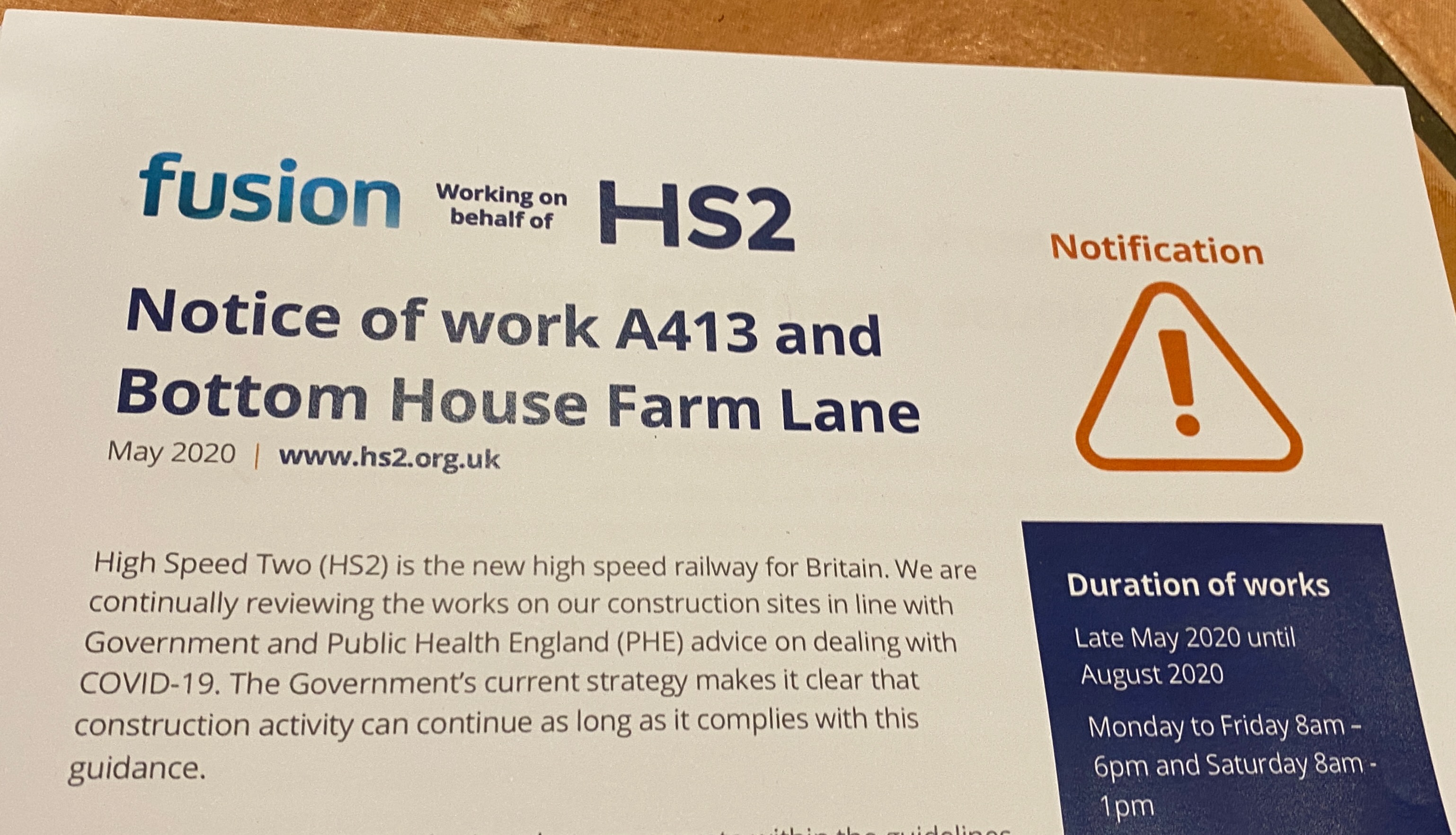
Above: HS2 built a new road parallel to Bottom House Farm Lane, Chalfont St Giles, for construction traffic to the site of an HS2 tunnel shaft
Our former MP, the late Cheryl Gillan, features heavily in Sally Gimson’s story. If you’re wondering why HS2 is proving vastly expensive compared with similar lines in France and Spain, Gillan is one one of the many reasons. Protesters in the Chilterns were bought off with miles of extra tunnels. These same protesters will happily use Heathrow airport, the M40 and other environment-shredding services. (As I do, I hasten to add.) Ironically, the route from Birmingham to Manchester, killed by Sunak in 2023, would have been far cheaper to build with fewer tunnels and viaducts.
HS2’s advocates and planners didn’t help by changing the reasons for the line. It started out as a need for speed – though arguably faster than we needed, increasing costs – but morphed into a boost of the capacity of the railway, followed by an idea of ‘levelling up’ the country.
Sally Gimson tells the story well, from early mistakes through soaring costs resulting from buying off Chiltern protesters right up to Rishi Sunak’s calculated act in announcing the axe of the route to Manchester … in Manchester. She’s a fan of the concept of HS2, and is appalled by the way the project’s epic mismanagement has given high speed rail in Britain a terrible reputation, despite the success of HS1.
She doesn’t explain that the British government designated HS2 an ‘England and Wales’ project, even though even the original route didn’t include a metre of track in Wales. This meant that Wales was denied extra funding for rail projects under the Barnett formula unlike Scotland and Northern Ireland, which gained billions of pounds of extra funding. This has been hugely controversial in Wales, especially to the Labour government in Cardiff after Keir Starmer refused to reconsider the decision on coming to power.
Sadly, Gimson’s book is riddled with silly factual mistakes that suggest a shaky grasp of railway history – and more. Here are some that I spotted:
The Times newspaper was not a product of the railway era (p23) – it was founded in 1785, decades before the start of the railway era.
HS1 did not open in 2001 (p43). The first section opened in 2003, with the second section to St Pancras following in 2007.
Crewe was not still building steam locomotives in 1964, the year Japan’s first high speed line opened (p47). Crewe ended steam engine construction in 1958, and the final BR steam locomotive, Evening Star, was completed at Swindon in 1960.
British Rail was not born a year after the railways were nationalised (p34). Nationalisation on 1 January 1948 created British Rail under the original longer name, British Railways.
Northern Rock bank collapsed in 2007 not 2008 (p66).
There was no ‘InterCity125 line connecting London to Edinburgh developed in the 1980s’ (p131). The InterCity 125 service from London to Edinburgh began in May 1978, using the existing East Coast Main Line. The line was electrified in late 1980 with InterCity225 electric trains reaching Edinburgh in 1991.
Andrew Gilligan resigned from the BBC in 2004 not 2003 (p169).
Graham Brady oversaw the vote of no confidence in Theresa May by Tory MPs in 2018 not 2019 (p189).
Andy Street was not elevated to the House of Lords in December 2024 – or at any other time. He is not Lord Street, but Sir Andy Street. (p213.) Also, he was not chair of John Lewis, but its managing director.
Neville Chamberlain was lord mayor of Birmingham in the 20th not 19th century (p222).
It was the Grand Junction not Grand Central railway that built Crewe (p243).
I’m sure Christian Wolmar, a real transport expert, would have spotted the transport howlers had Gimson asked him to proof read her manuscript.
World Book Day. A inspired way of getting children to read books, or an annual chore for parents whose children need a Gruffalo outfit for school?
I’ll leave you to decide. But I’ve been thinking about reading, and my own changing ways of enjoying books. From an early age, I’ve loved reading, although mostly non-fiction. I enjoy a good novel, but as a history fan I’m usually drawn to volumes on the past, especially military history and politics.
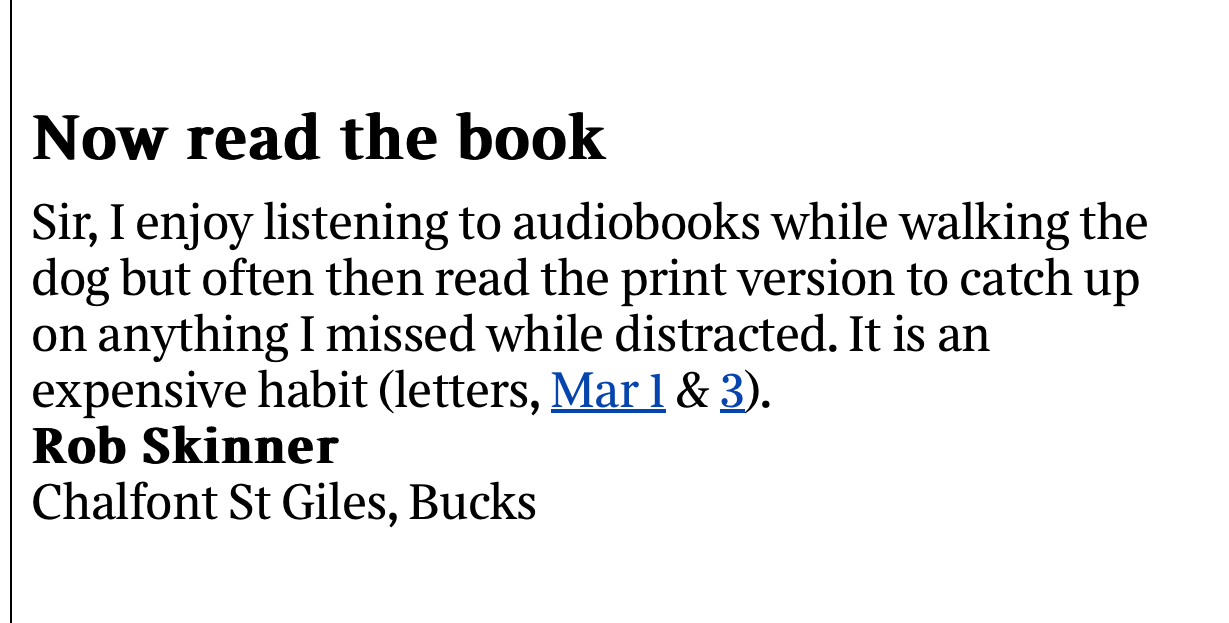
As my latest letter in The Timesthis week showed, I’m increasingly listening to books. Back in the analogue era, I had a few books on audio cassette, including Tony Benn’s diaries and Douglas Hurd’s memoirs. (I’m eclectic in my political interests!) In 2012 I discovered Audible’s range of audio books, and have been hooked ever since. They’re perfect for car journeys, bike rides and dog walks.
But, as my Times letter admitted, I often read the print or Kindle version of the audio book to catch up on what I missed – it’s important to pay more attention to the road than to the latest twist in Starmer’s battle against the Corbynite left in Get In, Maguire and Pogrund’s exhaustive book about the Labour leader’s road to 10 Downing Street.
An adult World Book Day?
The Times today asked whether adults needed their own World Book Day – presumably without the need to dress up. The paper noted that 40 per cent of British adults haven’t read or listened to a book in the past year, according to YouGov research. But, looking on the bright side, half of Britons say they read or listen to a book at least once a week. That’s more encouraging, especially given the distractions of social media, and the flood of podcasts and video available online.
Hardback reader
Over the past few years, I’ve started buying hardback non-fiction books. They’re often easier to read, with larger type than paperbacks, while also looking rather nice on the bookshelf. As the photo above shows, I’m working my way through James Holland’s magisterial account of the battle for Italy during the second world war. This is one of the less well known aspects of the war, which deserves a wider audience.
Distractions abound
Despite being addicted to books, I can’t deny that I find it far harder to concentrate on reading these days. I have an urge to Google people and events featured in the book. Worse still, I find my attention wandering to tasks to be completed, or the route of that afternoon’s bike ride. I try to focus on the book, but too often put it down to tackle that other activity. Distractions: the curse of our online age…
This was the forbidding opening title scene in the BBC’s iconic 1970s television drama, Colditz, with the outline of Colditz Castle – the notorious second world war prisoner of war (PoW) camp, Offlag IV-C.
Back in the seventies, Colditz was amazingly prominent in British minds, 30 years after the war. The television series ran for two years, based in part on the bestselling books by Pat Reid, one of the first British prisoners to make a ‘home run’ to Britain. (As Nazi Germany controlled most of Europe, getting out of Colditz was just the start of a successful escape.) It was the most successful television drama the BBC had ever made, watched by a third of the viewing public. Most of the prisoners behind the walls of Colditz Castle had already escaped from other German prisoner of war camps, and so were an elite band of escapologists.
I’d barely given Colditz a thought for decades, but that all changed when I read Ben Macintyre’s 2022 book, Colditz, Prisoners of the Castle. Macintyre is a wonderful storyteller, with a knack of uncovering a multitude of spellbinding anecdotes and tales about even familiar topics. My childhood Colditz memories were replaying in my mind as I read his account of the wartime fortress prison.
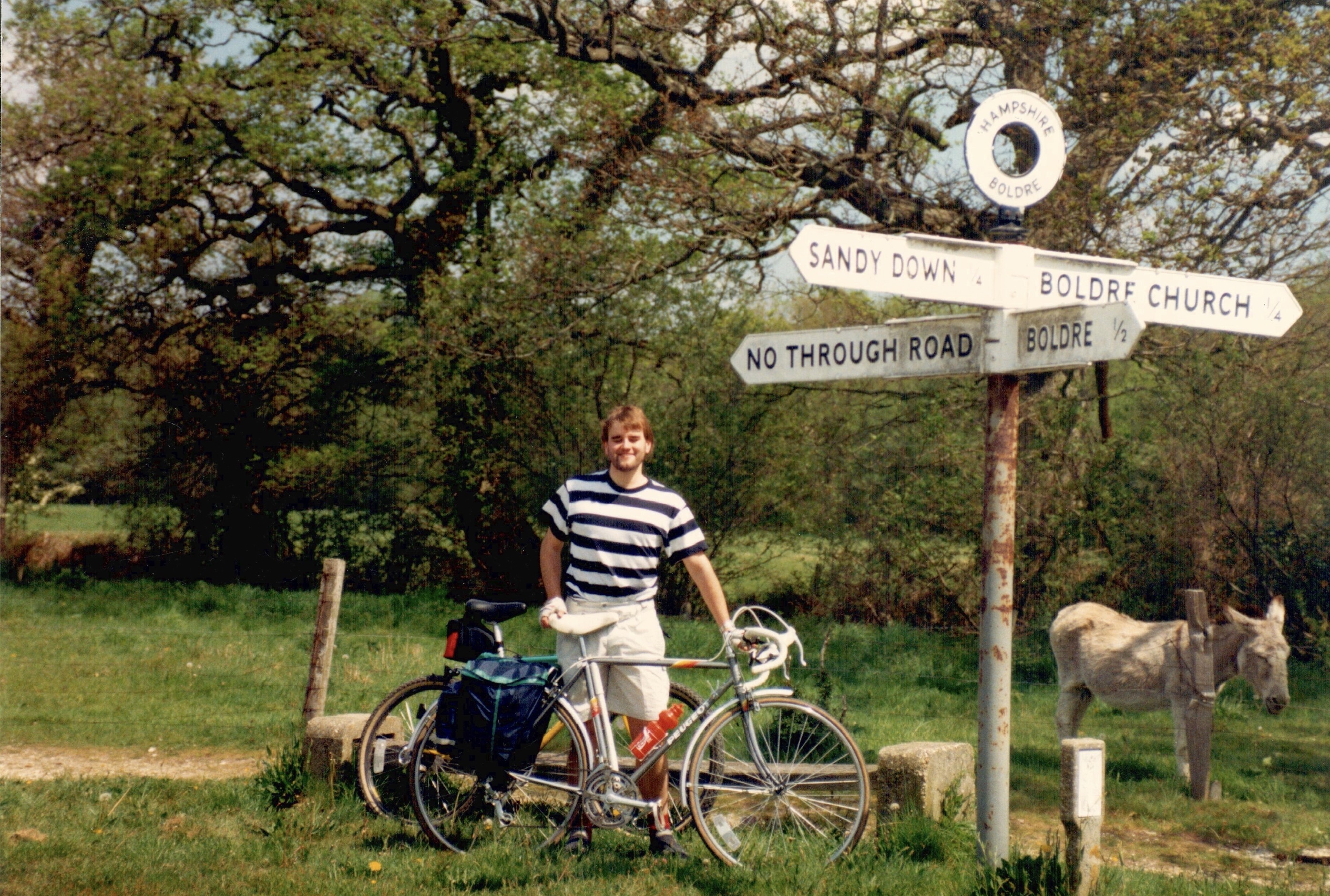
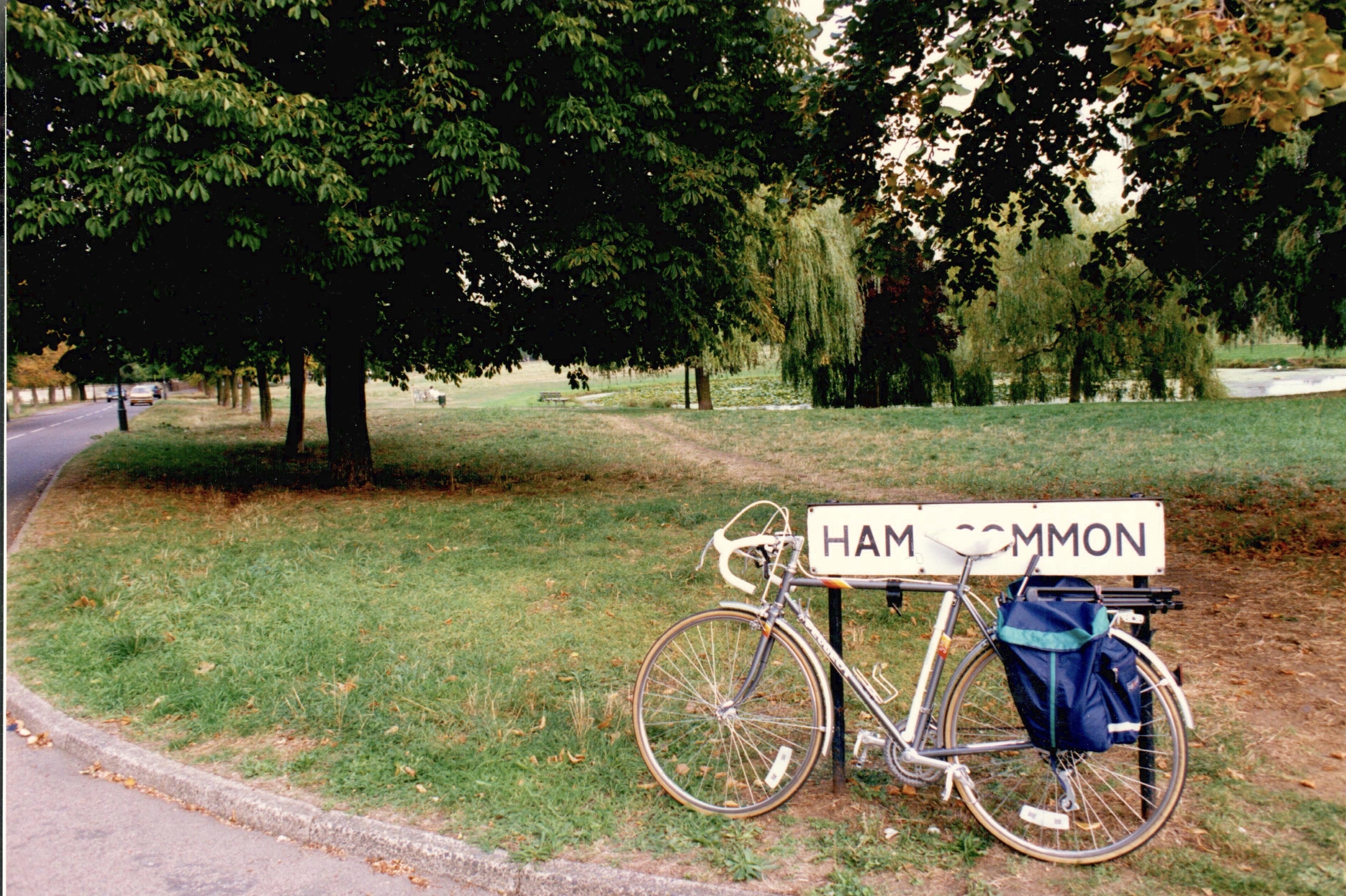
Exactly 35 years ago, my life changed for ever. On a sunny Saturday in July 1989 I emerged from Richmond Cycles in south west London with my first proper bike: a Peugeot Camargue tourer. I was about to discover a love of cycling and bikes that is as strong today as it was during that last, hot summer of the 1980s.
The Camargue was not my first bike. Mum and Dad gave me a shopper bike, the Raleigh Twenty, for my 11th birthday, and I cycled around Cardiff on it before selling it to my sister six years later. When I went to university I got it back, and it proved a useful way of getting around Leicester. The choice of that shopper bike showed how little my parents or I cared about bikes. I got rid of it when I graduated, with no intention of ever getting another cycle.
That all changed in July 1989. By then I was living in Teddington, Middlesex, and working in Holborn, central London. Rail strikes prompted thousands to cycle to work rather than get stuck in traffic. My friend Richard commuted by bike from Twickenham to the West End, and I was inspired by his example to get a bike. In the days before the internet, this meant popping into bike shops to review what was on offer and browsing through catalogues.
I liked the look of Peugeot Camargue, along with a very modern looking hybrid city bike, whose name escapes me. The Camargue was the only one in stock at Richmond Cycles (then based next to the Odeon cinema in Richmond – it is now over the river in East Twickenham), so I went for that.
Note: I published this blogpost a year ago, but accidentally unpublished it a couple of months later.
‘Don’t tell him, Pike!’ It’s the most famous line associated with Private Pike in Dad’s Army. Yet it was the officious Captain Mainwaring, played by Arthur Lowe, who uttered it. Mainwaring also regularly called Pike a ‘stupid boy’. Such is the enduring fame and appeal of the classic comedy series that many people born long after the last episode was shown in 1977 are familiar with these timeless catch phrases.
Ian Lavender, who has died aged 77, was the last survivor of the golden cast of Dad’s Army. He was 22 when he joined Dad’s Army – almost 50 years younger than Arnold Ridley (Private Godfrey) and John Laurie (Private Frazer). He played the immature Pike to perfection. It is poignant to reflect that Ian Lavender died over half a century after the passing of James Beck in 1973, who played the black market ‘spiv’ Private Walker. (Spivs were people who traded in black market goods, bypassing the strict wartime rationing system for food and other goods.)
The 1971 film version of Dad’s Army was largely filmed in our village, Chalfont St Giles, Buckinghamshire. Walmington on Sea has rarely been so far inland! The old Crown pub took on the guise of Martin’s Bank (manager, Captain Mainwaring), as seen below. In real life, the building is now empty after brief stints as Crown Coffee, and before that Costa Coffee as I blogged in 2014. It is due to reopen as Durans Bistro later this year.
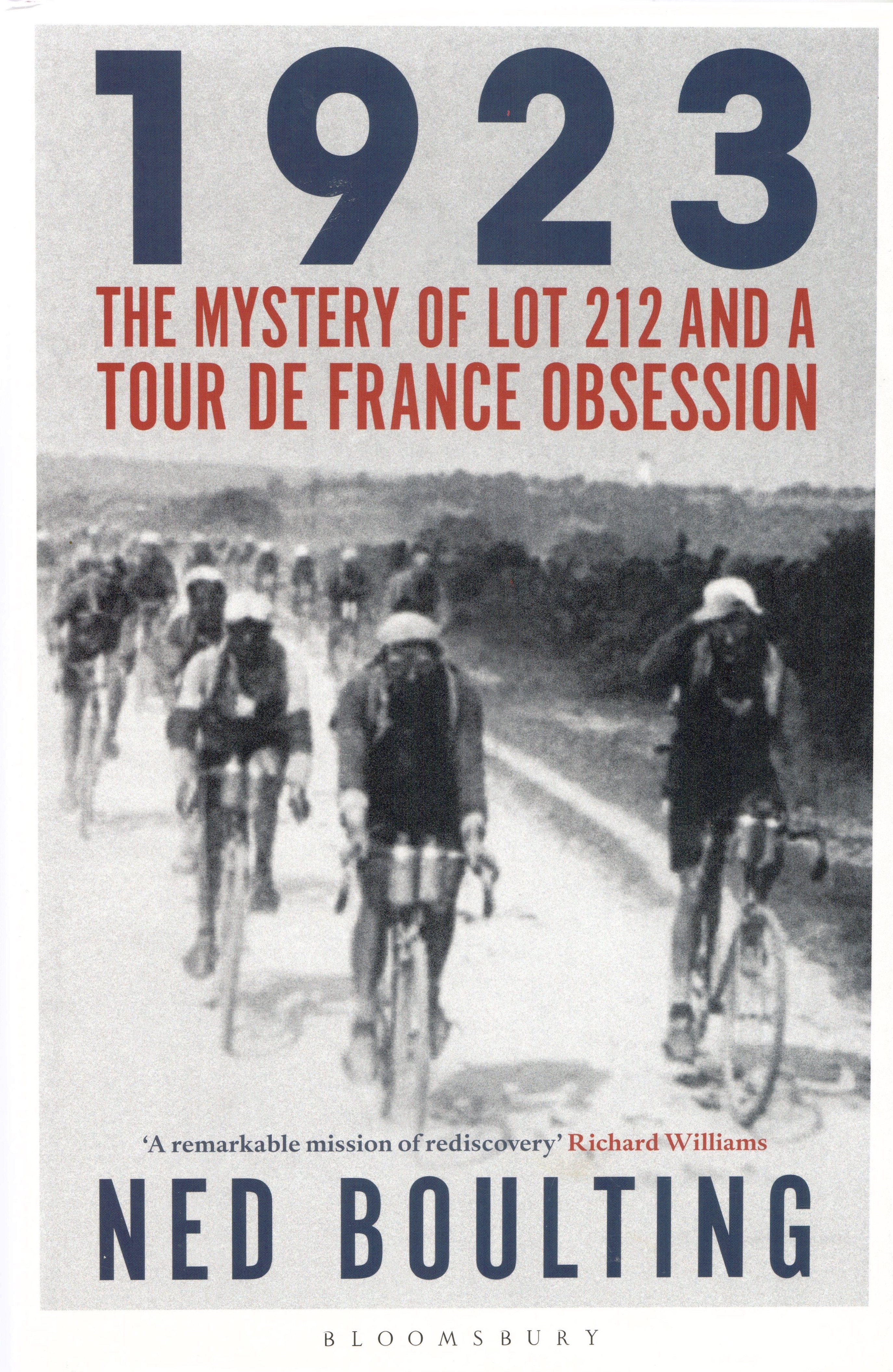
Cycling journalist Ned Boulting’s latest book, 1923, is the story of how the purchase of the fragment of a newsreel report about a century-ago edition of the Tour de France led to an obsession with the forgotten rider seen on the film crossing a spectacular bridge. But this is far more than just another cycling book. It tells the story of a Europe still riven by tension and hatred five years after the Armistice.
The story begins when a friend pointed him to an item for sale in an online auction:
Lot 212. A Rare Film Reel from the Tour de France in the 1930s? Condition unknown.”
Ned bought the film for £120, and began a fascinating journey (literally and metaphorically) of discovery. The question mark over the date in the auction house listing was appropriate. The film, just over two minutes long, actually featured the 1923 Tour de France. Boulting found that the early Tours after the Great War followed exactly the same route, so he resorted to reading old newspaper articles, and even searching for weather reports, to establish that the stage from Brest to Les Sables d’Olonne featured in the film took place on 30 June 1923.
That £120 purchase could have had disastrous consequences. The company that made Boulting a digital video out of the ancient reel told him that the original was a nitrate film, and so highly flammable. Ned didn’t admit to the film restorers that the item had sat next to the radiator of his house after popping through his letterbox after he won the auction. If you happen to have a very old film reel at home, do check that it isn’t nitrate…
Théophile Beeckman leads the peloton over the bridge at La Roche-Bernard. Photo: Ned Boulting, 1923
This is one of the defining images from the 1923 story. It shows the hero of the book, Théophile Beeckman, racing ahead on the bridge across the river Vilaine at La Roche-Bernard. As the subtitle of the book, The Mystery of Lot 212 and a Tour de France Obsession, suggests, Boulting became obsessed with uncovering the story of Beeckman, a man so obscure that he has all but vanished from the records. (As Ned discovered, there was virtually nothing about the rider online until he published 1923.)
Some years are associated with tragedy and the horror of war. For example,1914: the year the lamps went out all over Europe (in the poignant words of Sir Edward Grey) at the start of the Great War; 1916: the year of the cataclysmic battle of the Somme. And in Wales 1966: the year of the tragedy of Aberfan.
Nicholas Winton and the Kindertransport
Over the past few days, I have been reflecting on another of those ill-starred years: 1939. Yesterday, we went to the cinema to see One Life, the brilliant film about the life of Sir Nicholas Winton, who played a key role in saving 669 children from the murderous Nazis in Czechoslovakia. He helped arrange for them to be brought to Britain in the spring and summer of 1939. Tragically, the very last Kindertransport train was halted on 1 September 1939 after Hitler invaded neighbouring Poland. The 250 children on board, so close to salvation, were seized by Nazi thugs, and only two survived the war.
The film is heartbreaking and heartwarming in equal measure. Heartbreaking because it highlights the agonies that so many people, especially the Jewish people of Europe, suffered at the hands of the Nazis, and because we are so aware that similar hatred is causing misery once more, especially in the Middle East and Ukraine. But heartwarming because good people like Nicky Winton, his mother Barbara, Doreen Warriner, Marie Schmolka, Martin Blake, Beatrice Wellington and Trevor Chadwick went to extraordinary lengths and (for those in Prague) considerable personal danger to save others. It was especially poignant to see the recreated scenes at Prague’s railway station as parents waved off their children, knowing they themselves would probably never see them again.
I’m in Inverness, on the eve of my latest cycling adventure. I’ll be pedalling 500 miles in seven days around the spectacular Highlands.
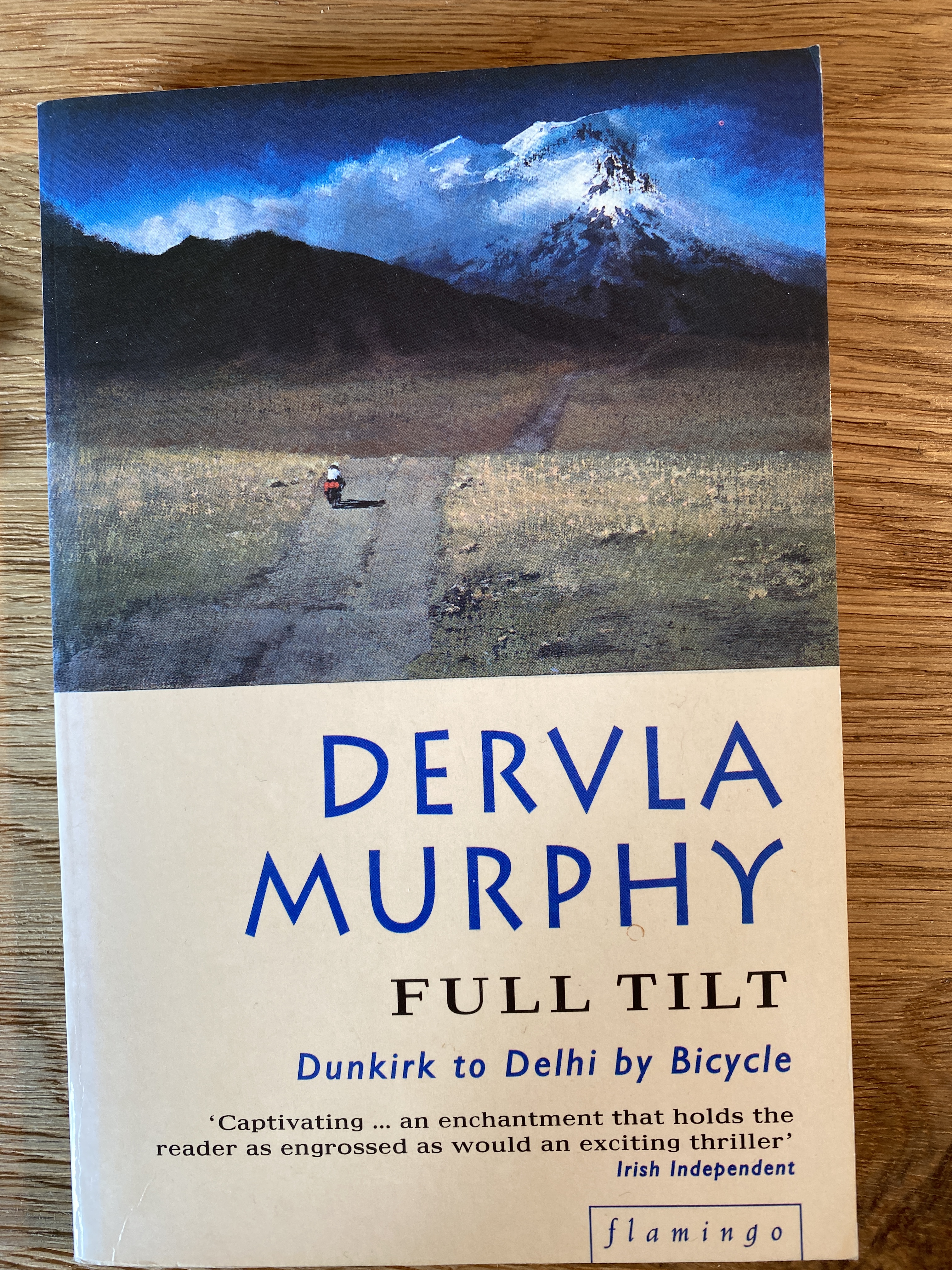
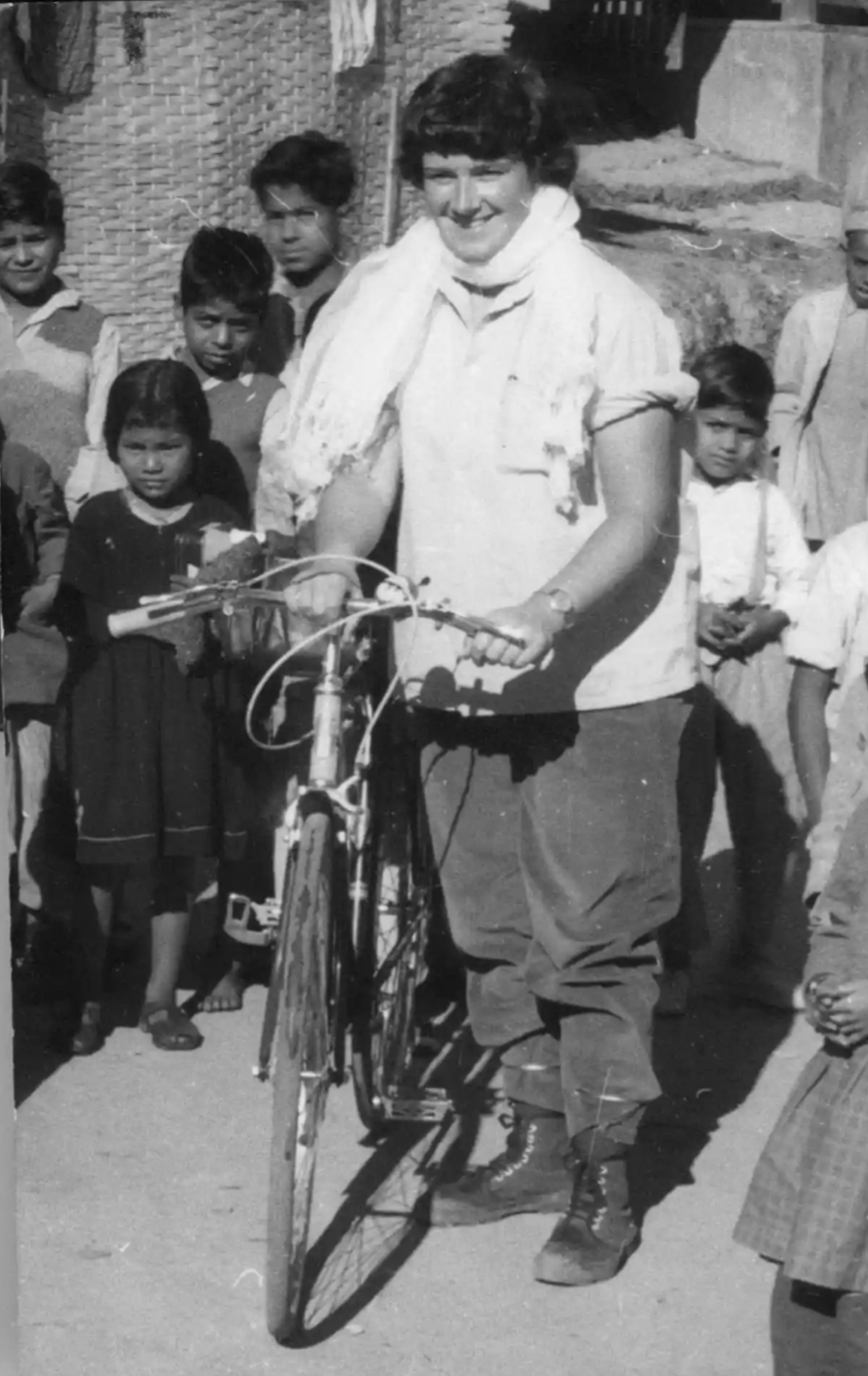
How poignant that my trip begins just days after the death of Dervla Murphy, who inspired me to explore the world on two wheels. Back in 1996 I picked up a copy of Full Tilt, her account of her ride from Dunkirk to Delhi, which began in the arctic winter of 1963 – the year I was born. I was enthralled by Dervla’s description of her journey, especially her travels through Afghanistan, a country she clearly loved. How heartbreaking to reflect on its ordeal in the past 40 years.
I met Dervla at the Cheltenham Festival of Literature in, I think, 1996. She signed my copy of one of her books, and I told her what an inspiration she was to me. While I loved Full Tilt, her autobiography Wheels Within Wheels was arguably even better. She explained that she was only able to make her long dreamed about ride to India after her mother died. I was captivated by her family story, including her parents’ background in the Irish republican movement.
Not long after reading Full Tilt, I set off from my childhood home in Cardiff for Ireland, Dervla’s homeland. I was to cycle solo from Dublin over the Wicklow mountains, bound for Rosslare and the ferry back to Wales. The weather, in August 1996, was glorious and I declared Ireland a perfect cycle touring country. I have never made it to Lismore, Dervla’s hometown, but one day I might just pay a visit to the place that one of the greatest cycling travellers called home.
Another of her books, A Place Apart, gives a stark account of Northern Ireland at the height of the Troubles. Dervla found it hard to credit the attitudes and actions of her fellow inhabitants of the island of Ireland. Especially the hardened loyalist community and the followers of Ian Paisley. (It was impossible to imagine in 1976 that Paisley would one day join IRA man Martin McGuinness in government in Northern Ireland.) Dervla’s bafflement was shared with many people on both sides of the Irish Sea.
It’s hard to realise today how unusual Dervla was in the 1960s as a female solo traveller writing about her experiences. She practised firing a pistol in County Waterford in preparation for future ordeals, and used it to shoot wolves in Bulgaria, Later it helped fend off a threatening Kurd. She later said the whole trip cost just £64, 7s and 10d in old money. 1963 truly was a different world.
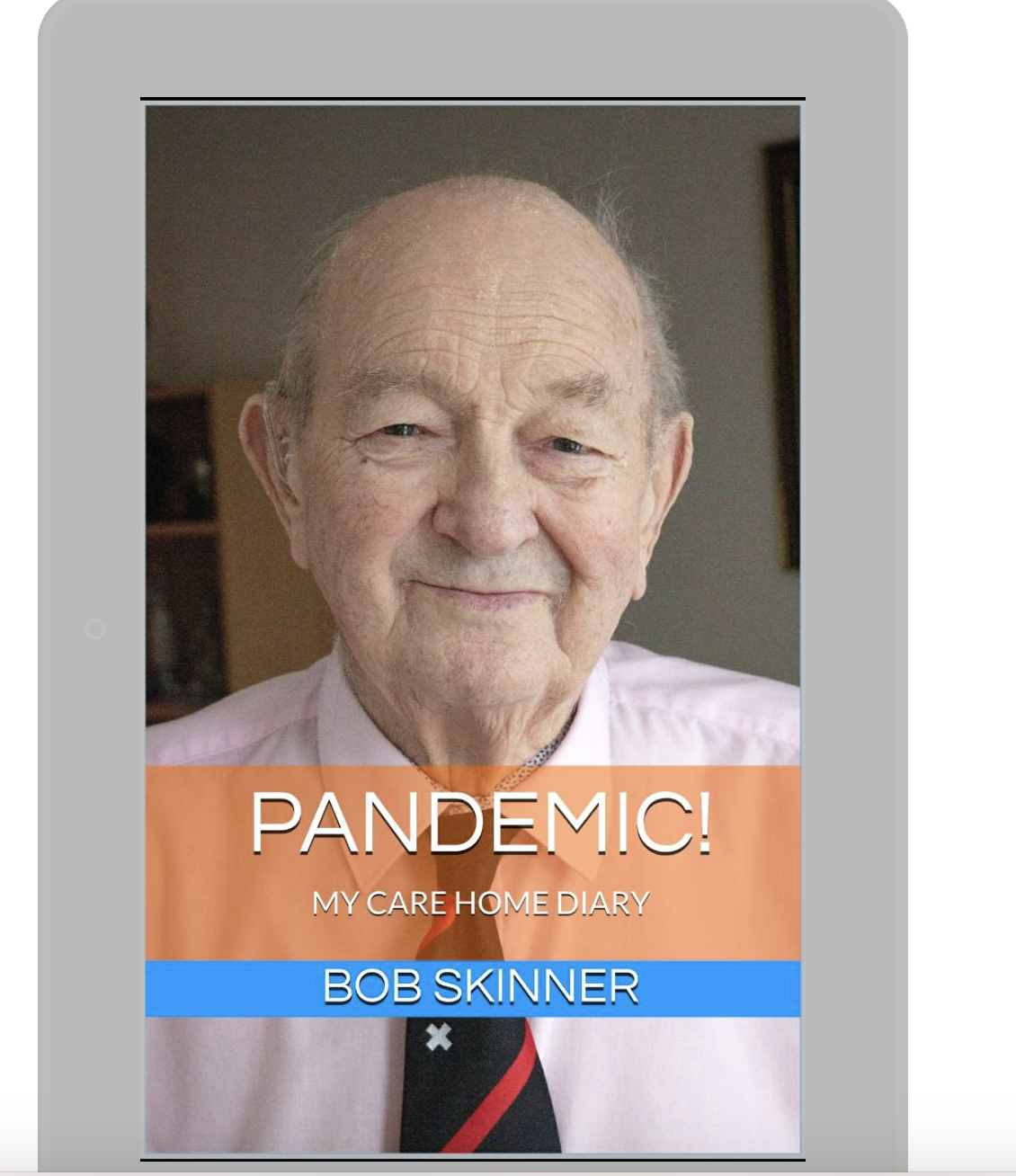
In March 2020, as coronavirus took hold in Britain, my father Bob Skinner started a blog to record his day to day experiences during the pandemic. We have now published the diary as a Kindle book.
Bob has a true reporter’s eye for the events of the year that changed our lives for ever, explaining how he recovered after three weeks in hospital with coronavirus. He also recalls his first reunion with his family, shown live on ITV’s Good Morning Britain. Moving and often amusing, Pandemic: My Care Home Diary gives a unique account of what life was like for Britain’s care home residents during the worst pandemic for over 100 years. It was a pleasure and a privilege to edit the blog and prepare it for publication. We think Bob’s book will be a lasting tribute to the carers who risked their own lives looking after their vulnerable residents.
Here are a few extracts from the book. You can buy it at the Kindle store here.
Sunday 22 March 2020
Silent bells
It’s Sunday. It’s chilly but the sun is shining, a rare, welcome sight after dark weeks of wind and rain. A normal Sunday in Cardiff? No, it is unique, historic. Looking out of my window in Cyncoed Road, the city is strangely quiet. Far fewer cars, no buses, just the occasional dog walker and young jogger. Not an elderly person in sight.
Last week it was busy, with nonstop traffic, people going to work, children off to school. Last Sunday, the bells were calling people to worship. Today they are silent, and the church doors are firmly shut. Members are no doubt fervently praying at home for normal life to return soon. How many centuries ago was it, I wonder, when people were banned from leaving their home?
Friday 3 April
On Air
No trouble finding something to write about today. I made the news myself.
Yesterday, I was having an after-dinner cup of tea in our bistro when Virgil, the deputy general manager, came over with a message from Sunrise headquarters. They had seen my coronavirus diary entries and asked if I would go on ITV to talk about our carers. I agreed.
So it was a new challenge. Was I too old, too rusty? I would see. Later in the evening came instructions on how the makeshift operation had to be done in lockdown. My living room became a studio. What a difference. No camera or sound equipment, just a laptop on my coffee table.
‘Are you ready, Bob?’ ‘Yes, fine,’ I replied. I was on air. It was all over in minutes. I remembered most of my key words, did not move, and think I made the tribute to carers that they deserve. A lot of phone calls and emails today. Fame at last – and it’s only taken 93 years.
Sunday 12 July Reunion with Robert
Yesterday was a special, memorable day. My first visitor after four months – my son Robert. He spent the day, five hours of driving, to have just an hour with me.
It was more than a happy reunion after those unreal months: proof that brighter days lie ahead. It was far from normal. We old people are being carefully looked after – guarded – and that made the difference. I had been looking forward for so long to today and was standing by the window watching for him to arrive, but I had to wait.
He first had to be ‘made safe’ by being kitted out with apron, gloves and face mask by a carer. Then he was taken to the gazebo set up in front of the building. Inside were two seats, the regulation two metres apart. I was taken out to join him. No hug or handshake allowed. After a wave and a laugh we lost no time in getting down to chat, making up for lost time.
The unusual visit ended with us being filmed and briefly interviewed as part of a planned ITV Good Morning Britain broadcast on Monday morning for which my grand-daughter Ria has been invited to Sunrise.
Sunday 16 August A forgotten army
The Welsh government’s advice to vulnerable people to shield to reduce the risk of coronavirus ends today. They can resume as normal a life as possible. Good news for them and their families after a debilitating five months of loneliness and worry.
But there is another, larger section of the community that is waiting for signs of release from lockdown – we care home residents. I am beginning to think that, like the men who fought in Burma, we are the forgotten army. Reacting, reasonably, but belatedly, the government clamped down on us. And we are still in a vice-like grip.
While the rest of the country starts to experience the pleasures of normal life, our freedom is still very limited, and, worse, there seems little prospect of change.
And who is thinking of us, speaking up for us?
Saturday 26 September
I have coronavirus
This is one diary entry I did not expect to make but the Sunrise luck has run out. I was at the art class this morning when a few of us were asked to return to our rooms. That sounded ominous, and it was.
I was told that five residents had been tested positive. I had expected to find that I was one of them as I have not been feeling too well for a few days; a bad cold and a cough. A few hours later I was told that I had indeed tested positive for coronavirus.
So it’s all change. We are all confined to our rooms with a carer looking after us.
Sunrise has almost shut down, the restaurant closed, activities suspended. What a shame. I feel sad after all the effort they have put in over the months, but there it is. We have to put up with it. I am feeling pretty good which I hope will continue and I will make the best of the temporary new life style.
Being alone most of the time does not worry me as I still have plenty to keep me occupied. And it is no use worrying. Everything has been so uncertain for so long that a little more uncertainty will do no harm.
Monday 26 October
Recovering in hospital
Seven months ago, coronavirus cast a cloud of uncertainty and fear over the world, affecting the lives of billions of people. Despite all the efforts the cloud still hangs over us.
My life changed again when I was one of eight Sunrise residents tested positive and I obviously wondered what form it would take.
For the first week or so, it wasn’t so serious. It was like having a bad cold. But then I started feeling much worse, with nausea, swings from being too cold and too hot, sleeplessness and even delusions. A fall in the bathroom early one morning proved disastrous. I was rescued by two carers who got me back into bed via a hoist. My condition worsened and I was taken to hospital with a broken ankle as well as coronavirus.
After three weeks in hospital and some very difficult days the nursing and treatment is now working. Progress was slow until a few days ago when I was given some new tablets to stop the pain and enable me to sleep. There was an immediate effect. I asked for an increase and there was a remarkable effect. The pain is less than for months, I can get out of bed and am starting to walk again and manage to look after myself. What a difference from being helpless and reliant upon others.
Thursday 12 November
Watch out Lewis Hamilton
After giving up driving a car after more than 70 years, I thought I would miss being behind the wheel. But I have found the answer – my shiny blue and silver electric scooter. With its headlights, direction indicators and even a horn, it is ready for the road, top speed 8mph, or 4mph on the pavement.
This week it became my lifeline. With my heavily strapped broken ankle making movement painful and difficult, the scooter came to the rescue. Now I am driving again all day, indoors. It’s my mini Monte Carlo circuit. Top speed indoors is about 1mph across the 30 foot living room with detours into my bathroom and bedroom – watch that chair!
Tired after a day ‘on the road’, it’s time for bed. My last journey. Into the dark bedroom, driving straight for the bed. Headlights blazing, I tumble in. Hard work driving, but exciting.
Watch out, Mr Hamilton.
Monday 21 December
The shortest, saddest day
Today is the shortest day of the year, the darkest of the winter. This day, 21 December, in 1942 was one of the saddest days of my life. It was wartime and we were facing a stark Christmas. The war news was grim, there was rationing and shortages. It was the day my father, Frank died.
At sixteen I had just started work as the Penarth Times reporter and was in Penarth police court when called home. My father was seriously ill. I knew before I got there that he had died. It was from a heart attack. He was 52.
Like this year, it was an unusual Christmas with families separated, celebrations muted. I remember very little of those few days, and have no recollection of Dad’s funeral. I did go out one evening, to join our church’s young people’s group carol singing. Mum thought it would do me good to get out of the house for an hour.
Looking back, the saddest part was that I had so little time to get to know Dad. Two days before war was declared our family separated, never to be all together again.
Christmas Day 2020
A Christmas like no other
Christmas Day. A day so different this year from any other. A strange day, with most of us missing the usual family gathering, and millions with no family, unable even to give their elderly parents a hug. A day to remember, and to forget.
My day started with Christmas greetings by Zoom from Robert, Karen and Owen (plus dog Rufus), all three resplendent in Christmas jumpers, Owen’s a spectacular Welsh one. Nadolig Llawen!
I was sporting my first ever Christmas bow tie. After trying to tie it for nearly an hour last night one of the carers managed it in a minute this morning. Then it was downstairs for the get together and to receive our gifts from Sunrise. I was patient, opening my presents under my Christmas tree mid-morning.
The festively dressed carers and Sunrise team were as cheerful as ever, making it another happy day although I would love to see those masks and visors removed.
But thank you, everyone, you made it a special day, again.
Friday 22 January 2021
Vaccination Day
It’s vaccination day at Sunrise. A day of relief, and celebration. Mass vaccination.
As usual, the care home got it right. Organised to the minute. Calm and relaxed, just right for us old people. And, a happy touch, flags and balloons to cheer us – a bright idea. Having a jab is never fun but today it was relished, welcomed with open arms.
The troops were on parade, with our sticks, walking aids, wheelchairs, ready and willing. The long wait was over. When the call came we went into the temporary surgery, rolled up our sleeves. It was over in a flash. I did not feel a thing. Then into a lounge for a rest and a glass of orange juice. To mark the historic day we had our pictures taken and then it was time for lunch, happy that a milestone in the long, arduous pandemic road pointed the pathway to safety.
Well done, Sunrise, and the NHS!
Wednesday 10 March
Freedom in sight
Sitting looking out of my window onto the sunlit street below, the world looks inviting. Normal. Not exciting. People driving cars and vans, riding bicycles, pushing prams, jogging, walking. Across the road a man is working in his garden. Beyond, I see the lighting towers of the university training ground.
A typical suburban scene on a typical afternoon, but it is deceptive. Almost a mirage. I cannot go out to join it. Like countless millions throughout the world, I am a prisoner in my own home. Trapped. For a year, because of the plague stalking our planet, creating a living horror story.
The world has seen many fanatical leaders, dictators and despots who have held their subjects in thrall, but this is Britain in the 21st century, beacon of democracy. Over 60 million of us can no longer call our lives our own. Leaders have changed the rules and laws. Unlike heroes of the past, we have not rebelled, risen up in anger to break the chains. We have agreed with our leaders, followed their dictats and changed our whole way of life – voluntarily.
But freedom is nigh. Human ingenuity, courage and patience are winning the battle. Apprehension and danger receding, we hope we face only a few more months of isolation before we will be free to resume normal lives.
And I will happily ride my scooter out onto Cyncoed Road and rejoin the real world out there.
On the eve of the Second World War, around 800,000 children were evacuated from big cities like London to the countryside to keep them safe from devastating bombing attacks. Many of the children had never been to the countryside.
The great exodus: children arriving in Devon, 1940. Photo: IWM
This mass movement of the young has long been fertile ground for writers and dramatists. As a child growing up in Wales in the 1970s, I loved the BBC television adaptation of Carrie’s War, Nina Bawden’s novel about children evacuated to Wales. Years later, I watched it again with my then eight year old son, Owen. He was equally enthralled.
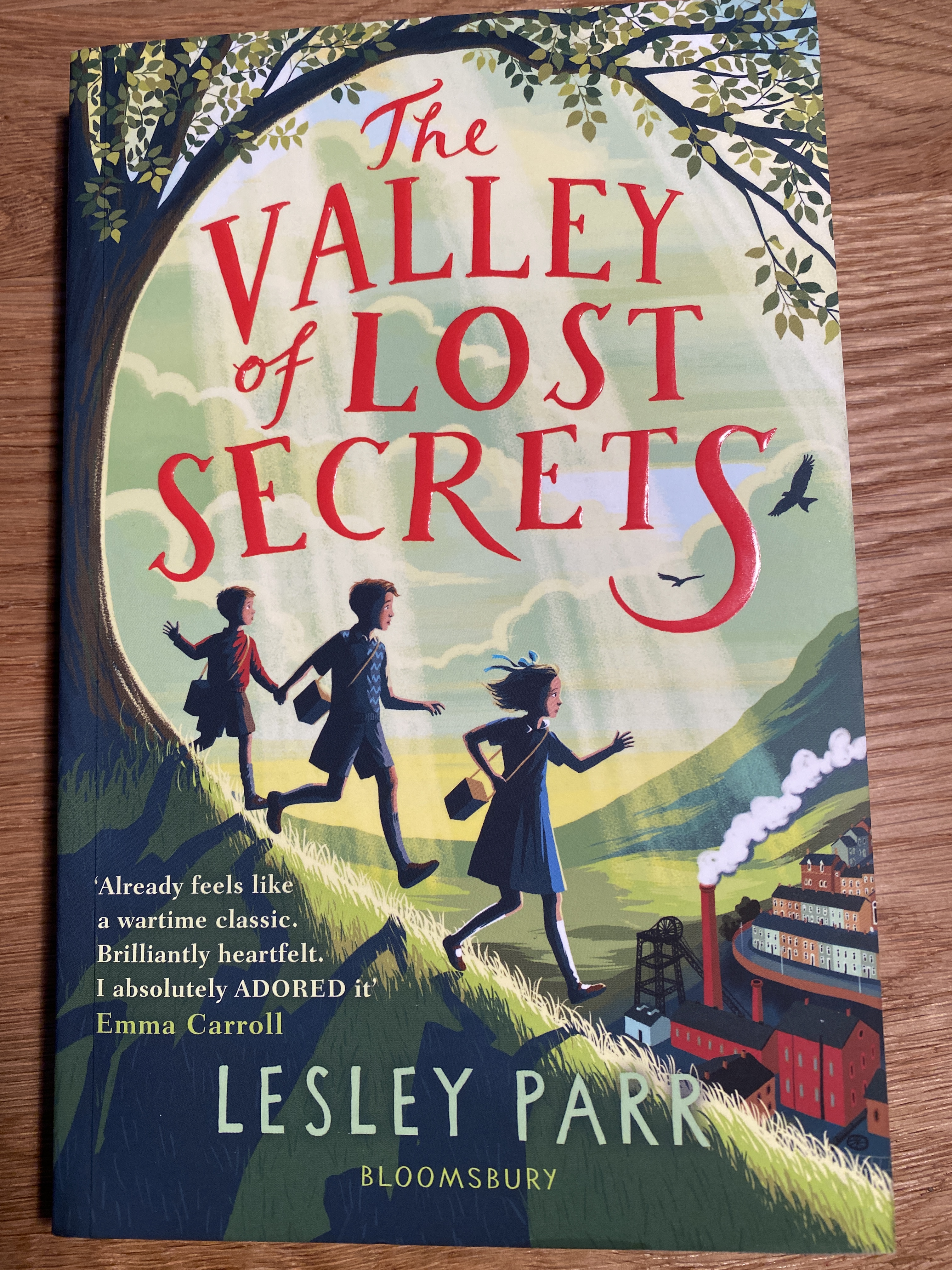
Lesley Parr has followed in Nina Bawden’s footsteps with a superb debut novel featuring two brothers sent to Wales in September 1939. Jimmy and Ronnie arrive at the village of Llanbryn after an endless train journey from London.
The author evokes the tension as the children wait in the miners’ institute hall to be allocated to local families. At first, Jimmy is worried about his brother, fearing that his sulky looks and tears will deter the locals from choosing them as their guests. (This reminded me of the petty humiliation of being the last to be chosen for a team in school games in Cardiff.) But we soon find that Ronnie is quicker to settle and develop a bond with their hosts, Mr and Mrs Thomas. Jimmy resents the way his brother calls Mrs Thomas ‘Aunty Gwen’ and wishes their host wouldn’t pretend that the house in Heol Mabon was the boys’ home. Only in time does Jimmy establish his own sense of belonging in Llanbryn.
Lesley was born in Wales, and has a nice way of showing how the boys from London struggle with Welsh names and words. (In many ways, the Wales of 1939 would have been much more of a culture shock to newcomers than today, as Netflix, social media as well as television have created a common culture across countries and continents.) On arriving, Jimmy is puzzled by the name Llanbryn on the station platform : “Funny word. Too many Ls.” Later, Ronnie thinks they are having cow soup for lunch, mishearing the word cawl, a type of Welsh stew.
The author also skilfully develops the character and back story of Mr and Mrs Thomas. At the meeting to pair the children with local hosts, the couple intended to take just one child, but change their minds and provided a home for the brothers. Had they done it for money? As time goes by, we see that they really care for the London boys. Lesley also shows that Mr and Mrs Thomas are set apart from others in the village, with the Anglican vicar in particular badmouthing the nonconformist Mr Thomas. (“Chapel is low, see. Up at St Michael’s we’re closer to God”, sneers the vicar.) Mr Thomas is a far more agreeable character than the cold Mr Evans in Carrie’s War.
The Valley of Lost Secrets also shows the ebb and flow of friendships amongst the young people. Jimmy was wary of Florence, another evacuee from back home whose reputation had been darkened because she was seen as coming from a bad family. But in time he appreciates her qualities and friendship. By contrast, he becomes alienated from his best friend from home, Duff, who joins a gang that intimidates Jimmy.
The heart of the book is Jimmy’s frightening discovery of a human skull in a tree – the lost secrets in the title. I won’t spoil the surprise here, but I didn’t expect the story to develop as it did! This is a comforting tale of warmth and friendship overcoming fear and prejudice.
Before the war changed everything: my father and grandfather, Margate, 1938
My family is familiar with the disruption the outbreak of war caused. My father, Bob Skinner, was 12 when the war began. His school, Emanuel in Wandsworth, was evacuated to Hampshire, but Dad was sent to live with an aunt in Cardiff, and listened to Chamberlain’s famous, sombre ‘This country is at war with Germany’ broadcast in Cardiff on the morning of Sunday 3 September 1939. His sister moved with her school out of London, and his older brother joined the RAF. A few years later, their father died of a heart attack aged just 52. Life was never the same again.
PS: a historical curiosity. Lesley refers to Cardiff Central station in the opening chapter. I presume she wanted to avoid confusing modern day readers by using the 1930s name, Cardiff General. British Rail renamed it in 1973.









 Ertblog