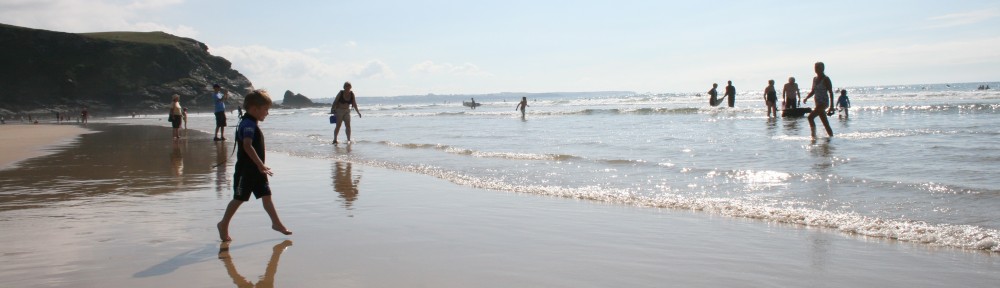
Happy 5th birthday, Ertblog!

Five years ago tonight, I created this blog. I'd been tempted to start blogging for a while but Ertblog was created on Typepad with the help of a few beers on New Year's Eve 2005. 

That first blogpost, Welcome to 2006, was about two subjects dear to my heart: family and history:

"Hello, 2006. It starts with a fascinating blast from the past. We re-discovered a family bible from the 19th century. The ancient book contained a letter from a long-lost relative in the Australian goldfields in the 1880s, telling his brother and sister back in Wales about his trials and tribulations. Even today, with the world shrunk to fit the jet age, it's difficult to imagine living the other side of the world without a severe dose of homesickness. Now cast your mind back 120 years, when a letter took months to reach the old country…."

Blogging has given me an opportunity to indulge my love of writing and commenting. It hasn't always been easy – when I'm busy or stressed I simply don't have time or inclination to post, especially when Facebook and Twitter offer a chance to have a conversation or share photos and video in a fraction of the time. But blogging still offers depth and permanence – something Twitter cannot compete with. 

On reflection, 2010 has been a good year for Ertblog. I was prolific in the spring as the general election campaign caught fire and Britain saw its first coalition government since 1945. Ertblog was unusual in spotting amidst coalition negotiations the 70th anniversary of Churchill's appointment as PM. I also posted about carefree days, such as Owen's joy on a summer day with his friend Martha and a bike ride with me. Later in the year, my post about Tony Blair's autobiography, A journey, was amazingly ranked top by Google out of 211 million search results, suggesting I knew more about the dark art of search engine optimisation than I thought. On a more personal note, I was proud to share my fleeting memories of my grandfather 44 years after he died. 

Looking back, my most read post was probably my nostalgic post about the steam engine graveyard at Barry, South Wales, in November 2007. (Our train-mad two year old son, Owen, would approve!) Earlier that year, my recollection of the Falklands War 25 years on was also a hit. 

The beauty of a personal blog is the ability to talk about anything. In 2009, I shared my memories of Cardiff City's old home, Ninian Park. A year earlier, I celebrated Wales's latest Grand Slam and Cardiff City's unlikely progress to the FA Cup Final with Wales and City's Seventies glories. (I should add that the Bluebirds 1970s successes were far more modest than those of Welsh rugby!) 

Blogging takes time. But it's time well spent, even if I'm only writing for me, my dad – and my son! 
In praise of the gritters

IMG_1675
We're enjoying or enduring our harshest winter since 1982, and the critics are having a field day. Why can't Britain cope with a bit of snow? Why do our continental cousins do things so much better? Why didn't our councils grit the roads? 

It's easy to cheer the critics. But life isn't so simple. Few of us have any idea of how challenging it is to beat the weather. We don't know what it takes to keep roads, rails and runways clear. And we can't even tell if a road has been gritted. Our neighbour complained that a local side road hadn't been treated – but we thought it had. 

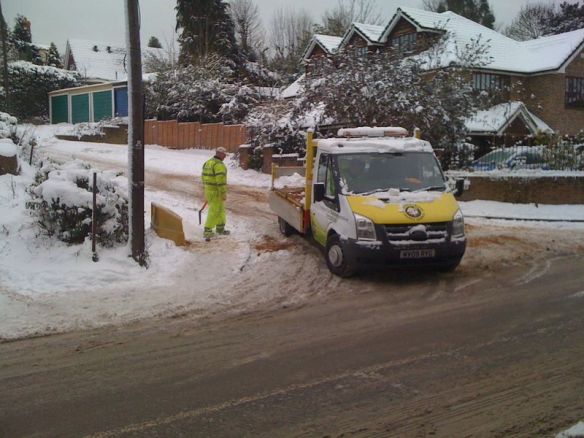
The photo above shows Buckinghamshire County Council workers treating a steep hill and replenishing a roadside grit bin in Chalfont St Giles. These workers will have been out in all hours, helping us keep moving. They earn a pittance, yet their reward will have been abuse from regulars in their local pub about their failure to clear every minor road. 

We should be praising them.

Goodbye to the Harrier

This week marked the final operational flight of the Harrier, Britain's extraordinary jump jet. The coalition government's defence cuts have consigned this iconic jet to history.

Growing up in the Seventies, I was amazed by the Harrier. It showed that Britain could still produce stunning technology. But it was the 1982 Falklands war that gave the aircraft a place in the nation's hearts. As I wrote in my blogpost marking the 25th anniversary of the Falklands war:

"The sight of Harrier jump jets screaming into the mist captured the imagination of the British people. We weren't foolish enough to think this was a re-run of 1940 – Britain would have survived defeat, although our pride would have suffered badly – but the Harrier briefly became a latter-day Spitfire in the nation's heart."

The Harriers played a magnificent role in supporting the British campaign to recapture the Falklands, acting as fighter and ground attack aircraft. They scored 22 victories, and only two were lost (one with the loss of a relative of a school friend of mine). 

The Falklands war was one of the most bizarre episodes in modern British history. Without the Harrier, Britain would probably have lost the conflict. 


Remembering Grampy

Grampy at work
This is my grandfather. The photo captures him at his trade: a linotype operator at the Western Mail & Echo in Cardiff who turned journalists' words into the magic of print. His trade has long vanished, along with the steam train fireman and lamp lighter. 

Grampy died 44 years ago in December 1966, some five years after he retired. I was just three at the time, so I have just one clear memory of him. But it's a precious one: we were sitting in front of the fire in my grandparents' home in Penarth, Glamorgan, and Grampy was showing me how to shell peas. 

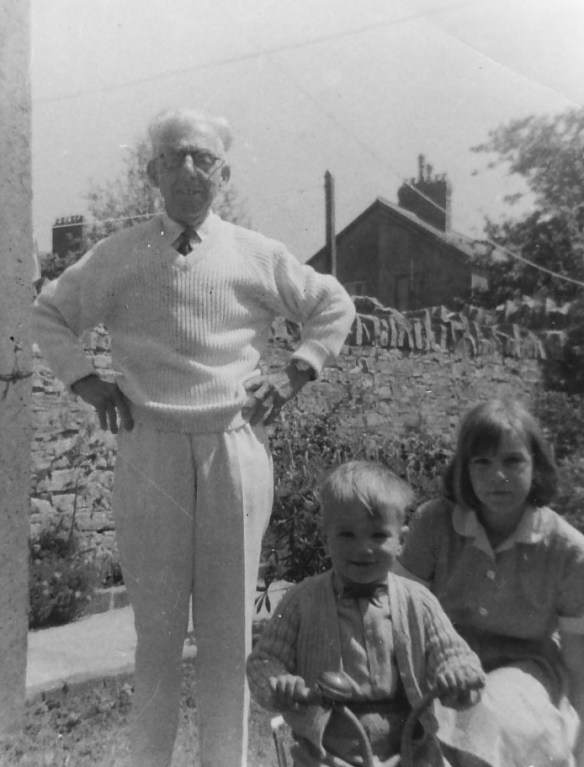
Robert, Beverley and Grampy
I was thrilled last week to find this photo of me (and my sister) with Grampy. I reckon I was between two and three years old, which means it dates from the spring or summer of 1966. (Was it taken the same day that I watched Grampy shelling peas?) I like to think it captures Grampy's pride in his two grandchildren. It's strange to think that my son Owen is the same age as I was on that far-ago day in the 1960s.

In praise of our favourite train driver – and Chiltern Railways’ use of social media

Have you got a favourite train driver? We have. And thanks to the wonder of Twitter, I now know his name, and discovered that he has dedicated countless hours to visiting schools to teach children about the dangers of playing on the railway.  

Dave Newell is a train driver on Chiltern Railways. He became our favourite train driver on a Friday night over five years ago. Karen and I both commuted to London at the time, and were travelling home together after a night out in town. A group of drunken youths were behaving badly, and we were very impressed and reassured by the firm and effective way Mr Newell challenged them. Yesterday, I was delighted to recognise his voice on the tannoy as I travelled home. He was giving friendly advice to take care on icy platforms. I chatted to him when I got off at Beaconsfield. He greeted me with his characteristic smile and asked if the heating was working inside the train (it was) as he had no heating in the cab.


I tweeted about my favourite train driver yesterday, and Chiltern Railways (@chilternrailway) responded. As a result of our Twitter conversation, we confirmed the identity of the driver. Even better, I learned that Dave won Rail Safety Person of the Year award at the prestigious Rail Staff Awards in October. The prize was presented by Pete Waterman and Pino De Rosa.  Tom O’Connor, Rail Media Group, which organises the awards, said: ‘This is a highly deserved award for a person who saves lives and whose influence has directly made the railways a safer place. We should all thank people like Dave Newell." We certainly should, especially when Dave and his colleagues are doing all they can to keep the trains running in arctic conditions.
Chiltern Railways deserves credit for the way it has embraced social media. It responded very quickly to my tweet, and was keen to highlight Dave Newell's recognition. It is active on Twitter and Facebook. It clearly appreciates the benefits of keeping its customers and the community informed about its work.