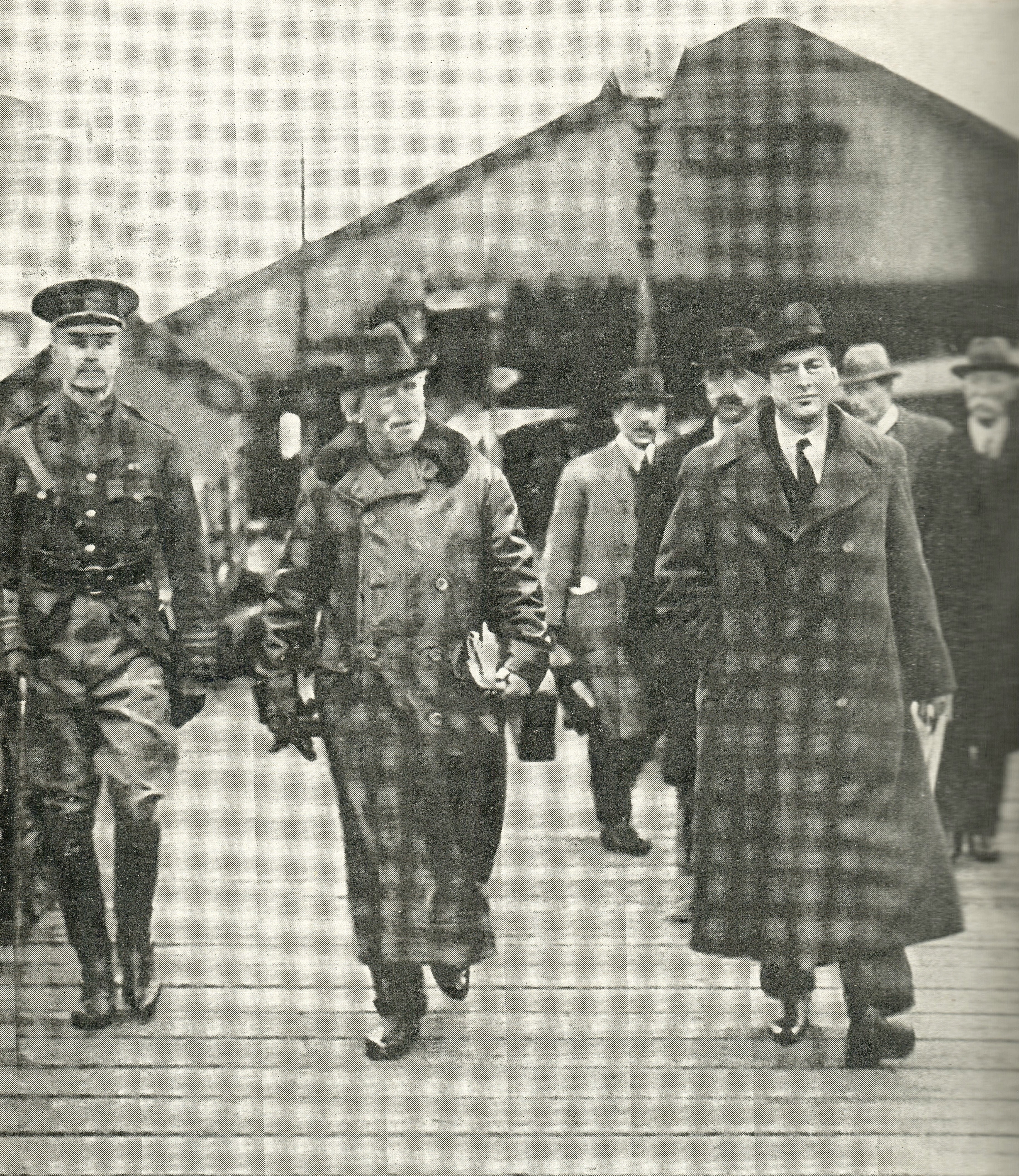
It’s unbelievable. Britain’s wartime cabinet was meeting in 1915 to plan the Dardanelles campaign that was destined to cost the lives of 41,000 Allied troops. Yet the prime minister, Herbert Asquith, wasn’t interested. Instead, he was reading a letter from his lover, Venetia Stanley, delivered to the Cabinet Room in 10 Downing Street during the meeting. As Winston Churchill, David Lloyd George and Lord Kitchener debated the details, Asquith was penning a reply to Venetia, after checking his diary to see when he could slip away to meet her.
Here is a classic example later that year:
My own darling – I am writing in the stress & tumult of a windy & wordy controversy about munitions … between Ll. G [Lloyd George], Winston [Churchill] and A.J.B [Tory leader Arthur Balfour] – and I daren’t abstract myself more. Asquith to Venetia, during a War Council meeting 1915
Robert Harris has turned the Asquith-Stanley scandal into a brilliant novel. The prime minister’s letters to Venetia have survived but he destroyed all her letters after she ended the relationship, and he had been ousted as PM by Lloyd George in 1916. Some have doubted whether the relationship was sexual, but Harris is sure that it was, and the surviving letters tend to support this – though we will never know for sure.
Asquith was obsessed with Venetia, who was 35 years younger than the 61 year old premier. He ran appalling risks by sending her top secret government documents through the post, including messages about a planned troop evacuation from Antwerp and much more. When the two were enjoying secret rides in his prime ministerial Napier limousine, Asquith would reveal the latest intelligence decrypts to her, before throwing them out of the car window. One of the few fictional characters in Robert Harris’s novel is police detective Paul Deemer, who surreptitiously intercepts the lovers’ letters, to copy them before returning them to the postal sorting office. He also wangles a job as a gardener at the Stanleys’ north Wales mansion, Penrhos, and creeps into her bedroom to open the case in which she kept Asquith’s letters. She saved them for posterity and Robert Harris.

Harris brilliantly chronicles how Venetia turns from an equal partner in the affair to being uncomfortable and indeed oppressed by her lover’s spiral into near madness. She finally agrees to marry Asquith’s close friend and cabinet minister Edwin Montagu, despite not finding him attractive. It was a marriage of convenience that ended when he died just nine years later, during which she had a string of affairs.
You’ve got mail
Precipice sheds light on the remarkable postal service London enjoyed even at the height of the Great War. The General Post Office (GPO) collected and delivered mail 12 times a day in the city, and three times in the country. Venetia noticed with some suspicion that her post seems to be delayed – probably by just a few hours – after detective Deemer starts intercepting it. Today, no one would even notice.
There are a few false notes. When Harris recounts Asquith’s response to her suggestion that the disastrous Dardanelles campaign should be abandoned before any more lives are lost, he has him responding, ‘No, I fear there’s no alternative except to double down’, using an expression first noted in 1949 – and by very few in Britain until the 21st century. At least Harris didn’t have Asquith pleading with her to ‘reach out’…

It was a pleasure to listen to Robert Harris talking about the novel at a Chiltern Bookshops event in the highly appropriate setting of Chorleywood’s Memorial Hall, opened in 1922 to honour those who gave their lives in the Great War. He amusingly explained how Asquith’s great-grandson told guests at the novel’s launch party that it was totally ridiculous, especially the idea that his great-grandfather had anything other than a platonic friendship with Venetia. ‘How on earth would he know, 110 years later?’ Harris asked. He added, ‘Asquith was notorious for his wandering hands and it is well known that Venetia had married lovers after her marriage. That’s the nature of the two people.’
Robert Harris’s achievement is to make us care about the two main characters, even though their behaviour is hardly commendable, especially during a war in which thousands are dying every week. Asquith and Venetia were very much characters of their time, although Harris got a laugh at Chorleywood by making a reference to Boris Johnson’s scandalous actions as PM a century later. Stanley herself was part of a fabulously rich family with mansions in Wales and Cheshire, along with a grand house in London. Yet Harris gives a fair impression how unfulfilling her life was, despite the decadence and splendour. Harris noted at Chorleywood how the family’s Welsh and Cheshire palaces lay in ruins just a few short decades later, while Venetia herself died aged just 60.
Asquith’s legacy
We shouldn’t judge Asquith just on his sordid pursuit of Venetia Stanley. He was the leader of Britain’s last Liberal government, before being forced to turn his wartime ministry into a coalition. Above all, he presided over an extraordinary peacetime revolution, which included the first state pension and the titanic battle to curb the powers of the unelected House of Lords, which included two elections in a single year, 1910, and the threat to demand that the king created enough new peers (lords) to force the upper house to back down. Until war came and he became obsessed with Venetia Stanley, he cleverly harnessed the supremely talented Lloyd George and Churchill. It helped shape modern Britain.
When the Great War was news, not history
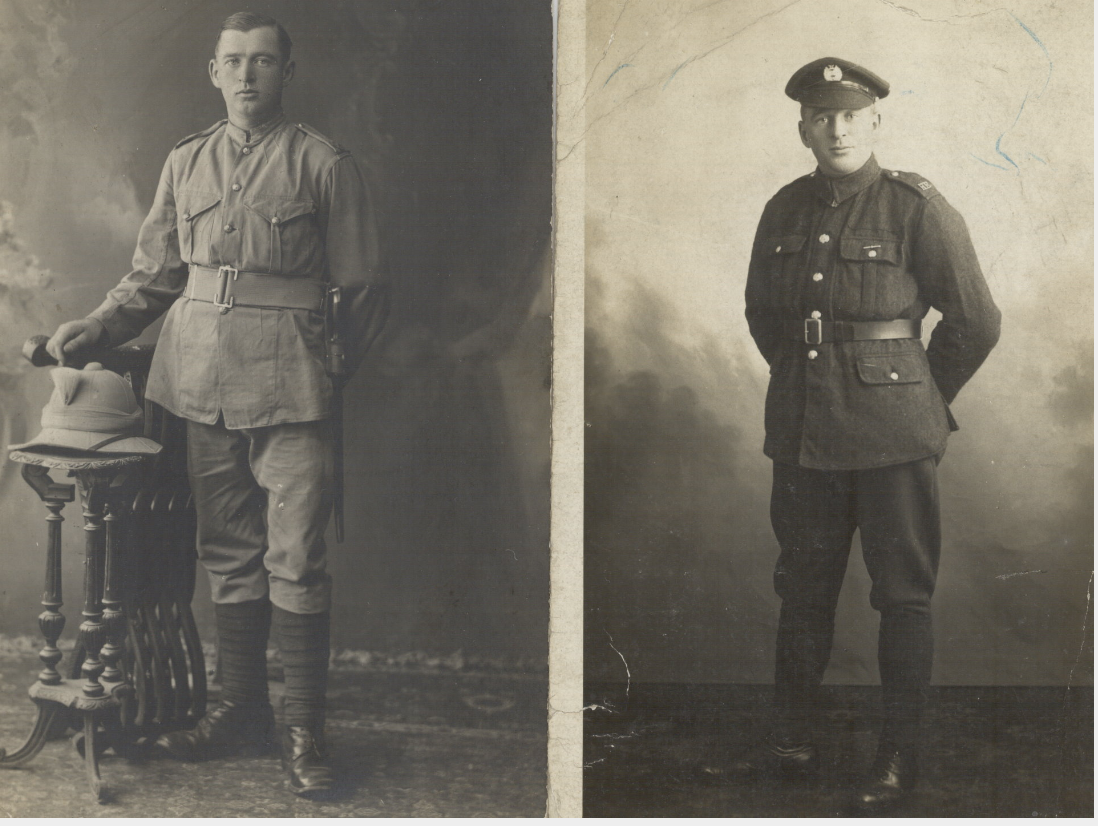
Photos like these feature in countless family photo albums across these islands. They feature my grandfather Frank and his twin brother. Frank was one of the men sent to fight in the Dardanelles campaign that Asquith should have been discussing when he was distracted by his passion for Venetia Stanley. His terrible ordeal led him to forbid my late father from joining his school’s cadet force on the eve of the second world war in 1939. Tragically, his brother – my great-uncle – died in the Spanish flu pandemic after surviving the trenches. Frank died too young at 52 of a heart attack in 1942, as my own 94 year old father remembered so poignantly on his own blog on the 78th anniversary of that sad day in 2020.
The commendable Venetia
Venetia should not be defined by her relationship with Asquith or Montagu. She was determined to play her part in the war effort, and enlisted as a nurse, in conditions so different from her affluent and cosseted family lifestyle. She sailed to France the day Asquith was forced to form a wartime coalition.
One last thought. Almost 80 years after she died, Venetia is the silent witness in this extraordinary story. She’s not here to give her side of the story, a silence that applies to countless women down the centuries who have been unfairly defined and characterised by their relationships with powerful men. We should remember this before casting any judgement about what she did over a century ago as Europe went to war.
 Ertblog