If you’ve arrived at London’s Kings Cross station in the rush hour only to endure a packed tube train to reach the heart of London, you may wonder why the station wasn’t built nearer your destination. Kings Cross isn’t alone; Marylebone, Euston and St Pancras are similarly stranded north of the Marylebone and Euston roads, which were created as the New Road in the 18th century.
Jonn Elledge entertainingly explains on his Substack (The Newsletter of (Not Quite) Everything) how the New Road was built as a by-pass for cows. Jonn adds his explanation for the inconvenient siting of these great termini:
[Railway] Companies serving destinations to the east and south of London drove their new lines right into the urban area, with scant regard for the poor residents they dispossessed; those coming from the west and north, by contrast, tended to respect the capital’s existing geography. That is why, to this day, Kings Cross (1852), St Pancras (1868) and Euston (1837) stations line up along the road, with Marylebone (1907) [actually 1899] a mile or two distant: they were effectively plugging into the existing transport network, made up of a massive road with canal access.
This is only part of the story. Today’s travellers are inconvenienced as a result of a Royal Commission set up by prime minister Sir Robert Peel in 1846:
Amazingly, the Royal Commission on metropolitan railway termini reported just three months later. It recommended that railway lines entering London should not be allowed to enter the West End. The commissioners accepted that more central stations would lead to the destruction of countless homes and other buildings. In 1846, the New Road was on the very edge of London, which is why the Royal Commission took it as the furthest a railway line from the west or north should pass into London.
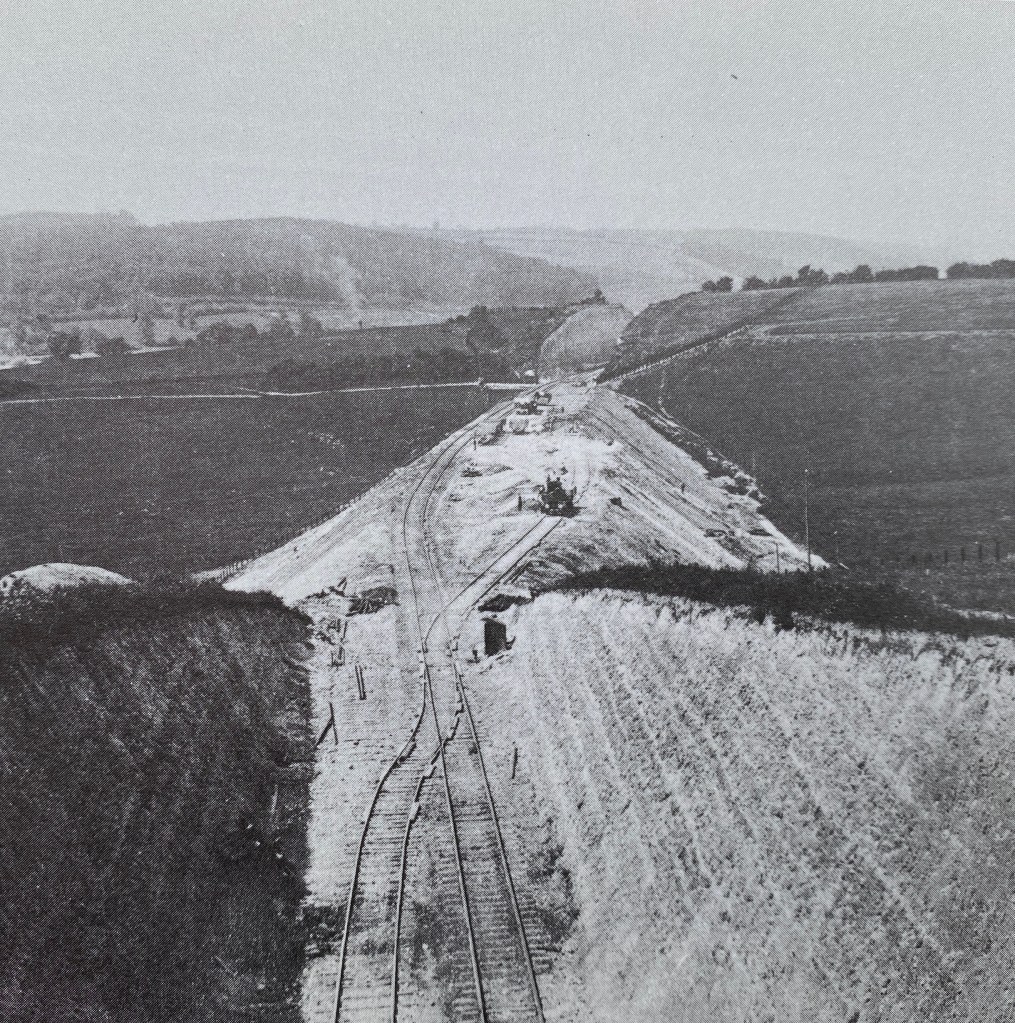
Cutting through the Chilterns: Looking towards High Wycombe from Loudwater tunnel: SWA Newton
At the end of the 19th century, a photographer called SWA Newton documented a unique event: the creation of a new mainline railway from Sheffield to London. The Great Central Railway tore through the medieval heart of Leicester and Nottingham, and as a student in 1980s Leicester I was fascinated to find Newton’s photos of familiar sights being built just over 80 years earlier. Sadly, almost all that magnificent line was closed in the 1960s.
The Great Central was the creation of Sir Edward Watkin, who dreamed of a high speed railway linking the north of England with France through a channel tunnel. Ironically, the politicians who pushed HS2 scrapped a link between HS2 and HS1 – the channel tunnel rail link – to save money. How desperately short sighted.
I thought of SWA Newton and the birth of the Great Central in 2010 when I learned that the new High Speed 2 (HS2) railway would pass through our village. As you’d expect, there are few supporters of the line here. That’s partly because of the disruption that the construction will cause (though for me that’s been minimal so far) but also because people in Buckinghamshire won’t get any benefit from the line. It will still be quicker for us to get to Birmingham via the Chiltern line than going to London to get a train on HS2.
The line will pass through our village in a 10 mile long tunnel. That will spare the Misbourne valley although part of me thinks it’s a shame that travellers won’t be able to enjoy the beauty of the southern Chilterns. Railways blend in to the landscape unlike airports or 12-lane motorways.
I’ll never be a 21st century SWA Newton, but I do want to witness and record the work being carried out on HS2 around our village. So over the past couple of weekends, I’ve been to see the two main sites: ventilation shafts for the Chiltern tunnel.
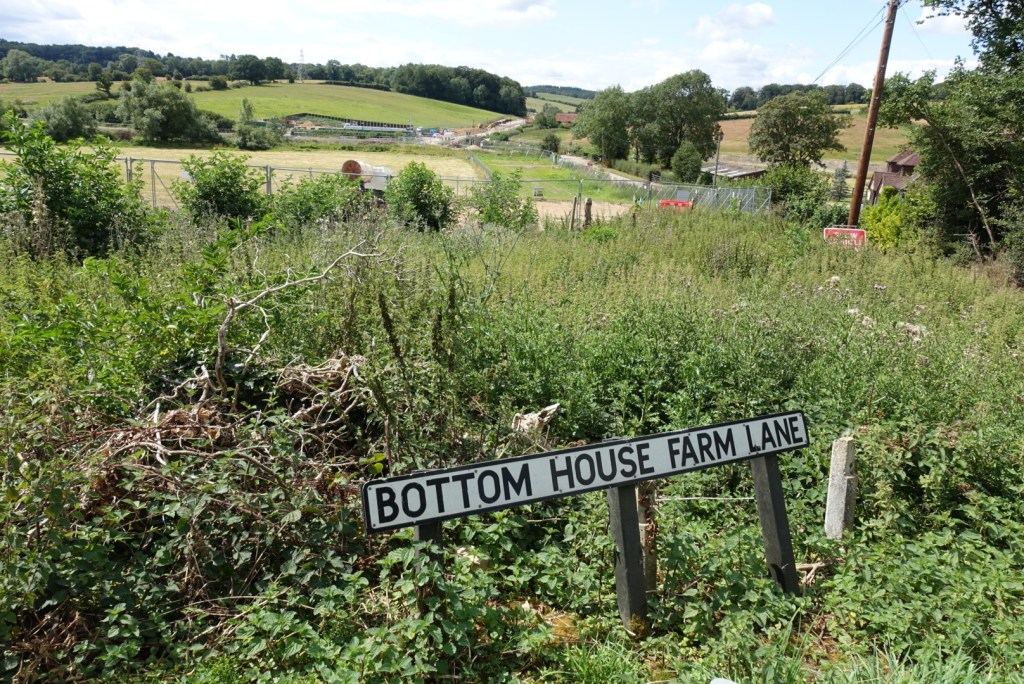
It’s official….On Bottom House Farm Lane, between Chalfont St Giles and Amersham
To get to the Chalfont St Giles site, I cycled down a lane for the first time, even though it’s barely a mile from our front door. I wouldn’t like to drive down Bottom House Farm Lane in a big car (it’s very narrow and badly potholed) but it was wonderful on a mountain bike. In the photo above, you can see spoil from the works. I was captivated by the forgotten valley, with its handsome farm buildings and classic Chiltern rounded hills and woodland – and with now ubiquitous red kites circling overhead.
The site on a mapThe route of HS2 (in tunnel), Misbourne valleyReady for action, Bottom House Farm Lane
HS2 has published a lot of information about the project and its impacts on its website. See HS2 in Bucks and Oxon. Ironically, some of the places mentioned such as Calvert, Twyford, Finmere and Brackley were on the route of the Great Central Railway. I blogged about this irony in 2012 here.
The access road, Bottom House Farm Lane
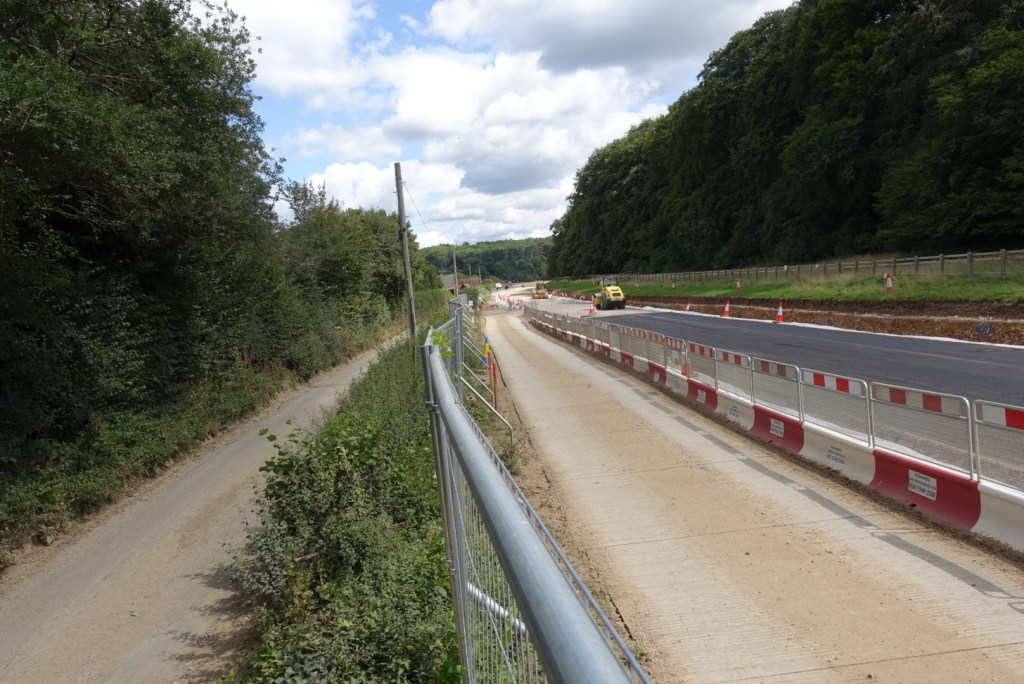
The contractors are building an access road alongside Bottom House Farm lane to take the construction lorries to the site of the shaft. You can see that it’s like a dual carriageway alongside the narrow country lane, although it will be restored to nature after work is finished.
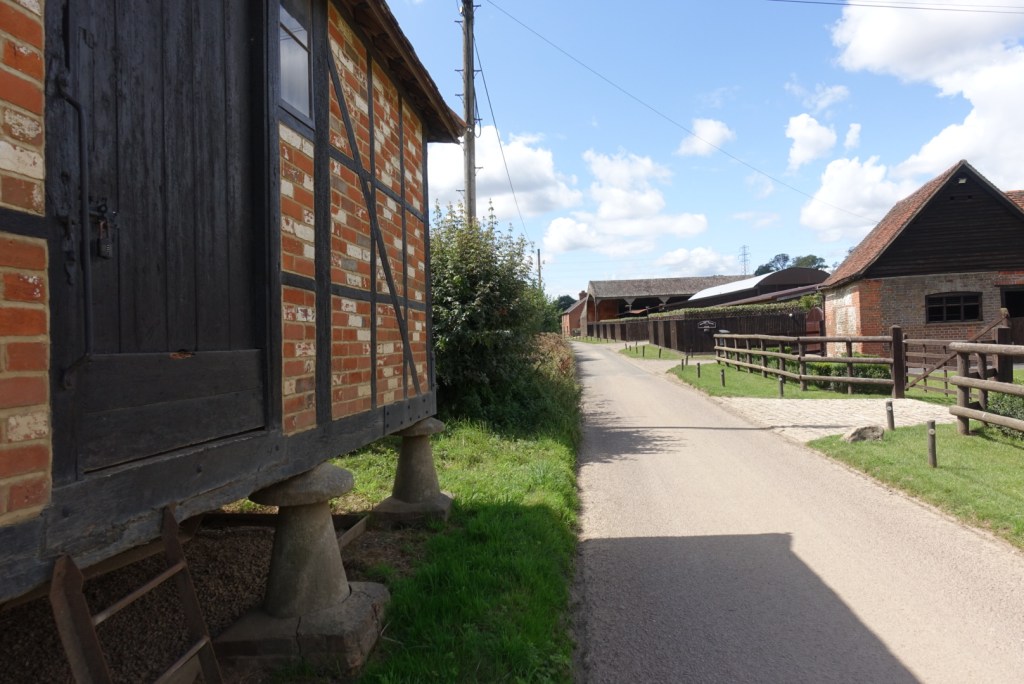
Bottom House Farm Lane sights
I had no idea that this tiny lane and valley were so picturesque. This is a few hundred metres from the main London to Amersham road.
The view from the London roadWarning: railway works aheadHS2 travellers won’t see this: the route passes under Chalfont St Giles village centre here
As I said earlier, the HS2 route passes under the heart of our village, Chalfont St Giles. This is the Misbourne in the centre of the village; the tunnel passes under here.
The access road to the Chalfont St Peter tunnel site
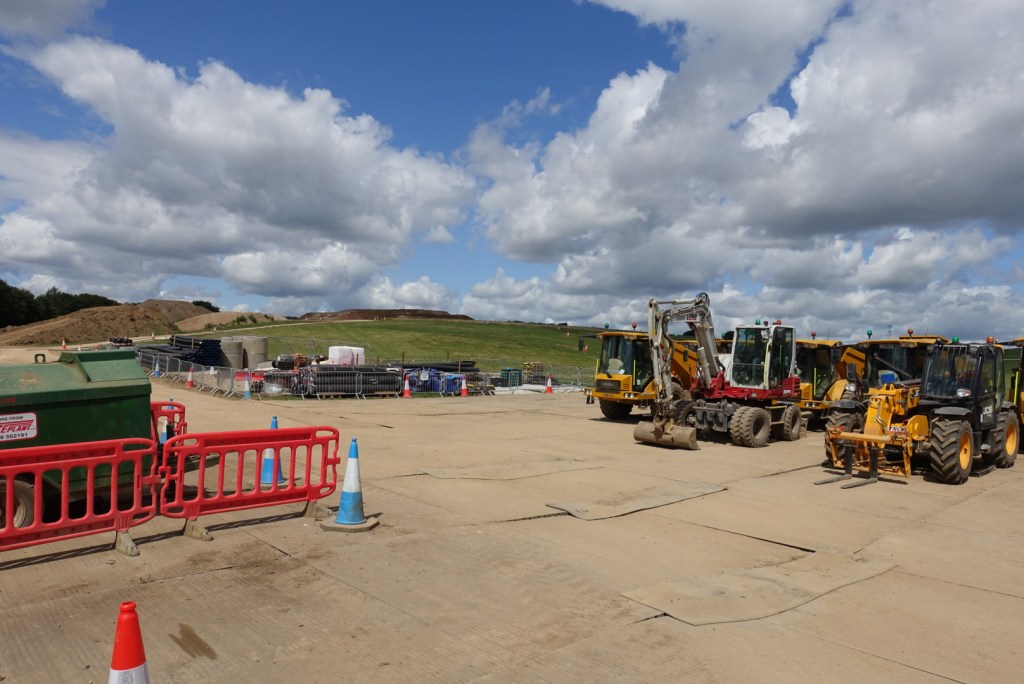
This is the other major site near our village. The HS2 contractors have built an access road for construction traffic to the the Chalfont St Peter tunnel shaft.
Closer to London, HS2 is forcing the closure of Hillingdon Outdoor Activity Centre (HOAC). Our son Owen has just enjoyed a wonderful summer water sports course at HOAC, and previously camped at HOAC with Chalfont St Giles Scouts. Owen and Karen were distressed to see the destruction that HS2 is causing at HOAC. We hope HOAC will move to a new site, as seems to be the case. Meanwhile, this is what the HS2 viaduct in the area will look like.
Back to where I began. The remaining parts of the Great Central (and the Great Central and Great Western Joint line through Beaconsfield and High Wycombe) blend beautifully into the countryside. Admittedly, electric lines with their overhead wires aren’t quite so unobtrusive. But I recall my view of the West Coast Mainline in the fells of northern England last year, contrasting with the eyesore of the parallel M6. True, it was better looking in the days of steam, but I knew which I preferred.
The northern fells. Spot the West Coast mainline…
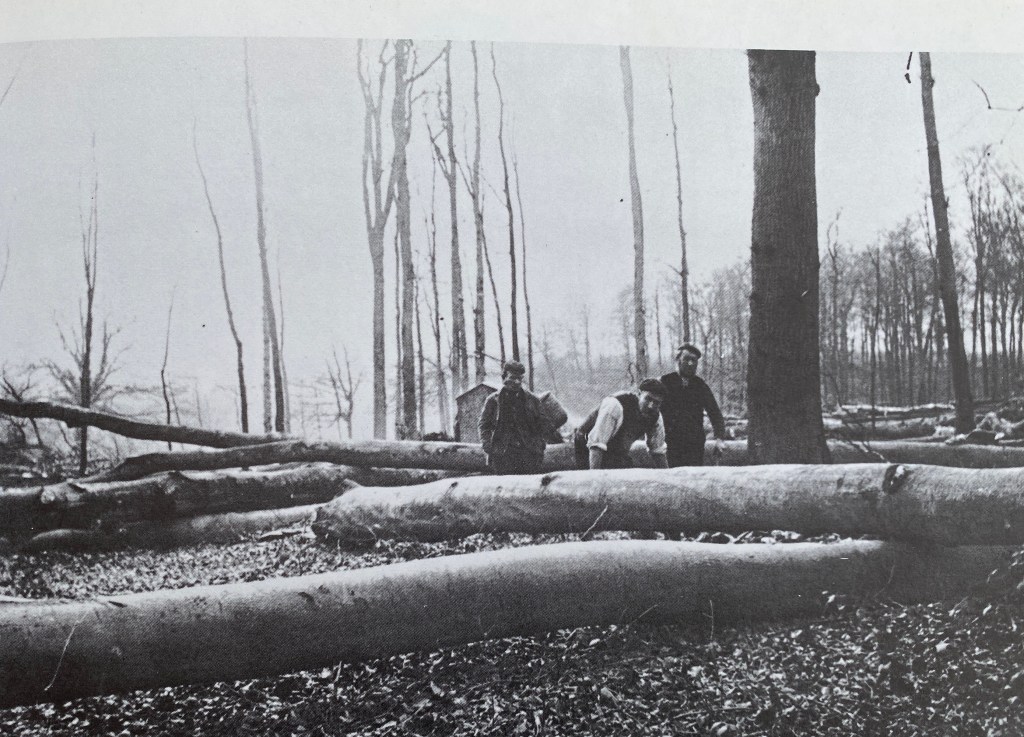
I’ll end as I began, with a couple of wonderful SWA Newton images from the birth of the older high speed rail line, the Great Central and associated joint line with the Great Western. Those construction workers – navvies as they were called in the past, recalling the men who built the canals – were photographed at Wilton Park, Beaconsfield.
I respect the protests of those who object to HS2. (Do read the comment below from Janey, who lives on Bottom House Farm Lane, about the impact the work is having on her family and other residents.) And the claims that this is Britain’s new railway are strained – it will do nothing for Wales. But I think it’s time that the country that invented railways moved beyond the Georgian and Victorian network that shaped and the constrained the nation. It’s almost 60 years since Japan introduced the Shinkansen bullet train, and 40 years since France began TGV services. Great Britain is catching up.
It's a hugely symbolic act. It marks a new era for the country's railways. At last, Britain won't be the poor relation to its continental cousins, who have been building high speed lines for the past 30 years. We'll have our first new domestic intercity railway since 1899, the year Great Central trains started running from the north to London Marylebone.
But HS2 has been hugely controversial, especially in the Chilterns. As I blogged when Labour announced the original HS2 plan, our own village, Chalfont St Giles, is on the route. As you'd expect, few people here are in favour of a railway that won't benefit us (there won't be any local stations) but whose construction will blight the area for many years. The anti HS2 campaign has been witty and well organised – with posters on the road to Chequers asking prime minister David Cameron if he's on the right track. Local MP Cheryl Gillan has supposedly threatened to resign as Wales Secretary if the government gave the green light. We'll see if she's still in the Cabinet at the end of the week…
I share the many of the misgivings of the protesters. I find it hard to justify the massive price when public spending is a being slashed to cut the deficit. (It seems a strange priority to splash out on an expensive rail line when youth clubs for deprived inner city teenagers are being closed.) If we're going to invest in rail, wouldn't it be better to improve existing rail lines?
But that kind of make do and mend approach isn't good enough. Britain's intercity rail network was born just before Queen Victoria came to the throne in 1837. It was the wonder of the world. Nearly two centuries later, the world wonders why Britain is so reluctant to build a new railway. HS2 opponents say we should just modernise the west coast mainline. That line was created from a series of 19th century railways. It has been 'modernised' twice in the last fifty years. It's still in essence a Victorian railway. Its London terminus, Euston, is a soulless place. I pity anyone who has any time to kill there. The same is true at Reading, Cardiff Central, Bristol Parkway and countless stations across the country.
So HS2 is the right thing to do. It will transform the experience of train travel in Britain. Our village will suffer during the long construction years, but I'll be able to show Owen the building of our first new domestic railway since his great grandmother was a child in the 1890s. (I never thought I'd have the chance to emulate SWA Newton, who photographed the birth of the Great Central in Buckinghamshire and beyond.)
PS: Other mainlines were build in Britain after the Great Central, notably the Great Western's 'cut-off' lines before the Great War, but none was a complete inter city line.
Today's Guardian includes a short letter from me on one of my favourite topics: how simple phrases are being replaced by ugly, longer ones.
It was prompted by a letter from Mary Williams about a query in the paper's Notes & Queries column asking why many people now say train station instead of railway station. In my letter I asked what fool decided to replace the lovely expression 'keeping a promise' with the horrible 'delivering on a promise'.
Politicians and business leaders are the worst offenders. (The founder of BlackBerry-maker RIM, Mike Lazaridis, used a variation, 'deliver on a goal', in a RIM YouTube video saying sorry to customers whose smartphones had been out of action for days.)
I've never understood why business people and politicians use gobbledegook. The simple way to get a message across is to use plain English. But as I've said many times on Ertblog, too many think simple language is somehow inadequate or unimpressive. The opposite is true.
On the subject of language, I discovered Tim Phillips' Talk Normal blog today. I loved the post about the nonsense spoken by sports commentators. Tim confirms the suspicion that politicians use obscure language to make unpalatable messages unintelligible – take this example from the HS2 high speed rail proposals.
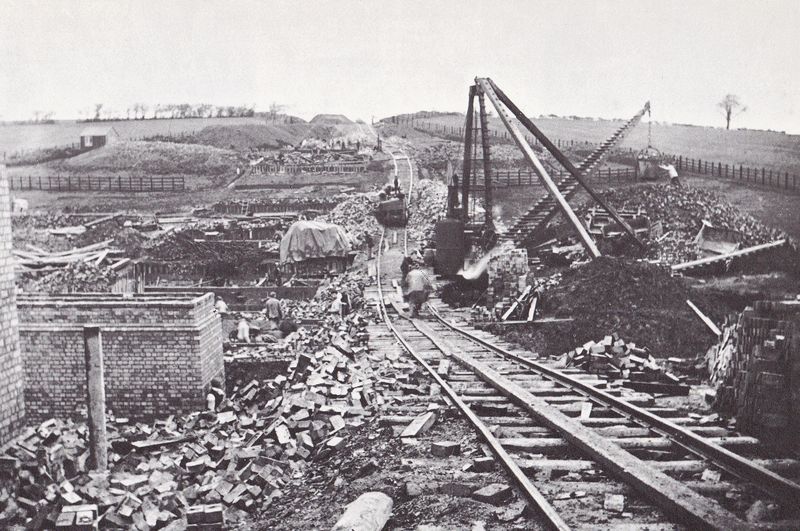
Above: the Great Central main line being built, 1890s. Photo: SWA Newton
BBC Radio 5 Live's Drive programme tonight featured protests against the proposed high speed rail line HS2 by villagers in Finmere, Calvert and Twyford in Buckinghamshire and Oxfordshire.
The people interviewed explained how the rail link would spoil their villages and the countryside around them without bringing them any benefits – other than the chance to watch a train tearing through at high speed.
The comments echoed those of friends and neighbours in Chalfont St Giles, which is also on the route. (See my earlier post on HS2 and Chalfont St Giles.) But I was intrigued because Finmere, Calvert and Twyford lost an earlier battle against a new main line. In the 1890s, the Great Central Railway's London extension cut through this part of the world. It was the vision of Sir Edward Watkin, who dreamt of a mainline from the north of England to the continent via a channel tunnel. Its modest London terminus at Marylebone is one of the few remaining monuments to Watkin's dream – or folly. Most of this magnificent line was closed in 1966.
Now the peaceful countryside that once echoed to Great Central expresses faces another rail invasion. Unlike the Great Central, HS2 will have no local stations or trains. But Watkin would have approved this bold project, regarding protest as a mere inconvenience. It will be interesting to see if the 21st century protesters are more successful than their Victorian predecessors.
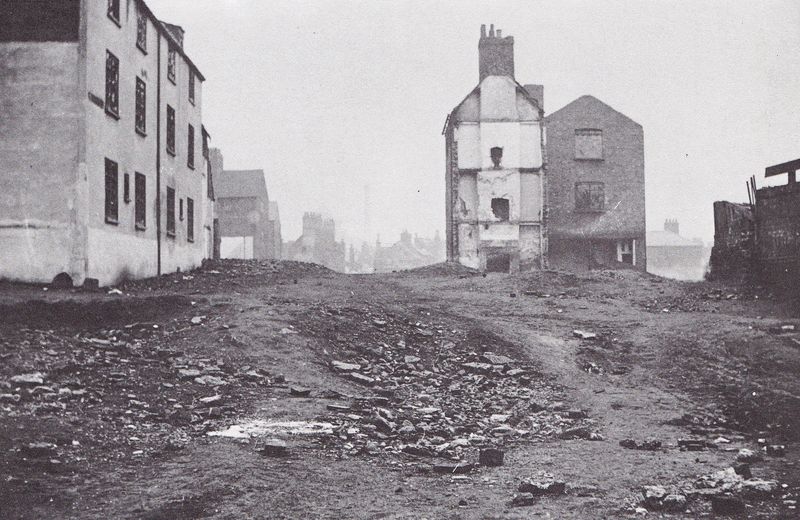
PS: the Great Central's construction created far more destruction in Leicester and Nottingham than in the villages on its route. In the words of LTC Rolt, it 'cut ruthlessly through the heart of the old city' of Nottingham. Photographer SWA Newton recorded the birth of the line in a series of extraordinary photos, including this graphic image of Nottingham, below.






 Ertblog