Swindon’s Mechanics’ Institute: my letter in The Times

The Mechanics’ Institute in Swindon, Wiltshire, is symbolic of the Victorian belief in self improvement. It was founded in 1854 by Great Western Railway workers to provide themselves with a library, lectures, classes and, in time, a library and health services. Yet sadly this historic building has fallen into a ruinous state since closing in 1986.

My letter in The Times, Friday 28 March 2025

I paid tribute to the Mechanics’ Institute in a letter to The Times on Friday, prompted by a piece by columnist James Marriott praising Newcastle Upon Tyne’s Literary and Philosophical Society, where the father of the railways George Stephenson demonstrated his miners’ safety lamp in 1815.

Swindon was just a small village when the great engineer Isambard Kingdom Brunel chose it as the location for the Great Western Railway’s locomotive works, which opened in 1843. Within a decade, over 2,000 people worked there, many living in a railway village close by the main line. The workers paid for the Mechanics’ Institute, an initiative that was replicated in countless towns and cities across Britain.

Continue reading

Centenary of Britain’s Big Four railways

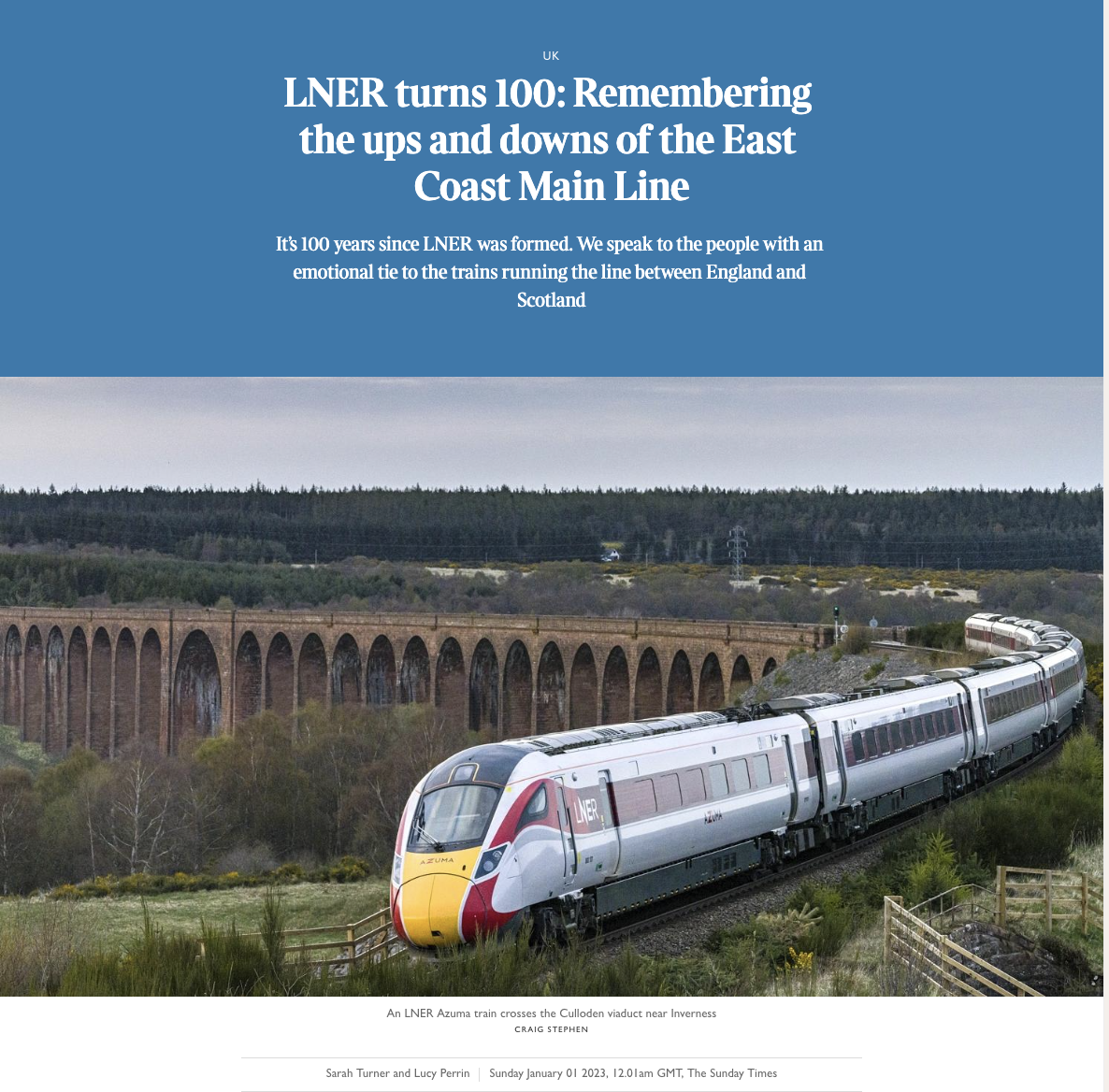
The Times marks LNER’s 100th birthday

The LNER rail company has been celebrating its centenary this week, with this splendid video:

I admire the company’s enterprising PR spirit. But there’s more to this 100th birthday than you’d think reading an @LNER tweet. The current LNER is just five years old, taking over rail services on the east coast main line in 2018. The new operator revived the name of the historic LNER, which was created on 1 January 1923 when some 120 British railway companies were grouped into the ‘Big Four’: GWR, LNER, LMS and Southern Railway. Those iconic brands disappeared exactly 25 years later when the railways were nationalised. Yet their enduring appeal led to three of the famous names being revived by privatised-era rail operators: GWR, Southern and LNER. (The reborn LNER scrapped the conjunction in the old name, London and North Eastern Railway.)

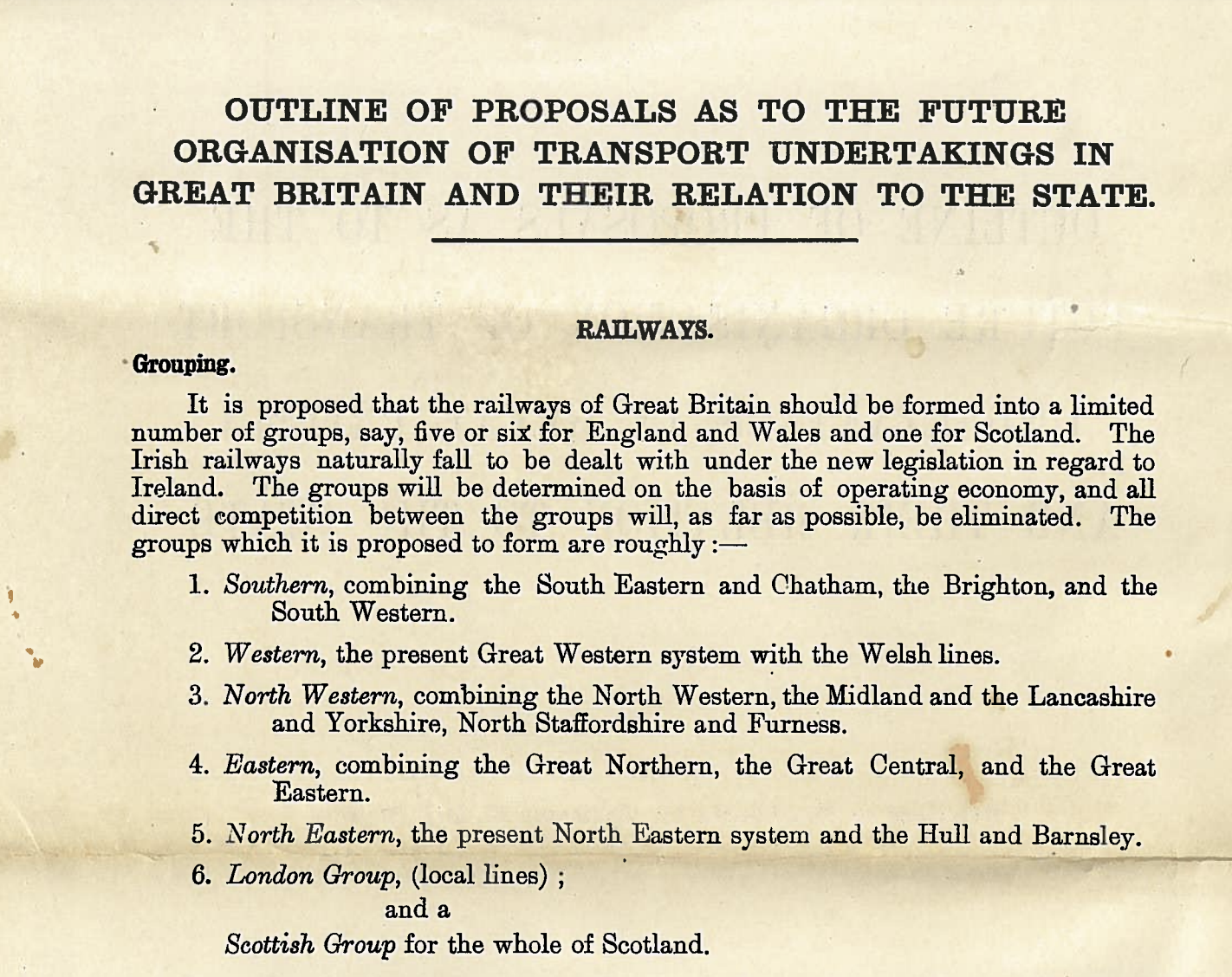
The British government’s 1920 white paper that led to the 1923 grouping

It is striking that the aim of the grouping was to make the railways more efficient, and to eliminate direct competition ‘as far as possible’. Indeed, Winston Churchill spoke in favour of nationalising the railways in 1918, but changed his mind by the time the 1945 Labour government nationalised the Big Four as British Railways. The eventual amalgamation created just four groups rather than the seven suggested in 1920.

Continue reading

STEAM at Swindon: a worthy tribute to the GWR

Steam, Swindon

STEAM, Swindon

As a child, I enjoyed going to the Great Western Railway Museum in Swindon. I loved seeing famous engines such as City of Truro and Lode Star – and the setting of a former chapel seemed appropriate given the almost spiritual devotion the GWR inspired.

That small museum was replaced in 2000 by STEAM, a magnificent new museum based in  part of Swindon’s famous old railway works. It’s far more interactive than the old one, and visitors get the chance to drive a train and operate a signal box.

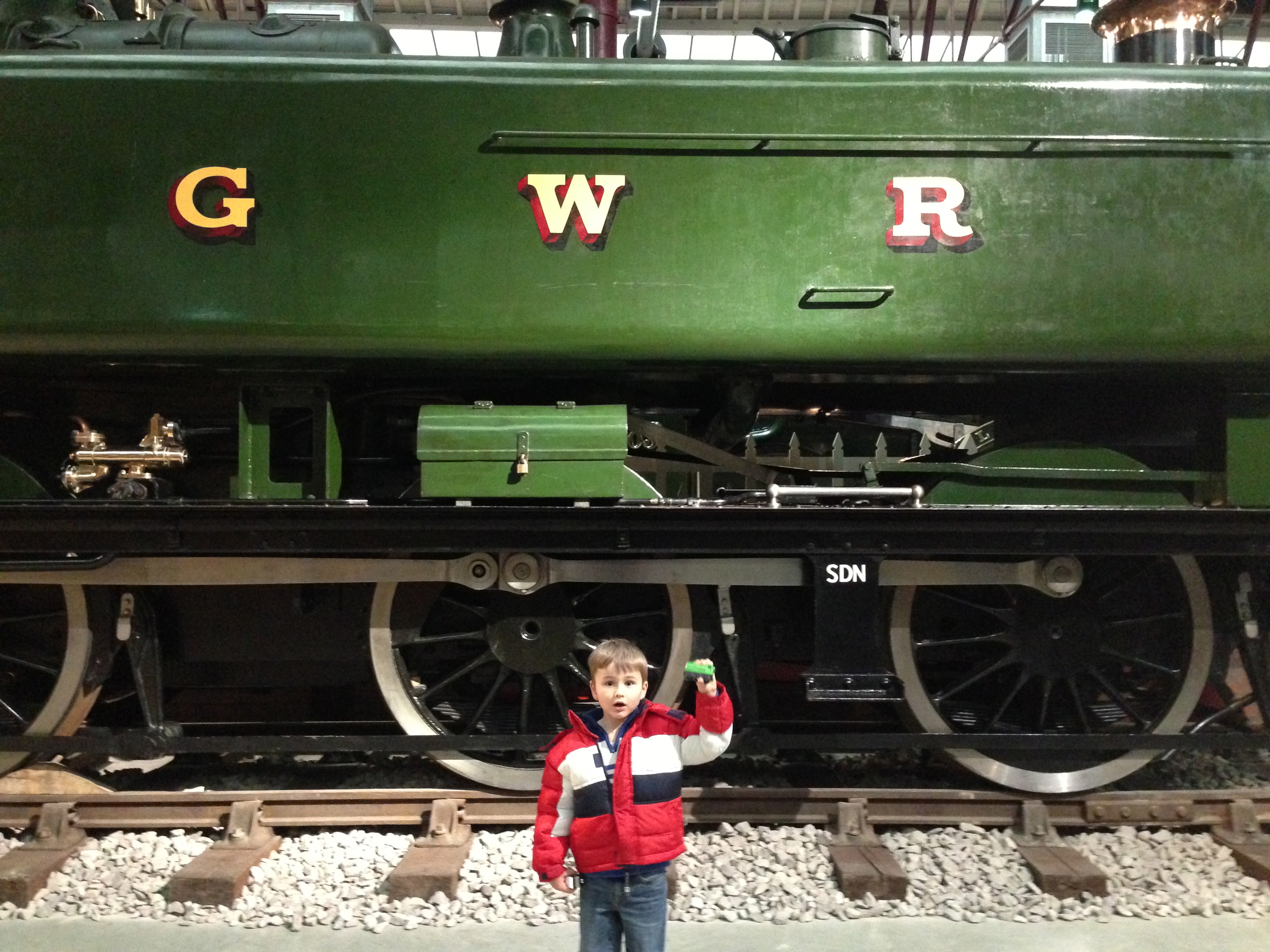
We visited for the second time yesterday. Owen, four, is still unsettled by loud noises, so he wasn’t so impressed by the sound effects, but he loved the various hands-on play areas. We built miniature versions of Saltash, Maidenhead and Culham bridges! And he enjoyed introducing his Brio Duck pannier tank and Toad brake van to their real life counterparts. (Duck, below.)

Duck, meet Duck... GWR panniers

Duck, meet Duck… GWR panniers

The highlight of STEAM is walking underneath 4073 Caerphilly Castle, one of the GWR’s most famous engines. It’s fascinating to glance up to see the machinery of an express engine and tender above you. Curiously and appropriately, this GWR icon spent time in the old loco works in Caerphilly. My sister remembered being taken to see it there – and sure enough, Eric Mountford’s book about the works shows 4073 being repaired at Caerphilly in September 1959.

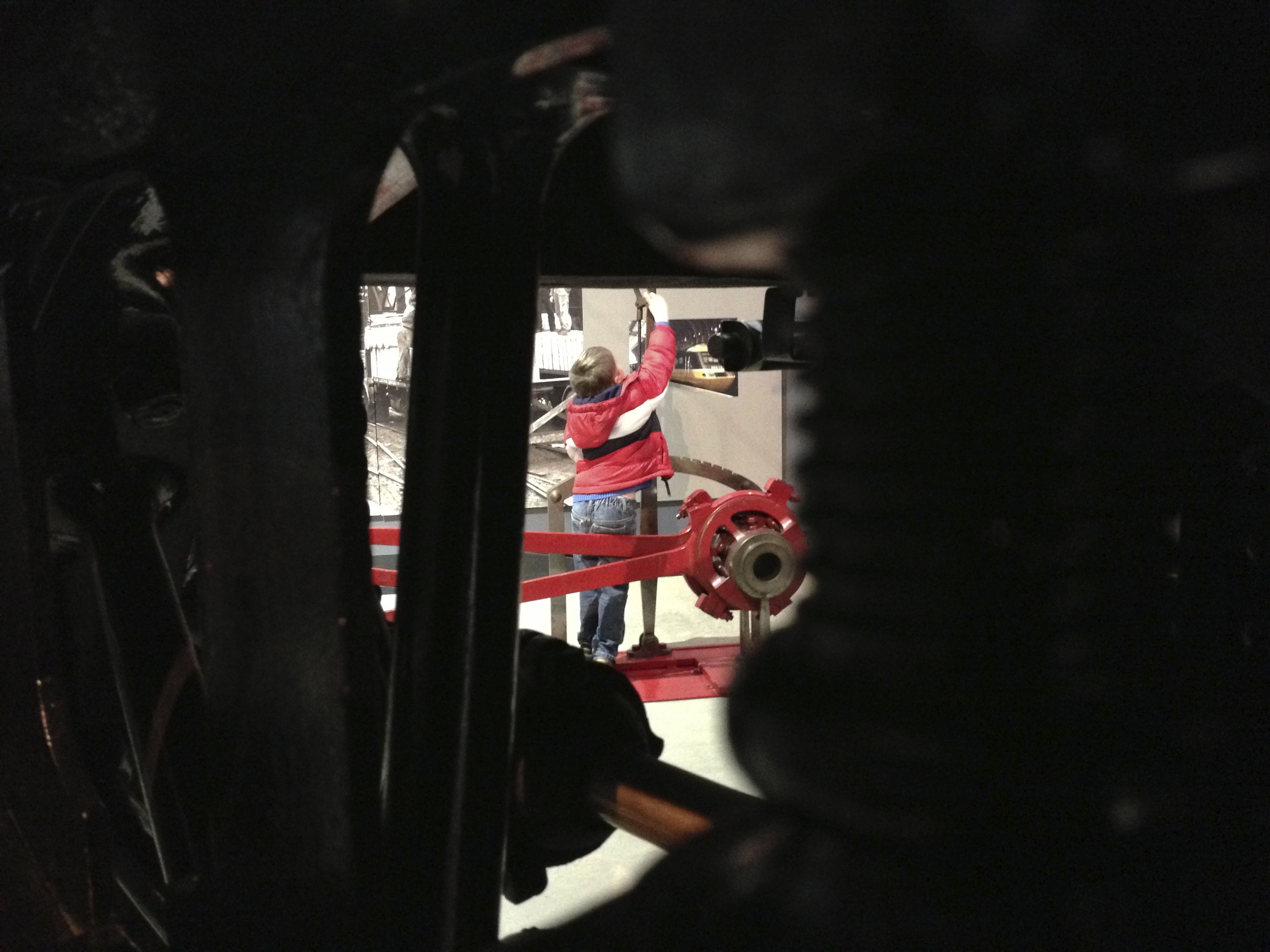
Through North Star's frame

Through North Star’s frame

STEAM has an excellent shop and cafe. And it’s next to the Outlet Village, including the National Trust’s cafe and exhibition.

Here’s my video of our visit.

STEAM, Swindon

A short history of time in Britain

It’s hard to imagine Britain having different time zones. Yet it’s well under 200 years since Britain had the same time across the nation.

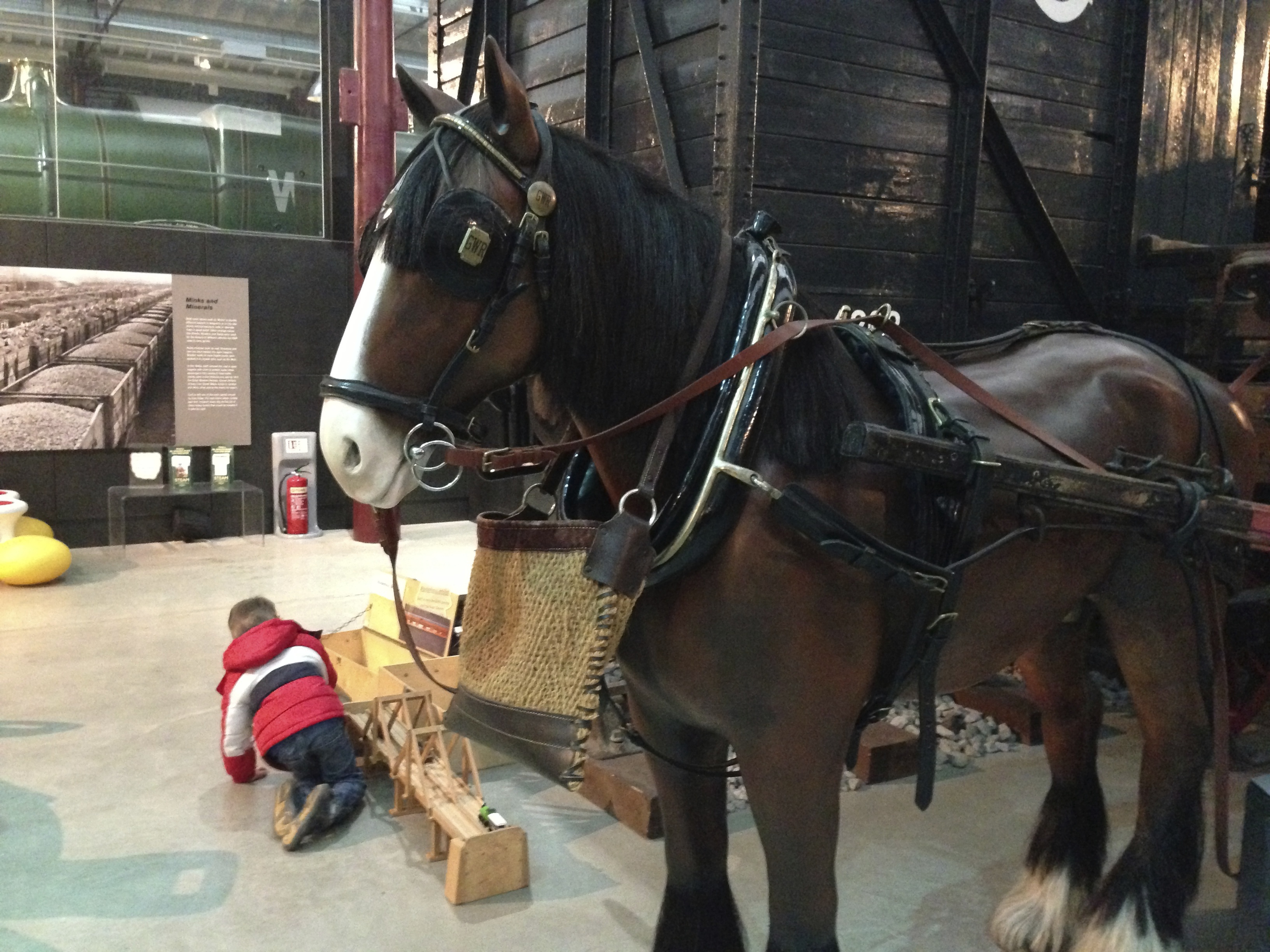
The railways created the need for the whole of Britain to be on the same time. When life moved at a horse’s pace, it didn’t matter that Cardiff time was some 15 minutes behind London’s. Time was local – determined by a sundial. But when the steam engine took people hundreds of miles within hours, the idea of a common time became urgent. Railway time or London time was the result.

Brunel’s Great Western Railway provided the impetus, along with the electric telegraph. In November 1840, the GWR adopted Greenwich Mean Time for its timetable, followed by almost all our railways by 1848. It meant that Bristol was no longer 10 minutes behind London. By 1855, almost all towns in Britain had adopted the unified time, although this only had legal force in 1880. Within 50 years of the GWR’s move, most major countries followed suit, although larger countries did so with multiple time zones.

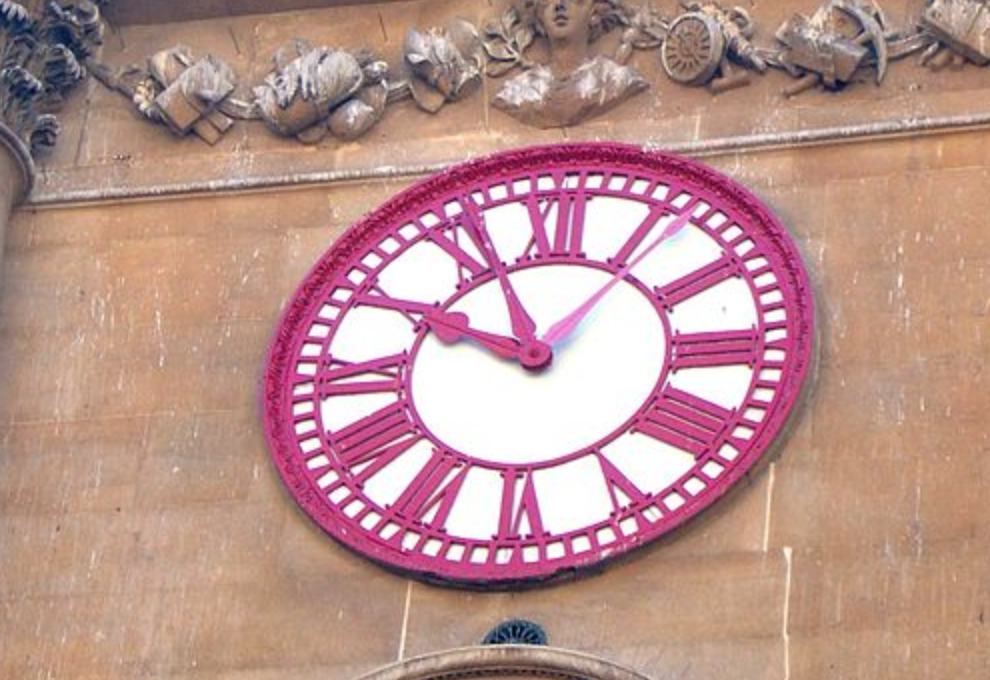
Bristol time. Photo: Rod Ward, via Wikipedia.

Yet to this day, Bristol’s Exchange clock shows two minute hands: one for London time, the other for Bristol time. It’s a timely reminder of the days when time was a moveable concept in these islands.

A King is (re)born: GWR King Edward II’s coronation at Didcot

IMG_0461

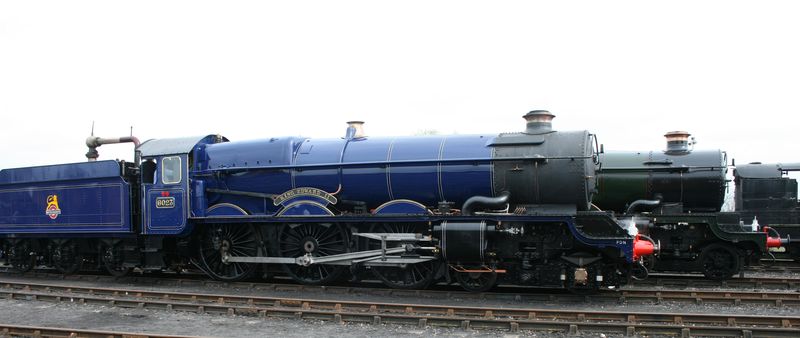
Great Western superpower: A King and Castle at Didcot

Today was a very special day. One of Britain's most magnificent steam locomotives was reborn almost 50 years after ending its working days in my hometown, Cardiff. The Great Western Railway's King Edward II was 'crowned' at Didcot Railway Centre, home of the Great Western Society. 

It was an emotional moment for me. As a teenager, I loved climbing over the engine at Barry scrapyard in South Wales. I made straight for 6023 on my many visits to Barry. Yet I could hardly imagine that anyone would be foolhardy enough to think that King Edward II could ever steam again. But the Great Western Society and Dennis Howells were determined to restore him to the rails. And 6023 was a lucky engine. Fate delivered it and 'father' engine King Edward I to Barry scrapyard rather than the smelters' yard. 

The Kings were the GWR's premier express engines. For most of their life they ran expresses between London and Plymouth. Several were moved to Cardiff Canton at the start of the 1960s to run expresses between the Welsh and English capitals. But the diesels were taking over, and Canton was graced by Great Western royalty for just a couple of years. King Edward II was destined to spend the next two decades in exile at Woodham's scrapyard at Barry Island – just 10 miles from Canton. 

The Barry years

King Edward II 2

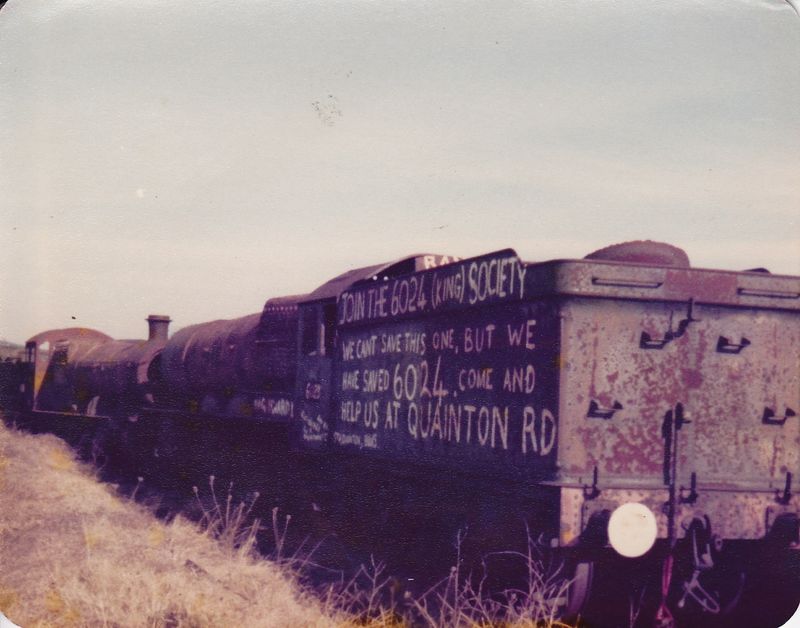
A few acres of ground beside the sea in Wales proved hallowed territory. Dai Woodham's decision not to cut up the hundreds of rusting steam engines in his scrapyard gave preservation societies the chance to save them for posterity. Two Kings were amongst their number: 6024 King Edward I and 6023 King Edward II. The photo above shows 6023 in Barry in 1979. You can see that the team restoring his 'father' engine (King Edward I) have used the tender as an advert for their own efforts. 

King Edward II

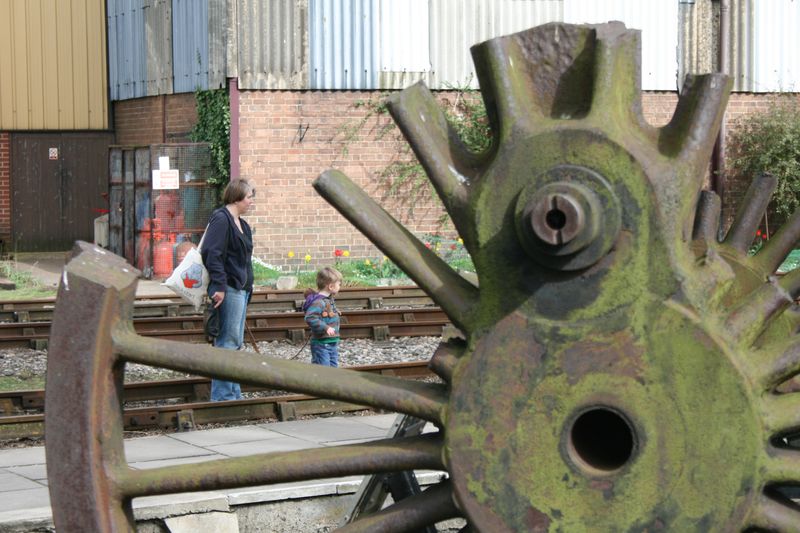
Above: March 30 1982. Here. you can see the ruined rear driving wheels, which made restoring this King such a challenging project. This was the result of a shunting accident in the 1960s at Barry. Didcot have put the old wheels on display (below, with Owen and Karen). We were told today that 6023's three pairs of driving wheels were made by three different owners: GWS; GWR and BR.  

IMG_0543

A King reborn

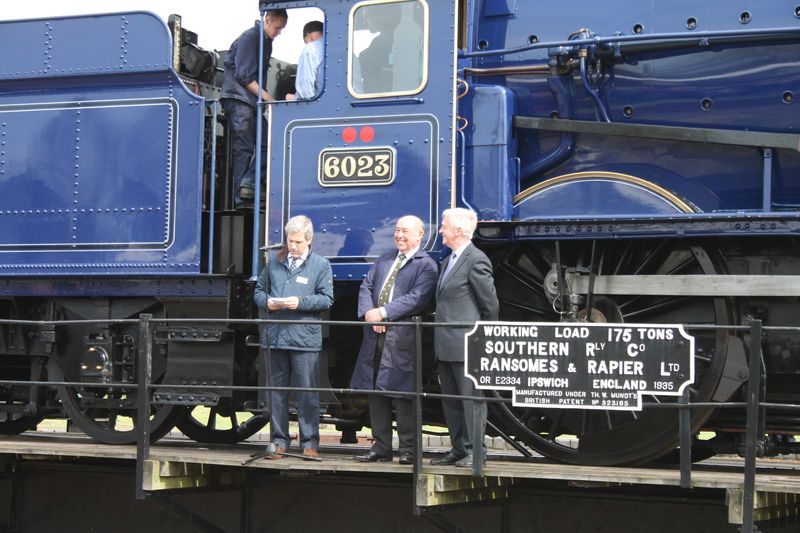
Didcot put on a magnificent show today to mark 6023's rebirth. Karen bagged us a prime spot in front of the turntable, where the coronation took place. Steve Davies, head of the National Railway Museum, paid tribute to everyone who made this emotional event possible – especially Dennis Howells, the project leader. It has taken over 20 years since the GWS took on mission impossible, but today made it all worthwhile. The photos below show the ceremony. We love the fact that GWS chose the very unusual early British Railways blue for 6023's rebirth. It suits the King and makes a change from the more common GWR and BR liveries. Didcot will host an even more royal occasion on Easter Saturday, with 'father and son' kings Edward I and Edward II in steam – the first time two Great Western Kings have worked together since the year the Beatles had their first hit, 1962.


IMG_0492 

IMG_0507

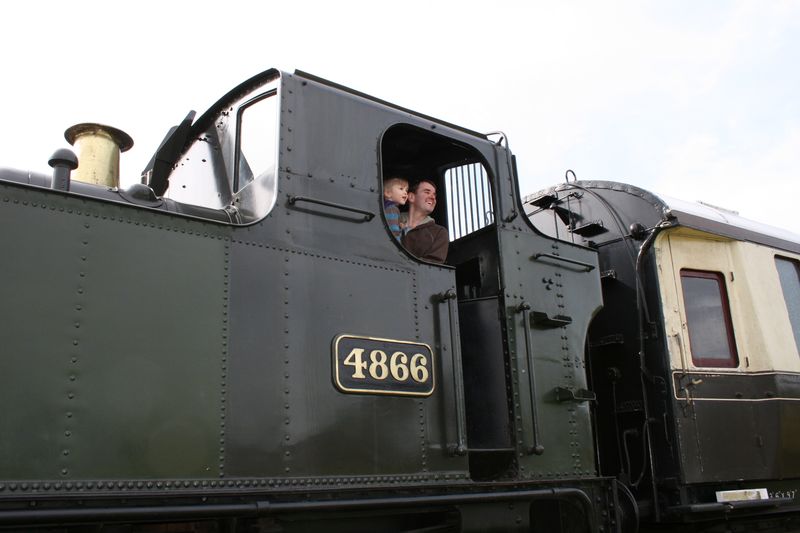
Finally, two year old Owen had a brilliant day. He loved seeing the King, Oliver (4866 0-4-2) and Duck (0-6-0PT). 

IMG_0471

IMG_0520

Above: Owen and me on the footplate of 4866, the locomotive that launched the Great Western Society 50 years ago. The GWS has done a magnificent job restoring and conserving the Great Western, Britain's longest lasting and best loved railway.

PS: Visit the new Ertblog on WordPress at robskinner.net!

Norton Fitzwarren: lightning can strike twice

Some places evoke memories of tragedy. We remember Hungerford for the 1987 massacre, and Aberfan for the 1966 disaster. 

On Britain's railways, the small village of Norton Fitzwarren near Taunton has similar associations. The Great Western Railway's mainline to the west runs through the village. The GWR had the proudest safety record in Britain, and went 50 years from 1890 to 1940 without a serious accident – an extraordinary achievement, reflecting the GWR's tireless efforts to prevent accidents. Yet the two disasters bracketing that period both happened at Norton Fitzwarren. 

The 1940 Norton Fitzwarren disaster struck 70 years ago today, during the darkest days of the war. It's hard to imagine a set of circumstances more likely to cause a disaster than those of 3 November 1940. The night was wet and windy. Train driver Percy Stacey had recently been bombed out of his home in London as the capital endured continual night bombing. Driver Stacey and fireman Seabridge took over express locomotive King George VI at 8.25pm on that wet and windy wartime night, to work the 9.50pm express from Paddington to Penzance. They were due to work it as far as Plymouth.

The train was already running over an hour late when it arrived at Taunton at 3.30am, as a result of an air raid on Bristol, which held the train in the city for more than an hour. We can barely imagine the impact this would have had on driver Stacey, who had lost his home in an air raid in London just days earlier. But he pressed on.

The stage was set for tragedy. Stacey would have expected his train to have a clear run on the main line. But because of the delays, the signalman at Taunton decided to let a newspaper train run non stop on the main line, leaving Stacey's train to continue on the relief line, which ended at Norton Fitzwarren. Stacey mistook the green lights of the main line signals for those applying to his train. As Stacey's train approached the end of the relief line, the newspaper train overtook it on the main line. Disaster was inevitable. 

At 3.48am on that dark November morning, the 89 ton King Edward VI jumped over a ditch and fell on its side. The overtaking newspaper train was showered with ballast thrown up by the crashing train. Tragically, fireman Seabridge and 26 passengers were killed. 

Driver Stacey escaped from the wreckage and struggled through the icy waters of the neighbouring flooded field to raise the alarm. Can you imagine how he must have felt? He would have been desperately tired, cold and wet. He'd have wondered whether his family was safe after another night's bombing. But more immediately, he'd have been shocked to the core by the fact his train had been wrecked, leaving him wondering what he had done. 

The irony of the disaster was that the GRW's pioneering safety measures should have prevented it. Over 30 years earlier, the company had invented 'automatic train control' (ATC), which automatically applied the brakes if a driver missed a 'distant' warning signal. The driver retained the ability to dismiss the ATC warning and the resulting brake application. At Norton Fitzwarren, driver Stacey did just that, which meant the ATC could not prevent tragedy. 

Norton Fitzwarren 1940 was a rare blot on the GWR's safety copybook in extraordinary circumstances. For 50 years, countless reports on railway disasters urged companies to follow the GWR's example and adopt ATC. It took the 1952 Harrow and Wealdstone catastrophe in which 112 people died before British Railways adopted a national ATC system, called AWS. But the GWR system survived until the early 1980s on parts of the old railway's network. The Great Western wasn't perfect, but its commitment to safety remains one of its greatest, proudest legacies. 

You can read the official Ministry of Transport inquiry report into the 1940 disaster by Lieutenant Colonel Mount here. I also recommend AR Kingdom's excellent account in The Railway Accident at Norton Fitzwarren, 1940, by ARK Publications (ISBN 1 873029 10 1).