
British Rail’s High Speed Train caused a sensation when it burst onto the scene in October 1976. Just eight years after the end of steam, Britain’s travellers loved the new train, which as the branding InterCity 125 hinted raced between cities at up to 125 miles an hour. And you didn’t have to pay a penny extra for the privilege.
Speed was the big attraction: in the early years, the fastest service from Cardiff to London took just 1 hour 41 minutes, a speed unmatched by today’s timetable. But the bold design, with its striking blue and yellow wedge-shaped power cars, played a big part in making the High Speed Train an icon, thanks to designer Sir Kenneth Grange, who died this week aged 95. According to his obituary in The Times (paywall), British Rail asked him to enliven the train’s livery, but he persuaded BR he could also make power cars more streamlined, with shades of the 1930s steam loco record breaker Mallard.

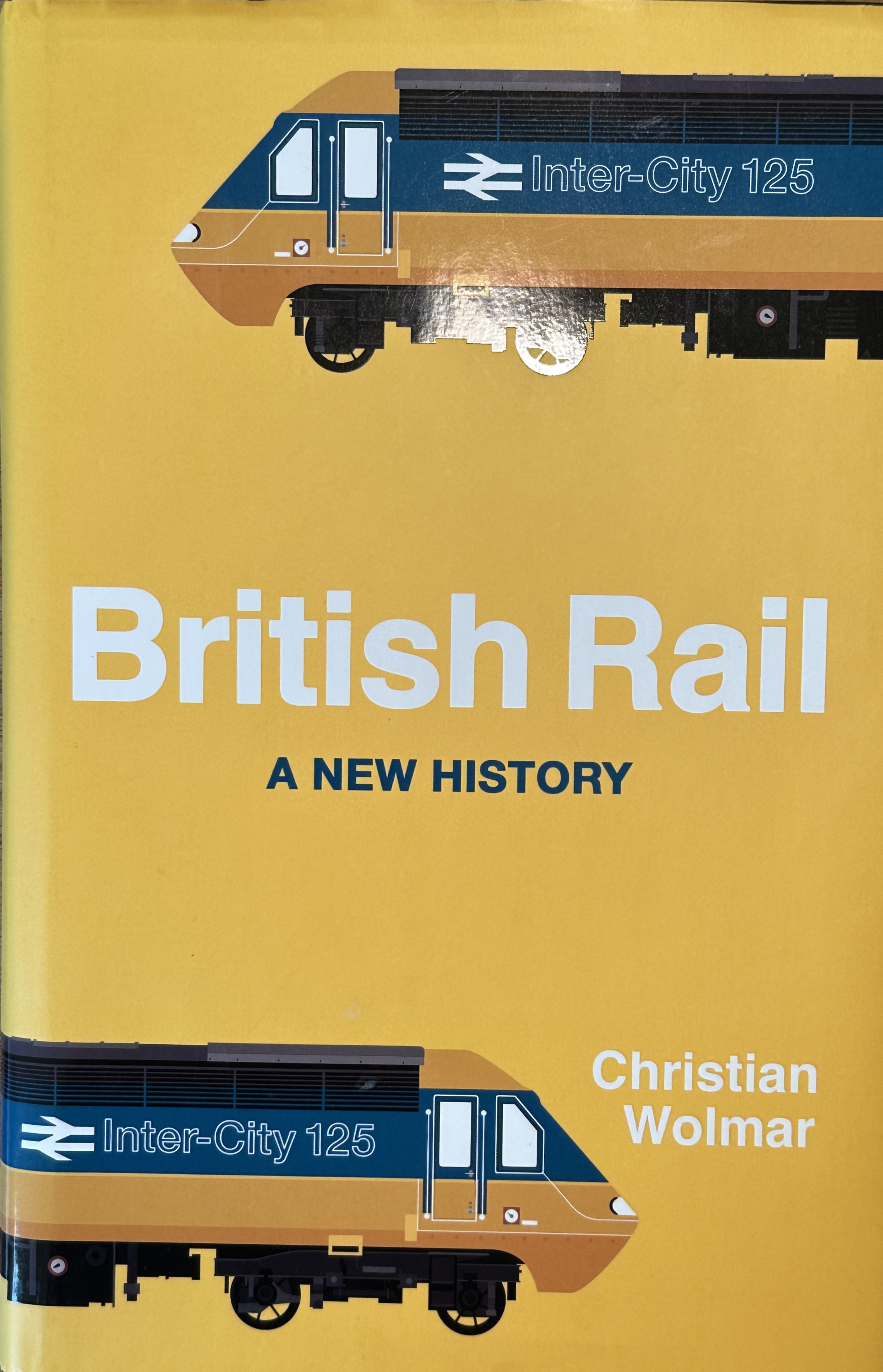
It’s no coincidence that the HST featured on the cover of two major books recording the history of BR. A Journey by Design by Brian Haresnape, published in 1979, showed how BR started taking design seriously in the 1960s, with the later HST becoming one of the national network’s greatest designs, complemented by the 1964 corporate identity. (The 1964 logo remains ubiquitous today, almost 30 years after BR was privatised.) Christian Wolmar also placed the HST on the cover of his 2022 book, British Rail, a new history. Wolmar reminds us that the HST was not revolutionary; its brilliance was in taking conventional technology to bring a new era of speed and comfort to Britain’s main rail routes.

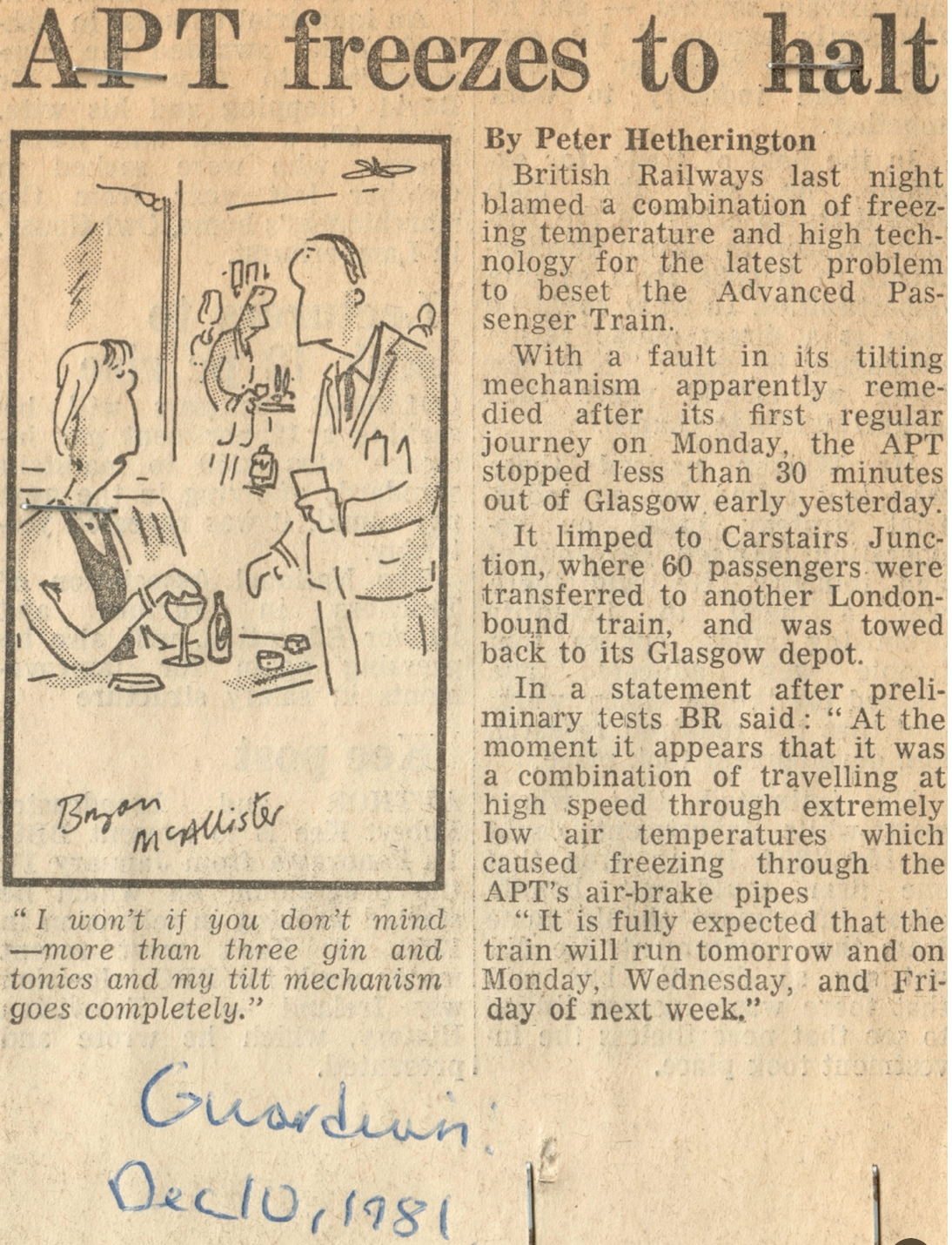
BR was proud of its star, showcasing it in this 1976 booklet as the HST came into service, celebrating ‘the fastest diesel trains in the world’. BR’s clever marketing positioned the HST as the people’s train, available to all. To prove the point, I even travelled in first class as a 15 year old in 1979 thanks to a BR/Persil promotion, which gave me a free companion ticket to match Dad’s ticket for a work trip from Cardiff to London.) The HST became even more important after the failure of the far more innovative Advanced Passenger Train, which never recovered from its disastrous launch in the bitterly cold winter of 1981/82, as the Guardian story below recorded.
My HST journey
I loved my first InterCity 125 journey in July 1977, just nine months after the train came into service. I was travelling on my own aged 13 to meet Dad for a weekend in London at the end of his work meetings. It’s curious that that 47 years later one of my main memories of the trip was Dad showing off a second hand book purchase, an etymological dictionary explaining the origins of words. We also went to the famous Hamleys toy shop, which didn’t live up to my expectations, an experience repeated when Toys R Us opened in Cardiff in 1985.
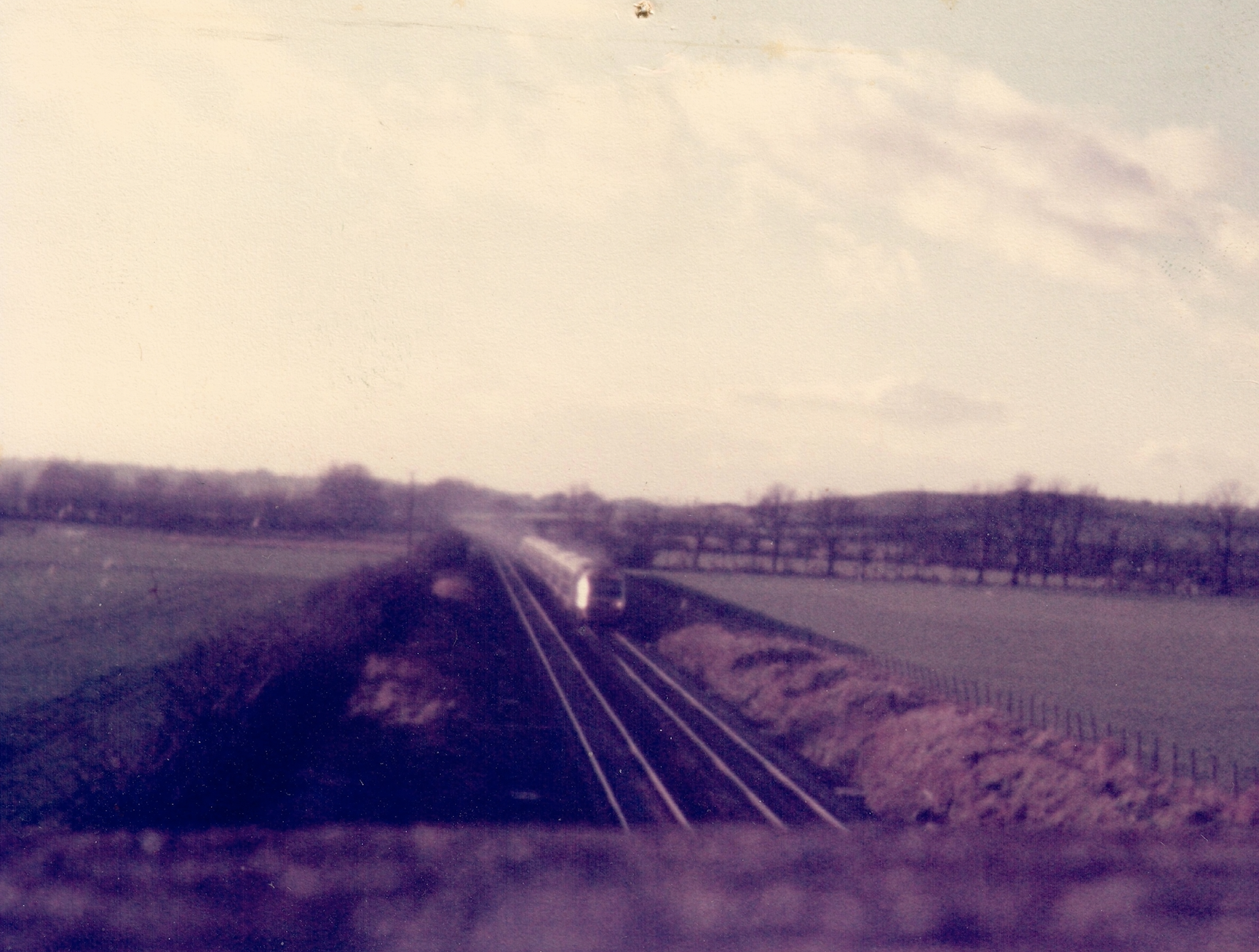
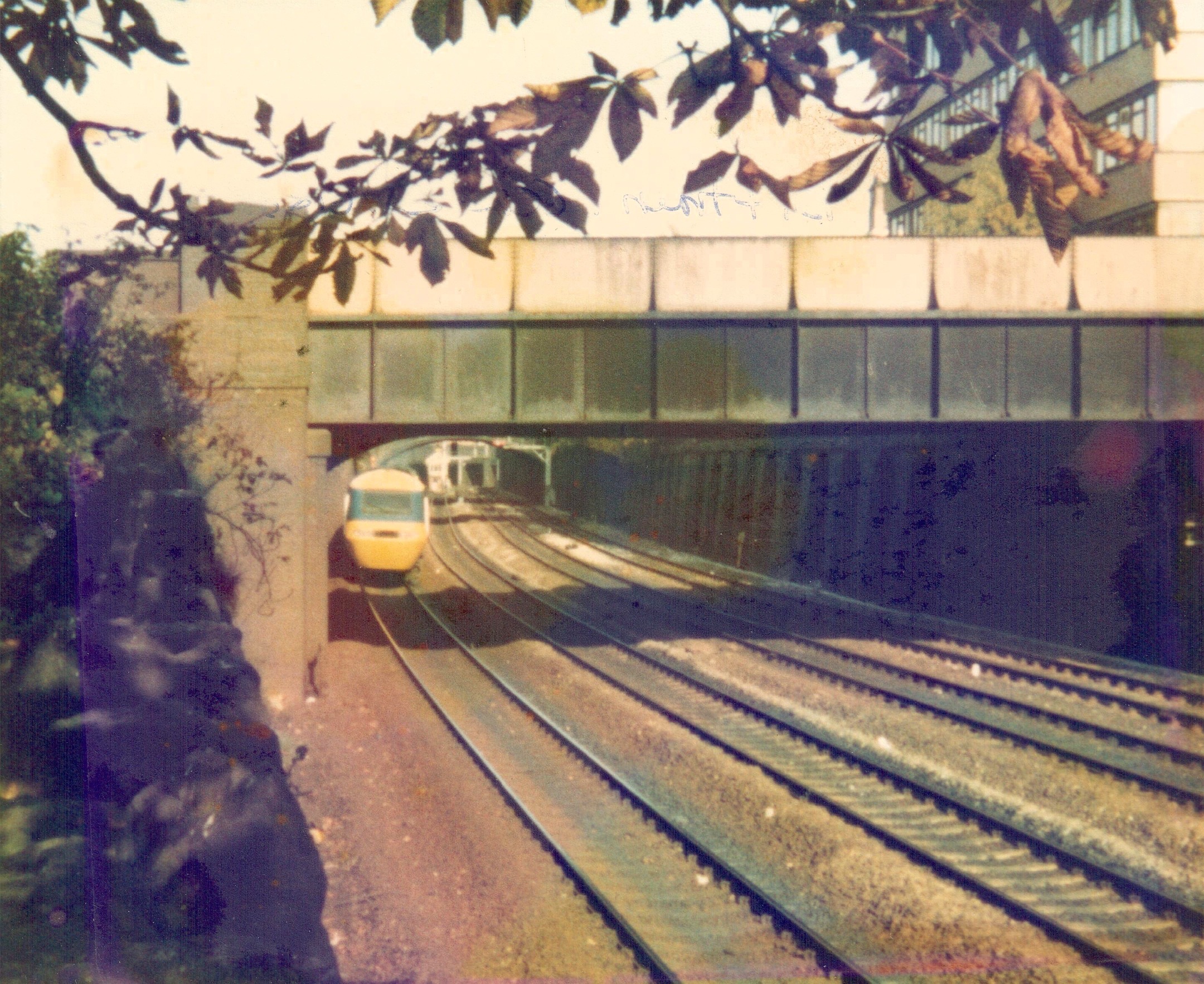
Many of my early HST trips were to visit my older sister Beverley, who got married and moved to Swindon in 1976. I took the photo above on one of those visits, enjoying the sight and sound of the train racing through the Wiltshire countryside. (I used a Kodak Instamatic camera, also designed by Kenneth Grange.) Later, I took advantage of the expanding HST route to travel between home in Cardiff and university in Leicester – as seen below in my June 1983 photo of the 17.47 from Cardiff to Derby, which will take me as far as Birmingham.

Five years later, after I moved to London as press officer for Nationwide Building Society, I regularly took advantage of BR’s Weekend First offer to make my trips back home to Wales more comfortable – what a bargain that £3 upgrade was, especially after my Cardiff – Paddington Sunday evening service started running non-stop from Newport.

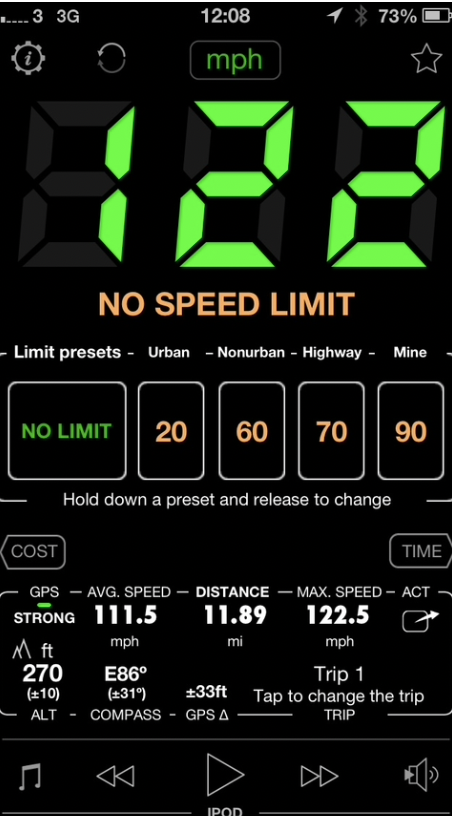
Back in 1977, I had no idea that almost 40 years later I’d still be enjoying unforgettable moments on that iconic train. In April 2013 I took my then four year old son Owen by HST to Cardiff, and he summed up the experience with his unique description: ‘We’re going faster than jelly!” Thanks to my iPhone, I recorded our speed as 122 mph between Didcot and Swindon.
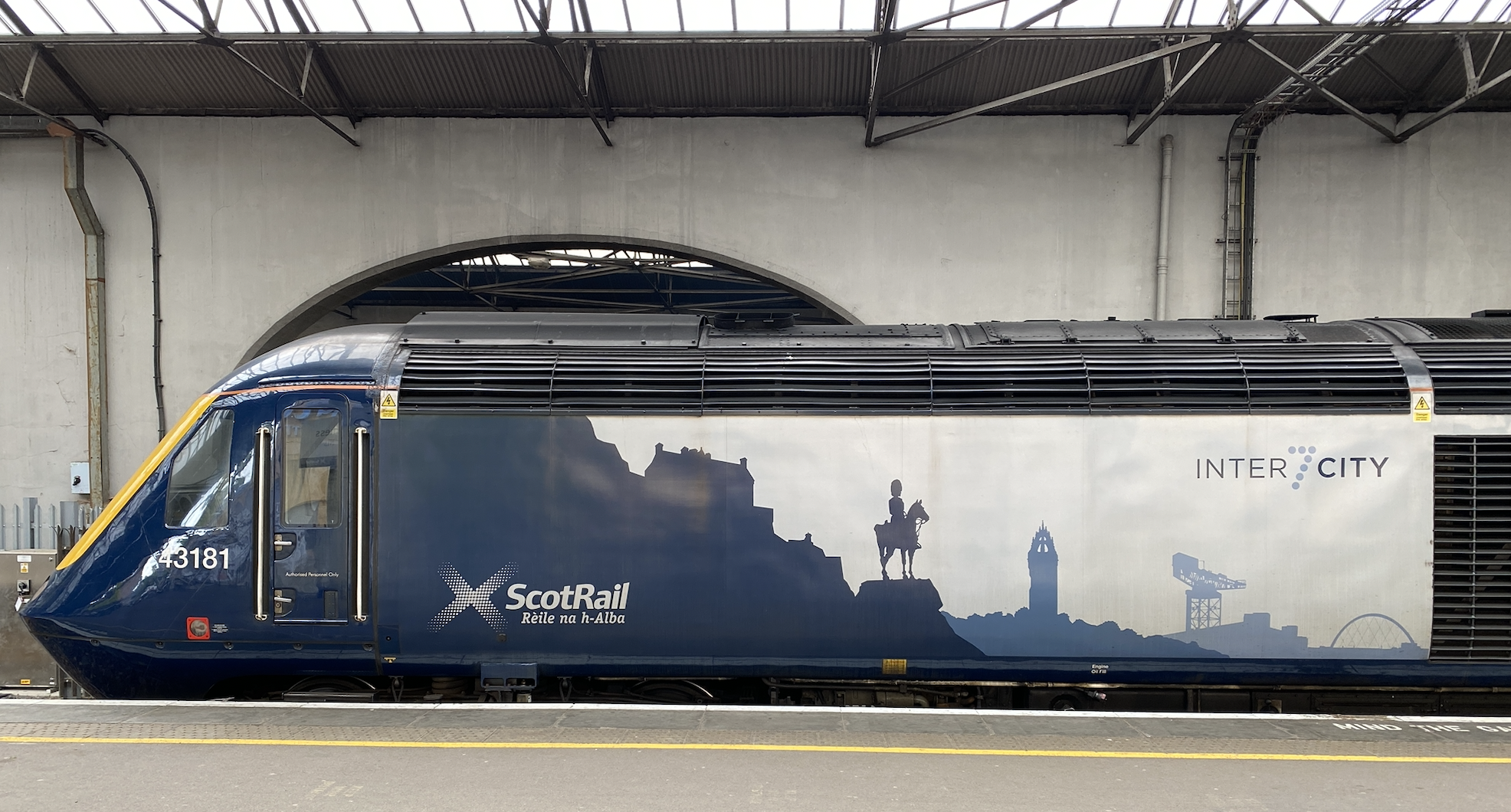
Six years later, I spotted an HST in Sydney, Australia – a variation of the BR pioneer called the XPT, introduced in 1982. It may outlive the original, which is enjoying an Indian summer in intercity service in Scotland. (Much as several of Mallard’s sister A4 pacifics ended their days on Scottish intercity expresses in 1966.) I was thrilled to spot this HST in Inverness in May 2022, as I prepared for my Highland 500 cycle tour.
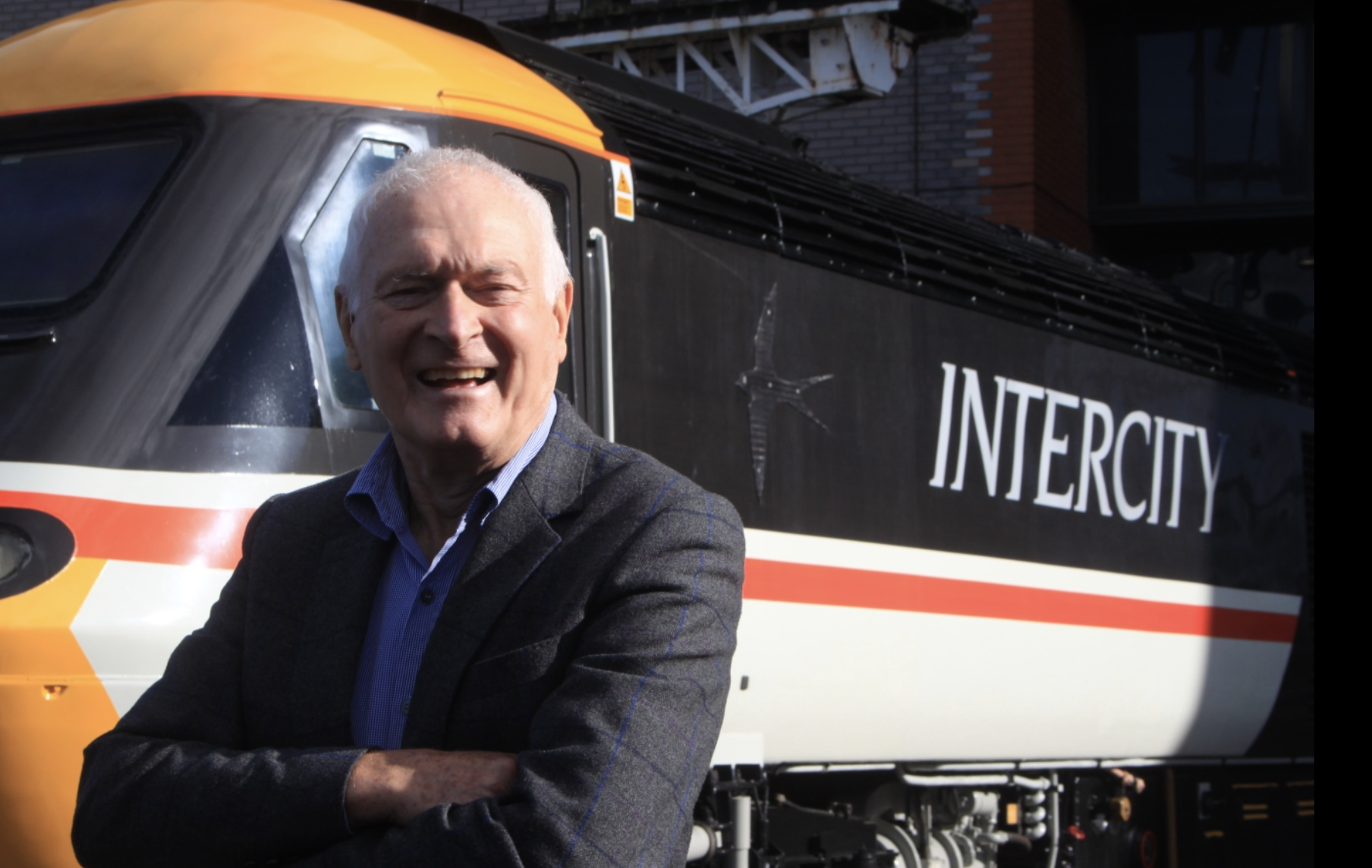
I’ll end with a lovely shot of Kenneth Granger next to the icon that he created. He proved that good design made a difference to people’s lives, as he also showed with that Kodak Instamatic camera and the Kenwood Chef food mixer. It’s a proud legacy.
 Ertblog
Pingback: In praise of British Rail | Ertblog