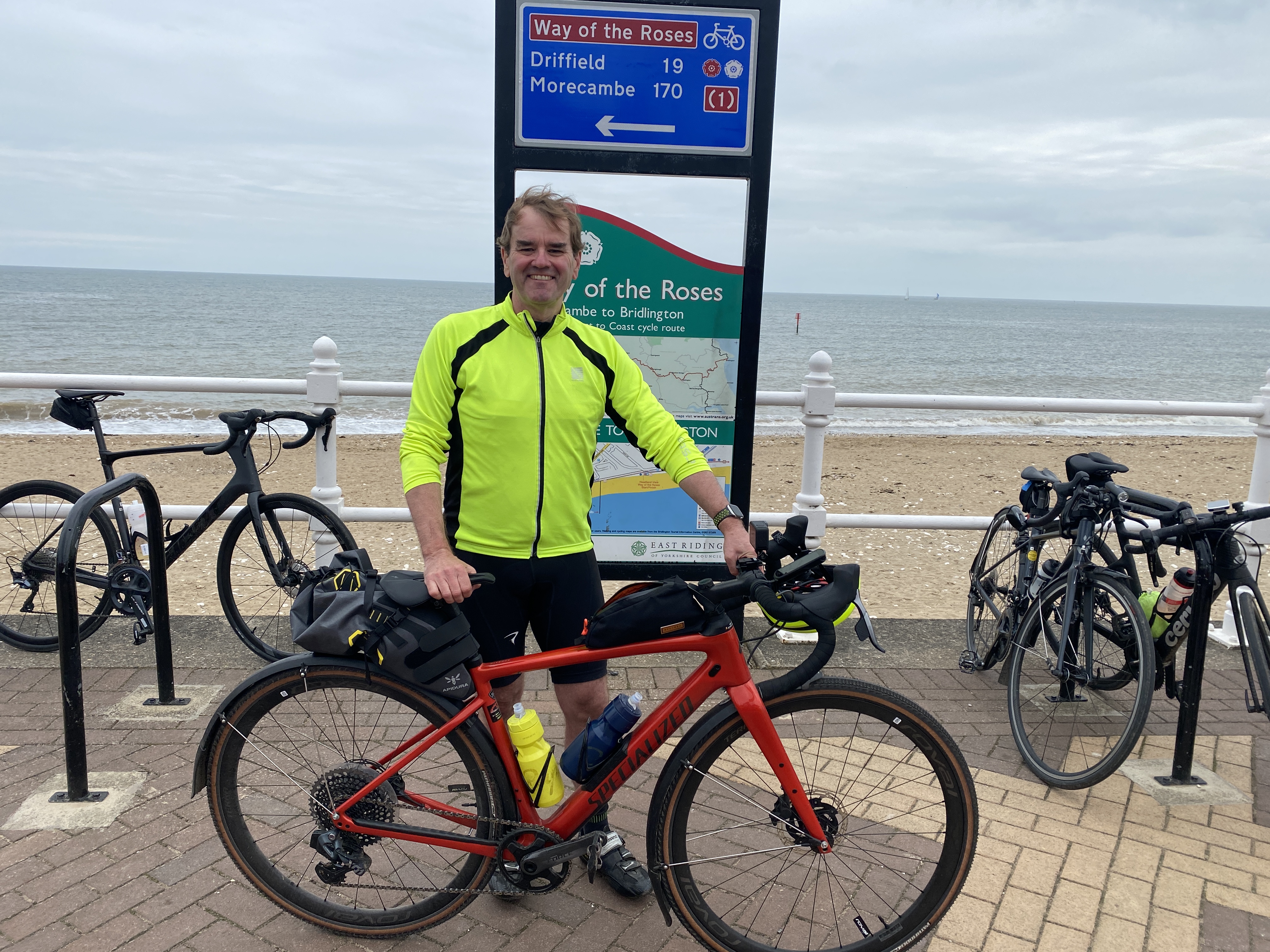
Completing the Way of the Roses ride, Bridlington, June 2021
It has become a tradition on New Year’s Eve for me to reflect on my year’s cycling, and look ahead to my cycling ambitions for the year ahead. This time, I’m feeling chuffed having cycled over 6,000 miles – 2,000 more than my previous record of 4.255 in 2019.
I have been amazingly consistent in 2021, cycling over 500 miles every month. That became a mission by the middle of the year – I couldn’t fall below 500 miles a month. The early winter months set the pattern of 500 plus mile months, thanks to my Wattbike Atom smart trainer. It was rare for me to record over 200 miles a month in winter before 2021, but the Atom made regular cycling far more enjoyable than cold, wet, icy rides outdoors. (I became far more familiar with the BBC iPlayer and Netflix as a result.)
The toughest months, ironically, were those in high summer: July and August. Summer holidays in Wales and Cornwall reduced the number of cycling days, and I confess that it was a slog to rack up the miles as the months ended. By contrast, November was the biggest month of all, with 586 miles recorded on Strava.
It was the ultimate sacrifice. Forty years ago today, the eight man crew of the RNLI Penlee lifeboat in Cornwall died trying to save the lives of the crew and passengers on a stricken cargo ship.
December 1981 was bitterly cold and the night of 19 December brought high seas and hurricane force winds. It took the crew of the lifeboat 30 minutes to come alongside the MV Union Star. They valiantly succeeded in getting four of the eight people on the ship onto the lifeboat. The coastguard assumed the Solomon Brownewould then head for shore, but the crew were determined to save everyone. Tragically, the lifeboat foundered in the attempt.
I remember the shock of the news. As Joanne Payne, the daughter of crewman Charles Greenhaugh told the BBC, the village couldn’t believe the news. She recalled that everyone thought: “It’s not true, it can’t be true. The lifeboat always comes home.”
The Penlee tragedy was the last time the RNLI lost an entire crew. Today’s lifeboats are far better designed for the dangers of the sea: they will right themselves if capsized in heavy seas.
Father and son Nigel and Neil Brockman were both members of the Penlee lifeboat crew, but Coxswain Trevelyan Richards chose father Nigel over his 17 year old son because of his greater experience. As Lamorna Ash recounts in her book Dark, Salt, Clear about life in nearby Newlyn, the coxswain had a policy of not allowing two members of the same family on the same dangerous rescue mission. An echo of Saving Private Ryan. Neil later became coxswain of the replacement lifeboat. We should also remember the other eight victims of the tragedy: those on board the Union Star cargo ship.
Christmas mourning
Christmas 1981 was the saddest imaginable for the grieving village of Mousehole. Lamorna Ash says that even today its people resent the way the media descended on them over that tragic Christmas, not allowing them to mourn in private.
It is striking how many tragedies happen on the eve of Christmas: Penlee; Lockerbie; the Clapham Junction rail disaster. Or is it just that we are more conscious of tragedy at what it meant to be a happy time of year? Closer to home, both my grandfathers died just before Christmas, in 1942 and 1966.
Supporting the RNLI: a family tradition
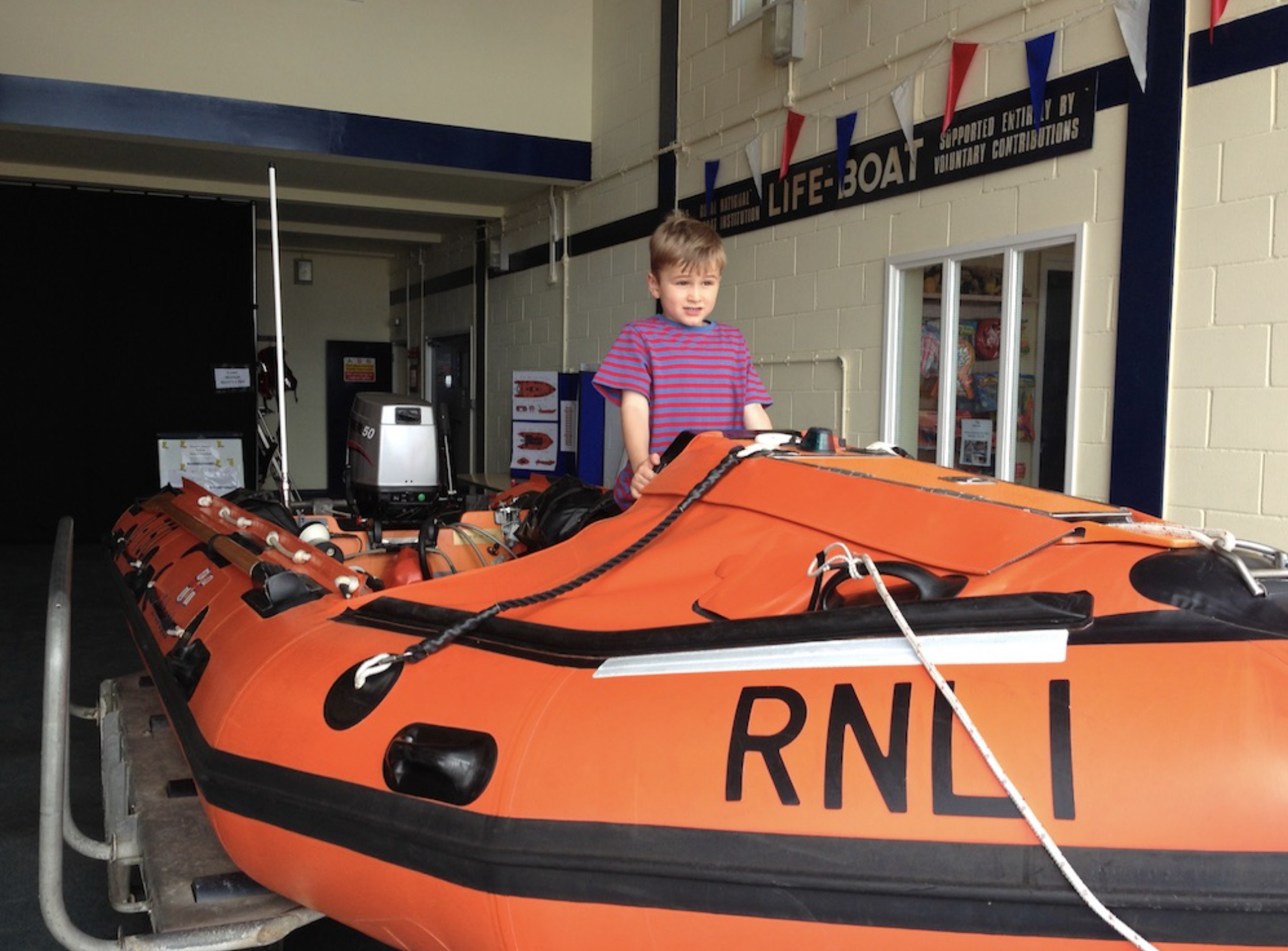
Owen at Penarth RNLI, 2013
My family has supported the RNLI for many years. My late mother, Rosemary Skinner, volunteered at the RNLI shop in her hometown of Penarth, Wales until her failing eyesight made this impossible. The photo above shows Owen, aged 5, at an open day there during the Penarth festival in 2013.
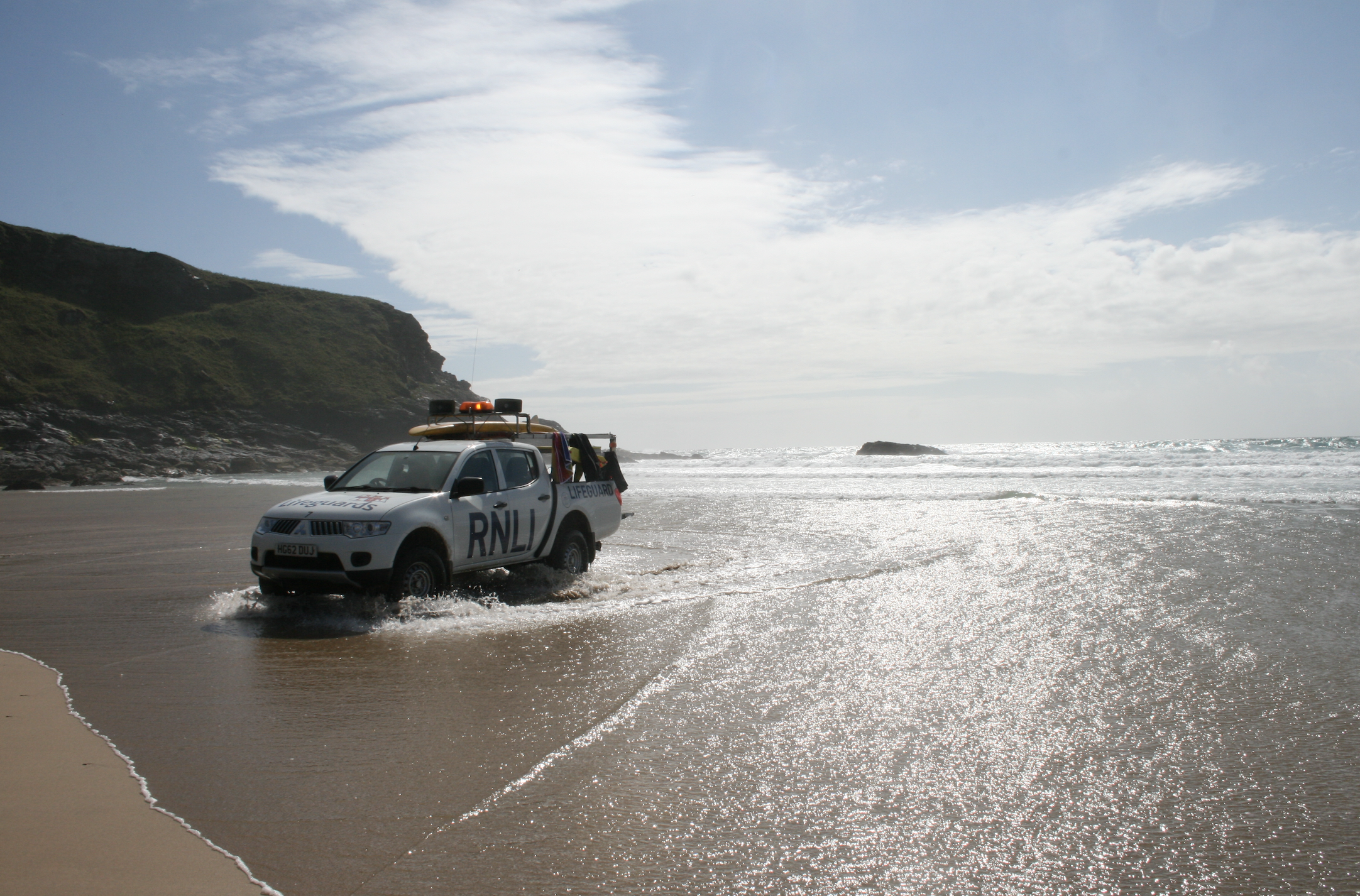
RNLI lifeguards in action, Mawgan Porth, 2015
We saw a further side of the RNLI’s vital work during holidays in Mawgan Porth, Cornwall. The beach has a reputation for dangerous rip currents (three surfers were killed there in 2014) so during the summer season RNLI lifeguards patrol the beach. We have heard the guards regularly calling to surfers and paddleboarders to move away from areas of danger through loud-hailers. On our first visit in 2011 I signed up on the beach to make monthly donations, which continue to this day.
It is not be as heroic as crewing a lifeboat in dangerous seas, but our donations do help the RNLI and its brave volunteers. Few were as valiant as the eight men who departed the Cornish shore on 19 December 1981, never to return.
First there was Watergate. The scandal that eventually brought down American president Richard Nixon was named after the Watergate office building in Washington DC, the site of a burglary in 1972 linked to Nixon’s reelection campaign.
Since then, every scandal – or, in truth, concocted controversy – has had ‘gate’ as a suffix. Partygate – the scandal of illegal parties held at 10 Downing Street during lockdowns – is just the latest.
I’ve always found this a tiresome, lazy journalistic practice. So I was pleased today to see The Times agreeing with me. Rose Wild in her feedback column agreed with a reader, David Simpson, who pleaded with the paper to “stop writers putting ‘gate’ at the end of any scandal”.
Rose responded that The Times style guide discourages the practice as tired and lazy.
The only time I applauded the usage was when the Tory cabinet minister Andrew Mitchell was forced to resign after allegedly abusing police officers at the Downing Street gates in 2012. Gategate was a witty description – but the more common description was plebgate, after Mitchell was accused of calling the police plebs.
I hope Rose’s verdict holds, But I fear lazy journalists will still be calling scandals gates a century after Nixon resigned.
It was 40 years ago today that the snow came. It wasn’t unexpected: in my teenage years, winters featured regular heavy snowfalls. In 1978 rugby fans were stranded by a blizzard returning from an international in Cardiff. The winter of discontent, 1978/79 was characterised by blizzards as well as strikes. But 1981/82 was different: the snowiest winter since the great winter of 1962/63.
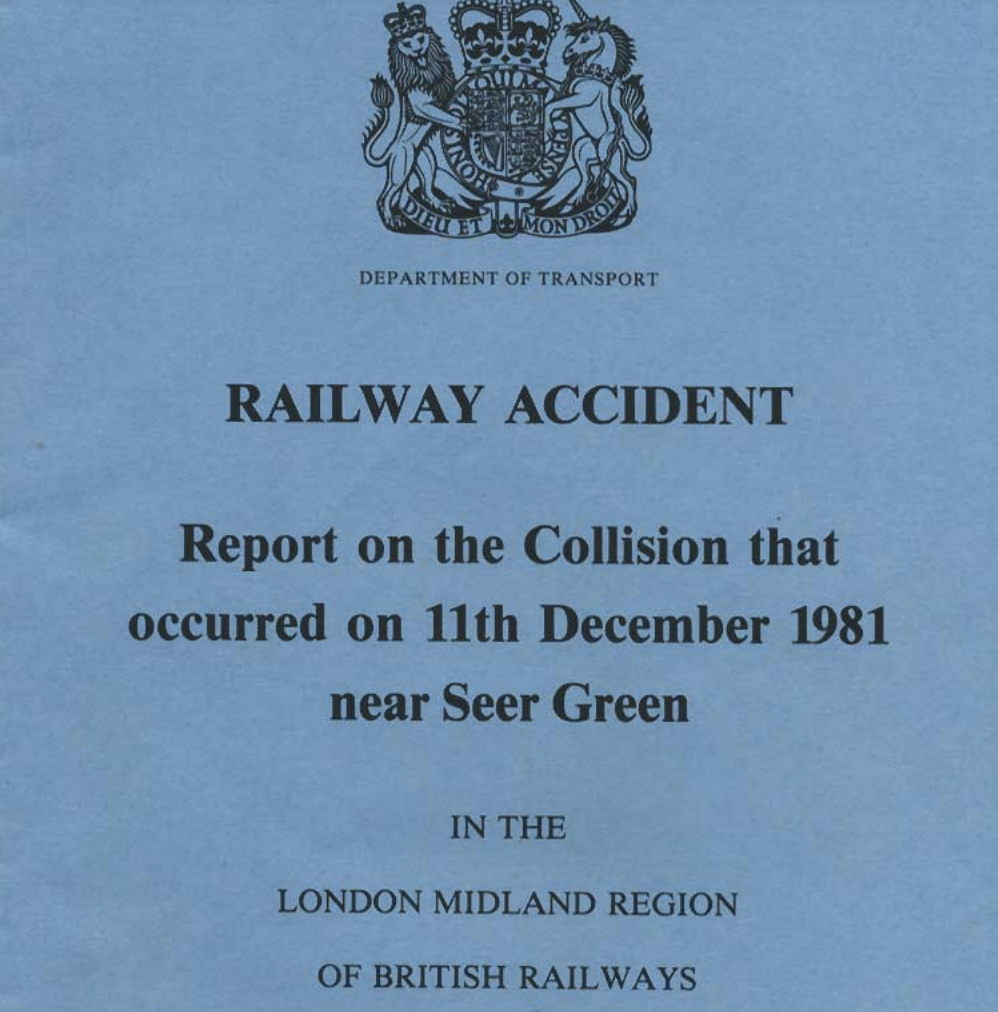
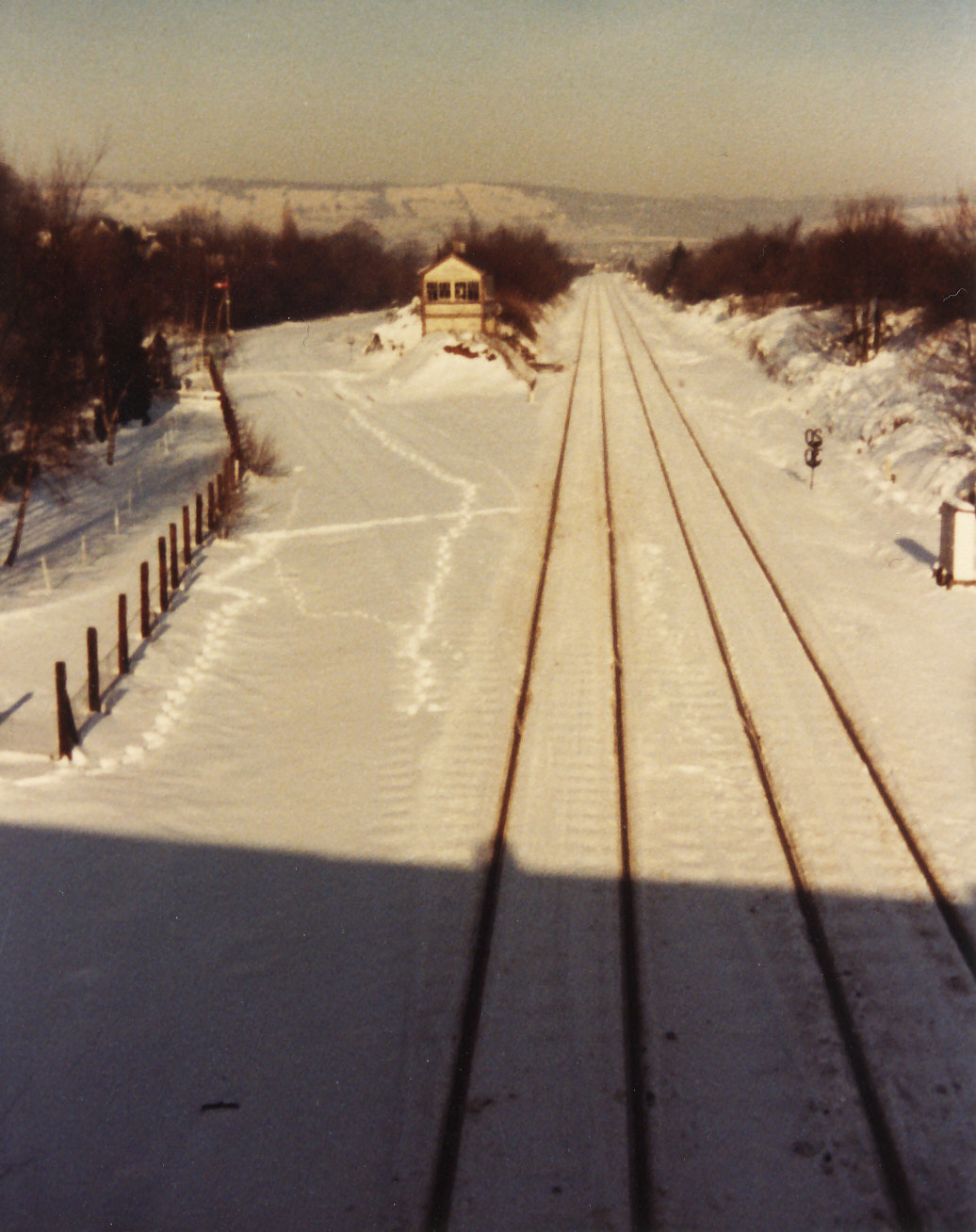
Little did I know, when I pleased myself by marking the date in snow on our greenhouse, that the winter of my A level year would be so special. My first diary noted that there had been a rail crash claiming four lives at Seer Green (Sear Green, as I spelt it) in Buckinghamshire. I had no idea that I’d commute from that village station for several years 20 years later.
The Seer Green rail crash, 11 December 1981The accident report
We had further snow over the Christmas holidays. The photo below, taken on Boxing Day 1981, shows brother-in-law Julio, Siân, aged 14 months, sister Boo, Mum and me.
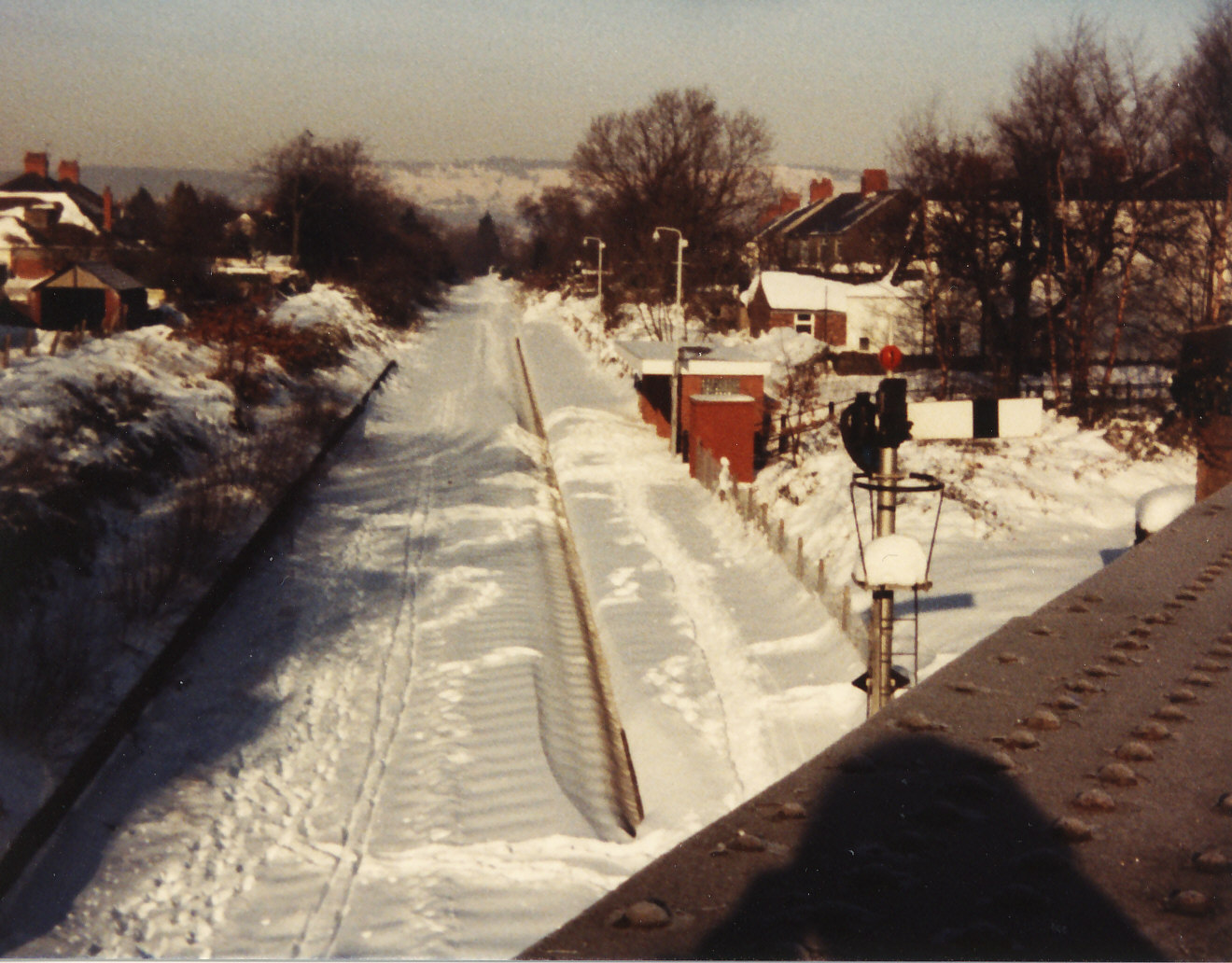
The serious snow arrived in the new year. It snowed continually for 36 hours. It’s hard now to imagine that kind of snowquake. Urban landscapes were transformed. The photo above of Heath Junction in Cardiff tells a story. No trains were running on the Coryton line, so you’d never know it was a junction were it not for the old GWR signal box and signals.
Heath Low Level station
The photo above shows the snow at Heath Low Level station untouched by trains or people as British Railways didn’t attempt to run any services on the Coryton line while the snow persisted.
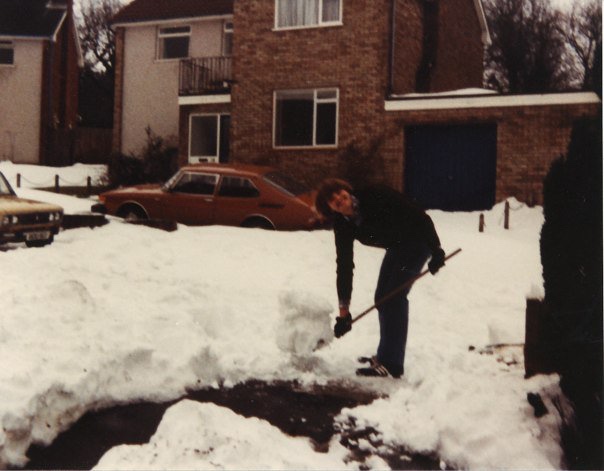
I eventually cleared a path to the garage and drive as seen below. The 1960s Hillman Imp was Mum’s car.
I eventually helped clear a path to the garage – as seen above and below.
The sheer weight of snow changed the landscape for ever. The old Sophia Gardens pavilion, which was a venue for the 1958 British Empire & Commonwealth Games, collapsed under its weight, as did the bowling club in Rhydypenau.
Near Cardiff Castle
One day, I walked into town, past the scene near Cardiff Castle seen above. It was a great adventure.
Days later, we were due to go to London on a school trip for a series of history lectures, five months before our A levels. One of the star lecturers was GR Elton, who featured heavily in our A level Tudor history course, and was well known for his clash of theories about Henry VIII with rival historian JJ Scarisbrick. We were due to travel by train, but bizarrely the trains were blocked while the M4 to England was still open.
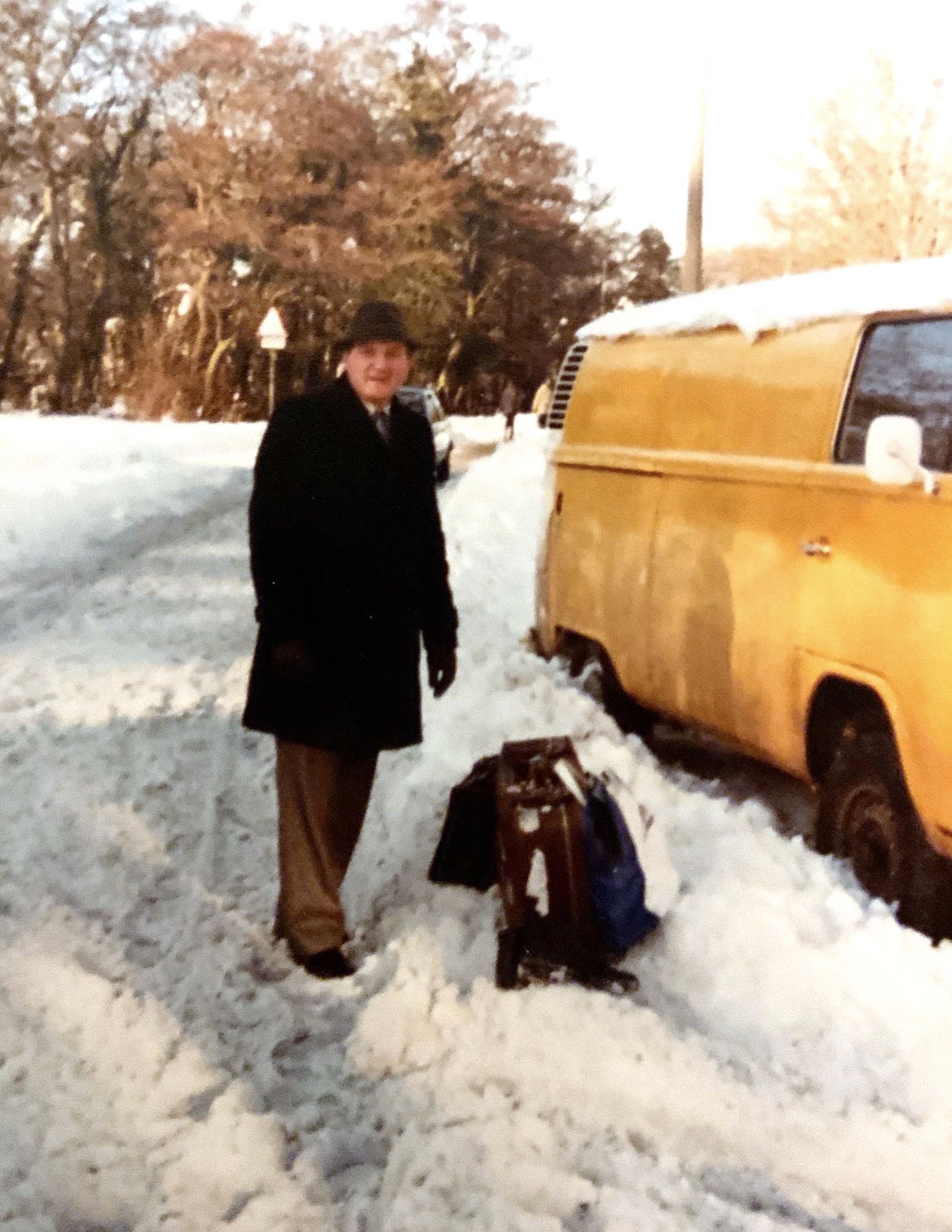
Dad, off to Majorca
Dad, Bob Skinner, was working flat out during the blizzards of early 1982. As public relations officer for South Glamorgan county council, he was the spokesman for the Welsh capital’s council as it kept people informed about how its services were affected by the great freeze. By early January, he was desperate for a break, and planned a rare holiday in Palma, Majorca. He was picked up by a Land Rover to get him on a train to Birmingham to get a flight to Spain. Dad recalls the delight of sinking into his seat on the plane.
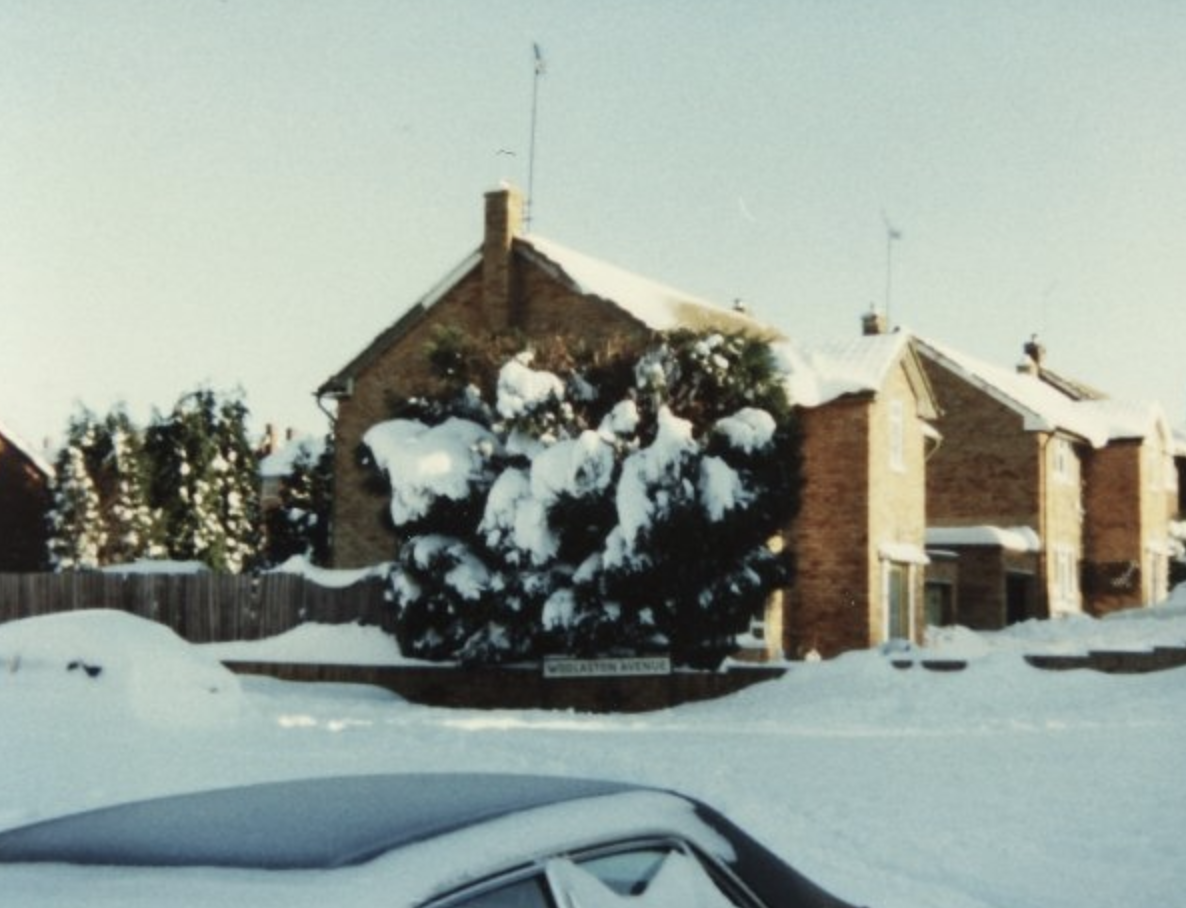
Our house in the snow
You can see in this shot how high the drifts reached – over the wall between our front garden and the pavement.
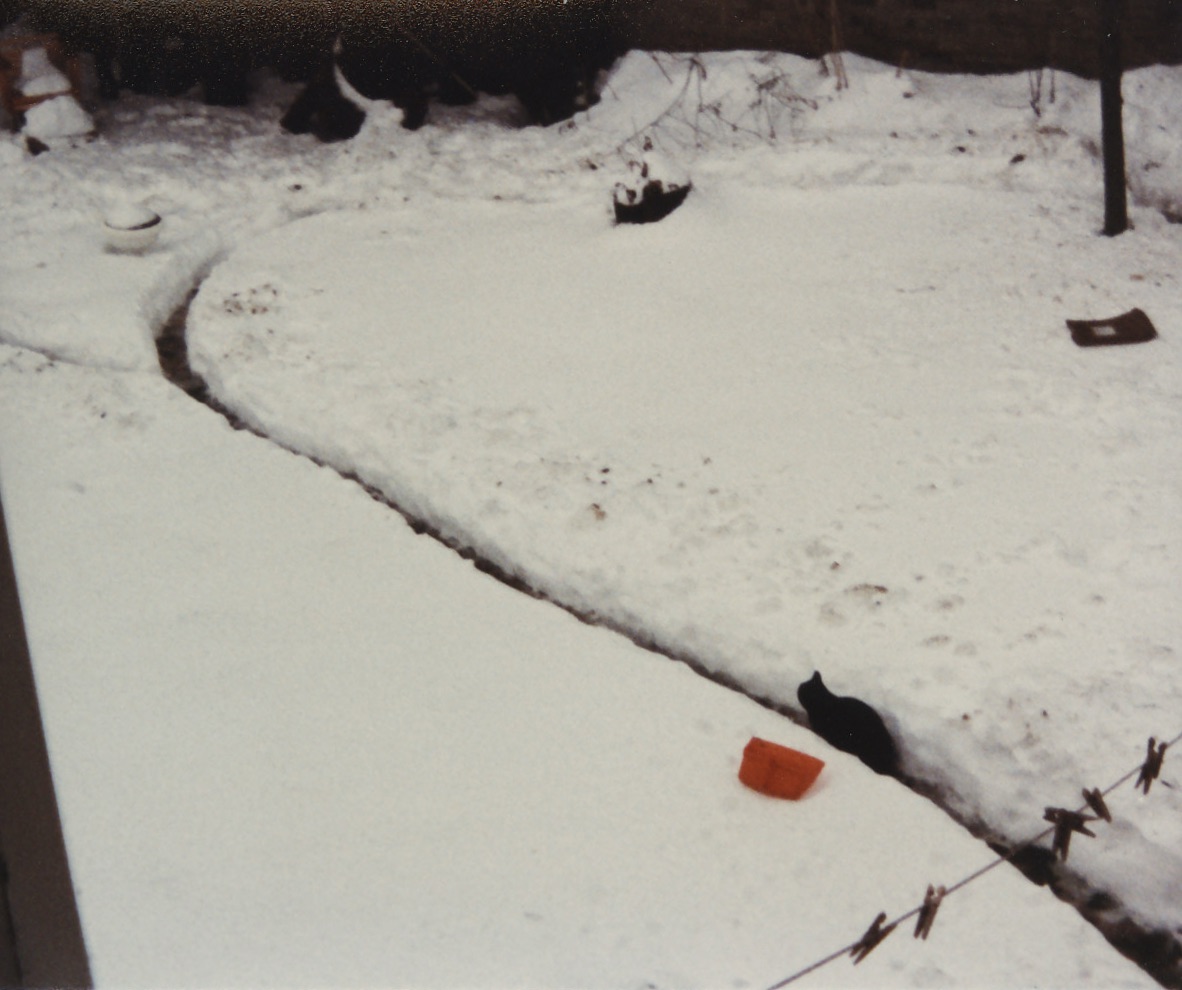
Paths for Spot the cat
I was concerned that our eight year old cat, Spot, would be adrift. So I built paths (above) and a tunnel (below) for her. It’s fair to say she needed a bit of encouragement to use them!
Eventually, the snow melted and life got back to normal. We’ve never had a winter like 1981/82 in the intervening 40 years. Will the snow ever return in such a magical way?
January 11 and January 20, 1982
The path seemed clear to A levels. But none of us could have know that Britain would be at war with Argentina over the Falkland Islands during those exams…
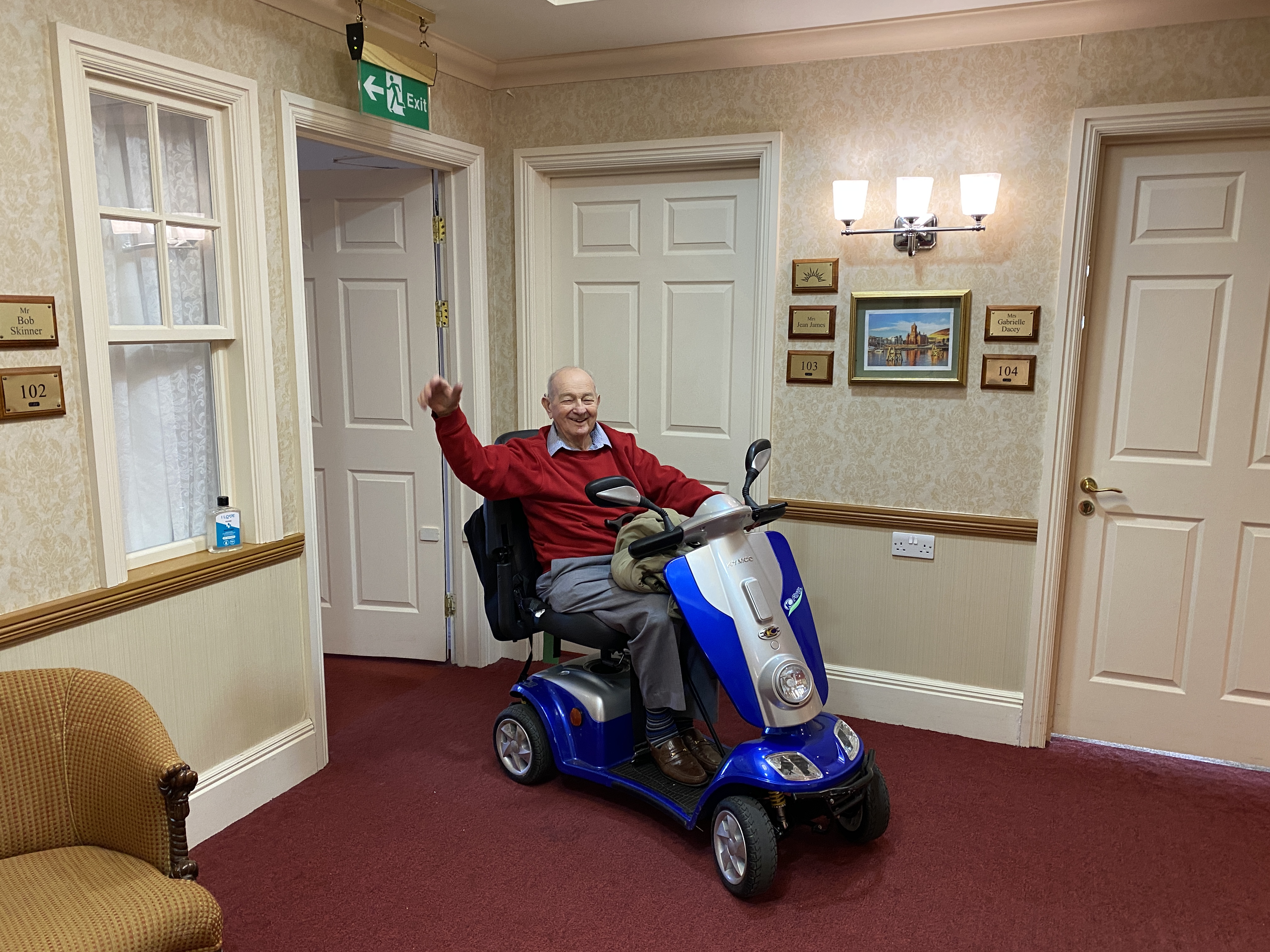
My father is amazing. After two wonderful years at his Sunrise, Cardiff, care home, he left today after buying a flat in Penarth, near Cardiff.
Everyone at Sunrise has been so kind to Dad since he moved in just over two years ago: former general manager Sara, new boss Virgil, Francesca, Diane and so many others. They guided him through the pandemic, and we will always be so grateful. His book, Pandemic: my Care Home Diary, is his tribute. His time at Sunrise rebuilt his health, and has let him spread his wings once again.
Dad is very happy with his own company (he enjoys blogging and writing) but also loves the companionship of others. As I carried more stuff up to his new flat, I came across a group of women enjoying a bottle or two of wine. I explained Dad’s Penarth heritage dating back to his joining the Penarth Times as a reporter in 1942 – an astonishing 79 years ago! – and said he’d be happy to join them, and the men, for a glass of wine or a coffee.
Karen and I are in a unique time of life. We have a very special 13 year old son who is finding his wings as a teenager. And we have a father/father-in-law who is also retrieving his own wings, setting up home once again, some 70 years after creating his first home with Mum in Caerphilly. It’s like keeping an eye over 13 year old and 95 year old teenagers! Long may they flourish. We love them both so much.









 Ertblog