Remembering Harold Evans, the legendary newspaper editor who exposed the Thalidomide scandal

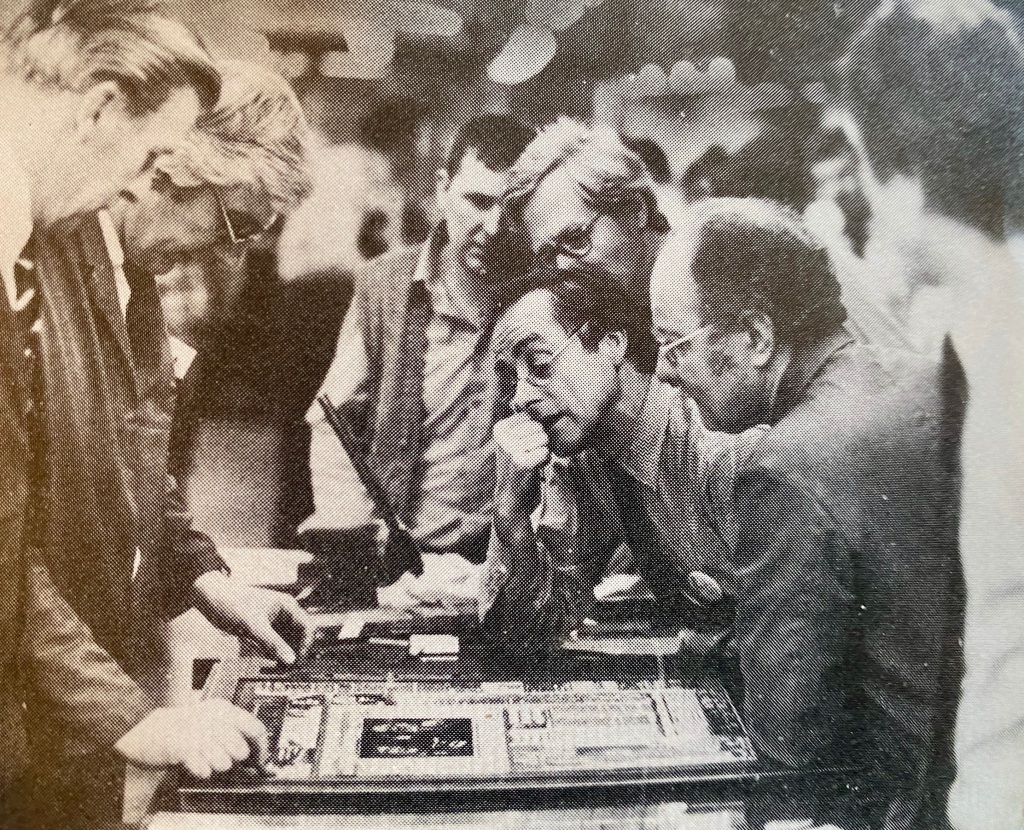
Hands on editor: Harold Evans at the Sunday Times. Photo: Sunday Times

There’s a two word reply to anyone who doubts the good that journalism can do: Harold Evans. The legendary campaigning editor of the Sunday Times and Northern Echo, who has died aged 92, fought for justice for the Thalidomide victims, exposed countless other scandals and won greater freedom of information in notoriously secretive Britain.

Harry Evans was proud of his northern roots, and his parents. In his autobiography My Paper Chase, he talks lovingly of his parents: how he was ‘bursting with pride’ when by chance he witnessed his engine driver father bringing a busy train into a station in Manchester. Later, Evans senior drove the royal train. He also described how his mother kept a flourishing corner shop, beating off competition from a new Co-op through dedication to her customers and canny pricing. (She spotted a few items that were cheaper in the rival store, and lowered her own prices to match.)

His interest in the press was stirred by a holiday encounter with soldiers who had been rescued from Dunkirk in the great evacuation of the remains of the British Expeditionary Force in 1940. His father asked the haggard men on Rhyl beach what had happened. Their harrowing stories contrasted with the newspaper headlines proclaiming Dunkirk as a victory. At the time, young Harry was embarrassed by his father’s keenness to talk to strangers. Later, he realised that Evans senior was doing what any good reporter would do: asking questions and finding out what happened. It inspired him to become a journalist and, in time, one of the greatest editors of the twentieth century.

Continue reading

Books and their readers: The Bookseller’s Tale by Martin Latham

A bookish read

I’ve loved books for half a century. I remember the moment the love affair began: my grandmother giving me an Enid Blyton tale featuring a wooded island. (The Secret Island?) There was no turning back. My reading status changed: in a relationship.

Martin Latham has made books his working life as well as his passion. He has sold books for 35 years, and has produced a book of his own, The Bookseller’s Tale, that is full of intriguing stories and authors I had never heard of. Even his dust-jacket is revealing: it reveals he was responsible for the largest petty-cash claim in Waterstones’ history when he paid for the excavation of a Roman bath-house floor under his bookshop.

Latham opens by talking about ‘comfort books’ – books we love, and keep buying and reading. They may, or may not, be literary masterpieces. The author recalls the novelist AS Byatt buying a copy of Terry Pratchett’s latest Discworld book in his Canterbury bookshop and admitting she couldn’t be seen buying it in London.

Latham never quite defines a comfort book. A book you read in difficult times? A volume you loved when you were young, and which gives you a heady draught of nostalgia every time you re-read it? A book that moved or inspired you deeply and which you read time and time again?

The definition may not matter. Most of us have books that we remember vividly and which we will happily read again. Here are some of mine.

Continue reading

In praise of Terence Conran

A Conran legacy

I was a big fan of Habitat in my twenties and thirties. I loved the clean design of the furniture, kitchen wear and dinner sets. I’m typing this blogpost on the 23 year old Habital dining table (now my working from home desk) seen in the photo, while drinking from the pictured 31 year old coffee cup from the store. Somewhere I still have a Habitat fondue set and towel rail.

It’s all thanks to Terence Conran, who has died aged 88. Conran was one of the entrepreneurs who changed the face of Britain, bringing fresh, modern design to the high street and the home.

“It is hard to overstate how uninteresting London was then,” Conran later said. “You could go along a terrace of houses, and every living room you looked in was the exactly the same, with the same extremely dreary furniture.” (You can see a glimpse of that world even today in many chintzy guesthouses.) Design was a hugely under appreciated discipline, as a glance at almost any household product would show. Conran opened the first Habitat store in 1964, and the stores quickly became a symbol of the Sixties. Over time, Habitat made the duvet (or continental quilt as my parents and grandparents called them), beanbag, wok and fondue part of everyday life.

Continue reading

David Walsh and Lance Armstrong: truth to tell

It was all about the cheating

Almost 20 years ago, I was enthralled by the Lance Armstrong story. His best selling book, It’s Not About the Bike, told the extraordinary tale of the cancer survivor who returned to win the world’s toughest cycle race, the Tour de France.

Back then, I was a modest cyclist (I still am) with dreams of cycling the length of Great Britain, Land’s End to John O’Groats. I was inspired by Armstrong’s story, especially his dedication to training. Yes, I knew all about cycling’s sordid relationship with drugs, notably the 1998 Tour de France’s Festina affair. (Paul Kimmage lifted the lid on this culture in Rough Ride.) But I believed the Armstrong line: he was the most tested cyclist in history. And every one had shown him to be clean. Karen and I followed Armstrong’s annual progress in Le Tour. I wore the US Postal team kit on several cycling holidays.

Continue reading

Poundbury: Prince Charles’ model Dorset village, 30 years on

Poundbury

As you approach Dorchester from the west, you see a dramatic sight: a fire station that looks like a design from the era of George III. The royal connection is real: this is Poundbury, the model village created by Prince Charles to bring to life his dream of building new communities using traditional architectural styles.

Charles famously campaigned against modern architecture in the 1980s, describing a proposed extension to the National Gallery in Trafalgar Square as “a monstrous carbuncle on the face of a much-loved and elegant friend”. He made those comments in a 1984 speech to the Royal Institute of British Architects – and incidentally compared the design to that of a municipal fire station. We now know what Charles would like a fire station to look like. The speech killed the proposed design.

Charles later said that he didn’t intend to drag Britain back to the 18th century, or to begin a style war. “All I asked was for room to be given to traditional approaches to architecture and urbanism.”

Continue reading

Coasteering: Dorset delight with Cumulus

Coasteering with Cumulus near Swanage. As amazing as it looks

Owen, 12, was thrilled when I booked a coasteering adventure with Cumulus Outdoors, a company specialising in outdoor adventures and residential programmes. We’d hoped to go coasteering in West Wales but Storm Ellen sank that plan. We arrived at the Cumulus base in Langton Matravers, just outside Swanage, with a sense of excitement – and, for me, a few butterflies.

Our guides were welcoming and patient, which was good as we took time to get into our wetsuits. (Karen, as a former guide leader, would have hurried us up.) We began the trek to the starting point, the stunning Dancing Ledge on Dorset’s Jurassic coast, England’s only natural world heritage site.

Continue reading

Return to Thomas Hardy country

Thomas Hardy’s birthplace, Higher Bockhampton, Dorset

Few writers have become as inextricably linked with a region as Thomas Hardy. The novelist and poet brought Dorset and neighbouring counties to life as his reimagined Wessex.

Greenwood Grange: its Hardy history

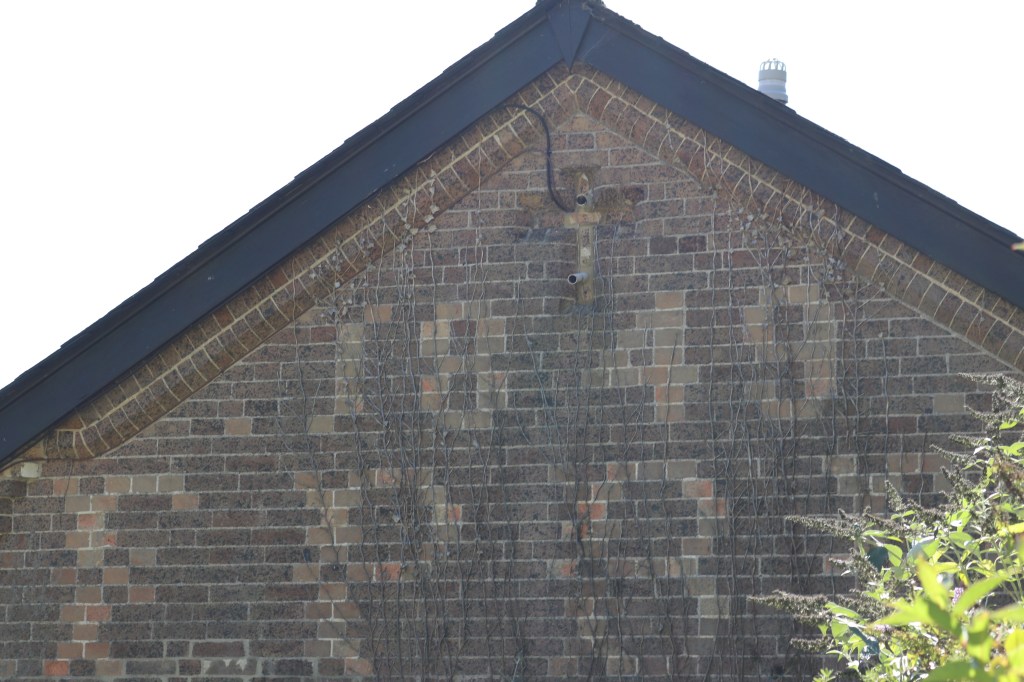
We’re enjoying a holiday in the heart of Hardy country. His birthplace is a short walk from our holiday cottage at Greenwood Grange, a group of buildings built by Thomas’s father. One gable (shown in the photo above) shows its 1840s heritage. Our holiday home Coomb Barton is reputedly mentioned in the last verse of Hardy’s 1915 poem, The Oxen:

“In the lonely barton by yonder coomb
Our childhood used to know,”
I should go with him in the gloom,
Hoping it might be so.

I confess to thinking it’s more likely a general reference to the then lonely farmyard (or ‘barton’) but it’s nice to think Hardy might have meant the cottage in which I am typing this sentence!

Continue reading