Start of the Pier show: Penarth wins lottery money

Snow 20 Dec 2010 014

Snow on Penarth pier pavilion, 23 December 2010. Photo: Bob Skinner

It's lovely waking up at Mum & Dad's home on Penarth's seafront and looking out the Bristol Channel past the town's pier. The view wil be even better soon, as the Heritage Lottery Fund has just awarded £1.65m to Penarth Arts & Crafts' plans to restore the distinctive art deco pavilion at the pier entrance. Fittingly, I heard the news after we got back from a weekend in Penarth.

Penarth is a small town in the shadow of the Welsh capital, Cardiff. It was once a significant port, but is now best known for its short seafront and pier. Penarth has featured in countless family memories – ice cream on the pier and trips on P&A Campbell's steamers to Weston and Ilfracombe. 

The winners of Penarth's lottery funding, Penarth Arts & Crafts, are based in the excellent Washington Gallery, which hosted the launch of my father Bob Skinner's autobiographical book on 60 years in journalism and PR, Don't hold the front page

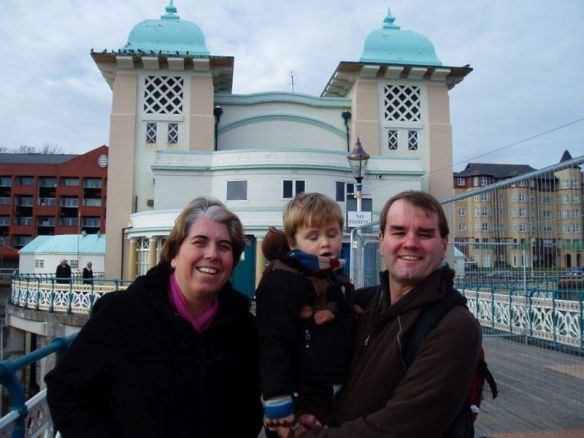
Penarth has a special place in our family. Mum was born here in 1928, and both parents started their journalism careers on the Penarth Times in the 1940s. (Mum took Dad's job as chief reporter when he joined the army in 1944!) Now Owen is the latest member of the family to discover the town's charms. It will be even better when the iconic pavilion is open again. 

My birthday Owen 029 (2)

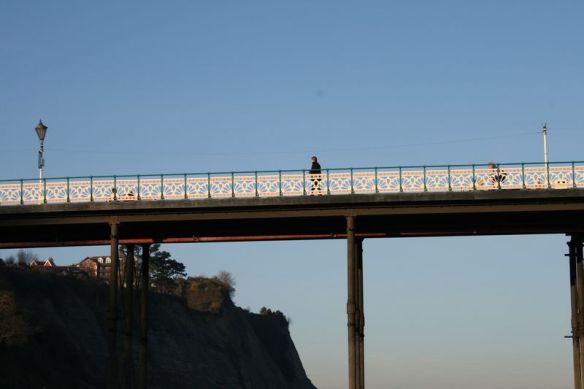
The pier and pavilion, November 2010

DSC01077

Winter sunrise: 28 December 2004

IMG_4099

Penarth Pier, February 2008


Obama in Britain: let’s stop talking of special relationship

PM Obama

An essential relationship? Photo © Prime Minister's Office

President Barack Obama's visit to Britain has been a huge success. We like America's 44th president. We're touched by his place in history as the first black president. And we cheered his election, as I blogged at the time. So the fact Obama has stolen hearts is no surprise. 

But I was dreadling the visit, in a small way, as I knew it would prompt a wave of comments about whether Britain and America shared a 'special relationship'. This is an obsession of politicians and the media. Yet no one in the bars of London, Cardiff or Edinburgh would give it a moment's thought. If they did, they'd surely point out that the UK and US have lots of relationships with lots of countries. And then get back to talking about Ryan Giggs.

Yet The Times carried an Obama and Cameron article lauding the essential relationship

It's true that Winston Churchill and Franklin Roosevelt forged a very close relationship during our darkest days, the second world war. But the war leaders weren't in total harmony: FDR was soon tormented by WSC's wilder ideas, and Churchill was rightly frustrated and frightened by FDR's complacency about Soviet designs on eastern Europe. 

And all this talk of a special relationship encourages the two countries' addiction to military adventures, as the Guardian's Simon Jenkins comments today. At a time when the BBC's World Service (not to mention all our public services) has had its spending slashed, David Cameron miraculously found £1 billion to burn on a war in Libya that has absolutely nothing to do with Britain. Yet a BBC reporter said in all seriousness that America thinks Britain should spend more on 'defence'. 

Britain admires America and its president. But neither country has any reason to spin an idea of a mythical special relationship.


A strange revolution: Ryan Giggs, the celebrity, Twitter and the law

It's a crying shame that Britain's clash over the respective rights of privacy and freedom of speech focuses on a footballer's affair. It's hard to imagine a cause less likely to justify a public interest case – as opposed to the interest of tabloid papers. As the Guardian's Michael White put it, it's not exactly Tahrir Square, the centre of Egypt's revolt against tyranny. 

Yet it was obvious days ago that Ryan Giggs' injunction preventing him from being named was a futile exercise. Twitter users knew what newspaper readers weren't allowed to. Yesterday, a Scottish newspaper became the first to name Giggs – and this afternoon Liberal Democrat MP John Hemming relied on the protection of parliamentary privilege to follow suit. Within minutes, Sky News and other major news outlets decided to ignore the legal order. Despite this, Tugendhat J this evening became the second judge today to reject News Group's attempt to lift the injunction. The legal establishment is understandably reluctant to abandon the rule of law to what has been described as Britain's biggest act of civil disobedience. Yet the longer this goes on, the less respect the law will enjoy.

The biggest lesson in this saga is that a cover up often ends up creating a bigger story. Anyone wanting to minimise bad headlines should think very seriously before going to law to try to stop it. Ryan Giggs isn't the first person to find that managing the story might have been a far better tactic. 

But we should also pause before accepting that a Twitter storm is somehow more legitimate than a reasoned legal judgment. Alastair Campbell made the point well in an interview on BBC Radio 5's Drive show.  The media, he suggested, were relying on a 'useful idiot' like John Hemming MP breaking cover so they could name Giggs. He added that something that interests the public isn't the same thing as the public interest. News Group itself struggled to claim a public interest in naming Giggs. 

The prime minister weighed in again today, arguing that Britain's privacy rules were unsustainable. But he repeated his concern about judge-made law, rather than legislation passed by parliament. This is facile. Much of our law is case law – an act of parliament is never the final word. It's the job of judges to interpret the law and – in the higher courts – establish precedent. If parliament doesn't like the results it can legislate to change them, but parliament has a far from unblemished record – as anyone who remembers the Dangerous Dogs Act of the 1980s will recognise. That was a classic example of the adage that hard cases make bad law. 

The greatest irony is that Britain had no general right to privacy until the 1998 Human Rights Act incorporated the European Convention of Human Rights into UK law.  How curious that this new right should almost immediately be eroded by the explosive growth of social media and the new power of the crowd.  


The Queen in Ireland – friends again

This week's visit to Ireland by Queen Elizabeth II was remarkable. It was the first visit by a British monarch to the republic since Irish independence. It marked the transformation in relationships in these islands since the peace process started in the 1990s. But above all, it was a triumph for the Queen – and for another remarkable woman, Ireland's president, Mary McAleese

Symbols matter in British-Irish relations, and the Queen played on this to huge effect. She wore Ireland's colour, green, when she arrived on Tuesday. She spoke in Irish at a banquet at Dublin castle (once the heart of British rule in Ireland). And Britain's queen bowed her head in respect to the garden of remembrance to Ireland's freedom fighters. 

By most accounts, Ireland was impressed. That shouldn't be a surprise: relations between Britain and Ireland are as good as they've ever been. We live together, work together and no longer fear republican or loyalist bombs. The people of these islands have been quicker than the politicians to embrace each other. True, Sinn Féin and the DUP have gained ascendancy over more moderate rivals in the north. But they're also in government together – an idea as unthinkable even 10 years ago as the Queen's visit to the republic. 

Sinn Féin was opposed to the Queen's visit – hardly a surprise, as the party relies on antipathy to Britain. Its president, Gerry Adams, insisted in defying accuracy by calling Elizabeth II 'England's Queen'. (There's no such thing as a 'queen of England'.) But the success of the visit put Adams on the back foot. Comically, he told a BBC interviewer that "I'm not a monarchist, in fact I'm a republican". Good of him to solve that mystery… 

The Queen's visit prompts us to ponder the complicated relationship between the various countries in Great Britain and Ireland. In school in Wales in the 1970s, as the Troubles were killing thousands of innocent people on both sides of the Irish Sea, I studied the failure of 19th century British Liberal Governments to give 'home rule' to Ireland. I was convinced that the story of Britain and Ireland would have been very different had the English establishment not stupidly blocked home rule in 1886 and after. By the time a home rule act was passed by the British parliament in 1914, the combination of a treasonous rebellion by Ulster's unionists and the great war killed any chance of a sensible compromise. Fast forward to the present, and home rule (or devolution as it's now called) is established in Great Britain. No one knows if it will lead to the break up of Britain. I doubt it – but at least change is now through the ballot box rather than the bullet and bomb. 

A final thought. The Queen who visited the republic this week isn't just Britain's Queen. She's Queen of Canada, Australia, New Zealand and 13 other territories. It's an extraordinary legacy of the past that Britain's head of state performs the same role for so many other countries. Ireland understandably decided in 1949 that it wanted its own head of state. Its most recent presidents, Mary Robinson and Mary McAleese, have been hugely popular and successful role models for a republican system, unlike Ireland's recent taoisigh (prime ministers). But Queen Elizabeth this week reminded us that constitutional monarchs can also achieve remarkable things.