In praise of Chalfont St Giles’ community library

IMG_1215  

We love reading and books. We were both brought up to love visits to the library – in my case, the grand old Cardiff central library in The Hayes. 

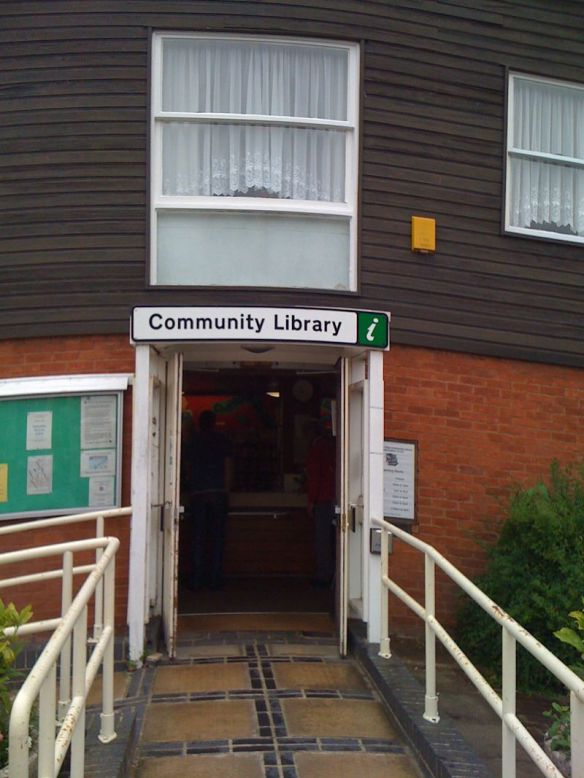
So we were horrified a few years ago when Buckinghamshire County Council made the crass decision to close the library in our village, Chalfont St Giles. But happily the village refused to accept the loss of this vital service. Good people like Tony Hoare put in long hours to save it as a community library. Tony explained how the village saved the library on BBC 1's One show last Monday. 

We have made a very modest financial contribution as friends of the library and have really appreciated this initiative since Owen was born in 2008. He can take out 15 books at a time, and is currently enjoying Man on the Moon, a vivid story about a man called Bob who goes to work on the Moon every day. The book lending service is supplemented by book readings and other events. 

IMG_1216

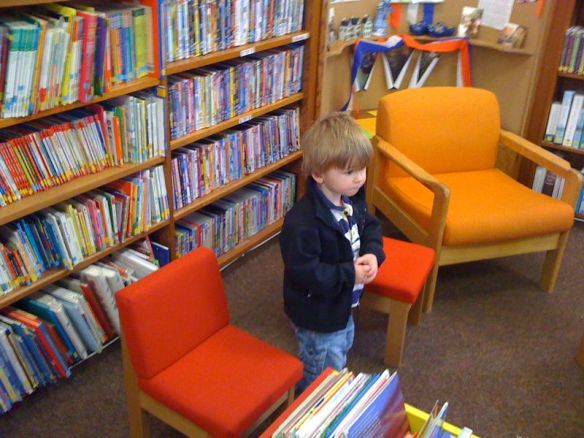
Above: Owen loves his library

We hope the library continues to flourish. But it's a huge shame that our local council – which should be nurturing reading in its communities – sought to destroy this vital service. Less well off communities may not have been able to save their libraries. Books and libraries may seem old fashioned in the internet age, but nothing is quite as magical as a wonderful book.  

IMG_1217
   

Greased lightning: why I love my iPad

IMG_0004

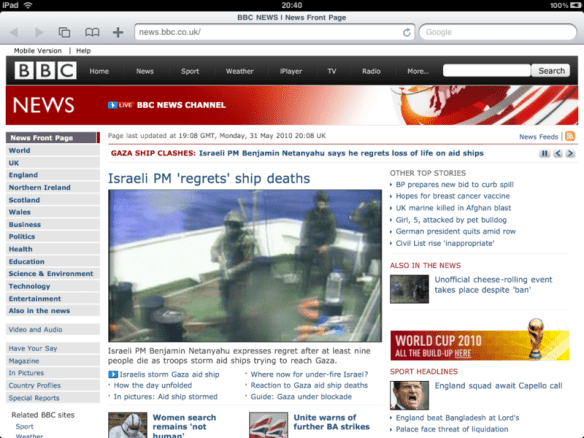
BBC News: my iPad got me here in 12 seconds…

Last Friday's launch of the iPad has prompted the inevitable chorus of critics amidst the sighs of Apple worship. 'Style over substance', 'an iPhone on steroids' and 'a solution in search of a problem' (I admit, I thought that when Steve Jobs announced the iPad last January) rank amongst the most common. 

I blogged about my iPad the day I got it, last Thursday. I've now had a few more days to get to know it. And I've discovered what must be its greatest advantage. It gets you places quicker than you imagined possible. So anyone who values their time, but can't see why they need an iPad when they've got a PC, should think again. 

To prove the point, I did an experiment tonight. I wanted to find out how much faster the iPad got me to the BBC News homepage. I was amazed at the results. 

First out of the blocks: my three year old HP Pavilion laptop, running that dog of an operating system, Windows Vista. From switching on the computer to reaching the homepage: a mind-numbing five minutes 12 seconds. To give a fair comparison, I switched off the iPad. From switch on to BBC: an excellent 35 seconds. In reality, I don't turn off the iPad, so the true result is an extraordinary 12 seconds. 

My laptop is likely to live a life of leisure now my iPad has arrived!

Falling in love with my iPad – but no thanks to Typepad

IMG_8325

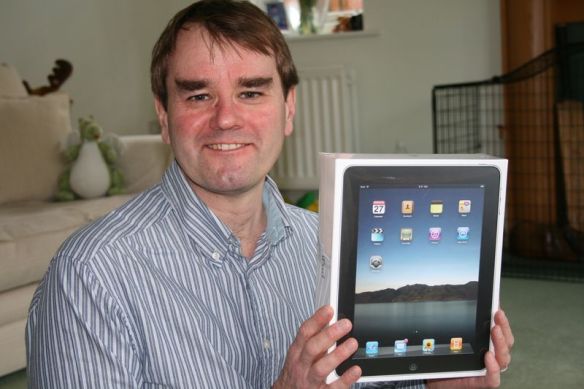
My iPad arrived today, 24 hours before Apple's tablet officially launched in Britain. This boy was very pleased with his new toy. I confess that I was sceptical about the iPad when Steve Jobs announced it in January, as I blogged on the iPad at the time. But I soon realised that a supersize iPhone would be something special. And the tablet is so much more than that. 

A tense moment

But I had a scare. I spotted what looked like a series of small scratches on the screen of my brand new iPad. I fell into a deep depression. I tweeted my horror. But @academyblog rode to my rescue, pointing out that the scratches were actually meteors on the iPad home image. But I wasn't alone in fearing damage, as the meteors didn't appear in the marketing images for the iPad. [Update: they're not meteors, but stars moving across the sky, captured by a time exposure by photographer Richard Misrach. The shot was taken at a lake in Nevada, USA.]   

So far, so very good

I've been very impressed playing with the iPad today. Typing on it is a dream – that virtual keyboard works beautifully. The device is far quicker than my iPhone 3G. It is a gorgeous canvas for photos. And my favourite newspaper's Guardian Eyewitness app is breathtaking. And free! 

You've got Mail

A constant frustration of the iPhone – at least on O2 – is its failure to send email via wifi. The iPad has no such weakness. Just as well as I chose the wifi only version! 

… and photos

I bought the iPad camera connection kit with my device. It's a bit much to have to spend £25 making up for the device's lack of a USB port. But it works well, importing photos quickly and easily. 

Some gripes

The iPad makes (some) apps less compelling, as regular browsing works far better on Apple's tablet than the iPhone. And many apps have yet to be redesigned for the iPad. Take the Typepad app I'm typing this on. It can only be used in portrait format, which means I miss the best orientation of the keyboard. Yet the web version of Typepad doesn't seem to recognise photos on the iPad. And after posting this, I found that all formatting – even something as basic as paragraph breaks – disappeared. And photos weren't inserted correctly, which meant the image at the top of this post was originally published with the iPad out of shot. Even more frustratingly, I could not then delete the image from the published post! I can't believe that a tech company could be so badly prepared for the iPad, well over a month after it went on sale in America. 

In time, I'm sure these issues will disappear. But it's a niggle for early adopters. I also hope that we'll be able to switch between portrait and landscape format when using apps – such as Tweetie, soon to be renamed Twitter for iPhone. That's one of the frustrations of the iPhone. 

But these are mere gripes. This is a gorgeous computer. It's battery life is extraordinary. It's still showing 77% battery life left after hours of play. That's outstanding. I'll post a more detailed review after I've had rather longer in its company. 
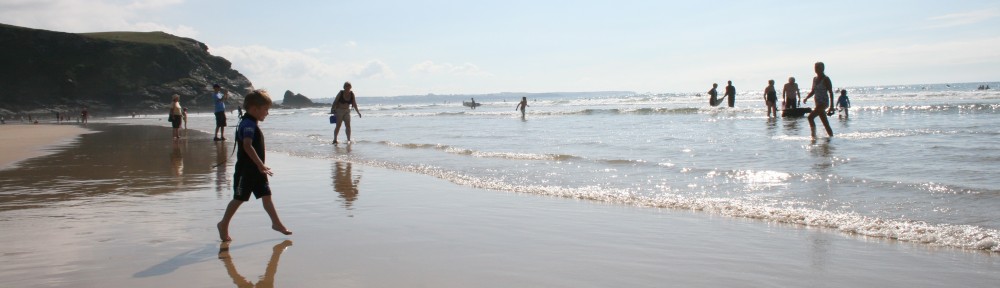
 

A perfect day: Owen enjoys a British summer

IMG_1199
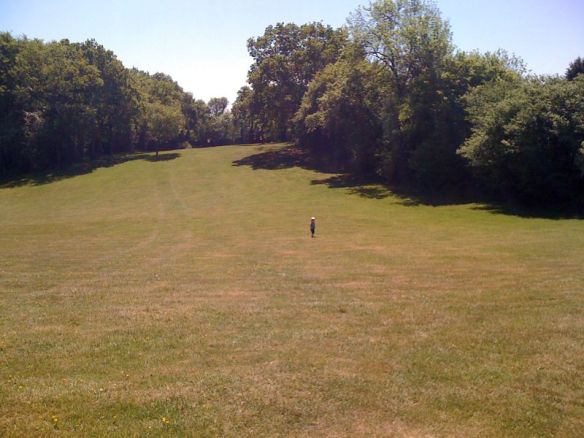
This is Owen, age 22 months, experiencing the joy of exploring on a glorious summer's day. (Let's not quibble over the fact it's technically still spring: in Britain, we take summer whenever it appears!) I didn't deliberately let him roam so far – I didn't realise how quickly he can run now!

IMG_1192
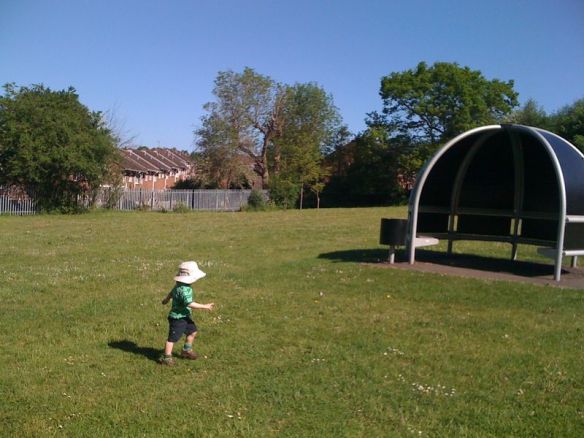
Karen is still recovering from her operation (she had her gallbladder removed five days ago), so Owen and I spent a lot of time together this weekend. Today, we went on a bike ride to the playground in the neighbouring village of Seer Green after breakfast. (Above.) It was great fun sweeping through Seer Green at 18mph on my bike before we set foot on the swings, slides and roundabouts. In the 25 minutes we were there, we didn't see another soul!

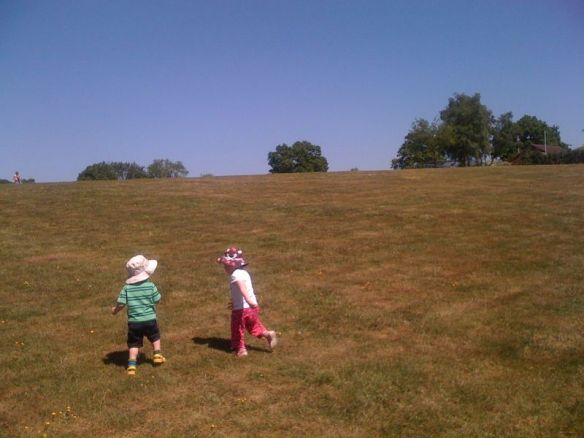
We came home in time to join our friends Jo, Ian, Martha and Baby Betty (as Owen calls her) for a visit to Chalfont St Giles' playgroup's fun day at the village cricket ground. Owen was in an independent mood, despite the presence of his first love, Martha. He simply wouldn't be led. But he liked his hot dog, and the lolly that Jo bought him. (And I enjoyed the beer Jo bought me!) I had no idea the fields beyond the cricket ground stretched so far. No wonder Owen felt like an explorer! And as you can see below, Owen and Martha did enjoy their time together.

IMG_1208
 I love these summer evenings. Padding about the house and garden in shorts, t-shirt and bare-feet, while savouring a cold beer. Let's hope the weather holds for our Dorset holiday in two weeks. 

The judges, united, will never be defeated! A new look at the BA strike

You know a company has screwed up when Norman Tebbit expresses sympathy for the union in a bitter dispute. That's what happened today in the acrimonious battle between British Airways and Unite.

Tebbit was the architect of Margaret Thatcher's most far-reaching controls on Britain's trade unions. (I was studying Tebbit's 1982 union legislation the night I heard that Tebbit and his wife had been injured in the 1984 IRA Brighton bombing.) Speaking on BBC Radio 5 Live's Breakfast show today, Tebbit disagreed with BA's attempt to get the courts to ban the latest strike on a technicality. He doubted that BA's famous 1980s chairman Lord King would have enraged the cabin crew in the way Willie Walsh has. 

He was speaking after the Court of Appeal overturned Monday's High Court injunction halting the strike. 

The High Court judgment appeared to threaten the very idea of trade unions. The judge agreed to an injunction because the union allegedly didn't do enough to tell its members there were 11 spoilt ballot papers. This was insanity. I voted in the 2010 general election. No one has told me how many election ballot papers were spoilt. It simply doesn't matter. The same principle should apply to strike ballots. 

The Thatcher union reforms were a popular attempt to make prevent unions from bullying their members to go on strike. Those reforms worked well in this dispute. Over 80% of BA cabin crew voted fairly and democratically in favour of strike action. I think the BA cabin crew have made a terrible mistake. I'm less likely to fly BA as a result of their contempt for the travelling public. But it's not the courts' role to save workers and management from their own stupidity.

Sensible but sneaky: Buckinghamshire’s new speed limits

Driving Owen to nursery yesterday, I noticed a tiny '40' speed limit sign on Longbottom Lane between Seer Green and Beaconsfield. Strange, I thought, I wasn't aware a 40mph limit had been applied to this rural road. But the return journey confirmed that Bucks County Council had done just that. And I noticed that the same 40 signs between Seer Green and Chalfont St Giles. 

I agree with the lower speed limits. These roads are narrow and twisting, making 60 too fast for the conditions. It will make life easier and safer for cyclists and horseriders. But I wasn't impressed by the fact the council hadn't put up the usual large signs telling drivers that the speed limit had changed. Even worse, they've removed the 30 limit sign as you enter Seer Green from Chalfont St Giles, which means that many drivers will enter the village at 40, not 30mph. 

No wonder drivers think they're being victimised – this kind of sneaky action creates the suspicion that Bucks County Council is trying to trap drivers into speeding fines. I doubt they're that clever. This and my previous posts this week about the Narcot Lane cycle route and Amersham's closed zebra crossing suggest they're just incompetent.

PS: my wife Karen tells me that the new speed limits have been widely covered in our local paper. I don't think that lets the council off the hook. Most people don't read the Bucks Advertiser – including me. They certainly don't read the council's website on the off-chance that it might be about to change the speed limits of their local roads. Bucks County Council put up large signs when they changed the speed limit from 40 to 30 on Stanley Hill and London Road West in Amersham a few years ago. It should have done the same now. 

‘Crossing not in use’ – why do pedestrians get such a raw deal?

IMG_1163

'Crossing not in use' said the sign. But Buckinghamshire County Council didn't bother to explain how pedestrians were supposed to cross this busy road in Amersham. Like most people, I took my life in my hands and crossed anyway. I witnessed a pensioner getting a blast on the horn from a selfish and thoughtless driver. 

It made me angry. Why does Bucks County Council think drivers are so much more important than pedestrians? Woodside Road had temporary traffic lights for weeks, but they had been removed some time ago. But in any case, why should a council have any right to treat walkers and pushchair pushers as second class citizens? It's time our councillors used their feet rather than their cars. They'd soon come to their senses. 


Chalfont cycle route: Narcot Lane scheme gets 6 out of 10

IMG_1164
I've long been a fan of well planned and built cycle routes. So I was pleased to see that Buckinghamshire County Council was building a cycle route from our village of Chalfont St Giles to the leisure centre and community college in the next village of Chalfont St Peter. 

I cycled the route yesterday with our 22 month old toddler Owen in his seat on the back of my Raleigh Randonneur touring bike. It was an enjoyable ride on the smooth new path – a contrast with the horribly potholed road alongside. It makes a change for a cycle path to be quicker than the main road in shadows!

But sadly the project has some flaws. Oddly, it starts some distance along Narcot Lane, which means that anyone starting at the St Giles end has to use the road, or break the law by cycling on the pavement – despite the ample width available. The route was officially opened 10 days ago, according to the Bucks Free Press, but the two road crossings are unmarked and incomplete. Just as seriously, there are no signs to explain that this is a shared footpath and cycle route. My parents-in-law, who live on the route, report that one of their neighbours was roundly abused by a cyclist for daring to set foot on the path with her dog, impeding his progress. A simple sign would have put this foul mouthed fool in his place. Finally, as the photo above shows, part of the old pavement was too narrow to convert into a cycle route. It would have been sensible for the council to narrow the road at this point to calm traffic as it enters Chalfont St Giles, which would have given room for the cycle route. Instead, cyclists are currently forced to negotiate a strip of concrete barely a foot in width, as a utility company has dug up the pavement. 

But these are niggles. The government should invest heavily in such facilities, despite the coming cuts. Encouraging cycling will pay ample dividends in future years in a healthier nation and less crowded roads. 

Why Britain’s new coalition is good news for civil liberties

One of the greatest disappointments of the 1997 – 2010 Labour government was its appalling record on civil liberties. It seemed to seek every opportunity to extend the power of the state over the individual. Photographers were arrested for taking photos of public buildings. Hecklers were dragged out of the Labour party conference. And successive home secretaries sought to extend dramatically the time suspects could be detailed without being charged.

Much of this was justified under the catch all justification of fighting terrorism. There’s no doubt Britain faced a significant threat from terrorists. But the erosion of civil liberties could not be justified.

So the new Conservative-Liberal Democrat coalition’s promise to scrap ID cards, change the DNA database regulations and reform the libel laws is very welcome. Just this week we had another example of the tyranny of the state, when Paul Chambers was charged and fined under the Communications ACt for making a joke on Twitter about blowing up an airport. Paul was foolish, but anyone with a braincell would have recognised that he was no threat to anyone. But the apparatus of the state was deployed to punish him for a silly joke. Let’s hope a new culture of sanity develops. And the new government lives up to its promises. 

Siân Sargant’s blogpost on the Paul Chambers case, and what it says about Britain’s civil liberties record, is well worth reading.

Britain’s new government: let’s praise our politicians and civil servants

Britain's politicians aren't the most popular people on the planet, especially after the MPs' expenses scandal. But they deserve great praise for the responsible, dignified and mature way they behaved after the May 2010 general election resulted in a hung parliament.  

Gordon Brown, David Cameron and Nick Clegg rose to the occasion, with statesmanlike speeches the day after the election. Negotiations were carried out without the usual leaks and briefings. And the Conservatives and Liberal Democrats made great compromises with good grace to create what I hope will be a stable and enduring government. 

Let's not forget the huge contribution made by Britain's highly professional and non-political civil service. It must have been a great professional challenge to respond to the uncertainties of the last six days and enable the new coalition government to take office just hours after the parties finally reached agreement. 

Changing a government is the greatest glory of a democratic country. In many countries, it would be an impossible dream. Last night's dramatic events reflect well on Britain.