Owen's first holiday
http://youtube.com/v/S18EKGO-iWg
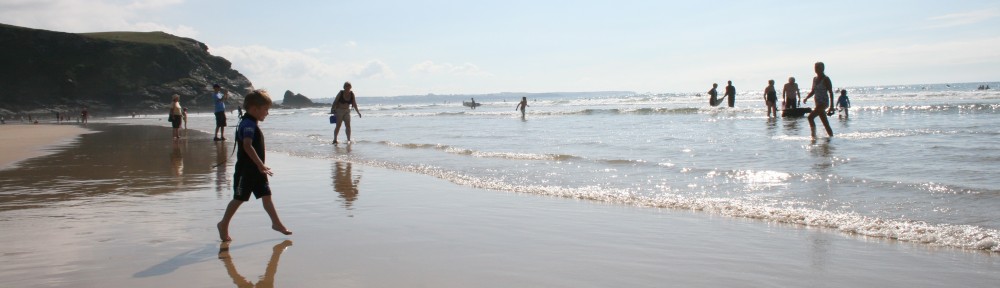
I've finally put together a short video of Owen's first holiday: in Looe, Cornwall, in September 2008.
Reply
Owen's first holiday
http://youtube.com/v/S18EKGO-iWg
I've finally put together a short video of Owen's first holiday: in Looe, Cornwall, in September 2008.

Eurostar is a wonderful idea. Step onto a train in London and enjoy a fast ride to the heart of Paris or Brussels.
I travelled to both cities from Waterloo, Eurostar’s original British terminus. Waterloo was a poor departure point, squashed on the site of the old Windsor line platforms. (Closed after the severe storm of January 1990.)
Last week I experienced St Pancras International, Eurostar’s London home since November 2007. I was thrilled to see how the Midland Railway’s magnificent neo Gothic station has been given a new lease of life. I travelled into St Pancras a few times when a student in Leicester in the 1980s. Back then, it had a neglected air. Eurostar’s arrival has changed everything apart from the architectural wonders.
A statue of John Betjeman, the late poet laureate, graces the station, honouring his role in saving St Pancras from suffering from a similar fate to the Euston Arch and Great Hall in the 1960s.
Eurostar’s new terminal is classy in a way that few airports can match, thanks to the light and space created by Barlow’s magnificent Victorian roof. What an inspired idea to use the undercroft of the old station for the airy passenger areas.

That said, the planners have recreated the worst feature of the original Waterloo Eurostar terminal: the cramped waiting area beyond check in. This is where anyone used to airports – where facilities get better after security – will suffer. Far better to delay going through until the last minute.
The other lesson, sadly, is to avoid Eurostar until the Channel Tunnel is fully reopened after the September 2008 fire. My journey back from Paris took a deeply tedious 3 hours 17 minutes. That’s an experience I’m in no hurry to repeat, especially as the Eurostar buffet car offerings are even worse than British Rail’s Travellers Fare circa 1978. You have been warned!
Owen enjoys his new toy
http://youtube.com/v/VMPGQtB3KPM
Owen enjoys his first swing!
Gordon Brown’s decision to bring Peter Mandelson back into the British cabinet seven years after he resigned a second time has stunned Westminster.
No one expected Mandelson to return to the front line of British politics, especially under Gordon Brown, a man widely regarded as despising the former Northern Ireland and trade secretary. But these are desperate times for Brown, despite a sense that the prime minister has staged a mild recovery since the credit crunch became a crisis for western capitalism with the collapse of Lehman Brothers.
Mandelson is a divisive figure, so it’s unsurprising that his comeback has split opinion. His ministerial career was seen as a success, despite his two resignations. He was well regarded by senior civil servants as a decisive minister. He will strengthen the government in a managerial sense. (Unless his recklessness forces him out a third time.) But his confidence comes at a price: a strong veneer of arrogance, which makes him an unlikely ambassador for a government desperate to win friends to counter the resurgence of David Cameron’s Conservatives. He is also all too closely associated with the early days of the New Labour in power, when the party became synonymous with spin. The public and the Labour party never warmed to Mandelson; it will be fascinating to see if he enjoys greater popularity in what could be the party’s last two years in power.
Looking back, I can’t help comparing Mandelson’s return with two ‘big beasts’ of the Thatcher era. Cecil Parkinson was, like Mandelson, forced to resign as trade and industry secretary, in his case after his mistress became pregnant. (Tory resignations are usually jucier!) A few years later, he returned to government, but without the lustre of earlier years. And Michael Heseltine became deputy prime minister in the dying years of the Major government, after whispers that Hezza might replace the hapless Major. Heseltine was as irrepressive as ever, declaring on the eve of the 1997 election that the Conservatives would win a handsome majority of 50 or more. Despite his exuberance, Labour won its greatest ever landslide. Big beasts don’t always rule the political jungle…
PR Week’s editor, Danny Rogers, showed today the dangers of giving an interview when you’re not an expert on the subject being discussed.
He was speaking on BBC Radio 5 Live’s Breakfast show. The subject was Sainsbury’s move to hide free carrier bags from its supermarket checkouts, in a bid to cut the number of bags used. Rogers contrasted Sainsbury’s move unfavourably with Marks & Spencer’s bolder move to charge for food carrier bags under the retailer’s Plan A initiative. But he then demonstrated his lack of knowledge of M&S’s initiative, suggesting that anyone who hadn’t brought their own bag would have to pay a sizeable sum (I think he said £2) for a bag to carry their shopping home. Not true. M&S actually charges 5p, with the profit going to the environmental charity Groundwork.
Rogers also failed to mention that Sainsbury’s is starting free text messages to remind people to bring their old bags with them when they go shopping. This strikes me as a great move, as I’m always forgetting to do this. Overall, though, I think M&S’s approach is more comprehensive, as part of a much wider environmental and health initiative – Plan A. But you wouldn’t have known this from Rogers’ less than authoritative interview.
I’m sure Rogers thought this was a great opportunity to say what he thought about the PR and reputational impact of Sainsbury’s move. But you can hardly make a proper assessment without knowing the details.
Disclosure: I am a former head of PR for Marks & Spencer Money.
 Ertblog