When Hallowe’en is your birthday…

It’s my birthday today. No, wait, I’m not asking for birthday greetings.

It’s nice having a birthday on a special day that’s not sacrosanct like Christmas day. People smile when you tell them you were born on Hallowe’en. But I do resent the fact that my day has been transformed from a modest celebration – apples bobbing in water – to a media-inspired scrum, with hordes of youngsters expecting gifts just for ringing a doorbell.

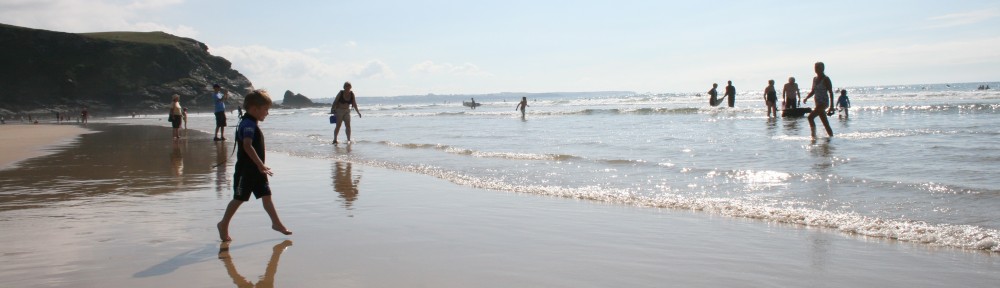
Mind, we’re happy to oblige for good-natured youngsters such as Max, our neighbour Tony’s son!

PS: my schoolfriend had a worse time: 22 days younger than me, he was born the day President Kennedy was assassinated.

Out of the Psychiatrist’s Chair: farewell to Anthony Clare

Professor Anthony Clare, who has died at 64, was one of the great voices of modern British radio. (See The Times’ obituary.) His series, In the Psychiatrist’s chair, which ran for nine years from 1982 was an unexpected hit. Its success owed everything to Clare’s sensitive questioning of figures as diverse as Tony Benn, Bob Monkhouse and Tom Sharpe. Clare’s peers mocked Clare as the pop psychiatrist, but lay listeners found the series surprisingly compelling.

He gently asked Raynor about her unhappy childhood, asking whether she had reflected and analysed its impact on her adult life. Similarly, Spike Milligan spoke movingly about the depression that blighted his life, while Peter Hall explained how insecurity drove him to work all hours – with the inevitable unhappy impact on his personal life. In many ways, In the Psychiatrist’s Chair blazed a trail for Britain’s celebrity culture, with Clare’s pursuit of the inner demons of the rich and famous. But his insights were far more sophisticated than anything resulting from Big Brother Britain.

I’ve written before on this blog about the power of radio. In the Psychiatrist’s Chair worked brilliantly as a radio programme: the intimacy of the medium was part of its appeal. It was no surprise that an attempt at a television version, Motives, fell flat.

I still have the BBC audio tape of Clare’s interviews with Raynor, Benn, Milligan and Hall. (Benn was the least revealing; small wonder that Clare avoided politicians as subjects.) I often wondered why the corporation didn’t make more of the series available. With luck, they’ll do so now to mark the passing of a radio legend.

England’s north-south divide: an academic exercise?

Simon Jenkins‘ column in today’s Guardian pours scorn on this week’s research from Sheffield University suggesting that Hereford is really in the north and Lincoln in the south.

Jenkins suggests spurious stories like this confirm that our universities aren’t short of money. He is surely right to suggest that it’s ridiculous to equate geographical identity to wealth.

I’ve enjoyed getting to know northern England (and Scotland) better over recent years, first on my Land’s End to John O’Groats bike ride, then through spending time with my job in Leeds, Chester and Liverpool. But I remember a university friend from Carlisle mocking the idea that Leeds was really in the north!

The Great War: a great documentary

Britain’s national newspapers have gone DVD and CD crazy. Every weekend, readers find another disc wrapped in their papers. Most are dross. But this week I discovered a remarkable documentary series, thanks to the Daily Mail. The paper is currently giving away copies of the BBC’s 1964 series The Great War, made to mark the fiftieth anniversary of the start of that conflict.

I was enthralled. The programme tells the story with an extraordinary amount of historic film footage and a gripping narration by Sir Michael Redgrave. Above all, it shows how much the documentary style of today’s television owes to this Sixties masterpiece.

Back in 1964, the Great War was a living memory for millions. I remember asking my grandmother for her memories of the war in 1974, on the sixtieth anniversary. Today, there is just one British survivor of the trenches, 109 year old Harry Patch.

Talking of BBC history programmes, does anyone remember The Mighty Continent, the BBC’s history of modern Europe, starring Peter Ustinov? It’s no exaggeration to say that this 1974 series kindled my fascination with history, with its dramatic tale of how Europe destroyed itself in the folly of the Great War. I’d love to see it again.

England’s rugby team: sportmanship in defeat

It wasn’t to be. After their amazing feat in getting to the Rugby World Cup final, England didn’t have enough firepower to overcome the favourites, South Africa.

But England will have won a few admirers for the way they accepted the video match official’s decision not to allow Mark Cueto’s ‘try’. Their sportsmanship was in strong contrast to the badmouthing of referees in evidence after almost every Premier League football match. Once again, association football can learn a lot from its rugby counterpart.

Customer service: why don’t they listen?

Have you ever complained to a company, only to be told, "A lot of people have said that"? And wondered why they don’t take the hint and do something about it?

I popped into Evans Cycles in London this week asking for a Topeak cycle light. The nice assistant told me they didn’t stock it, but added, "A lot of people ask for it". So why not stock it? Tonight, checked into the Crowne Plaza hotel in Chester and asked why they charged £12 for internet access. "A lot of people complain. I think they’re looking at it." By the time ‘they’ do something about it, ‘we’ will have checked into a hotel that offers it for free, recognising that giving consumers a good deal encourages customers to come back time and time again.

The BBC: still Britain’s biggest bargain?

It’s open season on the BBC again. Director General Mark Thompson is under fire for his plan to axe 1,800 jobs and cut the number of original programmes the BBC makes. The changes follow the corporation’s failure to secure the licence fee settlement it wanted.

Listening to Radio 5 Live’s Drive programme this evening, it was amusing to hear the BBC accidentally cut off a listener who supported it against the critics. One of those critics asked how many BBC people would be in Paris this weekend for the Rugby World Cup final.

Anyone concerned about alleged BBC extravagance will have been pleased to read on the BBC editors’ blog that the Beeb is getting rid of the second presenter of the Six O’Clock news bulletin. George Alagiah is going solo after Natasha Kaplinsky’s departure for channel 5.

Today’s Independent carried a fascinating chart showing how the BBC spends its money. (Unfortunately the chart does not appear on the online version, so I can’t link to it.) The TV licence costs a British household £10.96 a month. (By my calculations, a quality daily and Sunday newspaper costs well over twice that over a month.) Eight national tv channels take up £7.54 of that cash. Ten national radio stations cost £1.17 a month. The cost of transmission and collecting the licence fee swallows £1.01. The 40 national radio stations take 75p. And finally the BBC’s 240 websites cost 49p a month. Quite a bargain compared with the £45 a month I pay Sky…

Menzies Campbell: The Lib Dems’ smiling assassins get their man

The ‘assassination’ of Menzies Campbell destroyed any idea that the Liberal Democrats are the nice party of British politics.

There was something sinister about the way Simon Hughes and Vincent Cable announced Campbell’s resignation, with their lost leader nowhere to be seen. As they praised Ming, they looked for all the world like a couple of smiling assassins, eulogising the man whose body they had just bundled into a chalk pit.

The following day’s papers appeared to accept that the assassins were right. The Guardian‘s leader described Campbell’s departure as ‘sad but necessary’. It added that:

"A leader approaching 70 at the time of a general election could not have argued he was fighting for the future. Gladstone could do it, but he did not face 24-hour news, constant opinion polling, or the firepit that was prime minister’s questions last week."

What an extraordinary statement. Never mind Gladstone. Winston Churchill was 66 the year he became prime minister in the tragic year of 1940, as Britain faced invasion and disaster. He proved his nation’s saviour. Yet The Guardian would have us believe that 24 hour news and opinion polls are far sterner tests than the Luftwaffe and Wehrmacht.

Ming Campbell is clearly no Churchill. But there is a deep irony in a dignified and greatly respected politician – a rare breed – being forced to resign on account of his age soon after Britain outlawed age discrimination.

Voters don’t like warring parties. The Lib Dems should look back on the fearful lesson of Labour in the 1980s and the Conservatives a decade later. It’s possible that things will get worse, rather than better, for them under a new, younger leader.

Few would deny that Menzies Campbell was unsuccessful as leader. But I suspect that owes more to the fact he became leader at exactly the wrong time. The Conservatives had finally elected a leader who recognised the party had to change. Labour was at the very end of the Blair era, followed by the Brown-rebound. Not a good time to become leader of the smallest of the three main UK-wide parties, regardless of your age.

There’s another factor at work. How many of us rely purely on the media for our view of how party leaders are performing? I’d call it the Sissons effect. How many BBC viewers noticed in March 2002 that Peter Sissons wasn’t wearing a black tie as he told the nation the Queen Mother had died? Yet a few days later thousands were roused to fury by the Daily Mail condemning Sissons’ supposed lack of respect. Similarly, many voters will have acquired a similar vicarious view that Menzies Campbell was too old to lead his party.

It’s not just the Lib Dems. Gordon Brown and David Cameron have experienced similar dramatic swings in their reputations in the past month. No wonder politicians want to engage directly with voters without the influence of the media. The evidence so far is none has found a compelling way of doing so. Anyone who cracks the conundrum could be on to a winner.
Cycle Show 2007: discovering a London fit for cyclists

Cycle_show_2007_4We spent an enjoyable afternoon at the Cycle Show at Earls Court in London yesterday. We got discounted tickets thanks to CTC, Britain’s national cyclists’ organisation.

We’d not been before, but were impressed by the range of bikes and accessories on display. Karen had suggested driving but I said we couldn’t possibly take a car to a cycle show! Cycling to the show was made even easier by the free secure cycle parking, sponsored by Brompton, the makers of my folding bike. I felt guilty for not arriving on the Brompton!

We had a very easy ride to Earls Court using the London Cycle network from Marylebone station via Hyde Park. Pedestrians waved us on as they waited to cross a zebra crossing and a white van man did the same as we turned right. Youngsters playing hockey in Hyde Park stopped play to the cry off ‘Bike!’ to let us pass. The streets were quiet and ideal for cycling. What a terrific advert for going by bike in London. My only criticism is that the Cycle Network is only signposted when you’re on it. Leaving Earls Court, we had to devise our own route back towards Kensington.

Dsc00538 The show itself was a really good afternoon out. My highlight was the display of tandems on JD Cycles‘ stand, including this amazing £10,000 four-person tandem. (Shades of the Goodies’ famous tandem from the cult 1970s BBC comedy.) If we ever win the lottery, we’ll certainly beat a path to JD’s door to upgrade our Thorn tandem, which has hardly been used since we acquired two wonderful lightweight Cannondale solo hybrids. 

Has dithering Gordon blown it?

I argued in my post Election fever last week that Britain doesn’t need an election and the prime minister shouldn’t have the right to choose its timing.

This week, it has become increasingly clear that Gordon Brown has got his tactics badly wrong. He’s backed himself into a corner. By allowing speculation about an election to run out of control, he has created the situation in which he has to call an election – or risk appearing to run away from the challenge.

In just a few days, David Cameron has gone from a leader on the slide to one with renewed authority. If Brown doesn’t call an election, Cameron will taunt Brown mercilessly.

It needn’t have been like this. Labour could have said weeks – months – ago that there would be no election. That the party had a clear mandate and work to do. Few would have quarrelled – the country is hardly clamouring for a poll.

I suspect the reason for Labour’s blunder is that Brown is genuinely uncertain what to do. It’s in his character: shades of his failure to stand as Labour leader after John Smith’s death in 1994. No doubt he’d love to win an election in his own right. But he must be agonising over the appalling prospect of a humiliating defeat just months after arriving at the pinnacle of British public life.

Brown may, of course, still triumph in an early poll. But he’d do well to remember the cautionary example of John Major.  Major, like Brown, was the uncharismatic successor to a dominant leader: Margaret Thatcher. The country warmed to Major after the strident Thatcher years. He won a famous, surprise victory in the 1992 general election. But his triumph soon turned to dust. Within months the government was in turmoil as Britain crashed out of the European exchange rate system. Major and the Conservatives never recovered.

In short, an election win is just the start, rather than an end in itself. Another lesson for Gordon to ponder as he makes his mind up.

Postscript: Jim Callaghan’s election blunder

Many have quoted recently the example of Jim Callaghan’s fatal decision to delay his only election from the autumn of 1978 to the following spring. But few remember now that Callaghan made things far worse by making a great joke of it at the 1978 TUC conference:

The commentators have fixed the month for me, they have chosen the date and the day. But I advise them: "Don’t count your chickens before they are hatched." Remember what happened to Marie Lloyd. She fixed the day and the date, and she told us what happened. As far as I remember it went like this: ‘There was I, waiting at the church–’ (laughter). Perhaps you recall how it went on. ‘All at once he sent me round a note. Here’s the very note. This is what he wrote: "Can’t get away to marry you today, my wife won’t let me."’ Now let me just make clear that I have promised nobody that I shall be at the altar in October? Nobody at all."