
This is my last post for a week or so, as we’re off to Gambia in the morning for some winter sunshine.
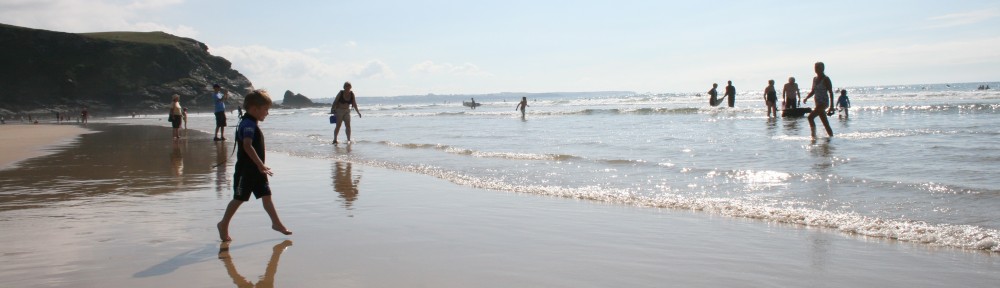
Here’s a picture I took on our last visit a year ago.
This is my last post for a week or so, as we’re off to Gambia in the morning for some winter sunshine.
Here’s a picture I took on our last visit a year ago.
Michael Grade has become the Winston Churchill of British broadcasting. Churchill was famous for crossing the floor – switching parties. He became a Liberal cabinet minister just a few years after leaving the Tories. Twenty years later he made the return journey, becoming chancellor in double quick time.
Michael Grade’s switch from BBC chairman to ITV chief is just as audacious. It completes a career of moves between the Beeb and the commercial sector. It ends the interminable speculation about the identity of the new head of ITV. And it marks Grade’s final revenge on John Birt: making serious money after reaching the summit at the BBC.
Commentators have been quick to portray Grade’s departure as a disaster for the BBC and its director general, Mark Thompson. Grade and Thompson have lobbied hard – and at times clumsily – for a new licence fee settlement. The government hasn’t announced the outcome. Now Thompson must make the case alone.
My view is that the BBC’s loss may be less than ITV’s gain. Grade will bring chutzpah to the country’s biggest commercial broadcaster. But the BBC isn’t in crisis, unlike its rival, despite doubts about robustness of the new BBC trust as a form of governance. The biggest question is whether the great showman of the Eighties is up to the challenge of saving ITV in the age of YouTube.
Isn’t memory a funny thing? As November brought gales and torrential rain, I said to colleagues: "We can’t complain after this summer". I was amazed when they replied almost in unison: "What summer? Did we have a summer this year?"
Did we have a summer? How could anyone forget the hottest July day ever? The hottest September since slavery was abolished? (Sorry!) People demanded dress down Fridays every day of the week as Britain sweltered and trains came to a halt as rails buckled in the heat.
Millions still vividly remember the summer of 1976. But it sounds as if the scorching summer of 2006 has already been forgotten.
Tony Blair is sorry. Not for the Iraq war. Not for the disastrous part privatisation of the London Underground. Or cash for honours. No, he’s dreadfully sorry about slavery.
This is gesture politics of the worst kind. It confirms what we all suspect: that politicians don’t understand the meaning and significance of the word ‘sorry’. Properly meant, it reveals something of our true character. We feel better about someone who says "Sorry, I got that wrong." But modern politicians fear ridicule in admitting an error and so presume infallibility. So Blair will never admit that his government falsely stated the case for invading Iraq and then mismanaged the aftermath. But he offers a meaningless apology for events 200 years ago.
The prime minister could spend his remaining months in office doing nothing but saying sorry for the sins of the past. What about a grovelling apology for the way the English tried to wipe out the Welsh language? A tear-stained expression of regret for the concentration camps the British set up during the Boer war?
That’s not to deny that slavery was an affront to humanity. But I’d rather world leaders devoted their efforts to tackle modern day evils rather than indulge in pointless posturing about events in the distant past.
Once upon a time, there was a children’s programme called Jackanory. An actor (it always seemed to be Bernard Cribbins) would walk into a room carrying a large book, sit down in an armchair and start reading a story.
Back in the Sixties and Seventies, such an unpromising programme idea was surprisingly popular. Were we, as children of the Sixties, less demanding? I don’t think we were. I never found Jackanory very interesting – though it wasn’t as dull as Animal Magic, Johnny Morris’s zoo show.
The BBC axed Jackanory in 1996 after 3,500 episodes but has decided to bring it back for one-offs, starting next week (27 November 2007) with Sir Ben Kingsley reading The Magician of Samarkand.
(I may not have been Jackanory’s greatest fan but I have been hooked on reading since my maternal grandmother bought me an Enid Blyton book when I was six or seven. )
Television has played such an influential part in our lives that hearing a long-forgotten signature tune can trigger the most powerful nostalgia. This BBC website has title sequences from a range of cult series, from Swap Shop to the Clangers. But does anyone remember Marine Boy, a BBC children’s programme of the late Sixties?
I never thought I’d see the day when a former Guardian editor says we should be relaxed about the prospect of Rupert Murdoch taking over Independent Television News (ITN) and the end of impartiality on British television news. But that’s exactly what Peter Preston argues in his column in the paper today.
The comments were prompted by the news that Murdoch has bought an 18% stake in ITV, almost certainly to scupper the ill-conceived bid from NTL.
The success of BSkyB has increased Murdoch’s already enormous influence over the British media. The failure of politicians to restrict media ownership has been a major failure of democracy over the last 25 years, starting with the Thatcher government’s refusal to refer Murdoch’s bid for The Times and Sunday Times to the competition authorities in 1981. Preston appears to have given up the fight.
In this context, the requirement for broadcasters to maintain impartiality has been a crucial defence against media attempts to distort the democratic process. Most of Britain’s print media has a built-in bias in favour of free-market capitalism and right of centre politics. Neil Kinnock was savagely attacked and pilloried by most of the national press during his nine years as Labour leader. Tony Blair has largely escaped the same fate simply because he has attempted to out-Maggie the iron lady.
It cannot be right to contemplate dismantling one of the few structures of media regulation that have enhanced our democracy.
Simon Jenkins launched a blistering attack on Britain’s Health and Safety Executive yesterday, accusing it of being the Guantanamo Bay of defensive administration.
The HSE raised his ire by overreacting dramatically to a freak accident in which an eight year old boy was killed by a falling tree at a National Trust property in Cheshire, Dunham Massey. The HSE is stupidly and vindictively pursuing a prosecution against the trust, even though the police said there was no case to answer. Jenkins calls the HSE ‘the stormtroopers of health and safety fascism’.
Worth reading. If the HSE gets its way, baths will be banned to save us from drowning and we’ll have to wear crash helmets in our cars and when using stairs. How I’ve survived to 43 is little short of a miracle in this risk-infested life!

Just demonstrating mobile blogging to our former neighbours Ron and Jenny, who came round for dinner. And yes, they are Christmas place mats! (Must get some non festive ones…)

Armistice Day is a solemn time, oddly made more so by the fact just a handful of veterans of the first world war are still alive. I’m reading Britain’s last tommies, Richard van Emden’s poignant tribute to the last survivors of the great war. Anyone who needs reminding why we wear a poppy with pride in November should read this book.
The man on my left is my grandfather – we think. (See my post last month.) His life was dominated by his experiences in Gallipoli and in the trenches. As a result, he refused to allow my father to join Emanuel school’s officer cadet training unit (OCTU) in the fearful days leading up to the second world war.
 Ertblog