Gavin Henson: no need for speed

Welsh rugby star Gavin Henson has been banned for driving for a month for driving at  110mph on the M4 in Wiltshire, according to the BBC.

Henson’s solicitor asked magistrates to take into account the rugby player’s charity commitments. He said the rugby star could cope with disqualification but added, "The children would miss out through his charitable work".

Henson should have thought of this before driving at such a reckless speed: 40mph above the speed limit. The Wiltshire section of the M4 is an accident blackspot, partly thanks to idiots like Henson.   

Alastair Campbell: “Only saddos read blogs…”

I got the chance to talk to Alastair Campbell on Thursday night, at an event held by Durrants, the media monitoring company.

Tony Blair’s former communications director was speaking about his experiences in journalism and PR. His well-known antipathy towards contemporary reporting was strongly evident. He believes that during his six years at Number 10 the Labour government suffered just five crises: Kosovo, September 11, Iraq, the fuel protests and the 2001 foot and mouth disease. Yet media headlines screamed ‘crisis’ almost daily: education crisis, pensions crisis, hospitals crisis, police crisis, army crisis, prisons crisis… Anyone who has been a press officer for a high profile organisation will identify with Campbell’s view on this.

He described how a reporter from a Sunday paper once ran a story claiming he was to leave Downing Street to become the voice of Manchester United. Campbell called the journalist and told him it was complete fiction. "I know, but I was desperate for a story." But Campbell himself was known to make up stories: in 1991, he had a splash in the Mirror claiming that Labour wanted Jill Morrell, the girlfriend of freed Beirut hostage John McCarthy, to stand as an MP.

The speaker introducing Alastair referred to the blogging explosion. The man once described as the second most important man in Britain responded by saying that "only saddos read them". I later questioned whether he really thought that. "I didn’t really mean it!", he laughed, perhaps anticipating headlines mocking his dismissal of the rise of social media. But he added that only a fraction would ever have any influence.

His main theme was the importance of strategy in media relations: nothing else matters. He cited the success of New Labour in winning the 1997 election and then getting re-elected, focusing its key messages. He regarded the early move to grant the Bank of England independence (to set interest rates) as the most important achievement of New Labour in government.

Ironically, just the day before I had heard the tutor at a Chartered Institute of Public Relations course criticise Campbell for being far too easily diverted by tactical battles and not enough by strategy. My view is that he played an essential role in helping get Labour elected but made the critical mistake of not recognising that a different style and strategy was needed in Government. Labour’s current difficulties (Iraq aside) largely reflect the fact that party has never sold the story of its successes. It has actually done the opposite, talking up the idea of a dysfunctional public sector. Small wonder the public wonder whether things have got better. And Campbell was far too quick to become the story – disastrously so in his war with the BBC after the Gilligan affair led to David Kelly’s suicide. When we talked, he contrasted the fact that Tony Blair rarely reads the papers with John Major’s obsession with what Fleet Street was saying about him. A press secretary can hardly follow Blair’s example, but a greater sense of detachment would have been a huge advantage.

One story vividly illustrated how life in Downing Street changed between Labour’s landslides of 1945 and 1997. Alastair described how Clement Attlee decided to go for a walk after asking the KIng to dissolve parliament for the 1950 general election. Attlee bumped into a leading political journalist in Whitehall, who asked whether he had anything to say about the forthcoming election. "No," the PM replied.
Testing Windows Live Writer

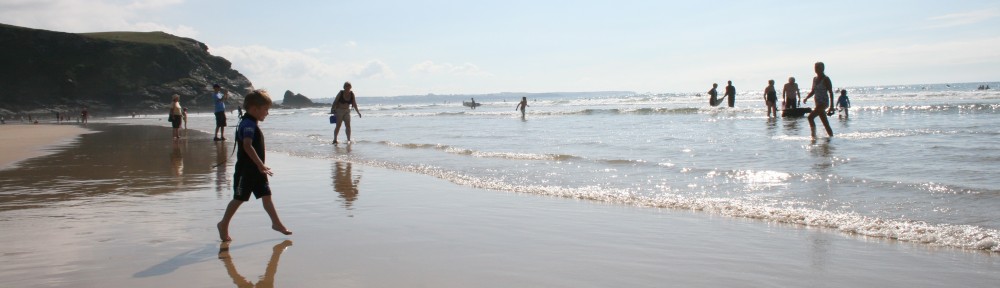
I’ve read Stuart Bruce extolling the virtues of Windows Live Writer so here I am giving it a go. I wanted to include this early morning photo of Leeds but can’t see how to wrap text around the image. Looks as if I’ll have to continue posting directly from Typepad… 

Tech and stuff: will we ever get to grips with it all?

I was listening to the latest Feedburner podcast today and found that a comment by one of the Feedburner vice presidents struck a chord. He was saying how he was continually having to explain things such as feeds and even what a subscriber is. He went on to say that if fairly tech-savvy people found things difficult to grasp, how much harder must it be for the rest of the population, who may never heard of podcasts, let alone RSS feeds.

It got me thinking about the challenge of getting to grips with the complexity of the the things we handle in our everyday lives. I’m currently surrounded by idiot’s guides to blogging, video editing, Photoshop and a stack of other things. I’ve just about figured out my new Sony Ericsson K800i phone. Don’t get me wrong, I enjoy learning new things – blogging, producing a video – but I can see why people find it all intimidating, when a mobile phone instruction manual runs to a hundred pages. And that is just one device. No wonder we barely touch the potential of all our gadgets and applications.

The other challenge is working out how to put things right when it all goes pear shaped. Cutting edge technology is wonderful when it works, but leaves us frustrated and stressed when it throws a wobbly. As Microsoft Windows is prone to. It leaves me asking the big question is: should I consider a Mac for my next computer, or will Vista prove at last that Windows can be reliable?

Tory ‘sex scandal’? I don’t think so

"Tories rocked by sex scandal," screamed the front page of the London Evening Standard today.

The reality is far less exciting. An obscure Conservative MP, Greg Barker, has separated from his wife and, according to the Standard, moved in with another man.

All very upsetting, perhaps, for those involved. But hardly worth a frontpage lead along with the tired ‘scandal’ tag.

Most people will think, "So what?" The media are 20 years behind the times.

Time to ditch newspaper leader writers?

Jeff Jarvis’s columns in Media Guardian are always worth reading. This week’s column asks whether the rise in ‘open media’ – notably blogs – means we should ditch newspaper leaders (comment columns) and the people who write them.

His view is that comment columns should be enablers not leaders of opinion. We can now all have our say, through private and media-run blogs. He goes on to suggest that publishers will no longer assume the prerogative to tell us what to think just because they buy ink by the barrel.

He’s being (probably deliberately) innocent about the motives for newspapers to thunder their opinions. Rich men pay millions to buy newspapers as mouthpieces for their views of the world. It’s the ultimate form of vanity publishing.

Editors and other leader writers craft their words with care, thinking (often over-optimistically) that the world cares what they and their proprietors think. Fifty years ago, William Haley’s Times leaders delivered judgments of portentious solemnity: "It is a moral issue"; "Irresponsibility is rife". Today’s Daily Telegraph leaders are equally absolutist in tone. The rise of the blog is hardly going to prompt newspaper owners to abandon what they see as their right to influence what we think.

Aberfan: tragedy foretold

In my post yesterday about Aberfan, I mentioned that the National Coal Board ignored all the warning signs, adding that ‘moving mountains’ were well known in the valleys before 1966.

My father, Bob Skinner, describes in his book, Don’t hold the front page!, how his days as a pioneering television reporter included an assignment to ‘the moving mountain of Blaina’, "an ominous forerunner of the Aberfan tragedy":

"The black mountain of coal sludge towering over the small Monmouthshire mining town, made unstable by a torrent of rain, was on the move. Local residents in its path had been evacuated and I had to interview one of them on the lower slope of the black slurry. The camera was set up and I faced a worried looking housewife and began the interview. All was going well until I found myself gradually being sucked down into the black morass beneath. Bravely I carried on, only to see my interviewee rapidly growing taller before my eyes. I still carried on, my gaze slipping inexorably from her face to her formidable, damp bosom. Down and down I went, until, truncated, I had to stop and be hauled to the surface by the producer and cameraman, who, somehow, could still see and keep their feet. A clever man, that cameraman – when the interview was screened that night, no one could tell I was almost a dwarf."

Aberfan: John Humphrys remembers

One of Britain’s best known broadcasters, John Humphrys, today spoke of his experience as a young reporter sent to Aberfan when disaster struck in October 1966.

“West Ham stadium talks” – BBC

Clever stadium…

Aberfan, 40 years on

Few people outside the South Wales valleys had heard of Aberfan until the morning of 21 October 1966.  That coal-black day, a generation of children lost their lives when a colliery tip collapsed, engulfing Pantglas junior school. In total, 144 people died including 116 pupils.

This weekend, Aberfan, Wales and the world will remember.

Few disasters have had the searing emotional impact of Aberfan. Even after four decades, few can read about the tragedy without being moved to tears.  It’s easy to understand why: the death of any child is hard to take, but for a small village school to lose half its pupils is impossible to comprehend, never mind accept. South Wales has known tragedy but Aberfan was different: previous valleys disasters were mining accidents, leaving the women waiting anxiously for news of their husbands. In 1966, men and women shared the vigil, and later the grief.

But Aberfan was a scandal as well as a tragedy. The state-owned National Coal Board  ignored all the warning signs. (‘Moving mountains’ were the talk of the valleys for years before 1966.)  The inquiry into the disaster blamed the NCB yet the Wilson government refused to remove the remains of the tip unless the village paid £150,000 from the relief fund towards the costs. It beggared belief that a government could be so callous to a village that had lost everything.

The current Labour government has gone some small way to righting the appalling act of its 1960s predecessor, refunding the money but
without interest.

Ten years ago, I read the memoir of Gaynor Madgewick. Gaynor was an eight year old pupil at Pantglas. She survived but her brother and sister did not. Her book, Aberfan: Struggling out of the Darkness, movingly describes how that October day changed her life forever. The BBC interviewed her and her father on the 40th anniversary.

I can’t claim any contemporary memories of Aberfan: I was three 10 days afterwards. But growing up in South Wales in the 1970s, every time we drove up the valley to Merthyr I couldn’t help glancing across to Aberfan and thinking quietly about the events of that terrible day just a few years before.

See Aberfan Disaster website.