Last of the Few: Battle of Britain pilot John Hemingway dies, aged 105

Group Captain John ‘Paddy’ Hemingway. Photo: RAF

The BBC today reported that the last surviving Battle of Britain pilot has died. Group Captain John ‘Paddy’ Hemingway was aged 105. He travelled from Ireland to join the RAF on the eve of war and also fought in the Battle of France, in which the RAF desperately tried to hold off the German Blitzkrieg invasion of Britain’s ally.

Winston Churchill famously called the brave RAF pilots the Few:

‘Never in the field of human conflict was so much owed by so many to so few…’

Paddy Hemingway and his fellow fliers saved Britain during the glorious, sunny summer of 1940. The Germans hoped to wipe out the RAF, and so open the way for a seaborne invasion of Great Britain. The RAF’s young pilots won the battle, making the defeat of Nazi Germany possible five long years later.

James Holland brilliantly recreated the immense stress of those Battle of Britain pilots in his 2004 novel, The Burning Blue. He also reminds us how the life of the Battle of Britain crews was so different from that of men serving in the Royal Navy or the armies in North Africa or Italy. The Few lived and died in everyday British communities, fighting in blue skies over the patchwork fields of Kent and Sussex by day, and drinking in traditional English country pubs by night.

The stress must have been overwhelming as the battle progressed, as the RAF noted for Paddy Hemingway:

‘Towards the end of the October 1940, the strain of fighting and loss of comrades was beginning to take its toll on Paddy. He was particularly troubled by the loss of his dear friend ‘Dickie’ Lee DSO, DFC in August 1940, saying in later years that his biggest regret was the loss of friends.

Continue reading

Goodbye, America: Britain must choose Europe over Trump’s rogue United States

I love America. I was lucky enough to work for a wonderful American company for 16 years, and cherished the friendships of many fine American colleagues. But the transformation of the leader of the free world into a cheerleader for brutal dictatorship and the far right cannot be ignored.

In 1776, 13 American colonies declared independence from Great Britain. Just short of the 250th anniversary of that historic event, the perfidious actions of the 47th president of the resulting United States of America make it essential for Britain itself to break free.

Trump bullies the man who defied his friend Putin’s invasion

Like millions of Europeans, I was appalled to see President Trump bully and humiliate Ukraine’s President Zelenskyy in what looked like a hostage video staged in the White House. Trump and Vance constantly interrupted the beleaguered Ukrainian leader, who valiantly tried to cope with the flood of invective. At the very same time Trump was abusing his counterpart, the American president’s friend Vladimir Putin’s forces were killing Zelenskyy’s fellow citizens, as they have been since 24 February 2022.

“You are gambling with the lives of millions of people. You’re gambling with world war three,” Trump told a man whose country had been invaded by a brutal dictator intent on wiping Ukraine off the map. Fortunately, America’s greatest president, Franklin Roosevelt, took a different line in 1941 with Winston Churchill. Rather than bullying Britain’s wartime prime minister into accepting an armistice with Hitler, Roosevelt gave extraordinary support for his fight for national survival. Alongside the heroic efforts of the Soviet Union, that ensured that Europe was liberated from the tyranny of Nazi rule less than four years after America entered the war.

I am usually very reluctant to mention the Nazis (people do this all too often), but the shocking encounter at the White House reminded me of the humiliation in 1938 of Austria’s chancellor Kurt Schuschnigg, subjected to a terrifying two hour tirade by Adolf Hitler in the dictator’s mountain retreat at Berchtesgaden, Bavaria. ‘You have done everything to avoid a friendly policy!’ Hitler screamed. ‘And I can tell you right now, Herr Schuschnigg, that I am absolutely determined to make an end of this.’ The Anschluss – the Nazis’ forced union of Germany and Austria – came the following month, with appalling consequences for Austria’s Jews and countless others. Austria only became an independent country again in 1955, 10 years after the second world war.

Continue reading

Winston Churchill, 50 years on

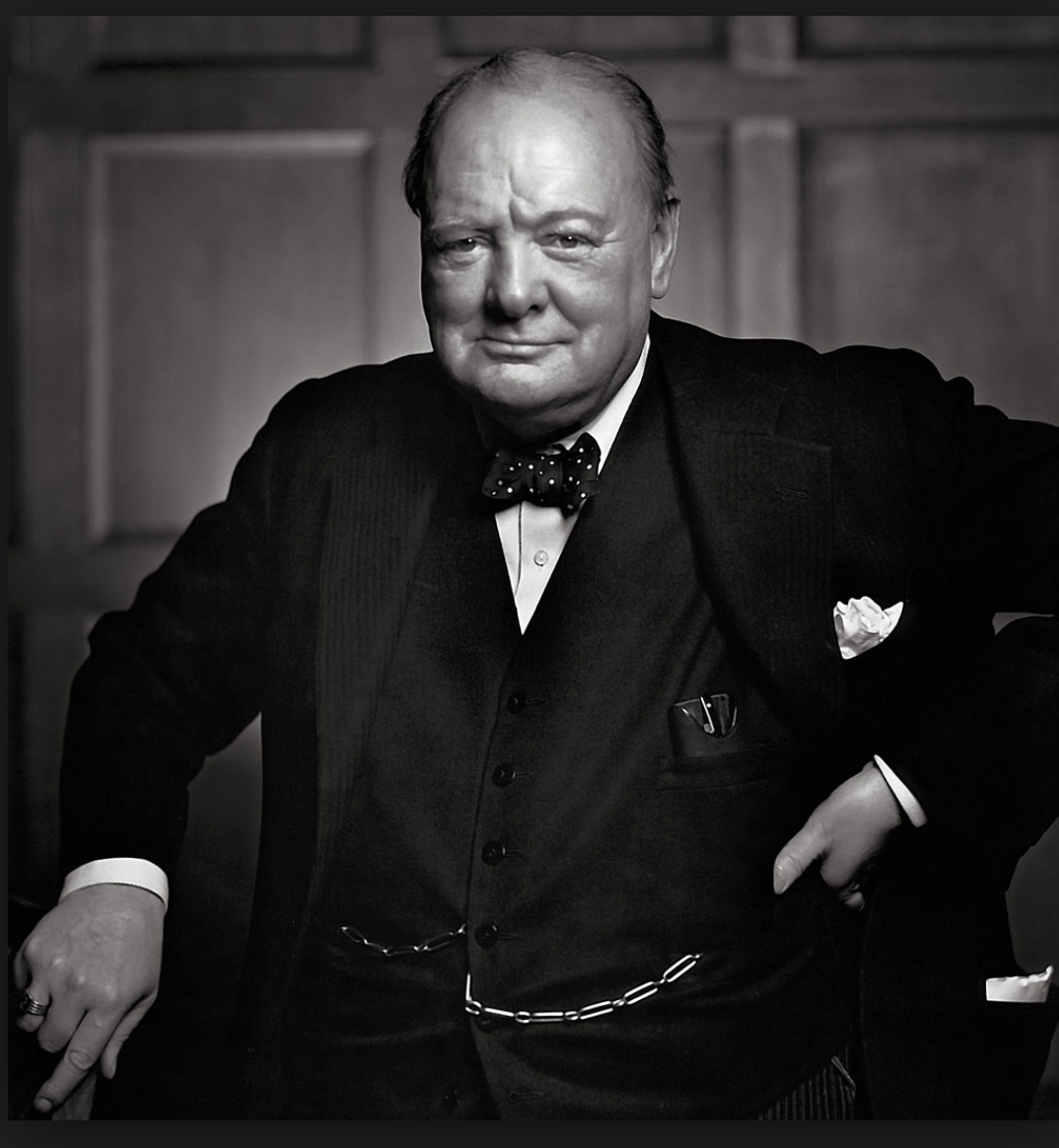
Churchill by Karsh of Ottawa

Winston Churchill, the man who saved Britain

Fifty years ago this week, Britain and the world mourned the man who defied Hitler. Winston Churchill’s long and extraordinary life had ended after 90 years.

It was the end of an era. Few other people’s passing prompt or justify that hackneyed phrase. For Britain, it marked a moment in history perhaps only matched by Queen Victoria’s death 64 years earlier. (How appropriate that the last Briton born during Queen Victoria’s reign, Ethel Lang, died this very week.)

I’ve always been enthralled by Churchill’s life. When my O level history teacher Dr Davies set us an essay in 1979, I deliberately ignored the instructions so I could write more about WSC. I loved ITV’s 1981 Sunday night series on his Wilderness years starring Robert Hardy. Later, I read several Martin Gilbert volumes of the monumental official biography.  Continue reading

Saving Britain: Churchill became prime minister 70 years ago today

Photo: Karsh of Ottawa

As Britain waits to discover who will be its next prime minister, few have noticed that today is the 70th anniversary of our greatest premier taking office. 10 May 1940 was an extraordinary day. At dawn, Nazi Germany invaded Holland and Belgium. By nightfall, Winston Churchill had replaced Neville Chamberlain as prime minister.

Churchill’s appointment followed days of intense political drama, beating by far the events of May 2010. Chamberlain had been weakened by the failure of his appeasement policy, but it was the disastrous attempt to thwart Germany’s invasion of Norway that sealed his fate. The Labour opposition refused to serve in a coalition government headed by Chamberlain. Lord Halifax, the foreign secretary, recognised he wasn’t a war leader. So Winston took his place in history, as Britain’s very survival was at stake.

The night before, Churchill told his son Randolph, “I think I shall be prime minister tomorrow”. In the morning, with Nazi stormtroopers racing through the low countries, he cast the thought aside. But destiny was on his, and our, side. As he returned from Buckingham Palace as prime minister, Churchill had tears in his eyes as he told his detective that he was very much afraid it was too late. “We can only do our best.” But as we went to bed at 3am the following day, he reflected a profound sense of relief. “I felt as if I were walking with destiny, and that all my past life had been but a preparation for this hour and this trial.”

Contrary to legend, it took time for Churchill to win over the Conservative party – Rab Butler, for example, said the clean tradition of British politics had been sold to the greatest adventurer in modern political history. He though Winston’s accession was a disaster. Andrew Roberts and John Lukacs both show how hard Churchill had to resist pressure from the Tory grandees such as Lord Halifax to open talks with Mussolini and Hitler that fateful May.

Anyone keen to know what it was like working with Churchill during those extraordinary days must turn to John Colville. Colville was one of Winston’s private secretaries for most of the war years, and paints a vivid picture of Britain’s greatest prime minister in The Fringes of Power, his Downing Street diaries. He describes the formation of “one of the greatest administrations which has ever governed the United Kingdom”. Colville says Churchill was entirely unpredictable. He could be utterly inconsiderate, but won unswerving loyalty. Yet his humanity and humour shine through: when Colville took a telegram to the prime minister in June 1940, as France was on the brink of surrender, Churchill declared, “Another bloody country gone west, I’ll bet,”

Churchill himself wrote of those desperate days in his history of the second world war. He describes his last visit to France before nemesis struck. Arriving in Tours, he found the airport had been heavily bombed the night before, but his aircraft and escorts landed safely despite the craters. No one from the French government was there to meet him, and he borrowed a service car and drove into the city. He found a cafe, which was closed, but was given a meal after explanations. Eventually, French premier Reynaud arrived for anguished discussions about whether Britain would support France if she were to seek peace terms with Germany – an idea Churchill rejected.

That perilous flight set the pattern for the rest of the war. Churchill pioneered face to face ‘summit’ meetings with other leaders. Brian Lavery’s wonderful book Churchill goes to war recounts the amazing journeys the prime minister undertook between 1940 and 1945, crossing the Atlantic repeatedly and flying across enemy-held North Africa to visit Stalin in Moscow. In the words of the chief of the imperial general staff, Alan Brooke, “We had travelled all night in poor comfort, covering some 2,300 miles an a flight of over 11 hours … and there he was, as fresh as paint, drinking white wine on top of two previous whiskies and two cigars!”

Whoever becomes prime minister in May 2010 will have an easy ride by comparison.