Thatcher’s thunderbolt: becoming Tory leader, 50 years ago

Reflections on Margaret Thatcher’s shock victory 50 years ago this week in the leadership election that eventually led her to become Britain’s first woman prime minister
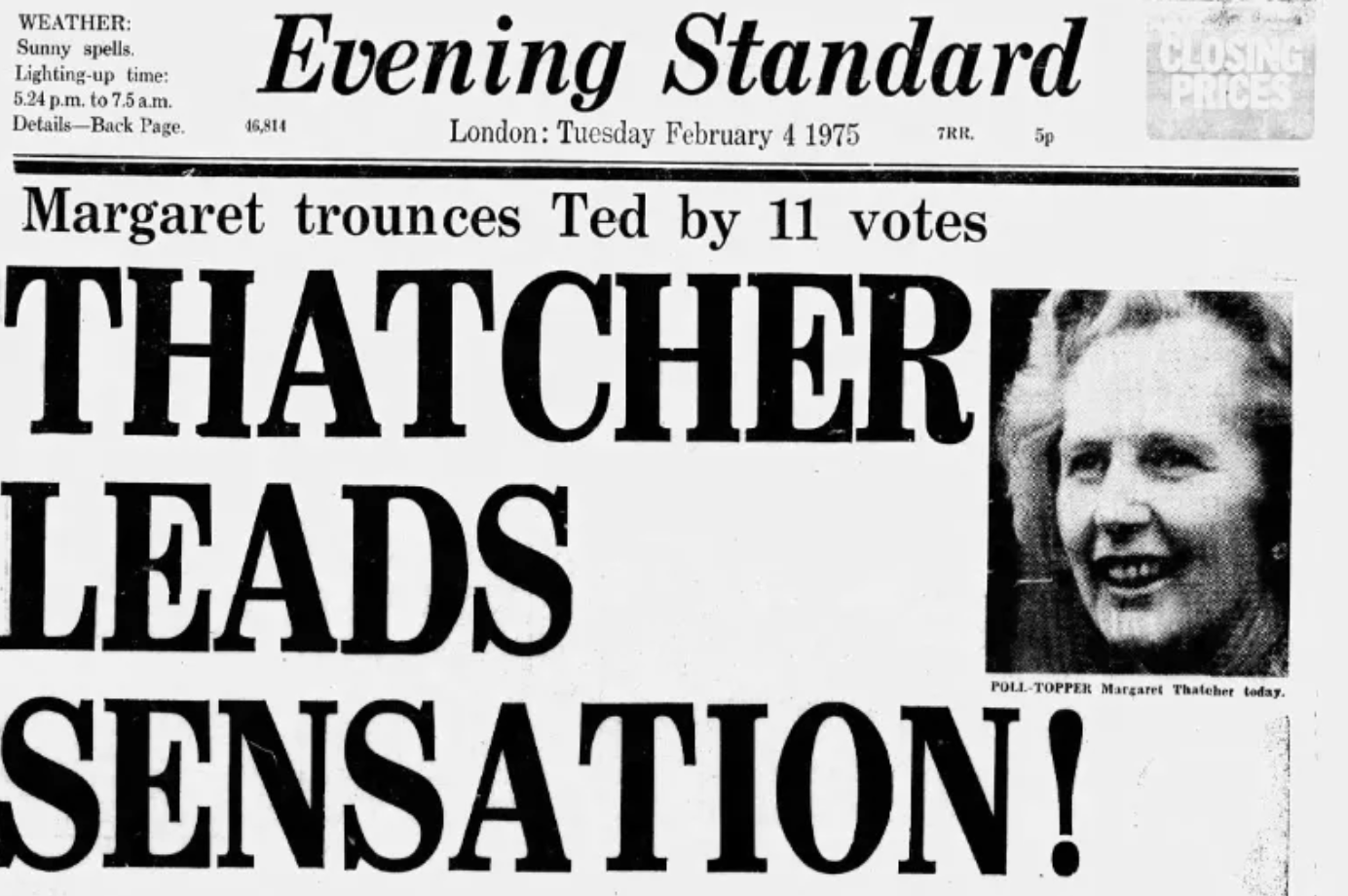
I was just 11 when Margaret Thatcher amazed the political world by ousting former prime minister Edward Heath to become Conservative party leader 50 years ago this week. But as a precocious schoolboy I was fascinated.

Even in 1975, it was hard to see how Heath could cling on to the leadership. He had lost two general elections in eight months the previous year. His four years as premier had been a series of crises, and when he called the first 1974 election with the question ‘Who governs Britain?’ the voters refused to give Ted Heath’s Tories as the answer. (A hung parliament was the messy outcome.) And he was extraordinarily rude to his colleagues – people he needed to vote for him.

Thatcher had been a largely invisible middle ranking cabinet minister – apart from earning infamy as the ‘milk snatcher‘ after abolishing free milk for primary school children. But after the successive 1974 Tory election defeats she became far more prominent. Thatcher made the headlines in the second 1974 election with a plan to abolish the rates, the tax that funded local councils, and to cut the cost of home loans. As the 1975 leadership campaign unfolded, she brilliantly led the Conservative response to Labour’s finance bill, showing a mastery of detail. Thatcher also dissed the performance of the Heath government, telling the Daily Telegraph, ‘People believe too many Conservatives have become socialists already’. (An uncanny preview of right wing criticisms of the Johnson and Sunak governments almost 50 years later.) Yet few saw her as a likely party leader.
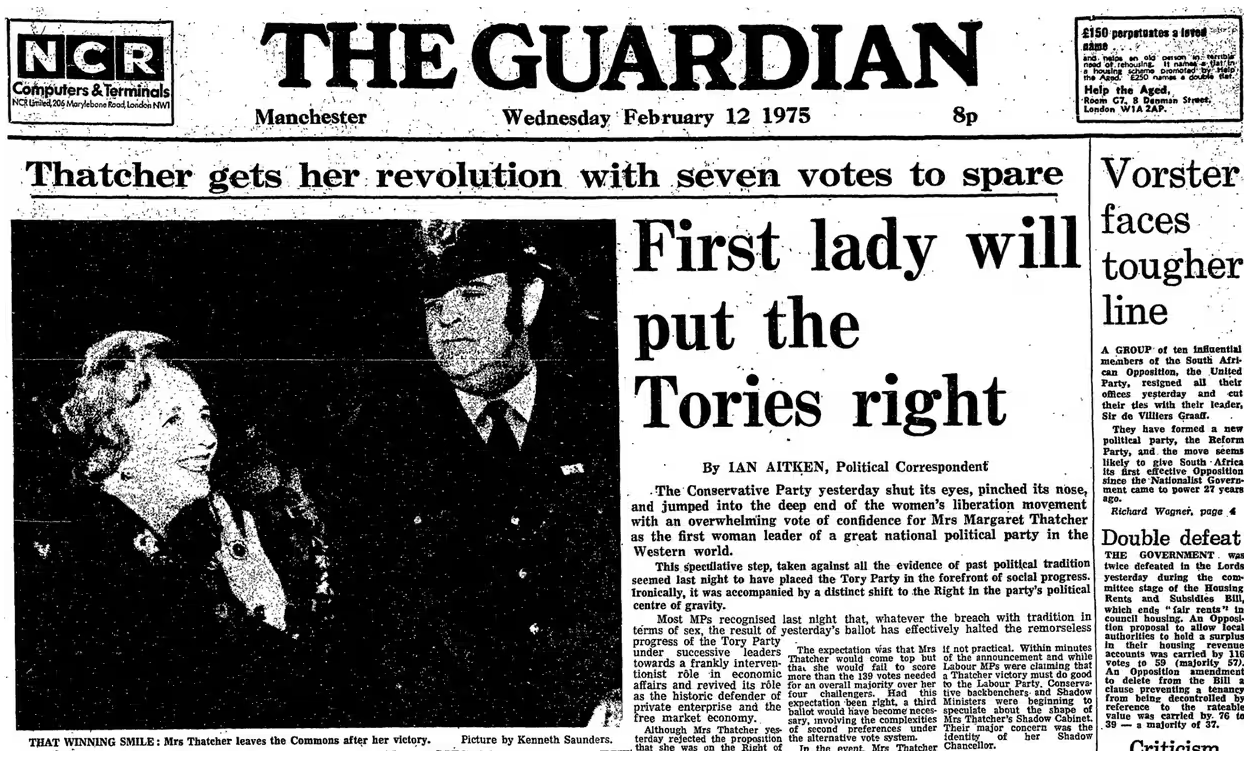
Her campaign manager, Colditz escaper Airey Neave, leaked news that Thatcher was ahead of Heath in polling for the first leadership ballot. (They were the only two candidates at that stage.) He cleverly encouraged those who wanted to oust Heath to back her in the initial vote, as that was the only way they could get their preferred candidate into the race. Heath was humiliated by coming second to Thatcher and pulled out, beginning a 30 year ‘incredible sulk’ against Thatcher that lasted until he died in 2005.

Continue reading

Blue sky November

It was a typically gloomy November day. We hadn’t seen the sun for days. But just before the end of my lunchtime bike ride the sun came out. The difference it made was stunning. Suddenly, the roads were bathed in sunlight. The autumn trees cast shadows where there had been none minutes earlier.

I looked up and was stunned to see the edge of a weather system. Half the sky was a glorious shade of blue. The other was a blanket of thick cloud. Later, I learned from the BBC weather bulletin that this weather front stretched from eastern England as far as Russia. A continent was covered by cloud. The lack of wind had anchored it over us for days.

It was an unforgettable sight. Here’s to sunshine in November.

Open letter to Cheryl Gillan MP on Brexit

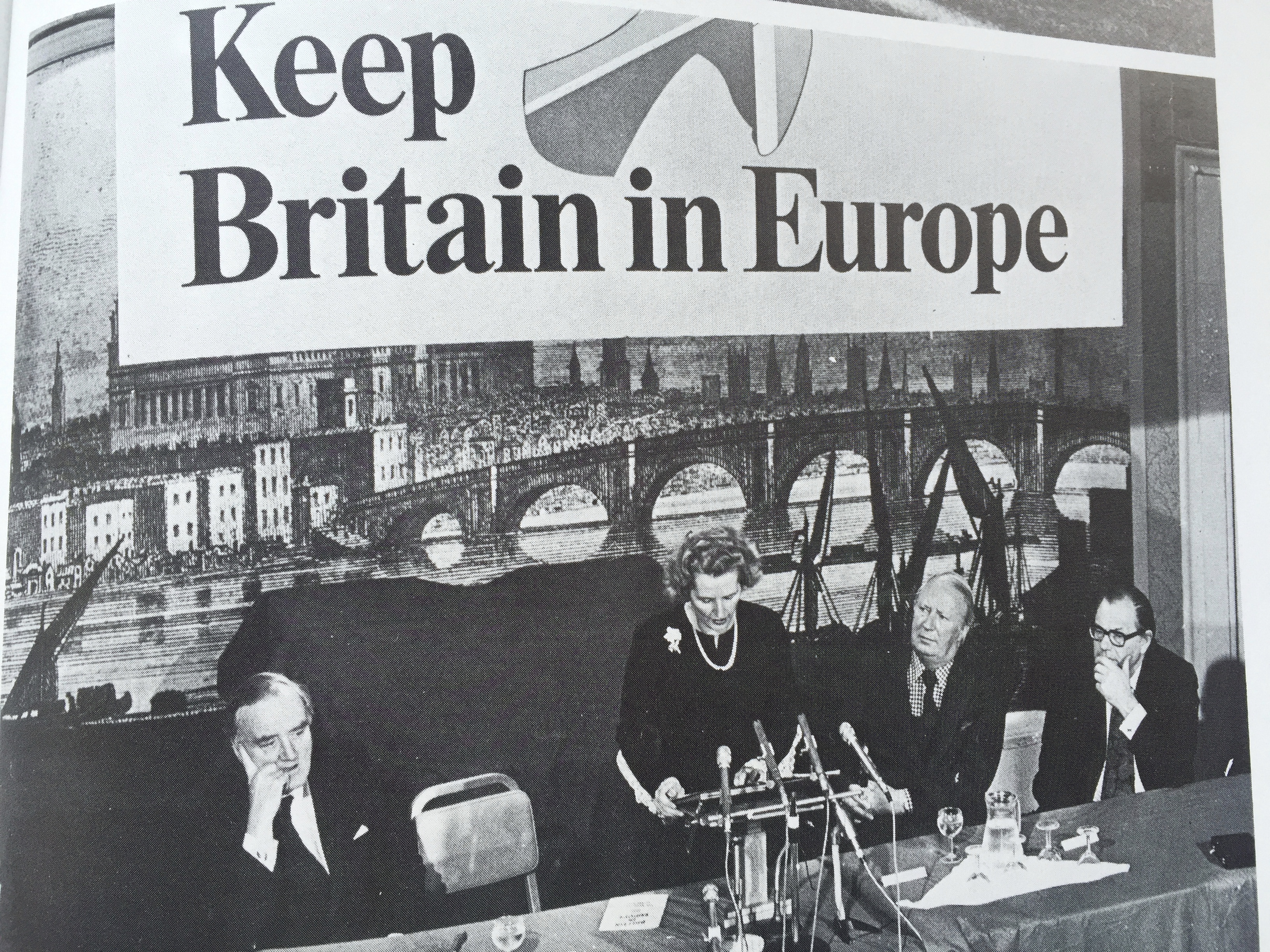
IMG_3857

Margaret Thatcher campaigns to keep Britain in the EEC, 1975

The Rt Hon Cheryl Gillan MP

House of Commons

London SW1A 0AA

29 June 2016

Dear Mrs Gillan

Like many of your constituents, I am deeply concerned about the consequences of last week’s very narrow referendum vote to leave the EU, which you campaigned for.

We are already seeing major companies like HSBC and Visa saying they will move jobs from the UK to the continent if we lose access to the European Single Market, which Margaret Thatcher played a major role in creating. The leaders of the leave campaign such as Boris Johnson and Nigel Farage have been quick to disown the pledges they made to win votes. The Conservative and Labour parties are in chaos, and the country is rudderless at our most critical moment as a nation for generations.

You, as our MP, have a great responsibility for helping save the country from disaster. I urge you to:

Demand that Parliament has to agree to any government decision to invoke article 50 of the Lisbon treaty.

Britain is a parliamentary democracy. Recent governments have accepted that vital matters affecting the nation such as going to war must be subject to a parliamentary approval, rather than royal prerogative exercised by the prime minister. Starting the process of withdrawal from the EU is just as important – and parliament must decide.

Only vote in favour of invoking article 50 when the UK government has determined what the future relationship with the EU should be, in agreement with the devolved governments of Scotland, Wales and Northern Ireland

Like me, you were born in Cardiff, Wales. Unlike me, you have served as Secretary of State for Wales. As such, you must understand the vital need to preserve the United Kingdom. Keeping Scotland in the Union, preserving peace in Northern Ireland and maintaining the interests of Wales must be fundamental to the task of negotiating the right future for Britain in Europe. Millions will never forgive this government if it destroys Britain.

Demand that the UK maintains access to the European Single Market – including financial services

Many of your constituents work in financial services. London, the South East and the rest of the country will suffer countless job losses – and the City will be hugely disadvantaged – if UK banks lose the right to ‘passport’ their UK banking licences to the 30 countries in the EU and EEA. We have already seen HSBC and Visa say they will move jobs from the UK if this happens. This is not a game. The time for bluster and rhetoric is over – MPs have a responsibility. You will be held to account if you get this wrong.

Fight against hate speech and crimes

Millions of us are horrified at the way the referendum campaign fuelled xenophobia in Britain. We liked to think of our country as tolerant, embracing people no matter what their background. Yet leave campaigners have let a horrible genie out of the bottle. I’m appalled by the attacks on the Polish and Muslim communities, who have enriched the country. (How many of the thugs know that Polish refugee airmen helped to save us in the Battle of Britain?) It’s time to take action to end this hatred and punish those who fuel it.

Protect EU nationals working in the UK

Colleagues from other European countries working alongside me here in the UK have been in tears, taking the referendum rhetoric and the result as meaning they are not wanted here. This is appalling. They make a huge contribution to our country and economy. They are our friends as well as colleagues. I call on you now to urge ministers to guarantee that no one working here who come from other EU states will lose the right to work in the UK.

End the lies

The referendum campaign marked a new low in British political campaigns. Politicians are not famous for telling the truth, the whole truth and nothing but the truth – but never before have we seen so many of them telling outright lies and refusing to stop when exposed. The £350m claim was the most outrageous example, condemned by the independent UK Statistics Authority as plain wrong. It’s time to ban politicians from telling lies. And the thought of one of those liars becoming prime minister is totally unacceptable.

I look forward to hearing from you.

Rob Skinner

Obama in Britain: let’s stop talking of special relationship

PM Obama

An essential relationship? Photo © Prime Minister's Office

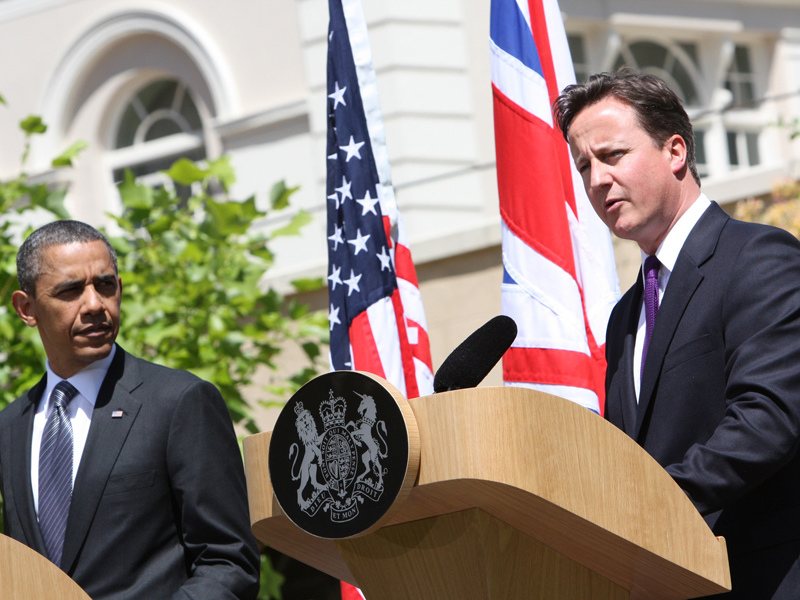
President Barack Obama's visit to Britain has been a huge success. We like America's 44th president. We're touched by his place in history as the first black president. And we cheered his election, as I blogged at the time. So the fact Obama has stolen hearts is no surprise. 

But I was dreadling the visit, in a small way, as I knew it would prompt a wave of comments about whether Britain and America shared a 'special relationship'. This is an obsession of politicians and the media. Yet no one in the bars of London, Cardiff or Edinburgh would give it a moment's thought. If they did, they'd surely point out that the UK and US have lots of relationships with lots of countries. And then get back to talking about Ryan Giggs.

Yet The Times carried an Obama and Cameron article lauding the essential relationship

It's true that Winston Churchill and Franklin Roosevelt forged a very close relationship during our darkest days, the second world war. But the war leaders weren't in total harmony: FDR was soon tormented by WSC's wilder ideas, and Churchill was rightly frustrated and frightened by FDR's complacency about Soviet designs on eastern Europe. 

And all this talk of a special relationship encourages the two countries' addiction to military adventures, as the Guardian's Simon Jenkins comments today. At a time when the BBC's World Service (not to mention all our public services) has had its spending slashed, David Cameron miraculously found £1 billion to burn on a war in Libya that has absolutely nothing to do with Britain. Yet a BBC reporter said in all seriousness that America thinks Britain should spend more on 'defence'. 

Britain admires America and its president. But neither country has any reason to spin an idea of a mythical special relationship.