Off the Rails: a gripping but flawed book about HS2

A review of Off the Rails, The Inside Story of HS2 by Sally Gimson. (Oneworld, 2025)
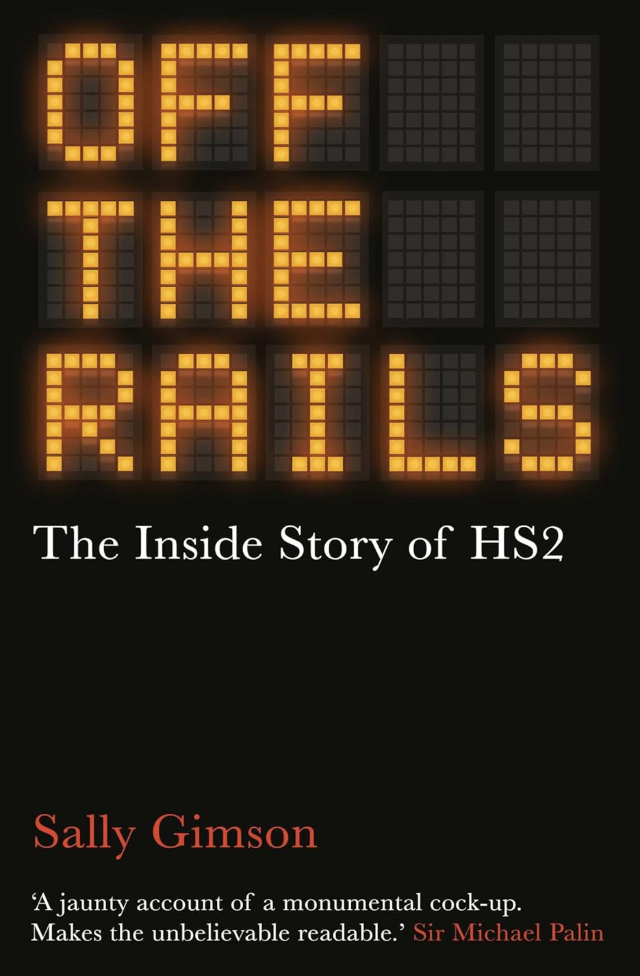
If any project deserves a detailed exposé, it’s HS2. Britain’s plan to build a second high speed rail line has become an epic, expensive failure. Once heralded as giving the country – well, England – a network of high speed routes between London, Manchester, Nottingham and Leeds, it has been reduced to a single route between London and Birmingham. Thanks to the stupidity of former prime minister Rishi Sunak, who cancelled the Birmingham to Manchester section, HS2 trains heading for Manchester could actually be slower than today’s trains once they divert from HS2 onto the West Coast Main Line at Handsacre Junction north of Birmingham.

HS2 Colne Valley Viaduct, near Denham, Bucks

Our village, Chalfont St Giles in Buckinghamshire, is on the route of HS2. You’ll find few supporters of the project in these parts, even though the line passes us in the 10 mile long Chiltern tunnel. But I always supported the idea, as I blogged when the Tory-Lib Dem coalition gave the green light to HS2 in 2012. As I argued:

‘Britain’s intercity rail network was born just before Queen Victoria came to the throne in 1837. It was the wonder of the world. Nearly two centuries later, the world wonders why Britain is so reluctant to build a new railway. HS2 opponents say we should just modernise the west coast mainline. That line was created from a series of 19th century railways. It has been ‘modernised’ twice in the last fifty years. It’s still in essence a Victorian railway.’

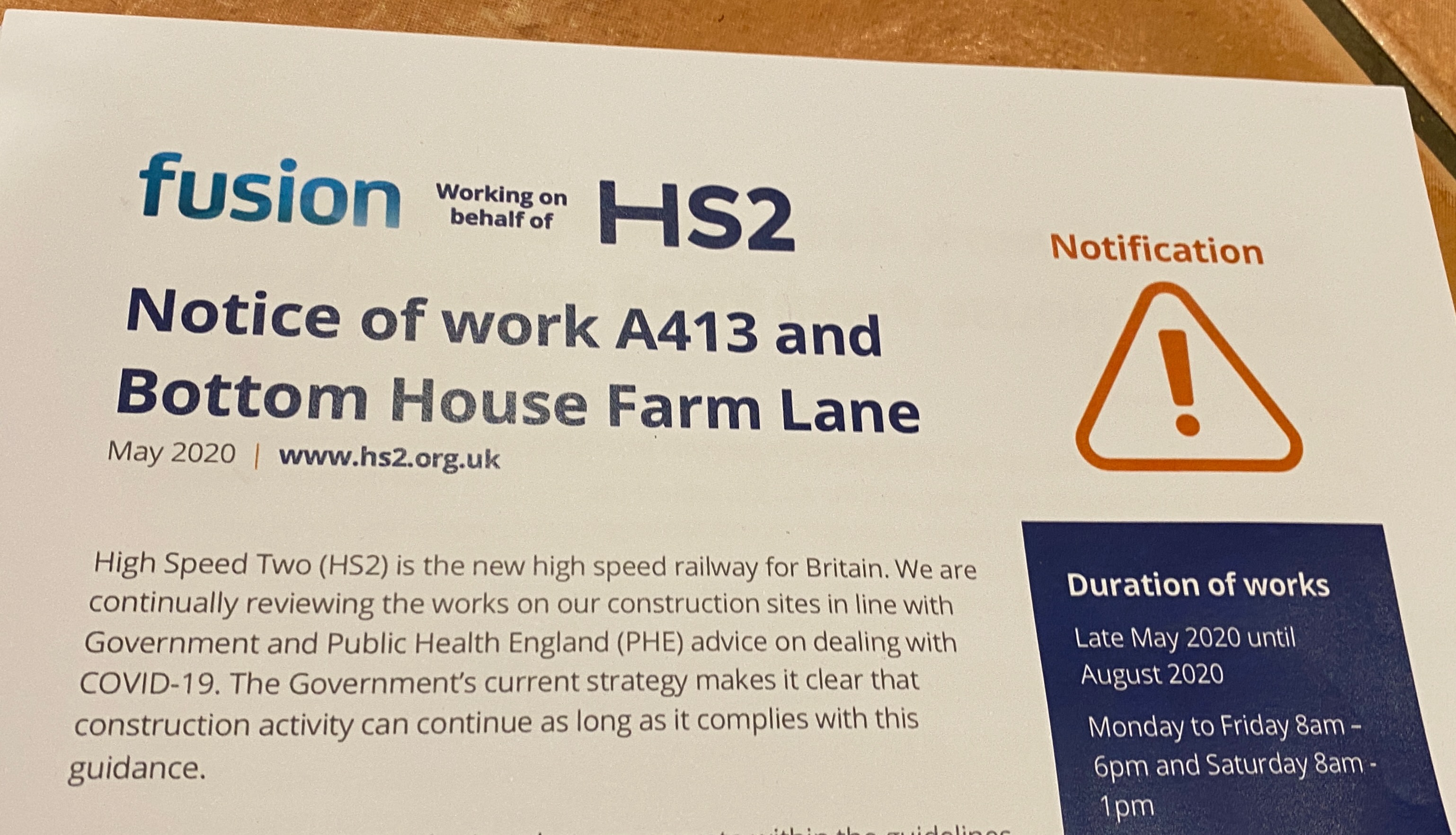
Above: HS2 built a new road parallel to Bottom House Farm Lane, Chalfont St Giles, for construction traffic to the site of an HS2 tunnel shaft

Our former MP, the late Cheryl Gillan, features heavily in Sally Gimson’s story. If you’re wondering why HS2 is proving vastly expensive compared with similar lines in France and Spain, Gillan is one one of the many reasons. Protesters in the Chilterns were bought off with miles of extra tunnels. These same protesters will happily use Heathrow airport, the M40 and other environment-shredding services. (As I do, I hasten to add.) Ironically, the route from Birmingham to Manchester, killed by Sunak in 2023, would have been far cheaper to build with fewer tunnels and viaducts.

HS2’s advocates and planners didn’t help by changing the reasons for the line. It started out as a need for speed – though arguably faster than we needed, increasing costs – but morphed into a boost of the capacity of the railway, followed by an idea of ‘levelling up’ the country.

Sally Gimson tells the story well, from early mistakes through soaring costs resulting from buying off Chiltern protesters right up to Rishi Sunak’s calculated act in announcing the axe of the route to Manchester … in Manchester. She’s a fan of the concept of HS2, and is appalled by the way the project’s epic mismanagement has given high speed rail in Britain a terrible reputation, despite the success of HS1.

She doesn’t explain that the British government designated HS2 an ‘England and Wales’ project, even though even the original route didn’t include a metre of track in Wales. This meant that Wales was denied extra funding for rail projects under the Barnett formula unlike Scotland and Northern Ireland, which gained billions of pounds of extra funding. This has been hugely controversial in Wales, especially to the Labour government in Cardiff after Keir Starmer refused to reconsider the decision on coming to power.

Sadly, Gimson’s book is riddled with silly factual mistakes that suggest a shaky grasp of railway history – and more. Here are some that I spotted:

The Times newspaper was not a product of the railway era (p23) – it was founded in 1785, decades before the start of the railway era.

HS1 did not open in 2001 (p43). The first section opened in 2003, with the second section to St Pancras following in 2007.

Crewe was not still building steam locomotives in 1964, the year Japan’s first high speed line opened (p47). Crewe ended steam engine construction in 1958, and the final BR steam locomotive, Evening Star, was completed at Swindon in 1960.

British Rail was not born a year after the railways were nationalised (p34). Nationalisation on 1 January 1948 created British Rail under the original longer name, British Railways.

Northern Rock bank collapsed in 2007 not 2008 (p66).

There was no ‘InterCity125 line connecting London to Edinburgh developed in the 1980s’ (p131). The InterCity 125 service from London to Edinburgh began in May 1978, using the existing East Coast Main Line. The line was electrified in late 1980 with InterCity225 electric trains reaching Edinburgh in 1991.

Andrew Gilligan resigned from the BBC in 2004 not 2003 (p169).

Graham Brady oversaw the vote of no confidence in Theresa May by Tory MPs in 2018 not 2019 (p189).

Andy Street was not elevated to the House of Lords in December 2024 – or at any other time. He is not Lord Street, but Sir Andy Street. (p213.) Also, he was not chair of John Lewis, but its managing director.

Neville Chamberlain was lord mayor of Birmingham in the 20th not 19th century (p222).

It was the Grand Junction not Grand Central railway that built Crewe (p243).

I’m sure Christian Wolmar, a real transport expert, would have spotted the transport howlers had Gimson asked him to proof read her manuscript.
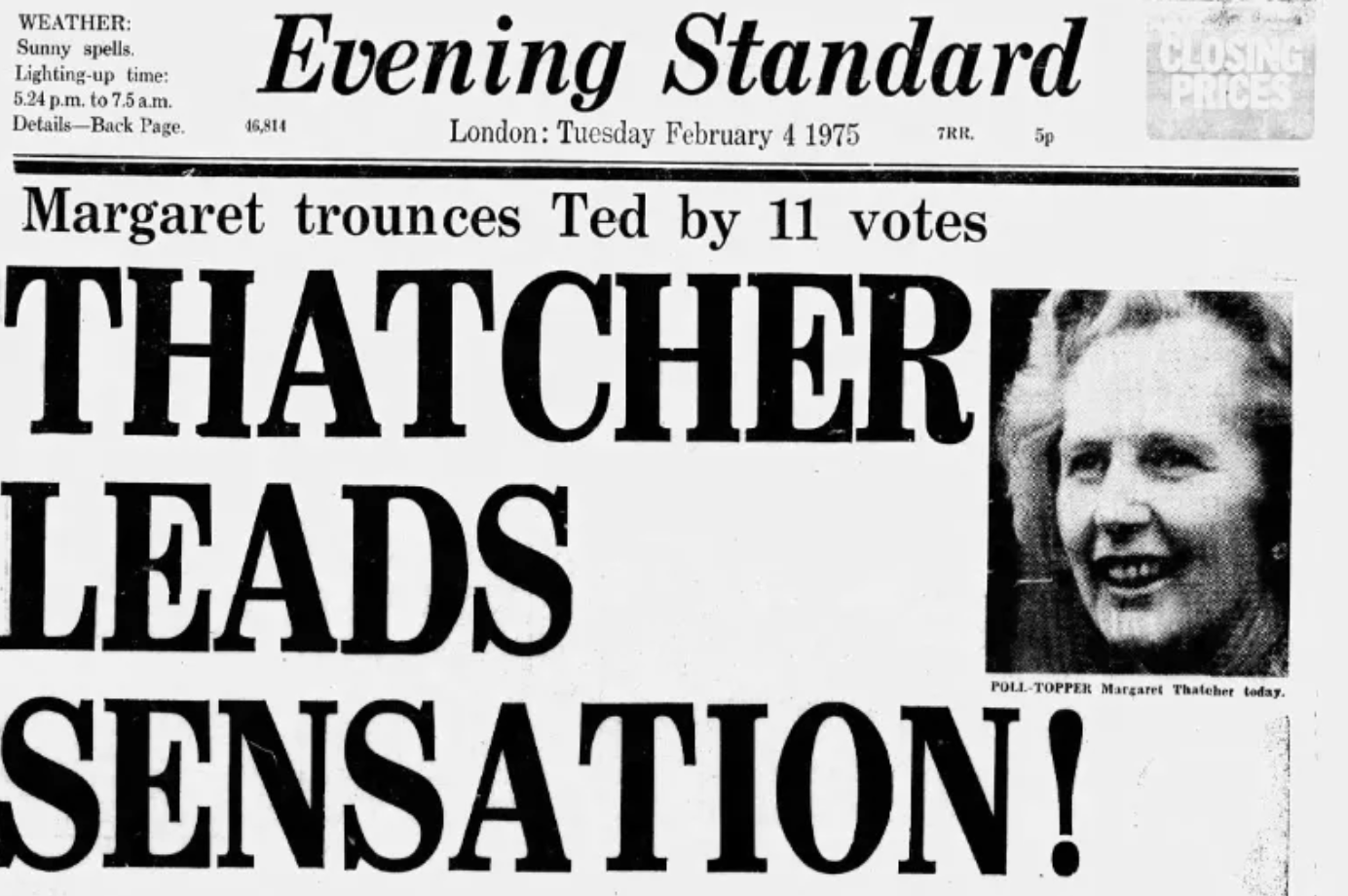
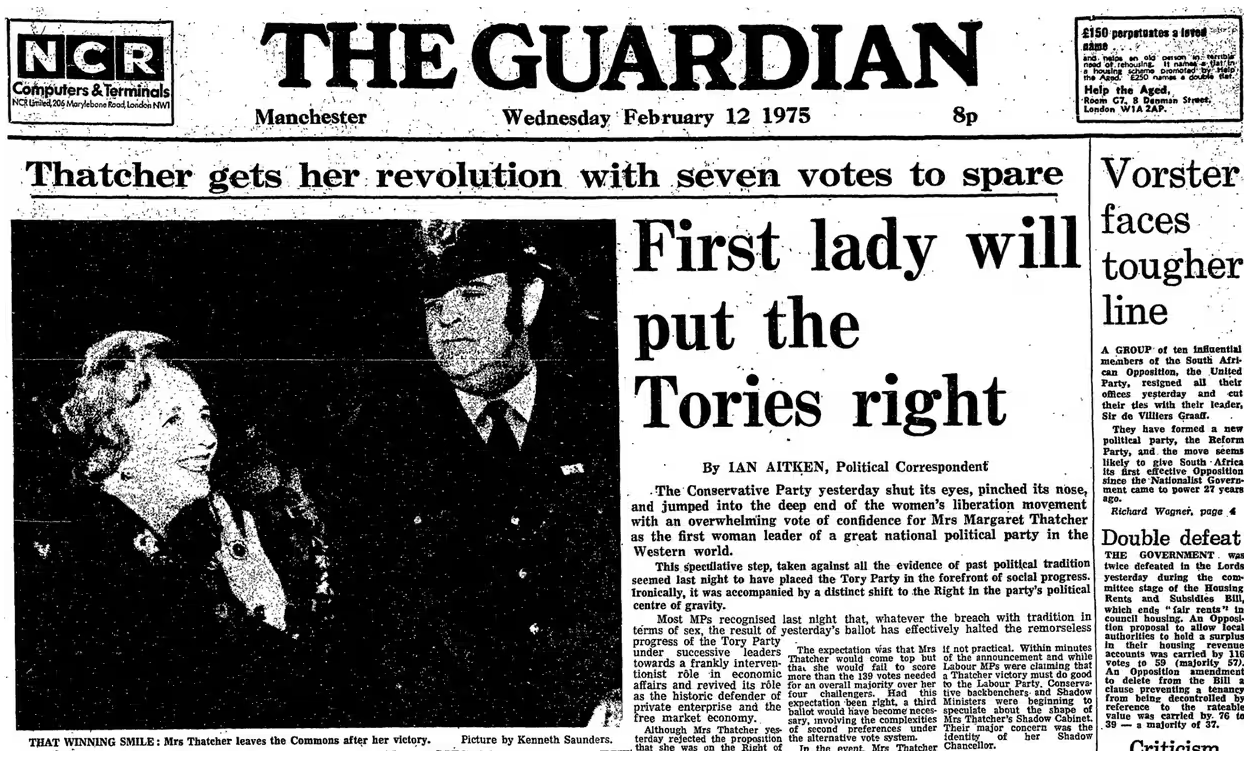
Thatcher’s thunderbolt: becoming Tory leader, 50 years ago

Reflections on Margaret Thatcher’s shock victory 50 years ago this week in the leadership election that eventually led her to become Britain’s first woman prime minister

I was just 11 when Margaret Thatcher amazed the political world by ousting former prime minister Edward Heath to become Conservative party leader 50 years ago this week. But as a precocious schoolboy I was fascinated.

Even in 1975, it was hard to see how Heath could cling on to the leadership. He had lost two general elections in eight months the previous year. His four years as premier had been a series of crises, and when he called the first 1974 election with the question ‘Who governs Britain?’ the voters refused to give Ted Heath’s Tories as the answer. (A hung parliament was the messy outcome.) And he was extraordinarily rude to his colleagues – people he needed to vote for him.

Thatcher had been a largely invisible middle ranking cabinet minister – apart from earning infamy as the ‘milk snatcher‘ after abolishing free milk for primary school children. But after the successive 1974 Tory election defeats she became far more prominent. Thatcher made the headlines in the second 1974 election with a plan to abolish the rates, the tax that funded local councils, and to cut the cost of home loans. As the 1975 leadership campaign unfolded, she brilliantly led the Conservative response to Labour’s finance bill, showing a mastery of detail. Thatcher also dissed the performance of the Heath government, telling the Daily Telegraph, ‘People believe too many Conservatives have become socialists already’. (An uncanny preview of right wing criticisms of the Johnson and Sunak governments almost 50 years later.) Yet few saw her as a likely party leader.

Her campaign manager, Colditz escaper Airey Neave, leaked news that Thatcher was ahead of Heath in polling for the first leadership ballot. (They were the only two candidates at that stage.) He cleverly encouraged those who wanted to oust Heath to back her in the initial vote, as that was the only way they could get their preferred candidate into the race. Heath was humiliated by coming second to Thatcher and pulled out, beginning a 30 year ‘incredible sulk’ against Thatcher that lasted until he died in 2005.

Continue reading

How Keir Starmer’s woes echo Thatcher’s grim opening years

Unhappy new year headlines for Labour

This is a bleak midwinter for Keir Starmer’s Labour government. Elected by a landslide just six months ago, Labour is sinking fast in the polls, and the modest enthusiasm that greeted its election has long since disappeared. Strategic messaging and policy mistakes have led to despair amongst many supporters, and jubilation from the populist insurgent party, Reform UK, now neck and neck with Labour in the polls.

True, at least some of the backlash is the traditional reaction to a Labour government from Britain’s dominant right wing press. All too often the BBC falls for the mistaken view that it has to amplify every right wing criticism of Labour. And people tend to be more fickle these days – a trend that benefitted Labour as it went from its worst election defeat for 84 years in 2019 to a landslide victory last year. But most observers accept that Labour has made an exceptionally poor start, even allowing for its dreadful inheritance.

Lessons from Thatcher’s experience

Labour’s collapse in support and morale so soon after being elected is very unusual, especially for a party winning power from opposition. The only comparable example, ironically, is an encouraging precedent for Labour. Margaret Thatcher has now passed into legend as the iron lady: indomitable, unyielding and triumphant, at least until hubris took over after her third election win in 1987. The reality is more interesting.

In the autumn of 1981, Margaret Thatcher was under siege. Just over two years into her premiership, her monetarist economic policy (trying to reduce inflation by controlling the amount of money in the economy) had proved disastrous. Having condemned Labour for presiding over rising unemployment (‘Labour isn’t working’ in the words of an infamous poster) and inflation, the Thatcher government’s policies contributed to far more job losses. In her first three years, Britain lost a quarter of its manufacturing capacity. The nightly news bulletins were dominated by reports of yet more famous brands laying off staff, or going bankrupt.

The cause in many cases was the soaring value of the pound, caused by high interest rates, which made our exports hugely expensive. (In late 1979, chancellor of the exchequer Geoffrey Howe raised interest rates to a crippling 17 percent largely because investors were not willing to lend money to the government – the so-called gilt strike, which shows that the gilts (government bonds) crisis that did for Liz Truss had an unexpected precedent in her heroine’s traumatic early years.)

Continue reading

Could the Lib Dems revenge Tories for 1922 Carlton Club rebellion?

Here’s an intriguing thought. This Friday marks the 90th anniversary of the Carlton Club rebellion of Tory MPs against the coalition with the Liberals. It forced David Lloyd George‘s resignation as prime minister. Could the Liberal Democrats exert revenge nine decades later by bringing down David Cameron in similar dramatic fashion?

The 1922 Tory backbenchers were unhappy with the coalition, especially after it nearly went to war with Turkey in the Chanak crisis. The party’s leaders wanted to continue the coalition, but the backbenchers won the day. Lloyd George was out, never again to hold office. King George V said he was sorry to see him go, but added that ‘Some day he will be prime minister again’. The king was wrong.

The Liberal Democrats have proved spineless in coalition. They broke their election pledge on student fees. They cravenly allowed the Tories to break their own promise not to reorganise the NHS. They have let the Tories wreak havoc with brutal spending cuts that have plunged us into a double dip recession. The list goes on. Will they one day reach breaking point and say ‘no more’?

Sceptics will say it’s unlikely. The Lib Dems face disaster at the next election – so why would they prompt an early election? (Assuming that’s even possible after the coalition legislated for a fixed term.) And the Lib Dem ministers are clearly enjoying the privileges of office.

But who can tell what pressures may build up over the next 30 months. We may yet see the creation of the Liberal Democrats’ 2014 committee, named after the year of the great rebellion that ended David Cameron’s political career…


Curtains for Ken: Livingstone’s last act?

Ken Livingstone will never again be mayor of London. His second defeat by Boris Johnson has ended one of the most colourful careers in British politics.

It’s hard to believe that the sad figure who left the stage today once electrified the political scene. As leader of the Greater London Council, Ken defied Margaret Thatcher at her most powerful. Thatcher was so unnerved by Ken’s bravado that she abolished the GLC, an act of spite that left London as the world’s only leading city without its own government body. In 2000, he defied another powerful prime minister, Tony Blair, to become the city’s first elected mayor. (Blair’s mistake was a classic example of how New Labour’s controlling tendency often backfired spectacularly.)

As mayor, Livingstone achieved a lot, notably the bold congestion charge scheme, helping win the 2012 Olympics and his dignified response to the 7/7 bombings. But his maverick nature became a weakness not a strength. Ken likened a Jewish reporter to a concentration camp guard – and compounded the offence by repeatedly refusing to apologise. It was the first of a number of insensitive remarks about the Jewish community.

The greatest indictment of Livingstone is that he lost to a Tory on a day when the Tories were routed in other elections across the country. True, he was fighting the Tory media as well as Boris Johnson, but that didn’t matter elsewhere. And in his prime he appealed to voters of all political shades. In 2012, even Labour voters found Ken unappealing. Tony Blair was wrong in 1999 to try to block Ken ahead of the first mayoral election. But in 2012 Labour made the costly mistake of giving Ken one last chance.

Britain moves left: Labour wins as voters punish coalition

Labour was the clear winner in yesterday’s local elections in England and Wales – and shared the spoils with the SNP in Scotland. Voters punished the coalition, whose performance this year has been abject. (Economy back in recession; a budget that took money from pensioners and gave it to the rich; three hour queues at Heathrow; the list goes on…)

It’s easy to explain away Labour’s good showing as the classic opposition gain from a government’s mid-term blues. But the Conservatives and Nick Clegg’s Liberal Democrats would be unwise to assume they’ll bounce back in the polls as the next general election nears. Spending cuts and state job costs have barely started.

The Liberal Democrats are in the bleakest position. As I wrote on the original Ertblog early in 2011, they have played their hand disastrously in government:

Above all, the Lib Dem leaders seem far too comfortable in their ministerial limos and offices, and far too little concerned about the catastrophic rush to slash and burn public services.

The happiest man in British politics tonight must be Ed Milliband (with Alex Salmond a close second). He’s faced constant criticism and sniping since beating his brother David in 2010’s leadership election. Praise for his stand against the Murdoch empire last year faded. But in recent months his fortunes are reviving. David Cameron is looking more like John Major at his most beleaguered than Tony Blair in his pomp. There’s no guarantee chat Milliband will be Britain’s next prime minister. But the idea no longer seems outlandish.