This post recounts the eighth day of my Mizen Head to Malin Head cycle tour in Ireland with Peak Tours in June 2024. Read Day 8: Sligo to Rossnowlagh beach
I had a few butterflies at the start of the final stage of our tour. Yesterday’s weather cast a shadow but happily the rain had moved on by the time we got going. Perhaps our obsessive attention to our weather apps paid off!


I was one of the last to set off, but was cycling at pace as we headed along the coast and the stunning Gweebarra estuary. I couldn’t resist taking photos – I doubt I’ll come this way again – so I was the lanterne rouge again. I didn’t want to hold that lonely place for long, and by setting a cracking pace caught up with a few others – though it took a mile or two.
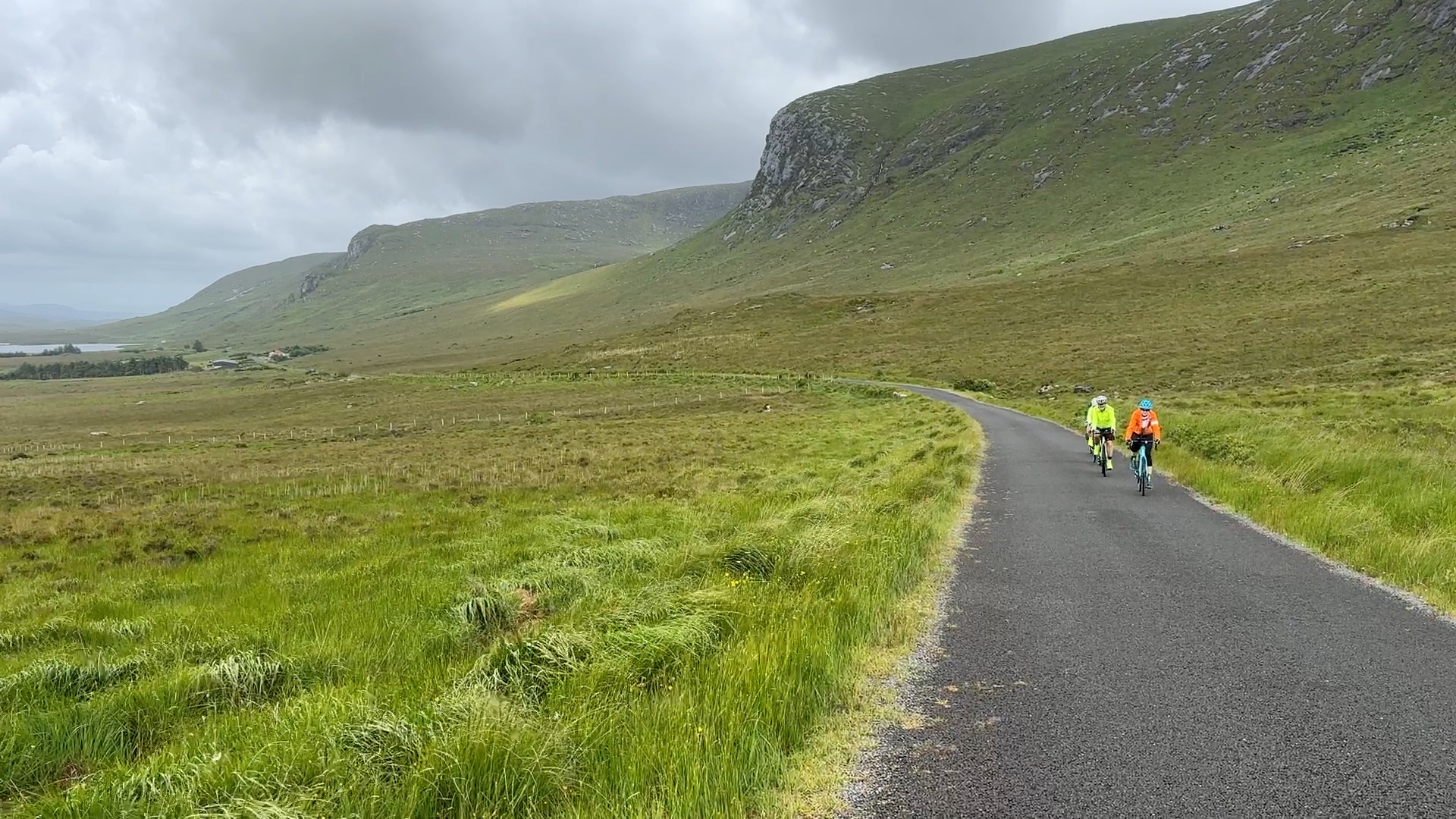
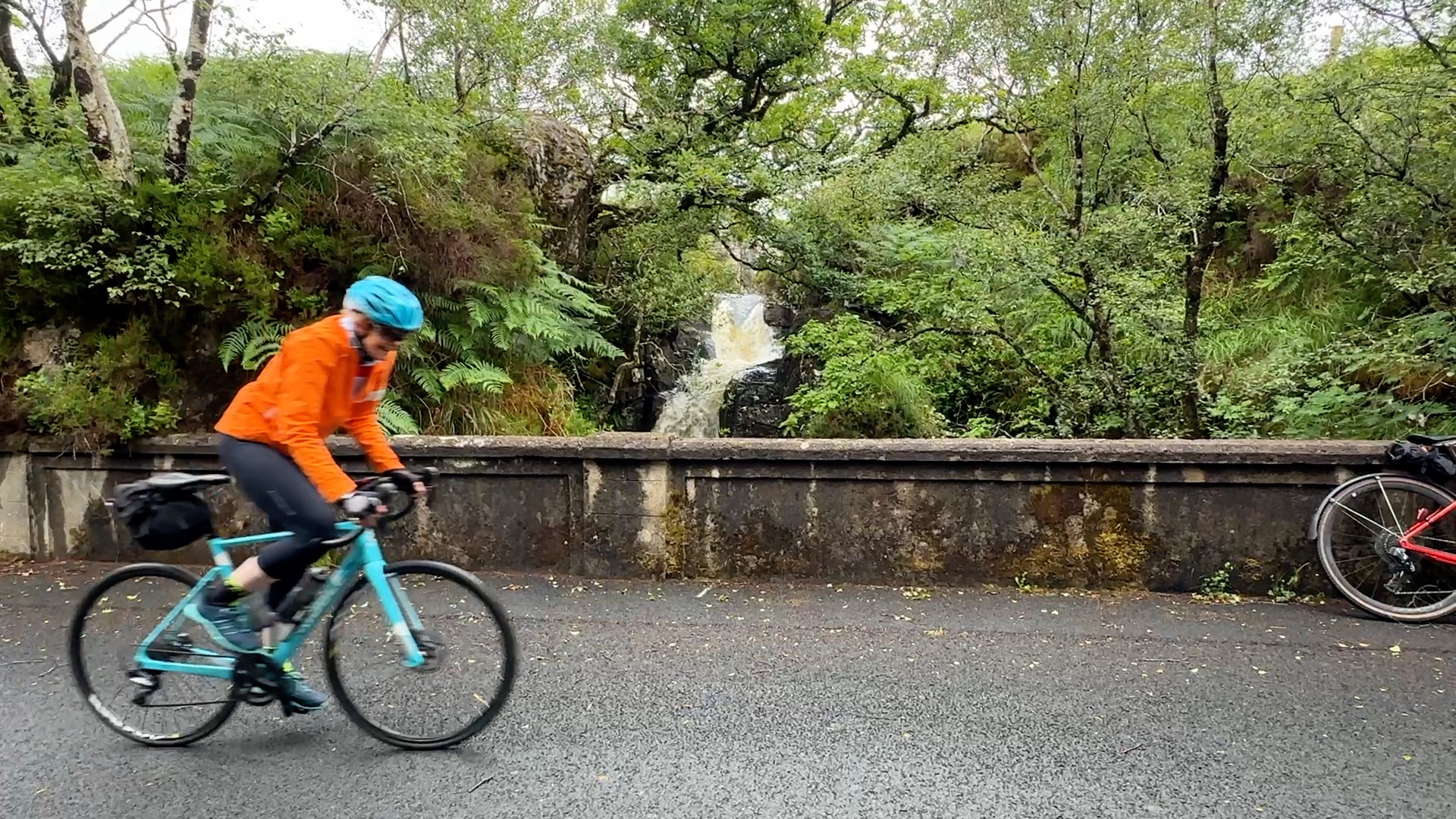
There’s nothing quite like realising you are experiencing one of your best ever cycling routes. This was the joy that awaited me as we traversed the stunning Glenveagh National Park. The route was lined by the Derryveagh mountains and several waterfalls. The day’s highlights video at the end of this post gives a great impression of the joy of this section, which again reminded me of the Scottish Highlands and Eryri.

As so often in Ireland, the beautiful landscape contained a dark history, revealed by a plague by the side of Lough Barra.
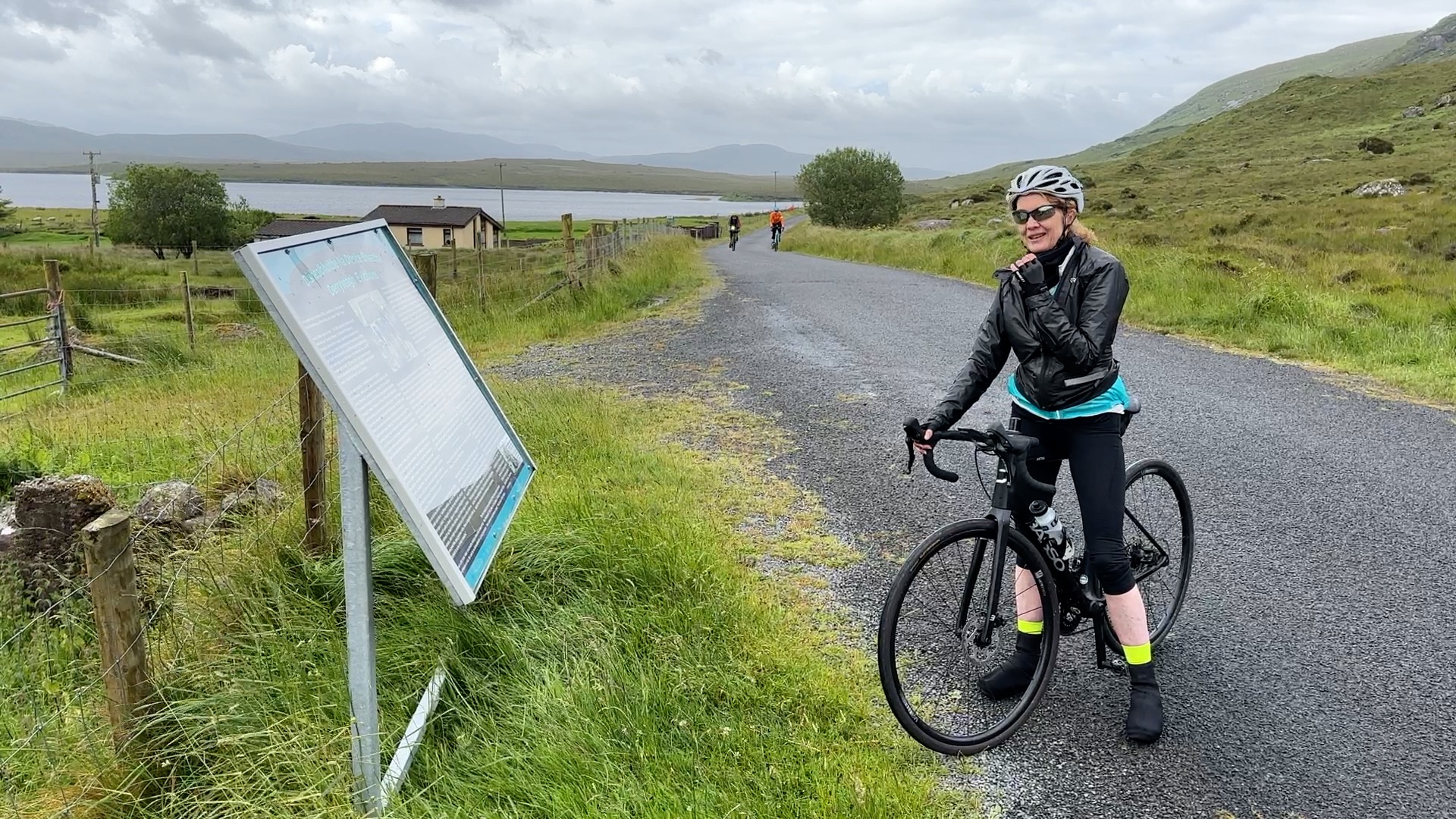
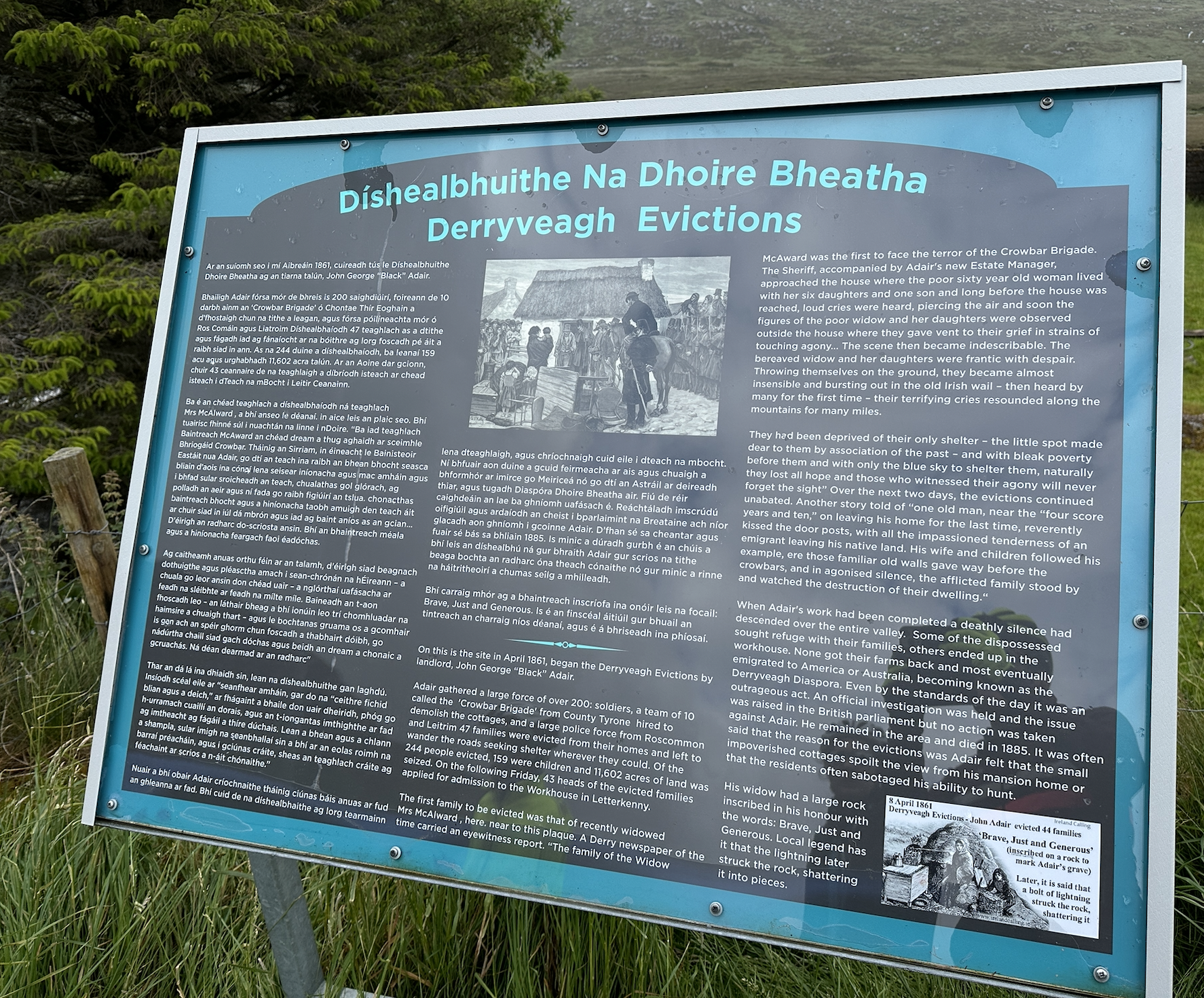
It was sobering to read how landlord George Adair evicted almost 250 tenants from their homes here in 1861, leaving them helplessly roaming the hills in search of shelter. The plaque tells the story of one victim, recently widowed Mrs McAlward. I confess we smiled at the melodramatic account of how she let out an ‘Irish wail … that resounded along the mountains for many miles’.
The scandal was debated in the Westminster parliament (Ireland was then still part of the United Kingdom) but to no avail. The story reminds us of the terrible power of the landlord in Ireland in the 19th century, which has echoes of the Scottish Highland clearances.
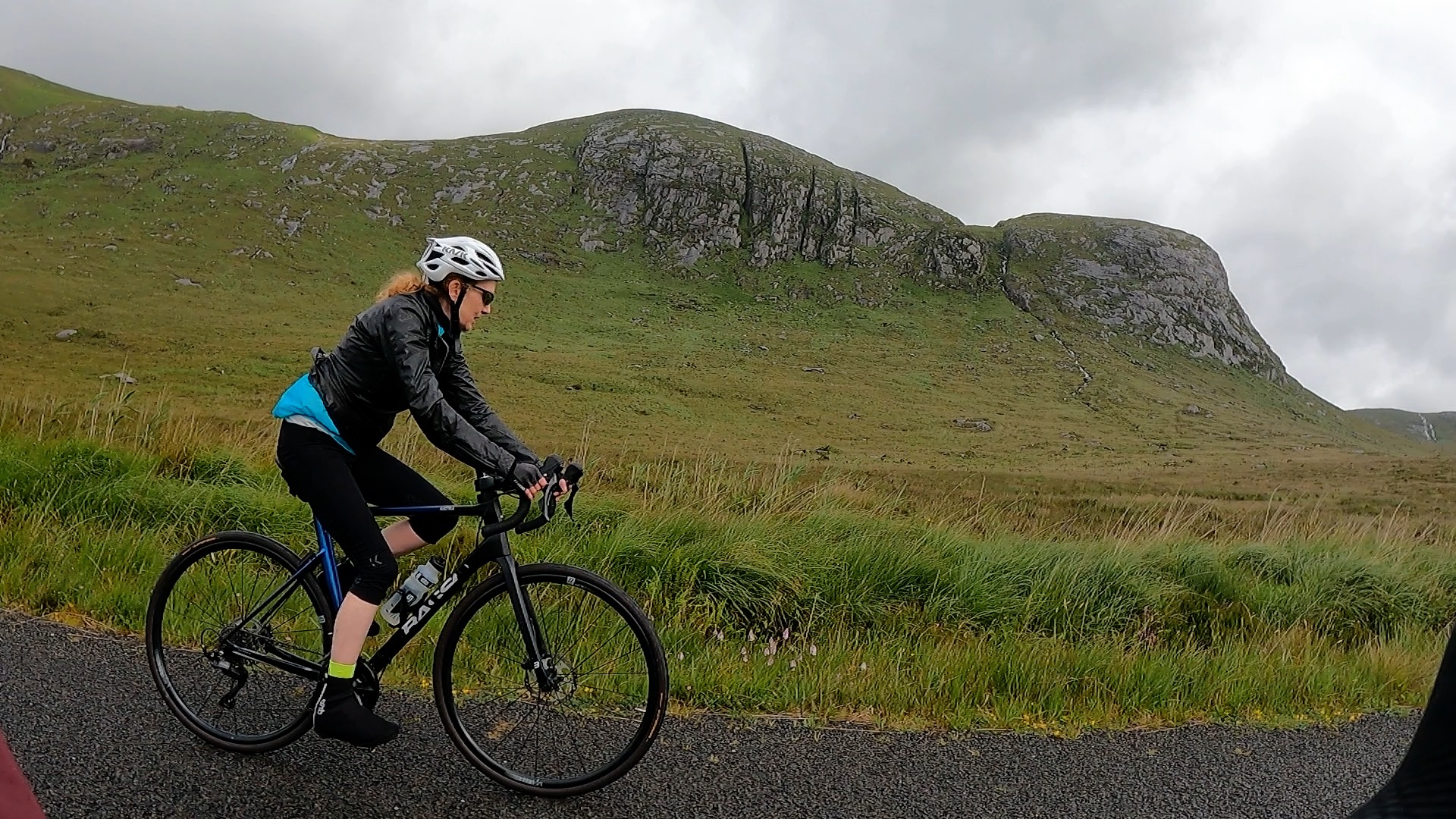
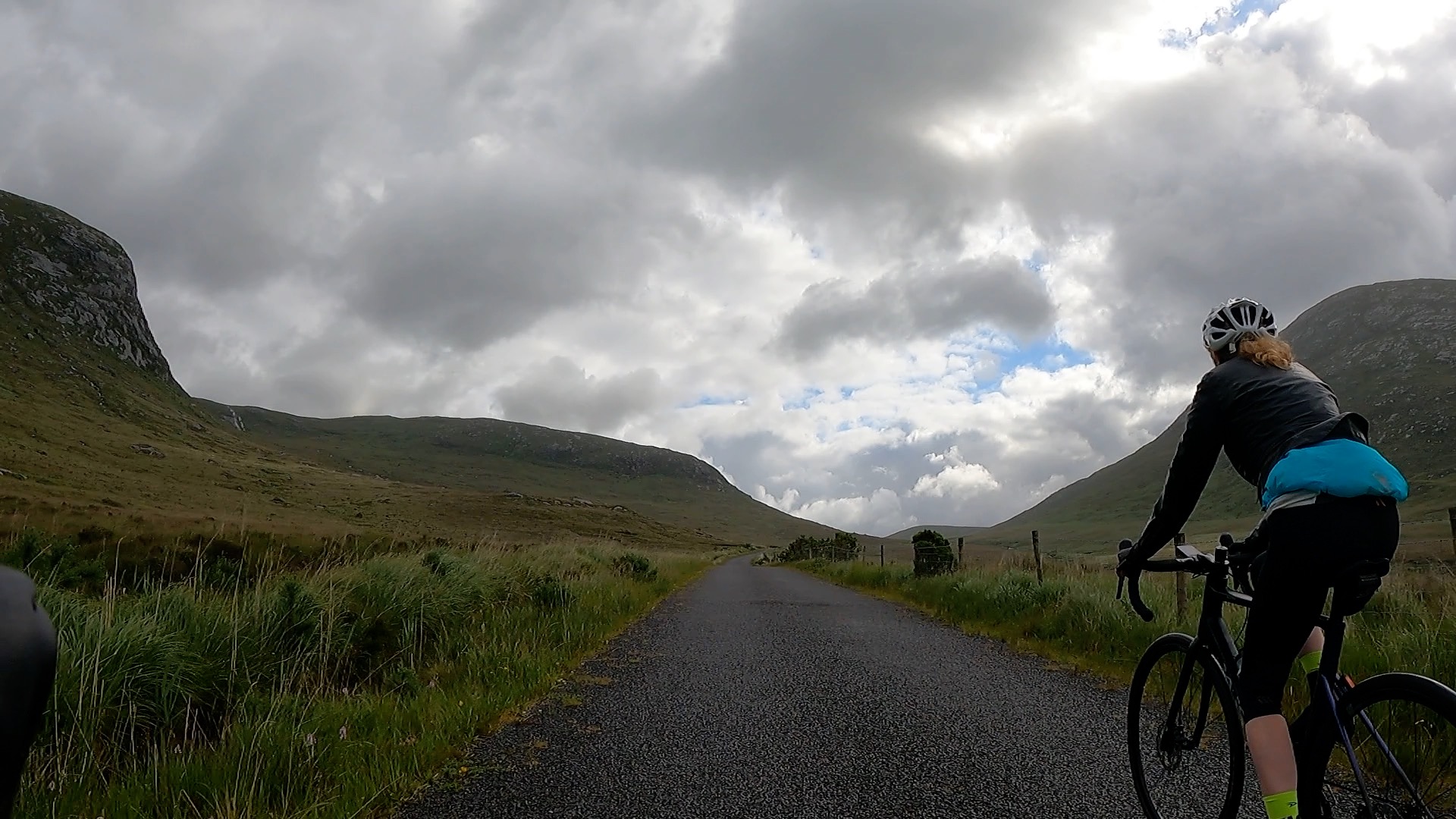
On a happier note, I loved the climb to the pass. It was at a gradient that suited my 2024 fitness, and I accelerated onwards and upwards as we left Lough Barra behind.

We had been told that the morning brew stop would be at the top of the pass unless the weather made this too exposed. That would have been the case yesterday, but the weather gods were on our side today, and I enjoyed a coffee relishing the decent to follow.
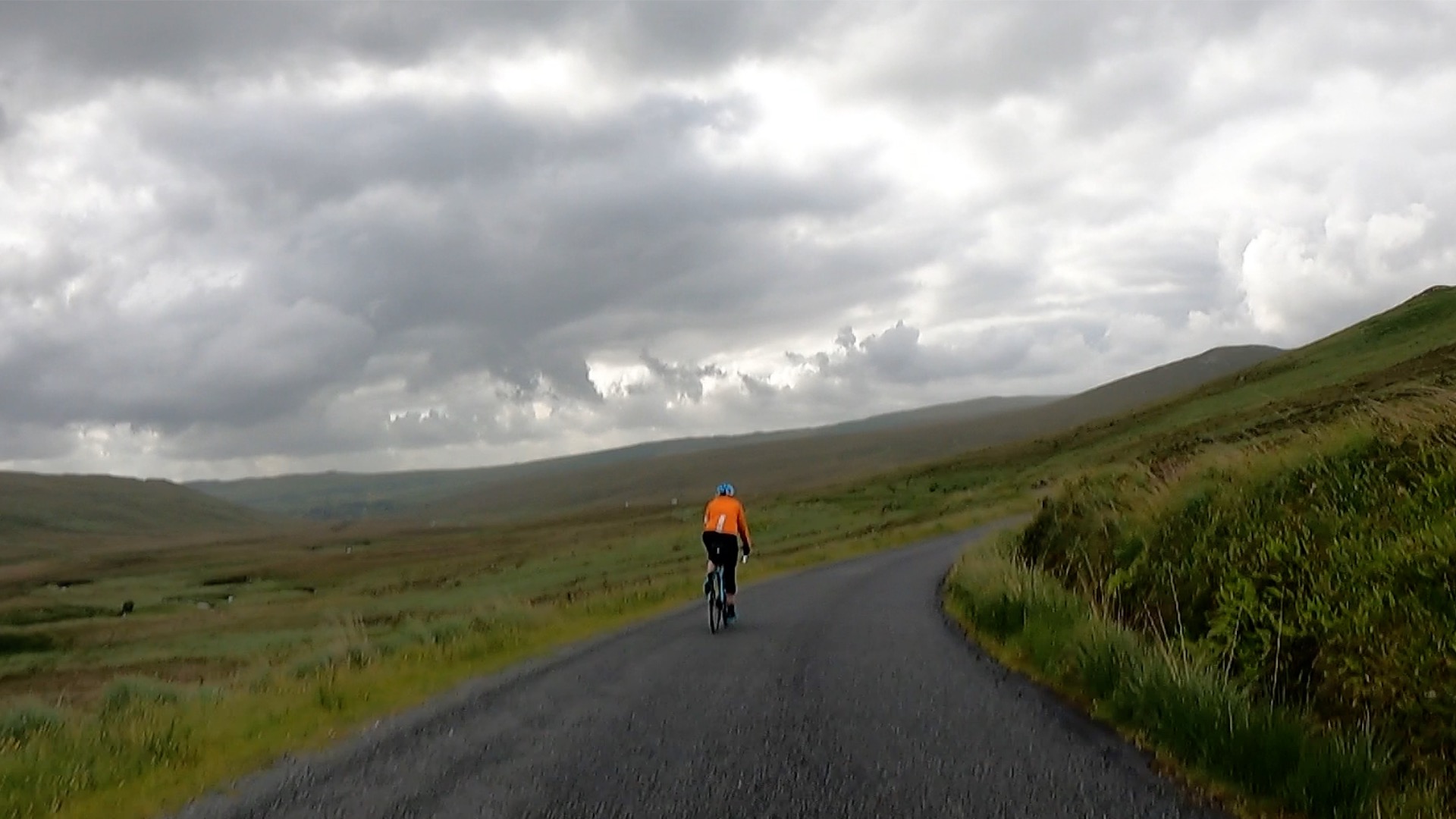
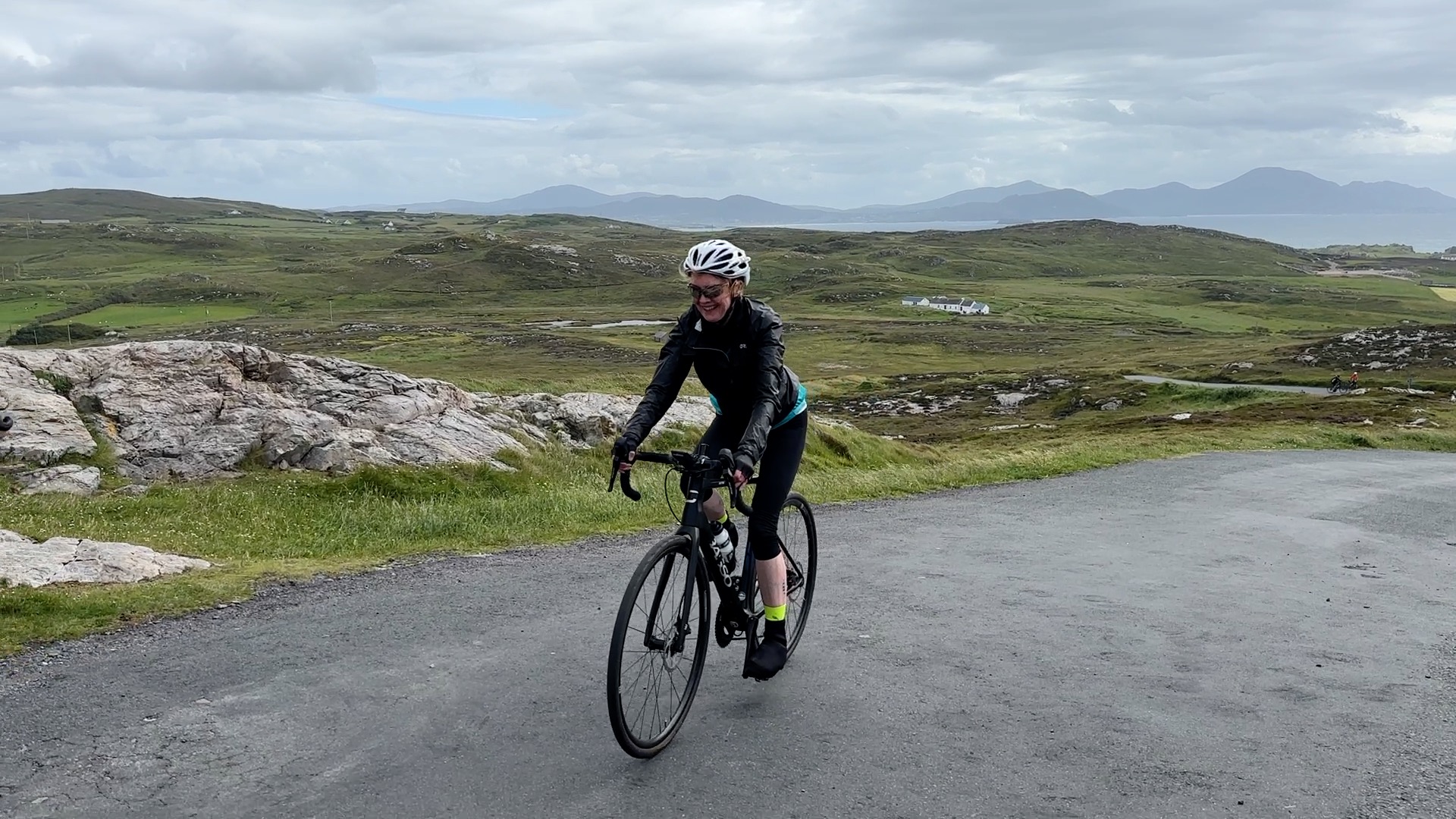
That descent was as good as I expected, lasting a few miles before we were climbing again towards Gartan Lough – below is a rare shot of me climbing beside the lough.

Lunch was a leisurely affair at the Travellers Rest at Milford. It was a pleasure to find a coffee stand and barista in the courtyard, and I savoured a latte while sitting under a patio heater. (Not great for the environment but welcome while eating outside when it was just 13C.)

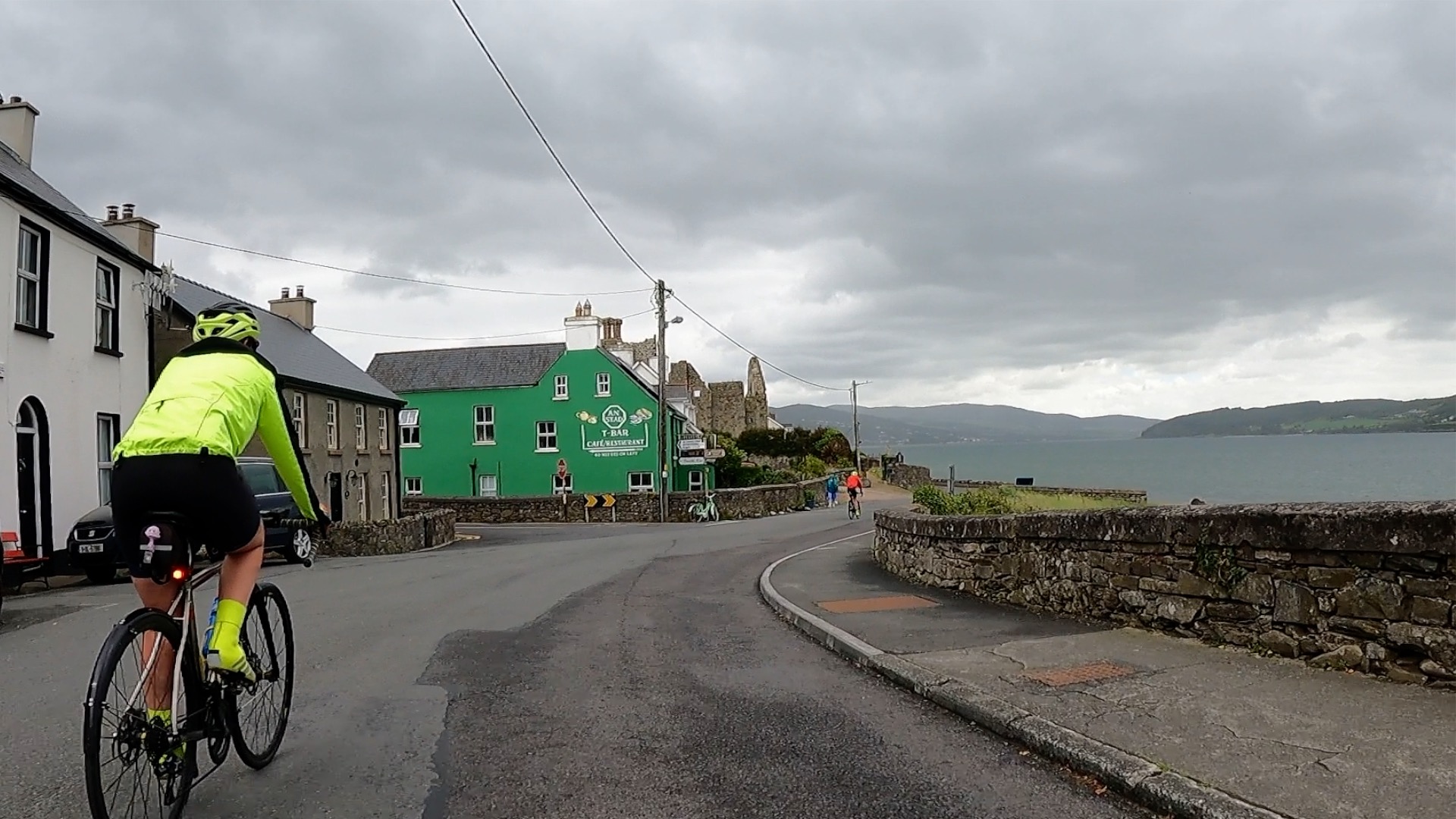
We had one short, steep climb after lunch as we made our way to the Rathmullan to Buncrana ferry across Lough Swilly. I was surprised to see someone on an old bike pulling a trolley at speed – no mean feat. It was a pleasure to cycle along the lough to the ferry terminal, where we waited for a short time as it crossed towards us.
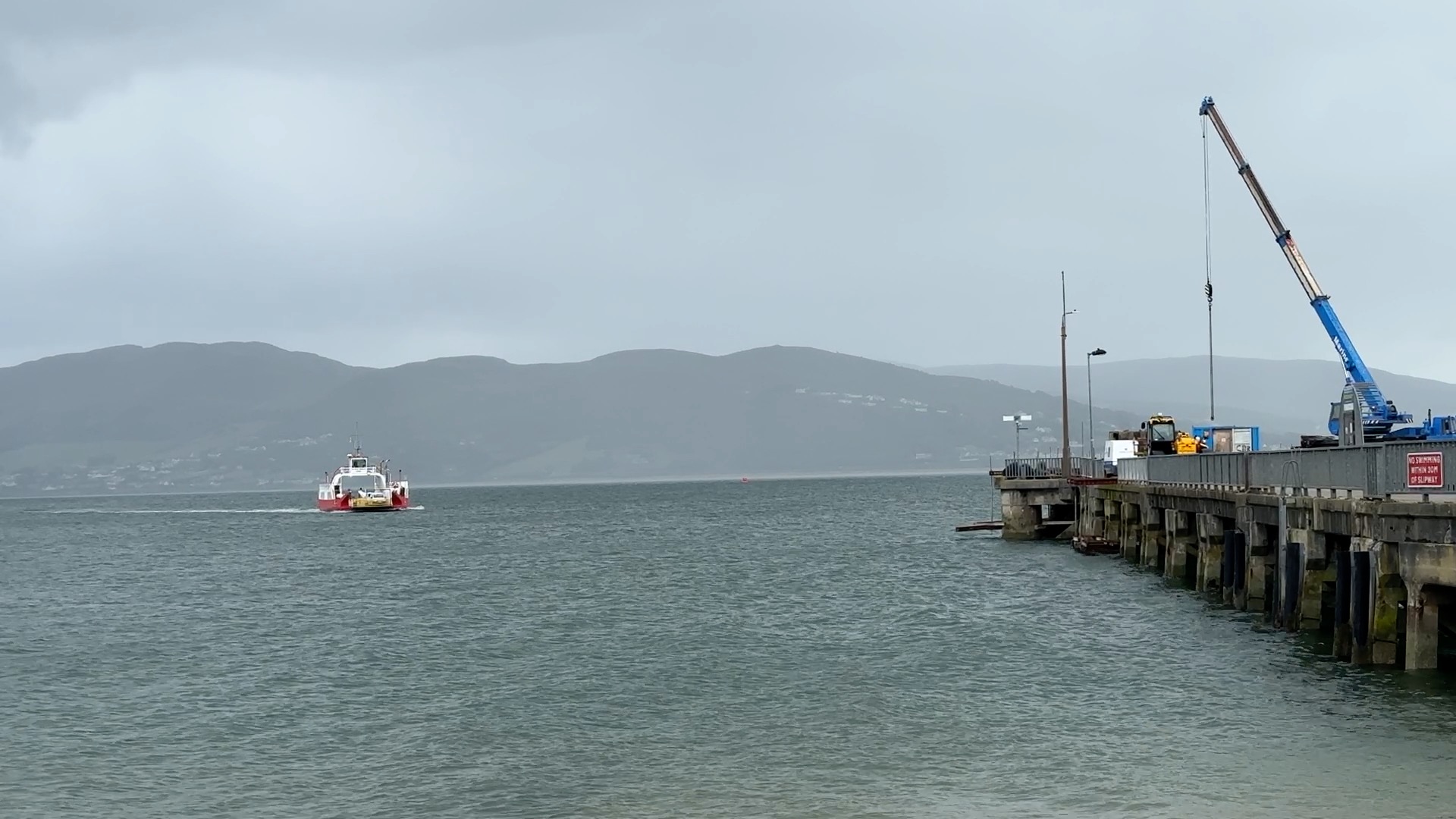

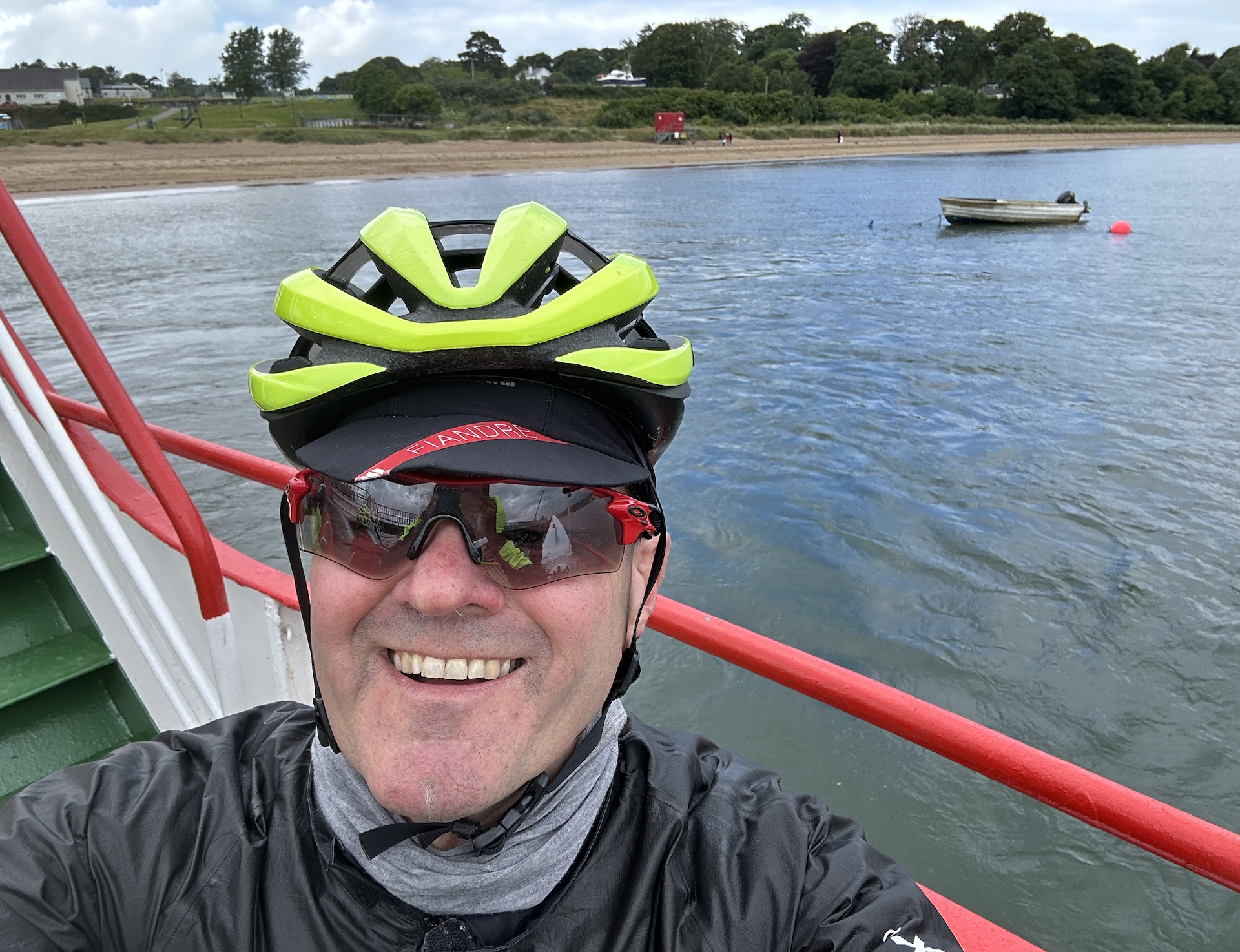
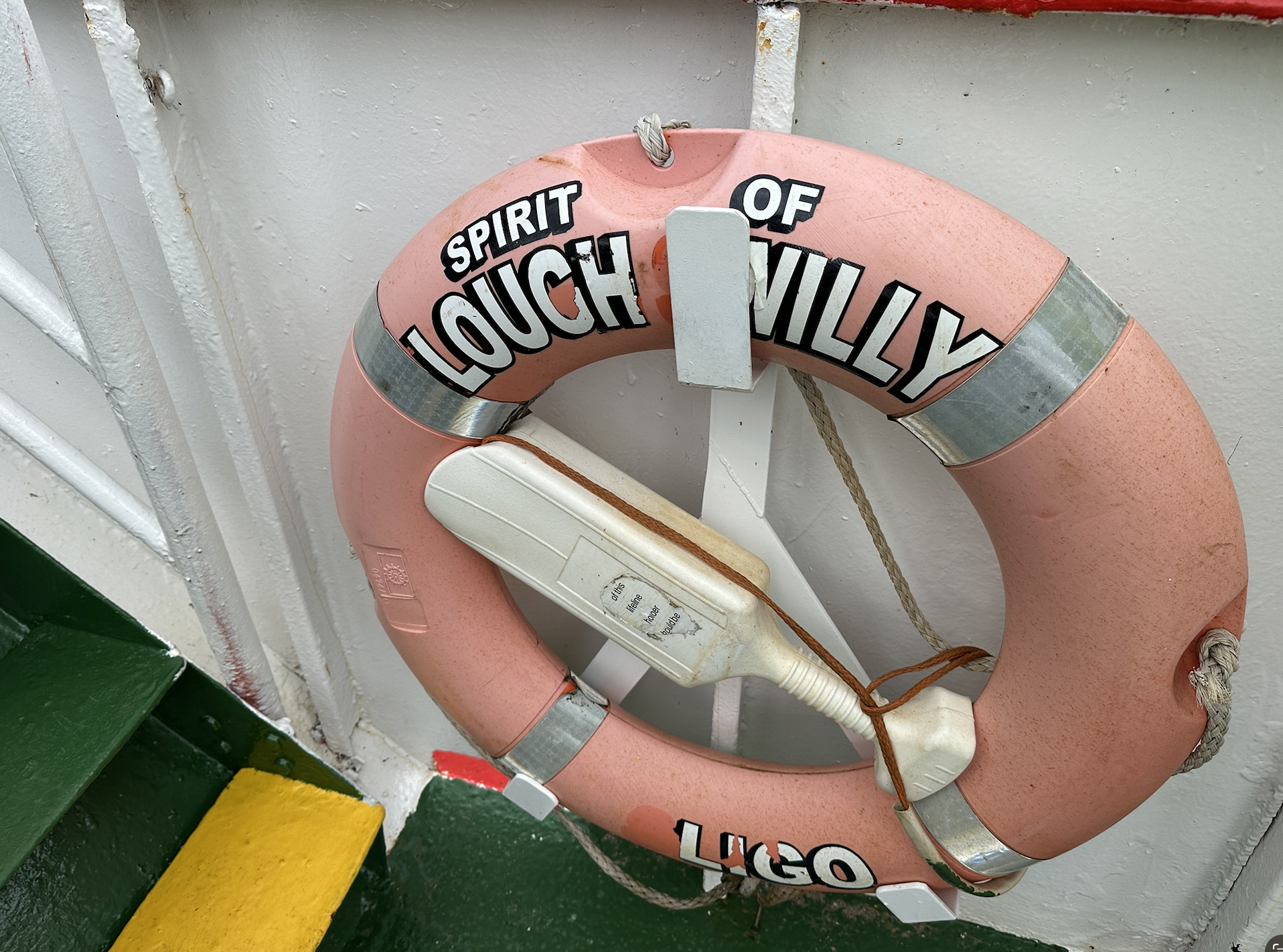
After the idyllically quiet roads this morning it was a shock to be cycling in traffic as we threaded through Buncrana’s one way system, wondering why such a small place needed one!

The road from Buncrana climbed steadily for around seven miles, the last long ascent of the tour. After this we had a blissfully long section of fast road towards Carndonagh. I savoured the wide open landscape (seen above) as I raced along at up to 36 mph.
Carndonagh was a busy little place, and I passed a stretch wedding limo as I turned out of town towards Malin.
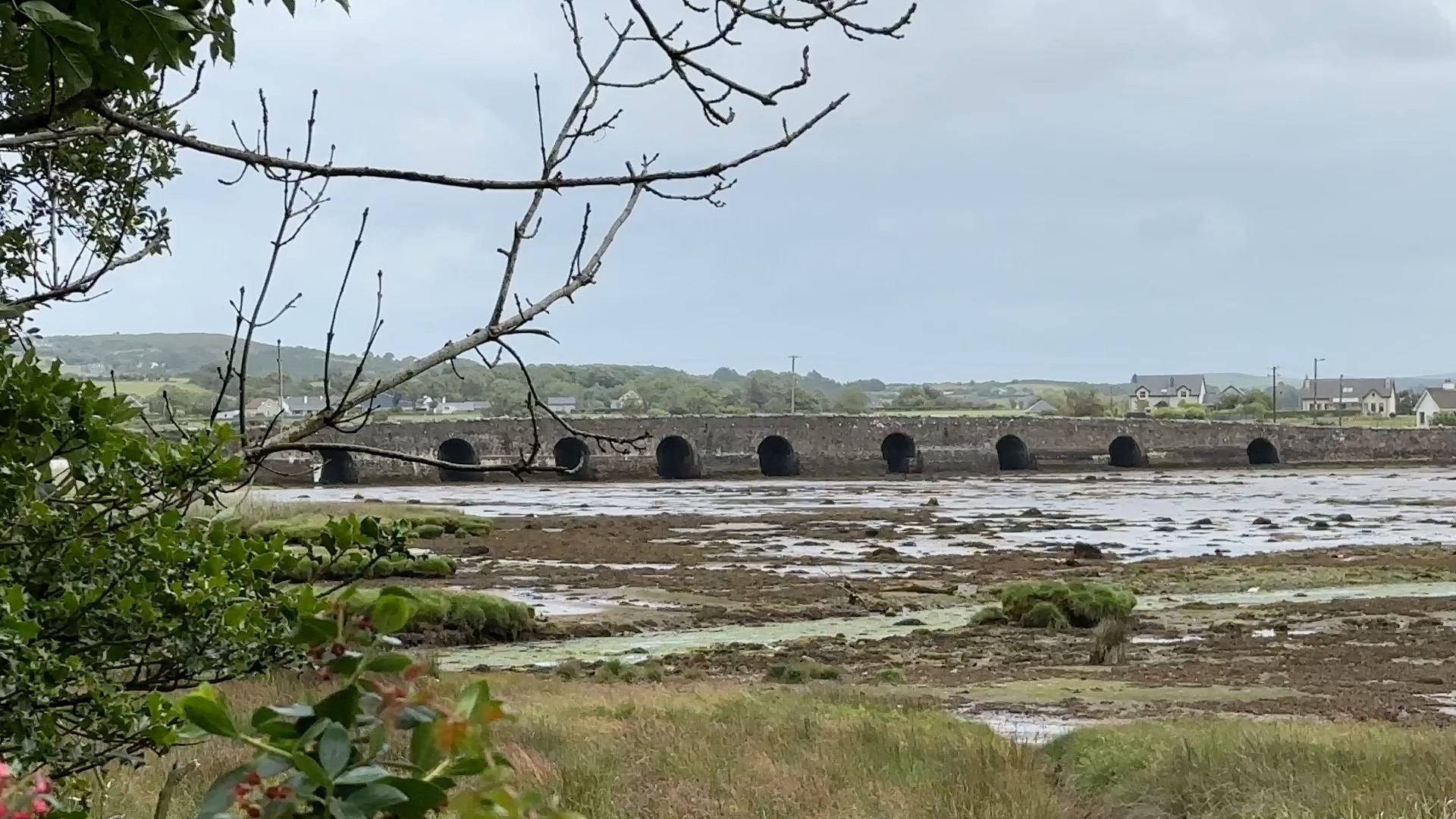
We had a very pesky crosswind as we approached Malin, and I was seriously concerned about being blown into overtaking cars on this busier stretch of road. It didn’t stop me admiring Malin’s historic bridge, built in 1758. We had our final brew stop just beyond Malin. Wendy started putting everything away as a heavy hint that we should be on our way!
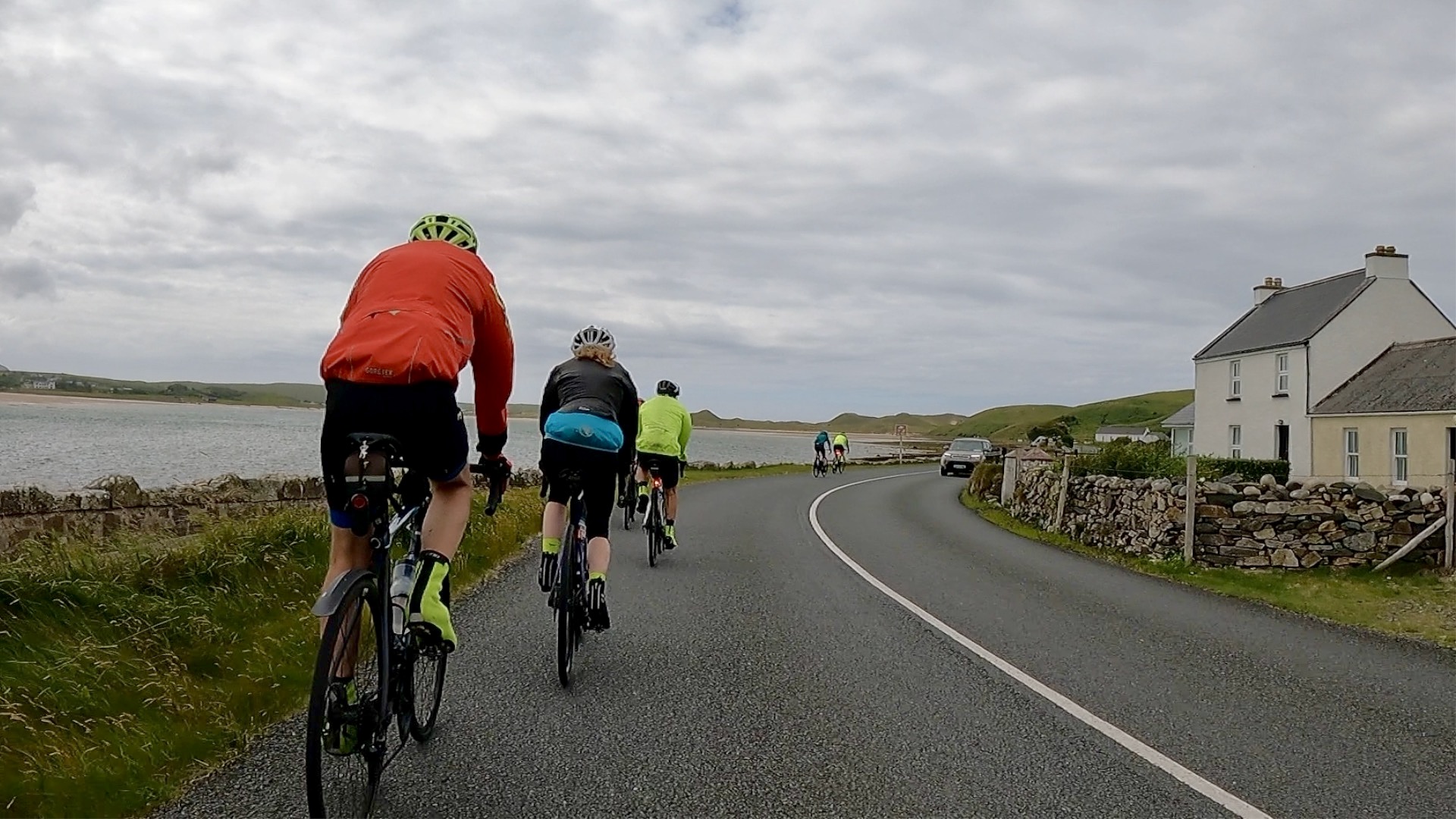

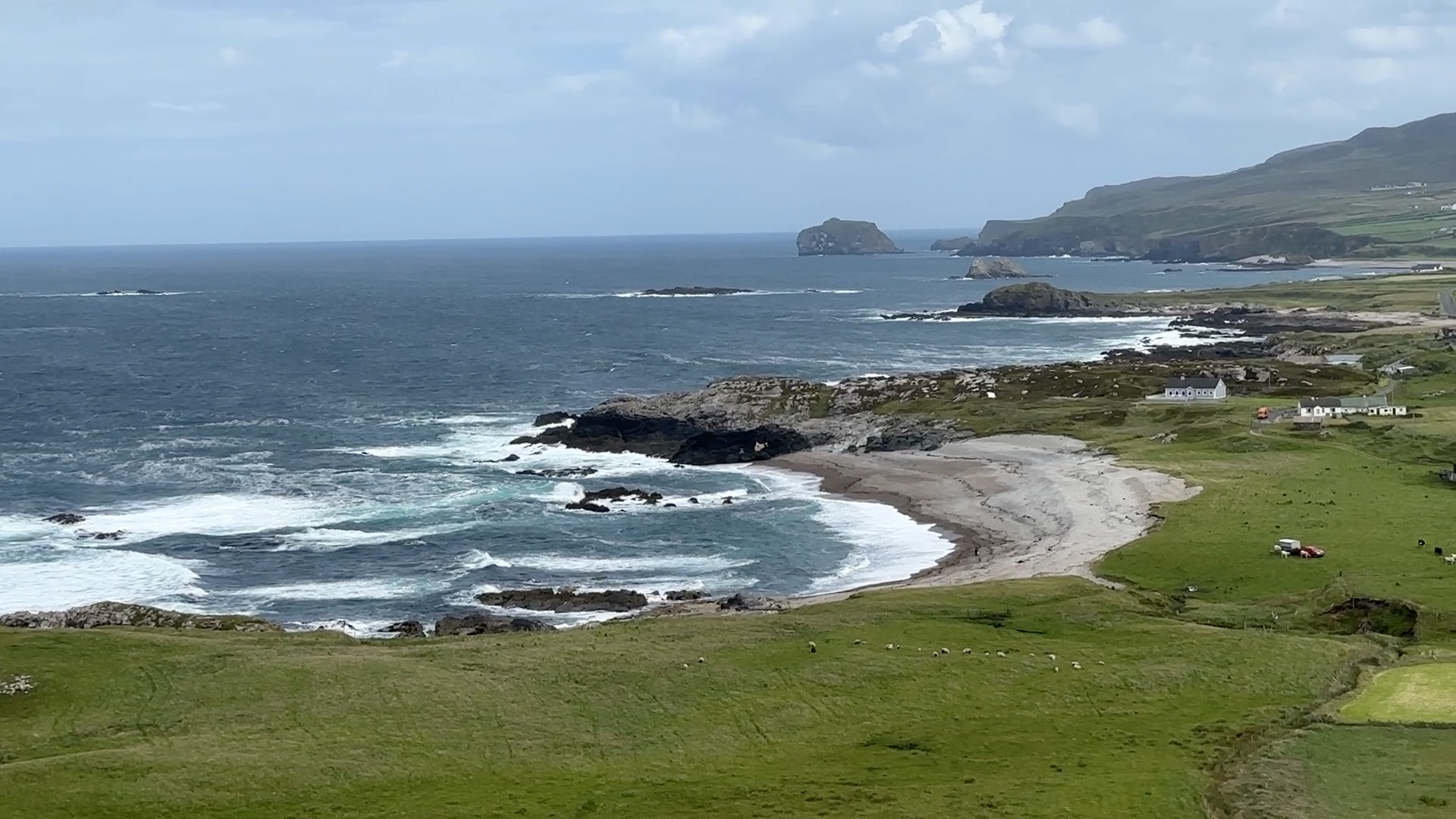
As we headed off on the very last leg of our journey across Ireland, the crosswind had become a headwind. It was nowhere near as tough as yesterday, but it slowed our progress. The compensation was the gorgeous sight of Trawbreaga Bay, seen above and below.


It was quite a moment when we sighted the tower at Malin Head, showing how close we were to our destination. But we still had some climbing to do, especially the incredibly steep final rise to the head itself. It would have been no shame to walk that bit, but I made it thanks to low gears and having climbed over 150,000 feet already this year!
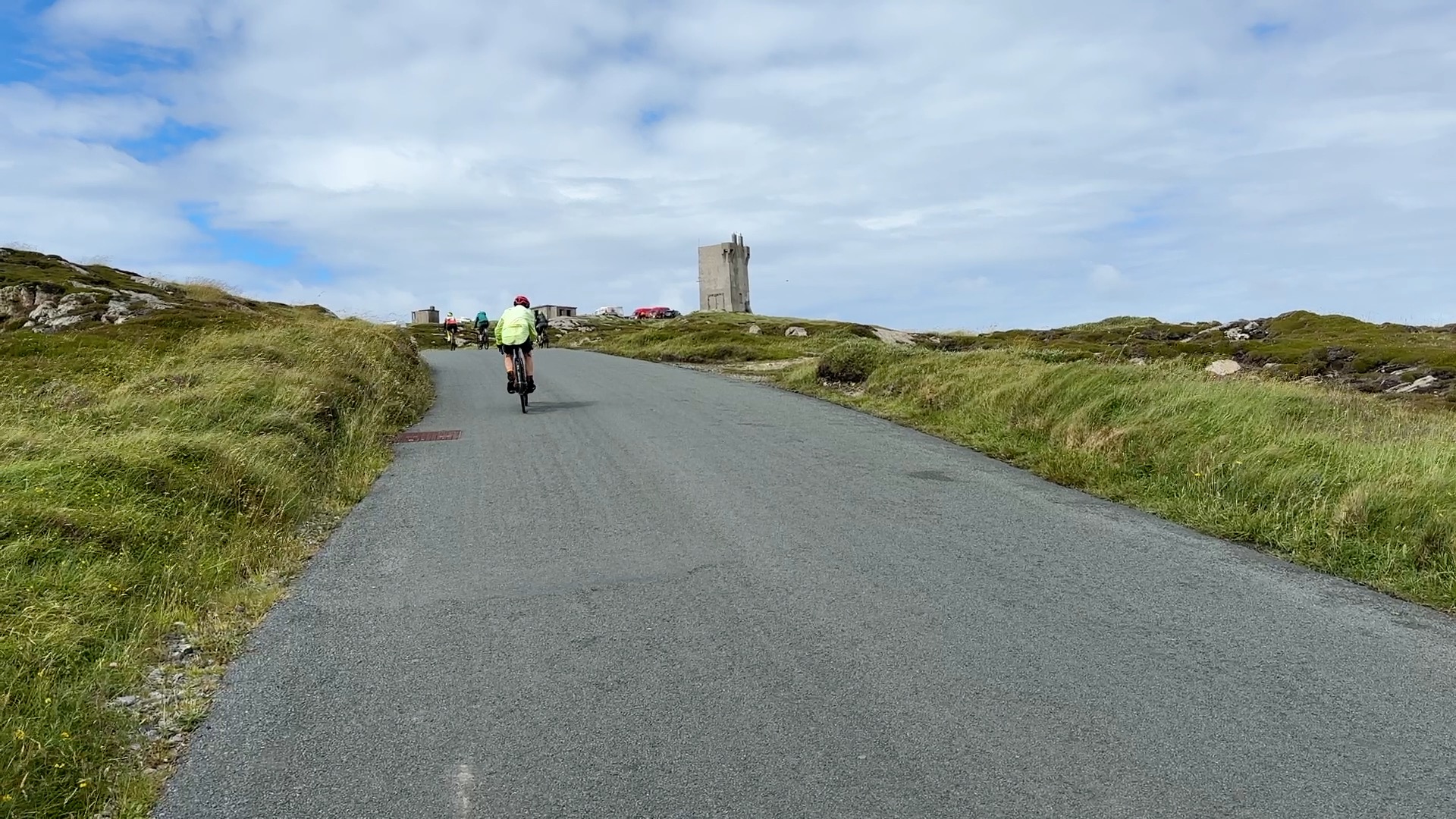
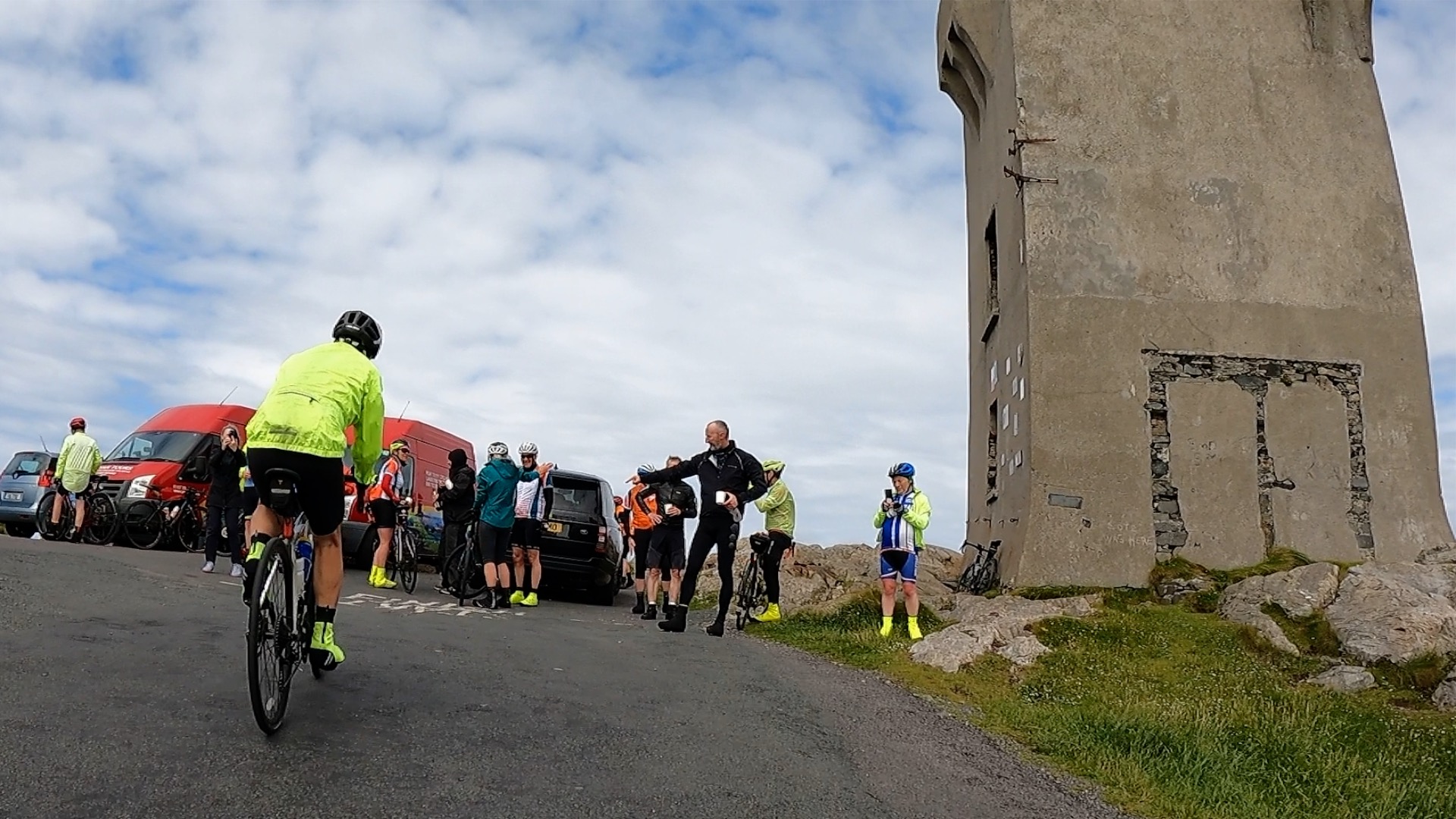
I realised after I got off the bike that I hadn’t actually crossed the finish line… Others were more diligent, including Lucy and Julia seen below.

Malin Head is a beginning and an end of a journey, which gives it a special significance, like John O’Groats in Scotland. The tower that we saw from afar was built in 1805 as a lookout point during the Napoleonic wars. It was taken over by Lloyd’s of London in 1870 as a signal station, while the Marconi company sent the first commercial wireless message from Malin Head to the SS Lake Ontario in 1902. Despite this fascinating history no one would describe the structure as attractive, which is a shame for such a scenic landmark.
We didn’t have long to savour the views. The Peak Tours guides had to put our bikes into the vans for the journey back across the Irish Sea, so we had a race against the clock to remove bags, computers and any other touring accessories. That done, we had an enjoyable hour’s drive to Derry, where we were staying the night. Just before the Irish border we passed through the village of Muff, and the more juvenile of us on the coach sniggered at the sight of Muff Barbers. Our phones pinged as they reconnected with UK mobile network – a very 20th century sign that you have crossed a border, although a singular one in the case of Ireland.
Unfortunately we didn’t have time to go into Derry City, but as we passed through on the coach I spotted several Sinn Féin election posters just six days before the UK general election. (As a republican party, Sinn Fén contests UK general elections but does not take its seats at Westminster if elected. This tradition is over a century old: the first woman elected to Westminster was Sinn Féin’s Constance Markievicz in 1918 but she never attended.)
Reflections on cycling across Ireland
Cycle touring is a wonderful way to get to know a country. I fell in love with Ireland on my first Irish cycling tour in 1996 as I made my way from Dublin over the Wicklow Mountains to Rosslare. I was so taken with the carnival atmosphere in Wexford as its hurling team won its first all-Ireland hurling championship since 1968 that I carried a Wexford club flag on my bike all the way back to my hometown in Wales, Cardiff!

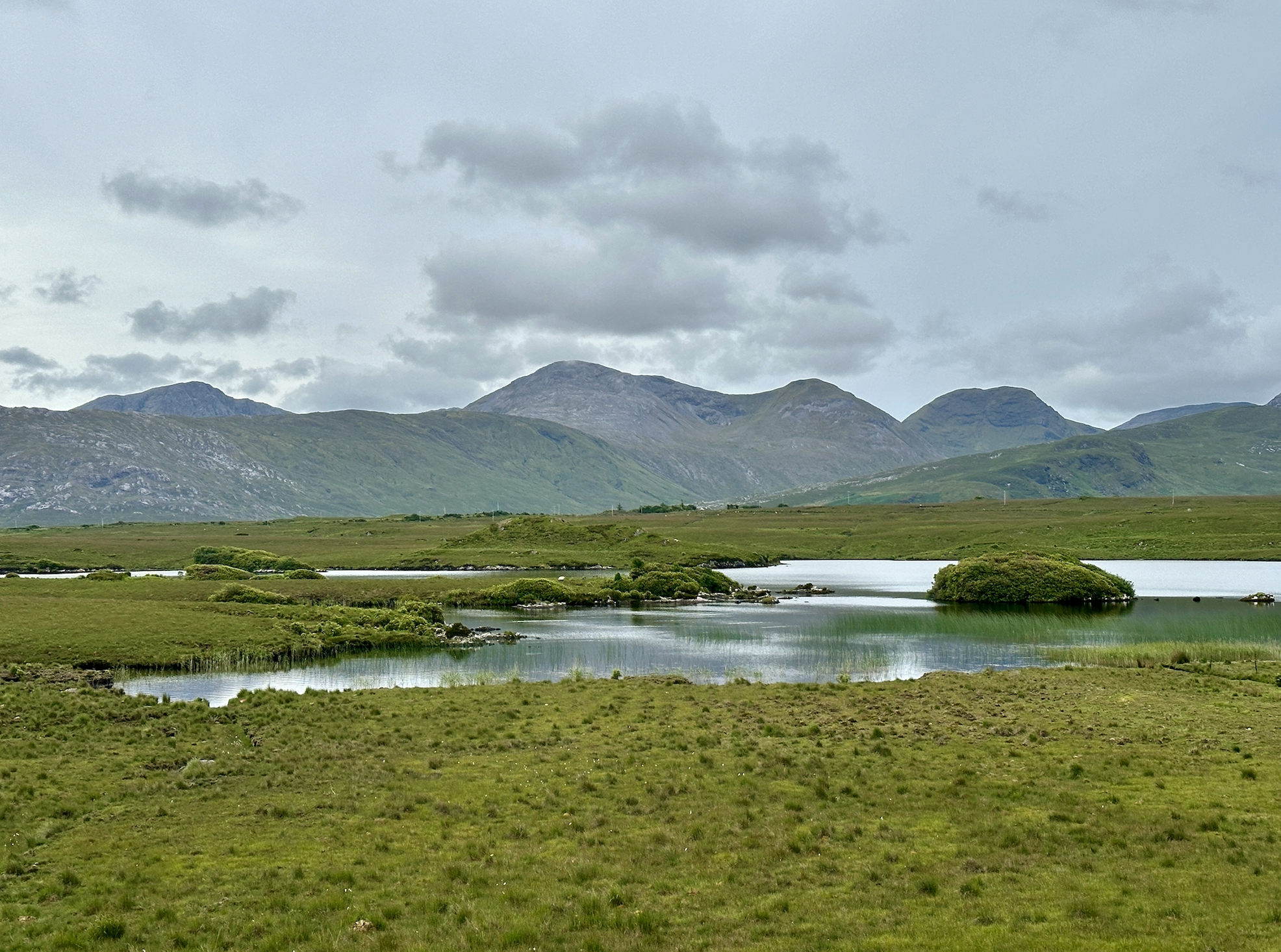
This trip has been equally unforgettable. I love mountains – well, I do come from Wales – and I delighted in discovering Ireland’s magnificent high peaks, and the thrill of those mountain passes. Yet it was not difficult climbing as the gradients rarely went into double figures. And on our route we avoided the rollercoaster succession of climbs and descents that sap the energy.
You expect a warm welcome – míle fáilte, or a thousand welcomes – in Ireland, and that’s exactly what we found. Everyone we met was friendly except for a surly hotel receptionist in Glengariff – who came from southern England… Mary from the Beal na Barna B&B in Narin stands out for kindness, inviting us in for tea and scones after we’d survived the biblical storm yesterday. We’d heard her life story by the time we’d finished the last, succulent bite!
A thousand stories


Above: learning about Irish history in Wales, 1980
Ireland is a country of a thousand stories, as well as welcomes. Its turbulent history gives the curious traveller plenty of opportunities to learn what shaped modern Ireland. When I was studying history in school in Wales 45 years ago I learned of the appalling conditions in rural Ireland in the 19th century, and was horrified to find (as I wrote in that fragment of an exam essay above) that ‘Irish families were thrown off their farms without warning’. In the starkly beautiful Derryveagh mountains I came face to face with just one example of such cruelty, the Derryveagh evictions. Similarly, on a peaceful night in Clifden, I was moved by learning of the death and destruction that came to that lovely town during Ireland’s war of independence. If these grim stories tell us anything, it must surely be that we can never rest in the quest for peace and reconciliation.
Weather or not…

Ireland is where North Atlantic storms reach Europe, so you can’t be surprised to get wet when cycling there. On the whole we were fortunate, and I thanked our lucky stars that we had dry days to appreciate the Galway coast, the Sky Road and Killary Fjord, and the Derryveagh mountains. It’s a shame that we didn’t complete the penultimate day in County Donegal, but keeping safe is always the right decision. I was grateful we avoided the washout that my 2019 LEJOG friends Fiona nd Simon suffered a couple of years ago on this tour.
Thank you, Peak Tours

I’ll end with a thank you. I discovered Peak Tours in 2019 when I cycled Land’s End to John O’Groats. That happy experience made it my favourite cycle tour company. This tour of Ireland proved the point, especially when the guides went out of their way to rescue the situation when the appalling weather forced us to abandon the day’s ride at lunch yesterday. We really appreciated it.
Here’s to the next adventure!
The final day’s stats
74.41 miles, 4.790 feet climbing, 5 hours 15 mins cycling, average speed 14.2 mph.
The final day’s highlights video
 Ertblog