Smartphone wars: why Apple doesn’t fear Android

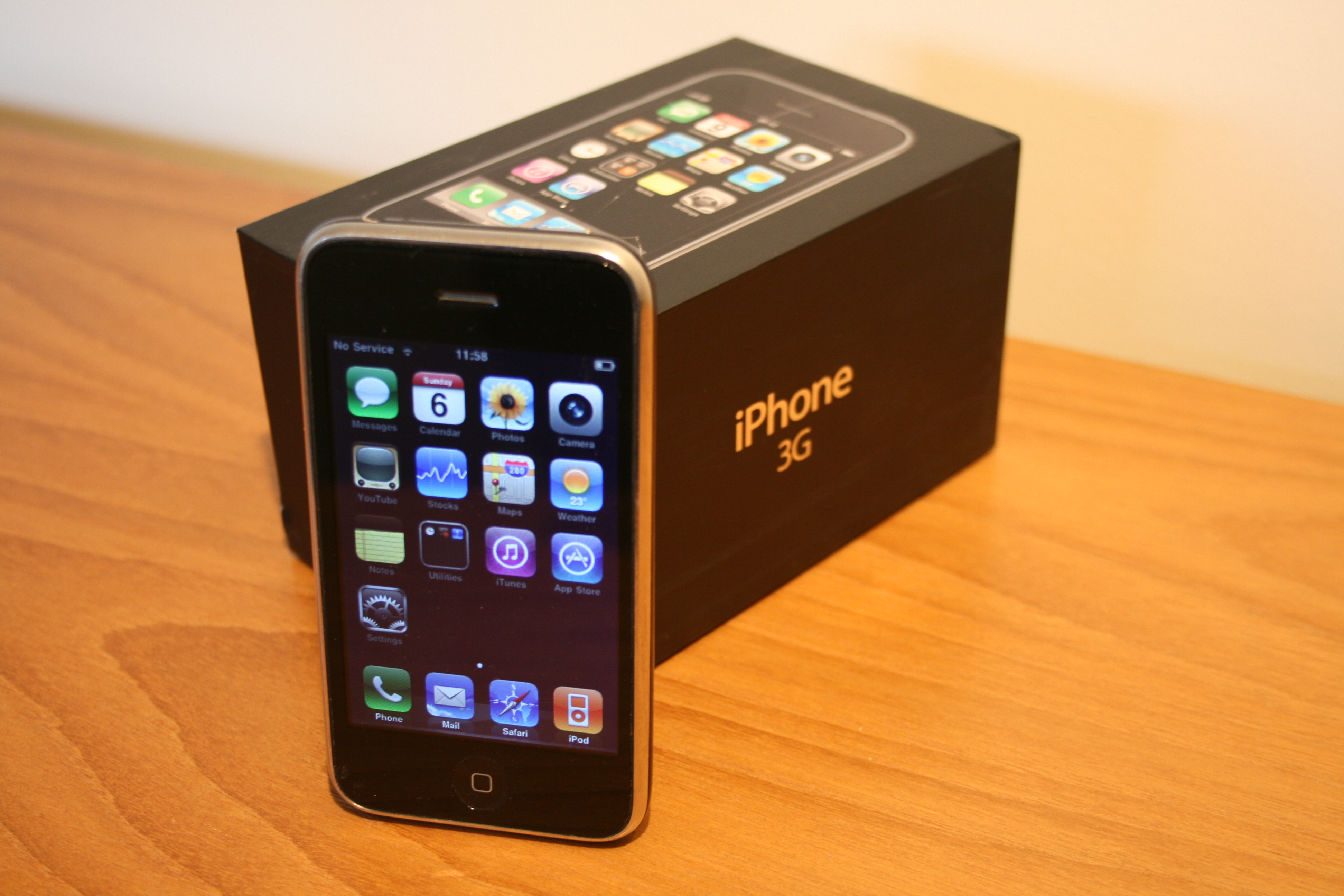
My first iPhone: goodbye Nokia, goodbye Sony…

If you believe the stories, the battle for dominance in the smartphone market is between Apple’s iPhone and Android phones, based on Google’s mobile operating system.

Android phones still outnumber iPhones, but a fascinating post by BBC technology reporter Rory Cellan-Jones today suggests that’s the wrong way of looking at it. Instead, we should be looking at how much money mobile phone brands are making. The answer is that only Apple and Samsung are making any money. (See also Lance Whitney’s CNET post.)

Rory links to analyst Horace Dediu‘s infographic that shows smartphone makers’ profit share over recent years. In 2007 – the year Apple launched the original iPhoneNokia enjoyed over 50% of the market’s profits. Nokia no longer turns a profit. Sony [Ericsson], Blackberry maker RIM and LG used to share some 20% of the market by profit. Again, they’ve all seen profitability disappearing. In return, Apple has gone from nothing to 73% of market profits. (Samsung has the remaining share aside from a consolation 1% for HTC.)

Back to Android. Samsung has that part of the market sewn up. Cheap Android phones are unlikely to make money for their makers anytime soon. Apple’s focus on the high end of the market, combined with its brand appeal and consumer-friendly approach, have created a revolution in a market long dominated by Nokia.  Nokia has bet its future on offering Windows Phone handsets, yet killed sales of its Symbian-based phones by declaring its plans way ahead of the switch.

It will be fascinating to see whether anyone can break the Apple and Samsung duopoly.

iCloud and iOS5 calendars and notifications: what a mess

UPDATED: Monday 31 October 2011

At first, I loved Apple's iCloud, as I explained in my blogpost iCloud: getting rid of duplicate calendar entries

I thought I'd solved the one apparent problem: duplicate calendar entries. But then I discovered lots of other frustrating flaws. How could Apple launch a service riddled with so many faults? 

Here are the ones I've noticed:

  • My iPad and iPhone have access to my old Mac iCal calendars. Yet there's no sign of them on the iMac itself.
  • The iCloud calendar only includes entries since 25 September. If I want anything before this I have to tick on calendars 'from my Mac' in the calendars tab (see my blogpost above) to show them. Yet this duplicates all entries since 25 September – and recurring ones before as well.
  • The notifications service duplicates calendar notifications – even when the event appears only once on the device (through having just one calendar visible). 
  • iMessages written on my iPhone don't appear on the iPad.

As I said in the earlier blogpost, I gave up on MobileMe because of the frustration of duplicate entries. It's hugely disappointing that iCloud is even worse. Didn't Apple test the damn thing before launching it? They even had four months between announcement and launch to make sure!

I still like Photostream, though…

Is outrage driving out reasoned debate?

The Guardian's Julian Glover today raised an interesting question. Is outrage the common currency of political debate? He pointed out that commentators and columnist deal in absolute opinions. Yet real life is more uncertain. 

As Glover said, "Uncertainty comes over as weakness. Tribalism thrives. On these pages over the last few years I have sometimes expressed ideas in categorical terms about which I could never really be sure. The greater challenge for any writer is mounting a defence of compromise. It is, perversely, sometimes feeble to sound bold and bold to sound feeble."

He's right. It's ironic that the death of ideology in British politics has coincided with a far more aggressive approach to political debate. That's partly down to the 24 hours media – their short attention span and need for drama polarises modest differences. (In more ideological times, current affairs programmes like ITV's hour-long Weekend World tried to explain rather than create controversy.) The media demands instant answers, instant judgements. Reallife is not so simple. Yet a politician who says he or she doesn't have all the answers is seen as weak. (That said, wouldn't we respect an honest politician who admitted the truth more than a blustering one?)

Glover's article prompted a stream of critical comments, not least because he's leaving the Guardian to become a speechwriter for David Cameron. It's hard to think of anything more likely to inflame the passions of the Guardian readers. 

That, in one sense, proves Glover's point. I'm no fan of David Cameron, and am horrified by many of his government's policies (that broken promise not to lay waste to the NHS by yet more destructive reorganisations is high on the list). But like most voters I don't see him as the devil. I'm capable of making my own judgements about his actions and policies. 

It's not just political debate that suffers from this mock outrage. Just look at any story about Apple on the BBC or Guardian technology web pages. Critics of Apple insist that anyone who buys an iPhone or iPad has more money than sense. Apple fans claim that rival products don't work. Needless to say, neither claim is right. We all make choices. That doesn't make other people idiots because they've chosen another type of phone or computer. 

Live and let live…


In praise of Steve Jobs

Image

Apple marks Steve's passing on its UK website, seen on the iPad, his last great creation

The world today mourned the death of Steve Jobs, the mercurial genius who revolutionised the music, mobile phone and computer industries with products that are a delight to use.

Steve's death was not a total surprise: he resigned as Apple's chief executive in August during his latest period of medical leave. But it was still a shock. Many still expected him to take part in Tuesday's launch of the latest iPhone 4S. Little did we realise his time was almost over.

Steve's story since he returned to Apple 15 years ago is the stuff of legend. Apple was in crisis. Many were writing the company off. But Jobs had a vision. Apple should focus on what it was good at. Only Apple would make Macs – ending the days of getting a cheaper 'cloned' Mac from another company. Great design would win back the fans – and new converts.

In time, Steve's vision reaped unimaginable dividends. The original, colourful iMacs created a stir. The iPod and later the iTunes store transformed the music industry, making Apple the world's biggest music retailer and stealing Sony's position as the master of music on the go. (Walkman RIP.) The iPhone made smartphones mainstream, and put the internet into our pockets. And the iPad proved the tablet computer had a future after ten years of failure by other tech brands, notably Microsoft. 

Steve's greatest strength was his ability to see things from the user's point of view. In an industry renowned for making complicated products that need huge instruction manuals, Apple under Steve took a different approach. My experience is typical. Back in 2008, I tried to find my way round London with a BlackBerry and a Sony Ericsson phone. I couldn't work out how to get a map on either device, and was forced to looked up an A to Z map in a shop. Days later, on my first iPhone, I was just one touch away from my location and destination on the map app. In the same way, the iPad got me to the BBC home page in seconds, compared with five minutes on my Windows laptop, as I explained on this blog: Greased lightning: why I love my iPad

Steve wasn't perfect. (Few people are.) By most accounts, he was very difficult to work for, with his punishing drive for perfection. I'd normally condemn such macho leadership, but I can't dispute the extraordinarily postive legacy Steve has left. And Leander Kahney, in his book Inside Steve's Brain, disputes the legend of Apple staff being 'Steved'. He quotes Jobs' former personal assistant Jim Oliver who says his old boss's outbursts were exaggerated by critics.

Critics say that Apple under Steve simply took advantage of other companies' innovations. They argue that Apple didn't invent the MP3 player, the smartphone or the tablet. True, but this misses the point. Jobs saw how all these things could be so much better – better to look at, to touch and to use. Anyone who endured a pocket PC powered by Windows Mobile circa 2001 or 2006 couldn't fail to see the Steve effect when they used the Apple equivalent in the iPhone and the iPad. Not everything Apple did under Steve was as good: I tried Mobile Me three times, and found it an abomination each time. (As Steve acknowledged when announcing iCloud in June.) But I'll forgive it one big #fail…

The other main accusation is that Apple is a 'walled garden' – with the accusers comparing the company's restrictive approach with the open approach of Google's Android mobile operating system. The accusation is accurate, but misses the point. Apple products generally 'just work'. Apple designs the hardware and operating system and approves the apps. Most users don't care that they can't tweek everything. It reminds me of a clash between the car and tech worlds circa 1998. A PC company was contrasting the revolutionary progress of the tech world compared with the car industry's snail-paced developments. An auto executive pointed out that if his industry was like the PC market, customers would be forced to reinstall the engine after popping a CD in the stereo. In short, most people want things to 'just work'. And that's Steve Job's greatest legacy: things just work. And are a joy to use.  

Rest in peace Steve. And thanks for everything.