Paris, Facebook and the fight for humanity

Paris 2014

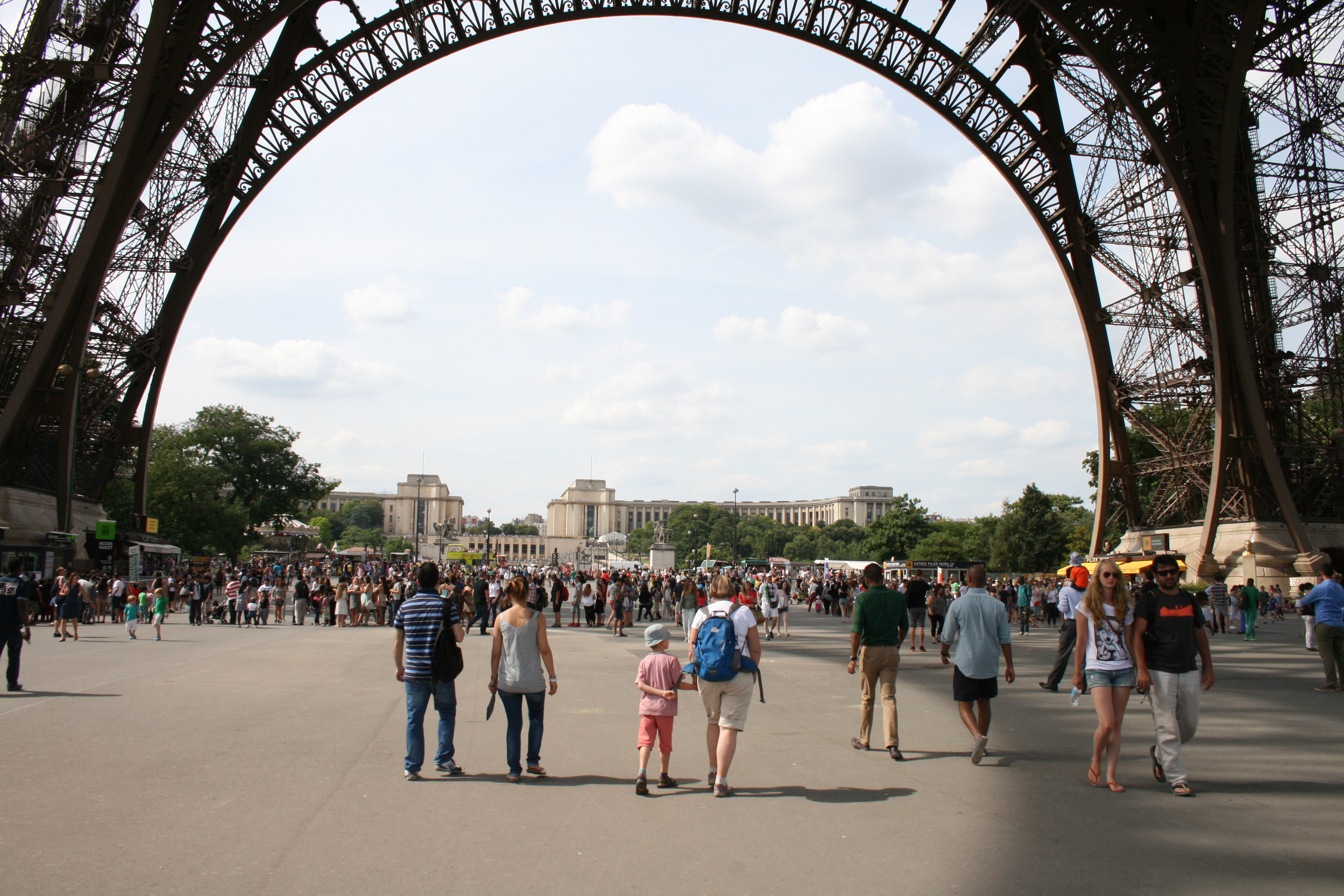
Paris 2014: the city and people we love

Bravo to family and friends who have turned their Facebook profile photos into a tricolour in respect for the victims of Friday’s appalling murders in Paris.

I love France and the French, and grieve for them and everyone else who died in this assault on humanity. But I won’t be changing my profile photo. I feel equally sad for those who have been savagely killed in Beirut, on the Russian airliner, on the beaches of Tunisia and across the Middle East. And those who have perished fleeing the death cults of the Middle East.

I just wish we could find some way to combat such brutal, medieval tribes that wish to defeat those who hold different values. The sad truth is that the western powers will most likely respond in a way that makes things worse, not better.

It’s easy to change your profile photo. That’s not to say that doing so has no meaning. I’m sure it will bring some comfort to the people of France, a country that millions of us love and cherish. But I’d rather see brilliant minds across Europe thinking how we can turn the tide of hatred. The west has a grim record of intervening in the Middle East without thinking or caring about the consequences, from Britain, France and Israel’s 1956 Suez adventure through to the 2003 Iraq invasion.

Please prove me wrong.

Flickr and Yahoo : why is it so hard to recover your password?

I used to love Flickr. I didn’t use it regularly, but I liked being able to see great photos of my favourite places. And it was nice to share my own photos, although I wasn’t a regular photo sharer.

Then Facebook came along. I gave up on Flickr, and started sharing my photos on Facebook. It shared far more images – after all, most of my family and friends were already there, so sharing photos on Facebook made more sense. Especially when it was so easy to do this on the go on my iPhone and iPad.

But Flickr still has many strengths. As Wired pointed out, Flickr is great for keeping high resolution copies of your photo collection. And with a new Flickr iPhone app, it has finally recognised we’re living mobile lives.

So when I saw the Wired article (via a friend’s Facebook link…), I downloaded the app straight away.

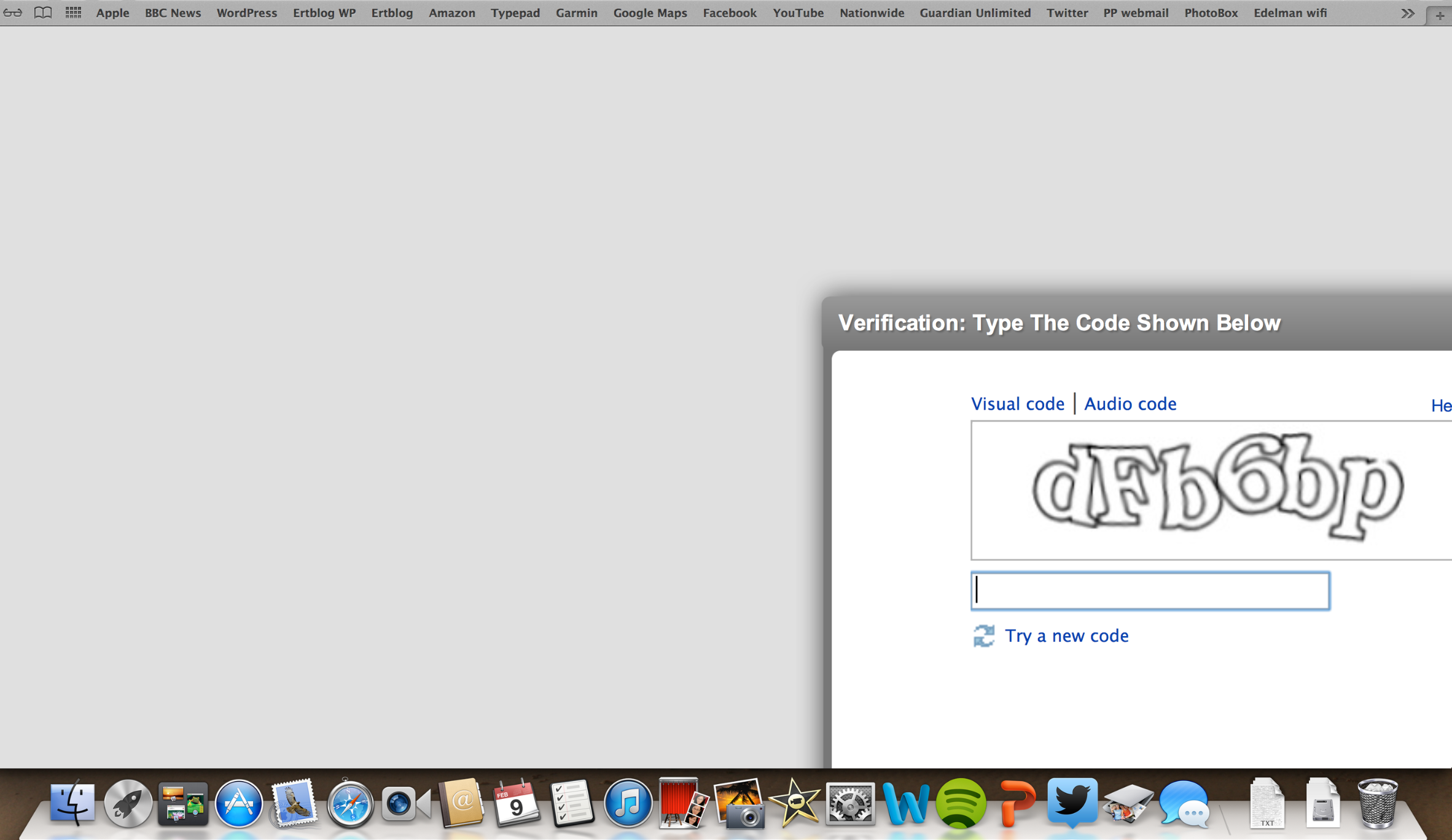
That’s when the problems started. It’s almost two years since I last used Flickr – I couldn’t remember my user name. The app has an account recovery process, but it’s horribly badly thought out. It kept asking for an alternate email address. It rejected my correct secret answer. After finally resetting my password, it rejected it the first time I tried to log in.  Oh, and Yahoo added a new twist to the usual Captcha frustration: on my Mac: the pop up screen was cut off at the edge (below), with no apparent way to resize it.

Yahoo's captcha confusion

Yahoo’s captcha confusion

To be fair, when I got through this frustration, I found the app was excellent. It’s very easy to share and search for photos. It’s much nicer than Facebook’s app for photography. Recommended – but don’t forget your user name or password…

Click & Tell: Get Safe Online Week 2012

Help your friends and family stay safe online

I’m proud to be part of Get Safe Online, Britain’s leading source of unbiased, factual and easy-to-understand information on online safety. Tomorrow marks the start of Get Safe Online Week 2012. Get Safe Online is asking everyone to pass on online safety tips to
friends, family, colleagues, neighbours or even strangers who you think may
benefit from the advice. In short: Click and Tell!

Here’s my piece of advice. Don’t click on links in Facebook or Twitter messages that say things like ‘What are you doing in this?’ or ‘Who took this photo of me in my bathroom?’. Another one to watch out for is ‘I can’t believe what they said about you in this blog’. Ignore them even (especially) if it comes from a friend, as they’ll probably have had their Facebook or Twitter account taken over by nasty people.

These messages are clever: the senders know that people will be anxious to see photos of them or to learn what others have said about them. If you get one claiming to be from a friend, don’t click – instead give your friend a call. Chances are they’ll have no idea what you’re talking about as they won’t have sent the message. (It will have been send by someone who’s taken over their account.)

You’ll find a huge amount of helpful advice about staying safe online on Get Safe Online’s website. And if you’re in Cardiff, London, Leeds, Edinburgh and Belfast, watch out for Get Safe Online’s roadshow this week.

Why the BBC’s Rory Cellan-Jones is wasted on digital election stories

I'm a huge fan of the BBC's technology business reporter Rory Cellan-Jones – or @ruskin147 as he's known on Twitter. I first appreciated his expertise and enthusiasm after reading his book about the dot com boom and bust, Dot Bomb

But my heart sank when I heard that Rory had been given a temporary role as the BBC's digital election correspondent. Not because I don't think social media will play a role in the imminent British general election. No, my concern is that the move appears to confirm the fears of the BBC critics who think the corporation is obsessed with Twitter and – to a lesser extent – Facebook. More significantly, it suggests a preoccupation with the medium rather than the message. 

Don't get me wrong. I love social media. I've been blogging since 2005, and have embraced Twitter and Facebook with a passion. But Rory's new (temporary) beat suggests the BBC is desperate to be seen as cool and in touch. His blogpost about the budget confirms my fear. As he says, the Facebook election page has just 1,000 fans active and 12 contributors. I sense that Rory is desperate to find a new digital angle to the election, rather than judge possible stories on their newsworthiness. That's a great shame for such a talented journalist.

The political social media enthusiasts constantly point to Barack Obama's 2008 campaign as the model for future engagement of voters through social media. But America is, as they say, another world. Obama was engaging in a great debate with Democratic party rivals, followed by the actual race for the White House. The idea of change was compelling after eight years of George W Bush. Britain is very different. British political parties seem to have transferred Punch and Judy politics to Twitter and Facebook. (The Tories' Cash Gordon stunt was pitiful.) We're hardly likely to be impressed. If they're going to succeed, they must remember that social media is about transparency and authenticity, not control and yah-boo insults. Individual MPs, such as Labour's Kerry McCarthy and Eric Joyce, often rise above this in their blogs, and provide a compelling insight into the role of the MP. (Though interestingly Kerry appears to talk more to the converted on Twitter. Does 140 characters lead politicians to be more partisan?)  

My view is that the televised leaders' debates will have more of an impact on the 2010 election than the political parties' social media efforts. The real impact of Twitter and Facebook will be from voters commenting on the debates and developments in the campaign, not the parties' own efforts on social media sites. But Kerry and Eric are great role models for other candidates.