
Reflections on Margaret Thatcher’s shock victory 50 years ago this week in the leadership election that eventually led her to become Britain’s first woman prime minister
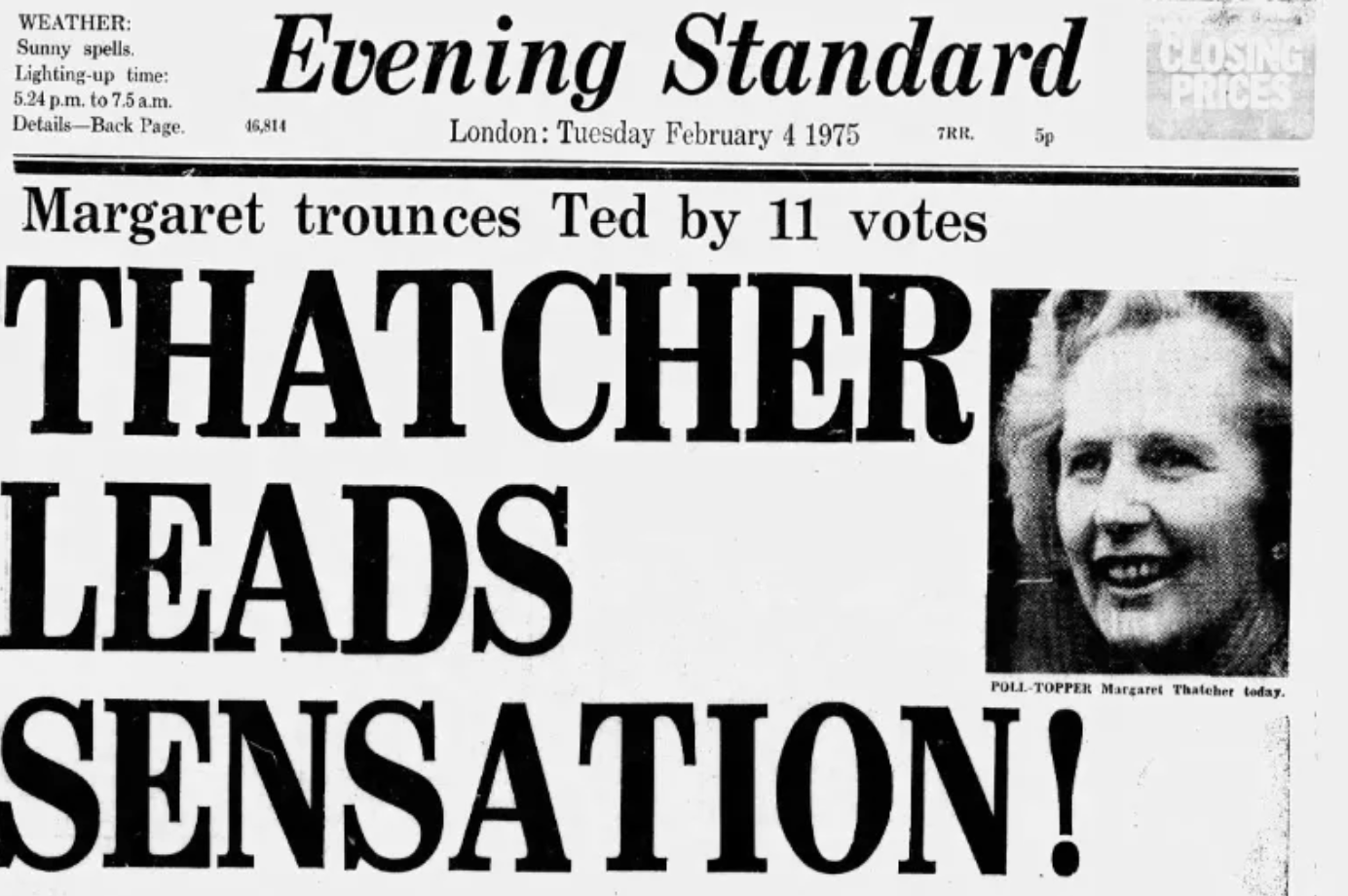
I was just 11 when Margaret Thatcher amazed the political world by ousting former prime minister Edward Heath to become Conservative party leader 50 years ago this week. But as a precocious schoolboy I was fascinated.
Even in 1975, it was hard to see how Heath could cling on to the leadership. He had lost two general elections in eight months the previous year. His four years as premier had been a series of crises, and when he called the first 1974 election with the question ‘Who governs Britain?’ the voters refused to give Ted Heath’s Tories as the answer. (A hung parliament was the messy outcome.) And he was extraordinarily rude to his colleagues – people he needed to vote for him.
Thatcher had been a largely invisible middle ranking cabinet minister – apart from earning infamy as the ‘milk snatcher‘ after abolishing free milk for primary school children. But after the successive 1974 Tory election defeats she became far more prominent. Thatcher made the headlines in the second 1974 election with a plan to abolish the rates, the tax that funded local councils, and to cut the cost of home loans. As the 1975 leadership campaign unfolded, she brilliantly led the Conservative response to Labour’s finance bill, showing a mastery of detail. Thatcher also dissed the performance of the Heath government, telling the Daily Telegraph, ‘People believe too many Conservatives have become socialists already’. (An uncanny preview of right wing criticisms of the Johnson and Sunak governments almost 50 years later.) Yet few saw her as a likely party leader.
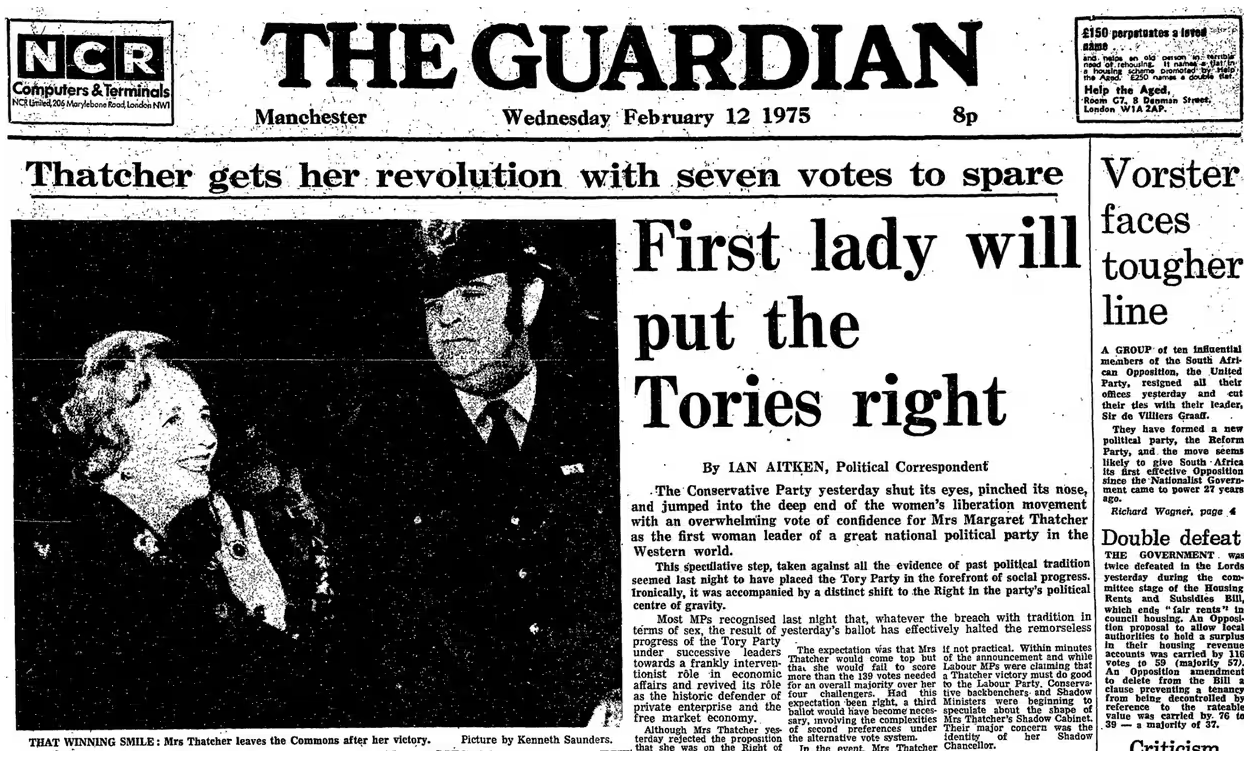
Her campaign manager, Colditz escaper Airey Neave, leaked news that Thatcher was ahead of Heath in polling for the first leadership ballot. (They were the only two candidates at that stage.) He cleverly encouraged those who wanted to oust Heath to back her in the initial vote, as that was the only way they could get their preferred candidate into the race. Heath was humiliated by coming second to Thatcher and pulled out, beginning a 30 year ‘incredible sulk’ against Thatcher that lasted until he died in 2005.
Continue reading Ertblog