AI regulation: a lesson from 200 years of railway history

A mighty transatlantic battle is in prospect over how to regulate artificial intelligence (AI). Donald Trump’s second administration seems sure to opt for the lightest of light touches, influenced by tech tycoon Elon Musk. (If Musk can tear himself away from his bizarre obsession with Britain.) The European Union has already legislated for a far more restrictive approach, with Britain likely to follow a middle way. The sensible aim must be to unleash the creative, social and economic benefits of AI while minimising the harm it may cause if abused or badly handled.

As debate raged about AI regulation, it struck me that many of the arguments deployed for and against AI and tech regulation also played a huge role in shaping the response to the railway revolution in the 19th century.
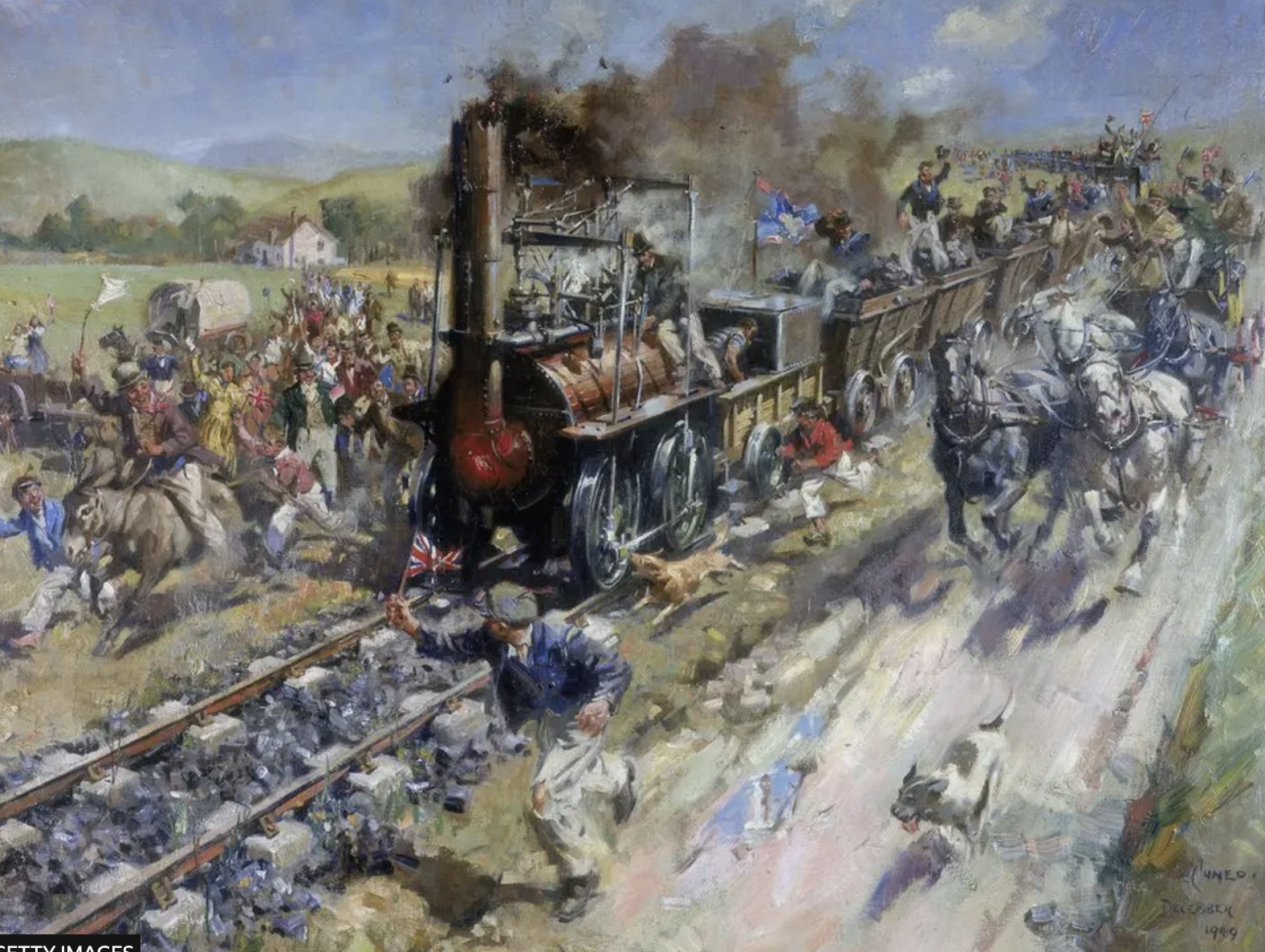
The opening of the Stockton & Darlington in 1825. Painting by Terence Cuneo; NRM/Science & Society Picture Library

The railway age properly began in September 1825 with the opening of the world’s first public railway to use steam locomotives, the Stockton & Darlington Railway in County Durham in the north of England. After the success of the first intercity railway between Liverpool and Manchester, opened in 1830, Britain enjoyed a railway boom, as pioneers planned lines linking major cities – and serving industry, the original purpose of the iron road. By the early 1840s, railway mania had taken over, in a prelude to the dot.com boom at the turn of the 21st century. In 1844, 240 private bills were presented to the British parliament to authorise 2,820 miles of railway. Had all these been built, the £100 million of capital needed represented over one and a half times Britain’s gross domestic product (GDP) for that year. Parliament still approved half these railways.

Anything goes? The heyday of the laissez-fair state

Britain in the 1840s was a firmly non-interventionist state. The dominant philosophy was laissez-faire: small government, low taxes and the free market. Most acts of parliament were private acts to authorise new railways rather than government initiatives. Anyone able to raise money could form a railway company and apply to parliament for permission to build their pet route. The sheer volume of railway business threatened to overwhelm the Westminster legislature. But an attempt to create order by setting up a railway advisory board to vet proposed plans before they reached parliament was short lived, killed by the powerful railway lobby. (And conflicts of interest: 157 out of 658 MPs had financial interests in the railways.) This was Britain’s last chance to create a strategic rail network, deploying investors’ money more efficiently. The failure led to many investors losing most if not all their money on rail schemes that had no hope of success, again pre-empting the dot.com bubble of 1999-2000.

Continue reading
Dawlish delight: trains running again

Before the storm: Dawlish station, June 2011

Before the storm: Dawlish station, June 2011

It was nice to hear universal praise for Britain’s railways yesterday as trains started running through Dawlish just two months after devastating storms severed the line there.

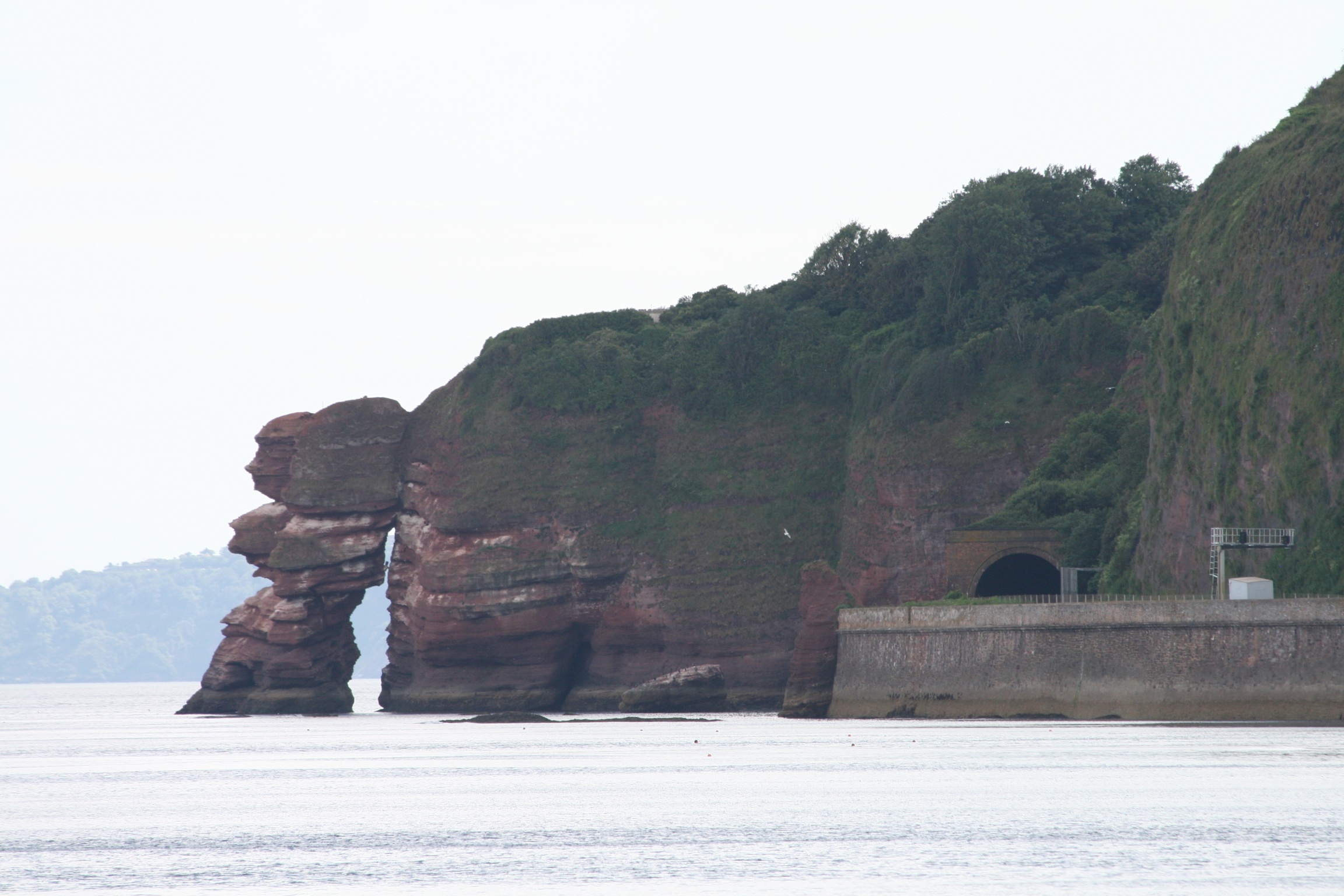
Brunel’s decision to opt for a coastal route through Devon gave Britain one of its most gloriously scenic rail rides. But the South Devon main line has always been at the mercy of the sea. Network Rail’s engineers have worked wonders getting trains running again, but it’s hard to imagine this is the last time the sea will halt the trains.

On the sea wall, Teignmouth

On the sea wall, Teignmouth

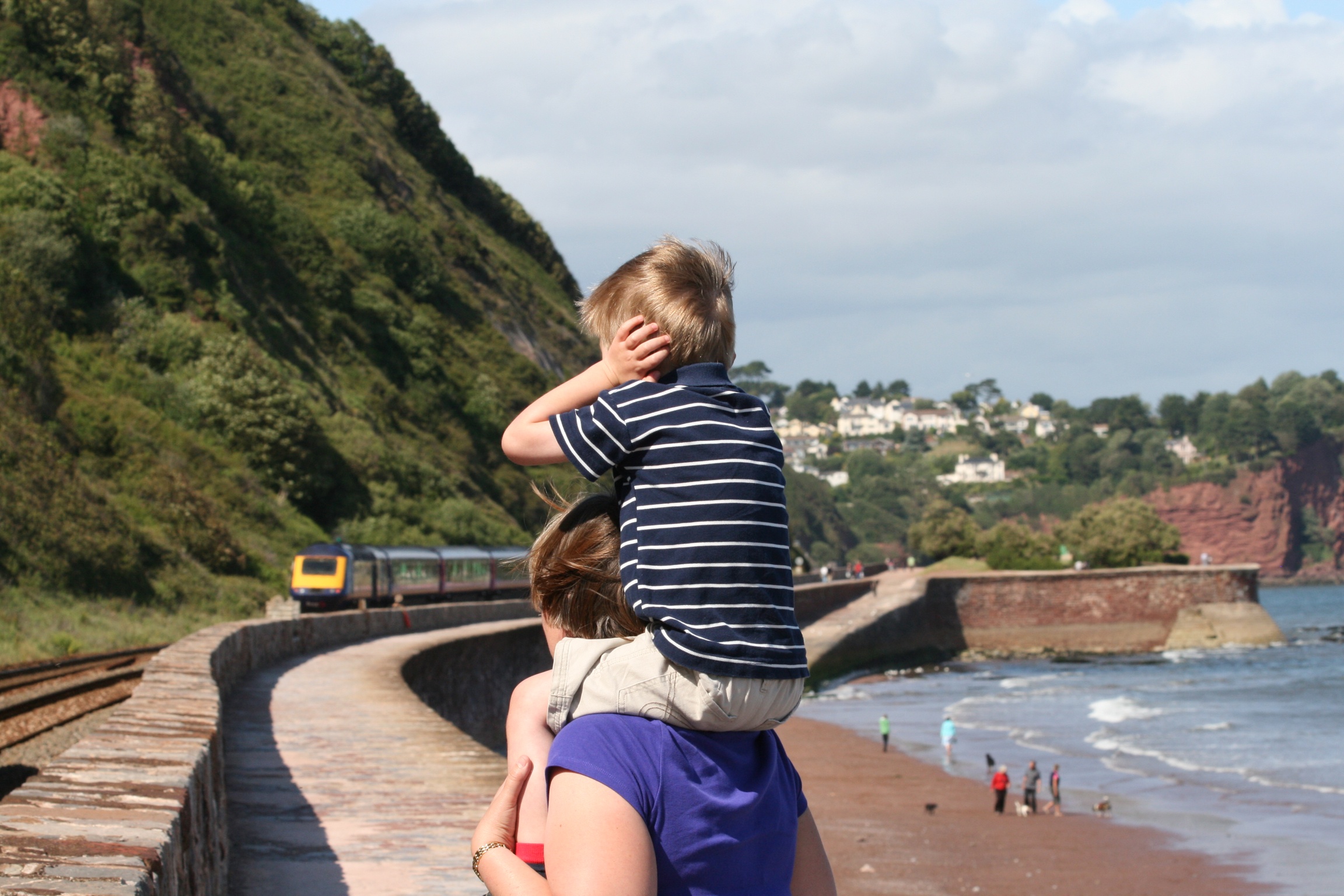
One of my first holiday memories is visiting Teignmouth aged six in 1970. We watched the trains as they headed onto the sea wall. Owen, nearly three, was less impressed by noisy InterCity 125 high speed trains on the sea wall in June 2011. A few days later we took a local train from Teignmouth to Dawlish to savour the view, which proved a mistake. The train was so packed we barely had room to stand, never mind look at the view. A local told us this was par for the course with First Great Western. The old Great Western Railway would have been disgusted.

Brunel was a pioneer. He built the line through Devon using atmospheric trains, propelled by air. But the system proved unreliable and was replaced by steam trains after a year. It cost shareholders a fortune. But Brunel, like his contemporaries, built railways amazingly quickly. He would have been amazed at the snail like progress of 21st century railway building.

On Dawlish station June 2011

On Dawlish station June 2011

The Great Western main line, Dawlish

The Great Western main line, Dawlish

PS: you can see a surviving section of 1840s atmospheric railway at Didcot Railway Centre – below.

The surviving 1840s atmospheric railway pipe and broad gauge track, at Didcot Railway Centre

The surviving 1840s atmospheric railway pipe and broad gauge track, at Didcot Railway Centre

A short history of time in Britain

It’s hard to imagine Britain having different time zones. Yet it’s well under 200 years since Britain had the same time across the nation.

The railways created the need for the whole of Britain to be on the same time. When life moved at a horse’s pace, it didn’t matter that Cardiff time was some 15 minutes behind London’s. Time was local – determined by a sundial. But when the steam engine took people hundreds of miles within hours, the idea of a common time became urgent. Railway time or London time was the result.

Brunel’s Great Western Railway provided the impetus, along with the electric telegraph. In November 1840, the GWR adopted Greenwich Mean Time for its timetable, followed by almost all our railways by 1848. It meant that Bristol was no longer 10 minutes behind London. By 1855, almost all towns in Britain had adopted the unified time, although this only had legal force in 1880. Within 50 years of the GWR’s move, most major countries followed suit, although larger countries did so with multiple time zones.

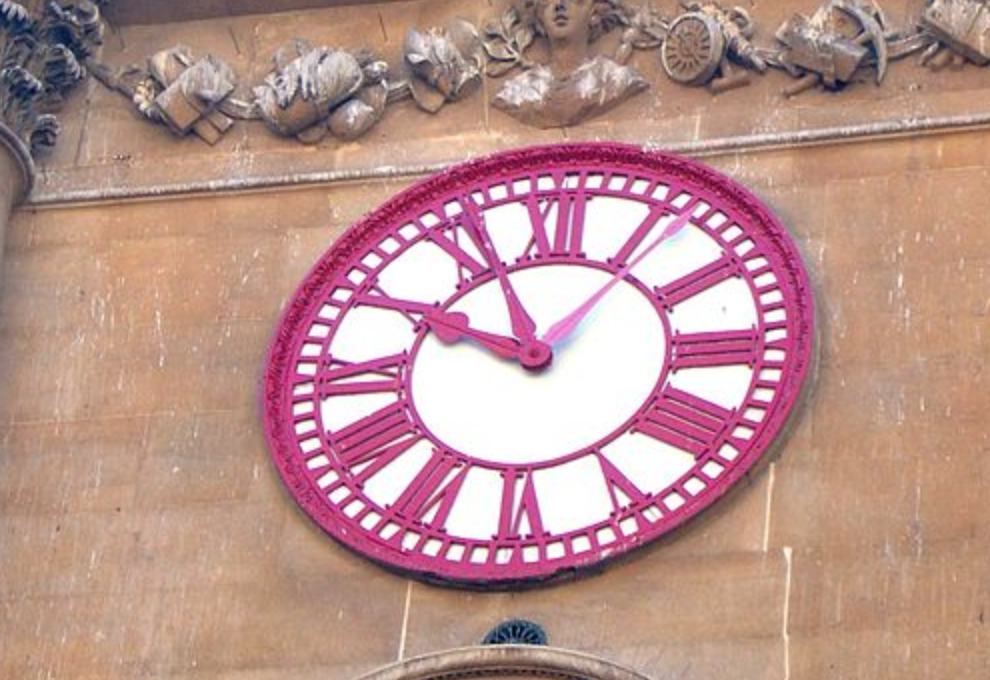
Bristol time. Photo: Rod Ward, via Wikipedia.

Yet to this day, Bristol’s Exchange clock shows two minute hands: one for London time, the other for Bristol time. It’s a timely reminder of the days when time was a moveable concept in these islands.