This post recounts the fifth day of my Mizen Head to Malin Head cycle tour in Ireland with Peak Tours in June 2024. Read Day 4: Spanish Point to Galway

This was another day I’d been looking forward to. I remembered the haunting, sometimes stark, beauty of Connemara from my 2007 and 1974 visits. And I knew that our destination, Clifden, was famous as the landing point of the first transatlantic flight in 1919.


We set off into Galway, following our taxi route last night on a cycle path, past the Spanish Arch and harbour.
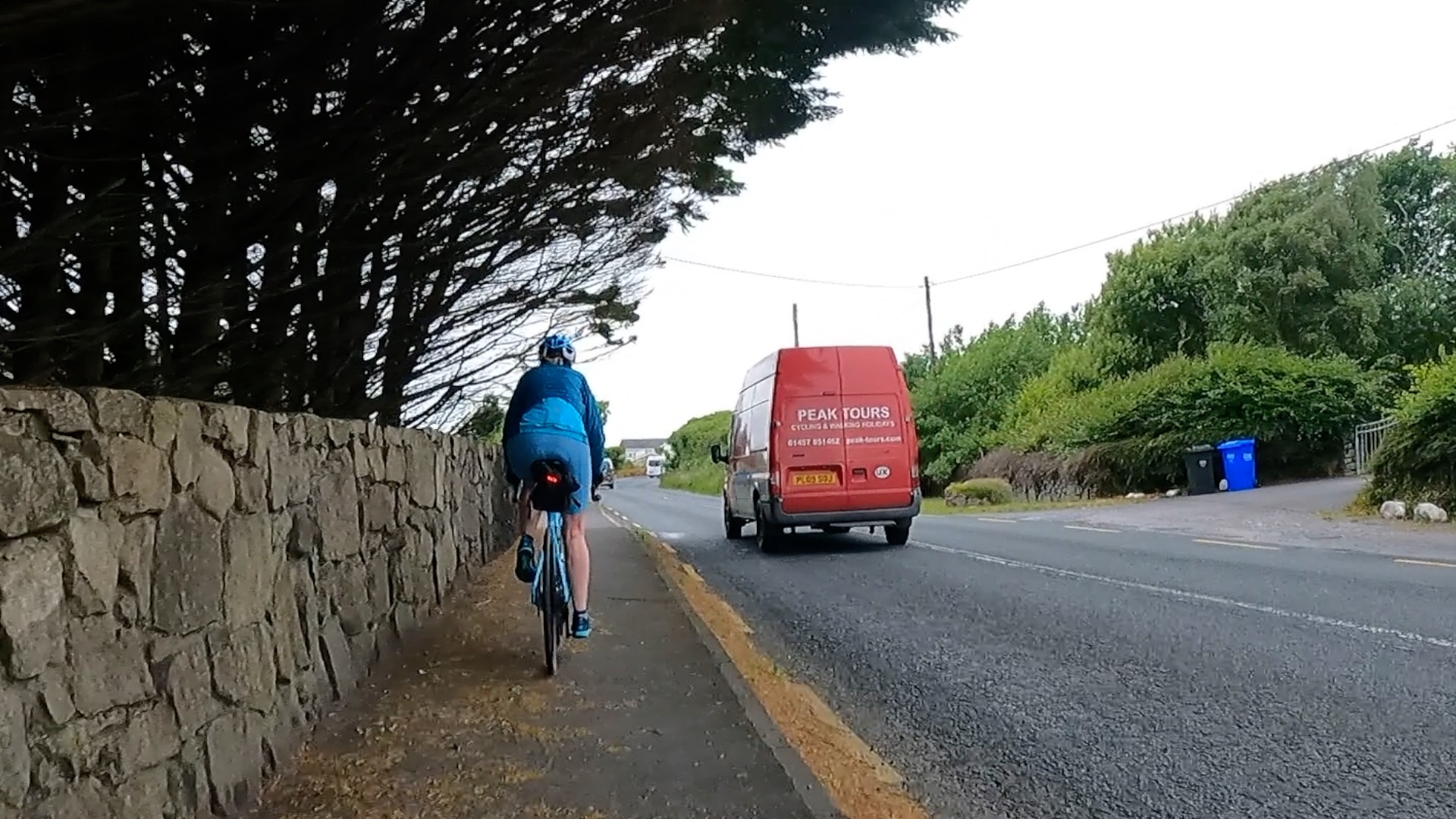
There now followed the most unpleasant road of the whole tour. We were on the R336, which was very busy for 20 miles on this Monday morning. (Endurance cyclist Emily Chappell complained about this road in her wonderful book Where There’s A Will.) Although it followed Galway Bay we didn’t get the scenic views of yesterday that might have compensated for the traffic. At times we cycled on the pavement to let the lorries pass us safely. The morning brew was in a clearing by the roadside, and we were relieved that after Connemara airport the traffic disappeared.

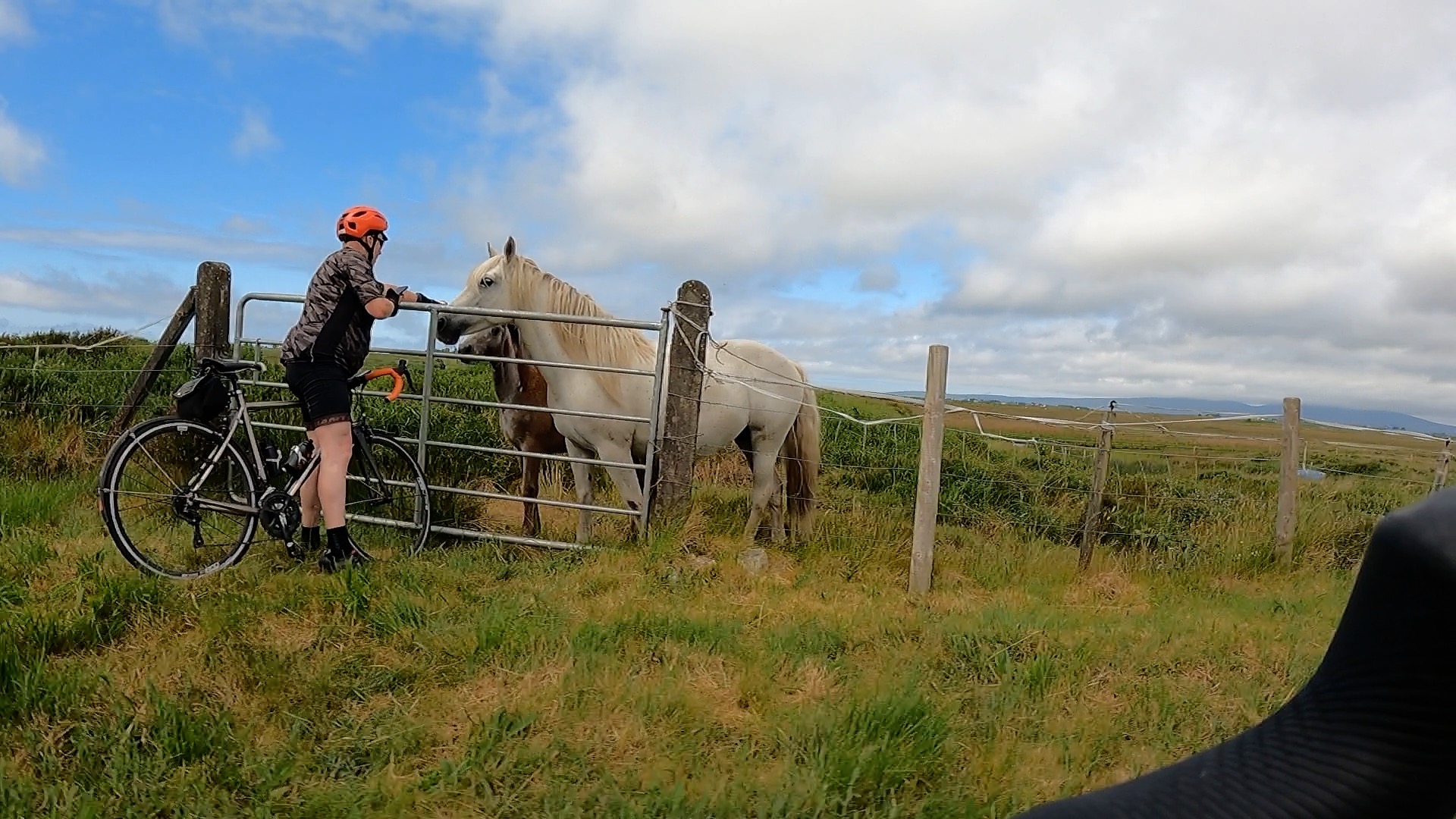
As the road turned north, the grey sky turned blue, as it did yesterday, and I felt my spirits rising. The road threaded past countless loughs, and I couldn’t resist the temptation to take photos and videos for the day’s highlights movie. We also saw Connemara ponies and shelters for newly-cut peat. The use of peat is controversial today because of its impact on the environment – Lucy was horrified to see peat being cut – but in the early 1950s the chief engineer of CIE (Irish Rail) Oliver Bulleid built a turf-burning steam locomotive as Ireland’s native fuel was far cheaper than Welsh steam coal. The experiment was abandoned in favour of diesel traction.

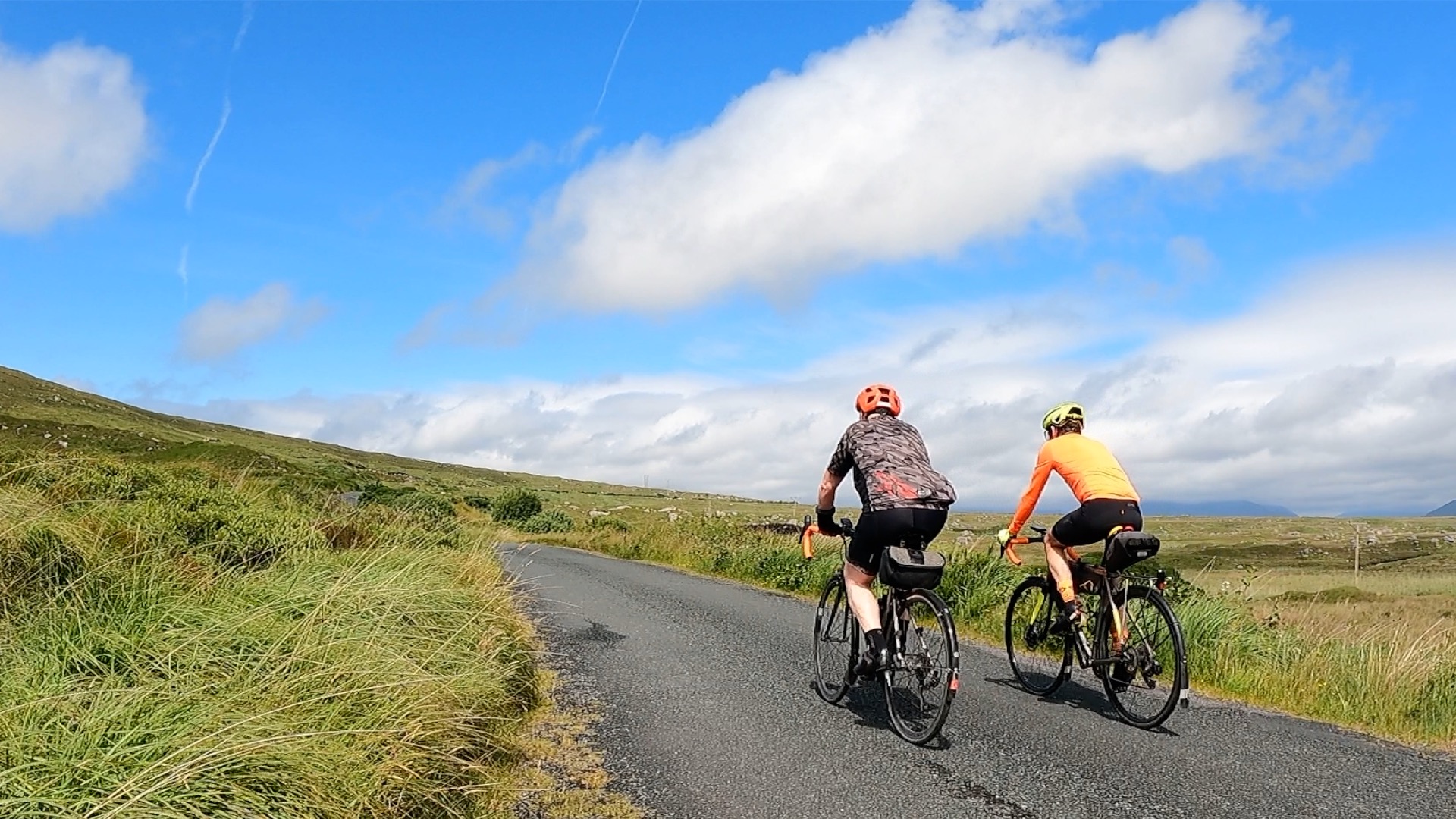
In time, we swung west, and the landscape opened up, with mountains providing an impressive backdrop. Today was a modest one for climbing, but we had a few short, gentle ascents to keep things interesting. So far the climbing on this tour has been unchallenging.
Lunch was a delightful interlude at the Zetland Country House Hotel, with its host so keen that everyone was well fed and contented. The hotel was built as a sporting lodge in the early 19th century, and sits just inland from Cashel Bay.


The route after lunch was a visual delight, especially after we crossed the handsome stone bridge seen above on the way to Roundstone, a gorgeous coastal village that could have been the smaller cousin of Tenby (Dinbych y Pysgod) in Wales, with its harbour and colourful houses. Boats were resting on the shore as we approached.


As I cycled into Roundstone, I spotted Julia, Lucy, tour guide Mark and a few others by the roadside. Julia was looking for a postcard for her granddaughter and others were in search of ice cream. It was a nice place to while away time chatting.

We’d been told that a beach on Mannin Bay between Roundstone and Clifden was perfect for swimming. Julia was keen to repeat her dip at the end of last year’s Portugal tour, but by the time we got to Ballyconneely the sun had disappeared and the wind was distinctly chilly. Wendy had set up the afternoon brew stop overlooking the beach for a welcome, warming cuppa. Julia settled for a paddle rather than a swim – but at least one of our party did go for a swim here today.
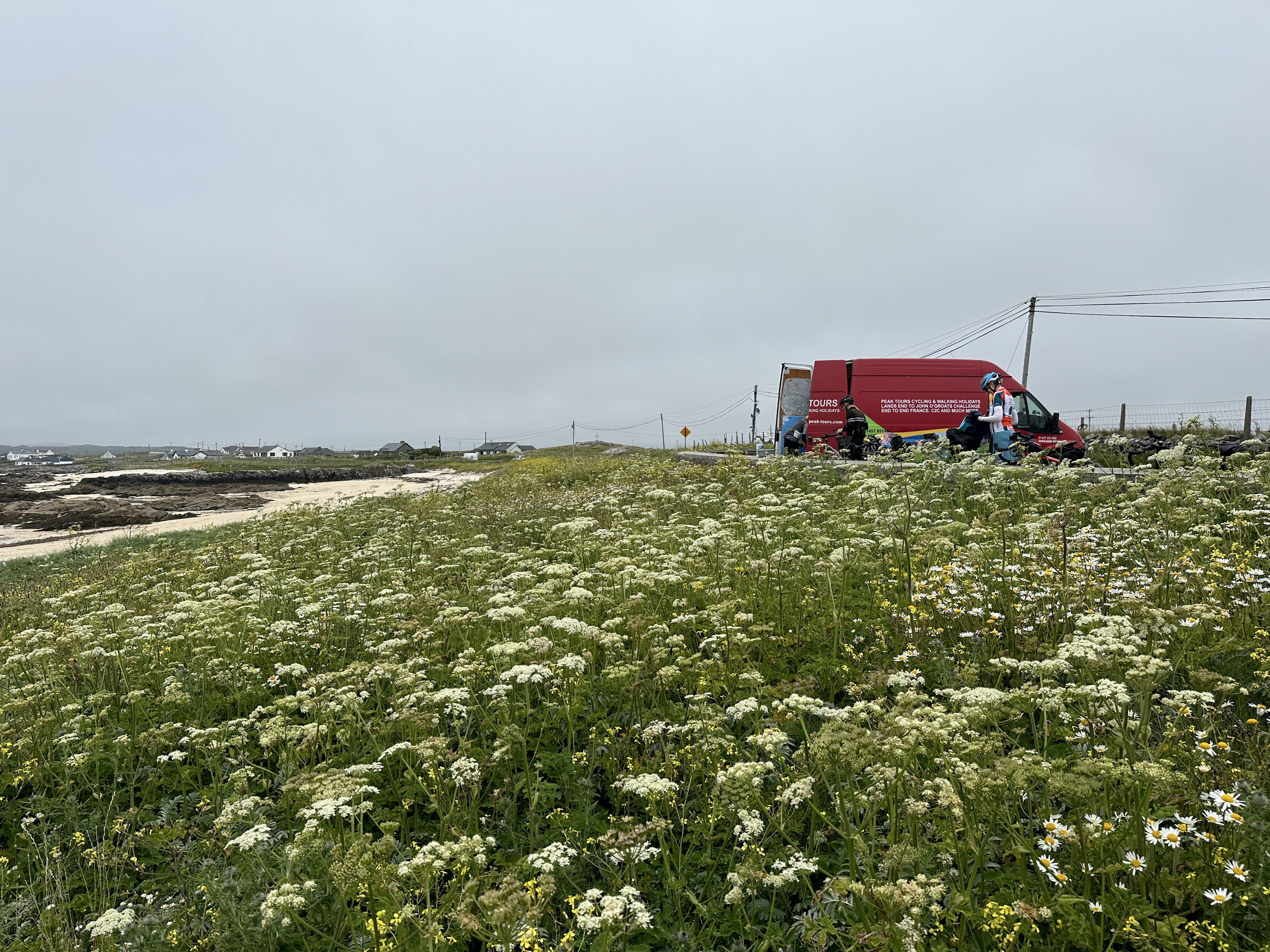


The last six miles to Clifden were straightforward, and I was amused to be overtaken by a Welsh camper van. The climb up to the destination was easy enough, and I was soon standing by my bike in the town centre studying the route notes to work out where the Station House Hotel was.
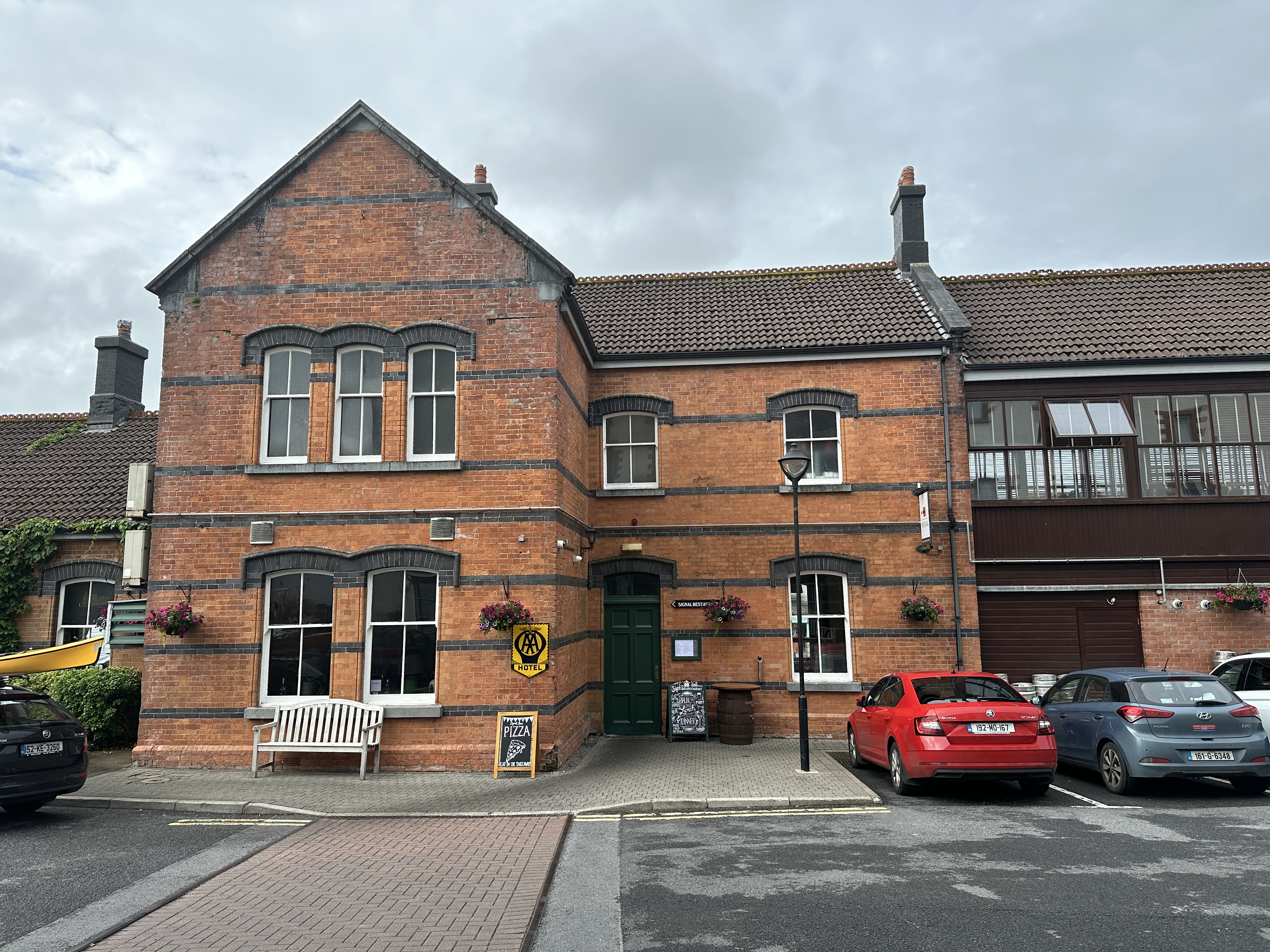
I soon found the old station, and the Station House Hotel was, unsurprisingly, next to it. This was my favourite hotel of the trip: comfortable and modern, yet reflecting the railway heritage of the site.


I particularly liked the old railway posters along the lift lobbies and corridors, especially the illustration of the Fishguard to Rosslare ferry. That’s how I first arrived in Ireland 50 years ago with Mum and Dad, and on my first (solo) Irish cycle tour in 1996. Railway posters were examples of the railways’ role as pioneers of marketing and tourism, especially the Great Western, which ran the Fishguard route until Britain’s railways were nationalised in 1948.
The station closed in 1935, 14 years after it featured in a significant moment in Ireland’s war of independence. The IRA ambushed a Royal Irish Constabulary (RIC) patrol in the centre of town, killing two police officers. The attack was a reprisal for the execution of Clifden man Thomas Whelan for the killing of British Army officer Captain Geoffrey Baggallay. In response, the British authorities sent a trainload of the notorious RIC Black and Tans officers to Clifden railway station. They proceeded to set fire to 16 houses and killed two people in Clifden. And so the cycle of death and destruction continued.
Clifden was famous for its Marconi transatlantic wireless station, which never reopened after being attacked by the IRA in 1921. Marconi transferred the transatlantic wireless service to its station near Waunfawr in north Wales.

Clifden is a peaceful and attractive place today. It makes the most of its place in the legend of Alcock and Brown, the two men who were the first to fly the Atlantic in 1919, the month my grandmother got married. They crash landed their Vimy bomber in a bog just outside the town after a 16 hour flight from Newfoundland. (We passed very close to the landing site after our beach stop.)

We had an excellent meal at Guy’s Bar and Snug – just metres away from the site of that 1921 IRA ambush, although we didn’t know that! We sat nursing the now traditional Guinness at a pavement table while we waited for our table inside to be free. It was worth the wait – the beef bourguignon was delicious.
To our surprise it was raining heavily when we came out and we got wet on the way back to the hotel, not helped by losing our way, as in Tralee. Why did we find small Irish towns hard to navigate?
Read Day 6: Clifden to Westport
The day’s stats
67.22 miles, 2,329 feet climbing, 4 hours 36 mins cycling, average speed 14.6 mph.
The day’s highlights video
 Ertblog