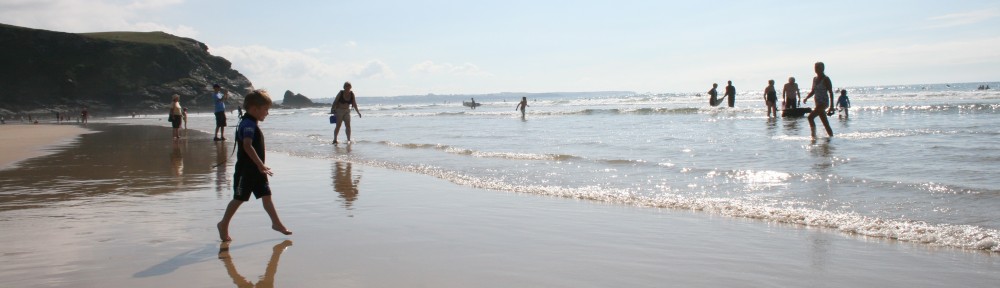
Happy 5th birthday, Ertblog!

Five years ago tonight, I created this blog. I'd been tempted to start blogging for a while but Ertblog was created on Typepad with the help of a few beers on New Year's Eve 2005. 

That first blogpost, Welcome to 2006, was about two subjects dear to my heart: family and history:

"Hello, 2006. It starts with a fascinating blast from the past. We re-discovered a family bible from the 19th century. The ancient book contained a letter from a long-lost relative in the Australian goldfields in the 1880s, telling his brother and sister back in Wales about his trials and tribulations. Even today, with the world shrunk to fit the jet age, it's difficult to imagine living the other side of the world without a severe dose of homesickness. Now cast your mind back 120 years, when a letter took months to reach the old country…."

Blogging has given me an opportunity to indulge my love of writing and commenting. It hasn't always been easy – when I'm busy or stressed I simply don't have time or inclination to post, especially when Facebook and Twitter offer a chance to have a conversation or share photos and video in a fraction of the time. But blogging still offers depth and permanence – something Twitter cannot compete with. 

On reflection, 2010 has been a good year for Ertblog. I was prolific in the spring as the general election campaign caught fire and Britain saw its first coalition government since 1945. Ertblog was unusual in spotting amidst coalition negotiations the 70th anniversary of Churchill's appointment as PM. I also posted about carefree days, such as Owen's joy on a summer day with his friend Martha and a bike ride with me. Later in the year, my post about Tony Blair's autobiography, A journey, was amazingly ranked top by Google out of 211 million search results, suggesting I knew more about the dark art of search engine optimisation than I thought. On a more personal note, I was proud to share my fleeting memories of my grandfather 44 years after he died. 

Looking back, my most read post was probably my nostalgic post about the steam engine graveyard at Barry, South Wales, in November 2007. (Our train-mad two year old son, Owen, would approve!) Earlier that year, my recollection of the Falklands War 25 years on was also a hit. 

The beauty of a personal blog is the ability to talk about anything. In 2009, I shared my memories of Cardiff City's old home, Ninian Park. A year earlier, I celebrated Wales's latest Grand Slam and Cardiff City's unlikely progress to the FA Cup Final with Wales and City's Seventies glories. (I should add that the Bluebirds 1970s successes were far more modest than those of Welsh rugby!) 

Blogging takes time. But it's time well spent, even if I'm only writing for me, my dad – and my son! 

Britain makes joking a crime – official

Can you imagine a country in which telling a joke could give you a criminal record? Welcome to Britain, 2011. 

I've always been sceptical about warnings from civil liberties campaigners that Britain is fast becoming a police state. But I was wrong. We're fast losing our sense of humour and our love of essential freedoms. Government and the criminal justice system seem hell bent on using the terrorist threat to sweep away the freedoms and tolerance that once set us apart. 

So it should have come as no surprise that a foolish joke by a 27 year old man should have resulted in his conviction, and the failure of his subsequent appeal. Paul Chambers, frustrated by the closure of an airport near Doncaster, sent the following message on Twitter "Crap! Robin Hood airport is closed. You've got a week and a bit to get your shit together otherwise I'm blowing the airport sky high!!" He was held in custody for seven hours in a police cell, which should have been plenty of time for the authorities to realise this was a stupid joke not a terrorist threat. Yet mindless prosecutors still decided to waste public money taking him to court. Worse still, a judge called Jacqueline Davies upheld the conviction, as The Guardian reports, bizarrely claiming "Any ordinary person reading [the tweet] would … be alarmed." Any ordinary, out-of-touch, foolish judge maybe, but few other people. More sinister still, the Crown Prosecution Service deliberately prosecuted Chambers under legislation against nuisance calls rather than laws against hoax bomb threats because they required less evidence of intent. 

Any sensible person would have recognised that joking about blowing up an airport was foolish and in bad taste. I suspect Chambers quietly wishes he'd acted more wisely. But that's no reason why he should end up with a criminal record, a £1,000 fine and lose his job. Stephen Fry has offered to pay the fine. Let's hope the backlash against this stupidity makes us more vigilant in the defence of traditional British freedoms.  

Isn't it ironic that the airport at the centre of the storm is named after an outlaw? Looks like the authorities were determined to create another folk hero…

Tony Blair, A Journey, SEO – and me

My blogpost, Tony Blair: A Journey for the showman prime minister, on Wednesday night about Blair's autobiography, A Journey, has proved a hit on Google. if you Google 'a journey tony blair ipad', my post comes first out of a staggering 211 million search results, beating huge media organisations. And it ranks highly on searches about Blair's book on iBooks and Kindle. (I'm on page two of results for a straight search for 'Tony Blair A Journey.) 

I only discovered this when I looked at what had brought a flood of visitors to the Ertblog post. 

My blog is purely for fun, so I've never set out to optimise it for search engine results. But every now and again it scores very highly on Google. My post on why I love my iPad scored third out of 47 million under the search term 'I love my iPad'. And my 25th anniversary account of the Falklands war in 2007 did very well. 

This latest, unexpected success prompted me to think seriously about the dark arts of search engine optimisation, or SEO. What prompted Google to rank my post so highly against the torrent of other articles and blogposts about Blair's book? What gave me the edge over all-powerful media groups? 

I am no expert on SEO, but I suspect the reason is that I wrote about a specific aspect of the publication of A Journey: its absence from Apple's iBooks store, which has puzzled many iPad owners. They've Googled the subject – and hit upon my blog.  (Surprisingly, I'm still as high as the second page of results for a straight search for 'Tony Blair A Journey.) The title of my post was also highly descriptive (including Tony Blair and the name of his book), while I also included a number of hyperlinks, which may have helped. 

As a PR professional, I need to know more about SEO, and this experience has prompted me to learn. In the meantime, I'd welcome any comments from SEO experts about what I did right – and wrong!

The TV and social media election

It was billed as the social media election. Yet television – invented the year my father was born, 1926 – has electrified Britain's 2010 general election campaign.

Nick Clegg's performance in Britain's first leaders' debate a week ago catapulted the Liberal Democrats into pole position as the party for change. For seven days, Labour and the Conservatives have agonised how to respond. Should they attack Clegg or ignore him? Should they play the man or his party's policies?

Tonight's second televised debate was eagerly awaited. Would Nick maintain his lead? Would the two other party leaders perform better?

I thought all three leaders did well tonight. Interestingly, Irish journalist Christine Bohan said on Twitter that she'd kill for a leaders' debate of this calibre with Ireland's political leaders Cowen, Kenny and Gilmore. (Thanks to Orlaith Finnegan for a retweet of this.) Brown, Cameron and Clegg were impassioned and smart.

I blogged recently that talk of a social media election was overplayed, as BBC's Rory Cellan-Jones became a digital election reporter. I don't think Twitter will win the election, but it has complemented the role of the TV debates. And it's giving fresh power to the people and the political parties against the deeply biased old print media. The brilliant #nickcleggsfault viral Twitter campaign, mocking the Tory press's smears about the Liberal Democrat leader, rattled the Daily Telegraph, which was forced to defend its smear against Clegg earlier the same day.

Here's to next week's final debate.

Social media comes of age: a day at Don’t Panic’s latest event

Social media is now part of the mainstream. Last week's conference about strategic social media, run by Don't Panic, confirmed how much has changed since I attended one of Don't Panic's first events on the subject, the University of Sunderland's Delivering the new PR in 2006

Don't Panic's Andy Wake has written an excellent account of the changing impact of social media on the Eventualities blog. (See also this comprehensive post by Adam Burns.) Those early events included workshops explaining what a blog was, and encouraging PR people to try their hands at blogging and social media. No such introduction is needed now, as the BBC's news bulletins regularly cover Twitter and Facebook. (Perhaps excessively, as I suggested in a blog post about the BBC's Rory Cellan-Jones last month!) Corporate communicators are now judged on how their organisations are engaging with social media as well as traditional media. 

Yet we should take care not to treat social media as a bandwagon. The best presentation at last week's Don't Panic event was by Martin Thomas, the co-author of Crowd Surfing. Martin mocked the idea that companies need a social media strategy. I totally agree – a social media strategy suggests a synthetic response to the changes that social media is prompting. (My boss recently posed the compelling question: why he should have a social media strategy but not a newspaper or email strategy.) Instead, we should apply the lessons of social media (that transparency and authenticity are crucial) to all our communications efforts. It's telling that many senior communicators regard Twitter as a way of pushing out corporate messages. That's completely wrong. In the same way, too many corporate communicators only tweet when they've got a news release to sell. That's not going to win them many friends. 

Wadds SSM

The other refreshing presentation was from Stephen Waddington from Speed Communications, who gave everyone a copy of the Beano. (Thanks to Don't Panic's Andy Wake for the photo of Stephen and his son reading the Beano in the background.) This wasn't as eccentric as you might think: Stephen's point was that great content is always a winner, whatever the medium. He contrasted the hopeless online efforts of Britain's biggest regional media groups with the SR2 blog, an extraordinarily compelling website run by Josh Halliday, a journalism student in Sunderland. 

I'll end this account with a plug for a brilliant piece of viral marketing for Blackpool, described by Sarah Lundy from Visit Lancashire. I've a particular interest here as my father was a pioneer of local government and tourism PR in Wales and London. I was thrilled with the success of Blackpool's J'aime La Tour video, which confirms Stephen Waddington's view that great content wins. 

I've included below links to my blog posts about the Don't Panic events I've attended. Social media has dominated! 

CIPR Northern Conference July 2006: PR embraces blogs 

November 2006: Delivering the new PR

June 2007: Delivering the new PR 2.0

January 2008: crisis communications

May 2008: a new era of authentic communication

May 2009: it's not about technology

Why the BBC’s Rory Cellan-Jones is wasted on digital election stories

I'm a huge fan of the BBC's technology business reporter Rory Cellan-Jones – or @ruskin147 as he's known on Twitter. I first appreciated his expertise and enthusiasm after reading his book about the dot com boom and bust, Dot Bomb

But my heart sank when I heard that Rory had been given a temporary role as the BBC's digital election correspondent. Not because I don't think social media will play a role in the imminent British general election. No, my concern is that the move appears to confirm the fears of the BBC critics who think the corporation is obsessed with Twitter and – to a lesser extent – Facebook. More significantly, it suggests a preoccupation with the medium rather than the message. 

Don't get me wrong. I love social media. I've been blogging since 2005, and have embraced Twitter and Facebook with a passion. But Rory's new (temporary) beat suggests the BBC is desperate to be seen as cool and in touch. His blogpost about the budget confirms my fear. As he says, the Facebook election page has just 1,000 fans active and 12 contributors. I sense that Rory is desperate to find a new digital angle to the election, rather than judge possible stories on their newsworthiness. That's a great shame for such a talented journalist.

The political social media enthusiasts constantly point to Barack Obama's 2008 campaign as the model for future engagement of voters through social media. But America is, as they say, another world. Obama was engaging in a great debate with Democratic party rivals, followed by the actual race for the White House. The idea of change was compelling after eight years of George W Bush. Britain is very different. British political parties seem to have transferred Punch and Judy politics to Twitter and Facebook. (The Tories' Cash Gordon stunt was pitiful.) We're hardly likely to be impressed. If they're going to succeed, they must remember that social media is about transparency and authenticity, not control and yah-boo insults. Individual MPs, such as Labour's Kerry McCarthy and Eric Joyce, often rise above this in their blogs, and provide a compelling insight into the role of the MP. (Though interestingly Kerry appears to talk more to the converted on Twitter. Does 140 characters lead politicians to be more partisan?)  

My view is that the televised leaders' debates will have more of an impact on the 2010 election than the political parties' social media efforts. The real impact of Twitter and Facebook will be from voters commenting on the debates and developments in the campaign, not the parties' own efforts on social media sites. But Kerry and Eric are great role models for other candidates.

It’s not about technology – a day at Don’t Panic’s guide to social media

IMG_0268[1]Stuart Bruce suggests the next big thing: mobile and location centred social media 

Don't Panic has won a reputation as a talented event company that has led the way in explaining social media to a sometime sceptical PR world.

Today saw the latest in the series, held in the cavernous Barbican Centre in the City of London. Any of the delegates wanting to try out citizen journalism couldn't have had a better venue, as just a mile away the police had their hands full handling demonstrators against this week's London G20 summit! First speaker Marshall Manson from Edelman remarked it was like Saigon with helicopters everywhere.

How times change. When I went to the University of Sunderland's Delivering the New PR event in London in 2006, managed by Don't Panic, the speakers had to explain what a blog was – and ran a 'try blogging yourself' session. Today, The Guardian's April Fool story claimed the paper was to publish exclusively via Twitter. It didn't fool anyone, but the fact it chose a microblogging site as the subject shows how far we have come.

My favourite sessions at today's conference were by people working in the public sector. Simon Wakeman explained how Medway Council in Kent has tried new ways of communicating, including podcasts and Twitter. he convinced sceptical councillors and officials about the value of using Twitter by showing how 'retweets' – others forwarding the council's Twitter messages – had widened the audience Medway was reaching with its opposition to a new airport in the Thames estuary.

Mark Payne from West Midlands Police joked he was the only policeman in the City today not in riot gear. But he had a serious message: that social media enables the police to engage with younger audiences indifferent or hostile to the police. He also told the tale of the murderer caught when the police found a video of the scene the killer had posted on YouTube. "As a seasoned detective, I thought that was a clue!" Mark admitted police bureaucracy was a barrier at times – he had to send detectives home to search for clues on Facebook and YouTube as access was blocked at work.

The speakers were passionate about the potential of social media, but sensible to tell us to think before diving in. As Wolfstar's Stuart Bruce said, "You can do a lot of damage in 140 characters!" (The maximum Twitter message.) And above all, they agreed social media isn't about the technology. The medium isn't the message. Craig Elder, the Conservative Party's head of online communities, suggested that Barack Obama may not be the social media role model some have thought – after his prolific stream of tweets on the campaign trail, 'he' has posted just four since taking office.

I'll leave the last word to Robin Wilson from McCann Erickson. When Robin began, I thought we were in for a useful if a little dry session about measuring the impact of social media work. But he then launched into a tale about female orgasms, prompted by a campaign his agency had handled for Durex's female lubricant. As Nicky Wake from Don't Panic observed, today's event was a little x-rated!

The British media’s Twitter obsession continues: Saturday’s crop of stories

I blogged on Wednesday about the British media's love affair with Twitter, the micro-blogging website. Today saw two contrasting features about Twitter in Britain's quality press. (Thanks to the Guardian's Jack Schofield for pointing out both these stories.)

The Daily Telegraph's Lucy Atkins provided a balanced, helpful guide to Twitter for beginners. In the words of the article's sub heading, "Twitter is taking the world by storm, leaving Facebook and email in its wake. We examine how the micro-blogging site is helping users in their personal and professional lives."

By contrast, the Independent columnist Terence Blacker wrote a lazy parody of Twitter. The headline – 'You don't have to be a twit … but it helps' – gave away the article's contents. Blacker went on: 'Twitter may have novelty value but it is more than mere surface silliness. It is anti-thought, the deadening white noise of modern life with all its pointless business.' There is, no question, pointlessness in Twitter. As there is in any national newspaper. (Give me Twitter any day over the Daily Mail's lethal campaign against the MMR vaccine.) But I wouldn't have come across either of these articles had I not seen Jack Schofield's Twitter posts ('tweets').

A final thought. It may be unfair to compare two great newspapers on the evidence of two articles. But I was surprised to see the supposedly reactionary Telegraph publish a helpful piece about Twitter, while the once fresh thinking Independent provides a platform for a rant against the new. What next, a Daily Mail leader praising the BBC?

Note: I'm now active on Twitter – find me here.

Facebook is five – but is Twitter the star of the party?

You could hardly have missed Facebook's fifth birthday. The BBC went to town on the story, technology correspondent Rory Cellan-Jones blogged about it from Bristol University and even Radio 5 Live Breakfast's Shelagh Fogarty got a Facebook page. (Though she, like many, couldn't grasp the ideas of total strangers being 'friends'.)

Yet I can't help feeling that the social media winner of the hour is Twitter, rather than Facebook. Rory Cellan-Jones has regularly blogged about the impact of Twitter – this post about hearing breaking news such as the New York river plane crash via the micro-blogging site is typical. He also appears to have sourced interviewees for his Facebook birthday story through Twitter. Obama's election, the Mumbai bombings and the air crash are just some of the big events that have got people sending 'tweets'.

Just one personal example. My niece Siân started following me on Twitter yesterday. "What's Twitter?" asked my wife when I told her. "I'll explain when I get home," I replied. By the time I got back, she knew all about the site from the BBC evening news.

Today, I used Twitter for real for the first time, reporting on the British parliament's Treasury select committee's grilling of high profile journalists such as the BBC's Robert Peston about the role of the media in the credit crunch. There were some great quotes, especially from former Times editor Simon Jenkins    Simon Jenkins: "We've wasted stupefying amounts of money on banks. Everyone's obsessed with banks. They're bankrupt!"

There is, naturally, room for both Facebook and Twitter. But for now, the upstart is getting the attention.

What’s going on at Typepad?

Ertblog enjoyed its third birthday on New Year's Day. It was a modest celebration, reflecting my infrequent posts since our son Owen was born last July.

I've kicked off 2009 with a few posts, only to find Typepad has become painfully slow since my last visit. It takes an age to write anything, especially if you move the curser back to edit or delete text. What's going on?