Owen takes the 1962 train to Harrow

“Why don’t you take Owen for a train ride?” suggested Karen. Owen loves trains, so it was a great idea for a Sunday morning outing.

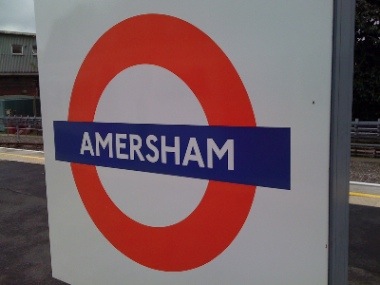
We set off from Amersham, the country end of London Underground’s Metropolitan line. The train was older than me: it dated from 1962, the year of the Cuban missile crisis, when Harold Macmillan was Britain’s prime minister and JFK America’s president. It’s some consolation to know I’m still younger than some London tube trains, even if I’m older than David Cameron, the man who’s most likely be Britain’s next prime minister in the coming days!

In remembrance

Frank and Bert Skinner 001

It's a sobering thought that tomorrow is the very first Armistice Day without a single survivor of the Great War alive in Britain. 

The last link with that brutal conflict has been lost. The collective memory of millions of lost and shattered lives has passed into history. 

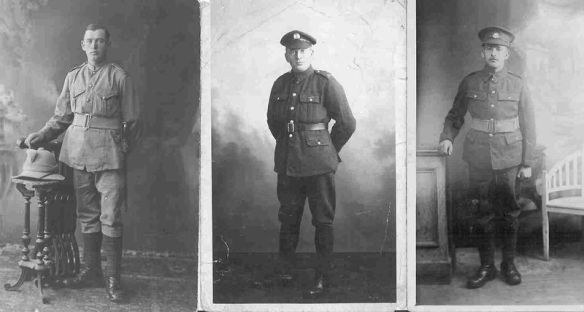
Armistice Day and Remembrance Sunday were always dignified events, as a nation honoured the sacrifices of its sons and daughters in two world wars, and in the many smaller conflicts since 1945. Controversy and politics were forgotten. Almost every family in the land identified with events at the Cenotaph in London and at ceremonies throughout the land – they had all suffered loss or injury on foreign fields, or in air raids. In our case, my grandfathers and great uncles endured the hell of the Western Front. The photos above of my grandfather Frank and great uncle Bert were typical of so many taken in photographers' studios between 1914 and 1918. You can sense the pride and fear these young men experienced before being sent to the trenches in France. They both survived the trenches, but Bert tragically died in the flu epidemic of 1918. 

How bitterly ironic that as we mourn the last, modest heroes of the Great War, the very idea of remembrance should become polemicised, as the media grubbily seek to mock and condemn people for not wearing a poppy. As my father – a veteran of the Second World War – points out, how foolish is the idea that a footballer from Senegal should be expected to wear a poppy on his shirt as he takes the field. And how monstrous that newspapers should seek to stamp on our freedom to choose whether to wear the symbol of sacrifices made in the fight for freedom. 

But we shouldn't be surprised. The Sun newspaper reached a low even by its pitiful standard in its exploitation of a grieving mother of a British soldier killed in Afghanistan. I'm no fan of Gordon Brown, but I believe he showed his human side in sending a hand-written letter to Jamie Janes's mother. For the Sun – the paper that is still loathed in Liverpool for its contemptible behaviour over the Hillsborough tragedy – to use this as part of its campaign to oust Brown is beneath contempt. The decline of newspapers may be a very good thing if the press no longer has power without responsibility – in the words of inter-war prime minister Stanley Baldwin. 

The joy of Wessex: an unforgettable holiday in Thomas Hardy country

Hardy's cottage Lower Bockhampton

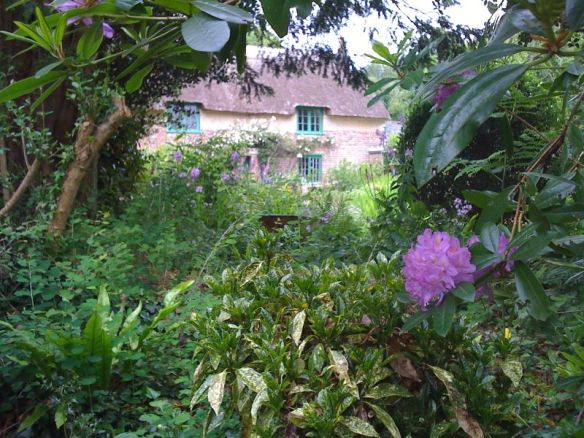
Above: Thomas Hardy's cottage, Higher Bockhampton, Dorset

When Owen arrived last year, we quickly decided we'd spend our holidays in Britain in his early years. The thought of struggling with airports and aircraft with a baby was too much. Over the past fortnight, we discovered just how rewarding holidaying at home can be.

We stayed at Greenwood Grange holiday cottages in the Dorset hamlet of Higher Bockhampton, just outside Dorchester, following an inspired recommendation by Karen's brother. The name of the village rang a bell, and I remembered that the novelist and poet Thomas Hardy was born there. It was quite a thrill to discover that Hardy's birthplace cottage (above) was just up the lane from our cottage. (Hardy was born here in 1840 and wrote several of his novels in the modest house.)

This was no literary pilgrimage, but I was fascinated to compare today's Dorchester with Hardy's Casterbridge. (I grew to love Hardy's work after studying The Mayor of Casterbridge for my A levels.) Dorchester has changed far less than most British towns since Hardy's day. A traveller entering the town from Bockhampton is in the heart of the town almost immediately – no urban sprawl here. Ironically, the biggest expansion has come to the west, where Prince Charles's new village of Poundbury is growing rapidly. Poundbury is a curious mix: in parts, it's an appealing out of the box old-style village, but the frankly bizarre new Poundbury fire station is utterly out of place. We were also rather unsettled to see almost no evidence of human life in Poundbury: the streets were deserted. It was nice to discover the headquarters of Dorset Cereals, though!
Weymouth early morning 

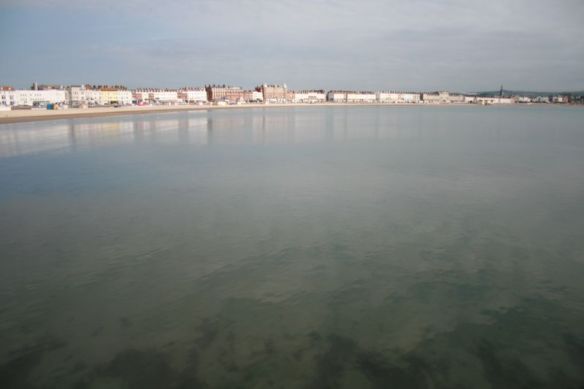
The great discovery of the holiday was Weymouth. We had three wonderful days on the beach there. I knew a little about Weymouth's history, as one of Britain's original seaside resorts. But we found it a great place to spend a sunny day, with shops and cafes within a pebble's throw of the sandy beach. I took the photo above just before we took a day trip from Weymouth to Guernsey.

IMG_6394
 

Finally, a glimpse of the wonderful swannery at Abbotsbury on the lagoon at Chesil Beach. It's extraordinary to think the swannery has been owned by the same family for 500 years. But we'll remember the kindness of the man who drove the tractor that pulled the trailer taking less mobile visitors from the car park to the Swannery. Knowing how much small boys love tractors, he let 11 month old Owen take the wheel of the tractor (below)!

IMG_6362

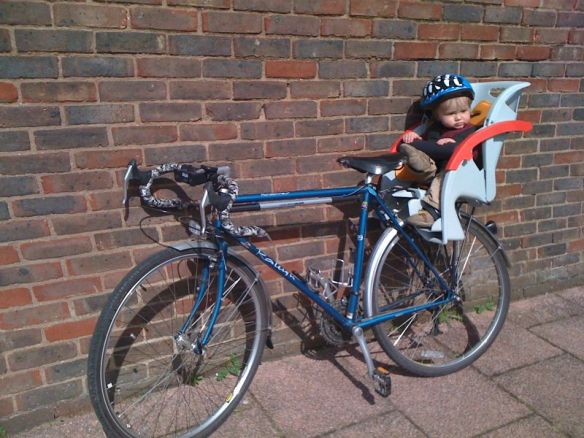
I cycled from Land’s End to John O’Groats on this bike. Now it’s got a child seat!

Rob at John O'Groats  

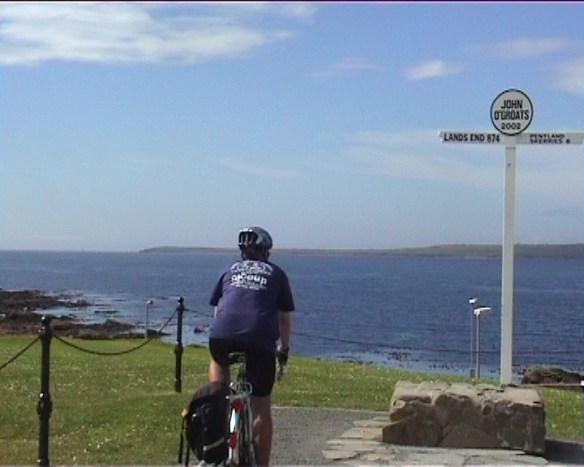
Once upon a time, I cycled the length of Britain – from Land's End to John O'Groats (above) - on my wonderful Raleigh Randonneur touring bike. (I wrote about that experience on Ertblog two years ago in this post). I never imagined as I cycled those long miles that one day I would attach an enormous child seat to the bike!

But that day has arrived. Karen and I cycled from Chalfont St Giles to Chalfont St Peter today with Owen strapped into our new Co-Pilot Limo seat. I was impressed how little impact the seat and a 20lb child had on steering and cycling, though our route was almost entirely flat. We'll see how we get on climbing Silver Hill out of St Giles!

Here's Owen in his new seat.

Owen and his new bike seat 2 may 2009

Finally, a word about the Randonneur. I've neglected it in the last few years, taking my Cannondale Road Warrior fast hybrid on our bike holidays. But riding it this week was a revelation, reminding me how brilliantly it coped with Land's End to John O'Groats. It took me the length of Britain without so much as a puncture. It's a real shame that Raleigh abandoned the touring bike market not long after I bought the bike in 1997.

Living with Teenagers: The Guardian names the author

I was surprised to find my blog had had hundreds of extra visitors over the last couple of days. The mystery deepened when I found they had all arrived at Ertblog via a Google search about The Guardian's Living with Teenagers column, which ended in June last year.

Tonight, I solved the mystery. The Guardian's G2 section revealed the name of the author: Julie Myerson after, it seems, days of speculation. Myerson has been the subject of a barrage of criticism for using her son's drug use as the subject of a book, The Lost Child. Critics described her actions as a betrayal of motherhood. Similar criticisms were made of her Teenagers column. The Guardian has now removed the columns from its website now the author's identity is public.

My Ertblog post about that column ranked fourth in a Google search on the subject – hence all those visitors!

Let’s give the Camerons time to mourn their beautiful boy

Like so many others, I was shocked and saddened today to hear that Conservative leader David Cameron's son Ivan had died at the age of six.

As the father of a seven month old son, I found the news especially poignant, although you hardly needed to be a parent to identify with the Camerons' tragic loss.

By a strange coincidence, The Guardian chose today to profile David Cameron in its G2 supplement, which included the familiar photo of David and Samantha Cameron with their children. David and Ivan are seen looking lovingly at each other. The shot took on a painful poignancy today.

It's extraordinary that Britain's prime minister and opposition leader have both lost children. It shows that power and money count for little in life's lottery. If any good is to come out of such sadness, it is that Brown and Cameron are better able to bring their own terrible experiences to help others. It's no coincidence that both are strong supporters of the NHS.

The other lesson is that life is far more important than politics. We can only begin to imagine how Gordon Brown and David Cameron coped with the pressures of political life in the light of what they were facing in their family lives. Politicians are human beings. They share all our failings and weaknesses. But they don't enjoy our luxury of anonymity in troubled times. We should allow them their human frailties – along with the time and space to cope with tragedy.

Owen's first holiday
http://youtube.com/v/S18EKGO-iWg
I've finally put together a short video of Owen's first holiday: in Looe, Cornwall, in September 2008.

Up hill and down Rivendell

When Karen was pregnant, we started nightly walks. One of them took us past a house in Chalfont St Giles called Rivendell. I liked the sound of the name. It brought to mind the Yorkshire Dales, and we always smiled when we saw the house. The people who live there have no idea that it has acquired cult status with us.

Just after Owen was born, I found another house called Rivendell in the next village, and was intrigued. A friend told us that Rivendell was a place in Tolkein’s Middle Earth. So much for my Yorkshire theory!

Keep cars off the pavement: the view of a first time dad

I love driving. There, I’ve said it. But since becoming a father five weeks ago, I’ve been more aware than ever of how anti-social and thoughtless motorists can be.

Why the sudden realisation? The simple and joyful act of pushing a pram. You wouldn’t believe how many drivers think pavements are car parks. Just try getting a pram past a car that is totally blocking a pavement. Why should pram drivers have to veer into a busy road because car drivers are so brainless?

But we pram pushers are the lucky ones. I feel so sorry for anyone in a wheelchair whose progress is totally blocked by a mindlessly parked car.

Sadly, car drivers think they are the only people who matter. They regard themselves (wrongly) as the eternal victims, who should be forever above the law. For some reason, they consider that speed limits should be optional, and double yellow lines merely street art. I blame Jeremy Clarkson, that anti-social moron whose crass lifestyle is subsidised by the BBC licence fee payer.

Pavements are for pedestrians, not cars. Speed limits are for a reason. Why should criminal car drivers be treated differently from burglars?

End of the pier show: Weston-super-Mare memories

I was sad to see that Weston-super-Mare’s Grand Pier had been devastated by fire earlier this week.

I spent many happy hours at Weston when I was little. My first visit was forty years ago this summer, when I was almost five years old. We had a family outing by Campbell’s paddle steamer from Cardiff pier head across the Bristol Channel to Weston’s Grand Pier. (In the days before the steamers transferred from Cardiff to Penarth.) That first visit was dramatic – I cut my foot on a piece of glass on the beach within minutes of getting off the steamer, and was rushed to the first aid stand.

A few years later, I discovered Weston’s other pier, the Birnbeck Pier, which is the only one to connect the mainland to an island. This has far more character than the devastated Grand Pier, and is about to be restored.  The Birnbeck lies on the lovely walk from Weston to Kewstoke.

My parents live on the seafront at Penarth, on the Welsh side of the Bristol Channel opposite Weston. The garish lights of the Grand Pier shone brightly across the water before this week’s fire. I hope that one day we’ll see both Weston’s piers restored, although the lights won’t be missed.

PS: BBC news editor Simon Waldman writes on the BBC Editors’ blog about his discomfort at being scooped by Sky News for footage of the Weston inferno – and his relief when readers provided their own videos.

One comment on the blog takes Waldman to task for his glee at finally being able to show this user generated content. Another, amusingly, suggests that someone point a webcam at all Britain’s remaining piers, given their vulnerability to fire and storm damage. One might add that it’s worth keeping an eye on anything that is being restored – from Hampton Court to Windsor Castle to Weston’s pier, restoration seems almost to guarantee destruction.