

UPDATED, 6 JANUARY 2026
It was like opening a time capsule. When my grandmother died aged 88 in 1981, we entered her house, 15 Grove Place, Penarth, Wales with trepidation. She had been a virtual recluse in her final years, and we found a house barely changed from my mother’s childhood there in the 1930s. The front room was kept in Sunday best condition, with an elegant settee, probably bought before the war from David Morgan, the Cardiff department store that had a branch in Penarth. On the wall of the main room was the 1969 calendar that I’d made for Grandma in my first term at school, aged five. (I had stuck a miniature 1969 calendar onto the bottom of a picture I’d drawn, no doubt guided by my infant school teacher.)
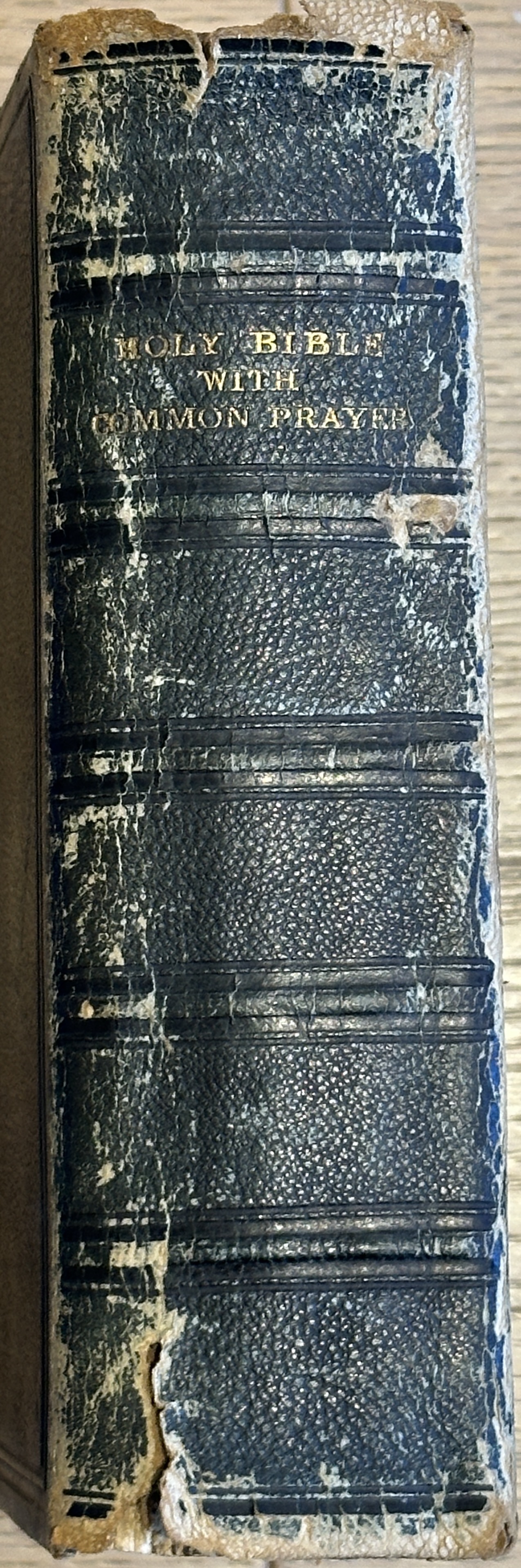
I made a beeline for the books kept in the middle room of this solidly built Edwardian (or late Victorian) house. There I found the two volumes of David Lloyd George’s Great War memoirs, still in the postage box they been came in on publication in the 1930s. But far more intriguing was a small Bible, with the year 1866 written in ink on the first page. As I opened it, a couple of very flimsy pages fell out.
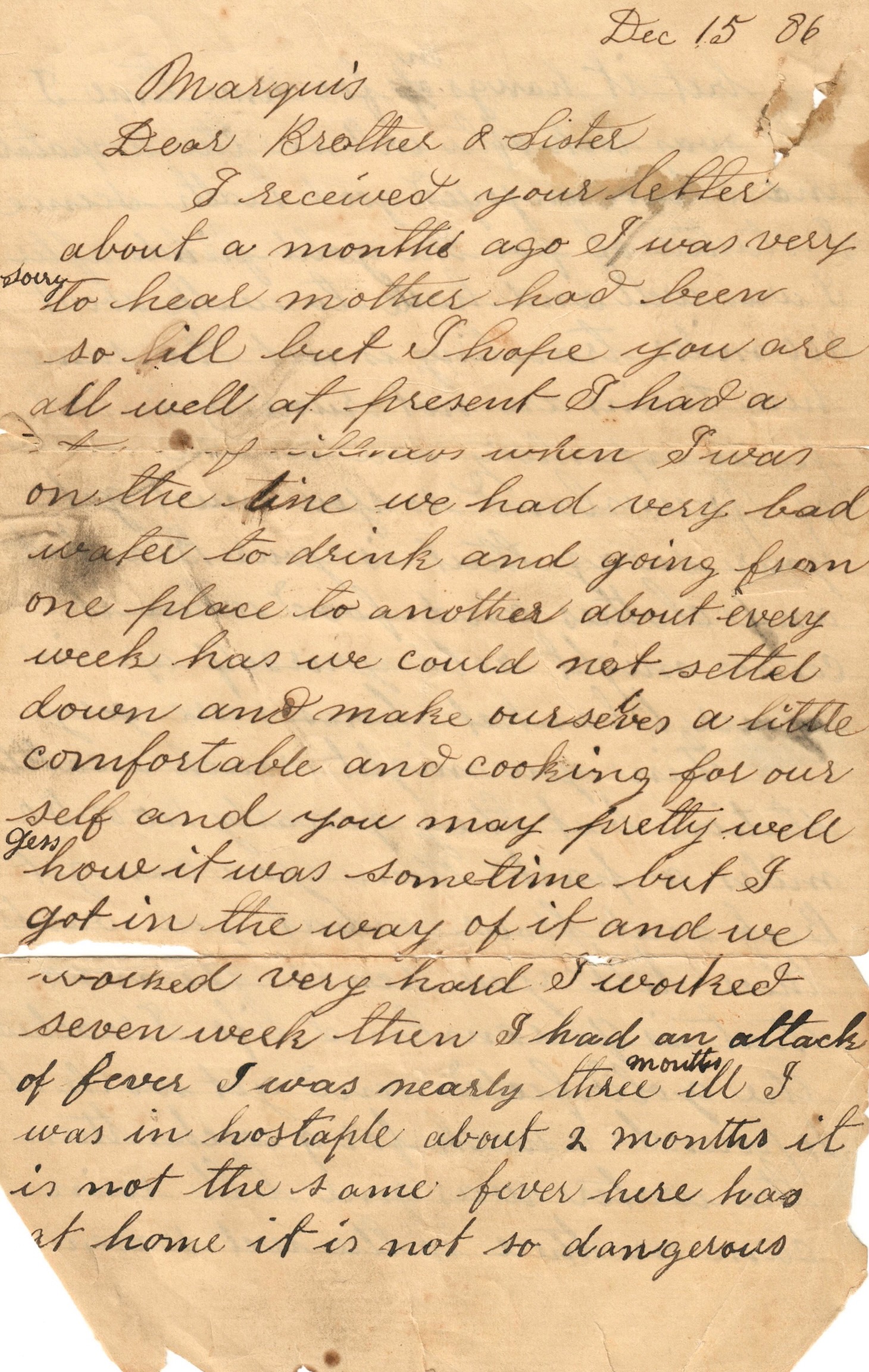
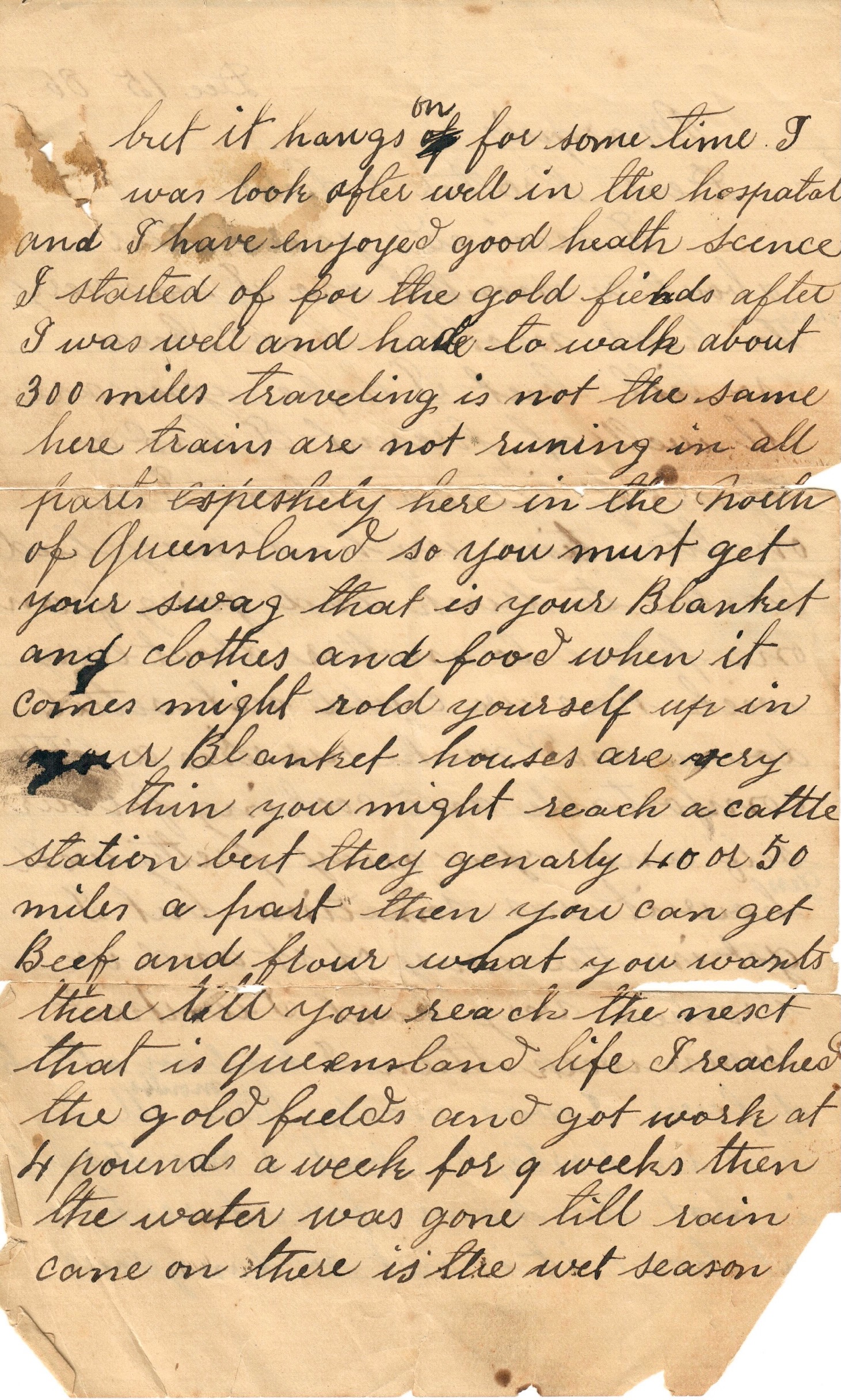
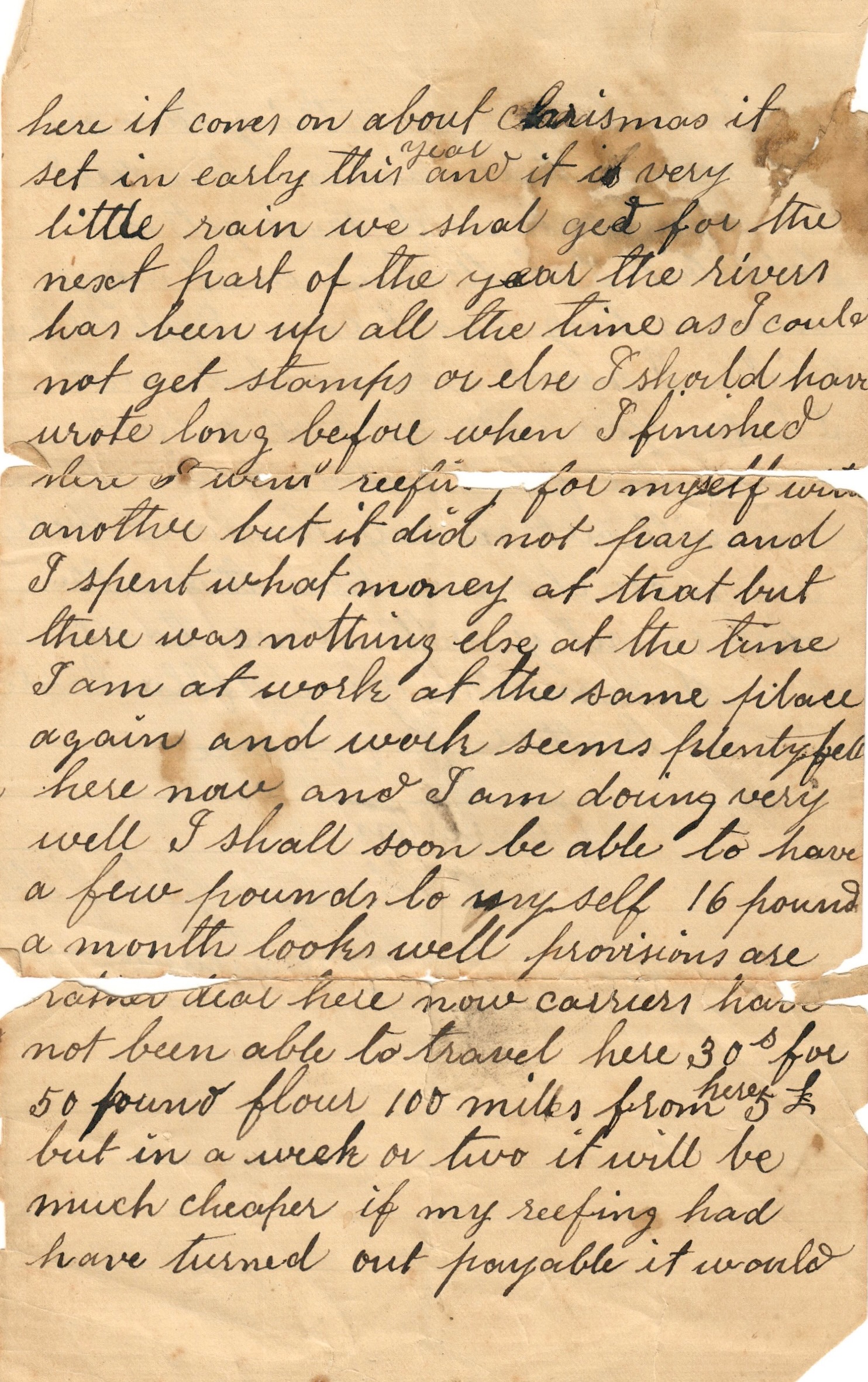
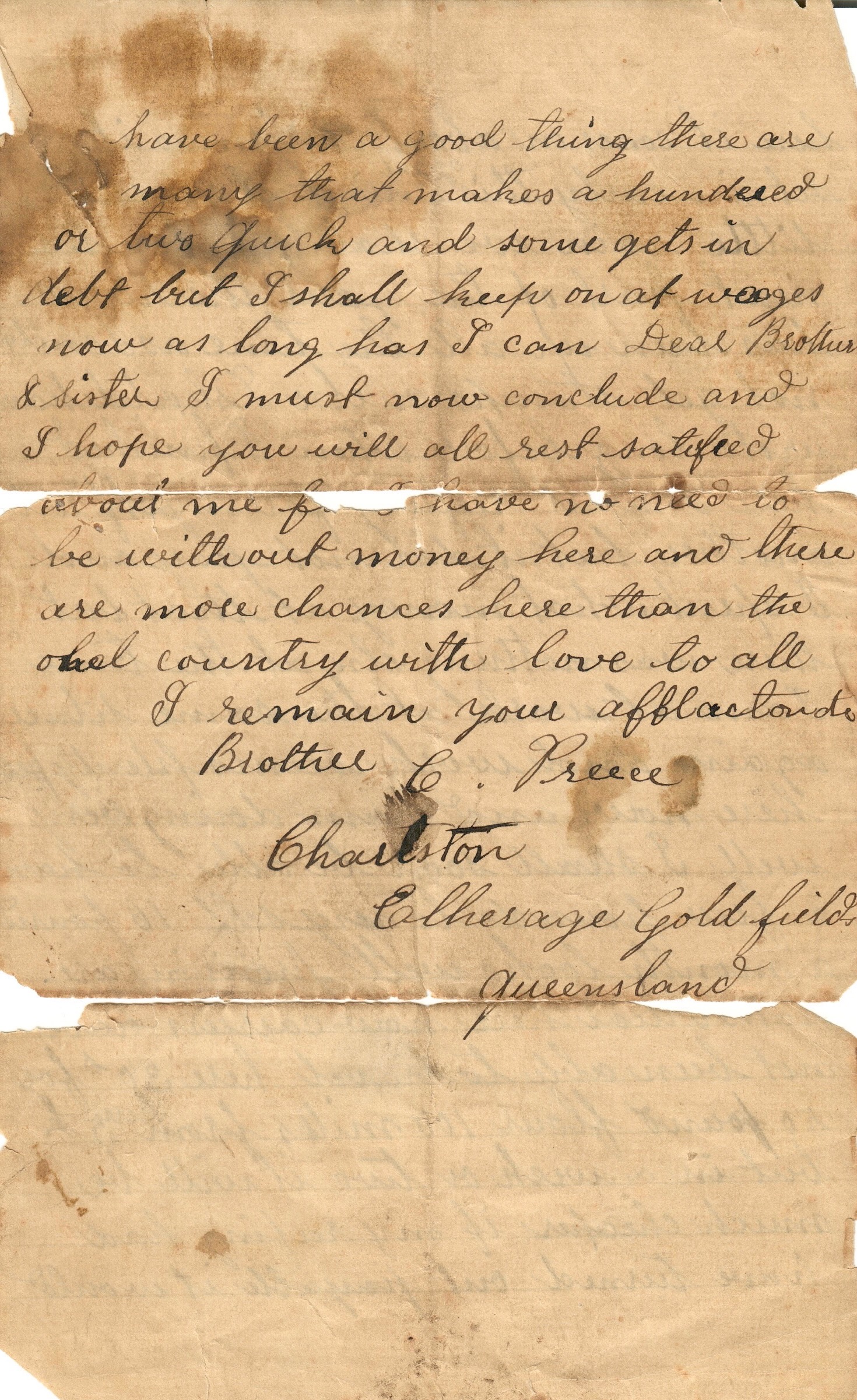
Above: the letter, written on both sides of two sheets of paper.
I was amazed to find that this was a letter written from the Australian goldfields in 1886, presumably by one of my ancestors. It was an incredibly poignant tale. The writer – who signed his name merely as C Preece – expressed his sorrow that his mother had been very ill, but explained that he’d been ill himself with a fever:
I had an attack of fever I was nearly three months ill I was in hospital about 2 months it is not the same fever here has at home it is not dangerous but it hangs on for some time…
It’s clear from the letter what a hard life awaited those who travelled to Queensland in the hope of making their fortune. The writer mentioned walking 300 miles because of the lack of railways in that part of Queensland, and also says how expensive provisions were, saying that 50 pounds of flour cost 30 shillings. (As a rough guide, that’s equivalent to around £220 in today’s money, which is a contrast with today’s price of around £20 for the same amount of flour.)
The writing in the letter is that of someone who’d received a very basic education – like many in mid 19th century Britain. As a result, his meaning is tantalisingly ambiguous. Talking of how much he was earning, he tells his brother and sister that ‘£16 a month looks very well’ – was that an aspiration, perhaps inspired by what he’d heard others had made, or what he’d actually earned? If he had, it would represent a fabulous month’s income of around £20,000 in today’s money. (These modern money conversions are based on Measuring Worth, a very helpful online calculator recommended by the Rest is History podcast.) Or is he deliberately talking up his prospects to reassure his anxious siblings back home? He does end by saying there are ‘more chances here than [in] the old country’.
Where was the ‘Charlston Etherage Goldfields’ in Queensland?

When I first read this remarkable letter in 1981, I was vaguely aware of the Australian gold rush, but had no idea where the Etheridge goldfield was. I wasn’t surprised to find no clues in my schoolboy atlas (The Times Concise Atlas of the World, 1975), and that appeared to be the end of the quest. Until the advent of the internet…
The breakthrough came when we were planning our 2026 family holiday to Australia. Queensland was on the itinerary, and I wondered whether we’d be able to visit the goldfields. As a result, I was able to confirm where that long-dead ancestor sought his fortune. The town of Charleston was renamed Forsayth after the arrival of the railway from Cairns in 1910. Forsayth is in the shire (county) of Etheridge, echoing the name of the goldfield. Unfortunately, it’s over 400km inland from Cairns, so it won’t be possible to include it in our itinerary. One day…
Clues from the family Bible

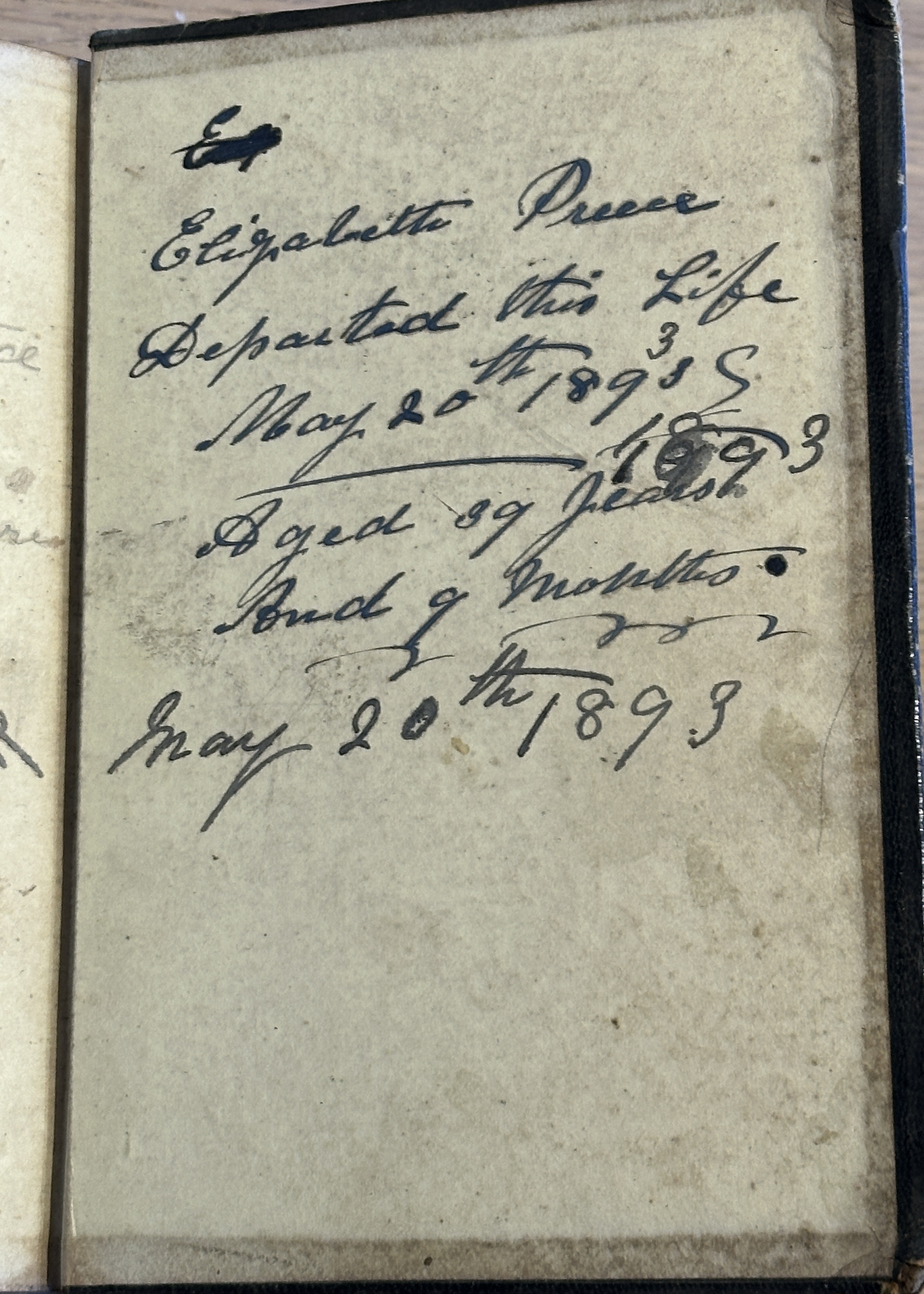
Almost 45 years after first discovering that small Bible, I decided to find out more about the people whose names appear inside. The front inscriptions were (presumably) by the person whose name appears there dated June 1866: Elizabeth Williams, Bredwardine, Herefordshire. At the back of the Bible is a sad note that says:
Elizabeth Preece/Departed this life/May 20th 1893/Aged 39 years/And 9 months
Underneath is written the same date, May 20 1893, presumably by Elizabeth’s grief-stricken husband, just hours after she died.
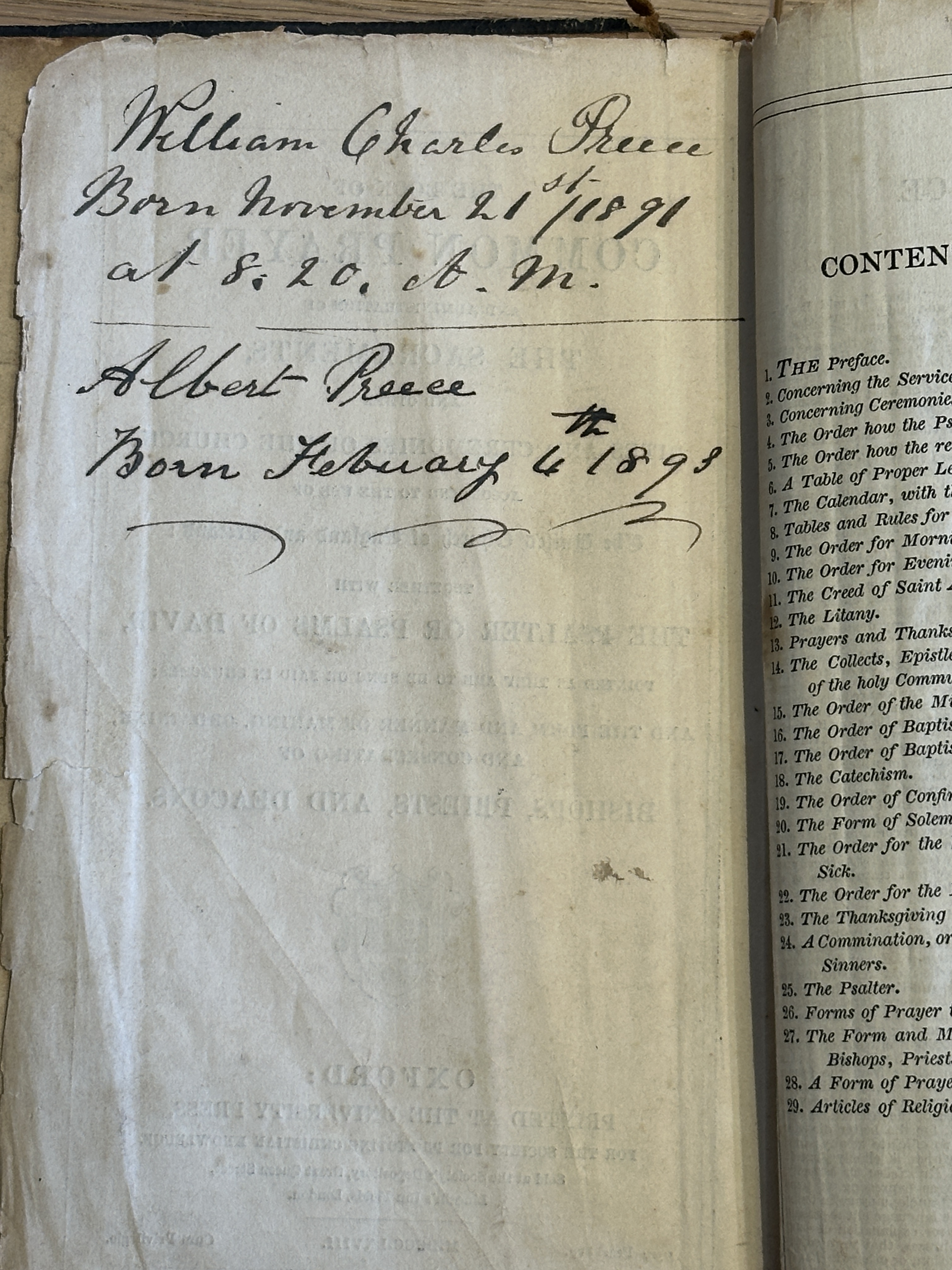
On the second page of the Bible is the above record of the births of Elizabeth Preece’s children, William Charles and Albert, my grandfather. I was keen to find out more, and that could only be done online as my mother’s family knowledge died with her in 2018.

Within a few minutes I’d downloaded from the General Register Office a digital copy of Elizabeth’s death certificate, above, which showed that she died of albuminuria, which is associated with kidney damage. The document showed that her husband, William Preece (senior), was with her when she died.

My next task was to find the birth certificate of my grandfather, Albert Preece – known to me as Grampy. This confirmed that his parents were Elizabeth and William, and, very poignantly, that Grampy was born three months before his mother died. I wonder if his mother’s illness was a result of a difficult pregnancy – far more dangerous 133 years ago than now? However, there was one mystery: Elizabeth’s maiden name was given as Price, not Williams. Was Elizabeth Williams another relative? Incidentally, the surnames Preece and Price are both anglicised versions of the traditional Welsh name ap Rhys (son of Rhys).

Just to complete the set, I obtained William junior’s birth certificate, seen above. He was born on 21 November 1891, when his parents were living at Cold (actually Cole) Brook Cottage, Bredwardine. They had moved to Prospect, Bredwardine, by the time his brother Albert was born two years later.
I knew my grandfather was born in the lovely border village of Bredwardine, but was sure I’d seen a reference to his living in Brecon. Was that on another book or document that was lost when my parents cleared out the house in Penarth after Grandma died? As no one alive today could offer any clues, the next step was to consult census records.

A search on the 1901 census drew a blank for Albert, his brother and father. But the 1911 census produced this intriguing entry. Albert was indeed living in Brecon, but with his aunt Margaret and uncle Thomas. Also living with them was another nephew of the householders, Reginald (?) Pugh. Was that another sibling of Albert – or a cousin? Amusingly, whoever filled in the form at first filled in the nationalities of the residents as English or Welsh, before crossing out these entries as nationality information was only required for those born overseas. Margaret is marked as speaking Welsh and English, while the others spoke only English – not surprising in this border county. Albert had already started a printing apprenticeship – he went on to become a newspaper linotype operator, retiring in the early 1960s.

I then did a search for Albert’s brother, William. According to the 1911 census he was also living with an aunt and uncle – Thomas and Eliza (Lizzie) Worthing, in Hay on Wye. He was then aged 19, and working as a carpenter and joiner. The great unknown is what happened to Albert and William’s father. Had he died? There seems no other reason why both his teenage sons weren’t living with him, especially as William was living just eight miles away just over the border from his birthplace of Bredwardine.

How could I find out for sure? The 1891 census showed that he was born in 1845 in Bredwardine. So far, I have found several deaths recorded for men named William Preece in Herefordshire during the first decade of the 20th century, but without enough details to be sure any of these record my great-grandfather’s passing. Note: see update below dated 19 January 2026 for the answer…
A very difficult woman


Albert Preece married Celia Millicent Price (yes, another Price family) in July 1922 in Pontardawe in the Swansea Valley. Their only child, my mother Rosemary, was born in July 1928 at the house in Grove Place, Penarth, in which I discovered that Bible in 1981. Grandma was a stylish woman in her younger days, and a talented dress maker. As what follows is less than complimentary, I should say that my love of reading began when she gave me a copy of Enid Blyton’s Secret Island book as a present when I was around seven. I also enjoyed listening to her singing along to the old Welsh language hymns on the BBC television programme Dechrau Canu, Dechrau Canmol. (This Welsh language programme was the inspiration for the English equivalent Songs of Praise.)
At Mum’s funeral in 2018, Dad asked me not to mention in the eulogy that Celia (Mum’s mother) was a very difficult woman. ‘There are still people in Penarth who remember her who may be upset.’ That seemed unlikely, given Mum herself was 90 when she died, but I respected his wishes. Seven years later, I can spill the beans.
When Mum and Dad were newly married in the 1950s, Celia made life really awkward for them. If they came back to Grove Place from the cinema five minutes later than expected she’d refuse to speak to them for a day or so. Mum and Dad once took Mum’s parents on a motoring holiday to Austria. I can only imagine the stress of sharing a small car for two weeks with Celia. Sure enough, a massive falling out followed the return home; my lovely Grampy was not strong enough to get his wife to behave reasonably. These rifts became more frequent after my grandfather died just before Christmas 1966, and we’d go for months and longer not seeing her because of the latest explosion. Reconciliation – such as it was – would typically be prompted by a call from Cardiff Royal Infirmary telling Mum that her mother had had a fall.


Above: my sister Beverley and Grampy in the garden at 15 Grove Place, Penarth, mid 1960s. The conservatory on the right of the house was attached to the middle room in which I found the Bible. The lean-to behind Beverley and Grampy contained an outside toilet, a coal store and the very sparse kitchen.
That old house was always cold. It had fireplaces in every room, including the bedrooms, but after Grampy died they were never used. I vividly remember our only Christmas staying there, in 1967, the first after Grampy died, and the all-pervading cold. My poor father was ill in bed with flu – trying desperately to keep warm.
As a teenager, I used to go with Dad to collect Grandma to bring her to our house in Cardiff for lunch. Even spending ten minutes there while she put on her old, stylish coat would be enough for me to feel an icy chill racing through my body. A couple of years before Grandma died, during the freezing winter of discontent of 1978/79, Mum persuaded her to buy a gas fire to heat the one living room she used. We helped her choose the appliance in the Wales Gas showroom in Penarth. A few days later, we heard that she’d cancelled the order.
Grandma was obsessed with saving money. We once found dozens of packets of rancid butter on the sideboard in her kitchen: she’d found butter reduced in price, and bought them without any concern that she’d never eat that them. She used money that would have been better spent on heating to invest in local government bonds. When she died, we found she’d left all her money to my sister Beverley, who very kindly split it between herself, Mum and me. I will always be grateful to my sister for her determination to do the right thing.
Looking back, it seems clear that Grandma had some kind of personality disorder or other mental illness that caused her to inflict misery on family and friends.
Grandma Celia died on 5 July 1981. We hosted the wake in our garden in Lakeside, Cardiff, including members of Mum’s family that I’d never met before. It was striking how the Welsh and English speaking members of the clan kept largely to themselves. Later, when everyone had left, and the summer evening sun was setting, Mum said quietly, ‘I’m an orphan now’. She always regretted that her lovely father was the parent taken too soon, and although she and Dad spend the final 21 years of her life living in Penarth, Mum always felt her time in Penarth was overshadowed by painful memories of her malevolent mother.
Don’t leave your family history until it’s too late
This family history is inevitably full of gaps, including the identify of ‘C Preece’, the writer of the Goldfields letter. (Was he my Grampy’s uncle?) I am sure Mum must have talked to me about her family history, but because of the very difficult relationship with her mother I naturally took far more interest in my father’s family story, and forgot almost everything about hers. I will try to fill in the gaps to the extent that public records allow. But sadly the human stories that bring a family’s history to life are lost forever. Don’t make my mistake: record the memories of your grandparents and parents while they are still here to tell their stories.
UPDATED, 6 JANUARY 2026
My brother-in-law Jeremy Sampson (who is my wife’s brother, so not connected to the Preece family) was intrigued enough by this blogpost to do some research of his own into the mystery of why my grandfather Albert Preece wasn’t living with his father or brother at the time of the 1911 census. Jeremy found that Albert was already living with his aunt Margaret and uncle Thomas on the day of the 1901 census. This blended family was living in The Struet, Brecon, Wales – about 25 miles over the border from Bredwardine.

One explanation is that Albert’s father had died before 1901. We can’t be sure, because it is possible that William was unable as a widowed working man to look after his two children, aged eight and nine in April 1901, and so arranged for them to live with family members. This would tally with the fact Wiliam’s name appears in a trade directory as a tailor as late as 1905. I found this information on the amazing website about Preece family history created by Ian Preece.
I now need to find out when William died. I’ve found a 1902 death certificate for a William Preece in Hay, but he was a labourer, not a tailor. The search continues…
UPDATE: 19 JANUARY 2026

Now I now. William died in June 1908, which explains why my grandfather Albert was living with his aunt and uncle in Brecon in 1911 – but not why he wasn’t living with his father at the time of the 1901 census. I doubt I’ll ever find the answer to that question. It also tallies with the fact that tailor William didn’t appear in trade directories after 1905.
UPDATE: 24 JANUARY 2026
I mentioned above Ian Preece’s brilliant history website about the Preece surname. After I contacted him, he was so intrigued by my goldfields ancestor C Preece that he turned detective on my behalf. He has struck gold – a highly appropriate metaphor! Here’s what Ian discovered.

Like me, Ian assumed that C stood for Charles, a very popular name in the 19th century. My last update, with William’s death certificate, led Ian to focus his search on the village of Bredwardine. That certificate names William’s brother, Arthur – a name that Ian points out was quite rare in Victorian times, unlike Charles. Ian found William’s birth certificate, showing he was born baptised on 1 January 1844, and that his mother was called Eliza Williams. So we now have the answer to my question earlier in this post: there were threer Eliza(beth) Preeces: my great-grandfather’s mother Eliza (Williams), his sister Eliza Preece (who became known as Lizzie Worthing after her marriage) and his wife Elizabeth (Price).
Ian’s next move was to study the census records for the decades after Thomas and Eliza got married. (They tied the knot a few months after William was born.) From these records, we can see that they had at least five more children after William: Thomas, Henry, Eliza, Arthur (the sibling named on William’s death certificate in 1908) and … Charles! It looked as if Ian had confirmed my assumption that the goldfields letter writer was called Charles. Their father Thomas was a mole-catcher – no doubt an important job in a village on the river Wye.
Ian now knew enough to find Charles’s birth certificate, showing he was born on New Year’s Day 1858:

Charles is also listed as living at the family home in the 1871 census but by the time of the next census in 1881 census he was living, aged 22, with his now married sister Eliza (now known as Lizzie) Worthing and her husband Thomas in Hay on Wye. Incidentally, Charles’s age as listed in the census records isn’t very accurate, but that could simply reflect that whoever filled in the form entered the wrong age. (This was an era when most people had little or no education.)
Charles doesn’t appear in censuses after 1881, which tallies with his leaving the country before December 1886, when he sent his letter home. Like me, at first Ian couldn’t find any definitive evidence of Charles in ship passenger records, so he did what I should have done, and simply Googled ‘Charles Preece Queensland’. To Ian’s surprise, the very first result was a newspaper report of the death and funeral of a Charles Preece in Queensland in 1931:

His age, 73, exactly matched that of ‘our’ Charles!
Ian couldn’t believe his luck when his next search, for Charles and Mareeba (the cemetery named in the newspaper) named his parents as Thomas and Eliza. This was a perfect match.

Finally, Ian tracked down the evidence we’d been missing, showing he was a passenger on SS Waroonga, which sailed from London on 27 January 1886, arriving at Brisbane on 28 March. Was he dreaming of making his fortune as the ship sailed south, from a British winter to an Australian summer? Did his route take him through the newly opened Suez Canal, or (more likely) the traditional route via Cape Town and the Cape of Good Hope?


SS Waroonga. Courtesy Green Collection, State of Victoria Library
This is the ship that carried William away from Britain to the land of plenty. SS Waroonga was a new ship, built in Glasgow in 1882, and operated by British India Associated Steamers. It ended its days as Bonsal Maru in Japan, and was broken up in 1926. It is curious to look at the deck of this modest (2,500 tons) ship and think that my great-great uncle must have spent hours on it, watching the passing shores of Africa and Asia. Did he have butterflies as he saw Australia for the first time, knowing that this huge country was now his destiny?
Back to that letter that Charles wrote from the goldfields in 1886. Ian wondered why it was addressed ‘Dear Brother and Sister’ when Charles had four brothers as well as sister Eliza. Perhaps the clue is in the 1881 census that Ian shared with me. William (my great grandfather) and his brother Arthur were the only siblings still living at home in Bredwardine. Perhaps Eliza and one of her brothers were living elsewhere – perhaps in Hay or Brecon – and that the letter was sent to their home? I will need to do some digging in the census records.
We can’t be sure, but it seems unlikely that Charles ever saw England or Wales again. That newspaper obituary described him as ‘well known and highly respected.’ Yet that same report also said that ‘after working all Queensland, [he] settled in a little humpy on the banks of the Barron River’. I was intrigued: what’s a ‘humpy’? A quick Google told me it was a small shelter used by Australian Aboriginal people.

This suggested that Charles was either very poor in later life – or a little eccentric? Would you choose such a bleak place to live if you had a choice?
We probably won’t be able to visit Charles last resting place at Mareeba on our Australian family trip in July, but we will be thinking of him when we visit Brisbane, reflecting that this where my great-great uncle Charles stepped ashore on his great Australian adventure.
I’d like to thank Ian Preece for finding so many missing pieces in my family jigsaw. I wonder whether we’ll find out more about Charles’s life in Queensland between his early goldrush days and his final moments in Mareeba in 1931?
Leave a Reply