
Twenty years ago today, I became a blogger. On New Year’s Eve 2005, rather than joining the crowds seeing in 2006, I set up a blog, and published my first post when the new year was less than an hour old.
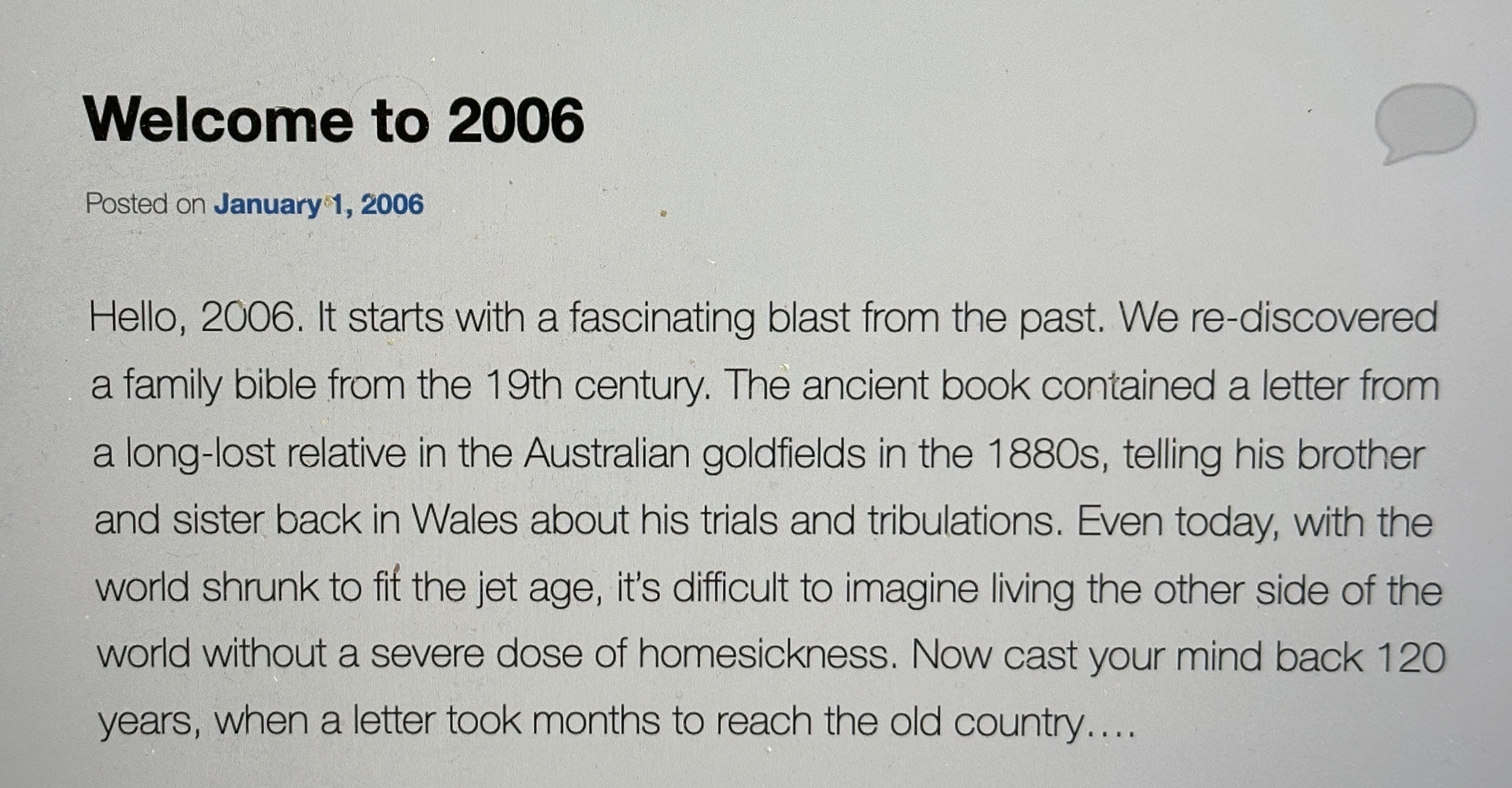
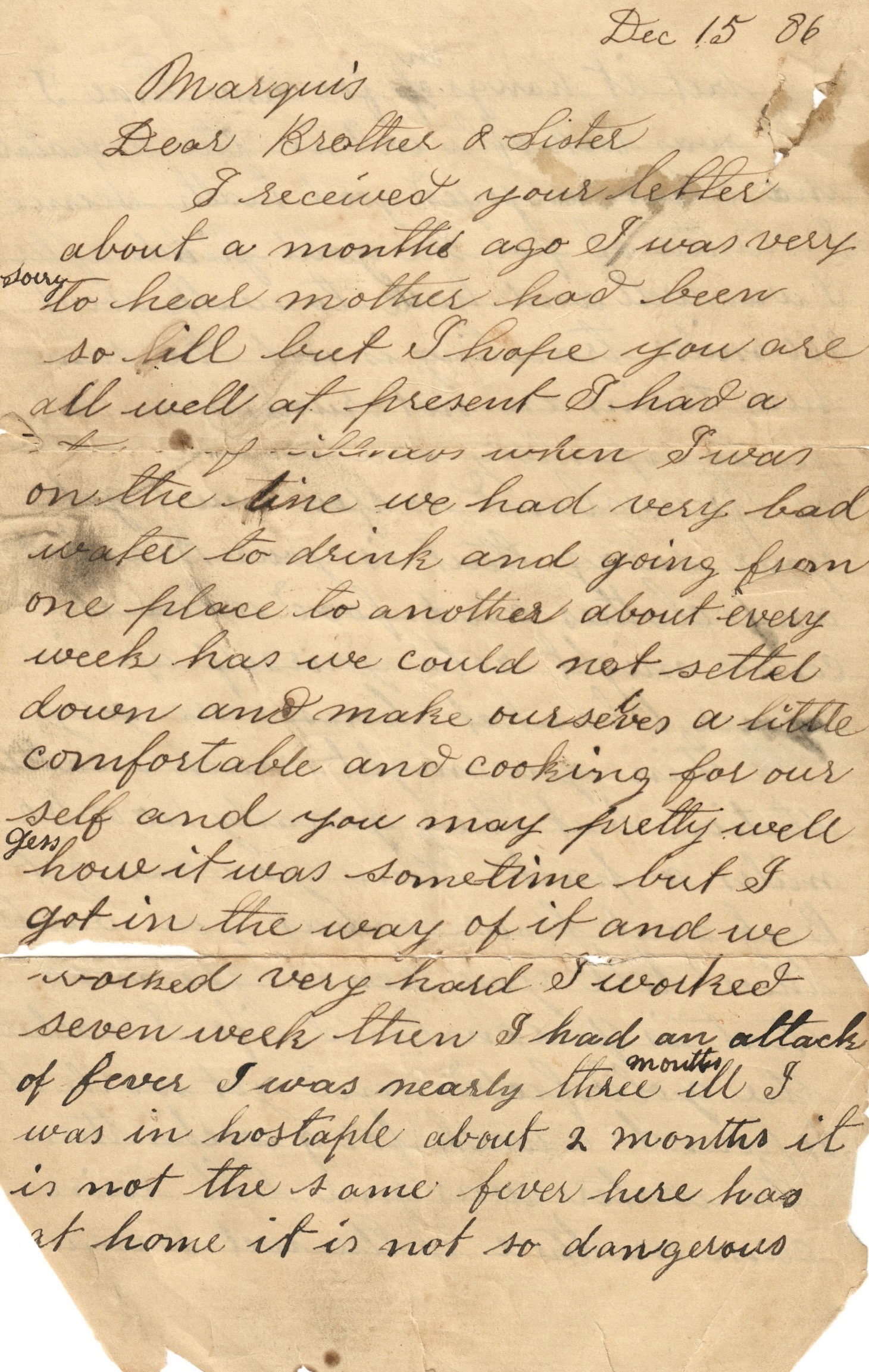
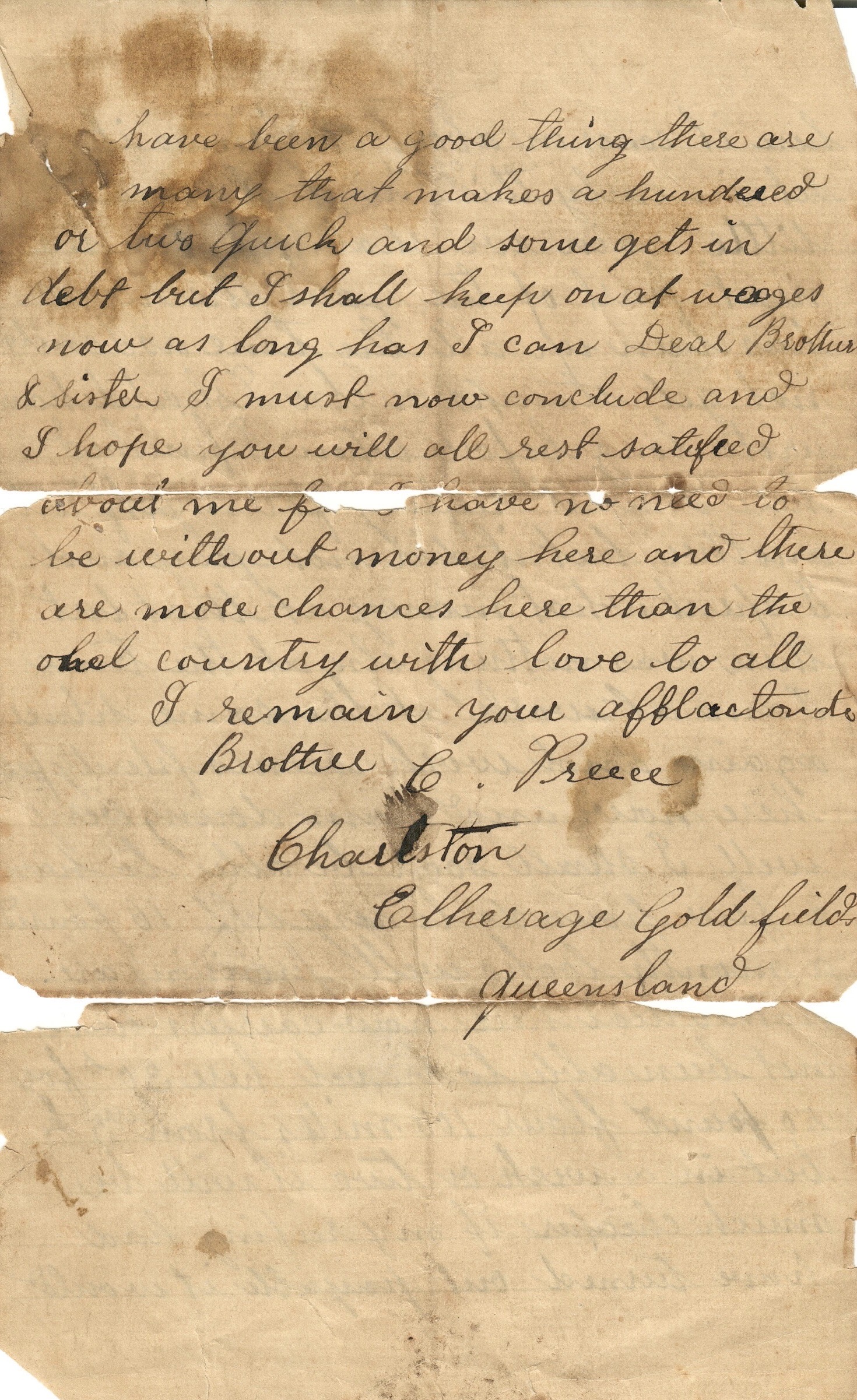
That post about an intriguing family story was the first of many about history and family. We’d rediscovered a very poignant letter written by one of my grandfather’s relatives in 1886. He’d travelled to the Australian goldfields in the vain hope of making his fortune. You can sense his feeling of helplessness hearing about his mother’s serious illness while he was on the other side of the world, and ill himself. I’ll post in more detail about this extraordinary letter in the next few days. (Click the follow button on the right and you’ll receive the story in your inbox.) UPDATE: you can read my blogpost about the letter and the family stories associated with it here.

I chose Typepad to host the original Ertblog. I can’t remember whether I spent much time researching my options, but suspect not, given I started blogging almost on impulse that New Year’s Eve. I did love the image of a small child kneeling at a laptop resting on a large box. It was presumably intended to suggest how easy it was to blog with Typepad. (Note the references to weblogging – the origin of the word ‘blog’.) I switched from Typepad to the more versatile WordPress in 2012, and moved my six years of Typepad-hosted posts to WordPress when Typepad closed down in 2025. The transfer was easy, although any links to content hosted on Typepad, such as photos, no longer worked.
The write stuff
I’ve always enjoyed writing. My first published work appeared in the Lakeside (Cardiff) school magazine in 1972 – I was shocked that my story’s reference to ‘dash those cars’ was censored by a teacher who thought ‘dash’ was a swear word! In my professional career in PR, I’ve written countless news releases, articles and speeches, but always longed to pen something more personal. A blog was the perfect outlet.
My first month’s blog content was a feast of nostalgia, including a post about the end of Cardiff’s Football Echo, one of many soccer spin offs from Britain’s evening papers. I recalled Dad’s habit of buying a copy of Cardiff’s Football Echo as we headed home after watching Cardiff City’s latest triumph goalless draw at Ninian Park, and mourned the demise of the pink papers – so called because, like the Financial Times, they were printed on pink newsprint to distinguish them from their parent evening papers.
In my early blogging days, before the advent of the smartphone, it was hard to publish posts when travelling. I thought I’d found a solution: with Typepad you could publish via email. I proudly emailed my words of wisdom, only to realise that my work email signature appeared at the end of the post! I quickly borrowed a laptop from a colleague to log in to delete it. A few years later the iPhone and then the iPad made it a doddle to share my thoughts with the world – or my Dad – while on the road.
A few of those early years posts have proved prescient. In March 2006, I highlighted the pernicious trend of chancellors leaking budget plans before announcing them in the House of Commons. My post Come back Mr Dalton, all is forgiven referred to a past Labour chancellor forced to resign for telling a reporter about his 1947 budget:
Once upon a time, budget proposals were the greatest secret In Whitehall.
Chancellors of the Exchequer disappeared into purdah weeks before the annual budget speech. Revealing proposed fiscal changes was a resigning matter. In 1947, Labour’s Chancellor Hugh Dalton fell on his sword for spilling the beans to a lobby correspondent just before his budget speech. (Which at least spared him from the infamy of devaluing the pound two years later.)
Today, all these conventions have gone out of the window. Government spinmeisters trail budget decisions weeks before the event. Or fly kites that never take flight, to make the real budget seem more voter-friendly.
It’s probably inevitable. But it makes us all very cynical. Hugh Dalton must be turning in his grave, wondering how honour could have been devalued so swiftly after he made his sacrifice.
This showed that Rachel Reeves was far from the first chancellor to leak budget plans – although few have proved as inept at this game as Reeves and her spinners.
The anger games
A blogpost 16 years ago showed that anger was infecting public life and the media long before the rise of Nigel Farage and his Reform UK party. At a PR event in February 2010, I asked the BBC’s John Humphrys – then Britain’s most feared interviewer – whether the rise of social media hadn’t made us far too angry for our own good.
I gave the example of the news this week that children in Britain are far less likely to die violently than thirty years ago – contrary to the impression we get from the media and Tory politicians that Britain is a violent and broken society. How, I asked, could we have a reasoned debate when we’re all so worked up? John pointed out that politicians didn’t want to have a reasoned debate: they want to get us worked up so they can push their own views and policies.
Brexit foretold
Many people in Britain were shocked when the UK voted to leave the European Union in June 2016. They assumed that remain would win.
I was saddened by the vote, but not surprised. Over a year before, after the Tory election win that made the EU referendum inevitable, I blogged that Britain could be out of Europe within three years.
There will be a referendum on Britain’s membership of the EU in the next two years. The right wing press will use every opportunity to poison the public against the EU, unlike in 1975. David Cameron will fail to win any significant changes to our membership, adding ammunition to those anti-EU forces. The British public has no great affection for the EU so there has to be a strong possibility that the English vote to leave. That prospect will give the SNP and Plaid Cymru a platform to demand a condition that all the home nations have to vote to leave. If Cameron refuses, we can expect a second Scottish independence referendum with a very different result. As before, the Tories are playing fast and loose with the union.
The end of the Great War generation
When I started blogging 20 years ago, there were still people alive who had served in the Great War. One of my first posts marked the passing of Nicholas Swarbrick, the last surviving merchant navy seaman from that conflict. Mr Swarbrick remembered the death of Queen Victoria, and more poignantly spoke of witnessing the death of fellow sailors at the hands of Germany’s U-boats. Two years later, as I waited for the birth of our son Owen, I read the memoirs of Harry Patch, Britain’s last surviving soldier of the Great War. Harry died in 2009 aged 111.
Tony Blair, SEO and me

When I started blogging, it was for my own pleasure. I had no illusions that the world would care what I thought, hence my tongue in cheek strapline about sharing my thoughts with the world – or my Dad, seen above. I retired that line the year after Dad died, aged 96.
But in those early years, it was easier for an amateur’s blogpost to go viral than today. At breakfast on holiday in Switzerland in June 2007, I was baffled why my blog was getting a flood of visitors. Then I noticed that the BBC had linked to a blogpost I’d written about BBC impartiality – a topic as hot in 2007 as it is today. A few years later, my post about Tony Blair’s memoirs did amazingly well:
If you Google ‘ Journey Tony Blair iPad’, my post comes first out of a staggering 211 million search results, beating huge media organisations. And it ranks highly on searches about Blair’s book on iBooks and Kindle. (I’m on page two of results for a straight search for ‘Tony Blair A Journey.)
Curiously, my post still comes fourth if you do that same Google search today, despite the fact the content now lives on WordPress.com.
My most popular recent post was about the astonishing news that a 19th century American president had a grandchild still alive in 2024. Harrison Ruffin Tylor was the grandchild of John Tyler, who was born in 1790, and served as US president in the 1840s. Sadly, Harrison died in May this year (2025) but how amazing to think that someone who’d lived through a quarter of the 21st century had a grandfather born in the 18th century. (And who served as America’s president just four years after Queen Victoria came to the British throne.) Kudos to super-geek Jonn Elledge for unearthing this gem.
Championing social media within PR
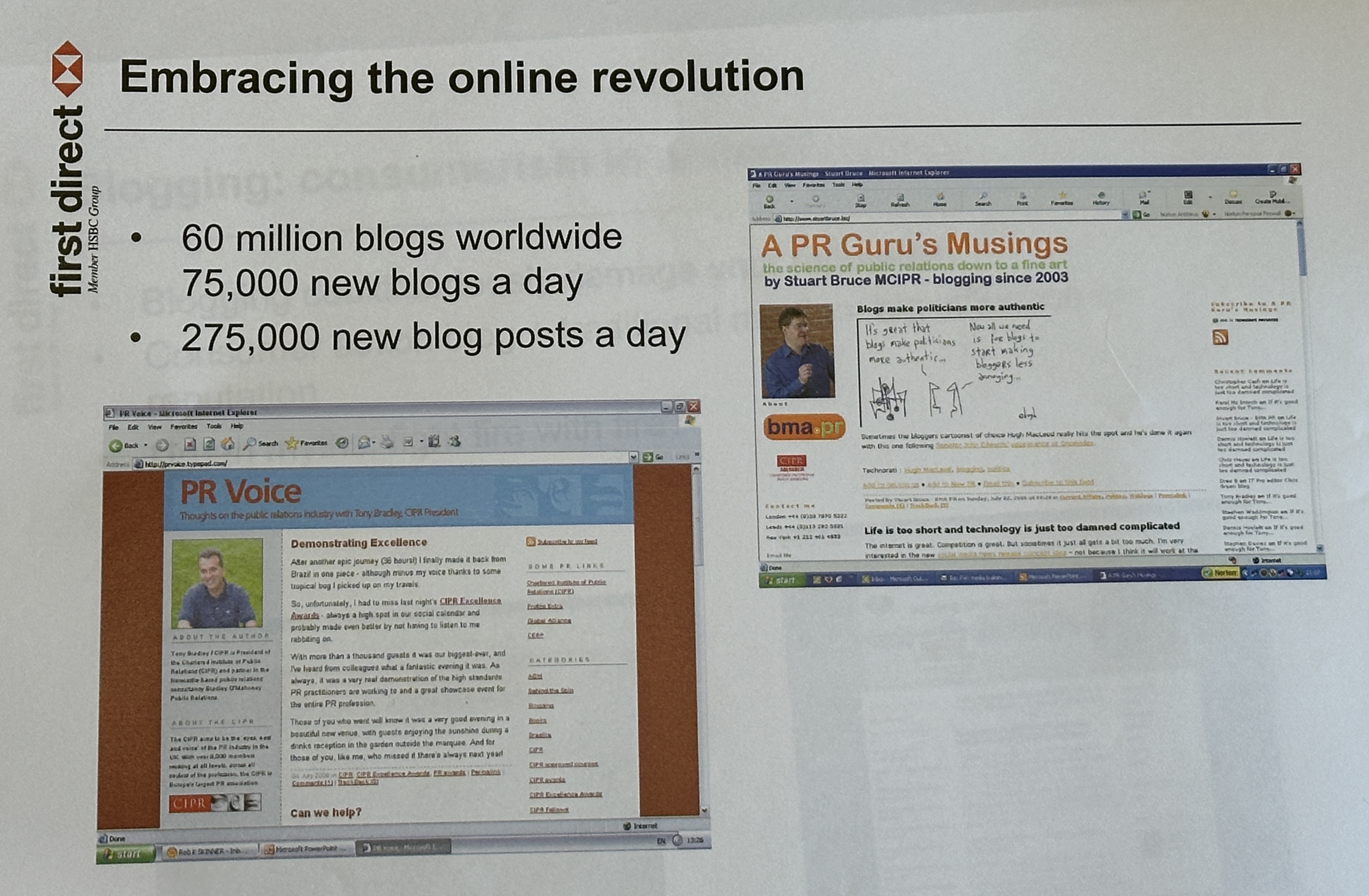
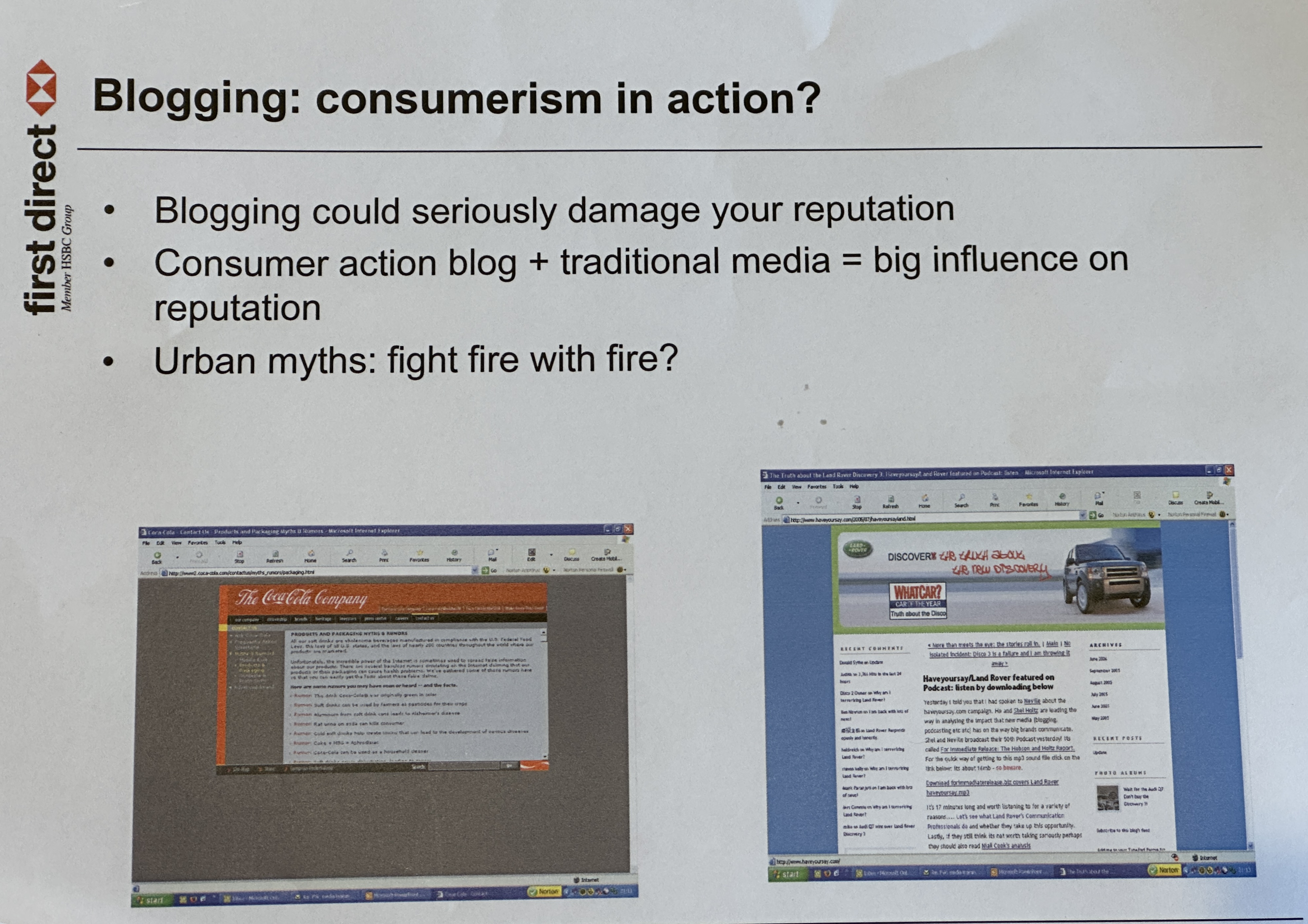
As a relatively early PR blogger, I was keen to learn more about the implications of the rise of social media, and to urge PR and business leaders to take the new media seriously as an influence on reputation. My first opportunity came through my keynote speech at the Chartered Institute of Public Relations’ Northern conference in Leeds in July 2006. As I noted in my blogpost after the event:
In my keynote speech, I explained why blogging is such a powerful tool for consumerism. For the first time, consumers have the ability to create a voice for themselves in seconds. If the cause is topical, the traditional media will give consumer blogs plenty of publicity. The PR profession has to come to terms with blogging – and social networks such as myspace.com – if it is to give effective advice in the new media age.
It’s interesting that I chose Myspace as my social network example. It shows that Facebook (just two years old at the time), and Twitter (launched four months before I spoke in Leeds) hadn’t yet made an impression. That would change quickly, and on Facebook’s fifth birthday in 2009 I blogged that Twitter was making the bigger impact. I pointed out that my niece Siân had just started following me on Twitter. ‘What’s Twitter?’ asked my wife when I told her. ‘I’ll explain when I get home,’ I replied. By the time I got back, she knew all about it from the BBC evening news.
Through my 2006 CIPR keynote event, I got to know a few of the PR social media pioneers, including Stuart Bruce, Stephen Davies, Simon Collister and Stephen Waddington. They were involved in a series of events under the banner Delivering the New PR, which started as a University of Sunderland conference, organised by Nicky and Andy Wake’s brilliant events company Don’t Panic. No one did more to convince communications specialists that they needed to take social media seriously. As I blogged after a Delivering the New PR conference in London in November 2006:
One of the key messages of the event was that social media will end any idea that PR people can control the message. It’s always been a myth, fuelled by the short-lived success of people like Alastair Campbell, but it’s now on its last legs. The irony is that this is happening just as senior management is demanding miracles of PR teams. Issues management is a full time job, especially in sectors under the media, consumer and regulatory spotlight, but it cannot banish nasty headlines. We must not pretend that we can. Above all, we must maintain absolute integrity in the face of the pressures. I sense that people new to PR, thrust into the limelight, may be tempted to cut corners and wing it with claims that are economical with the truth. It’s a temptation that could – rightly – be career threatening.
Later, I led social media at PayPal UK, and penned countless stories for our UK corporate blog.
Dyson: the story of customer service failure
Blogposts sharing problems with a product or service often do very well. One of my most popular posts is one that appeared five years ago about Dyson’s failure to replace a faulty Pure Hot+Cool room heater. The post was a wail of anguish complaining that it took the well-regarded consumer electronics firm almost two months to replace the duff unit. I’ve provided more helpful content that’s generated traffic, such as a 2015 post explaining how to get Apple’s iTunes music service working with Spotify. (Probably out of date a decade on!)
Cycling from London to Edinburgh and back
I saw a huge increase in traffic to my blog in 2025. It’s no mystery: I shared a series of blogposts about the London Edinburgh London (LEL) long distance cycling event with the LEL community via its Facebook page. (The posts sharing tips did well.) But more than that, I blogged far more frequently. That has to help the algorithms notice my content: I’ve seen traffic almost quadruple over the past three years as I’ve resumed posting more regularly. This is nice to see, but as a hobby blogger not life changing!
Penrhos: the story of a railway battlefield


I love history, and many of my posts over the past 20 years have featured aspects of the past. One of my most popular posts featured the story of a fierce battle between rival Welsh railway companies on a lonely hillside near Caerphilly in South Wales. The painting by Briwnant, in the National Museum of Wales, shows the rival tracks at Penrhos Junction in the early years of the 20th century. I took my own photo in the early 1980s when Dad stopped the car on the road bridge over the railway. My blogpost also explained how I went back in early 2024 with my own son Owen to discover what was left.
My Victorian grandmother

I loved my Nan, my paternal grandmother. She lived to 102 years old, and she’s featured many times on this blog, notably on the 30th anniversary of her death in February 2024. How I wish that I’d recorded her voice as she vividly told stories of her childhood in the 1890s, including memories of a procession to celebrate Queen Victoria’s Diamond Jubilee in 1897. (I made up for this my taking extensive audio and video recordings of my parents and in-laws.)
The father and son blogging team
I always thought my father Bob Skinner was born to blog. As a former reporter, he was adept at typing an instant opinion piece, and was frustrated as he got older that the mainstream media no longer accepted his unsolicited articles. Blogging provided him with a perfect outlet, and by luck I finally persuaded him to become Bob the Blogger just as the pandemic was beginning in 2020.
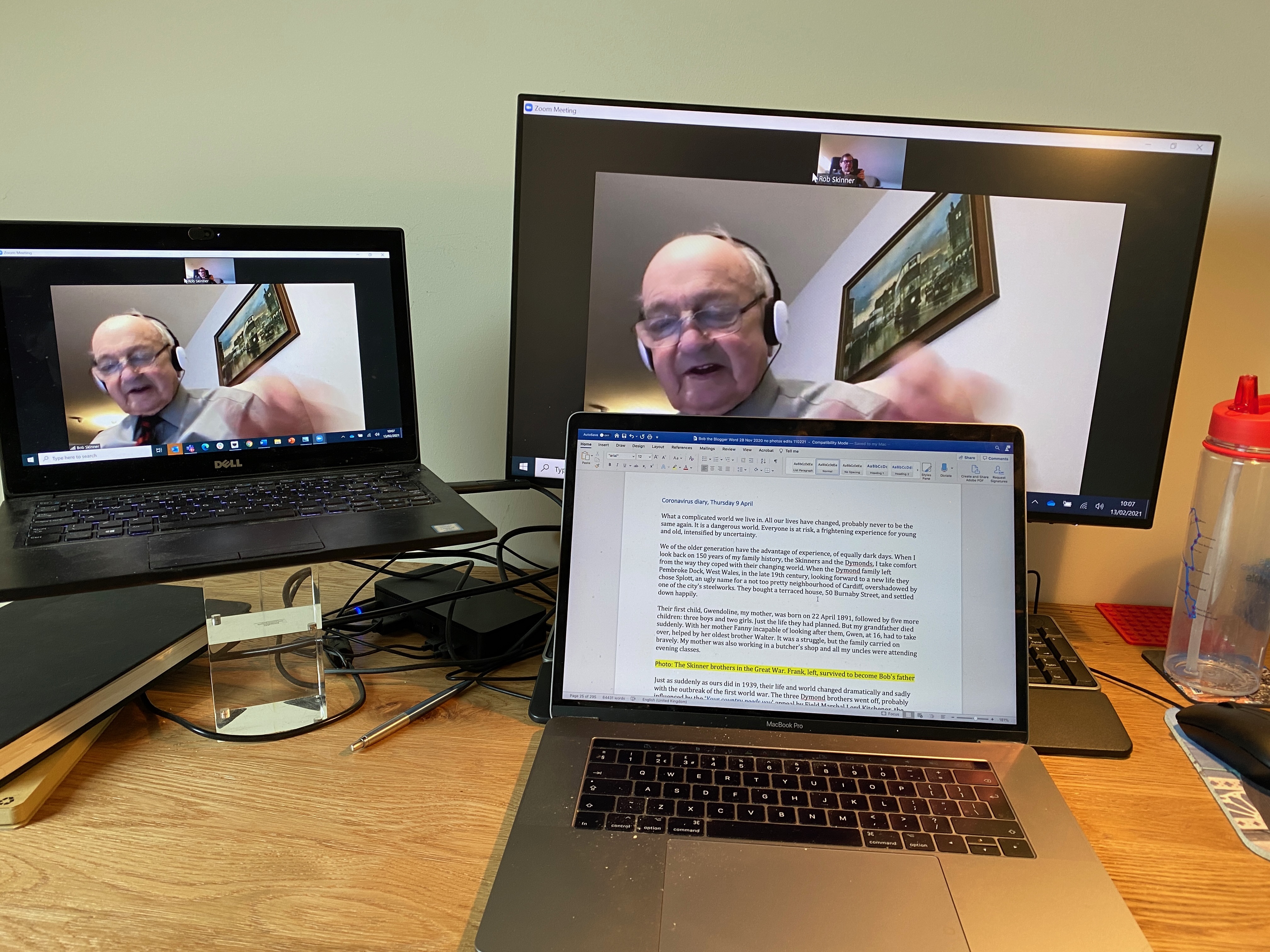
He posted hundreds of daily posts, which we distilled into a Kindle book in July 2021: Pandemic! My Care Home Diary. You can see him reading extracts in this BBC Wales report. I loved working with him – two people with a combined age of over 150 years – as we made editing decisions live via Zoom, that pandemic essential.
Bob was still blogging the month he died, in February 2023. I was thrilled the previous month to see that he’d been inspired by my blogpost about memories of childhood cinema visits to write about his own filmgoing, revealing that his first date with my mother was to see a film at an Odeon in Cardiff.
It just shows how blogging can provide a precious historical record, especially as we rarely write letters or keep diaries as in the past.
Leave a Reply