
This is the first in a series of posts about my training and preparation for the 1530km London Edinburgh London audax event in August 2025. The series was inspired by LEL supremo Danial Webb asking if anyone was planning to post about their training and preparation for the event. For part 2, lessons from London Wales London, click here.
London Edinburgh London is a cycle ride across Great Britain between the English and Scottish capitals. Held every four years, it is the premier British audax – a long-distance, non-competitive cycle ride. You have a maximum of 128 hours to ride to Edinburgh and back to London.
I’ve been dreaming about taking part in LEL since the pandemic, and will be on the start line in August. I’ve followed LEL Facebook and Yet Another Cycling Forum (YACF) posts, and read several books by previous participants such as Andy Allsopp and Malcolm Dancy for inspiration and information. I also bought the film about the 2013 edition of LEL. (All of which, truth be told, sent shivers of fear down my spine about what I’ve signed up for!) I’ve also enjoyed the LEL podcasts, which you can find on all the usual podcast platforms, including Spotify.
In this post, I’ll explain my road to LEL 2025, talk about my training, and also share a few tips for fellow LEL riders – which may be useful for anyone taking part in other multi-day audax rides. These tips are based on my own cycling experiences and advice shared by previous LEL riders. In future editions, I’ll share any new lessons from my training and preparations.
So – what makes me think I can complete LEL?
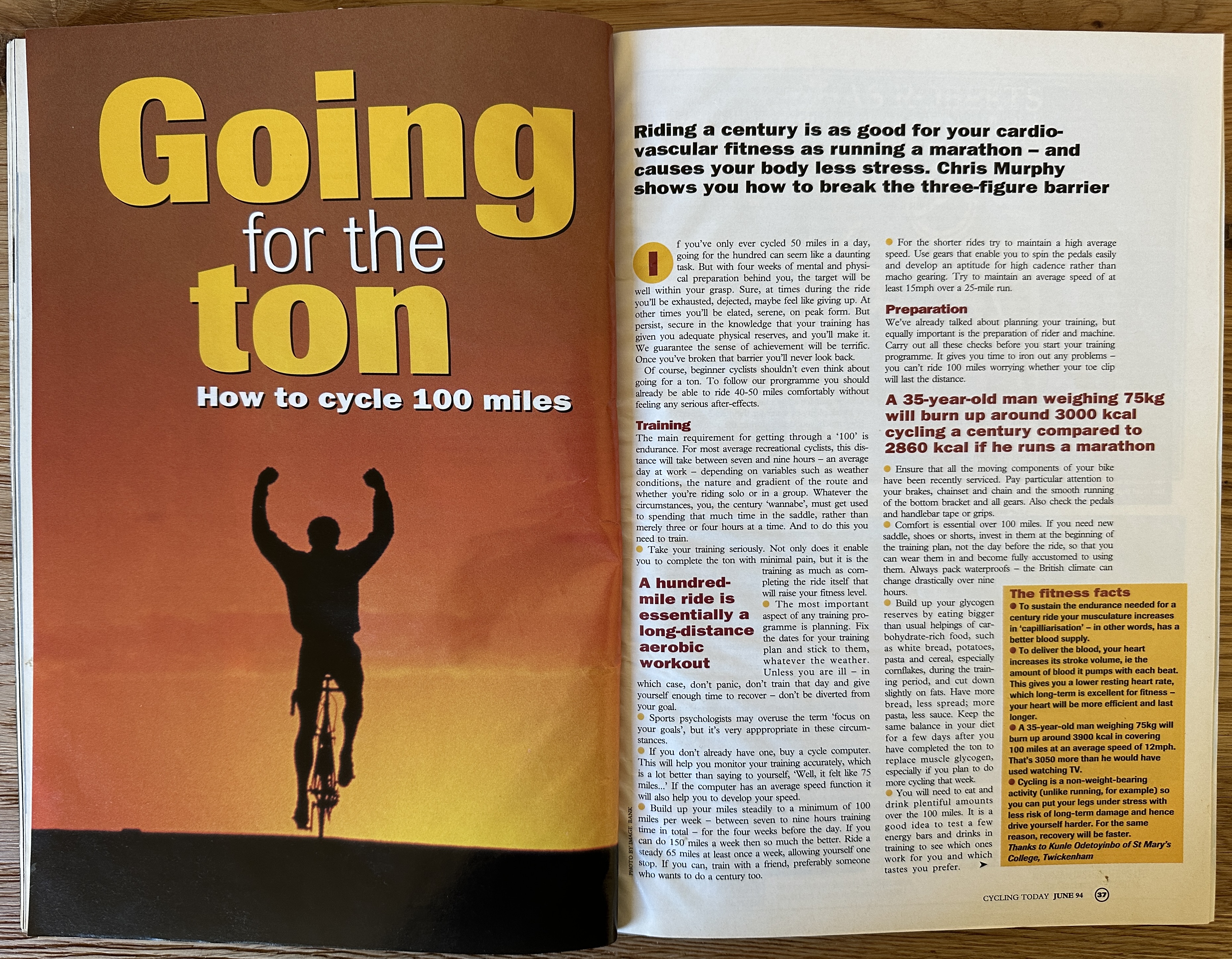
I’ve been cycling for over 35 years, since buying my first proper bike in 1989, as I blogged last year. Back in 1994, I was inspired by this feature in the old Cycling Today magazine about cycling 100 miles, and successfully completed my first century the following year.
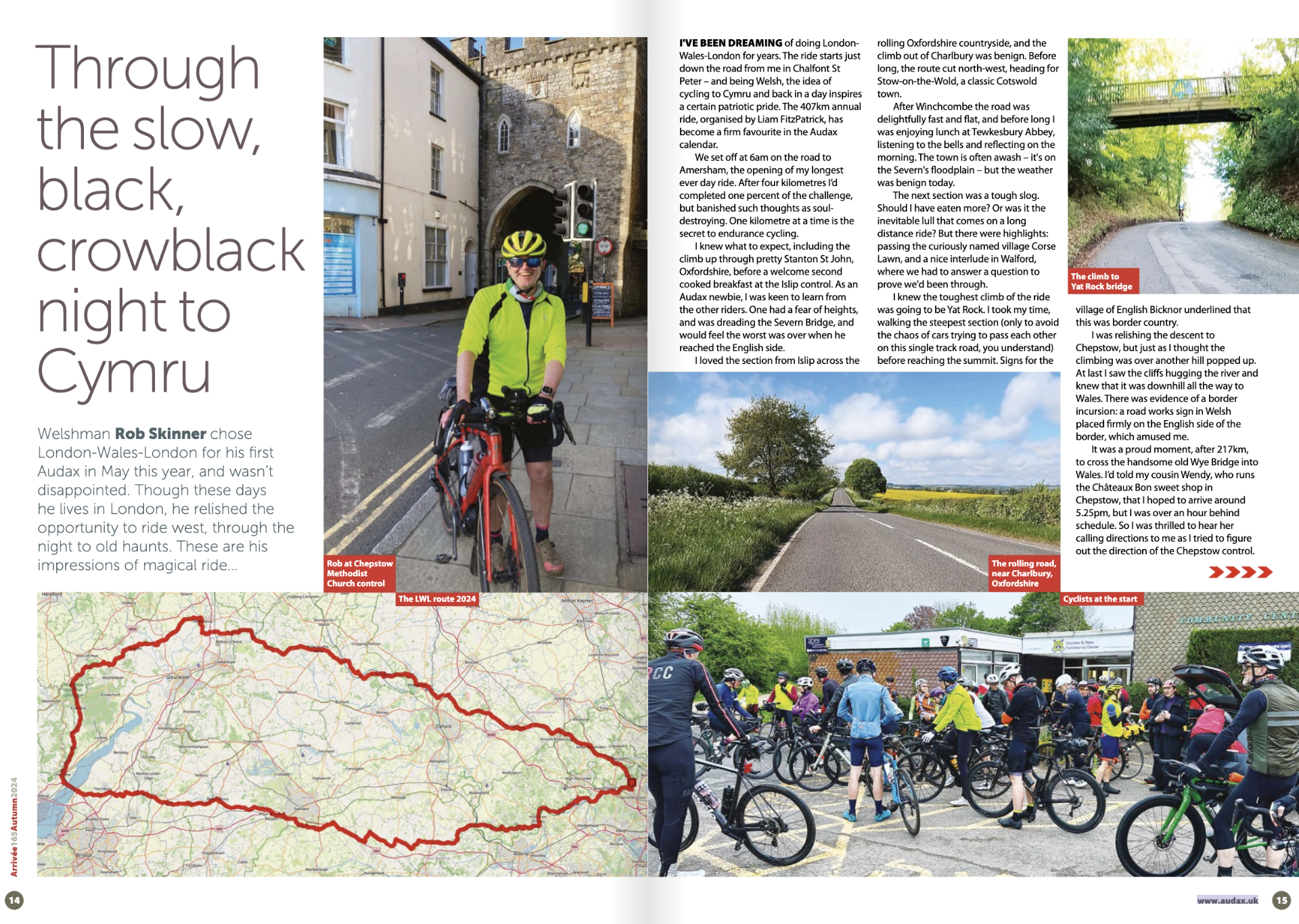
Last year, I completed my first audax ride, the 400km London Wales London, and my beginner’s story appeared in Audax UK’s Arrivée magazine. (The article was a shorter version of my LWL blogpost.) I knew that LWL was a good test of my ability to complete the far bigger LEL challenge, and early on my ride to Wales I had a brief crisis of confidence:
‘I was still in the Cotswolds when I decided such a challenge [LEL] was beyond me. The toll on body and spirit would be huge. Yet now, after the satisfaction of completing LWL successfully with something to spare, I’m not so sure. I have a guaranteed place for 2025, and that would have to be the year – it really would be too much by 2029, when I’d be approaching 66.’
I am feeling more confident now about LEL, and am fitter than I was on the eve of LWL 2024.
Training for LEL 2025
I got a funny look when I talked about ‘training’ for LEL with my friend Rob McIvor. Rob is an incredibly experienced long-distance cyclist who has posted about his experiences on LEL 2017 and Paris Brest Paris 2015. He had a point: it’s a little pretentious to dignify my rides as training. Unlike many, I don’t plan my week’s rides with a view to improving my functional threshold power (FTP), or my hill climbing through repetitions of the steeper Chiltern hills.
But I have cycled more than 500 miles a month on average since the beginning of November, and began my LEL year much fitter than usual. Completing the Rapha Festive 500 over the holidays was tough but valuable preparation for what was to come. (Building fitness over the winter pays dividends later.) So far in 2025 I’ve cycled almost 1,900 miles and climbed 84,000 feet over 127 hours – a chunk of which was on my indoor trainer before spring arrived. I’m noticing that the local hills are feeling easier – ascents that I used to grimace over are now much more enjoyable. So maybe I am training after all…
Join the club
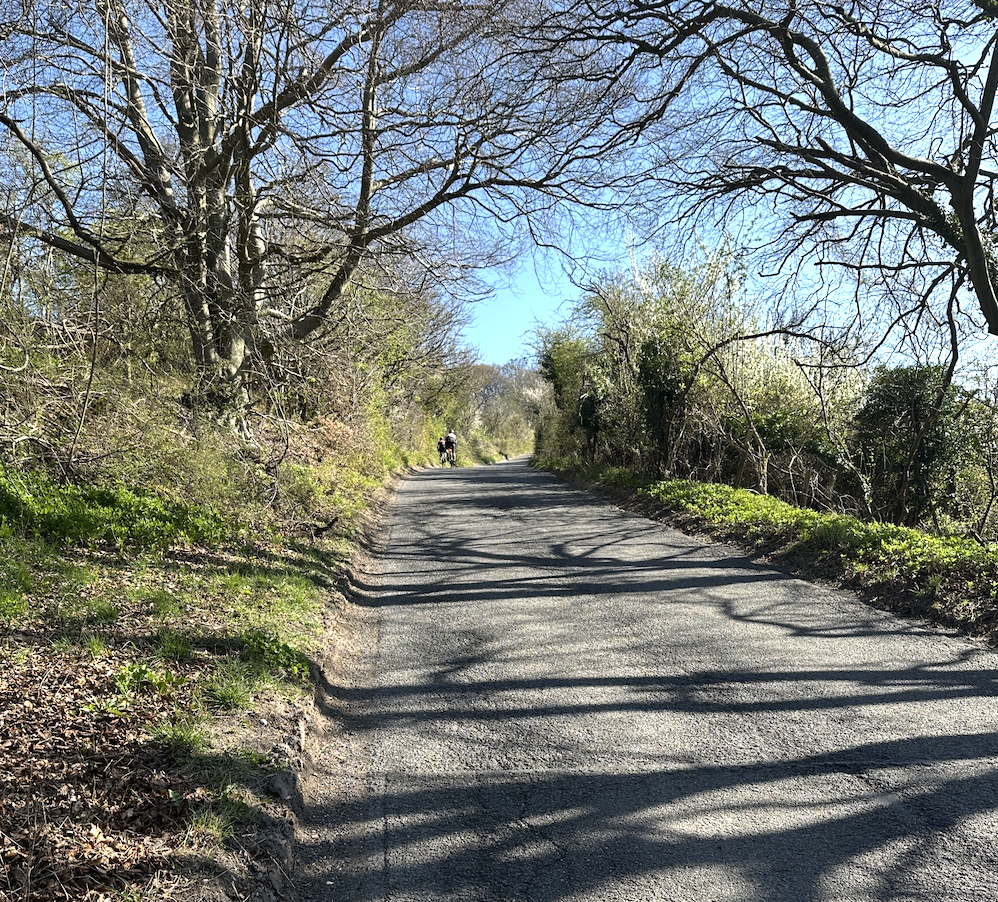
Part of my preparation for LEL has been to rejoin Beaconsfield Cycling Club. I’ve not joined as many weekend club rides as I would have liked (life has a habit of getting in the way) but I relish the opportunity to cycle with this friendly bunch, and as a bonus have discovered new routes within a few miles of home. While riding with the club I’ve even set a new personal best for climbing Kop Hill near Princes Risborough which cycle climb guru Simon Warren rates as 7/10 for difficulty. On the club’s Good Friday 100km challenge ride I cycled up the Chiltern escarpment four times, and found the climbs easier than in the past. That ‘training’ is paying off, although I will always struggle with gradients over 10 percent.
Back to Wales – twice

There’s no entry requirement for London Edinburgh London, unlike for Paris Brest Paris. But I figured that it made sense to complete 400km and 600km audaxes before LEL, not least to give me more practice in endurance and overnight riding. So I’m cycling London Wales London (400km) again in May, followed by the 600km Bryan Chapman Memorial (BCM) in June. Some say 400km is the hardest distance as you’re unlikely to get any sleep. But I found it an ideal audax debut, as I was home soon after riding through the night. By contrast, the BCM is sure to be a tougher test, as it’s a hilly route across Wales and back. As always the weather will make a difference – I was so lucky on LWL last year as the weather was perfect, with clear skies, benign overnight temperatures and virtually no wind.
My last big challenge before LEL will be riding from the English Channel to the Mediterranean. I’m joining the tour run by Peak Tours, my favourite cycle holiday company. We’ll cover 1500km in 14 days – so a shorter route than LEL and taking an extra nine days! It does include an optional ascent of Mont Ventoux, the iconic Giant of Provence, which has been a Tour de France highlight for decades. If I manage that, Yad Moss should be less intimidating on LEL, although sleep deprivation will play its part.
Get bike-fit
Back in January, I had a bike-fitting session at Amersham Bike Fit. As I’ll be cycling for days on end on LEL, I thought it made sense to check whether my bike was set up correctly. Owner Phil Holloway tested my posture and bike set up. I wasn’t surprised that he recommended that I raise my saddle, but he also diagnosed that the stem (which connects the handlebars with the steering fork) on my bike was too long, and that I was hunching over the handlebars as a result. I got a shorter stem, and raised the saddle on my two main bikes. At first, I found that I was getting minor knee pains, but I followed the advice of my personal trainer, Robin Cooke at The Fit House, Chalfont St Peter to allow my body to get used to the new bike set up. Sure enough after a week the pain (which was always just a niggle rather than anything more serious) had gone.
I have also made a conscious effort to relax my grip on the bike – the video Phil showed me of my posture when riding confirmed how tense my arms and neck were. That could have caused problems on LEL.
Don’t neglect your core
It’s easy for cyclists to devote their time to miles on the road. Why spend time in the gym when you could be setting Strava personal records? The simple answer is that off-bike strength training will improve your performance and comfort, while upper body strength helps your bike handling, stability and riding performance. I’ve been developing my core and upper body as well as leg strength this year, with personal trainer Robin’s expert guidance. The best test of success is when I can walk without any discomfort after a mega-long ride. Doing regular planks is a simple way to do this – almost anywhere. Just five minutes a day can make a difference.
Give yourself a break
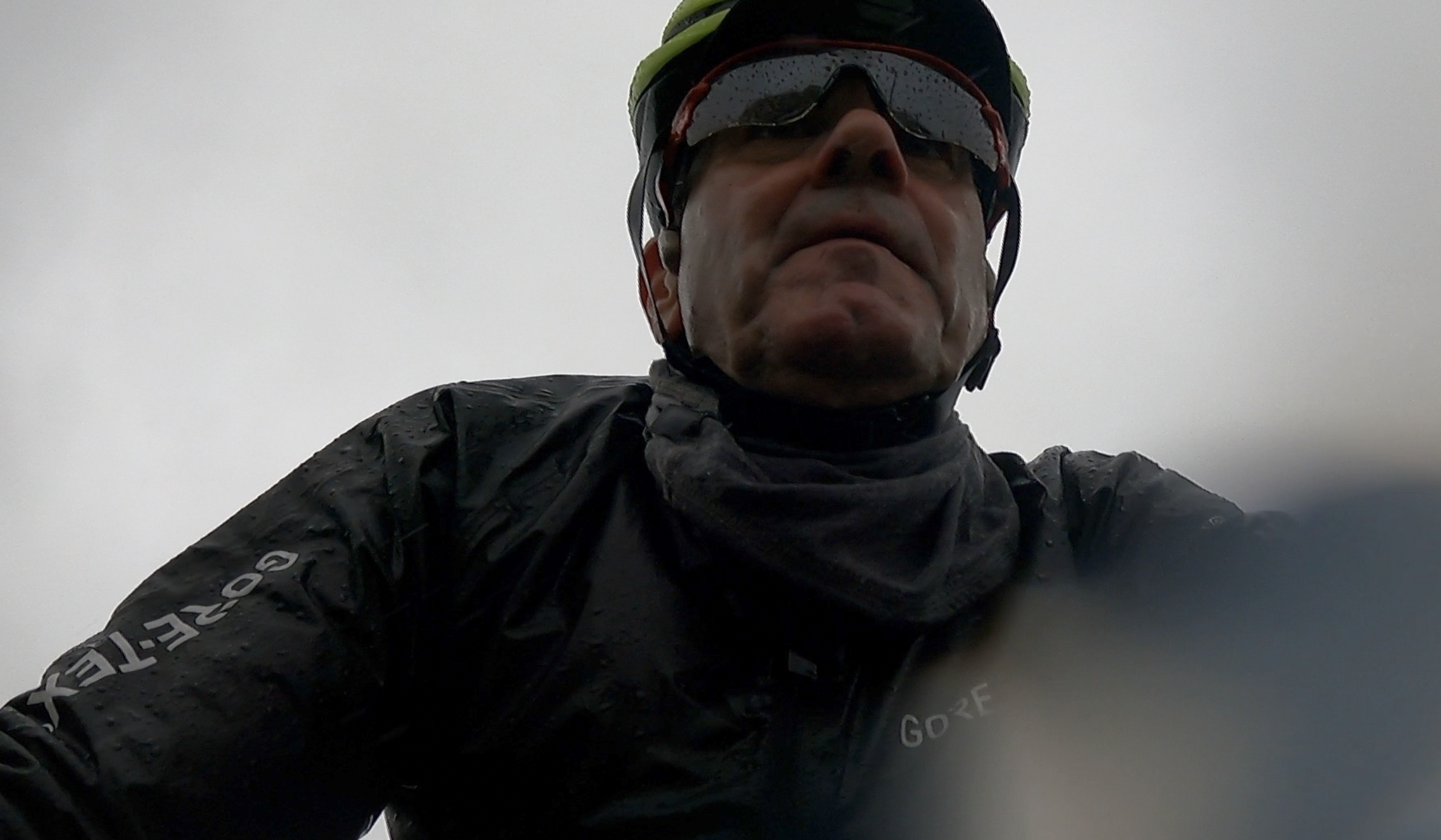
When preparing for a big challenge, it’s easy to stress about your weekly cycling target – in my case, 500 miles a month. But there are times when the weather is so awful that it makes sense to use this as a reason to take a rest day. (Or ride indoors.) True, you need to be careful not to become a purely fair weather cyclist, as you may not have the resilience to cope with truly awful weather, as I encountered in Ireland in 2024. Above all, don’t lose your love of cycling by overtraining, otherwise the whole thing becomes pointless. Another reason to find new routes to keep things interesting.
Tips for London Edinburgh London riders
I’ve based these tips on my own experience with London Wales London 2024, and advice shared on the various LEL chat groups on Facebook and Yet Another Cycling Forum. Thanks to all who shared their tips!
Get your bike match-ready
It’s amazing how many people set off on a challenge like London Edinburgh London on bikes that are barely roadworthy. They then assume the volunteer mechanics will be able to get them back on the road. You can never rule out a mechanical, but it’s just common sense to get your bike serviced in good time before the ride (not the day before) and any failing tyres, brake cables and chains replaced. Last year, Cychemistry in Chesham replaced a faulty valve just before London Wales London, which was good for peace of mind.
Understand get-me-home bike maintenance
When I started cycling in 1989, it wasn’t unusual to have a puncture every other ride. So fixing punctures quickly became second nature. Modern bikes are incredibly reliable, which means some of us no longer have the skills or confidence to fix a problem. As a tubeless fan, used to going thousands of miles without a flat, I dreaded finding myself stranded with a puncture that the sealant can’t seal. So last week I got Mark at Cychemistry in Chesham to give me a masterclass in using plugs and patches to get back on the road. I feel so much more confident as a result. If you’re like me, you might find going on a bike maintenance course time well spent.
Set your own pace

It’s easy to set off at a cracking pace at the start of a ride. You’ve been chatting to a group of riders at the start, and you naturally join them as you head north. But you quickly find that they’re riding at a speed that’s faster than you can comfortably sustain. Don’t risk burning yourself out: set your own pace. (You may find that you prove quicker than them over the route – the old parable of the hare and the tortoise…) Equally, don’t feel you have to stay with riders who are slower than you.
Similarly, you may have a tailwind during the 200km early stages of the journey north across the flat but exposed Fens. (And you may not even notice it, unlike a headwind.) Regard this as time in the bank, rather than a windfall to be spent enjoying leisurely stops at controls and pop up cafes. You will almost certainly have a headwind here coming back which could slow you to a painful crawl. This is when you need that time in the bank, to avoid having to race into the headwind over the Fens to finish in time.
Don’t be a faffer!

I learned a painful lesson on my debut audax, LWL 2024. I spent 6 hours 23 minutes off the bike – mostly at controls – compared with 20 hours of cycling the 407km route. My planned schedule went completely out of the window after 145km. I couldn’t have cycled much faster, but I could have gained time by taking shorter breaks at controls. (LEL recommends a maximum of 30 minutes at daytime controls.)
As one LEL volunteer noted, they can tell as soon as a rider gets off the bike at a control whether they are a ‘go-er’ or a ‘faffer’. The go-er will have a technique to get through quickly: they take everything they need from the bike, get their brevet card stamped, fill up water bottles, go to the toilet – and eat if needed. And they’ll do things in a different order if there’s a queue for water, for example. On LWL I faffed, in particular relaxing over food when I could have been back on the road 15 minutes earlier. Over the five days of LEL that wasted time would add up to over 5 hours, even without taking into account overstaying on overnight stops.
One great tip is to set a timer when you get to a control to count down to your target departure time. You could do this on your watch or phone – and I’ve read that one rider placed a clock on a table while eating to check the minutes ticking by.
First day tactics: some words from the wise (not me…)

LEL has posted an article on day one tactics that’s well worth reading if you’re pondering how far to aim for on your first day – and night? – on the road.
Briefly, it suggests aiming for Malton, or failing that Louth, for your first sleep. Malton is 364km from the start. I can see the advantages of going long on the first day, especially if you have the expected tailwind. You’ll be fresh and excited to have set off after months of anticipation. As I found on London Wales London, cycling through the night is intoxicating, and I was amazingly fresh as I stopped for a 1am curry after more than 300km. The difference on LEL is that I’ll still have 1200km to go in total rather than 100km – but will be able to sleep, stretch and eat before heading back on the bike.
What to bring to LEL
(This list isn’t intended to cover everything. These are the points that strike me as worth emphasising.)
Those bike essentials
Make sure you’ve got any spares that might prove impossible to find on LEL, such as non-standard spokes, and bring chargers for Di2 or SRAM eTap electronic gears as 1530km might prove too far for a single charge. (Definitely for SRAM, although you can carry spare eTap batteries.) Having a spare rear mech hanger is a prudent step, too, along with spare inner tubes, chain tool and spare chain links – and plugs and patches if you’ve gone tubeless.
Cold weather clothing
The idea of wearing winter clothing in Britain in August might seem crazy. But in the dead of night in the exposed landscape of the Scottish borders you might be cycling in temperatures barely above freezing. (Especially if you’re fixing a puncture and a gale is lashing you with icy rain.) Long gloves, a warm down jacket and overshoes might make all the difference. You could keep these in a drop bag, but it may be prudent to carry them on the bike so you have them whenever they’re needed. Oh – and don’t forget your head torch to illuminate any night repairs.
Keep it safe
LEL is hardly a crime hotspot. But there have been cases when things have gone missing – one 2022 rider reported his brand new Garmin 1040 cycling computer was stolen at the control at Moffat. So keep valuables with you when away from the bike, and carry a cafe lock to secure your bike at controls and shops during the event. Having worked for insurance companies for a decade, I prefer to be safe than sorry.
Finally, I plan to use a Restrap saddle bag with removable dry bag, which I can use to carry my valuables, water bottles and other essentials into controls – saving valuable time.
Look after your feet
Your feet are going to spend up to 128 hours stuck inside your cycling shoes. When you stop for any length of time, especially overnight, they’ll thank you for an alternative home. Bring a pair of sliders or similar to change into. Some attach these to their saddle bags – perhaps this Quoc x Restrap option.
It’s also sensible to mark your shoes with your name to minimise the chances of someone else taking them by accident.
I’ve got the power…
Life was so much simpler when I did my first big cycle tours in the 1990s. In those days before mobile phones and cycling GPS devices, nothing needed charging. Today, riders often stress more about charging their devices than about riding the event. Dark tales abound about cyclists in previous editions of LEL unplugging fridges and other people’s devices at controls to plug their precious phone into the mains.
This year, the LEL organisers have banned riders using the mains sockets at controls to charge devices, to avoid these traumas and the risk of fire. Instead, they are offering powerbanks for hire, which can be swapped for another, charged powerbank at the controls en route. This is a brilliant idea – making everyone’s life easier.
You just need to make sure you have the right leads for devices that use anything other than the USB C and iPhone lightning leads built into the LEL powerbank.
I’ll be using an Exposure Strada Mk12 SB light on LEL, which lasts up to 36 hours, depending on the light output chosen, which might just last the whole event. Some Exposure users have expressed concern about not being able to charge their lights. In my experience, the Strada will charge from a powerbank – if you know your existing powerbank will charge your light, you might want to bring it to LEL so you have a guaranteed charging option, but remember to put it in a container if you plan to put it in your drop bag.
Stay in the saddle
One of the worst afflictions for a cyclist is a saddle sore. The last thing you want when you’re sitting on a saddle for up to 128 hours in five days is a literal pain in the bum. There are no sure fire ways to avoid saddle sores, but a bike fit (see above) can fix any soreness caused by bad posture and bike set up.
Don’t forget to keep your backside clean over the ride; changing into clean shorts a couple of times may help. (Also consider carrying some baby wipes to give yourself a quick clean between shower visits.) I use chamois cream on multi-day rides as this can avoid chafing – and remember the golden rule of not wearing underwear under your shorts. You should also stand up regularly as you ride – this can ease the pressure on your bum.
PS: before LWL 2024, I was suffering from persistent saddle sores. My GP prescribed fucidin hydrocortisone cream, which cleared things up very quickly. I’ll be carrying a tube with me on LEL just in case, along with a small pot of Sudocrem.
Sleep better

Many past LEL riders have recommended taking a silk sleeping bag liner to keep you warm at night – it can be surprisingly cold in August in an unheated hall in Scotland or northern England. You’ll be given ear plugs to help block out the noises made by your fellow sleeping cyclists, and towels, but LEL veterans suggest you bring your own small microfibre towel.
LEL: a peak experience?
David Millar made a striking point in his revealing interview with Matt Stephens on the Matt Stephens Unplugged podcast. (At around 36 minutes in.) He suggested that one reason why time seems to speed up as we get older is that we’re no longer having so many ‘peak experiences’, as the psychologist Abraham Maslow termed them.
These are moments of the highest happiness and fulfilment that help meet our need to achieve our individual potential. Millar points out that for many people these peak experiences typically come in their teens or early twenties as they experience things for the first time. By middle age, we’ve become creatures of habit, living repetitive lives. Yet Millar points to ultra endurance events as peak experience machines for people of all ages. It’s surely no accident that huge number of people in their fifties and older are taking part in endurance events like LEL, which will create memories that last a lifetime.
I can already relate to this with my memories of London Wales London 2024. Cycling through the night for the first time aged 60 was a transcendent moment of joy for me. And as Millar points out, even those most testing moments such as cycling though a night of driving rain or fighting a headwind for 100 miles can create similar memories of winning against the odds.
London Edinburgh London 2025 will create countless magical memories like that for thousands of riders and volunteers.
I hope you’ve found this post interesting, and the tips useful. I’ll publish another post about my road to London Edinburgh London in the coming months. Good luck with your preparations! UPDATE: read part 2, Lessons from London Wales London, here; part 3, hard lessons from Bryan Chapman Memorial 600k here; part 4, volunteers put together 2,409 rider packs; and final tips here.
UPDATE
London Edinburgh London 2025 will be forever remembered as London Floris London, as a summer storm forced the organisers to curtail the ride on the second day. Organisers, volunteers and riders alike rose magnificently to the challenge, which was a triumph of the spirit of LEL. Read about my experience here.
You can also watch my video about riding this unique edition of LEL.
 Ertblog
Pingback: Training for London Edinburgh London 2025: lessons from LWL | Ertblog
Pingback: Training for London Edinburgh London 2025: hard lessons from Bryan Chapman | Ertblog
Pingback: Preparing for London Edinburgh London: LEL volunteers create over 2,400 rider starter packs | Ertblog
Pingback: Entering London Edinburgh London – my biggest cycling challenge | Ertblog
Pingback: Packing tips for riding London Edinburgh London 2025 | Ertblog
Pingback: London Edinburgh London 2025: surviving Storm Floris | Ertblog
Pingback: Videoing London Edinburgh London 2025 | Ertblog