
Goodbye to Guardian Weekend

Weekend covers

“Where’s the Weekend magazine?” I asked myself. I had just bought Karen her print copy of The Guardian, and wondered if I’d picked up an incomplete copy of our favourite Saturday paper.

I hadn’t. A quick online search told me that the paper had ditched the supplement, launched in 1988 in response to The Independent’s very popular Saturday magazine. I hadn’t noticed because I read the Guardian in the daily app rather than in print, where it is less obvious.

It made me nostalgic. I’ve been reading The Guardian for over 40 years, but was seduced by The Independent’s Saturday supplement in the late 1980s. Edited by Alexander Chancellor, it was the perfect Saturday morning read. The Indie was a good looking but rather dull paper in its early days, but its editors were clever to see the potential of Saturday in an era when that day’s edition was typically the worst selling of the week. It was famous for its photography, which was arguably the best of any British newspaper at the time. The Guardian recognised the threat and launched the Weekend magazine – at first as a low cost print effort, upgraded to a glossy magazine in 2001.

I enjoyed Weekend, especially the often quirky readers’ letters and Stephen Fry’s witty reviews of the latest text gadgets, such as this essay on the Canon 1000D. (The camera with which I recorded Owen’s early years.) Not to mention Let’s Move To…, which offered a quirky take on places around Britain. (Though not always accurately – the feature on my mother’s hometown of Penarth was a sour piece.) The Guardian’s supplement suited my mood in a way that the Sunday Times’s far longer-lived colour supplement didn’t. And Blind Date was a winner, an often laugh-out-loud account of two people going for a … blind date.

Continue reading
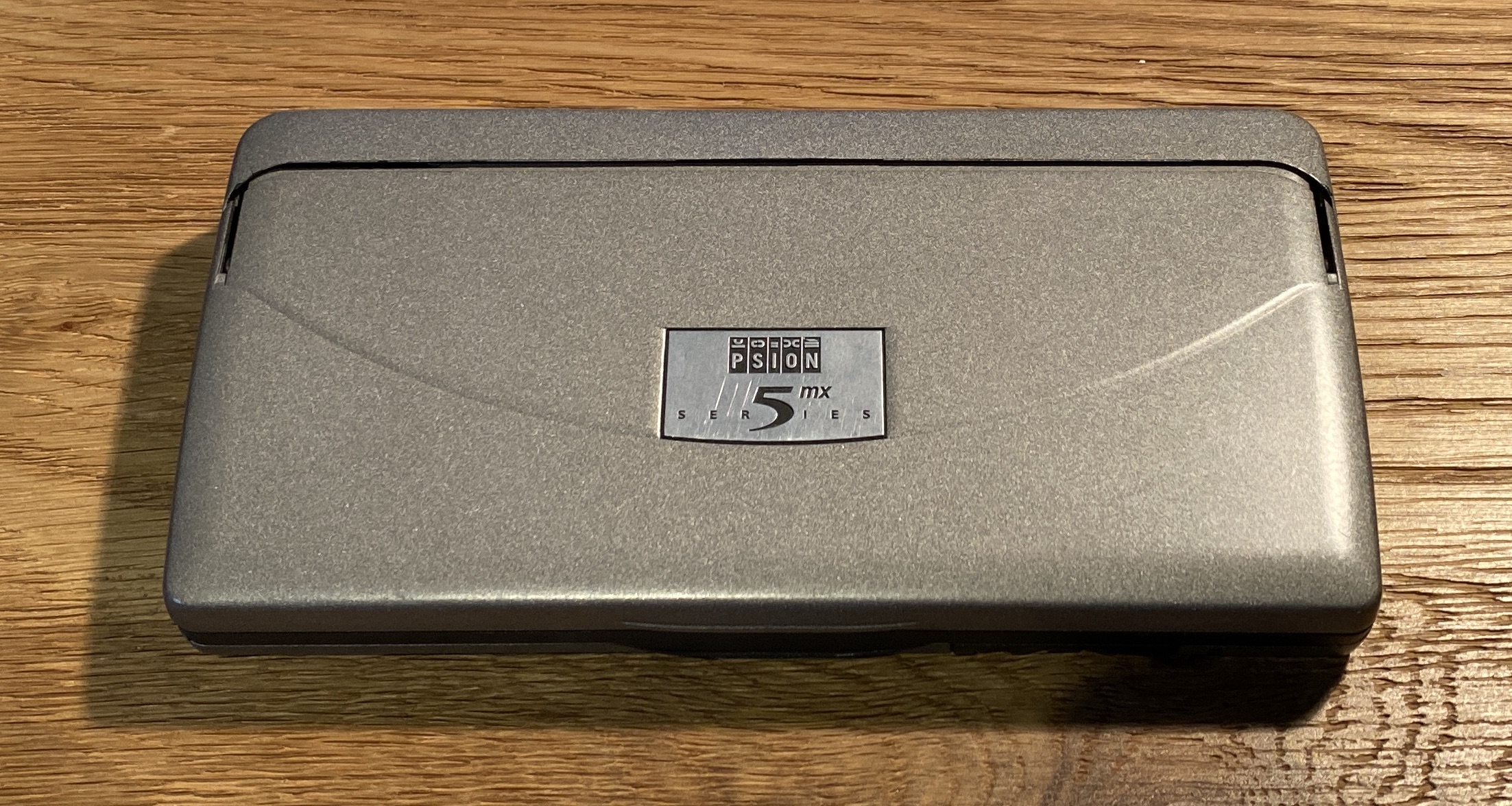
A British tech icon: the Psion 5mx

My Psion 5mx

Rarely had I been so excited to unbox a new ‘toy’. It was March 2000, and I’d just driven back to Cardiff from meetings in North Wales. The anticipation kept my tiredness at bay. It was a joy to take my new Psion 5mx personal organiser out of the box and turn it on for the first time.

I wasn’t disappointed. I’d never seen an electronic device quite as gorgeous. In the days when laptops weighted a ton, and mobile phones did little more than make calls and handle text messages, I marvelled how Psion had shrunk the essential elements of a laptop into a device that fitted in a pocket (just). Best of all was the keyboard, which flipped seamlessly into the clamshell case when you’d finished your tasks.

Continue reading

London calling: to St Paul’s

St Paul’s dome

It was an odd feeling, stepping onto a London train for the first time in 19 months. This was my life for many years, yet old habits ended when the pandemic gripped Britain in March 2020.

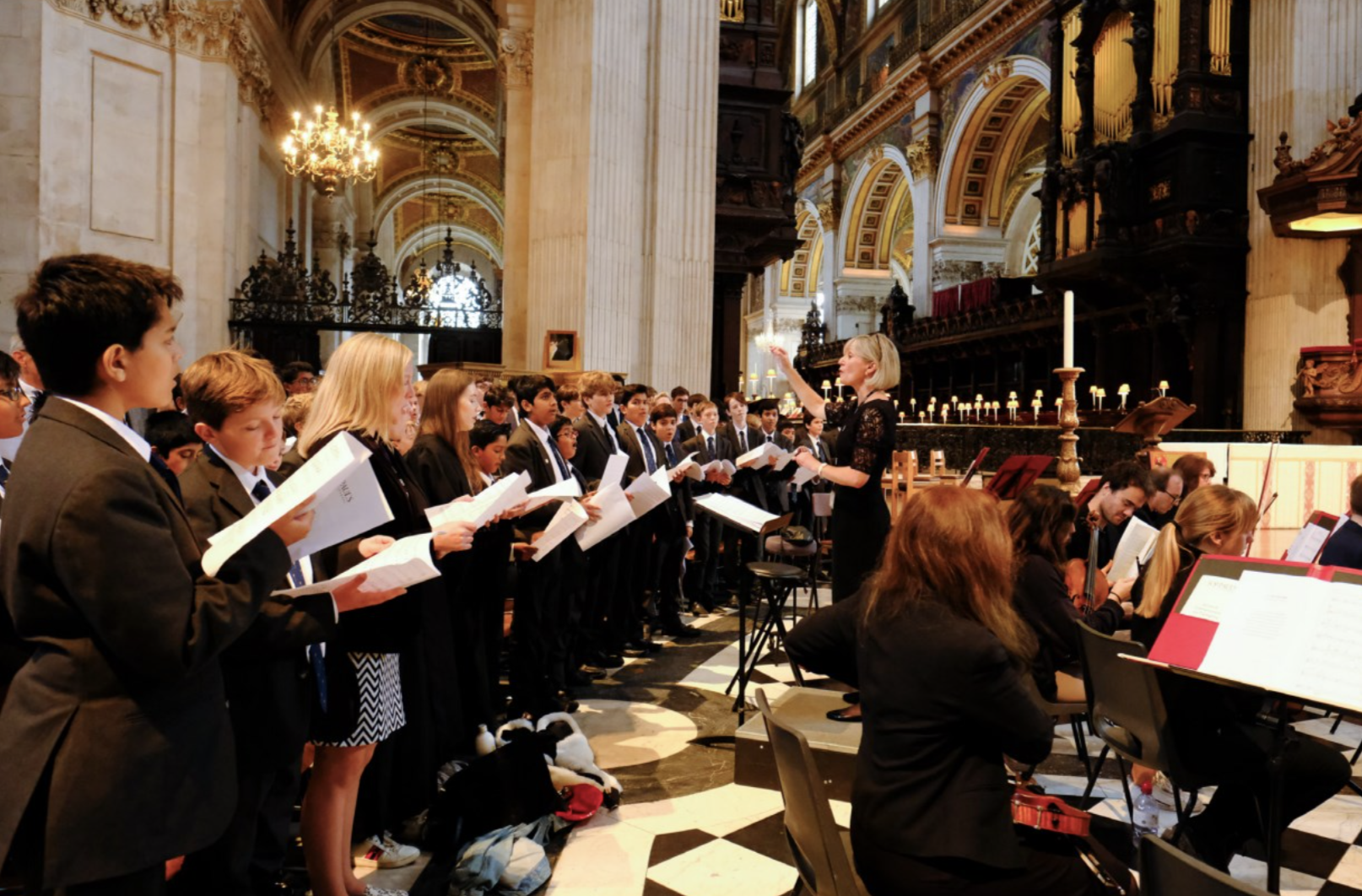
We were heading into London for Merchant Taylors’ School’s triennial service at St Paul’s Cathedral. Our son Owen is in the Merchant Taylors’ choir and chamber choir, so we were lucky enough to be given seats under the dome. It was very moving to hear the voices from so many traditions and cultures resonating in this historic cathedral.

The choir at St Paul’s. Photo: Merchant Taylors’ School

The service reflects Merchant Taylors’ School’s heritage. It was formed by the Merchant Taylors’ Company, one of the City of London’s 12 historic livery companies. The school moved out of the City of London to Northwood between the two world wars but still cherishes its City roots.

St Paul’s Covid memorial

This triennial service should have been held a year ago but was delayed, like so many events, by the Covid pandemic. It was moving to see the cathedral’s memorial to those who lost their lives in the greatest healthcare crisis in a century.

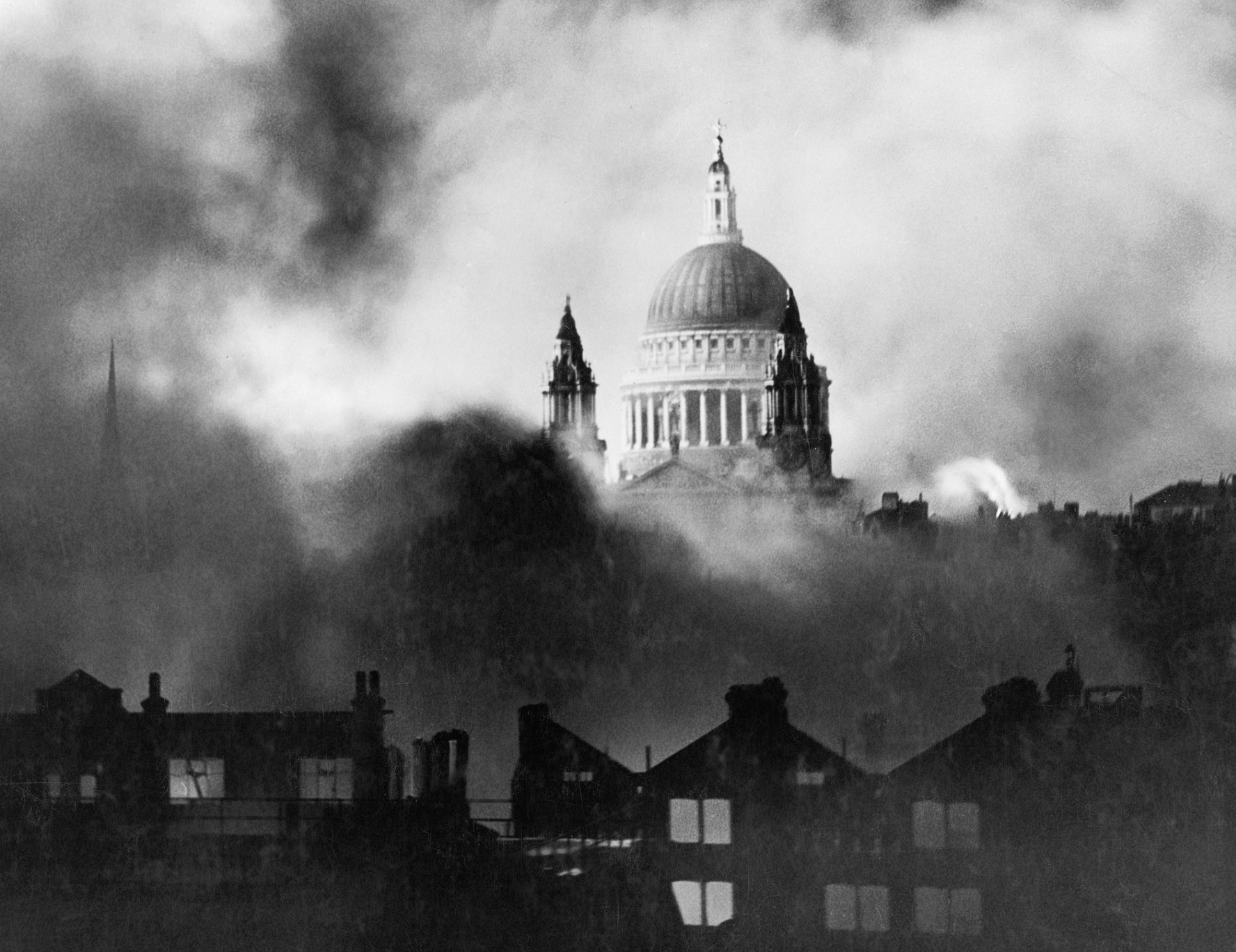
After the service, I told Owen the remarkable story of how St Paul’s survived the Blitz during the second world war. I dug out a book I bought over 30 years ago: London Before the Blitz, by Richard Trench. The author described the cathedral as a fireman’s nightmare. There are actually two domes: inner and outer structures. The fear was a fire in the gap between the two, which could spread undetected until the whole structure collapsed.

St Paul’s survives the Blitz. Photo: Herbert Mason, IWM

The fear almost came true on the terrible night of 29 December 1940. The Germans planned their aerial assault with brutal efficiency. It was the greatest bombing raid ever at that time. In the lull between Christmas and new year, the City was empty of people. There was a very low tide to impede fire fighting efforts.

At 6.40pm the call went out: St Paul’s dome was on fire. An incendiary bomb had pierced the lead covering the outer dome. It looked like Wren’s masterpiece was ablaze. American broadcaster Ed Murrow told the world that ‘The church that means most to Londoners is gone. St Paul’s cathedral, built by Sir Christopher Wren, her great dome towering over the capital of the Empire, is burning to the ground as I talk to you now’. Happily, as he broadcast the incendiary burnt through the timbers and fell onto the floor of the great church where it fizzled out. Herbert Mason’s iconic photo caught St Paul’s in its moment of crisis. Richard Trench’s book graphically illustrates how miraculous the survival of St Paul’s was: almost the whole of the City around the cathedral was in ruins.

Merchant Taylors’ pupils and staff at St Paul’s

After the moving service, we headed back to Marylebone, following our old footsteps along Wigmore Street and Marylebone Lane, popping briefly into Daunt Books, the most beautiful bookshop in London.

Rush hour, 2021

We took our seats on the 1724 from London Marylebone to Gerrards Cross. The train was earily quiet for a rush hour – even on a Friday. I reflected that I’d once have struggled to reach for my bag from the overhead rack amidst the rush hour passengers. It made a much more enjoyable trip, but I do fear for the economics of rail travel when the climate crisis should be making railways the obvious means of transport into our great cities.

We relished our return to London. We shall be back.

Mourning David Amess – and yearning for a kinder politics

Britain was horrified by yesterday’s murder of Sir David Amess – the second member of parliament to be killed in five years, after the tragic loss of Jo Cox in 2016. Police are treating Sir David’s killing as an act of terrorism.

In the meantime, I yearn for an end of the climate of hatred that has developed in British politics in recent years. As I blogged a week ago after the death from cancer of James Brokenshire MP politics has always been a rough trade. But calling your political rivals scum (as Labour’s deputy leader Angela Rayner did recently in referring to Tories) and enemies of the people and traitors (as populist right wing papers labelled the judiciary and MPs who didn’t support Brexit) is undermining democracy and the rule of law. All amplified by the poisonous echo chamber of social media, which circulates hate speech and lies.

This rancid mix may not have been the spur to the person who ended David Amess’s life. But it makes reasonable debate on crucial but sensitive topics almost impossible.

Britain’s parliamentarians – in Westminster, Cardiff Bay and Holyrood – serve the people tirelessly. A friend recently praised the new MP for Chesham and Amersham, Sarah Green, for her superb support on a family matter. Our friend is not a natural Lib Deb voter – but Sarah, like all MPs, is dedicated to serve and help all her constituents, no matter how they voted. MPs, MSs and MSPs have become a social service, far removed to their predecessors years 60 years ago who had far less contact with their constituents. They deserve our support especially when they live in fear after two of their peers have been struck down in the service of the people.

‘Didn’t agree with his politics but…’

The saddest news

I was sad to read that James Brokenshire MP had died. He was an effective and thoughtful minister, and a role model for anyone wanting to serve their country through politics. I once took part in an event alongside him in the early days of the coalition government.

It was no surprise to see a flood of tributes on social media, but many people struck a jarring note by prefacing their remarks ‘I didn’t agree with his politics but…’ This is crass. It is as if they think people will think badly of them for praising a political opponent. They are hardly risking the opprobrium heaped on Irish leader Eamon de Valera who visited Germany’s representative in Dublin in 1945 to express Ireland’s condolences on Hitler’s death.

Labour’s leaders were much more sensible, paying unreserved tributes to James. Keir Starmer and his deputy Angela Rayner were eloquent and generous. Rayner’s comments were far better judged than her vitriol a few days earlier when she described Tories as scum. That was ill judged – Labour needs to win back voters who have switched to the Conservatives, and calling them scum isn’t likely to help.

Politics is a tough trade. Its disciples have been exchanging insults for centuries. But in an age when death threats are regularly made against politicians on social media (and just five years after the murder of Jo Cox MP), let’s be more respectful and choose our words with care.

Fifty years on: converting to North Sea gas

From town gas to North Sea Gas

Back to the Seventies. That has been a theme of the past few weeks as a fuel crisis looms, with rocketing prices and supply problems in Britain.

Few people will remember, but the early 1970s also saw one of the biggest changes in British domestic and industrial history. The discovery of gas in the North Sea in 1965 led the nation to switch from town gas, which was produced by heating coal. As a result, around 40 million gas appliances in Britain had to be converted to burn natural rather than town gas. Britain used to have over a thousand local gas works, but North Sea gas made these manufacturing sites redundant, with gas now being stored rather than made locally.

Our family was very unusual as our gas cooker was converted not once but three times. We were living in Whitton, Twickenham when London converted from North Thames town gas to North Sea gas. But soon after, we moved back to Wales – which had not yet switched. So we had to convert the cooker back to run on town gas, before switching yet again when Cardiff converted. The change had another legacy: a huge banner advert for High Speed Gas across the front of Cardiff Central station, which hid the legend ‘Great Western Railway’. (On display again since 1985.)

It wasn’t our only big fuel switch. When we moved into our house in Winnipeg Drive, Lakeside, in 1971, we inherited a coal burning central heating boiler. I remember a frightening drama soon after. The pressure gauge on the boiler was moving into the danger zone, and Mum and my sister were getting worried it was going to blow up. (Dad was in Japan at the time on a coveted Winston Churchill fellowship.) My uncle Bert came to the rescue, and I think they poured water over the furnace to put the boiler out and end the crisis. Soon after, we switched to gas central heating, and the coal shed became a storage room.

The Oval gasholder. Photo: JGUK via Wikimedia Commons

Gasholders like the famous one behind the Oval cricket ground in London were a familiar part of the urban landscape for years. Originally they were part of a town’s gas works, storing the gas produced there. For the past 50 years they have stored gas from the North Sea, but from the 1990s onwards they were condemned as unnecessary and few now survive. How ironic that Britain’s acute lack of gas storage capacity is such a feature of the growing fuel crisis. (The country has storage for just four or five days’ winter demand; Germany has 16 times as much.) The government’s decision allow the closure of the Rough storage facility in the North Sea in 2017 now looks like an act of self harm. Maybe we shouldn’t have pulled down all those iconic gasholders.

PS: I played a very minor part in the privatisation of British Gas in 1986. I was a management trainee for Nationwide in Newport, Wales, and gave a presentation to British Gas employees in Cardiff explaining the sharesave account used for the staff share purchase scheme.

PPS: we even had a gas fridge when I was very young, but got rid of it before gas conversion.

Before bikepacking: touring Brittany with panniers

I blogged last week about my first bikepacking trip. I loved the freedom that bikepacking gives the touring cyclist. I wrote that it was a contrast to touring with panniers, as I did several times in the 1990s. Here are my nostalgic reflections on those pannier touring days.

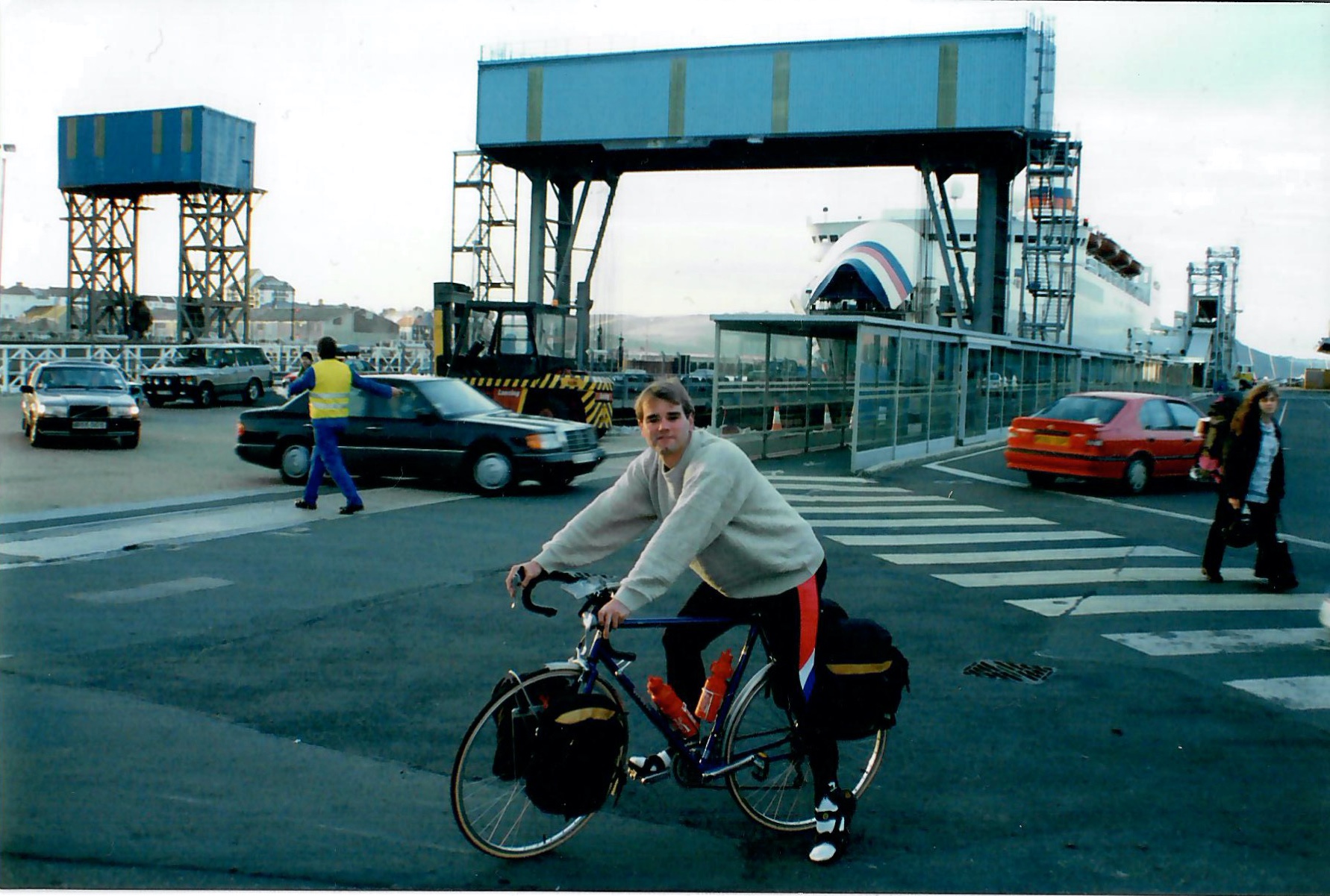
Cycling off the ferry: Brittany tour, 1996

Brittany 1996

There’s something special about cycling off a ferry in the early morning. Especially when the port is Roscoff, a small town that makes a perfect landfall in France.

My friend Richard and I had enjoyed a successful 325 mile tour of England’s West Country in 1995, and decided to cross the channel the following year. Brittany was calling, and we followed a tour featured in the book of the BBC series of Fat Man in France, which recounts Tom Vernon cycling across the region.

Getting to the ferry in Plymouth was an unexpected challenge. We took the train from lovely Kemble station in Gloucestershire, changing in Gloucester. But a landslip in the wonderfully named Mutley tunnel outside Plymouth led to a long delay. One anxious passenger, late for a flight to the isles of Scilly, climbed out of the train window and ran down the embankment! Fortunately the line reopened and we had time to enjoy a meal in the historic city before boarding the overnight ferry.

Continue reading

Bikepacking beginner

Bikepacker’s breakfast

This week, I became a bikepacker. I’d been intrigued by the idea of bikepacking – the lovechild of a union between cycle touring and backpacking.

I’d been dreaming about this adventure for ages. I’d read about bikepacking and loved the idea of a self-sufficient mini camping tour. Think of it as a modest mid life crisis – a chance to live a different life for under 24 hours. Last spring, I started buying bikepacking kit, including a small tent, stove and sleeping bag. Originally I planned a trip with my son Owen, 13, to the campsite at Cookham Lock on the Thames (see Jack Thurston’s original Lost Lanes, Southern England, book) but that has been closed for months. So I took the plunge with a prompt from Komoot’s #RideCampRide campaign.

Ready to go

This was my first trip with a laden bike for over eight years. I was impressed by the way my Apidura bikepacking bags didn’t affect the bike’s handling at all. While the bike was obviously much heavier, it was only when I got out of the saddle for extra oomph that I had a reminder that I needed to ride differently. It was nice to forget average speeds and simply enjoy the journey.

Continue reading